Consider this link or the longer ones in the same type.
I think you meant to say high helix. They are two flute, uncoated and plunge type as described by Joseph.
Ketan at ARC
Arc Euro Trade Ltd.
10 Archdale St, Syston, Leicester LE7 1NA
0116 269 5693
You could give them a ring to see if they have one in stock. Fingers crossed!
Brian
Hopper beat me to it but I was going to say dont forget to add the Sieg SX3 from ArcEurotrade to your list for consideration. Arc are known for their excellent service and support and you dont tend to hear any bad reports about the SX3 it seems to be a good reliable machine with decent capacity.
Now at the risk of getting my head bitten off I would be a bit hesitant at getting a Warco machine, I have nothing against Warco, my lathe is an old Warco but much modified into a very good machine by the previous owner. It may just be me but I say this as it seems in the 18 months I have been a forum member there appears to be quite a number of threads re faults/problems with Warco machines, they seem to come up quite often – too often I think.
It would just make me a bit hesitant but there will probably be a number of replies now saying their Warco machine is the best thing since sliced bread. I hope they do as it would be good to hear some reassuring news but as I say if you go by this forum their press is not too good of late.
Just my two penneth, others may disagree.
Not my job to defend Warco or anyone else, but Ron might consider Warco's presence on the Forum could be related to the number of units they've sold across a wide range of different machines rather than fundamental defects. They've been going a long time too. More customers = more comment.
Myford score plenty of negatives too! You might conclude they're starting to wear out. Of course they are, but it doesn't mean Myford are an automatic bad buy because they're all clapped out rubbish! Again, the volume of negative comment is more related to the number sold – a very popular lathe.
It would be nice to know for certain that one of the UK suppliers stood head and shoulders above everyone else in terms of quality. Actually the market doesn't work like that. Generic machines are made down to a price in China and then branded for sale in the west. A number of different makers are involved, producing similar output with more or less attention to detail.
UK sellers don't have complete control over what arrives from China! However, it does seem a certain amount of filtering and negotiation goes on. UK vendors who take the trouble to build a long-term relationship with manufacturers are likely to get better examples, whereas firms buying sight unseen are less well placed. Worst of all, it seems factory seconds and rejects escape into the wild – beware very cheap internet deals from non-specialist sellers.
The main advantage in buying Chinese is the machines are new. Many different models are available to suit different workshops and available off-the-shelf for 20% or less of the cost of an equivalent professional machine. The price asked is affordable, quality isn't top-end. Hobby machines are at best a bit rough but in my experience acceptable. Most important: in the event a dud is delivered it can be returned for a refund or replacement.
As it stands no-one sells new professional quality lathes at hobby prices. It seems impossible to profit from selling well-made new machine tools to hobbyists who demand top-quality but absolutely won't pay for it! Sit down with a spreadsheet and sum how much it would cost to develop and make a decent lathe, say 20% bigger than a Super 7 with some modern thrills like a Brushless Motor and ELS. Then calculate how many would have to be sold to avoid bankruptcy.
As engineers I'm surprised the forum focusses so often on quality in the ordinary sense of having a subjective degree of goodness. In engineering, quality should be specific. A tool meets the necessary quality criteria if it does what's needed for an acceptable price. Forget fancy taper bearings, hand-frosted beds, motors that deliver full power continuously for 30 years and chucks rated to 20,000 rpm. In the absence of a specific need, they are all fripperies. This is why I drive a Corsa rather than a fork-lift truck or a Rolls Royce.
Chinese lathes better than sliced bread? Surely not! But mine does what I want of it.
Dave
Edited By SillyOldDuffer on 06/03/2020 10:38:31
Dave, I did say that my thoughts are based on the number of threads I have seen here on the forum which at times I have thought too many regardless of the number of machines Warco sell.
It left me having doubts and the feeling that a Warco machine was a bit of pot luck, you are either lucky and get a good one and to be fair they must have more good than bad or you are unlucky and get a bad one. That is just my thoughts though others may not think that way at all. I am going to move up to a larger mill and I did consider a couple of the Warco models but it was what I read at the time that put me off.
Anyway we all pays our money and make our choice I hope Steve gets a machine he is happy with whatever he chooses.
That suggests to me that problems with lack of torque are possibly due to poorly set up drivers or too-weak power supplies.
Which is why I was interested in the drive being used – limited testing with a couple of cheap single chip solution drives (Toshiba TB6600 & TB67S109ATFG) and a Stepperonline digital drive on a 2.2Nm Nema 23 motor from Arc Eurotrade has shown noticable differences in performance using the same 36V power supply.
The digital drive from Stepperonline performs much better than the other two – quieter, much less resonance & the motor warms up more, suggesting that the current is higher than the cheapies (not had a meter in circuit yet to check the actual currents) . This drive was more expensive, but not outrageously so (£13 delivered versus £5-6 each for the cheapies) but is rated for 50 V DC supply or 36V AC compared to 30 or 40V for the others – I have yet to try a 48V supply with the Stepperonline drive, as it only arrived last week.
Testing so far has not involved driving anything, just the motor alone being driven while hand held (the resonance can be so bad with the cheapies it dances about on my desk) & it may be that adding a driven load will change things (just adding an aluminium pullley changed the resonance somewhat).
Nigel B.
Hopper beat me to it but I was going to say dont forget to add the Sieg SX3 from ArcEurotrade to your list for consideration. Arc are known for their excellent service and support and you dont tend to hear any bad reports about the SX3 it seems to be a good reliable machine with decent capacity.
Now at the risk of getting my head bitten off I would be a bit hesitant at getting a Warco machine, I have nothing against Warco, my lathe is an old Warco but much modified into a very good machine by the previous owner. It may just be me but I say this as it seems in the 18 months I have been a forum member there appears to be quite a number of threads re faults/problems with Warco machines, they seem to come up quite often – too often I think.
It would just make me a bit hesitant but there will probably be a number of replies now saying their Warco machine is the best thing since sliced bread. I hope they do as it would be good to hear some reassuring news but as I say if you go by this forum their press is not too good of late.
Just my two penneth, others may disagree.
Not my job to defend Warco or anyone else, but Ron might consider Warco's presence on the Forum could be related to the number of units they've sold across a wide range of different machines rather than fundamental defects. They've been going a long time too. More customers = more comment.
Myford score plenty of negatives too! You might conclude they're starting to wear out. Of course they are, but it doesn't mean Myford are an automatic bad buy because they're all clapped out rubbish! Again, the volume of negative comment is more related to the number sold – a very popular lathe.
It would be nice to know for certain that one of the UK suppliers stood head and shoulders above everyone else in terms of quality. Actually the market doesn't work like that. Generic machines are made down to a price in China and then branded for sale in the west. A number of different makers are involved, producing similar output with more or less attention to detail.
UK sellers don't have complete control over what arrives from China! However, it does seem a certain amount of filtering and negotiation goes on. UK vendors who take the trouble to build a long-term relationship with manufacturers are likely to get better examples, whereas firms buying sight unseen are less well placed. Worst of all, it seems factory seconds and rejects escape into the wild – beware very cheap internet deals from non-specialist sellers.
The main advantage in buying Chinese is the machines are new. Many different models are available to suit different workshops and available off-the-shelf for 20% or less of the cost of an equivalent professional machine. The price asked is affordable, quality isn't top-end. Hobby machines are at best a bit rough but in my experience acceptable. Most important: in the event a dud is delivered it can be returned for a refund or replacement.
As it stands no-one sells new professional quality lathes at hobby prices. It seems impossible to profit from selling well-made new machine tools to hobbyists who demand top-quality but absolutely won't pay for it! Sit down with a spreadsheet and sum how much it would cost to develop and make a decent lathe, say 20% bigger than a Super 7 with some modern thrills like a Brushless Motor and ELS. Then calculate how many would have to be sold to avoid bankruptcy.
As engineers I'm surprised the forum focusses so often on quality in the ordinary sense of having a subjective degree of goodness. In engineering, quality should be specific. A tool meets the necessary quality criteria if it does what's needed for an acceptable price. Forget fancy taper bearings, hand-frosted beds, motors that deliver full power continuously for 30 years and chucks rated to 20,000 rpm. In the absence of a specific need, they are all fripperies. This is why I drive a Corsa rather than a fork-lift truck or a Rolls Royce.
Chinese lathes better than sliced bread? Surely not! But mine does what I want of it.
Dave
Edited By SillyOldDuffer on 06/03/2020 10:38:31
Alison, have a look at some of the tool suppliers with links on here, such as Arc Euro Trade, Warco, Etc. Items on their websites should help you identify all or most of your dads equipment and give you the cost of such items when new. Setting a price for your items will depend on condition, but once you know what they are Ebay should give you a fair idea of how to price them up. A great place to sell them would be the Homeworkshop site. I don't know how to post a link to that site, but I am sure someone on here could help with that. Sorry to hear of your loss, and good luck with clearing the tools.
Dek.
My suggestion would be to arm yourself with a tape measure and go out into your workshop and do some measurements of the area you want to place the mill . There is little use in having a mill with (a) amount of X axis travel and (b) X table length if the surrounding area is going to limit its travel to half of its useful range and the same goes for the height .
In my small workshop I did this and bought a Sieg SX1L from ArcEuro. This is too small for some things I want to do and I have to take light cuts. BUT it is in my workshop and convenient and I could not fit a larger machine in. I have access to a larger mill at the club workshop, even though this can sometimes delay things, so the very small machine that I can use to full capacity whenever I need to was the right choice for me. It may not be so for anyone else.
Hopper beat me to it but I was going to say dont forget to add the Sieg SX3 from ArcEurotrade to your list for consideration. Arc are known for their excellent service and support and you dont tend to hear any bad reports about the SX3 it seems to be a good reliable machine with decent capacity.
Now at the risk of getting my head bitten off I would be a bit hesitant at getting a Warco machine, I have nothing against Warco, my lathe is an old Warco but much modified into a very good machine by the previous owner. It may just be me but I say this as it seems in the 18 months I have been a forum member there appears to be quite a number of threads re faults/problems with Warco machines, they seem to come up quite often – too often I think.
It would just make me a bit hesitant but there will probably be a number of replies now saying their Warco machine is the best thing since sliced bread. I hope they do as it would be good to hear some reassuring news but as I say if you go by this forum their press is not too good of late.
Just my two penneth, others may disagree.
Have a look at the SIEG SX3 (available from ArcEurotrade in the UK). I've a mate who bought one here locally and pretty impressed with it. It's ideal for model engineering type jobs but also big enough to do motorbike type work such as valve seat insert and port machining etc. He built a good sized 9 cylinder radial engine on it no problems. Would machine toolposts no problem, in steel. Machine quality seems to be perfectly good for the home workshop. He's had no problems with his. It is belt drive and so very quiet.
I wouldn't mess with a round column mill. The few people I know who have one all complain about the shortfalls of the round column. They are a glorified drill press so are always a compromise. Whereas the SX3 is a "proper" mill only in miniature, with a decent dovetail vertical column that maintains head position as it is moved up and down for tool changes etc.
Edited By Hopper on 06/03/2020 06:29:23
Welcome to the wonderful and deeply confusing world of carbide inserts! Good news, you're not trapped with Warco. Bad news, I've not found an easy way to navigate inserts from first principles.
I may have the same set as you, and somewhere wrote down what the inserts are. Guess what I can't find!
Anyway, try searching for the first 4 or 5 letters of the holder id. For example SWUCR is a right-handed SWUC, which is a boring bar, and a search shows they take WCGT inserts, of which there are many variants depending on the type of cutting to be done. Carbide inserts are bewildering because industry select them from catalogues to maximise productivity, and there are hundreds of variations – various shapes, point angles, chip-breakers, positive, negative & neutral rake etc. Because industry like to remove metal quickly for minimum electricity bills, inserts tend to be blunter than is ideal for amateur use, so it pays to look for sharper types.
Assuming the inserts in your Warco are the same as mine, they perform best on chunky steel parts, not delicate items. They work best at high-rpm, deep cuts, and fast feed-rate. They don't work particularly well on brass or aluminium. Other insert types are better for non-ferrous. Also, the holder and insert should be sized to the job – giant inserts not good for fine work.
Warco don't carry a wide range of inserts; have a look at ArcEuroTrade – the range they sell is better suited to 'our' machines. I've found buying the smaller inserts and holders advertised for sale to hobbyists by ArcEuro & others removes a lot of confusion. Nothing wrong with the Warco set if big lumps of steel are your thing.
Dave
PS As the inserts in my 6 year old set have 3 or 4 sturdy points each, I've not had to buy any replacements yet. But It's not the set I use most of the time.
Hi Phil and others,
Thank you for your help.
With your encouragement, and based on the connections from another small stepper motor in another project, and using the multimeter to test, I tried a new connection that I think is called BIPOLAR PARALLEL.
So,
I connected the RED wire and the BLUE wire,
I connected the YELLOW wire and the BLACK wire – constituting winding A
I connected the WHITE wire and the BROWN wire
I connected the PURPURA wire and the GREEN wire – constituting the B winding.
NOTE: in the meantime I found an ArcEuroTrade file (HYBRID STEPPING MOTOR MODEL 160-010-00400) which also describes these BIPOLAR PARALLEL connections as possible.
Now, the stepper motor has been connected for approximately three hours and has heated up to, perhaps, 45º (the hand supports the temperature well) and, as far as I can see, it works as well as before.
Thanks to the help received, I am finally satisfied and will be able to move forward on the project.
best regards
Dias Costa
Hi Phil and others,
Thank you for your help.
Maybe the problem is not with the DM542 driver …
The stepper motor I have been using was purchased at ArcEuroTrade several years ago and I must have missed the specifications as I cannot find them.
It was used, for a short time, until recently in a test application with the TB6560 driver and worked well for hours without overheating as much as it does now. The difference is that he was not idle that long.
It has eight wires and the connections that existed for the test and I kept for the DM542 driver, now, are the following:
YELLOW and BLUE pair connected to each other, PURPLE and BROWN pair connected to each other;
I connected the remaining four wires to the driver as follows:
the WHITE wire to A + and the GREEN wire to A-
the RED wire to B * and the BLACK wire to B-
The power supply supports 24V, 4.5A and is connected like this:
positive to the VCC pin and negative to the GND pin.
From what I remember the configuration of the connections is BIPOLAR.
Would another configuration of the connections from the stepper motor to the diver be better?
The only information I know about the stepper motor comes from the ArcEuroTrade invoice:
Item Code: 160-010-00400
Description: 220Ncm – 10mm Shaft – Hybrid Stepper Motor
More: it has a double axis, 115mm in length.
I would be grateful if any of the participants who have documentation for this stepper motor could share it with me.
The DM542 driver also has the functionality to reduce the current when the motor is stopped and also runs automatically, but only after being manually activated with the on / off / on maneuver.
best regards
Dias Costa
A mate of mine has a SEIG SX3 (same as available from ARC Eurotrade I believe) and it is very good. He built a 9 cylinder radial engine on it without problems. And it is big enough to do motorcycle and car parts work, not just small model stuff. Planning on getting one myself at some point.
The chuck is far forward because the headstock has been remade, it would originally have been part of the main casting probably. Perhaps you can re-position it.
This chuck was discussed on another thread recently but may still be longer than you want.
You mentioned left over bits! If you can post a photo perhaps we can identify them. (we rather like guessing what bits are for).
I googled Record vice no 74. I noticed some have holes at the side just under the anvil which the advert says are 'valve holders'. Can anyone explain why they would have wanted to hold valves like that?
I would agree Neil that you can use a slip pile or a micrometer to set a two point gauge but I think you would agree to it's not the easiest way to establish a 'zero' for measuring a bore.
For many years I worked 'in microns' on multi stage progression tool parts. The environment was not temperature controlled save ambient temperature – up one day down the next. It was just taken that everything we made was relevant to the dimension required – max tolerance was .01mm min was .002mm don't ever recall any temperature related problems with tooling as made over some fourteen years.
BTW did you ever get those Oliver drawings I sent via Dean ? It would be nice to know
Just had a look on Arc Euro Graham – set of three three point mics 11 to 20mm are £368 – far too much to justify I'm afraid but boy, I would like'em ![]()
Regards – Tug
Edited By Ramon Wilson on 22/02/2020 20:38:22
Finished off three out of four new chuck back-plates for Cowells ME90 lathe, Have just upgraded spindle to later M14x1. threaded nose. Purchased a few of the Arceuro 62mm backplates and shrunk them down to the requisite size. Cocked up the one for the 3 jaw chuck due to a config error on the DRO, so shrunk it down lots, put a sleeve on it and fitted a modified M12 backplate to it. Switched to ER16 collets rather than the Cowells original, the 4 jaw chuck one worked out okay. Just waiting for one more to remake for the 3 jaw chuck.
Can now move all chucks between Cowells ME90 lathe, Cowells Mill, BCA jig borer, Aciera F12 and Myford S7.
I know a very nice man who would be only too willing to sell you one. or even more.
Personally I don't use them just a bit of silver steel with a point held in the tailstock chuck and push the tailstock to keep the pressure. Hole in the other end drilled with a CTR drill will allow you to use taps that don't have a hole in the end.
Or are you looking at my long one for setting up work in the 4-jaw?
Edited By JasonB on 20/02/2020 15:53:15
I use a Spiralux drill sharpener. It can be abused, especially if I'm "messing about", shall we say, but with care it works well for drill bits between 3mm and 12mm, although to be fair, at 3mm, the drill bits are too small for the tool to handle them easily, whilst at 12mm, the drill bits are rather too long to be easily handled.
As a result, 3mm and below are scrapped, indeed I have taken to buying the smaller drills in multiples of 5 (Arc Euro Trade, I think). I don't use the larger drills all that much so the 12mm, or to be strictly accurate, 3/8" up to 1/2" are generally used as they come regardless of hole accuracy. (Usually they are either clearance holes, or preparatory before boring.)
The biggest problem I have is that I tend to leave drill bit sharpening until absolutely necessary, and then I have a good "set to" which means that the grinder, a 5"/125mm machine without any cooling, starts to overheat, consequently resharpening can take a long time due to having to wait for the grinder to cool down.
However, I am well pleased with my Spiralux, especially as it seems to incorporate all the necessary angles as have been explained before in this forum. (I have a suspicion that Graham Meek might have had a lot to say about this. My apologies to Graham if I'm wrong.)
Peter G. Shaw
Arc has drill chuck arbors for Jacobs No.0. Code 040-020-00400 for an arbor with M10 drawbar thread, 040-020-02100 for an arbor with tang.
Thor
Edited By Thor on 13/02/2020 13:13:04
Hi Phil,
I thank you very much for the great favor of printing for me, in 3D, the cover and the buttons for the control box of the "Electronic Lead Screw".
I've already done a temporary assembly of the cover with the Led & Key Display (L&KD) and the adjustment between the L&KD and the cover is good and the buttons work very well.
To complete this part of the project, I still need to receive the metal box, which comes from China with an estimated arrival between 11 and 20 February, but, probably given the current circumstances, it will take longer to arrive. For this reason, I looked better here, in Portugal, and found the Hammond 1590B box and already ordered it.
Questions:
1 – the first button from the left (PWR) at this moment has no function. Do you know if there is any future goal for him in the project?
2 – How did you write the text FWR FWD / REV FEED / THR MM / IN / TPI given the scarcity of space above the LEDs? Any suggestions, please …
3 – I already have the stepper motor (Nema 23, double shaft purchased from ArcEuroTrade a few years ago) and I want to use it in this project for my EMCO Compact 8 lathe.
But I still haven't bought the driver for the stepper motor and, not being interested in the closed loop stepper driver, I'm not sure to choose another controller. As previously reported I tried the TB6560 driver and somehow damaged the TI board and I don't want to repeat …
Any suggestion, please?
Best Regards
Dias Costa
Edited By dcosta on 08/02/2020 18:56:59
As Redsetter says, the most you will need to do is bore out or sleeve the central hole of a toolpost and perhaps skim the base.
If you look here you will see several different options.
If you do want a Quick Change Toolpost the 000 from Arc Euro Trade is nice and compact, a conversion stud kit is available for ML7/S7 and as far as I am aware the ML10 has the same size mounting stud so this should work with it.
The minimum height lost on the 000 toolpoost is just 4mm so it should be fine with the ML10, so with that conversion stud it should work fine with no machining.
Neil
Hi Dave,
There is no promo code at present – apologies.
You can signup to the mailing list during the registration process, as well as during the checkout process (I think).
Our site has been migrating from one host to another, and whilst most migration issues have been fixed, one or two are still awaiting a fix. You can still place orders on-line, but if for some reason you are unable to get onto the mailing list, let us know by sending an email to [email protected], and a member of our team will try to assist.
Ketan at ARC
I'm about to buy a set of ER32 collets, I've searched the Arc Euro site to signup for emails but can't see any link. Is there a current PROMO Code does anyone know?….. and, how do I sign up for emails?
Thanks for any help
Dave
Don't even think about a cheap cross vice for X-Y movement. They are very sloppy and the screws far too coarse for a sensible job. The effort involved to get suitably good results is totally disproportionate to the gainProbably too much movement anyway.
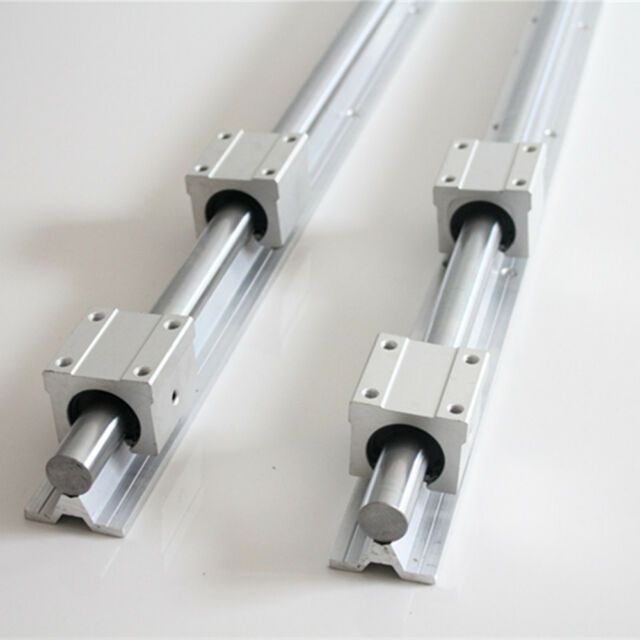
I'd be thinking in terms of simple rod, bearing and carrier systems which can be found insanely cheap via E-Bay. This one uses 6 mm diameter rods and is around £20 for 8" / 200 mm lengths.
Loads of similar choices. Even "proper" flat bar and ball bearing carriage systems of adequate strength can be found for about twice the price. That said I'd use something like the Igus range with plain, plastic bearing flat top carriers riding on wider alloy bases which, frankly, is both expensive and overkill. But nicer.
If you only want to sharpen and, possibly, re-gnash the end faces there have been a goodly selection of simple mount designs to use in conjunction with an ordinary bench grinder published over the years in ME, MEW and other magazines. I started to collect designs before finally deciding to sort out the Clarkson I'd obtained "velly, velly cheap". Hafta say that overall I felt the Brooks design published in MEW back in early 1993 was the one most worth making as being close to a proper, basic T&C grinder without extreme effort. If you go that way consider buying in rails and bearings, won't need the carrier extrusions tho', similar to those in the picture rather than making the functionally identical components shown in the Brooks drawings.
Or you could just follow the Howard Hall system described in his book. Simple, pretty comprehensive and effective.
If I wanted to do something quickly and not too expensively I'd be looking at the Stevenson's ER32 Sharpening fixture from ArcEurotrade **LINK** . Unfortunately out of stock right now but if you are in a hurry the design details of this sort of cutter carrier be found pretty easily on the internet. Albeit with a 5C collet. Frankly if you seriously wanted to home brew there is sufficient detail on the Arc site. To me home brew would be way too much effort to save £55 these days. But 30 years back …
Clive
Edited By Clive Foster on 28/01/2020 21:42:28
Started by:
Neil Wyatt
in: 3D Printers and 3D Printing
paul1956
Started by: Nigel Graham 2
in: Manual machine tools
Michael Gilligan
Started by: timdotd
in: Workshop Techniques
Nigel Graham 2
Started by: Jon Gibbs
in: Workshop Tools and Tooling
Vic
Started by:
Vic
in: The Tea Room
Mark Rand
Started by: ian Holdsworth
in: Beginners questions
ian Holdsworth
Started by: old mart
in: Workshop Tools and Tooling
old mart
Started by: SteveP
in: I/C Engines
SteveP
Started by: mikemunson
in: Beginners questions
Diogenes
Started by: Martin Freestone
in: Introduce Yourself – New members start here!
Russell Eberhardt
Started by: bernard towers
in: Website Questions, Comments, and Suggestions
JasonB
Started by: James A
in: Workshop Tools and Tooling
John Haine
Started by: tomcnc
in: CNC machines, Home builds, Conversions, ELS, automation, software, etc tools
seemack
Started by: Bo’sun
in: Workshop Techniques
Nigel Graham 2
Started by:
JasonB
in: The Tea Room
Michael Gilligan
Started by: ksw
in: General Questions
ksw
Started by: Nigel Graham 2
in: Locomotives
Nigel Graham 2
Started by:
Vic
in: The Tea Room
An Other
Started by: Peter Simpson 3
in: Beginners questions
ega
Started by:
Sonic Escape
in: General Questions
Andy Stopford
Started by: Graeme Seed
in: Workshop Tools and Tooling
Graeme Seed
Started by:
Neil Wyatt
in: Hints And Tips for model engineers
Neil A
Started by: lucerne
in: Manual machine tools
Julie Ann
Started by: Clive Foster
in: Manual machine tools
John Hinkley
Started by: old mart
in: The Tea Room
Mark Rand