Solar Panels

Solar Panels

Home Forums The Tea Room Solar Panels

Viewing 25 posts - 1 through 25 (of 41 total)
  • Author
    Posts
  • #843085
    Vic
    Participant
      @vic

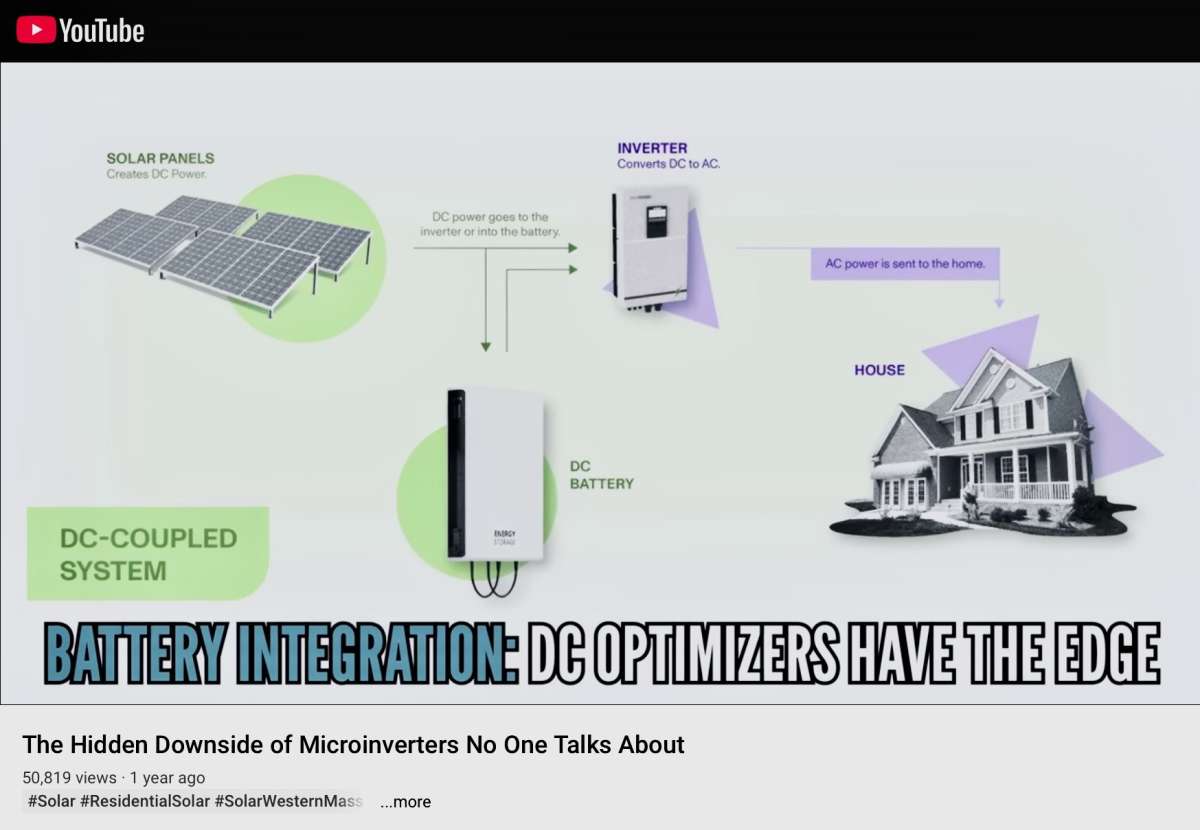
      This is an interesting video on the topic.


      https://youtu.be/oiBw6USlm8U

      IMG_9496


      IMG_9495

      #843126
      Michael Gilligan
      Participant
        @michaelgilligan61133

        An interesting over-view

        … Thanks, Vic

        MichaelG.

        #843145
        Vic
        Participant
          @vic

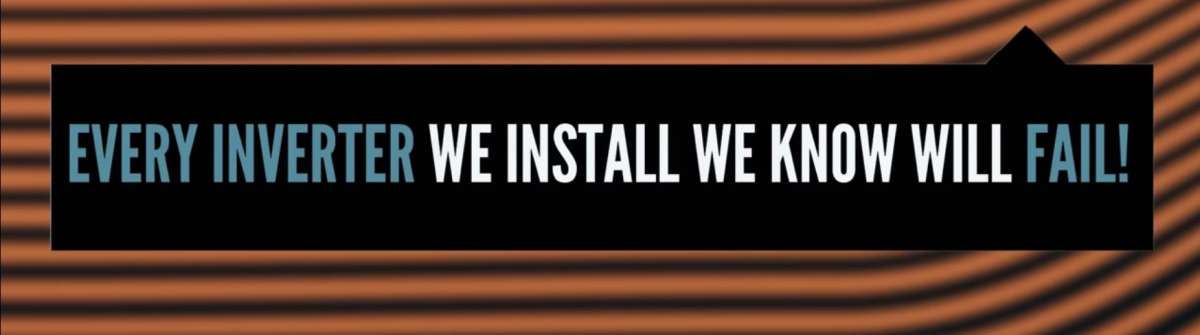
          I’d dismissed the idea of solar as our roof is West – Southwest but apparently it’s still worth doing with modern panels? I’m going to get some quotes so I’ve started looking at some of the issues. I wasn’t aware of the maintenance issue so I’m glad the video link I posted popped up in my YouTube feed. If all inverters eventually fail as suggested, replacing one unit on the side of the house is obviously much easier and cheaper according to the video. Lots more to look at.

          #843159
          Vic
          Participant
            @vic

            You can’t trust Google AI but it’s a good starting point for further investigation. It says this about inverters. As I want modest battery storage and the ability to run from it during short power cuts it seems I’ll probably require a Hybrid Invertor?

            ——————————————————————————————————————————————

            There are three main types of solar inverters used in residential and commercial PV systems:

            string inverters, microinverters, and hybrid inverters. These devices convert direct current (DC) electricity generated by solar panels into alternating current (AC) electricity used by homes and the grid.

            1. String Inverters (Centralized)

            These are the most common and cost-effective type, often used for unshaded, simple roofs.

            How they work: Several panels are connected in a series (“string”), and one central inverter converts the DC power for the entire array.
            Pros: Lower upfront cost, reliable technology, easier maintenance (one central unit).
            Cons: If one panel is shaded, the entire string’s output can drop to that panel’s level.
            Best for: Simple, unshaded, south-facing roofs with consistent sun.

            2. Microinverters

            These are small, individual inverters installed directly behind each panel.

            How they work: DC-to-AC conversion happens at the panel level. If one panel is shaded, it does not affect the others.
            Pros: Higher efficiency in shaded conditions, panel-level monitoring, high reliability (20–25 year lifespan).
            Cons: Higher initial cost than string inverters, harder to replace because they are on the roof.
            Best for: Complex roof layouts, partial shade, or for maximizing energy yield.

            3. Hybrid Inverters (Battery-Ready)

            These combine a solar inverter and a battery inverter into a single unit.

            How they work: They manage power flow from solar panels to the home, grid, or to a battery for storage.
            Pros: Streamlined setup, future-proof for adding batteries, can provide power during blackouts.
            Cons: Higher initial cost.
            Best for: Homeowners planning to add battery storage now or in the future.

            Alternative: Power Optimizers

            Similar to microinverters, these are placed on each panel but do not fully convert DC to AC. Instead, they “condition” the DC power, enhancing the performance of a central string inverter. They offer panel-level monitoring and improved performance in partial shade at a cost between string inverters and microinverters.

            Key Inverter Technologies

            MPPT (Maximum Power Point Tracking): A critical feature in modern inverters that ensures panels operate at their maximum efficiency, increasing energy yield by up to 30%.
            Single-Phase vs. Three-Phase: Residential homes typically use single-phase, while larger properties or commercial sites often require three-phase inverters.
            How to Choose

            Simple, unshaded roof: String inverter (most affordable).
            Shaded, complex roof: Microinverters or power optimizers (higher yield).
            Adding a battery: Hybrid inverter (most efficient).


            #843209
            Paul Kemp
            Participant
              @paulkemp46892

              What ever means you use to “process” the power generated by a solar panel and the efficiency of the equipment used to do that is a fundamental consideration of the overall performance of the whole system and is down to how much power the panels actually deliver.

              I have been using solar on a micro scale for 2 years now in my own little study relating to the trailer I use to transport my steam engine.  I have a double axle trailer which is pretty much 2.3m x 4m.  It is kitted out such that on arrival at an event we can roll the engine out, lay the carpet and use it as a living and sleeping space.  It is kitted out with its own 12v electrics, large capacity leisure battery, winch for moving the engine, lighting and charging facilities for various electronic devices.  I have a single glass, allegedly high efficiency / output panel about 1 sqm that runs through a box delivering charge to the battery and during peak output, power directly to consumers.  We attend around 12 events a year between mid April and mid September that are 2 or 3 day / night trips.  Generally I do not need to provide additional charge either from the grid or by deploying the panel between events (it is not permanently mounted) to keep the battery topped off in June, July or August.  However, April, May and September normally need additional charging.  I can’t carry an additional or larger panel due to weight restrictions and the trailer roof is not really suited to a permanent installation.  The current set up cost around £150.  I calculated the ROI at roughly 15 years on current grid price power if all the charging was done from the grid but for the reasonably small investment I have greater flexibility and some level of self sufficiency.

              My second small solar experience also involves the trailer but over the winter months when it is parked up on a farm where there is no power.  The first winter I had it, as it is uninsulated despite being fairly well ventilated it suffered very badly from condensation.  First move was to put a passive desiccant style dehumidifier inside, it did make a small improvement but it was still damp and camping chairs left inside were showing signs of mould.  I figured despite it being ventilated there wasn’t a good internal airflow, so I invested a huge amount (less than £20!) in a small semi flexible panel with eyelets in the corners and a low current computer style 3” fan.  I tested it in the garden before installation and in reasonable sun it fair whizzes round!  As where the trailer gets parked is surrounded by trees there was really no sensible way to angle the panel so it is lashed horizontally on the roof.  Thinking was if I could improve the airflow for even a couple of hours a day it would improve things and improve it did with the passive dehumidifier capturing significant amounts of water.  It holds a couple of pints and from March 25 (when I fitted the fan) it was needing emptying every 2 weeks until May when I started using it again.  However as may be expected this last winter in December, January and Feb (I put the trailer to bed in November and rigged everything up) the fan might as well have not been there!  When I visited during even what I would consider strong winter sun the fan was barely turning, today when the sun was shining it would have blown a candle out!

              So what has this got to do with your post on inverters and efficiency you may ask?  Pretty much nothing, other than physics says even 100% efficiency will only deliver in output 100% of what goes in and what goes in is dependent on the panels and the available sun.  I assume as with everything the cost is scaleable and the ROI for my mini system may not be representative of a larger one!  For me though considering the capital cost of a system for a house if it’s not giving me a positive return in say 3 years then unless there is another benefit such as countering frequent power cuts it’s not worth it.  If the ROI is approaching 10 years then potentially you are also facing battery replacements and potential inverter failures which will further skew the numbers.

              Paul.

              #843239
              Vic
              Participant
                @vic

                I recently read online about a couple of folks in their late 70’s that are having solar panels installed. They were more concerned about reduced bills and power cuts. Poor return on their savings was also mentioned. Concerns about future increases in energy bills are a worry for many so it’s not surprising that those that can pay for solar panels from savings are fitting them. Having said that there are other ways of financing them other than outright purchase.

                #843295
                Nealeb
                Participant
                  @nealeb

                  For anyone who wants to get at least comparative figures for different orientations of panels, you might like to take a look at this site

                  I have one roof pitch which looks 20° E of S and one which is 20° S of W. I didn’t think the second one would be particularly useful but I was surprised by the results.

                  However, the economics are not as easy as one might think. For example, there is a case for charging a big battery overnight at off-peak rates then selling everything you generate back to the grid during the day at a higher price. I started looking at solar as I have recently bought an EV but then realised that this was completely irrelevant – again, charge overnight on cheap renewable power and sell PV power to the grid. I’m looking at two arrays spread across both roof pitches and my sums suggest I will pay for power for 3 months of the year but be in surplus for the rest. Payback period – 10-12 years, maybe, but clearly very sensitive to energy prices. However, “net zero” notwithstanding, I’m not expecting prices to drop over that period…


                  #843317
                  Michael Gilligan
                  Participant
                    @michaelgilligan61133
                    On Nealeb Said:

                    For anyone who wants to get at least comparative figures for different orientations of panels, you might like to take a look at this site


                    […]

                    That’s an excellent site Nealeb … thanks for the link

                    MichaelG.

                    #843348
                    Michael Gilligan
                    Participant
                      @michaelgilligan61133
                      #843354
                      Robert Atkinson 2
                      Participant
                        @robertatkinson2

                        Victron is a quality manufacturer. Used them professionally, recommended.

                        Robert.

                        #843355
                        Bazyle
                        Participant
                          @bazyle
                          On Vic Said:

                          I recently read online about a couple of folks in their late 70’s that are having solar panels installed. They were more concerned about reduced bills and power cuts. Poor return on their savings was also mentioned. Concerns about future increases in energy bills are a worry for many so it’s not surprising that those that can pay for solar panels from savings are fitting them. Having said that there are other ways of financing them other than outright purchase.

                          I think fears of future power issues are going to be exploited big time to fleece OAPs. The regulations around grid connection in the UK make all systems much more expensive than Europe and hence rarely economic.

                          Only a DIY system, hence not grid tied, has any chance of paying back reasonably. So it is best to class it as a ‘fun toy’ like the extra money you put into a bigger car than actually just gets you from A to B or a bigger mill/lathe, or new furniture etc.

                          #843366
                          Wink Hackman
                          Participant
                            @winkhackman25989
                            On Bazyle Said:


                            Only a DIY system, hence not grid tied, has any chance of paying back reasonably. So it is best to class it as a ‘fun toy’ like the extra money you put into a bigger car than actually just gets you from A to B or a bigger mill/lathe, or new furniture etc.

                            I don’t know how you arrive at this conclusion.  My solar panels and battery are on course to pay for themselves within ten years of installation. And since then the prices of all the components, especially the panels, have dropped.

                            #843391
                            Bazyle
                            Participant
                              @bazyle

                              That’s great if I’m wrong – do give details.

                              #843396
                              Vic
                              Participant
                                @vic

                                Just one one example. Quite surprising how the costs have come down in the last few years.

                                https://blog.lboro.ac.uk/sustainability/2026/02/03/solar-panels-are-they-worth-it/

                                IMG_9574

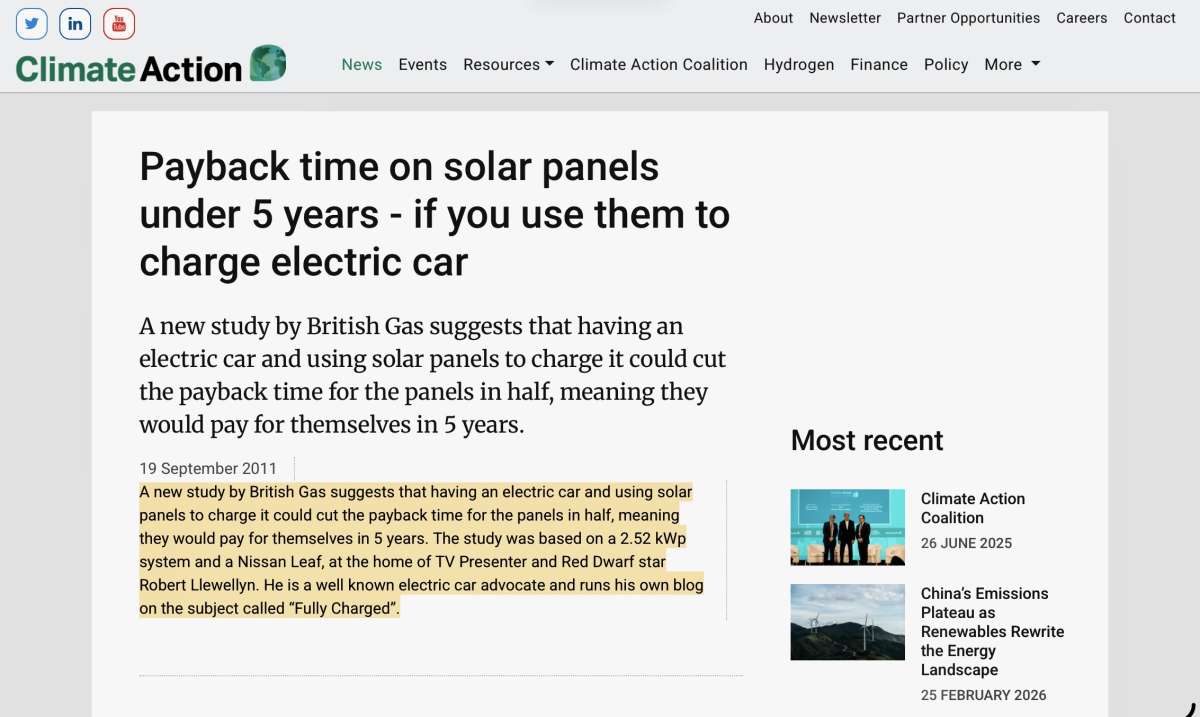
                                As we’ve just bought our first EV it looks like it could be even quicker for us?


                                IMG_9575

                                #843397
                                not done it yet
                                Participant
                                  @notdoneityet

                                  Those that think solar is uneconomic should, perhaps, look at the videos put up by Richard Symons (RSEV) on you tube.  Admitted it is a business where commercial electricity rates but it truly demonstrates the versatility of roof-top solar.

                                  #843421
                                  Michael Gilligan
                                  Participant
                                    @michaelgilligan61133
                                    On Vic Said:

                                    Just one one example. Quite surprising how the costs have come down in the last few years.

                                    https://blog.lboro.ac.uk/sustainability/2026/02/03/solar-panels-are-they-worth-it/


                                    An interesting blog-post … Thanks Vic

                                    MichaelG.

                                    #843437
                                    Vic
                                    Participant
                                      @vic

                                      Yes Michael, it’s nice to see something from someone with practical experience of having them fitted.
                                      It’s still a minefield out there though choosing a potential installer and getting the right equipment. If we do go for it, so far I’m inclined to get a Tesla Power 3 as part of the install unless someone can convince me otherwise.

                                      #843442
                                      Nealeb
                                      Participant
                                        @nealeb

                                        I spoke to 4 potential suppliers before getting bored with them! Two were “national” companies; two were local, one suggested by a neighbour who had used them already.

                                        The salesmen for the national companies sat in my kitchen and asked which roof pitch I was thinking of using. I said it was the one directly above them (house single-storey at that point) and I had a tape handy to measure it. “Oh no, we can use Google Earth view”. What? Maybe near enough but it would have been quicker to just go outside and measure. But maybe they didn’t know how to plug real measurements into their quotation tool which otherwise took data directly from the image. Neither were very interested in looking at cable runs, meter connection, or anything else. Very keen to show me Powerpoint presentations on how good they were. I trusted them about the same amount as the cavity wall salesman I met years ago who didn’t know what a U-value was.

                                        Both local company salesmen were a bit more thorough and both suggested reasonable installations, and in fact both choosing the same make panel/battery/inverter but different sizings. The one I chose then had their electrician come round and do a sanity check before giving me a final quote (which at that point had a new consumer unit added in which would have been needed anyway to handle the wiring changes needed soon for a house extension – and this way, I avoid VAT by including it as part of the solar installation).

                                        Have to admit, though, it’s all a bit of a lottery but the thing that really put me off the two “nationals” was the phone calls a couple of weeks later – “sign up now so we can install you as part of a batch in your area and we’ll knock 40% off the price”.

                                        I asked about Tesla Powerwall 3, which my chosen installer could provide. I went with Sigen – more modular for future upgrade (3 or 5kWh increments, I think) where Tesla upgrades were 13kWh by adding a whole new unit. Control functionality slightly better for Tesla but as far as I could tell, nothing that I actually needed/wanted. But it’s one of those areas that you are not really going to know about until it’s actually in and working and you have the app in front of you.

                                        I started looking at solar PV when I bought an EV – seemed a logical step. But in practice I expect to charge the car overnight at low EV rate and sell excess PV energy back to the grid at a higher price, so the EV angle is pretty irrelevant.

                                        All these points are my personal take and understanding of my own requirements; very much a “your mileage may differ” situation – as is choice of supplier of both PV kit and energy. And the answers may vary with annual weather, what happens to energy prices, and a heap of other pure guesses! Have fun…

                                        #843532
                                        John MC
                                        Participant
                                          @johnmc39344
                                          On Michael Gilligan Said:
                                          On Vic Said:

                                          Just one one example. Quite surprising how the costs have come down in the last few years.

                                          https://blog.lboro.ac.uk/sustainability/2026/02/03/solar-panels-are-they-worth-it/


                                          An interesting blog-post … Thanks Vic

                                          MichaelG.

                                          From the above article.

                                          “My first experience of the likely costs was a discussion with a previous colleague who had solar panels installed over 10 years ago at a cost of around £20K.”

                                          I would have liked to seen a better explanation as to where £20k went on a colleagues installation.  Specifically when that was, 2016?.  Around 13-14 years ago I paid less than a third of that for a 4kW installation.  Was it a difficult installation?

                                          A proper breakdown of installation costs would have been helpful.  While there is no doubt that hardware prices have dropped, what about labour costs?   The price of scaffolding hire and erection hasn’t got any cheaper.


                                          #843535
                                          Adrian R2
                                          Participant
                                            @adrianr2

                                            I was quoted around 20K for an installation some time in the mid 2000s, we did not proceed with it.

                                            Mind you I have probably spent that on grid power since so maybe I should have done.

                                            All these ROI calculations are hard over long periods as they don’t consider what else you could/would have done with the cash meantime. Stuffed under the mattress you are likely better off, properly invested possibly not.

                                            #843552
                                            Vic
                                            Participant
                                              @vic
                                              On Adrian R2 Said:

                                              I was quoted around 20K for an installation some time in the mid 2000s, we did not proceed with it.

                                              Mind you I have probably spent that on grid power since so maybe I should have done.

                                              All these ROI calculations are hard over long periods as they don’t consider what else you could/would have done with the cash meantime. Stuffed under the mattress you are likely better off, properly invested possibly not.

                                              This is something I’ve seen mentioned a few times. In the article I linked earlier the guy who wrote the blog included this in the final expected payback period.

                                              We’ve never had particularly good returns on our savings, and I’m pretty sure if we did we end up paying more tax.

                                              #843574
                                              noel shelley
                                              Participant
                                                @noelshelley55608

                                                A simple experiment with a small panel showed that if the panel was kept facing the sun in both direction and elevation it produced far more power than being left facing south and at some small angle of elevation. This indicates that only an auto tracking array would give good results. Has any one tried this approach and what were the results ? Noel.

                                                #843602
                                                Adrian R2
                                                Participant
                                                  @adrianr2
                                                  On Vic Said:
                                                  On Adrian R2 Said:

                                                  I was quoted around 20K for an installation some time in the mid 2000s, we did not proceed with it.

                                                  Mind you I have probably spent that on grid power since so maybe I should have done.

                                                  All these ROI calculations are hard over long periods as they don’t consider what else you could/would have done with the cash meantime. Stuffed under the mattress you are likely better off [with solar], properly invested possibly not.

                                                  This is something I’ve seen mentioned a few times. In the article I linked earlier the guy who wrote the blog included this in the final expected payback period.

                                                  We’ve never had particularly good returns on our savings, and I’m pretty sure if we did we end up paying more tax.

                                                  The internet tells me that if I’d given that 20K to Warren Buffet to look after in 2005, then I’d have £160K now. Similar for a global all-shares tracker fund. Makes solar then look rather expensive.

                                                  Unfortunately the time machine I intend to order in the future hasn’t arrived back here now yet, so hard to say what is best to do today.

                                                  #843604
                                                  duncan webster 1
                                                  Participant
                                                    @duncanwebster1
                                                    On noel shelley Said:

                                                    A simple experiment with a small panel showed that if the panel was kept facing the sun in both direction and elevation it produced far more power than being left facing south and at some small angle of elevation. This indicates that only an auto tracking array would give good results. Has any one tried this approach and what were the results ? Noel.

                                                    It doesn’t suggest any such thing. It shows that a tracking array is better than fixed, which isn’t surprising, but fixed might still be good

                                                    #843608
                                                    Vic
                                                    Participant
                                                      @vic
                                                      On duncan webster 1 Said:
                                                      It doesn’t suggest any such thing. It shows that a tracking array is better than fixed, which isn’t surprising, but fixed might still be good

                                                      I’ve seen several links on the internet mentioning vertical panels. Probably no good for residential but it perhaps dispels some of what’s been assumed about solar panels?

                                                      I’ve not read this yet, just posting out of interest.


                                                      https://www.overeasy.no/post/unveiling-the-surprising-truth-how-vertical-solar-panels-outperform-traditional-systems-in-the-uk

                                                    Viewing 25 posts - 1 through 25 (of 41 total)
                                                    • Please log in to reply to this topic. Registering is free and easy using the links on the menu at the top of this page.

                                                    Latest Replies

                                                    Home Forums The Tea Room Topics

                                                    Viewing 25 topics - 1 through 25 (of 25 total)
                                                    Viewing 25 topics - 1 through 25 (of 25 total)

                                                    View full reply list.