Search Results for 'arc euro'

Search Results for 'arc euro'

Home Forums Search Search Results for 'arc euro'

Viewing 25 results - 1,501 through 1,525 (of 4,844 total)
  • Author
    Search Results
  • #498422
    Watford
    Participant
      @watford

      At last Arc Euro are back advertising on this site.

      Nice to see them back.

      Steve.

      Yes, indeed, plus one to that.

      I wonder if they will be restocking model engineer's BA and Imperial requisites once again?

      Mike

      #498375
      Steviegtr
      Participant
        @steviegtr

        At last Arc Eurotrade are back advertising on this site.

        Nice to see them back.

        Steve.

        #498365

        In reply to: Milling cutter advise

        Martin Connelly
        Participant
          @martinconnelly55370

          You could see what Arc Eurotrade have o start with, they advertise on this site and have plenty of people on this forum who have praised their service.

          Martin C

          #498295
          Thor 🇳🇴
          Participant
            @thor

            Hi Joe,

            Welcome to the forum and congratulations with your "new" lathe. What kind of DRO do you want, there are several price classes, see here or here.

            Thor

            #498129
            T.B
            Participant
              @t-b-2

              I think i have the same Arceurotrade 90mm vice you describe !

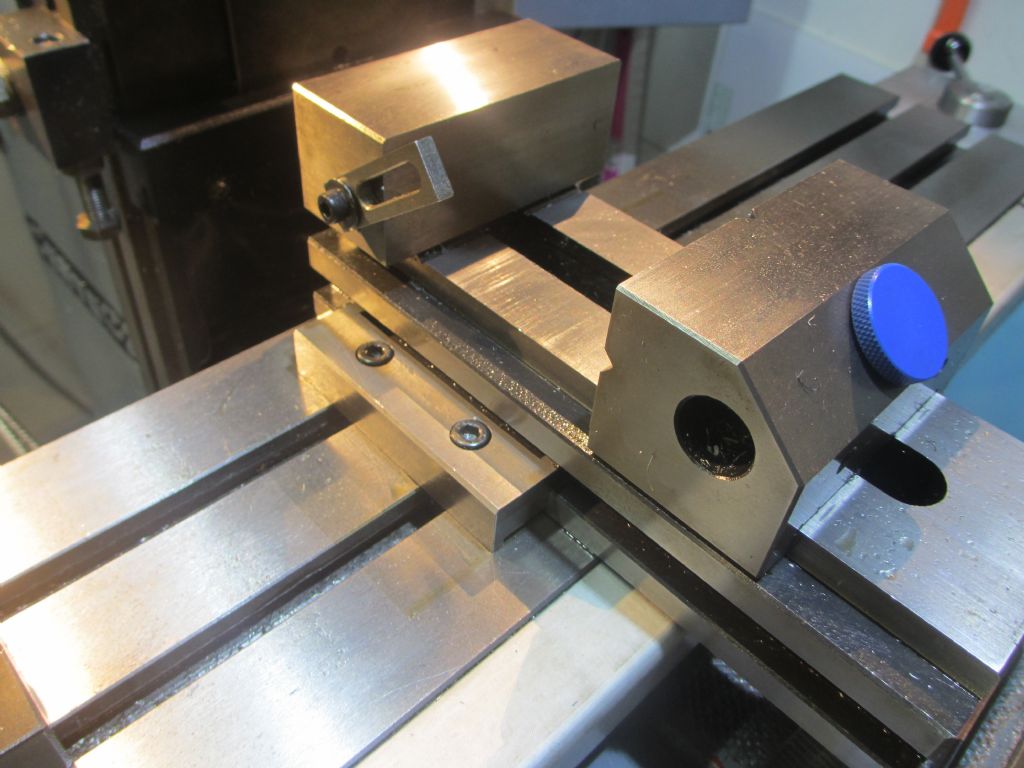
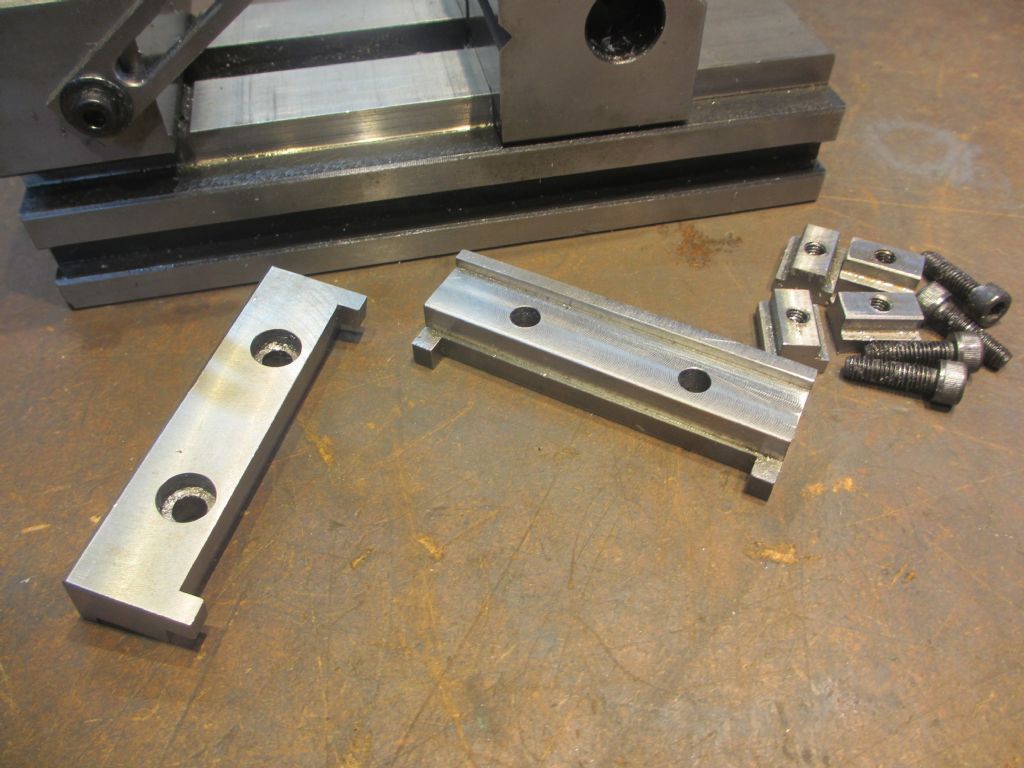
              Here's the clamps i made for it , they allow clamping from the sides and the ends of the vice as i often want to clamp the vice in both the X and Y axis for different purposes.

              Although the contact area with the vice looks very small i have never had it move in use.

              img_4684.jpg

              img_4685.jpg

              img_4686.jpg

              #498032
              Bill Phinn
              Participant
                @billphinn90025

                For several months my 90mm Arceurotrade Type 2 vice has been held down to my milling table with step+strap clamps and studding into T-nuts. The clamping has been perfectly satisfactory in most respects, the only objections being that the set-up isn’t very low profile and it permanently takes the clamping components out of service for other purposes.

                My plan is to make four vice clamps of the double-step variety, probably held down with cap screws through counterbored holes into T-nuts. I’ve seen numerous videos online of people making vice clamps, but in none of those I’ve seen involving a vice like mine with a horizontal clamping slot does anyone actually discuss how you tailor the dimensions of your clamps to the dimensions of your vice so as to get optimal holding power in the slots.

                In my case the slot is 10mm wide [or tall!] and 7.5mm deep, and the slot begins 10mm from the base of the vice. This tells me the tongue that goes into the slot should be at least 7.5mm long and a shade under 10mm thick, but the critical thing I’m unable to decide on is what thickness overall to make the clamp when measuring from the thickest point, i.e. the heel that contacts the table. Clearly an overall thickness of less than 20mm would mean the tongue would be angled upwards when entering the slot and a thickness of more than 20 mm would mean it would be angled downwards, in each case requiring some extra thinning of the tongue for full insertion.

                But what will happen in the event that the max thickness is exactly 20mm [the overall length of the clamp being, say, 50-60mm]? Will the downwards pull on a tongue entering exactly horizontally make for a more secure fixing than either of the alternatives as long as the cap screw is closer to the tongue than the heel?

                Sorry for my footlingly elementary question, and thanks in advance for any help.

                #497835
                Ketan Swali
                Participant
                  @ketanswali79440

                  Nir,

                  Welcome to the forum Nir. Where are you from?… just asking as I am sure that it is not a machine supplied by ARC.

                  The issues you raise are of concern. However, before you explore comments and advice which may follow from various forum contributors, could I ask about your engineering background and knowledge of checking machines? Did you use the machine as received, or, did you strip it apart and re-assemble it?. How did you lift and place the machine in its final place of operation? There are several methods of measuring alignment – good and bad. Checking alignment is a subject which most people – new to the hobby have less experience with, and I do say this with the greatest of respect. Most people will speculate. This is not something which I would/could discuss at length, because it is difficult to be sure without sight of the specific machine.

                  How old is your machine and what is the serial number (you will find it on the bed of the Y axis, near the front). Is your machine the standard length table or the longer 'L' version?. There will be variation from one end to the other. the longer the table, the more the variation, but it is normally addressed by use of shim/s under the work piece being machined – if the workpiece being machined is long (I will keep away from getting into a debate on this point – as there are too many variable factors involved), based on how the variations are measured, combined with expectations over the length of the table. There was a batch of SX3.5 machines which had a paint issue, which has now been rectified. However, I am unaware of such an issue with the SX2.7.

                  I am surprised to read that a corner of the top-back cover on the second machine had 'sheared apart'. Could you show some pictures of this?.

                  It is true that most Chinese factories will touch up paintwork where it may have come off, be it SIEG or any other. With reference to alignment, ALL Chinese machines in this price range are first assembled, and then checked and adjusted for alignment. Possibly not the best practice, but that is the way it is.

                  Once the machine leaves the factory, temperature, handling, mis-handling can effect alignment too. In your case, I would suggest that you employ the services of a machine tool fitter to adjust and align this or any other machines you may be considering, be they SIEG or otherwise.

                  The SX2.7s and SX3s are very popular sellers for ARC in the U.K. and Europe. Most customers are happy with them, and our general advice has been to use them as they come out of the box, making slight adjustments for anything which may have become loose for example. Only consider 'major' adjustments if they have the knowledge, once the machine has settled into their working environment. This is possibly different from advice you may get from some others, but that is our view on the subject. In the U.S. these machines are sold 3x more than in the U.K., even after the Trump tariff, and usually, the users there invest in a pack of shims to deal with their specific needs. With a few Friday afternoon exceptions, these machines are great for most hobby users.

                  Before anyone says anything, in our opinion, these machines are fit for general use as supplied. Yes there will be some Friday afternoon assemblies, which most good sellers will replace or refund, but if one is expecting a toolroom spec., or a machine which is adjusted or prepared by a toolroom fitter at the installation end, they they should consider alternatives or budget for the extras, depending on their own knowledge and experience. In this respect, some Youtube knowledge is great and some is poor.

                  Finally, if you are considering an SX3, the assembly teams which assemble the SX2.7s are the same as the teams which assemble the SX3s. So, I hope that in some way that answers your question about the SX3, to a certain extent, excluding other peoples opinion. No doubt Paul Lousak from Australia will come along shortly to tell you how happy/disappointed he was with his SX3 which he used outside/beyond the limitations of the SX3.teeth 2

                  Ketan at ARC.

                  #497498

                  In reply to: Milling cutter advise

                  JasonB
                  Moderator
                    @jasonb

                    As the others have said a flycutter would have been the traditional choice and one that I would have used, with a plain shank one the same size as David's being my usual weapon of choice. These are not expensive and provided you are happy sharpening the tool bit will get many "sharp" edges for the initial outlay.

                    But lately I'm more likely to reach for an insert shell/face mill particularly on aluminium with suitable inserts. These tend to be more balanced that flycutters as the speed goes up which is what you want for aluminium and if using as 40mm dia 4 insert body you can feed a lot faster for the same given chip load. You can run one of these at full speed of teh SX2P and wind as fast as you can roughing at 1mm deep per pass and finish with that depth or less with half the feed rate.

                    From personal experience I would say avoid the very cheap facemills as there are issues with them but mid range from a known source with mid range Aluminium specific inserts will work well, this is what I'm currently using.

                    In both cases a small amount of Paraffin or WD40 will improve finish and stop metal sticking to the cutter

                    Edited By JasonB on 24/09/2020 08:26:14

                    #497354
                    Dave Wootton
                    Participant
                      @davewootton

                      Hi Mark

                      The needle roller conversion is for the crosslide feedscrew and only applies to ML7 and ML7R , it is on the projects section of the ARC Eurotrade website, they also sell the bearings required very cheaply.

                      I think there have been roller bearing conversions published for the Super 7 & ML7R headstocks, but I've never looked into it as I'm quite happy with mine as it is.

                      I'm not at home to check but I seem to remember the articles on Myfords by Peter Barker were around October 2019 to March 2020, well worth seeking out.

                      KWIL I had a look but I can't find a PM from you.

                      Dave


                      Edited By Dave Wootton on 23/09/2020 10:50:17

                      #497183
                      Nicholas Farr
                      Participant
                        @nicholasfarr14254

                        Hi David, I've just done a search for that customs email address and it takes you to a Royal Mail site, which does come up with the Royal Mail address in the bottom left hand corner when you hover over the links, it has a box for you to enter a reference number, which can be found on your "Fee to Pay" card or if you received one, your SMS/email notification, but it doesn't seem to be directly connected to the Post Office, it is however linked to customs payments and the list of payments are given in GBP not Euros. So the actual email address may be a scam and why, as has been said, would the Royal Mail be concerned with a commercial courier. Like Oldiron says, try contacting DPD and it might be worthwhile contacting Royal Mail also to enquire if they would be connected to such payments. Don't totally ignore it, but check it out before clicking any links. My Norton security didn't flag up any security risks by searching that email address as you have written it.

                        Regards Nick.

                        P.S. passage card pin code number, has a connection to door locks, digital ones I presume.

                        Edited By Nicholas Farr on 22/09/2020 11:20:38

                        #497056

                        In reply to: WM16 or SX2

                        mechman48
                        Participant
                          @mechman48

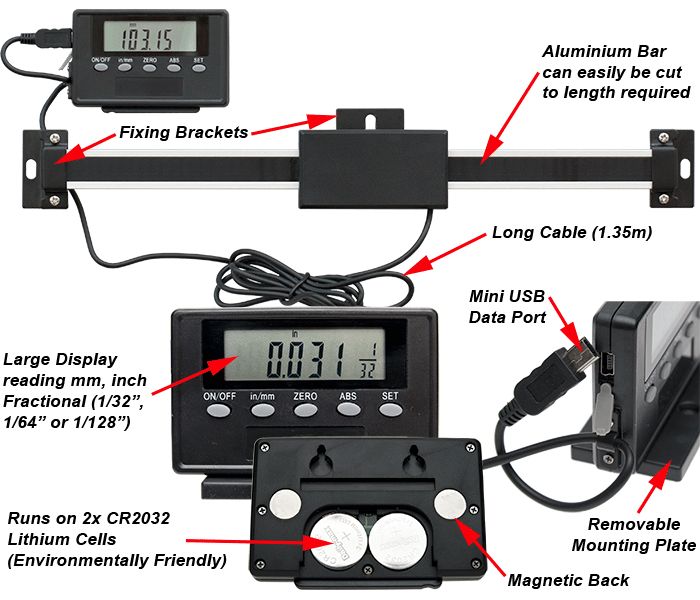
                          … 'I fitted two of these very basic DRO scales and displays to my mill, and they work well. I intended them to be temporary but they're still going strong 5 years later!'

                          arcdro.jpg

                          Mine came from Arc Eurotrade (it's their image) , other suppliers available.

                          'Differences between these and 'decent' DROs: battery powered (6 to 9months); two displays to look at, not one ergonomically combined with buttons; simple functionality – doesn't do PCD and other clever stuff (that I've never needed); scales have to be kept clean and avoid splashing coolant and swarf; not top accuracy, but 0.02mm is good enough for me and at least as accurate as my mill's dials. Despite shortcomings they make using the mill much easier'.

                          …These are the same dro's that I have set up on my WM16 & at present not in the realms of upgrading to any thing more expensive, much as I'd like to. I can concur with the above comments whole heartedly, to date I change the batteries once a year & I only fit the CR 2032 type, as others I've tried, alternative brands, don't last as near as long. As for the minute discrepency in readings… as above, so far I'm quite satisfied with these so will keep the set up for as long as it / they keeps going, worth the cost for these. Usual disclaimer appliies.

                          George.

                          Edited By mechman48 on 21/09/2020 14:58:09

                          #496977
                          pablo
                          Participant
                            @pablo

                            Gents – thank you very much.


                            What I've taken from the above, which I find quite reassuring, is that there isn't an 'obvious' answer. i.e. I wouldn't be missing the obvious choice and kick myself later.


                            So – by 'compliment an ML7' I should stress that I mean in terms of size, price-point and capability – rather than aesthetics. That is, I wouldn't want a micro-mill that would be overshadowed by the ML7, nor would I want an industrial mill that would outstrip the Myford – just two nicely complementary machines for working in similar sized materials. Though the latter would be a nice touch and while there is something romantic about older British machines, I'm aware of my own limitations.


                            The Emco linked above is beautiful, but a little over budget. I'll keep an eye open for one, as its a lovely thing.


                            The Dore Westbury is a wonderful suggestion(which I've actually come across previously and just watched a lovely video on youtube – being a lovely companion to the ML7). There are three for sale at the moment (all mk1s) which I'm having a good look at – of course the question is the quality of the original finishing by the home engineer responsible for initial assembly a well as the round column. The upside is a lovely history and something that is truly beautiful to see. Unfortunately my own skills are not yet up to those that would have been needed for initial assembly, so its likely I wouldn't be able to spot or correct an error in the machine.


                            And then there's the other choice: a Sieg SX2P. Far less attractive, but most likely more usable for someone still learning – which reinforces Nick's point above. Another modern mill I've considered is the Taig micro-mill. Overnight however, I've slashed my budget down to £800. The reason being that I've just ordered a new laptop computer specifically built to let me use Fusion360 so that I can build on my modelling skills – the reason I mention this is that it would be lovely to buy a mill for which there is CNC support in case I manage to go down that route in the future – which both the SX2P and Taig do. With the Taig now out of budget, the SX2P remains.


                            But the one that has truly caught my eye is the Raglan. I'd never heard of it before and since seeing the link above, I've googled every page I can find on it – the footprint is perfect, the capabilities seem to cover everything I want, short of off the self CNC potential and… though it pains me to say (and at the risk of contradicting my first sentence regarding aesthetics): it is a lovely looking thing that would be wonderful to pass on in the family.


                            So I'm going to spend a few weeks monitoring the classifieds looking for a Raglan – if I can find one, which seems highly unlikely, then expect a rebuild thread (if anyone sees one – a private message would be most welcome). If not, it'll be out with the credit card and a simple order of an SX2P.


                            Sounds sensible?


                            Thank you all once again for your help.


                            Edited By pablo on 21/09/2020 00:47:29

                            #496871

                            In reply to: WM16 or SX2

                            Oldiron
                            Participant
                              @oldiron
                              Posted by SillyOldDuffer on 20/09/2020 10:26:31:

                              Posted by Paul Mallen on 19/09/2020 22:35:38:

                              …just built my own coil winder for pickup making and used a hall effect sensor on it to count the number of winds, and i know this can be adapted for RPM as well so i intend to knock something up until i can afford a good DRO

                              Don't let me put you off rolling your own, but if time and money are short, I fitted two of these very basic DRO scales and displays to my mill, and they work well. I intended them to be temporary but they're still going strong 5 years later!

                              arcdro.jpg

                              Mine came from Arc Eurotrade (it's their image) , other suppliers available.

                              Differences between these and 'decent' DROs: battery powered (6 to 9months); two displays to look at, not one ergonomically combined with buttons; simple functionality – doesn't do PCD and other clever stuff (that I've never needed); scales have to be kept clean and avoid splashing coolant and swarf; not top accuracy, but 0.02mm is good enough for me and at least as accurate as my mill's dials. Despite shortcomings they make using the mill much easier.

                              Only problem I've had was one of the USB plugs intermittently lost contact when mounted on the control box and the contactor thumped in and out. Moving the displays under the table fixed that.

                              When they give up the ghost I shall upgrade. So far no need.

                              Dave

                              I agree Dave. The I-Gaging scales are good. I have them on both my mills. I also have them ready to refit to my lathe after a strip down and refurb'. I have done away with the batteries on the Chester and have used a PC power supply with a variable DC dropper to get 3.3 vdc from 12vdc. On the Ajax I use BluDro in conjunction with a cheap 7" tablet as a display. I can do bolt circles & 1/2 dimensions with that as well. I actually bought mine in the USA (less than 1/2 price of UK versions) more than 6 years ago and they are still going strong.

                              regards

                              #496865

                              In reply to: WM16 or SX2

                              SillyOldDuffer
                              Moderator
                                @sillyoldduffer

                                Posted by Paul Mallen on 19/09/2020 22:35:38:

                                …just built my own coil winder for pickup making and used a hall effect sensor on it to count the number of winds, and i know this can be adapted for RPM as well so i intend to knock something up until i can afford a good DRO

                                Don't let me put you off rolling your own, but if time and money are short, I fitted two of these very basic DRO scales and displays to my mill, and they work well. I intended them to be temporary but they're still going strong 5 years later!

                                arcdro.jpg

                                Mine came from Arc Eurotrade (it's their image) , other suppliers available.

                                Differences between these and 'decent' DROs: battery powered (6 to 9months); two displays to look at, not one ergonomically combined with buttons; simple functionality – doesn't do PCD and other clever stuff (that I've never needed); scales have to be kept clean and avoid splashing coolant and swarf; not top accuracy, but 0.02mm is good enough for me and at least as accurate as my mill's dials. Despite shortcomings they make using the mill much easier.

                                Only problem I've had was one of the USB plugs intermittently lost contact when mounted on the control box and the contactor thumped in and out. Moving the displays under the table fixed that.

                                When they give up the ghost I shall upgrade. So far no need.

                                Dave

                                #496680

                                In reply to: Hi

                                bricky
                                Participant
                                  @bricky

                                  Welcome Gwyn.

                                  I have a Sieg SX3 from Arc Euro Trade the service was exellent and the machine which I have had for 9 years has had no problems and does all I need.We are mostly goverened by what we intend to make and the space availiable so I wish you luck with your choice.

                                  Frank

                                  #496649

                                  In reply to: WM16 or SX2

                                  Paul Mallen
                                  Participant
                                    @paulmallen24579

                                    Stuart, Nigel – yes i did clock it after i posted that last comment, It still gives a good impression of the Sieg mills and i'm switching between your link Nigel and This from off the Arc website, so its all good.

                                    Thanks for that Stuart and when it comes to engineering i am also a beginner, and to be perfectly honest if a micro mill came up for a couple of hundred quid close by i think i would grab it – its better than what i have at the moment…

                                    Not done it yet – i know exactly what your wife means and i've never been one to shy away from splashing out on what i want, i usually get distracted & develop an itchy 'buy it now' finger, but i'm trying to be good & get my research done before committing.

                                    Thanks Ron, you've basically echoed what i'm thinking with the upgrades and its good to have another +1 for the SX2.

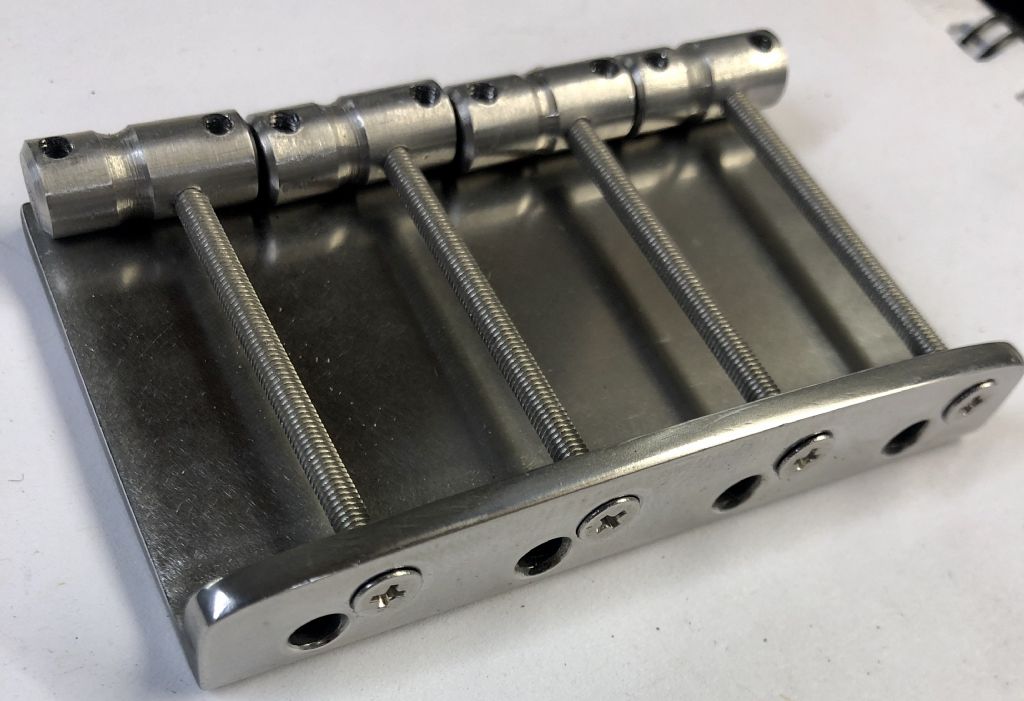
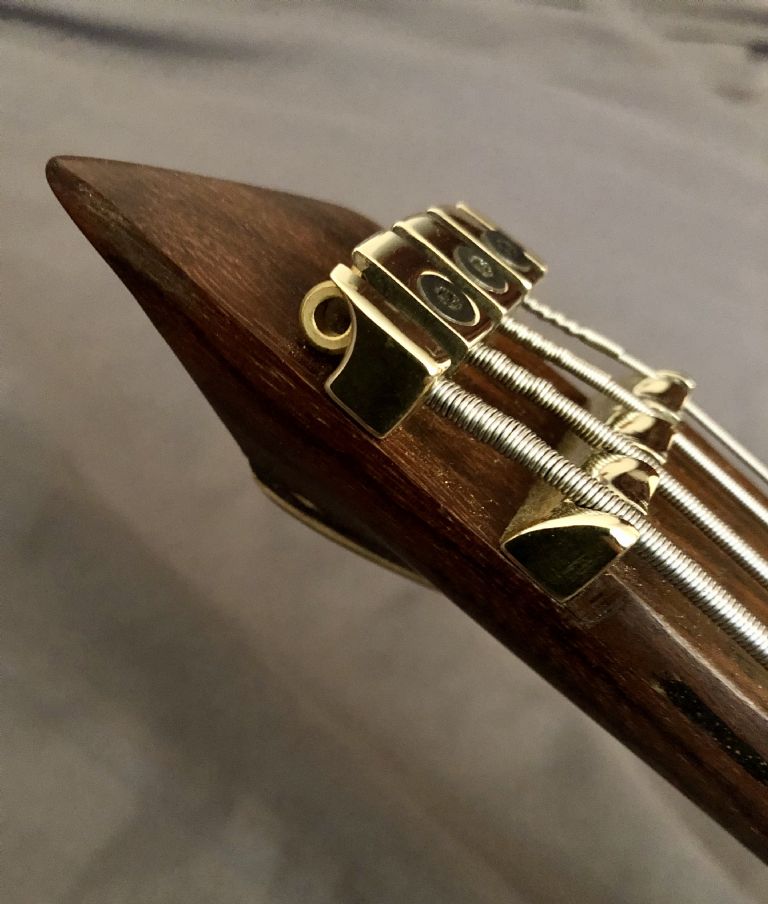
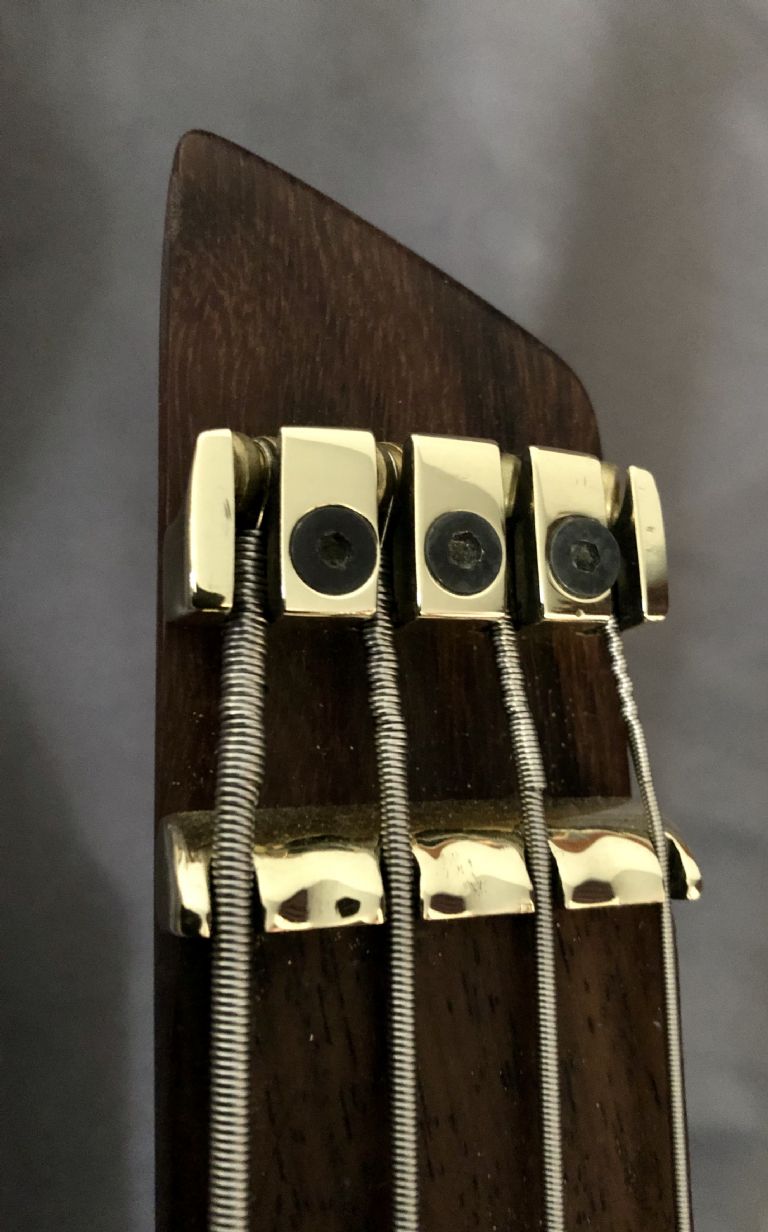
                                    I know i've posted this before but this is what i'm after with a mill – i'm a luthier (i make guitars – well, basses mainly as i am a bassist of over 35 years playing experience) and the mill (i hope) will be the difference between a professional finish & hand finish – mainly on the bridges i make, and heres one i made earlier;

                                    189dc5ba-176b-4647-bc59-2d61da99cfa5.jpeg

                                    I want to be able to mill the edges after cutting them with a hacksaw so they're straight, its all hand files at the mo which is taking a stupid amount of time & i'm never satisfied with the finish. Also i want to be able to skim a few thou off the surfaces so i can either leave the machined finish or whack it in the sand blaster then polish to a mirror or brushed finish. The round bits which are called the saddles need the holes drilled to a greater degree of accuracy that i cannot get with my Clarke bench drill & compound cross-slide vice, I drilled these by printing a plastic sleeve with my 3d printer that had the holes placed where i needed them to be, then inserted the stainless bar & drilled following the template, even this had mixed results and wasn't very consistent.

                                    Plus the fact i want to make my own tuners so need the accuracy and ability to machine a block of aluminium to take the worm gear & drive – all small stuff really.

                                    I do charge a bit of cash for a build – anything from £600 to £1600 so a professional finish is paramount, which is why i need the mill, don't get me wrong, if it allows me to obtain the finish i'm after then upgrading will be next on the list (hence why i'll grab a micro mill for the right money), and judging by what i've seen going on the auction sites i'll only need the proceeds of a couple of basses to upgrade to a real serious piece of kit, plus i have the luxury of being single so the only voice i need to heed is the one coming from my wallet.

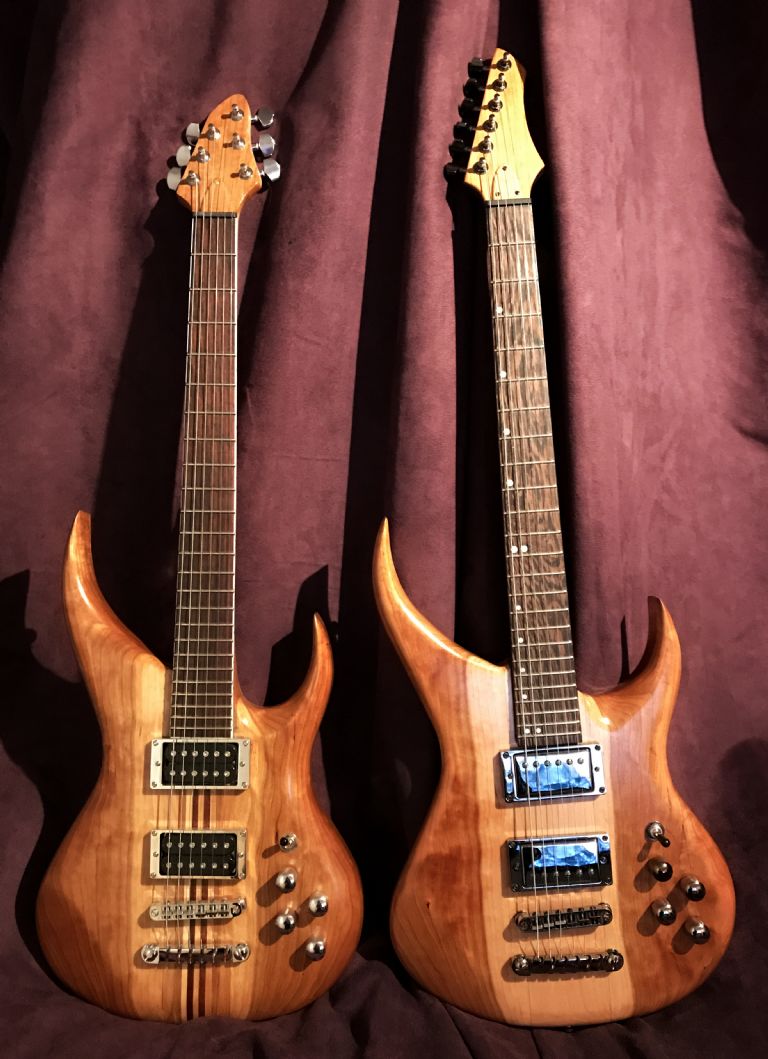
                                    Heres a couple of previous builds if anyone may be interested, it will give you some idea of what i'm trying to achieve – basically i don't want to buy any hardware such as bridges, tuners, pickups, i want it all made in house.

                                    img_0067.jpg

                                    img_1345.jpeg

                                    img_1346.jpeg

                                    #496432

                                    In reply to: Which lathe

                                    not done it yet
                                    Participant
                                      @notdoneityet

                                      Are you sure that imperial threads cannot be cut? My lathe has an imperial lead screw but I can cut most metric threads to a very close approximation, as needed. Maybe Arceurotrade is not out of you ‘travel range’?

                                      I've purchased Items (not major ones, like machines) from all three, but my usual ‘go to’ supplier is Arc.

                                      #494152

                                      In reply to: Welder buy

                                      Ex contributor
                                      Participant
                                        @mgnbuk

                                        Avoid inexpensive "hobby" machines.

                                        In pre-Google research days I bought a SIP Migmate 130. Occasionally – on those days when the stars & moon aligned & the was a U in the month – it would lay down a nice, smooth weld. But that was the exception, not the norm & the last time I used it I spent more time trying to get the wire to feed smoothly (including fitting a new liner & tip) than the job took.

                                        Now with the benefit of Google I find that such issues with the Sip Migmate 130 are well documented. Looking at the options, a new reasonable quality machine is more than I want to spend on equipment I don't use regularly, but a thread on the Mig welding forum form someone who tried to sort the many issues with this machine (also known as a Cosmo) lead me to check out the cost of better quality bits on Ebay.

                                        So for around the cost of a Lidl gassless Mig welder I have a 3 metre Eurotorch, Eurotorch chassis socket, a couple of Dinse power connectors, a replacement wire feed unit, gas solenoid valve, power supply & variable speed drive. Plus 4 metres of 25mm cable & a heavy duty earth clamp. Still to source a power contactor & a couple of relays. All that will remain of the Sip components will be the chassis, transformer & associated switches and the rectifier. This should remove many of the problem areas, plus add gassless capability (allow reversal of polarity) & a non-live torch. Probably find that the transformer isn't up to much then !

                                        Worthwhile searching out the Mig welding forum for more information & to ask about any particular machine that takes your fancy.

                                        Depending on your usage the "rent free" gass suppliers may not be the cheapest option. BOC do a hobby user, low rental rate scheme for a "Y" sized (IIRC) Argoshield Lite cylinder that is much cheaper for refills than the "rent free" suppliers. A similar deal is also available for Argon for Tig use.

                                        Nigel B

                                        #494105

                                        In reply to: Welder buy

                                        Steviegtr
                                        Participant
                                          @steviegtr

                                          Hi Andy. Yes you can get a multi function welder. I was looking at them before i bought my present Tig welder. For a good quality one , they are quite expensive. In the end i opted for a top quality Thermal arc / esab HF Tig unit so i could do aluminium as well as other types of metal. I bought this 2nd hand & i think it was something like £900.

                                          It is AC. & DC. which also does stick welding. You could use your 100% argon gas if desired. For most mig welding a 95% Co2 5% argon is the ideal. A lot of folk use 100% Co2. But for a clean shiny weld with less spatter, the 5% argon is the best. If you want to do stainless mig. (METAL INERT GAS) then you need 100% Argon or as it is called Argoshield. Some of the comments are incorrect. You never want Oxygen anywhere near your weld. This introduces oxydization. This can be seen if you try to weld with no gas, you will end up with lots of pin holes in the weld & the metal will have carbonized & the actual weld turns brittle & breaks very easy. This is in the word inert. The whole idea is to shield the arc from oxygen, using an inert gas. Molten metal & oxygen pretty much = Carbon.

                                          I have had a few Mig welders & they are very good for items like car bodywork etc. No good for thick steel as they cannot penetrate like stick does.

                                          At the end of the day what do you need it for. This time i chose to go Tig so that i could do alloy as well as brass. (Not tried yet) Stainless & mild steel. I have no regrets on not getting a MIG/TIG set.

                                          This is where i have to be careful of what i say. Rules etc. Only that the one i have now is an American made machine. It is difficult to assertain where one is made because of european companies badging is not always made in europe. This is my 3rd Tig welder ,but only the 1st with both AC & DC.

                                          The last 2 did not last very long & were made in China, although badged as Stanley. It was only when they went pop & i rang Stanley for backup, only to be told the Stanley name is not british any more. The 2 i had bought for work ended up in the bin. But they were very cheap ebay offerings & did pay for themselves 10 fold before failing.

                                          Also if you have never done Mig, it is very easy to get up to speed. If you are right handed then with your stick welding you would have laid the weld from left to right. With mig you weld from right to left, & the same with Tig.

                                          Look on youtube there are some very good vids showing how it is done. Hope this helps.

                                          Steve.

                                          Edited By Steviegtr on 03/09/2020 23:07:27

                                          #493465

                                          In reply to: CNC Gear Hobber

                                          John P
                                          Participant
                                            @johnp77052

                                            From my last posting here have bought new 20DP 20 deg PA
                                            hob from Aliexpress ,arrived in 2 weeks ,identically similar to
                                            the 14.5 PA that was from Arc euro ,they have about 90 or
                                            so gear cutting hobs ranging from .1 mod to about 8 DP.

                                            http://www.aliexpress.com/store/group/Gear-hob/1503094_510830882.html?
                                            spm=2114.12010108.0.0.30fe2a2eMkcaRV

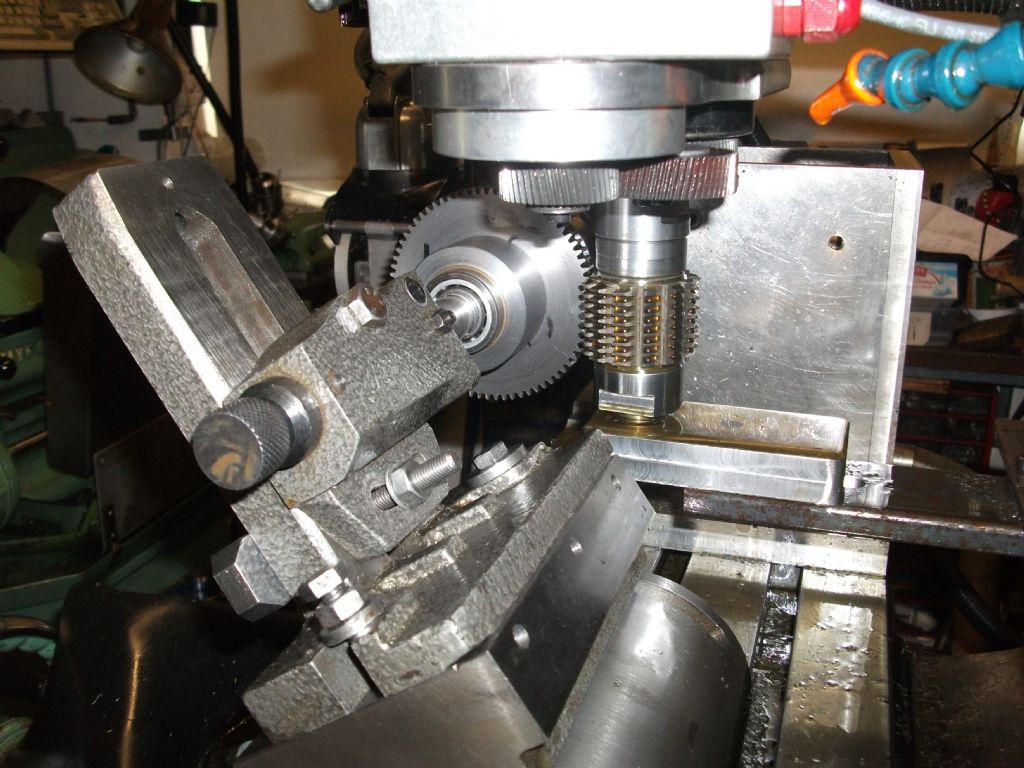
                                            Seen here on the mill the Arc Euro 20 dp hob cutting a 73 tooth
                                            Myford changewheel .Home made R8 arbor has some additional
                                            underarm support bolted directly to column, i think this is
                                            essential with this size of hob (50 mm OD) .Cuts steel gears
                                            at 190 rpm full flood neat cutting oil cut depth .1115 inch.

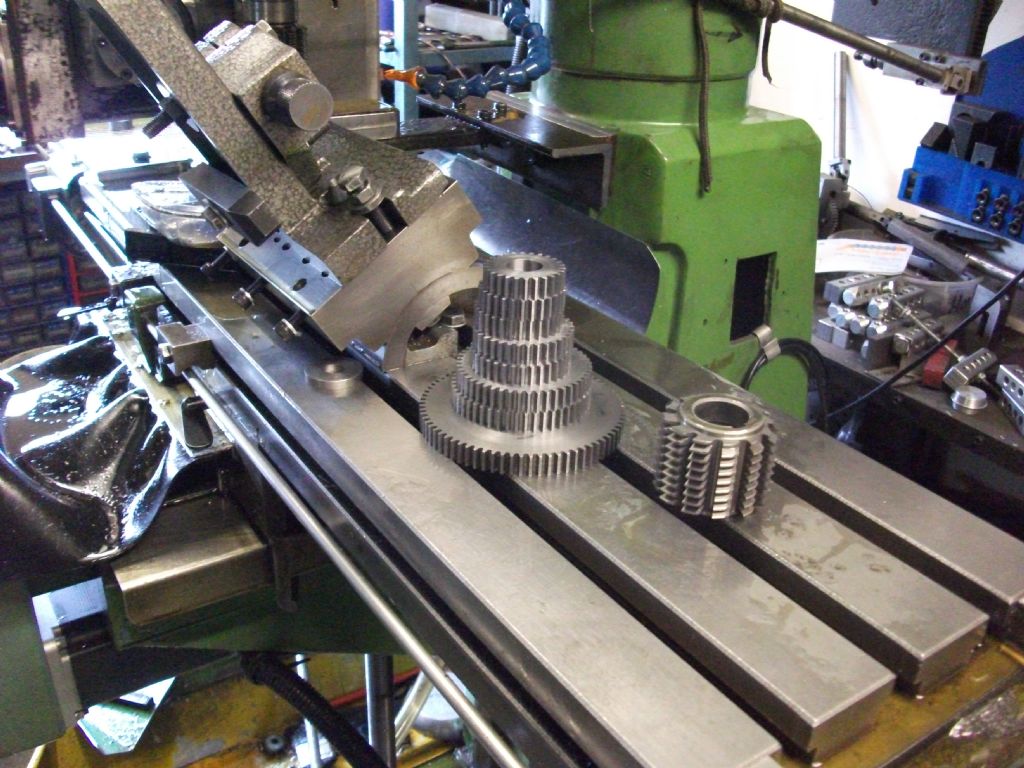
                                            Second photo some cut Myford gears and new 20 dp hob.

                                            Johnmyford change wheel .jpg

                                            new 20 dp hob.jpg

                                            #493278
                                            Nick Clarke 3
                                            Participant
                                              @nickclarke3

                                              The problem facing you is that I doubt anyone has bought and used both of these machines as they are direct alternatives. If you do find such a person listen to them! Otherwise ignore any apocryphal gossip!

                                              My only contribution would be to say that I have the SC3 400, bought from Arc Euro and am very happy with it, but as for the Warco I can't comment.

                                              Edited By Nick Clarke 3 on 28/08/2020 23:23:43

                                              #493231
                                              An Other
                                              Participant
                                                @another21905

                                                This seems to have wandered away from Davids Lathe Problem –

                                                Just to re-iterate for Davids sake: The control board is a Pulse Width Modulation controller and DC power supply, providing something like 200VDC. The DC supply powers the motor, and is switched by the controller – varying pulse width controls the motor speed.

                                                As mentioned by other members, the motor can be tested by connecting across a 12V car battery – it should turn fairly slowly – if it does, chances are it is OK.

                                                Also as mentioned, the controller board can be tested with a 100 Watt incandescent filament bulb – connect it in place of the motor, and it should be possible to vary its brilliance using the motor speed potentiometer. If its on Full, and uncontrollable, chances are the output devices (there are various types) on the controller board are short – circuit – this is a common fault, but can be repaired relatively inexpensively with the appropriate skills. The alternative is a replacement board at about 120 Pounds. Arc Euro Trade is a good source (no connection) for spare boards and motors – look at their web-site.

                                                Hope this helps a bit, David

                                                #493187
                                                Nicholas Farr
                                                Participant
                                                  @nicholasfarr14254

                                                  Hi Matthew, there are a few adds on the R/H side of this page of sellers and shopping partners, also arceurotrade.co.uk, Chronos.ltd.uk, RDG Tools to name a few popular ones.

                                                  Regards Nick.

                                                  Edited By Nicholas Farr on 28/08/2020 14:40:23

                                                  #493175
                                                  SillyOldDuffer
                                                  Moderator
                                                    @sillyoldduffer
                                                    Posted by Paul Mallen on 28/08/2020 12:33:51:

                                                    I'm very much a 'messer' and will have a go at anything …

                                                    In that case beware of wasting time (as I did) trying to find the perfect milling machine!

                                                    Any milling machine is much better than no milling machine.

                                                    Size matters. Generally, big is better. Otherwise mills are similar, and bells and whistles don't matter much.

                                                    If you want to do fine work, clocks or OO models etc, then any small machine will do a reasonable job. Easily moved and quiet but beware. Very small mills may not be up to steel, and none are designed for persistent hard work. The cheapest models probably won't hold precision – if that's important.

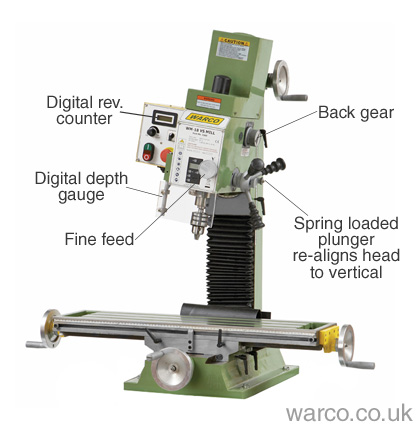
                                                    For mid-range hobby work this design comes in a range of sizes. Picture is of a Warco WM18, weighs 220kg with a brushed 1100W DC motor, perhaps the largest of the type. It will fit in an ordinary garage, which is why I bought one! In comparison, the WM14 – identical layout but smaller – weighs 60kg and has a 500W motor.

                                                    Both machines cut metal, the difference is the WM18 has a bigger table with more travel and headroom. That plus the more powerful motor means it can take on bigger jobs and remove metal faster. About 80% of what I do could be done on a WM14, and 90% on a WM16 (113kg/750W). Other vendors sell similar, ArcEuro might appeal because their range (made in a different factory) have brushless motors, definitely a 'good thing' but not one to lose sleep over!

                                                    What I really want is an even bigger mill, ideally a good condition Bridgeport. My workshop isn't big enough.

                                                    New vs second-hand I suggest is down entirely to condition. The advantage of buying new is the seller will sort you out if you happen to get a lemon. The advantage of older Western made mills is better finish and sturdy build standards, but how much has survived on a 50 year old machine needs looking at! A Rolls Royce driven into a tree at 90mph is a write-off, not a quality car!

                                                    I wasted too much time dithering about lathes. In the end I bought a mini-lathe and cut metal with it. Not the best lathe in the world, but it taught me all the basics and I had a lot of fun. They are capable of good work. Owning a mini-lathe soon revealed I needed a band-saw and milling machine. This time I just went for it. The band-saw was rough rubbish but it works well after minor fettling. My WM18 needed no fettling at all – good to go straight out of the box.

                                                    Lesson learned: if not sure about what's needed, it probably doesn't matter – yet! Once a machine has been put to work, it's shortcomings soon become apparent. By then the owner is educated and can decide what to do about it. Buying Far Eastern I half expected to become dissatisfied as I learned and want to replace the equipment with something better. Turned out it does everything I want, game on!

                                                    On a mill the first really valuable accessory is a DRO. Fitting mine with the cheapest possible DRO transformed it. After that, rotary table.

                                                    Dave

                                                    #493161

                                                    In reply to: Hi

                                                    Howard Lewis
                                                    Participant
                                                      @howardlewis46836

                                                      Welcome!

                                                      Plenty of help available on here.

                                                      Only start or stop the lathe after setting the speed to Zero.

                                                      It is only a low power machine, so do not expect to take deep cuts and high feed rates.

                                                      (There will be others on here who will take issue with that. They know their machines far better than I )

                                                      The CL300 is essentially the same as the Chester Conquest or the Seig SC2, or SC3.

                                                      You will probably get better after sales service from Arc Euro, based on my experience of Machine Mart.

                                                      Howard

                                                    Viewing 25 results - 1,501 through 1,525 (of 4,844 total)

                                                    Latest Replies

                                                    Home Forums Search Search Results for 'arc euro'

                                                    Viewing 25 topics - 1 through 25 (of 25 total)
                                                    Viewing 25 topics - 1 through 25 (of 25 total)

                                                    View full reply list.