Stuart Bridger
@stuartbridger82290
+1 for buying a set of HSS, admittedly there may be a couple in the set that you never use, but it will get you up and running quickly. Then you can follow up by grinding your own. That is what I did when i started. The set from Arc Euro mentioned above is fine.
Ketan Swali
@ketanswali79440
Hi Martin,
JasonB's suggestion is good for smaller sizes. You could also try other suppliers who offer uncoated HSS end mills for the purpose of milling brass or bronze. possibly Cutwel Ltd., for example.
For experimentation, you could try the cheaper HSS TiN Coated range **LINK** unfortunately out of stock or
a little more expensive TiAln coated range **LINK** Both types will be okay for milling across the range of materials, even though the uncoated type are more correct for your purpose.
Ketan at ARC.
Bazyle
@bazyle
Have you seen Neil's article on the Arceuro site about using a 63 tooth gear as a driver.
Also he started a thread a few weeks ago with links for a 63 tooth 3D print file I think.
The 57 seems to be an oddball figure. Is it used in the imperial thread charts? I would doubt it so it makes more sense to do a 63 instead.
If you like manipulating the figures try putting TWO off 63s as driven gears. It is one of the more accurate approximations.
duncan webster 1
@duncanwebster1
If you actually want a slot the same size as the cutter you need 2 flutes. The reason is that the cutter is deflected sideways by the cutting force, not by much. When the tooth is at the end of the slot, the deflection pushes the cutter into the side of the slot and makes it wider. With 2 teeth, only one is cutting at any time, so it doesn't make the slot wider.
Otherwise more flutes is better, and I'd have a try with ripper cutters, finish isn't as good, but by jove they shift metal
**LINK**
Ketan Swali
@ketanswali79440
Martin,
For brass/bronze, ideally – 2 flute – uncoated – higher helix HSS similar to these.
If you are experimenting, you could use the cheap and cherful coated/uncoated, and see how you get on with finish.
For mild steel, 2, 3, 4 flute all will work.. resulting in different finishes.
Ketan at ARC.
Edited By Ketan Swali on 01/05/2017 12:30:46
geoff walker 1
@geoffwalker1
Thank you David,
That's good information. I intend to service the headstock this summer so I will see if your mod can be done on my M type. Always thought it was logical to have the main spindle thrust bearing as close to the business end as possible.
Just ordered a handle from arc euro, definitely do that this summer as well.
cheers geoff
SillyOldDuffer
@sillyoldduffer
Oh dear, I'm going to disagree with m'learned colleagues.
Even if you own a grinding wheel, one of the skills a learner will find difficult at the outset is grinding HSS toolbits. Therefore, I'd suggest that most learners will be better off starting buying a ready made set, such as this one, which has a useful range of shapes that aren't made of putty.
I've never got on well with brazed carbide tipped tools, but indexable are a much better bet. Again, for a beginner with a fast modern lathe, indexable tips solve an absent skills problem. Another advantage If you break a tip is that they are easily changed without disturbing the set-up. Provided you own a fast lathe the main objections to indexable tools are cost and getting the best possible finish in hobby use. I didn't buy a set; I bought a right-hand and a left-hand holder and a small-boring bar. They kept me happy for a year.
Once you've got a feel for what your new lathe can do, then it's time to experiment with hand ground HSS. Don't get me wrong, it's well worth learning how to shape and sharpen HSS: all I'm suggesting is don't make 'not knowing how to' a show-stopper on day one!
Dave
Edit punctuation
Edited By SillyOldDuffer on 01/05/2017 10:47:51
David George 1
@davidgeorge1
Hi Geoff
I kept the original thrust bearing in place as when I checked the clearance it was an exact gap size for the new bearing only giving two or three thousands of nip on the new bearing. Also the handle for the saddle lock is not connected directly to the bronze clamp, angled and a slide fit but it is just a length of screwed rod inserted into a indexable handle so that you can position the handle where you like radially. Bought from ARC EUROTRADE part No 084-013-00063.
David
James A
@jamesalford67616
I was wondering whether anyone has used these particular insert tools from Arceuro and whether they are suitable for a small lathe? I have a Flexispeed with a top speed of 500rpm.
**LINK**
Thank you.
James.
dave train
@davetrain79096
Arc do 22mm R8 arbours but the biggest saw is 80mm.
If I want to go to 4" as Jason suggested then I will need to go to 1" bore – **LINK** It it as important metric vs imperial?
So which is the best type of arbout, the one above or this one – **LINK**
The Chronos one the saw is near the end however the Arc one looks like the locking nut will give a tighter fit?
Edited By dave train on 28/04/2017 23:41:15
Henry Artist
@henryartist43508
Posted by Christian Sprog�27/04/2017 10:35:41:
Ohhhhh , completely ran over the Sieg c0 lathe. Have Been lurking for months now, and what i have learned so far, is that it looks like the majority og the lathes avalible , Are All made in China. Im having a craving for buying the used Emco 5, the 8 is too big for my workspace, dont know if the c0 is too small, and the c1 clones here, Are allmost as expensive as the Optimum. But for half the price of the Optimum, i can get a Sieg c0 + the top slide + drill Chuck + some tooling and delivery. But the c0 lacks auto fred.
Boy oh boy, This is Harder than i thought,
Most of the parts I make on my C0 are less than 25mm diameter and less than 50mm long. I do not think the lack of auto-feed is a handicap. ArcEuroTrade do sell an auto-feed for the C0 but I have never felt the need to use it.
If you do choose to buy a C0 I would recommend you buy the tailstock adapter sold by Arc to solve any tailstock alignment issues you may encounter.
It is an excellent little lathe for hobbyist use. Because it is so small it is very rigid and I get a really good finish on the parts I machine with it. For the money, it is surprisingly accurate. However, if you intend to use a small lathe to earn a living you may like to consider something more "up-market" like a Cowells, Taig or Sherline.
Proxxon also make very small lathes but I have never seen a review from an owner…
Howard Lewis
@howardlewis46836
For what my advice is worth, if you can, buy the largest that will fit your budget and space (Again, don't forget to allow for tooling costs, although some of these can be spread over time).
Someone said to me "You can do small work on a big lathe, but not the other way round"; and you are bound to become more ambitious as time goes on.
Have no experience of either, but faced with the choice of Optimum or a used Emco, based on Brian John's and Hopper's experience on this Forum, I would plump fore the Emco!
Not all UK suppliers import the Seig CO, and C2, if you chose to go down that route.
Although he does not stock or sell them Ketan at Arc Euro Trade is very helpful, and stocks spares for the C2.
Arc do sell the larger Seig machines.
HTH
Howard.
Hopper
@hopper
Posted by Michael-w on 25/04/2017 15:37:11:
I don't think i'd even know where to begin on pre-load, I haven't touched the headstock since I bought it. All I've seen from the utube vid is that it's a taper roller that sits inside a tapered ring, which is just force fitted into the housing.
This is probably your problem then. The tapered roller bearings need adjusting to take up wear. This is usually, but not always, done by tightening up a nut on the spindle to draw togethter the inner halves of the bearing at each end. You need to consult a manual for your lathe for the correct procedure. See also the ARCEurotrade website section titled ARTICLES for a rundown on one or two types of headstock rebuilds that should include adjustment. It's best to learn how to do the simple maintenance on your machine before you start thinking of totally disassembling and rebuilding it.
Vic
@vic
There's this one as well.
**LINK**
Don Eggleton
@doneggleton98541
I Would like to cut the face for this clock. Can a member recommend a program to run on my Arceurotrade KX1 Mill to do this. Don
Spurry
@spurry
To break the taper just get yourself some Chuck Removal Wedges, sized for the taper.
One example from Arc
**LINK**
Pete
Martin Connelly
@martinconnelly55370
Made a bush for a keyway broach. The bore is 52mm and the keyway is 6mm. I didn't make the wheel, it's too big for my lathe. The two slots are instead of a shim, one is 1.6mm deeper than the other. The holes and ten sides were machined at one setting to make it easy to align the keyway 18 degrees round from a tapped hole when the bush is put in the vice to cut the slots. The holes on the opposite face of the wheel are 36 degrees off from the visible face so the keyway is positioned centrally between tapped holes. The broach from Arceurotrade is my payment for doing the work.
Martin C
Brian H
@brianh50089
Does anyone know if ARC Euro will be at the forthcoming Doncaster Exhibition?
Brian
Neil Wyatt
@neilwyatt
I got these discount code by email from Arc Euro Trade, Ketan is happy for me to put them up here and says all forum members are welcome to use the codes. Sorry if formatting is a bit off!
They also have reduction on: Glass Scales and Display Consoles, Coaxial Centring Indicator, MT3 Collets, R8 Collets – Round – Metric sizes
Neil
Promotion Codes for April
ARC-0417-A : 5% Off all products ordered from our website’s Abrasives department
ARC-0417-B 5% Off all products ordered from our website’s Adaptors & Sleeves department Type the code into the Promotion Code box in your Shopping Basket and click Apply.
(multiple promotion codes accepted)
Promotion codes are valid from 12th to 28th April 2017
(Excluding handling & carriage. Subject to availability)
JasonB
@jasonb
Chipbreaker does as the name suggests and helps the swarf break into small chips rather than give long bits of stringy swarf. The downside is that as the edge is slightly more pointed than that of a flat topped insert they can be a bit more delicate.
Someone mentioned looking for inserts for CI, as this does not produce long swarf then there is no real need to use chipbreakers and they may stand up better to the odd hard spot or interupted cut that you can get on a casting. On the other hand flat tops don't work so well on mateials that like a higher top rake angle such as aluminium which will be more likely to stick to the top and generally give a poor finish
You can grind a chipbreaker onto HSS tools too, the first three on the left of this set all have a groove to break the chips.
petro1head
@petro1head
Been having aread, probably too much
Not sure if you agree but some say go for CCGT tips and avoid TPG inserts?
So I am temped to get the 50mm set from ARC that I linked to on the first post and use the supplies bars for roughing. I will then get one of these – **LINK** and some of these tips **LINK**
Am I on the right track?
Opps, we must have been posting at the same time Jason, are those tips ok?
Edited By petro1head on 09/04/2017 13:20:21
Muzzer
@muzzer
Regardless of whether these particular examples are good quality or not, their basic tool geometry is rather crude. An indexable boring bar offers the benefits of higher top rake and chip breaker, resulting in lower cutting forces and likely better finish. Spend a little more and you can get something like this. The ground finish inserts (**GT) are good for small machines and are fine for steel unless you are taking very heavy (by our standards) cuts.
Murray
Edited By Neil Wyatt on 09/04/2017 08:35:25
Bruce Voelkerding
@brucevoelkerding91659
I was given a Boring Head with a set of Boring Tools from a local Machine Shop. It was given to me because " I don't know what's wrong, it chatters". I traced the chatter down to the R8 Shank was undersize. I replaced the R8 Shank and it works very well.
The set of Boring Bars I received look like the picture in the Arc-Euro ad – the shanks are plain diameters with no flats. At first I thought to put flats on the Boring Bar shanks so the set screws would not cause dings in the shanks which would make it horrible to remove the m from the Head. Then I realized there was no way to put the Boring Bar in the Head and assure the cutting surface was parallel with the Head motion (as mentioned by John Haine above). I did put flats on the shanks, but the solution was to measure the shank diameter of the Boring Bars. I then put each Boring Bar in the Mill Vice horizontal and rotated the Boring Bar axially until the cutting face of the Carbide was exactly 1/2 the diameter of the shank diameter below the top of the shank (easy to do with a Dial Indicator). I then milled a flat along the shank to a width equal to the set screw size. I can now place a Boring Bar in the Boring Head and slightly jiggle it as I tighten the set screws and it is always aligned correctly. Plus the dings do not prevent the Boring Bar from sliding out freely.
Of course the Boring Head in a Mill is only as good as the clearance in the Quill (unless you lock the Quill and feed using the Knee).
Another one of those "I did it quicker than the time it took to write this project".
Bruce, Cleveland, Ohio
petro1head
@petro1head
I have been given a job to bore some 45mm holes.
So was thinking about this boring bar **LINK**
Is this a good cjoice or should I be looking at something else?


 Stuart Bridger
 Ketan Swali
 Bazyle
 duncan webster 1
 geoff walker 1
 SillyOldDuffer
 David George 1
 James A
 dave train
 Henry Artist
 Howard Lewis
 Hopper
 Vic
Vic Don Eggleton
 Spurry
 Martin Connelly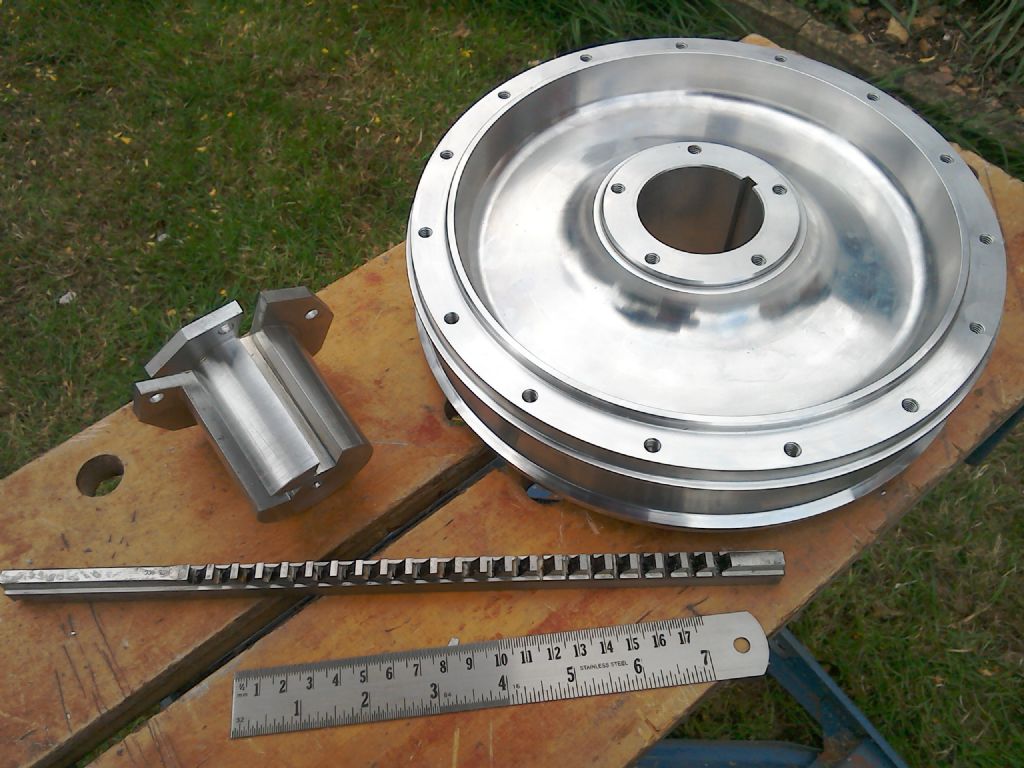
 Brian H
 Neil Wyatt
 JasonB
 petro1head
 Muzzer
 Bruce Voelkerding
 Bill Phinn
 jimmy b
 dean clarke 2
 Kiwi Bloke
 DC31k
DC31k Michael Gilligan
 howardb
 COLIN MARTIN 2
 alecs
alecs grizmaster
 noel shelley
 Graeme Seed
 Nigel Graham 2
 fingerscrossed
 Graham Meek
 Dunc
Dunc JasonB
 Mike Cooke
 Speedy Builder5
 Trevor Gale
 lucerne
 JA
JA Harry Broadbent
 Bazyle
 john fletcher 1
 Nimble
 old mart
 ron vale 3
 Weary
Weary ray1580
 Howard Lewis
 wilfried54
 Werner Schleidt
 Chris Crew
 Bill Dawes
 Buffer
 Vic
Vic Dougie Swan