Robert Atkinson 2
@robertatkinson2
If you want to turn thin wall bearings accurately then how you hold them is important. Make sure that the lathe you buy can accommodate a collet chuck of suitable size. The SC2 will take one
**LINK**
**LINK**
The collet chuck can also hold an arbour to mount the bearing while you turn the outside diameter.
Robert G8RPI.
Michael Gilligan
@michaelgilligan61133
Posted by Brian G on 27/11/2019 17:39:12:
Posted by Michael Gilligan on 27/11/2019 14:14:00:
As per Brian’s link … These are the ARC ones [which have ‘half round’ edges]
Edited By Michael Gilligan on 27/11/2019 14:23:23
The ones I linked to were "joint square edge" Michael, as I assumed that the slots should have a flat bottom.
Brian G
EDIT: Sorry Michael I finally grasped what you meant, follow the saw with a slotting or round edge file then finish off with the square one.
Edited By Brian G on 27/11/2019 17:44:13
.
My apologies, Brian … The ones that I bought from ARC, and photographed, were ‘joint round edge’
**LINK**
https://www.arceurotrade.co.uk/catalogue/results.aspx?search=joint+round+edge
MichaelG.
Brian G
@briang
For a VERY narrow slot, perhaps the fine-toothed Zona razor saws might be suitable. Chronos list several . For a wider slot, how about a joint square edge file like these from Arc ?
Brian G
Ketan Swali
@ketanswali79440
ARC is pleased to announce the release of Catalogue No.11.
If you would like a free copy, please click on this link.
If you are a U.K. subscriber of Model Engineers Workshop – printed publication, you will receive a free copy with your subscription during this week… hopefully.
If you live outside the U.K. mainland, you can still order a free copy, but handling and carriage will apply.
Ketan at ARC.
Martin W
@martinw
Another option is to use the "ER Collet Nuts with Ball Bearing – Type B" as sold by Arceurotrade. I use ER25 size collets and I have never had a cutter move, slip or come loose even when taking some fairly heavy cuts and that's just using the standard C spanner. As to age on the high side of 75 and that's me not the mill. Standard disclaimer re Arceuro, just another happy bunny.
Marttin
JasonB
@jasonb
Neil and Old Mart the MGGN style grooving and parting inserts are easy enough to find for Ali and non ferrous, stick em in one of Uncle Ketan's holders. I'd suggest the 200 size (2mm) for benchtop machines
Simon Williams 3
@simonwilliams3
Good morning Jesper, hopefully Brian Wood will chip in shortly, can I suggest you need a copy of his book "Gearing of Lathes for Screwcutting" which covers this in detail and answers the questions you are asking. Copies usually available from Arc Euro and also Amazon.
Essentially you need the magic gears, but I suspect from the date you have the early version of the quick cutting gearbox, the difference is a 2:1 reduction in the later box which means for you that you need a 17 and a 16-1/2 tooth gear on the mandrel to cut accurate metric threads, not the 34 and 33 tooth gears. If you can work out how to post a picture of the right hand side of the gearbox we can determine which gear box you have, and hence which gears are needed.
[Edit: the 30/12 cluster gear in the gear train you have described in your initial post confirms that we're dealing with the older style gearbox.]
The 16-1/2 tooth gear sounds mighty odd, but don't worry all will be explained. You might like to do a bit of back ground reading on the subject here:
https://www.model-engineer.co.uk/forums/postings.asp?th=125630
QCGB1 should take you there
Also:
https://www.model-engineer.co.uk/forums/postings.asp?th=131985
QCGB2 links to it.
To post a picture you have to upload a JPG to a site album first, then reference it in your post. So , log in, go to Albums on the header and start a new album giving it a suitable name. Now up load your picture in jpg format, it helps if the file size is sensible but I think I've read that the forum software sizes the file anyway if needs be. Now you can write a forum message, and include your picture by using the little camera icon in the message header. This opens a screen where you browse to the picture you want to include in the album you just started, and then pastes it into your message for the rest of us to see. Hope that makes sense. and if I've missed anything out please could those with more knowledge correct my summary.
Hope that helps, this is a subject with plenty of reference stuff on the forum, so I'm sure we can sort out the problem you have encountered.
Best rgds Simon
Edited By Simon Williams 3 on 24/11/2019 09:42:53
Ketan Swali
@ketanswali79440
Posted by Frances IoM on 19/11/2019 06:35:08:
yes had the same damage – it's something to do with the initial position of the jaws wrt to the tightening nut – my solution was always to push the jaw up to the item then tighten
That is the intended method of use, rather than the solution.
Our Brett tried to explain this to Phil….
Before our engineer (now retired) explained how to use the vice in the correct way to Brett (his apprentice at the time), he had similar problems.
Phils's is the first and only complaint we have had regarding this vice.
It is difficult to explain this without sounding arrogant or patronising. ARC sells enough of these vices to consider this to be a 'how to use' issue. At the same time, we are aware that some customers will fail to agree, or simply not get on with this particular type of clamping arrangement. Some of them prefer the Type 3.
To clarify the point about 3 reports… yes… ARC only considers it to be a problem – especially for this product range, if it receives 3 valid complaints in a row, 'within a short period of time', at which point we will evaluate the item to see if it is indeed a 'product fault' or something else.
Ketan at ARC.
Michael Gilligan
@michaelgilligan61133
I’m bewildered, Phil
Is this the vice to which you refer ? : **LINK** ?
https://www.arceurotrade.co.uk/Catalogue/Workholding/Machine-Vices/Precision-Tool-Vices-Type-2
… if so, it would appear that all you need is a thicker [and/or better fitting] washer under the screw-head.
MichaelG.
.
Edited By Michael Gilligan on 19/11/2019 08:14:10
dp2020
@dp2020
So I recently acquired my first ever machine tool, the Adept No 2 hand powered shaper. It seems in okay shape, so after having filed up some missing gibs, and made the missing handle, I am now looking to start tooling up.
What sort of vise would you reccoment for the shaper? I was thinking of going for one of the precision tool vises, such as **LINK** but that seems a little overkill for a machine that will generate hardly any cutting forces, and I doubt has the precision to match the vise tolerances.
I found **LINK** while browsing, and it looks like the perfect economic option if I can fit it on the table — anybody has any experience with these?
Thanks for any advise
DP
andrew lyner
@andrewlyner71257
Posted by Neil Wyatt on 15/11/2019 14:06:15:
Posted by andrew lyner on 14/11/2019 22:46:36:
I guess I could make a fitting for the cross slide with T slots but that would be hard, I think. Is there anything available on the market?
You can get small milling tables. The one here you could cut off the lugs and use a some counterbored cap head screws to fit it on top of the cross slide.
Alternative would be a vertical slide mounted along the axis of the lathe.
Neil
Yes. I saw that table design. That would probably be more useful than just buying an angle plate (I spotted that in my trawl through Chronos etc..
The vertical milling table I bought is the standard one afaics. It's pretty sturdy but the cross slide movement will not allow it to present along the line of centres.
I am learning that there are many perfectly acceptable 'bodges' in this work as long as you use your head and don't try to eat too much at a time. They tend to take a lot longer to set up than what you can buy. That seems to be the main drawback. I guess it could be different if the lathe were a proper workshop size, doing workshop type jobs,
The recommended cutting speed for aluminium implies that a fly cutting tool will be spinning at a truly scary rate. OTOH, too low gives its own problems.
Neil Wyatt
@neilwyatt
Posted by andrew lyner on 14/11/2019 22:46:36:
I guess I could make a fitting for the cross slide with T slots but that would be hard, I think. Is there anything available on the market?
You can get small milling tables. The one here you could cut off the lugs and use a some counterbored cap head screws to fit it on top of the cross slide.
Alternative would be a vertical slide mounted along the axis of the lathe.
Neil
Ian P
@ianp
I bought one of the Arc Eurotrade edge finders a couple of years ago and apart from a quick test when it first arrived I have never really used it. Today I experimented again but am not convinced it is any more repeatable than my goto method (short length of 4mm precision ground rod and observing light between it and the edge).
I then started to think about what the physics/principles of its operation were. I know the basic idea but how much does friction between the job and the (moving surface) compared with friction between the two faces of the finder affect its operation?
Other factors that might come into play are, the outer diameter of the two abutting faces and the diameter of the operating tip (on this Arc one there is a 4mm tip which is about 40mm lower than the split diameter bit). There is sticky grease between the moving faces but I dont know if that is meant to be removed or not.
Edge Finders
I know lots of people use these without problems (presumably) so maybe I am missing something.
Ian P
SillyOldDuffer
@sillyoldduffer
Chris is good at asking simple questions that provoke complicated answers!
Inserts aren't made in the huge variety of shapes and sizes they are to suit hobby users. Rather they are made in a wide choice of configurations to allow production to be optimised. Getting tooling right is much more critical when manufacturing thousands to a price, and considerable effort is often put into setting up to maximise profit. Typical factors leading to an optimum choice of insert material, size, geometry, angle and rake include:
- The material being cut, for example Aluminium cuts better with a sharp insert, mild-steel prefers a blunt edge.
- The characteristics of the machine available – no need for hefty inserts on a weedy machines, no sense in pussy-footing with a big one.
- Chip control – in production it's better for cutters to consistently produce small chips of metal rather than long spirals of sharp swarf because managing swarf is a serious problem when a machine makes a ton or two of it per day.
- Power consumption. Generally the more brutal the cut, the less power is needed remove a given amount of metal. But the insert has to be sufficiently strong and heat resistant to cope with the stress. Industrial cutting with carbide considers 850C to be "moderate heat", and it's not unusual to go as high as 1500C. This effects insert choice, because reducing a £1M electricity bill by 5% is well worth doing.
- Coolant. Some inserts crack or otherwise react badly to particular cooling methods, and it's often preferable to machine dry.
- Type of cut. Facing, lengthwise, chamfering, profiling, and whether or not a shoulder or other tight operation is needed all influence insert choice. Inserts shaped for best finish tend not to last as long as inserts designed for roughing out, and the latter will also remove metal faster for less power. Round nosed cutters are good for extended tool-life and deep cuts, but are more likely to chatter than small nosed cutters, which are also capable of better finish. Positive rake tools reduce cutting forces (useful on slender jobs) and provide more clearance, which is useful when boring because the sides of the job curve in towards the tool. Negative rake inserts are stronger and last longer, but have less clearance and put lots of force on the job.
- Cost! It may be cheaper to change cheaper inserts than it is to use the best available. The economics depend on the job. Not sure myself it's a good idea for hobbyists to spend big money on long-lasting inserts when dropping them is a hazard.
Most of this complexity is irrelevant in the average home workshop! In practice, I mostly go for small noses, (low cutting force and good finish), but for most work the choice is non critical. My favourite boring bar carries a triangular insert, handy because it's easy to tell when a blind bottom is being turned flat. My smallest boring bar, which will nearly gets into a 10mm hole has a rhombic insert: it cuts perfectly well but it's easier to use on through holes, unless a small trench at the bottom doesn't matter. With care the rhombic and triangular cutters both do much the same job. I also have a large boring bar fitted with a square insert. It bores large through holes quickly, but is useless for blind ones.
The kind folk at ArcEuroTrade (and others) sell the type of holders and inserts most useful to hobbyists. Unless something special is being done, I don't see much advantage in plunging into grown-up catalogues and selection criteria. For a long time I only had a 6mm set of right, left, facing and boring holders with rhombic inserts: later I found value in having triangular and square inserts as well, but I managed perfectly well with rhomboids for a couple of years.
Insert holders are another game again. They range from quite expensive to faint on the spot extraordinary. I think the best are engineered for best possible strength and anti-vibration properties. Jolly good in an industrial context, but I'm not sure a chap with a Sherline would get much value from inserts and holders designed for 1500°C cutting and several kilowatts at the spindle.
Dave
Edited By SillyOldDuffer on 12/11/2019 17:43:57
Ron Laden
@ronladen17547
Posted by mechman48 on 11/11/2019 15:43:33:
Posted by Hollowpoint on 10/11/2019 22:48:16:
I use this type on my VMC. They are more than accurate enough for my needs and not expensive.
I also have these fitted to my WM 16 & so far they have proved invaluable & accurate enough for all my needs. Have just changed batteries after approx a year so battery life is not an issue with me, well worth the outlay. Usual disclaimer applies.
George.
Snap, I also fitted them to my SX2 and have found them to be accurate and reliable.
Ron
mechman48
@mechman48
Posted by Hollowpoint on 10/11/2019 22:48:16:
I use this type on my VMC. They are more than accurate enough for my needs and not expensive.
I also have these fitted to my WM 16 & so far they have proved invaluable & accurate enough for all my needs. Have just changed batteries after approx a year so battery life is not an issue with me, well worth the outlay. Usual disclaimer applies.
George.
Hollowpoint
@hollowpoint
I use this type on my VMC. They are more than accurate enough for my needs and not expensive.
SillyOldDuffer
@sillyoldduffer
Whilst the Bridgeport design is a time-proven winner, I haven't got room for one! They're also a step-up in weight, power, price and second-hand risk from the 4 machines listed by Iain, eg.
AMADEAL AMAT45V or AMAT45FG
AMADEAL AMAT25LV.
SPG SP 2217 30B LV
SPG 2217-III LV
The machines look to me to be typical Chinese fare and they are competitively priced. As such, they will probably perform similarly ± 33% to other comparable models depending on the exact configuration. Question is how well-finished / cost-cut / rough are they, and, how well will SPG or Amadeal behave if you happen to get a dud?
Judging by forum comments, ArcEuroTrade get the best customer support reviews, Warco replace or refund without much fuss, while Chester appear more awkward. Less feedback about Axminister (but I only recall positive comments), and almost nothing about MachineMart, ProMachineTools, ToolCo, Amadeal or SPG. (Or others!) Bearing in mind that not all customers are well-balanced I've not seen evidence of any British supplier being totally unreasonable.
However, unwise to draw unthinking conclusions from anything on the Internet, not even this wonderful forum! Lack of comment could indicate either total satisfaction or wanting to forget a bad experience. People are more likely to complain than applaud, and the performance of any company can change over time.
My gut feel is the machines listed by Iain are serviceable but probably less well finished than more expensive equivalents, and that both companies provide acceptable customer service. Anyone with Amadeal or SPG experience prepared to comment?
Dave
Edited By SillyOldDuffer on 10/11/2019 09:47:15
JasonB
@jasonb
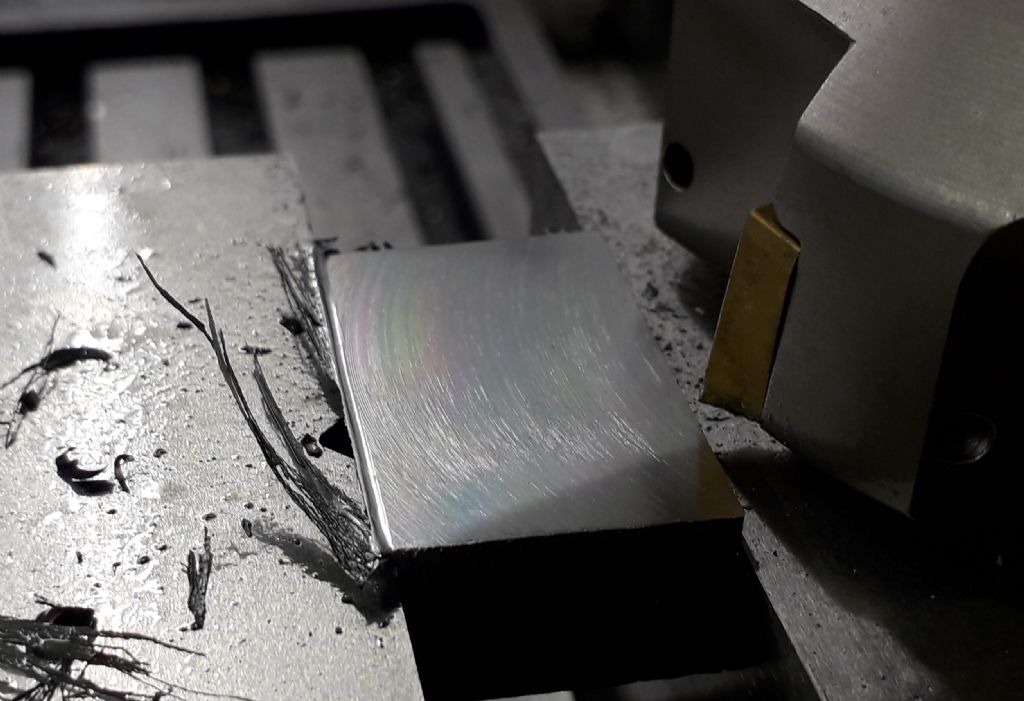
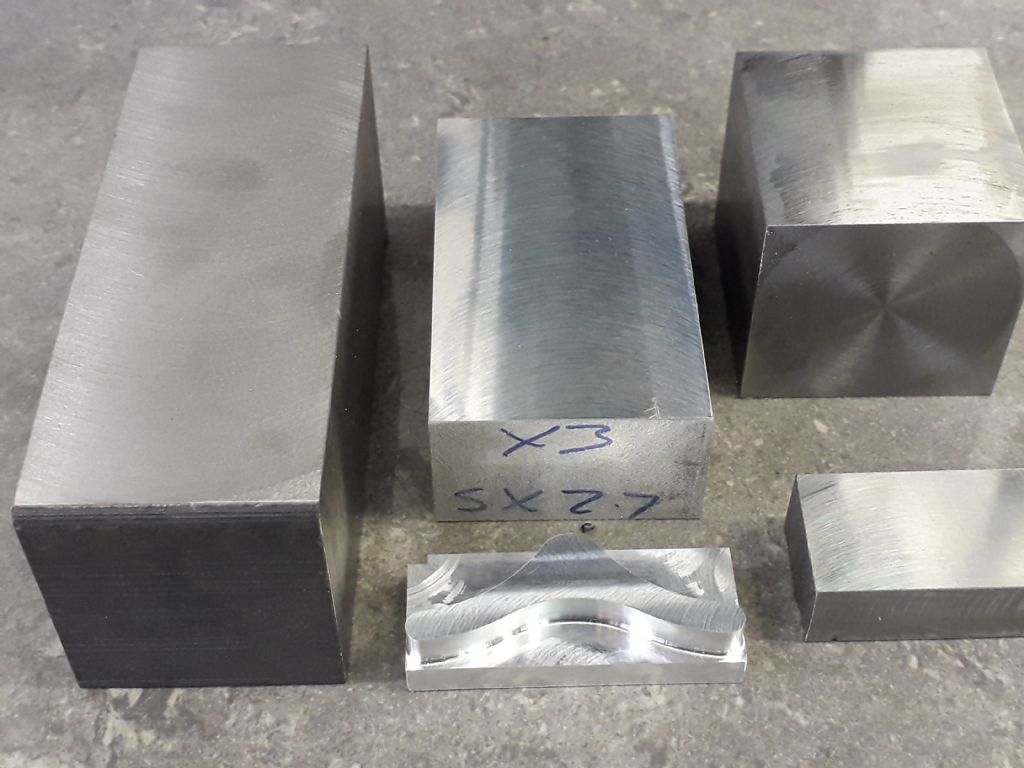
Two videos and some larger photos to go with the review of the ARC Euro Trade indexable endmills and shell mills in MEW 289. Video best viewed direct on You-tube so the captions can be read more easily.
The cutters being used on Sieg X3 & SX2.7 Mostly the 63 & 80mm shell mills on a mix of cast iron, steel and aluminium.
25mm Indexable Endmill being used on Sieg KX-3. It would have taken a faster feed so a bit slow in the video, I was wary of the larger amount of engagement in the internal radii causing chatter but need not have been
Two larger photos of the finish on some unknown steel cut with the 80mm Shellmill on the SX2.7, click any image to enlarge further.
Assortment of materials cut, from L to R – Cast Iron 6082 Aluminium EN3 and unknown steel with the CNC machined 6082 part in the foreground.
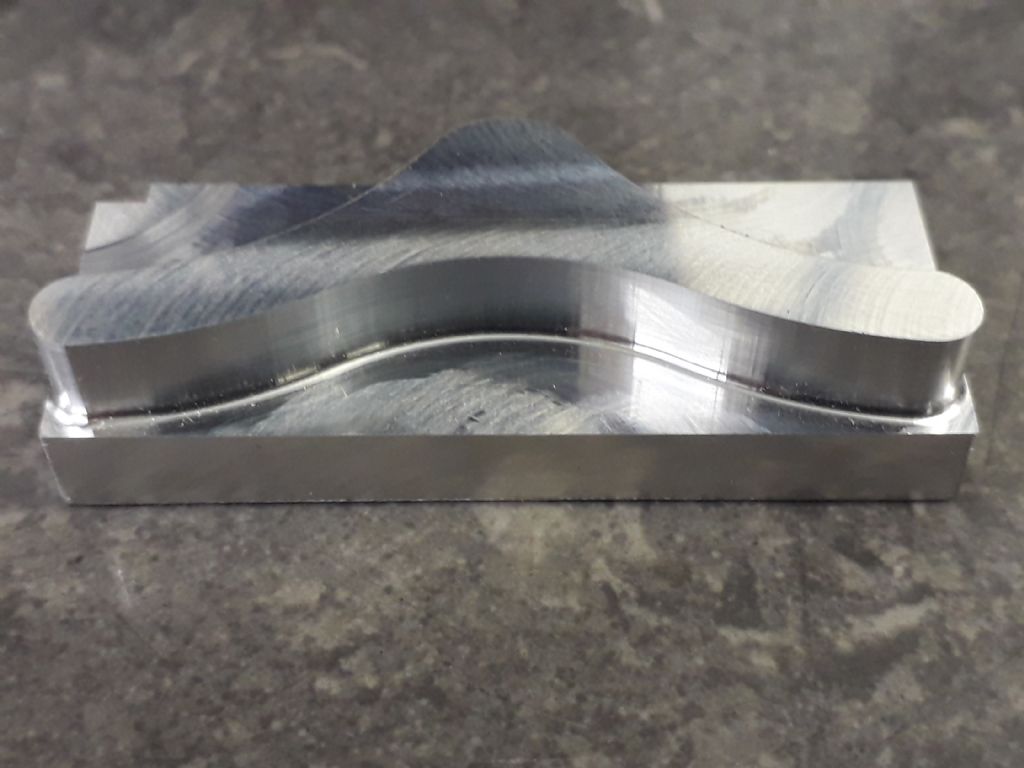
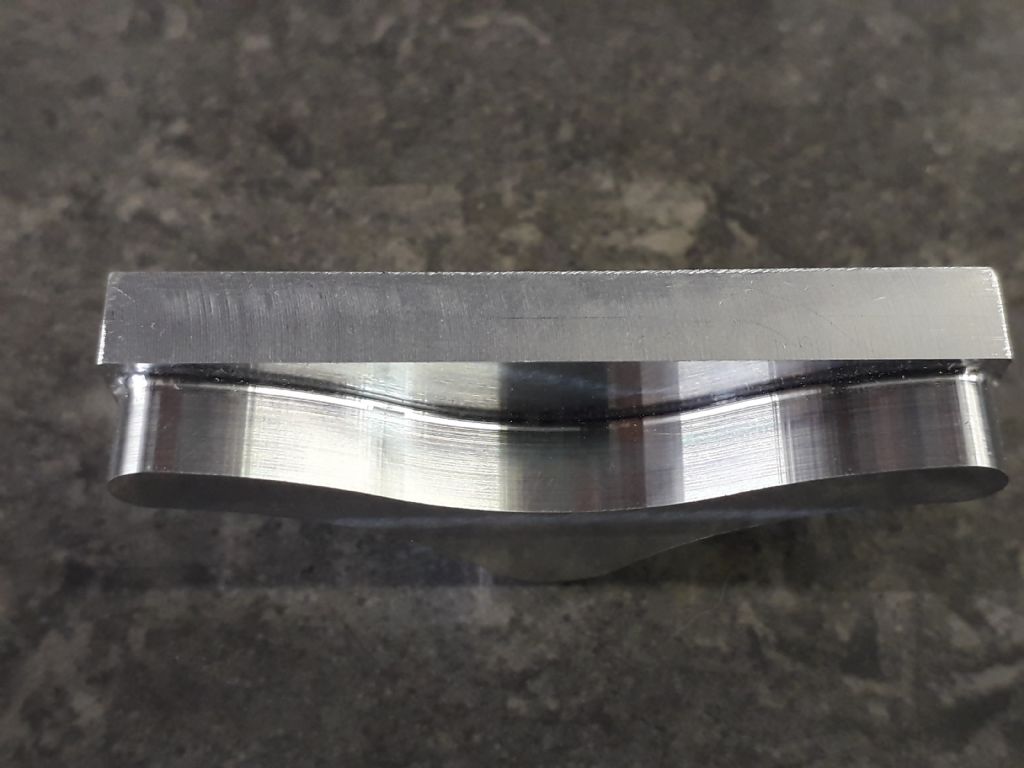
Closeup of the CNC machined part
Edited By JasonB on 26/12/2019 07:25:05
SillyOldDuffer
@sillyoldduffer
Posted by Roger King 1 on 05/11/2019 16:12:20:
Thanks – where's the best place to buy HSS bits?
By 'mild steel', I mean the stuff outlets like Metals4U sell as 'bright mild steel'. Probably not best quality, I'm guessing.
Nothing to do with 'quality', but ordinary mild-steel is a structural steel, not bad but not particularly good for machining. You can do better.
When buying metal look at what the specification has to say about machinability. Of the mild-steels EN1A is about twice as machinable as ordinary mild-steel, and EN1A Pb is roughly three times better. More broadly, something like EN9 is about 3 times harder to machine than mild-steel, and many stainless steels are evil.
Bright mild-steel is useful when the stock being finished off the shelf saves time by reducing the need to machine it. Otherwise Black mild-steel is the same composition, but has slightly different physical properties due to not being processed further to make BMS. It's cheaper and has fewer locked in strains to cause warping when cut.
Given there's at least a 3:1 range in the machinability of metals that might be called "mild-steel", and even more problems across the full family of steels, my advice is to avoid unknown scrap. Painful experience taught me it's a bad mistake to assume a lathe or milling machine will happily cut any old metal!
My HSS mostly came from ArcEuroTrade. It's fine.
Enjoy your Myford!
Dave
PS. Personally, I think it extremely unlikely that steel made in the past can be better than the same steel made today. Not least because Metallurgy is better understood today and steel makers generally have more advanced plant. Rose-tinted glasses apart, anyone own 1970 TV that's better than a new one?
John Haine
@johnhaine32865
Actually Dick Stephen's series is on the Arc site:
**LINK**
JasonB
@jasonb
The Dick Stephen articles are about an X3 though X & Y will be the same as an SX3.
SX2.7 would be very easy to increase the speed on simply by changing pulley sizes on the direct drive but you are unlikely to find a second hand one and new price blows most of your budget or was that just for the base machine to convert? You may also need to think about better spec bearings at those sort of speeds, the KX3 for example has much more expensive matched bearings than the X3 and SX3 mills.
Howard Lewis
@howardlewis46836
NO, Geoff.
I mentioned what Arc Euro had on offer. Stub Mandrel is looking for replacements for his SX mill, so that would seem to be the place to go.
If you are desperate for M4 handles, how about getting M5 or M6 stud type and stripping them? You can then turn them down to 4mm diameter and cut a M4 thread with a Die. Core diameter of M5 is 4.2mm, so the original thread will be gone.
If you are looking for Nut type, again, go for an oversize type, Make an externally threaded plug and drill and tap it M4.
Engineer comes from the Greek root which means ingenious. The Lord helps them as helps themselves!
Howard
Howard Lewis
@howardlewis46836
Arc Euro Trade used to list them, for M5, M6 and M8 Nut or stud types.
References were: 084 – 013 – 00040, 00050, 00063, for Nut types
084 – 013 – 10041, 10041, 10050, 10063 for Stud types.
But can't find them on the website, under these numbers.
A search on Indexaable Handles brings them up, but a search shows 15 types, as what like spares for SX Milling Machines..
Howard


 Robert Atkinson 2
 Michael Gilligan
 Brian G
 Ketan Swali
 Martin W
 JasonB
 Simon Williams 3
 dp2020
 andrew lyner
 Neil Wyatt
 Ian P
Ian P SillyOldDuffer
 Ron Laden
 mechman48
 Hollowpoint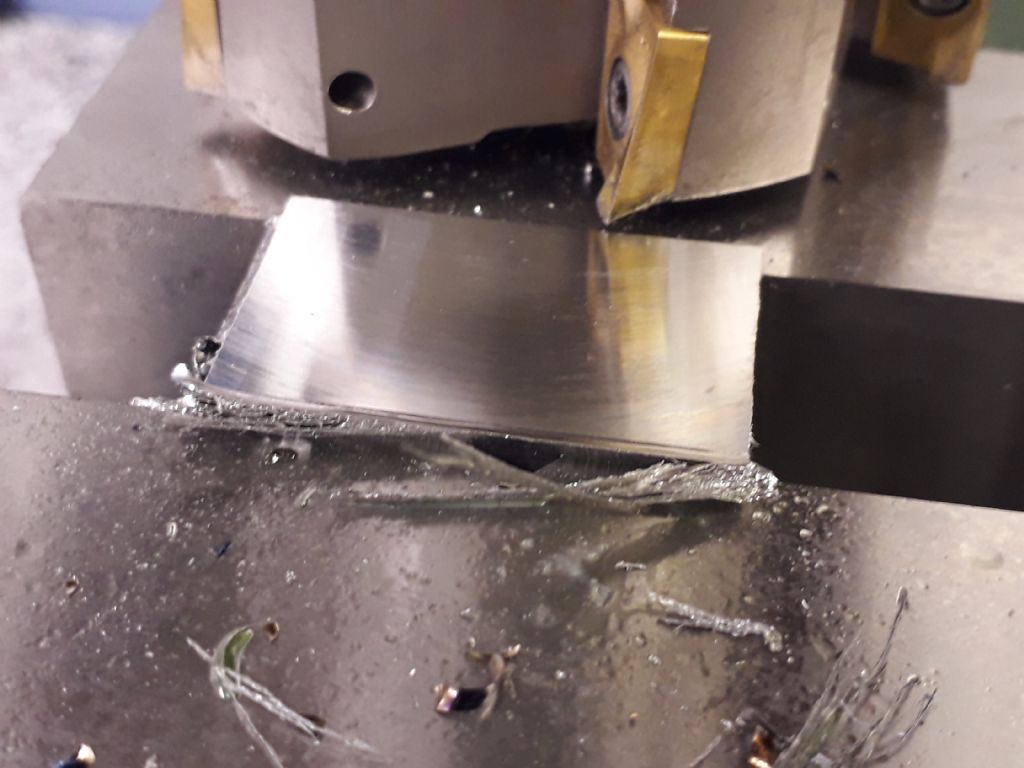
 John Haine
 Howard Lewis
 Ian Johnson 1
 Bo’sun
 Nigel Graham 2
 JasonB
 Michael Gilligan
 ksw
ksw Martin Freestone
 noel shelley
 Vic
Vic An Other
 Peter Simpson 3
 ega
ega ian Holdsworth
 Brian Baker 2
 Robert Atkinson 2
 James A
 Graham Meek
 Sonic Escape
 Andy Stopford
 Graeme Seed
 Neil Wyatt
 Neil A
 old mart
 mikemunson
 lucerne
 Julie Ann
 tomcnc
 seemack
 Clive Foster
 John Hinkley
 Mark Rand
 martin haysom
 Dave Halford
 Roger Harvey
 Zan
Zan vintagengineer
 John Haine
 Dunc
Dunc Dell
Dell