
JohnF
@johnf59703
Posted by Zan on 10/12/2019 23:19:25:
That’s the way John I did that recently. But in answering the main question, you have to withdraw the leadscrew to remove the apron. After removing the right bracket, which will be achieved by bending the screw outwards to get the bracket off the dowels. The problem is re assembly. Briefly it goes like this
Edit. Dratt . I should have looked at the link before writing an essay on the difficulty of refitting……deleted!
Edited By Zan on 10/12/2019 23:22:22
There should be 2 tapped holes in the dowels to facilitate removal with a small puller, they are ??BA have to check and you need a piece threaded bar & nut or an allen screw, a tube and a washer. I have heard some machines do not have the tapped hole ??? but never seen one.
John
ega
@ega
Posted by Zan on 10/12/2019 23:19:25:
That’s the way John I did that recently. But in answering the main question, you have to withdraw the leadscrew to remove the apron. After removing the right bracket, which will be achieved by bending the screw outwards to get the bracket off the dowels. The problem is re assembly. Briefly it goes like this
Edit. Dratt . I should have looked at the link before writing an essay on the difficulty of refitting……deleted!
Edited By Zan on 10/12/2019 23:22:22
Aren't those dowels tapped to facilitate their removal?
Zan
@zan
That’s the way John I did that recently. But in answering the main question, you have to withdraw the leadscrew to remove the apron. After removing the right bracket, which will be achieved by bending the screw outwards to get the bracket off the dowels. The problem is re assembly. Briefly it goes like this
Edit. Dratt . I should have looked at the link before writing an essay on the difficulty of refitting……deleted!
Edited By Zan on 10/12/2019 23:22:22
Zan
@zan
I used silver steel when I made mine, hardened then tempered to blue, ( spring temper) been using it for years
If it’s good enough for a screwdriver, it’s ok for a Chuck key
Edited By Zan on 09/12/2019 09:33:55
Zan
@zan
Iv been mulling this over as well. I don’t know how many steps would actually be lost, but here’s my calcs
1 turn of the 8 tpi leadscrew takes 200 steps x 8 micro steps = 1600 per rev
Lost motion per lost step …… cutting an 8 tpi thread, so 1 turn of Leadscrew gives saddle move of
0.125” / 1600= 0.000078” Not very much!
So 10 lost steps = 0.00078”. Still very little.
as most threads I cut are at 24tpi+ this is reduced by 1/3 to 0.000026” and 0.00026”
can a humble myford work to these limite? Are my tools ground accurately enough? What effect on the thread does my chaser present? How accurate is my leadscrew?
conclusion, servo ain’t worth the extra cost
Edited By Zan on 07/12/2019 10:30:08
Edited By Zan on 07/12/2019 10:32:12
Limpet
@limpet
Thanks Zan I remember now that Clough42 plugged the encoder into the driver so it looks like I will be getting a servo motor and driver. I might try it with just a stepper to check what torque motor I need as I have some. I'm still at the thinking/waiting stage until I get some parts arrive, i also thinking of adding a magnetic clutch in the lead screw drive chain so i can still use the handle on the end without worrying about induced voltages generated by the motor, as i said still at the thing stage
Lionel
Tony Pratt 1
@tonypratt1
Posted by Zan on 06/12/2019 16:44:07:
Tony.
Jeffree talks about changing the voltage which gave a lot more power. What are you running at. And what power does your psu put out?
Edited By Zan on 06/12/2019 16:44:31
Hi Zan,
I will have to ask my son who I am seeing on Sunday, as I really don't want to give you guys false info.
Tony
Zan
@zan
Tony.
Jeffree talks about changing the voltage which gave a lot more power. What are you running at. And what power does your psu put out?
Edited By Zan on 06/12/2019 16:44:31
Zan
@zan
Nema 23 and 24 describes only the frame size and has nothing to do with its holding torque . some 23’s have 4.5 Nm while some 24 have only 1.65nm. So get the full details!
23 has a 56 dia flange, 24 has a 60
Edit….. Another point is that if you use a step down pulley say 2:1 to increase the torque it’s not that simple. As the speed of a stepper increases, the fall off in torque is very dramatic, so you gain with the gear ratio, but loose on the motor torque itself!
Edit 2 Just checked on the jeffree blog mentioned earlier, he used only a 1.8 mm type 23. With a 40 v drive. I will go for something a little more powerful, a 3 or 4, as rthere is little price difference.
Edited By Zan on 06/12/2019 16:08:24
Edited By Zan on 06/12/2019 16:16:31
John Parry 5
@johnparry5
Thanks for the Idea and the Photos Zan. I do like the Student its a nice size. John
Zan
@zan
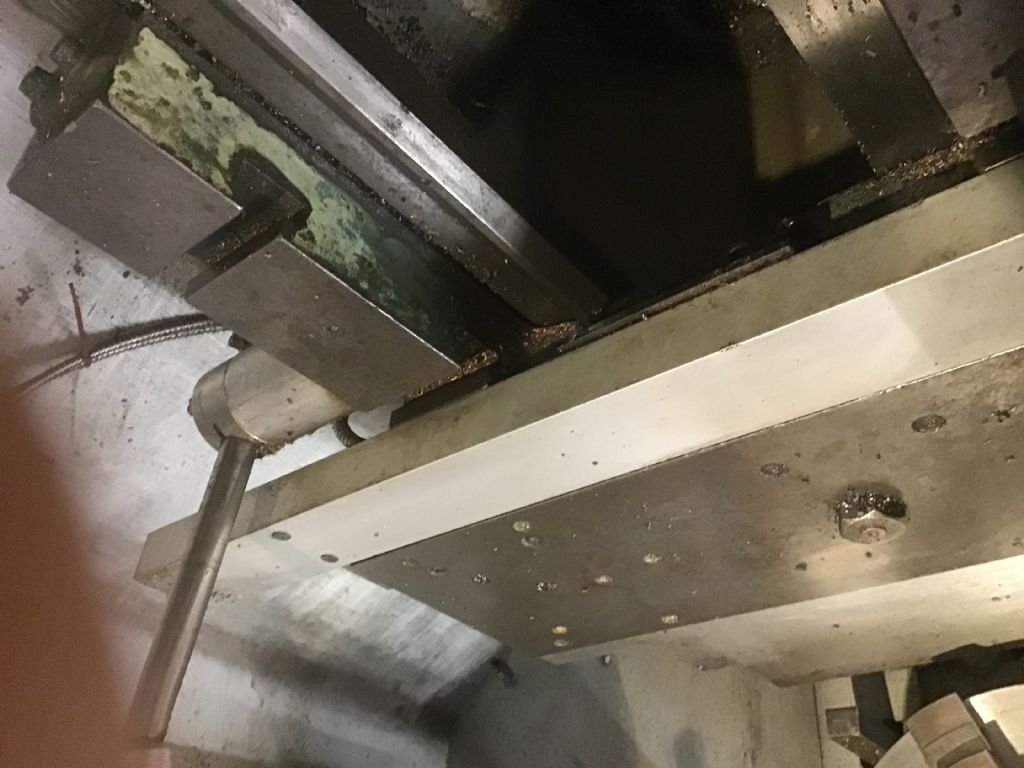
The thin aluminium guard came with the set from newall the mounting at the fromnt is slotted for positioning, the small screw end on holds the end of the sensor bar, which is mounted only at the front . The cover is held in place with small cks “cap” screwsSeems the angle bracket also carries the sensor , it can be seen in both photosSry about the delay went to buy a loco but unfortunately the wheels were loose….. shame, was exactly what I wanted
Edited By Zan on 03/12/2019 17:36:50
SillyOldDuffer
@sillyoldduffer
Posted by Zan on 30/11/2019 21:58:59:
…
” I used a 1024-pules (4096 count) encoder (Omron E6B2-CWZ6C).
Choose an encoder that runs on 5VDC with open-collector outputs.
…
To add to Michael's answer, the CWZ6C is the NPN Open Collector version. If you want PNP Open Collector, buy the CWZ6B. (Can't think of a good reason for buying PNP as the PNP encoder has reduced performance.)
Open Collector is an output convention that expects the attached controller to hold its input line at logic HIGH. This is typically +5Vdc provided by a connecting a high value resistor (>1k) from the input pin to supply. An open collector encoder signals by pulling the input line down to logic LOW by shorting the computer's input pin to ground.
NPN and PNP switch in the opposite sense, thus NPN HIGH is PNP LOW and vice versa. The microcontroller can be programmed to work with either, but, if building a project with someone else's code, easier to follow their instructions!
The same encoder is available in a form that signals by outputting a positive voltage rather pulling the line down to zero. (CWZ3E). Again, the microcontroller can be programmed to work with this convention, but small code and circuit changes would be needed.
Similarly, the CWZ1X signals in RS-422A, which is designed to drive long twisted pair cable – an unnecessary complication in an ELS project.
All the models come in a range of different resolutions making it necessary the check the specification carefully before buying. The lowest is 60 pulses per revolution, the highest 2000. Look for mention on the label or sales literature first for the encoder ID, "E682-CWZ6C" and then find its pulse rate. This will be a number like 1000P/R, 1024P/R or 2000P/R and may not be immediately obvious. The encoder has several makers. I don't think it matters.
Datasheet here
Dave
Edited By SillyOldDuffer on 01/12/2019 13:07:19
Michael Gilligan
@michaelgilligan61133
Posted by Roy Vaughn on 01/12/2019 00:05:34:
Michael, I'm not an expert either but clicking on the Ebay link in the encoder line item on the Clough42 web site takes me to something with what looks like an identical spec. Not worth ordering anything else and risking problems for the sake of a couple of weeks in my view. The big ticket item is the stepper motor and controller.
Zan, thanks for the link, looks like very comprehensive description of the mods. For reference in full (sorry I don't know how to make it clickable), it's:
http://www.jeffree.co.uk/pages/ml7-cnc/part-1-files/myfordcncpt1.htm
Roy
.
Cheers, Roy
Here’s your **LINK**
http://www.jeffree.co.uk/pages/ml7-cnc/part-1-files/myfordcncpt1.htm
MichaelG.
Roy Vaughn
@royvaughn26060
Michael, I'm not an expert either but clicking on the Ebay link in the encoder line item on the Clough42 web site takes me to something with what looks like an identical spec. Not worth ordering anything else and risking problems for the sake of a couple of weeks in my view. The big ticket item is the stepper motor and controller.
Zan, thanks for the link, looks like very comprehensive description of the mods. For reference in full (sorry I don't know how to make it clickable), it's:
http://www.jeffree.co.uk/pages/ml7-cnc/part-1-files/myfordcncpt1.htm
Roy
Zan
@zan
That looks just the ticket! And Looking at the spec it looks ok to me, but I’m no expert
But the lead time is terrible it’s very similar to the ones I’m looking at, with 3 weeks projected delivery but at the moment it can take 10 mins to load a page to view it and others. So I’m in no hurry at the moment.
Looks like the main bits will cost. the order of £100
Edited By Zan on 30/11/2019 22:46:56
Michael Gilligan
@michaelgilligan61133
Sorry, Zan … Clumsy arthritic old fingers
I’ve fixed the link now.
MichaelG.
Zan
@zan
The encoders from U.K. seem to be expensive or lacking in data information pre sale . I want one with a z output for syncing so it mabe a China hobby, but clough42 says I also can’t find a 1024 here, most are 600p/r
” I used a 1024-pules (4096 count) encoder (Omron E6B2-CWZ6C).
Choose an encoder that runs on 5VDC with open-collector outputs.
so does anybody know if this is an npn or pnp device? Or doesn’t it matter ?
The led n key board. Ebay. Look for …….
8 bit digital led tube tm1638 key display module for a real arduino te 289 ab.
Price £4.71. From Edinburgh 3 day delivery
Edited By Zan on 30/11/2019 22:07:13
Zan
@zan
I will be mounting the motor at the tailstock end Drawings available from Jeffrey.co.uk. Just select the below n google it ……Im not sure doing the modification to the leadscrew bracket or putting the thrust bearings in will be really required as I intend to leave the gearbox in position. At some time in the distant future, the electronics may fail and all the units will be obsolete. I may buy a second processor and led&key board and program both when the whole system is up and running
Myford ML-7 lathe CNC conversion – Part 1: Leadscrew
david, any rotary encoder will only be fitted to a servo motor, otherwise the clough42 system is open loop if a stepper is used. The encoder in the system is for synchronising the leadscrew and spindle, it’s mounted at the headstock
i am also considering adding a separate arduino system to stop the saddle ar two exact points, at the start an end of its movement and linked to the encoder z to give spindle sync. This will be similar in principal to the meek and cleve leadscrew dog clutch system
Edited By Zan on 29/11/2019 09:48:19
Edited By Zan on 29/11/2019 10:02:54
Zan
@zan
Pekkka, I had forgotten about that git hub list. Thanks!
Phil. That seems better than waiting from a China delivery for the encoder, but the one I have found on eBay is a bit light on specification
You can change the pulse count because clough42 gives the information in the video about getting the software he rings two important bits of data, the no of pulses and the tpi ( pitch in metric I seem to remember). Only viewed it once
Ah… there’s two postings unseen on this page!
just got got to get all the components before I really start
Edited By Zan on 28/11/2019 18:24:46
PekkaNF
@pekkanf
Zan,
You may want to have look on GitHub Wiki component list: – lathe spesic parts
https://github.com/clough42/electronic-leadscrew/wiki/Stuff-You'll-Need
And watch episode Lathe Electronic Leadscrew Part 15
" I used a 1024-pules (4096 count) encoder (Omron E6B2-CWZ6C).
Choose an encoder that runs on 5VDC with open-collector outputs. "
Roger Clark
@rogerclark
Hi Zan, I've got a E6B2-CWZ6C from newworld-201 on Ebay, ordered on 11/11/19, arrived on 22/11/19 so good service from China. Haven't tested it yet .
Zan
@zan
Time to get the encoder, but a couple of important questions…..
1). Does it need to be incremental or absolute
2). pnp, npn, or open collector *2 output., which I think is best as it gives A and B with not A and Not B which I think will give the 4 times count so that a nominal 1000 pulse can be increased close to the cough42 ( 4092(?). The exact pulse count is set within the setup of the software
I will be ordering from China which has a long lead time, or the cost is at least 4 times greater
edit.. syntax
Edited By Zan on 27/11/2019 13:40:59
Zan
@zan
Here’s my dead simple tailstock measuring device.
sorry it’s upside down.
Uses a simple terry clip, a bit of case binding steel strip as it’s springy and a 4 ba bolt with 3 nuts. Just file a notch and a point in the strip. The ruler enables both metric and imperial by just rotating the lot. Normally stored in the lathe tool drawer . I like to think the resolution is as good as I can mark out with a rule and scribing block, so very good!
one day I will machine a placement for a pair of pillars to get rid of the spring in the ruler . I would love to find a ruler which is graduated from the right or even mount the plastic digital calliper I bought years ago but this solution is so simple and there’s more interesting things to do! The tape gets sticky and needles replacing every 3-4 years….. in use just move the point to a suitable starting place and work to the depth you need. So so simple, but nothing like the highly elegant solution Graham Meek will provide us with!
Edited By Zan on 25/11/2019 15:04:53
Edited By JasonB on 25/11/2019 15:06:04
Zan
@zan
I have been following this thread with amusement. While the extent of the knowledge of some posters in many of the threads is amazingly fantastic it just proves that at times advice can be contrary to just having a good look at all purchased kit just to see what the actual limitations of usage are, to check for problems and at the same time check its accuracy . My type 2 vice won’t be modified for a while as it is semi permanently mounted on a squared sub plate push fitted into to a central trough to give immediate positioning along or across the table as recommended by Marcus Bowman in his recent cnc book. The only reason to remove it will be for the rare use on its edge. The sub plate can get gouged as much as it wants without any problem.
Solutions are often so simple as has just been proven!
Edited By Zan on 25/11/2019 14:30:42
Zan
@zan
As the owner of a 3” waggon I can say go for a 4”. I cannot leave my engine for more than 5-10 mins or the fire will die or water level will be too much or little. I get very jealous of the 4” wagons, where they can be left for a quite long period and even going to the bar to get a pint and the chip shop in one session without the danger of the above problems
trailer? Mine is 6’x 3’-6“ x 4’ high and is rammed full with kit , driving trolley, coal , tools , lighting up kit, dirty clothing etc. They are essential or you need a substantial van so that is not anything to consider
a lot of found components can be easily adapted for a 4”, diff, small car wheels etc. This depends on the level of accuracy you aspire towards.
3” in comparison are rather delicate and also it’s very difficult to clean in the cab as space is very very tight
edit…. in addition you sit in a 4”, much more fun than sitting on the smaller 3” go for . When I started building mine it was a big engine. Now it’s the baby at almost all the rallies I go to
Edited By Zan on 22/11/2019 20:51:45
Edited By Zan on 22/11/2019 20:55:37


 JohnF
JohnF ega
ega Zan
Zan Limpet
 Tony Pratt 1
 John Parry 5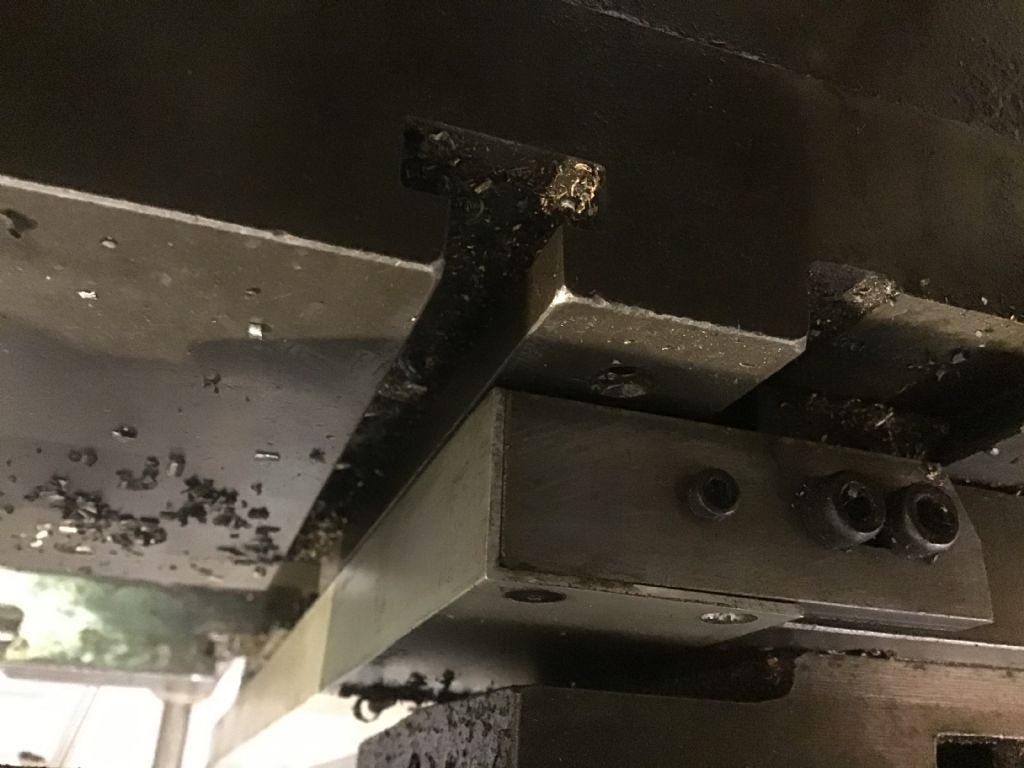
 SillyOldDuffer
 Michael Gilligan
 Roy Vaughn
 PekkaNF
 Roger Clark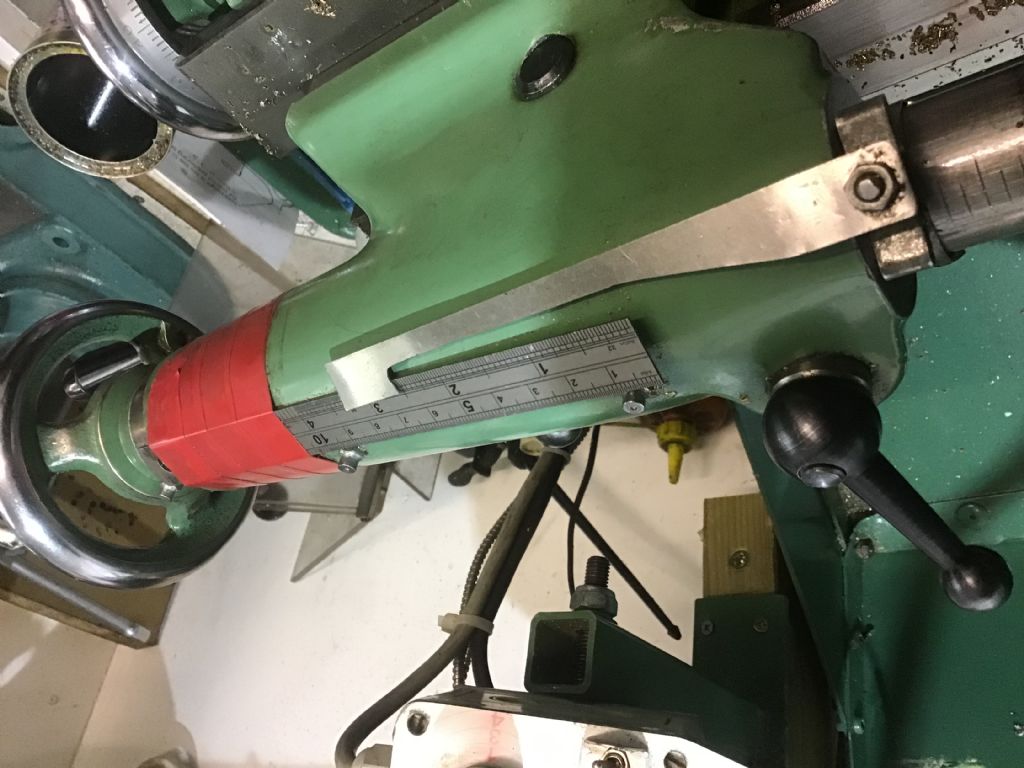
 Bill Phinn
  Michael Gilligan
 JasonB
  duncan webster 1
 Colin Teasdale
  Paul Lousick
 ralpharama
  JA
JA old mart
 GrahamS
 Turbine Guy
  larry phelan 1
  Macolm
 Bob Wild
  John Hinkley
  COLIN MARTIN 2
  peak4
peak4 Andrew Tinsley
  Charles Lamont
 File Handle
  Howard Lewis
 starjump
  Phil Whitley
  Steven Volz
  Bazyle
 IanT
IanT  Grindstone Cowboy
 Garry Coles
  noel shelley
 Robert Atkinson 2
 Russell Eberhardt
  blowlamp
 Sonic Escape
  John Purdy
  John Haine
 Michael Callaghan
  Dave S
 Dominic Bramley
  Andy Stopford

