Deep drilling

Deep drilling

Home Forums Workshop Techniques Deep drilling

Viewing 25 posts - 1 through 25 (of 28 total)
  • Author
    Posts
  • #857475
    Speedy Builder5
    Participant
      @speedybuilder5

      I need to drill some deep holes in Al Alloy (I don’t know the specs, but it machines really nice).  The holes are 3.5mm diameter by 75mm deep.  I can drill from each side. Once drilled, I need to transfer the position of the holes and  tap into a second component.

      What is the best way to prevent wander.

      Does the the drill speed faster or slower help ?

      Bob

      #857485
      renardiere7
      Participant
        @renardiere7

        Mill or Lathe?

        #857488
        Speedy Builder5
        Participant
          @speedybuilder5

          mill/drill, lathe.

          #857489
          JasonB
          Moderator
            @jasonb

            I’m not a fan of marking out so would locate the three holes on the face that will mate to the tapped part by finding edges and then use the millshandwheels or DRO to position. Start with a spot drill (ctr drill if you want). Then a stub drill which is nice and stiff to get teh hole started true. Then jobber length and probably have to finish with a long series drill. just drill from that one end.

            Somewhere around 2000rpm, paraffin or WD40, peck drill and clear the swarf often. Should not need to say sharp well ground drills.

            I also don’t much care for spotting through hole positions so again would us eedge finders and then set the position of the tapped holes with the mill.

            #857491
            Diogenes
            Participant
              @diogenes

              Use the correct speed for a 3.5 drill in Ali, failing that the highest available.

              start with a stub drill, then a jobber, and or a long series if required.

              clear the chips often – very often, as you get deeper (peck 1D and then clear) and let the drill do the cutting.

              Use bright drills if you have them and use paraffin / diesel / wd40 for lubricant

              #857492
              Huub
              Participant
                @huub

                In short, prevent the drill from bending, start at the exact center of the hole drill from both sides if possible.

                That results in:

                To much tool pressure will bend the drill so very modest tool pressure.
                Good chip evacuation is an absolute must. So peck drilling is needed.
                Start using a center drill.
                After that use a smaller size drill (3 mm) the shortest you can get.
                Drill the hole to just over half the depth, each time using a longer drill.
                Bring the hole to diameter using the same procedure
                Finish the hole using a reamer preferably from one side only.

                An end mill is often more rigid than a drill. Start drilling using a drill and bring the hole to diameter using an end mill is also possible. 4 Flute end mills have a larger core diameter than 2 flute end mills and are more rigid. So the 4 flute end mill is better.

                Whatever you do, it is quit a challenge.


                #857494
                howardb
                Participant
                  @howardb
                  On Speedy Builder5 Said:

                  I need to drill some deep holes in Al Alloy (I don’t know the specs, but it machines really nice).  The holes are 3.5mm diameter by 75mm deep.  I can drill from each side. Once drilled, I need to transfer the position of the holes and  tap into a second component.

                  What is the best way to prevent wander.

                  Does the the drill speed faster or slower help ?

                  Bob

                  Use a new long series drill of known decent make.

                  Centre drill the location or use a spotting drill.

                  About 2000 rpm with minimal feed, peck it every 2-3 mm with WD40 as lube, clear the flutes with a small brush, blow out the hole with comp air, more WD40 down the hole, then back down the hole again with the drill, rinse and repeat, be patient, don’t try to rush it.

                  Try the speed out on an offcut if possible first, if the metal welds to the drill, cut the speed down.


                  #857505
                  JasonB
                  Moderator
                    @jasonb

                    You should not get metal sticking to the tip at 2000rpm, it is very conservative but I said that rather than 7000rpm as most people don’t have machines that go much above 2000. I’d be up at my max of 5000rpm on the CNC but the manual mills top out at 2000.

                    #857555
                    Speedy Builder5
                    Participant
                      @speedybuilder5

                      I don’t think I have ever owned a stub drill, perhaps time to buy one now.

                      Thanks for the advice – there will now be a short interlude before I publish the results.

                      Bob

                      #857556
                      JasonB
                      Moderator
                        @jasonb

                        If you do inverst in one or a few try and get a make that has a split of 4-facet point. Dormer A022 for me.

                        The majority of the time these can be used without a punch mark or spot/ctr drill dimple. I have them in all my common tapping, reaming sizes as well as 0.5mm increments  and they get used far mor ethan the standard Jobber length drills.

                        #857572
                        Julie Ann
                        Participant
                          @julieann
                          On JasonB Said:

                          ….split of 4-facet point. Dormer A022 for me. The majority of the time these can be used without a punch mark or spot/ctr drill dimple.

                          I concur with one caveat; the suface needs to be flat. Even 4-facet drills can wander on a curved surface. I use Dormer A002 jobbers drills as standard, two sets 0-6mm and 6-10mm both by 0.1mm.

                          I would start with a carbide spot drill, then a stub drill, standard jobbers drill and a long jobbers drill if required. To get the holes in two parts to line up there are two options. One, do the drilling with the parts assembled. Second, drill the first part from the mating surface rather than the top. Then it doesn’t matter if the drill wanders slightly.

                          There is one golden rule to avoid drill wander, buy good quality drills that are properly ground. Also the mill needs to be accurately trammed and have a quality drill chuck.

                          I find WD40 to be good for drilling aluminium alloy; not so much for lubrication but it stops the swarf sticking to the flutes and jamming the drill.

                          Julie

                          #857624
                          ega
                          Participant
                            @ega

                            I find it important to “listen” to the machine – lathe, drill or mill – and for this a lever-operated mechanism is helpful, both for improved feel over a screw feed and for instant withdrawal.

                            According to Duplex, the ideal is counter-rotation eg work in lathe chuck, drill bit in rotating device of some sort.

                            Who is the favoured supplier for stub drills? (I have used The Drill Service in the past).

                            #857632
                            Julie Ann
                            Participant
                              @julieann

                              My first port of call for drills is Drill Service, but their pricing can be rather inconsistent at times and I have had the odd duff item. Albeit the last one was a 0.5mm diameter milling cutter that kept breaking on the CNC mill. Changed to one from Cutwel and it ran fine with the same CNC program.

                              Julie

                              #857636
                              Paul Lousick
                              Participant
                                @paullousick59116

                                A good video on Youtube by Joe Pie about machining straight deep holes.


                                #857639
                                JasonB
                                Moderator
                                  @jasonb

                                  Have gone back to using MSC Direct for my Dormer drills, I used to use them in the past until Ketan started doing them but have now had to go back to MSC.

                                  #857640
                                  Diogenes
                                  Participant
                                    @diogenes

                                    Stub drills? As per JasonB – Dormer A022-series work for me – not really any telling who will be cheapest on the day but a set going up in 0.5’s is worth chasing-up – I use mine every workshop day..

                                    i will get the box p/no. if I’m up there later..

                                    #857655
                                    ega
                                    Participant
                                      @ega

                                      Thanks to Julie et al for the pointers to drill suppliers.

                                      I’ll look at a set by 0.5s but am mainly interested in tapping sizes and double-ended drills.

                                      #857689
                                      Speedy Builder5
                                      Participant
                                        @speedybuilder5

                                        It sounds expensive buying a full set of stub drills at this stage. More than 60 years ago, I “earned” a full set of drills, Fractions by 1/64″, Number and letter drills and still have them as full sets however the drill points have wandered over the years of re-sharpening by eye.

                                        Now they are complimented by metric drills  1- 13 by 0.5mm increments for day to day usage but are not much use when used for tapping as the sizes do not correlate to the taps.

                                        I constantly use a Shetac drill size calculator which again after 60 odd years is showing its age.

                                        Bob

                                        #857690
                                        JasonB
                                        Moderator
                                          @jasonb

                                          I only bought what I commonly use in stub length, anything else can be spotted and drilled with a jobber. My jobber 1/16th to 1/2, 1-5.9 and 6-10 sets in 0.1mm increments started out a cheaper sets but over time I have replaced when needed with Dormers.

                                          20260724_133223

                                          #857694
                                          Durhambuilder
                                          Participant
                                            @durhambuilder

                                            It’s horses for courses. From your previous posts it looks as if these holes are the cylinder fixings on a farmboy IC engine. Assuming that is correct then you would be better off drilling the cylinder from one end and use transfer punches (a sharpened length of silver steel rod) to transfer the hole positions to the mating part. A few thou out of the drawing position buried deep in the engine  will do no harm. Of course if it’s not a farm boy and instead part of a moon rocket for NASA then more accurate options are available as described by others.

                                            #857708
                                            JasonB
                                            Moderator
                                              @jasonb

                                              The heads for the cap head screws are hidden under the cylinder head so does not really matter if the hole has wandered at that end either. They don’t hold the head down.

                                              Saves having to buy a length of 3.5mm silver steel and sharpen/harden/temper it if you start both sets of holes where they meet.

                                              #857715
                                              Speedy Builder5
                                              Participant
                                                @speedybuilder5

                                                Yes, FarmBoy.  The drawings are in decimalised fractions of an inch which gives some some funny dimensions as to the rounding to nearest 0.001″

                                                Bob

                                                #857767
                                                not done it yet
                                                Participant
                                                  @notdoneityet

                                                  Can you possibly drill larger from both ends and bush the ends to size?  The middle parts being perfectly in line is not such an important requirement like that and can be over-sized by a tad….

                                                  #857800
                                                  Speedy Builder5
                                                  Participant
                                                    @speedybuilder5

                                                    NDY, If it all goes a little astray, that may be an option.

                                                    #857811
                                                    Dalboy
                                                    Participant
                                                      @dalboy

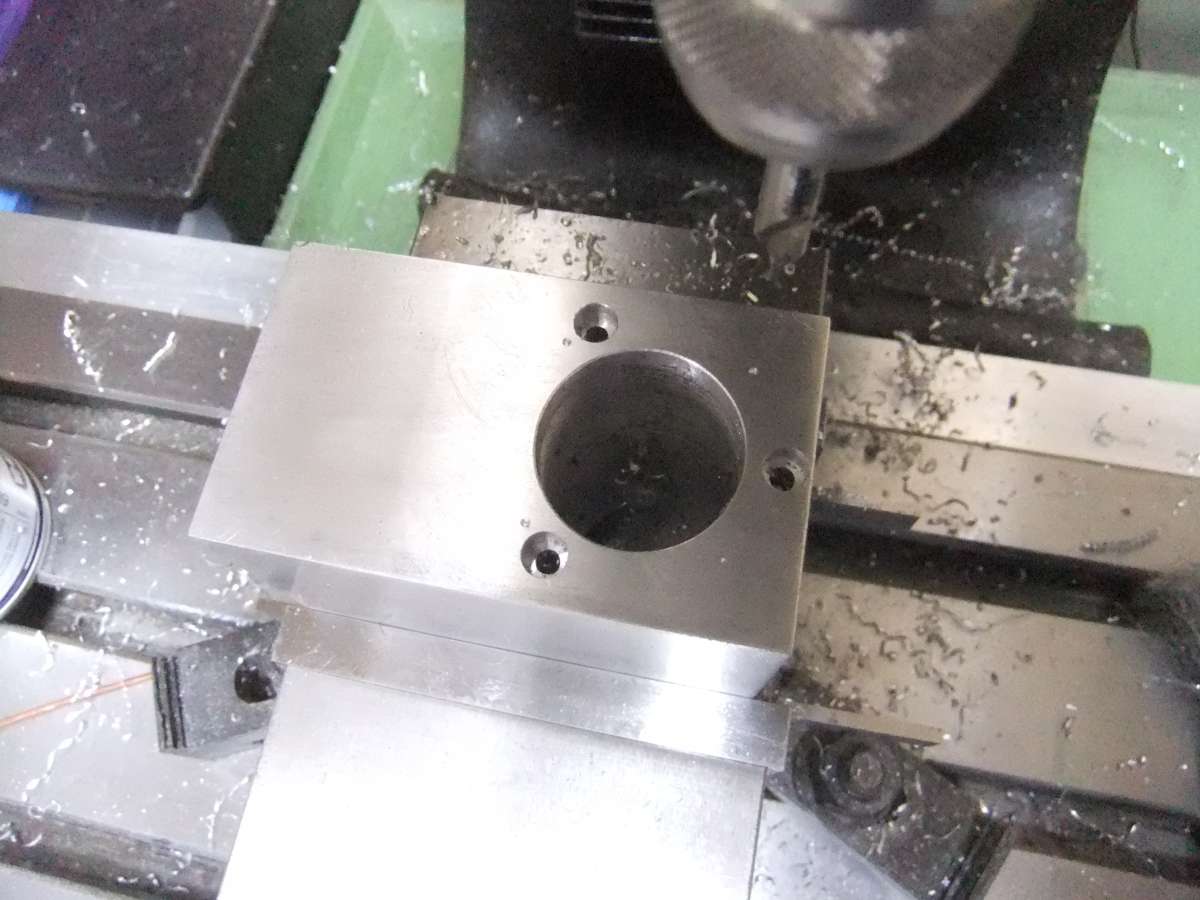
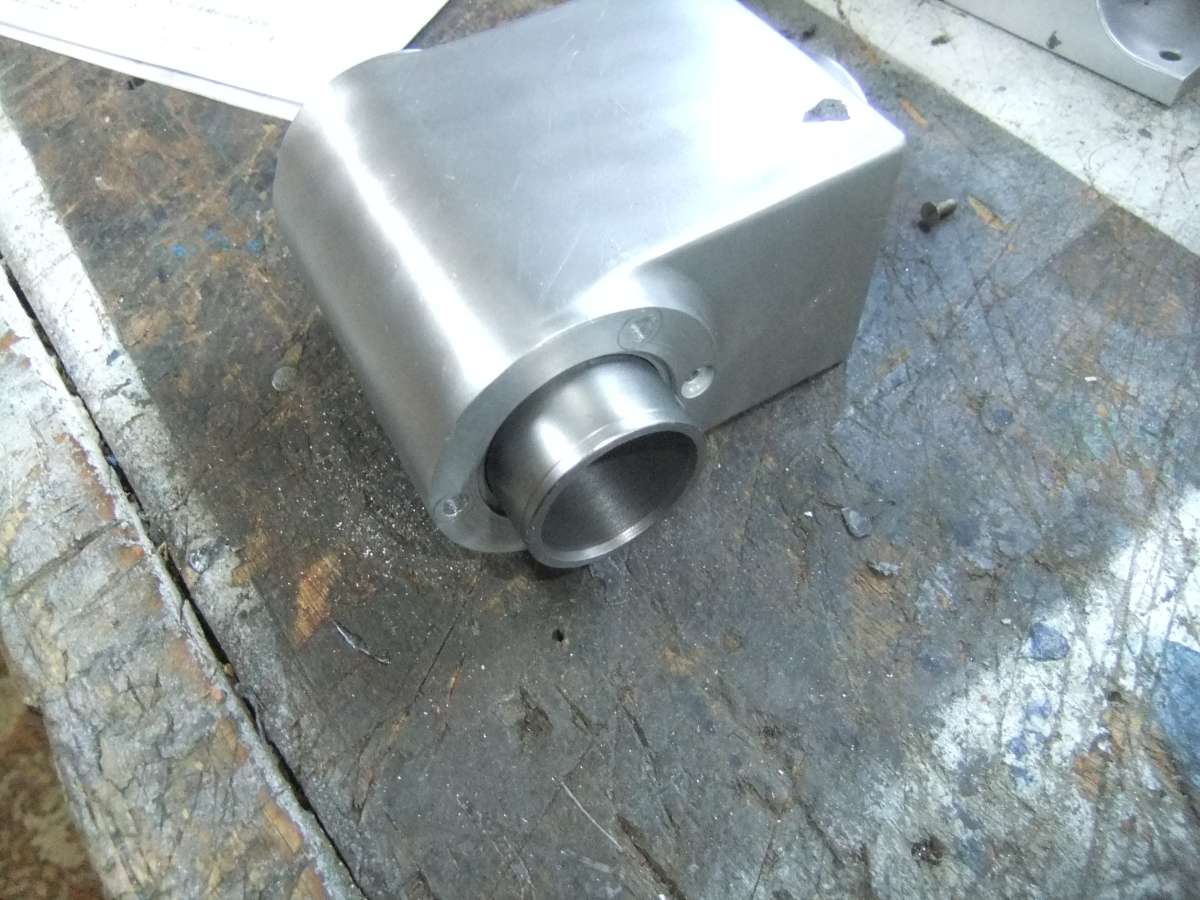
                                                      When I did mine I drilled from both ends after drilling and boring the main cylinder bore but before shaping the outside. I just started with a block the correct size for the part.

                                                      It worked for me any slight deviation was easily sorted by running the drill bit from both ends, so no step was left in the middle. I used the pecking method to help prevent the bit from wandering too far off course.

                                                      Drilling and counter sinking for the heads

                                                      drilling the water hopper (6)


                                                      The outside shaped

                                                      Cylinder liner turned (5)

                                                    Viewing 25 posts - 1 through 25 (of 28 total)
                                                    • Please log in to reply to this topic. Registering is free and easy using the links on the menu at the top of this page.

                                                    Latest Replies

                                                    Home Forums Workshop Techniques Topics

                                                    Viewing 25 topics - 1 through 25 (of 25 total)
                                                    Viewing 25 topics - 1 through 25 (of 25 total)

                                                    View full reply list.