Super Simplex Build

Super Simplex Build

Home Forums Work In Progress and completed items Super Simplex Build

Viewing 18 posts - 1 through 18 (of 18 total)
  • Author
    Posts
  • #840621
    Peter Hoerlein
    Participant
      @peterhoerlein37724

      This is my first attempt at a locomotive and was chosen as there is plenty of information available and lots have builders have already identified issues in the original drawings.  Hopefully the photos and posts will be of interest.

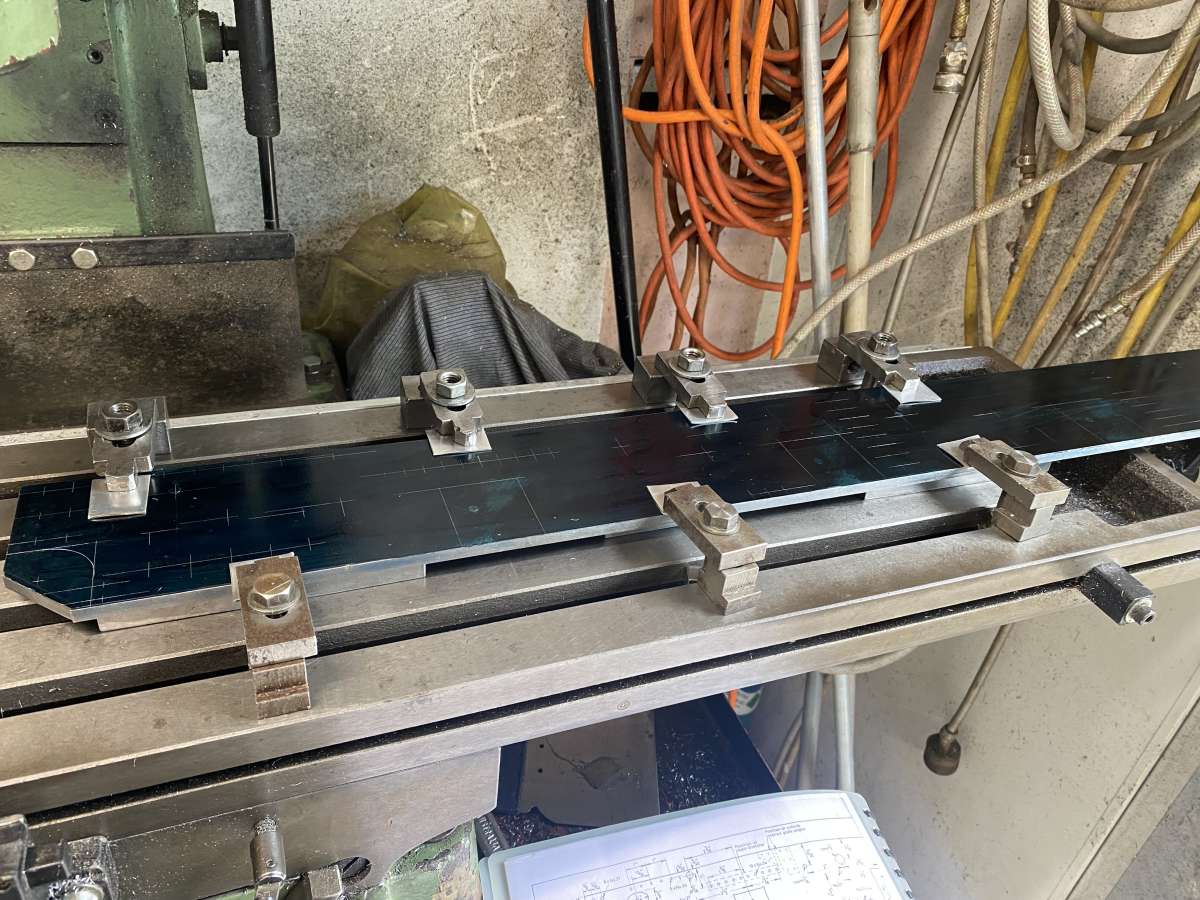
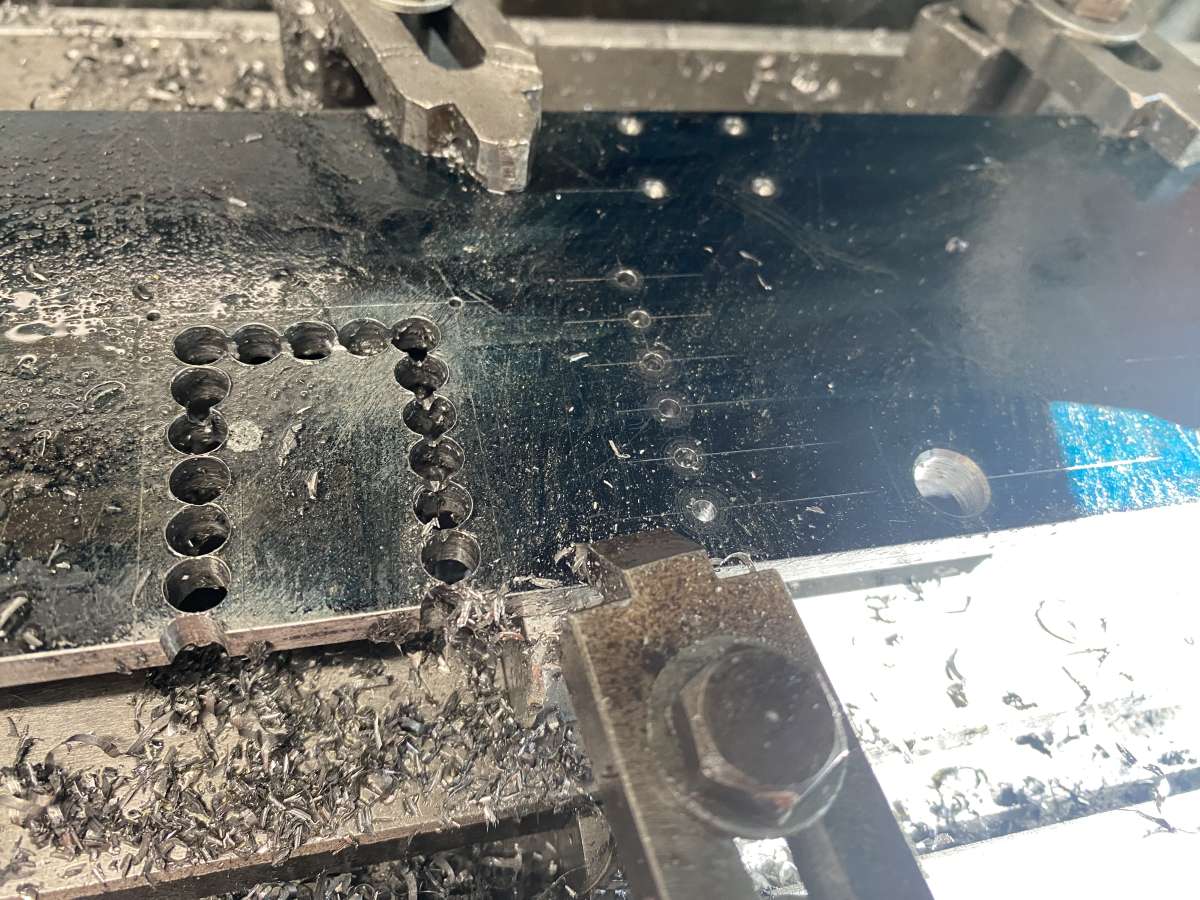
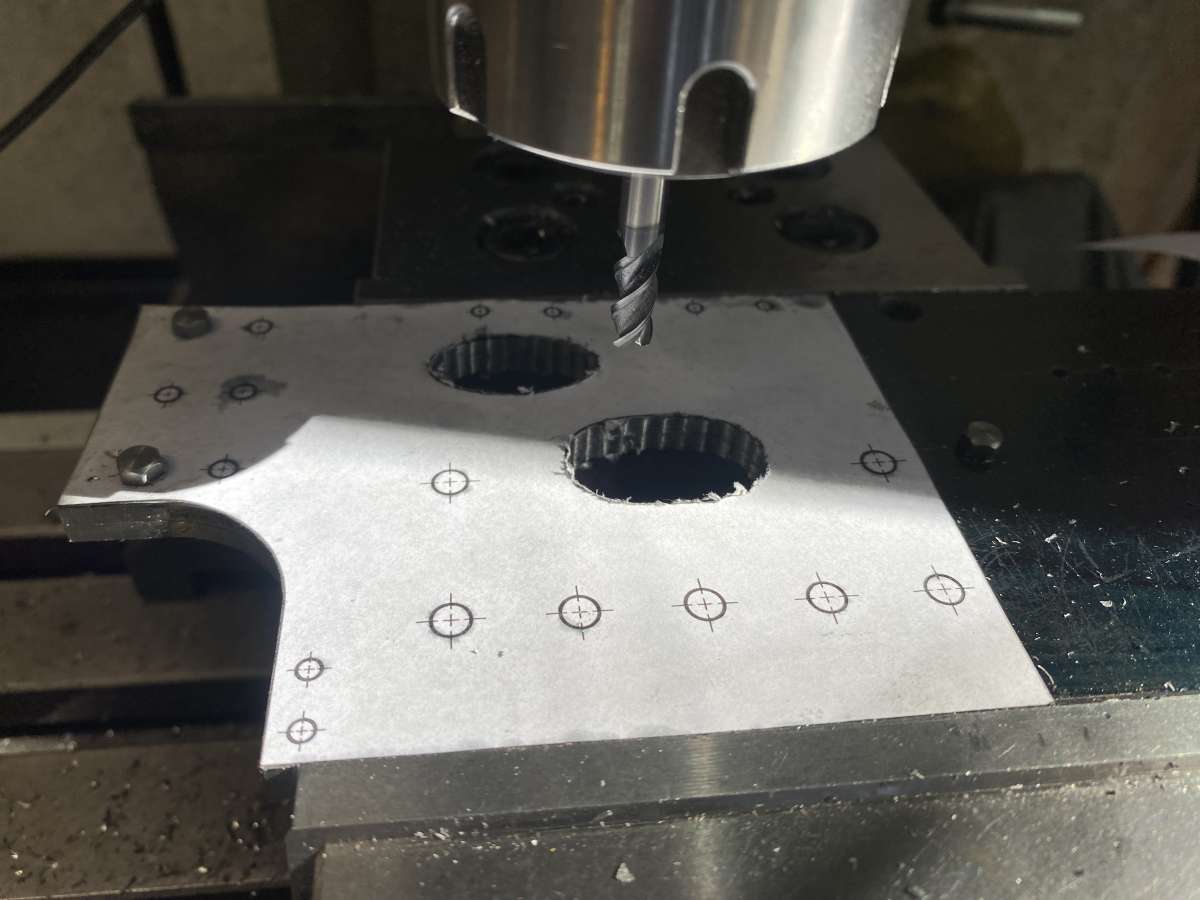
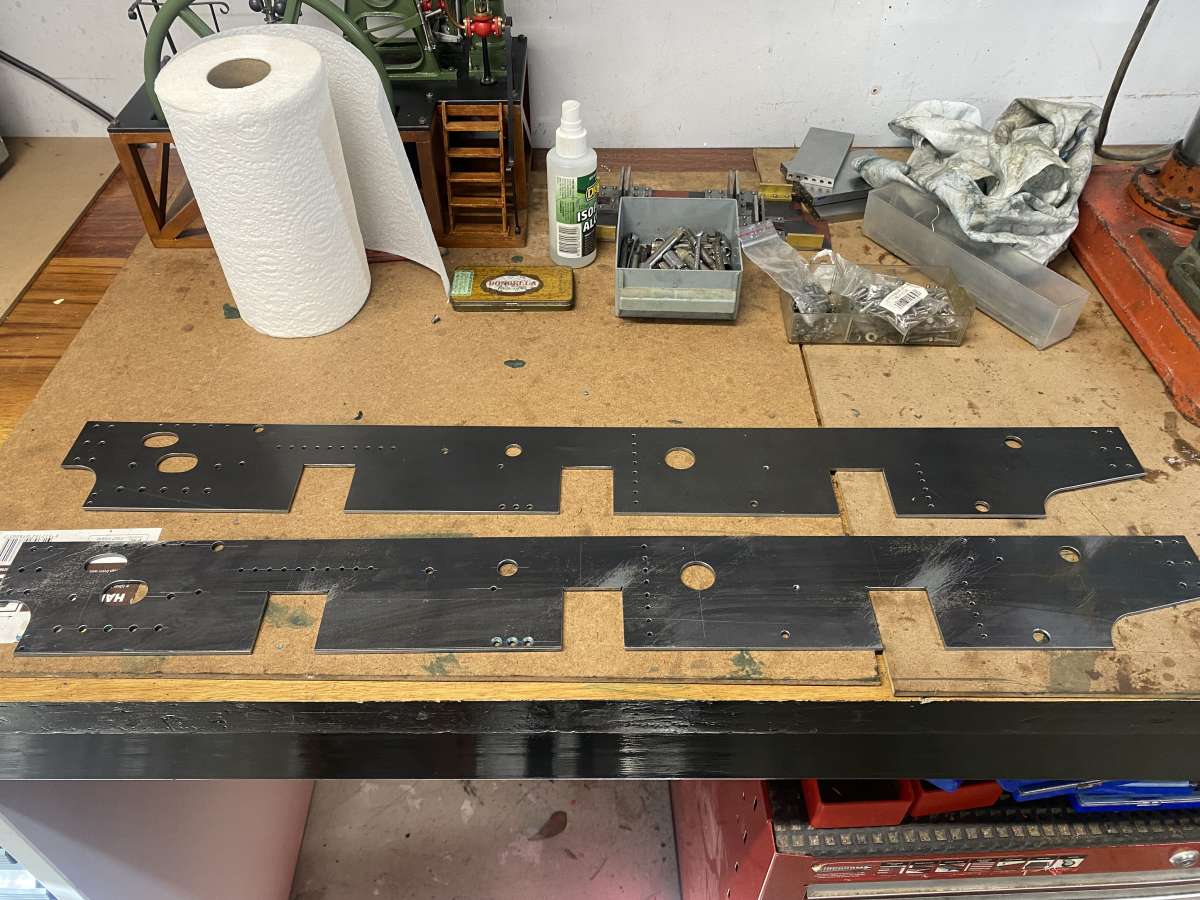
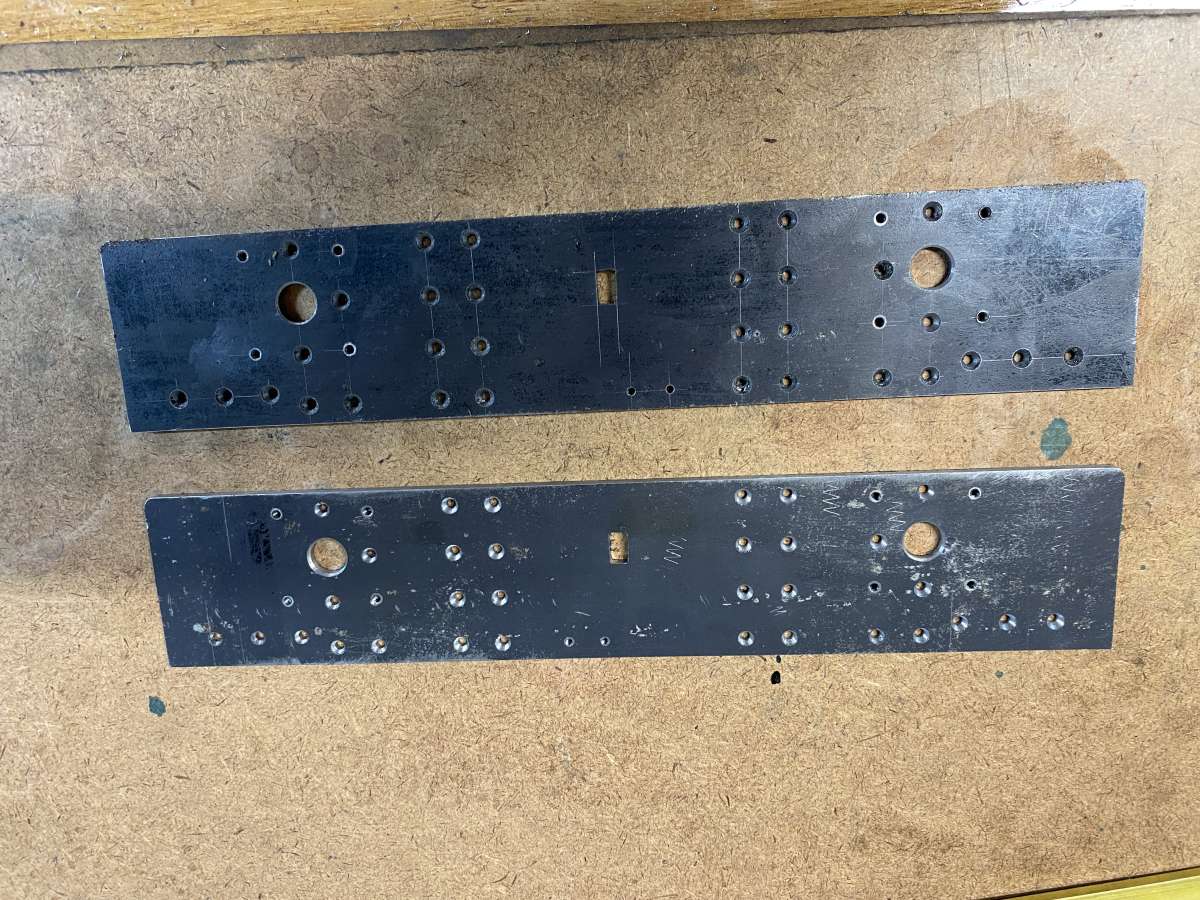
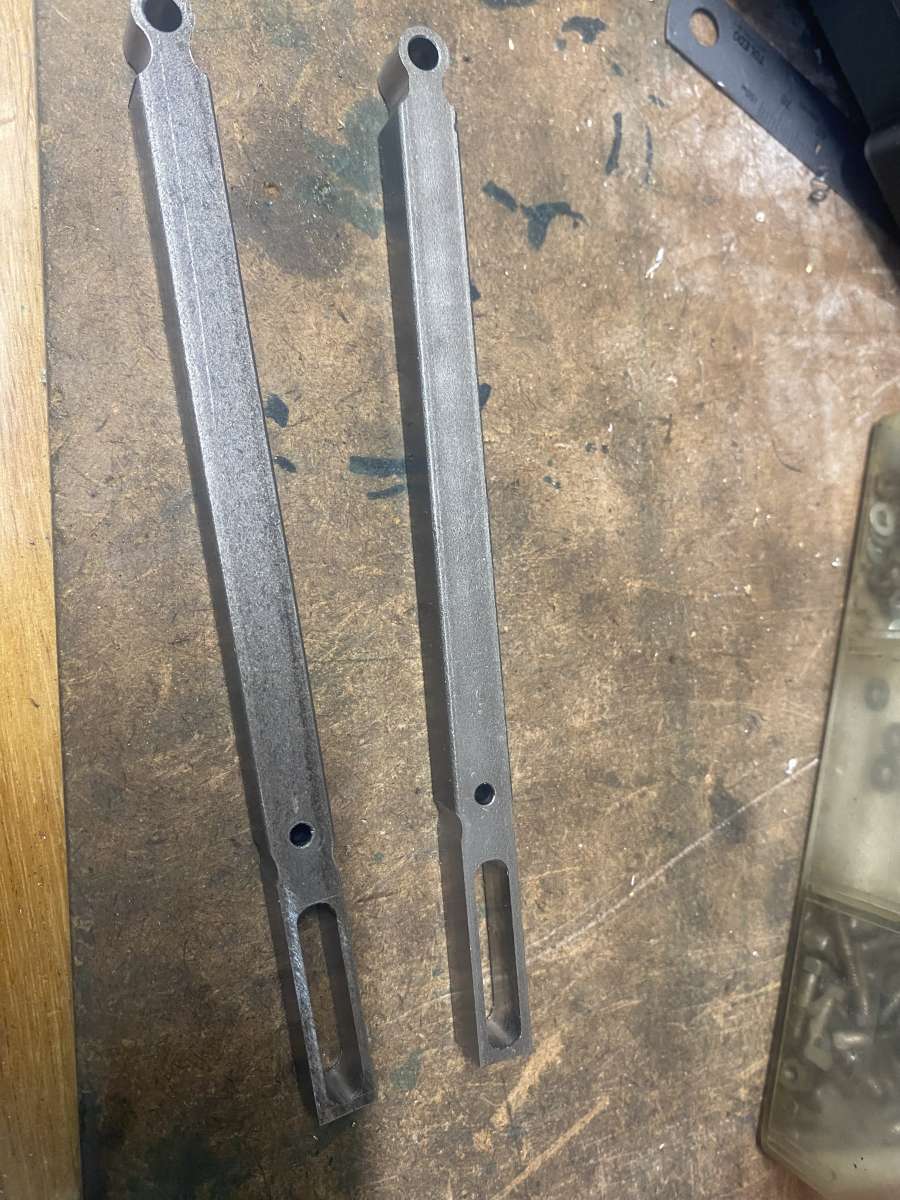
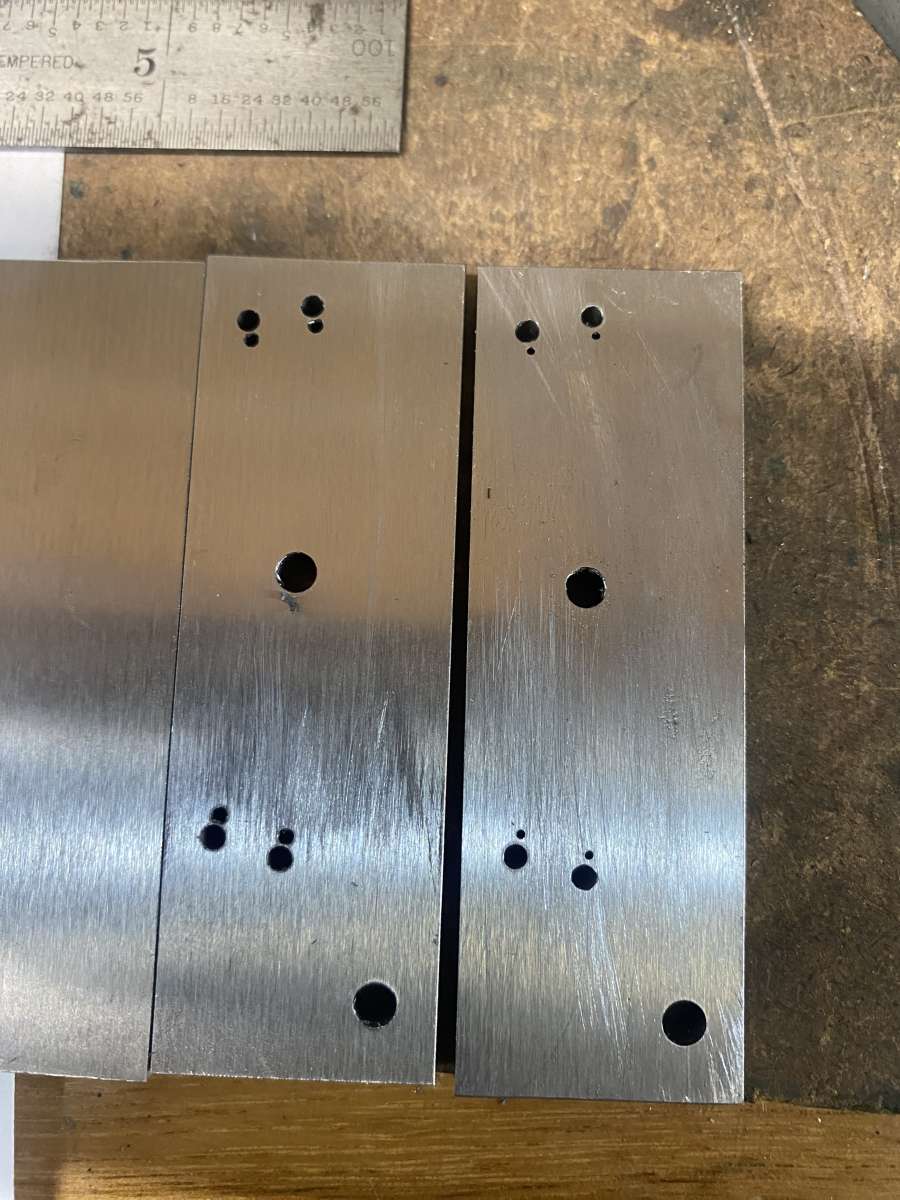
      A start was initially made on the frames.  Two blanks were plasma cut from 3mm  plate by a local fabricator, however when the edges were machined to size the frames warped quite a bit. A second set was purchased and this time the heat affected edge was cut away on the band saw prior to machining and frames were perfectly straight.  It was surprising how much stress was introduced into the steel from the cutting.  Here are some pictures of the frames.IMG_2261IMG_2262IMG_2266IMG_2267

      #842479
      Peter Hoerlein
      Participant
        @peterhoerlein37724

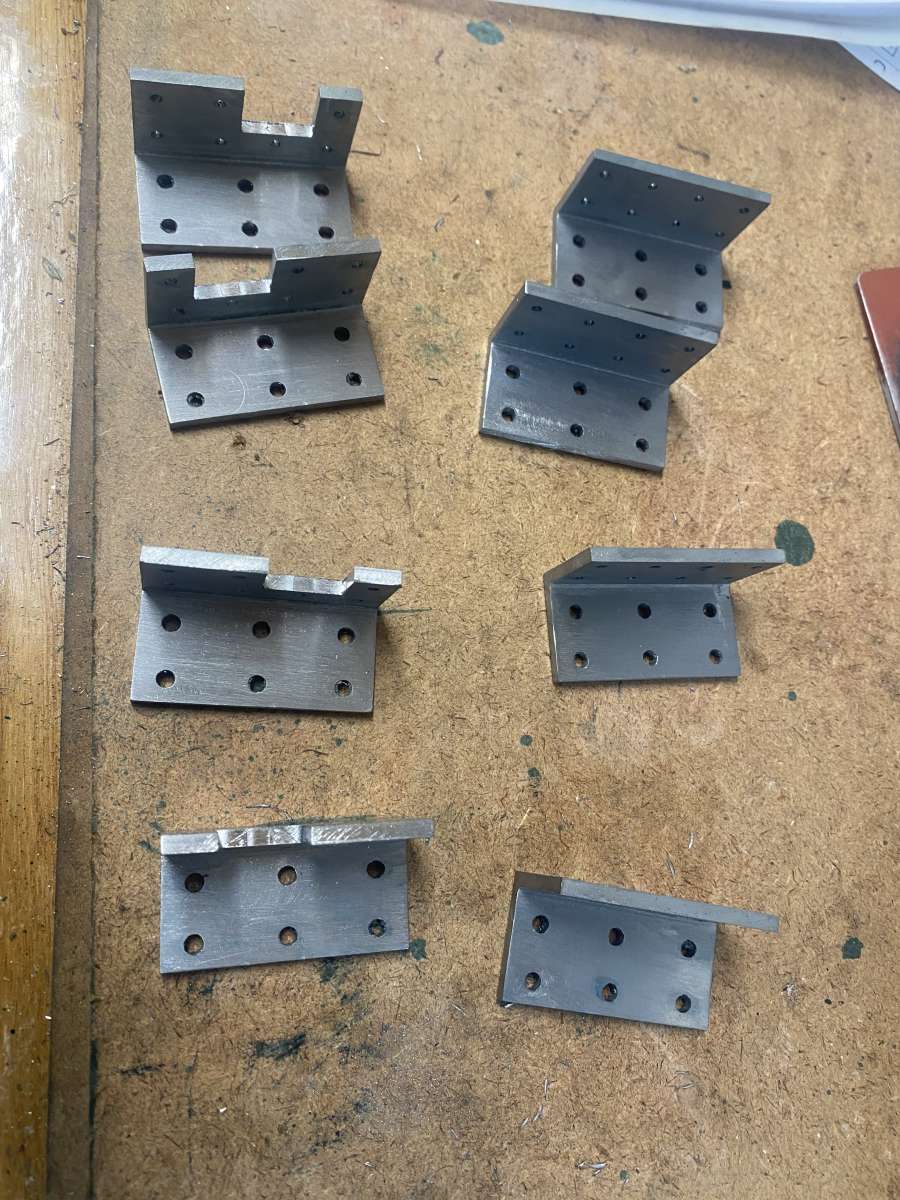
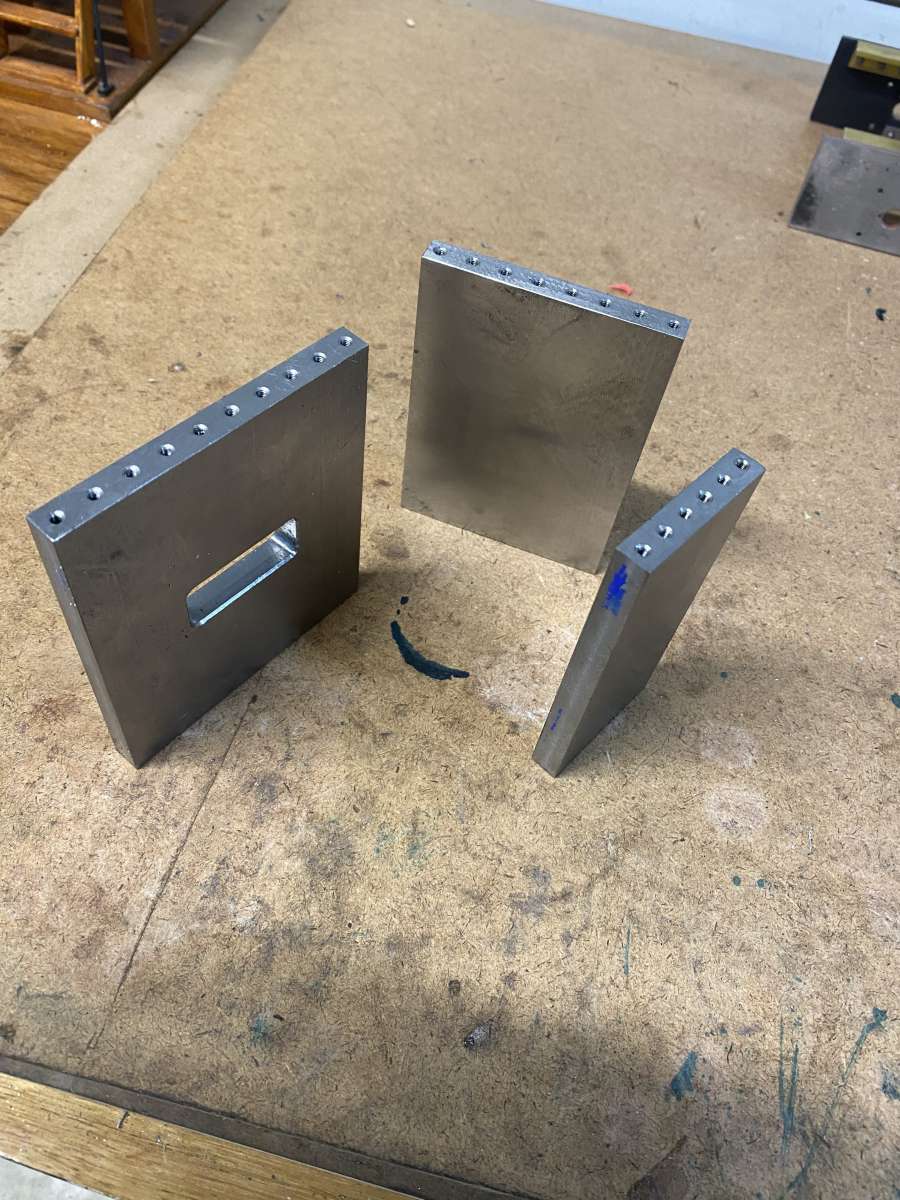
        Next step was to make the buffer beams, brackets and frame spreaders.

        The buffer beams were initially made from the scraped frames. The drawings were consulted and it clearly shows they need to be 3/16 not 1/8.  So these were re made in 5mm plate.

        IMG_2240

        The brackets were machined down from some angle iron

        IMG_2242

        and the frame spreaders were machined from 10mm x 125mm bar an later surface ground down to 3/8 thickness

        IMG_2260


        #843658
        Peter Hoerlein
        Participant
          @peterhoerlein37724

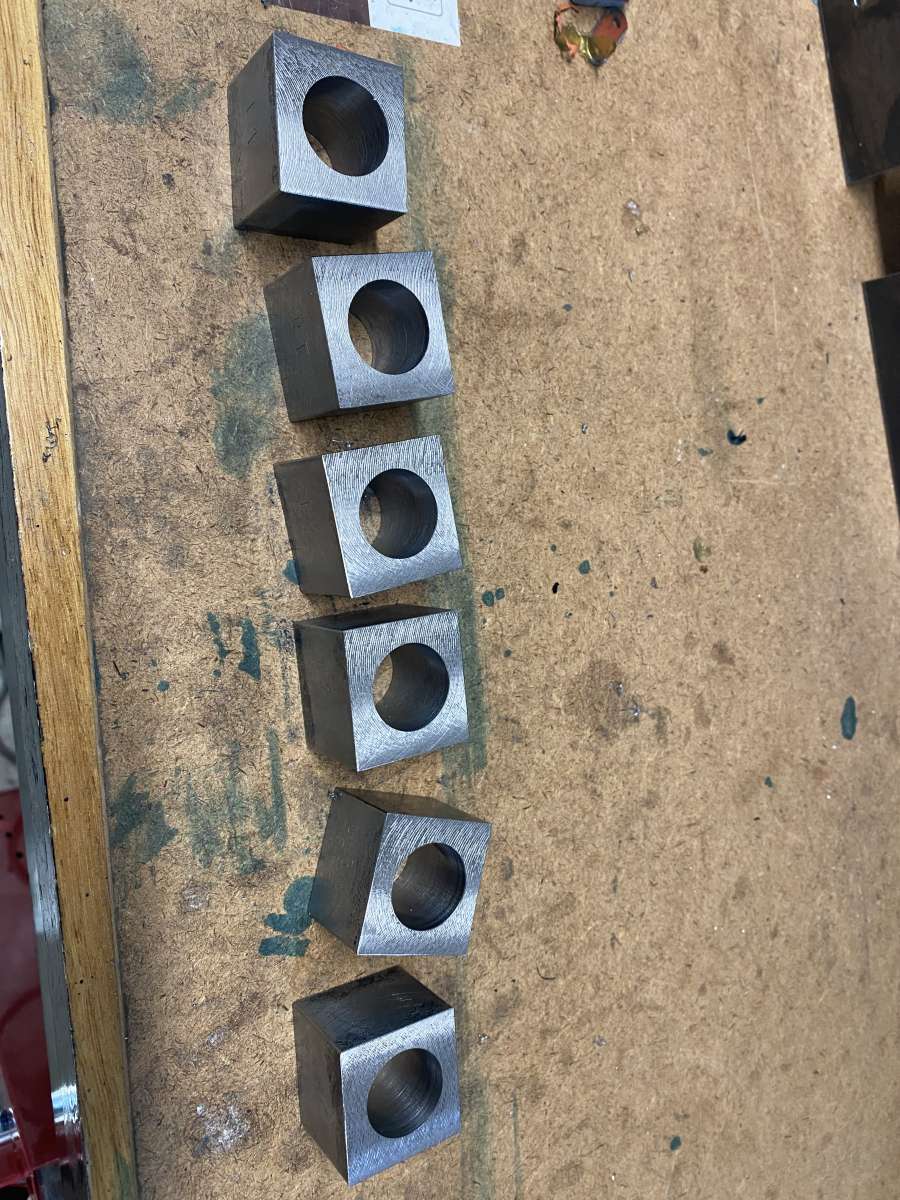
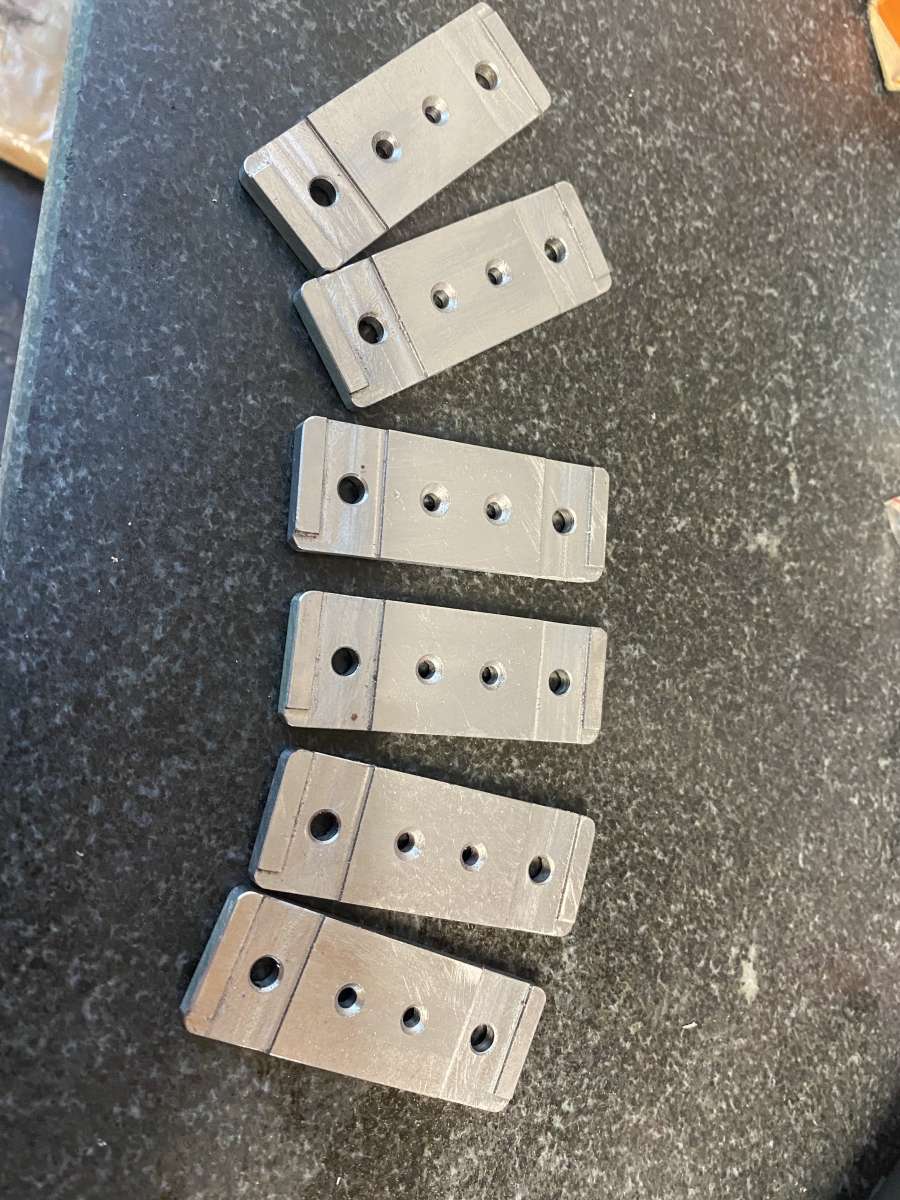
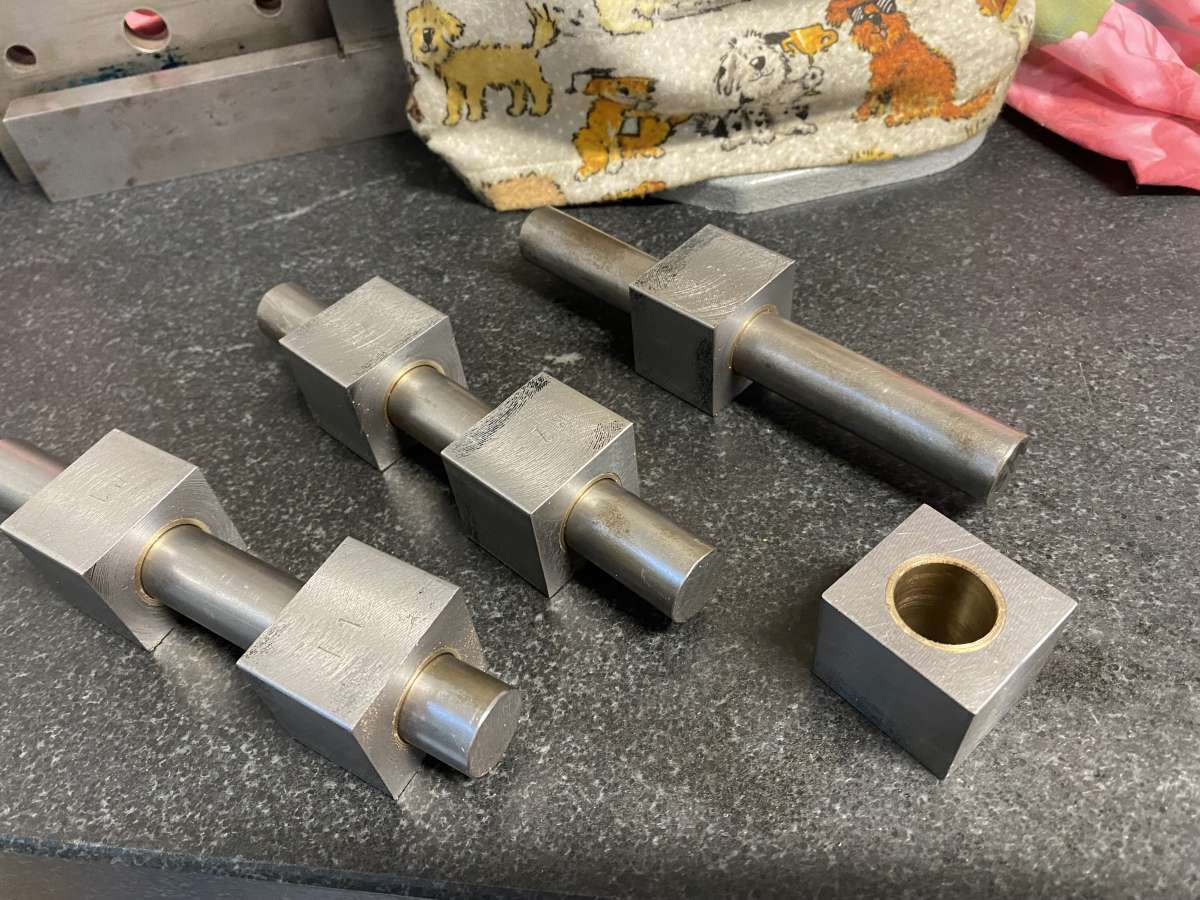
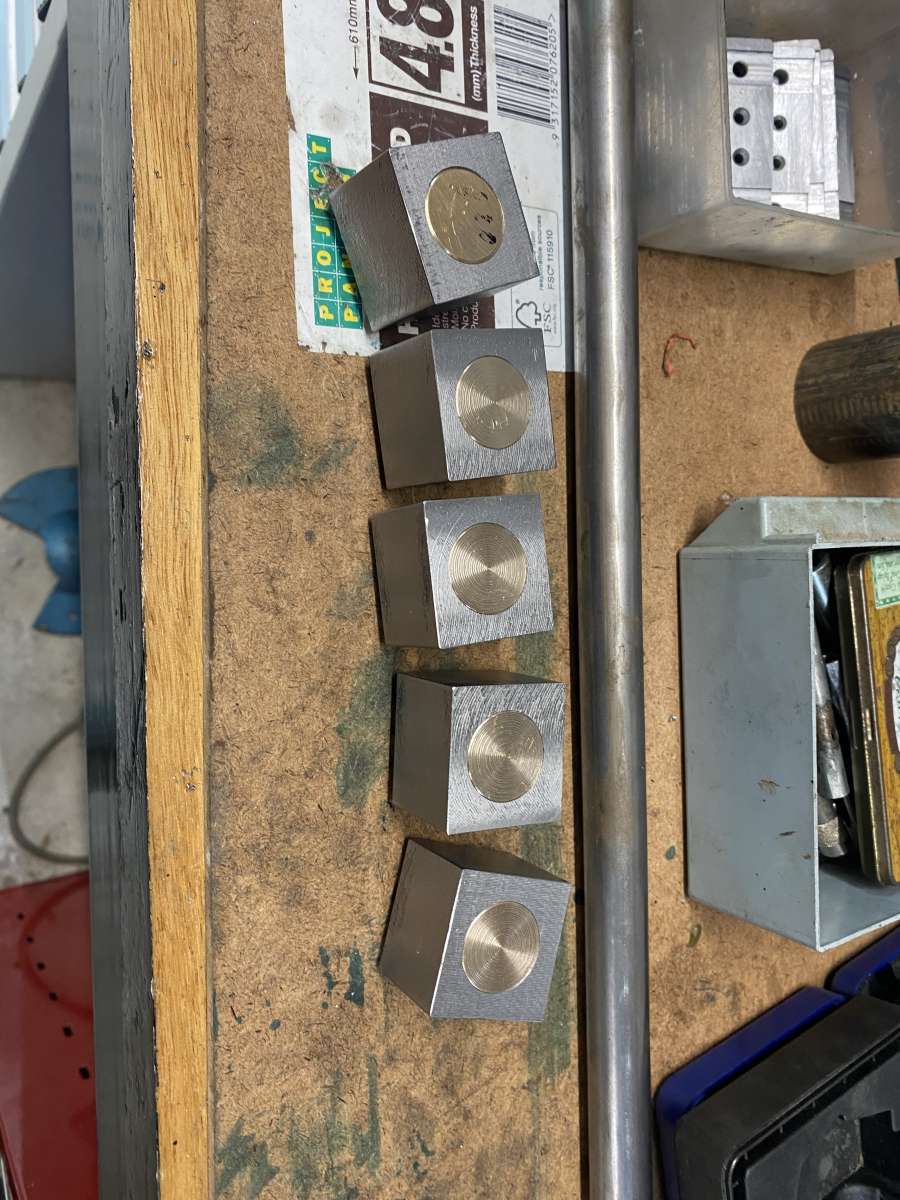
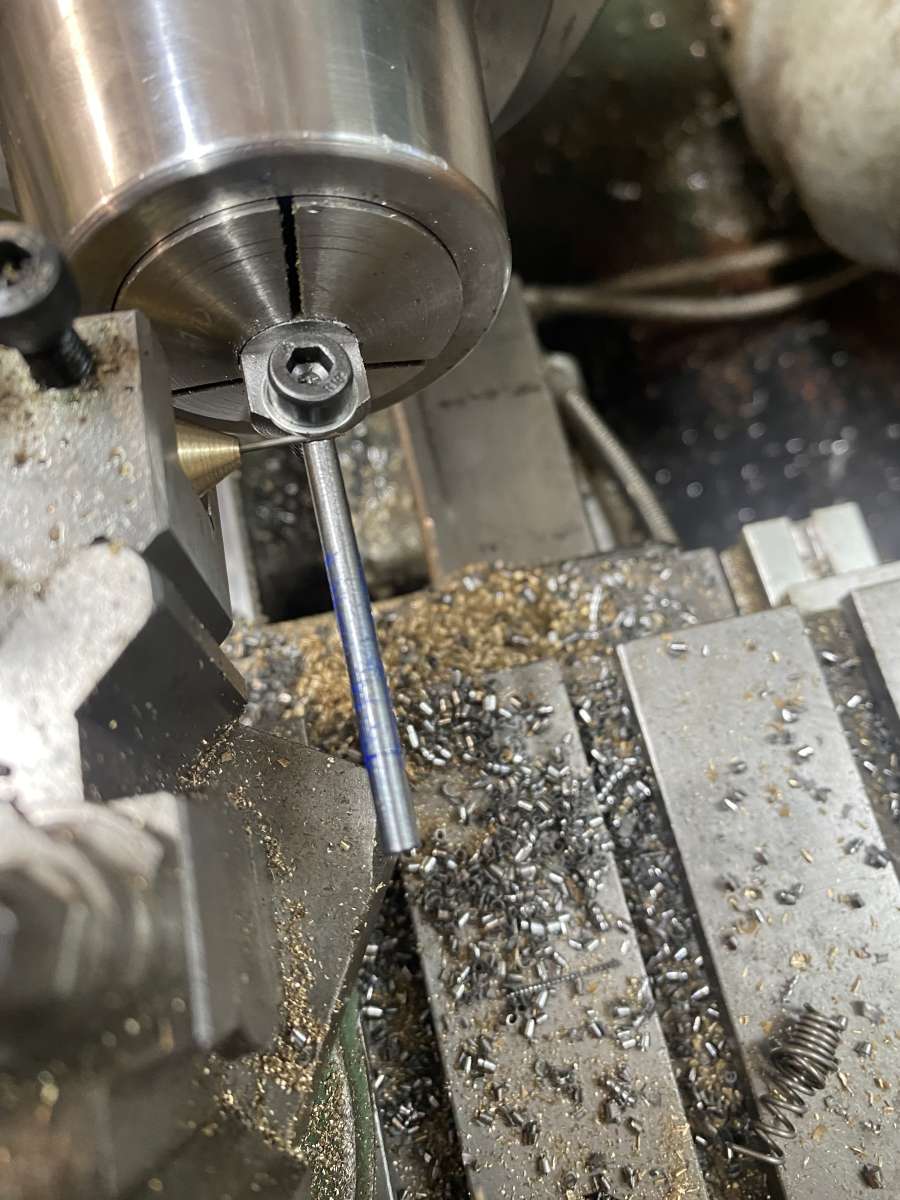
          Made a start on the axle boxes.  They were made from steel with Gunmetal liners to reduce the amount of gun metal requires.  The ME drawing of the keeps are not quite correct and need to have a small section machined from the outside edges to make sure they fit into the frames correctly.  I also had a go at making the springs.  The spring pins were made from 1/8 steel as per drawing but I noticed in the description Martin suggests some users may use 3/16.  So I hope the 1/8 pins should be sufficient.

          IMG_2271IMG_2270IMG_2273IMG_2272IMG_2277IMG_2278

          #843662
          AStroud
          Participant
            @astroud

            Very nice work !

            #844514
            Peter Hoerlein
            Participant
              @peterhoerlein37724

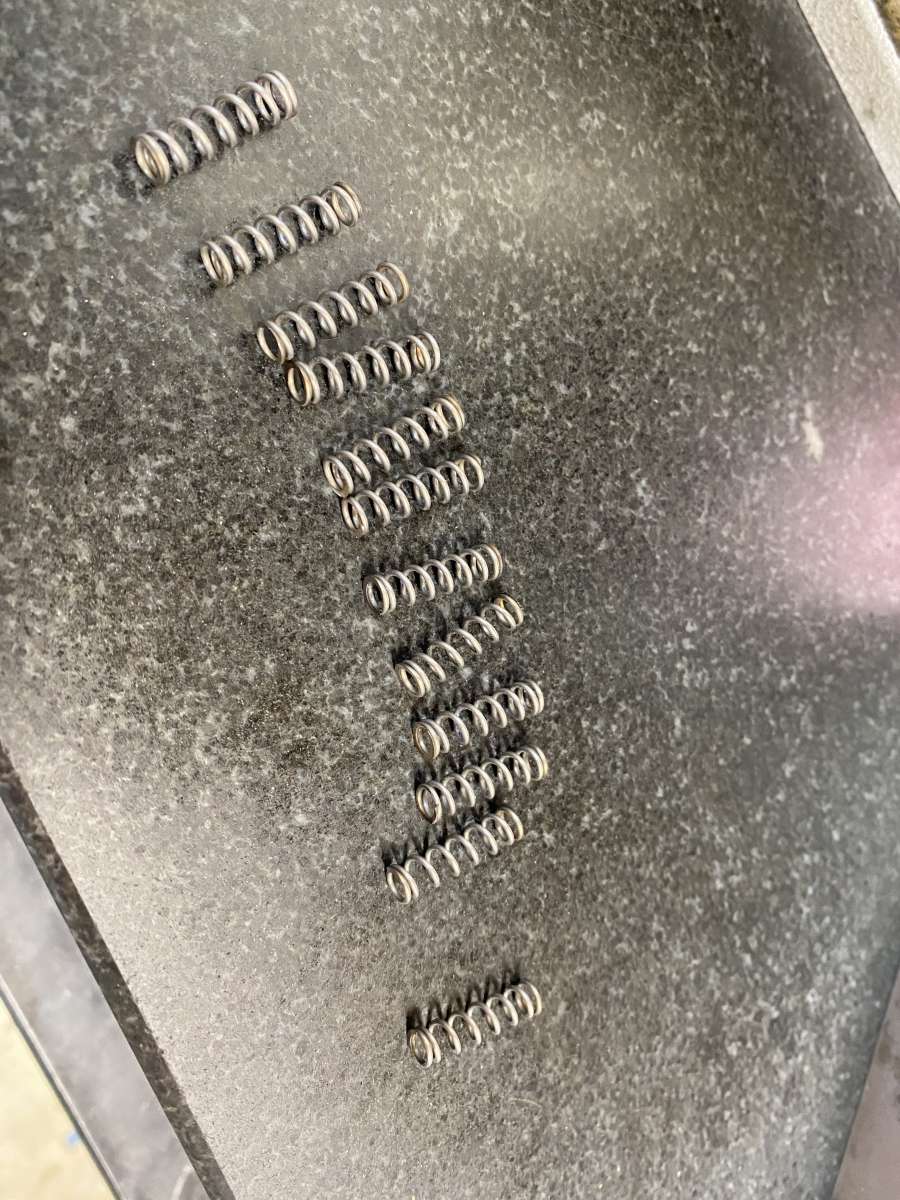
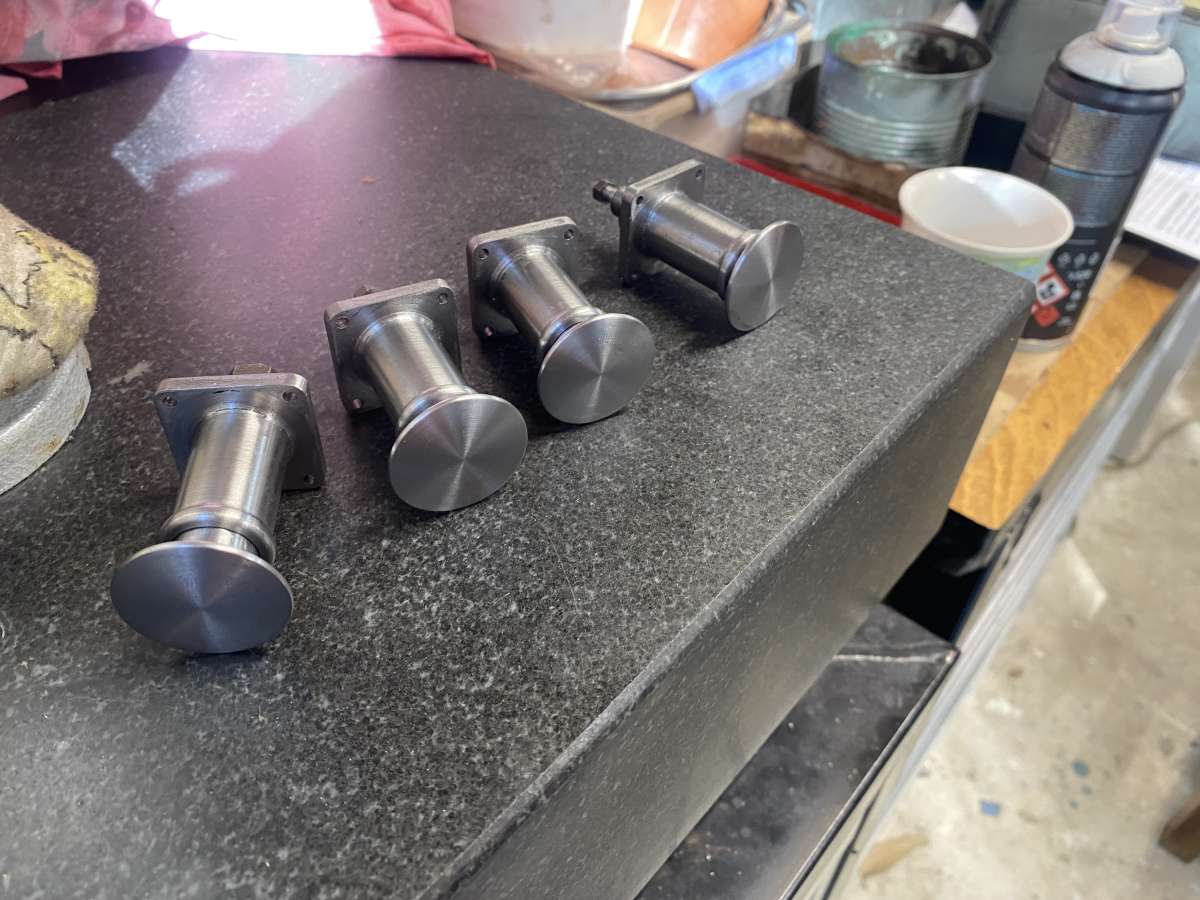
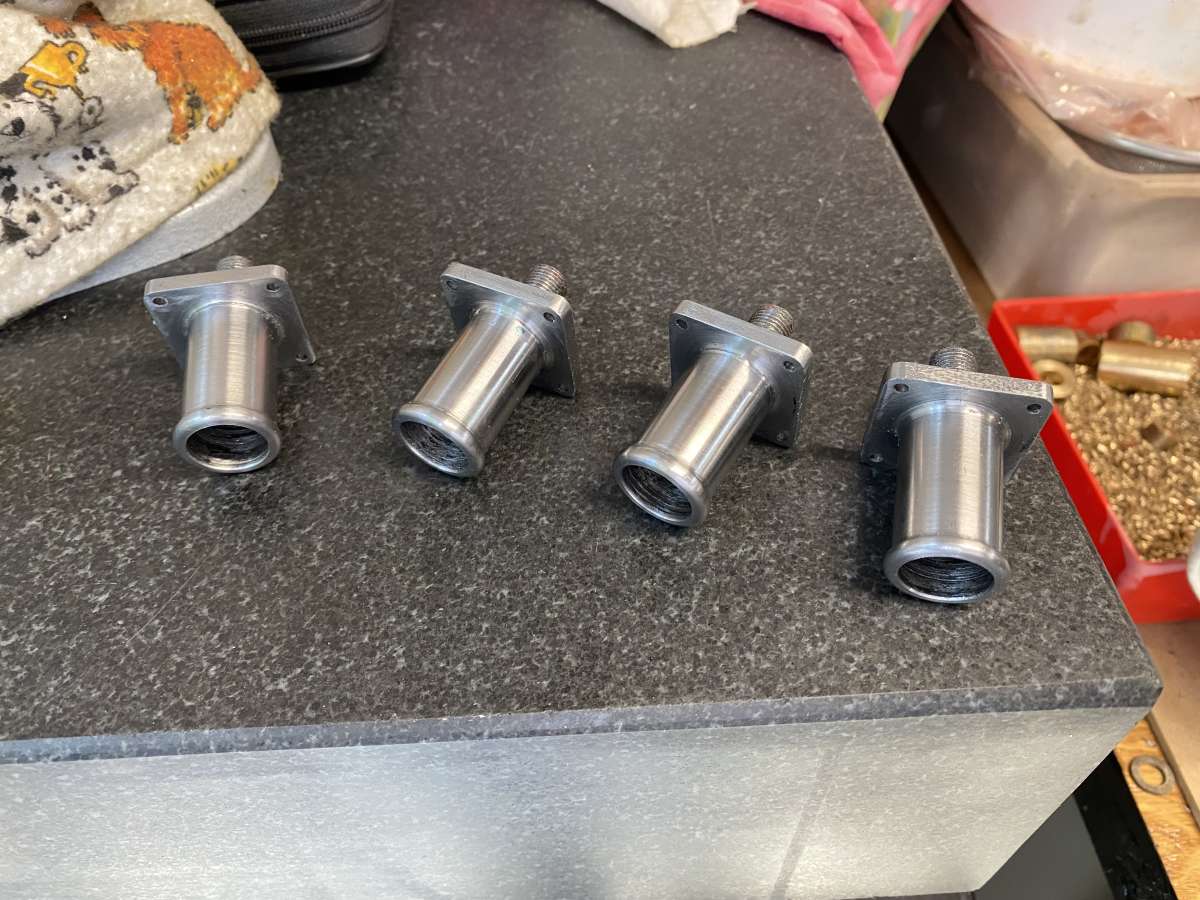
              Made the buffers this week.  Although as I found out talking to the guys at the club they are only decorative as a solid beam is required for connecting carriages.  They said buffers can be quite dangerous on small gauge locomotives as the carriages can push the locomotive off the rails if they make contact with the buffers.  The front profile on the buffers were machined on the lathe using the radius function on the DRO and finished with a file and emery. I need to get some 15g and 16g spring wire to finish the springs not sure where?  IMG_2286IMG_2285

              #845136
              Peter Hoerlein
              Participant
                @peterhoerlein37724

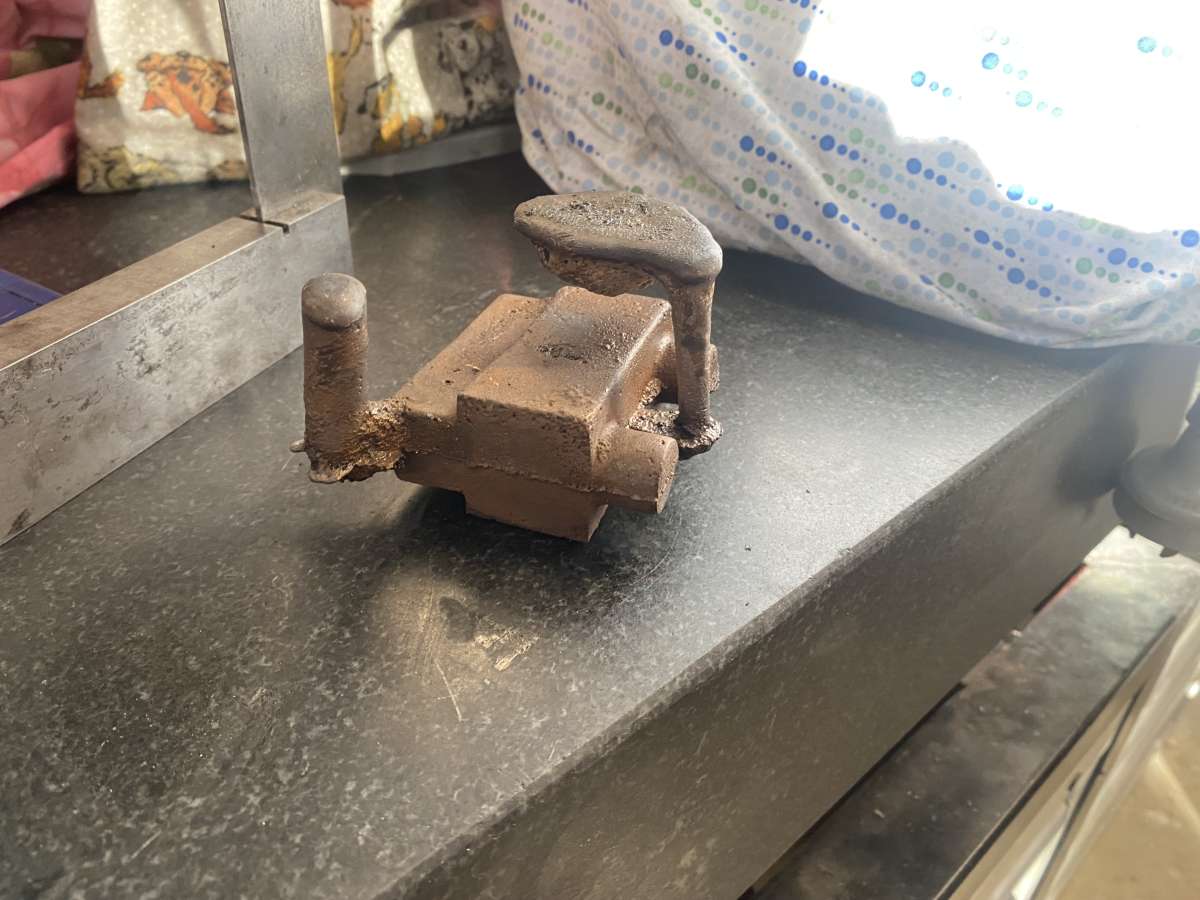
                I had a go at doing some gun metal casting.  Started on the water pup as the casting was easy to make out a couple of blocks of timber.  I built the Martin Evan’s improved pump published in ME issue 3628.  Not sure if this is the best option yet as the pump Martin designed for the Super simplex came out after this article. Here are some pictures of the raw casting.IMG_2293IMG_2287

                #846794
                Peter Hoerlein
                Participant
                  @peterhoerlein37724

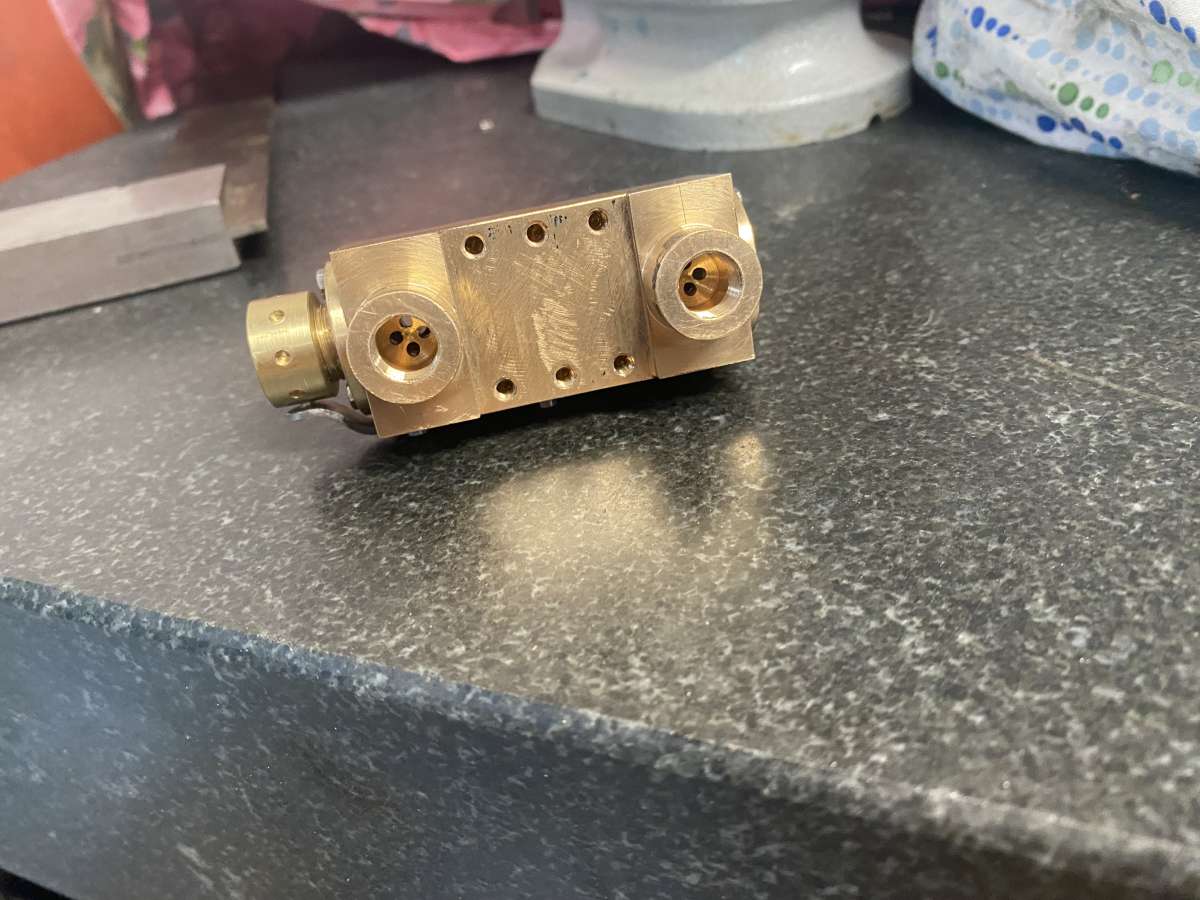
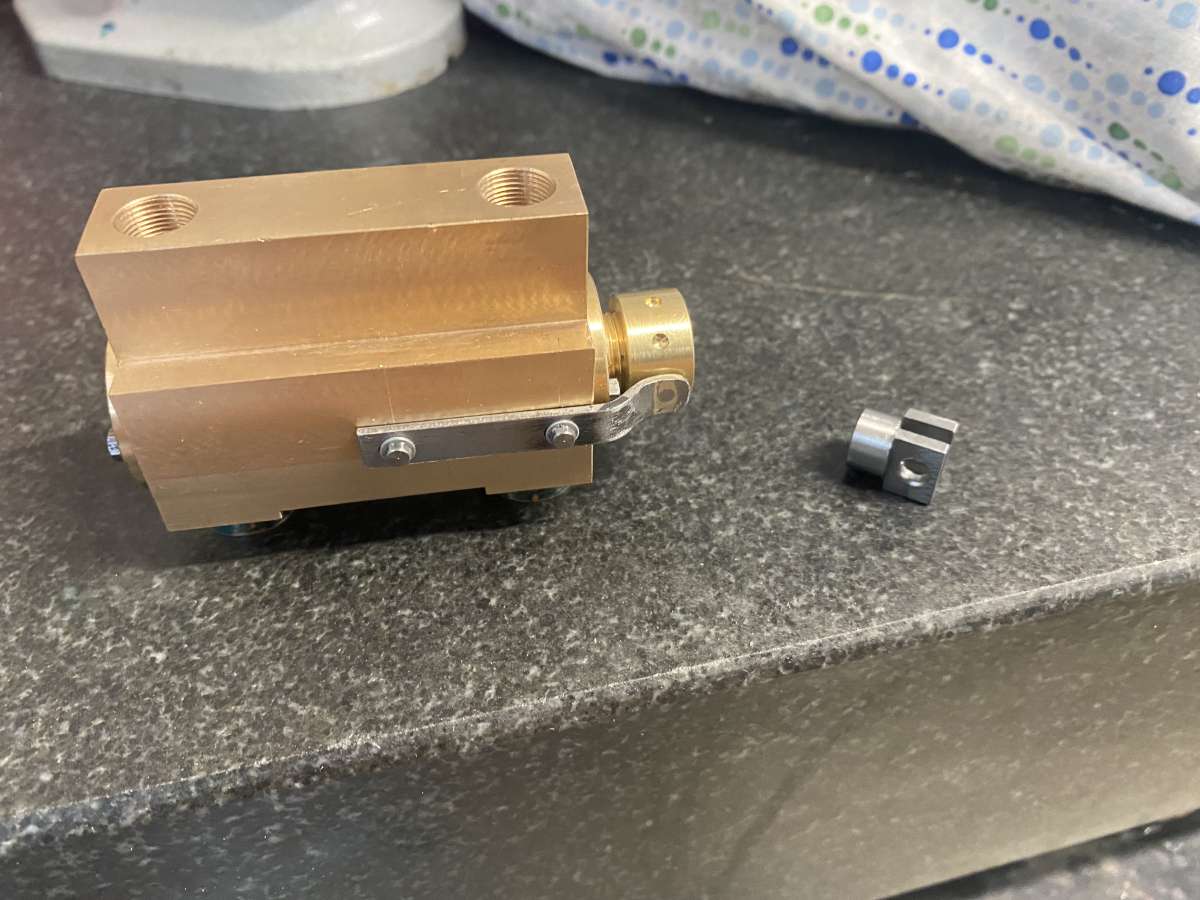
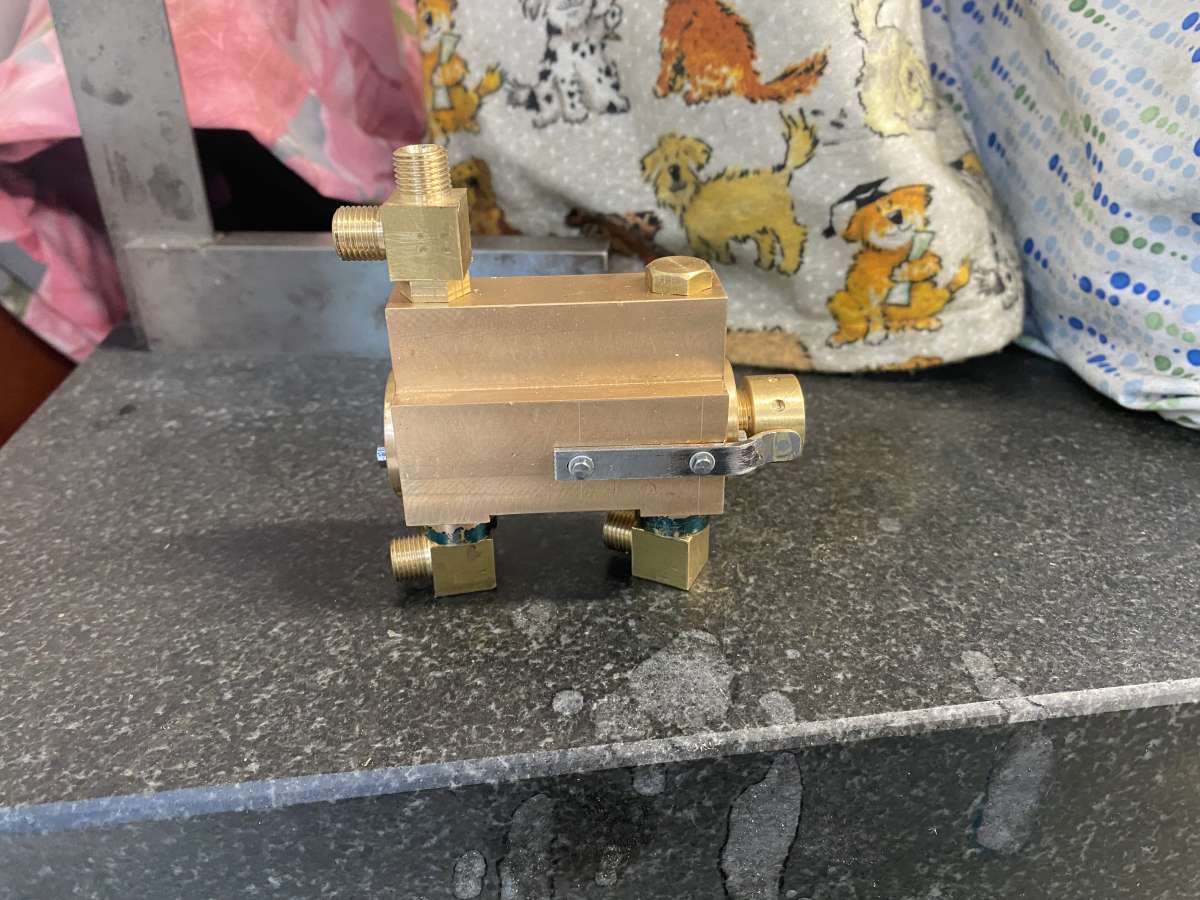
                  Machined up one of the castings for the axle pump.  This is Martin Evan’s improved design for the Simplex published in ME March 1980.  I think I will end up using this for the hand pump. I drilled the four No 46 holes for the pump suction first before drilling and tapping the 3/8 x 40 hole.  The valve lifts were all checked by measuring from the top of each of the suction and outlet bosses to the top the ball.  And the measuring the lengths of each of the fittings.

                  IMG_2305IMG_2304IMG_2306

                  #846811
                  Weary
                  Participant
                    @weary

                    Very nice work on that pump, and indeed on all the fittings, Peter.

                    I am curious as to why you are using it as the hand-pump though as it is a double-acting pump specifically designed to smooth-out the cyclical resistance of a ‘standard’ single-stroke axle-pump.  Though I vaguely recall that Mr Evans’ first design was not in-fact double-acting ….. hence the ‘improved’ design!

                    Very-much enjoying your build.

                    Phil

                    #846817
                    noel shelley
                    Participant
                      @noelshelley55608

                      That casting came out well. All the rest looks pretty good, interesting comment about the buffers.  Noel.

                      #847989
                      Derek Drover
                      Participant
                        @derekdrover32802

                        Good work indeed.

                        I would suggest considering (especially as you’re at an early stage), to alter the axle boxes to take a needle roller bearing. The axle boxes are very large and with a little redesigning this can be done.. then you wont have to worry about lubricating the axle boxes (I hate the “squirt over the top and assume some gets in”).

                        It also reduces the issue with grit from the ash pan destroying the back axle bearings.

                        #848710
                        Peter Hoerlein
                        Participant
                          @peterhoerlein37724

                          Phil,

                          Martin published a new design for the Super Simplex and I will make that one for the main pump just to follow his design. I did not want to waste this pump and looking at the hand pump published for the Super Simplex ME 7 July 1989 page 36. It looks very much the same


                          Regards

                          Peter

                          #848711
                          Peter Hoerlein
                          Participant
                            @peterhoerlein37724

                            Derek

                            Thanks for the suggestion.  I’m running 3/4 axle rods.  I will. Heck out what is available

                            Regards

                            Peter

                            #848716
                            Peter Hoerlein
                            Participant
                              @peterhoerlein37724

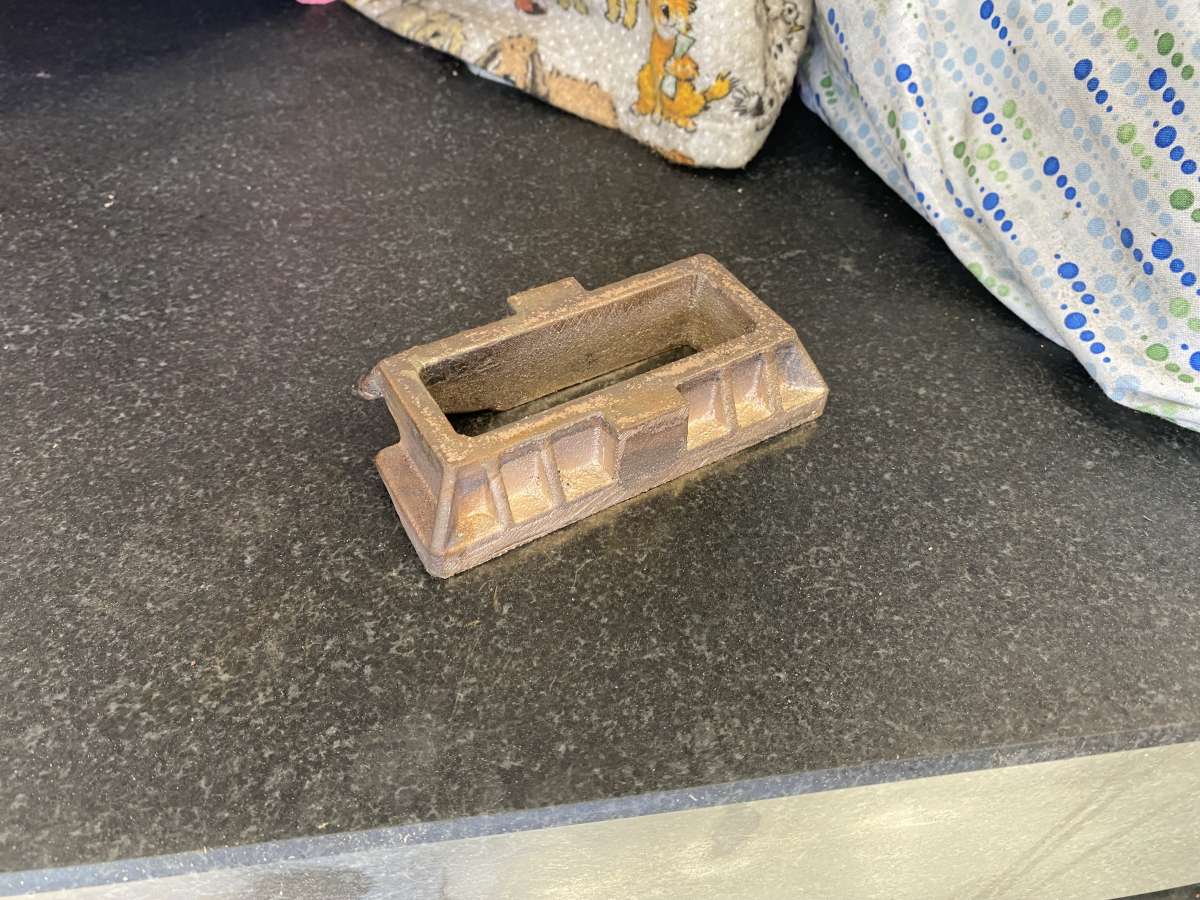
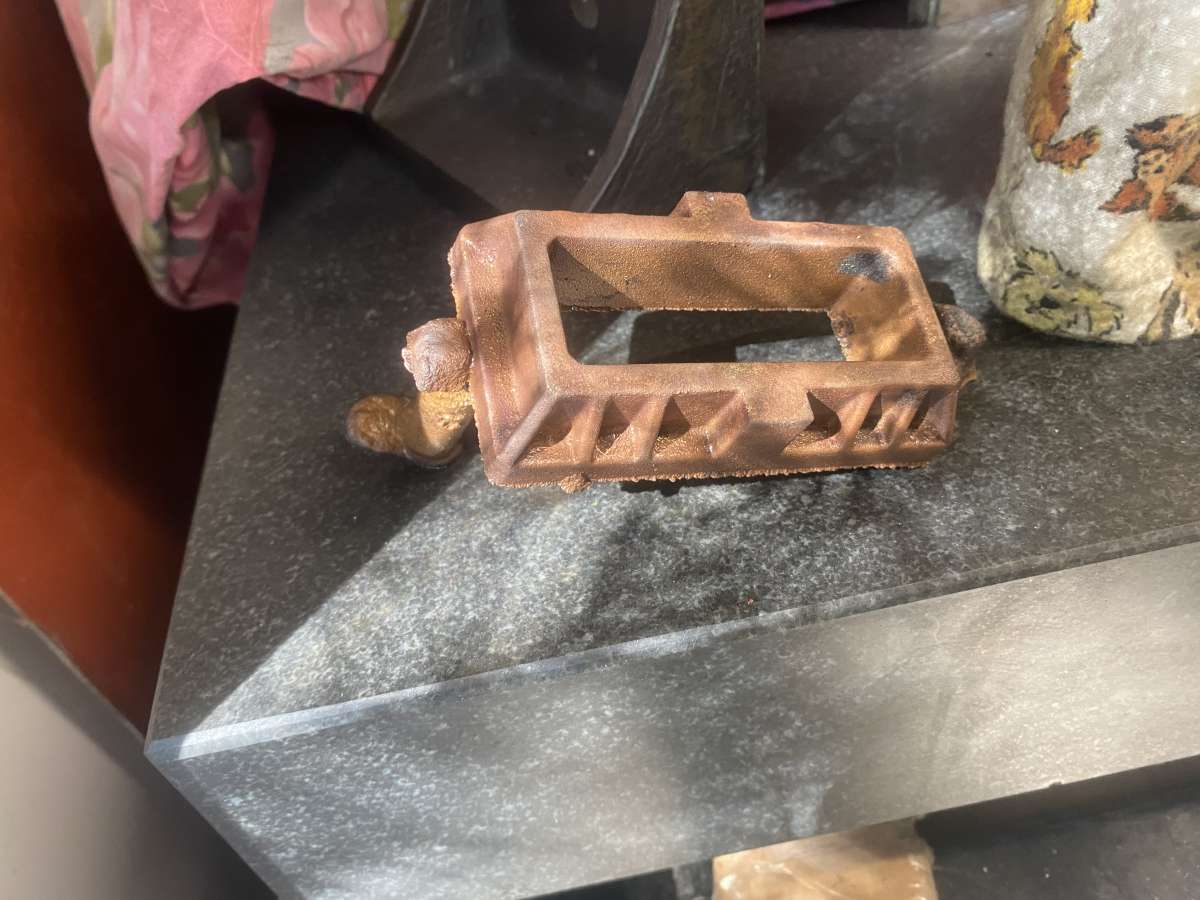
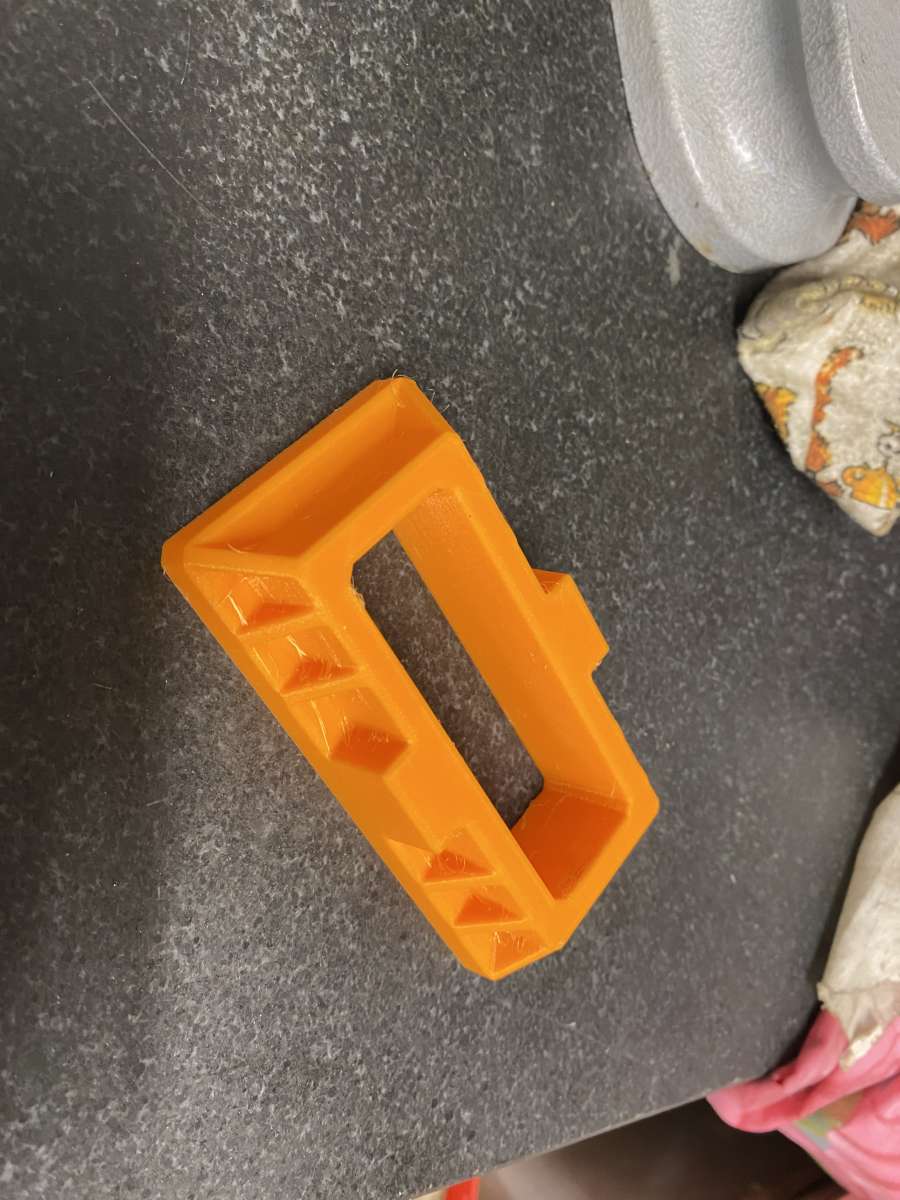
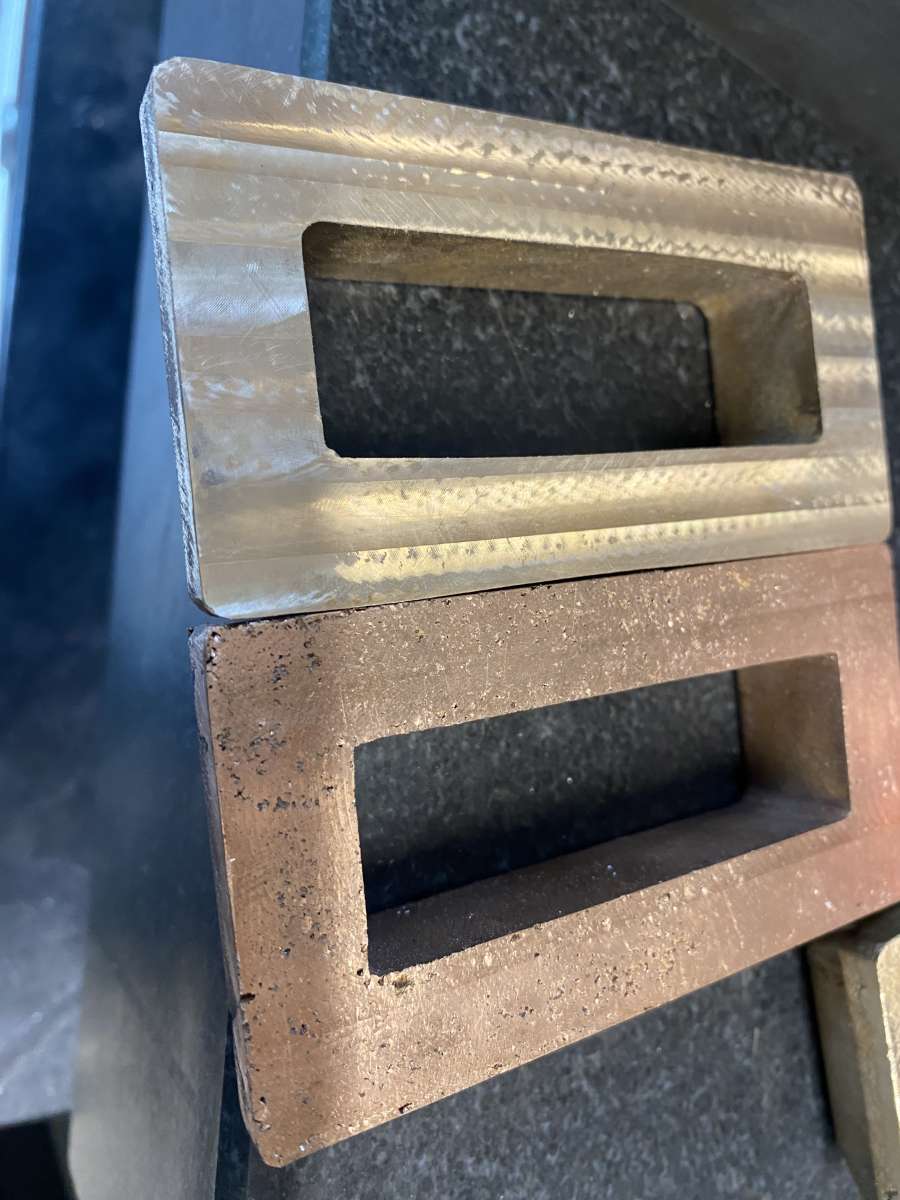
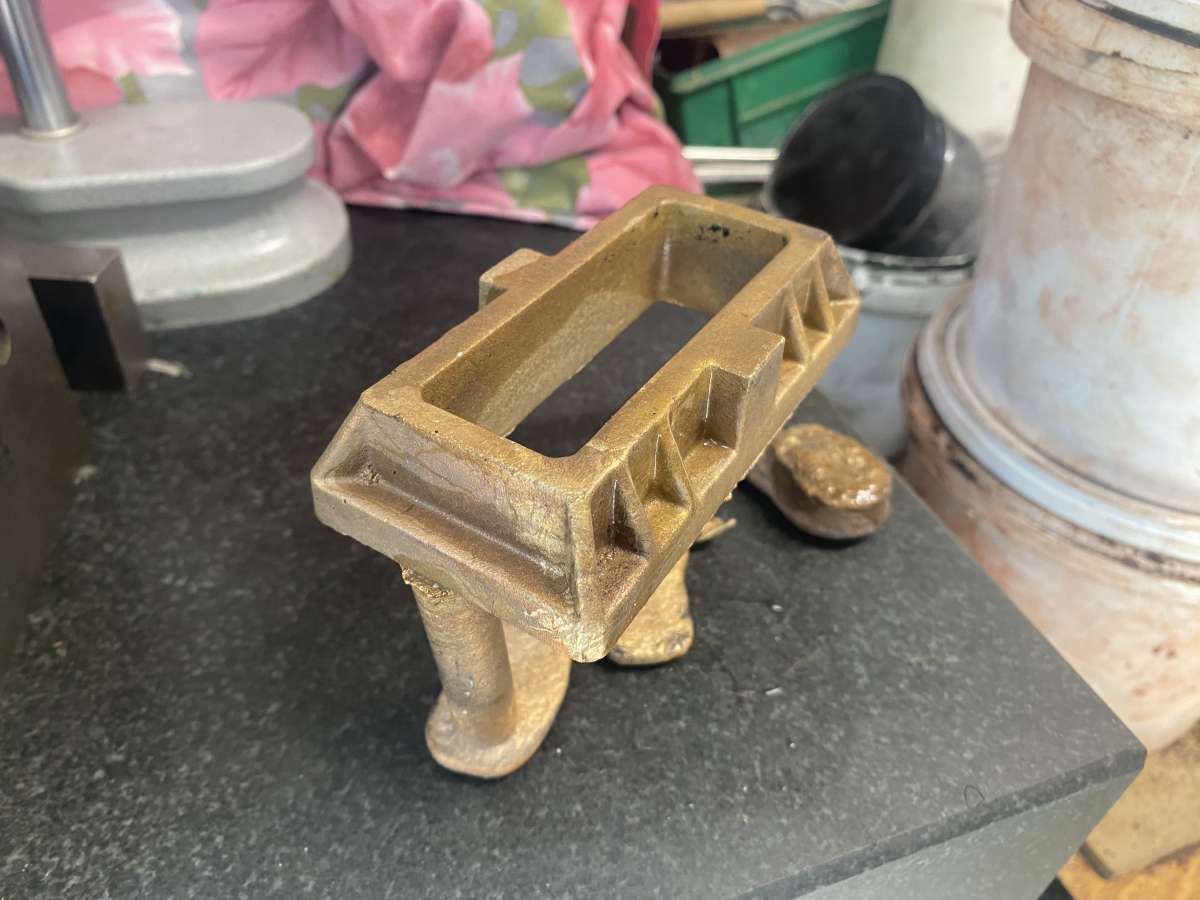
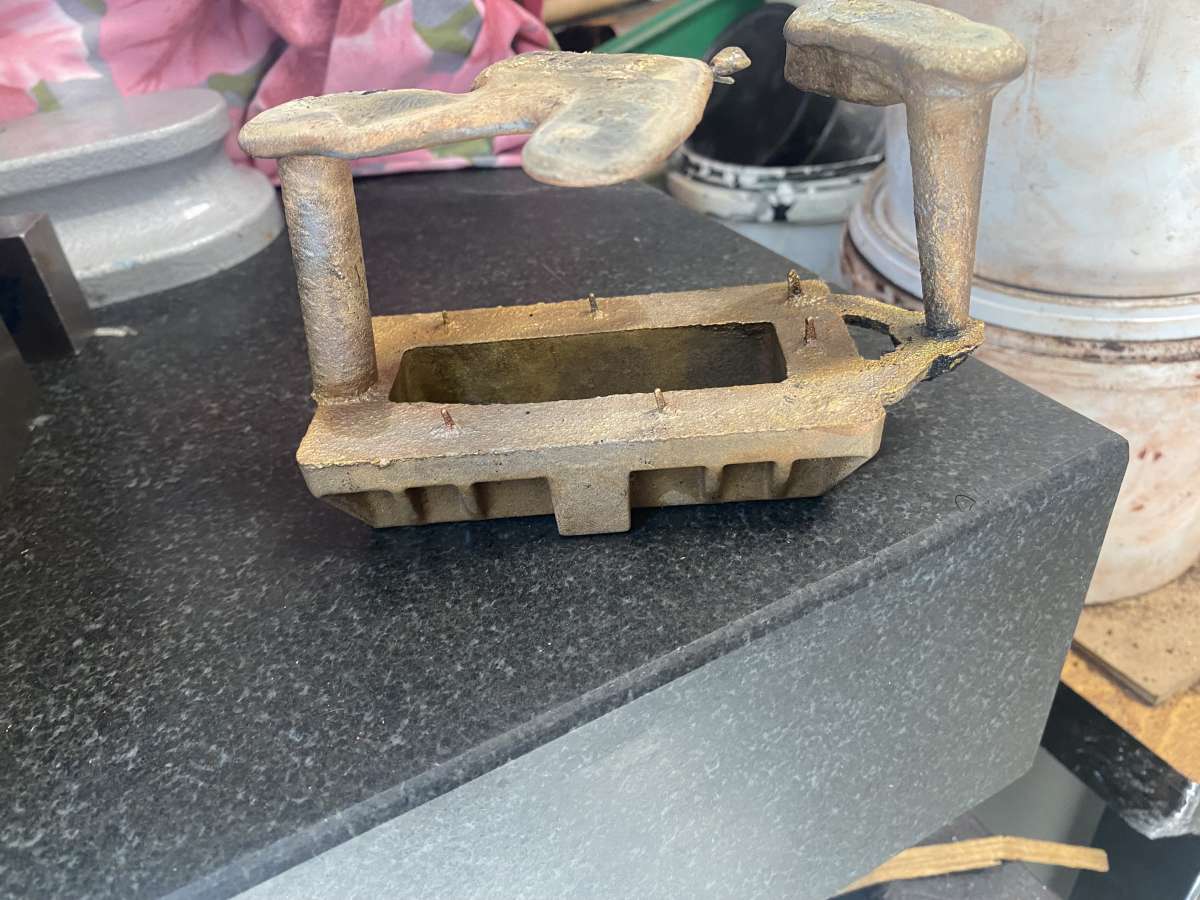
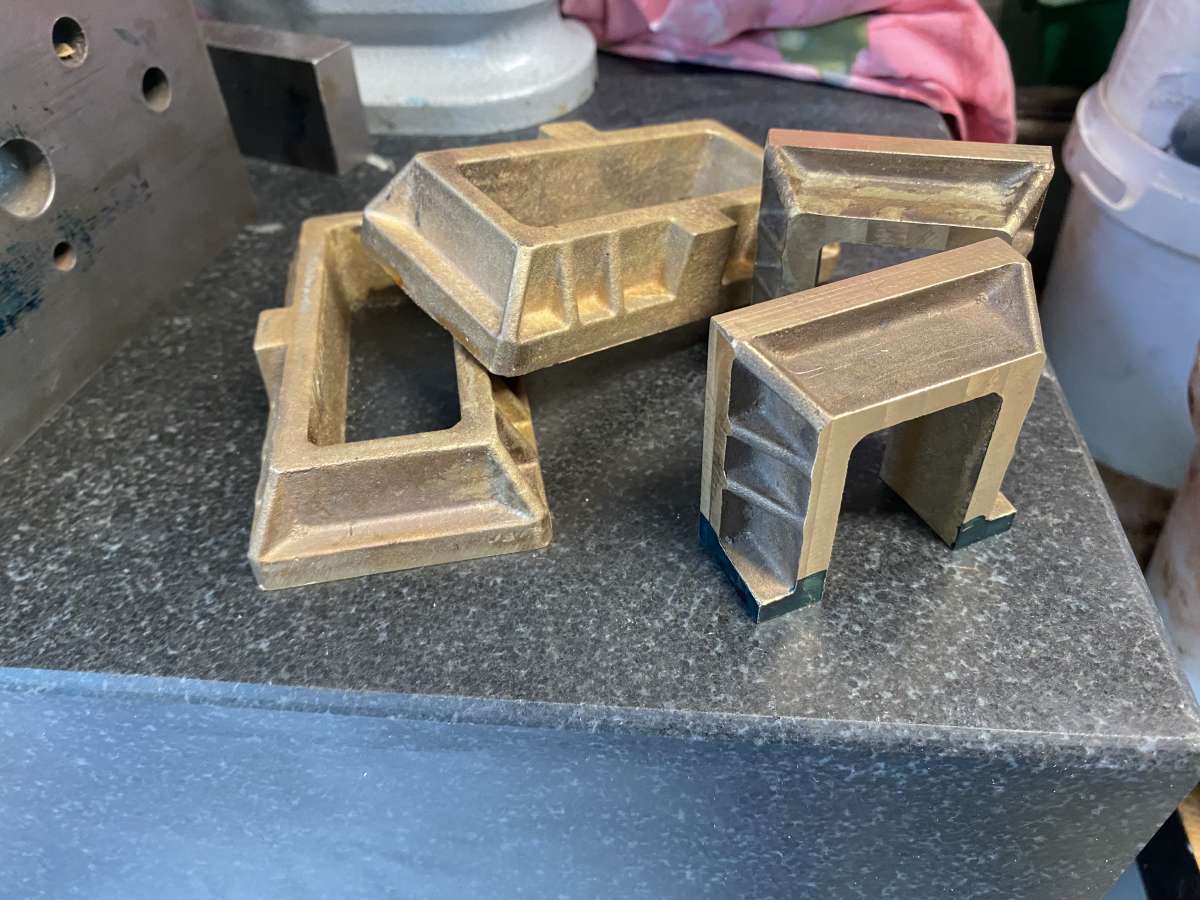
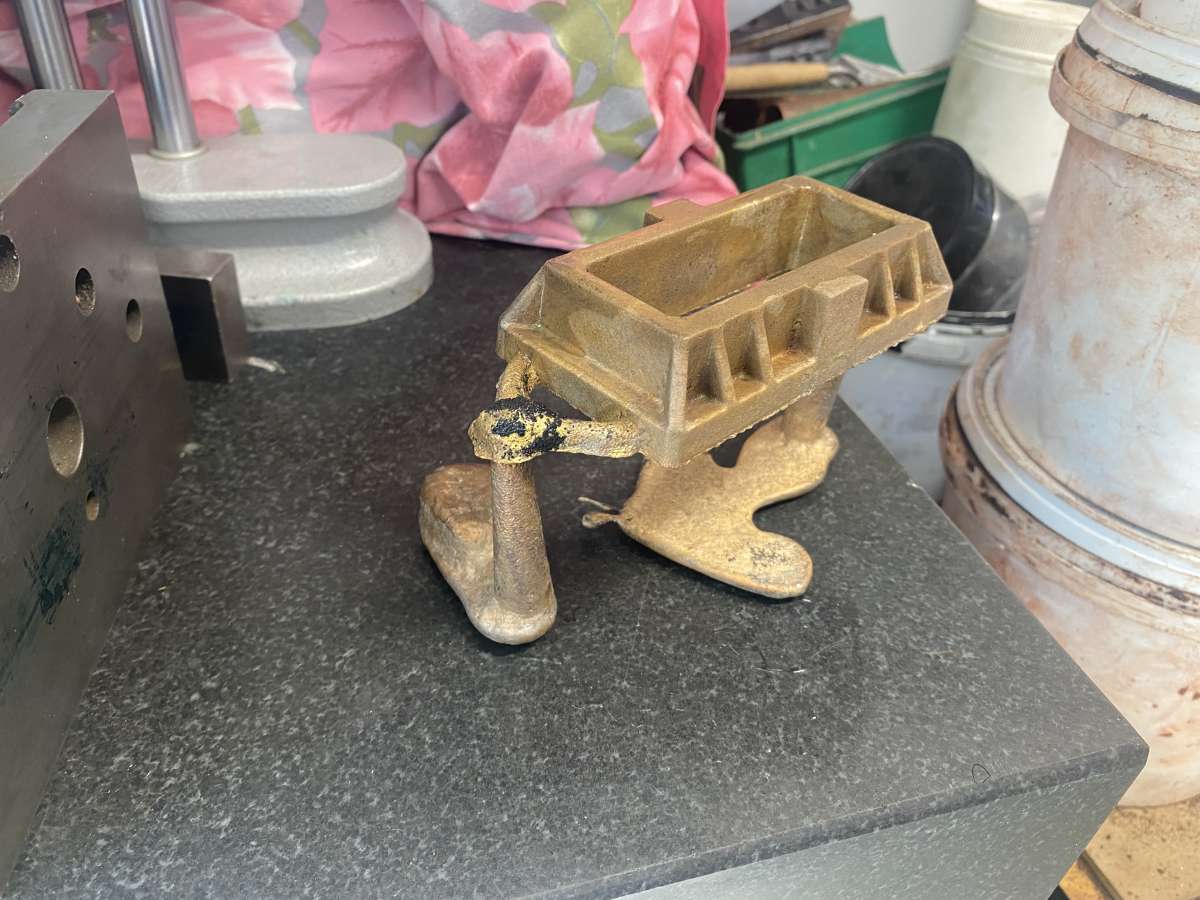
                              I had a go at casting the horn blocks.  My son has a 3D printer and printed out the pattern for me.  Due to the size of my furnace and crucible I can only cast one at a time and I had some mixed results and a few short pours.  I eventually got three sets but found that I had not left enough machining allowance:( I installed one set in the frames and as I was machining the last 10 thou the cutter caught and ripped the casting out of the frame as the side wall was too thin.  So it was back to the drawing board.  I got my son to print another pattern with better matching allowances.  I also had to weld all the holes I had put in the frames as the new horn block holes did not line up.  I reused all the old castings but that did not go well as when I started machining there were porous holes everywhere.  I spoke to a local guy who supplies casting material and he provided me with a billet of casting bronze. This worked much better. Up until now I was just using bar stock and after a few re-melts it is no longer bronze and looks not reddish in colour. Finally finished with a good set of castingsIMG_2386IMG_2399IMG_2284IMG_2430

                              Here is my final castings. A big learning experience.


                              IMG_2426IMG_2425IMG_2429IMG_2427

                              #848776
                              SteveP
                              Participant
                                @stevepye68246

                                They look really good castings,  very clean.

                                You’ve a skill I wished I possessed.

                                Steve

                                #848824
                                Nigel Graham 2
                                Participant
                                  @nigelgraham2

                                  I am impressed by those castings!

                                  I must admit I’ve fought shy of trying casting even aluminium, but I note plenty of runner and riser volume I take is to ensure complete filling.

                                  ”’

                                  Stepping back up-thread a bit: Derek, you shouldn’t need lubricate axle-boxes (or any open bearings) by “squirt over the top”, avoiding that by pipes from suitable oil-cups screwed to the frame tops or some prototypical location right for the design.

                                  Nevertheless, the problem of grit from the ash-pan is real, especially on miniature locomotives with very basic grates and ashpans as many have. I think the ash contamination is much less from the running, than when dropping the fire by pulling a pin out and letting the entire caboodle unceremoniously fall out of the firebox. Especially outdoors on breezy days. (Similarly perhaps with traction-engines’ exposed steering-chain windlass and worm-gear just above the damper.)

                                  #849272
                                  Peter Hoerlein
                                  Participant
                                    @peterhoerlein37724

                                    Thanks Steve.  Just practice and having a go.

                                    Nigel
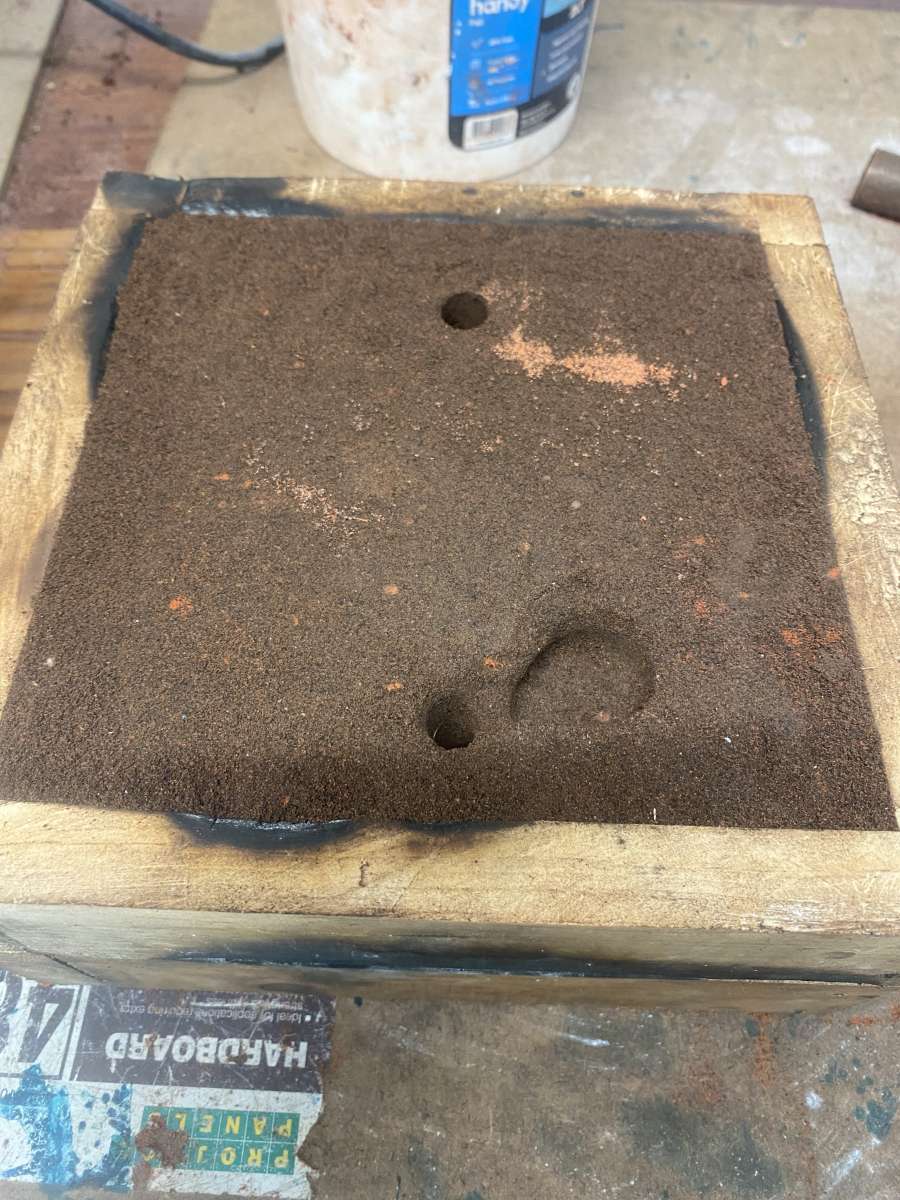
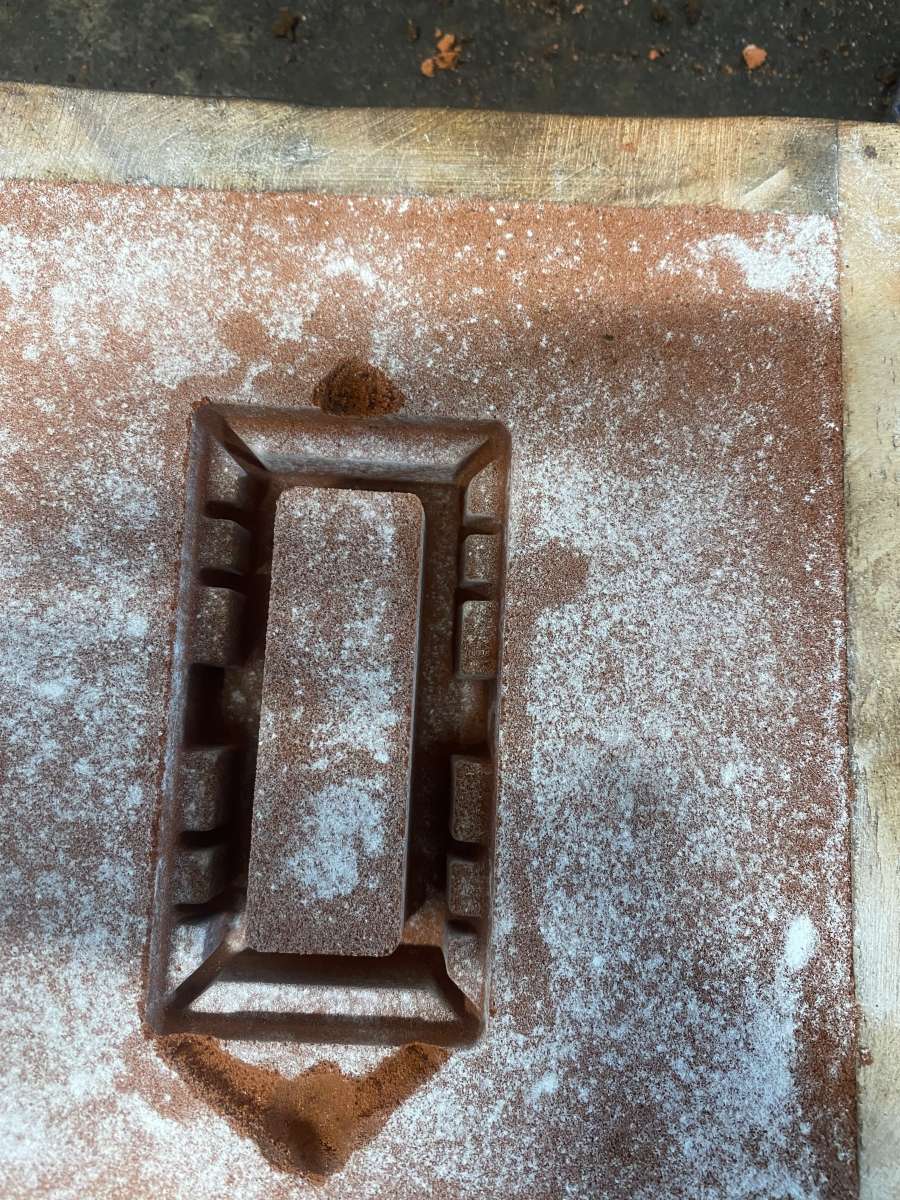
                                    I was using a small tapered sprue to start with and yes it was freezing before I could complete the pour.  There is such a small volume of metal in my crucible and it looses heat very quickly.  I have increased the size on the sprue to prevent this. It is surprising how much shrinkage you get especially like the central section of the pump casting.  Putting a riser above this section reduces the shrinkage  I found when casting aluminium it is best to use a large (3/4”) straight spruce to get a lot of aluminium into the mould as quick as possible to keep the aluminium all liquid as it is filling.  I use petrobond for the moulds as it leaves a nice finish. It is probably cheaper to just buy the castings if they are available but I like to have a go at it myself.

                                    Regards

                                    Peter


                                    Here is couple of pictures of the mould before closing up and the pouring basin spruce and riser.IMG_2398IMG_2400

                                    #850409
                                    Peter Hoerlein
                                    Participant
                                      @peterhoerlein37724

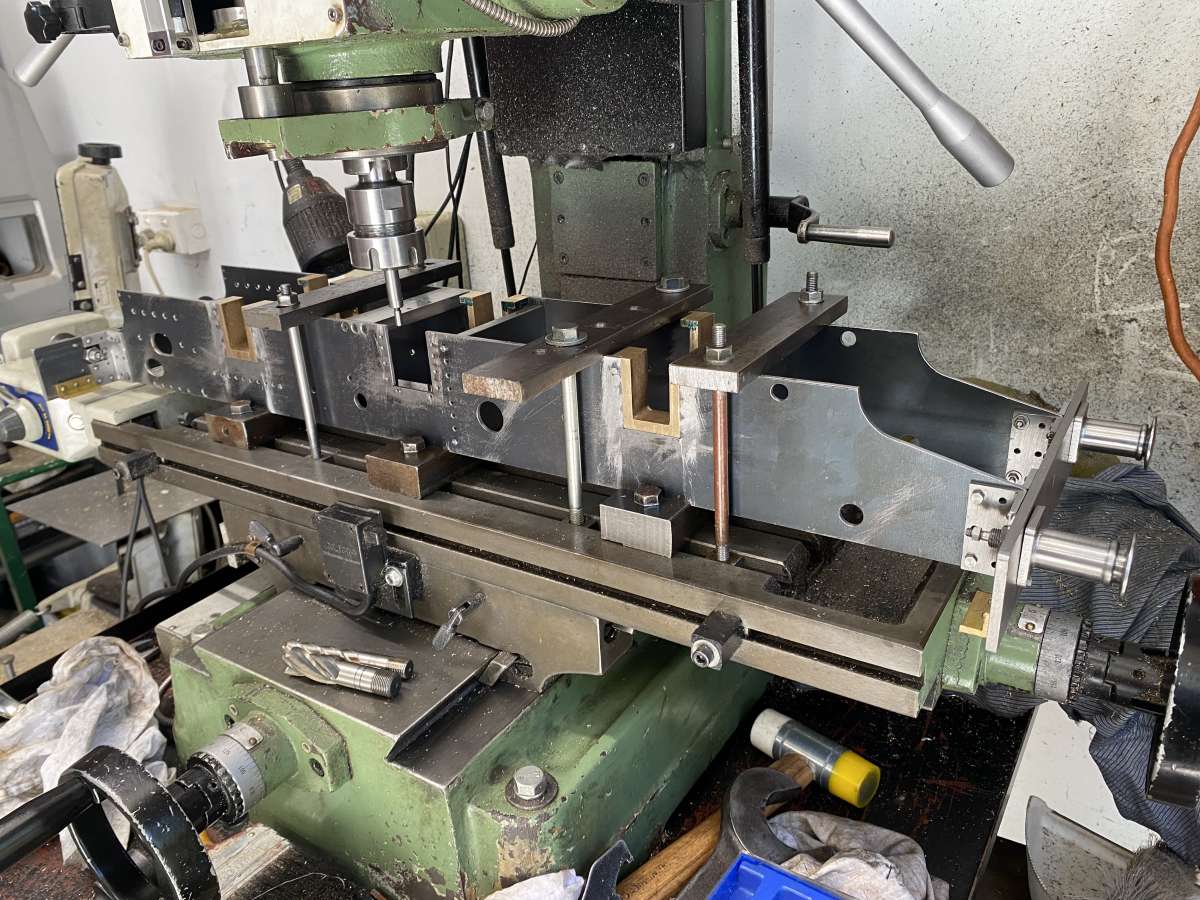
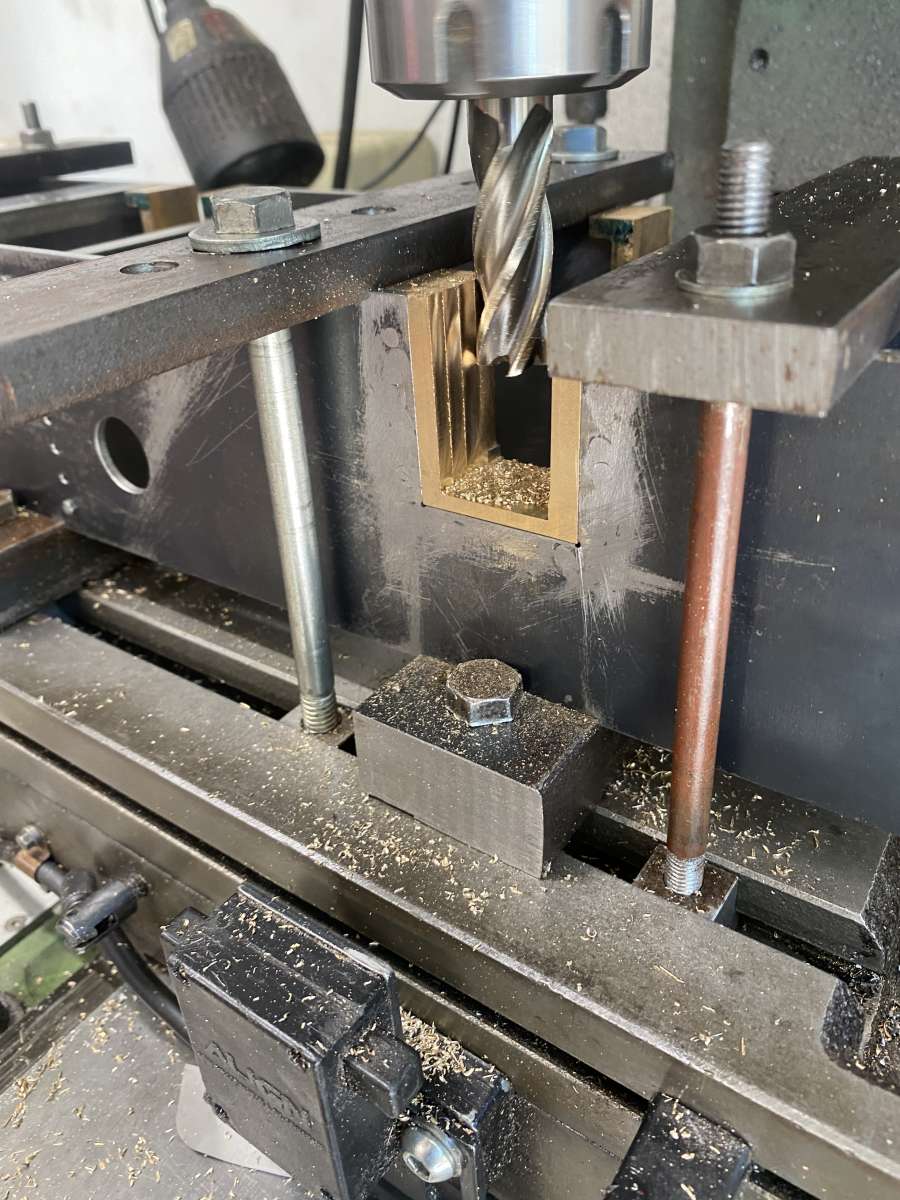
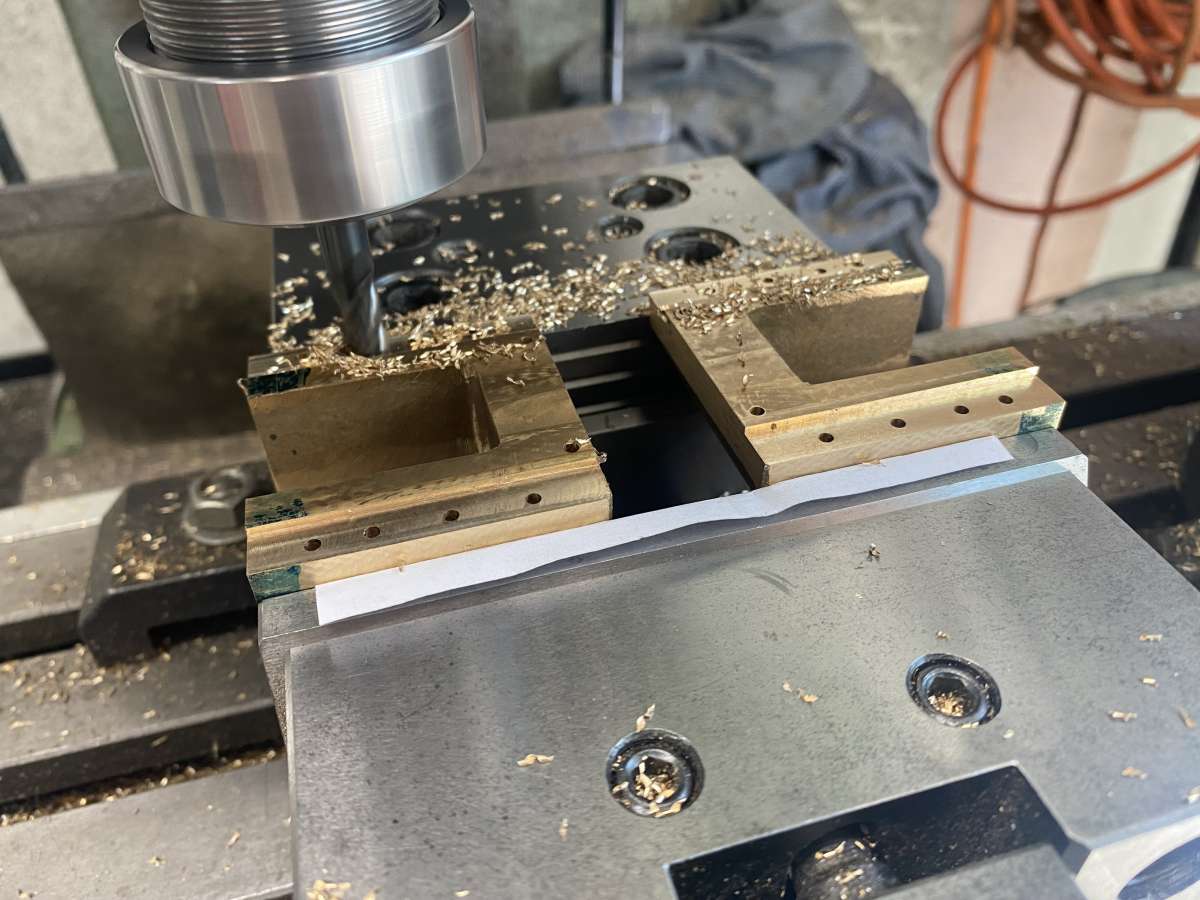
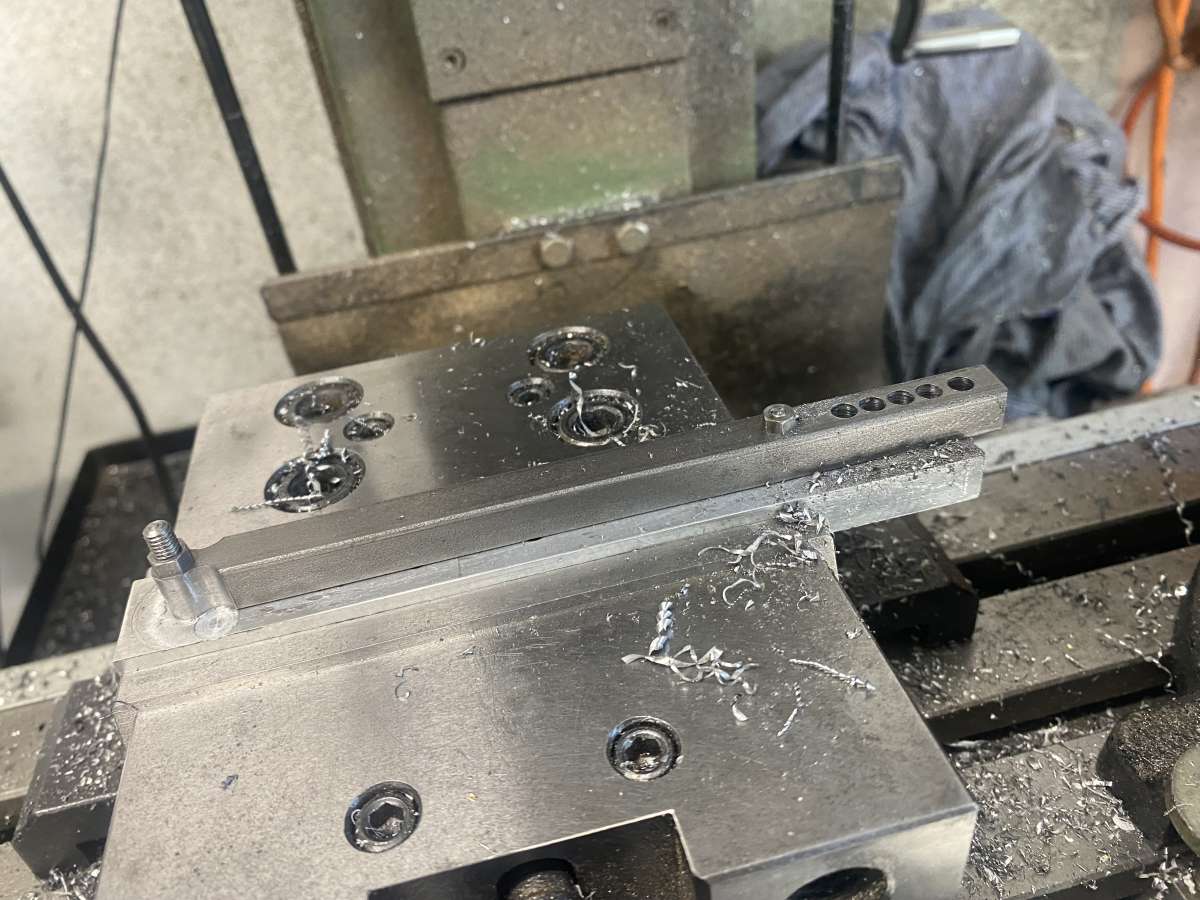
                                      The second attempt at machining the horn blocks worked a lot better with the new castings as there was about a 1/16” more material all round. The front and rear part of the horn blocks were all machined in pairs to dimension and then riveted to the frames before machining the centres using a long mill cutter.  The travel on my mill was not big enough to machine the horn blocks in a single set up.  So I used one of the centre frame cut outs as a reference between setups. There is a number of ways to machine the horn blocks to ensure correct alignment and spacing but this is the method I chose.  Six lengths of scrap bar stock were first bolted to the mill table and 3mm slots about 1/8” deep were cut out at the required frame spacing.  Three of these bars were removed and the frames were fitted into these slots and bolted down between the bars.  The setup was rigid enough as long as small cuts were used. One horn block was left out of centre cutout and the DRO was zeroed at its centre. The rear two and the one centre horn blocks were machined to dimension first.  The frames were then removed leaving the bottom fixed bars in place.  The last centre horn block was riveted in place and the frames were repositioned on the mill table to allow the remaining blocks to be machined.  The DRO was re-zeroed to the previously machine centre horn block and the remaining horn blocks were machines to dimension.  The slot widths were checked using gauge blocks and test fits of the associated axle block. The slot depths were checked using a depth micrometer.  Here are some photos of the setup.IMG_2435IMG_2436IMG_2433

                                      #852095
                                      Peter Hoerlein
                                      Participant
                                        @peterhoerlein37724

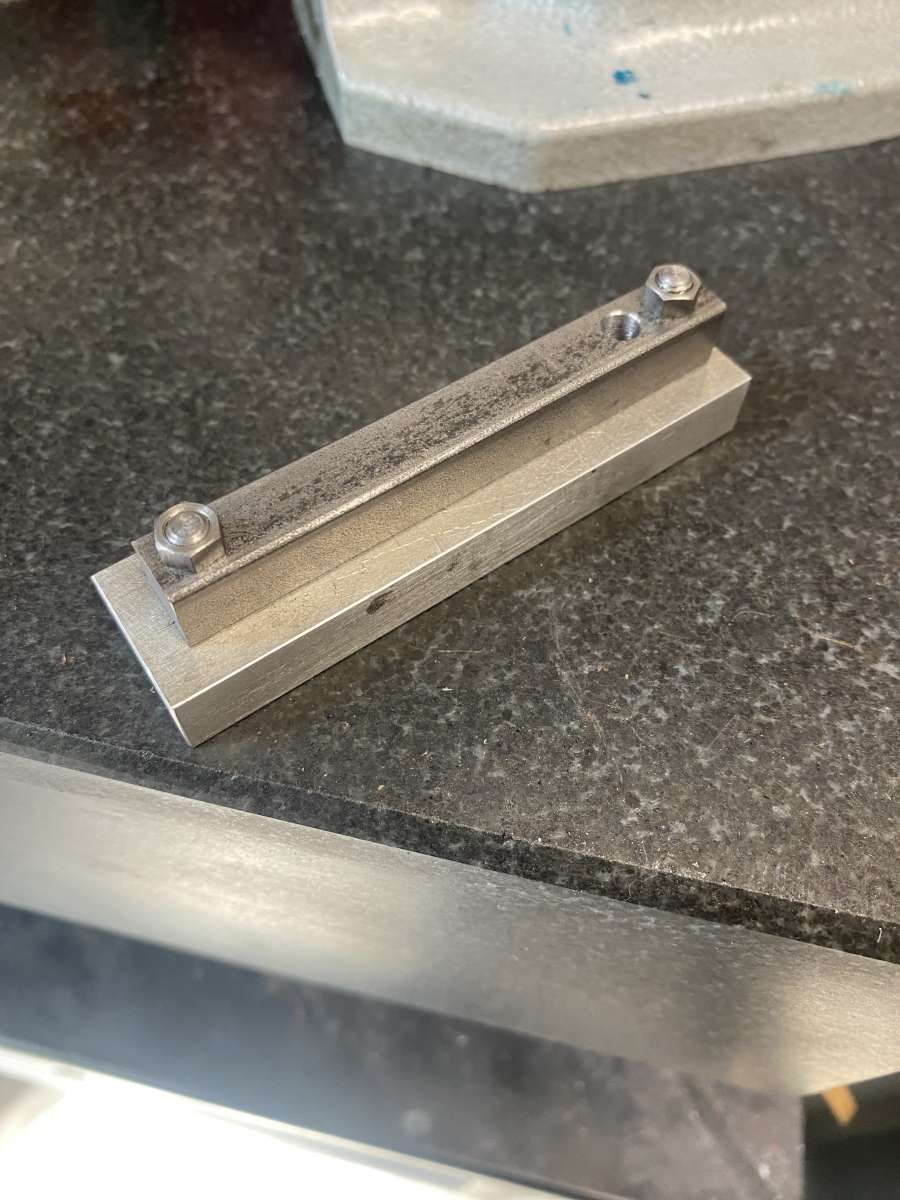
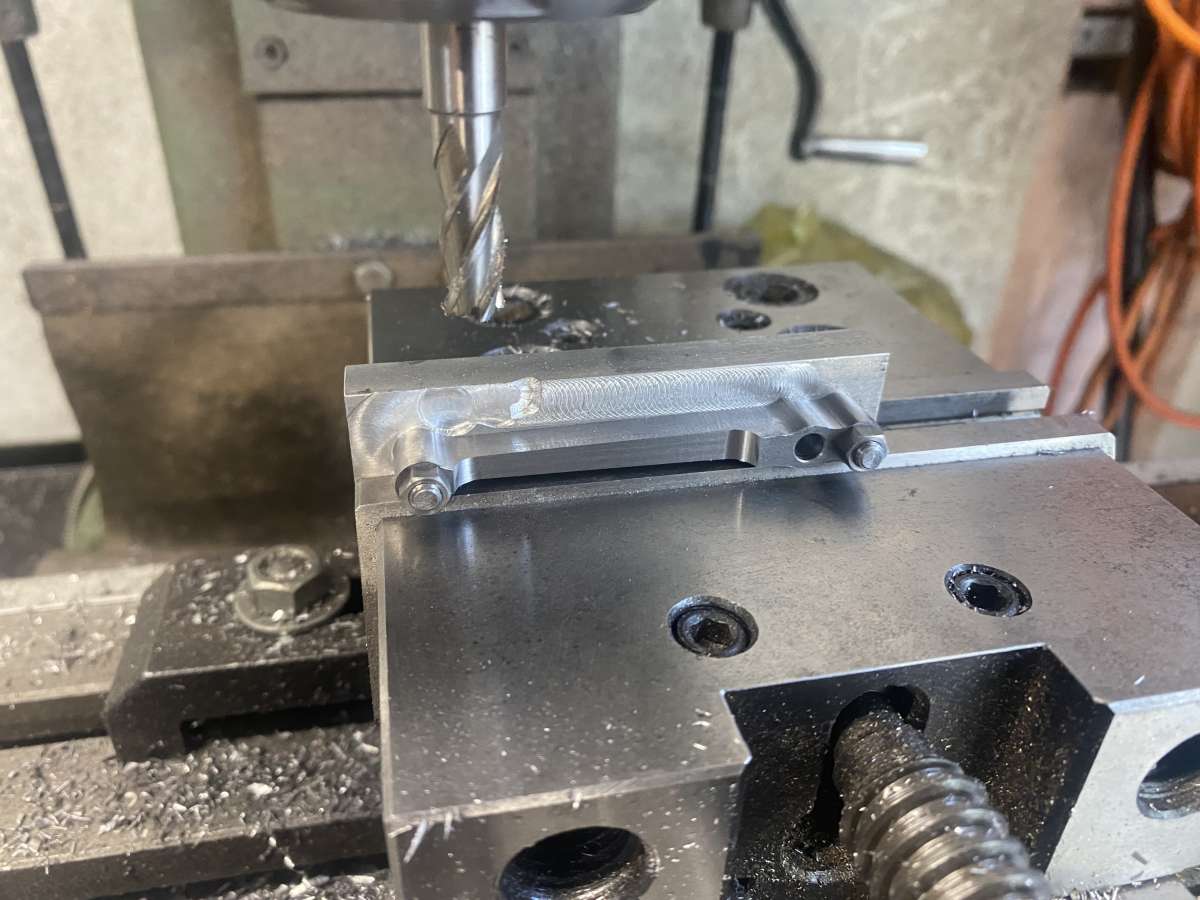
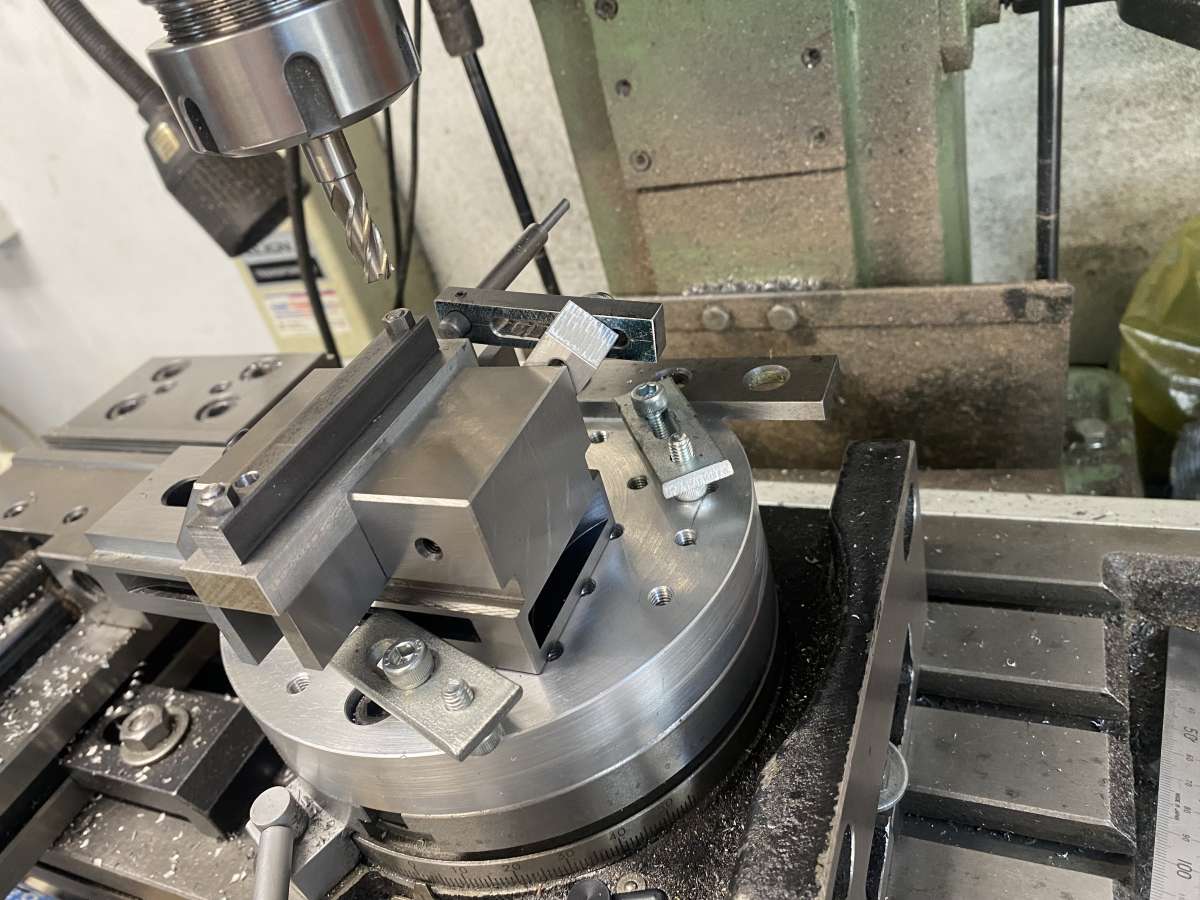
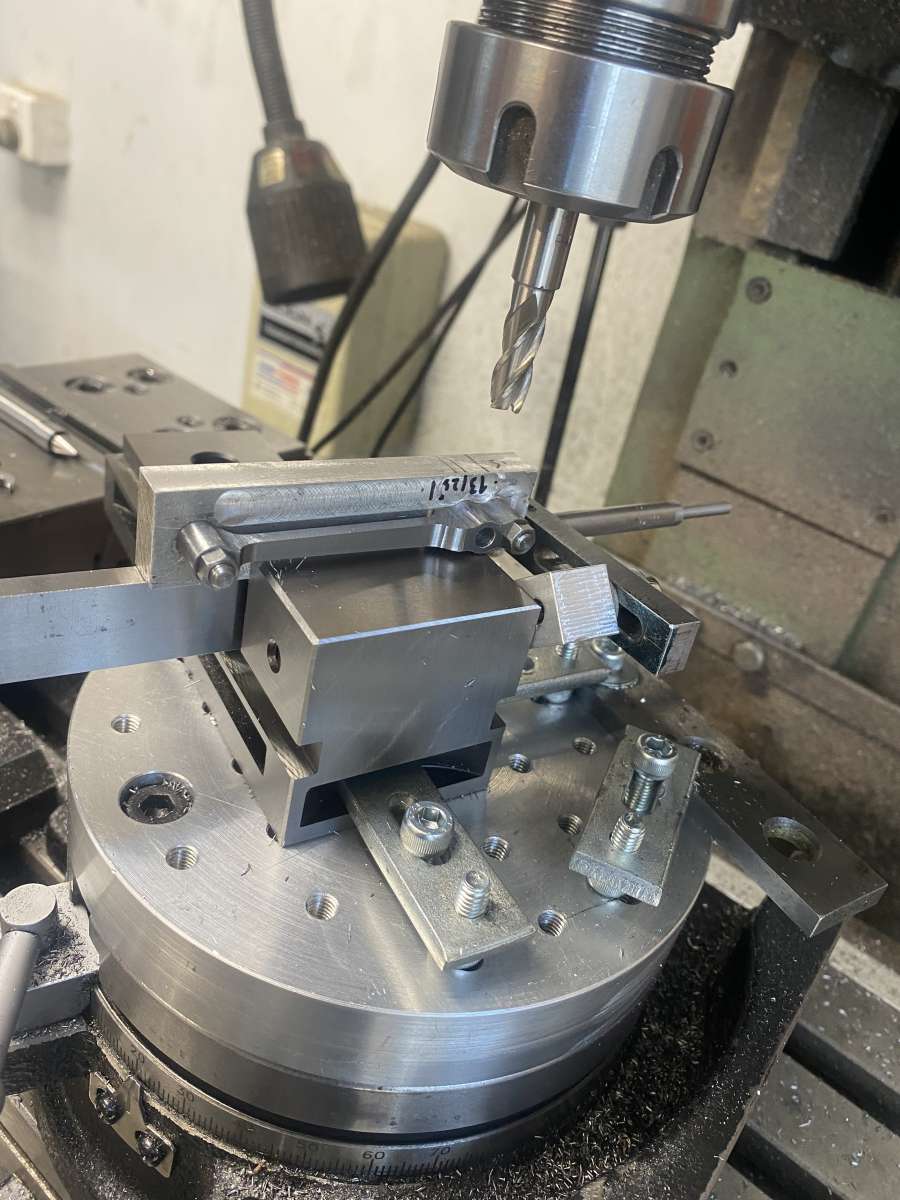
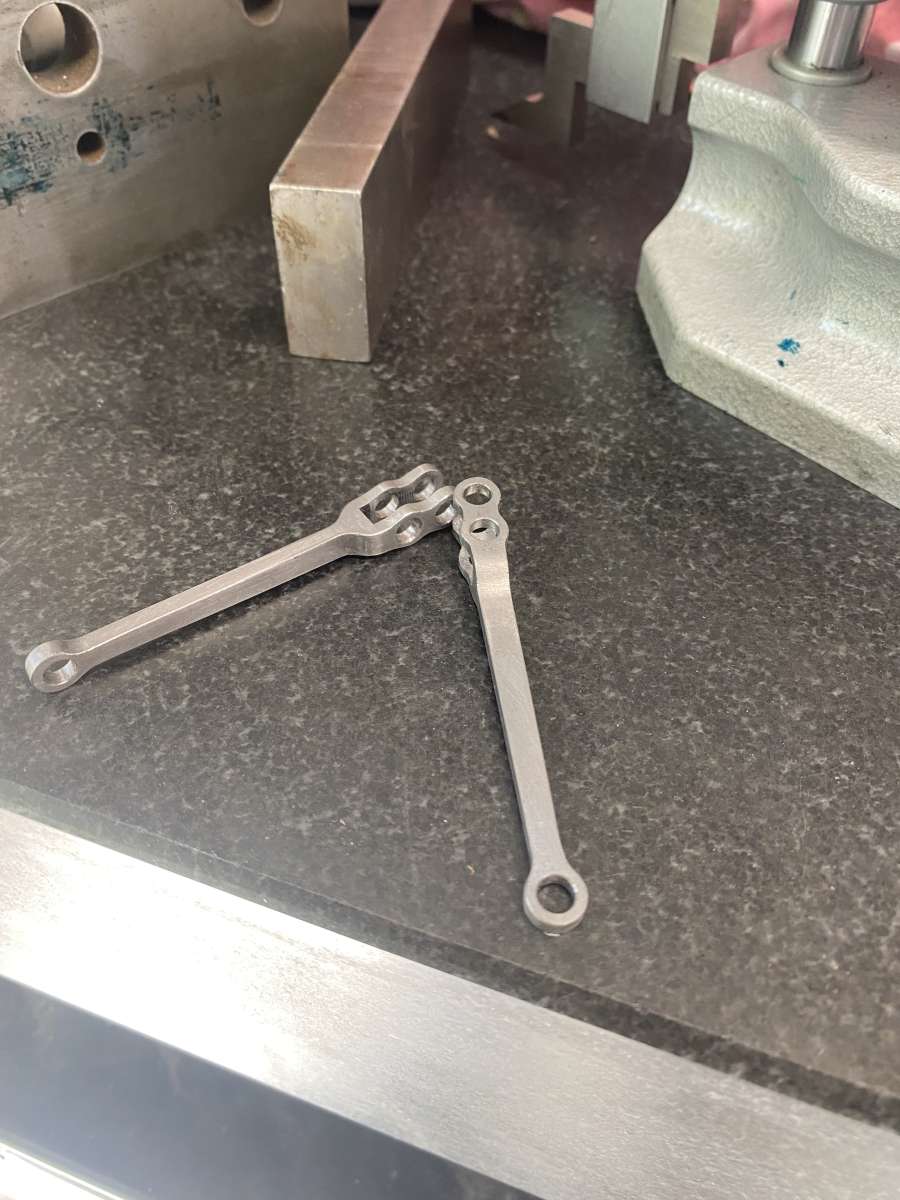
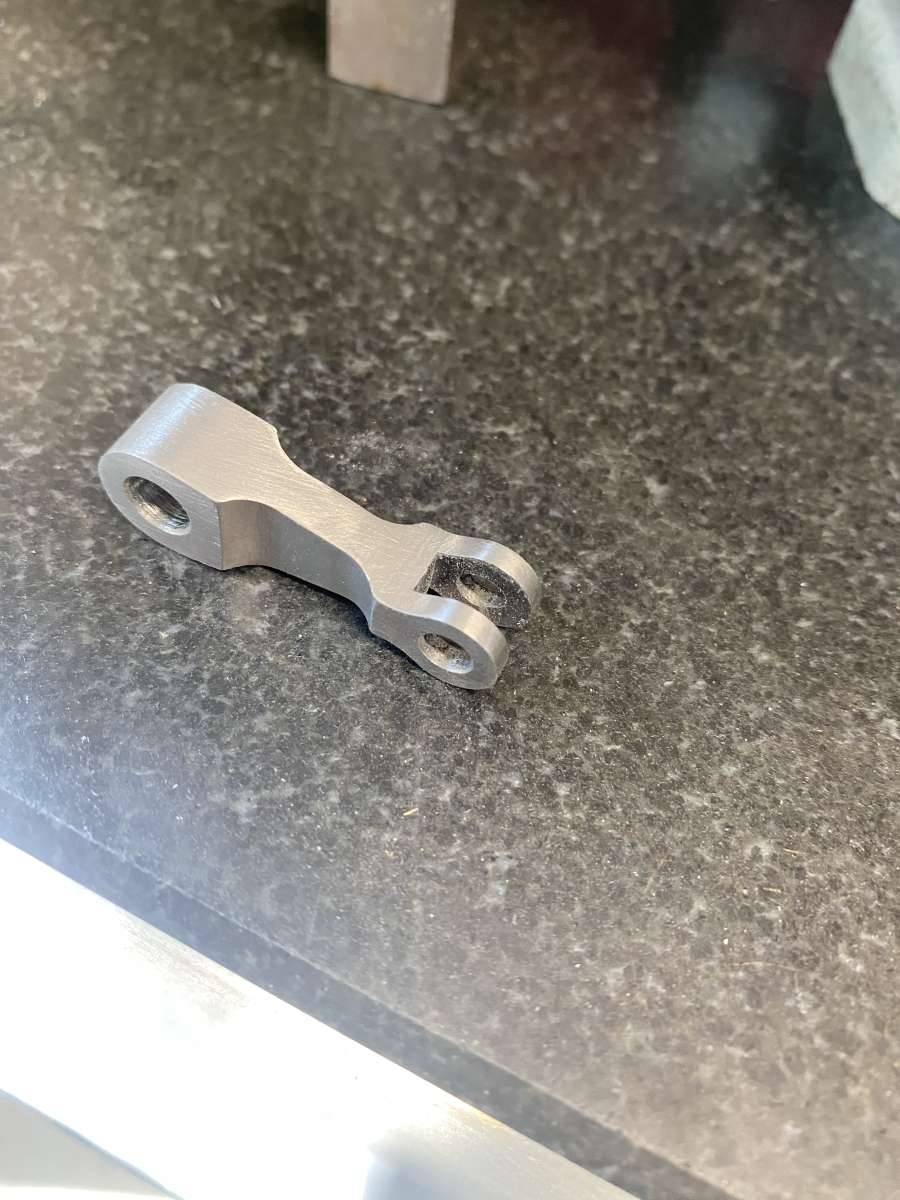
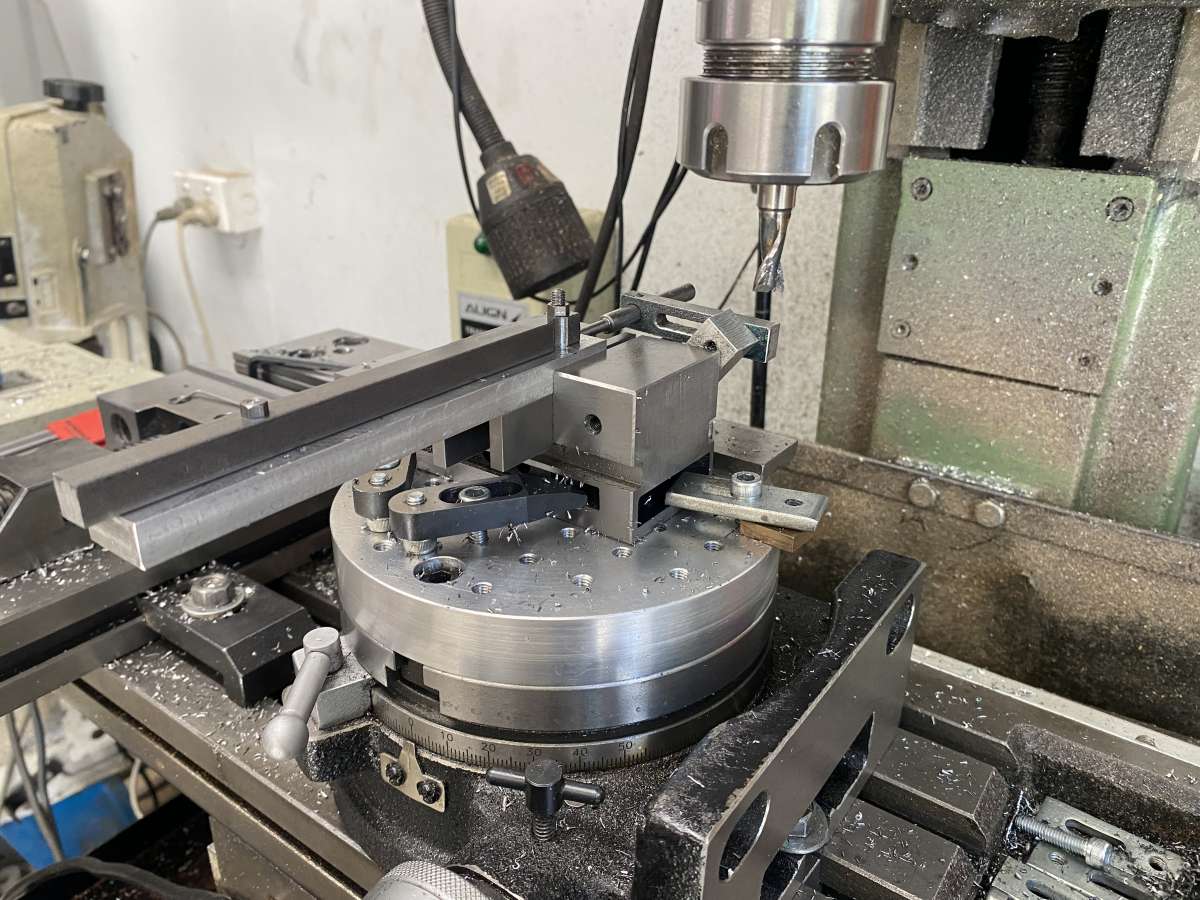
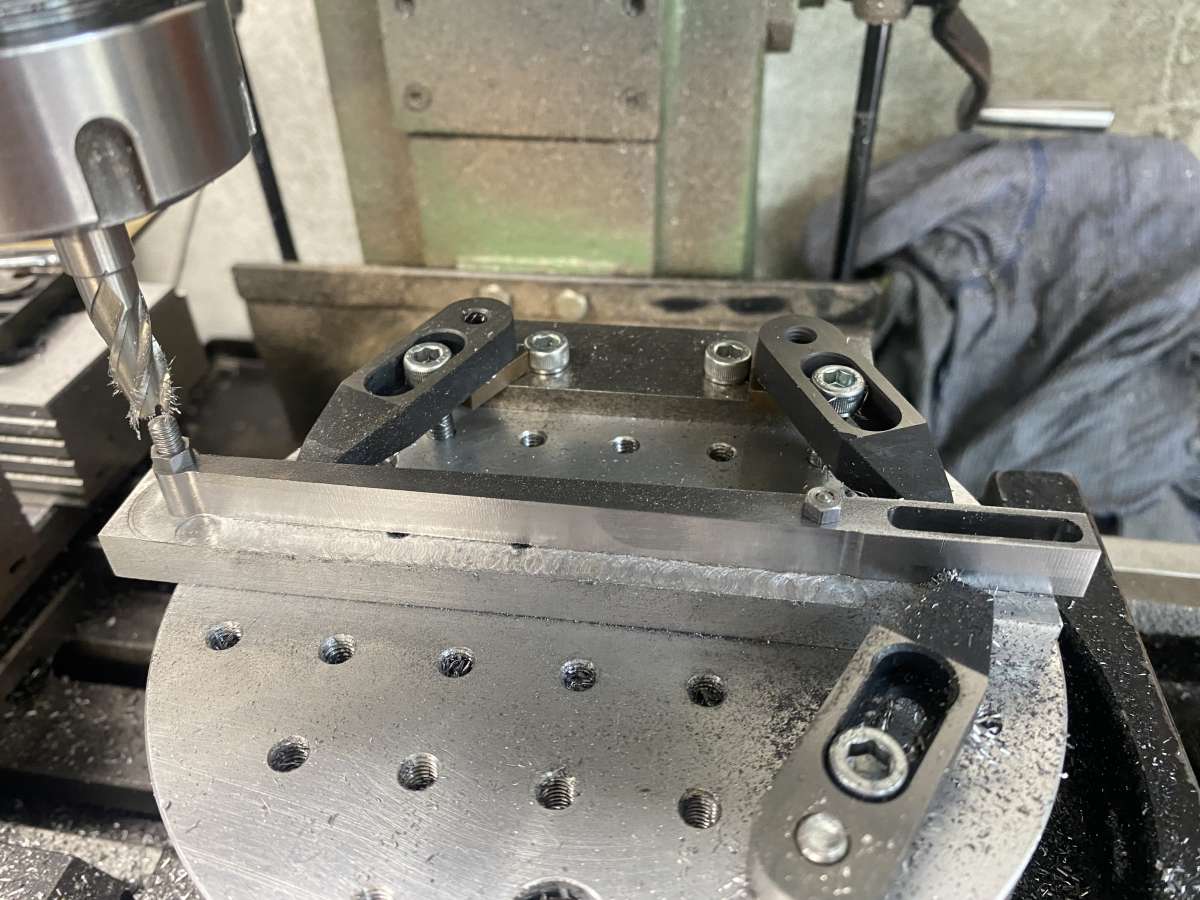
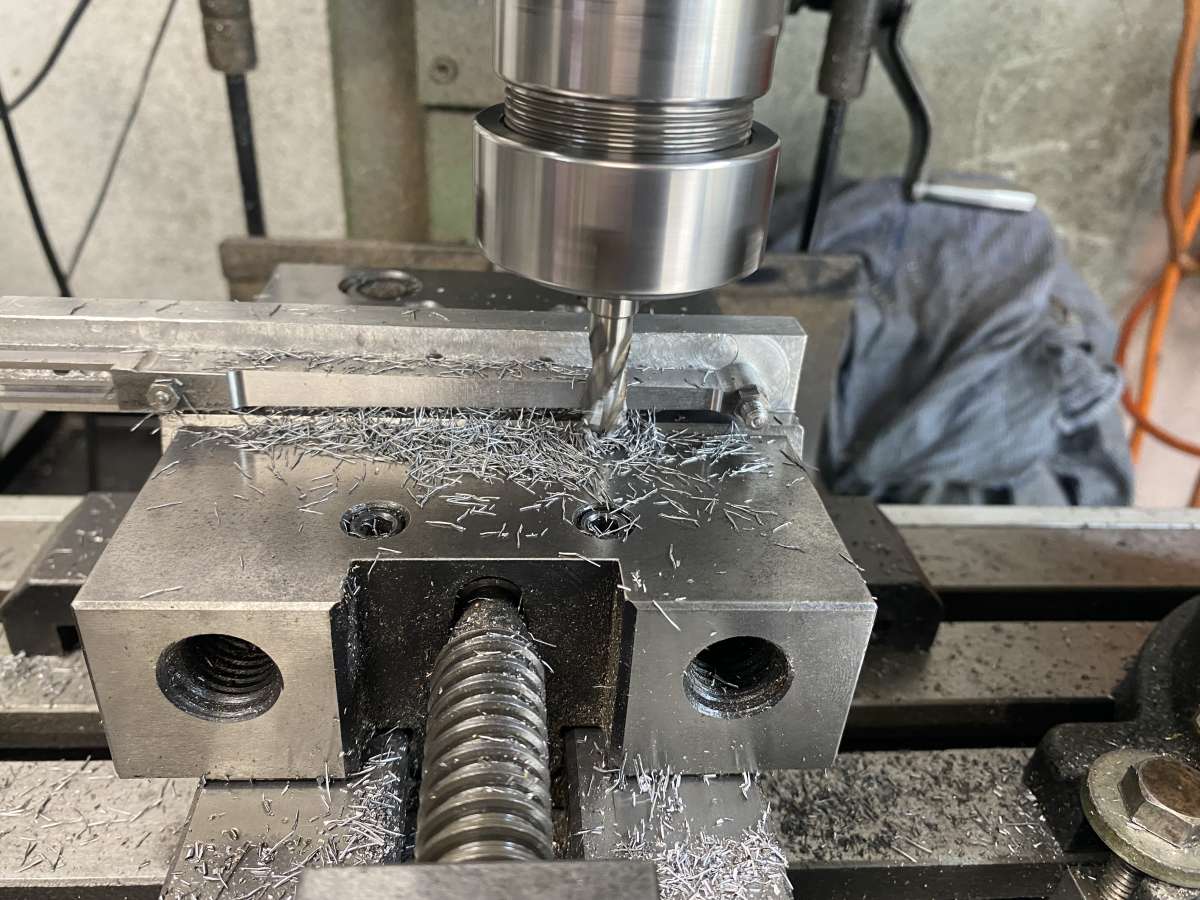
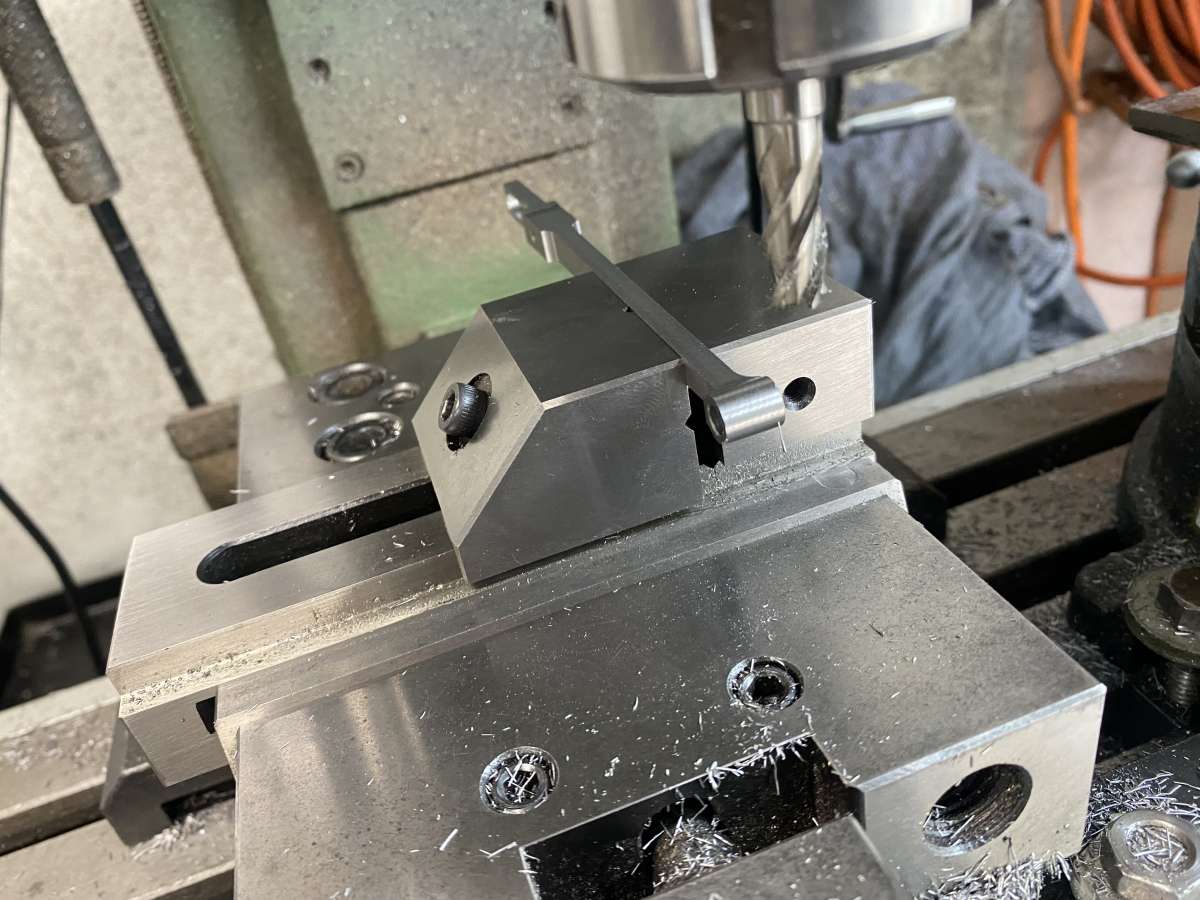
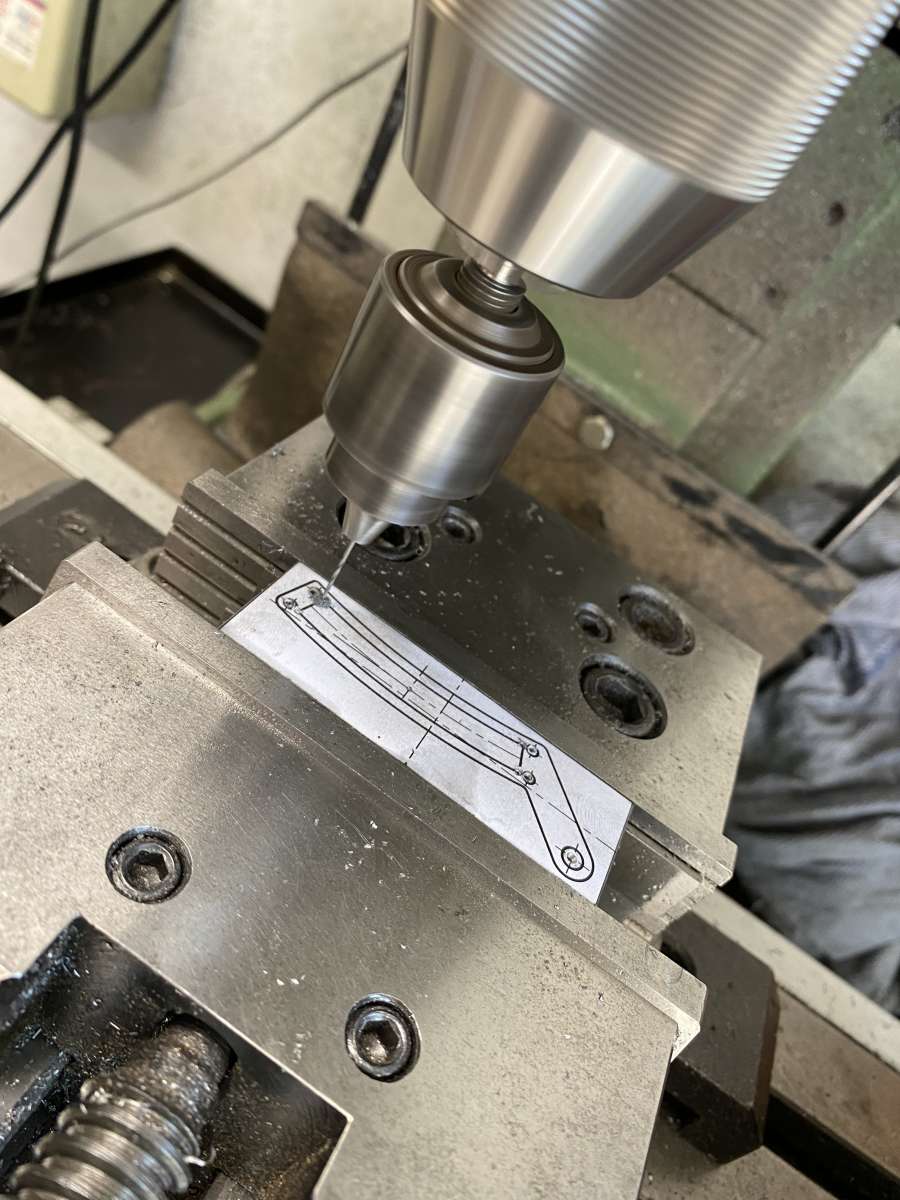
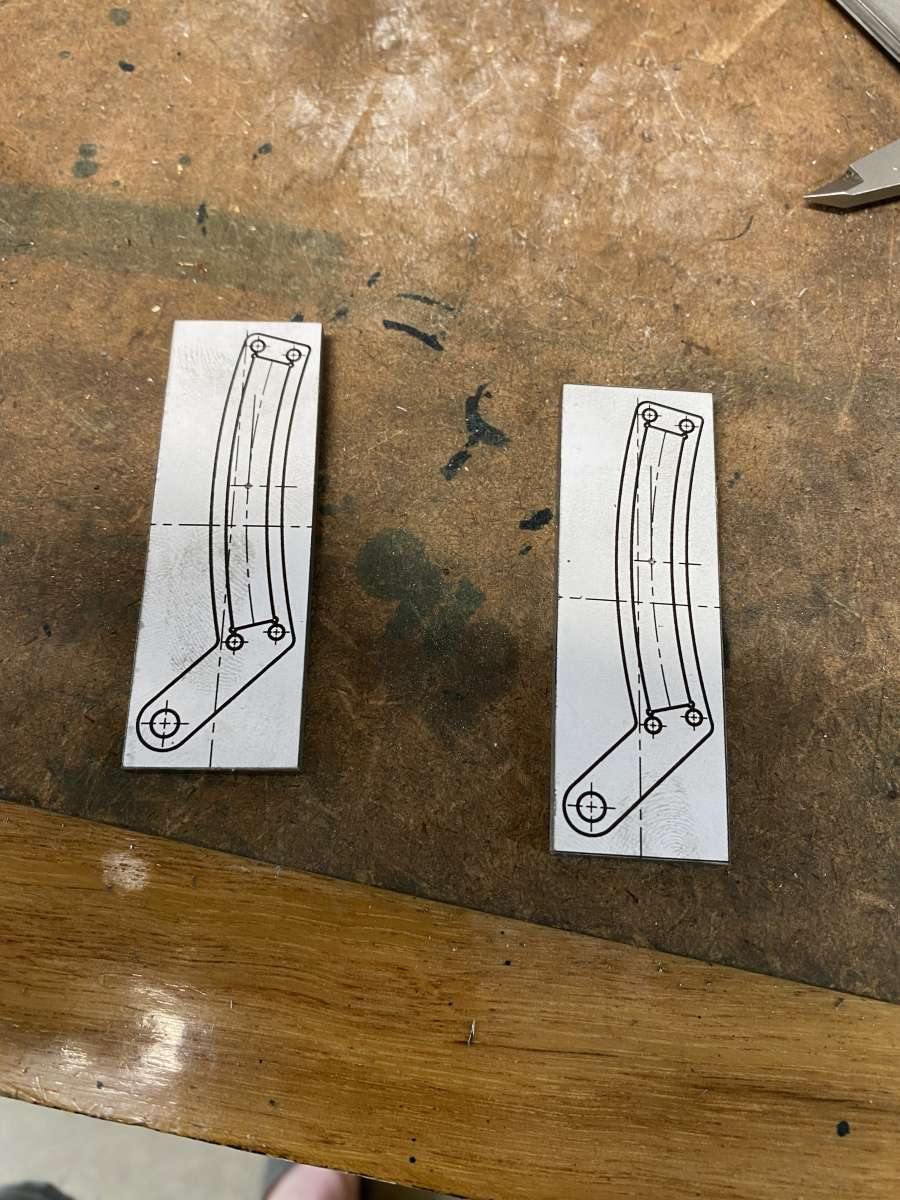
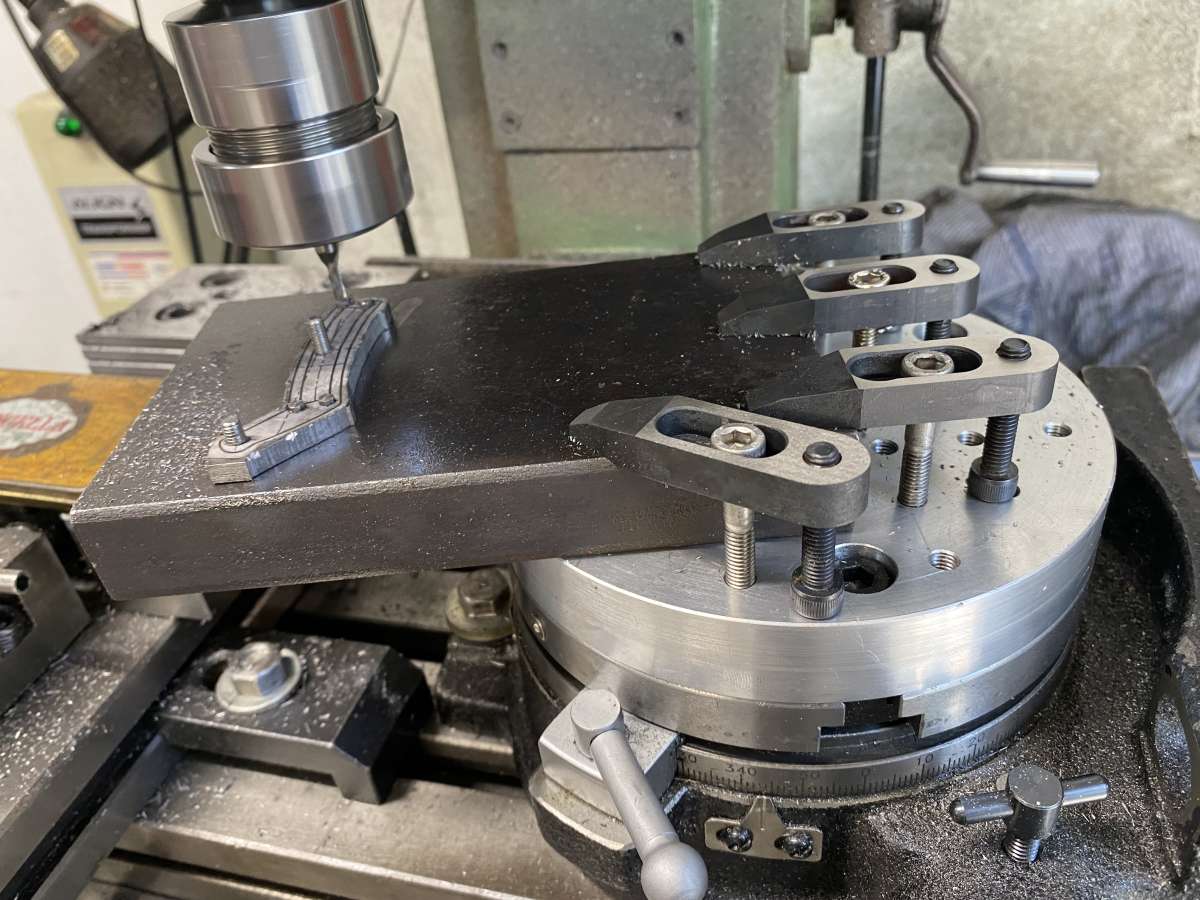
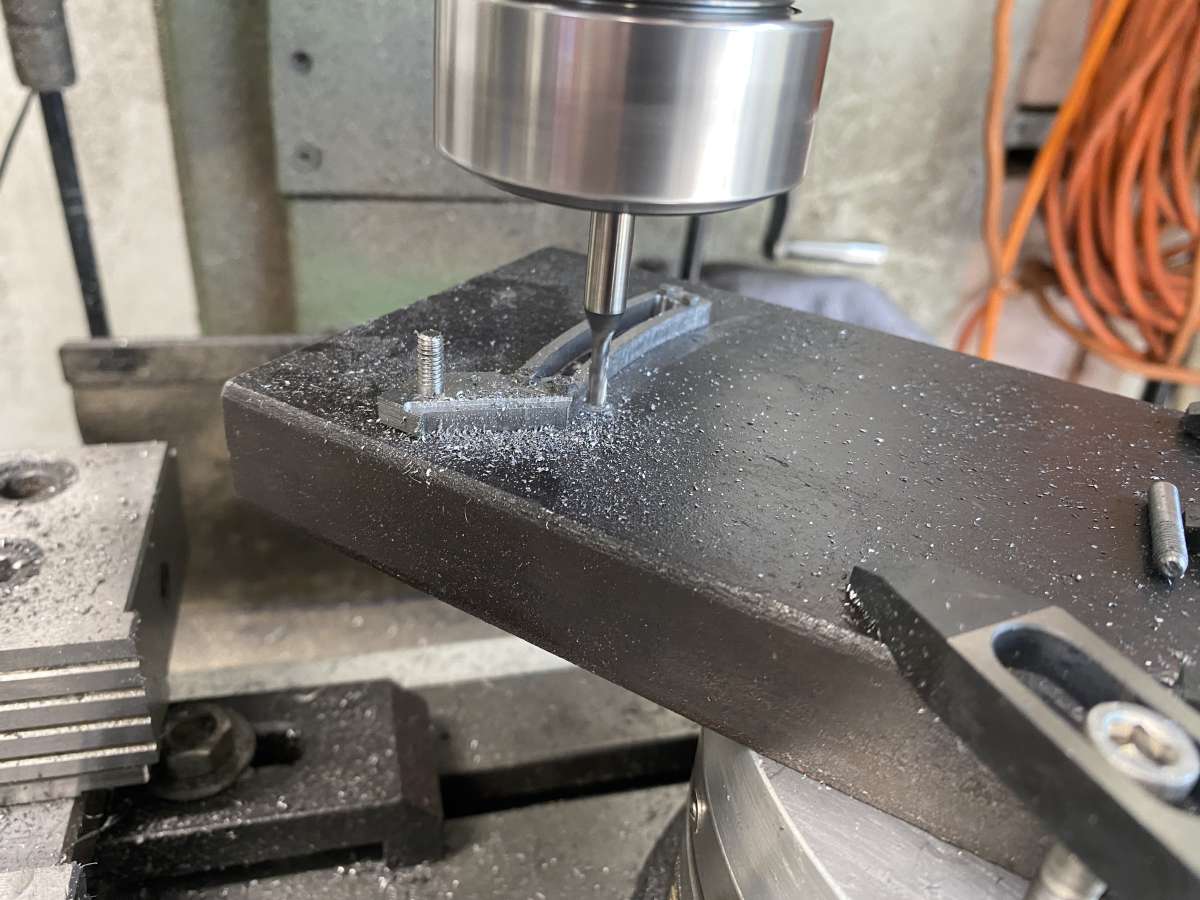
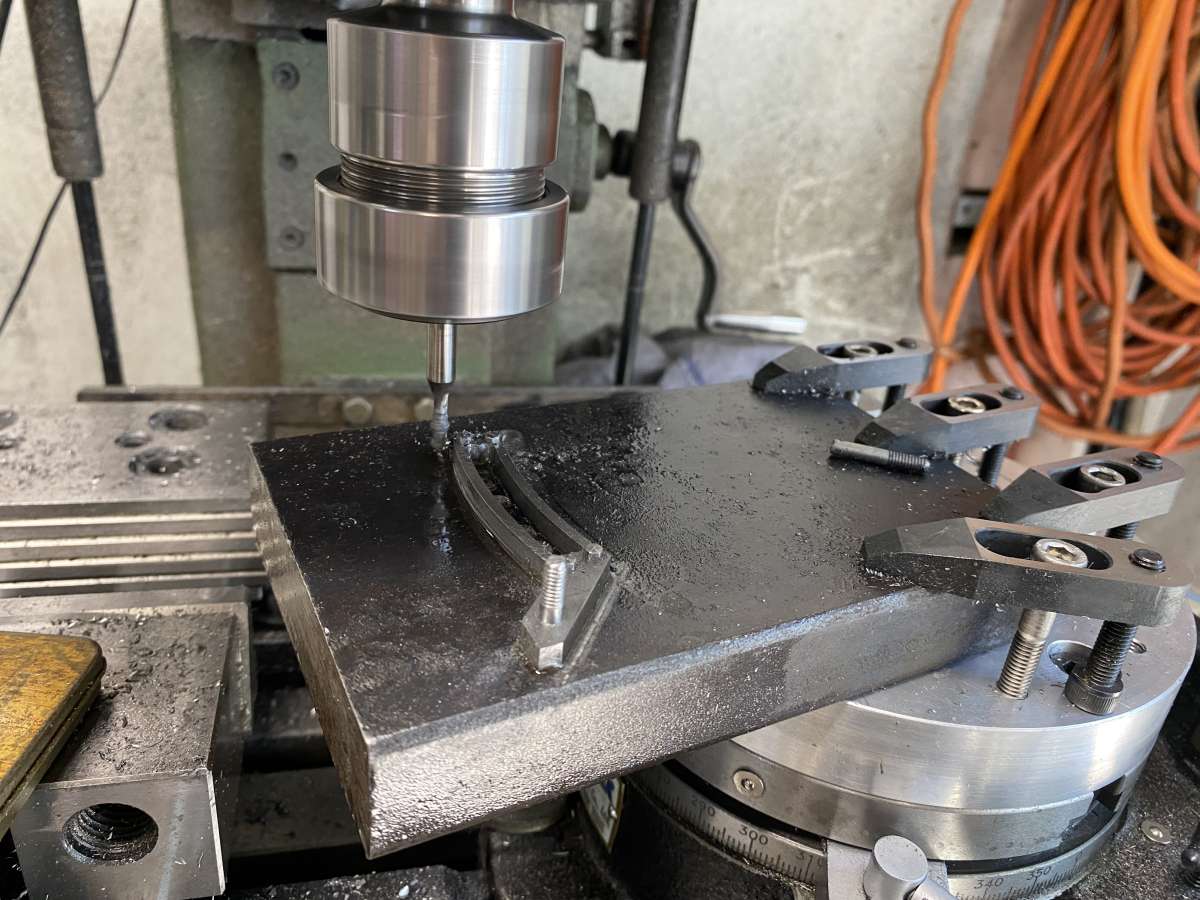
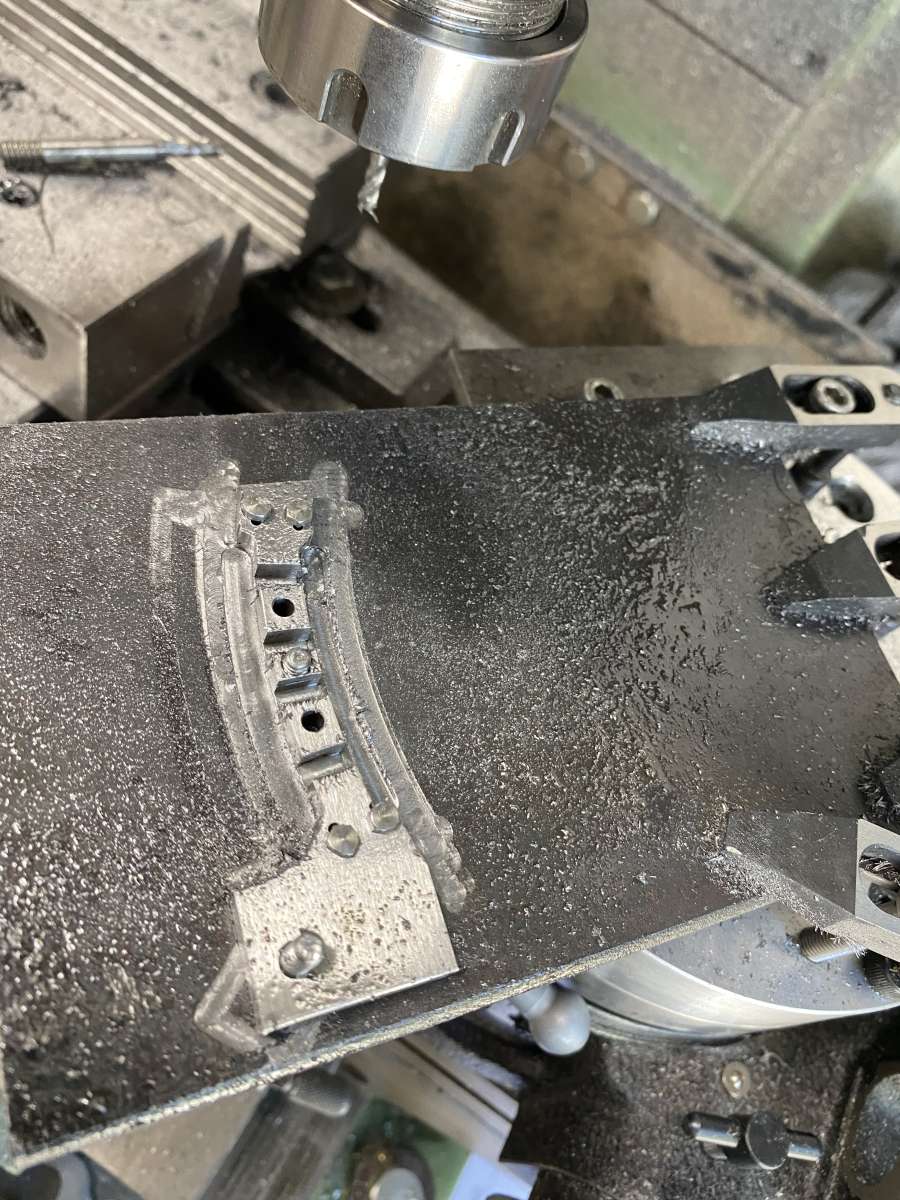
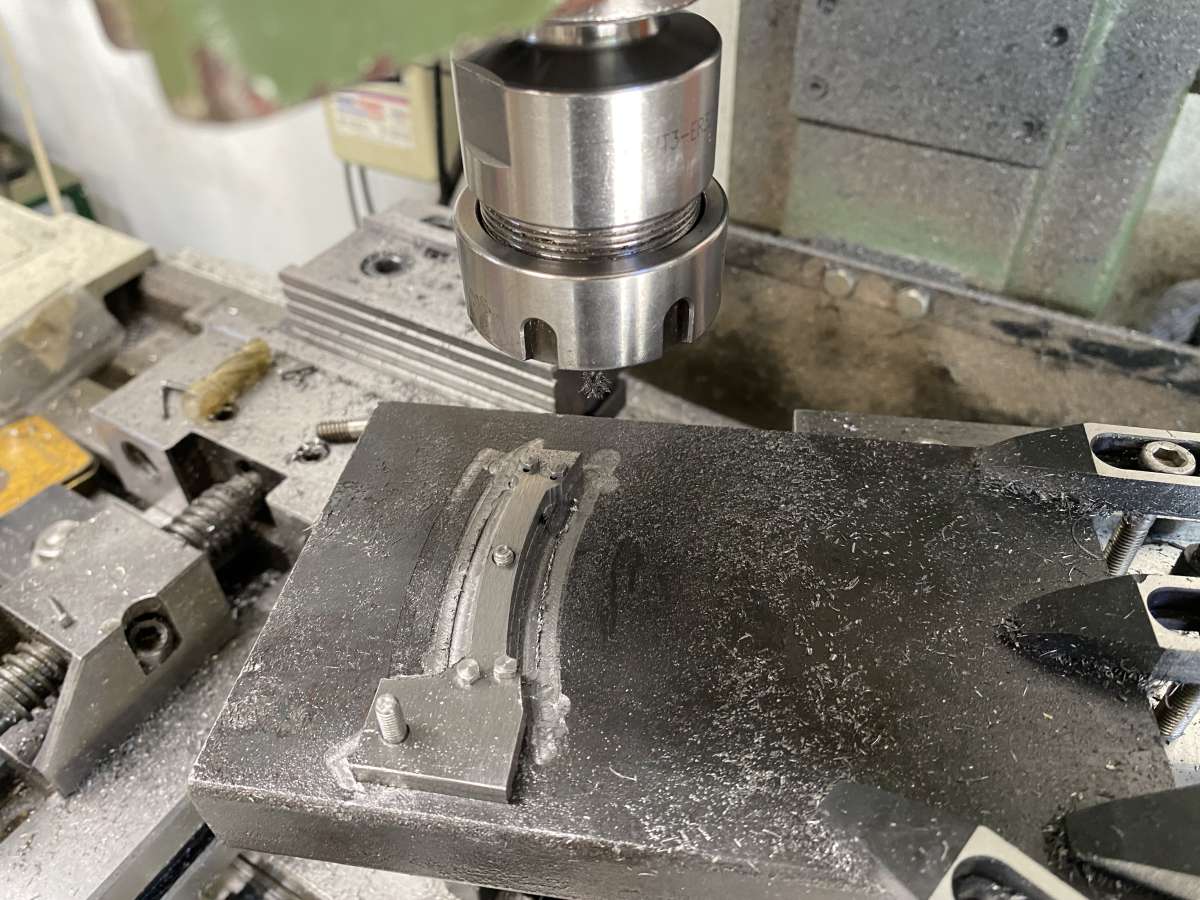
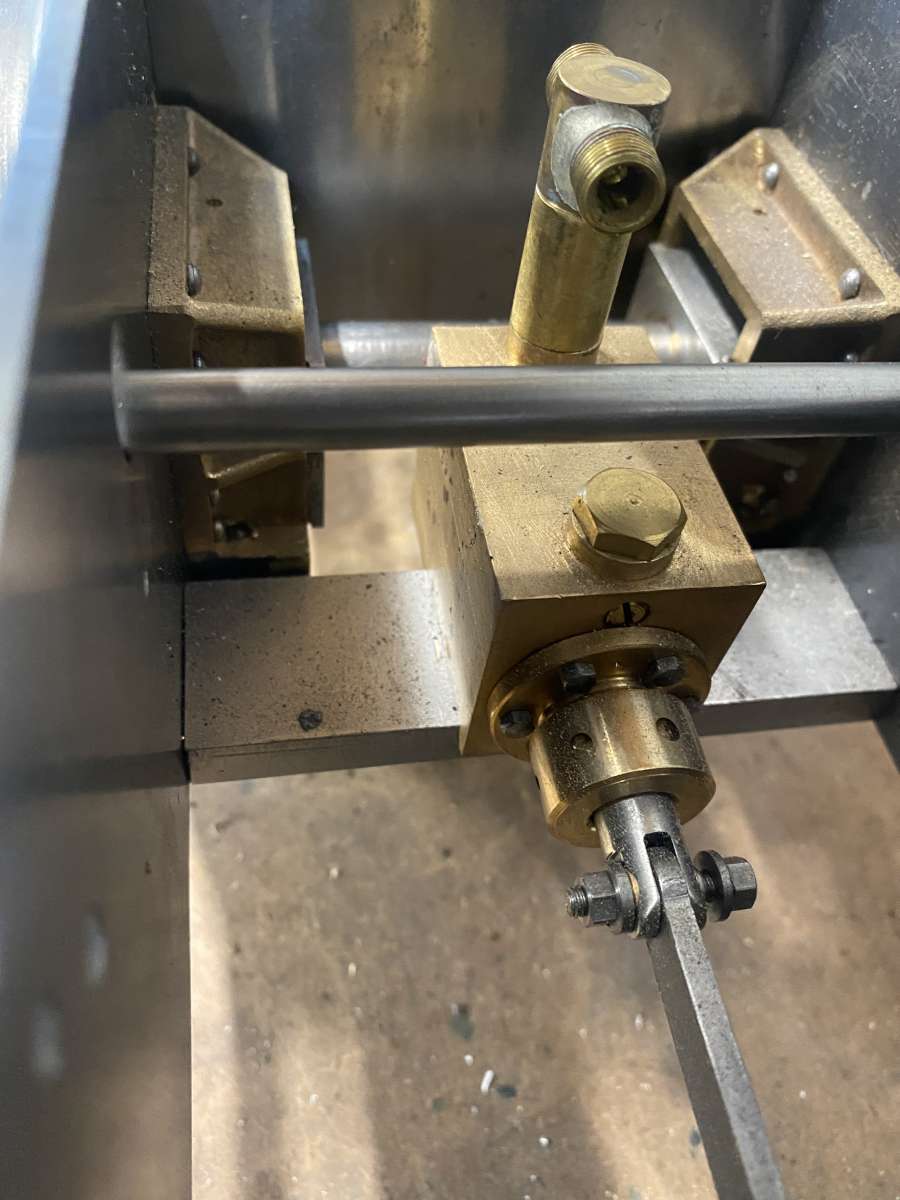
                                        Made a start on the valve gear linkages.  First off was the combination lever.  Three holes were drilled and reamed to 3/16” in a 3/8” square steel bar.  Identical holes were drilled and reamed in a sacrificial piece of aluminium.  The aluminium was machined exactly 20mm wide and the top hole was centred and offset 10mm from the top edge.  I have metric gauge blocks so it is easier to set up using the metric dimensions. Two 3/16” silver steel rods were screwed 2BA on one end and the other end was glued into the aluminium and the 3/8” bar was bolted to the aluminium.  IMG_2404

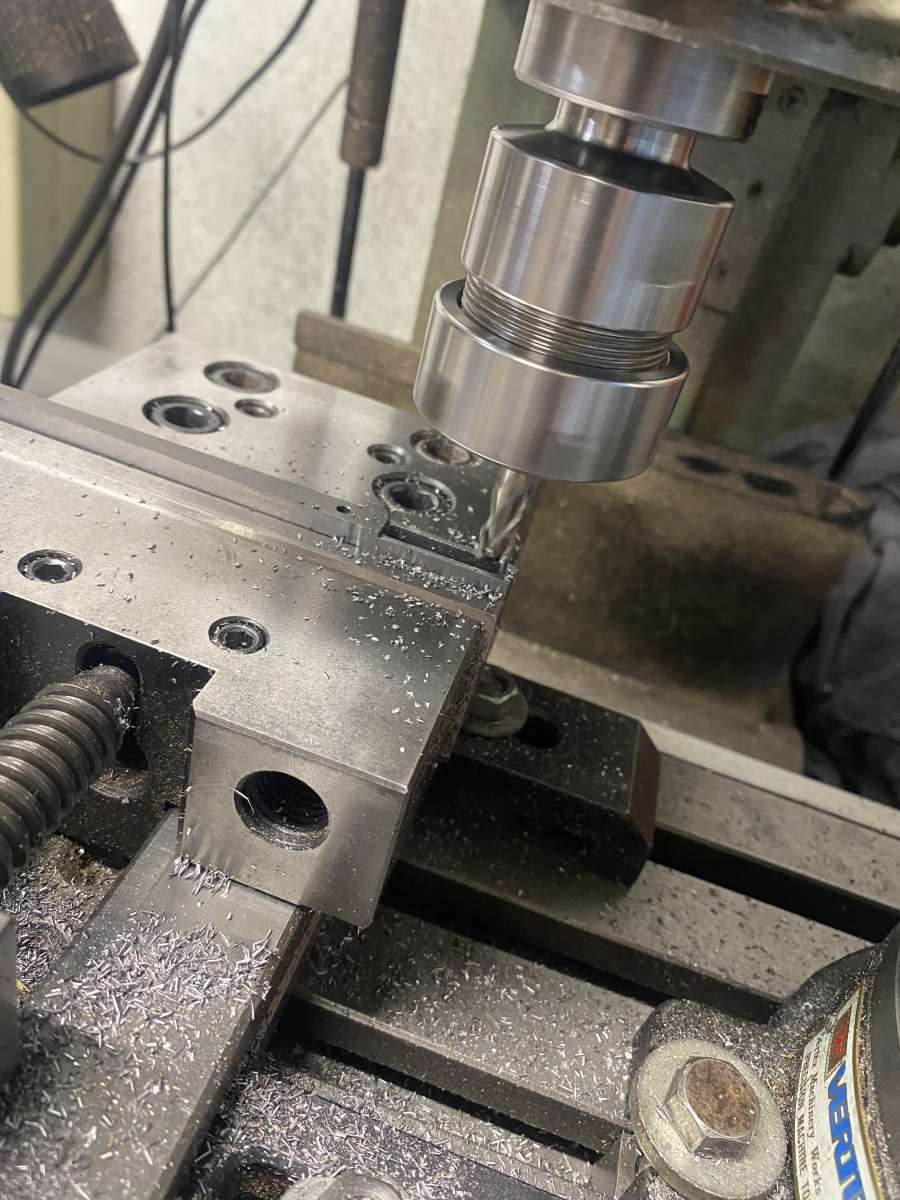
                                        The rotary table was set up true to the mill spindle and a machine vice was mounted onto the table so that when the aluminium support was secured the top hole was true to the spindle.  The combination lever was then machined using the Joe Pie method. I was able to get some accurate parts doing it this way.
                                        IMG_2406IMG_2405IMG_2407IMG_2408

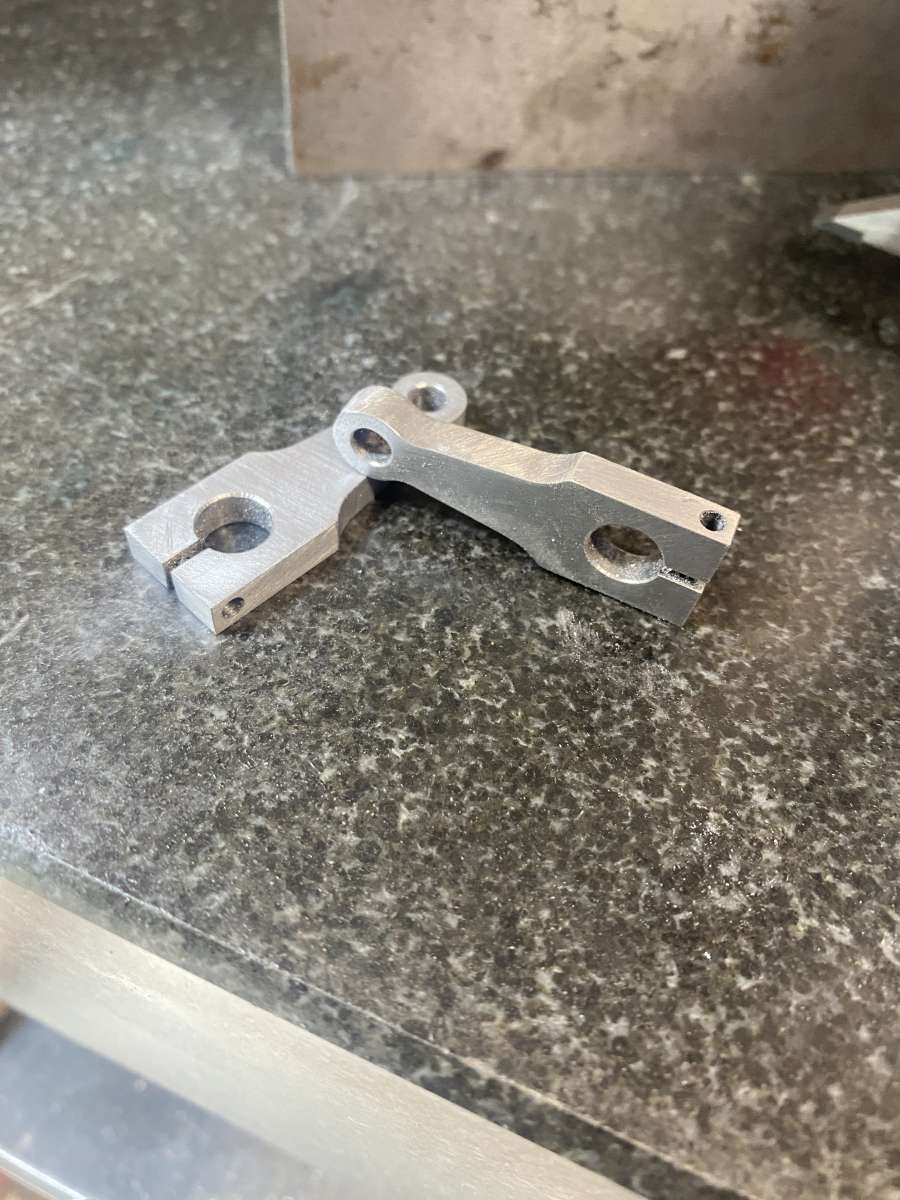
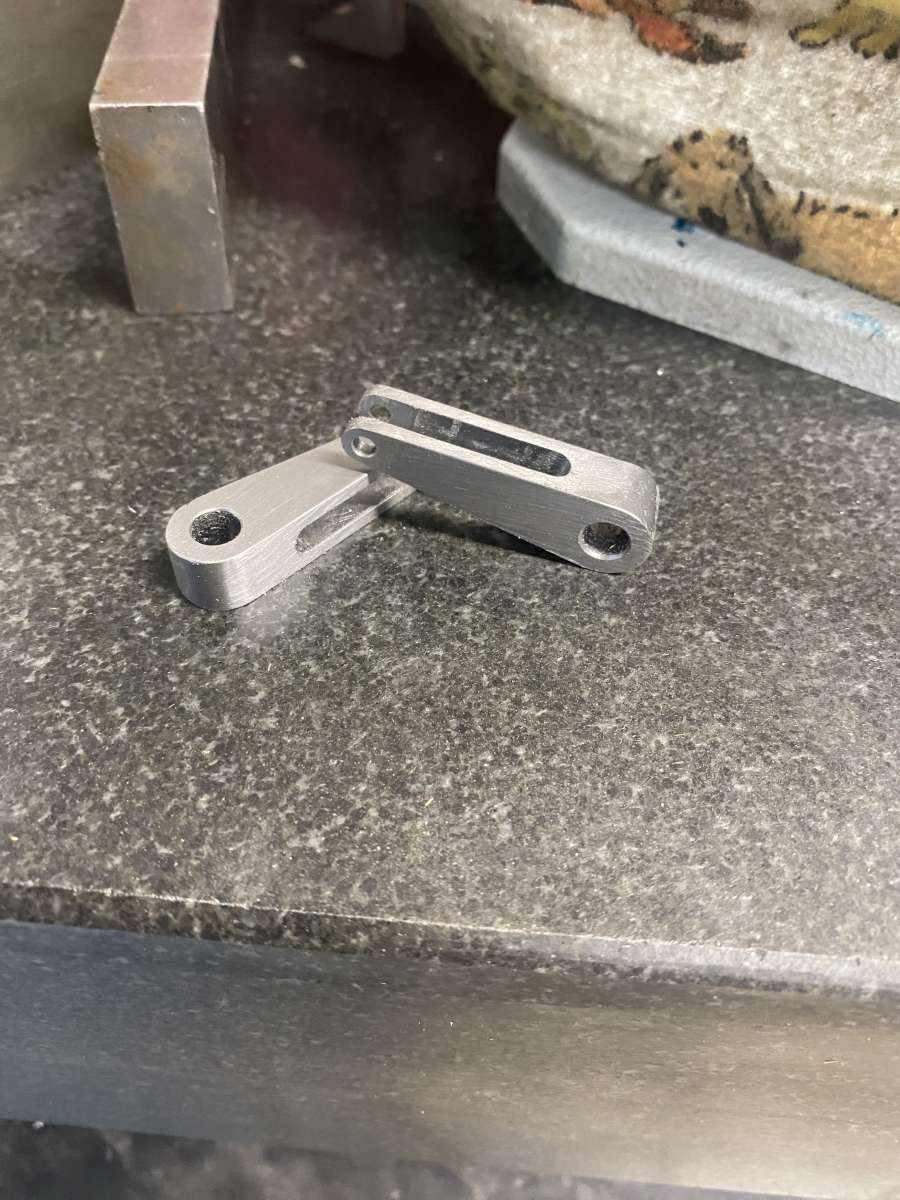
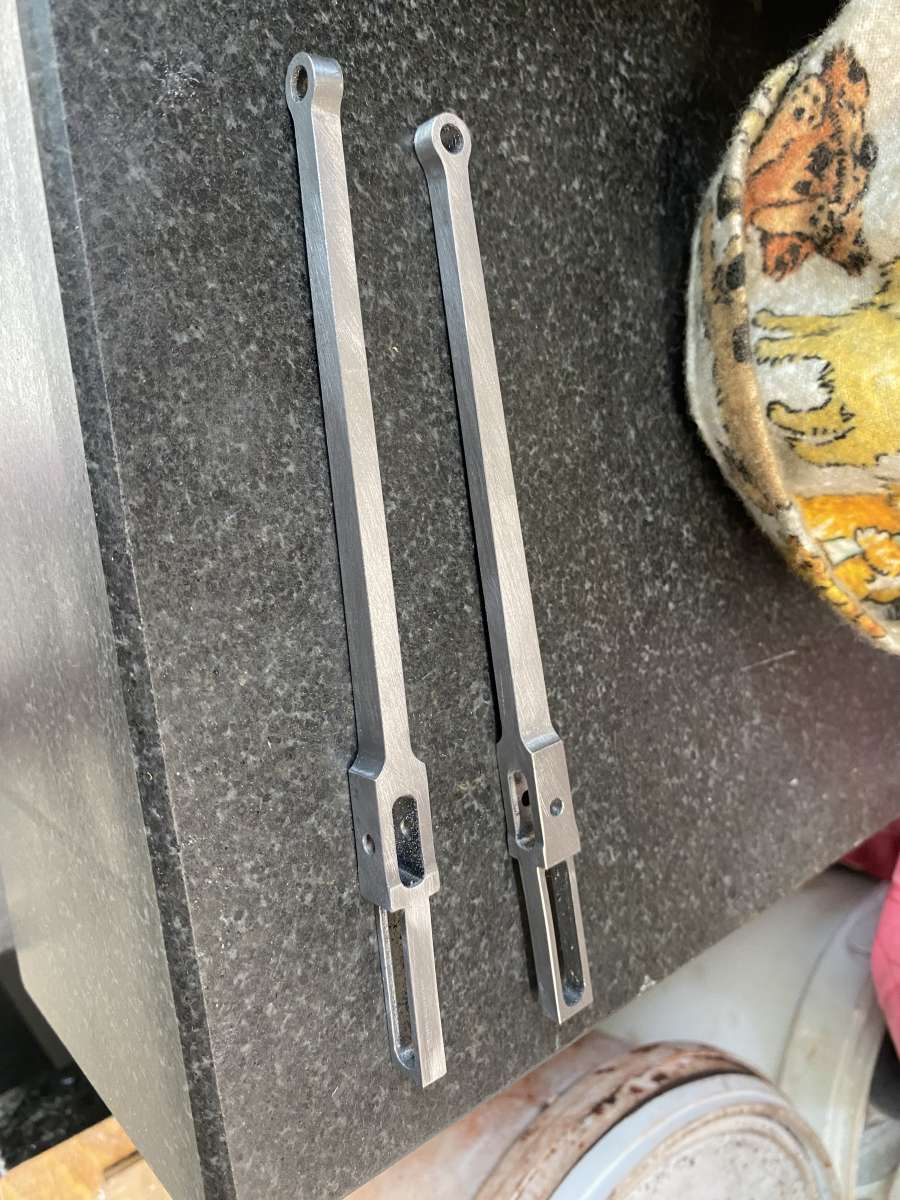
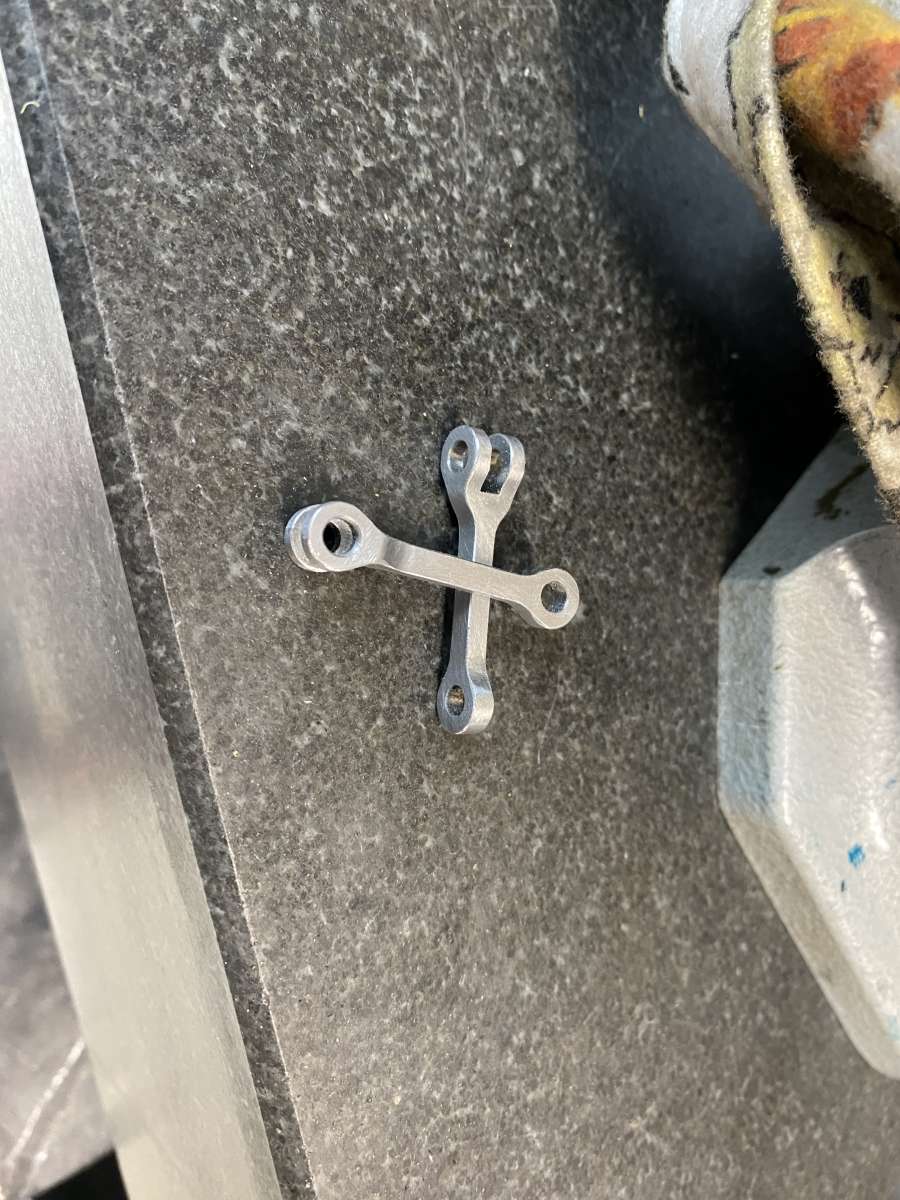
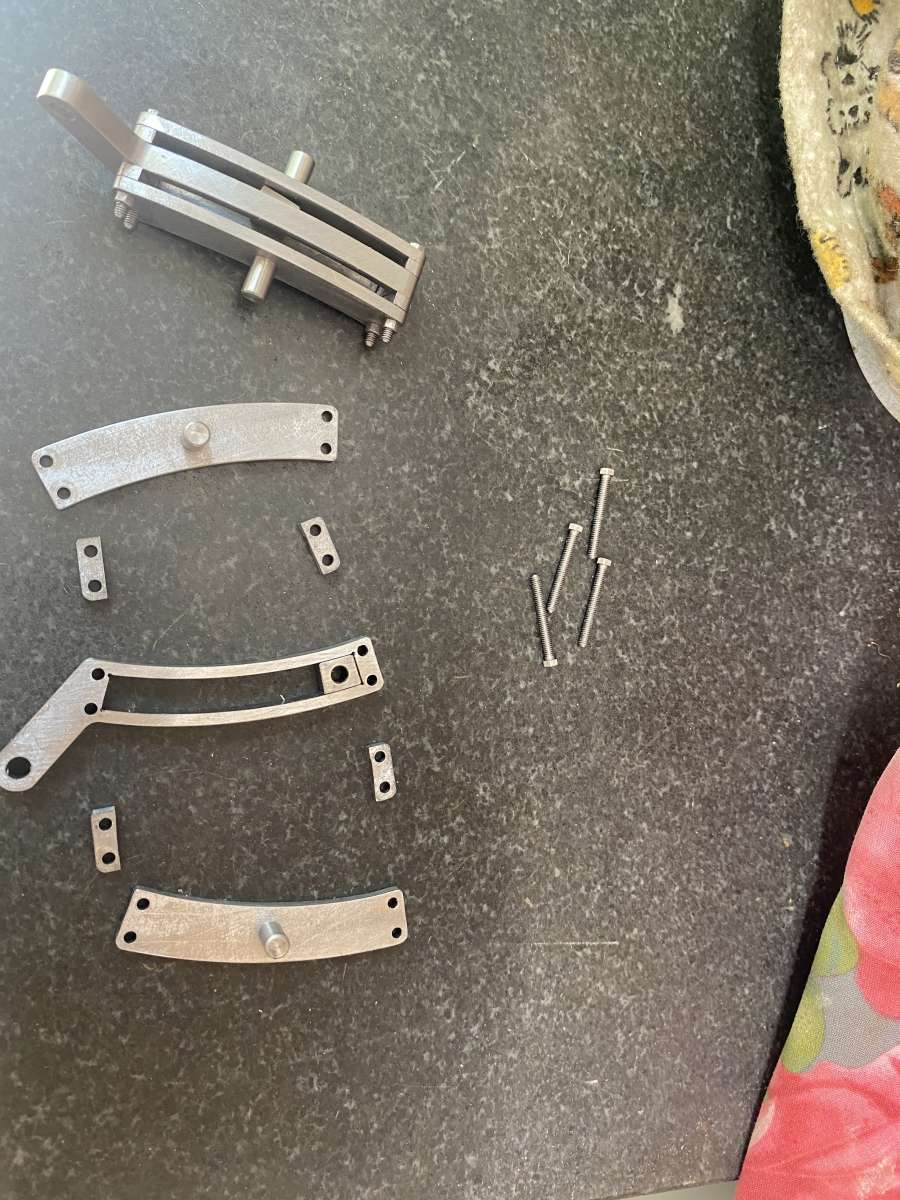
                                        The combination levers were hand finished with needle files and emery.  The lifting arms, return cranks and reversing arm were machined using the same method.

                                        IMG_2420IMG_2415IMG_2411

                                      Viewing 18 posts - 1 through 18 (of 18 total)
                                      • Please log in to reply to this topic. Registering is free and easy using the links on the menu at the top of this page.

                                      Latest Replies

                                      Viewing 25 topics - 1 through 25 (of 25 total)
                                      Viewing 25 topics - 1 through 25 (of 25 total)

                                      View full reply list.