Search Results for 'arc euro'

Search Results for 'arc euro'

Home Forums Search Search Results for 'arc euro'

Viewing 25 results - 251 through 275 (of 4,842 total)
  • Author
    Search Results
  • #744880
    Pete
    Participant
      @pete41194

      SMEE eh, I’m impressed.

      I’m not a member, but one possibility for information. The U.K. based Society of Ornamental Turners (SOT) apparently has an extensive collection of information. But it’s only accessible to the members. If any place has it or would know where to find more about the rarer and specialized machines or equipment, they would.

      Google as good as it sometimes is, has a built in language barrier or flaw for the user in it. Or it does for the simple ways I know how to use it. Some years ago I started thinking about that and why I never got results from other parts of the world about machining or model engineering. Google will only search for and in the language the search terms are based on. Searching on places like Youtube is exactly the same. But using Google translate in multiple different languages for some key search terms got me hits on a surprising amount of forums, websites etc from all over the world. Unfortunately I found it a pretty slow process with the constant translations needed. That’s the back story.

      I’d guess since much of this equipment was in use over most of Europe and elsewhere for a very long time, or at least until more modern methods or peoples tastes changed. There’s probably excellent sources of older information and drawings about this now rare equipment than we’d usually find by searching only in English. Google Translate is getting better, but I’ve found it’s still not great for the more technical terms. But as long as you already understand a bit, it can usually be figured out. As a tool for translating normal day – day conversations, it’s probably ok to fairly adequate. There’s a French only and I think mostly hobby level website called Usinages? I do know they have a massive collection of scanned user manuals for mostly European produced machine tools. Somewhere there has to be a lot more information about this equipment, and especially those straight line guilloche machines.

      John Haine
      Participant
        @johnhaine32865

        Buy from a reputable supplier with good aftershaves, such as ArcEurotrade. Buy cheap, buy twice.

        #744505

        In reply to: Hi, ML7 re-start

        Howard Lewis
        Participant
          @howardlewis46836

          +1 for White Spirit, or kerosene to remove the grease, but then coat the surfaces, lightly with oil.

          It is surprising just how quickly things will rust. (i have seen a freshly sand blasted steel item, collect a thin film of rust before my eyes) If your workshop is not well ventilated, and kept reasinably warm, you will suffer condensation. The oil can turn grey overnight as it emulsifies.

          If you are not familiar with machine tools, I would advise against stripping the machine. You might do more harm than good; after all it worked perfectly well enough for your father. Being unused should not have misaligned anything.

          You say that you are not faniliar with the lathe, so it would be a good idea to buy and read oine or more books on their operation. The books will all differ slightly, but the basic principles are exactly the same.

          Since you have a ML7, the classic, “The Amateur’s Lathe” by L H Sparey would be appropriate, if it is still in print, or obtainable.

          You might find Ian Bradley’s “The Amateur’s Workshop” a useful companion. Ditto if still in print. (It tells some things that are not in Sparey. He also wrote “Metalwork and Machining Hints and Tips” WPS 24)

          Other good authors for general lathework are Stan Bray “Basic Lathework” (WPS 45)or Harold Hall “Lathework – A complete Course”(WPS 34)

          Before too long, you may find “Tool and Cutter Sharpening” (WPS 38) by Harold Hall useful.

          WPS is the Workshop Practice Series of books (You can get these from places such as Arc EuroTrade, Camden Steam Services.

          FWIW, my advice would be to stick with High Speed Steel tooling. The ML7 was not built for the speeds and feeds for Carbide tooling. For this, you will need to learn how to grind the tools.

          The angles do not have to be too precise; a degree or two either way is unlikely to cause problems. Where possible, err on the side of the lower figures. Removing too much metal will slightly weaken the tool, and more importantly, lt reduces the area capable of conducting away the heat caused by the cutting action.

          One other thing, a self centering 3 jaw chuck is unlikely to hold work absolutely concentric.

          If work has to be absolutely concentric, you will need to use a 4 jaw independent chuck, and use a DTI on a magnetic base, to reduce the eccentricity to an acceptable level.  Alternatively, if needed, the 4 jaw can be the means of producing eccentrics, when needed.

          If you do not already have a set, Zeus Charts will be very useful. I still use mine from 1958!

          If you can, find a local Model Engineering club, and join. There you will find folk who can advise / demonstrate, face to face.

          HTH

          Howard

          #743825
          bernard towers
          Participant
            @bernardtowers37738

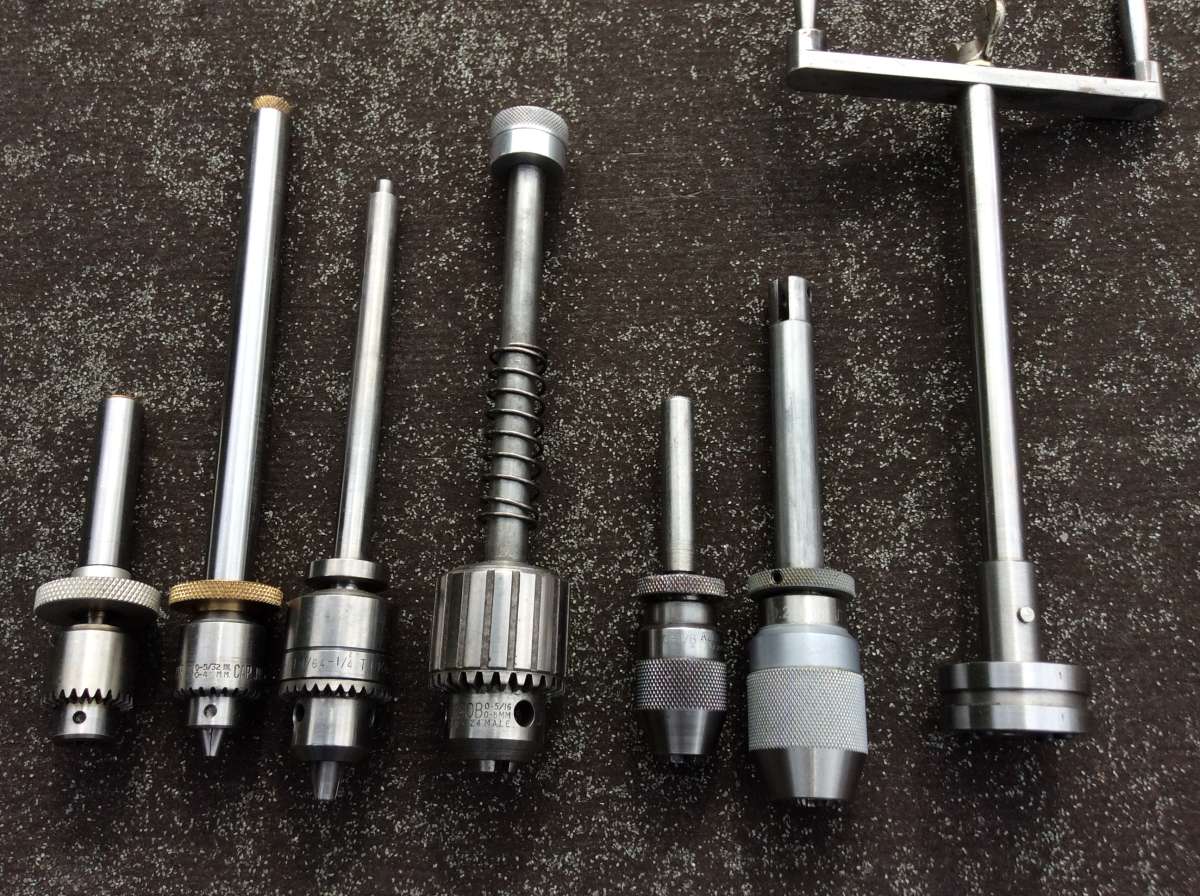
            Over the years I have had several different chucks on my UPT and have settled on a 0.2 to 4mm keyless from Rotagrip, the body is a bit larger than the previous chuck but the convenience out weighs that. The chucks that have seen service on my UPT are below and go from L to R Arc euro 0.3 to 4mm/ 0 to 5/32/ 1/64 to 1/4/ 0 to 5/16(for tapping)/0 to 1/8 keyless(too restrictive in capacity)/the current keyless/and lastly the tapping chuck made from drawings on Mikes Workshop site, fiddly but works well.IMG_3636

            #743777
            Hopper
            Participant
              @hopper
              On DC31k Said:

              Arc do a very nice 4mm capacity chuk on a JT0.

              https://www.arceurotrade.co.uk/Catalogue/Chucks/Drill-Chucks/Key-Type-Drill-Chucks

              Difficult decision: some people have a notion that brand and country-of-origin matter; others opt for engineering performance and good value.

              But its minimum size is 0.4mm whereas the Jacobs goes down to 0. Depends how small a drill bit you want to use in it. If you are not drilling carburettor jets or similar tiny sizes, the 0.4mm minimum would work.

              #743772
              DC31k
              Participant
                @dc31k

                Arc do a very nice 4mm capacity chuk on a JT0.

                https://www.arceurotrade.co.uk/Catalogue/Chucks/Drill-Chucks/Key-Type-Drill-Chucks

                Difficult decision: some people have a notion that brand and country-of-origin matter; others opt for engineering performance and good value.

                #743523
                Howard Lewis
                Participant
                  @howardlewis46836

                  Recently, A friend and I bought ours, over the counter at Arc Euro Trade.

                  They don’t seem to be in Catalgue 11, so you’ll need to look at their website, or contact them by phone or E mail

                  Howard.

                  #741962

                  In reply to: Parting-off

                  SillyOldDuffer
                  Moderator
                    @sillyoldduffer

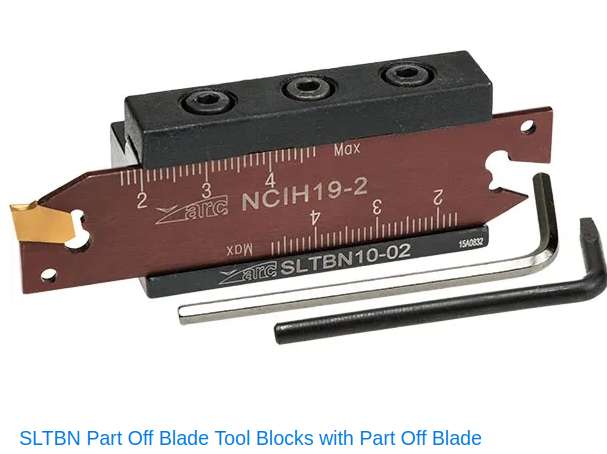
                    A parting tool won’t go beyond it’s reach, which is generally quite small.  This carbide insert blade, photo pinched from ArcEuro of one in it’s holder, suggests it can do something over a 40mm deep cut, making Ø75mm possible at the extreme end:


                    partingblade

                    Alas, how far the blade will reach, probably isn’t the limiting factor.  That’s the rigidity of the whole set-up: blade, holder, toolpost, crosslide, and the lathe itself!  Big lathes are better than small ones for parting-off because they have more beef.  In this context a Myford S7 is a small lathe, best considered ‘bendy’.

                    Substituting a Gibraltar rear tool-post will help, even more so if the lathe can run safely in reverse with the cutter upside down, not an option with screw-on chucks.

                    I’d saw it and then face-off.

                    Clever chaps have noticed the rod might be quite short:  is that so?  I’d still cut it in my band-saw but holding it in a clamp fixture I made for cutting short lengths.   The clamp is an example of a workshop problem solved by making a jig or tool that enables an otherwise awkward cut to be made.

                    Dave

                    #741807
                    SillyOldDuffer
                    Moderator
                      @sillyoldduffer
                      On Michael Ford 6 Said:

                      Dave  As you have probably guessed not very experienced but give me a single seater race car suspension and feel totally at home! I bought a pair of brass gibs from arc and they have no indents drilled so think I may try fitting them after checking straightness and a polish but they do look a lot better quality than the original gibs? I also wondered if using ball bearings on the end of the adjusting screws might help or not?

                      No shame in being inexperienced!  I’ve been machining for ten years now and am still learning.  Didn’t know until reading Ketan’s post that their ArcEuro gibs are soft enough to dimple with the adjuster screws rather than spotting them with a drill.   Extra consideration for beginners!   The booby trap though is that Brass is an alloy family and many of them are too hard for that trick.   The brass strip I bought from a DIY store is!

                      Long history of experienced mechanics new to lathes and mills being caught out on first contact.  Not due to lathes being rocket science, more a deceptive simplicity in which some apparently innocent part of the implementation is trickier than expected. I hope racing car suspensions have fewer fiddly gotchas!

                      Dave

                      #741574

                      In reply to: Newbe

                      Howard Lewis
                      Participant
                        @howardlewis46836

                        Welcome Robin,

                        Try to find a model engineering club near you and join.

                        No doubt you will then be able to get advice, and possibly demonstrations face to face.

                        Do buy at least of the books on lathe work.

                        The oldest, centred on the Myford ML7, (biut the underlying principles remain the same, whatever the machine) is “The Amateur’s lathe” by LH Sparey.

                        Ian Bradley’s “the Amateur’s Workshop” is a useful book to have also.

                        Stan Bray’s “Basic Lathework” (Workshop Practice Series 45)ris a good book, and gives the angle to which tools should be ground for different materials

                        “Lathework – A Complete Course” (WPS 34) by Harold Hall is another possible source of information.

                        If you have a mini lathe, Dave Fenner and Neil Wyatt have written books specifically abouit their use (WPS 43) and (Crowiid Metalworking Guides)

                        You might find Harold Hall’s “Tool and Cutter Sharpening” (WPS 38) helpful.

                        Don’t get too humg up on exact tool angles. Just because the recommendation is 10 degrees, you won’t see much difference if you actually ground the clearanceto 8 degrees or 12; unless you are working in some more exotic material

                        Thye only time that tool angles are important is when you graduate to screwcutting.  Then you do need to grind the tool accurately to 55 or 60 degrees for the thread form.

                        FWIW, I never have top rake on a parting tool.  Ideally, they should be mounted inverted in a rear toolpost (If you can fit one to your lathe.  Difficult, but not totally impossible with a mini lathe)

                        Again, my advice would be to make a Tool Centre Height Gauge.  Useful practice, and saves time when mounting a tool.

                        Smaller threads can be cut using Taps and Dies, I made and use Tailstock mounted sliding Tap and Die holdersrs.  Allthough you might find a need to make and use a Mandrel Handle for the larger sizes, or for better control when working upto a shoulder.

                        Material suppliers; purely my choice: Toolbits – Arc Euro Trade Taps and Dies – Tracy Tools or The Tap and Die Company.

                        Tapping lubricants. Trefolex is one; I use Rocol RTD.

                        HTH

                        Howard

                        #740945

                        In reply to: ER Collet Sets

                        Ketan Swali
                        Participant
                          @ketanswali79440

                          Hi DC31k,

                          I can only speak for the procurement process we follow for ER collets.

                          Around 18 years ago, the late JS encouraged me to look at ER collets as a standardisation for the hobby market, which before then was used to using a Chinese standard collet which is a longer collet which looks similar to ER.

                          A factory was found with whom I was happy. In addition to ER collets, we purchased other items and developed some items with them which JS created, with the help of a specific engineer in that factory. Over the years we worked closely with a set of people in the factory. They have a set of procedures in place to check each product on specific product related testing equipment.

                          About nine years ago, the specific engineer with whom we worked, left and started his own factory which specialises in ER collets. Two years after he started his factory, we moved our procurement of ER collets to him. We continue to buy a spread of items from the original factory, along with ER collets specifically manufactured by him. I have visited him on several occasions and seen the checking process.

                          Checking is done manually by an experienced checker who checks each collet for runout on a specific test rig. the collets are then separated into small bins by runout range. There is a market for every runout spec. Price we pay for 0.008mm is 10 ~ 15% higher than 0.015mm.

                          We are regularly offered prices cheaper than what we pay our manufacturer supplier, however I prefer to buy from people I am happy to work with, and I have been working with this team for around 18 years now.

                          So, above is the process ARC has for quality control. Any problems are usually flagged up after receiving three consecutive complaints with which we agree, for the price range at which a product is offered.

                          If certification is required, I would suggest Regofix.

                          Checking for accuracy outside a test rig, and on a milling machine can achieve mixed results as there are too many factors involved, including the accuracy of the spindle, milling head, arbor, nut, cutter, column alignment, how hard or not the collet system is tightened. For these reasons, in the early days, we were less confident of specifying ER collet runouts, even we were originally offering 0.015mm runout. An observation on one mill was found to be different from two to three others.

                          However, over time we saw others offering Chinese origin ER collets specifying runouts as a marketing tool, in the hobby environment, and we are confident that the prices suggested were difficult to achieve for the runout specified. So we decided to specify the runout as specified by our manufacturer, a few years ago.

                          Manual machines are less accurate than CNC. They work at lower speeds than CNC too. Although there are specific CNC machine specks ER collets, different from what we sell, there are CNC machining workshops in U.K. and Europe, to whom ARC supplies ER collets for use on their CNC machines. The ER collets we sell are fine for use on Tormach machines.

                          If one was to use seriously big/multi axis CNC machines for something like aerospace component making, then a different type of ER collets should be considered.

                          Ketan at ARC


                          #740338
                          JasonB
                          Moderator
                            @jasonb

                            No, it’s the one called a Versatile Vice Dave, as per thread title. Probably this type rather than the SG that Michael linked to

                            #740324
                            Michael Gilligan
                            Participant
                              @michaelgilligan61133
                              On Bo’sun Said:
                              Hello Tony, The fact that both surfaces are sloped the same amount, and in opposite directions, makes me think it’s deliberate.

                              I presume that this is the vice in question:

                              https://www.arceurotrade.co.uk/Catalogue/Workholding/Machine-Vices/ARC-Versatile-SG-Iron-Milling-Vices

                              … in which case, it seems eminently reasonable that a batch of jaw-facings would have been ground in a single production-run, and any two from the lot would have been used on each vice: If so, using the same component on each jaw will automatically mirror the geometry.

                              MichaelG.

                              #738976
                              SillyOldDuffer
                              Moderator
                                @sillyoldduffer

                                The top line might be ‘Intelligent Mail Barcode‘.  The lower line is something else.

                                This is a USA system, so international air-mail might be different.  The article also provides links to POSTNET and PLANET , said to be obsolete.

                                I guess the upper line is a unique number with checksum confirming postage has been paid.  Added by a franking machine.   To reduce fraud, how this is encoded is likely to be a secret.  Might include date-time, but could just be the franking machine’s identitity, plus a serial number, and perhaps the tariff.    The lower line could be the cancellation, and this might well contain a date-time, and location,

                                I fear Simon is on a looser even if Michael can decypher the code:

                                • I don’t believe AirMail offers delivery within a set time.   Hopefully faster than standard mail because some part of the journey is routed by air, but if anything goes wrong AirMail will be delayed.  The system doesn’t track or guarantee speed.
                                • We don’t understand the system.  I wonder if AirMail sent from the UK to France is treated any differently from ordinary mail?  The ordinary postal service makes heavy use of aircraft, whilst the Channel Tunnel might well be faster than air, at least into Northern Europe.  How Simon’s air-mail was routed is unknown, although we can be sure it wasn’t flown direct from the sender to Simon’s home – it’s been in vans, sorting offices, and maybe in a bag on the back of posties pushbike!
                                • On ordinary letters the cancellation can be added immediately at the sending end, or much later in the chain, often the last sorting office before delivery.   So any date-time in the cancellation code may not mean much.
                                • Even if dates are found suggesting Simon’s suspicions have legs,  that’s unlikely to help.    ‘The cheque is in the post sir‘ is an ancient excuse, and I don’t think anyone ever proved it was a lie.   Best answer is registered and tracked delivery, but even these don’t guarantee a letter will arrive:  they only pay compensation if it doesn’t, which may not help much.
                                • The mechanics of the postal system are geared to help them, not customers with a problem like Simon’s.   Palliative care might be the answer: try kicking the cat or glugging a bottle of wine!

                                Dave

                                #738761
                                Howard Lewis
                                Participant
                                  @howardlewis46836

                                  Sadly, you only get what you pay for.

                                  Boxed sets are nice, and keep the tools safely, but I have yet to find a need for a M9 or M11 tappomg (For thread inserts perhaps?)

                                  Tap and Die fairly recently changed hands, I believe, bought by C R Tools.

                                  They used to sell empty boxes (Several years ag mine cost £26 each, but prices will have risen)

                                  So my various types of Taps and Dies  are now boxed rather then loos in a drawer or tobacco tin.

                                  For “one off” or very occasional use, Carbon steel will suffice if carefully used.

                                  For more frequent use, the oncost of HSS is justified.

                                  Occasionally, you will come across a Die which has been marked on the rear face, and so lacks the lead in chamfer. You just need to remember to use it “wrong way round”.

                                  I adjust my split does to a good quality commercial bolt or setscrew, before use.

                                  For a cutting lubricant Trefolux or Rocol RTD are very good, better than drenching in oil.

                                  I have good experience of both Tracy Tools and Tap and Die Company, but anything from a reputable supplier, such as Arc Euro or RDG should be quite suitable.

                                  HTH

                                  Howard

                                  #738714
                                  SillyOldDuffer
                                  Moderator
                                    @sillyoldduffer

                                    The answer is a Lemon!  As far as I know there is no reliable source of cheap taps and dies of reasonable quality, whatever the hell ‘reasonable quality’ means!

                                    What you get in a cheap set is a gamble, anything from all good to all rubbish.   It depends on the material used, the accuracy of the grind, and the effectiveness of the heat-treatment.    The M4 tap in the set I bought from Lidl snapped like a carrot first time I used it, but – so far – all the others are fine.   Lidl is a good place to buy, because although they know nothing about tools, rubbish can be returned, and the customer doesn’t lose money.   Vevor is an online  ‘box-shifter’, selling almost anything they can source:  they aren’t a tool supplier, and don’t manufacture anything.   The brand is just a label.  Like most other box-shifter products, how well-made Vevor items are varies wildly from good to awful.   Buying cheap is a gamble, making some customers very happy, whilst others are horribly disappointed.

                                    The best way to buy taps and dies depends on the needs of the workshop.   One that cuts a lot of threads should go up-market, and not risk cheap sets.   However, I’m probably closer to Andy in that I don’t cut enough threads to justify spending big money on high-end tooling.    Noting that I consider tools to be consumables, not an investment, I went for this compromise:

                                    1. I standardised as far as possible on Metric, M2, M2.5, M4, M10 and M12, and bought mid-range taps and dies for these sizes.  For me “mid-range” means Tracy Tools, whose taps and dies do what I need at reasonable cost, so far with no embarrassing failures.  However, I don’t believe for one second that Tracy sell the best of all possible taps and dies, and would be prepared to cough up for better if the need arose.  For example, if I had to cut a lot more threads than I do, especially in difficult materials.
                                    2. I bought some cheap sets to cover the occasional need to cut Imperial and Metric threads outside my standard range.  When a tap or die from one of these sets fails, it is replaced with a Tracy.
                                    3. New taps and dies are only used on Brass at first.  When they lose sharpness, they’re transferred to the general-purpose set, because other metals are much less fussy about sharpness.   I find threading mild-steel rapidly blunts my taps and dies, spoiling them for Brass.

                                    Although this balance works for me, it’s not for everyone.  A busy professional workshop would almost certainly be happy to spend big-money on taps and dies because time is money: tools that break or go blunt prematurely are money straight down the drain.   Apart from the annoyance, clearing a broken tap doesn’t cost a hobbyist anything.

                                    No easy answers.  There are two unforgivable sins in engineering: wasting money on expensive stuff that doesn’t get used often enough to deliver value; and wasting money on cheap stuff that can’t deliver.  This being a hobby though, personal opinion matters.  Some delight in filling their workshops with the most expensive tooling they can find (even if it’s never used), whilst others do remarkable work with cheap rubbish!   Most of us are probably in the middle, sometimes gambling on cheap, and sometimes choosing to de-risk jobs by going up-market.

                                    In my experience UK hobby suppliers do a reasonable job selecting mid-range tooling, i.e affordable and not too cheap.  Firms like ArcEuro go to some trouble selecting tools for import in a way that a box-shifter or internet seller doesn’t.   Their overheads push prices up compared with a box-shifter, but make it less likely the customer will be disappointed by the product.  And if a customer is disappointed, a UK hobby supplier will usually offer support.   Generally I buy from them, even though an equally good alternative might be available on the internet – I don’t trust my luck much!

                                    Dave


                                    #737285
                                    noel shelley
                                    Participant
                                      @noelshelley55608

                                      Welcome Wouter, The man for anything Sieg is Ketan of Arc Euro trade. He should be able to help. Good Luck, Noel.

                                      #736423
                                      Graham Meek
                                      Participant
                                        @grahammeek88282

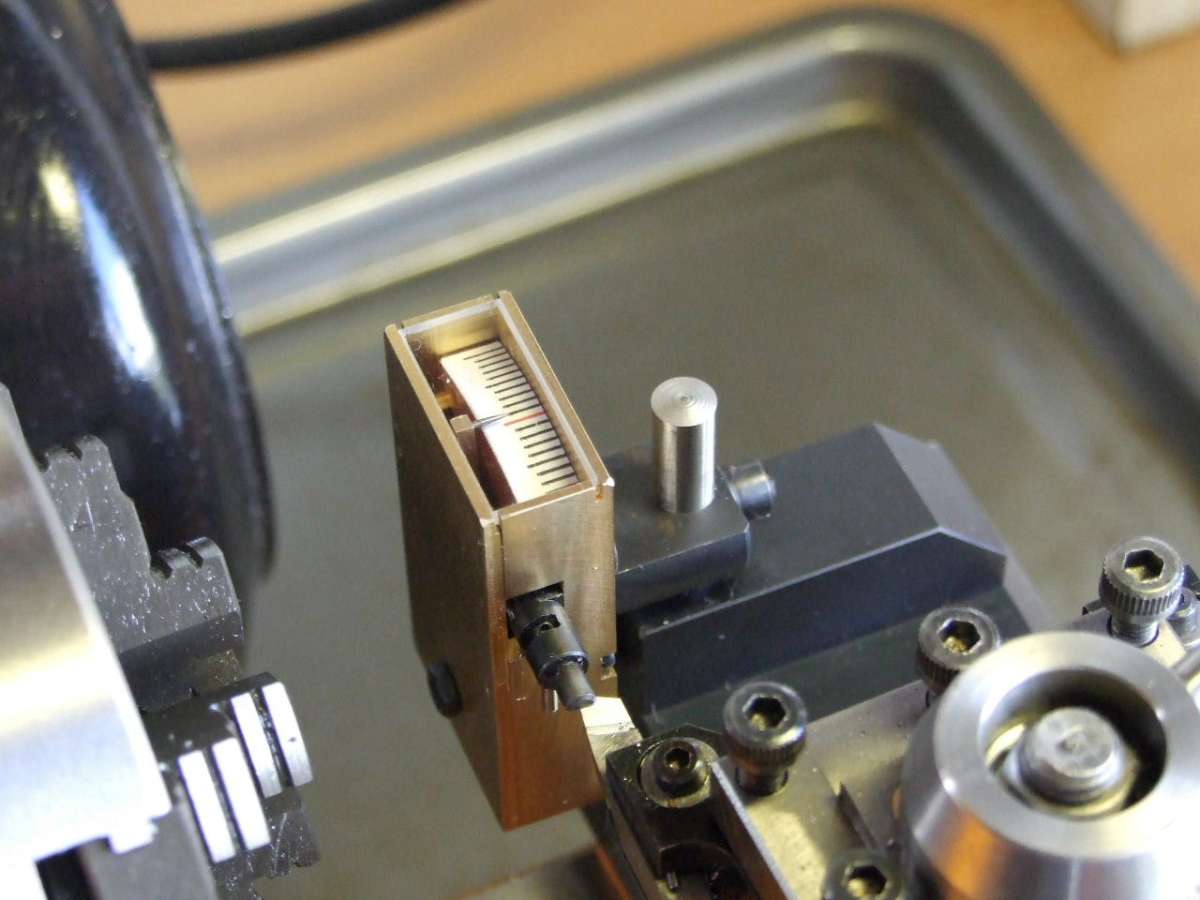
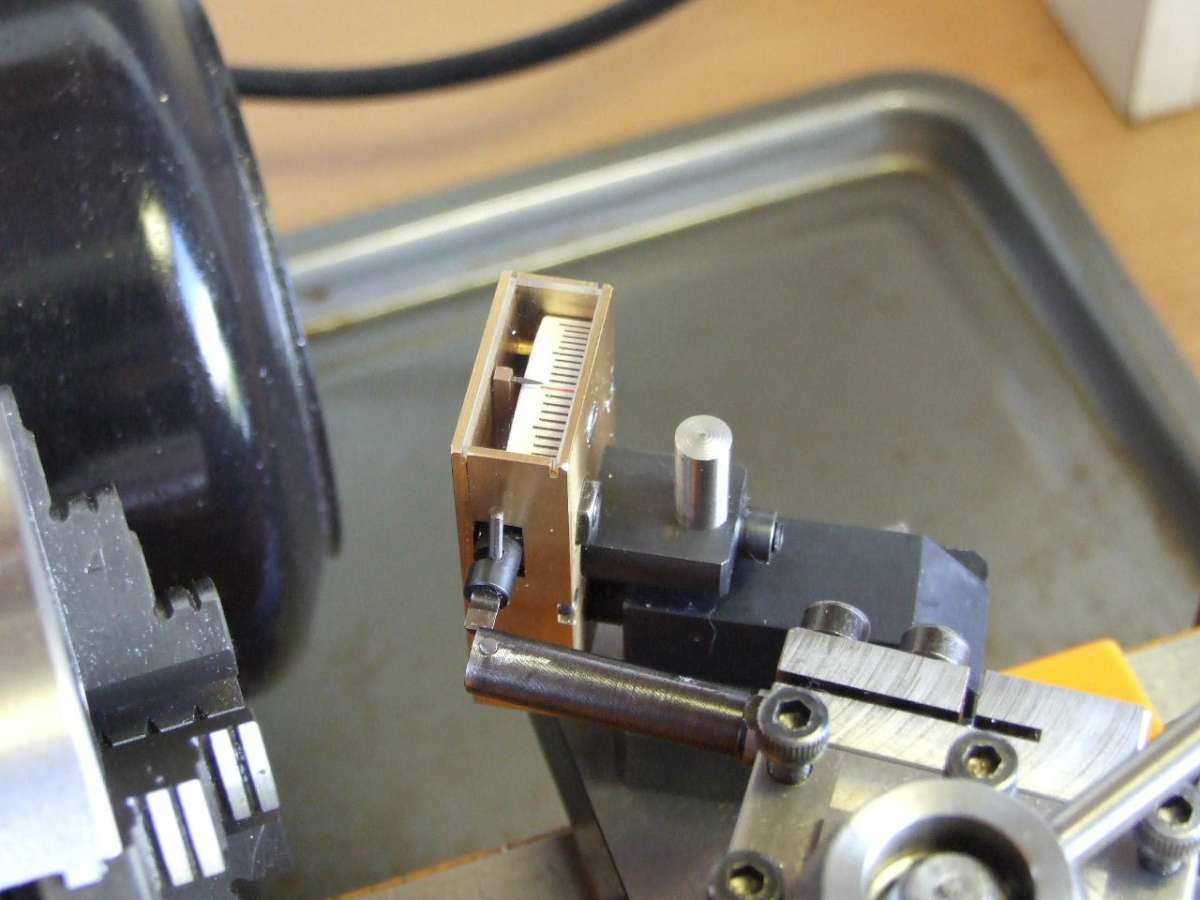
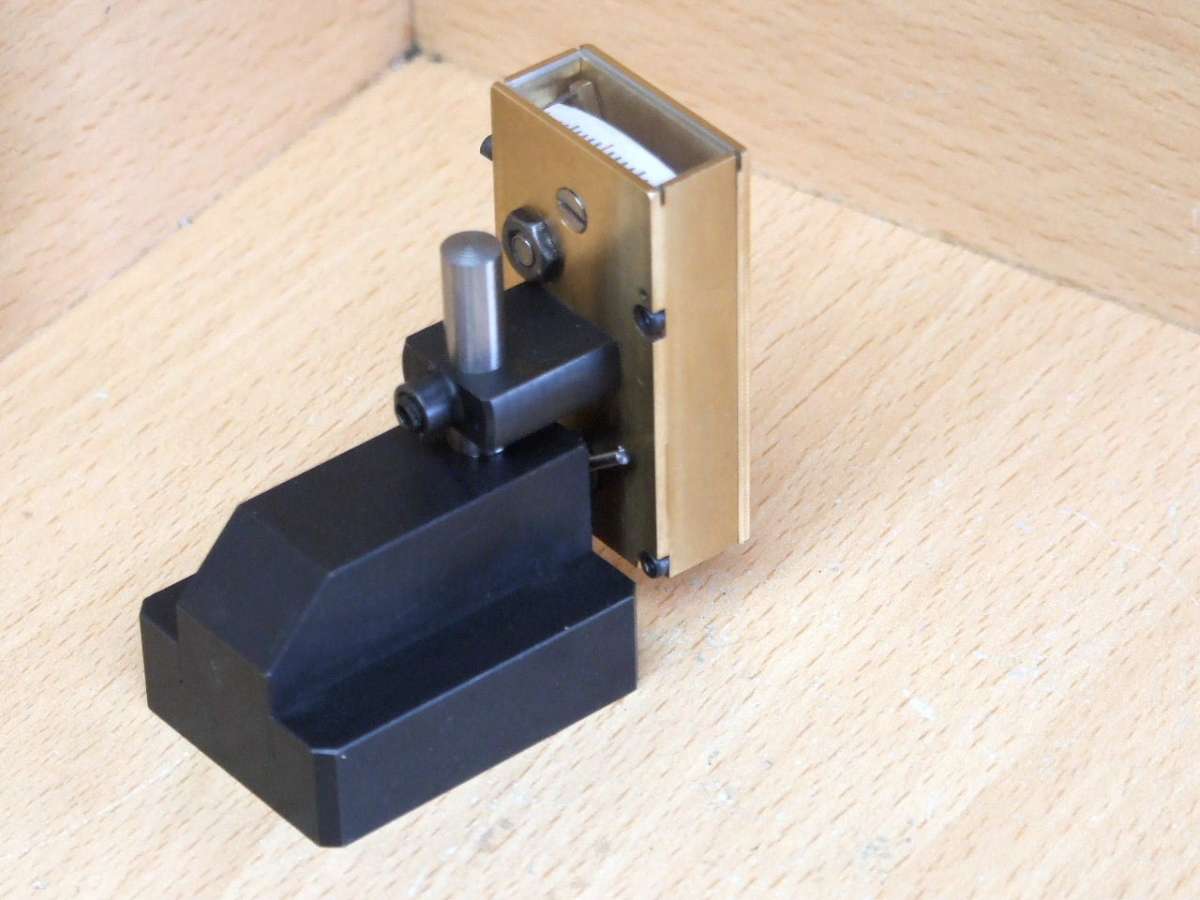
                                        The latest item to be made for the Compact 5 could quite easily be adapted for any type of lathe. It does warrant a listing under “Tool Height Setting Gauge” but to be honest I have forgotten how to start a new thread on this new forum.

                                        Since George H Thomas designed his Tool centre height gauge this has served me well for the past 40 years. Since going to a smaller lathe its use has been a bit of a trial. The size of the C5 cross slide is one issue the other being my failing vision.

                                        Something which made my life easier and which was in keeping with the C5 was needed. Talking it over with John Slater back in January / February started a flurry of activity on the drawing board. Along with a multitude of Patents from John on Lever Operated Indicators.

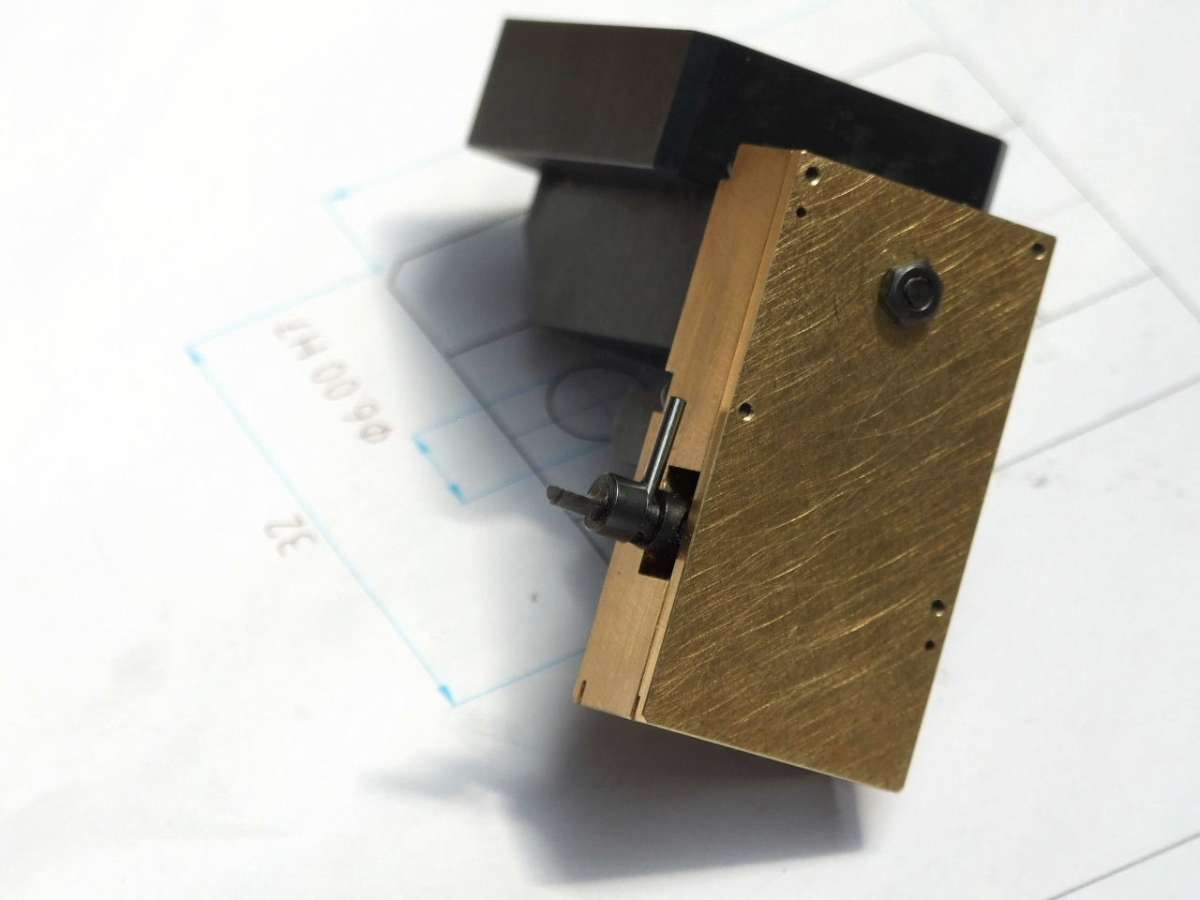
                                        Things were really simplified when John suggested using conical bearings for the pivots. These come in the shape of Carbide Insert retaining screws and I have to thank Ketan and Ian at Arc Euro Trade for their help here.

                                        The design here was up to issue 10 before any machining had started. However it does live up to my expectations and has already made setting tools easier. One of the earlier designs had a more vertical scale which was viewed through a magnifying lens, (piece of Perspex rod). However a wooden mock-up of this version made it too big for the C5 cross slide.

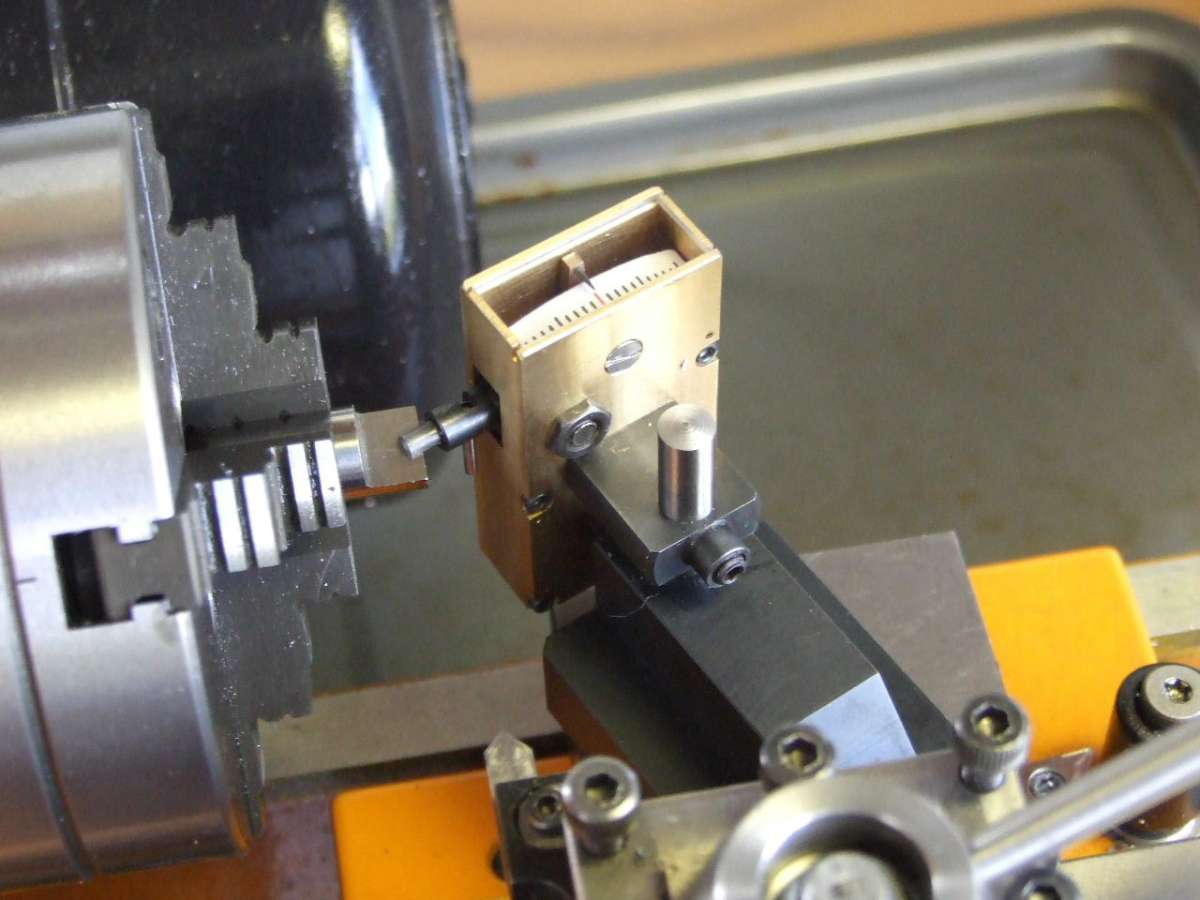
                                        Tool Height Setting Gauge


                                        The Gauge is shown being used to set the “Half Pin” horizontal before actually setting the Gauge to Zero on this pin.

                                        Setting Turning Tool

                                        This second image shows a turning tool being set. The pointer is on Zero, but the camera says otherwise, (parallax).

                                        Upside Down Boring Bar Setting

                                        By turning the Gauge Probe through 180 degrees and Moving the Direction lever. Inverted or upside down boring bars can be set without any alteration to the original setting of the Gauge.

                                        Probe Detail

                                        This view shows the Probe details.

                                        Direction Lever

                                        While this image shows the Direction Lever.

                                        The graduations on the scale represent 0.05 mm per division and the scale is a simple print out.

                                        More later,

                                        Regards

                                        Gray,


                                        #736192
                                        Journeyman
                                        Participant
                                          @journeyman

                                          Left school after o-levels to take up a marine engineering apprenticeship (strictly speaking a cadetship, similar but more water involved) with Esso. Went to college, I suppose these days would be called a block release course, part theory part practical.

                                          Poplar Technical College in the East End of London with a fine view over West India Dock. Studied such delights as naval architecture which was not the easiest of things without a good grip of maths (not my strong point) but the machine shop was good and got taught the basics of lathe, mill and bench work.

                                          glenstern

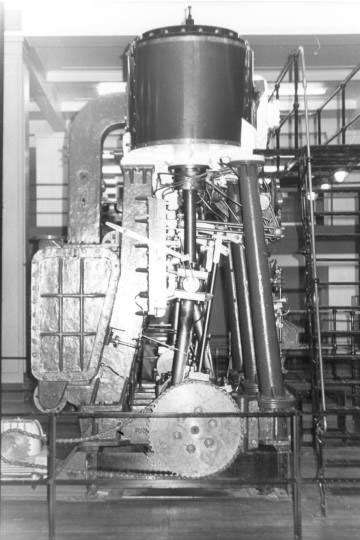
                                          Part of the college was hands on experience aboard the Training Ship Glen Strathallan. This was basically an old steam trawler, triple expansion engine and oil fired boilers. Learned the basics of engine management and such delights as how to employ a Dobie McInnes indicator to calculate engine power. Spent a week on a decidedly non-luxury cruise around the Thames estuary.

                                          stratheng

                                          The little ship is now long gone sunk in the Channel near Plymouth, not my fault I hasten to add, and is used for diving training. The engine was removed and is part of the Science Museum collection but no longer on display. It was in the main hall and definitely felt a bit dinasaur-ish seeing it there. It is no longer on display.

                                          As part of the initial training spent some time at Harland & Wolff in Belfast. An interesting few weeks  spent getting in the way, left pretty much to our own devices as the real workers were too busy to spend time on us. Saw a ship launch, amazing how many tons of old chain get dragged to slow things down.

                                          glasgow1

                                          First real ship was the Esso Glasgow, a smallish coastal tanker carrying refined fuel, naptha, light oil etc. got to visit a lot of places around the UK and Europe. Even a couple of trips up the Manchester Ship Canal. A bit unusual in that the main engine was turbo-electric. Basically steam turbine driving a large generator which in turn ran the engine through a very archaic looking control panel. Didn’t like to go astern too quickly from going ahead, used to shake everything up.  Was broken for scrap in Bilbao in 1971.

                                          An interesting few years but left to something completely different after being posted to the Esso Northumbria which was still being fitted out in Swan Hunters yard on Tyneside. I got the job of filing all the manuals and drawing for the ship. Had a room full of filing cabinets and plan chests on board. Amazing how much paperwork for 310,000 tons of ship (well perhaps not), I guess these days everything would be on one small computer.

                                          More on Glen Strathallan
                                          More on Esso Glasgow

                                          John

                                          Howard Lewis
                                          Participant
                                            @howardlewis46836

                                            Can only agree with what has been said by S O D and Ches.

                                            The Myford 7 Series is the machine of choice for many. Fantastic work has been done on them.

                                            My first lathe was a ML7, but I found the 2MT spindle limiting, and causing waste of material (Short ends left over), so on retirement I upsized to a Taiwanese 12 x 24 with VFD. But that is just me!

                                            You can do small work on a big lathe, but not so easy the other way round. (I have machined from 6+” diamter to 10BA on it!)

                                            At the time, a new Super 7 Sigma would have set me back four times as much, and not provided PCF, or the VFD.

                                            If the SC4 had been available 20 years ago, I would probably bought that, to get the power cross feed.

                                            Sometimes your choice of machine, apart from space and budget, is determined by what accessories are available for it (And what you anticipate you will want to do on it)

                                            If you did decide on a new machine (or other supplies) I can recommend  (Like many others) Arc EuroTrade. Splendid folk with whom to deal.

                                            My pal and | frequently make the 45 mile each way journey to go over to Syston for stuff, and the enjoyable chat with the folk there. (Not to mentuion the service and advice that they provide)

                                            Howard

                                            Ches Green UK
                                            Participant
                                              @chesgreenuk

                                              Flatline,

                                              Everything that has been said before, particularly SOD’s input.

                                              I’m retired, have a small workshop and am interested in static steam machines eg https://www.stuartmodels.com/products/set-of-castings/

                                              So my age, space and what I planned to build pushed me towards a small mill and lathe from ARCEuroTrade. Very happy with both after 4 or 5 yrs. Only slight limitation is that the lathe ‘swing’ is 180mm ie it can only make flywheels up to a diameter of 7″, but that isn’t really a big deal for me.

                                              Also being able to source everything from one trusted place (ARC) should not be underestimated. As is the ability to later on buy parts/accessories for the mill/lathe from that same place.

                                              ARC is who I went with after some research…there are other reliable one-stop-shops in the UK but I haven’t bought machines from them so will let others comment.

                                              Ches

                                              #732654
                                              Mark Easingwood
                                              Participant
                                                @markeasingwood33578

                                                Arc Euro Trade, and other, sell a military spec product called, “Metal Guard” I think, which is just brushed onto metal before storage. Old school method was to wipe over with Linseed oil, good for the un-varnished wooden parts.

                                                A relatively air tight plastic box, is a good idea, as they should help to stop sudden temperature swings, and should keep woody woodworm out of any wooden handles! Avoid any cardboard boxes, as they seem to attract any moisture, then any metal in contact with them soon rusts, and pits the suface.

                                                Mark.

                                                Robert Atkinson 2
                                                Participant
                                                  @robertatkinson2

                                                  Welcome to the Forum Flatline.
                                                  You have not given any details of work you want to carry out which makes advice hard but here is my view.
                                                  I own a Myford lathe (ML7) and Sieg Mini-Mill. I bought the used Myford for a number of reasons. None of them were really related to the perfomance of the lathe. I did know that a Myford “7” would do what I wanted. My reasons were: Nostalga, a Myford was the first lathe I ever used. Availability, the right one turned up not far away. Condition, An early model but only 3 owners. It was well looked after with some accessories. Price, it was at the lower end of the range, but the seller wanted t to go to a user.
                                                  That said it needed some work including a new motor so a 3 phase and VFD was fitted. I like morking on the lathe as much as using it.
                                                  Practically I should have bought a new Sieg lathe from ARC Euro Trade. I have been more than happy with the Sieg mill I bought and service I’ve received from them.

                                                  A SC4 is close to a S7 in size and is in the middle of the used S7 price range. It has variable speed 1kW motor and cuts both metric and imperial threads. Also the bore thtough the head is larger 20mm rather than 15.
                                                  More difficult is the swing. The S7 is 7″ (177mm) over the bed while the SC4 is 210mm (8.26″) BUT the S7 has a gap bed so it can swing narrow items up to 10″ (254mm). This could be important if you want to make or modify things like brake disks.

                                                  If you want a lathe to use, rather than fiddle with then a new one may be the better choice. Bear in mind that the apparently similar lathes at lower end of the the price range may need “fettling” to bring to an acceptable standard.

                                                  Robert.

                                                  John Haine
                                                  Participant
                                                    @johnhaine32865

                                                    I would suggest you look at a Sieg lathe about the same size as the S7 from Arc Eurotrade, they advertise on the forum.  Myfords are nice but overpriced for what you get, and I speak as an owner from new. Members here such as JasonB do some very nice work and could advise which one they have. You get a new machine of good quality and a warranty, and Arc give good support.

                                                    #732323
                                                    Howard Lewis
                                                    Participant
                                                      @howardlewis46836

                                                      With an Imperial Leadscrew, you will definitely need a 63T gear, to cut Metric threads. (ideally it should be a 127, but a 20 DP gear would be big! 6.45″ OD)

                                                      The 63T gear will produce small inaccuracies, but not enough to cause you problems, unless you are poposing to cut long lengths and use them for accurate measurement.

                                                      The problem may be finding a 63T 20 DP gear with a 14.5 degree pressure angle.

                                                      The ones sold by folk such as Arc Euro will be Module, with a 20 degree Pressure Angle, so will not mesh properly with your Myford gears. (And would need a special stud to match the Metric bore of the gear.)

                                                      Lacking one, you may need to find some kind soul to cut one for you.

                                                      Howard

                                                    Viewing 25 results - 251 through 275 (of 4,842 total)

                                                    Latest Replies

                                                    Home Forums Search Search Results for 'arc euro'

                                                    Viewing 25 topics - 1 through 25 (of 25 total)
                                                    Viewing 25 topics - 1 through 25 (of 25 total)

                                                    View full reply list.