Measuring Clocks

Measuring Clocks

Home Forums Clocks and Scientific Instruments Measuring Clocks

Viewing 25 posts - 26 through 50 (of 283 total)
  • Author
    Posts
  • #821964
    SillyOldDuffer
    Moderator
      @sillyoldduffer

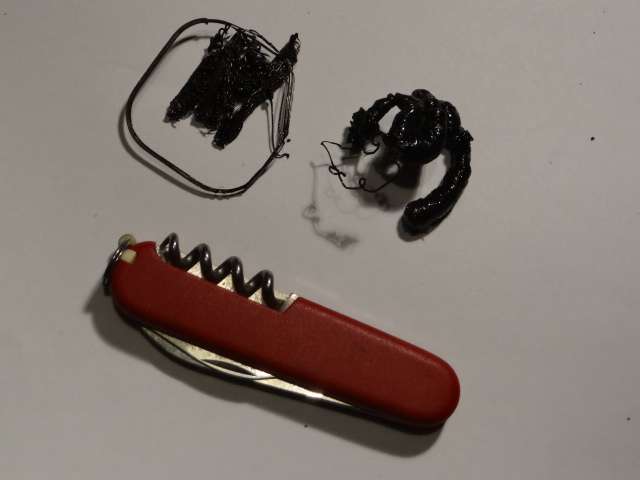
      Horribly derailed yesterday.  I modified the electromagnet holder in Solid Edge and designed a box to hold the LCD Display. When I tried to 3D-print the part that supports the Sharp Opto-sensor, my printer went wrong.  This was “fixed” previous thanks to an earlier thread, but I only cleaned up rather than fit new parts.   Done several perfect big prints, but this one isn’t quite right…

      DSC06961

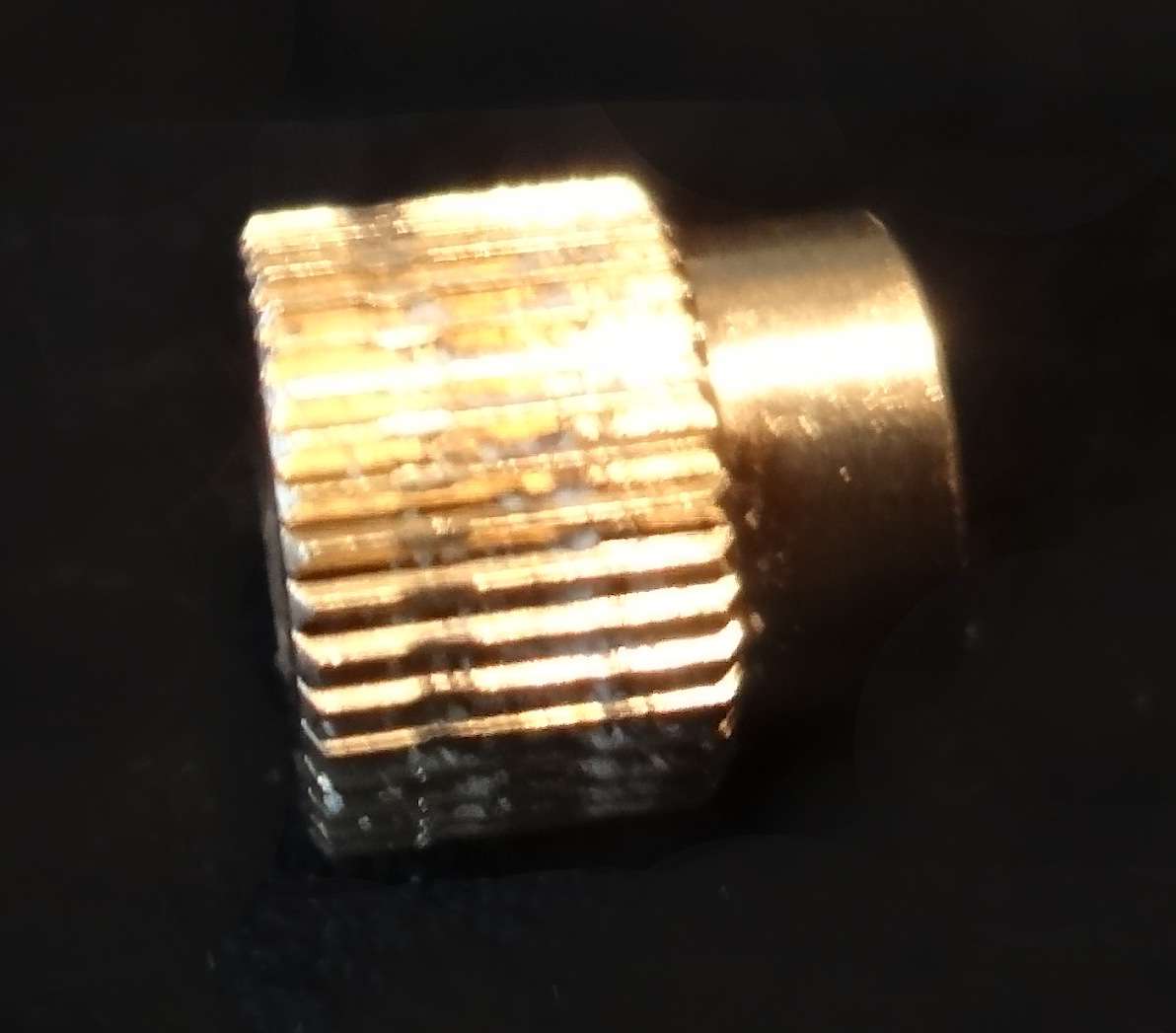
      Problem seems to be the filament drive slipping and friction in the Bowden cable.  Now it’s been removed, the Brass drive is more damaged than I realised, not a good photo, worse in real life:

      DSC06966

      Mid-way through putting new parts on the printer, visitors arrived, so I’m still delayed.

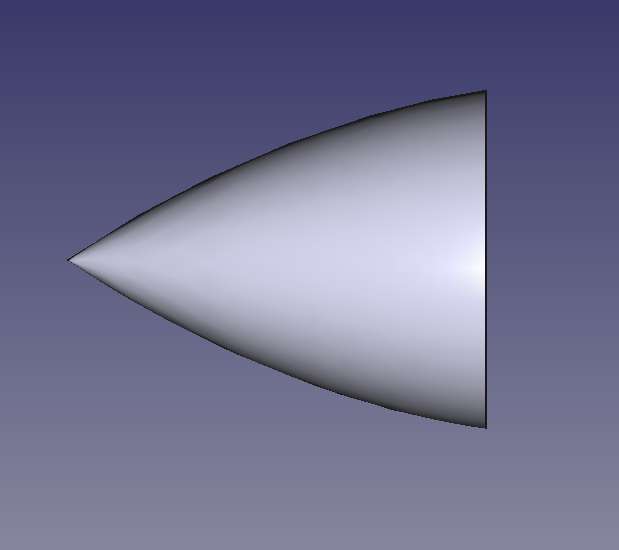
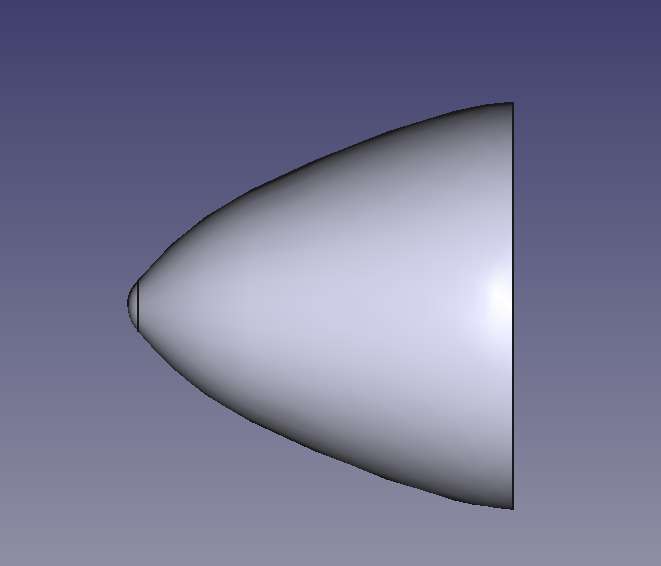
      Back to Bob shapes!  I know Bateman found a rugby football shape worked best in his tests, but as far as I know he didn’t go deep into the problem.  (I’ve only seen summaries, not his full paper.) I believe he compared several shapes and got a good “big picture” result, but, I don’t think he found the best football shape, or defined any parameters. There are many possible curves!  For example, I’ve no idea if a sharp point is better than a rounded one

      pointyBob

      or,

      roundedEnd

      I don’t think copying a Rugby Ball or American Football is good enough.  They’re shaped to suit two rather different flight requirements, they move much faster than a bob, and at normal atmospheric pressure, not, say, 1.5bar.

      The aerodynamics of golf balls are improved by dimpling, which I find counter-intuitive.  Whether or not dimples would help a bob is another open question, which I’d have to test by swinging test bobs inside an clear tube, measuring Q, and watching how each shape affected a smouldering joss-stick.  Lots of work that’s not needed if I can get a vacuum to hold.

      There’s another reason I’m not keen on football bobs, or Lead, Tungsten or Depleted Uranium.  It is that my clock impulses the bob with a side-mounted electromagnet.  A pointy shape gives the magnet less to pull on, and the bob has to be magnetic…   I’m also unsure the small electromagnet I’m using is powerful enough to cold start a big heavy bob.   My clock can’t be started by flicking the pendulum with a finger because it’s sealed inside a tube.

      I’ve been following Duncan Webster’s clock project with considerable interest.  It too has hidden depths, including an Arduino problem, neither of us can explain.

      Thanks for many interesting comments: I’ll respond after I’ve got stuff working.  My take a while, chaos here!  Fix printer first…

      Dave


      #821965
      Michael Gilligan
      Participant
        @michaelgilligan61133
        On 28 October 2025 at 08:15 SillyOldDuffer Said:
        […]  I know Bateman found a rugby football shape worked best in his tests, but as far as I know he didn’t go deep into the problem.  (I’ve only seen summaries, not his full paper.) I believe he compared several shapes and got a good “big picture” result, but, I don’t think he found the best football shape, or defined any parameters. There are many possible curves!  For example, I’ve no idea if a sharp point is better than a rounded oneI don’t think copying a Rugby Ball or American Football is good enough.  […]

        Dave,

        The summary article that I posted yesterday is Bateman’s rebuttal of comments by Aked … If you haven’t read it yet, I suggest you grab a Coffee

        MichaelG.

        .

        Edit: for Aked’s credentials, see here

        https://ahs.contentfiles.net/media/documents/Ronalds_on_Ronalds-wm6.pdf


        #821967
        Michael Gilligan
        Participant
          @michaelgilligan61133
          On Andrew Tinsley Said:

          Just to correct one observation, time is NOT constant! […]

          Which justifies my earlier question …

          The defined Second is not actually a unit of Time

          MichaelG.

          🙂

          #821982
          Robert Atkinson 2
          Participant
            @robertatkinson2

            Unless the swing is very small using the same electromagnet to start and maintain the pendulum seems like a big design compromise. Have you considered a seperate starting mechanism? Maybe a small motor driving a arm or cam that is only operated to start the clock.

            Robert.

            #821986
            Grindstone Cowboy
            Participant
              @grindstonecowboy

              Could you hold the bob to one end of its swing with a magnet on the outside of the pipe, and then remove the magnet to start the swing once everything is sealed up and ready to go?

              Rob

              #821987
              John Haine
              Participant
                @johnhaine32865

                <p style=”text-align: left;”>Clock pendulums operate in an odd regime where the air speed varies between stopped at that TAPs and not very fast at BDC. They also swing through their own wake adding further Eddie’s as they do so. Little point in wind tunnel tests as this doesn’t replicate the normal flow regime, and in water it would be completely different as both density and viscosity are much higher. There’s a recent book by Doug Drumheller, “On The Pendulum” which gives details of a wide range of run down tests in varying temperature and pressure which is well worth consulting.</p>

                #821988
                duncan webster 1
                Participant
                  @duncanwebster1

                  There exist tungsten alloys which are machineable and only very slightly less dense. Densimet is a name in the back of my mind, but I’ll bet not cheap. I think there is a supplier in Warrington, but my google skills are failing this morning


                  #821989
                  Michael Gilligan
                  Participant
                    @michaelgilligan61133
                    On John Haine Said:

                    Clock pendulums operate in an odd regime where the air speed varies between stopped at that TAPs and not very fast at BDC. They also swing through their own wake […]

                    A very good point, John

                    A sphere on a thin filament becomes increasingly obvious as a good pendulum.

                    MichaelG.

                    #821990
                    John Haine
                    Participant
                      @johnhaine32865

                      Just seen Robert’s suggestion of a starting servo. This is what Drumheller used to start his pendulums in a pressure chamber.  IIRC uses r/c servo.

                      On my Arduinome to start with I had a start routine that just lowered the gravity arm on to the pallet once every 2 seconds until the beam break photo gate was triggered.  At the start the pendulum was static and the gravity roller just resting half way down the pallet ramp.  Even though the impulse wasn’t accurately timed to the period this worked fine and shows that you can use the same mechanism for starting and running.

                      However I removed the code as it’s easy to start with a finger!  This wouldn’t work if the case was sealed.

                      #821994
                      duncan webster 1
                      Participant
                        @duncanwebster1

                        Just tilt the whole caboodle to set it going, crude but effective

                        #821995
                        duncan webster 1
                        Participant
                          @duncanwebster1


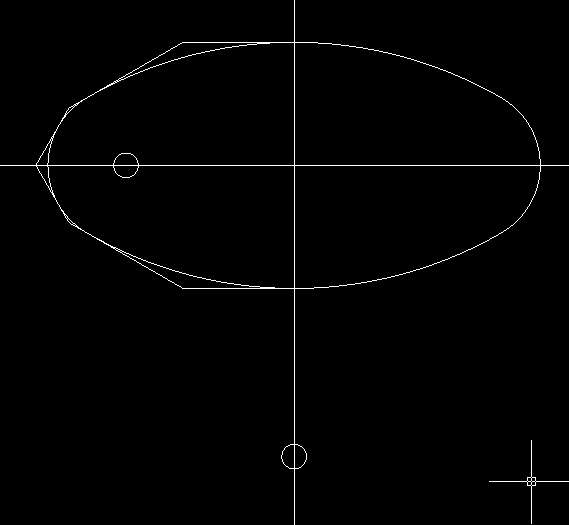
                          An approximation using 120 degree cone, 60 degree truncated cone and a parallel bit you can grip.. You can increase the number of cones as much as you like. Basic ellipse is 2:1 drawn using arcs of circles approximation (which is very close)


                          Screenshot 2025-10-28 115116

                          #822015
                          jaCK Hobson
                          Participant
                            @jackhobson50760

                            No mention of Clock B? Most accurate mechanical clock with a pendulum swinging in free air | Guinness World Records4


                            The enclosed pendulum approach tries to minimise changes in conditions which can impact the swing.

                            Harrison approach was to build in compensations for each. I was a little disappointed they chose to use invar and minimise pendulum length change that way rather than adopt the harrison style compensating pendulum.

                            #822021
                            Michael Gilligan
                            Participant
                              @michaelgilligan61133

                              A quick reality-check suggests that tungsten-carbide powder might be the optimum material … it’s less dense than pure Tungsten, but still usefully heavy and could be poured into a hollow shell.

                              MichaelG.

                              .

                              Refhttps://en.wikipedia.org/wiki/Tungsten_carbide#Powder

                              #822030
                              SillyOldDuffer
                              Moderator
                                @sillyoldduffer
                                On John Haine Said:

                                On the bob shape question, the actual shape within reason doesn’t seem to make much difference to Q though the optimum seems to be an ellipsis.  Joe Noci uses an ellipsoidal bob.  Worth looking at Chris Raynerd’s thread on his Tekippe clock which uses a length of hex brass bar at right angles to the rod with a blunt point at each end.

                                Super busy today, but my 3D printer seems OK now, fingers crossed.  Just restarted a print after failing to notice the redesign had overhangs!

                                Had time ask to grok (AI), which says the answer is a sphere for a reason I hadn’t thought of!  It said:

                                The best shape for a pendulum bob is a sphere.

                                Why a Sphere?

                                Symmetry and Uniform Density Distribution A sphere has perfect radial symmetry, so its center of mass is exactly at the geometric center. This ensures the pendulum’s period depends only on the length to the center of mass (not on orientation or swing direction), making it ideal for precision timing (e.g., in clocks).

                                Minimal Air Resistance Variation A sphere has the lowest drag coefficient variation with angle. As the bob swings, air resistance affects the motion least consistently in a sphere compared to elongated or irregular shapes (which experience torque or varying drag).

                                Ease of Manufacturing and Reproducibility Spheres are easy to machine with high precision (e.g., ball bearings), ensuring consistent mass and dimensions—critical for scientific pendulums.

                                Confirms that teardrops have the lowest air resistance as we all thought, but puts them in second place because the centre of mass changes during the swing.

                                Sounds right to me.

                                Dave


                                #822032
                                duncan webster 1
                                Participant
                                  @duncanwebster1
                                  On SillyOldDuffer Said:

                                  ……..because the centre of mass changes during the swing.

                                  Sounds right to me.

                                  Dave


                                  Eh?

                                  To my mind the advantage of sphere is that it doesn’t have to have its axis aligned with the direction of travel

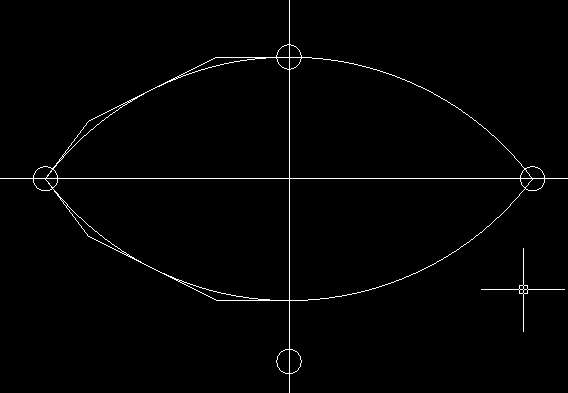
                                  Heres a pointy one  from cones

                                  Screenshot 2025-10-28 162923

                                  #822033
                                  SillyOldDuffer
                                  Moderator
                                    @sillyoldduffer
                                    On jaCK Hobson Said:

                                    No mention of Clock B? …

                                    Good point, I’ll add it to the table.

                                    I’ll be very happy if I can get anywhere near Clock B accuracy.  It’s said to be the most accurate clock using a pendulum in free-air.  About 0.0063 seconds per day, which is excellent.  Not the best pendulum clock though: Shortt is 3x better.

                                    A very interesting clock.   Harrison didn’t finish it, and nor did Burgess in the 1980’s, though he moved it on considerably.   A version built by Charles Frodisham & Co first ran in 2009.  They used materials not available to Harrison, so it’s probably more accurate than he could have built.  Nonetheless, the clock shows Harrison’s ideas were right in principle.

                                    Dave

                                    #822044
                                    SillyOldDuffer
                                    Moderator
                                      @sillyoldduffer
                                      On Robert Atkinson 2 Said:

                                      Unless the swing is very small using the same electromagnet to start and maintain the pendulum seems like a big design compromise. Have you considered a seperate starting mechanism? Maybe a small motor driving a arm or cam that is only operated to start the clock.

                                      Robert.

                                      My implementation doesn’t need a servo, gravity arm, extra magnet, or tilting!  Instead, I pulse the bob with a square wave at resonant frequency. Like the Wibbly Wobbly Bridge, only done on purpose!

                                      The electromagnet only has to move the bob slightly to get a lock after which amplitude builds.   At about 4 degrees, the microcontroller switches to run mode, and thereafter only provides enough energy to keep the amplitude steady.

                                      Resonant starting was reliable in the previous version, and I have high hopes this issue will be fixed by bringing the electromagnet closer to the bob.  (Not as originally distanced at the moment because I didn’t notice changing the sensor also moved the electromagnet further away from the bob.  About 6mm.)   Pesky details!

                                      By the way, I’m fairly sure dipole magnets lose force with the cube of distance, or worse; might be wrong!  Reason is the N and S poles cancel partially, which the theoretical formula doesn’t allow for.  It describes perfect magnets, and real magnets aren’t.

                                      Dave


                                      #822080
                                      John Haine
                                      Participant
                                        @johnhaine32865

                                        The force between short bar magnets at distances large compared with length, for which the magnet is effectively a dipole does vary as inverse cube.

                                        #822081
                                        SillyOldDuffer
                                        Moderator
                                          @sillyoldduffer

                                          Massive improvement after moving the electromagnet closer to the bob.

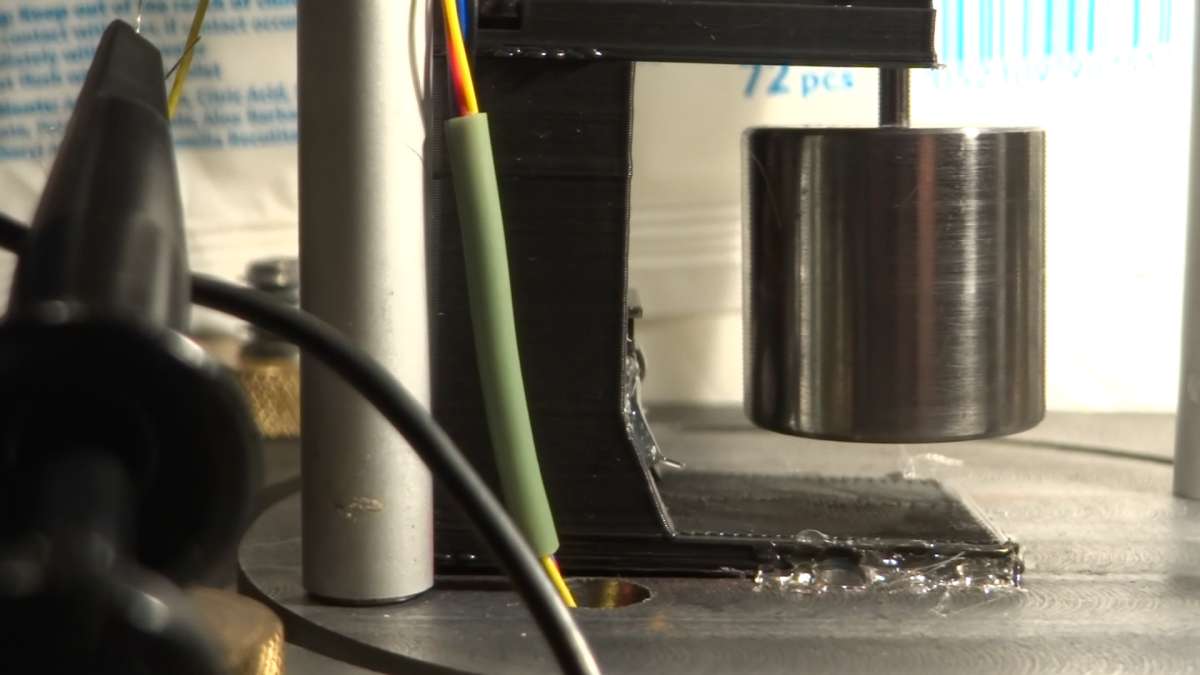
                                          Previously the clock started unreliably when set to deliver one hundred 450mS beats, now the bob crashes hard into the electromagnet when the starter is set to only six 4mS beats!

                                          The run pulse is much smaller too, previously staggered along on 80mS.  Now the run value is somewhere between 1.62mS and 1.8mS.

                                          Nothing is ever easy!

                                          1. I want to adjust the impulse so the bob gets up close and personal with the electromagnet without quite colliding.  Gap about a millimetre.   Mild collisions can just about be heard as slight ticks, but better to see.  So I took a video and went through the frames.

                                          Near miss:

                                          bobMagnet

                                          Other side:

                                          bobAntimag

                                          2.  Now realise should have made the magnet drive and sensor output available as test pins on the front panel.  An oscilloscope is handy for setting up with the lid on.  Also, a multicolour LED would show more status info.

                                          3.  A LED flashes on the front panel when the clock is ticking.  Worked perfectly before, now flashes erratically even the the oscilloscope shows the impulses are correct.  Software bug.

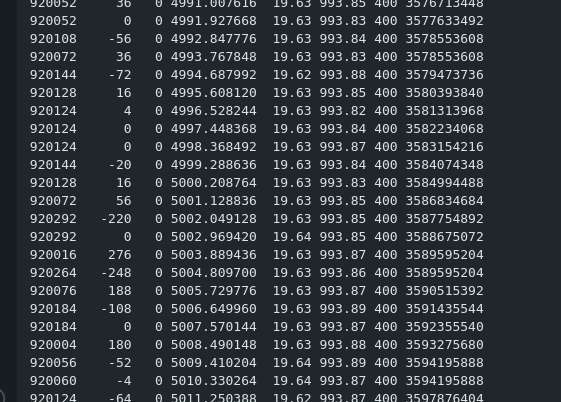
                                          4.  The Arduino is programmed to log results to a PC and to accept commands; I can change the impulse.  The log looks like this:

                                          clockLog

                                          First column is the period in microseconds.  Second column is the time difference between beats.  /  Third column is GPS HHMMSS, zero because the module isn’t plugged in.  For the same reason col 4 is counting plain seconds rather than UTC – the clock isn’t set yet.  When GPS is plugged in, I can command the microcontroller to synchronise within microseconds of UTC, way more accurate than setting hands!  Cols 5 and 6 are temperature and pressure, needed for compensation,  Col 7 is the impulse value; the number is a counter timer setting, where 400 is 1.62mS,.  The last col is the difference between clock and GPS time, not working because GPS isn’t connected.

                                          Ideally the beat difference should always be zero. Therefore next job is to write a PC program that reads the beat time difference value and tunes it to near zero by sending the clock ‘changing impulse’ commands the optimum is found. Beat difference can also be used to govern the clock set to beat several times between impulses.  Rising differences mean the bob is losing amplitude.

                                          Better accuracy, I hope, from a clock that can optimise it’s escapement and – potentially – stabilise amplitude on the fly.  I don’t believe either is possible mechanically.

                                          Diito temperature and pressure compensation; done by calculation based on a statistical analysis, not mechanically. Seems to have advantages, but the idea may be unsound!   This the next experiment.

                                          5. Have to sort out a vacuum valve.  Unless someone has a better idea, I’ll try a Presta bicycle valve connected backwards.  No ides how to connect it to the plastic 4mm evacuation pipe – probably have to make an adaptor.  Then seal the pipe and the access hole.  Liquid gasket and hot glue maybe.   Whatever, I’m sure it will leak!

                                          Dave


                                          #822084
                                          Michael Gilligan
                                          Participant
                                            @michaelgilligan61133

                                            Excellent progress, Dave … I remain in awe of of what you are doing !

                                            MichaelG.

                                            #822085
                                            Michael Gilligan
                                            Participant
                                              @michaelgilligan61133

                                              https://www.pfeiffer-vacuum.com/uk/en/products/vacuum-valves/


                                              Or something broadly similar for  a couple of quid from Ali

                                              … Mmm


                                              MichaelG.

                                              #822124
                                              SillyOldDuffer
                                              Moderator
                                                @sillyoldduffer
                                                On Michael Gilligan Said:

                                                https://www.pfeiffer-vacuum.com/uk/en/products/vacuum-valves/


                                                Or something broadly similar for  a couple of quid from Ali

                                                … Mmm


                                                MichaelG.

                                                Good idea – why didn’t I think of it!

                                                Quick report on the clock:  ran all night with a 1.8mS impulse, and the beat difference became less erratic.   Also restarted no problem when tested again this morning.  I think the distance between bob and electromagnet and the impulse value are about right, at least in terms of reliability.  Accuracy needs more work.

                                                Dave

                                                #822172
                                                Martin Kyte
                                                Participant
                                                  @martinkyte99762

                                                  If you are altering beat difference measures by your electronics you are synchronising the pendulum to your electronic time base so surely the clock becomes a slave not a master. You can really only use the electronics to measure or to sense and then trigger the impulse beat by beat. Unless of course I misunderstood your intentions.

                                                  #822175
                                                  Martin Kyte
                                                  Participant
                                                    @martinkyte99762

                                                    If anything maybe you should be using your free pendulum to correct your electronic time base. If you had as good a pendulum as the Shortt then the electronics to regulate the slave should react faster than the original interrupter system. I do appreciate what you have done and as far as the data collection is concerned it is a tour de force. I just worry about the quality of your pendulum. However you have made significant changes to the first effort. Incidentally the Shortt clocks I have seen don’t get anywhere near a ‘good’ vacuum. The intention is just to eliminate barometric variation. I don’t think they were particularly bothered with air resistance. You may however consider temperature regulation which would be easy to do.

                                                    Best regards Martin

                                                    keep up the good work and don’t consider my commitments as criticism.

                                                    #822177
                                                    blowlamp
                                                    Participant
                                                      @blowlamp

                                                      Instead of trying to impulse the pendulum directly, why don’t you do what Shortt did and use a gravity lever? It’s a simple, predictable, reliable and tuneable option that’s been proven through time.

                                                      All you’d have to do then is sort everything else out. 😉


                                                      Martin.

                                                    Viewing 25 posts - 26 through 50 (of 283 total)
                                                    • Please log in to reply to this topic. Registering is free and easy using the links on the menu at the top of this page.

                                                    Latest Replies

                                                    Viewing 25 topics - 1 through 25 (of 25 total)
                                                    Viewing 25 topics - 1 through 25 (of 25 total)

                                                    View full reply list.