Chester Super Lux / RF45 Clone Modifications Part-2

Chester Super Lux / RF45 Clone Modifications Part-2

Home Forums Manual machine tools Chester Super Lux / RF45 Clone Modifications Part-2

Viewing 25 posts - 1 through 25 (of 35 total)
  • Author
    Posts
  • #816007
    Taf_Pembs
    Participant
      @taf_pembs

      Hello all..!

      I’m starting this as a a follow up to my original thread regarding the Chester Super Lux, there seemed to be a lot of folk following that so I thought I would write this to show what happened next.

      The original thread is Here – Chester Super Lux Advice.

      I explained at the end of the original thread that I still had to fit the DRO and I was going to make a decent base for the thing.

      I had my spinal surgery on Tuesday which seems to have been extremely successful in that I now have 2 working and relatively pain free legs instead of 1 and a very painful thing that dangled from my left hip that didn’t do much at all so I’ve banned myself from the workshop (and pretty much anything!) for a bit to give everything a chance to heal (actually doing as I’m told for once!)

      Unfortunately for you lot it means I now have plenty of time to kill to do this update 😁. I know it has very little to do with model engineering but it does centre around a tool that a fair few people seem to have in order to facilitate their hobby / passion and it has become something of a serious experiment for me.

      Anyway, here goes… and please remember, this is all totally pointless!!!

      No one in their right mind would do this, they would get something that was capable in the first place but there seems to be quite a lot round the internet of people with these issues so I thought I’d try to see what it takes to resolve them to some extent.

      🍻

      #816018
      Taf_Pembs
      Participant
        @taf_pembs

        As I said in the last post of the original thread, all was good until I tried to use my insert tooling, primarily the 5 flute 50mm shell mill (from Arc Euro and is a decent enough cutter).

        The max depth of cut I could get away with cleanly in mild steel was just shy of 0.2mm and this had to be run at max rpm (aprox 1600). Anything slower or any deeper resulted in the most horrific noises from the gear head, incredibly poor surface finish – more like the Preseli mountains than milled steel and obviously very poor insert life and the cutter speed was obviously varying, it was clearly visible – gear train chatter I presume (unless the motor was ‘slipping’!).

        Running regular end mills was no problem and I’d done a fair bit of chewing metal with them, all sorts of sizes from 4mm to 12mm, roughing, corner radius, ball end etc all ran beautifully and the machine was ruining lovely.

        The problem with column mills being the rigidity of the column and the very large gear head weight hanging off the front of them.

        The way the gear head fixes to the column also creates problems as depending on how tight you nib the gib on the column, it will give a different (all be it very small) angle in the Y axis of the cutter face. I marked the gib locks to so as to always nip them to the same point as a very slight change in gib pressure will result in a line you can feel (either cutting more at the back edge of the cutter of less) when using an end mill to cover a flat face on the work piece. Not much I can do about that other than keep locking the gib to the same reference marks.

        Column rigidity – how bad? Well, with an indicator mounted in the spindle and zeroed on the table, all gibs locked, it didn’t take much pressure at all on the top of the column pushing backwards to move the indicator 0.1mm. Tool push off from the shell mill was obviously bouncing the whole thing significantly.

        Was it my fault in the way I used the SKC Resin Machine bonding Epoxy to mount and tram the column?

        Was there something else, something loose?

        Time to get measuring.

        #816019
        Taf_Pembs
        Participant
          @taf_pembs

          I forgot to add, I had already scrapped the gib wrecking ball bearings that sit between the locking screw and the gib and replaced with these..


          Gib_Bush_1


          Anyway where was I..

          Large (12″) angle plate on the table and an indicator mount on the top edge of that gave me the reach to measure the deflection near toe top of the column, so I’m measuring the column movement not any movement between gear head and column etc.

          1 hand pressure gave 0.25mm deflection. Oh dear. But was it the column to base joint, column rigidity itself or what.

          I measured again almost at the bottom on the column and this gave significant movement, almost 0.1mm. This suggested it was the joint more than anything.

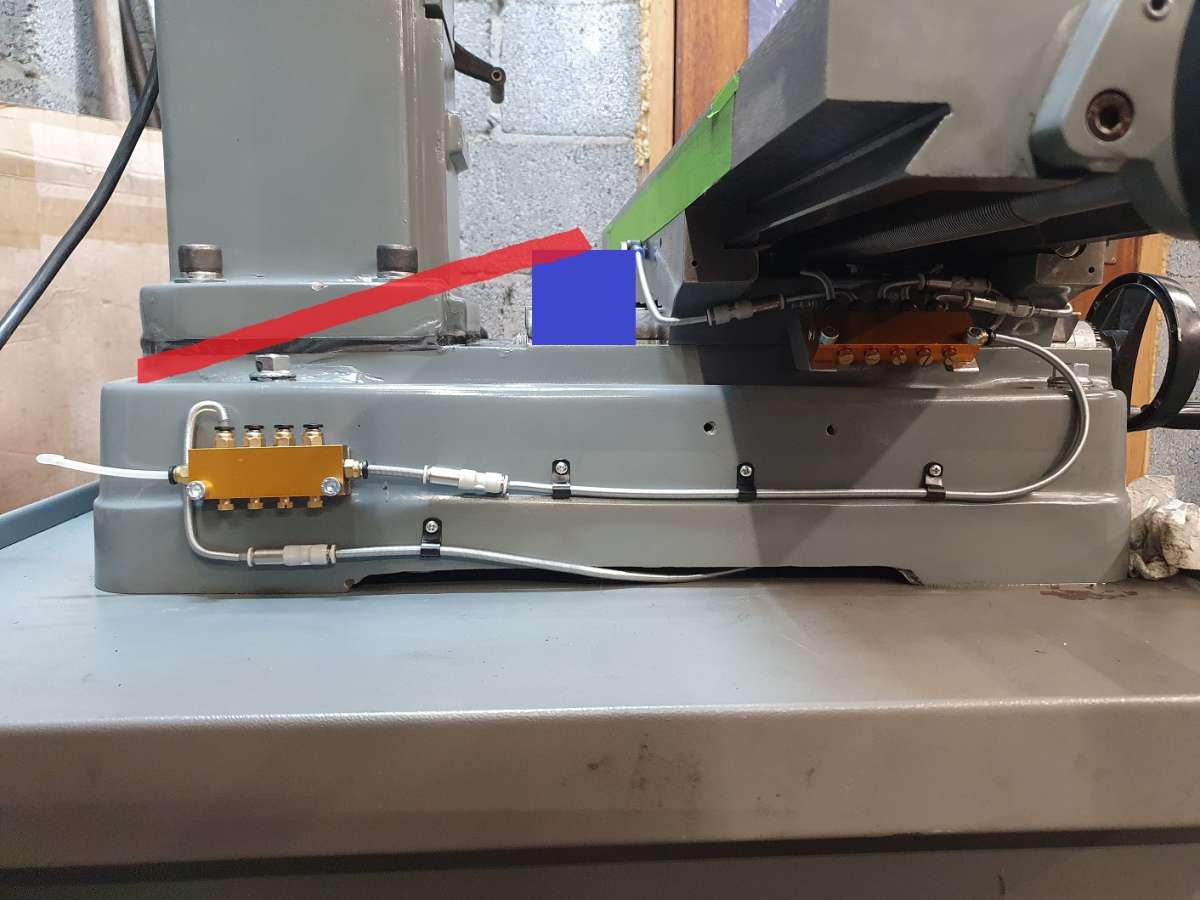
          Looking at it the next morning I thought I’d take another measurement, across the base itself. So indicator mount on the Y slideway on the base indicating onto the rear upper surface of the base so missing the column all together.

          I didn’t get a pic but something like this –

          Flex_Test_2

          To my surprise I got aprox 0.8mm ! A nice rigid base then.

          These measurements are not much but if I can do this just by leaning on the column  bit then no wonder a cutter as such I’m trying is going to bounce it significantly

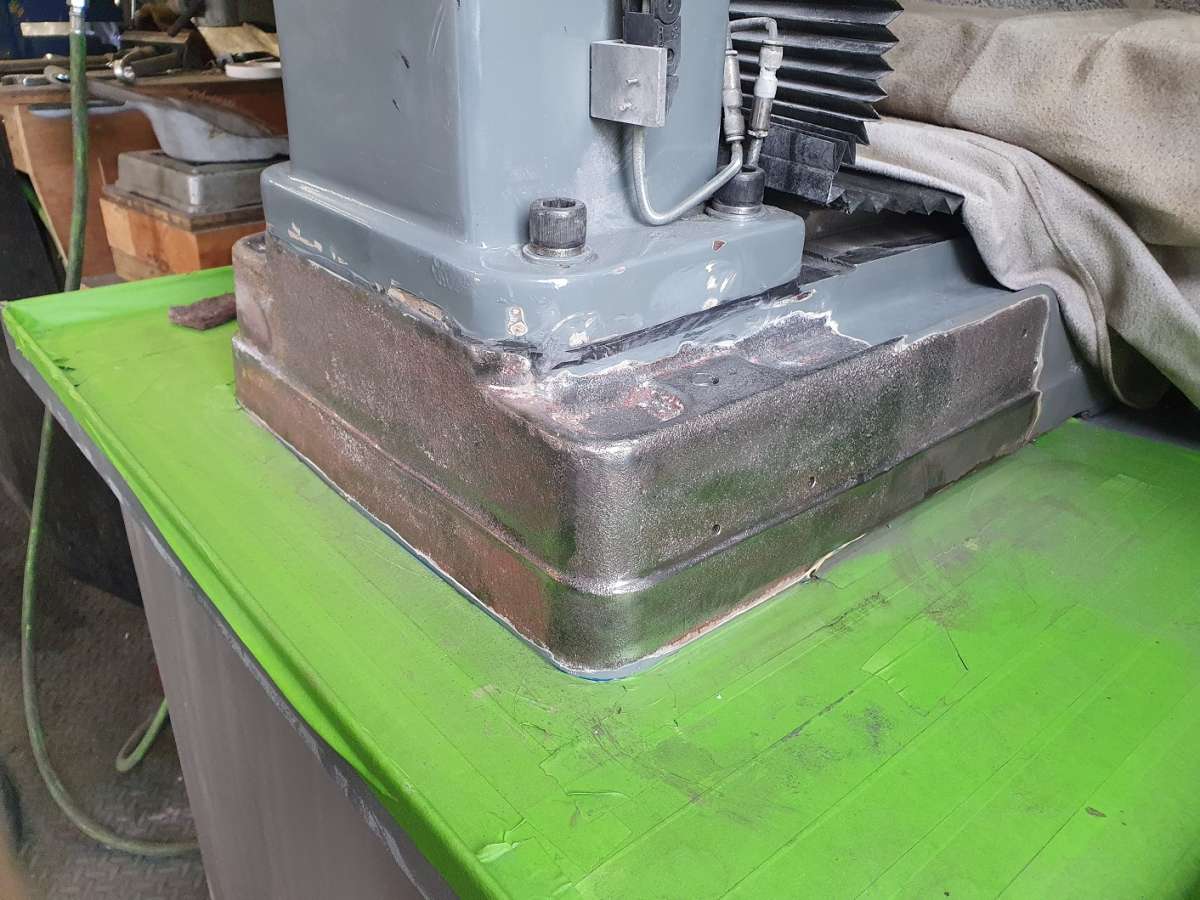
          Ps, the over flow of the SKC resin makes that joint look huge but it is only about 2.5mm which is minimum recommended for the resin – I needed much better containment for the injection pressure!

          More of a fundamental problem than just a joint face.

          I am aware from lots of hunting round the internet that the castings for these types of mills varies significantly in the amount of brace webbing etc and the thickness of the castings so there are reasonable ones and .. err .. ones like this.

          Time for a think..

          #816031
          Michael Gilligan
          Participant
            @michaelgilligan61133
            On Taf_Pembs Said:

            […]  To my surprise I got aprox 0.8mm ! A nice rigid base then.

            These measurements are not much but if I can do this just by leaning on the column  bit then no wonder a cutter as such I’m trying is going to bounce it significantly

            Ps, the over flow of the SKC resin makes that joint look huge but it is only about 2.5mm which is minimum recommended for the resin – I needed much better containment for the injection pressure!

            More of a fundamental problem than just a joint face.

            I am aware from lots of hunting round the internet that the castings for these types of mills varies significantly in the amount of brace webbing etc and the thickness of the castings so there are reasonable ones and .. err .. ones like this.

            Time for a think..

            I know this doesn’t actually help … but I have to say:

            At a first wild approximation I reckon you want 0.008mm not 0.8

            … In the absence of a better casting, you might try filling the base with Epoxy-Granite “concrete”

            Research was done at Cranfield … I will see if I can find a link.

            MichaelG.


            #816033
            Michael Gilligan
            Participant
              @michaelgilligan61133

              Some ‘leads’ here:

              https://www.sciencedirect.com/science/article/abs/pii/0141635979901041

              MichaelG.

              .

              Edit: __ The author of this recent paper has kindly put it on ResearchGate … so I’ve added it to my Gallery, for convenient access:

              https://www.model-engineer.co.uk/wp-content/uploads/sites/4/mediapress/members/79913/678121/14.ReviewPaper3.pdf

              #816036
              Taf_Pembs
              Participant
                @taf_pembs

                Thanks Michael, I have seen a few things round the internet regarding Epoxy Granite filling, there is a few bits on YouTube too – it did cross my mind but I really don’t have the lifting gear to do it.

                I’ve not seen that article before so thanks for that, some good info there however I went a slightly different route (I’ve already done it, and using my self imposed exile from the workshop etc to put it all together and write it up here) but that’s not to say it wont happen! 😁🍻

                #816039
                Michael Gilligan
                Participant
                  @michaelgilligan61133

                  Sorry for the delay … link to the 50page paper in my Gallery is now active

                  MichaelG.

                  #816047
                  Taf_Pembs
                  Participant
                    @taf_pembs

                    Cheers Michael, appreciate that!

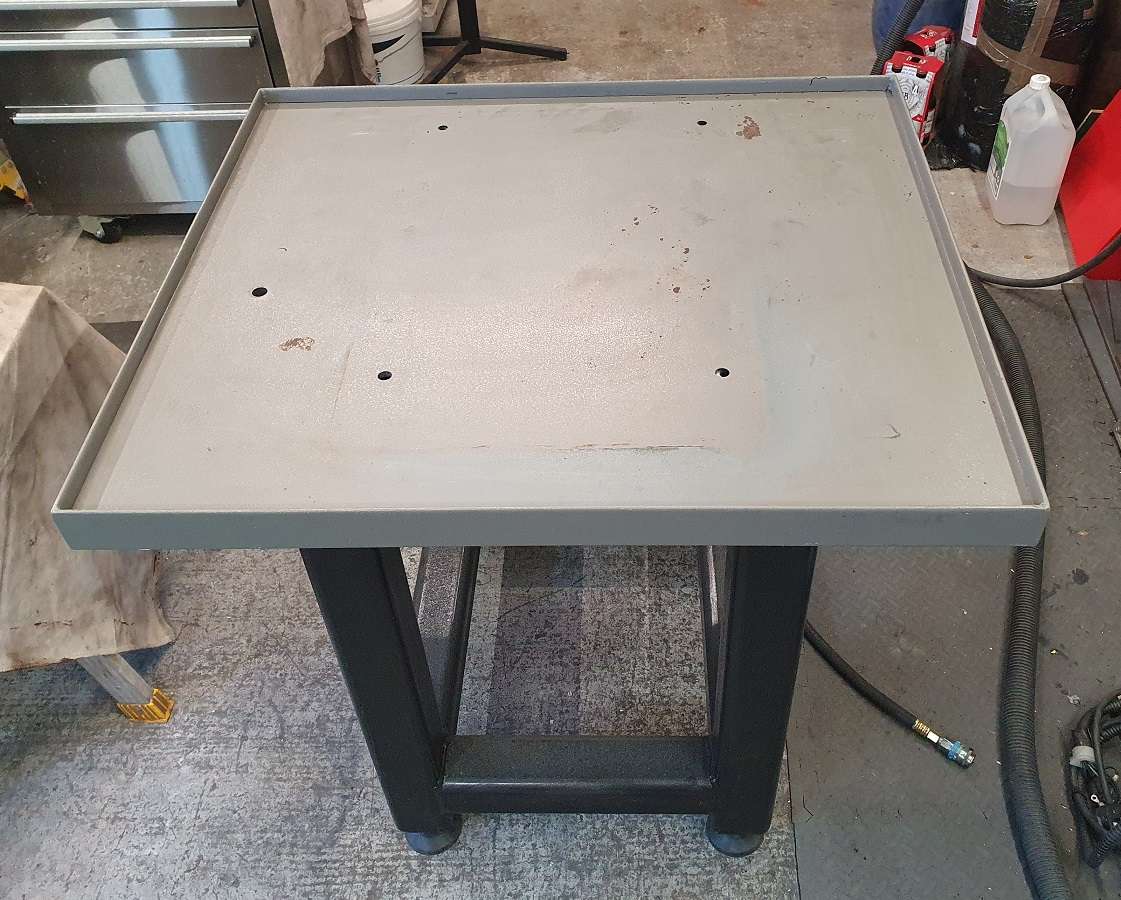
                    Anyway.. first things first was to address the wobbly tin box that was the base.

                    I wanted to make it so the original base panels would fit round it and keep it looking half tidy.

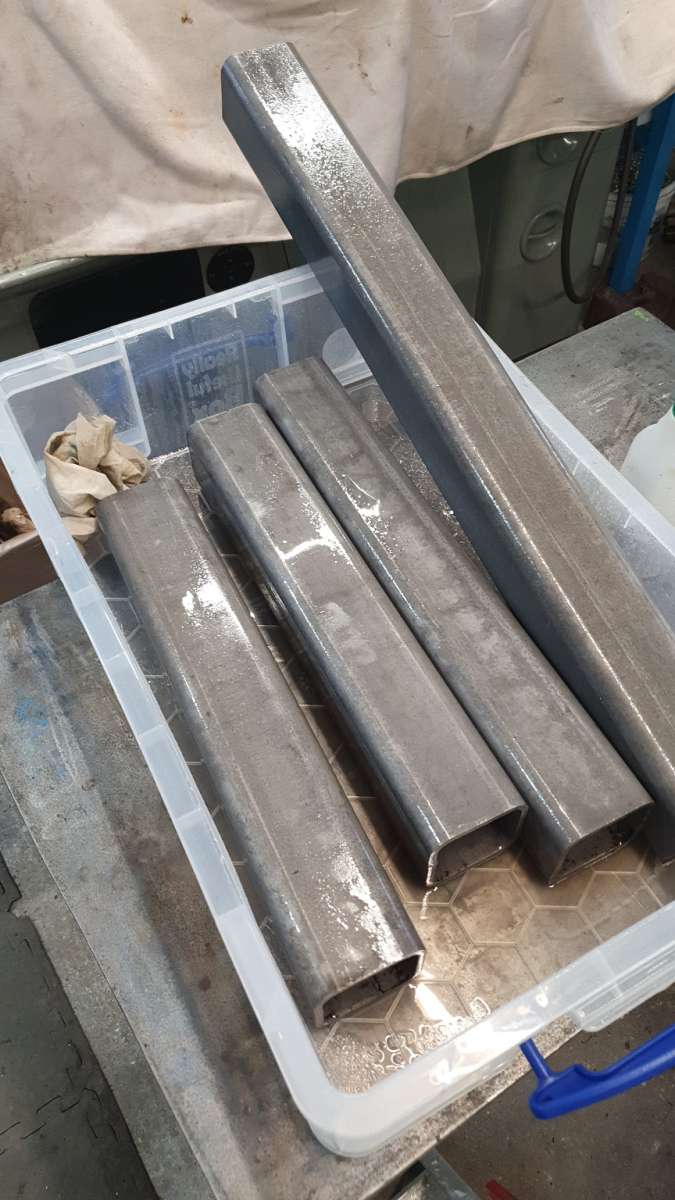
                    I picked up some 80mm x 6mm box from a local firm from their ‘bone yard’ for the grand cost of putting a few pints behind the bar at the local for the boss. It was proper rusty but as time is the one commodity I have while waiting to get myself fixed so once cut roughly to length it had 24 hours of so in some triple strength vinegar (Patio and path cleaner I believe it’s sold as) which removed all the rust and then I gave it a wash with some phosphoric acid to prevent further rusting over the time it would take me to finish it –

                    Base_Steel_Prep_2

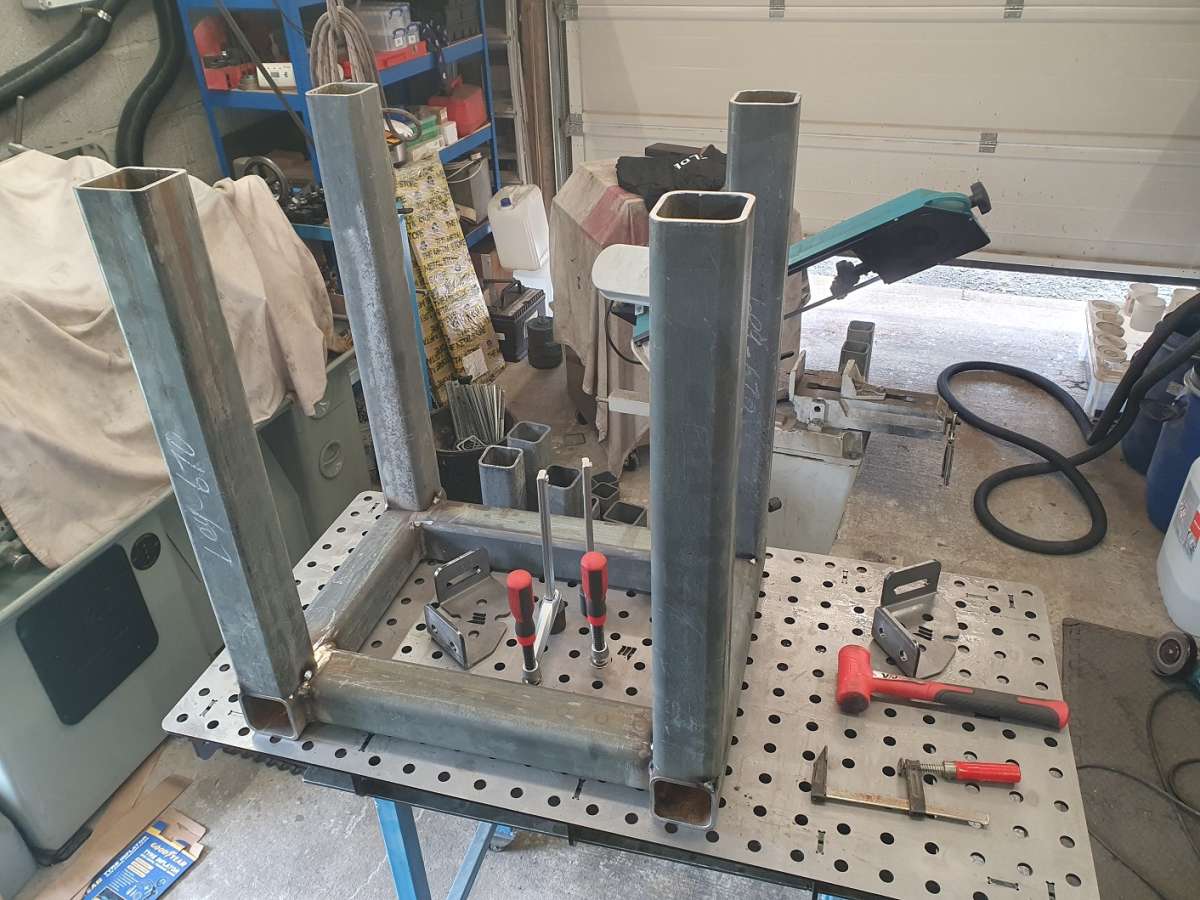
                    Then began tacking it together.

                    Back in the summer I picked up a 1200 x 600 hobby fixture table to replace my roughly knocked up welding table from Mac Industries (what a proper helpful bunch, cant recommend them enough!) and what a difference that makes putting stuff together, it stays where you put it even after welding! Absolutely brilliant!

                    Here is the beginnings of it

                    Base_Prep_2


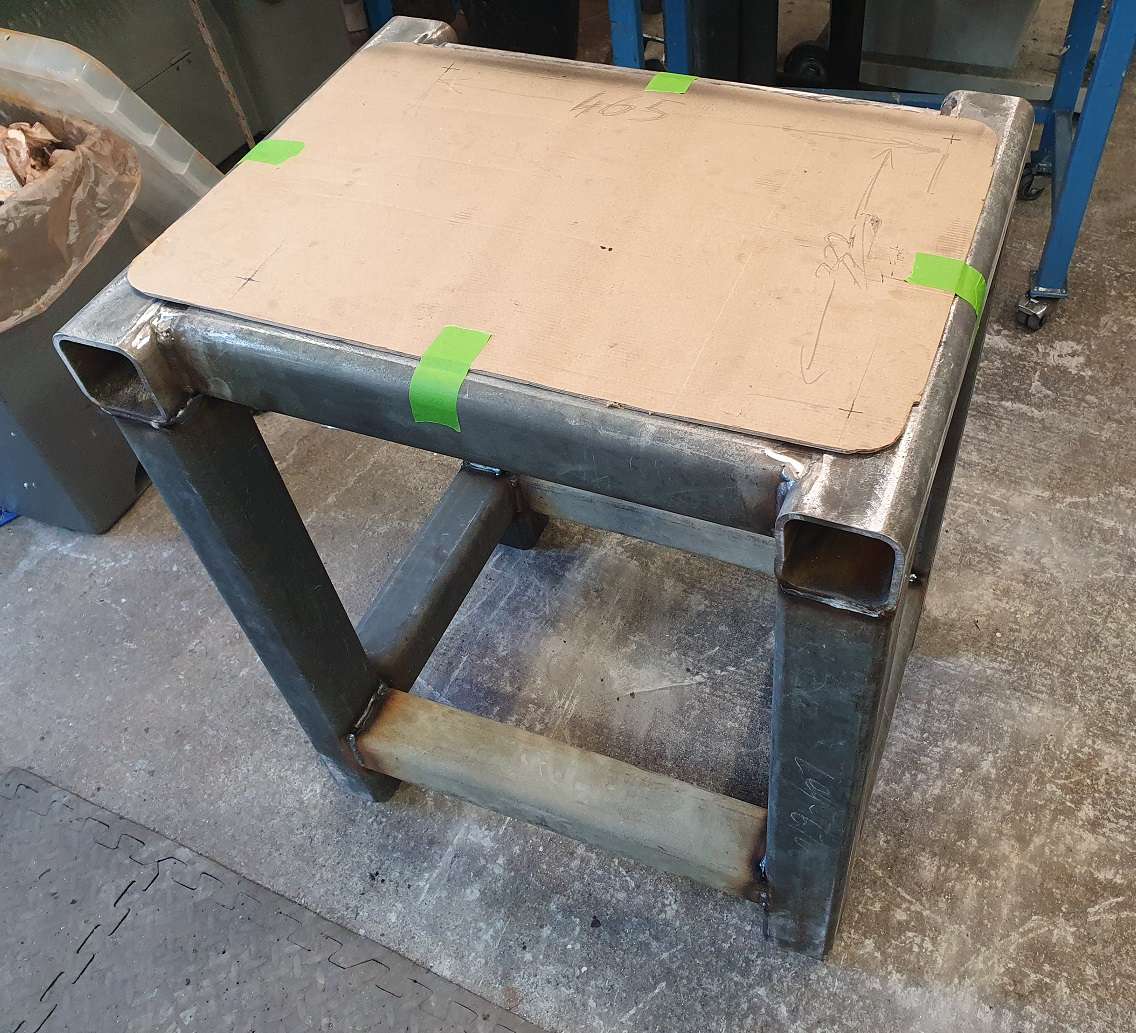
                    It eventually turned into this, here with the template on for drilling the holes to mount the mill.

                    Base_Prep_3

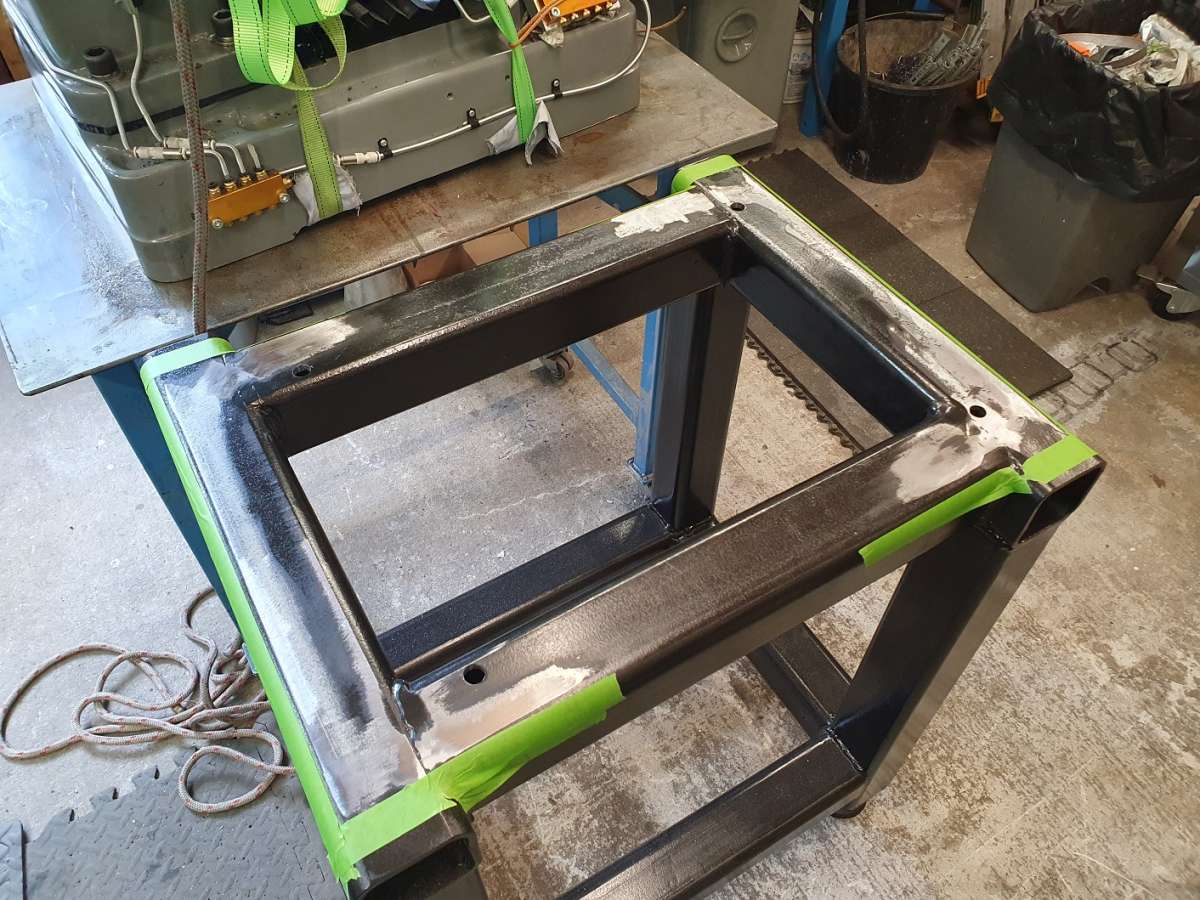
                    That phosphoric acid wash seems to create some lovely soot marks, if I wire wheeled the metal clean it didn’t happen but as it was going to be cleaned up tidy prior to painting I gave up bothering with it. The curved corners of the metal meant each weld was essentially a root with 2 further passes over the top so I think it mught be strong enough 😁

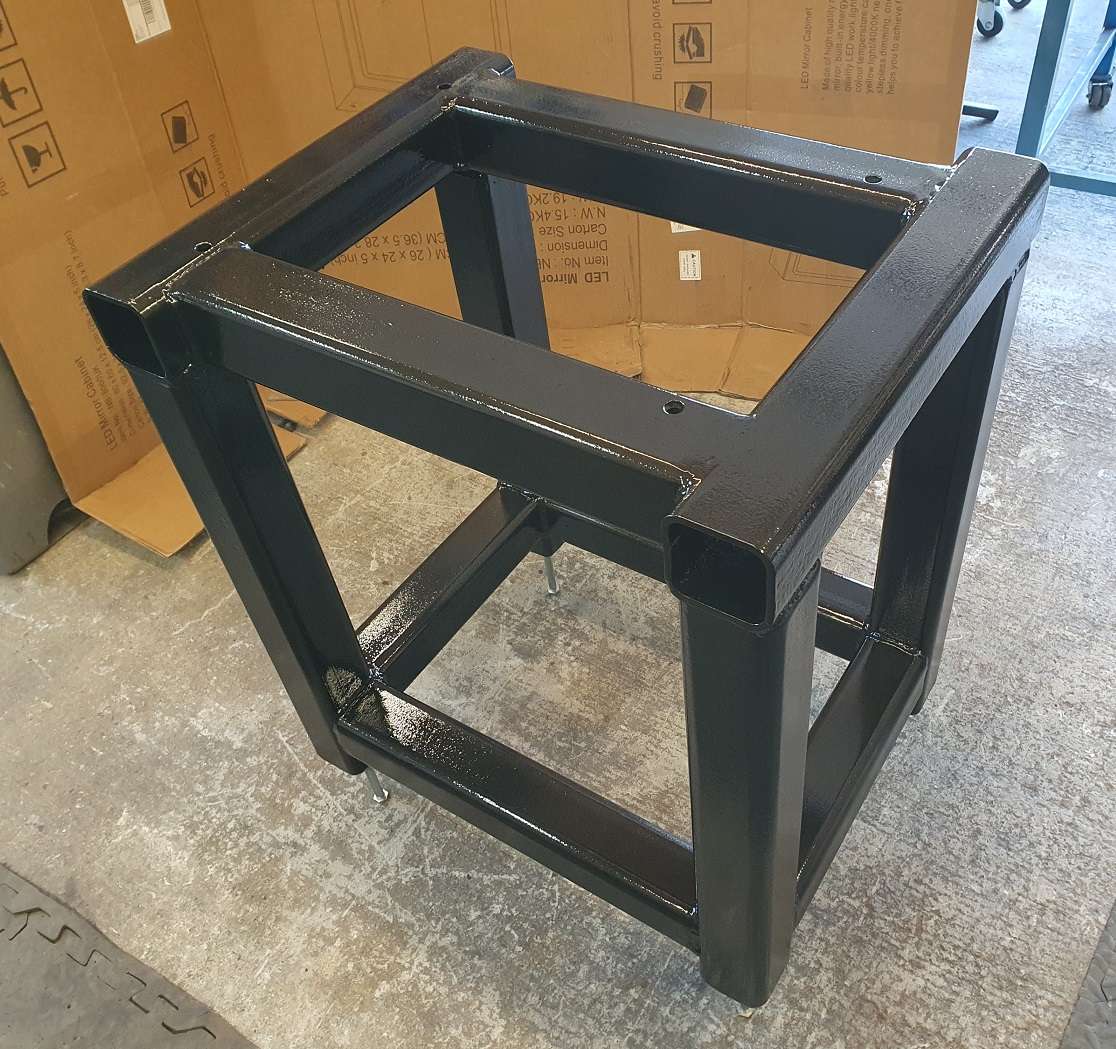
                    And the finished stand (which weighed far more than I could move so dam good job I have that overhead hoist!)

                    Base_Prep_4

                    I welded plates with holes and captive nuts over the bottom of the legs to add decent adjustable feet (you can just see the standoff bolts in there to raises it up for painting.

                    #816050
                    Michael Gilligan
                    Participant
                      @michaelgilligan61133

                      Nice job !!

                      MichaelG.

                      #816051
                      Taf_Pembs
                      Participant
                        @taf_pembs

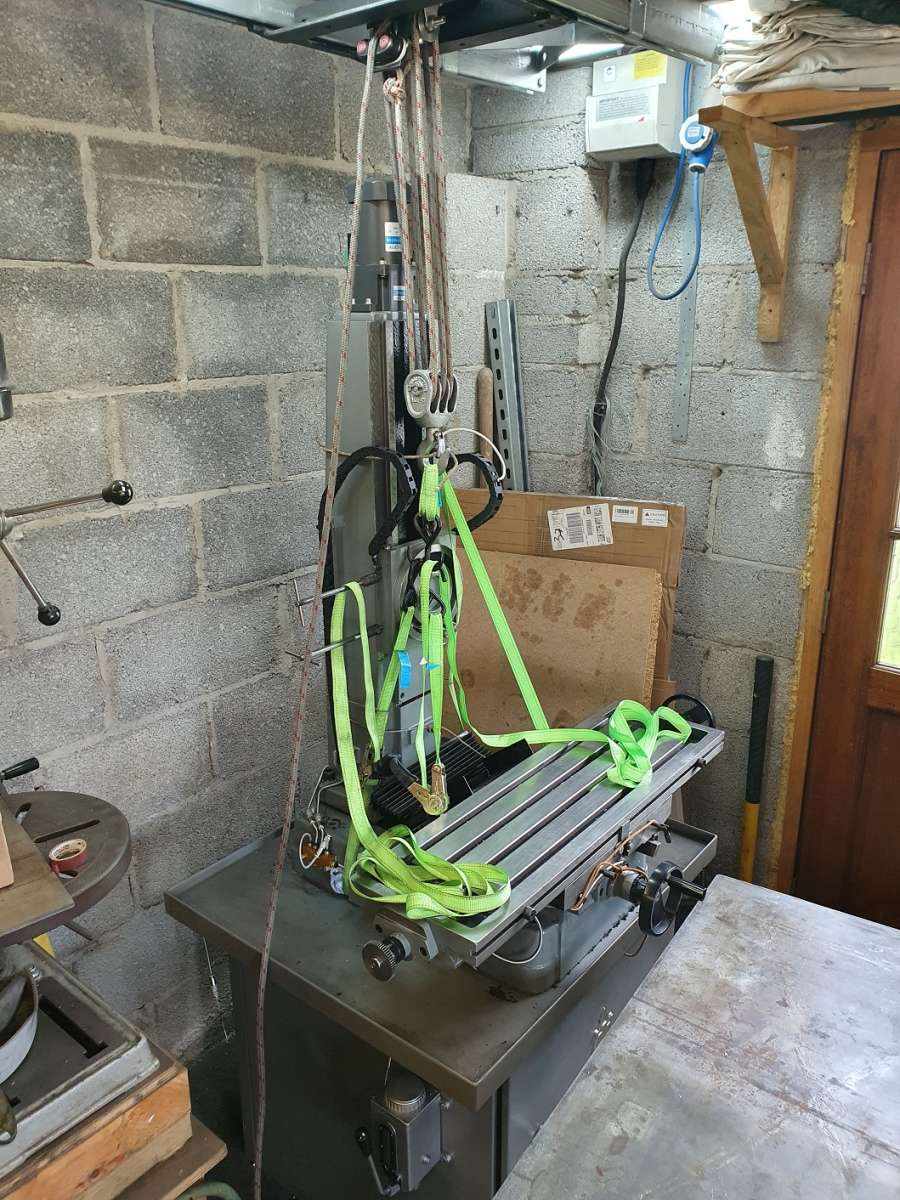
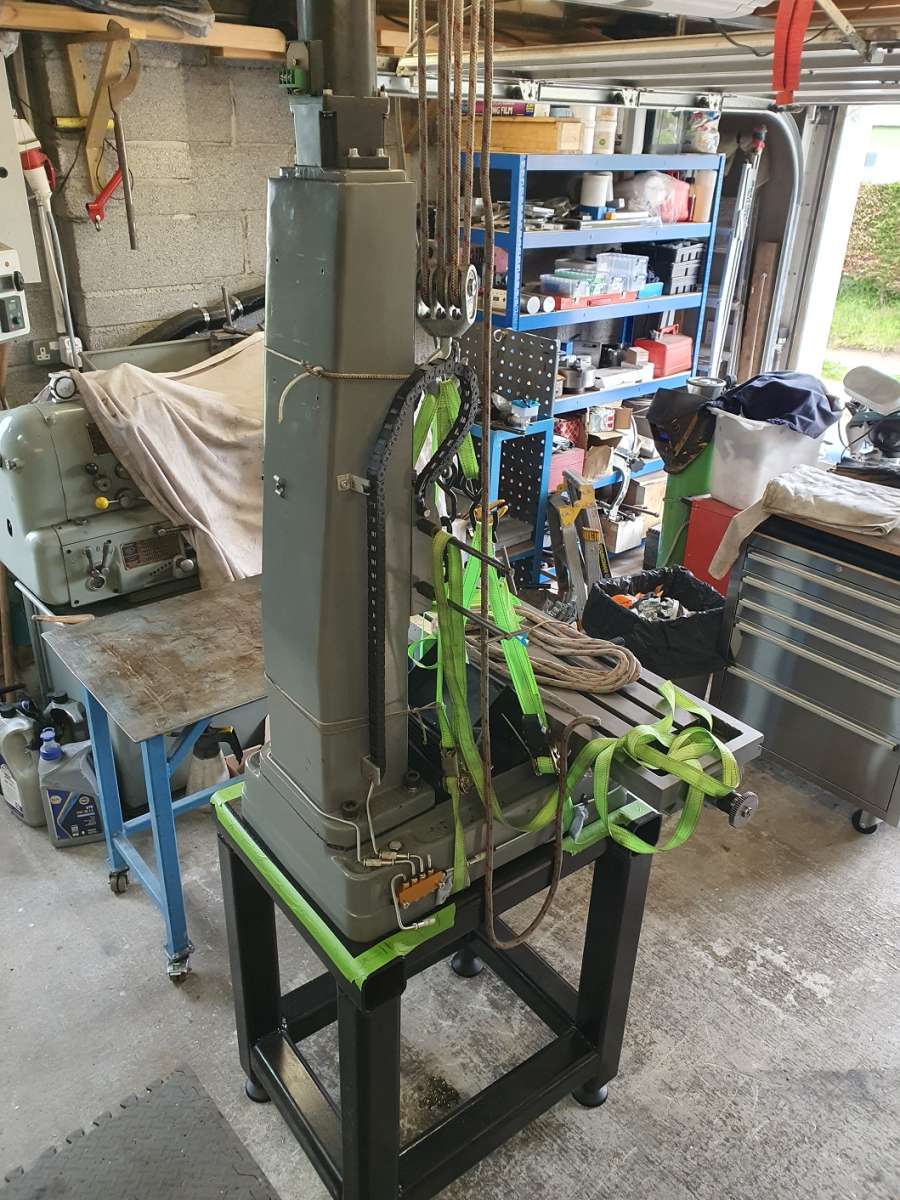
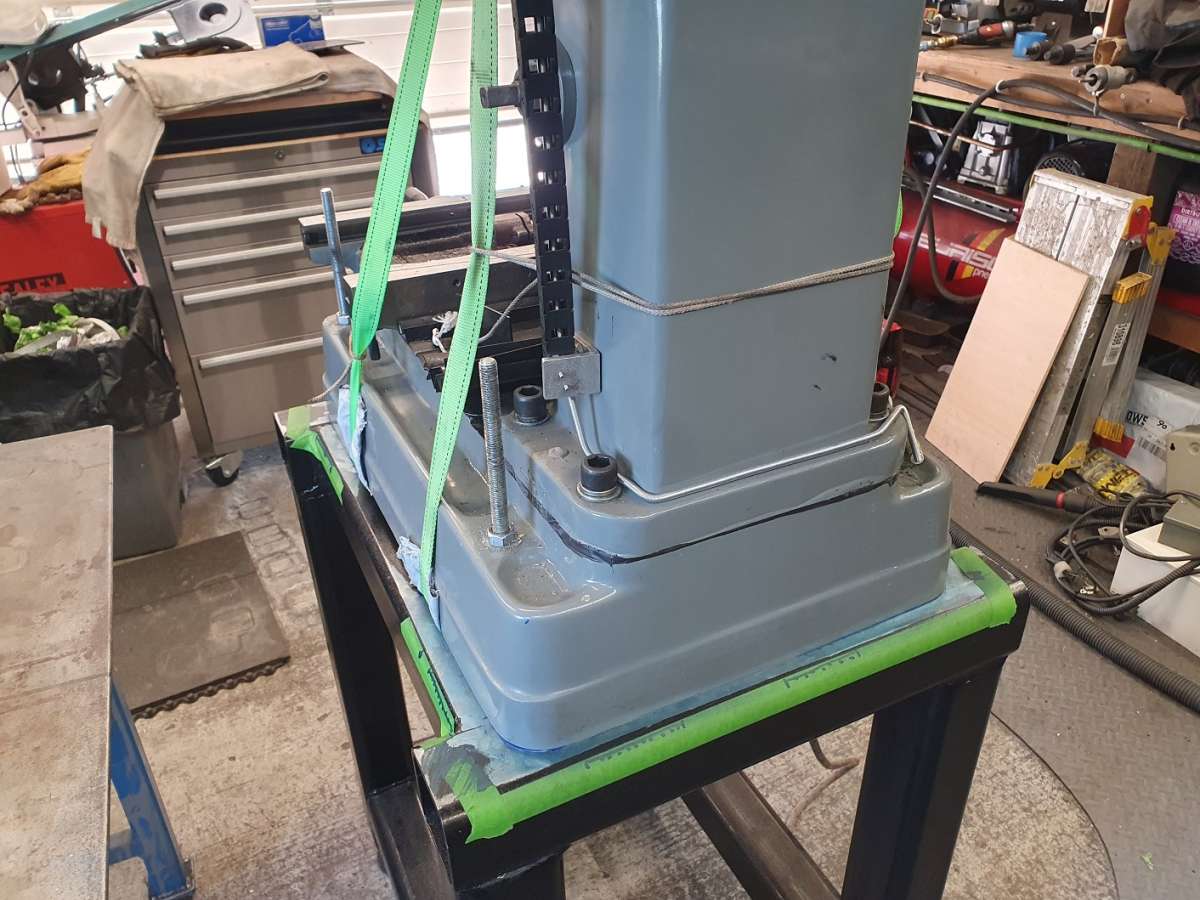
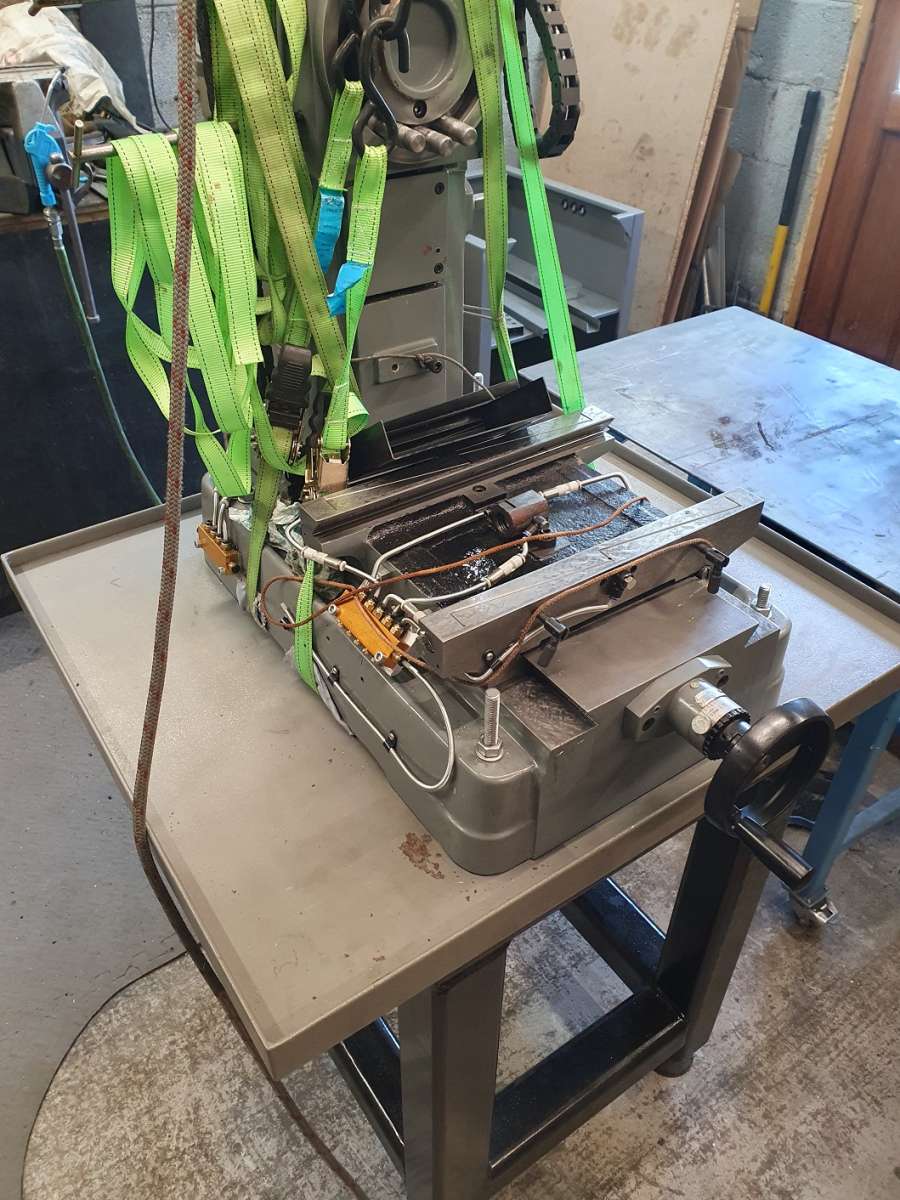
                        Next job was to get the top of the stand the same as the bottom of the mill base, it would be a bit rubbish to bolt the thing down and twist it so it was the biggest load test of my gantry hoist yet.

                        Ratchet straps spread through the base and attached to the hoist so I could take the weight with the hoist then lift using the ratchet straps as I simply didn’t have the physical ability to pull the hoist rope. It worked a treat!

                        Base_Prep_6

                        Then first off using a feeler gauge to measure the gaps and an air file to bring things into line.

                        Base_Prep_7

                        This was back and fore lots of times until I was unable to get a 1 thou feeler in anywhere so then as I’m being silly with the whole thing I rolled some blue on the stand and used that to finish off which turnedb out to only take a couple of really light ‘dressings with the air file on slow and there was full contact so that’ll do!

                        Base_Prep_9


                        Base_Prep_8

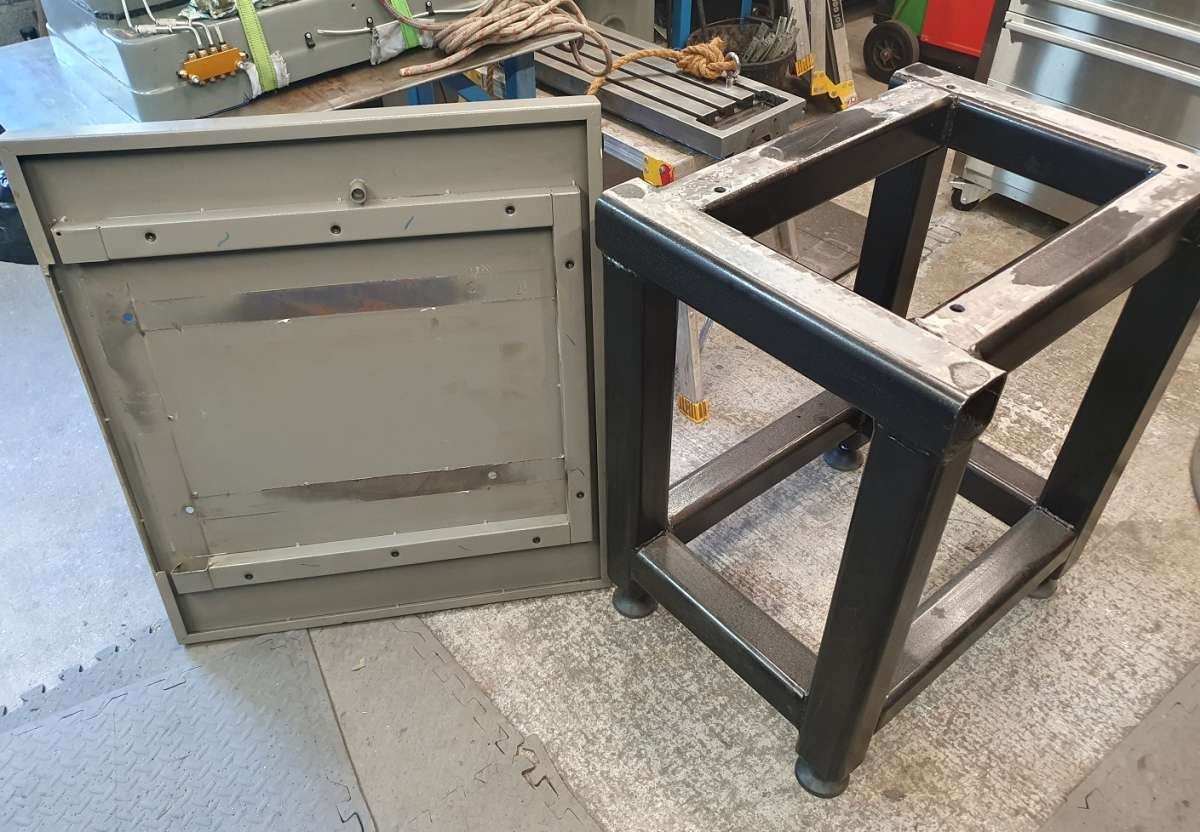
                        Next was remove some of the reinforcing from under the original stand’s top plate and that was ready (after a coat of paint obviously!) –

                        Base_Prep_10

                        Base_Prep_11

                        And then try the mill again.

                        Base_Prep_12

                        I still cant believe my hoist lifted that no problems at all, it must be over 200kg as I’ve only removed the gear head and according to Chester the Super Lux is 300kg but it did 😁

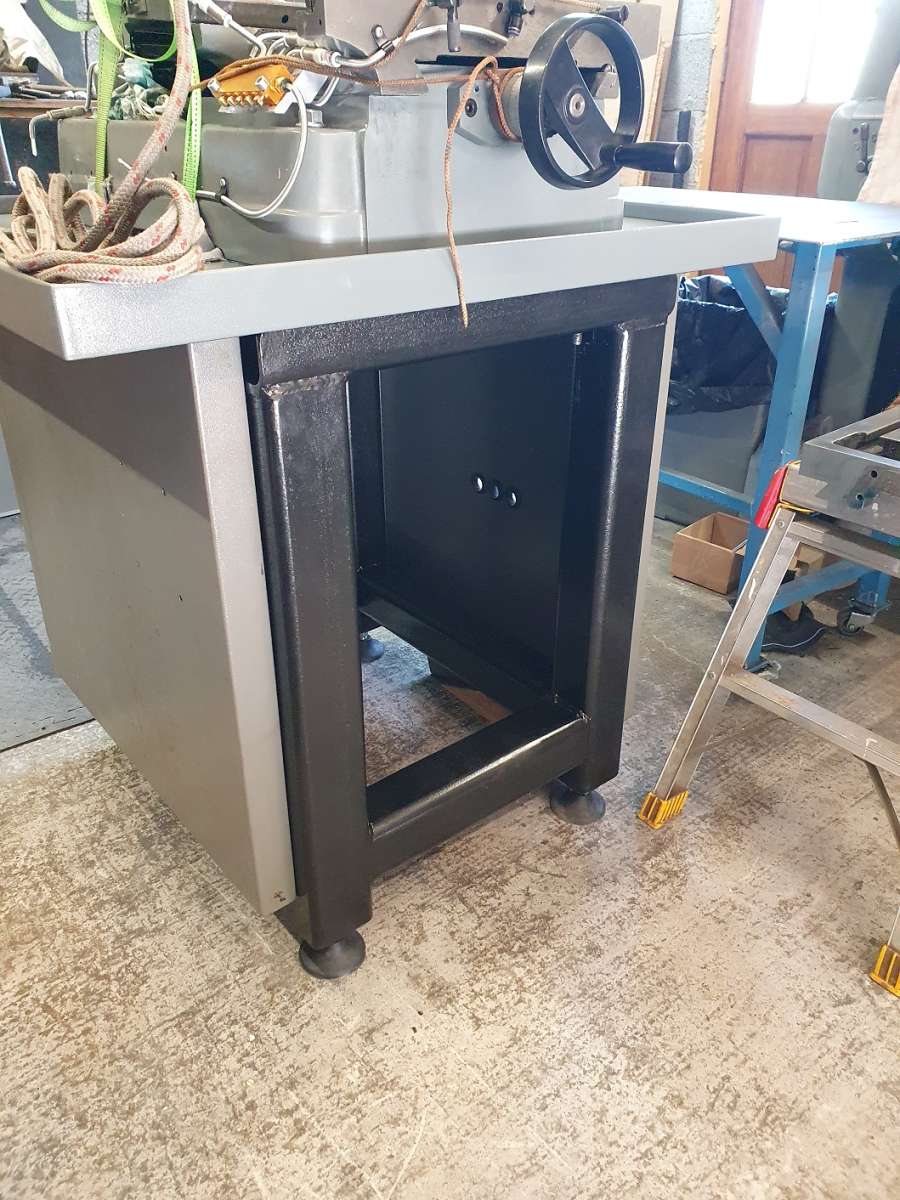
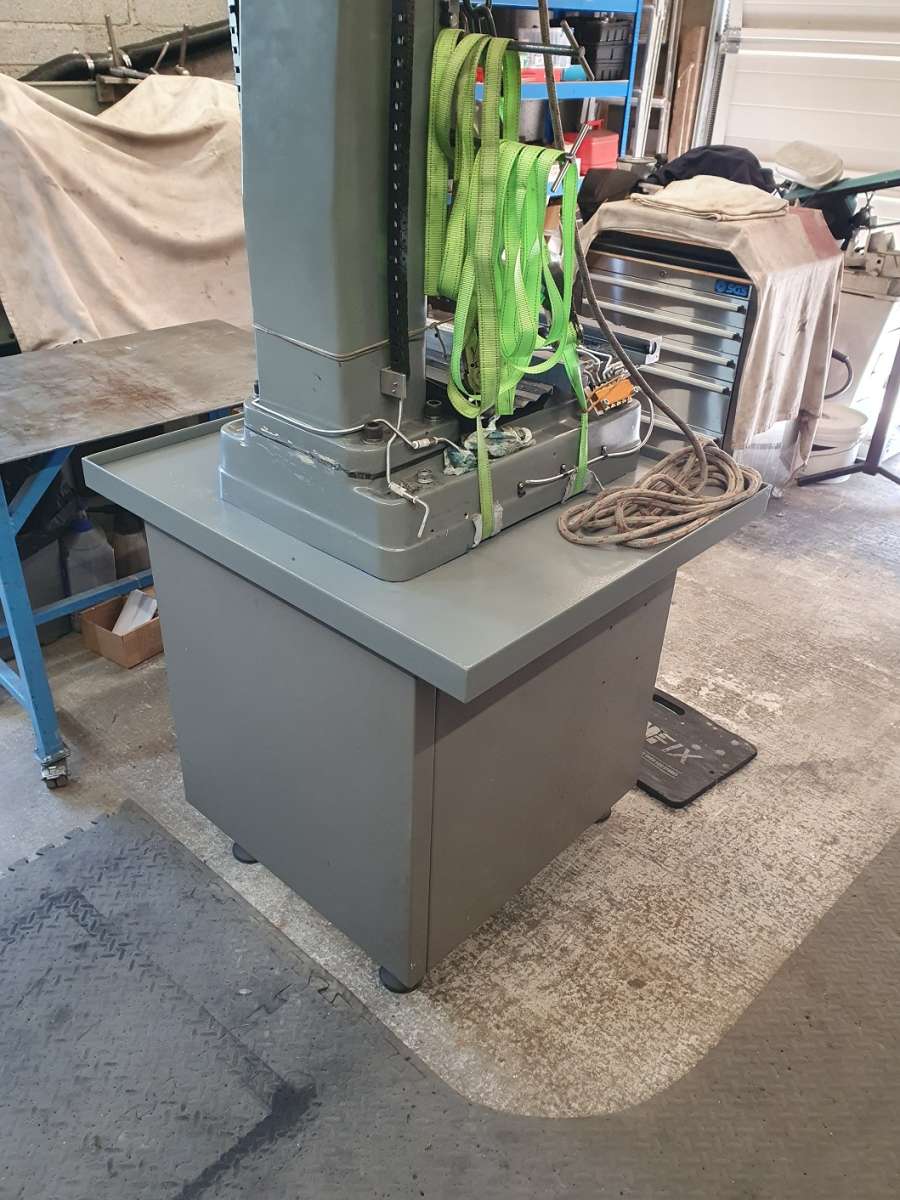
                        Remarkably the rest of the panels were easy to fix on with the original fixing holes so my measuring must have been OK!!

                        I knew the front wouldn’t as I made the stand deeper.

                        Base_Prep_13

                        Base_Prep_14

                        Who’d ever know!!

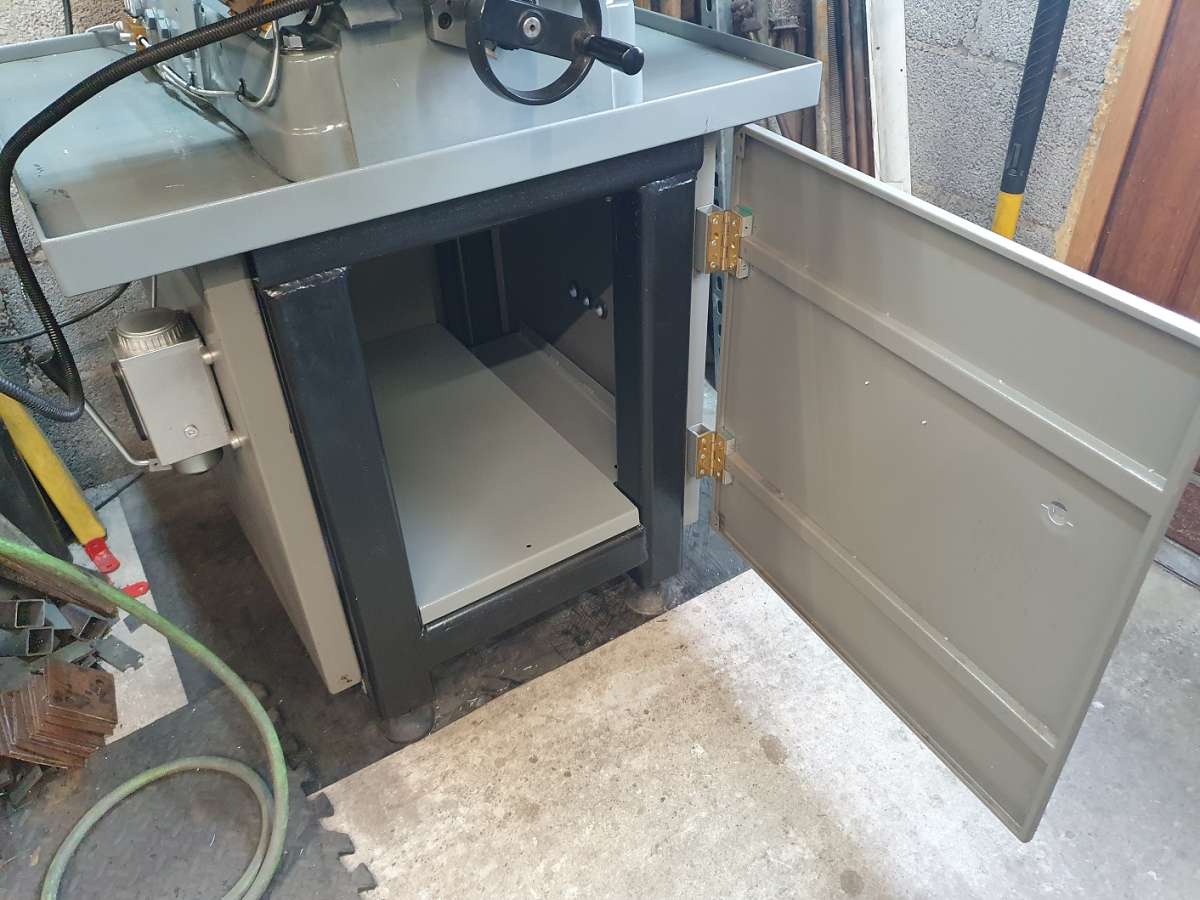
                        I had to make up some spacer blocks to fit hinges for the front door panel but that was no drama at all.

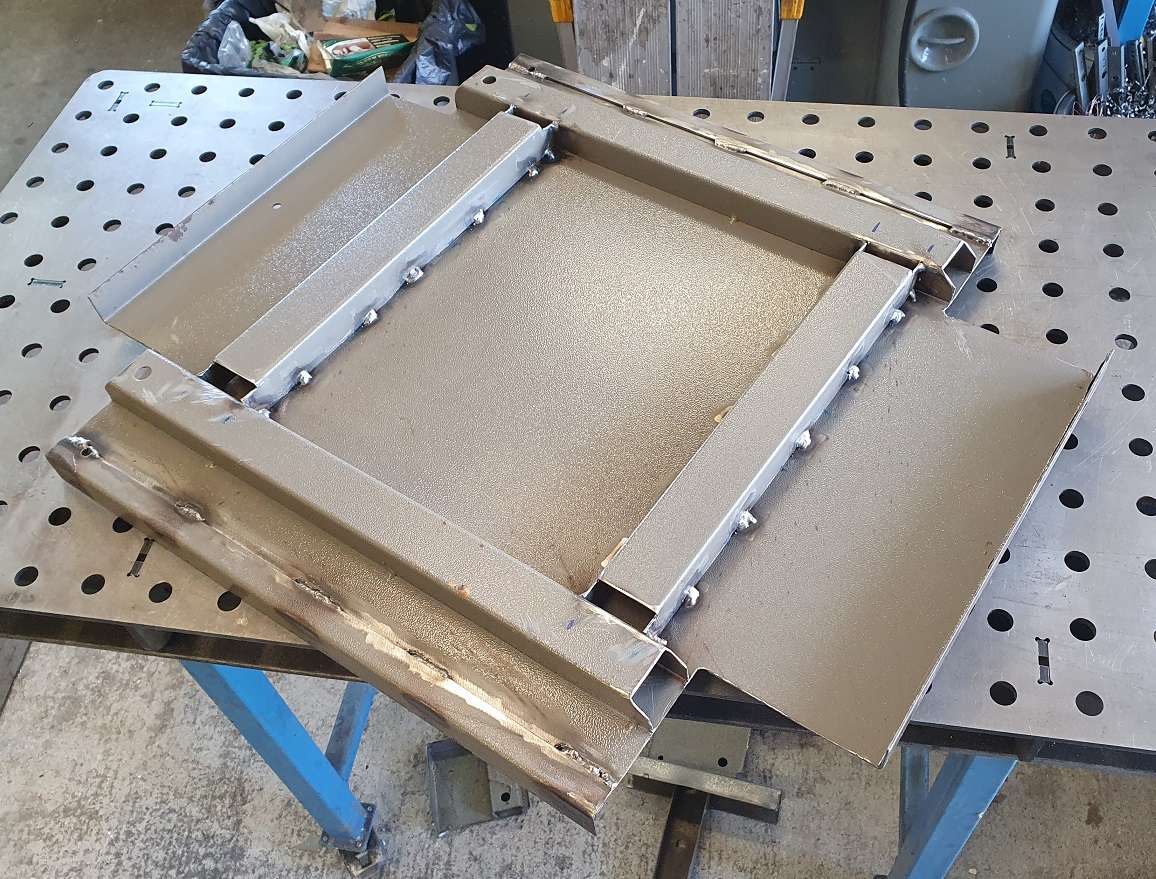
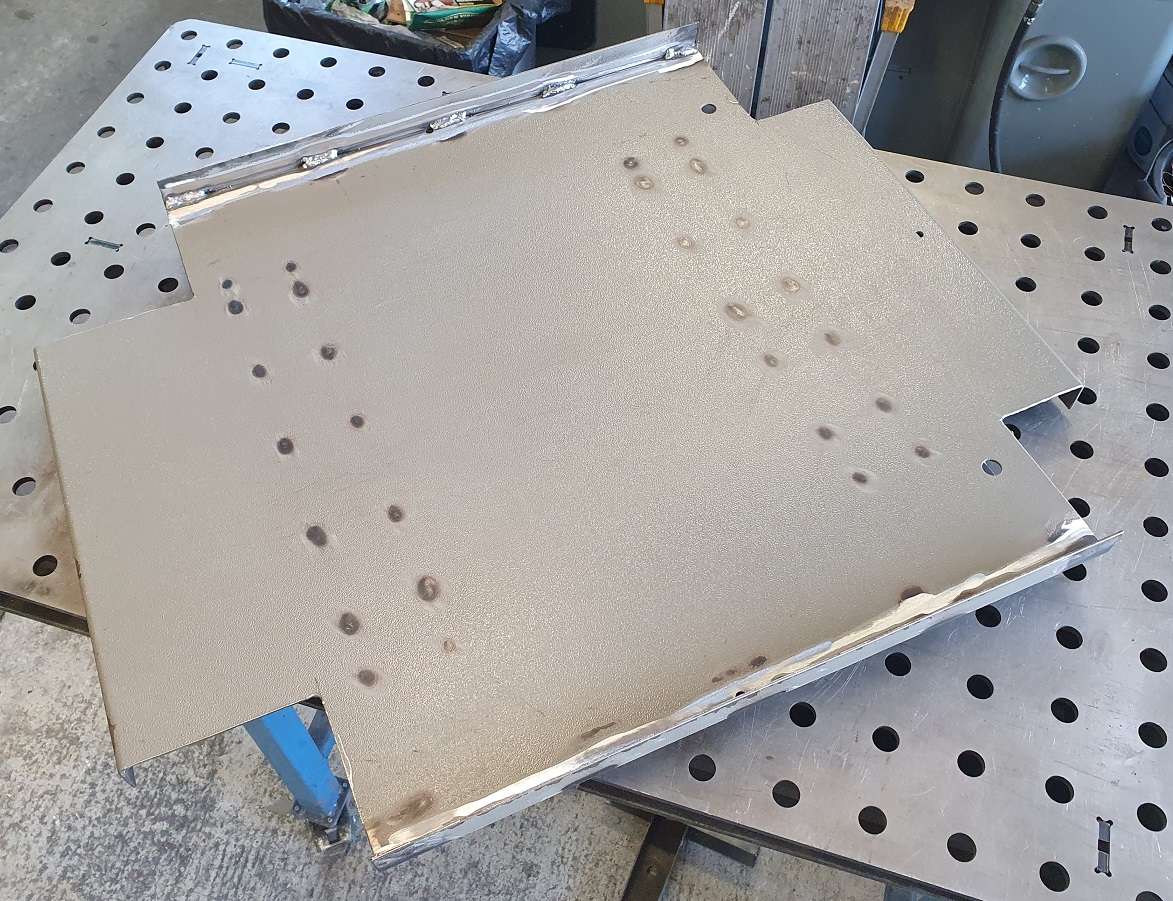
                        Then the bottom shelf had to be cut up and altered to fit tidy in the bottom but that went OK.

                        Shelf_1


                        Shelf_2

                        Shelf_4

                        I did the shelf and door at the end of the job hence everything looks a little different up top.

                        Next job is on to the important bit..🙄


                        #816067
                        Taf_Pembs
                        Participant
                          @taf_pembs


                          I didn’t get a pic but something like this –

                          Flex_Test_2

                          To my surprise I got aprox 0.8mm ! A nice rigid base then.

                          These measurements are not much but if I can do this just by leaning on the column  bit then no wonder a

                          Sorry, Just realised re reading (Michael’s post had me thinking!) that I made somewhat of a typo there.. the measurement at the bottom was 0.08 not 0.8 !!

                          Hopefully it was obvious enough that it wouldn’t be over 3 times the upper measurement .. sorry!

                          Still way too much over such a short distance.

                          Must try harder .. I’m blaming the painkillers 🤔

                          #816069
                          Michael Gilligan
                          Participant
                            @michaelgilligan61133

                            That’s a relief … I thought there was something weird going-on

                            My target of 0.008mm remains reasonable though … it’s just that you are starting from a better place.

                            MichaelG.

                            #816112
                            Vic
                            Participant
                              @vic

                              Nice job on the stand!

                              #816113
                              Taf_Pembs
                              Participant
                                @taf_pembs

                                Cheers Vic 👍

                                I’m glad someone is paying attention Michael! Please keep marking, lord knows I need it 😁🍻

                                #816123
                                Clive Foster
                                Participant
                                  @clivefoster55965

                                  Congratulations on a most excellent refurbishment job.

                                  I’m sorry and a bit surprised to hear of your problems taking decent size cuts.

                                  The RF45 clone with R8 spindle I bought from Chester prior trading up to a Varispeed Bridgeport (and much larger workshop) was for all practical purposes the equal of the Bridgeport in cutting ability. Practical in the sense that maximum cut was limited by the volume of chips being as great as I was prepared to deal with.

                                  How the ultimate limits would compare I don’t know but the machine was able to handle a 1″ end mill at approaching the “typical industrial” cut and feed rates given in the the handy Osborn window’n slide calculator I use for basic set up data.  From memory probably around side cut 1/4″, depth 1″, speed 300 rpm, feed 5 ipm, a slight down grade from that given for typical medium (30 ton) steel. Which was quite enough chips per minute for me. It did pretty well with the inexpensive 2″ diameter 4 insert brazed carbide cutter that came with it too but obviously a certain sensitivity in handling was needed.

                                  However mine came from a different factory to the usual Lux being a one off “test the market” import using a VFD and two speed belt drive instead of the usual gearbox for speed changes. So the head would have been a bit lighter. Partly compensated by the larger motor being significantly heavier than the usual one. Certainly more than I wanted to lift on my own!

                                  Idly nooging around the internet some years after selling it in an attempt to satisfy resurgent curiosity as to who actually made it I discovered that the then current equivalent VFD driven version was approaching double the price of the common RF45. So it’s likely to have been a higher quality machine all round. It also explains why the Chester list price was about double that of a then standard Lux which proved too high for the market. I paid a bit more than standard Lux price which was worth it to me and presumably covered Chesters investment. I still had a few “early import” issues to deal with tho’. Such as an oversize slot and bent screw in the XC axis gib. But all the important parts were sound and the factory alignments good.

                                  Despite the inevitable limitations of the configuration it’s clearly possible for machines of this style to have a satisfactory performance.

                                  Clive

                                  #816161
                                  Taf_Pembs
                                  Participant
                                    @taf_pembs

                                    Cheers Clive,

                                    One thing I have gleaned from hours of looking at these things round the internet is the wildly varying levels of build and castings, some really good and some that are .. well questionable at best – like the one I picked up. I think mine was quite an early one although no idea if that was anything to do with how it was built.

                                    🍻

                                    #816163
                                    Taf_Pembs
                                    Participant
                                      @taf_pembs

                                      Now I’m happy enough with the stand, time to address the real problem.

                                      As I spoke about earlier with Michael, there is a fair bit around the internet about Epoxy Granite filling of the castings that seems to make a dramatic improvement although when I looked into it, the epoxy was pretty dam expensive, there seems to be quite a lot of work (silly me!) in prepping the castings ready to fill – by way of increasing the surface area as much as possible for bonding (although I’m sure just filling the thing would work) – but also how to move the castings once full, particularly with my very limited capacity to move stuff.

                                      The other option was some sort of external fixing, I’ve seen folk who make a brace up to a wall behind to stop column movement and various other forms of external support. I did consider this but thought that if the column was fixed to an external structure at the top then would that allow the bottom section to ‘move’ instead with the vibration etc? Or, some sort of exoskeleton to brace the whole machine instead.

                                      After a look round at what I had and a bit of thought juice in the local that evening I decided on some sort of exoskeleton that was properly bonded to the castings.

                                      A rough idea sketch later the next morning and my head was pretty full of what I was going to end up with.. so here goes!

                                      #816167
                                      Taf_Pembs
                                      Participant
                                        @taf_pembs

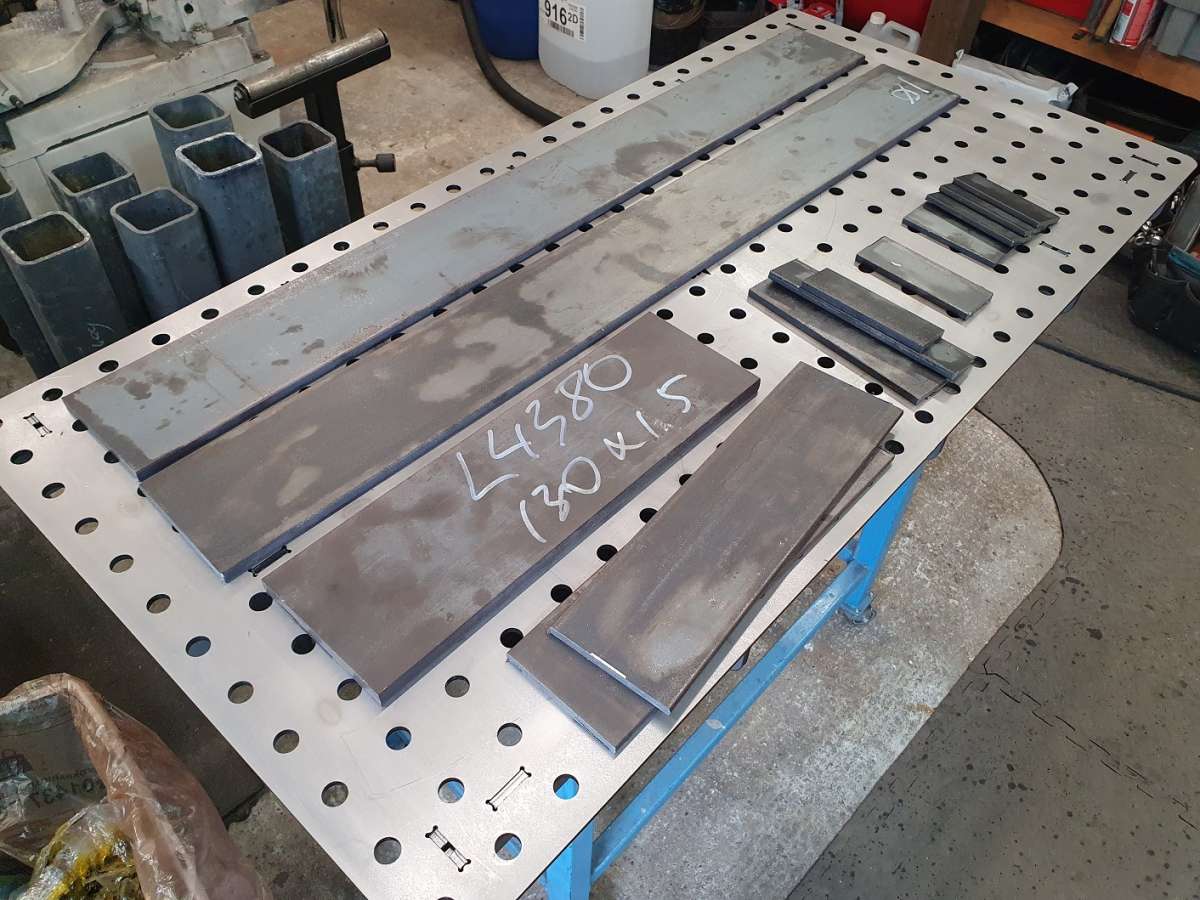
                                        I was ordering some steel soon after anyway so tagged a couple of bits on to go with what I already had and ended up with this lot –

                                        ExSkel_1

                                        The issue of mixing steel with cast iron and the differing thermal expansion rates etc but for what I am doing it really isn’t going to worry me.

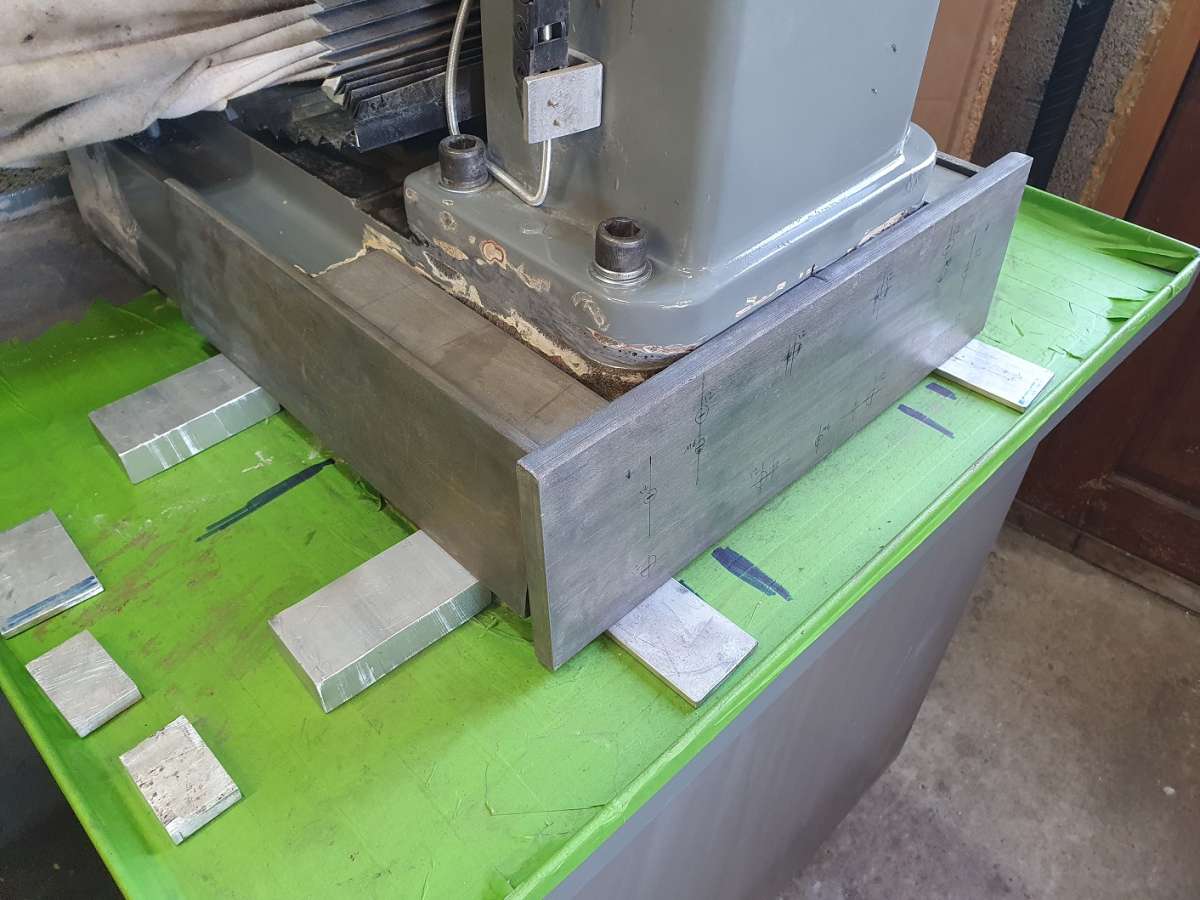
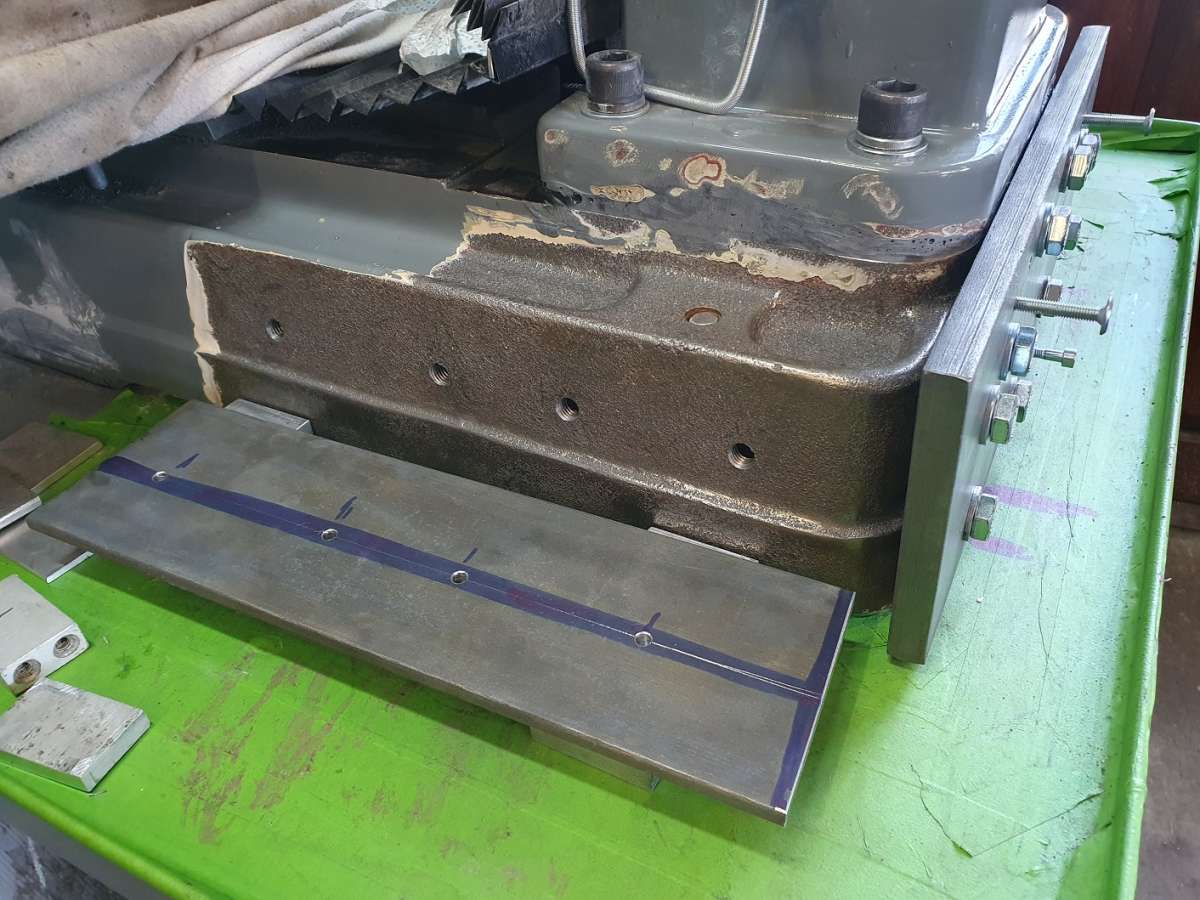
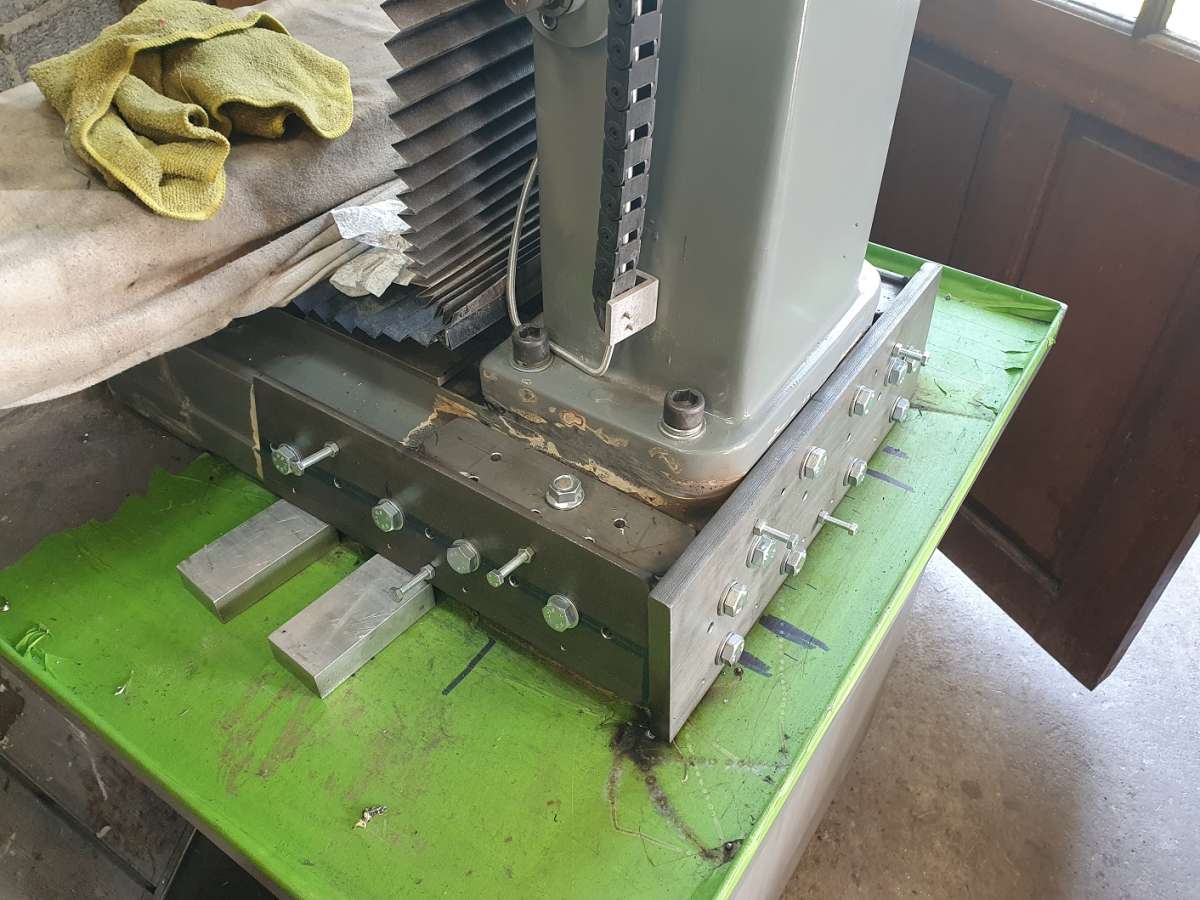
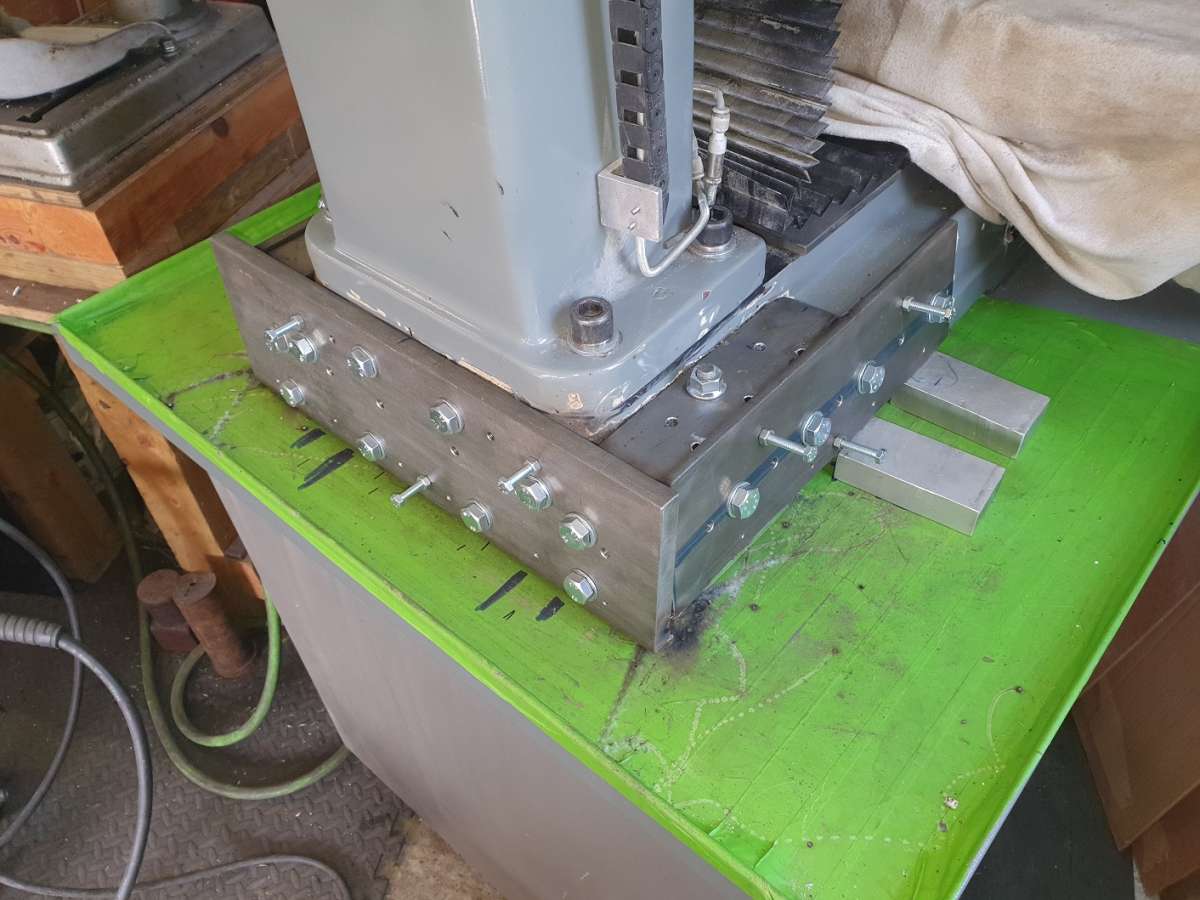
                                        It was to become a cradle around the base including over the top where the rear hold down bolts are, consisting of a 15mm steel plate across the rear face, 8mm plate’s down either side and over the top of of the hold down bolts, 2 10mm plates braced together and going up the fill height of the column attached in a couple of places.

                                        Easy when you say it like that!

                                        First to clean off all my new paint etc from all the contact areas –

                                        ExSkel_4

                                        Then set up the lower plates to get things from in my head to how I’m expecting it to be and start marking up the drilling points for attaching –

                                        ExSkel_5


                                        #816168
                                        Michael Gilligan
                                        Participant
                                          @michaelgilligan61133

                                          Your use of an ‘exoskeleton’ was a brilliant innovation … I eagerly await presentation of some very small numbers !

                                          MichaelG

                                          #816169
                                          Taf_Pembs
                                          Participant
                                            @taf_pembs

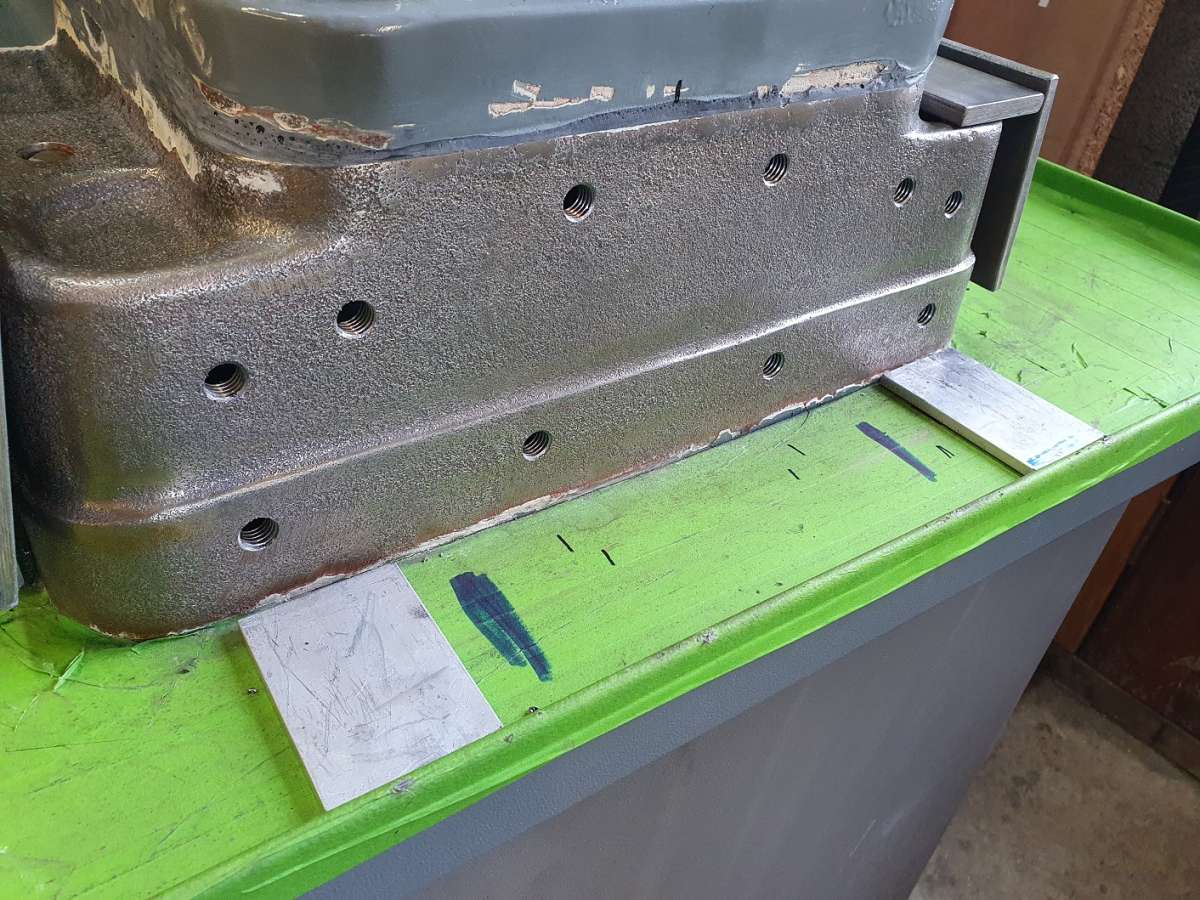
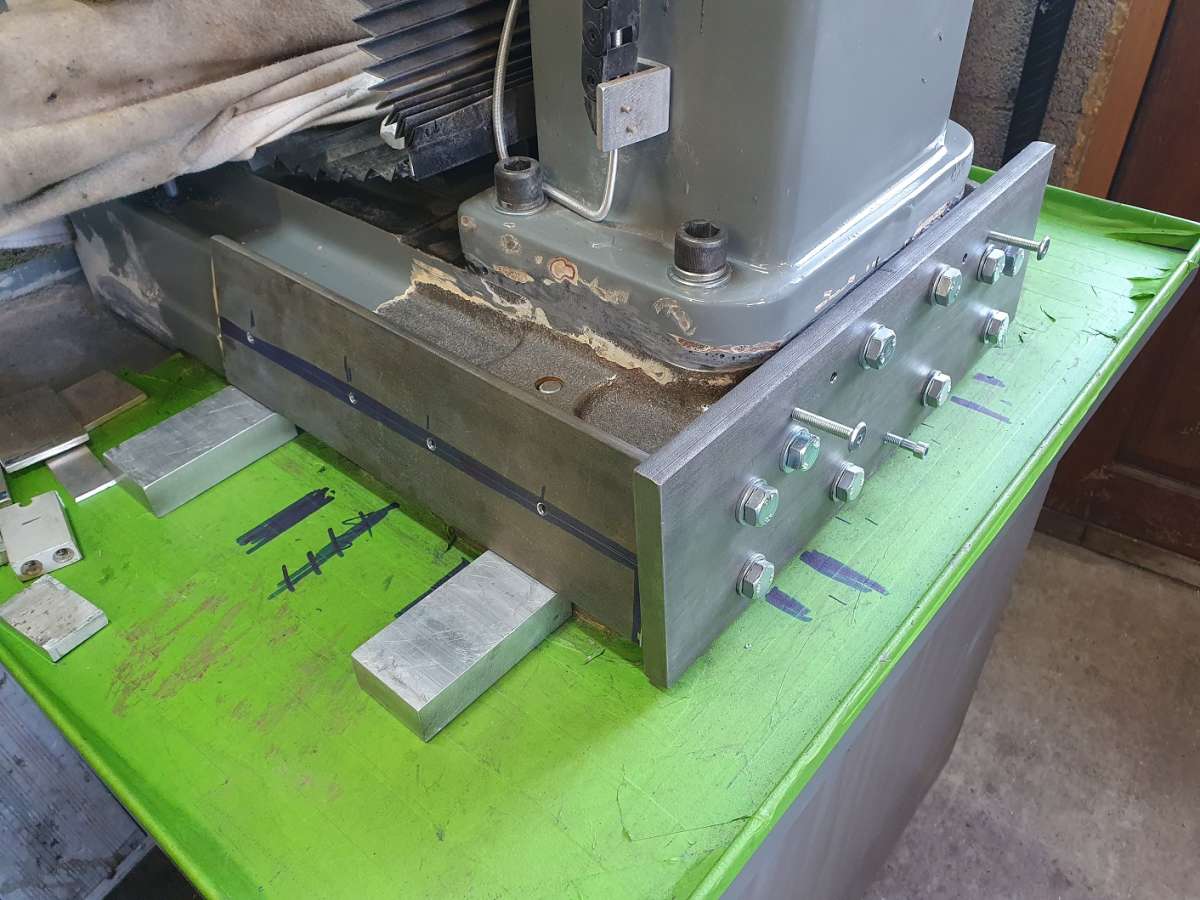
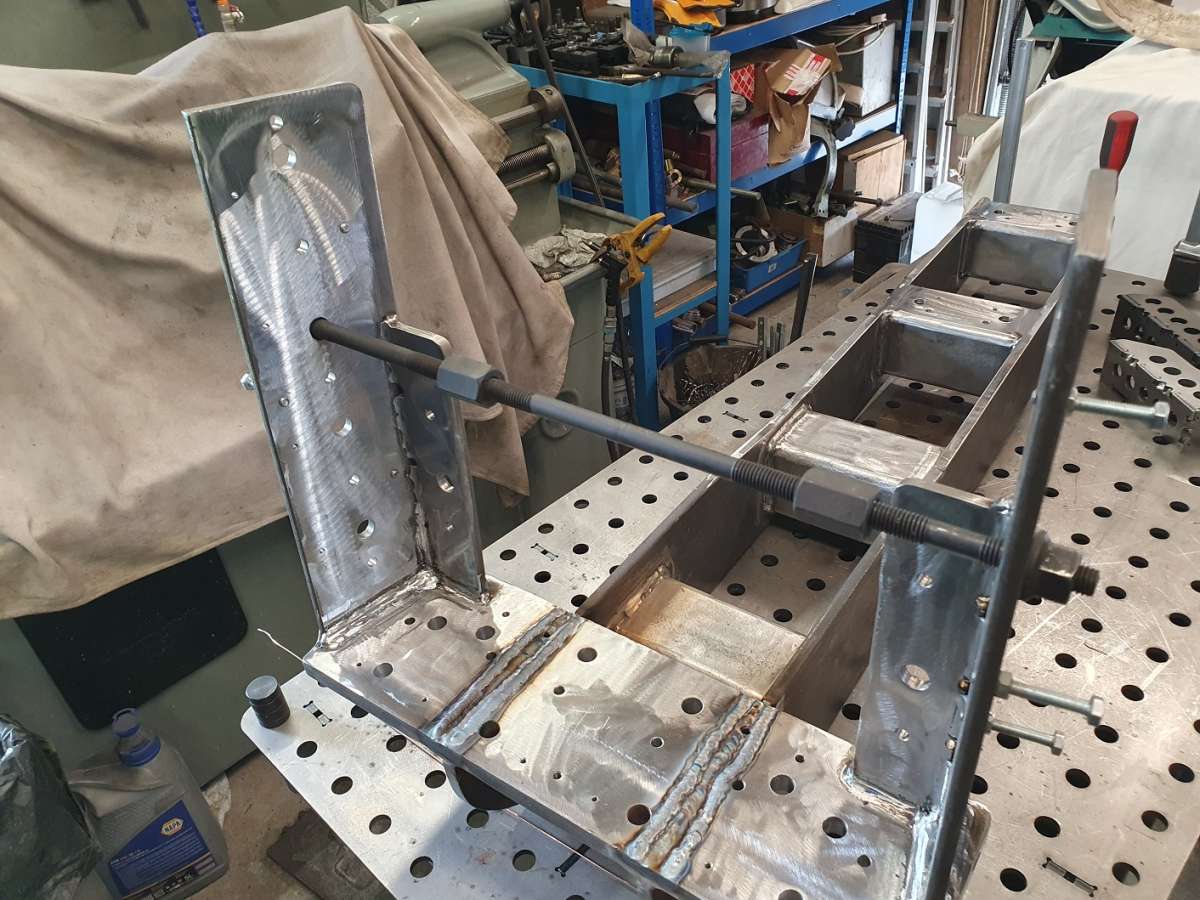
                                            My plan was to bolt the lower cradle to the base casting with a bucket full of M12 bolts set out as near to the webs inside the casting as possible then use some M6 bolts as jack off’s to hold the whole cradle just off the base casting.

                                            Once the cradle is fully welded, bolt the whole thing to the base and use Solco Pure Epoxy Anchor Fixing to bond the cradle to the base. The stuff is designed for use in fractured concrete and is therefore totally non shrinking, compressive strength of 88N/mm2 and has an unbelievable bond strength to steel – an m14 stud set in the stuff will shear before pulling out when tightening.. good enough for me.

                                            A few pics..

                                            ExSkel_6

                                            ExSkel_7

                                            ExSkel_8

                                            Then tack the plates together properly and refit –

                                            ExSkel_9

                                            ExSkel_10

                                            So that’s the cradle all tacked together and fitting well, resin injection holes and lower vent holes drilled.

                                            I just wish doing it was as quick as writing this up, drilling that many holes and tapping them took more time than I care to say, it was several weeks .. I can do most stuff left handed but that was proper difficult and only managing an hour or 2 over a day (although now the back is fixed that should improve dramatically!) 😁

                                            Anyway, on to the column brace..

                                            #816356
                                            Taf_Pembs
                                            Participant
                                              @taf_pembs

                                              Morning All..!

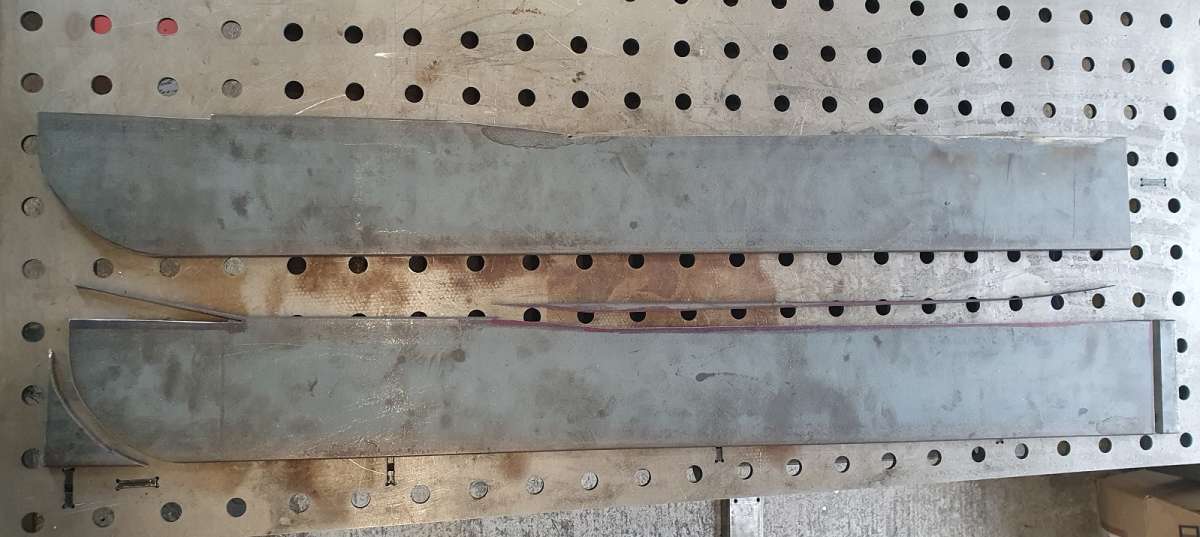
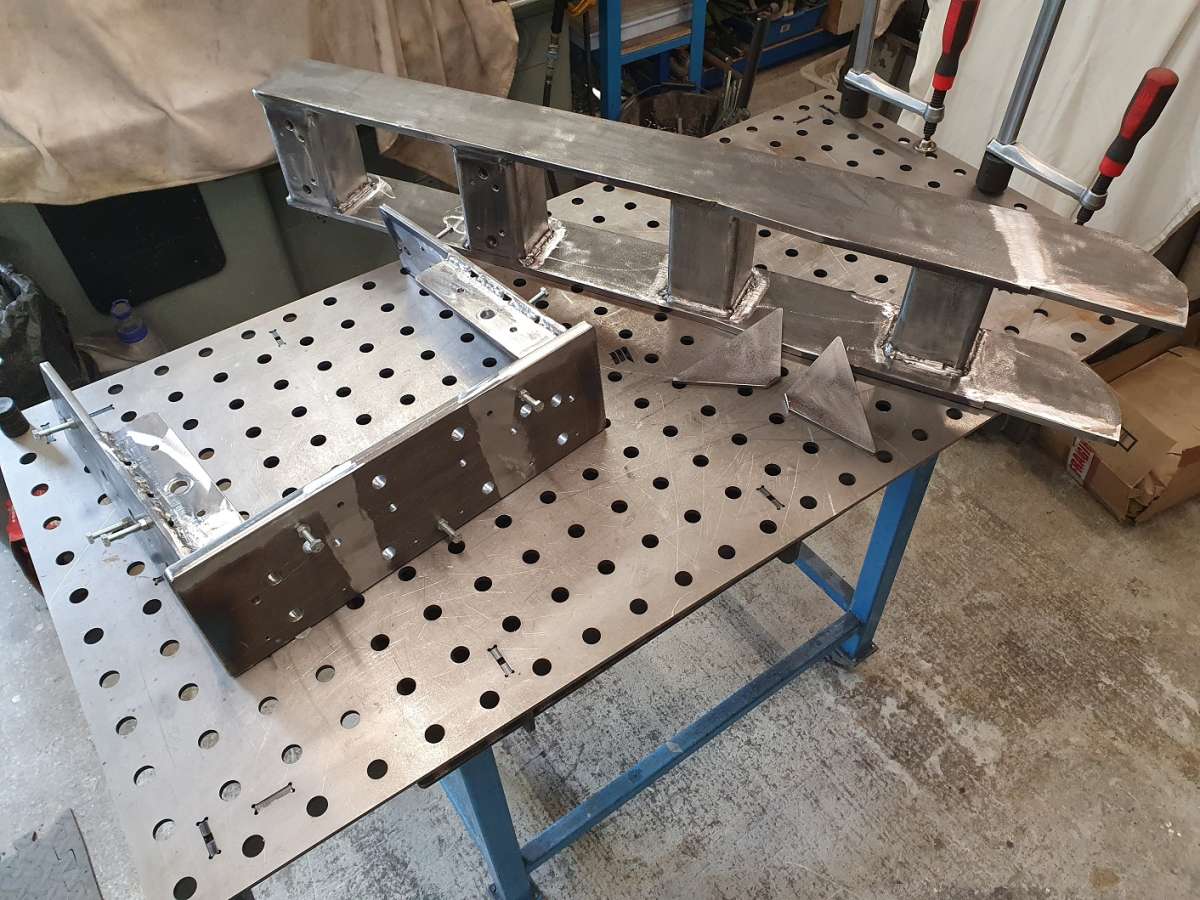
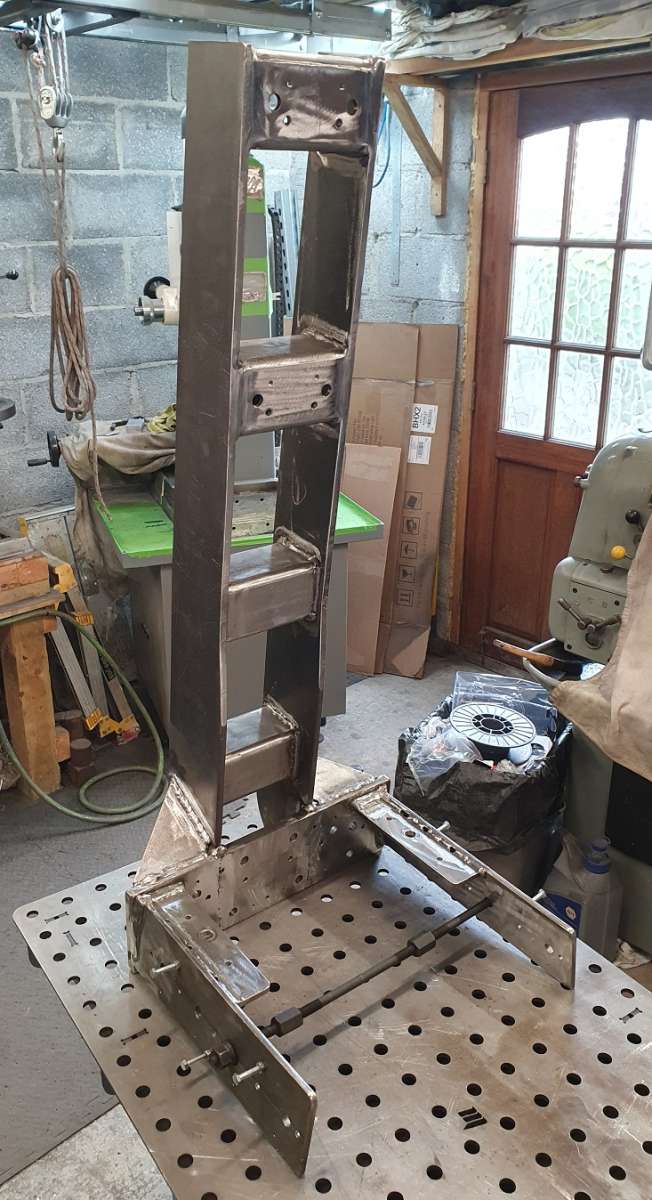
                                              Right, time to get shaping the vertical webs to neatly snug the column – may as well make it look half reasonable!

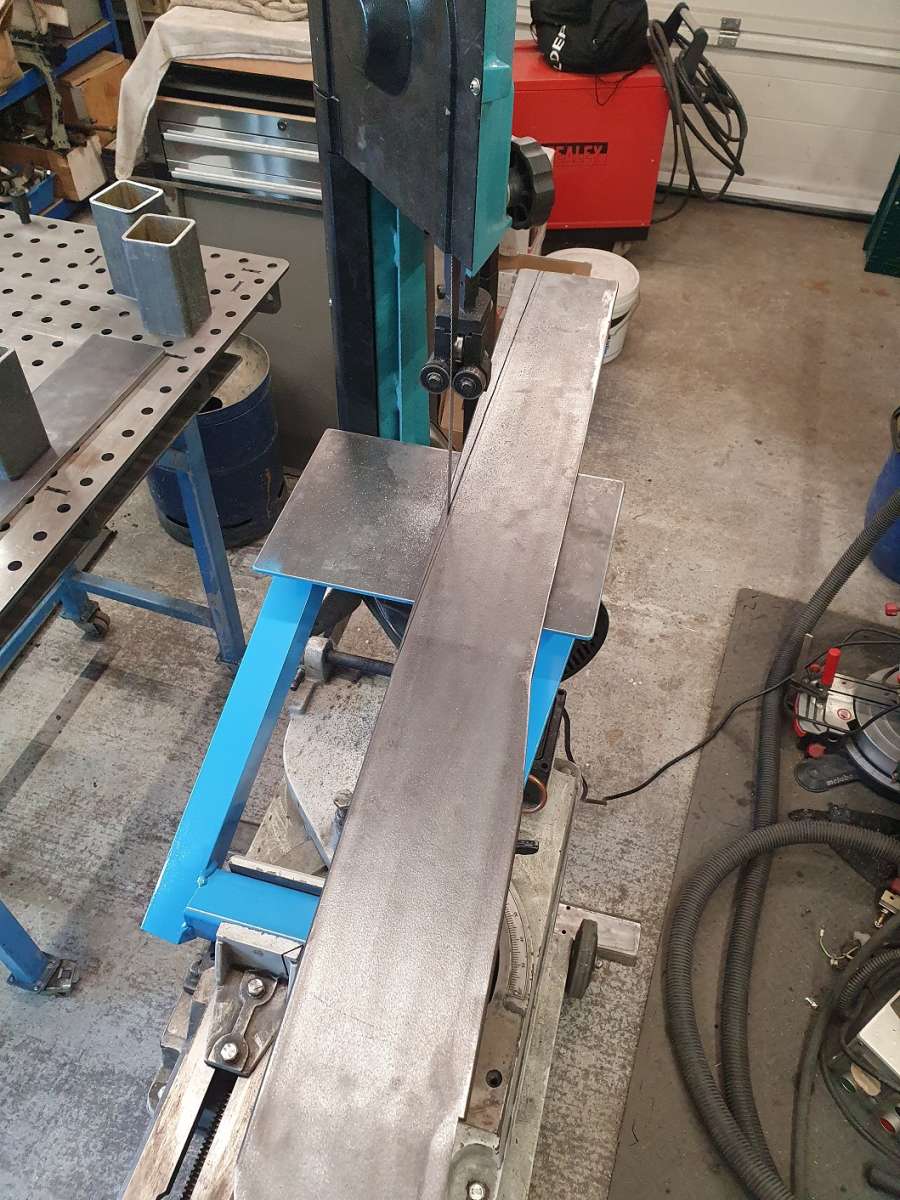
                                              Firstly a cut out to sit on the back of the rear plate and angle forwards to hug the column as well as shaped to fit to fit the column.

                                              ExSkel_2

                                              Then more of a cosmetic thing to slim them down towards the top as I cant see the need for the full width that far up.

                                              ExSkel_3

                                              You can see some of the 80mm box section in the back ground that will be used to join the 2 sides together.

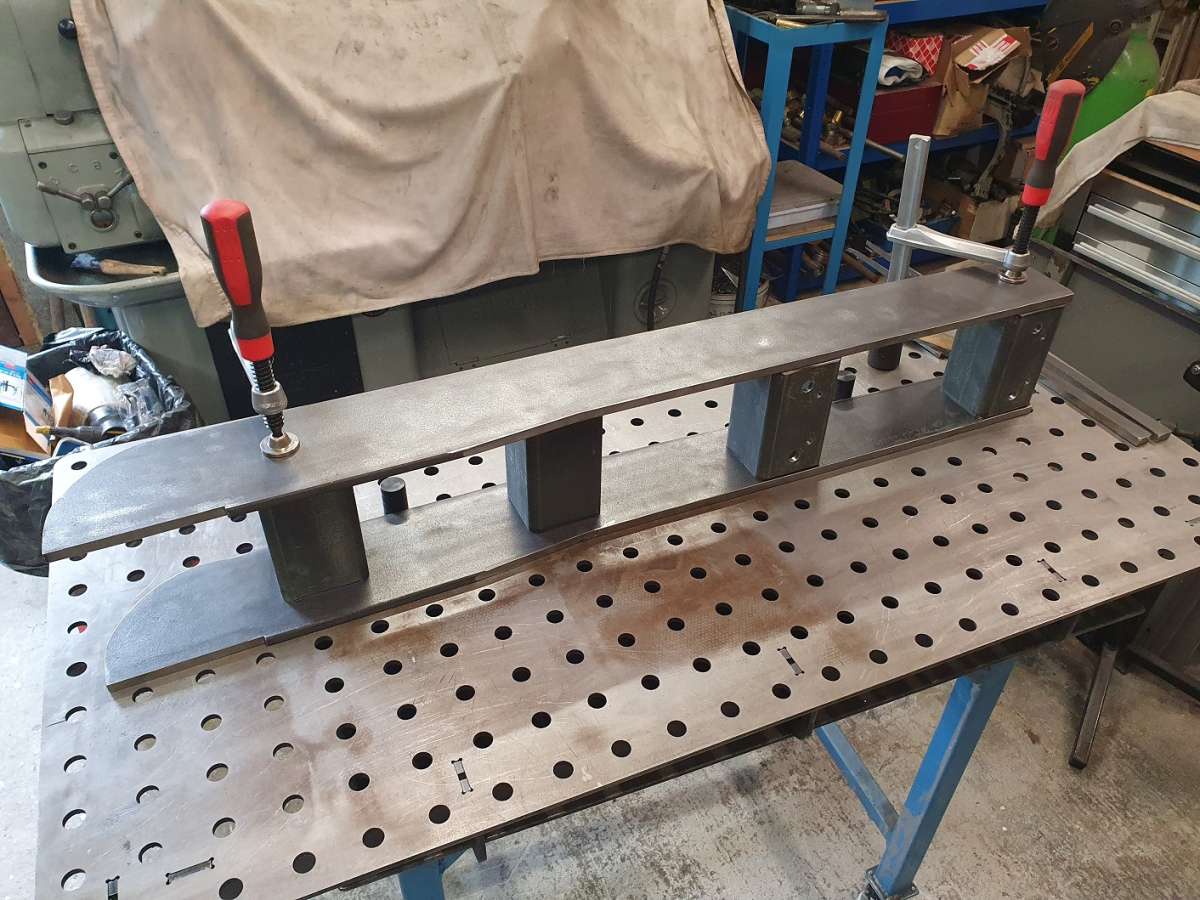
                                              I left the cradle bolted to the base of the mill so once I’d cut it all I could just sit the pieces on the back of it to check fitment.

                                              Then to set it out ready for tacking together.

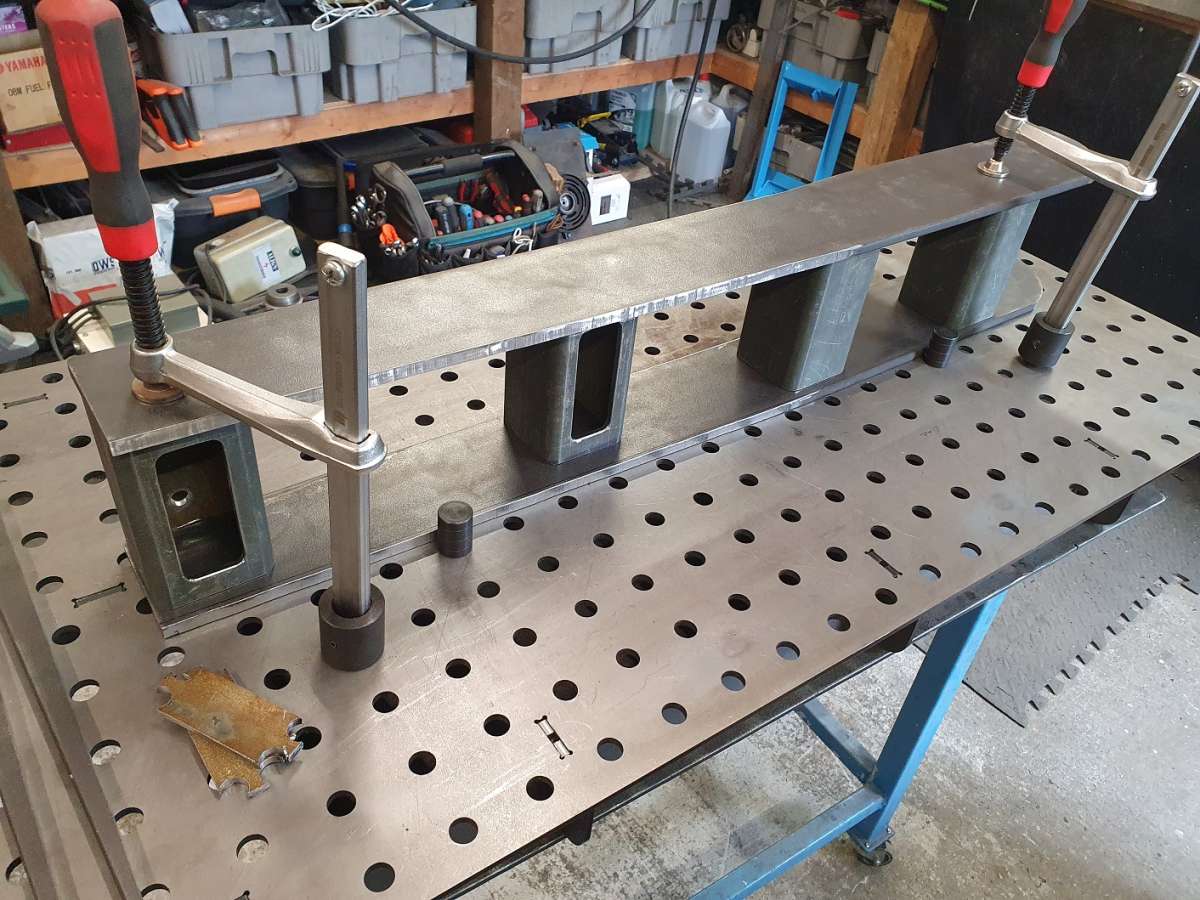
                                              ExSkel_11

                                              Below you can see the cut out’s and drillings in the 2 box section pieces where it will be bolted to the column, there are also some threaded m6 holes for jacking bolts to adjust any column movement once the whole thing as been bolted and epoxied to the base.

                                              ExSkel_12

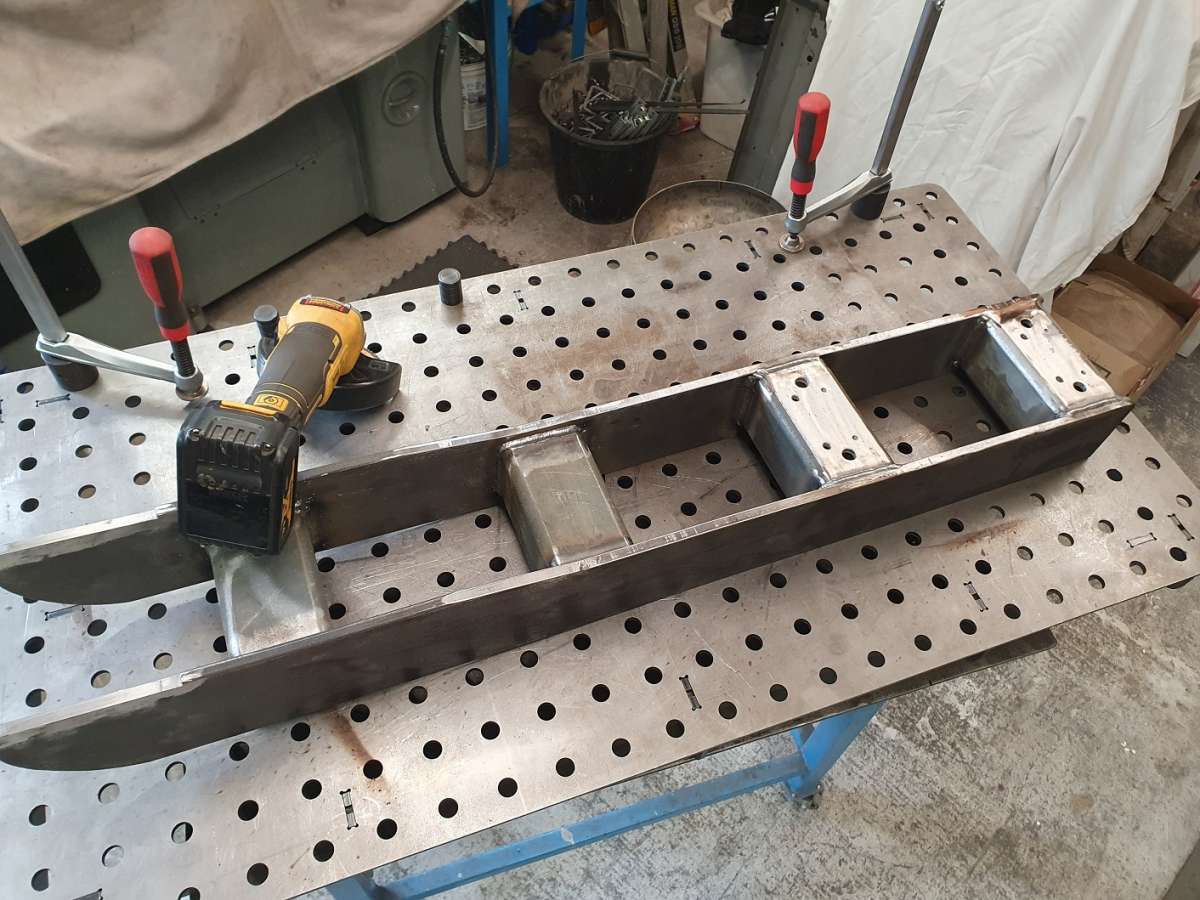
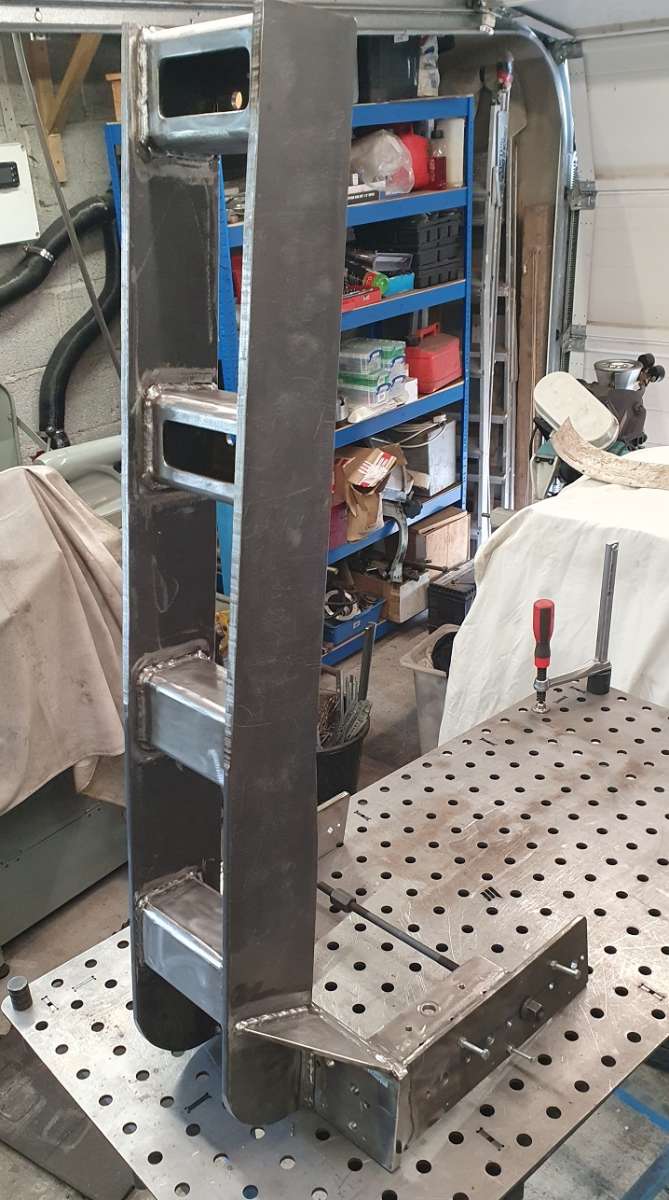
                                              Once tacked together and fitment checked it was all (badly, really need more practice!) welded up.

                                              ExSkel_13

                                              The upper 2 box sections are flush with the front face for fixing to the column so the welds there were ground and flapped back to keep a nice clean flush face.

                                              🍻

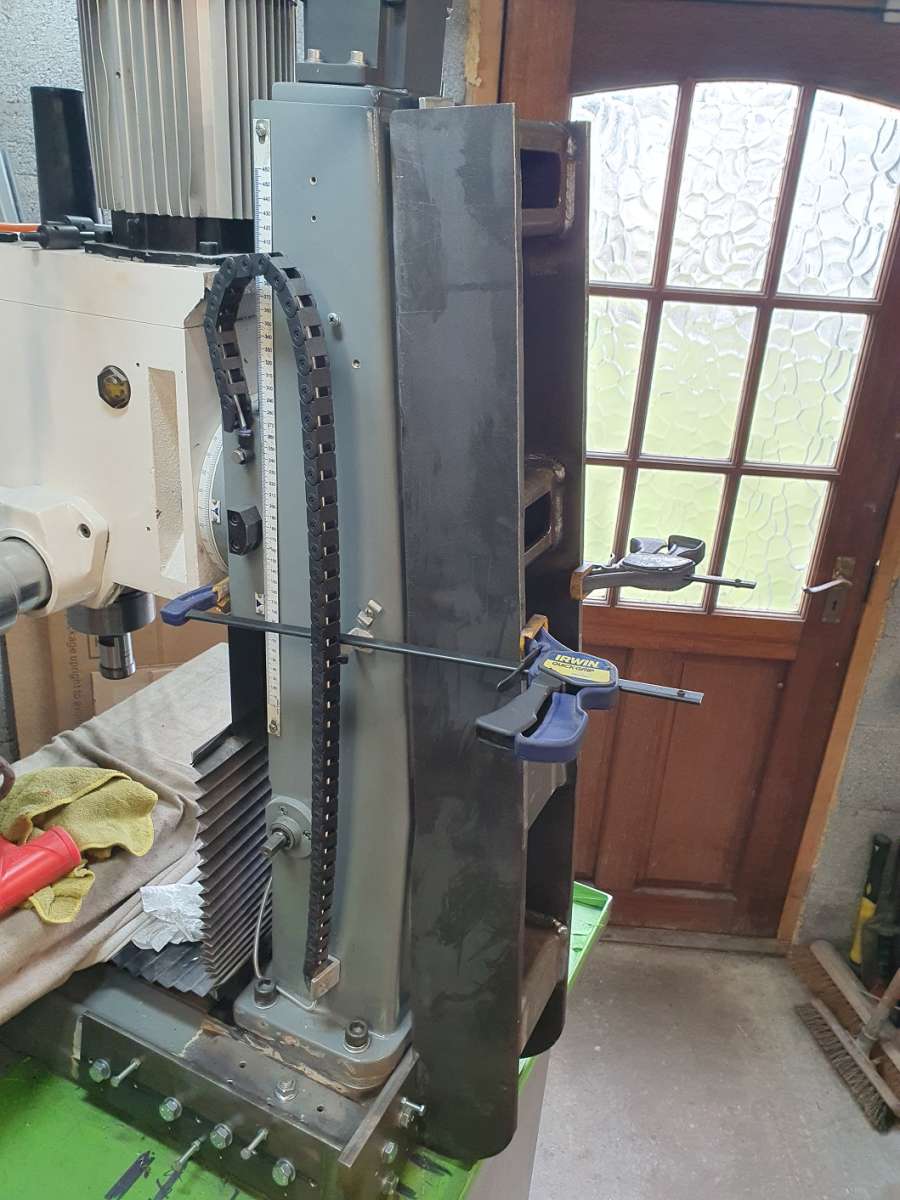
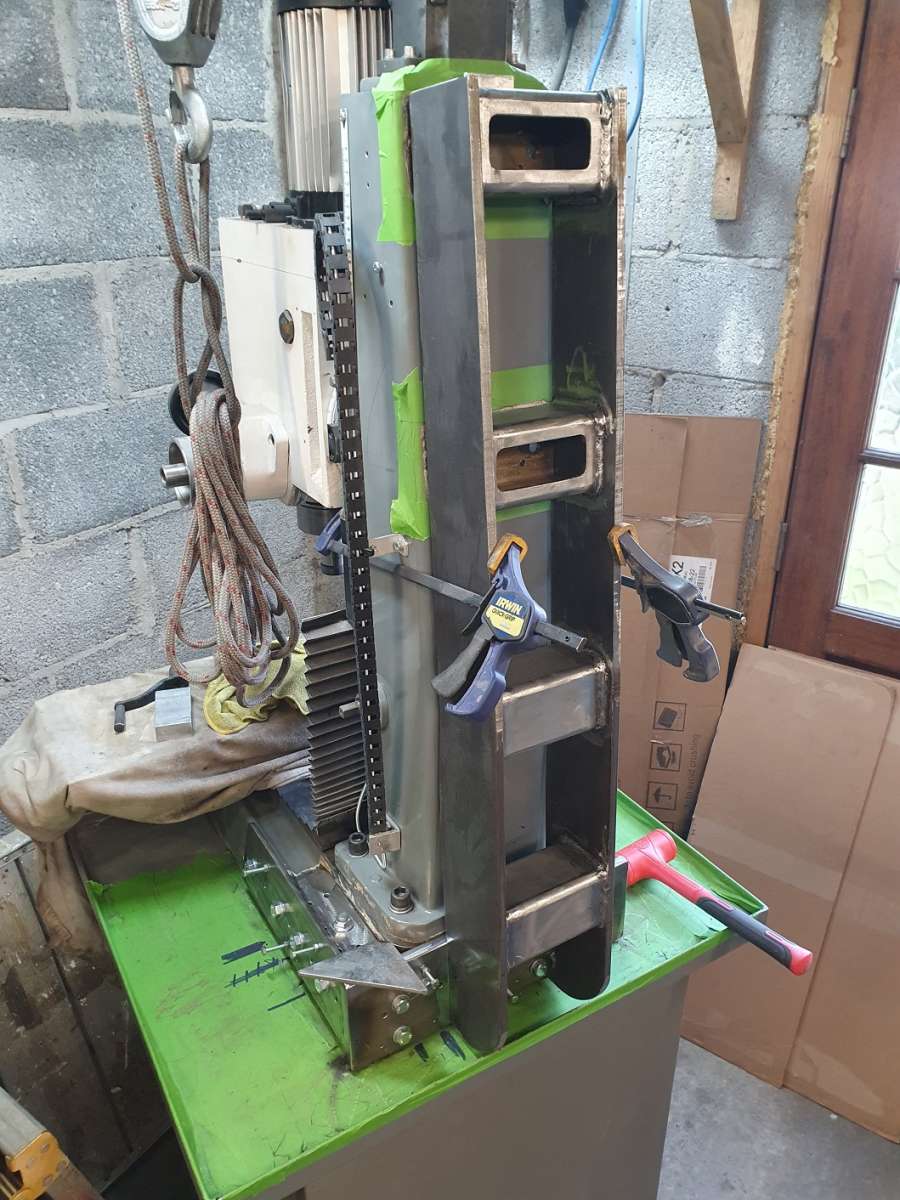
                                              #816357
                                              Taf_Pembs
                                              Participant
                                                @taf_pembs

                                                Time for a test fit..

                                                ExSkel_14

                                                It sat really well on the back plate, I used a small piece of 4mm ally plate as a ‘near enough’ spacer at the top and to be honest the clamps are only there as I couldn’t move out of the way quick enough if id did fall off, it sat here quite happily without when I hoisted it into place!

                                                You can see one of the corner braces I will be using to help join the cradle to the upright in this pic.

                                                ExSkel_17

                                                Time to get welding then.

                                                #816379
                                                Michael Gilligan
                                                Participant
                                                  @michaelgilligan61133

                                                  Oh to have the space, and the skill… <sigh>

                                                  I am full of admiration !

                                                  MichaelG.

                                                  #816419
                                                  Taf_Pembs
                                                  Participant
                                                    @taf_pembs

                                                    Good morning all.. !

                                                    Welding .. heat .. movement.. 🤔 I’ve tried to keep this thing as ‘true’ as possible, and after the 1st round of welds and using some clamps etc it wasn’t too bad at all. I was quite please with my self!

                                                    ExSkel_16

                                                    However, thanks to not using enough clamping force (i.e. just 1 clamp rod instead of 4 when 4 were available!) running the rest of the welds between the rear 15mm thick plate and the column brace caused a reasonable warp. I should have known better but there we are.

                                                    So I got the Tig out and ran some fairly high power un-filled mirror welds down the inside of the rear plate and thanks to (I believe!) far more luck than judgement she pulled back into square!

                                                    Clear to see here –

                                                    ExSkel_18


                                                    Finished welding .. and it’s still the right shape!

                                                    ExSkel_19

                                                    ExSkel_20

                                                    I did end up laying a couple more beads down around the side webs when I realises there was just 1 rather dodgy looking run along each edge to get a better fill into the uprights with them being so thick but other than that, time for a test fit.

                                                    #816424
                                                    Taf_Pembs
                                                    Participant
                                                      @taf_pembs

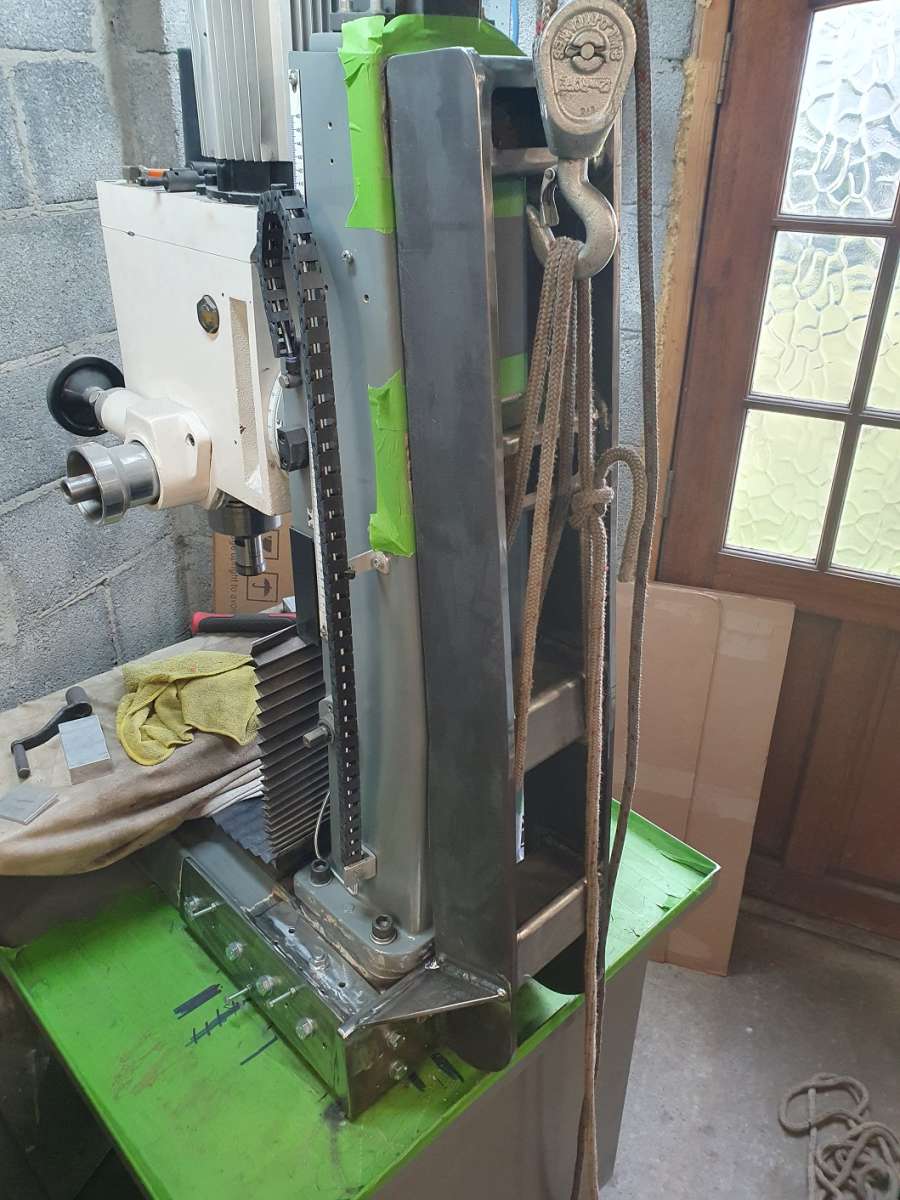
                                                      With everything crossed it was time to hook up the hoist and try it out … again.

                                                      ExSkel_21

                                                      To my surprise it actually fitted better! with everything nipped up around the bottom, the gap between the upper part of the brace and the column was down to about 3mm  – Got to get lucky sometime!

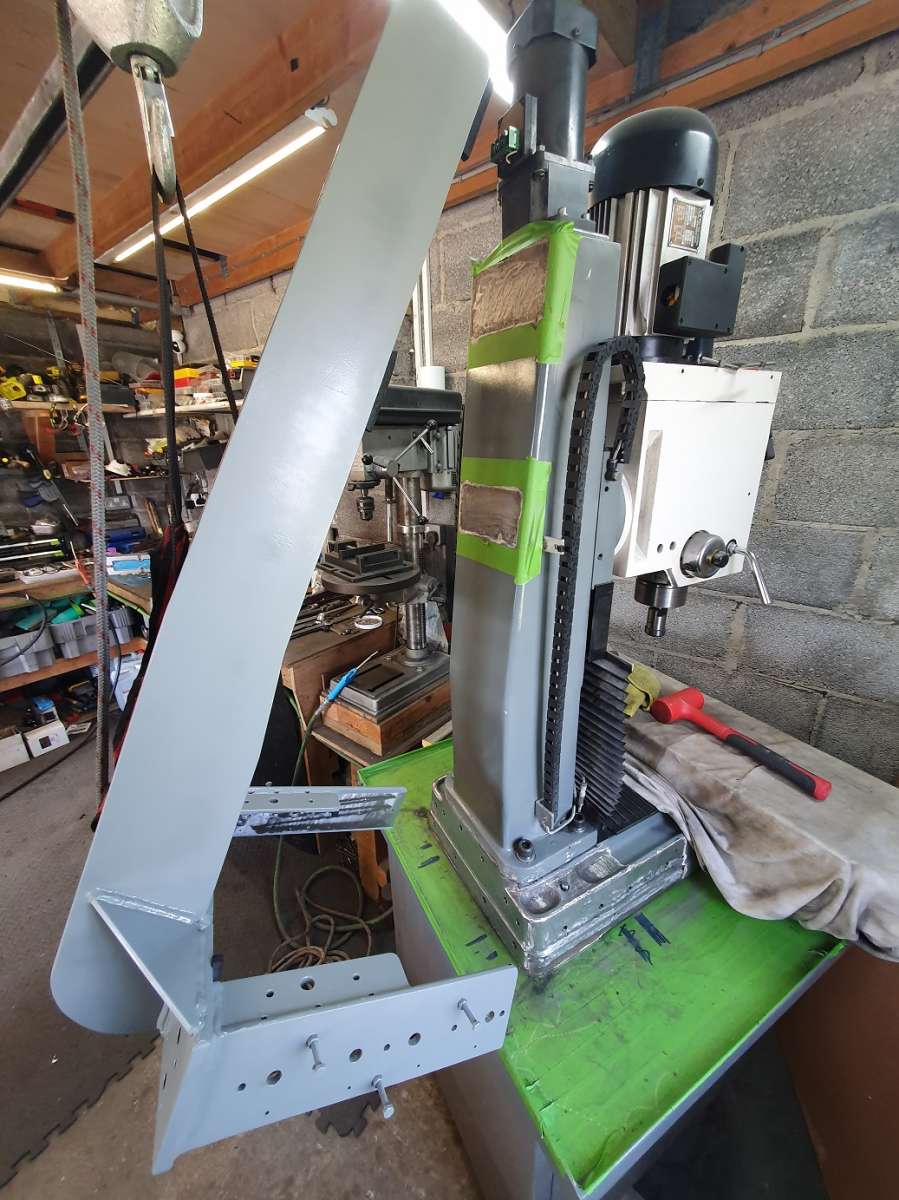
                                                      Best give it a coat of paint before fitting.

                                                      So some etch primer and a few coats from some rattle cans (RAL9005 as it was closest I could get to the original Chester paint colour) mixed by my local supplier, (it’s dam tough paint) she looks good enough.

                                                      So another test fit

                                                      ExSkel_22

                                                      However this time I did really clean all the surfaces that were going to be bonded and I had already given the bolts a few decent coats of Corrosion Guard which is a bit like like Tectyl rust inhibitor so leaves like a dry grease coat which will stop anything sticking to it –  just in case it was all still as good as it could be in which case it was staying there.

                                                      If I did ever want to remove it, at least the bolts would come out and the epoxy could then be heated to brake it down and be scraped out without the bolts being in the way.

                                                      The Mill hold down bolts were also coated and O-rings fitted to prevent as much leakage of epoxy as possible and so it can be removed from the stand.

                                                      And it fitted perfectly so it stayed there!

                                                      Time to get injecting…

                                                    Viewing 25 posts - 1 through 25 (of 35 total)
                                                    • Please log in to reply to this topic. Registering is free and easy using the links on the menu at the top of this page.

                                                    Latest Replies

                                                    Home Forums Manual machine tools Topics

                                                    Viewing 25 topics - 1 through 25 (of 25 total)
                                                    Viewing 25 topics - 1 through 25 (of 25 total)

                                                    View full reply list.