53 tooth gear

53 tooth gear

Home Forums Beginners questions 53 tooth gear

Viewing 25 posts - 1 through 25 (of 36 total)
  • Author
    Posts
  • #103634
    mark mc
    Participant
      @markmc72333

      So this is the first time i have ever needed to cut a gear and its a 53 tooth one, i have a rotary table with dividing plates but no 53 plate. So i was thinking i have a mill with a dro that can do pcd's, so i could use this to make a 53 plate. Now here's my question my rt is 90/1 so after alot of reading i think i need 1turn and 37 holes ? does this sound right ? I have no engineering training at all apart from books ie workshop practice series. thanks

      #6441
      mark mc
      Participant
        @markmc72333
        #103639
        Anonymous

          Mark,

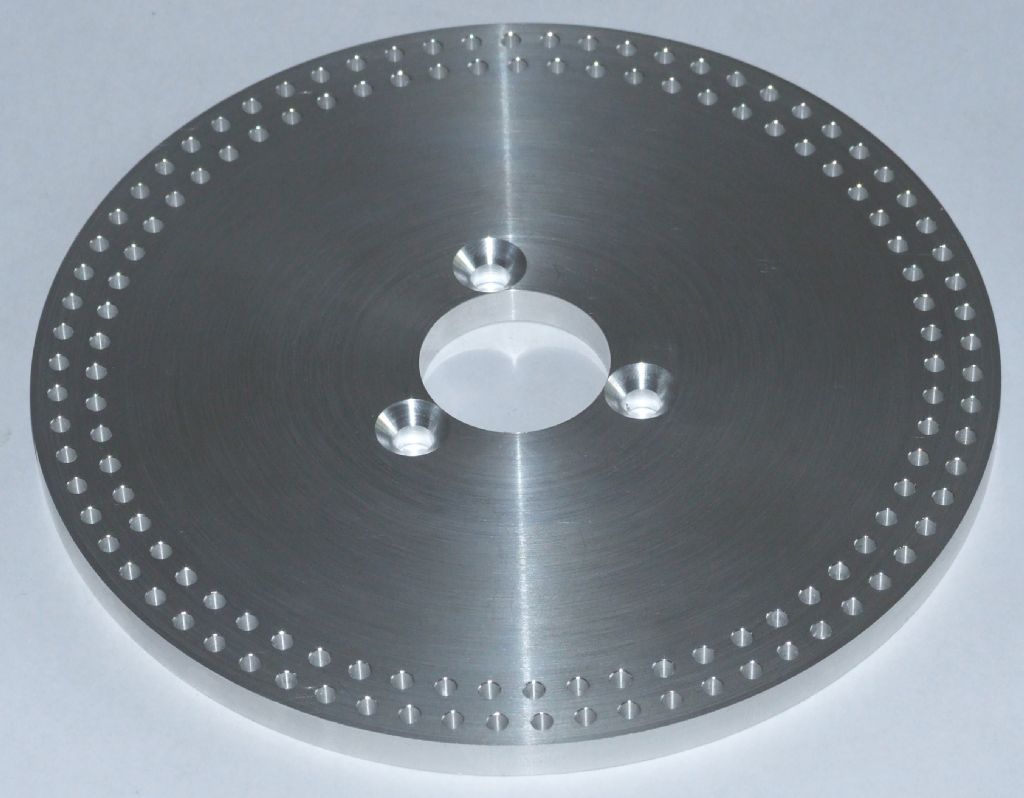
          I agree. The rationale is as follows. To make one full turn of the rotary table takes 90 turns of the handle. To divide a single turn of the table into 53 equal parts we need to turn the handle by 90/53 each time. Since 53 is a prime number we cannot simplify the improper fraction. However we can express it as 1 and 37/53. If we have a 53 hole plate then it is simple! Here's a picture of a 63 and 69 hole plate I made for my dividing head, to cut 63 and 69 tooth gears, because I was too idle to set up the gears for differential indexing:

          Dividing Plate

          Remember that any errors in the dividing plate will be divided by 90, which is good.

          Regards,

          Andrew

          #103643
          mark mc
          Participant
            @markmc72333

            Thanks Andrew, I'll give it a whirl and see what comes out .We never did any fractiions/prime numbers etc at school, takes abit of getting yer head around. embarrassed

            Edited By mark mc on 14/11/2012 09:42:00

            #103644
            RICHARD GREEN 2
            Participant
              @richardgreen2

              Hello Mark,

              Your calculations are correct, 53 hole plate, 1 full turn and 37 holes, will give you 53 divisions on a 90-1 rotary table.

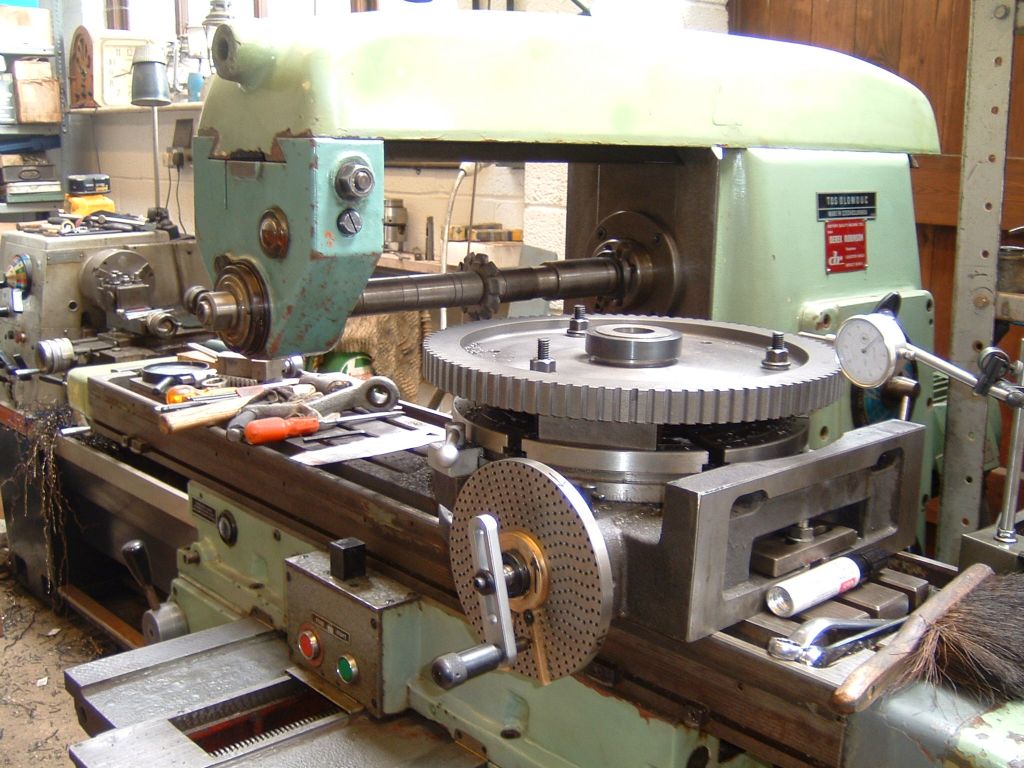
              Here is a picture of a 95 tooth 6DP gear I cut last week, on a rotary table.

              Richard.

              wheels and gears 003.jpg

              Edited By RICHARD GREEN 2 on 14/11/2012 09:44:28

              #103645
              mark mc
              Participant
                @markmc72333

                Good lord Richard that's scary looking to me, but looks very nice too. thanks for replying. Off now to make a 53 hole plate, hopefully….laugh

                #103681
                jason udall
                Participant
                  @jasonudall57142

                  Sorry to sound thick but if you need to make 53 tooth gear and can cut 53 hole plate well whats the problem?.

                  but if you mean 37 hole plate ok but how is that easier?

                  sorry but not completely familiar with RT and dividing heads

                  90/53 ok get that

                  90/53 = 1 + 37/53 — ok here too

                  how does a 37 hole plate help..?

                  #103682
                  JasonB
                  Moderator
                    @jasonb

                    You don't use a 37 hole plate its one full revolution and 37 holes of the 53 hole plate

                    1 rev =53 plus the 37 equals 90

                    So 90/53 gives the fraction needed


                    Another way to look at it.


                    360 divided by 53 means each tooth is 6.792degrees.

                    with a 90:1 ratio on the table, one turn gives 4 degrees add that to

                    37/53 of a turn (0.698×4) = 2.772 and that gives you the desired 6.792deg rotation

                    I don't think mark has a problem just wanted his calculations confirmed

                    J


                    Edited By JasonB on 14/11/2012 15:16:10

                    #103688
                    Michael Cox 1
                    Participant
                      @michaelcox1

                      If you only want one gear it is hardly worth making a dividing plate. As Jason has pointed out the angular rotation between teeth is 6.792 degrees = 6 degrees 47 minutes 31 seconds. Just make a table of the angular rotation required for each tooth ie 6.792, 13.584, 20.376…….etc until you hav done a complete revolution. Convert this table into degrees, minutes and seconds. Then just increment the rotary table to the required angle for each tooth. It requires a little concentration but is perfectly doable.

                      Mike

                      #103690
                      jason udall
                      Participant
                        @jasonudall57142

                        Ahh JasonB (this might get confusing).. so he can "do 53" with the dro ……

                        thus 90/53 = 1 +37 holes of 53 plate……but if you have 53 plate why not index one hole per tooth?

                        Michael .. coming to this from CNC land thats how I would have done it ( with a suspecious eye on rounding errors..)…. ….

                        Ahh well , it is to learn that we live.

                        #103692
                        JasonB
                        Moderator
                          @jasonb
                          Posted by jason udall on 14/11/2012 16:23:12:

                          but if you have 53 plate why not index one hole per tooth?

                          You can't do that with a rotary table as you need to take into account the 90:1 reduction, going one hole at a time would give a 4770tooth gear.surprise

                          If you were using teh plate for direct indexing on say the lathe spindle then it would work

                          #103714
                          Sub Mandrel
                          Participant
                            @submandrel

                            I agree, don't get too hung up on exact dividing.

                            My home made rotary table is geared 60:1 and has 60 graduations on the dial.

                            I use excel to produce a table of the readings and work around a gear using that.

                            The maximum error is half a division or 0.05 of a degree. For a 2" diameter blank that's 0.00087" or less than a thou.

                            When I had to read maps or use burettes I had to estimate tenths of a division. If you can do that the error approaches a tenth of a thou or about five wavelengths of red light…

                            In other words a division plate is NOT required to work within industrial tolerances for typical model engineering gears.

                            Neil

                            Edited By Stub Mandrel on 14/11/2012 20:07:59

                            #103719
                            Anonymous

                              The OP says that his rotary table has provision for dividing plates, so why not use them? Also, we do not know the diameter of the gear to be cut; the bigger it is the more accurate the division need to be.

                              I will be cutting my traction engine final drive gears on a rotary table, as per Richard's setup, as at 14.8" diameter they will not quite fit under the milling machine arbor. I am budgeting for an error of 2 thou at that diameter and will compensate for it by cutting the teeth slightly deeper. That's accuracy of course, not resolution, which is quite a different thing.

                              Regards,

                              Andrew

                              #103722
                              mark mc
                              Participant
                                @markmc72333

                                The gear is for a small worm drive inside a single drive unit for a wheel chair, it's only around 62mm dia and some bright spark thought it would be great idea to make it from plastic with teeth that have no profile at all, the look as if they have been cut with a hack saw, dead straight no kidding. Didn't get much time in the cave today but I'll get the plate finished tomorrow, again thanks all for the help.

                                #103725
                                Gone Away
                                Participant
                                  @goneaway

                                  Posted by Stub Mandrel on 14/11/2012 20:05:39:

                                  …… tenth of a thou or about five wavelengths of red light…

                                  …. oh, I don't think so. 5 x 700 nm ?

                                  #103727
                                  Anonymous

                                    More like green light? – Andrew

                                    #103730
                                    Bazyle
                                    Participant
                                      @bazyle

                                      You can make an approximate plate for reuse to make a better one using any existing plate, or a change wheel by the multi-turn method.

                                      Say you have adapted a 60 tooth change wheel to fit the rt which gives 60 x 90 = 5400 steps all round the circle.. You want 53 so you need to count 5400/53 steps = 101.887 steps. But you can't step a fraction. So miss the first tooth (or hole) and see if you can do the second ie 2 * 101.887 = 203.774.

                                      Still no good but keep going and you get to No 9 = 916.981. Ok so do 917 steps and you have only a slight error. Repeat the process and you eventually fill in all the teeth with a bit of an error by going round multiple times. the error is spread all over the target not built up progressively. But when you use that as the index device the error gets reduced.

                                      This is what the stepper motor dividing gizmos do. Some combinations work better than others but basicly any existing plate can make any new plate.

                                      #103732
                                      jason udall
                                      Participant
                                        @jasonudall57142

                                        380 to 760 nm (400-790 TeraHertz) is generaly accepted as visable light

                                        so for rock and roll 500nm or 0.5 um (microns) will do.

                                        anyway OP seems sorted and I will work on my problem of gettinng comfortable with division as required in the future {if required}..though I am sure to find a application {not an app} somewhere

                                        Thanks anyway.

                                        #103800
                                        Sub Mandrel
                                        Participant
                                          @submandrel

                                          You're right. I had about 450nm in mind as a typical 'wavelength of light', so perhaps I should not have guessed the colour.

                                          Even so, it always surprises me that the difference between the small you can relate to (i.e. working toa a thou or less) and the small you can't quite grasp (wavelength of light, size of animal cells or even bacteria) is not really very much at all.

                                          Neil

                                          #103809
                                          Ian P
                                          Participant
                                            @ianp
                                            Posted by Andrew Johnston on 14/11/2012 21:21:47:

                                            The OP says that his rotary table has provision for dividing plates, so why not use them? Also, we do not know the diameter of the gear to be cut; the bigger it is the more accurate the division need to be.

                                            <snip>

                                            Andrew

                                            Just been thinking about this and still cannot see why greater division accuracy would be needed if the gear is larger.

                                            Angles are angles, but if this gear is 'large' then the one it meshes with will be larger by the same proportion so the angular error will be the same.

                                            If there are errors of spacing beween the teeth causing varying backlash or binding this would actually be more problematic on very high DP gears like in a watch, than it would on ultra large gears on say a traction engine.

                                            Ian

                                            #103907
                                            Sub Mandrel
                                            Participant
                                              @submandrel

                                              From my old Machinery's Handbook tooth-tooth tolerance barely increase as gears get bigger, but gets bigger more or less in proportion to tooth size.

                                              It will upset the clockmakers, but the recommended gear quality for clocks is in the lowest category with milking machines and kitchen blenders, below hair and hedge clippers, with gun data computers and gyroscopes at the top.

                                              Neil

                                              #103958
                                              Anonymous

                                                Ian, Neil: I admit it, I'm being an idiot. I agree that the relative accuracy does not change as the gear gets proportionately larger. I'm not quite sure what I was trying to say!

                                                As far as machining my final drive gears go, I did the sums as follows. The gears are 5DP, 72 teeth with an OD of 14.8". My dividing head has a quoted maximum error of 1 min 30 sec. I'm making an assumption that my industrial 12" rotary table is similar. I make that a maximum error of about 3 thou on the circumference of a 14.8" disc. So the tooth width could be 3 thou wider, or narrower, than theory. The rule for cutting deeper for one gear of a pair, with 20°PA, is backlash times 1.46. So that means I need to cut about 4-5 thou deeper than normal.

                                                Neil: I am intrigued as to how you measured the maximum error on your rotary table?

                                                Regards,

                                                Andrew

                                                #103967
                                                John Stevenson 1
                                                Participant
                                                  @johnstevenson1
                                                  Posted by jason udall on 14/11/2012 23:45:34:

                                                  380 to 760 nm (400-790 TeraHertz) is generaly accepted as visable light

                                                  so for rock and roll 500nm or 0.5 um (microns) will do.

                                                  Thanks anyway.

                                                  .

                                                  So will there be a difference if you cut the gear in daylight, at night with a florescent light or under under the bed covers with a torch.

                                                  Wouldn't want to get it wrong you know.

                                                  John S.

                                                  #103976
                                                  Nicholas Farr
                                                  Participant
                                                    @nicholasfarr14254

                                                    Hi John, just listen to a bit of rock-n-roll while your doing it and you should be OK.

                                                    Regards Nick.

                                                    #103990
                                                    Sub Mandrel
                                                    Participant
                                                      @submandrel

                                                      HI Andrew,

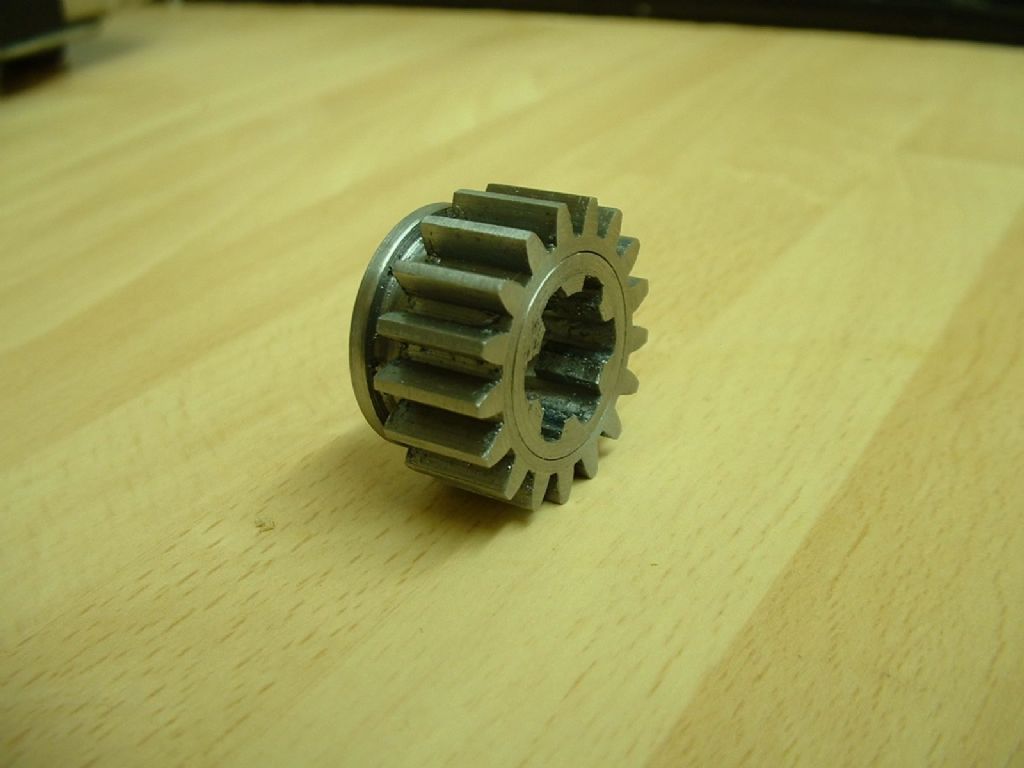
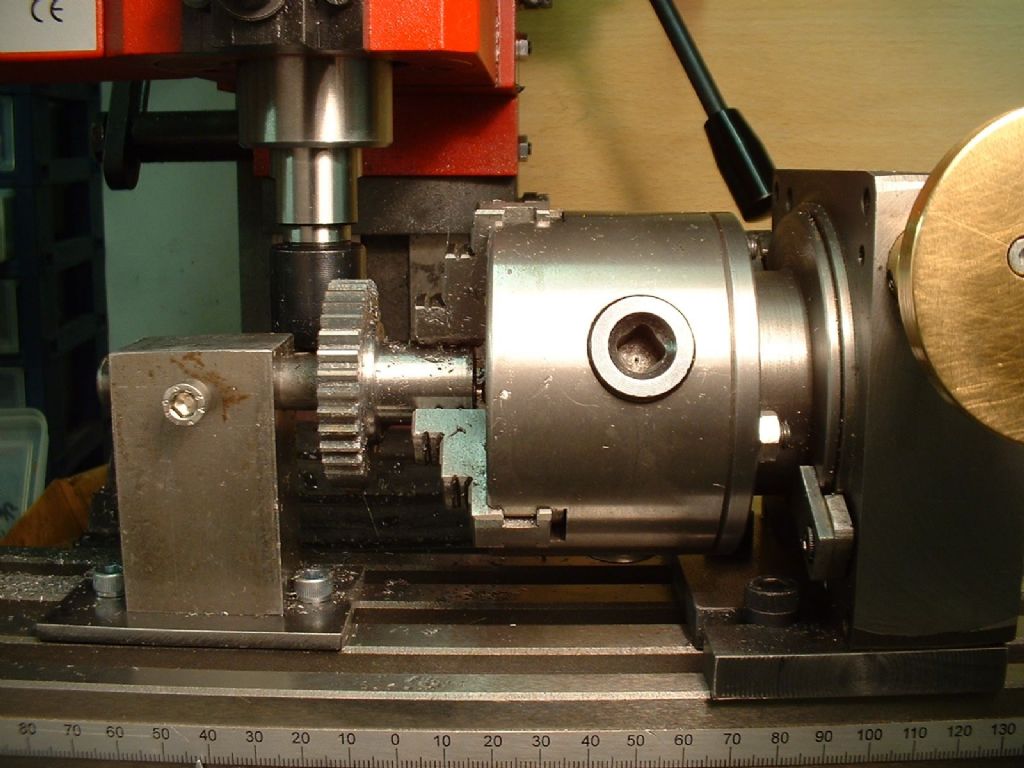
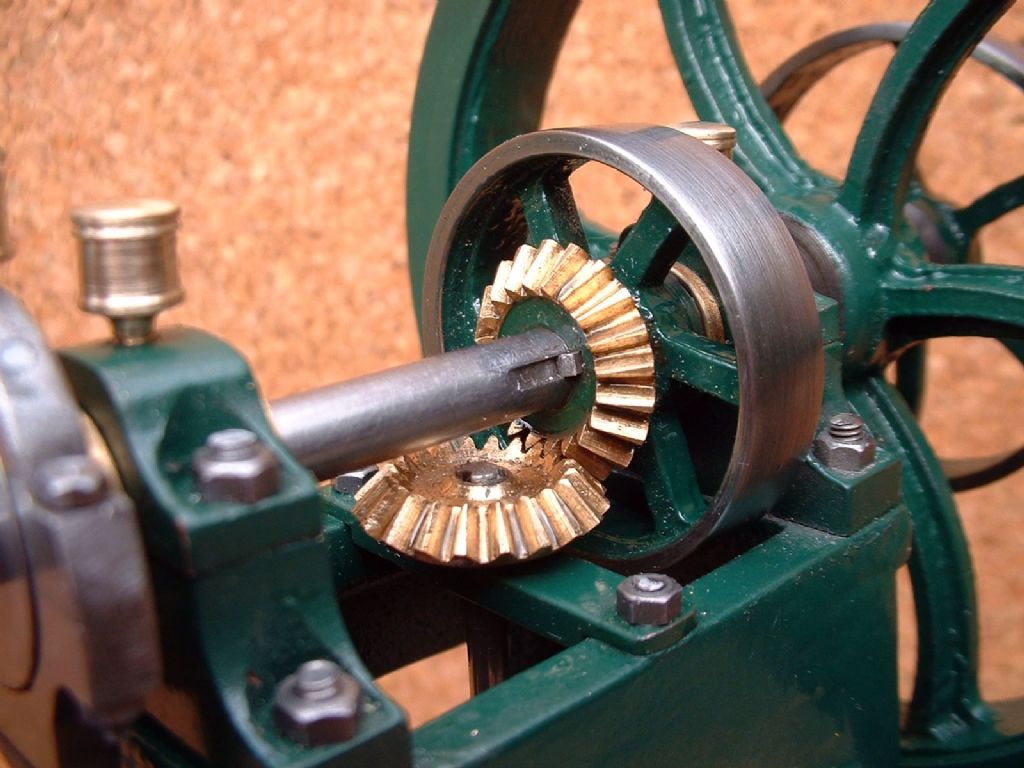
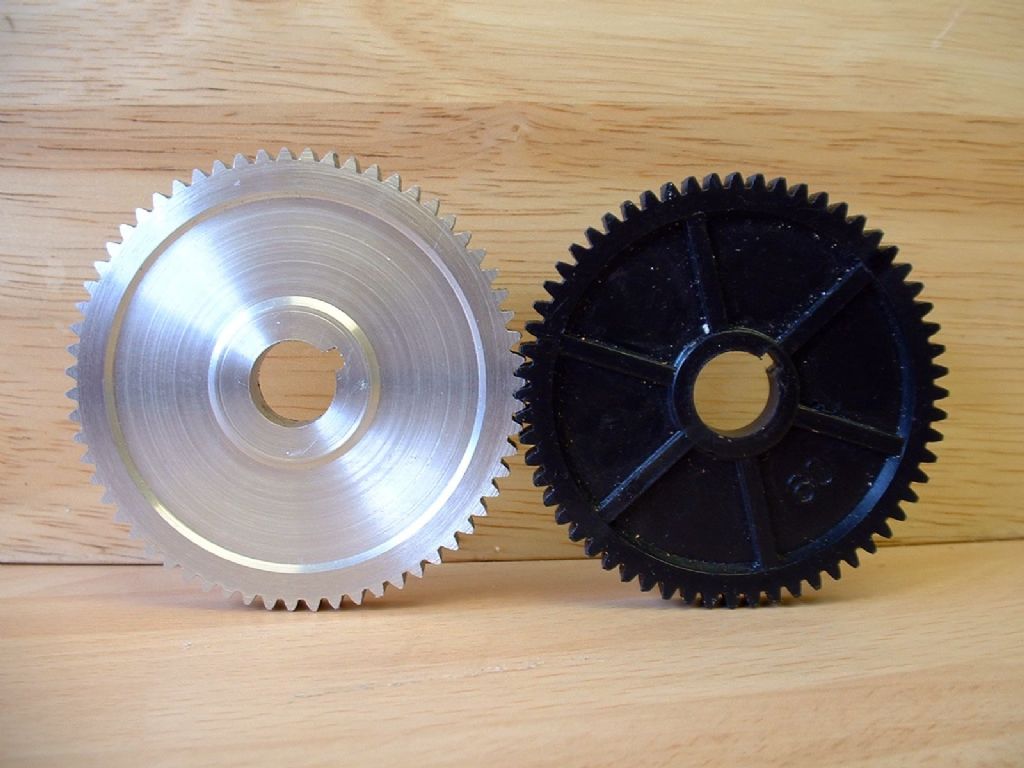
                                                      I didn't measure it, I made the rash assumption my home-cut worm and wheel are accurate, and then calculated the theoretical error for being half of one division out.

                                                      All the gears I have made to date using this method of divising with Ivan Law's book beside me seem to work fine.

                                                      13T pinion with splined insert

                                                      Pinuion 40 DP

                                                      My gear cutting setup, using home made rotary table/dividing head:

                                                      Cuitting large gear

                                                      A pair of bevel gears made using the above equipment:

                                                      Bevel Gears

                                                      A 63-tooth metric changewheel for my mini lathe:

                                                      Two gears

                                                      Regards

                                                      Neil

                                                    Viewing 25 posts - 1 through 25 (of 36 total)
                                                    • Please log in to reply to this topic. Registering is free and easy using the links on the menu at the top of this page.

                                                    Latest Replies

                                                    Home Forums Beginners questions Topics

                                                    Viewing 25 topics - 1 through 25 (of 25 total)
                                                    Viewing 25 topics - 1 through 25 (of 25 total)

                                                    View full reply list.