Indentfication of Induction Motor

Indentfication of Induction Motor

Home Forums Workshop Tools and Tooling Indentfication of Induction Motor

Viewing 17 posts - 1 through 17 (of 17 total)
  • Author
    Posts
  • #141270
    richard3267
    Participant
      @richardrogalewski21509

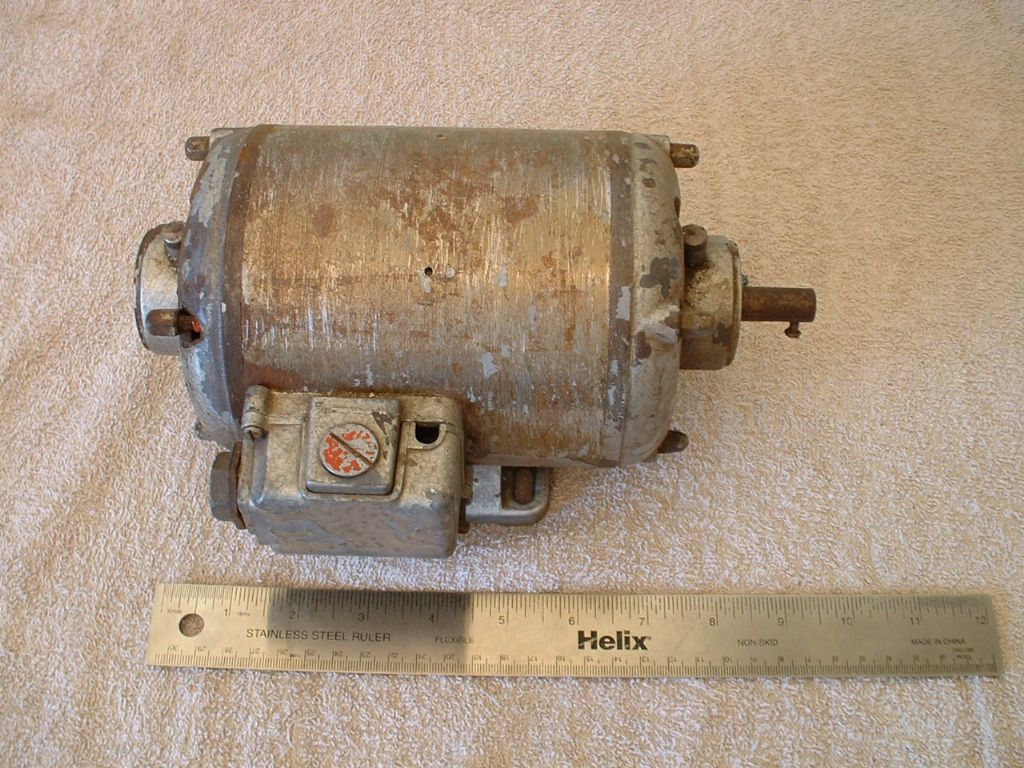
      Hi. My induction motor is 6.5" long in main body x 5" diameter, it is said to be rated 1450 RPM, 240V and 0.5HP. But, the name plate is missing. Long shot, but can anyone please identify this motor? Thanks.

      induction motor no nameplate.jpg

      #17275
      richard3267
      Participant
        @richardrogalewski21509
        #141276
        Swarf, Mostly!
        Participant
          @swarfmostly

          Hi there, Richard,

          I think you'll be very lucky if anyone recognises your motor on looks alone – still, I may be underestimating the Group wisdom and experience.

          How much do you know of your motor's history? Did it come to you as a declared 'worker' or is its provenance a complete mystery?

          I'm guessing but the hole for the red plug in the terminal box is prpbably tapped with a conduit thread. If it's 3/4" by 16 tpi that suggests the motor is fairly old – not necessarily a show-stopper, the motor on my ML7 lathe was second-hand in 1970 and was OK when I last switched it on. The alternative is the more modern 20 mm metric conduit thread. There might not be very many threads in the thickness of the terminal box tapping so using a thread gauge might be a bit tricky. Probably better to visit your local electrical wholesaler (e.g. TLC or Wades) and buy a 20 mm male conduit fitting as a gauge. If you do eventually decide that the motor is usable, I recommend that you buy a length of flexible plastic conduit plus end-fittings to convey your wiring from the motor terminals to the associated starter & switch-gear. TLC sell an installer's kit but they also sell the conduit by the metre and the fittings by 'each'.

          The D-shaped hole in the terminal box lid could be for the cable to a capacitor – is there any sign that a capacitor was ever fitted? If the motor is capacitor start or capacitor start & run, the capacitor is usually fitted within a shroud on the outside of the motor casing. Look for any vacant screw-holes that might have held a capacitor shroud. Of course, your motor might be 'induction start' or 'induction start & run' in which case it won't need a capacitor.

          I see that someone has substituted a screw for the woodruff key in the motor shaft, I assume you'll clean that up?

          I recommend that you buy one or both of the Workshop Series of books on electric motors in the workshop. They will potentially help you a lot, particularly when it comes to deciding which wires go to which motor terminals. There have also been threads on this forum addressing that subject, you might like to take a photo of the motor terminal panel in preparation for that puzzle.

          I'll close with a caution – if you aren't electrically-savvy, ask a friend.

          Best regards,

          Swarf, Mostly!

          #141292
          jonathan heppel
          Participant
            @jonathanheppel43280

            Why do you need to know? It looks like like any old imperial motor. 5/8" shaft if I remember right. You can still get them, assuming it's a standard size, which it looks like. If it's just poorly,take it to a rewinder.

            If the coils are dead, cheapest option is probably to change to metric, though it's more work.

            #141295
            Sub Mandrel
            Participant
              @submandrel

              Bearing in mind a recent incident reported here, check if that any insulation on internal connecting wires hasn't broken down. If it has, replace with modern wire of the same cross-section.

              Neil

              #141296
              richard3267
              Participant
                @richardrogalewski21509

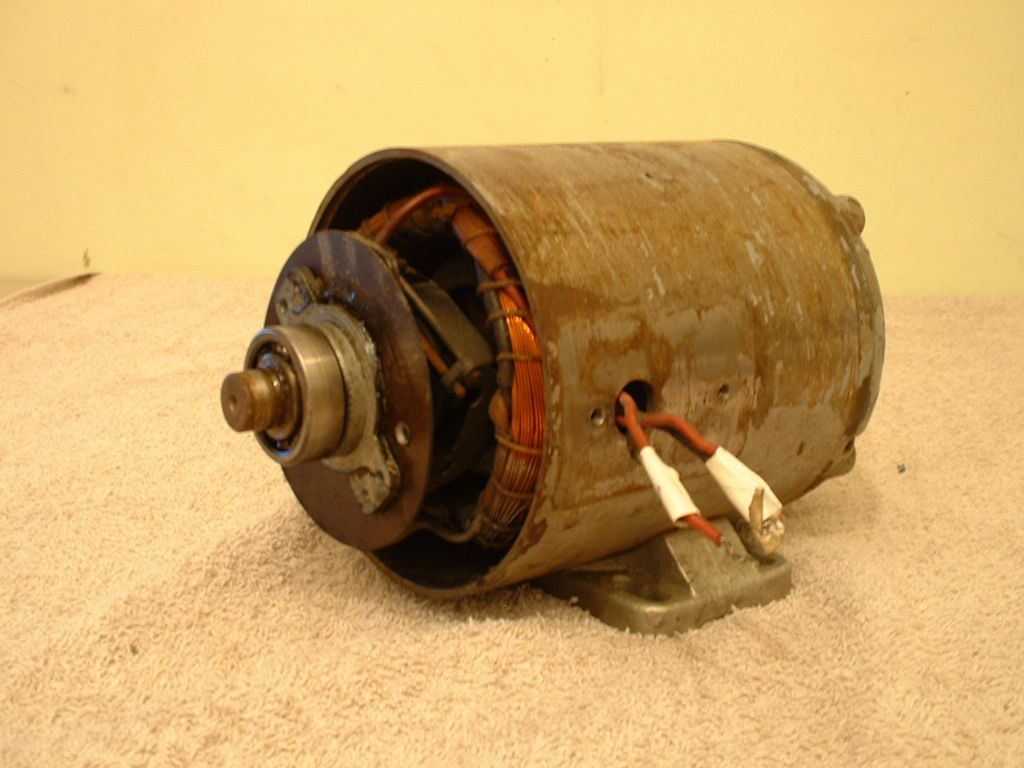
                Hi. I'm sure an old imperial motor. The shaft is 0.5" or very near. I took the end cap off and I see it's using a centrifugal switch to cut out the start winding. The terminals have two red wires and two black. As it was wired – one red and black together for neutral, end other red black pair for live. Wonder if that makes sense.

                Edited By Richard Rogalewski on 21/01/2014 19:13:27

                #141300
                richard3267
                Participant
                  @richardrogalewski21509

                  Wiring:  Two reds and two blacks exit from motor.


                  induction motor wiring.jpg

                  Edited By Richard Rogalewski on 21/01/2014 19:51:49

                  #141301
                  richard3267
                  Participant
                    @richardrogalewski21509

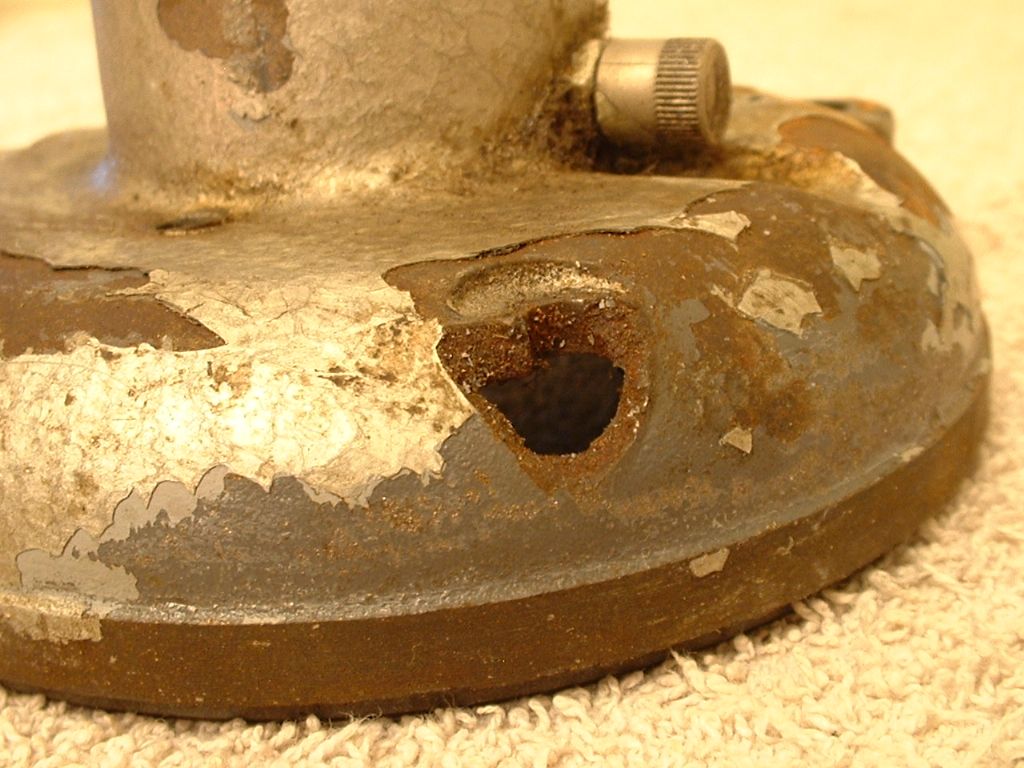
                    Problem with end cap. Can it be fixed?  Looks like cast iron.


                    induction motor end cap.jpg

                    Edited By Richard Rogalewski on 21/01/2014 19:46:54

                    Edited By Richard Rogalewski on 21/01/2014 19:57:55

                    #141303
                    John Rudd
                    Participant
                      @johnrudd16576
                      Posted by Richard Rogalewski on 21/01/2014 19:46:23:

                      Problem with end cap. Can it be fixed?


                      induction motor end cap.jpg

                      Edited By Richard Rogalewski on 21/01/2014 19:46:54

                      Metal filler?

                      I presume it's cast? Welding an option?


                      " The terminals have two red wires and two black. As it was wired – one red and black together for neutral, end other red black pair for live. Wonder if that makes sense."

                      Somewhere in amongst all of that will be the switch….

                      the main winding will be the run winding , you should be able to identify that as the start winding goes thru the centrifugal sw….with you meter on ohms check which pair goes open when you operate the switch….

                      ideally megger the windings to check the insulation…..

                      Edited By John Rudd on 21/01/2014 20:01:16

                      #141304
                      Sub Mandrel
                      Participant
                        @submandrel

                        > Problem with end cap. Can it be fixed?

                        The damage appears cosmetic, so JB Weld or any other epoxy putty should do the job.

                        Neil

                        #141305
                        Rick Parry
                        Participant
                          @rickparry

                          Richard

                          It looks like Brook Cromptom to me Is it a runner?

                          The end plate can be brazed to repair the fixing for the switch easy enough

                          Richard

                          #141306
                          richard3267
                          Participant
                            @richardrogalewski21509

                            I bought it of Ebay, and it was described as being a runner. I've got a bigger Brook Crompton, and that is rated 0.25 HP. This is smaller, but said to be 0.5 HP. So, wonder if it really is 0.5 HP.

                            #141309
                            richard3267
                            Participant
                              @richardrogalewski21509

                              I think I might have a good article here as to welding or brazing cast iron:

                              **LINK**

                              #440086
                              richard3267
                              Participant
                                @richardrogalewski21509

                                I think it's Gryphon motor.

                                #440101
                                Howard Lewis
                                Participant
                                  @howardlewis46836

                                  Sounds like a 4 pole motor.

                                  You will need to fit a capacitor of suitable vale for starting.

                                  People far more knowledgeable than I can suggest the likely correct value, and how to wire it in and connect the wires.

                                  Being single phase, ideally, it needs to be mounted on rubber mounts to minimise noise.

                                  You may still be able to play a good tune on an old fiddle

                                  Howard

                                  #440106
                                  SillyOldDuffer
                                  Moderator
                                    @sillyoldduffer
                                    Posted by Richard Rogalewski on 21/01/2014 20:00:44:

                                    I bought it of Ebay, and it was described as being a runner. I've got a bigger Brook Crompton, and that is rated 0.25 HP. This is smaller, but said to be 0.5 HP. So, wonder if it really is 0.5 HP.

                                    Maybe, a couple of factors can make size alone a bit misleading. First the insulation on older motors can't take quite such high temperatures, so they were made physically bigger to dissipate the heat. Modern insulation can run 60 to 80°C hotter, maybe even more, which means new motors are made smaller, ie cheaper. Secondly, electric motors are usually rated for some mix of on/off operation. Provided they are allowed time to cool off between bursts motors can be safely overrun (made smaller and cheaper). My hobby lathe is a good example, as it spends far more time idling than working, I don't need to pay for a hefty motor. An industrial lathe with a much higher duty cycle would demand a heavier motor for the same power output as mine. Many motors are run flat out more or less permanently and these are much bigger physically than types that only operate in short bursts.

                                    Rating motors can be a guessing game : motor plates don't always give the duty cycle, some have ratings that expect an unmentioned cooling fan and it can be impossible to trace specifications even if the maker and part number is known. Old motors can be compromised by past abuse or damp. For amateur use it may not matter: any motor of roughly the right size will do a reasonable job. Myford lathes fitted with 1/3rd, 1/2 and 3/4HP motors all work!

                                    Dave

                                    #440283
                                    Phil Whitley
                                    Participant
                                      @philwhitley94135

                                      Not a Brook Gryphon , they had the connections in the end bell, not on the stator, it has the look of an early GEC, Roger, are you in the UK or the USA?

                                      Phil

                                    Viewing 17 posts - 1 through 17 (of 17 total)
                                    • Please log in to reply to this topic. Registering is free and easy using the links on the menu at the top of this page.

                                    Latest Replies

                                    Viewing 25 topics - 1 through 25 (of 25 total)
                                    Viewing 25 topics - 1 through 25 (of 25 total)

                                    View full reply list.