Emco Compact 5 Vibration

Emco Compact 5 Vibration

Home Forums Manual machine tools Emco Compact 5 Vibration

Viewing 25 posts - 1 through 25 (of 30 total)
  • Author
    Posts
  • #837147
    pierreocinom
    Participant
      @pierreocinom

      Hi all

      I’ve just bought a second hand Emco Compact 5. I disassembled it, cleaned all the parts, then reassembled it. I obviously lubricated where needed and set the plays best I could. The machine was in pretty rough condition, some parts need replacement, and I have loads of questions.

      But before I invest more time and money, I’d like to understand how much vibration is normal.

      When engaged at 900 rpm, there is a noticeable vibration of the whole machine.

      A few hints:

      • I’ve tightened the axis bold of the motor plate, which helped slightly.
      • The machine sits on it’s chip plate and is tightened through to a wood plate, itself clamped firmly to the workbench.
      • I’ve also tried it on the floor directly for comparison and to eliminate the bench as a cause, it’s the same.
      • When running the engine without the belt, the machine doesn’t vibrate at all.
      • I can’t feel any play in the spindle when checking with my hands.
      • I tried different speeds and the vibration is always present, even though obviously stronger at higher speeds.
      • The belts are a little worn off so I might try new ones, even though I doubt they would be the cause.
      • Different belt tension levels don’t have much of an impact, but tighter feels a little better
      • The chuck wasn’t mounted for my tests. With the chuck mounted it’s worse.

      For reference, I’ve never owned or used a lathe before, so I don’t really have a benchmark. It just feels odd to me to see it vibrate like that.

      #837169
      JasonB
      Moderator
        @jasonb

        I would be tempted to try a new belt. Overtime they can become stiff and take on a “set” if left in one position for a long time.

        #837184
        noel shelley
        Participant
          @noelshelley55608

          Like Jason I would change the belt first and see if it’s better. Look very closely at all the rotating parts, does anything look out of balance, is there a badly worn pulley ? is there any noise that might indicate a worn bearing ?  Good luck.  Noel.

          #837186
          Graham Meek
          Participant
            @grahammeek88282

            Single Phase motors are not the smoothest drive. The construction of the motor means it does not deliver a smooth and constant torque which can give a Cyclic Hum. This will be amplified by the metal swarf guard.

            Regards

            Gray,

            #837189
            Russell Eberhardt
            Participant
              @russelleberhardt48058
              On Graham Meek Said:

              Single Phase motors are not the smoothest drive. The construction of the motor means it does not deliver a smooth and constant torque which can give a Cyclic Hum. This will be amplified by the metal swarf guard.

              Regards

              Gray,

              Agreed, switching from a single phase motor to a three phase motor and inverter has made a significant improvement to the surface finish I can get on my old lathe.

              Russell


              #837190
              Nigel Graham 2
              Participant
                @nigelgraham2

                You have looked at major cuases like worn motor or headstock bearings.

                With no other obvious causes I’d agree – suspect the belts first.

                An old, worn belt is less flexible than it was, and may have developed small irregularities such as broken plys.

                Do not over-tighten the belt, as that will over-stress the bearings. (That is a general rule for all belt drives.)

                I’d also be wary of the mounting. Rigidly bolting a lathe to a wooden bench is not a good idea as it can distort the machine slightly, and the wood itself can change its shape and size slightly by temperature and humidity changes.

                #837195
                pierreocinom
                Participant
                  @pierreocinom

                  Thanks for the answer. I get your point but it’s not really the hum of the motor I am worried about, and as I mentioned with the belt not engaged to the spindle (motor running freely) the vibration doesn’t occur. This is helpful information anyway, helps me understand better what noise level is normal.

                  I’ll try looking into any loose pulleys and/or changing the belts as others have suggested.

                  #837196
                  JasonB
                  Moderator
                    @jasonb

                    As it is happening in one of the speeds where the motor is belted directly to the spindle it would be worth trying it with the second belt removed, it could simply be the unloaded aluminium internediate pully is vibrating as it turns.

                    #837204
                    Graham Meek
                    Participant
                      @grahammeek88282

                      One thing that occurred to me this morning while changing the belt position on my C5. There should be an M6 bolt directly beneath the motor position which rests on the bench, or swarf tray. This is adjusted to just take the weight of the motor assembly. Do not tighten this too much as it will disturb the lathe bed geometry.

                      Regards

                      Gray,

                      #837231
                      pierreocinom
                      Participant
                        @pierreocinom
                        On JasonB Said:

                        As it is happening in one of the speeds where the motor is belted directly to the spindle it would be worth trying it with the second belt removed, it could simply be the unloaded aluminium internediate pully is vibrating as it turns.

                        If I understand you correctly that would make sense, but in that case it would also vibrate when the motor is not connected to the spindle, wouldn’t it? That’s not the case. To clarify, with motor pulley A, intermediate pulley B, and spindle pulley C, my status quo is:

                        • A is always belted to B. When running the motor just like that, no vibration.
                        • Belt from B to C (with A still connected to B), vibration.
                        • Belt from A to C (with A still connected to B), vibration.

                        Common denominator seems to be C here.

                        On Graham Meek Said:

                        One thing that occurred to me this morning while changing the belt position on my C5. There should be an M6 bolt directly beneath the motor position which rests on the bench, or swarf tray. This is adjusted to just take the weight of the motor assembly. Do not tighten this too much as it will disturb the lathe bed geometry.

                        Regards

                        Gray,

                        Good point. When I rebuilt it I realised exactly that: the previous owner had it too “tight” (in the sense of raising the tray too much), which made the tray below the motor (on the left) slightly lifted (even without the bold/foot) where as the right part is flush with the surface. Affects geometry for sure but I don’t know how much of an impact it would have on vibrations.

                        Talking about geometry: I also realised the holes for mounting the lathe to a bench are not perfectly aligned with the ones in the tray, especially the right one. This could be due to either the lathe/bed being twisted, or the tray. In both cases I think this was a poor design by Emco, as mounting the lathe and the tray to a bench forces you to add tension to the system if the holes don’t line up. A slotted hole in the tray would have been superior IMHO.

                        #837238
                        cedric 1
                        Participant
                          @cedric

                          Yes, definitely put new belts on any second hand lathe. They can get deformed from sitting unused in one position  for years. Get “cogged” V belts with the notches around the inner circumference.  Much more flexible and smooth running on small pulleys.

                          And do check for loose or wobbly pulley on C.

                          And check headstock bearings for play and for smooth running when spindle is spun by hand with no belts on. Any sign of roughness or noise is a death knell. Check play by holding a piece of bar in the chuck and yanking it up and down with a dial indicator on the spindle next to the headstock.

                          #837271
                          pierreocinom
                          Participant
                            @pierreocinom

                            I have now replaced both belts. Additionally, I have significantly reduced belt tension. It’s not that it was overly tight before, but I now did keep very loose. These measures did indeed help reduce the vibrations; there is still a bit of vibration left, but I assume this is normal.

                            Spindle play: I can’t feel anything significant by hand, but I’ve ordered a dial indicator to check this more thoroughly.

                            One thing that remains and worries me: there is whirring noise at high RPMs. This could simply be expected, as I guess a spindle revolving at high speeds will always induce some sort of noise (just like a drill or angle grinder), but I am unsure it’s normal on a lather. Bear in in mind that this is my first lathe, so I have no experience or benchmark as to what is considered “normal”.

                            I shot a video with audio of the lathe running at maximum speed (2400 RPM):

                            https://youtube.com/shorts/AQtgYidfBPQ

                            I know it’s hard to tell from a video (especially the noise seems a little exaggerated on this one), but I’d be grateful to hear you guys’ thoughts.

                            #837273
                            Howard Lewis
                            Participant
                              @howardlewis46836

                              It is possible that there is an out of balance caused by the chuck.

                              What is it like without the chuck?

                              Also, the drive pulley on the spindle might be out of balance.

                              Howard

                              #837274
                              Dave Halford
                              Participant
                                @davehalford22513

                                Sounds like spur gears

                                #837275
                                pierreocinom
                                Participant
                                  @pierreocinom
                                  On Dave Halford Said:

                                  Sounds like spur gears

                                  They were not attached at that point in time.

                                  On Howard Lewis Said:

                                  It is possible that there is an out of balance caused by the chuck.

                                  What is it like without the chuck?

                                  Also, the drive pulley on the spindle might be out of balance.

                                  Howard

                                  <p style=”text-align: left;”>The chuck is not attached, I am running the tests without them. I checked the wheel and it looks decent, but it always hard to say. I also don’t manage to remove it (I actually stopped trying in order to avoid any damage / unbalance).</p>

                                  #837284
                                  cedric 1
                                  Participant
                                    @cedric

                                    Video sounds like bearings, but hard to tell from a video.

                                    Try the old screwdriver trick. Put the blade of a screwdriver on the headstock next to the bearing and the handle against your ear and listen to the noise. Move the blade to different points to locate where the noise is loudest.

                                    #837288
                                    Michael Gilligan
                                    Participant
                                      @michaelgilligan61133

                                      +1

                                      Bearings sound dry and clapped-out

                                      MichaelG.

                                      #837294
                                      Graham Meek
                                      Participant
                                        @grahammeek88282

                                        The Swarf Guard as shown in the Emco manual was never intended to be bolted down to a bench. It shows four felt pads at each corner and the machine is attached to the swarf guard with M8 “Square Neck Bolts”, (i.e. Coach Bolts), (” ” Emco speak).

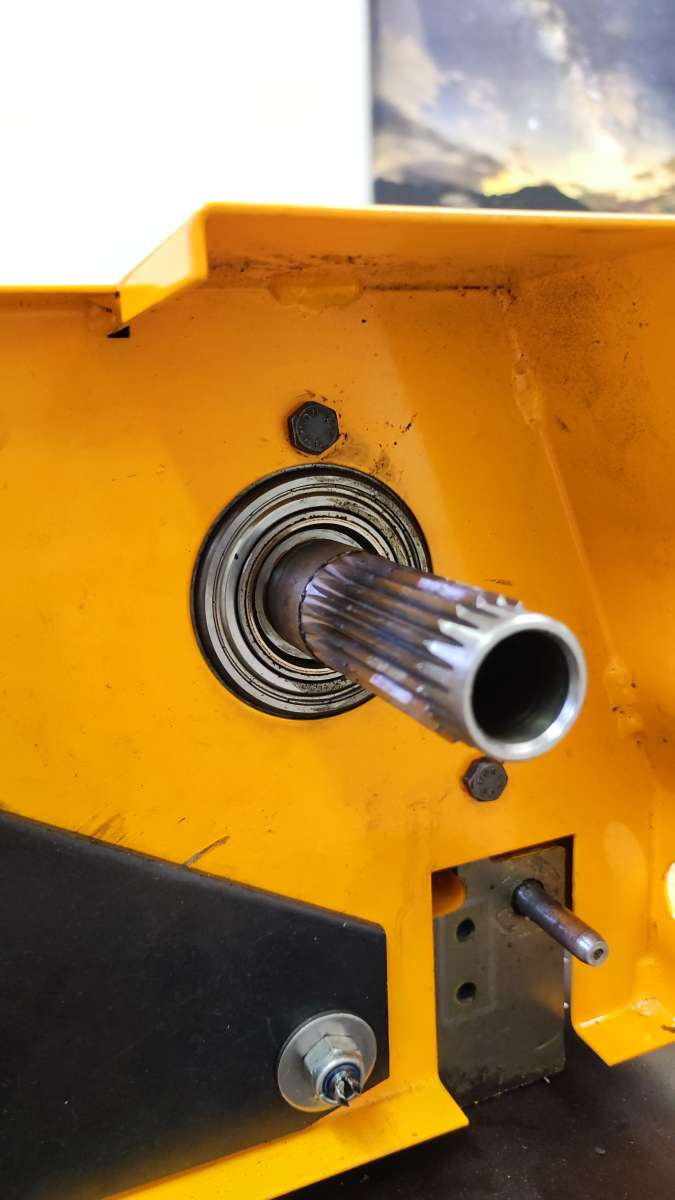
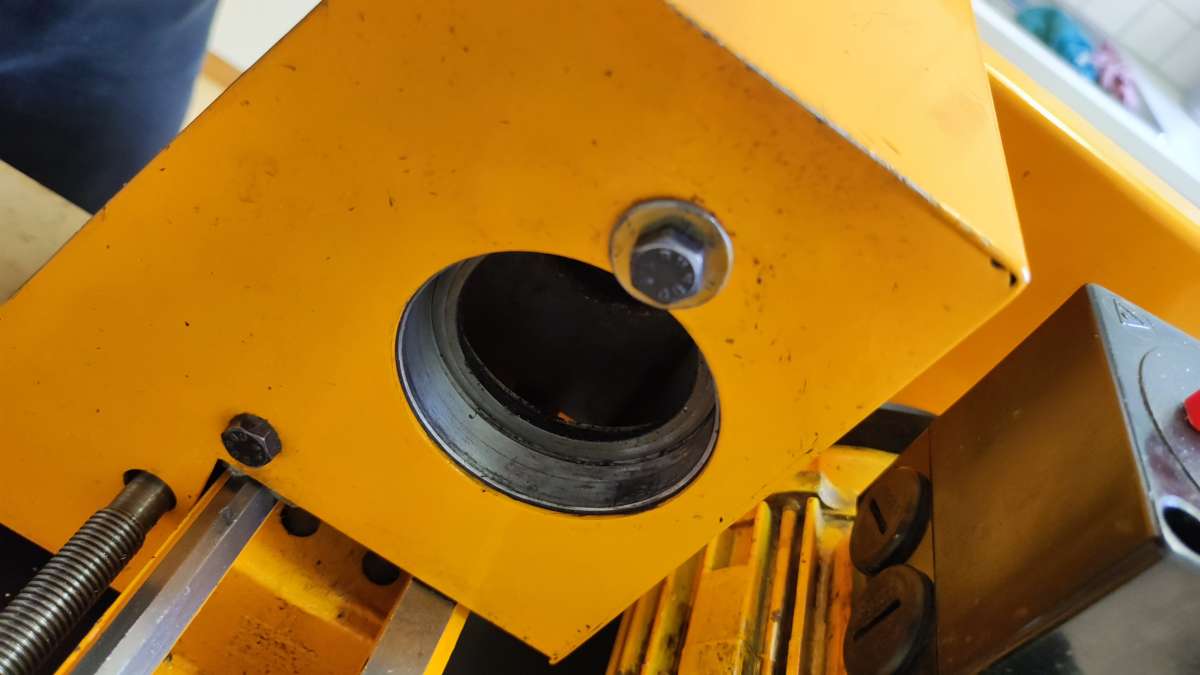
                                        As regards the noise there appears to be some form of cover over the front bearing. Maybe someone has has trouble with swarf getting past the front bearing shield? Or has been trying to lubricate the bearings?

                                        Unfortunately I cannot do a comparison on my lathe on top speed. As I have my screwcutting clutch permanently engaged.


                                        Regards

                                        Gray,

                                        #837318
                                        pierreocinom
                                        Participant
                                          @pierreocinom
                                          On cedric 1 Said:

                                          Video sounds like bearings, but hard to tell from a video.

                                          Try the old screwdriver trick. Put the blade of a screwdriver on the headstock next to the bearing and the handle against your ear and listen to the noise. Move the blade to different points to locate where the noise is loudest.

                                          Yep I’ve tried the stethoscope method already. Indeed in the spindle housing I do hear a bit of whirring. I just can’t tell if it’s normal or not. I should at that below 2400 RPM the machine runs pretty silent.

                                          #839096
                                          pierreocinom
                                          Participant
                                            @pierreocinom

                                            I just wanted to follow up on this as I have replaced the spindle bearings, and this has entirely solved the issue I had with noise. As I didn’t find many resources about this particular topic online, I thought I’d quickly document it here in case it helps someone in the future.

                                            Disclaimer: I am not a machinist, nor do I have experience with lathes or the Emco Compact 5. The following is all based on my personal knowledge and assumptions. I have good knowledge of mechanics in general and am an engineer, but again, have never done this particular operation before. English is not my mother tongue so pardon some of the approximate terms.

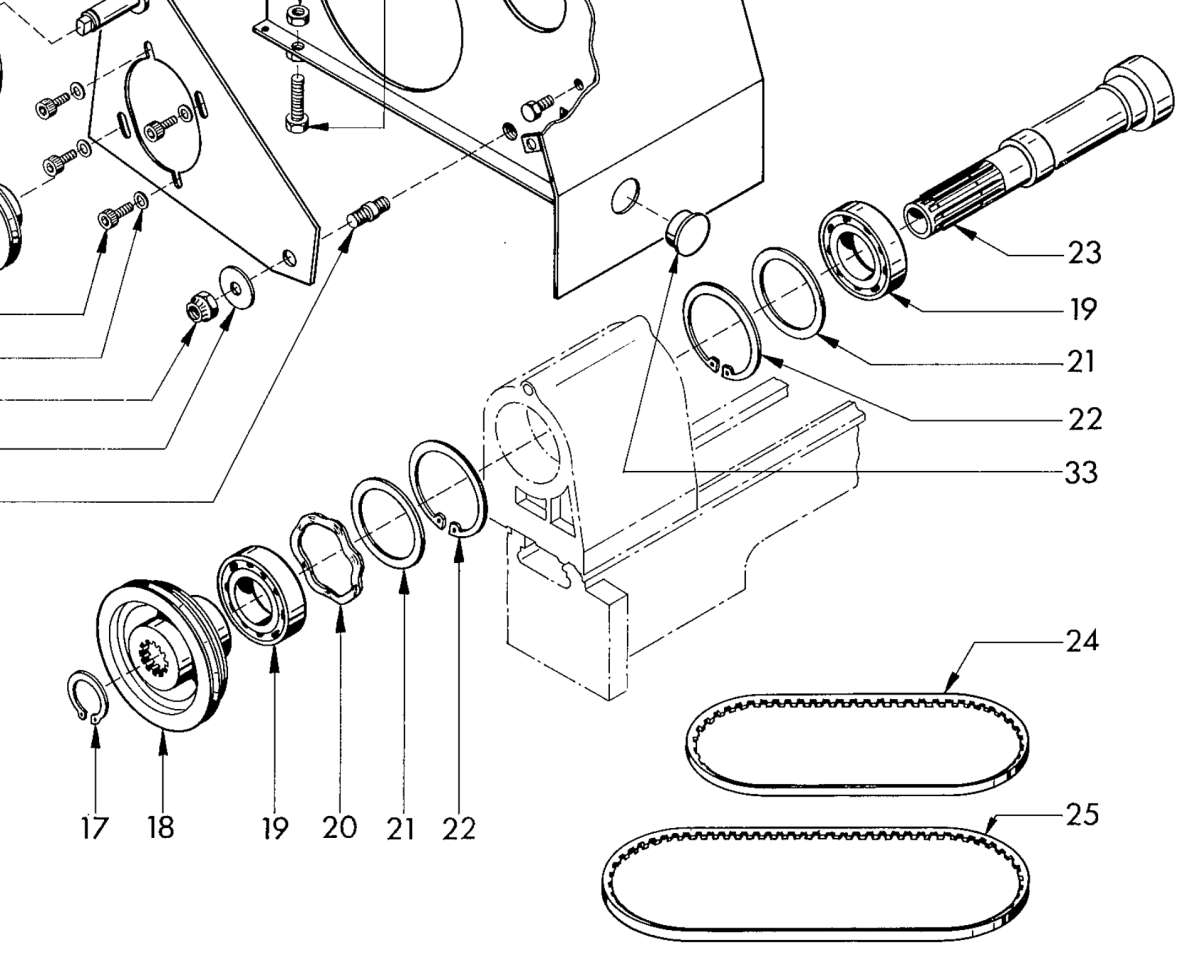
                                            General Overview

                                            Screenshot 2026-02-23 at 20.50.12

                                            • The bearings are press-fitted onto the spindle and into the housing.
                                            • The play-free assembly is given by the spring-loaded washer (20) that adds tension along the axis of the spindle, and is held together solely by the circlip (17).
                                            • To allow the spring loaded washer to function, the wheel-side bearing is less snug than the chuck-side bearing, allowing some (very minimal) sliding of the spindle along its axis.

                                            Disassembling 

                                            First remove the bed and engine.

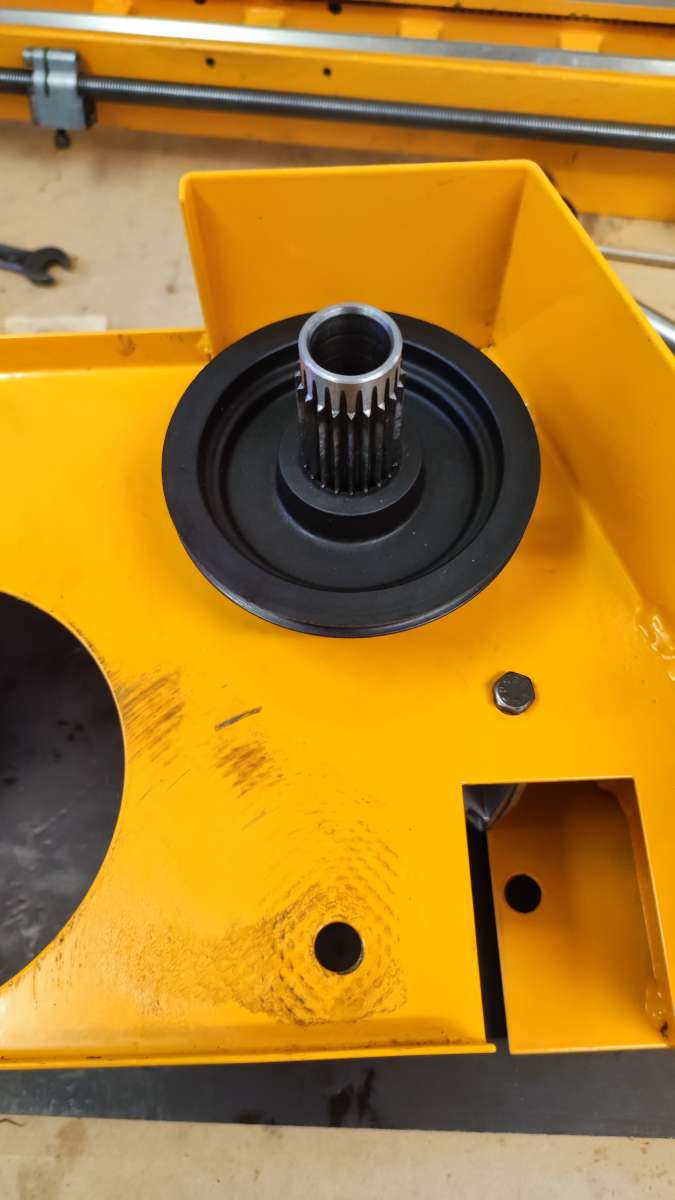
                                            1. Remove the circlip (17) from the spindle, being careful not to damage the teeth of the spindle.
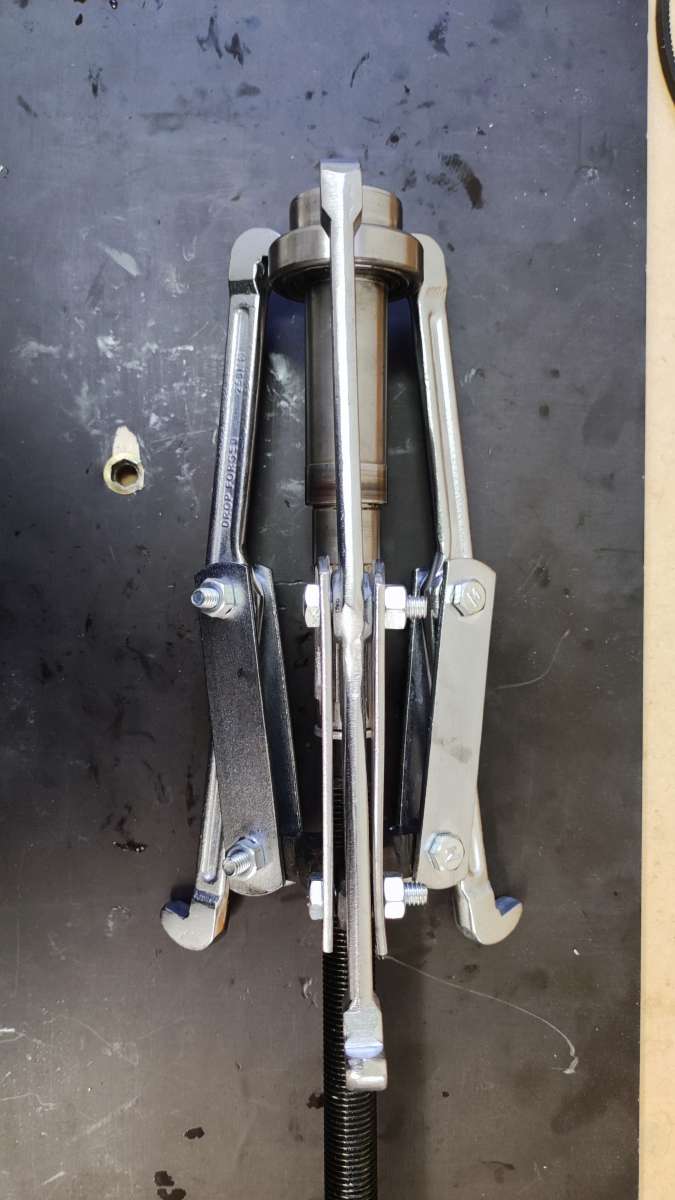
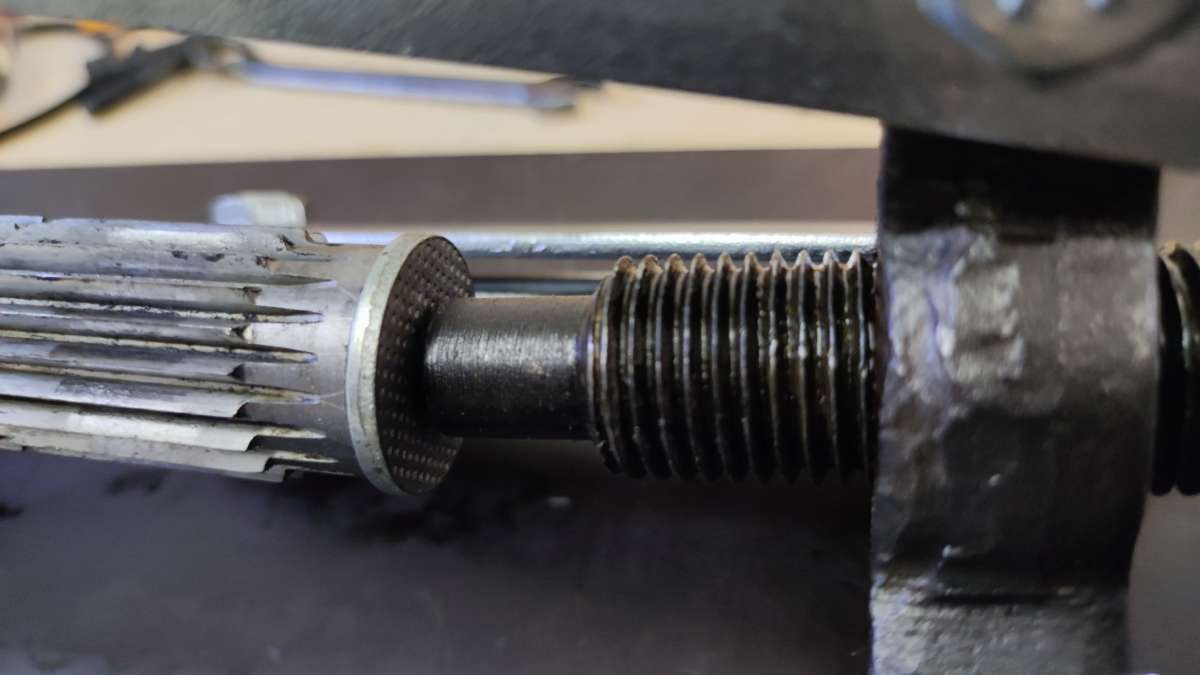
                                            2. Use an extractor to remove the wheel, being careful to nicely position the claws in order not to damage or bend the wheel. I used a washer positioned at the end of the spindle to position the main screw of the extractor (forgot to take a picture).
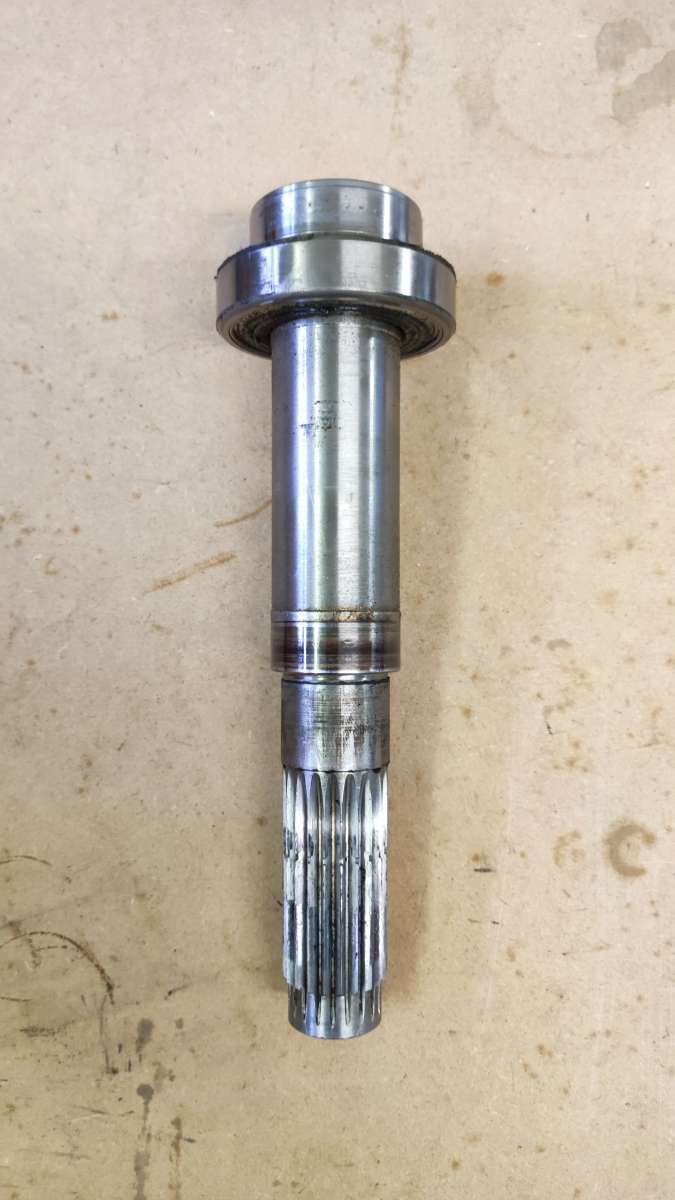
                                            3. Now a very light tap with a mallet (from the wheel side) should set the spindle free (with the chuck side bearing stuck on it).
                                            4. Remove the retention discs (21), then the inner circlips (22).
                                            5. Now you can extract the bearing from the spindle using the same technique with the washer. This fit is much more snug, so be careful to align everything carefully in order not to damage or bend the spindle.
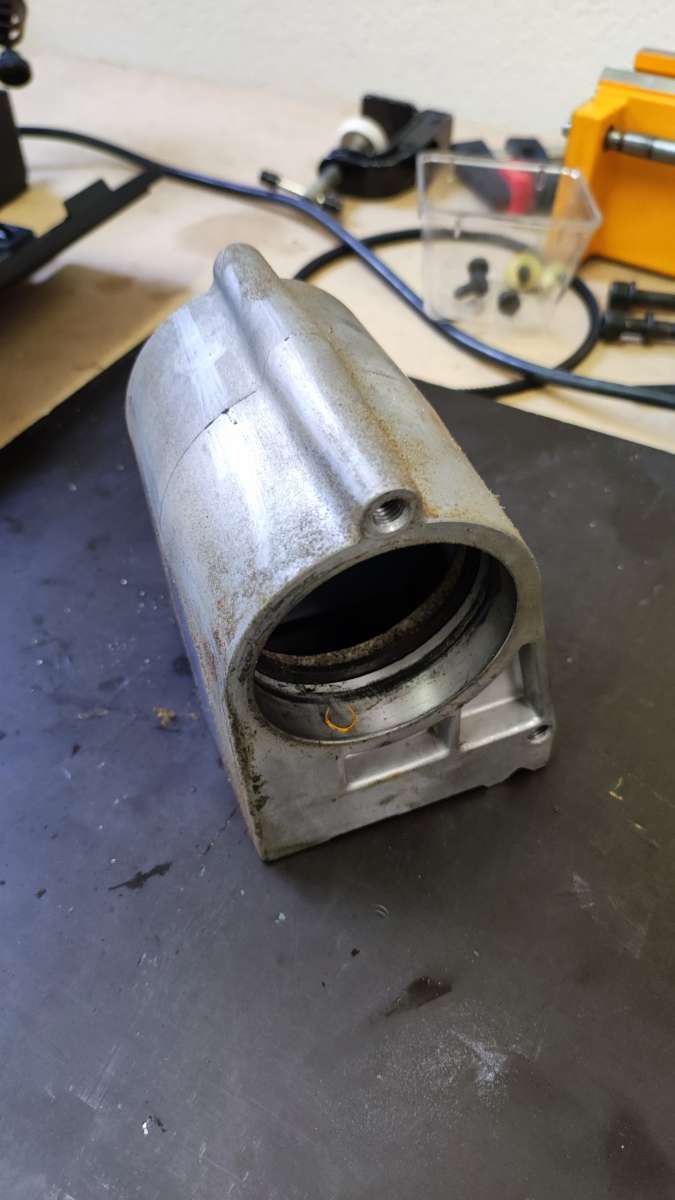
                                            6. Optional: you can now remove the cast aluminium part holding the bearings from the housing by undoing four hex screws.

                                            I used the opportunity to thoroughly clean everything.

                                            IMG_20260219_144632IMG_20260219_170603IMG_20260219_144859IMG_20260219_144843

                                            IMG_20260219_150802IMG_20260219_155206IMG_20260219_155215

                                            Used a washer so that the extractor can press right against the middle axis of the spindle. 


                                            Reassembling

                                            You have to replace the cast aluminium part inside the housing. At this point I don’t recommend tightening the hex screws (for the housing) back immediately, as you might want to align holes (and the bottom part touching the bed) later on.

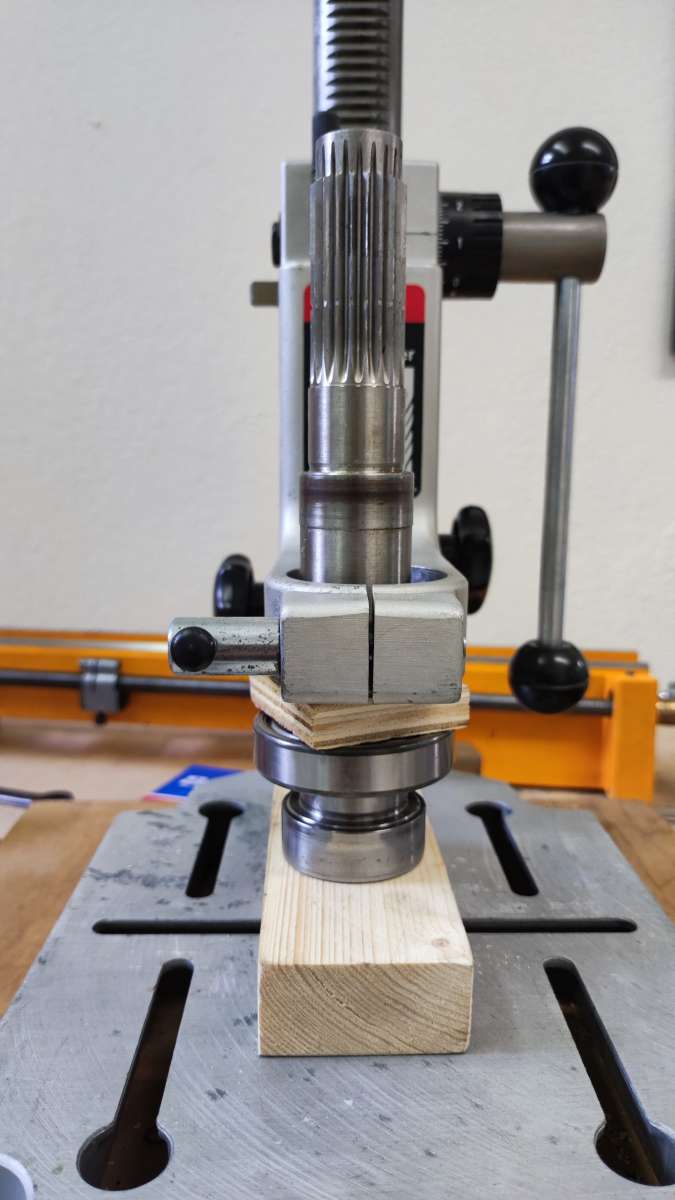
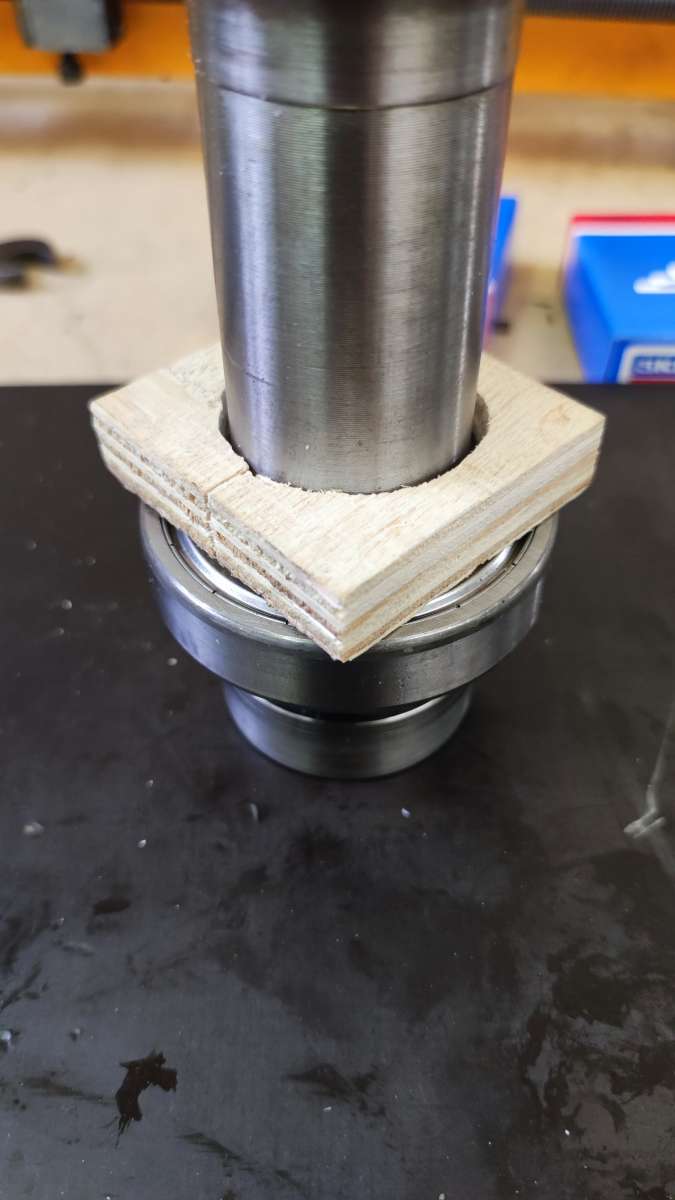
                                            1. The trickiest part is to press the bearing back onto the spindle. I don’t have the proper equipment but generally wanted to avoid hammering, and tried to apply the pressure as evenly as possible, even though ideally it should be on the inner ring. To do that I cut myself out a rough wooden jig, then used my drill-press to slowly press the bearing down, rotating the whole assembly by a few degrees at every press to make sure everything is even.
                                            2. Replace the inner circlips (22) and retention rings.
                                            3. Feed back the spindle and bearing from the chuck side. You’ll have to give it some light taps in order to press-fit the bearing back. Make sure everything is properly aligned and not to damage the aluminium. You can temporarily place the bearing on the other side to ensure better alignment.
                                            4. Place the spring loaded washer and bearing on the other side. In my case a few taps using my wood jig helped, I almost didn’t need a mallet.
                                            5. Place the wheel on top. Here I found it easier to rotate the whole assembly so that I could press the wheel down with my hands against the table top. I chose to do this because I didn’t want to risk using a mallet or similar and bending the wheel.
                                            6. As soon as you can see the groove, replace the circlip (17).

                                            IMG_20260219_165313

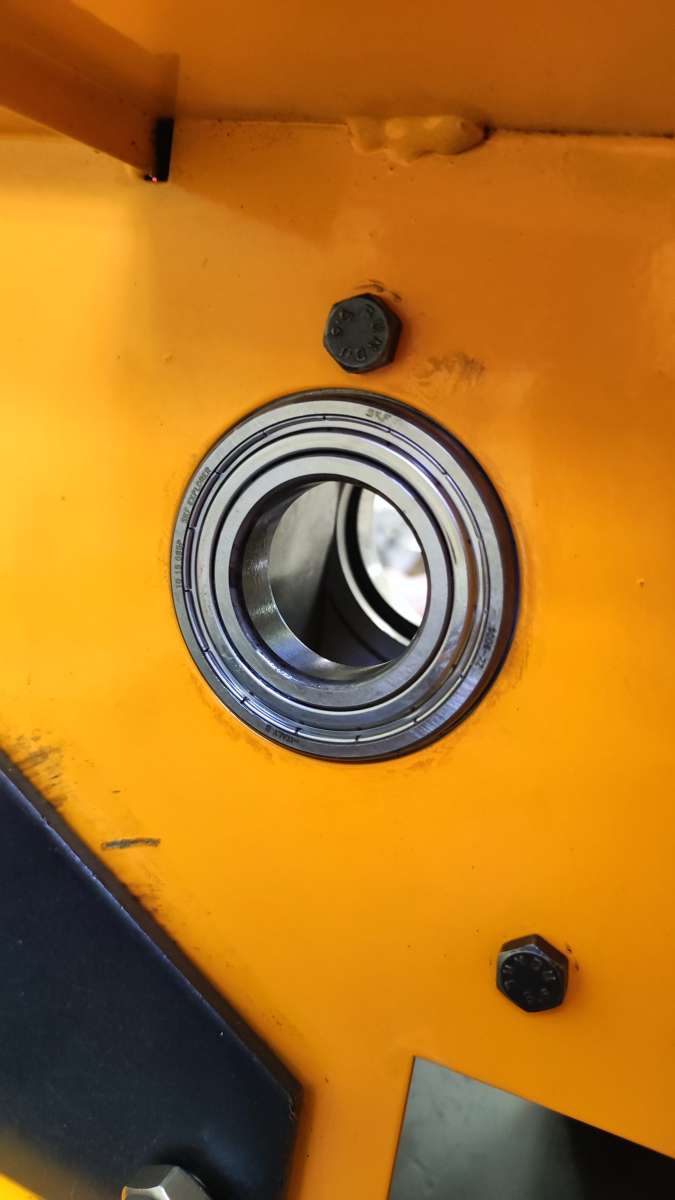
                                            The bearing on the wheel side, sticking out slightly due to the spring-loaded washer.

                                            IMG_20260219_163818

                                            My setup using a wooden jig and my drill press. Not the best, but better than hammering. 

                                            IMG_20260219_163702

                                            IMG_20260219_164438IMG_20260219_164311IMG_20260219_165648

                                            Notes

                                            • I used two extractors: one 110 mm and one 250 mm.
                                            • I didn’t use any form of lubricant. I just ensure everything was very clean, and applied a very light coat of grease on the spindle to protect it from corrosion. Bearings stayed in the solution they came in. Other parts got a final WD40 and wipe just for cleanliness.
                                            • About the method: I guess you could also place the chuck-side bearing in the aluminium housing first, then insert the spindle. I didn’t want to do that as the fit is very tight, so 1. I was worried to damage the aluminium and 2. I wanted to make sure the bearing was properly seated on the spindle, which is hard to see when it’s already mounted.
                                            • The bearings set me back CHF 30 a pair here in Switzerland (I guess they are even cheaper in most countries). Got SKF made in Italy.

                                            Bottom Line 

                                            The old bearings where definitely worn off and the cause of that noise and some of the vibrations. The operation was actually easier than expected, and I am amazed that it’s possible to service even those on this machine. As it’s my first lathe, I couldn’t be happier I was able to do that as frankly speaking, I felt really stupid and sad once I brought it home and discovered it was making weird noises. As someone stated above, I thought it was it’s “death knell”.

                                            I hope this helps, and I am happy to hear your thoughts, questions, feedbacks.

                                            #839111
                                            cedric 1
                                            Participant
                                              @cedric
                                              On pierreocinom Said:
                                              On cedric 1 Said:

                                              Video sounds like bearings, but hard to tell from a video.

                                              Try the old screwdriver trick. Put the blade of a screwdriver on the headstock next to the bearing and the handle against your ear and listen to the noise. Move the blade to different points to locate where the noise is loudest.

                                              Yep I’ve tried the stethoscope method already. Indeed in the spindle housing I do hear a bit of whirring. I just can’t tell if it’s normal or not. I should at that below 2400 RPM the machine runs pretty silent.

                                              <p style=”text-align: left;”>All you can do is go ahead and use the lathe as is. If the bearings are worn or damaged the noise will get worse and surface finish on your work will be poor. Then you can replace the bearings.</p>

                                              #839119
                                              Pete
                                              Participant
                                                @pete41194

                                                Overall my C5’s motor is quite smooth and quiet. More of a hum than anything else if it’s the only thing turning and the spindle and gearing isn’t. For whatever reason, I’ve read and mine does as well that the C5 motors usually run fairly warm after it’s been in use for some time compared to other single ph motors. I’m not saying it is, but your video almost made is sound like there could be a piece of swarf touching the motor cooling fan blades? My fan is plastic, but maybe at least worth a check?

                                                Fwiw, many of the more entry people don’t know this and I didn’t as well when starting out. Anytime your setting up any of the change gearing, they are not meant to be pushed together and fastened in place. That would be a zero backlash position and creates excess friction and wear on the gear teeth. A quick easy and cheap method is to cut up a piece of standard printer paper into strips about 1/2″ / 12 mm wide. It usually measures around .003″/ .08 mm thick. Put that between the two gear teeth, squeeze them together, tighten the bolt or nut, rotate the gears a bit until the paper comes out. That positions and sets the gears with a bit of clearance and backlash. And in most cases they’ll run quieter as well.

                                                Paper is made in numerous thicknesses, so you can use those to set almost any backlash clearance you want. Sometimes steel or cast iron gears will run there quietest at just one particular clearance. I can use cigarette rolling papers that are only .001″ / .025 mm thick. Even folded to get multiples of that number as well. Setting the gear clearance with a strip of paper is an old machinist trick that works just as well today.

                                                #839120
                                                pierreocinom
                                                Participant
                                                  @pierreocinom
                                                  On cedric 1 Said:
                                                  On pierreocinom Said:
                                                  On cedric 1 Said:

                                                  Video sounds like bearings, but hard to tell from a video.

                                                  Try the old screwdriver trick. Put the blade of a screwdriver on the headstock next to the bearing and the handle against your ear and listen to the noise. Move the blade to different points to locate where the noise is loudest.

                                                  Yep I’ve tried the stethoscope method already. Indeed in the spindle housing I do hear a bit of whirring. I just can’t tell if it’s normal or not. I should at that below 2400 RPM the machine runs pretty silent.

                                                  <p style=”text-align: left;”>All you can do is go ahead and use the lathe as is. If the bearings are worn or damaged the noise will get worse and surface finish on your work will be poor. Then you can replace the bearings.</p>

                                                  I changed the bearings already, see my post above.

                                                  #839122
                                                  pierreocinom
                                                  Participant
                                                    @pierreocinom
                                                    On Pete Said:

                                                    Overall my C5’s motor is quite smooth and quiet. More of a hum than anything else if it’s the only thing turning and the spindle and gearing isn’t. For whatever reason, I’ve read and mine does as well that the C5 motors usually run fairly warm after it’s been in use for some time compared to other single ph motors. I’m not saying it is, but your video almost made is sound like there could be a piece of swarf touching the motor cooling fan blades? My fan is plastic, but maybe at least worth a check?

                                                    Fwiw, many of the more entry people don’t know this and I didn’t as well when starting out. Anytime your setting up any of the change gearing, they are not meant to be pushed together and fastened in place. That would be a zero backlash position and creates excess friction and wear on the gear teeth. A quick easy and cheap method is to cut up a piece of standard printer paper into strips about 1/2″ / 12 mm wide. It usually measures around .003″/ .08 mm thick. Put that between the two gear teeth, squeeze them together, tighten the bolt or nut, rotate the gears a bit until the paper comes out. That positions and sets the gears with a bit of clearance and backlash. And in most cases they’ll run quieter as well.

                                                    Paper is made in numerous thicknesses, so you can use those to set almost any backlash clearance you want. Sometimes steel or cast iron gears will run there quietest at just one particular clearance. I can use cigarette rolling papers that are only .001″ / .025 mm thick. Even folded to get multiples of that number as well. Setting the gear clearance with a strip of paper is an old machinist trick that works just as well today.

                                                    I checked everything but the noise came from the bearings. I changed them and everything is running smooth, see above.

                                                    I am aware of the paper method, it’s actually what Emco describes in the manual 😊

                                                    #839129
                                                    Michael Gilligan
                                                    Participant
                                                      @michaelgilligan61133

                                                      Great result, and nicely documented

                                                      MichaelG.

                                                    Viewing 25 posts - 1 through 25 (of 30 total)
                                                    • Please log in to reply to this topic. Registering is free and easy using the links on the menu at the top of this page.

                                                    Latest Replies

                                                    Home Forums Manual machine tools Topics

                                                    Viewing 25 topics - 1 through 25 (of 25 total)
                                                    Viewing 25 topics - 1 through 25 (of 25 total)

                                                    View full reply list.