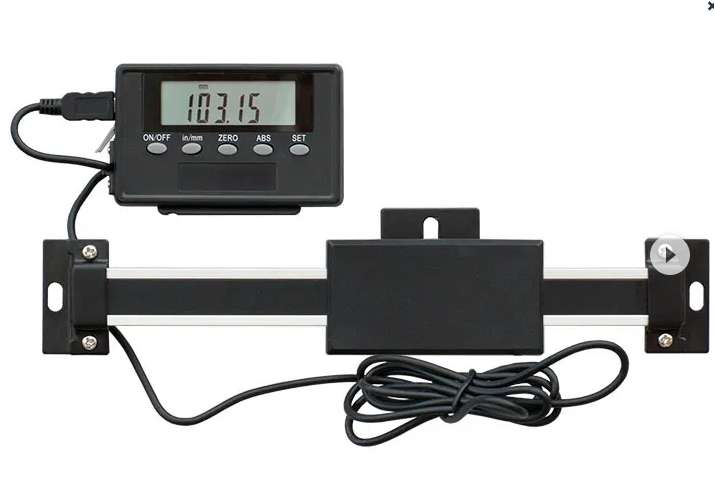
DRO is a no brainer. Before understanding that, several years ago I fitted my mill with Arc Euros cheapest offering, a pair of these:
Didn’t expect them to last, just fitted as a proof of concept, to be upgraded later if valuable. They work very well, and have continued to do so. They don’t have any clever functions, and having two displays isn’t ergonomic, but they still transform the mill! When one breaks, I’ll be into glass scales etc, but so far the pesky things refuse to die.
I’m on the edge with power feed too. Mainly take short cuts rather than long sweeps, so bearable. Nonetheless I’d probably have upgraded had not illness and other distractions kept me out of the workshop. Or gone CNC.
CNC is very tempting. I originally saw CNC as only valuable for repetition work which I rarely do. But CNC also pairs well with CAD, allowing the designer to specify cuts moving simultaneously in 2 or 3 dimensions. These are all but impossible to do manually. Starting again today I would immediately go CNC because I’ve realised not having CAD & CNC is holding me back. (Learning to drive 3D-CAD is a major investment too. Already have it for other reasons, so not an obstacle for me.)
Dave
I have the same ArcEuro basic DRO on the Myford S7B on the Z axis – saddle/carriage travel and it’s very good.
The motivation for this was previously machining a replacement poly-V pulley for a planer/thicknesser with a pitch between the grooves of 3/32 – 0.09375″ using the leadscrew handwheel@ 0.125″ per rev, backing off using the topslide @ 0.03125″ to get to the required 3/32 tool travel while retaining the zero point.
What with interruptions and phone calls you can see why I went for a DRO.
As long as you take care to shield the scale from swarf/coolant/cutting oil and arrange a saddle travel end stop to avoid wrecking it, they are as good as any DRO.
DRO is a no brainer. Before understanding that, several years ago I fitted my mill with Arc Euros cheapest offering, a pair of these:

Didn’t expect them to last, just fitted as a proof of concept, to be upgraded later if valuable. They work very well, and have continued to do so. They don’t have any clever functions, and having two displays isn’t ergonomic, but they still transform the mill! When one breaks, I’ll be into glass scales etc, but so far the pesky things refuse to die.
I’m on the edge with power feed too. Mainly take short cuts rather than long sweeps, so bearable. Nonetheless I’d probably have upgraded had not illness and other distractions kept me out of the workshop. Or gone CNC.
CNC is very tempting. I originally saw CNC as only valuable for repetition work which I rarely do. But CNC also pairs well with CAD, allowing the designer to specify cuts moving simultaneously in 2 or 3 dimensions. These are all but impossible to do manually. Starting again today I would immediately go CNC because I’ve realised not having CAD & CNC is holding me back. (Learning to drive 3D-CAD is a major investment too. Already have it for other reasons, so not an obstacle for me.)
Dave
Machinery’s Handbook or at least the later versions can be obtained in what the publishers call the large print version, it’s also far nicer to actually use in my opinion if your eyes are over 50 yrs old. It can also be obtained as a searchable CD. Although I believe it may not be 100% compatible with the computer program types used in the UK and maybe Europe for those CD’s. I have both in the 30th edition and use them often.
Even for what were mostly doing, having the known industrial standards is usually important. Cost wise, any used but good condition MHB copy from the 1940’s to late 1970’s would be fine. The later versions start delving into more high volume production orientated and cnc specific topics. Most or maybe all of that older information might be found online with enough searching, but it will take awhile to even find it. For myself, the trig and math tables are also highly useful. And how to properly set up or even calculate drive and gearing ratios for universal dividing heads are well worth the cost for those alone from my perspective. And for the newer versions that still contain a lot of the older information, by now it’s a safe bet that any mistakes were already found by someone and corrected in the next newer version to be published. That’s not necessarily true for anything previously scanned and found online. My own MHB would be one of the last books I’d ever get rid of, but it depends a lot on what your normally doing and how much metric your using. I don’t know about the latest copies, but there’s not much for metric information in the ones I have.
They are far better than the one they are showing you, I’ve had those. They work great with the tips from Arc. I bought other tips from Amazon that were useless. I part off 30mm steel all the time with the power feed using these, Awesome!
Pete
I bought my 2 axis dro kit from vevor.eu for my Warco mill here in France. It was on special offer at €120 + shipping for 1000 mm & 250 mm scales.
As I was going to have to shorten the 1000 mm scale, if I messed up it was only €120 down the drain, so I wasn’t that bothered.
It all turned up exactly as advertised, very well packed with an installation dimension diagram and instruction book in english.
I was impressed by the quality of the readout scales and the readout computer, and I’m not easily impressed.
Norway is not in the EU but it is part of the European Economic Area (EEA), which allows it to participate in the EU’s single market. This means Norway can trade with EU countries and follow some EU regulations without being a full member” – Wiki.
Does this mean that you won’t have customs and vat hassle if you buy from vevor.eu?
If you buy from the UK you will presumably be shipping from a non-EU country to a country that is part of the EU so expect hassle and cost.
Edit – shortening DRO scales.
If you need to shorten a scale here is how a youtuber did it – when I shortened my scale I didn’t score it and snap it, I cut through the glass scale with a 50 mm dia diamond cutting disc in an air grinder, cleaned it up with a diamond needle file etc.
Many thanks for all you help on this.
Late this afternoon I had a call from Arc who clarified what I was looking for was actually the SC-4 one mentioned above.
Also they pointed me at a suitable parting off block:
https://www.arceurotrade.co.uk/Catalogue/Cutting-Tools/Lathe-Turning-Tools/Parting-Off-Blocks-with-M42-HSS-Co-Blade
Best wishes to all.
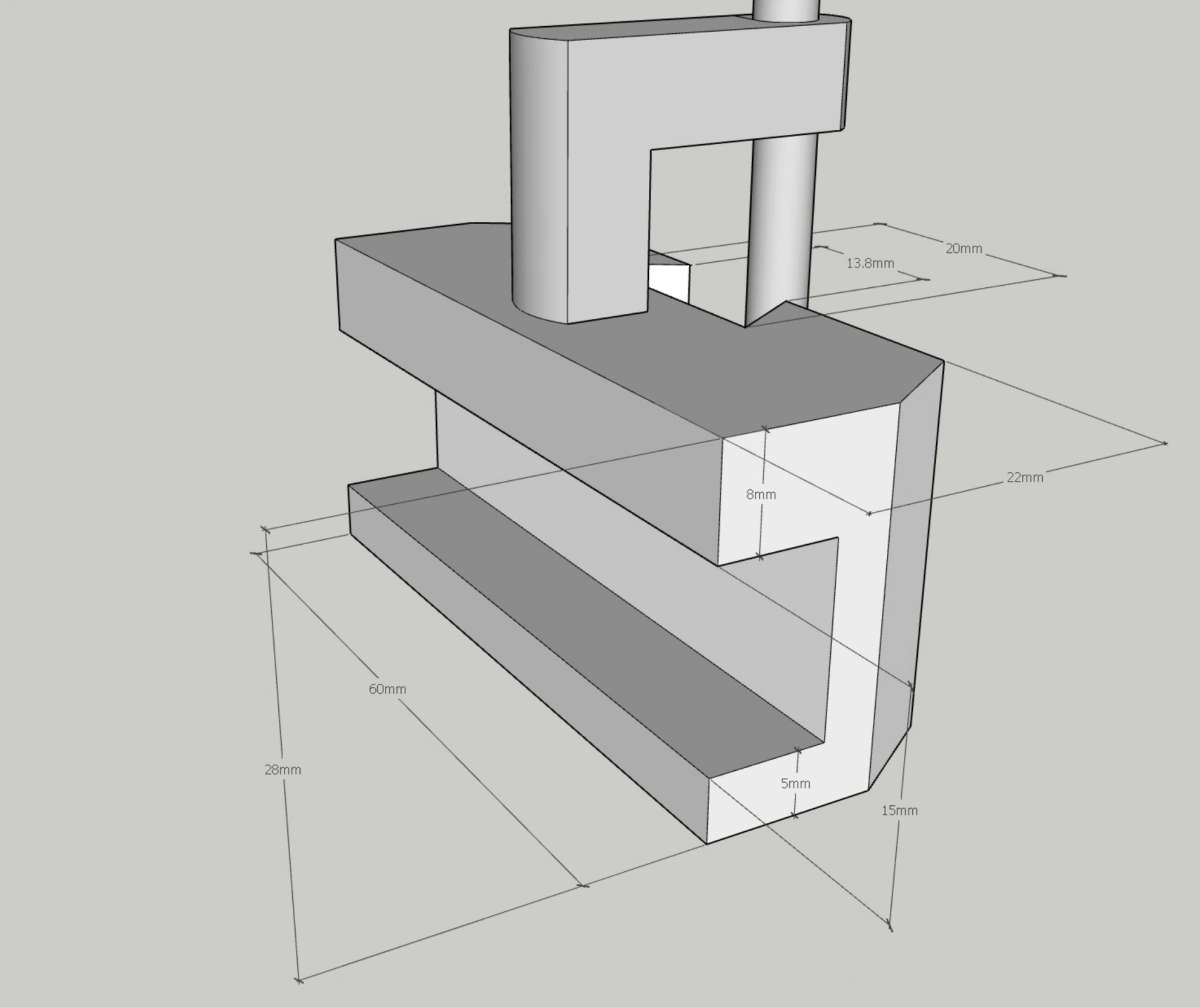
Looks a lot like the SC-4 one that ARC do as that is 60mm long, maybe some of the other sizes differ?
Emco used a similar design on some of their lathes which may well be what the Sieg is “insired” by. Do you have the toolpost or lathe and if so is there a make on it? At that size probably the one for the Compact8
Hi all,
I’m trying to track down a supplier of this tool holder:
I’ve tried ArcEuroTrade who have nothing that matches.
Can anyone direct me to any alternate suppliers?

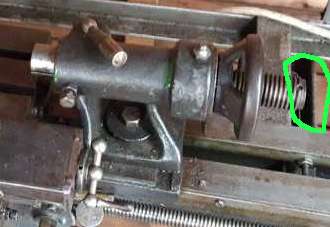
Danni, your first picture ( with the handwheel) shows the top of the spigot in its round hole. When you turn the screw forward and back, does the spigot move up and down a little? That is my problem, which I must get around to fixing. The loads are quite small, and I think the spigot was originally a press fit. Mine is now quite sloppy (after 35 years), so it needs something to anchor it. This thread has encouraged me to look at it again this week.
I have arc euro cheapy dro on both axes, cut to length. Works well enough for me. One behind the saddle along the bed, and one on the right side of the saddle.
Suppliers of articles for model engineering are few and far between, but there are a few about, but unlikely to be in rural Lincolnshire.
In Peterborough, you might find a few Taps or Dies, certainly Allen Screws, at Sterling Nut and Bolt, but for such items as cutting tools or machine accessories, you will need to order by mail or on line, from folk like Tracy Tools, Arc Euro Trade, RDG, Warco, or Axminster.
Have a look at their On Line catalogues, to see what is available.
I can certainly recommend Arc Euro at Syston. Their catalogue is comprehensive, and so is their service.
For materials there are several who can supply, but again, mail order, not a local place to browse.
Howard
ell81 asked ‘I want to buy a live centre, and a drill chuck for the tailstock. How do I know what size I need? I think it’s MT2, which is fine, but since it’s a pretty small lathe I can’t just buy any live centres and drill chucks right? Since they might be too long.‘
Buying a pre-WW2 lathe requires the owner to sort out complications, and spares may be hard to find.
Though MT tapers are standardised there are variations:
On the machine, two problems with tapers! Keeping them in place and releasing them. Drilling forces tapers to wedge ever harder, and it can be difficult to shift them after long service or corrosion / gummed oil bites. Other side of the coin, tapers come loose far too easily when milling – or doing anything else that vibrates the spindle sideways. Drawbar essential.
Don’t have access to a Zyto, so some guesswork follows.

The Zyto tailstock takes drilling pressure, so the MT should either have a tang, or a plain end.
One of the delights of home metalwork is that we can chop tangs off and/or plug drawbar threads. You can even bespoke MT tapers. A little intimidating for the beginner, however modifying shop bought MT tooling is good learning. An important part of the hobby is measuring accurately and cutting to fit. (Model Engineering as practised by me is almost entirely “fitting”, a process by which one lump of metal is carefully cut to match another. Done with simple tools, no need for tenths micrometers, gauge blocks, surface tables or advanced metrology.)
But there’s a lot to know. Taper tooling is usually hardened so look cutting with an angle grinder. Sawing or parting off in the lathe aren’t a good way of cutting them.
With luck a Zyto owner will simplify the above by confirming what they use, providing the measurements, and naming a seller!
Dave
Hi Danni Burns, I bought one of those sets of taps and die’s, with the adapters for holding the taps in the die stock from Chronos, a few years ago, Mini tap and Die’s needless to say they were rather fiddley to use, and I didn’t think it held the taps that good, but I did buy a size 0 tap wrench from Tap wrench size 0 which holds better and controls the use well.
Regards Nick.
Thor meant to link to this
Though sideways cutting forces makes workholding harder.
Hi again,
I’m in early retirement from a career in medical electronics (patient monitoring) and about 5 years ago started a repair shop business from home. Customers bring me mostly electrical items and some mechanical items that I endeavour to fix. It’s a hobby that’s turned into the most enjoyable job I’ve ever had. For many years I’ve longed for a metalworking lathe and a month ago a customer looked around my workshop and said, ‘you could do with a small lathe…’ and he put me in touch with a local seller.
Just before Christmas my father in law passed away. He spent his working life as a centre lathe turner. If only I’d got the lathe 20 years ago… He was a lovely chap who would have been a great teacher but I feel he’s still next to me on the lathe saying things like ‘take that bloody chuck key out!’
My wife and her sister are in the process of clearing his house and in the garage are boxes of custom made (what looks like) HSS cutting bits – more than I’ll ever need.
I’ve been watching YouTube videos which have been a great help and I’ve bought Neil Wyatt’s ‘Lathework for Beginners’ from ArcEuroTrade. Neil’s book is great as it’s written around the SC4 and its left me with lots of questions.
I’ve been working on the lathe trying to do the basics like getting the tool to the correct position, facing off and parting. All of which are a challenge at the moment. The lathe came with lots of accessories and steel and brass stock and my practice work has mostly been on the brass.
I have a couple of side issues, one of which I guess is a common one: space or lack of it – everything is very tight. My garage workshop is small and every bit of space is utilised with custom storage.
The other is related to my repair business. The most popular item I repair are coffee machines and this work requires the use of various acids which make steel items rust like hell. To mitigate this on the lathe I’ve been keeping a good layer of oil on the exposed surfaces and invested in a cover and I’ll see how it works out in time.
I’ve noted your book recommendations and will track them both down.
If you’re interested to see some of my repair work, please take a look here:
http://www.bassettrepairshop.co.uk/
http://www.facebook.com/bassettrepairshop/
Many thanks for your kind words of encouragement.
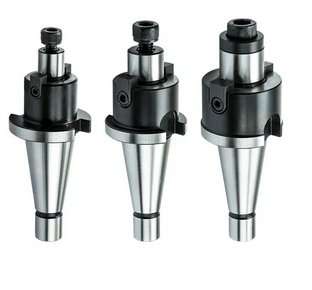
Looks like most of them are intended to be mounted on an arbor in a horizontal milling machine, some explanation here. May be some could be mounted on arbors like these:

(from ArcEurotrade), What diameter are the holes in the cutters?
Thor
Welcome to a useful and rewarding hobby.
+1 for what Noel says.
Now that you have a lathe, all sorts of new vistas will open up for you.
Your choice of a SC4 sounds good to me, based on the spec and the little that I’ve seen of them.
Having been a long term customer of Arc Euro Trade, who import them, if you have a query, or want accessories, go to them Ian and Ketan will be most helpful.
If you are new to lathework, an alternative book that would help is Stan Bray’s “Basic Lathework”
.(Workshop Practice Series 45)
As you gain experience, you may find a need for other books, if only as reference books.
A set of Zeus Charts will be a good investment. I still frequently use mine, bought in 1958!
Take time to become familiar with the machine. To start, learn how to rotate a handwheel steadily, using both hands (Although the SC4 has power feed in both planes)
Practice just cutting metal, to get a feel of different depths of cut, and then different feed rates. (If you are roughing out, you can use higher feeds, with finer feeds for the finishing cut.
Make your mistakes on mild steel, rather than castings which will be expensive, or items that cannot be replaced.
You may want to use carbide tipped tools, but you can’t sharpen them, other than with a diamond wheel. High Speed Steel can be ground, and into shapes for which no carbide tip is available.
Then, start making simple tools for yourself. This will give you practice, and give you confidence and satisfaction with every successful product. And you will have items that you can use for years afterwards.
My hobby horse is to make a Centre Height Gauge for setting tools, first.
Unless it is set on centre height, no tool will cut properly!
Don’t be afraid to ask!
If I can help, just PM me with an E mail address and i will give any advice, (FWIW) and send any pictures that might be useful. Bear in mind that although a retired Engineer, I an not a time served machinist, and there are people on here who are far more skilled than I
Howard,
It is not just the ER size that determines how much you can close them down, In all the ER sizes the very small ones only have a 0.5mm (not 0.05mm) closing range. That is why I have half sizes even in ER32.
As above, the collet is a Schaublin one. It has the same dimensions as a modern ER collet. You can look up ER collet dimensions and confirm the suggestion that it belongs to the 25 series.
The difference between the Schaublin collets and ER collets is the retaining groove in the ER collet and the lug in the nut that registers in that groove and pulls the collet from its seat when the nut is loosened. See:
https://www.arceurotrade.co.uk/Catalogue/Collets/ER-Collets/ER25-Collets
If you want to use it, the easiest way is to buy a standard ER25 holder and retaining nut and modify the nut. You can buy ER25 nuts alone (around £5.50), so you could buy a spare one and practice on that. If your attempts are not successful, you would still have a chuck and nut that could be used with modern collets.
When considering options, bear in mind that ER25 collets are £5-£6 each brand new.
Transfer screws are what you need, available here and probably lots of other places too.
Rob
Links to https://www.arceurotrade.co.uk/Catalogue/Measurement/Punches-Scribes/Transfer-Screws
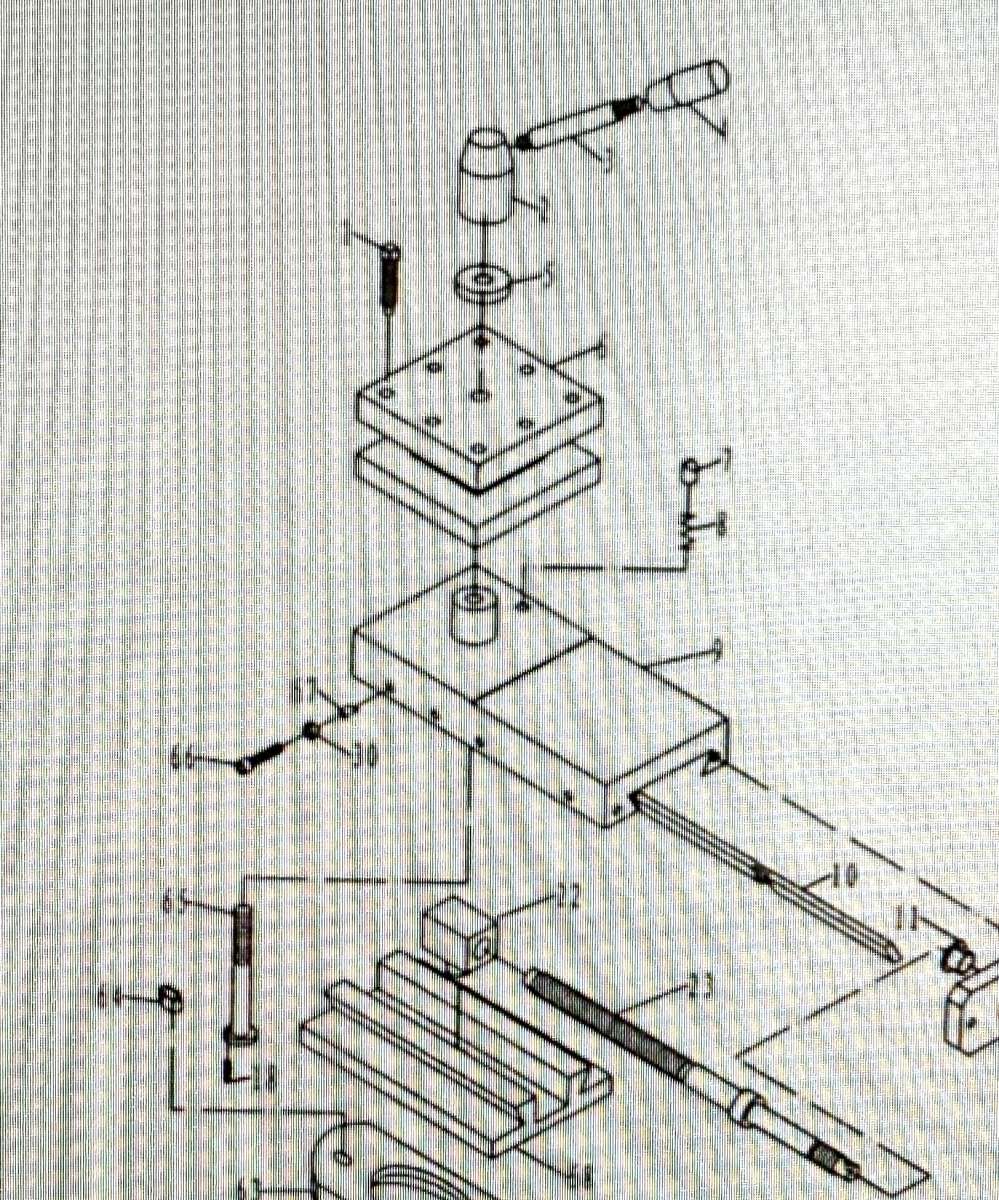
I much prefer the the ‘wedge-type’ toolpost to the ‘piston-type’; The wedge type uses a sliding tapered gib to pull the toolholder tight onto the body, the other type uses a piston to push it out onto the dovetail (go figure).
The one I have is this;
Thanks for that, yes I am leaning towards the wedge type. Although as I understand it, the only one that will fit the lathe straight out of the box is a piston type. Something to do with a fixed bush at the base of the bolt that attaches the QCTP to the Top Slide. (I assume the bush or shoulder is part of the top slide). I have however come across a video where the owner of an older DB10 has machined a sleeve for the bush and bolt to allow a standard wedge type QCTP to be used. I won’t know the setup for sure until I take delivery but looking at the exploded drawings in the manual it does appear to have a bush.

Hi Dave,
The French standard for domestic freestanding oil heaters is NF128
https://www.eurovent-certification.com/media/document/program/57/57/57438fd87fdff22329fa0fd273d814c2/S08%20D01%20NF%20128%20R%C3%A9f%C3%A9rentiel%20technique%20Rev%2016%20approv%C3%A9_en-GB.pdf
The NF for heating oil is NF M15-008 https://www.boutique.afnor.org/en-gb/standard/nf-m15008/liquid-mineral-fuels-domestic-heating-oil-requirements-and-test-methods/fa196461/84837
Not sure how NF128 marking fits in with CE. I suspect it is just a standard to meet the efficency requirements. There is a registry of “approved” models https://www.eurovent-certification.com/en/third-party-certification/certification-programmes/nf128
Interstingly for QLIMA models they list the country of manufacture as Netherlands for most models, some Japan and some China. So they are not “made in Japan.
https://www.eurovent-certification.com/en/advancedsearch/result?program=NF128&product_type=NF128%2FSRE&keyword=#access-results
It appears that there is only one laboratory that can “apply” the NF mark for NF-128. If the French laws insist on this NF mark it would appear to be a breach of EU open market regultions. It may be that legally a CE mark is acceptable but local market forces mean the NF mark, while not legally required, is needed to sell the product.
As an aside I work with a committee in France (we have meetings in St Denis were the WWII bomb was found a couple of weeks ago) on a harmonised pair of European / North American technical standard)
Robert.
I use a ‘wedge-type’ toolpost on a 11″ / 280 swing Warco lathe – but the ‘100’-size – the critical measurement is how much daylight you have between the topslide/compound surface and centre-height.
Measure your lathe once it arrives and make a decision from there.
I much prefer the the ‘wedge-type’ toolpost to the ‘piston-type’; The wedge type uses a sliding tapered gib to pull the toolholder tight onto the body, the other type uses a piston to push it out onto the dovetail (go figure).
The one I have is this;
..of course you could buy a genuine Aloris, and support the original maker..
The holders are cheap to buy or easy to make and the system is inherently forgiving of dimensional inconsistencies.
Had mine since I got the lathe and like it a lot.
I don’t have this lathe but as it is a 5in centre height I expect the next size up from the size used on a Myford.
Try this site which tells you how to size a tool post:
https://www.arceurotrade.co.uk/Catalogue/Machines-Accessories/Lathe-Accessories/Tool-Posts/Model-200-Quick-Change-Tool-Post
Don’t get one that is too big thinking you have to be able to use enormous tools – for this lathe you only need 6-9mm toolbits. Also smaller holders are cheaper and you end up wanting a lot of them.
Two problems with self-contained combustion heaters:
They generate LOTS of water vapour
In the case of fault they can generate carbon monoxide.
Robert.
I agree with both points – but these so-called inverter heaters are poles apart from any paraffin heater you have memories of, widely used in rural france, the fuel is available in all supermarkets and diy shops, the last lot we bought cost about £1.10/litre and will run on a full 5 litre tank for 37 hours on low output or 16 hours flat out at 3.0 kw.
I realise that if you burn 5 litres of hydrocarbon fuel you generate roughly 5 litres of water vapour, but we have never had a problem with it.
They modulate their output automatically, very quiet, don’t smell, probably because the fuel is a very refined kerosene, the fuel tank is removed to fill it so no spills in the house, the fuel delivery is via a metering pump to the burner which has no wick, controlled electronically, including a timer, automatic ignition via glow plug, very low electrical power consumption -300 watts during the ignition sequence for 3 minutes, 15 watts when it’s running and has automatic room air sampling with alarm and shutdown, also has self diagnosis with fault codes displayed on the led panel.
The biggest advantage is that if they break down, you just go buy another one at 200-300 euros – no messing about with finding reliable plumbers etc.
(read the reviews)
We have one spare 3.0 kw model so can swap over in minutes if either of the two house heaters go u/s which hasn’t happened in the 12 years we’ve been running them.
And – they are made in Japan.
For a seemingly simple question, any answers are likely a lot more complex than far too many seem to think.
Leave that head stock and it’s fastening bolts alone, it’s the very last item you’d ever touch, and only after exhausting every other possibility by extensive testing to find where and what else might be causing that taper turning problem.
And you can only properly analyze where the problem, or sometimes more than one area that’s causing your issue by starting with a known baseline. Leveling the lathe bed to within a maximum of a very few .0001″ for accuracy. That’s your known baseline and everything else is then verified from it. If you can’t or won’t do that, anything else is just about wasted effort. And very few seem to actually understand what that leveling accomplishes. In reality, it’s the fastest and easiest method to remove any bed twist that may be present due to what any lathe is fastened down to. Visualize that lathe bed twist as slowly rolling the cutting tool tip either towards or away from the shaft being turned parallel as the carriage travels along any twisted bed ways. It’s effect is also greatly magnified just due to the elevation the cutting tool tip happens to be above the beds way surfaces. .0001″-.0002″ of bed twist can easily result in .001″ or more variation in taper along a shaft that’s being cut.
And no 3 jaw chuck is ever 100% accurate no matter what you think they are for run out since that’s only one measurement of it’s radial accuracy. There’s also the axial alignment affected by the non optional clearances within every 3 jaw or any other chuck type ever manufactured, and the inevitable variables each time any work piece is tightened within a chuck. In other words, how straight they hold any shaft so it’s directly centered on the tail stocks morse taper over that shafts full length. While it’s not impossible to align a shaft in both the radial and axial directions, it can take a very long time to do so. In my opinion, it’s just much easier to completely remove the effects any chuck might have.
As I said, accurately level the bed as the very first step, that isn’t optional. A dti can then be used and rotated using the head stock to swing that dti side to side to then verify or adjust until the tail stocks morse taper is in fact true to the head stock C/L of rotation. What that dti can’t do is check the tail stocks quills vertical alignment to the head stock C/L. Simple gravity effects ensure those measurements will always be incorrect. It’s pretty amazing just how much even a lightweight dti can deflect the .375″ diameter shaft on my small magnetic Mitutoyo base as it’s rotated in the vertical orientation, and even when everything is set up as short as possible. The side to side alignment can still be checked well enough though. https://www.youtube.com/watch?v=u08SfxVgxNg For the final verification of any lathes alignment, any indicator checks should always be considered as static checks only since they simply can’t load the lathe in the same way that actual cutting tests can do. The instant any tool on a lathe starts cutting, every part within the whole machine starts to deflect by variable amounts. And for that reason, any lathe bed I’ve ever properly leveled still required very minor adjustments to it’s exact level condition as compensation for the lathes deflections within it’s own parts. Properly understanding that those deflections are always present and will inevitably happen is key.
Secondly I’d very much agree with the others the shaft your trying to use is far too small in diameter compared to it’s unsupported extension outside your chuck jaws. During my final adjustments under those cutting loads, I always use a scrap of short and fairly large diameter ( 1.5″-2″) stock held in my 3 jaw lathe chuck. Then turn my own 60 degree point on it. That ensures it’s as concentric and true to the head stocks center of rotation as the lathes own head stock bearings will allow, and it also removes any slight inaccuracy effect a chuck might create. I use it and a dead center in the now aligned tail stock to then test turn a 2″-3″ diameter shaft the full length of the lathe bed while held between those centers. Fancy ground shafting isn’t required at all, common hot or cold rolled material will allow the proper dynamic cutting test checks you need. How you then purposely misalign your own lathe to compensate for those machine deflections depends on your exact lathe mounting set up and can’t be properly detailed with the available information in your post. I use hollow jacking bolts through heavy steel plates attached to both ends of my lathe bed as adjusters to remove any bed twist. Emco and I believe Myford as well as others used the same idea on there raising blocks.
But in theory, let’s say your lathe is now properly leveled and adjusted to turn parallel to less than a .0005″ variation in size over it’s bed length. Again that’s now a known baseline for a double check of the head stock alignment.
Properly aligned lathes including the best and most expensive in the world do not face parts truly flat. There all set up to face any part very slightly concave for a couple of very good reasons. Two accurately faced and slightly concave parts that are joined face to face can be put together without any rocking that a convex alignment would produce. Secondly, it allows the lathe parts to slowly wear towards that flat facing alignment instead of immediately starting to wear towards that highly undesirable convex facing. On a very well faced and with a good surface finish lathe part, you can even detect that misalignment just from the light reflections. You should see a pie shaped light reflection segment on each side of a faced part.
There’s two methods of producing that concave facing misalignment. And it depends on the lathe manufacturer for there choice about how it’s done. In general, but it’s not universal or guaranteed, North American lathe manufacturers tend to grind and / or scrape there cross slide ways to produce that very slight inward facing bias. European lathe manufacturers seem to purposely misalign there head stocks to point very slightly towards the operator and align the cross slide square or a combination of that misalignment on both the head stock and cross slide. With any far east machines, there’s no way to be certain between brands what method is used or even how well or accurately it’s even been done. But I never ever touch or adjust the head stock without 100% proven reasons it’s actually required. And so far, none of the 3 lathes I’ve owned have ever needed any adjustment to there head stocks.
But that’s not the end of the built in misalignments the better lathe manufacturers will use. As far as I know, most lathe manufacturers set up both the head and tail stock to point uphill approximately .001″ over 12″. That’s done as a built in compensation for work piece weight. And most of the better lathe manufactures will also bias the tail stock towards the operator by the same amount to compensate for cutting tool pressures.
Due to the very small amounts of built in head stock misalignment, it can be tough to accurately double check how well your lathes head stock is aligned. If I recall the numbers correctly, Dr. Schlesingers book Testing Machine Tools mentions a maximum of around .0015″ concave facing over a distance of 12″ on designated tool room lathes. So that’s over a 24″ diameter faced part. There’s a few possible ways of measuring how your own lathe head stock is aligned, but it depends on just how good the available metrolgy equipment and your own skills and knowledge are.
The easiest although not 100% conclusive of how much both the head stock and cross slide are misaligned is to take a full clean up cut across the largest lathe face plate you have. I’ll use an analog clock face as if it was attached to the lathes head stock and viewed from the tail stock for directions. Lets say you make a full clean up cut on your faceplate (under slow power cross feed if you have it) and with the carriage locked down. Most would start from the 9 o’clock position at the face plates O.D. and facing inward to the hole in the center of the face plate. Then with that done, retract the cutting tool away from the the face plate, then move the cross slide fully back towards yourself. Now set up a .0001″ or metric equivalent dti with it’s ball tip just past the face plates center hole. Zero the indicator. Now using the cross slide, gently move the indicator tip away from you moving from just past the lathes center hole out to the face plates 3 o’clock position. Whatever + – numbers you see are DOUBLE the lathes combined misalignment for the cross slide and head stock. Following the same path from the 9 o’clock position to the face plates center hole will tell you nothing since it would still show no deviation at all because your following the exact same path the cutting tool made. But this test will verify how much and in which direction any misalignment is. To be 100% certain of the exact amount of the head stocks misalignment against any wear or bias in the cross slide probably requires the use of a very expensive test bar in the head stocks morse taper. Possibly a bit less certain or exact, but a two collar test cut can be also made as a check for the head stock alignment once everything else is verified as being correct. Other than time and the use of a dti which most should already have, the face plate and that two collar test is free and will verify if the numbers are at least within the guidelines. If there not? Then the morse taper test bar or that two collar turning test would be the next step. Unfortunately and with any these off shore machines, absolutely nothing can be automatically trusted unless it’s been tested and personally verified as 100% correct first.
As just one example, I bought a brand new Sieg C6 lathe. It’s tail stock quill pointed uphill and above the lathes head stock C/L by just over .009″ in 2″. Add the length of a 1/2″ capacity drill chuck to that, and it instantly broke the tip off every center drill I tried until I re-machined and then shimmed it back to the correct alignment and vertical elevation. Most professional machinists using good condition industrial level machine tools usually don’t need to understand all that much about machine tool alignment. Even less so today with any new cnc equipment that’s set up, leveled and aligned by factory trained personal before it’s first used. For us, that’s simply not true, and the less were willing to pay, the more were required to understand about the subject. This is about the best information I know of that’s online. https://pearl-hifi.com/06_Lit_Archive/14_Books_Tech_Papers/Schlesinger_Georg/Testing_Machine_Tools.pdf
There’s also one further item to understand about machine tool alignments that even less at the hobby level seem to even know about because it’s almost never mentioned in any threads about machine tool alignments. Any slide on any machine tool has 6 possible directions for misalignment. That can be a single direction or variable combinations of any or all 6, and can even reverse direction over any slides travel or not be constant. Fortunately and other than double checking how parallel any lathe is capable of turning every so often, most of these alignment test checks only need to be verified once and then many years later once any measurable part inaccuracies start showing up.

Started by: southernchap
in: Manual machine tools
peak4
Started by:
Neil Wyatt
in: 3D Printers and 3D Printing
John Purdy
Started by: Clive Brown 1
in: The Tea Room
Philrob27
Started by: greenhills
in: Workshop Tools and Tooling
Chris Crew
Started by: jimalm
in: Electronics in the Workshop
duncan webster 1
Started by: Geoff the bloke
in: Beginners questions
JasonB
Started by: Nick Welburn
in: Work In Progress and completed items
Nick Welburn
Started by:
Michael Gilligan
in: Workshop Tools and Tooling
Michael Gilligan
Started by: bernard towers
in: Electronics in the Workshop
jaCK Hobson
Started by: Tony Ray
in: Workshop Tools and Tooling
bernard towers
Started by:
Richard Simpson
in: Model Boats
Mike Hurley
Started by: Andrew Skinner
in: Electronics in the Workshop
Pete Rimmer
Started by: anoddcog
in: Introduce Yourself – New members start here!
timmers 875
Started by:
Neil Wyatt
in: General Questions
Paul McDonough
Started by: Pippin
in: General Questions
Pippin
Started by: Phil Whitley
in: The Tea Room
Phil Whitley
Started by: Roger Hart
in: Electronics in the Workshop
SillyOldDuffer
Started by: myfordmikeml7
in: General Questions
jamessm34
Started by: Andrew Tinsley
in: General Questions
jamessm34
Started by:
Blue Heeler
in: Beginners questions
Dell
Started by: Dr_GMJN
in: General Questions
Dr_GMJN
Started by: berwick
in: Beginners questions
alecs
Started by: Nigel Graham 2
in: Manual machine tools
Graham Meek
Started by:
duncan webster 1
in: Electronics in the Workshop
Mark Rand
Started by: Bill Phinn
in: Workshop Tools and Tooling
JasonB