Diesel Fuel

Diesel Fuel

Home Forums The Tea Room Diesel Fuel

Viewing 25 posts - 1 through 25 (of 102 total)
  • Author
    Posts
  • #834731
    Vic
    Participant
      @vic

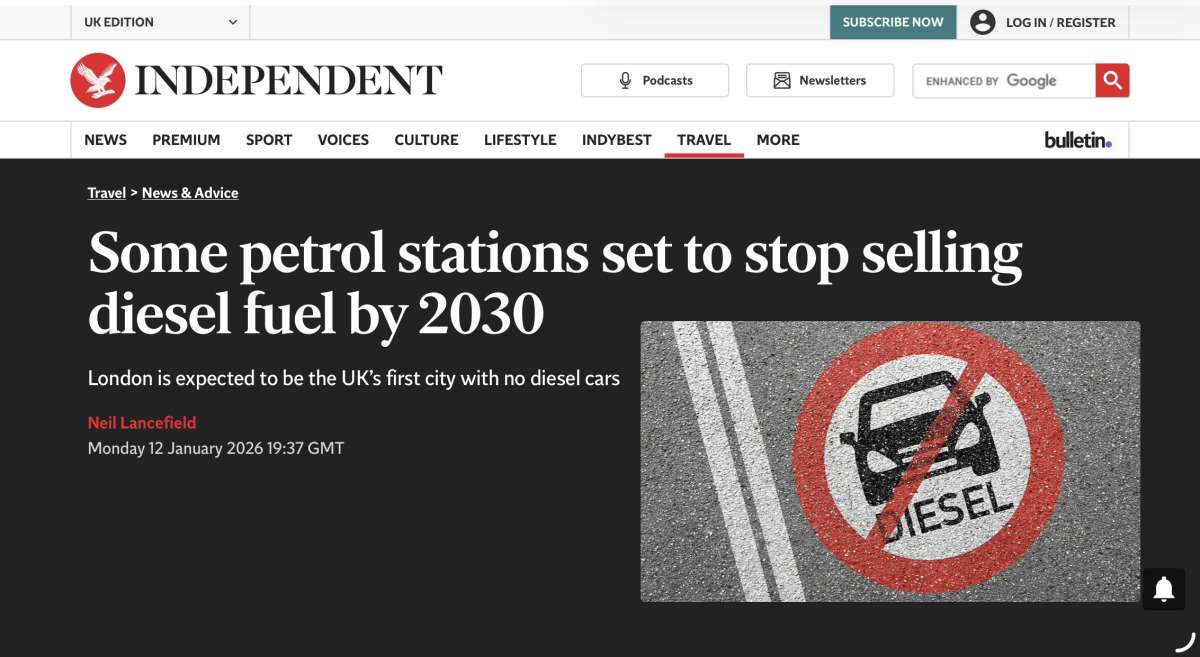
      Some good new for once. Hopefully this will hasten the decline so we can all breathe easier.

      IMG_7678

      #834736
      JA
      Participant
        @ja

        When I started at my last job, in 1978, I attanded an in office talk on emissions:

        Smoke: It has neither mass nor volume. It does not contribute to combustion inefficiency. It is an optical effect and very difficult to measure. The measurement techniques did not correlate. Smoke levels could not be predicted with any certainty. The fuel in question was standard aviation kerosene.

        When I left work 30 years later, the above was exactly the same.

        One thing is true though, any smoke from any jet engine is unacceptable. (You can answer why).

        JA

        #834739
        Bazyle
        Participant
          @bazyle

          But it is not the efficiency that is the driving force here but particulates which affect breathing in a city environment. Rural use of diesel does not really have the same problems and is the mainstay for agricultural machinery.

          There is also a more immediate move against wood burning for the same reasons. In a rural location smoke, ie small particles of carbon are potential beneficial for bacterial activity.

          #834740
          howardb
          Participant
            @howardb

            EU emissions standards.

            Comparing Euro 6d level emissions of petrol and diesel engines of passenger cars.

            Units grams/km

            Petrol  CO 1.0

            Diesel  CO 1.0

            Petrol Nox   0.060

            Diesel Nox   0.080

            Petrol particulates 0.0045

            Diesel particulates 0.0045


            There is no cognisant reason to blame Euro 6d level diesel engines for excessive pollution.


            #834755
            Adrian R2
            Participant
              @adrianr2

              On my recent city centre trips I have noticed that buses and taxis are changing over to electric and that walking along streets is a whole lot more pleasant. The remaining diesel powered vehicles, even modern ones, are very noticeable.

              Diesel disappearing from forecourts will be down to economics, if people stop buying it then it won’t justify the cost of transport and storage. Cities will be first as there are viable alternatives.


              #834770
              Bo’sun
              Participant
                @bosun58570
                On howardb Said:

                EU emissions standards.

                Comparing Euro 6d level emissions of petrol and diesel engines of passenger cars.

                Units grams/km

                Petrol  CO 1.0

                Diesel  CO 1.0

                Petrol Nox   0.060

                Diesel Nox   0.080

                Petrol particulates 0.0045

                Diesel particulates 0.0045


                There is no cognisant reason to blame Euro 6d level diesel engines for excessive pollution.


                If this is the case, maybe it’s emissions compliance that should be scrutinized, not the fuel itself?

                #834771
                Vic
                Participant
                  @vic
                  On howardb Said:

                  EU emissions standards.

                  Comparing Euro 6d level emissions of petrol and diesel engines of passenger cars.

                  Units grams/km

                  Petrol  CO 1.0

                  Diesel  CO 1.0

                  Petrol Nox   0.060

                  Diesel Nox   0.080

                  Petrol particulates 0.0045

                  Diesel particulates 0.0045


                  There is no cognisant reason to blame Euro 6d level diesel engines for excessive pollution.


                  IMG_7683

                  #834773
                  Vic
                  Participant
                    @vic

                    IMG_7684

                    #834776
                    not done it yet
                    Participant
                      @notdoneityet

                      Back in the 1970s, we did not consider the Ford 5000 tractors were working hard enough if there was no black smoke (heavily loaded but not completely overloaded).

                      We pressed the ‘cold start’ button on the earlier diesel major tractors when the going got too hard (particularly hauling heavy trailers up a gradient).

                      There was little hearing protection in that era.  Even tractor cabs reverberated – they only really afforded protection from wind and rain until the early ‘70s.

                      How things have changed – for the better.

                      I knew that my diesel car, purchased new in 1987, was not so good for the environment.  No lead in the exhaust, like petrol engines, but lots of sulphur and NOx.  It didn’t bother me as diesel was 10% cheaper than petrol and contained 10% more energy – more miles per gallon with reasonable performance.

                      How things have changed – for the better.

                      I’m fully (as one can be) aware of the differences between fuels and propulsion types – it’s one of the reasons why I now drive a BEV.  Cleaner, no toxic or polluting tail-pipe emissions, quiet and with so many other benefits over ICE.

                      #834778
                      SillyOldDuffer
                      Moderator
                        @sillyoldduffer
                        On JA Said:

                        When I started at my last job, in 1978, I attanded an in office talk on emissions:

                        Smoke: It has neither mass nor volume. ..,

                        That’s an unusual definition of smoke!  Who was the source?  Not citicising! Although engineering tries to standardise terms, history is against us.  For fun, how many different technical definitions of “thread” are there?  “Smoke” is also likely to have multiple meanings.

                        Chemists define smoke as an aerosol of fine particles (less than ⌀1μm) mixed with combustion products, mainly gases and vaporised hydrocarbons.   The gases typically include Carbon Dioxide, Carbon Monoxide, Nitrogen Oxides, Cyanides, and maybe a whiff of Dioxin!  All the constituents of smoke have mass and volume, which can be measured.

                        The “neither mass nor volume” confusion may be that the mass and volume of smoke is much the same as air, so not obvious.   The key point is that Smoke is far from harmless/   Small quantities trigger asthma attacks, and cause minor damage to lung tissue that can be infected (Bronchitis etc), and sometimes spark cancerous changes.  Smoke inhalation is the most likely cause of death in fires.

                        The enquiry into the Grenfell fire revealed shocking shortcomings in UK Building and Fire Regulations, the latter being badly out of date. Resulted in this paper:  ” Research and analysis Fire safety: Smoke and toxicity“.  Published 22 December 2025, not nearly 50 years ago, and I suggest is more trustworthy than JA’s version.


                        On howardb Said:

                        EU emissions standards.

                        Comparing Euro 6d level emissions of petrol and diesel engines of passenger cars.

                        Units grams/km

                        Petrol  CO 1.0

                        Diesel  CO 1.0

                        Petrol Nox   0.060

                        Diesel Nox   0.080

                        Petrol particulates 0.0045

                        Diesel particulates 0.0045


                        There is no cognisant reason to blame Euro 6d level diesel engines for excessive pollution.


                        Not sure what Howard’s table is.  Are they emission targets measured steady-state in a lab?  Well-known problem with steady-state lab results, because cars on the road are far from steady-state. This table summarises real-world Urban Cycle performance from various sources.   As the numbers are much less rosy than those in Howard’s table, there is cognisant reason to blame diesel engines for excessive pollution!

                        Screenshot From 2026-01-29 08-40-54

                        Real-road and lab test numbers both show petrol engines produce more CO₂ than diesels.  As CO₂ is causing climate change, a major threat to humanity in the mid and long term, UK government encouraged drivers to go diesel, only to discover a major problem a few years later.  Trouble is diesel’s produce much higher levels of particulates and Nitrous Oxides than petrol engines, and these bery obviously reached dangerous levels in town centres and confined spaces.  About turn!

                        Though IC engines have been considerably improved over the last 40 years, electric is the best answer to local toxicity and global warming at the moment.  I think all that can be done to improve IC engines has been done, such as:

                        • cleaner combustion. Fuel-injection, improved mixing in the cylinder, plus sensor enabled timing and other tweaks provided by microcontroller based engine management units
                        • Removing Lead from petrol.
                        • Catalytic Converters on petrol exhausts turn toxic Carbon Monoxide into Carbon Monoxide, consume unburned fuel and soot, and reduce some Nitrous Oxides too.
                        • Much better particulate filters on diesels, but effectiveness depends on how the vehicle is driven and maintained.   Room for improvement maybe, but not obvious how.

                        I’m not against diesels used sensitively, and big diesels are less damaging than small ones (more time and space in big cylinders to complete combustion).  Railways, long-distance road-haulage, agriculture, heavy earth-moving, and maritime.  Allowing thousands of small diesels to chug and queue in busy town centres is harmful.   They have to go…

                        Dave


                        #834783
                        Nicholas Farr
                        Participant
                          @nicholasfarr14254

                          Hi, well Dave, I didn’t know catalytic converters could turn Carbon Monoxide into Carbon Monoxide, but I’m guessing you meant Carbone Dioxide.

                          Regards Nick.

                          #834790
                          Grindstone Cowboy
                          Participant
                            @grindstonecowboy

                            Something that sticks in my mind from the late 70s, when the push was for people to buy diesel cars rather than petrol, was the statement in Car Mechanics magazine: “Diesel fumes are not carcinogenic.”

                            Truth changes over time.

                            Rob

                            #834791
                            Vic
                            Participant
                              @vic

                              There was a study done in America in about 1980 I think? It concluded that Diesel Exhaust fumes was a major factor in increased levels of Lung Cancer amongst Truck Drivers.

                              Edit: It was suspected in the 1950’s.

                              https://pmc.ncbi.nlm.nih.gov/articles/PMC3423304/#:~:text=Introduction,only%20that%20of%20cigarette%20smoke.

                              #834809
                              JA
                              Participant
                                @ja

                                The talk I attended was in the late 70s. The smoke to air was considerably lower than road going diesel vehicles and was no carbon but heavy poly-cyclic aromatics. As aromatics it was considered carcinogenic and a major risk to health. The talk then went on to the “lab rat test” and how such tests with distilled water had shown that it was carncinogenic.

                                Dave, we were not chemists but combustion engineers. We had to try to undrestand the stuff (how it is produced and removed in a contunuous flow constant pressure combustion system), not just the chemistry. The other emissions were far easier.

                                JA


                                #834815
                                Nigel Graham 2
                                Participant
                                  @nigelgraham2

                                  No mention of urea treatment (‘Ad-Blue’) in the above. Assuming the engine and exhaust system are in good condtion, does this reduce the nitrous compounds level significantly, or remove them altogether?

                                  #834823
                                  howardb
                                  Participant
                                    @howardb

                                    The figures I quoted are the EU emission standards for Euro 6b passenger car diesel engines.

                                    The reason for choosing that particular standard was to demonstrate that a modern diesel engine is very close to the level of emitted pollutants of a comparable petrol engine.

                                    Also chosen as it’s the emission spec for my newest car which uses Adblue, powered by a Renault K9K 1.5 litre 115 hp 4 cylinder diesel.

                                    “When AdBlue is put into the exhaust system, it gets hot. The higher temperature creates a reaction with the exhaust gases that degrades the mono-nitrogen oxides that are harmful. During this process, the gases are converted into water (H2O) and nitrogen (N3), both of which are harmless to people and the environment. In total, it filters out over 90% of the harmful emissions”

                                    What is AdBlue and Why Do Diesel Cars Need It?

                                    #834845
                                    Howard Lewis
                                    Participant
                                      @howardlewis46836

                                      Years ago, our American cousins criticised an engine we were developing because it DIDN’T smoke!

                                      “If it ain’t smoking; it ain’t pulling”

                                      Am sceptical that “Smoke has no weight or volume”

                                      Smoke levels, measured with a Bosch smoke meter trap “particulates” on filter papers, and the result is measured using a photo electric probe.. So my contention would be that it has a weight (or mass) as well as volume.

                                      Hartridge type smoke meters measure the opacity of the exhaust, so particulates in the exhaust flow are measured by the amount of light that they obstruct.

                                      Those are steady state readings. Transient conditions also contribute emissions

                                      This most evident when older vehicles are accelerating, with a dirty exhaust under acceleration, clearing as the boost air increases. This needs to be considered, since the turbocharger(s) will lag in providing the boost air needed to ensure complete combustion.

                                      Over the last 50 years, ENORMOUS sums have been spent by engine manufacturers to reduce emissions of C0, CO2, and NOx  Some have left the industry!

                                      When Brussels decreed that particulate emissions would decrease by a factor of 10, within a year; somehow the industry complied.

                                      Engines on development test beds are now almost hidden by the wires for the very many sensors needed to monitor almost every parameter on the engine, not just combustion and the after effects.

                                      Every parameter of the engine is monitored, and the management system adjusts fuel delivery (volume / mass) as well as timing and duration(even providing multiple injections to endure cleaner combustion)

                                      The after treatment equipment in many cases, is as large as the engine itself, and possibly costs more.

                                      Compared to years ago, the modern diesel engine is incredibly cleaner and more efficient than it used to be; but much more complicated.

                                      The problem is that some of the additives in Petrol and Diesel, (AND L P G) to give lower emissions, both gaseous, and particulate, can be carcinogens.

                                      So the pollution experienced is part of the cure!

                                      All drugs have side effects, and improving legislated emissions, is no different

                                      Howard

                                      #834855
                                      Vic
                                      Participant
                                        @vic
                                        On not done it yet Said:


                                        I’m fully (as one can be) aware of the differences between fuels and propulsion types – it’s one of the reasons why I now drive a BEV.  Cleaner, no toxic or polluting tail-pipe emissions, quiet and with so many other benefits over ICE.

                                        We’ve decided to replace one of our Petrol cars with a BEV. It’s on order.

                                        I saw this earlier.

                                        IMG_7680

                                        #834860
                                        Fulmen
                                        Participant
                                          @fulmen
                                          On not done it yet Said:

                                          I now drive a BEV.  Cleaner, no toxic or polluting tail-pipe emissions, quiet and with so many other benefits over ICE.

                                          They are just nice, comfortable cars. Plenty of smooth torque from stationary, no gears, no noise, no oil and fluids you forget to check, little noise and cheap to run.

                                          #834882
                                          Robert Atkinson 2
                                          Participant
                                            @robertatkinson2
                                            On Fulmen Said:

                                            They are just nice, comfortable cars. Plenty of smooth torque from stationary, no gears, no noise, no oil and fluids you forget to check, little noise and cheap to run.

                                            If you think EV’s have no gears, oil or fluids you have been mislead.
                                            They have gearboxes which contain oil and the motors, electronics and sometimes often the batteries use liquid coolant.

                                            A significant disadvantage is how you charge them if you don’t have a driveway or similar.

                                            Robert.
                                            (Been running a PHEV for 6 years now and helped build the most fuel inefficient car in history, about 35 gallons per mile on kerosine.)

                                            #834883
                                            Vic
                                            Participant
                                              @vic
                                              On Fulmen Said:
                                              On not done it yet Said:

                                              I now drive a BEV.  Cleaner, no toxic or polluting tail-pipe emissions, quiet and with so many other benefits over ICE.

                                              They are just nice, comfortable cars. Plenty of smooth torque from stationary, no gears, no noise, no oil and fluids you forget to check, little noise and cheap to run.

                                              We test drove one a couple of weeks ago and it was really good fun to drive. Nippy as well, so much so I’m a bit concerned about tyre wear! I’m hoping traction control will help with this but we’ll see.

                                              #834909
                                              John MC
                                              Participant
                                                @johnmc39344

                                                its a newspaper article so perhaps an interpretation by the journalist rather than accurate facts?

                                                There has been a glut of petrol in the country (UK) and a (relative) shortage of diesel fuel.  The UK has been exporting the excess petrol and buying in diesel.

                                                Has the journalist picked up on this?  Perhaps its more noticeable in the London area than elsewhere?


                                                #834927
                                                Bo’sun
                                                Participant
                                                  @bosun58570
                                                  On John MC Said:

                                                  its a newspaper article so perhaps an interpretation by the journalist rather than accurate facts?

                                                  About par for the course.


                                                  #834933
                                                  Vic
                                                  Participant
                                                    @vic
                                                    On howardb Said:

                                                    The figures I quoted are the EU emission standards for Euro 6b passenger car diesel engines.

                                                    The reason for choosing that particular standard was to demonstrate that a modern diesel engine is very close to the level of emitted pollutants of a comparable petrol engine.


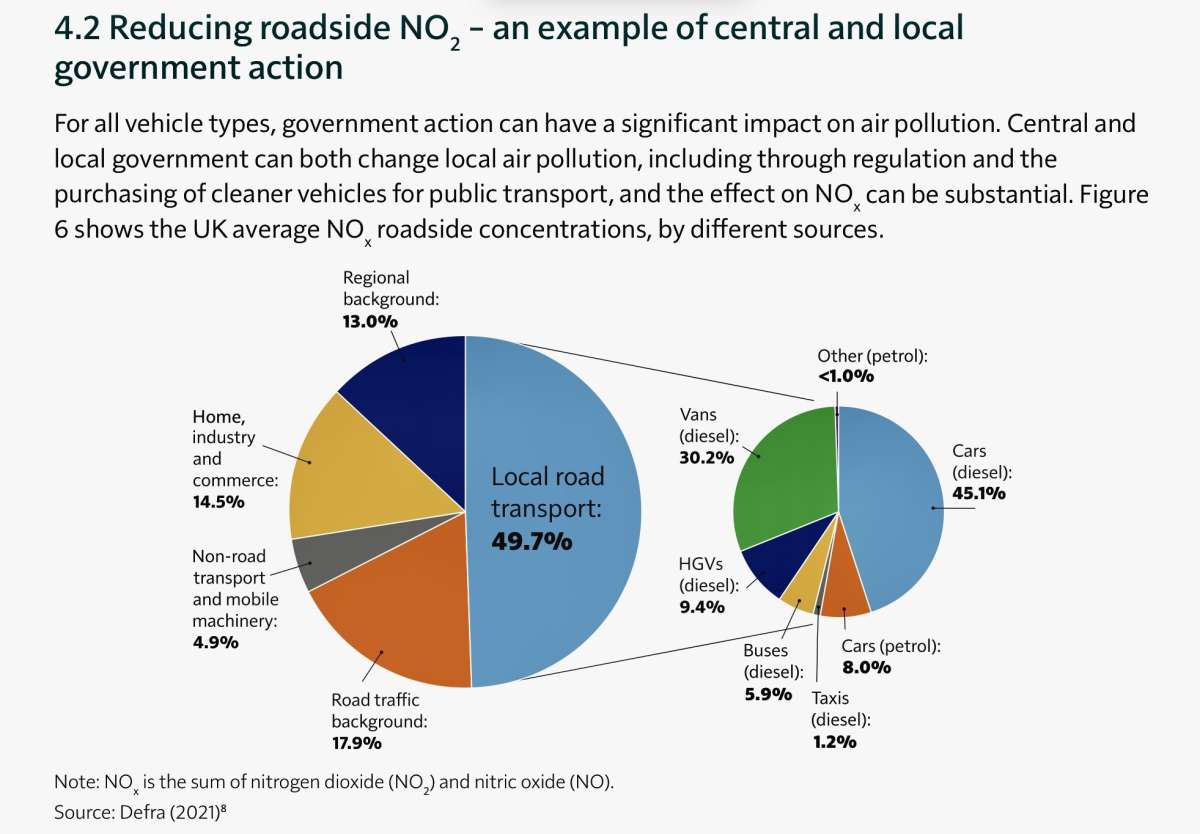
                                                    This report suggests the “data” means very little in practice.

                                                    IMG_7682

                                                    #834996
                                                    Fulmen
                                                    Participant
                                                      @fulmen
                                                      On Vic Said:

                                                      Nippy as well, so much so I’m a bit concerned about tyre wear! I’m hoping traction control will help with this but we’ll see.

                                                      You’ll get used to the torque, but tyre wear is something to be aware of. They have a lot of torque and also weigh significantly more. But with a nimble foot it isn’t that bad, and besides tyres are perishable items.

                                                    Viewing 25 posts - 1 through 25 (of 102 total)
                                                    • Please log in to reply to this topic. Registering is free and easy using the links on the menu at the top of this page.

                                                    Latest Replies

                                                    Home Forums The Tea Room Topics

                                                    Viewing 25 topics - 1 through 25 (of 25 total)
                                                    Viewing 25 topics - 1 through 25 (of 25 total)

                                                    View full reply list.