Milling Machine Identification

Milling Machine Identification

Home Forums Help and Assistance! (Offered or Wanted) Milling Machine Identification

Viewing 25 posts - 1 through 25 (of 51 total)
  • Author
    Posts
  • #415498
    JohnM
    Participant
      @johnm51917

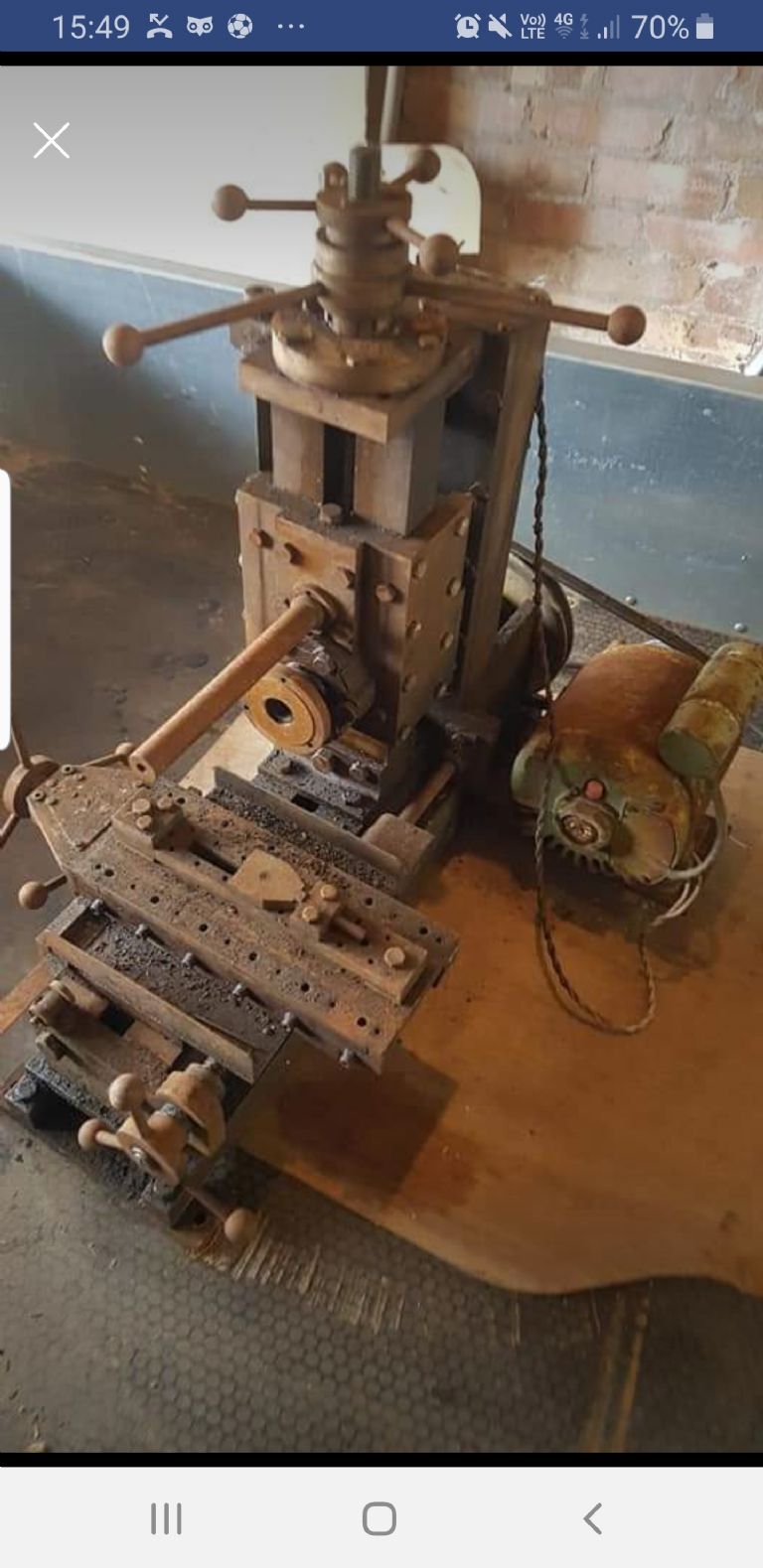
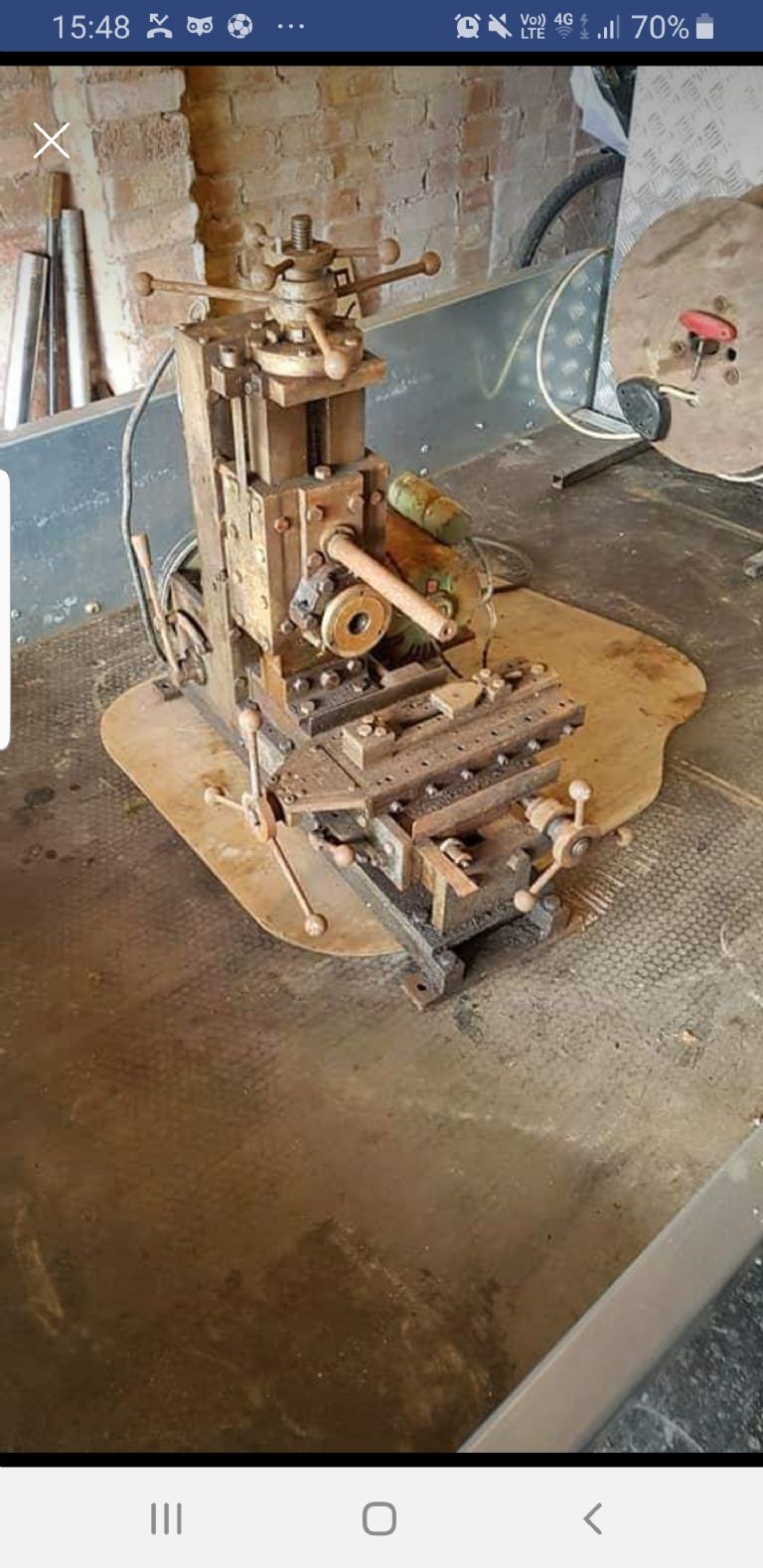
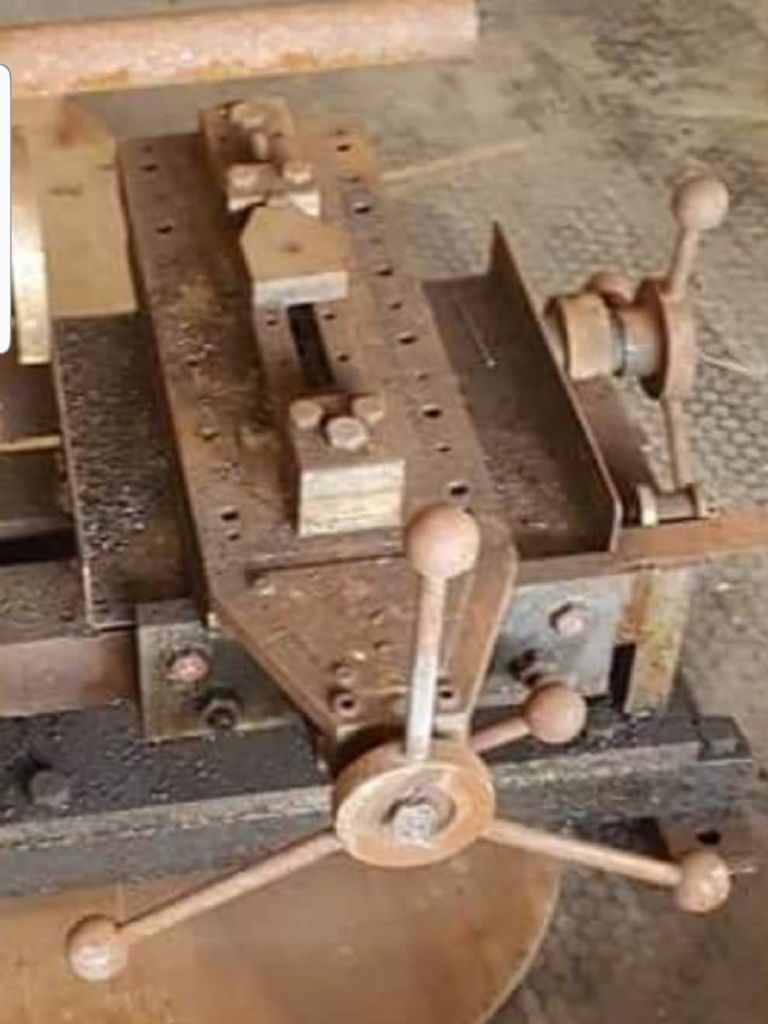
      I recently picked up.. No we actually slid it along as it was perhaps the heaviest thing I have ever lifted in my life. This mill has no makers name I can find but it is very well made. Can anyone help me with identification? I'm going to keep and use it if I can find a few missing parts or even what bits are actually missing.

      I have been stripping bits off for two days and still can't lift it easily. It's a beast.

      Edited By John Milton 2 on 22/06/2019 06:14:10

      #33411
      JohnM
      Participant
        @johnm51917
        #415499
        JohnM
        Participant
          @johnm51917

          screenshot_20190619-154902_facebook.jpgscreenshot_20190619-154820_facebook.jpg

          #415500
          Hopper
          Participant
            @hopper

            Wow that is a beast. A nice one. It is either very old old someone has perhaps fabricated it from bar stock and flat plate? Is the main body a casting or is it all bolted up from stock? Sorry, can't help with identification. But fascinated. Please keep us posted with your progress.

            #415521
            Hollowpoint
            Participant
              @hollowpoint

              Looks homemade to me. If it had been made in a factory there would likely be much greater use of castings.

              #415539
              Plasma
              Participant
                @plasma

                Definitely a home brew job, a lot of work to make it too.

                Not sure how well it will clean up or perform but a good project to have a go at.

                I think the hardest job will be to get any cutters to run true, the arbor is missing and the support bracket.

                Good luck in making it a runner

                Best regards Mick

                #415583
                JohnM
                Participant
                  @johnm51917

                  It's all solid flat bar bolted together. There are many, many bolts and solid is an understatement. It will be a good while until I get it in a working condition but if anyone can send me links of what I need to get it working in a basic form I would be very grateful. Thanks for your messages and I will keep posting on my progress. Some parts are getting Electrolisis treatment as we speak. Pics to follow. One thing I know I could weigh it in for less than I paid for it 😂

                  K

                  #415601
                  Nigel Graham 2
                  Participant
                    @nigelgraham2

                    Plasma-

                    Arbor missing? That look like a lathe chuck back-plate on the spindle, suggesting the builder was unable to make a conventional taper-fitted spindle or perhaps used an ex-lathe spindle.

                    Making a new arbour drop-bracket: I had to do that for a Centec mill. My method:

                    1. Completed the bracket's over-arm clamp arrangement. (The Centec over-arm is dovetailed but the method is adaptable to any over-arm form.)

                    2. Drilled the arbour hole just below size.

                    3. Clamped the embryo bracket to the over-arm and to a pair of angle-plates fitted to the table with plenty of T-bolts, so the hole was comfortably between the angle-plates and aligned with the spindle.

                    4. With a boring-head in the spindle-nose and the over-arm just slack enough to slide, gently bored the bracket to finished diameter, winding the table inwards to advance the cut along the bore.

                    I took only very light cuts and very gentle feed as the method does put a somewhat unfair stress on the machine; but it succeeded. I think I wound the handle with one hand while gently pushing the over-arm with the other, to relieve the load.

                    I have a small Denbigh horizontal mill that needs a new drop-bracket for its single, round-bar over-arm, and will use the same technique.

                    So I think this a way worth John Milton considering in restoring this machine.

                    #415627
                    JohnM
                    Participant
                      @johnm51917

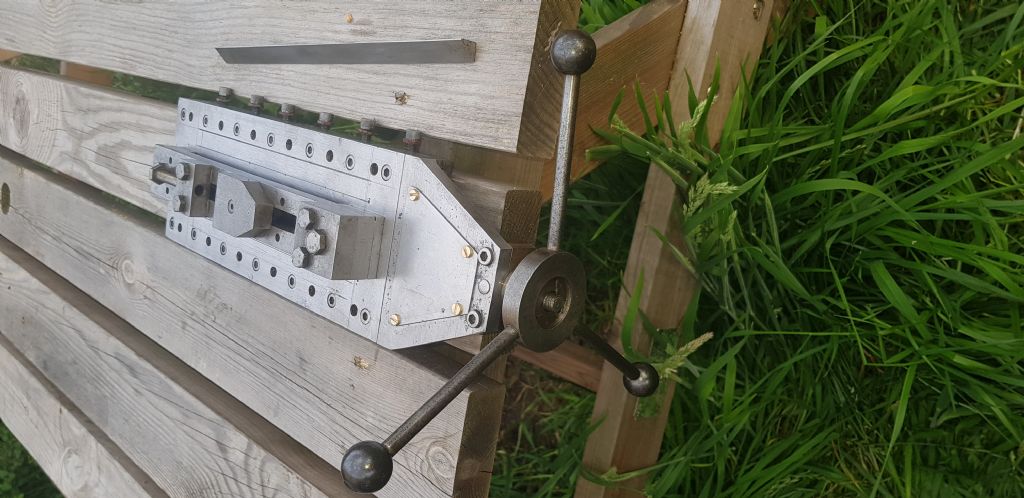
                      20190622_200026.jpgToday's effort.

                      20190622_204951.jpg

                      #415629
                      Michael Gilligan
                      Participant
                        @michaelgilligan61133

                        You deserve to end-up with a good machine there, John

                        MichaelG.

                        #415634
                        JohnM
                        Participant
                          @johnm51917

                          Thank you Michael. I love all the responses on here it gives me a push to try a little harder than I would.

                          Nigel if you have any photos or diagrams it would help me massively as I honestly really wish I understood what you just said 😂

                          #415653
                          Nigel Graham 2
                          Participant
                            @nigelgraham2

                            We all look forwards to it being back in service!

                            Sorry, I've no photos, but I suggest you look on the Lathes.co web-site, find Denbigh milling-machines and study the Model M horizontal.

                            I cite these because I own a slightly simpler Denbigh H4 (also in the Denbigh " chapter &quot so can picture it in mind to explain here what I had in mind.
                            '

                            I don't know how much you know about horizontal millers, nor quite what I'd not explained fully, so please bear with me if I start from first principles and repeat what's already familiar to you.

                            '

                            On the Denbigh M photo, the over-arm is the heavy bar projecting forwards from the top of the machine. What I called the drop-bracket is that hefty casting dangling from the over-arm's outer end.

                            On yours, it is the bar projecting from the vertical-slide, directly above the spindle.

                            The Denbigh is shown with its arbour, without a cutter, in place, and you can see its outer end runs in a bearing (probably just a bronze bush) in the drop-bracket.

                            This is analogous to the steady on a lathe, and supports the arbour against the heavy lateral loads imposed by horizontal milling.

                            The inboard end of the arbour normally has a standard Morse or other taper in the spindle nose, and is pulled in tight by a draw-bar extending back through the hollow spindle. It also means you can use drill-chucks (for drilling only, NOT milling!), boring heads, etc. with similar tapers.

                            Now, you machine seems to have, or had, a lathe chuck on its spindle, and what we don't know is whether it has a through-hole spindle with taper and draw-bar. If just a lathe chuck, you'd need an arbour with a plain rather than taper shank.

                            '

                            Now to the nub of what I wrote above. Obviously, the drop-bracket centres need to match the over-arm to spindle centres, so the method I described was to give that.

                            .

                            On most smaller mills like the Denbigh M or H-series, the over-arm can be slid backwards and forwards through its mounting holes (with its clamps slackened). The Centec has a dove-tailed slide but the principle here is the same. This meant that when I linked the table to the over-arm with the drop-bracket I was making, the over-arm slid back with the table.

                            On yours, the over-arm is fixed, so you will need to clean it to a good smooth finish and slide the bracket on that.

                            I would recommend you make the drop-bracket (assuming it's not already there among any bits and pieces that came with the machine) with either of two clamp patterns. The first, common on bench-drill columns, has two scalloped steel bushes on a draw-bolt. The other is the split-type clamp, as on the Denbigh machines.

                            You need clamp the bottom end of the bracket to the table in such a way you can drill and bore or ream it horizontally for the arbour bush. You could use two angle-plates with a sacrificial steel bar across the gap to support the bracket. Or clamp it on some way in the vice. Either way it all needs to be rigid enough not to spring or rotate under the cutting forces while also transmitting the table movement to the top of the drop-bracket so that can slide without shake along the lubricated over-arm. Ease the clamp just enough to allow it.

                            I would drill the bulk of the metal out first, before setting up as above.

                            Effectively this uses the milling-machine as a horizontal borer, but the secret of success is in the drop-bracket moving without springing under full control of the table – along the over-arm on your machine, with the over-arm on my Centec and Denbigh.

                            #415656
                            JohnM
                            Participant
                              @johnm51917

                              Nigel thank you so much for taking the time to explain all of the process involved. I didn't think I would ever be able to afford a Milling Machine and I am looking forward to hopefully get it working again. I will go as far as I can and when I get stuck I will give you a little nudge so that you can hopefully set me back on track.

                              #415670
                              Hopper
                              Participant
                                @hopper

                                It looks as though it could be combination lathe and milling machine. With that chuck backing plate below what appears at first glance to be a milling spindle. Job could be held in the lathe chuck mounted on that backing plate, and a toolpost mounted in the vice or direct to the table below.

                                Or is the chuck backing plate mounted on the main spindle and the round bar above it remains stationary to act as the overarm on which to mount a steady for the milling cutter spindle below?

                                Some pics of the area behind the main column showing the drive from motor to spindle/s would possibly clarify.

                                Certainly an interesting machine. I wonder if it was ever written up in ME magazine?

                                Edited By Hopper on 23/06/2019 07:29:39

                                #415679
                                JohnM
                                Participant
                                  @johnm51917

                                  i have setup an album for anyone interested. I am unfortunately clueless but learning all the time. there is a very old but perfectly formed I believe gearbox that is hidden away in the bottom of the machine and I am cleaning it despite only being able to see the handle visible on the outside of the machine.

                                  The motor runs as sweet as a nut and I have rewired this with a new earth connection now added. It has probably been running for the past 100 years or so with just twin live/neutral wires. I will get you those photos but it's mostly apart right now Hopper. I wish I could find out who built it as I would get the plate engraved. It really looks to me no time and no expence has been spared. I have an overflowing pot of bolts collected during the partial strip I have made so far. I would have used four where he used eight or so.

                                  Right back to it and will report back later today or this evening. Thanks for all the interest I believe the seller could be joining the forums today and having a read today so he may have some more information for us.

                                  #415691
                                  JohnM
                                  Participant
                                    @johnm51917

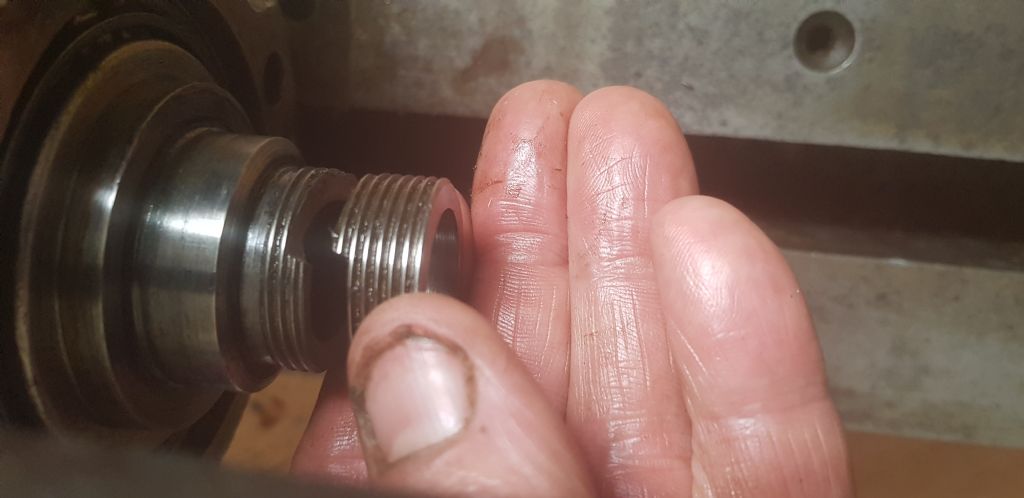
                                    Houston we have a problem!

                                    20190623_102105.jpg

                                    #415705
                                    Michael Gilligan
                                    Participant
                                      @michaelgilligan61133
                                      Posted by John Milton 2 on 23/06/2019 10:16:57:

                                      Houston we have a problem!

                                      .

                                      Think positive, John … See it as an oppurtunity angel

                                      MichaelG.

                                      #415713
                                      Nigel Graham 2
                                      Participant
                                        @nigelgraham2

                                        A pleasure John! I will see if I do have any photos of how I made the drop-bracket for my Centec mill (which I no longer have). I don't recall photographing the process, so can't promise it – and I've still to find out how to add images here.

                                        An interesting idea, Hopper, that this is a combination machine – a rare but very useful beast, and there were some quite elaborate species of these developed over the years. It does look to me as your second suggestion: the projecting bar is an over-arm, not a shaft.

                                        A gearbox in the column… yes, perfectly feasible, even if giving only two speeds as the handle suggests. This was common practice on horizontal mills.

                                        Is that broken thread, the spindle nose? It's hard to see what happens at the register end, but is the thread actually on the same metal as the spindle or is it some sort of insert? If the only answer will be a new spindle I suggest you do make it as I'd described above – with through-bore and internal taper as well as the thread. The taper will probably have to be a Morse at that size, but it will allow using a range of tooling and collets.

                                        The original builder might have used an existing spindle, perhaps from a scrapped lathe, or a new one sold as a spare for some make of lathe.

                                        #415814
                                        JohnM
                                        Participant
                                          @johnm51917

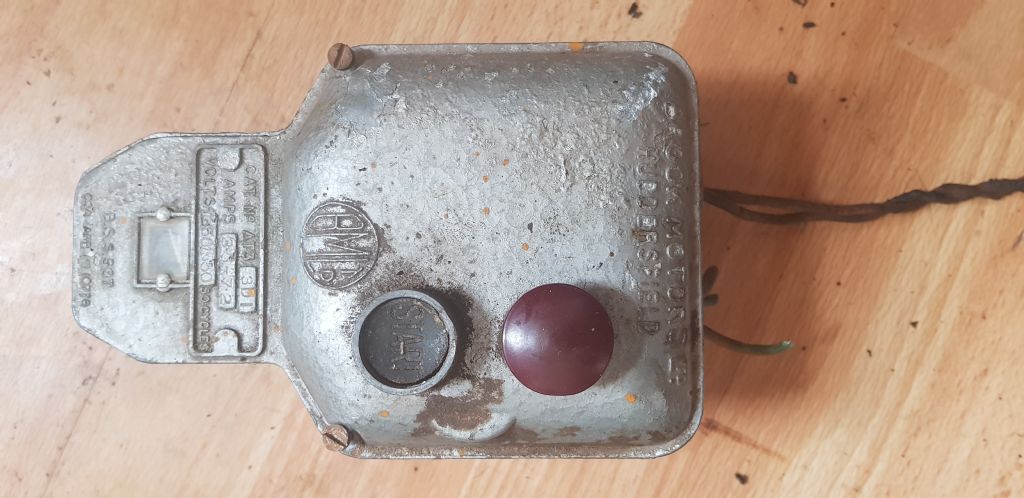
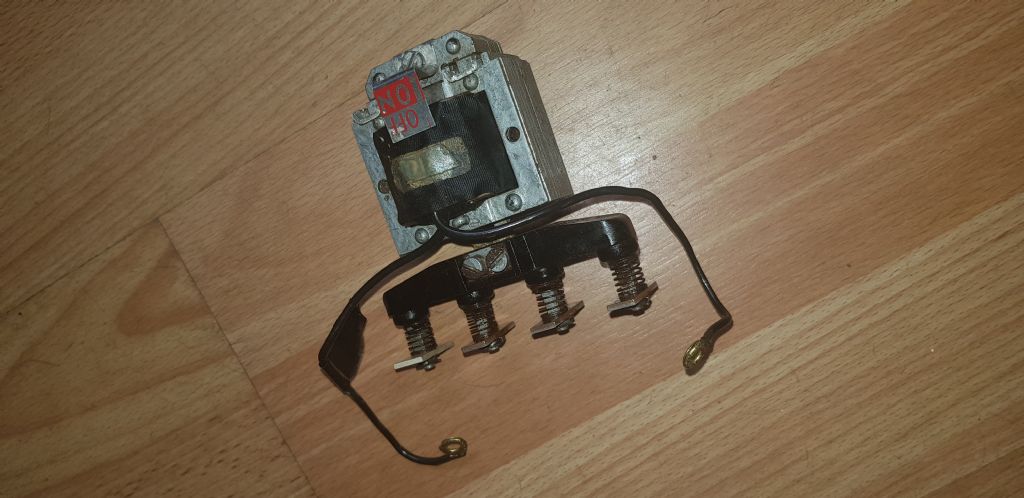
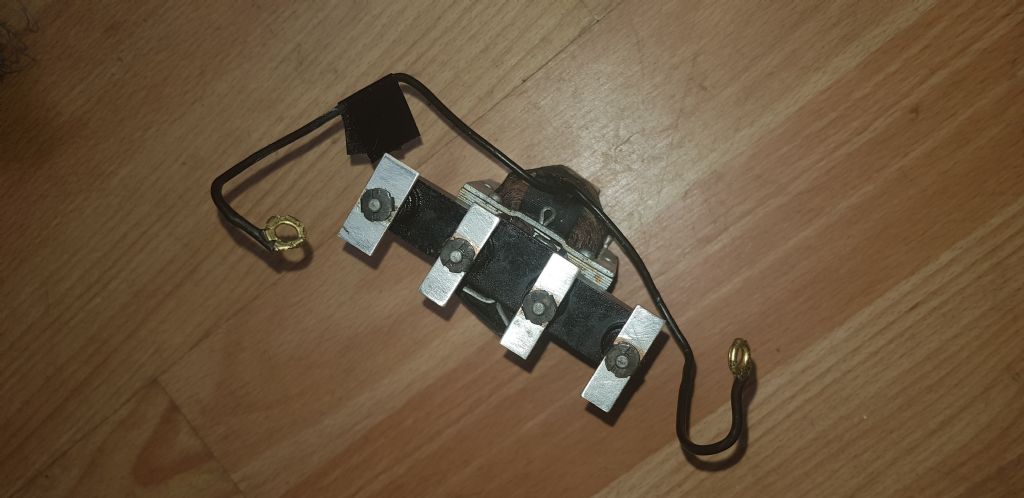
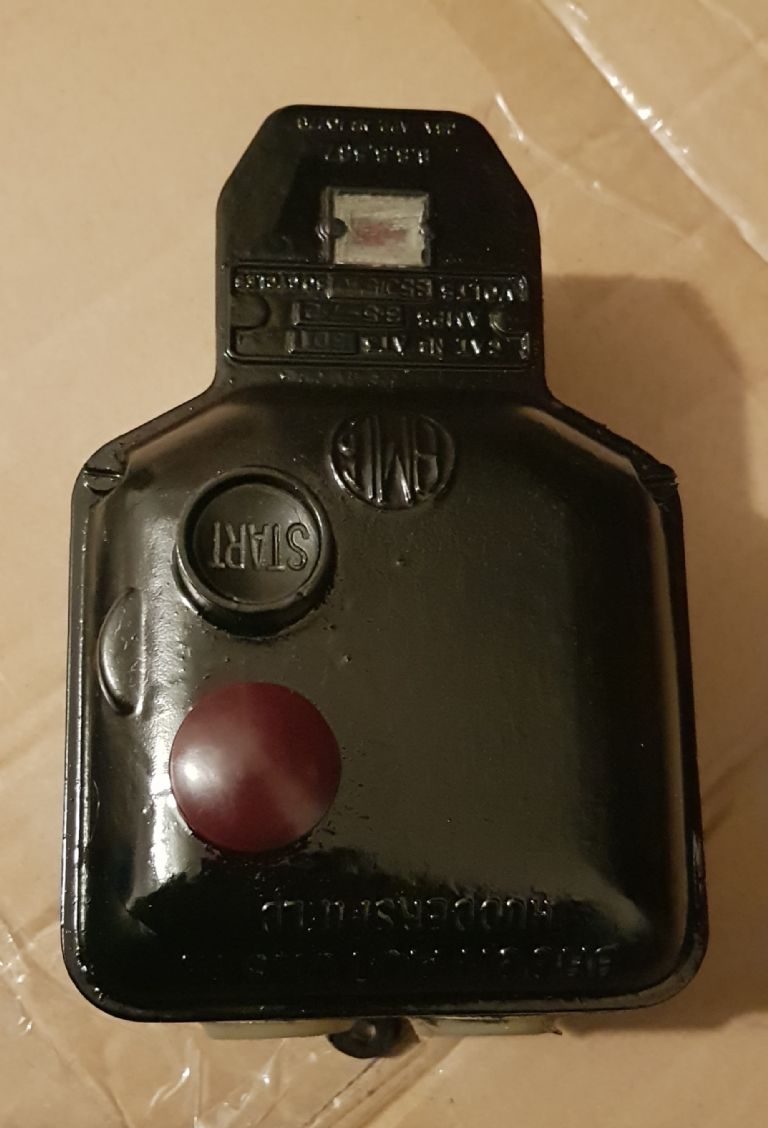
                                          Today I made some Electrolysis soup for most of the components I have stripped off. I think I need a new Whitworth spanner as the only spanner I have that fits the nuts I have targeted for removal is a ring spanner and it keeps slipping, took all my self control not to keep on attacking them and rounding them all over to give me a real challenge I am really struggling to move more than a few bolts even with a sea of WD40 and using heat to try to shift them. I took a little break though and cleaned and painted the start/stop switch housing.
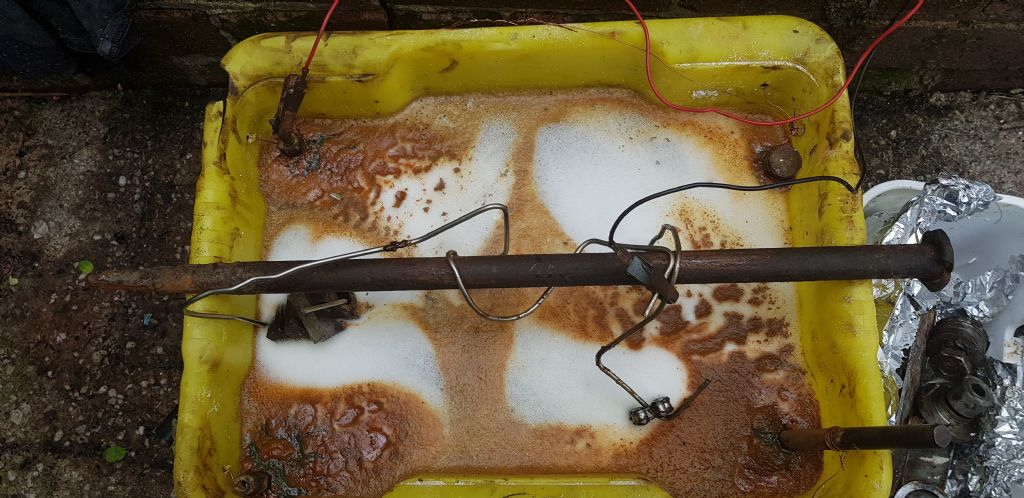
                                          20190623_181509.jpg

                                          20190623_092638.jpg

                                          20190623_124243.jpg

                                          20190623_124236.jpg

                                          20190623_221927.jpg

                                          #415818
                                          Michael Gilligan
                                          Participant
                                            @michaelgilligan61133
                                            Posted by John Milton 2 on 23/06/2019 22:46:21:

                                            I think I need a new Whitworth spanner as the only spanner I have that fits the nuts I have targeted for removal is a ring spanner and it keeps slipping, took all my self control not to keep on attacking them and rounding them all over to give me a real challenge I am really struggling to move more than a few bolts even with a sea of WD40 and using heat to try to shift them.

                                            .

                                            John,

                                            Two suggestions, if I may:

                                            1. Get a decent 'flank drive' spanner [either ring, or socket]
                                            2. Use PlusGas 'Formula A' dismantling fluid in preference to WD40

                                            MichaelG.

                                            #415838
                                            HughE
                                            Participant
                                              @hughe

                                              John,

                                              +1 for MG's suggestion plus gas in excellent. However I have found the one sold at Lidle second best.

                                              A bit of heat will also help, also light tap on bolt heads with a hammer breaks the rust lock on the threads. Be careful on any cast iron parts.

                                              Slight digression. Am I imagining this, but didn't there be two types of plus gas. One in a red tin and one in a blue tin!!!

                                              Hugh

                                              #415847
                                              JohnM
                                              Participant
                                                @johnm51917

                                                Tried the tapping with hammer and bashing a little. These are as tough as bolts get. Just ordered some Plus Gas and if anyone has a set of flank Drive spanners and wants to come over and crack a few bolts you are welcome. If I buy a set it would cost more than the mill haha I will have to get some eventually as the ones I have are not up to the task. I am off to scour The Bay.for a couple of bargains.

                                                #415872
                                                Nigel Graham 2
                                                Participant
                                                  @nigelgraham2

                                                  It's not worth struggling with spanners that don't fit properly because they are the wrong sizes.

                                                  They will damage the fastenings so making the work even more difficult as well as spoiling it; and they risk slipping off, likely skinning your knuckles on some edge.

                                                  And that mill is more valuable than the cost of the spanners, which anyway you may need for future servicing, or to use with clamp sets compatible with what appear to be work-clamping holes in the table.

                                                  Put a wanted ad on here, specifying the spanner standards you need. If you're not sure of the standard, include the measured (not approximated by spanner) hexagon sizes across-flats so at least a potential seller can determine suitability.

                                                  The fastenings may well be BS Whitworth / Fine – same spanners but staggered in size, and most likely are if neither Metric nor inch-AF (Unified-range) spanners fit properly. The hexagon widths on BSW/F are also not simple binary fractions of inches, unlike the UN series, because they are set by fractional multiples of screw diameter.

                                                  Also look out for stockists of replacement fastenings. BSW / BSF fasteners are becoming rarer, but I think there are one or two suppliers advertising in ME and MEW for a start. Some of the suppliers or castings and materials for the larger-scale traction-engines also sell limited ranges of such fasteners.

                                                  Do you Plus Gas, as you say, not WD-40 despite its label claims; but leave it plenty of time to penetrate – try over-night for a start.

                                                  #415873
                                                  Nigel Graham 2
                                                  Participant
                                                    @nigelgraham2

                                                    Hugh –

                                                    Yes, Plus-gas was in red as well as blue cans. In fact I think I have one of each. Their were about 4 formulae until the one called " A ", in blue cans, replaced all; then in 2014 a new one called "Fast" appeared… in a black tin!

                                                    #415877
                                                    JohnM
                                                    Participant
                                                      @johnm51917

                                                      I have found a friend prepared to lend me his decent Spanners. £20 each is a step too far for me. I will keep one eye out for some that go for a reasonable price.

                                                    Viewing 25 posts - 1 through 25 (of 51 total)
                                                    • Please log in to reply to this topic. Registering is free and easy using the links on the menu at the top of this page.

                                                    Latest Replies

                                                    Viewing 25 topics - 1 through 25 (of 25 total)
                                                    Viewing 25 topics - 1 through 25 (of 25 total)

                                                    View full reply list.