Making Unimat DB/SL Steadies

Making Unimat DB/SL Steadies

Home Forums Workshop Techniques Making Unimat DB/SL Steadies

Viewing 22 posts - 26 through 47 (of 47 total)
  • Author
    Posts
  • #812981
    Emgee
    Participant
      @emgee

      If the poster wants a print file joining the Unimat iO Group is a good route to take, download is FOC.

      https://groups.io/g/Unimat


      Emgee.

      .

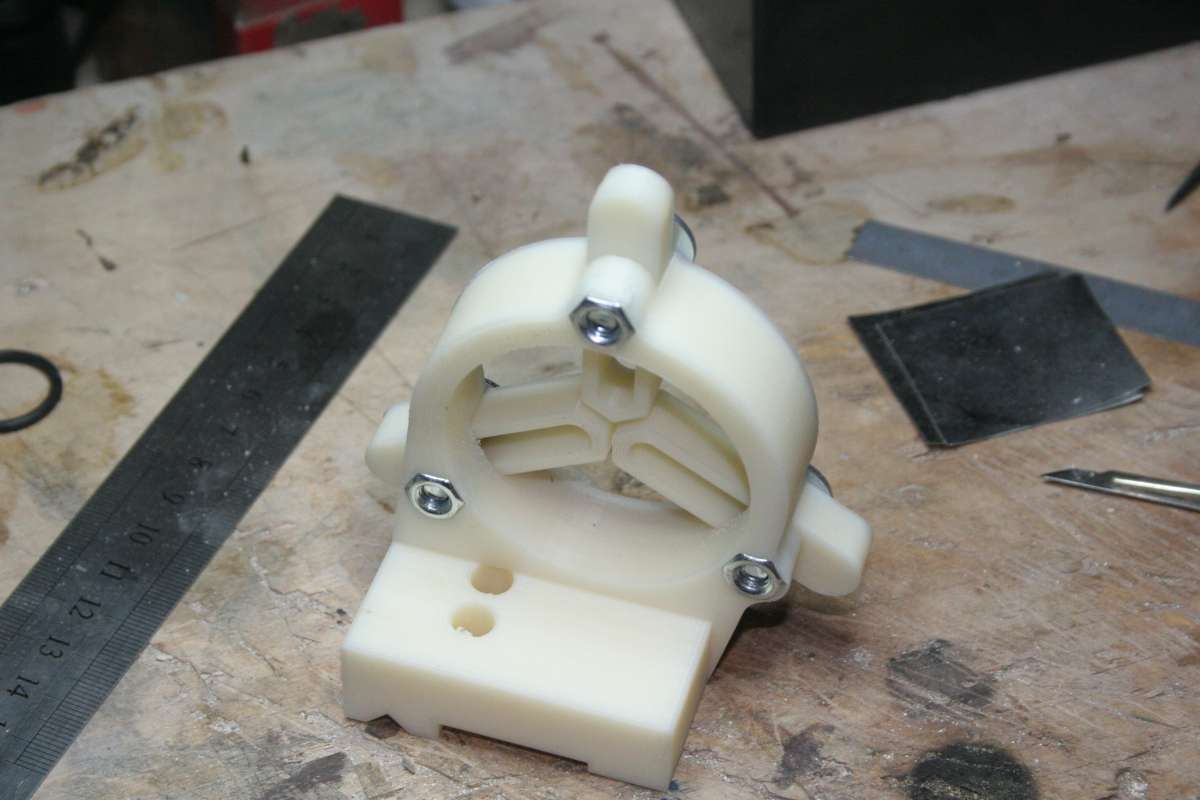
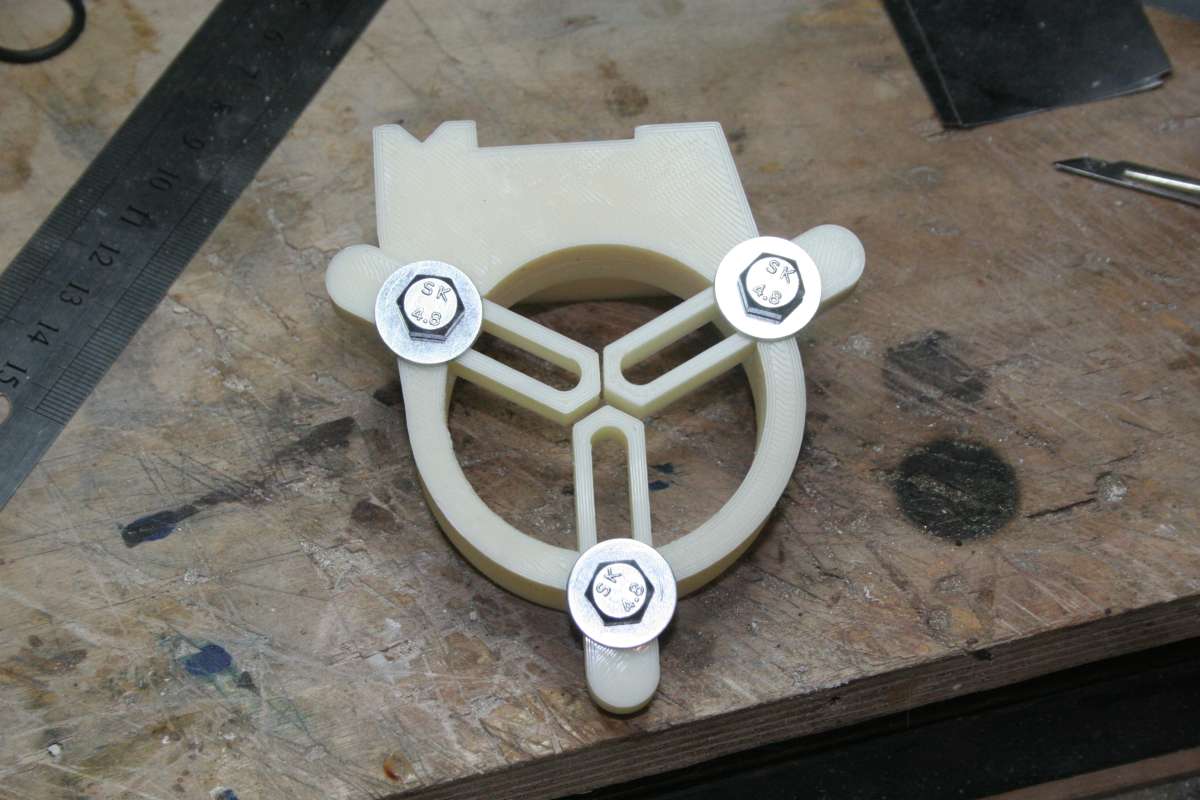
      SL steady.SL steady


      #812985
      Michael Gilligan
      Participant
        @michaelgilligan61133
        On duncan webster 1 Said:

        All it needs is a bit of flat to locate between the 2 round bars, which could be done with file and saw, screwed to  a longer bit sat on top, and a 3rd long bit underneath to clamp it all together. No accurate holes of vees. Don’t introduce spurious accuracy.

        You may be ‘technically’ correct there, Duncan … But, as Dave has repeatedly reminded us elsewhere, we should consider needs and wants separately.

        If I was making a ‘fixed steady’ for a Unimat, I would want it to include kinematic alignment with the headstock spindle [which makes the job of setting-it-up for work much easier].

        MichaelG.

        #812990
        JasonB
        Moderator
          @jasonb

          Duncans method would give 4 long contact points as would two vees so should keep it lined up. Take a look at a Myford fixed steady, If it works for myford then it should also work for a Sl and give the Kinematic alignment desired.


          Emgee is that designed for the Sl as it looks like the U3 type but would still have 3 points of contact and work OK if sized for the round bar SL’s ctr height?

          #813003
          Michael Gilligan
          Participant
            @michaelgilligan61133

            Sorry, Jason … I have difficulty visualising Duncan’s proposal

            I’m struggling to “accommodate” the central feed-screw in that simplistic description.

            Out all day today, so I probably won’t be disrupting.

            MichaelG.


            #813009
            JasonB
            Moderator
              @jasonb

              Maybe that is why it wa ssimplistic, he was describing a way to locate the steady, clearance in the middle would be upto the builder. Yes you would need to cut a clearance notch or similar for the feed screw just like the third hole if going for the drilled/bored/reamed option.

              Or two small blocks that bear on the outside of the bars would do the same job, screwed on with clearance holes they could be finally tightened up in position so reducing the need for accurate sizing of a central block. Infact given the OPs limited equipment just a single block at say the front would do, so long as you pushed that up against the front bar when setting and again when positioning the steady and leaving the middle clear for clamping bolts. Graver rest would not even need a block, just a flat bar will do and the added ability to swivel it’s position on the bed bars would be a bonus as you would get more versatile positioning of the rest, similar to the banjo arrangement found on woodturning rests.

              #813016
              Emgee
              Participant
                @emgee

                Updated info: Yes Jason the pictures show the U3 Steady but have found the correct file this morning for the DB/SL steady. Step file opened with Fusion360 to capture images.


                Emgee.

                Unimat-SL-Steady29-Sept-2024..Unimat-SL-Steady29-Sept-2024.Unimat-SL-Steady29-Sept-2024

                #813020
                JasonB
                Moderator
                  @jasonb

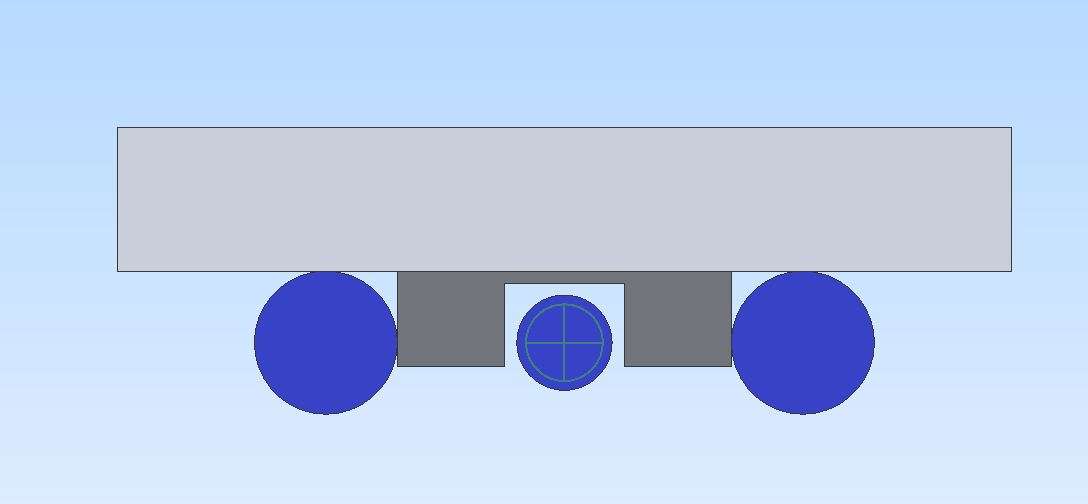
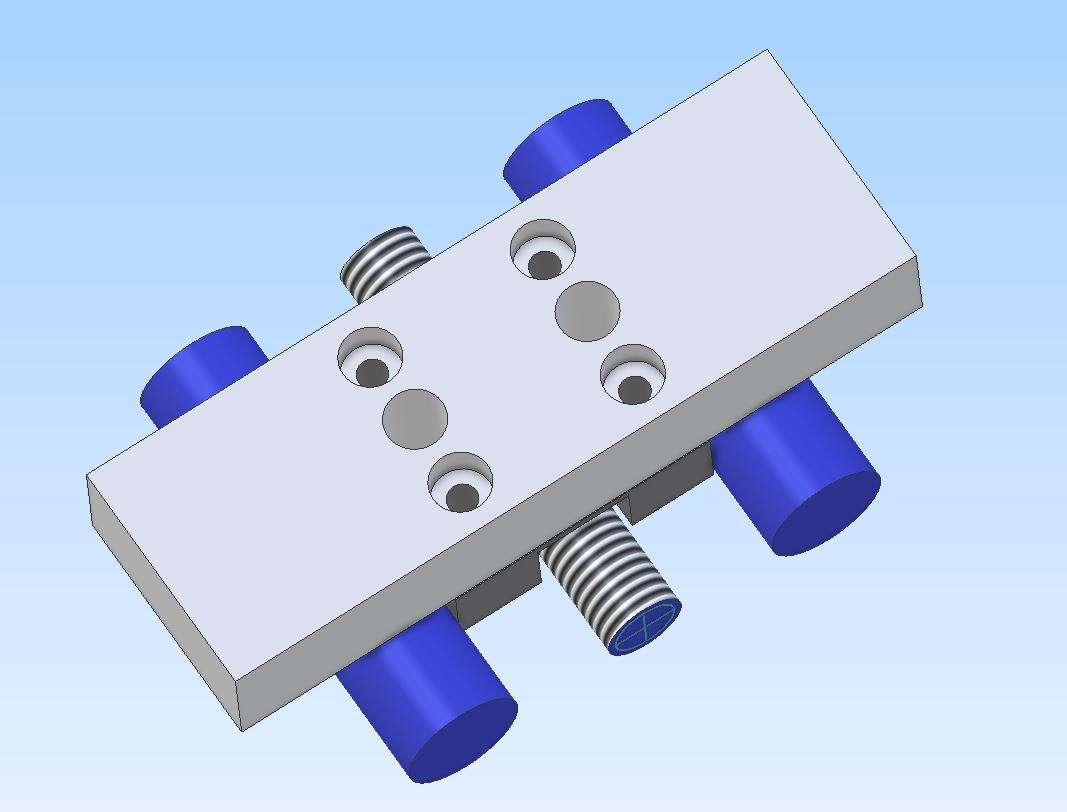
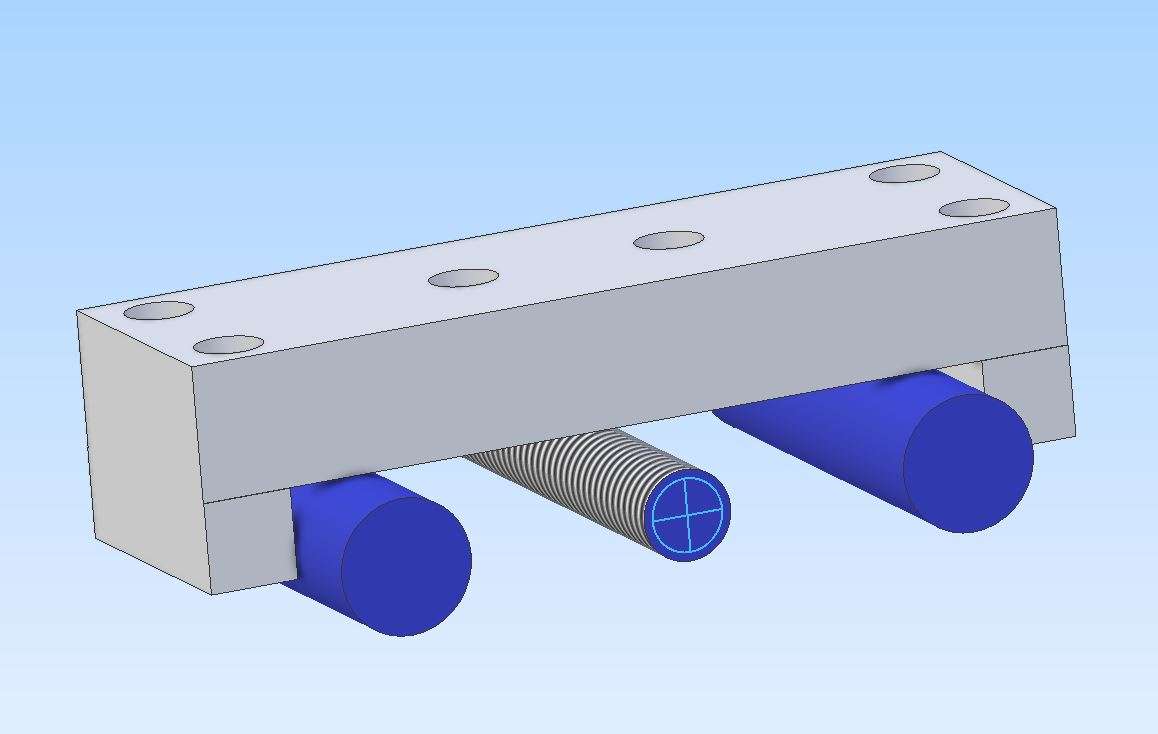
                  For anyone else who can’t think beyond a simplistic description this is how Duncan’s suggestion would work with a bit of common sense applied.

                  steady1

                  steady2

                  Or the outside block option

                  steady3


                  #813025
                  JasonB
                  Moderator
                    @jasonb

                    That looks the part Emgee, just need to find that reel of Emco coloured filament. 😉😉😉

                    Looking at that U3 version they seem to have got it the wrong way round as the foot will face away from the headstock meaning you will need excessive tool stickout if the carriage is not to hit the steadies base. My cast one has it the correct way round.

                    #813038
                    Michael Gilligan
                    Participant
                      @michaelgilligan61133

                      Thank you for taking the trouble to illustrate the “simple” solution for the benefit of we dim-wits, Jason

                      I am now more convinced than ever that my proposed use of an extrusion would better-suit the OP’s requirements.

                      If he ever returns, then perhaps we will know.

                      MichaelG.

                      #813046
                      Bazyle
                      Participant
                        @bazyle

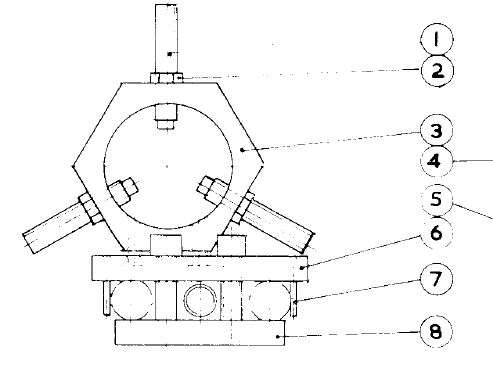
                        Just a reminder that there were a lot of articles on using and upgrading this little lathe in ME in the ’70s.

                        eg 1976
                        142
                        3551
                        1284
                        R.L.Tingey
                        A Travelling Steady for the Unimat

                        #813052
                        JasonB
                        Moderator
                          @jasonb

                          Or how about this earlier one from 1969, four pins on the outside not unlike the two blocks I suggested

                          pins

                          #813059
                          duncan webster 1
                          Participant
                            @duncanwebster1

                            One block either side of the front bar is even better, bigger aspect ratio so keeps steady square on better. There is no good reason to have a steady bang on centre, you have to adjust the fingers anyway

                            #813119
                            Andy Carlson
                            Participant
                              @andycarlson18141

                              Gosh this thread has certainly woken up again after a month being quiet! … typically while I was away for a few days.

                              Thanks again for all of the suggestions. The job is not yet done but the materials have arrived to do the job with two rectangular aluminium bars and three holes. One thing the Faircut does very well is putting drills through things so I am ok with that. This is also a prompt for me to get my clamping arrangements made less hand to mouth and that is now underway.

                              The actual plan is to cut down a Taig steady and screw it to a Unimat compatible base. A similar base is planned for a hand graver support and another adapted Taig steady with a base to fit my son’s EW lathe. The Taig bits are also now in my grubby mits.

                              I will think about other options for riding the Unimat bars but the multiple block options would likely mean starting with different bar stock than the stuff I have already bought.

                              I am intrigued by the discussion of alignment but searching for the kinematic variety turned up a lot of info on knee surgery so I am not sure what it means for a fixed steady.

                              Regards,  Andy

                              #813126
                              Michael Gilligan
                              Participant
                                @michaelgilligan61133

                                Welcome back, Andy

                                Kinematics:

                                Big subject area, but the basics are very simple

                                I suggest you start here

                                .

                                .

                                and then, on a much more sober level, proceed to find this on archive.org

                                .

                                IMG_0996

                                .


                                MichaelG.

                                #813133
                                Michael Gilligan
                                Participant
                                  @michaelgilligan61133

                                  For repeatable static mechanical positioning the classic kinematic solution requires ”a point, a vee, and a flat” … but I will leave you to explore that.

                                  MichaelG.

                                  .

                                  [spoiler alert]

                                  The Principle of Kinematic Constraint


                                  #818550
                                  Andy Carlson
                                  Participant
                                    @andycarlson18141

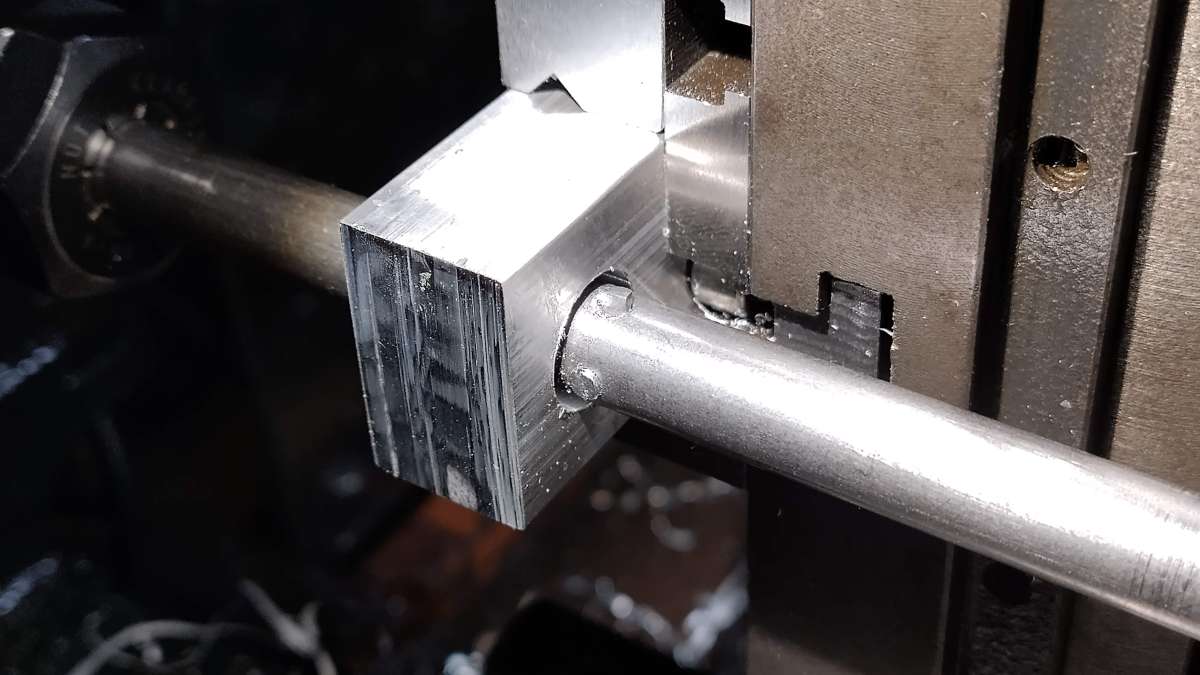
                                    A small update. Things are progressing slowly due to other demands on my time but I have finished making a decent set of ‘T’ nuts and a 3/8 ins boring bar using a bit of 3mm round HSS as the cutter. Said boring bar was then given a test run on a piece of Aluminium stock held in the vice on the vertical slide…

                                    IMG_20250917_203904 (1)

                                    The stock for the job proper has now been cut out and drilled and tapped for the clamping screws so that these can be used to hold the two halves together while making the 12mm holes.

                                    I also tested my cross slide leadscrew/dial for accurately spacing holes at 20/40mm and found it wanting so I am planning to measure using vernier calipers between a square clamped to the saddle and a block clamped to the cross slide. This setup was used when drilling the clamp screws… not because I needed it but because it was an opportunity to try it out.

                                    It’s amazing how you think you have already bought or made tooling to cope with most jobs… how wrong you can be!

                                    It’s wet and windy out today so traipsing back and forth to the shed to set the next (trickiest) part of the job up seems rather unattractive.

                                    #819396
                                    Andy Carlson
                                    Participant
                                      @andycarlson18141

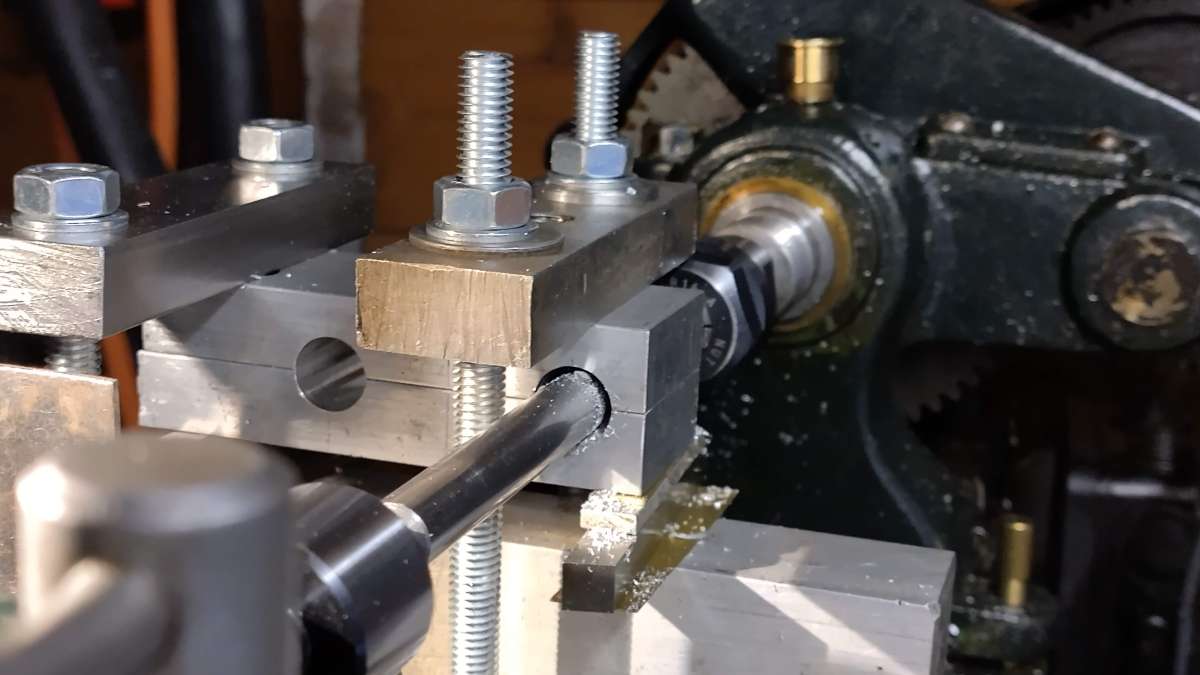
                                      Some progress has happened. The 12mm holes have now been drilled and bored.

                                      I changed the plan a little while doing it – I reckoned I was getting measurements repeatable to about 0.1mm using the vernier calipers to measure the cross slide position… which might or might not have been good enough. After getting the second hole to a sliding fit on the bar I then offset the cross slide by 0.1mm in each direction and did another pass with the boring bar to make the hole a little bit oval… so something of a nod to the positioning discussion but without the need to try to make different shaped slots and get them both to ride the bars at a consistent height.

                                      IMG_20251007_170842

                                      Seems like a result! …

                                      IMG_20251007_174502

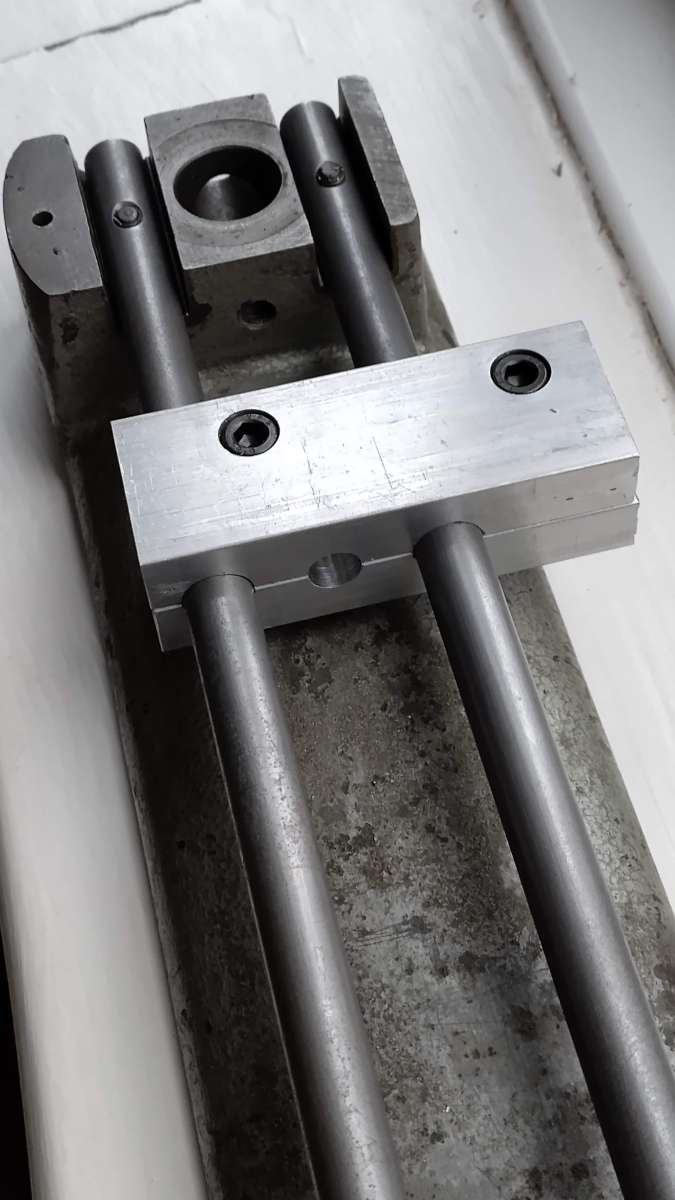
                                      A nice sliding fit all along the bars. I needed to skim the joining face with a fly cutter to allow the thing to grip the bars. I also needed to skim the bottom because although it cleared the Unimat base just fine (I had checked when drawing it), it was not possible to slot it into place without slackening the screws that hold the bars down.

                                      I still need to modify the Taig steady and do the drilling and tap to hold it on top of the base… plus tidy up the remaining sawn end of the base.

                                      Thanks again for your advice on this.

                                      #819450
                                      bernard towers
                                      Participant
                                        @bernardtowers37738

                                        Why did you not shim the blocks before boring the holes?

                                        #820798
                                        Andy Carlson
                                        Participant
                                          @andycarlson18141

                                          I thought about shimming them apart but that meant cutting some shims to suit and possibly an interrupted cut. I needed to lose some thickness from the bars anyway so skimming after making the holes seemed like the path of least resistance.

                                          The Unimat steady is finished now… except I neglected to take a photo.

                                          #821375
                                          Andy Carlson
                                          Participant
                                            @andycarlson18141

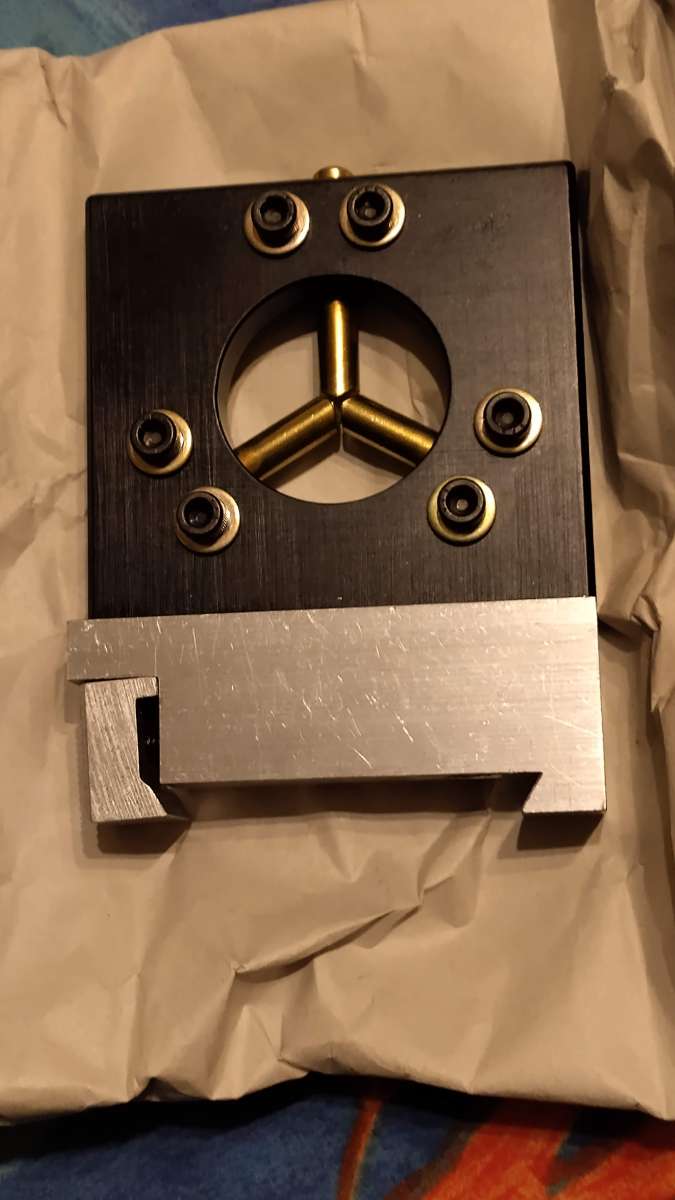
                                            And the photo…

                                            IMG_20251023_213725

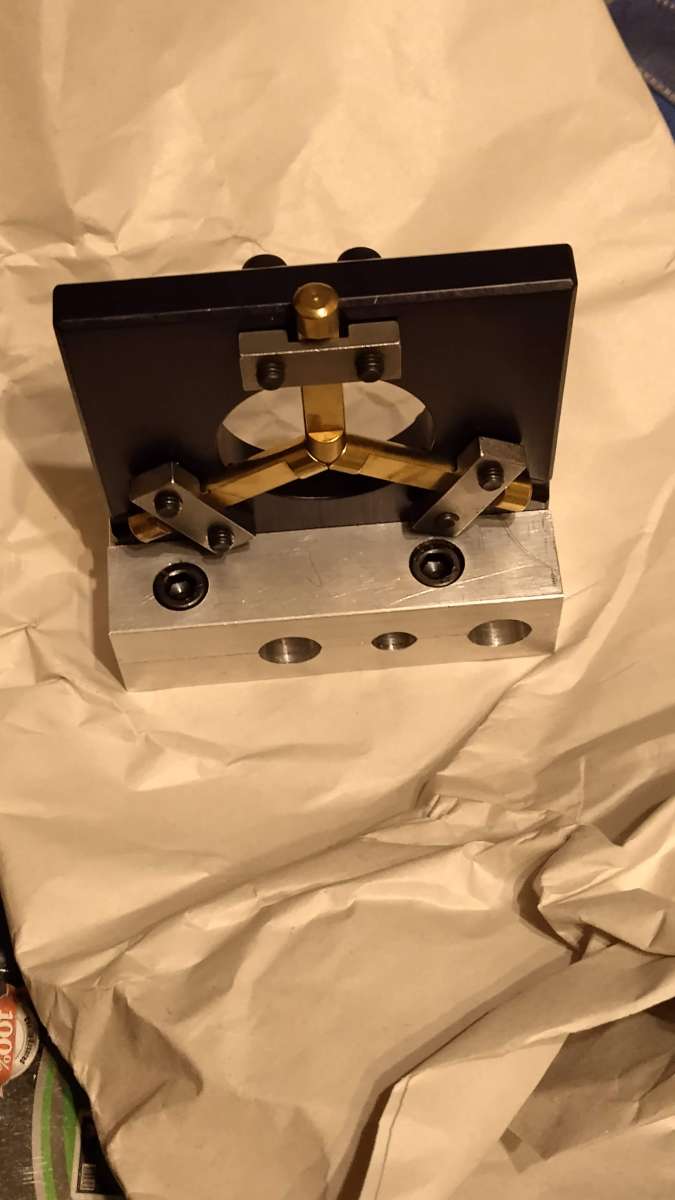
                                            Bonus photo… EW version… no tricky 12mm parallel holes on this one…

                                            IMG_20251023_213433

                                            #827864
                                            Michael Gilligan
                                            Participant
                                              @michaelgilligan61133

                                              The steadies look excellent, Andy … well done, Sir

                                              I am just resurrecting this topic to mention an interesting  two-part article in the Horological Journal [Nov/Dec 2025] in which Justin Koullapis FHBI makes a Special Tailstock for the Schaublin 70 [according to a design by Malcolm Wild FHBI]

                                              This is ‘inspirational’ and the concept could be adapted to many other lathes.

                                              MichaelG.

                                              #827878
                                              Michael Gilligan
                                              Participant
                                                @michaelgilligan61133

                                                Oops … Typo ^

                                                Accreditations should read FBHI

                                                ( Fellow of the British Horological Institute )

                                                … I beg their pardon.

                                                MichaelG.

                                              Viewing 22 posts - 26 through 47 (of 47 total)
                                              • Please log in to reply to this topic. Registering is free and easy using the links on the menu at the top of this page.

                                              Latest Replies

                                              Home Forums Workshop Techniques Topics

                                              Viewing 25 topics - 1 through 25 (of 25 total)
                                              Viewing 25 topics - 1 through 25 (of 25 total)

                                              View full reply list.