Looking after tools.

Looking after tools.

Home Forums The Tea Room Looking after tools.

Viewing 14 posts - 1 through 14 (of 14 total)
  • Author
    Posts
  • #817315
    David George 1
    Participant
      @davidgeorge1

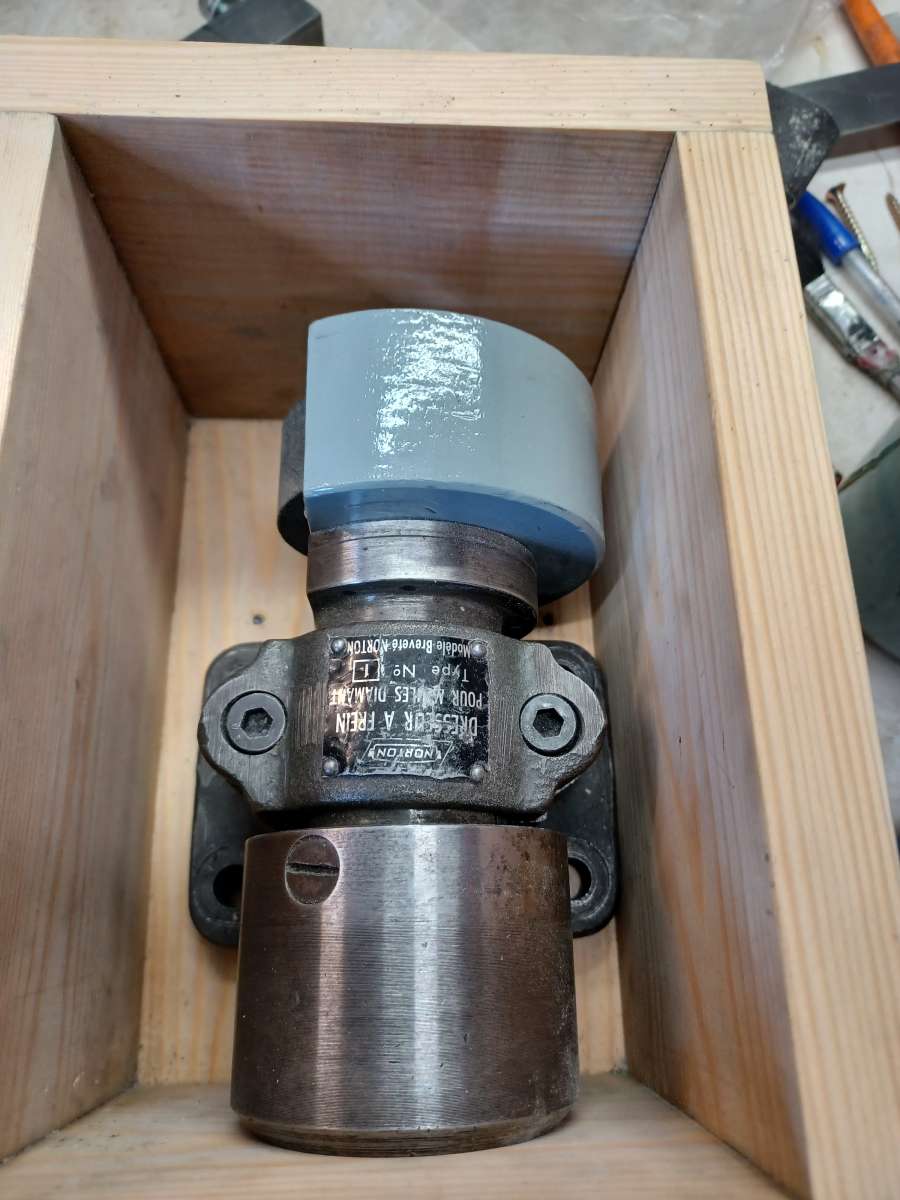
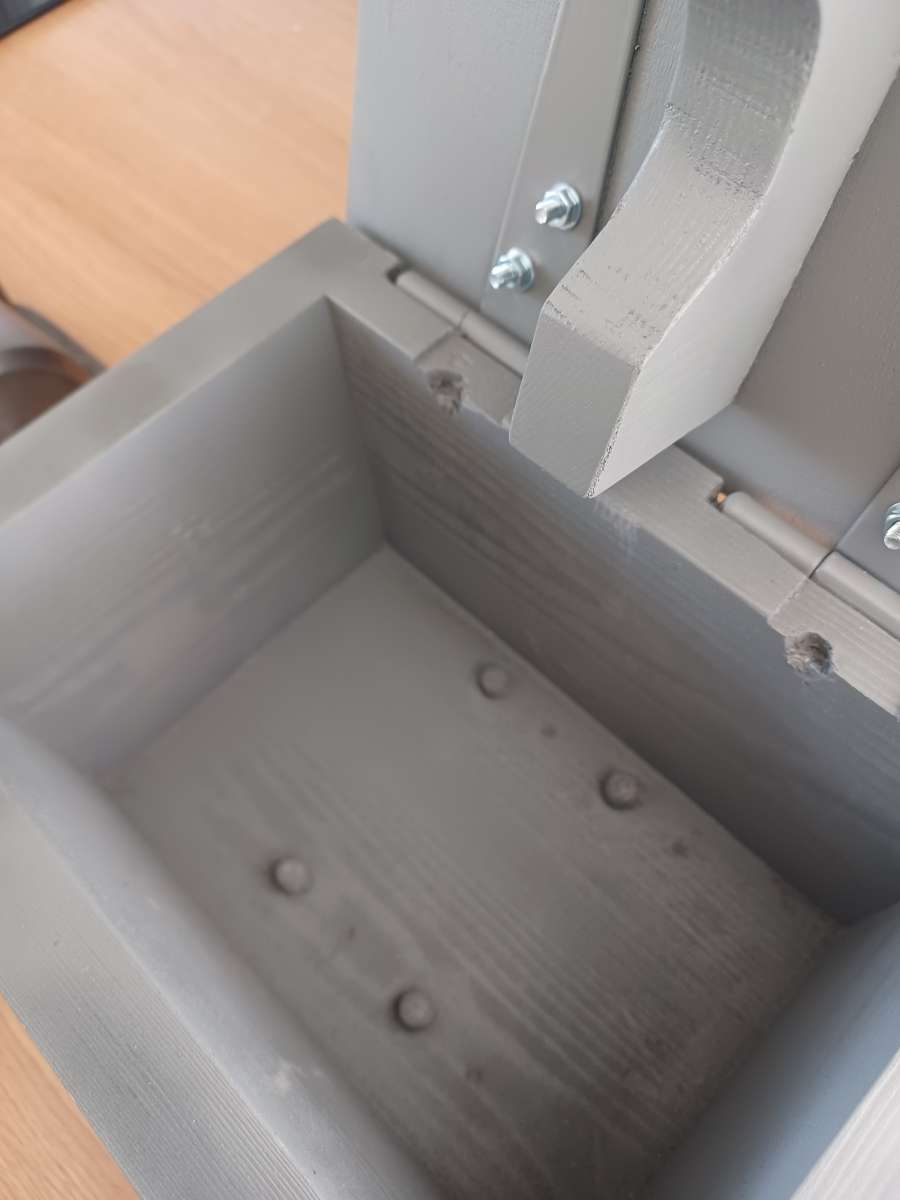
      I recently bought a diamond dressing attachment to dress the cup wheel on my modified cutter grinder.  It cst me £150.00 and if I was to buy a new one they are I believe around £300.00. I had it on my bench for a few months as I am strugling for proper storage space and I needed to look after it a bit better and so decided to make a box to protect it. The box was made from some spare planed wood I already had which was a bit thick but as itwas free ok. I ordered some hinges, handles and catches of the net which cost me around £18.00 in total and made a sturdy box with some wood dowels which fit the hold down holes and stop it moving about.

      20250908_113541

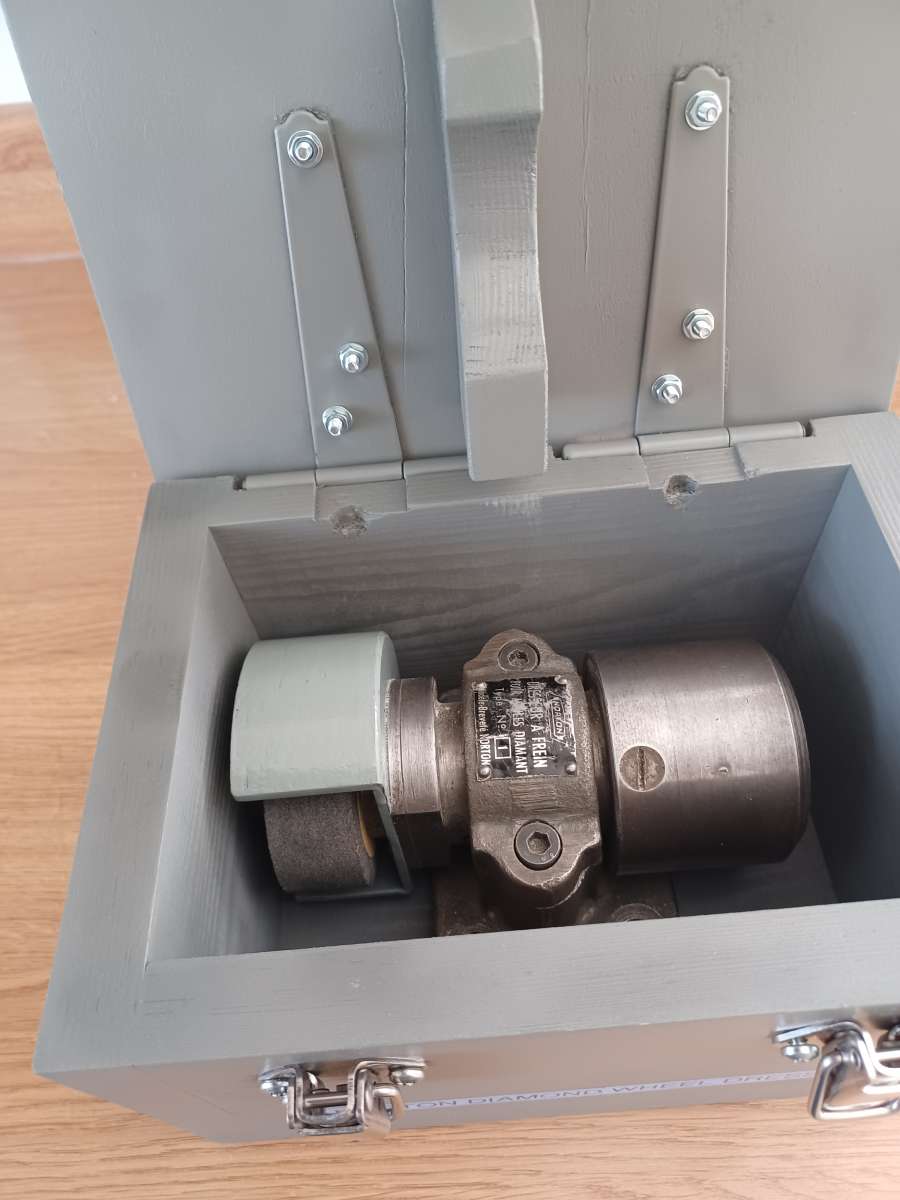
      The next thing I did was to make a lid with a piece shaped to hold down the Dressing attachment when closed.

      20250919_151027

      also it was painted in and out with spray paint to I hope keep out damp etc.

      20250919_151001

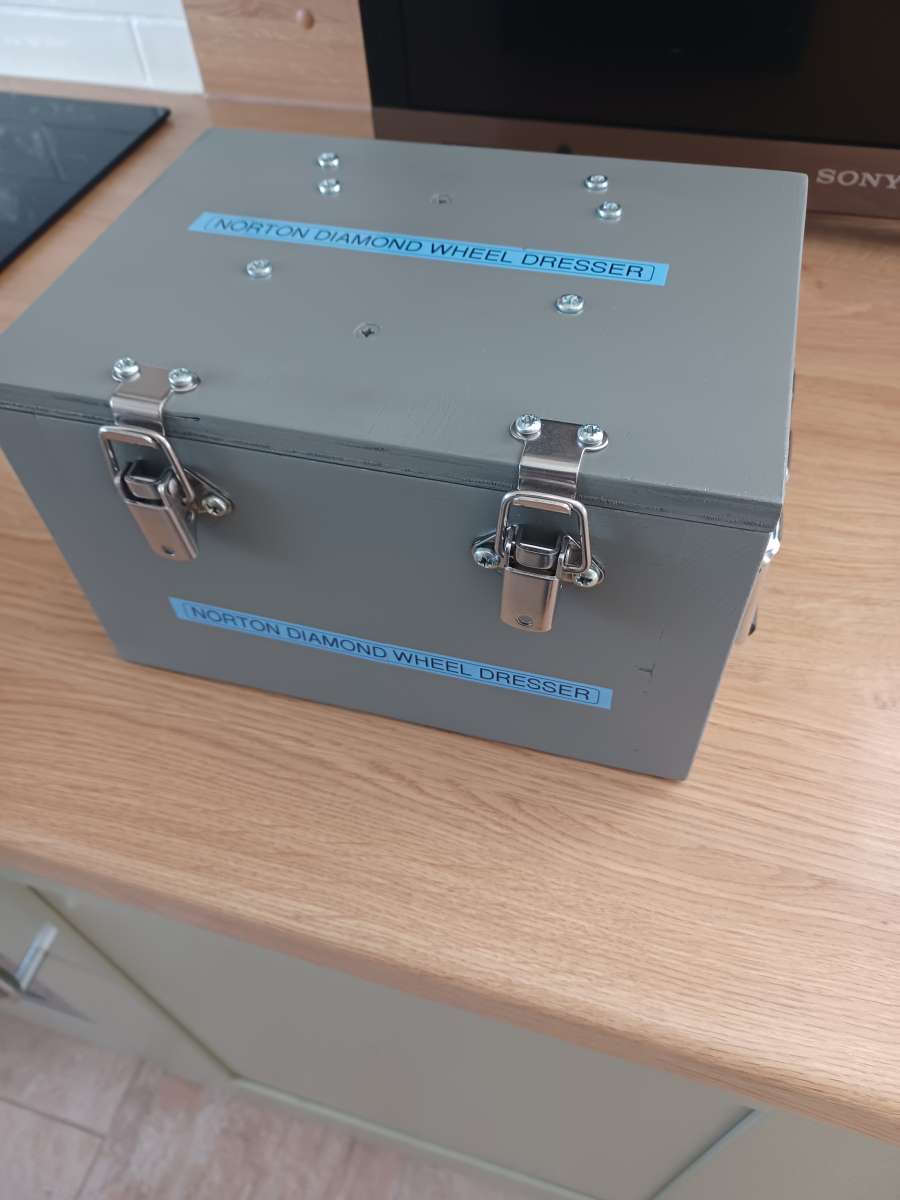
      The handles, latches were fitted and a couple of labels and will I hope help in the future and with protecting my investment.

      20250919_150950

      Is it a bit over kill or worth the trouble?

      David


      #817323
      parovoz
      Participant
        @parovoz

        Probably overkill…. But it does look very nice and very professional. So well worth the effort ! 🙂

        It should probably have a green baize lining 🙂  🙂   🙂

        Regards.

        #817324
        bernard towers
        Participant
          @bernardtowers37738

          I have to admit that I do the same with my tools and have never regretted it. You can knock the box about but the contents are still ok so in my book its worth it.

          #817327
          DC31k
          Participant
            @dc31k

            Can I say that I think you have a screw loose?

            On a similar theme, countersunk screws in the lid would allow you to put something on top of the box.

            #817330
            Richard Simpson
            Participant
              @richardsimpson88330

              There is no such thing as overkill if it makes you happy.  Lovely job.

              It reminds me of an incident in my very early days at sea.  The engine room workshops in those days were frequently attached to the engine room itself and, in some cases towards the stern where not only machinery vibration but also propeller vibration was quite excessive.  On this particular ship we were also fitted with a controllable pitch propeller, which were also noted for higher levels of vibration.   Consequently at full speed the vibration in the workshop made many tasks, such as machining, simply impossible.  Vibration also has an incredibly destructive effect on any item not securely fixed.  Valve handles for instance that are not secured will eventually erode away and fall off.

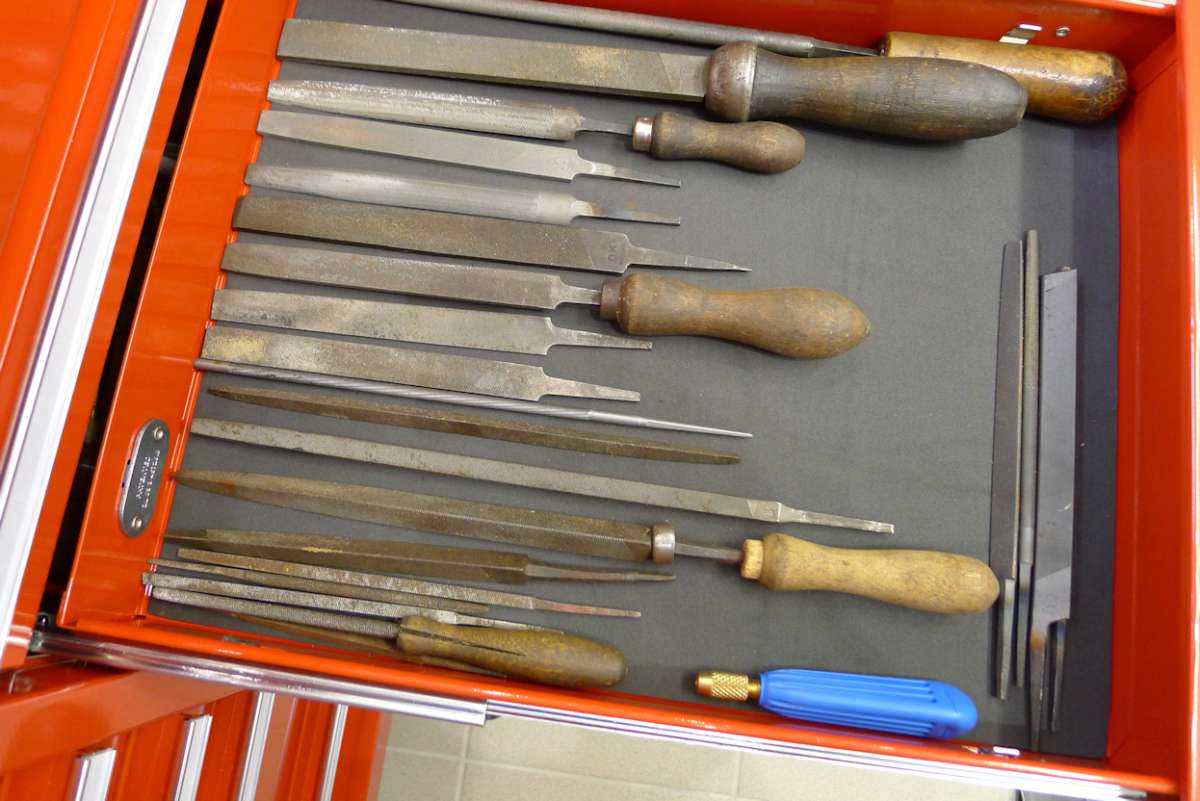
              Anyway one day the chief engineer came into the workshop doing a bit of tinkering with something and opened the drawer with the files in it.  The files stored in there had been rattling around against each other for years and were all well chewed up.  He want absolutely crazy shouting as anyone in range that we didn’t deserve good tools as no-one showed enough responsibility to look after things etc..etc.. He dragged the storekeeper down as well and gave him a thorough dressing down before storming out.  That was around 45 years ago now yet I remember it to this day.  I remember it because he was right.  Consequently all my files are now laid out neatly in a foam lined drawer and they are always cleaned before replacing them.

              I’m a great believer in looking after all tools, no matter how basic.

              29-10-14-02HandToolsFilesDrawer2


              #817337
              Bazyle
              Participant
                @bazyle

                It depends a lot on your workshop conditions. If not temperature stable moist damp air will penetrate the box albeit in small quantities relentlessly over the years. Consider further protection for the base of the tool in contact with the damp wood (hard candle wax in this instance) and any unpainted metal.

                By the way have you noticed how half empty tins of paint skin over despite being well sealed while full tins fair better? This is because the microclimate inside the tin allows a lot of evaporation from the surface because it condenses on the lid in cold spells. If you stack your tins, full one on top, the temperature variation between liquid and lid is less so the effect is reduced. Also cover the tin pile with your paint cloths. (the ones you used to protect the floor before you started using plastic sheets)

                #817338
                Vic
                Participant
                  @vic

                  Although historically many tools were supplied in wooden boxes I’ve always thought it a bad idea. The moisture in the wood can, and I’ve seen it happen, cause rusting of steel items. Particularly measuring tools. Luckily these days they come in plastic boxes with anti rust paper.
                  I’ve been storing some of my tools in air tight clip lock boxes with anti rust paper for over 20 years and had no rust appear on anything so far. I use similar boxes for photo gear with packs of silica gel.

                  #817339
                  John Hinkley
                  Participant
                    @johnhinkley26699

                    My father always stored part-used paint tins upside-down, (having first ensured that the lid was well seated, of course).  He maintained that no air could enter the empty space and thus it prevented skin formation.  I’ve not followed his example, relying on only buying sufficient for the job. Or more likely, not quite enough.  Maybe something to do with the ingredients of the paint in the 1950s and 60s.

                    John


                    #817340
                    Speedy Builder5
                    Participant
                      @speedybuilder5

                      John, I did this with a tin of contact glue used for gluing car carpets etc.  I was a bit disappointed when in the summer (workshop at 35 C ) the lid popped off whilst I was in the garden, made a hell of a mess as it dripped off of the shelf, down the next into an open carton etc etc.  Same thing happened with some acrylic paint used for car restoration and that had masking tape wound around the lid as well.

                      I wonder what the pressure testing regs are for paint tins ??

                      Years ago whilst as an apprentice, we were doing some legit painting of some bits for the local fete.  A couple of us were sent down to the paint shop for some paint stripper, which was given to us in an old syrup tin.  We weren’t especially fast in returning to the apprentice workshop and it was high summer.  When my mate levered off the tin lid, it literally blew up in his face and we had to drag him screaming down to the health centre.  Fortunately no lasting effects, but taught me a lesson about taking lids off especially those with solvents inside.

                      Bob

                      #817353
                      Richard Simpson
                      Participant
                        @richardsimpson88330
                        On Bazyle Said:

                        It depends a lot on your workshop conditions. If not temperature stable moist damp air will penetrate the box albeit in small quantities relentlessly over the years. Consider further protection for the base of the tool in contact with the damp wood (hard candle wax in this instance) and any unpainted metal.


                        A bag of silica gel is always worthwhile, although how many actually dry the gel out periodically?  I cover most possibilities and have a de-humidifier going in my workshop all year round.  Its amazing how much water it generates!

                        #817354
                        Richard Simpson
                        Participant
                          @richardsimpson88330
                          On Vic Said:

                          Although historically many tools were supplied in wooden boxes I’ve always thought it a bad idea. The moisture in the wood can, and I’ve seen it happen, cause rusting of steel items. Particularly measuring tools. Luckily these days they come in plastic boxes with anti rust paper.
                          I’ve been storing some of my tools in air tight clip lock boxes with anti rust paper for over 20 years and had no rust appear on anything so far. I use similar boxes for photo gear with packs of silica gel.

                          If its a quality box made from properly seasoned wood that should be significantly reduced.  The trouble is of course that many boxes were made from cheap, poorly seasoned wood.

                          #817364
                          SillyOldDuffer
                          Moderator
                            @sillyoldduffer

                            I think the box is worth the effort.  The Diamond Dressing attachment is expensive and probably spends most of it’s time in storage.  Left unprotected, it’s liable to be found rusty when needed, could get dinged, and might be hard to find in a roomful of anonymous cardboard boxes and old carrier bags.   Also helps whoever inherits David’s workshop when the time comes: it’s labelled ready for sale on ebay!

                            Packaging can be very elaborate.   In WW2 it was found necessary to triple wrap everything, and, where possible, plaster the contents in Cosmoline.  (Horrible stuff!)  Reason being a percentage of stores ended up in the tropics, very damp, plus huge temperature swings.   Inadequately protected spares were found to be ruined when needed – no joke when servicing an aircraft deep in the Burmese jungle, and replacements come from Coventry…

                            First attempt at triple wrapping went wrong because it turned out that every layer needs to be clearly labelled.   Box within box within box takes up a lot of space, so Captain Meanswell would get rid of one or two layers.  Later he’d discover he had stacks unmarked boxes that had to be opened to find out what was inside.  As unwrapping exposes the item to tropical corrosion, the waste was still appalling.

                            Fully labelling each layer helped, but extensive training was needed too, and not all servicemen are good at taking orders!  So Sergeant Jackass and his minions would still unwrap stuff for “common sense” reasons, thus ruining many stores.   On the plus side, triple wrapping being over the top means unopened WW2 surplus is as good today is it was 80 years ago.  Triple wrapping is very expensive and rarely seen today.

                            Packaging can be hazardous too!  As WW2-era military radios often failed due to wet, later radios were sealed completely.  No good deed goes unpunished!  After extensive trials didn’t spot the problem, it was found in action that the sealed Larkspur man-portable set was killing operators.   Very heavy and had to be carried in a strapped on back-pack, but the sealed box was lighter than water.  If a man fell over whilst crossing water the floating radio would tip him face down, and he would drown almost instantly.

                            David’s box is great, though I’d put the contents inside a thick sealable plastic bag with a Silica Gel bag and some vapour paper as well.  Whether belt and braces are needed depends on how damp the workshop is and how much the temperature swings.

                            Choice of wood can be problematic.   Pine should be safe, Oak might not be.  Many oaks are acid, and it’s ironic that many a posh oak tool-chest has caused corrosion!   Oak is perceived as “quality”, but cheaper woods or plastics often perform better. Has to be the right type of oak…  I expect other woods are unsuitable too.  Anyone have a list?

                            Dave


                            #817371
                            SillyOldDuffer
                            Moderator
                              @sillyoldduffer
                              On John Hinkley Said:

                              My father always stored part-used paint tins upside-down, (having first ensured that the lid was well seated, of course).  He maintained that no air could enter the empty space and thus it prevented skin formation.  I’ve not followed his example, relying on only buying sufficient for the job. Or more likely, not quite enough.  Maybe something to do with the ingredients of the paint in the 1950s and 60s.

                              John


                              My boss at one time was an ex-chemist who had literally been employed to watch paint dry.   He confirmed it is as boring as it sounds, but highly necessary : paint should not drip, dry on the brush, go off too quickly in the can, discolour, unstick, soften, be toxic, or become permeable.  Paint is high-tech!

                              He emphasised that paint has a shelf-life, and that bad things start happening as soon as the tin is opened.   Saving old paint for later was forbidden because a poor paint job meant items weren’t protected properly, the finish might be substandard, and it wasted the painters time.  Skilled painters aren’t cheap!  Paint is meant to be used quickly.

                              What the bad things are depends on the paint.  Most paint consist of a very finely ground pigment suspended in a drying agent such as Linseed Oil.  Pigments tend to come out of suspension over time and drying agents start to dry.  Not dry as in evaporation, a chemical reaction:  Linseed Oil oxidises.   Other drying agents ‘dry’ self-catalytically – once triggered, paint slowly sets inside the can, even with the lid on.  In other words “paint goes off”.

                              The longer paint is stored, the worse it gets.  Might not matter when painting models and tools, but it does on the Forth Bridge.

                              John’s “only buying sufficient for the job” is good advice!  Storing a load of old cans in a shed isn’t!

                              Dave


                              #817499
                              old mart
                              Participant
                                @oldmart

                                Nice work on the box, the green baize lining would put the icing on the cake.

                                You may be able to get bags of silica jel with moisture content indicators which gradually change colour.

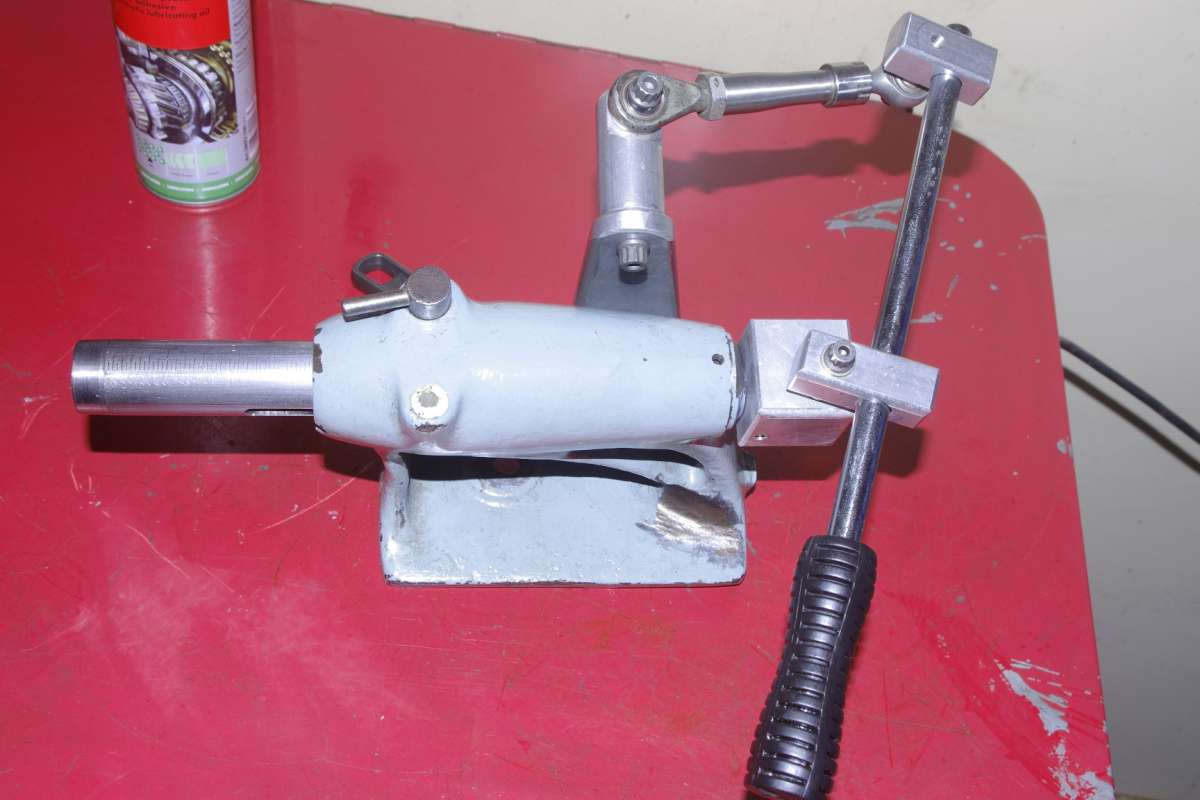
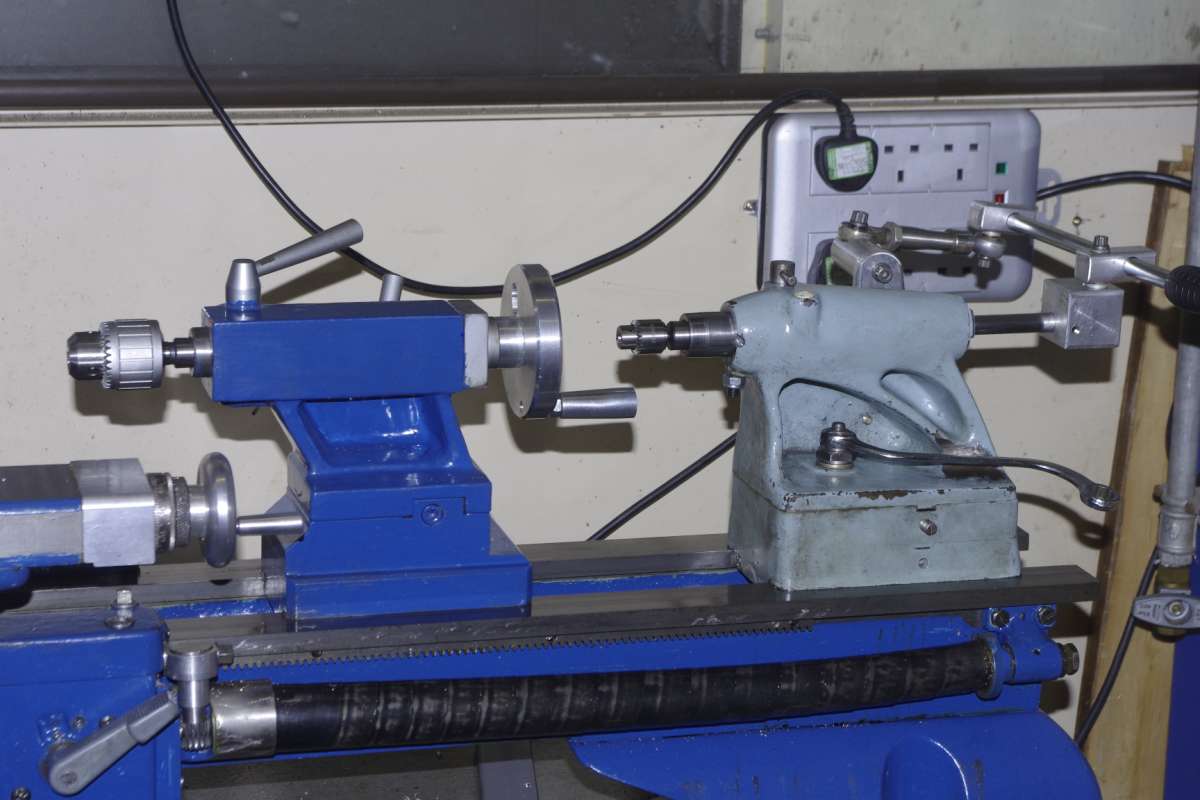
                                As for the paint, I bought 750ml of Hammerite smooth direct to metal paint some years ago to paint the Atlas 12 X 24 lathe that was gifted to the museum along with the Tom Senior light vertical. Much too much for the one lathe as I found out and on Thursday, I searched the whole restoration shop for it. Roger found it in somebodys cupboard with about 10mm of paint still at the bottom and still in perfect condition to paint the spare tailstock which I had converted into a lever operated sensitive drilling one.


                                _IGP3609_IGP3612

                              Viewing 14 posts - 1 through 14 (of 14 total)
                              • Please log in to reply to this topic. Registering is free and easy using the links on the menu at the top of this page.

                              Latest Replies

                              Home Forums The Tea Room Topics

                              Viewing 25 topics - 1 through 25 (of 25 total)
                              Viewing 25 topics - 1 through 25 (of 25 total)

                              View full reply list.