All things Beaver Mill

All things Beaver Mill

Home Forums Manual machine tools All things Beaver Mill

Viewing 25 posts - 201 through 225 (of 226 total)
  • Author
    Posts
  • #804991
    DC31k
    Participant
      @dc31k

      I can describe how it works on a PAL (later model). The centre hole is threaded and is what ultimately retains the boss. The boss itself has an oilite bush in it. A top hat washer whose minor diameter is the same as the projecting quill shaft is used. A spring is used between the boss and the brim of the top hat.

      The boss has one projecting pin on it which provides the drive. This, in combination with the spring, allows the handle to be repositioned in 90 degree increments.

      In principle, it operates in the same way as the knee crank handle but with fewer (only four) positions.

      See:

      http://www.vintagemachinery.org/mfgindex/imagedetail.aspx?id=17685

      On my own, I made a new boss and now use a Moore jig borer-style steering wheel (originally from a boat).

      #805049
      Andrew Skinner
      Participant
        @andrewskinner94774

        Thanks very much. I assume the quill handle is canted out at some slight angle, say 5deg, to clear the quill feed engagement lever?

        Another small problem is, the Y axis leadscrew is rumbling badly as I turn it. Is it easy enough to strip down, and to find new thrust bearings for it?

        #805105
        Swarf Maker
        Participant
          @swarfmaker85383

          Hi Andrew Skinner,

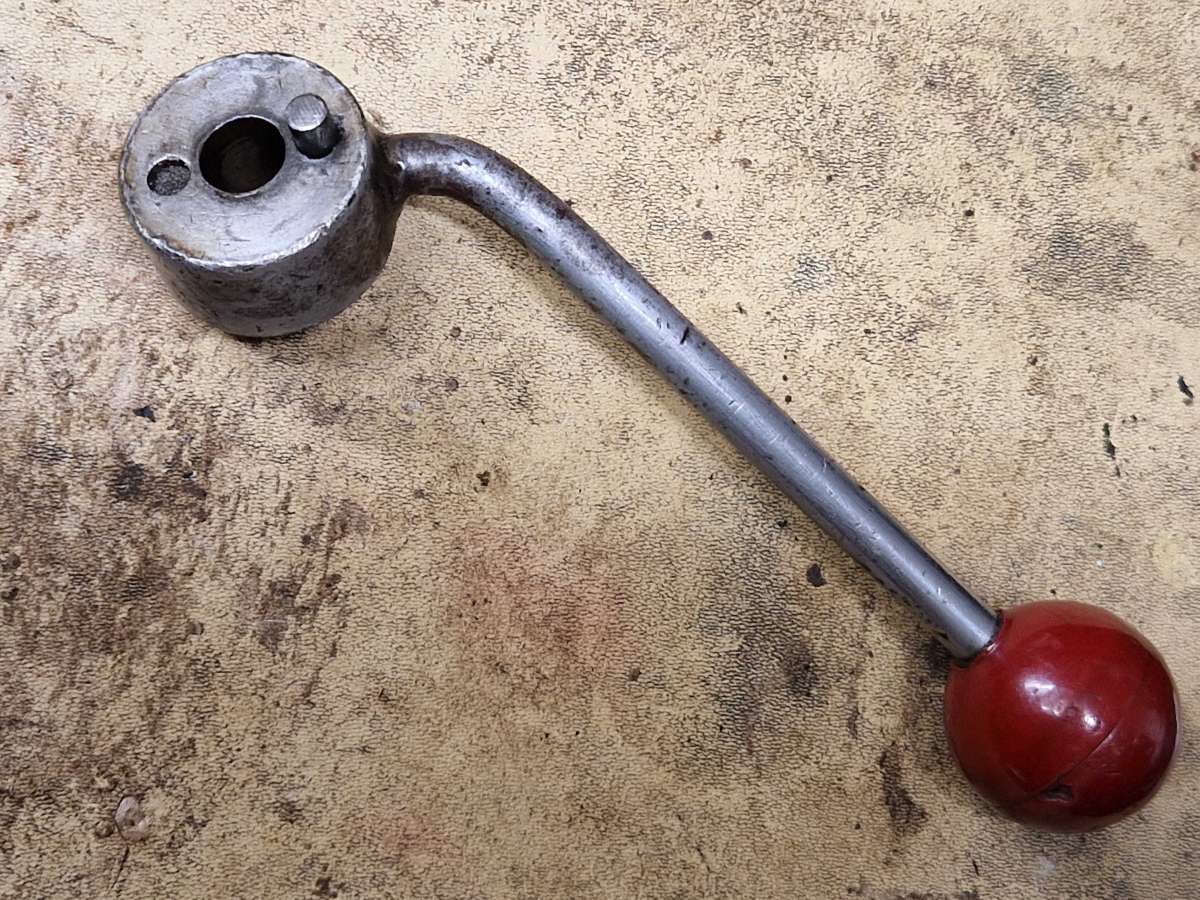
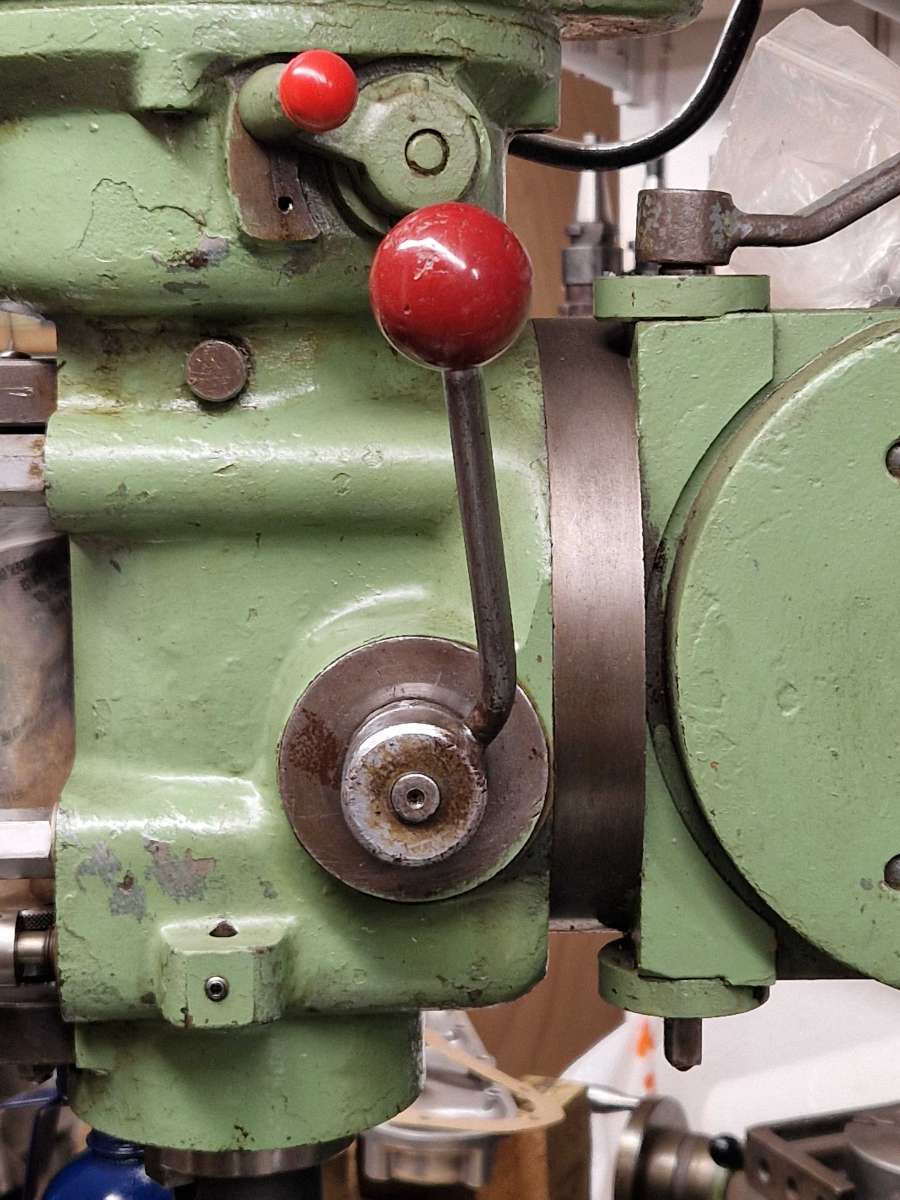
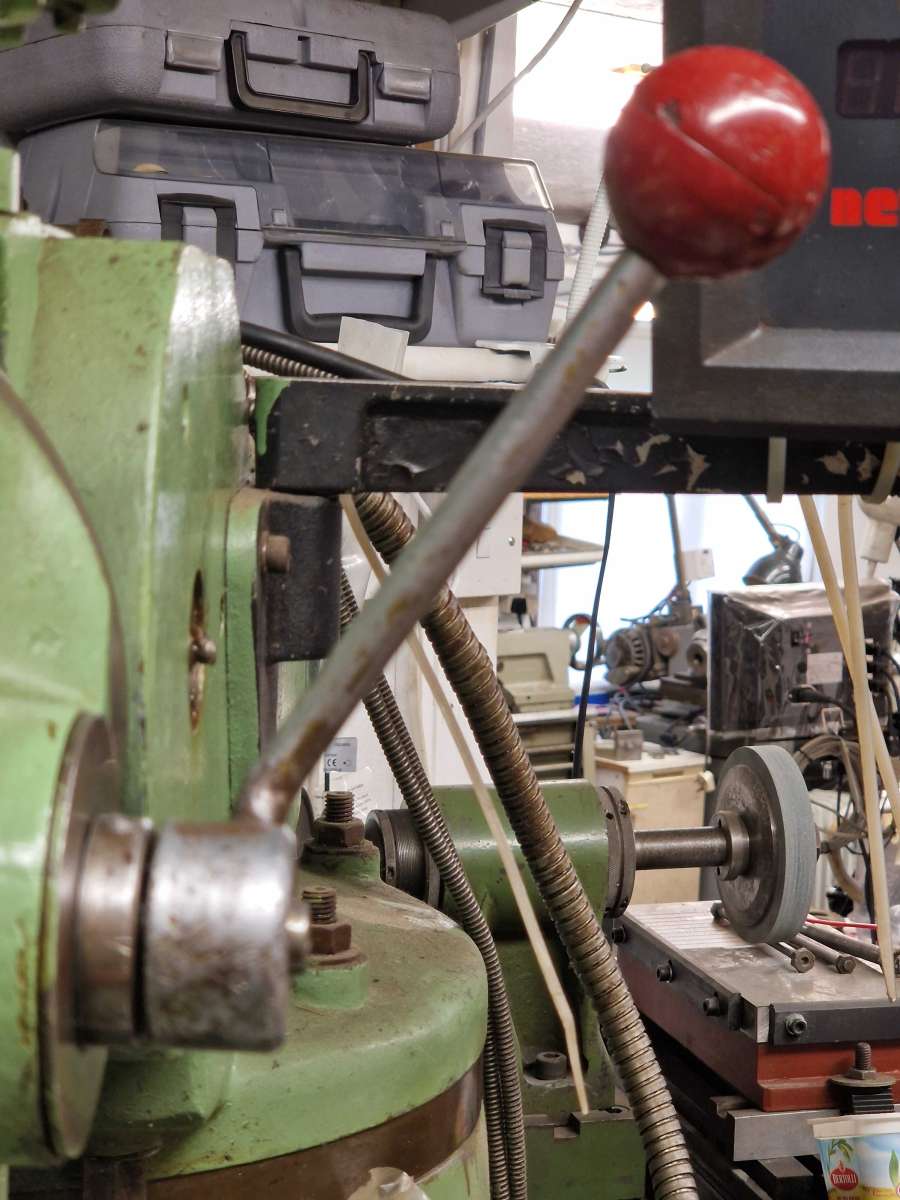
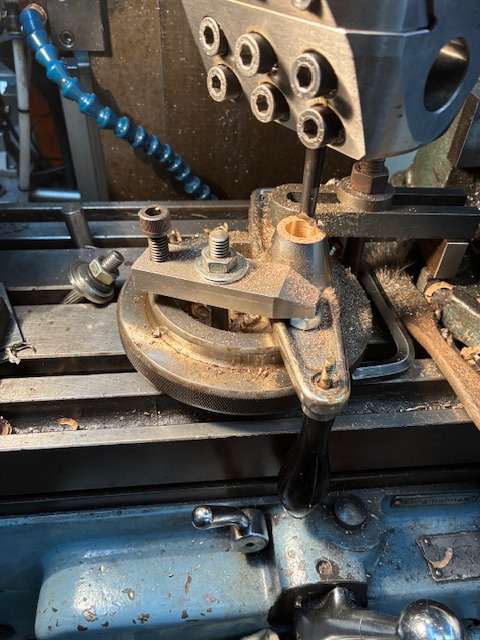
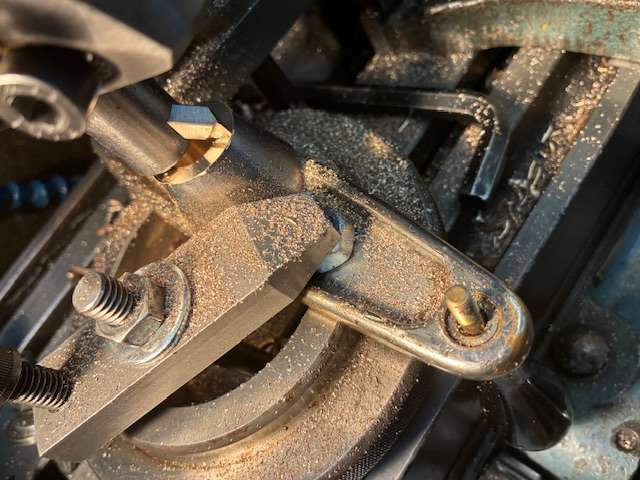
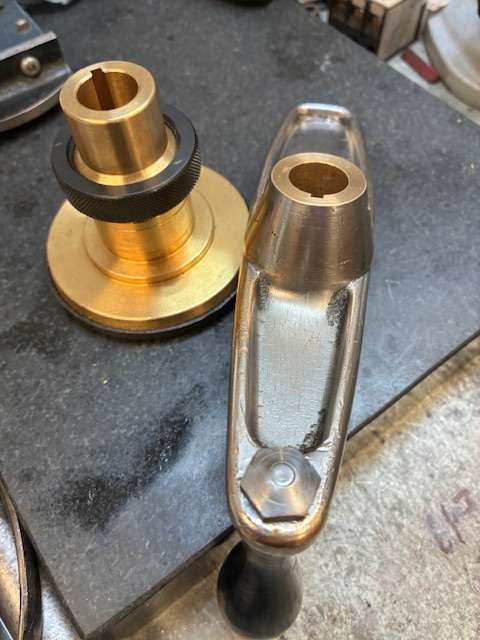
          The quill handle is very simple and basic.  I hope these photos help.

          Quill Handle 3Quill Handle 1Quill Handle 2

          #805142
          Andrew Skinner
          Participant
            @andrewskinner94774

            Thanks swarf maker, the photos do help. Does your quill handle/boss just sit there loose, or have you removed the retaining bolt?

            #805327
            Mark Rand
            Participant
              @markrand96270

              The hub connects to the inner end of the quill clock-spring. It’s a free fit on the quill pinion shaft. It should have a taper pin through its flange, the shaft, and out the other side of the flange.

              The handle is just a cylinder that’s a sliding fit on the shaft with pins to match the holes in the flange. Not sure that mine’s original, the handle’s certainly been glued onto the cylinder with some welding that makes most of mine look good!


              Can probably get a photo tomorrow if that’s not clear enough.

              Ignore the above, Forgot to go to the latest page in the thread. 🙁

              #805397
              Swarf Maker
              Participant
                @swarfmaker85383

                The handle sits on the shaft without any form of retention.  It is therefore easy to slide to the right and reposition for the required stroke of the quill.  Would only be a problem if the head was tilted to the right.

                #805414
                Andrew Skinner
                Participant
                  @andrewskinner94774

                  Right, cheers. I guess I could make a knurled knob to retain it if needed, using those threads in the end of the quill shaft.

                  #805470
                  Charles Lamont
                  Participant
                    @charleslamont71117

                    The arrangement on my Beaver Model A is very similar, but the hub of the handle has a tapped radial hole with a bolt in it to stop the handle falling off. I don’t know if it is original or a mod. Finger tight means it occasionally comes adrift, but at the same time it is easy to reposition the handle for convenience. Ideal would be spring loaded ball dropping into a shallow groove round the quill pinion shaft.

                    #841677
                    Lex Davis
                    Participant
                      @lexdavis38817

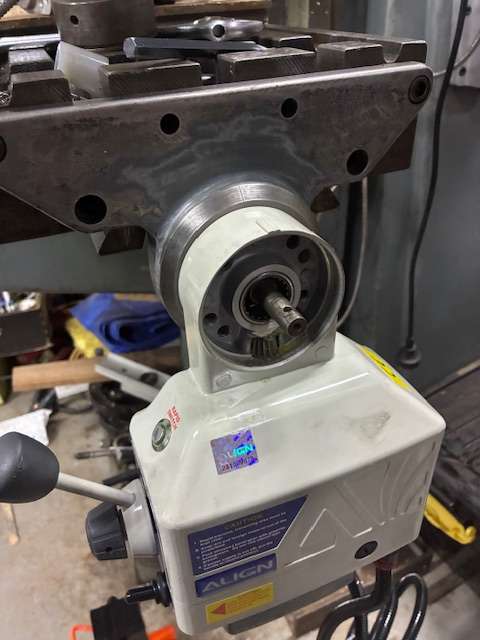
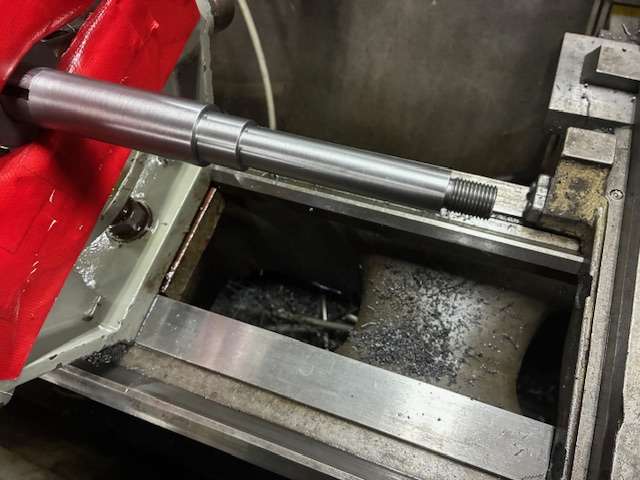
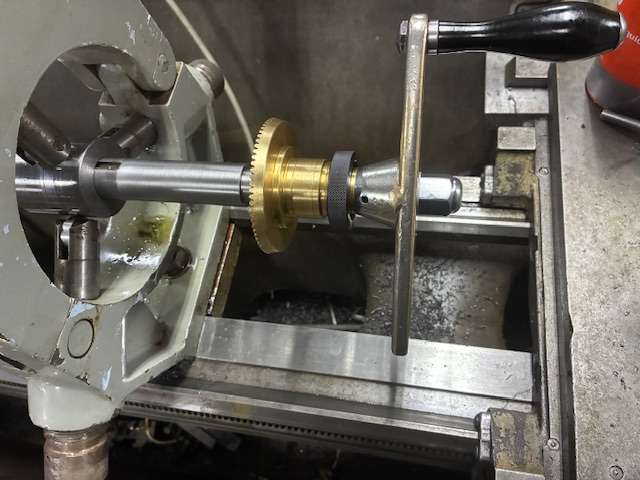
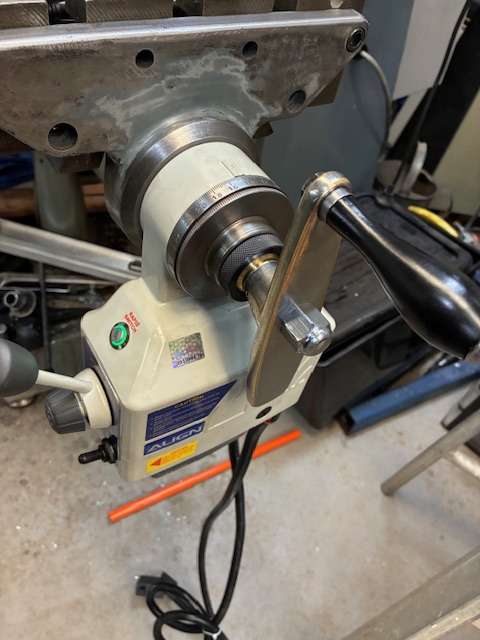
                      I am in the process of fitting a Power Feed unit to the X axis of my Beaver mill to replace the old mechanical drive, I will post photos as I progress with this.

                      Beaver 1


                      Beaver 2

                      #841862
                      Lex Davis
                      Participant
                        @lexdavis38817

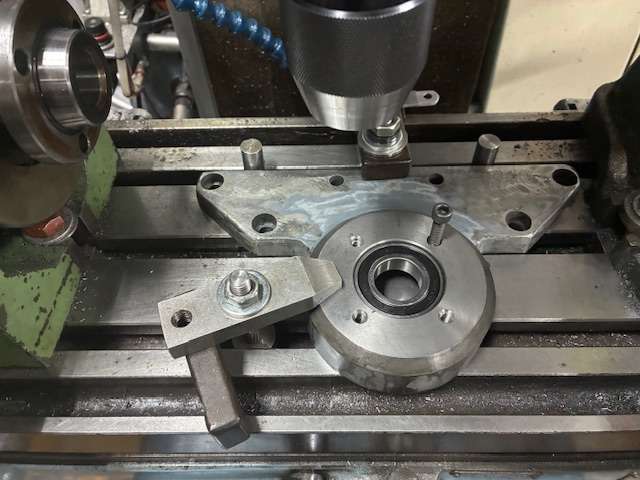
                        Pictures of the modifications to the handle.

                        Beaver 3

                        Beaver 4

                        Beaver 5

                        #842296
                        Lex Davis
                        Participant
                          @lexdavis38817

                          X axis leadscrew modified (extended). I just need to cut the keyways now.

                          Beaver 6

                          Beaver 7

                          #842340
                          Mark Rand
                          Participant
                            @markrand96270

                            What was wrong with the original drive?

                            #842420
                            Lex Davis
                            Participant
                              @lexdavis38817

                              It was removed by the previous owner.

                              #842421
                              Mark Rand
                              Participant
                                @markrand96270

                                Darn it. That’s criminal!

                                On the bright side, You should end up with more than the default 4½”/min maximum table feed.

                                #842434
                                Lex Davis
                                Participant
                                  @lexdavis38817

                                  Yes, these things are great, I can go from about 31″/minute to virtually nothing just by rotating the dial.

                                  The installation is actually finished now, just have to secure the wiring.

                                  Beaver 8


                                  #843171
                                  Lex Davis
                                  Participant
                                    @lexdavis38817

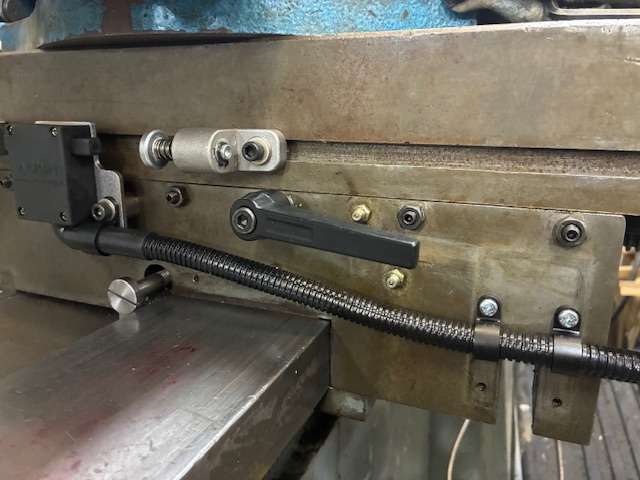
                                    Limit switch fitted and working well.


                                    Beaver 9

                                    #848908
                                    Andrew Skinner
                                    Participant
                                      @andrewskinner94774

                                      I’m thinking of rebuilding the nod and tilt mechanisms on my old Mk1. The nod is very stiff and notchy, and the adjusting shaft has been twisted at some point. Any general advice appreciated.

                                      #848962
                                      Mark Rand
                                      Participant
                                        @markrand96270

                                        What’s the condition of the ‘worm wheel’ segment that the worm on the adjuster works against?

                                        The shaft itself can be re-manufactured. The worm is an ACME profile, though I never measured the pitch/DP.

                                        Even the splined ends can be re-made:- 90° tool on a slotting head/shaper or the carriage of the lathe, and indexing for the 16? 18? teeth. I did the latter bit on the Myford. Then, because I didn’t have the spanner and couldn’t be bothered to make one, I ‘glued’ a couple of spare 1/2″ drive sockets to the splined ends of the shafts with Cerrobend metal. 🙂

                                        #848978
                                        Andrew Skinner
                                        Participant
                                          @andrewskinner94774

                                          Thanks, I’ll have a proper look later. Lots of gunk in there. The ends are actually square drive on mine.

                                          #849555
                                          Andrew Skinner
                                          Participant
                                            @andrewskinner94774

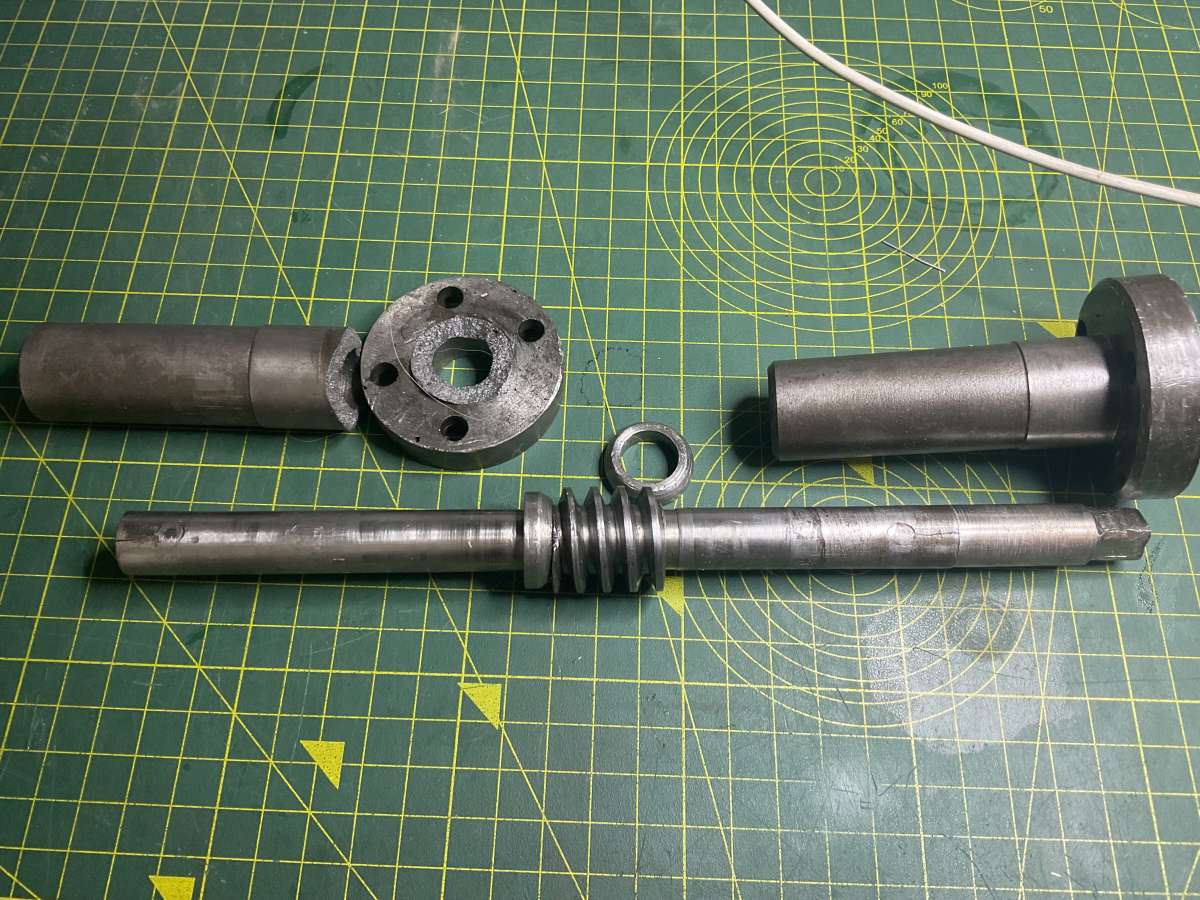
                                            Right, all rebuilt. I took the motor off and rotated the head upside-down, then supported it on some boards on the bed. With the ram and turret loose, I was able to separate the parts fairly easily, with the exception of the tilt worm shaft, which I’ve ruined. It’s back together now and trammed, just with ‘manual tilt’ for now.

                                            IMG_1431

                                            So, we have two flanged sleeves and two shaped washers either side of the worm. Someone before me has sheared the shaft and drilled and pinned in repair sections which have expanded, which meant I struggled to remove the sleeves, and in fact also ruined my bearing puller. Not realising the sleeves were cast iron, I gave the left-hand one a tap with a hammer and broke it.

                                            1. Should I just make a new sleeve from ordinary steel, or perhaps send the broken one to someone skilled like Doubleboost to TIG braze?

                                            2. It looks like the worm part is integral to the shaft. Would this be reproducible on a little Boxford lathe, or should I attempt to splice in new shaft ends to the old one, and how? If you look closely to the right of the worm, this has already been done, in addition to the repair further along.

                                            #850221
                                            Andrew Skinner
                                            Participant
                                              @andrewskinner94774

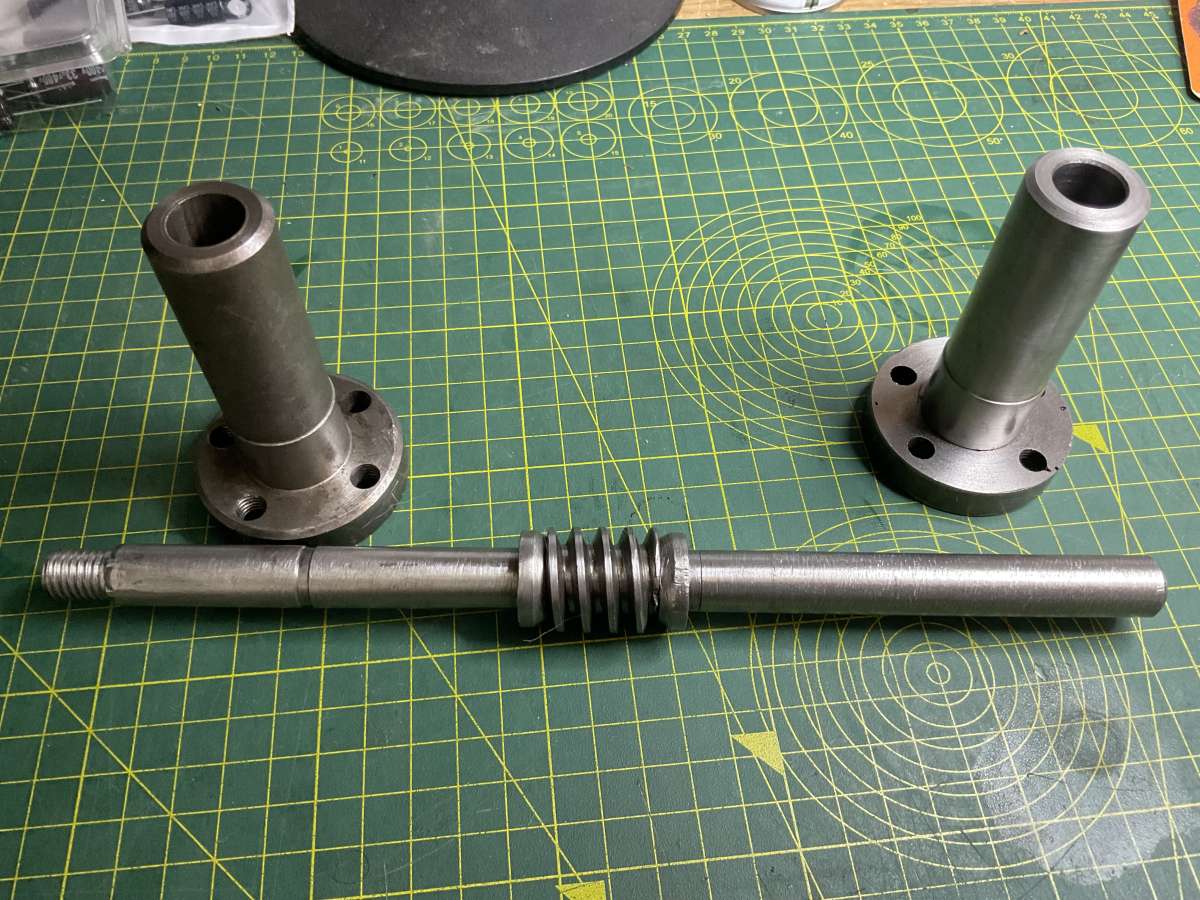
                                              I don’t know why I didn’t get any replies, but anyway, here’s the repair I did. New shaft sections pressed on to stubs turned either side of the worm. New sleeve made (RHS) and the old cast iron flange pressed on to that.

                                              IMG_1432

                                              #850264
                                              Mark Rand
                                              Participant
                                                @markrand96270

                                                Sorry, I got a bit short of round tuits 😀


                                                If I had found any of them, I would have commented that the reason you had a square drive on the shaft is almost certainly because a previous owner/user lost the splined handle and/or used a Mole Wrench on the shaft and buggered up the splines.

                                                Looks like you’ve done a more sensible job than the original.

                                                Did you use any Loctite or just a press fit?

                                                #850271
                                                Andrew Skinner
                                                Participant
                                                  @andrewskinner94774

                                                  No, it’s ok! I wondered if it should have been a new thread.

                                                  I drilled and reamed a blind hole in the new shaft sections exactly 10mm, to press fit onto the stubs at 10.025mm, but discovered that the cheap (hand) reamer I bought is tapered and somehow made a step in the bore.

                                                  So, I ended up skimming the stubs down, knurling them, smearing with red loctite and bashing everything home. I took the new shafts down to size after fitting them, so they ended up concentric.

                                                  Would I need machine reamers to make a parallel hole, or are all reamers tapered?

                                                  #850277
                                                  Mark Rand
                                                  Participant
                                                    @markrand96270

                                                    Hand reamers have a long lead-in taper to guide the reamer into the hole. machine reamers generally cut at the (chamfered) ends of the teeth. Machine reamers can be pretty hard to get aligned into a hole by hand due to the lack of guidance from the taper. To be honest, with a gauge (either bore gauge for measuring and/or bit of rod turned to the right diameter for trying), then boring the hole in the lathe can be as good as a reamer or better.

                                                    Once it’s all glued together and turned to size it doesn’t matter so much, so long as you could hold it concentric with the worm.


                                                    Don’t know if it’s worth re-manufacturing the thrust washer on the right side of the worm. It looks as if it’s suffered a bit. On a related idea:- Make sure that the sleeves can be pulled down firmly with their three screws each, without locking up the worm. If it does, you’ll need to machine a bit off one of the thrust washers or sleeves. A small amount of axial clearance in the shaft is not a problem. A negative amount is…

                                                    #850301
                                                    Andrew Skinner
                                                    Participant
                                                      @andrewskinner94774

                                                      Ah, so it’s a bit like hand taps vs machine taps. I often get awful ringing chatter when boring a small hole.

                                                      All back together and working, thanks.

                                                    Viewing 25 posts - 201 through 225 (of 226 total)
                                                    • Please log in to reply to this topic. Registering is free and easy using the links on the menu at the top of this page.

                                                    Latest Replies

                                                    Home Forums Manual machine tools Topics

                                                    Viewing 25 topics - 1 through 25 (of 25 total)
                                                    Viewing 25 topics - 1 through 25 (of 25 total)

                                                    View full reply list.