Use of Hydrostatic lubrication in steam locomotives

Use of Hydrostatic lubrication in steam locomotives

Home Forums Locomotives Use of Hydrostatic lubrication in steam locomotives

Viewing 15 posts - 1 through 15 (of 15 total)
  • Author
    Posts
  • #813013
    Greensands
    Participant
      @greensands

      <p style=”text-align: center;”>Can one of our more knowledgeable members give a brief description of how hydrostatic lubricationworks when used on steam locomotives and the perceived  advantages if any over mechanical methods.</p>

      #813036
      duncan webster 1
      Participant
        @duncanwebster1

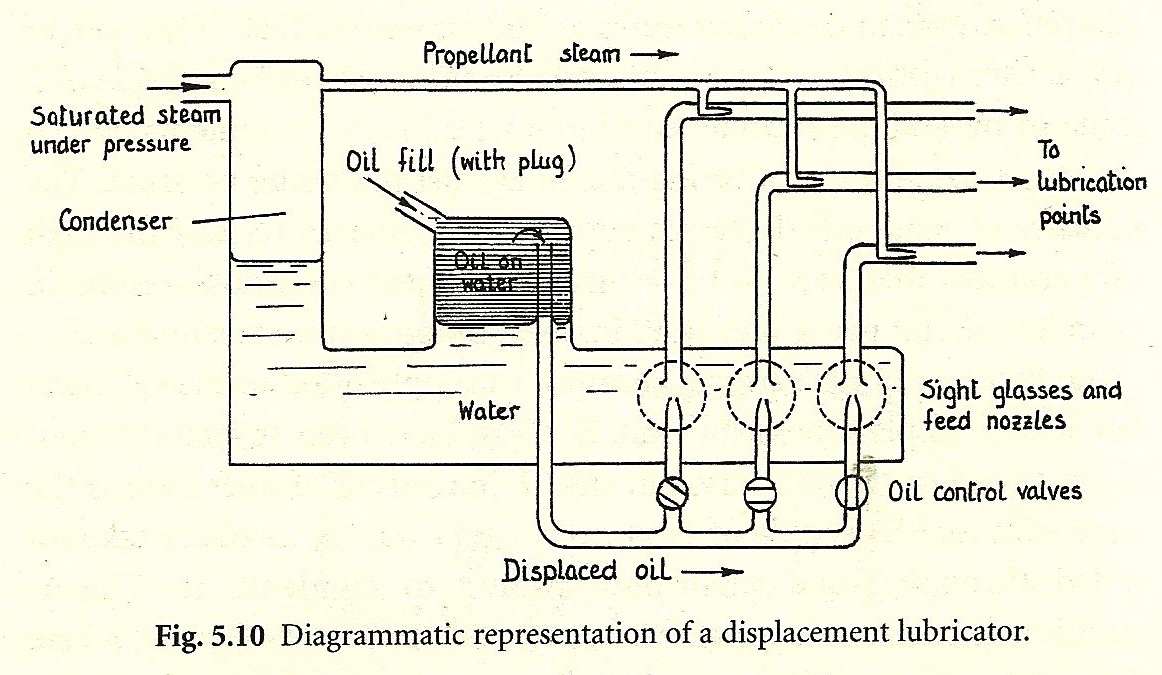
        this diagram might help. The ‘saturated steam’ was fed through a jockey valve attached to the regulator handle on GWR locos, regulator fully shut, steam off, slightly open steam fully on. The oil is driven out of the oil container by the head of water in the condenser. In GWR locos the condenser was a coil of pipe in the cab roof. Oil feed is not dependant on how far the regulator is open. If you miss out the Propellant steam connection, it still works but oil feed is dependant on difference between boiler pressure and steam chest pressure, and the wrong way round, regulator wide open least oil feed.. There was an excellent article by I think Fred Cottam in ME many years ago, but I can’t find it.


        Screenshot 2025-08-19 115135

        #813065
        Charles Lamont
        Participant
          @charleslamont71117

          Advantages are comparative simplicity, and that the crew can see oil being fed, drop by drop, and the individual feed rates can be adjusted. Mechanical lubricator pumps are much more complicated, require finely fitted parts, and it is a lot more difficult to adjust individual feed rates.

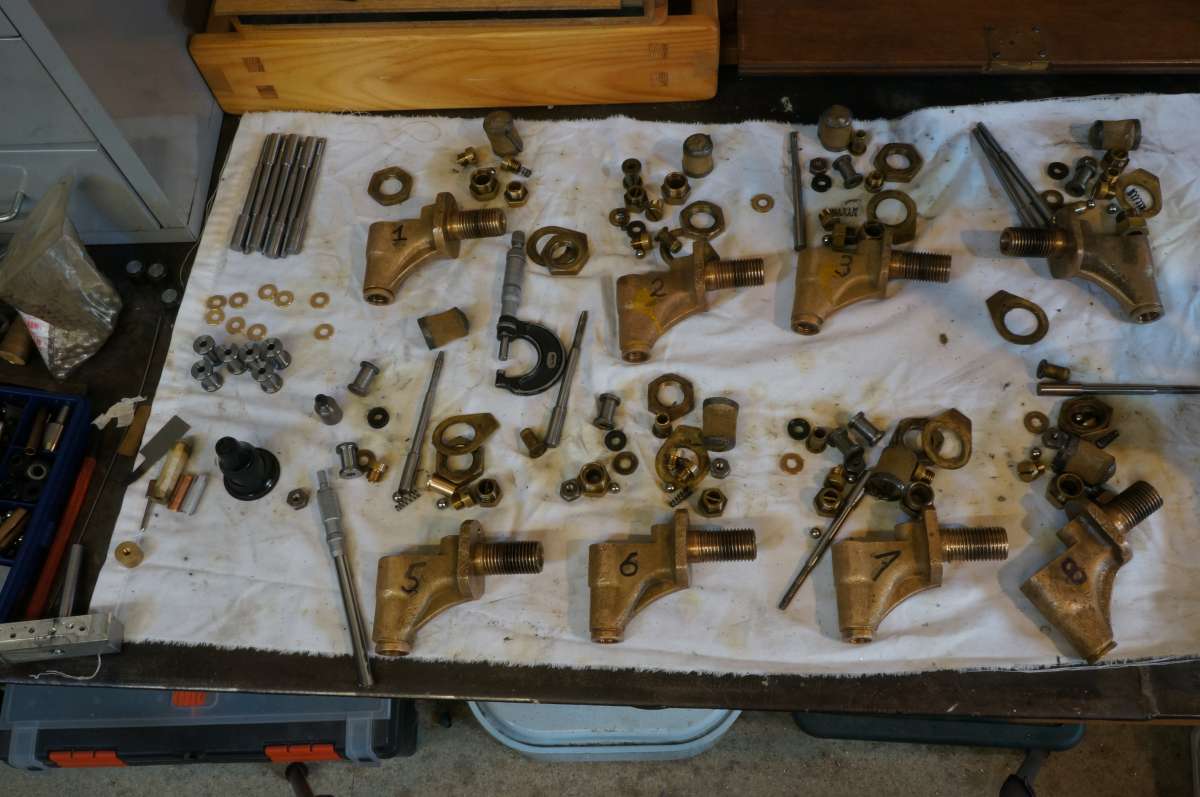
          Here are most of the innards of an 8-feed Silvertown mechanical lubricator on my bench:

          Silvertown Lubricator 2020


          #813070
          Richard Simpson
          Participant
            @richardsimpson88330

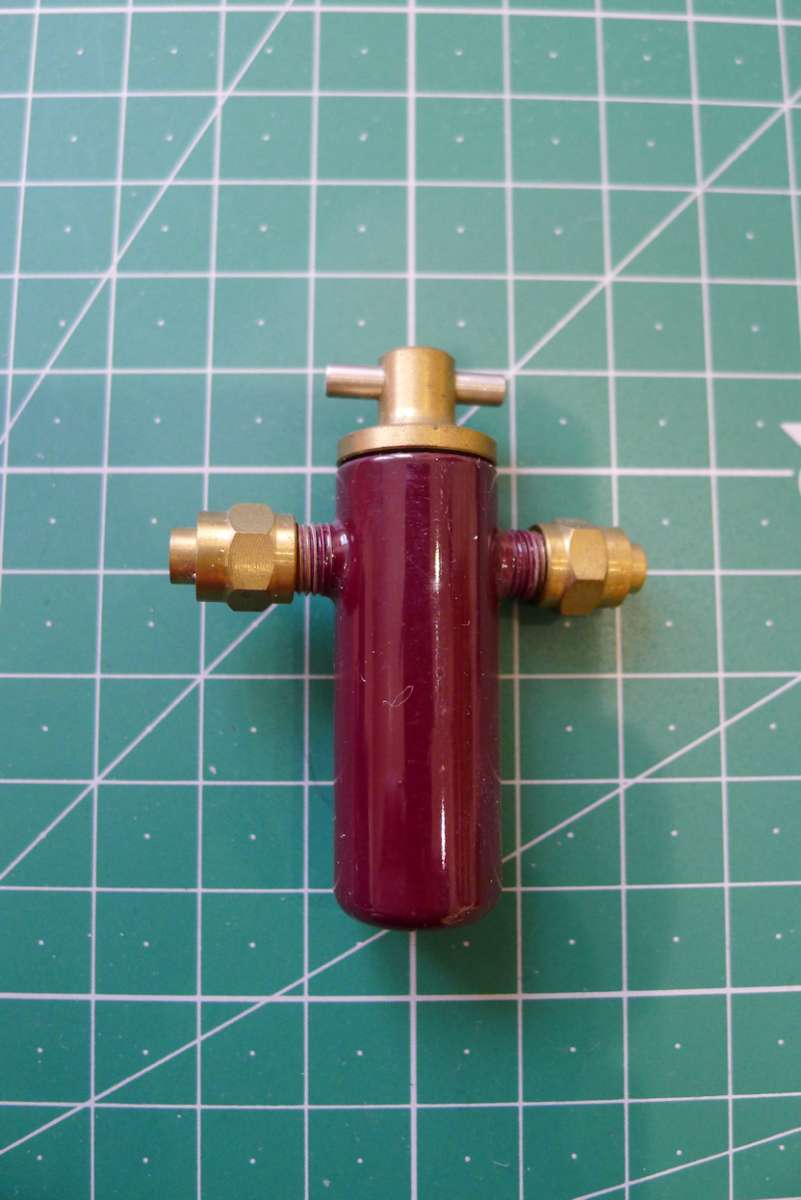
            Its basically how most model boat lubricators work, but we call them displacement lubricators.  The principle is precisely as above, condensate collects in the bottom of the lubricator, which then displaces the oil out at the top.  In model boats this is actually into the main steam line to the engine to lubricate the internal surfaces but in the locomotive example above it obviously then drip feeds bearings and slides etc.  On such small engines as used in many model boats a mechanical lubricator takes too much energy.  Just for interest this is a boat version:

            IMG_0001

            #813080
            duncan webster 1
            Participant
              @duncanwebster1

              That’s a displacement lubricator, not Hydrostatic. There is a difference. I’ve never seen a hydrostatic or displacement lubricatif used to lubricate slides, only cylinders

              #813083
              Dave Wootton
              Participant
                @davewootton

                There is a lot of information over on the Model Engineer Proboards site, just search hydrostatic lubricator, I’ve made and used both mechanical and hydrostatic sight feed on my loco’s both have worked ok. But the sight glass does look quite nice on the backhead and is obviously controllable on the move. Fitted a simple sight feed one on my Simplex last year using the design of Julian Atkins (JMA1009) that he posted on the proboards site, works very well and quite straightforward to make. It does not have the jockey valve or atomisation of the genuine GWR type as described in M.E by Fred Cottam.  I’m making mechanical lubricators for my current project, simply because I fancied trying one way roller clutches. So can’t express a definite opinion on each type!

                There has been some discussion on various forums on what constitutes a proper hydrostatic lubricator as opposed to a sight feed  system, can’t comment on that I just skip over those bits!

                Dave

                #813104
                Richard Simpson
                Participant
                  @richardsimpson88330
                  On duncan webster 1 Said:

                  That’s a displacement lubricator, not Hydrostatic. There is a difference. I’ve never seen a hydrostatic or displacement lubricatif used to lubricate slides, only cylinders

                  Having now read a couple of descriptions of how a hydrostatic lubricator works I cannot, as yet, see much in the way of a difference between the basic operation of hydrostatic and displacement lubricators.  Both appear to use condensate collected in the lower part of the housing to force oil out at the top, which is then directed to where it is required.

                  What is further confusing is that the diagram you posted above is labelled as a displacement lubricator.

                  Could you please explain what you see as the difference between hydrostatic and displacement?

                  #813106
                  Nigel Graham 2
                  Participant
                    @nigelgraham2

                    Richard –

                    Not quite…

                    The hydrostatic / displacement lubricator, and mechanical lubricators, supply oil only to the interiors of the valve-chests and cylinders.

                    Not the external slide-bars and bearings. Those are lubricated separately, usually by wick-feed oilers, without pumps, nor with any whiff of steam or water in them. Many model engines omit the wicks, using just simple oil-holes or pots instead.

                    Full-size locomotives other than GWR classes generally used the Silvertown or Wakefield mechanical-pump lubricators for their valves and cylinders. Their equivalents on traction-engines, and their small brethren on miniature engines, are slightly simpler but work in basically the same way.


                    #813107
                    duncan webster 1
                    Participant
                      @duncanwebster1

                      Looking at it again, it’s not a good diagram, I just found it on the web. In the gwr system, the condenser is in the cab roof, so there is a constant head of water between that and the oil container pushing the oil out into the propellant steam supply. Hence the name hydrostatic.

                      The difference from displacement is that hydrostatic is fed with boiler pressure saturated steam and has the propelling steam, whereas displacement would be fed by superheated steam at steam pipe pressure and no propellant. Actually I’ve just realised that Richard’s drawing is different to most displacement lubricators I’ve seen in that usually there is only one connection to steam pipe, the steam goes in the same hole as the oil comes out,  so it’s a sort of cross.

                      #813112
                      duncan webster 1
                      Participant
                        @duncanwebster1

                        The articles by Fred Cottam are listed here. Ignore the one about boiler cleaningScreenshot 2025-08-20 024726

                        #813125
                        Charles Lamont
                        Participant
                          @charleslamont71117

                          Nigel, mechanical lubricators supply oil to the valve chest, usually via an atomizer, and directly to the cylinder bore, and often the piston-rod gland. Most locomotives with mechanical lubricators have two – one for the cylinders, and one for the axleboxes.

                          #813130
                          Nigel Graham 2
                          Participant
                            @nigelgraham2

                            That’s what I said: the discussion is about oiling the steam system, i.e. cylinders and valves – and yes, their rod glands too.

                            #813146
                            Richard Simpson
                            Participant
                              @richardsimpson88330
                              On duncan webster 1 Said:

                              Looking at it again, it’s not a good diagram, I just found it on the web. In the gwr system, the condenser is in the cab roof, so there is a constant head of water between that and the oil container pushing the oil out into the propellant steam supply. Hence the name hydrostatic.

                              The difference from displacement is that hydrostatic is fed with boiler pressure saturated steam and has the propelling steam, whereas displacement would be fed by superheated steam at steam pipe pressure and no propellant. Actually I’ve just realised that Richard’s drawing is different to most displacement lubricators I’ve seen in that usually there is only one connection to steam pipe, the steam goes in the same hole as the oil comes out,  so it’s a sort of cross.

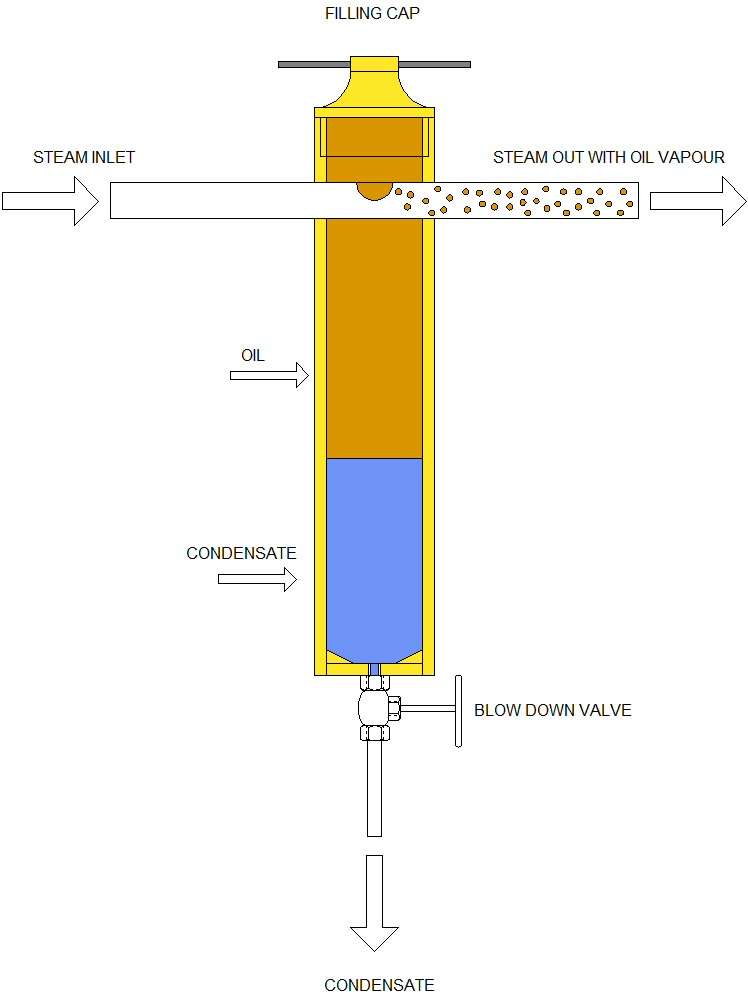
                              Thanks Duncan, I guess the basics is that in a hydrostatic lubricator the driving pressure is from a constant head of condensate in a tank, hence hydrostatic, whereas a displacement lubricator is driven by live steam creating the condensate in the lubricator.  It may not necessarily be superheated, particularly in many model steam plant.  The difference then being that the driving pressure isn’t static, it varies with the steam output from the boiler.

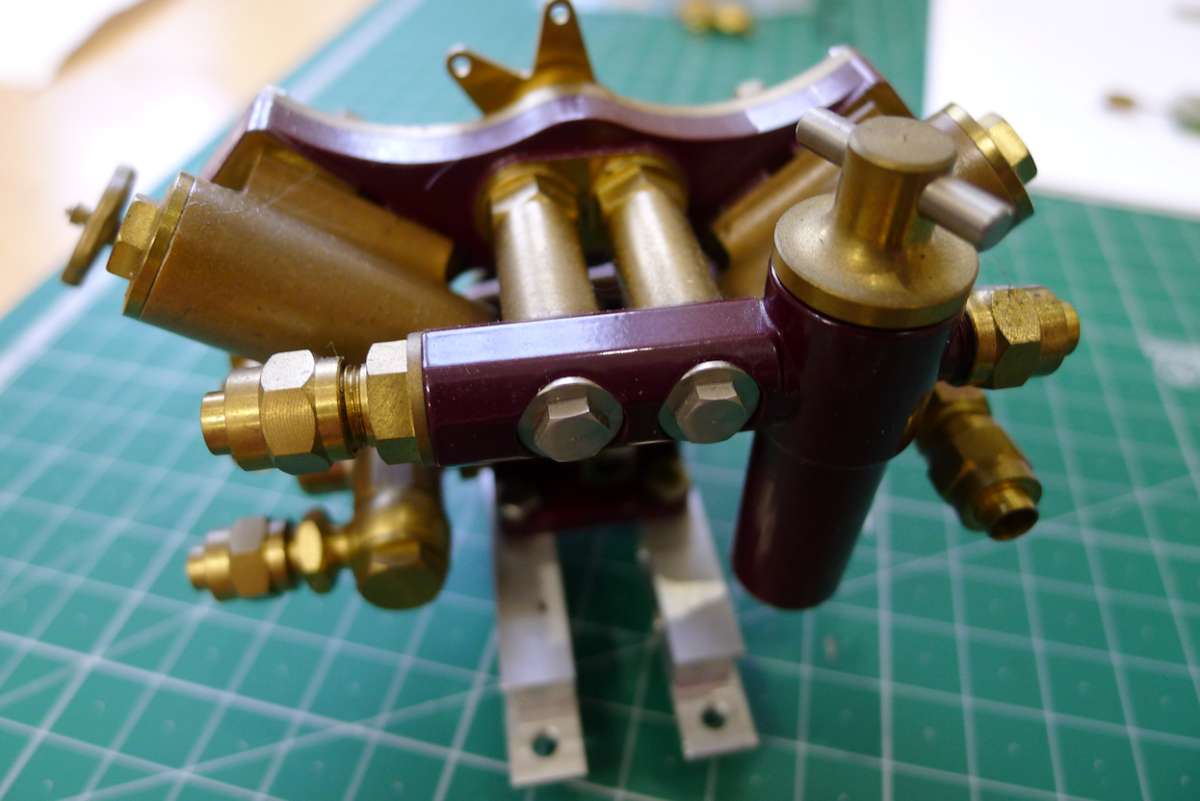
                              Even in the niche area of model boats there are many different takes on what may be considered a displacement lubricator.  From the most basic straight through connection with no drain facility:

                              26-03-24-02DisplacementLubricator1

                              To a straight through type again with no drain facility but incorporated into the engine:

                              26-03-24-03MonahanHeronEngine1

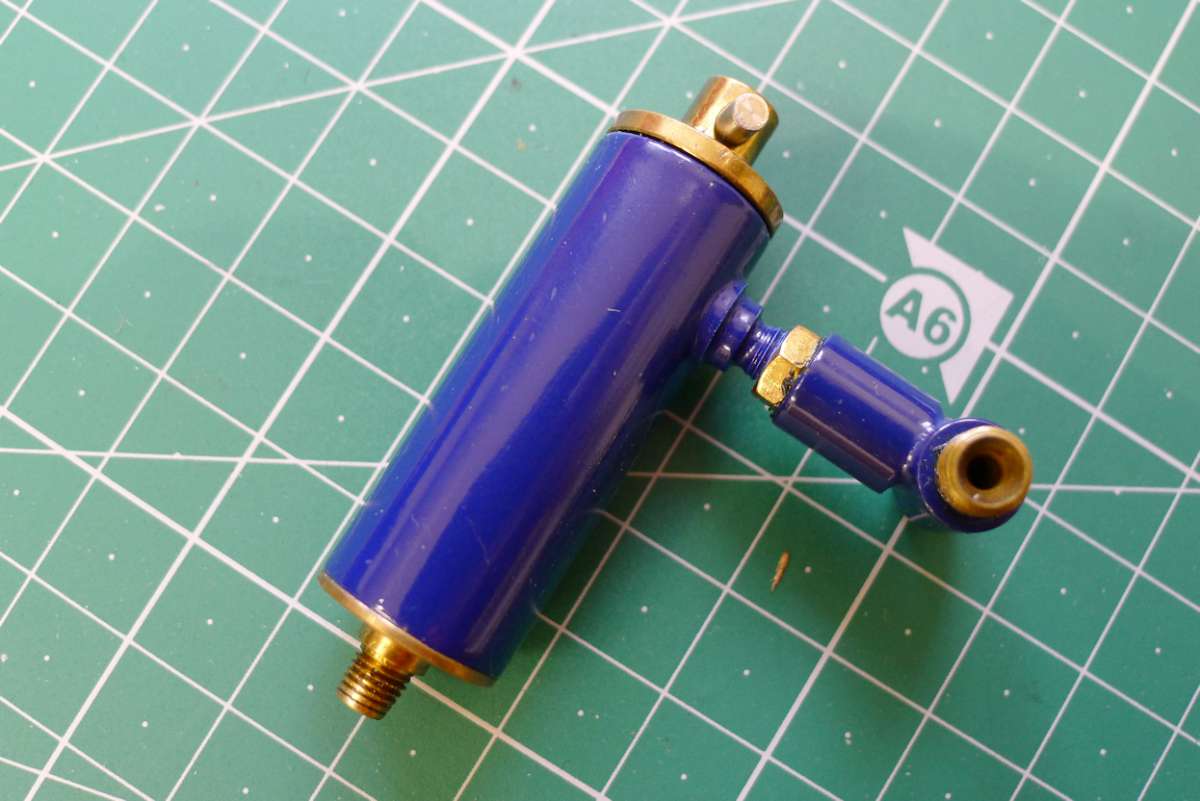
                              To the type described where the steam going in is a common connection to the oil coming out, now with a drain connection:

                              26-03-24-04DisplacementLubricator2

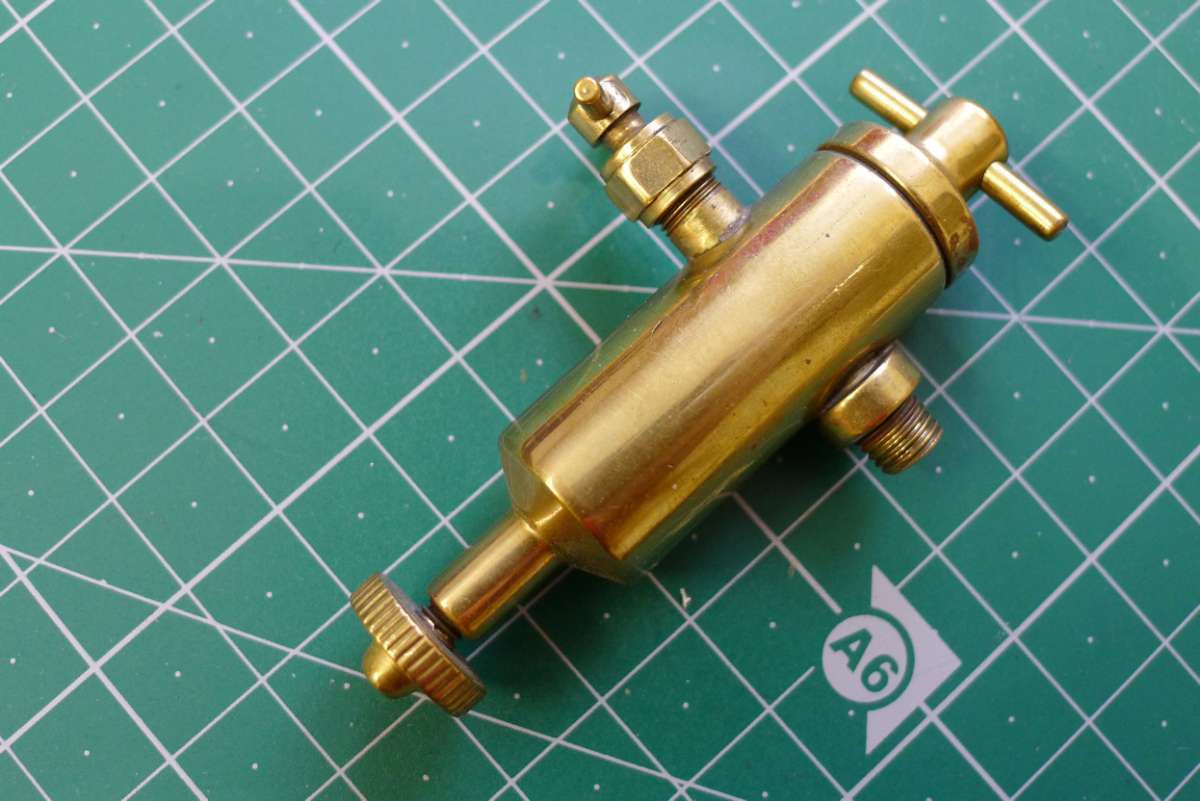
                              To a straight through type with its own built in drain valve and needle valve control of the oil:

                              26-03-24-05DisplacementLubricator3

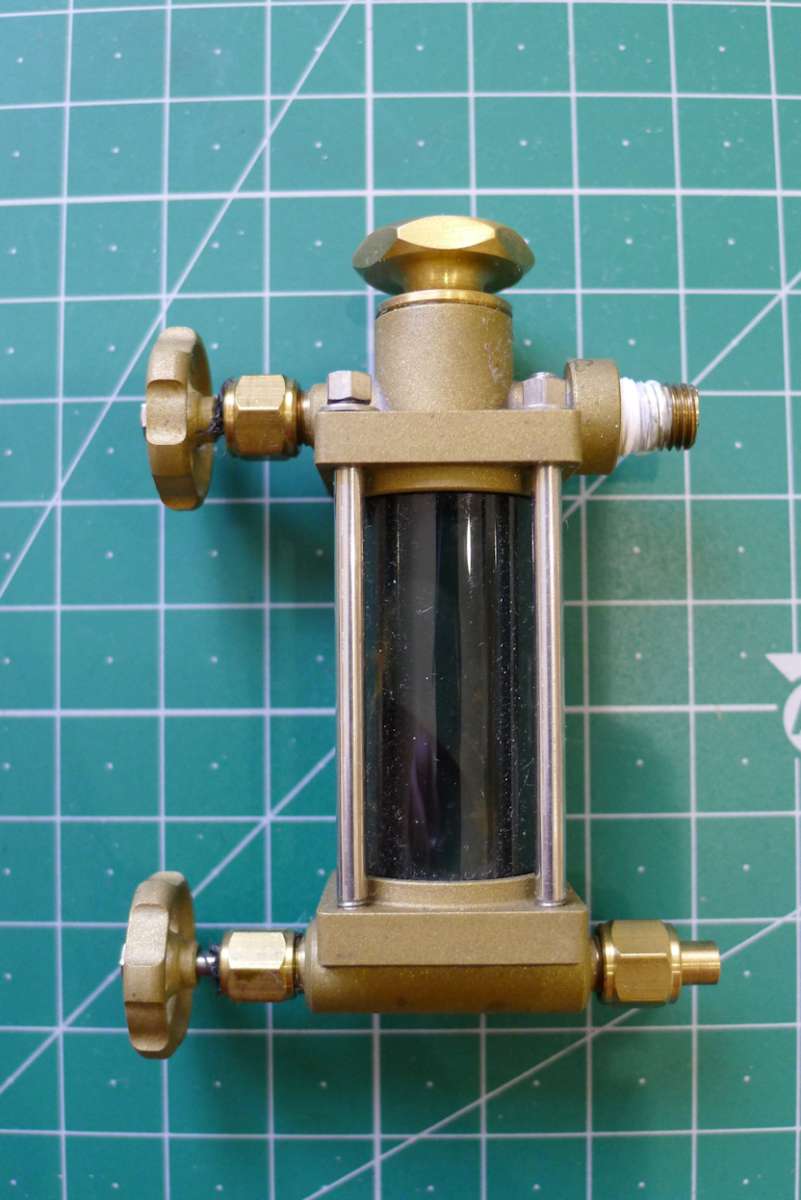
                              To the most sophisticated with needle valve control, built in drain valve and a glass body so the oil can be seen:

                              26-03-24-06DisplacementLubricator4

                              #813160
                              duncan webster 1
                              Participant
                                @duncanwebster1

                                <p style=”text-align: left;”>That just about sums it up</p>

                                #813205
                                Dave Wootton
                                Participant
                                  @davewootton

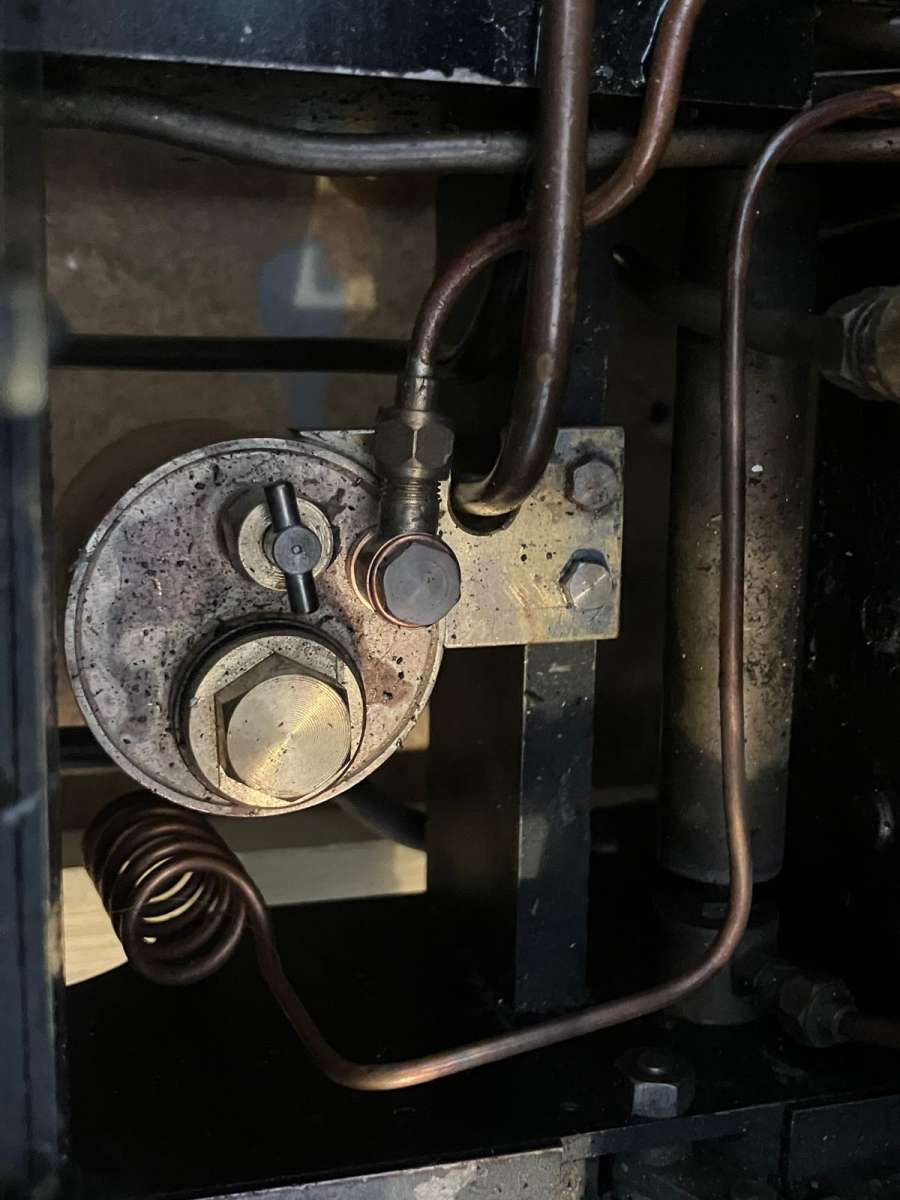
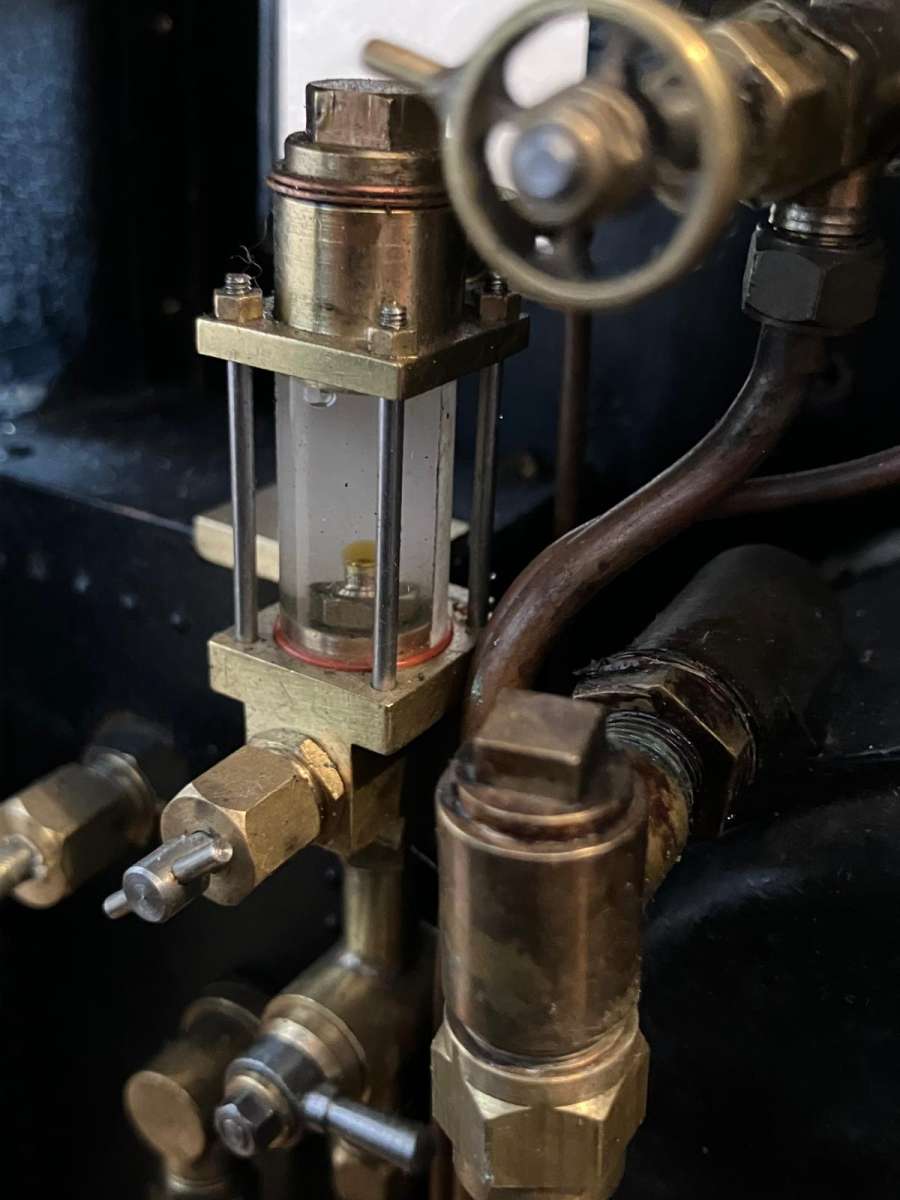
                                  As the original question was about locomotive use, here are some pictures of a system I installed on my ancient Simplex, and I will try to explain how this particular installation works. The bottom picture shows the sight glass fitted in the cab, the top picture is the tank fitted under the footplate, I’m afraid I can’t re-orientate the picture so will have to be described as above or below instead of left and right. below the oil tank can be seen the condensing coil fed from a steam valve on the manifold, this connects to the base of the oil tank. The hex headed plug is the oil filler cap and the tee handled valve is the tank drain, the connection banjo union fitting goes to the oil feed sight glass in the bottom picture. In the bottom picture the valve below the sight glass is the oil on off, the tee handled valve regulates the oil feed via the small nozzle in the bottom of the sight glass where a blob of oil can just be seen forming, at the top of the sight glass is the connection to the cylinders, a small bore pipe is run to the tee connection of the main steam pipe feeding into the steam chests, via a restrictor to prevent gulping of oil, feeding the cylinders.

                                  In operation the steam fed via the condensing coil which is at boiler pressure, condenses to water pushing the oil up into the sight glass, if the oil valve is open the regulating valve can be opened until a steady flow of oil blobs can be seen to float up through the glycerine in the sight glass, around two a minute seems to keep my engine happy, through the oil delivery pipe to the cylinders where through the restrictor mentioned earlier it feed to the cylinders, in this case to the steam feed tee. My understanding is that because steam chest pressure is less than boiler pressure when running there is always a positive pressure to force the oil through. I don’t know if it is classed as displacement or hydrostatic but it does work well and is very controllable. You do have to remember to close the oil delivery valve if stationary for a while or you get a bit spotty. Hope this helps I’m afraid written explanations and theory are not my forte, but i thought some pics of an installation might help.

                                  lub2lub1

                                Viewing 15 posts - 1 through 15 (of 15 total)
                                • Please log in to reply to this topic. Registering is free and easy using the links on the menu at the top of this page.

                                Latest Replies

                                Home Forums Locomotives Topics

                                Viewing 25 topics - 1 through 25 (of 25 total)
                                Viewing 25 topics - 1 through 25 (of 25 total)

                                View full reply list.