Thrust washer – odd stuff?

Thrust washer – odd stuff?

Home Forums Materials Thrust washer – odd stuff?

Viewing 18 posts - 1 through 18 (of 18 total)
  • Author
    Posts
  • #840987
    Graeme Seed
    Participant
      @graemeseed34272

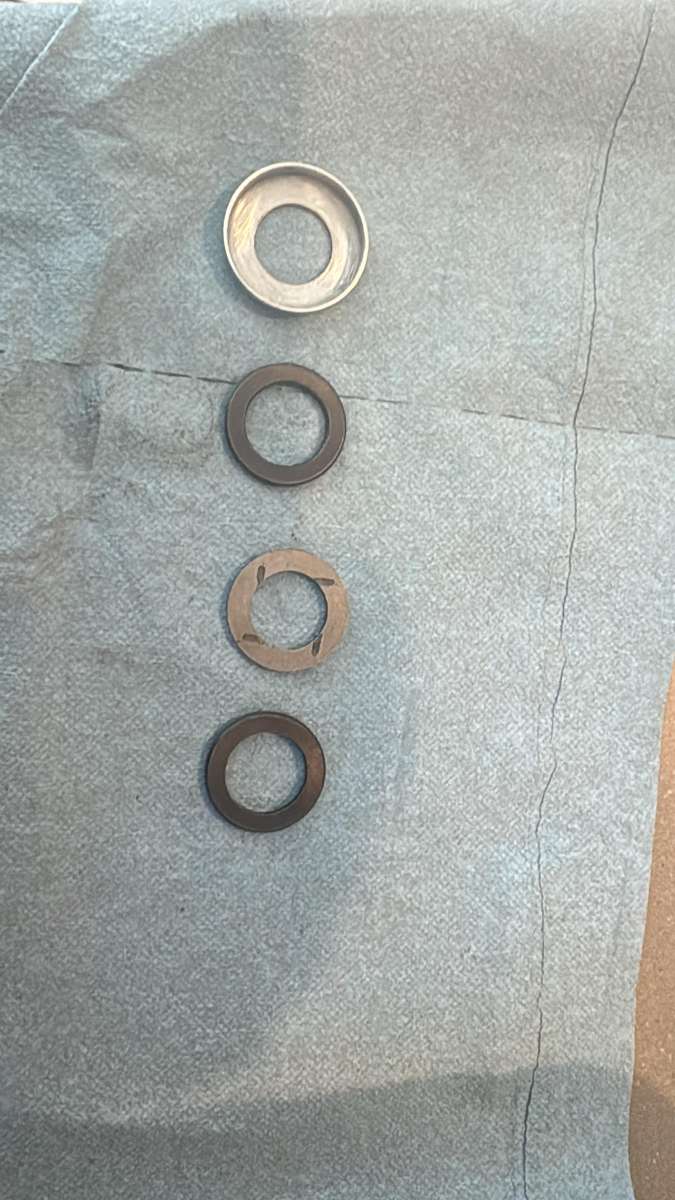
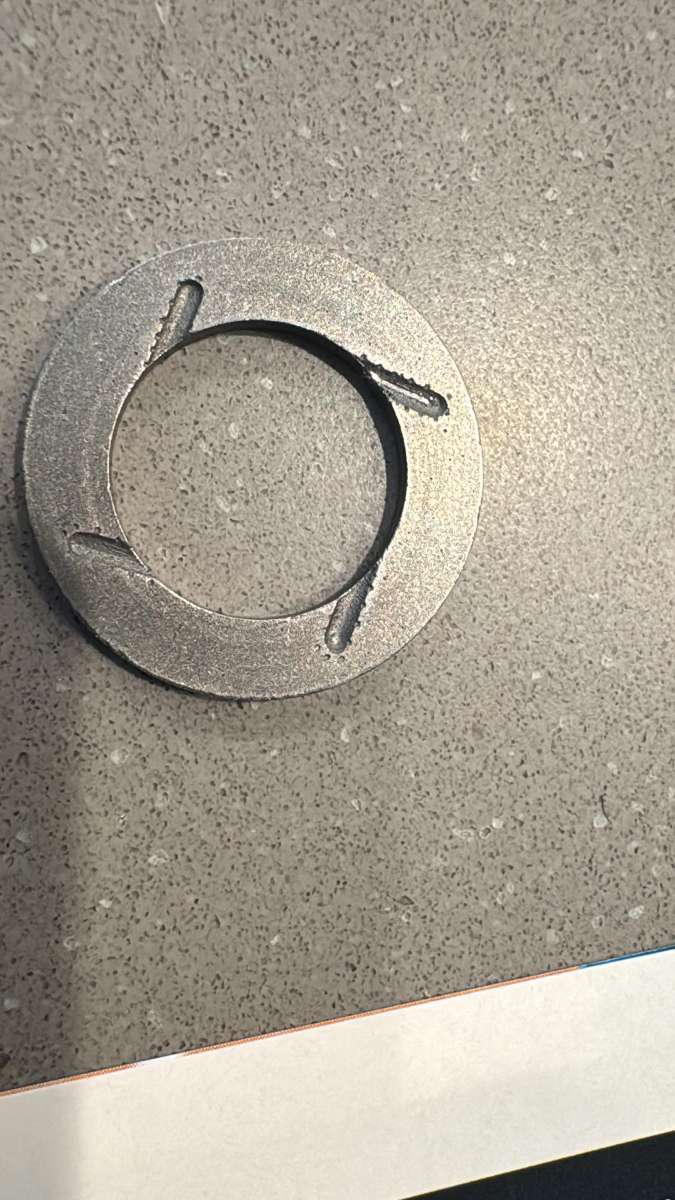
      Hi All, A friend in the USA is renovating the Kingpins on his very old Citroen 2cv car. A box containing all of the relevant replacement parts duly arrived. There are 3 replacement thrust washers, 2 hardened steel and a phosphor bronze one, for each wheel, or should be PB. It turns out to be a silvery colour, instead of a normal pinkish brown. There are 4 grooves for holding grease and he scrapped one and the resulting mark is silvery. I googled alternatives for PB and the result was only different grades of PB, nothing resembling what he has received.
      Photos included, the right hand groove has the scratch mark clearly visible. Any ideas? ps Made in China. Also looks like minute  auto centre punch markings around each groove? Surely a mass produced part like this wasn’t marked out?  Thanks, Graeme.e4559091-2bb9-4de9-abd7-28904339e6c22fc1eeaf-3e8a-4dc1-8571-8a92dca4ca4c

      #840990
      David Senior
      Participant
        @davidsenior29320

        The picture of the thrust washer makes it look like a sintered material – an oilite type of material?


        #840996
        noel shelley
        Participant
          @noelshelley55608

          I’d go with Dave, an oilite type material. Not sure it will work well with grease though. Some one with a lathe could soon spin some up. Good luck. Noel.

          #841000
          Speedy Builder5
          Participant
            @speedybuilder5

            That looks like standard 2CV king pin kit.

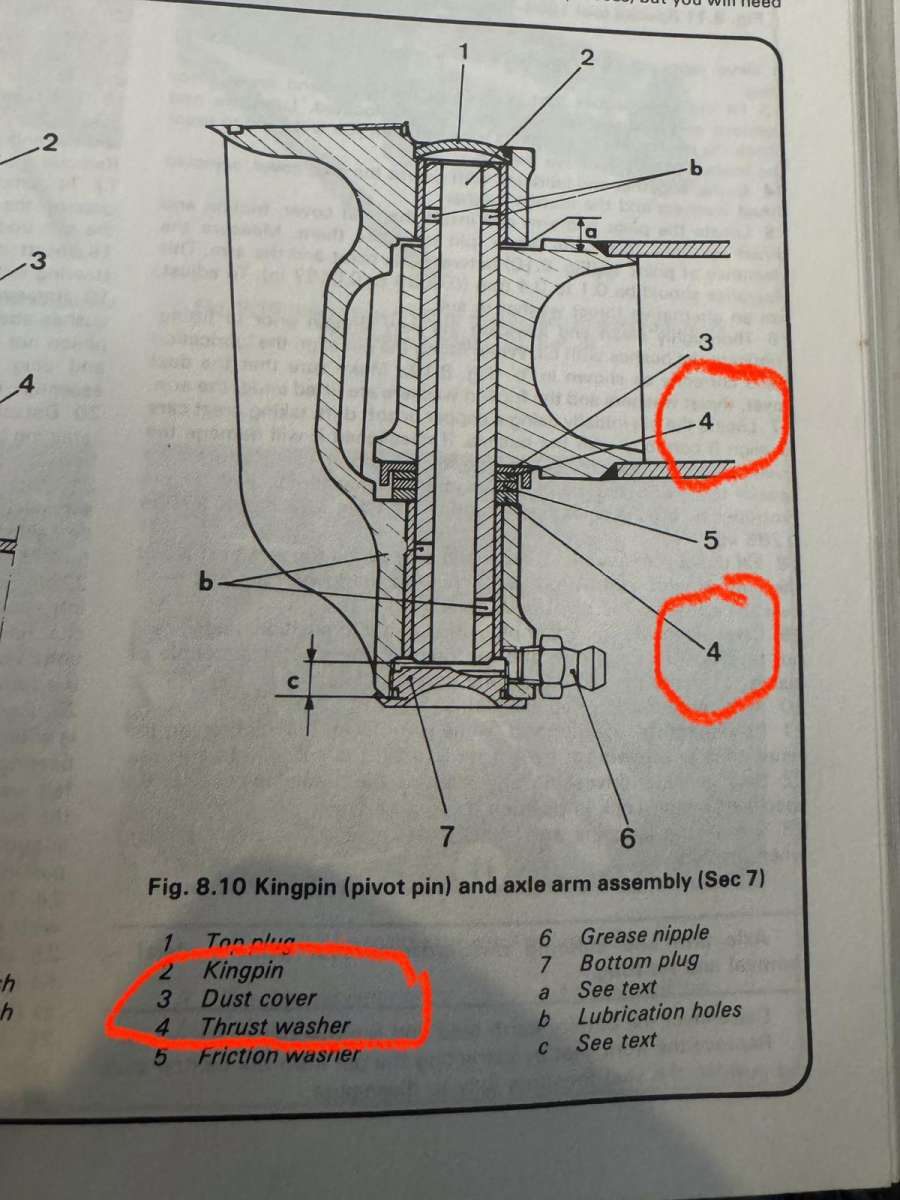
            Top Hat washer is the dust seal, Black thrust bearing, then the friction washer and finally the second thrust washer. Clearance between the hub pivot and the suspension arm should be 0.1 – 0.4mm (0.004″ – 0.016″).  If available, use thicker thrust bearings or steel shims between dust cover and thrust bearing.

            It looks like the “friction” washer is sintered and perhaps should have been called “low friction” washer.

            The Thrust bearings should be hard.

            Bob

            #841026
            cedric 1
            Participant
              @cedric

              Aftermarket car and motorcycle parts made in China have a widely varying range of quality.  Having been caught out multiple times in the past, I will no longer fit them in any critical application. Inferior material is one of the most common problems. Sintered washers are cheaper than bronze and may or may not work OK.

              And yes, small volume production runs such as for specialist restoration parts quite likely have a good amount of hand work on them, such as manualy marking out and cutting those grooves. Labour is cheap there.

              #841030
              bernard towers
              Participant
                @bernardtowers37738

                I would have thought that the sintered washers was ok for the job as the whole motor only weighs as much as two bicycles!

                #841038
                Macolm
                Participant
                  @macolm

                  In the 2CV, both the king pin and the cylindrical bushes are hardened steel. They last well if kept greased, and I would be disinclined to mess with the design. It is an unusual design, the complete steering pivot being below the transmission universal joint. This reduces considerably the side force transmitted to the bearings during cornering. The axial thrust bearings are not particularly stressed. Leave well alone also – remember it is a 1940s design that never needed to be improved.

                  What may come as a surprise is how tight the king pins are to remove. I used to have a portable press made from an eight ton hydraulic jack. Indeed, that sometimes struggled (resist the urge to batter away with punch and club hammer). You may also need to explain to a vehicle tester how a thou or two of slack in the king pin bushes translates to noticable slack at the top of the wheel. Of course, the free play at the tyre contact point with the ground is minimal.

                  #841085
                  Graeme Seed
                  Participant
                    @graemeseed34272

                    Hi to all who contributed an answer. I’ll go with sintered as an explanation. Different makers are producing these items now, we’ll have to see if these crop up again and again. As to  Macolms response about the design never needing to be improved, I tend to disagree. Why on earth did Citroen not put a screwed plug in the top instead of the abysmal Welch plug. The top housings on all 2cv’s that have had kingpin changes are always in a terrible battered condition. The concave plugs almost every time come out, get lost and contribute to excessive wear on the top bush. I introduced, a few years ago, a screw in plug with a Delrin sealing washer under it and no one has commented about grease leaking from the top area. The grease escapes, where it should do, onto the thrust washer combination area. I also supply Phosphor Bronze bushes which can be reamed to suit the varying diameters of pins being sold. There’s not any “1 or 2 thou” [ convert to metric, please] clearances anymore, and self lubricating. What an “improvement” Macolm. Bye for now, Graeme.

                    #841102
                    bernard towers
                    Participant
                      @bernardtowers37738

                      If they fitted the mods you talk about where do you stop and is the customer going to pay the extra?. Welch plugs usually leak after the first interference as they are hit too many times, I was taught to only hit them once so the lower outer edge does not get distorted and leak. all  of the vehicles with king pins that I have worked on had this system and coupled with a little cleanliness we didnt have many problems.

                      #841122
                      Macolm
                      Participant
                        @macolm

                        Oh dear! Well in fact, when I had the 2CV, I soon modified the kingpin sealing by making a solid cap with O ring, and a rod all the way through to anchor it to the base plug. I remember it was M5 threaded, and it soon stripped when greasing with a lever gun. I managed to find a long better tensile bolt from a scrap motor, and also a lower pressure grease gun.

                        That worked fine for a number of years. I seem to remember I decided a design with a M6 bolt could just be fitted in, but I never got round to making it.

                        #841126
                        Graeme Seed
                        Participant
                          @graemeseed34272

                          Hi, this topic started with myself asking about a supposed PB thrust washer as an alternative unknown metal type. I’ve learned that Rio Tinto supply a powder for sintering this type of item to the motor industry.
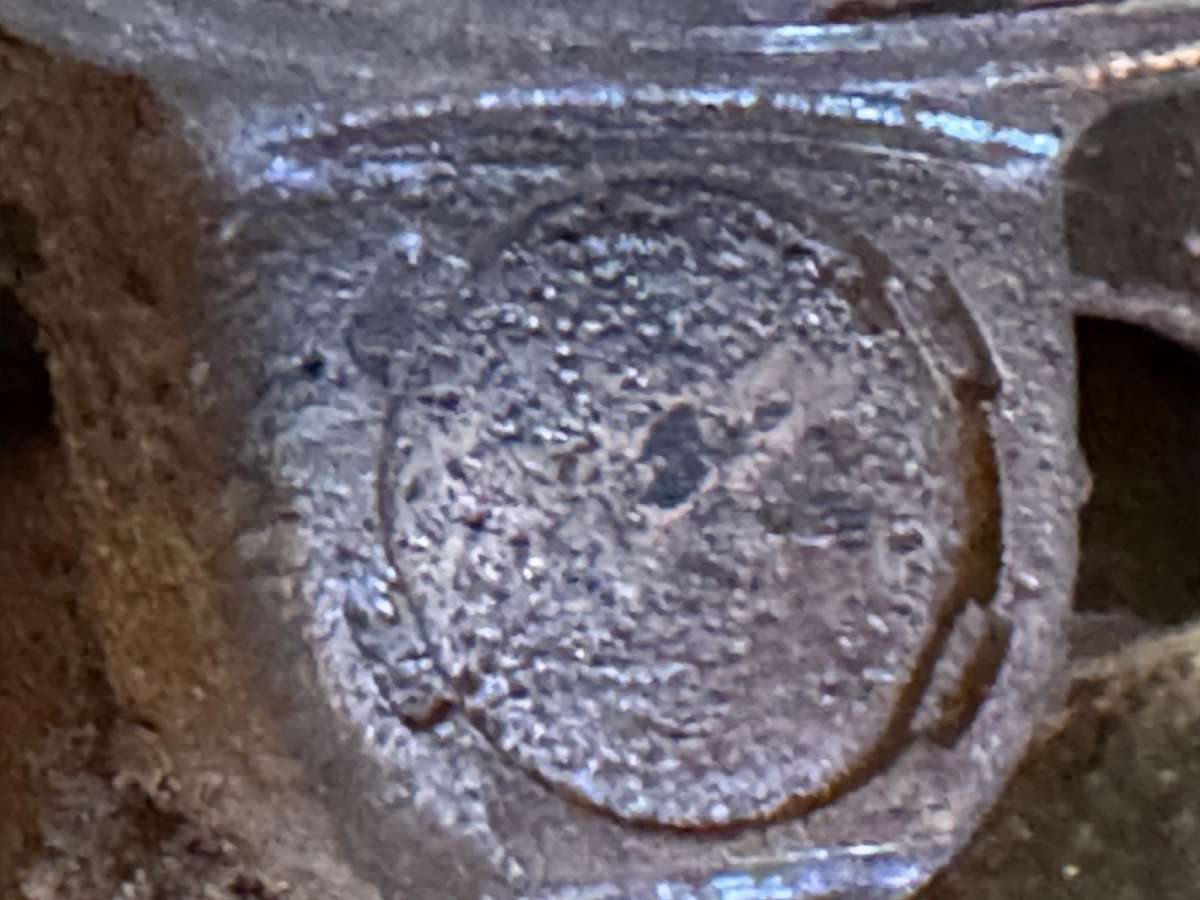
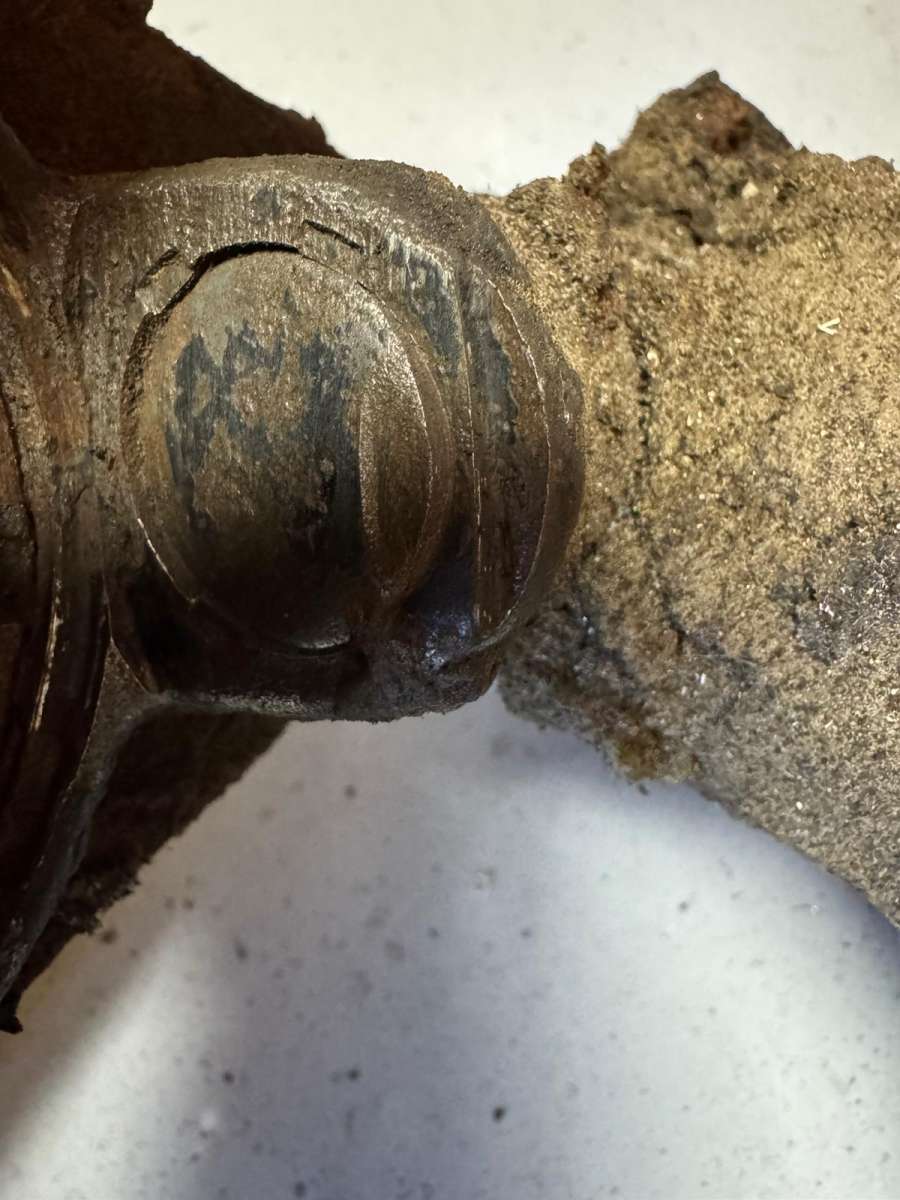
                          Bernard knows his stuff, but doesn’t mention “peening” after the plug is hit flat, as official workshop manuals specify, as supplied by Citroen. The plug hole is 24mm dia, the plug is 24 dia, once flattened its supposed to seal. The 4 original peen marks impede the plug and its correct seating/interference fit. People make the plug more concave with a big ball bearing to get past the peen marks and then severely overhit it and then add another 4 peen marks. Now we have 8. Next time 12 and so on. Ends up looking like the craters on the moon. Citroen didn’t explain fitting engineering items together very well, utilising mallets and sharpened chisels to  dislodge and insert axle arm bearing taper roller cups. Maybe “peening” was an oversight too. here’s a couple of photos of two originally fitted Citroen Welch plugs. Back to my washers, Rio Tinto engineer says the powder is low nickel stainless steel, they are magnetic. thanks, Graeme. 746fb0a1-ceb4-41ad-932e-efacad6ddefd88764185-0d12-4eff-b7a7-9b6aa2c6ee09

                          #841259
                          bernard towers
                          Participant
                            @bernardtowers37738

                            Not sure that what you have is a welch plug they look too flat and why would they have been staked?

                            #841266
                            Michael Gilligan
                            Participant
                              @michaelgilligan61133

                              +1 for Bernard’s observation

                              The Welch plug is a specific design of Core Plug

                              See: https://en.wikipedia.org/wiki/Core_plug#

                              MichaelG.

                              .

                              Refhttps://www.britishcarweek.org/welch_plug.html

                              #841277
                              noel shelley
                              Participant
                                @noelshelley55608

                                Welch plug or not the material the sintered/bronze thrust washer is made of is interesting. Manufacturers have 2 points to consider, 1, the cost of the part & 2 how well it will work. Then there is the aftermarket parts that may be good or barely last till next MOT. A needle roller thrust may seem a good idea, when in fact a bronze washer is better and MUCH cheaper. One likes to think that only after extensive testing is the design and material arrived at for production ? What the maker fits from new may NOT be the best idea eg, wet timing belts ! But what do I know ? Noel.

                                #841344
                                Graeme Seed
                                Participant
                                  @graemeseed34272

                                  going with Wikipedia’s definition, its a welch plug [very good post, as usual, Michael] Its 24mm diam and 2 thick and is domed. It’s flattened and forms some kind of interference fit, with its edge[s]. The staking or peening is an additional securing idea [Citroen], to prevent high grease pressure pushing it out, far higher than an engine block pressure. You can see, from the 2 photos, that both are not sitting completely flat and have risen a bit on one side, encouraging leakage and blow out. Believe it or not, I’ve seen the severely damaged top casting with these plugs, due to many center punch marks, WELDED in. A sorry state of affairs.

                                  A new plug cannot fit past the original stake marks, so people make them more domed with a large ball bearing and  attempt to fit them in. Never works. So they Dremel off the stake marks, fit the plug and add 4 more indentations, eventually destroying the top cap area. I suppose that car makers designed things to fail and this is a prime example. I encourage  a screw thread in here with a Delrin washer. It’s done quite quickly. The screw in plug cannot stand proud of the casting as it will interfere with the rotation of the uv joint. Not all hub castings can be done this way because of severe damage, so causing less threads.

                                  #841346
                                  Graeme Seed
                                  Participant
                                    @graemeseed34272

                                    Hi Noel, these king pin arrangements were designed in the 1930’s with Phosphor bronze washers until sintering was discovered. Don’t know when that was. Graeme.

                                    #841349
                                    Graeme Seed
                                    Participant
                                      @graemeseed34272

                                      Here’s the drawing and king pin assembly. there’s a clearly defined curved plug on top.16256b06-c35d-4a66-9711-2a797fd8b48c

                                      #841355
                                      bernard towers
                                      Participant
                                        @bernardtowers37738

                                        Going back to Malcolms post of the 14th. I would be very worried if the grease gun broke the m5 stud, the grease should have lubricated the king pin long before that happened. Methinks you have bigger problems. are you greasing with veh jacked up and assistant rotating steering?

                                      Viewing 18 posts - 1 through 18 (of 18 total)
                                      • Please log in to reply to this topic. Registering is free and easy using the links on the menu at the top of this page.

                                      Latest Replies

                                      Home Forums Materials Topics

                                      Viewing 25 topics - 1 through 25 (of 25 total)
                                      Viewing 25 topics - 1 through 25 (of 25 total)

                                      View full reply list.