Sealing a 5/32″ wide gap left in a slit Smokebox
Sealing a 5/32″ wide gap left in a slit Smokebox
- This topic has 4 replies, 5 voices, and was last updated 26 February 2026 at 22:17 by
 Nigel Graham 2.
 Nigel Graham 2.
 Greensands
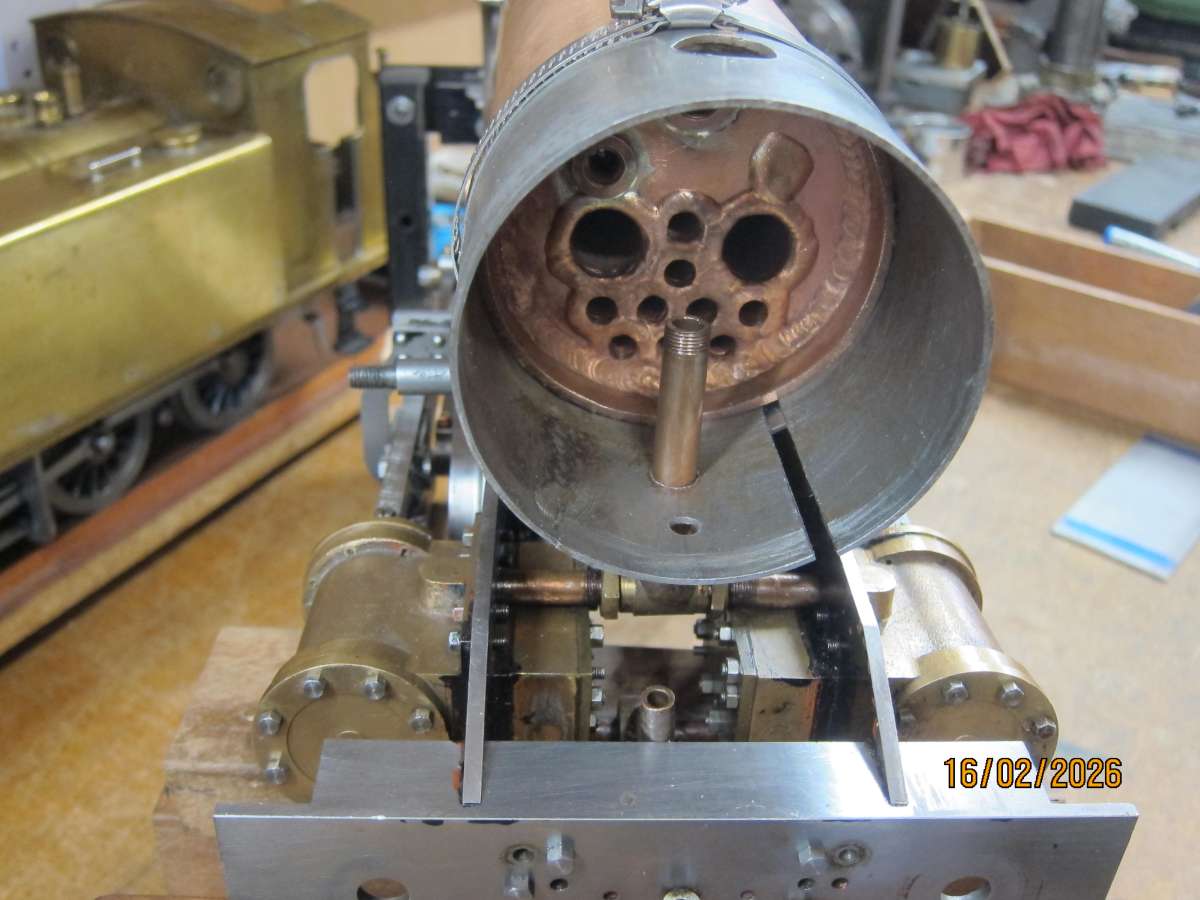 5/32” width gap left by the sawing operation. Initial thoughts are to mill a length of top hat section from 1/8” thick mild steel to fill the gap from the inside of the smokebox using small rivets to hold the strip in position followed by silver soldering from the outside to make a proper job of it. The line of the cut was arranged to fall within the area covered by the saddle to maintain external appearances. Before cutting any metal I thought it might be worth putting the issue to the forum to see if there might be any other possible solutions out there. Incidentally, I do not have access to any welding gear which be the more obvious answer to the problem. All thoughts and suggestion most welcomed.
 Nigel Bennett
 bernard towers
 Clive Brown 1
 Nigel Graham 2
- Please log in to reply to this topic. Registering is free and easy using the links on the menu at the top of this page.
Latest Replies
-
- Topic
- Voices
- Last Post
-
-
Dry PTFE Spray
Started by:
Michael Gilligan
in: The Tea Room
- 2
-
24 October 2026 at 10:31
Michael Gilligan
-
Hello from Ukraine – CNC lathe on LinuxCNC
Started by:
odessit
in: Introduce Yourself – New members start here!
- 4
-
23 October 2026 at 22:16
Dave Halford
-
Change old AC motor to BLDC motor in Sieg C6
Started by:
Jens Eirik Skogstad 1
in: Electronics in the Workshop
- 10
-
23 October 2026 at 20:57
Nigel Graham 2
-
Emco FB2 Quirks and Additions
1
2
3
4
Started by:
Graham Meek
in: Manual machine tools
- 20
-
23 October 2026 at 19:43
engineeredbyhansson
-
Broken Elliot chuck screw
Started by:
davelong22
in: Beginners questions
- 3
-
23 October 2026 at 18:51
davelong22
-
Sherline closing down
Started by:
Peter Cook 6
in: Manual machine tools
- 8
-
23 October 2026 at 17:13
Peter Cook 6
-
Boiler stays
Started by:
Michael Callaghan
in: Beginners questions
- 3
-
23 October 2026 at 17:05
duncan webster 1
-
Mystery mill?
Started by:
Dave Halford
in: Workshop Tools and Tooling
- 3
-
23 October 2026 at 16:00
bernard towers
-
Small (ish) horizontal mill identification “Howdle”
Started by:
Rainbows
in: Manual machine tools
- 14
-
23 October 2026 at 15:02
Oily Rag
-
Stuart twin compound
Started by:
teamricky
in: Stationary engines
- 5
-
23 October 2026 at 12:34
teamricky
-
What is this tool?
Started by:
jaCK Hobson
in: The Tea Room
- 7
-
23 October 2026 at 12:30
Dave Halford
-
Re Inserting Angled Features – Completed The Alibre Model
Started by:
Nigel Graham 2
in: CAD – Technical drawing & design
- 4
-
23 October 2026 at 12:13
Nigel Graham 2
-
What Did You Do Today 2026
1
2
…
9
10
Started by:
JasonB
in: The Tea Room
- 55
-
23 October 2026 at 11:59
jaCK Hobson
-
Workshop Insurance.
Started by:
Andrew Tinsley
in: General Questions
- 10
-
23 October 2026 at 08:32
JohnF
-
Does anyone have any info about these vices
1
2
Started by:
bjcolyer
in: Introduce Yourself – New members start here!
- 13
-
23 October 2026 at 06:38
Michael Gilligan
-
LAzar egde finder
Started by:
ian Holdsworth
in: Beginners questions
- 10
-
22 October 2026 at 23:58
Ches Green UK
-
PHP
Started by:
Michael Gilligan
in: Website Questions, Comments, and Suggestions
- 3
-
22 October 2026 at 19:36
Mark Rand
-
Layerling – new free CAD software for 3D printing
Started by:
Graham Stoppani
in: CAD – Technical drawing & design
- 9
-
22 October 2026 at 16:14
Fulmen
-
Close-coupled Tees (Underfloor heating)
Started by:
Andy Stopford
in: The Tea Room
- 7
-
22 October 2026 at 15:55
Macolm
-
Rivetting with a hydraulic press
1
2
Started by:
Martin Johnson 1
in: Workshop Tools and Tooling
- 19
-
22 October 2026 at 15:33
DC31k
-
ML7 change gear caluclator
Started by:
drnewcomb
in: Manual machine tools
- 8
-
21 October 2026 at 16:47
ega
-
Making a Lathe Bench for a Myford ML10
1
2
Started by:
starjump
in: Beginners questions
- 11
-
21 October 2026 at 15:33
starjump
-
Coventry Diehead CH Reassembly
Started by:
Tony Ray
in: Workshop Tools and Tooling
- 4
-
21 October 2026 at 12:46
Jan Raap
-
John Haining 2″ Ruston
Started by:
Pixel_Porpoise
in: Help and Assistance! (Offered or Wanted)
- 4
-
21 October 2026 at 11:01
Dave Halford
-
Pencil Sharpener
1
2
Started by:
Vic
in: The Tea Room
- 18
-
20 October 2026 at 23:10
Nigel Graham 2
-
Dry PTFE Spray
 Michael Gilligan
  odessit
  Dave Halford
 Jens Eirik Skogstad 1
  Graham Meek
  engineeredbyhansson
 davelong22
  Peter Cook 6
  Michael Callaghan
  duncan webster 1
 bernard towers
 Rainbows
  Oily Rag
 teamricky
  jaCK Hobson
  JasonB
  Andrew Tinsley
  JohnF
JohnF bjcolyer
  ian Holdsworth
  Ches Green UK
 Mark Rand
 Graham Stoppani
  Fulmen
 Andy Stopford
  Macolm
 Martin Johnson 1
  DC31k
DC31k drnewcomb
  ega
ega starjump
  Tony Ray
  Jan Raap
 Pixel_Porpoise
  Vic
Vic