Home › Forums › Model Engineer & Workshop › New technology in Model Engineers Workshop
Edited By John McNamara on 31/05/2011 16:51:08
John M, With all the griping about new technology or absence of it, why the waste of Forum space and not an article submitted for publication to a wider audience?
Hi All
Hi Kwil
With the almost incomprehensible size of now multi terabyte hard drives storage space is no longer an issue. Information is never wasted as long as there are others that may find it useful.
I have considered preparing an article for the magazine; maybe in the future.
At the moment I just want to “get on with it”,
Posting live has the advantage of spontaneity; you are not tied to a publication date and the inevitable delay before the article hits the reader. Every day I discover an issue that must be overcome, or a new idea to improve the work comes to mind.
I know there are others following this thread over 3000 reads so far, very humbling and encouraging; it inspires me to do better. Hopefully a few readers will be encouraged to try the process, and share their findings.
Hi Hugh Gilhespie
Thank you for your note of encouragement.
Cheers
John McNamara
Edited By John McNamara on 01/06/2011 03:02:41
Edited By John McNamara on 01/06/2011 03:03:03
Edited By John McNamara on 01/06/2011 03:03:15
Edited By John McNamara on 01/06/2011 03:03:49
Edited By John McNamara on 01/06/2011 16:31:35
Hi All
It’s been a while since I posted, a busy week here.
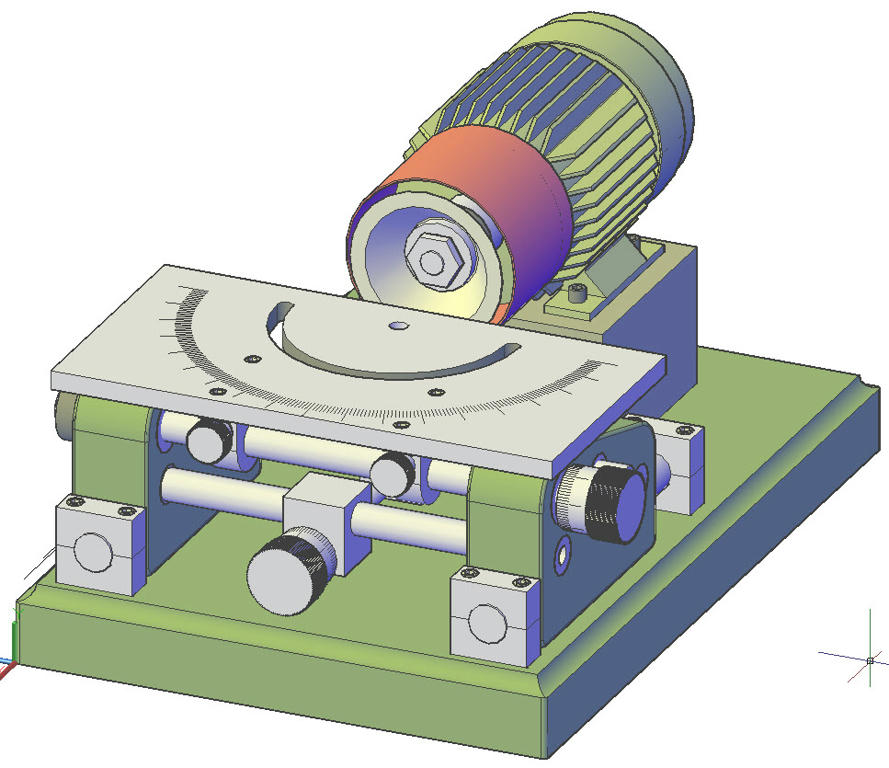
The design has had a few modifications.
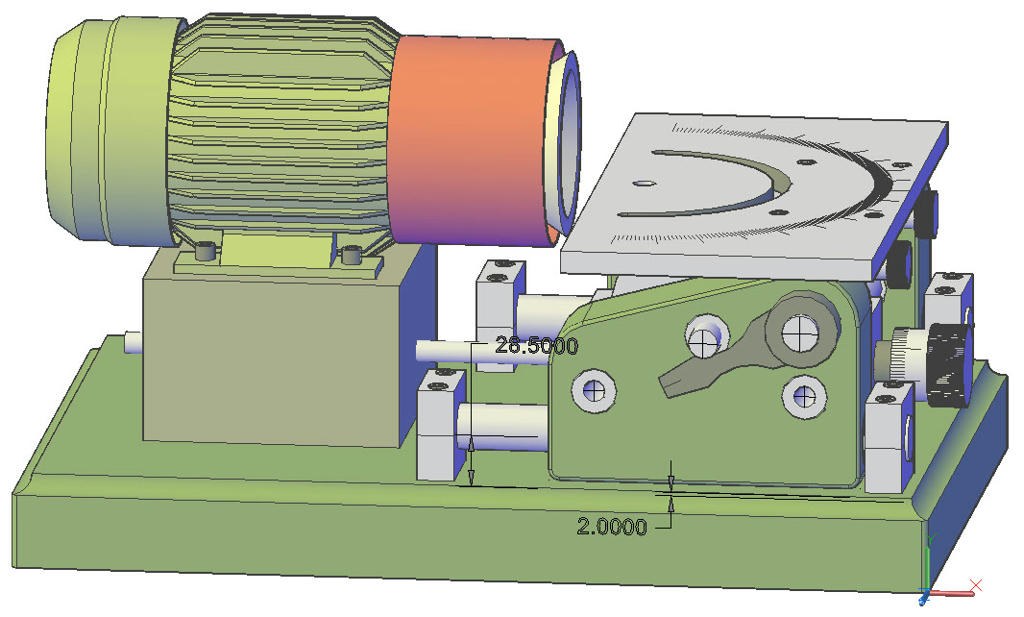
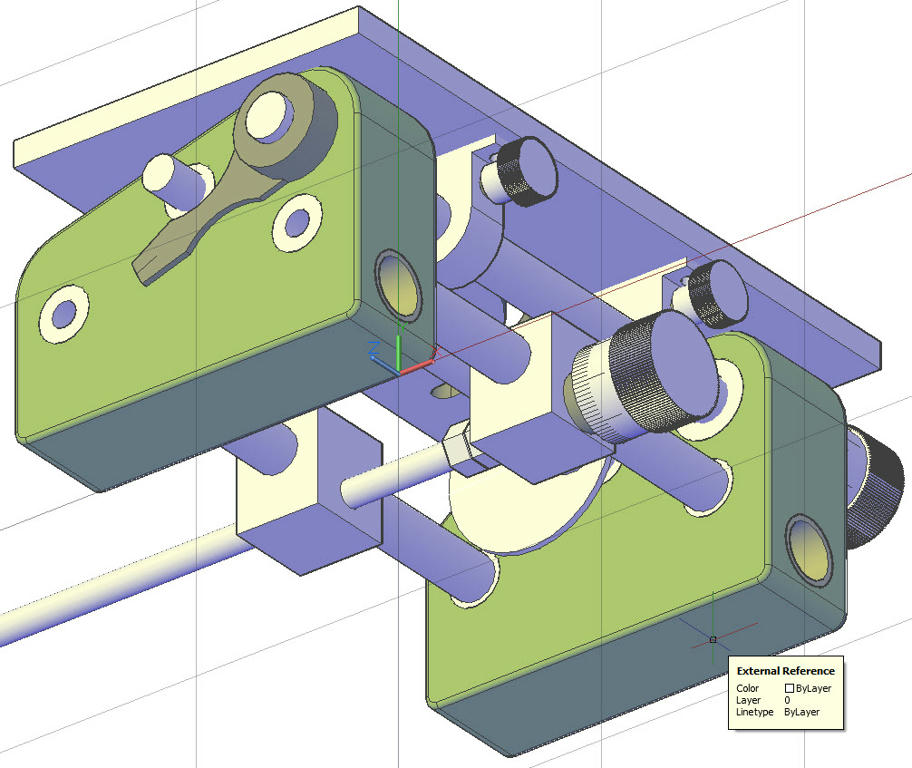
Firstly the end support castings have been lengthened to 170mm and the location of the various shafts changed.
Provision has been made to shift the table laterally a total of 70mm 35mm each way from centre. I plan to have a fine adjustment for the lateral position similar to the Quorn – this is yet to be finalised. I am wrestling with the table angle indicator, the difficulty being that if the table moves sideways the angle indicator should not.
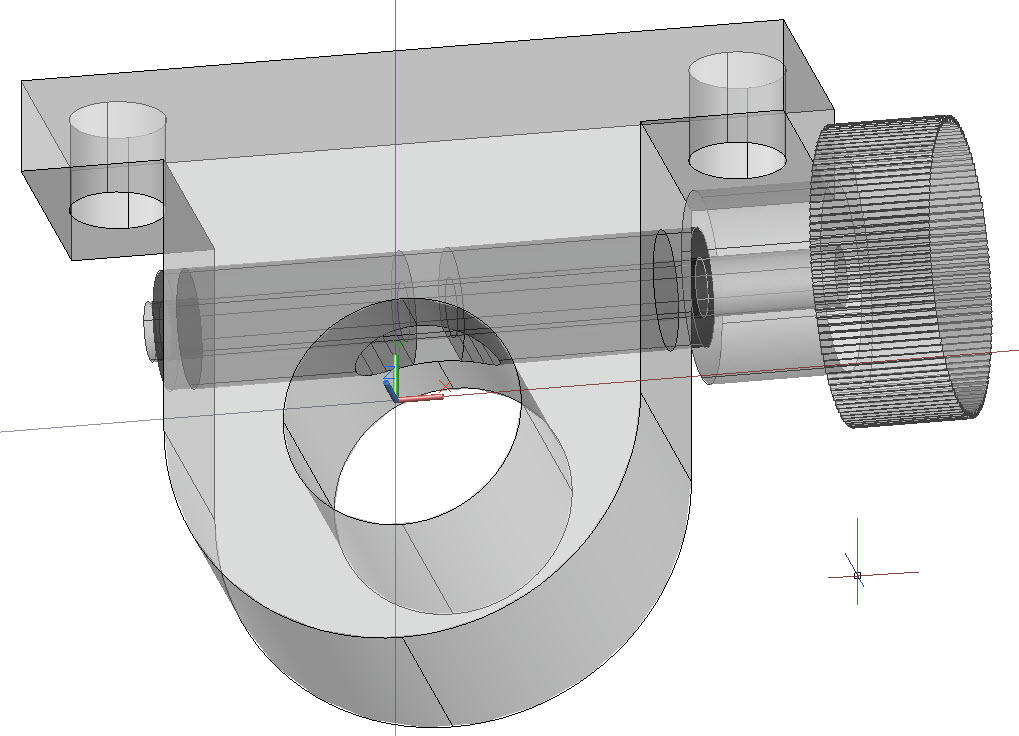
As shown below the clamping for the table is finalised; rather than using set screws that inevitably marr the shaft I have used self centering brass pincer collars. The outer one is threaded, the one closest to the knurled knob is not.
Additionally I plan to make it possible to shift the motor to one side when the motor pillar is finalised, it appears likely that many times the edge of the wheel should be near the centre of pivot.
I would be very interested to hear from MEW members who have built the Worden and use it. Is there ever a need to rotate the motor?
The adjustment knobs for both X and y turn an M12 * 1.75 shaft. There are 70 divisions on the graduated sleeves. There should be 68.8976 divisions for exactly fo .001 inches per graduation mark. I rounded to 70 divisions because it divides by 70 and 10 for the graduation marks to cover one rotation of the shaft.
The Y Axis thread should be reverse threaded to make it intuitive, easy enough to turn on the lathe. The nut (In the motor base), will be cast in epoxy so no problem making or sourcing a special tap.
Making the end support castings
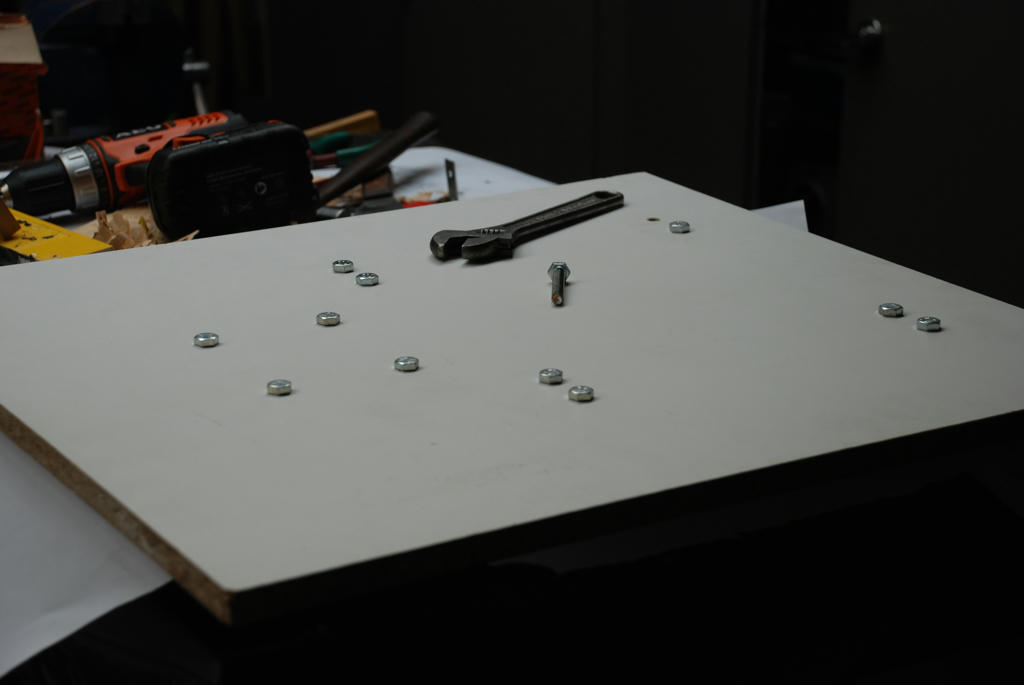
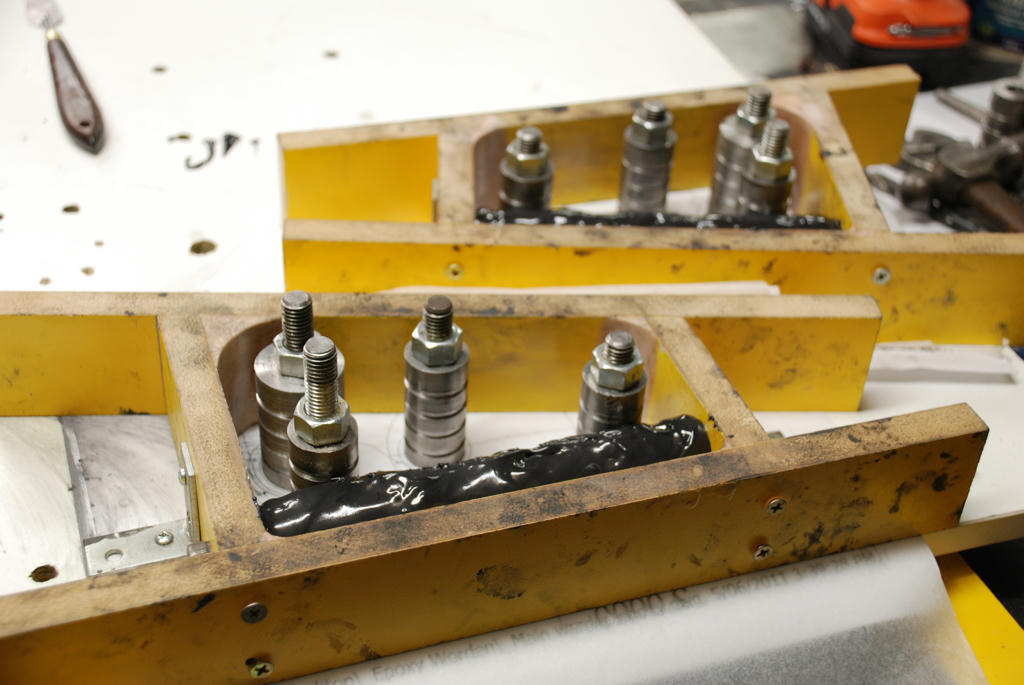
Starting out with a flat base of melamine MDF, onto which a 1:1 printed copy of the side elevation plan for the parts was placed. this paper plan was then protected with “Baking film” a product suggested by my wife, it worked well : the epoxy did not stick to it.
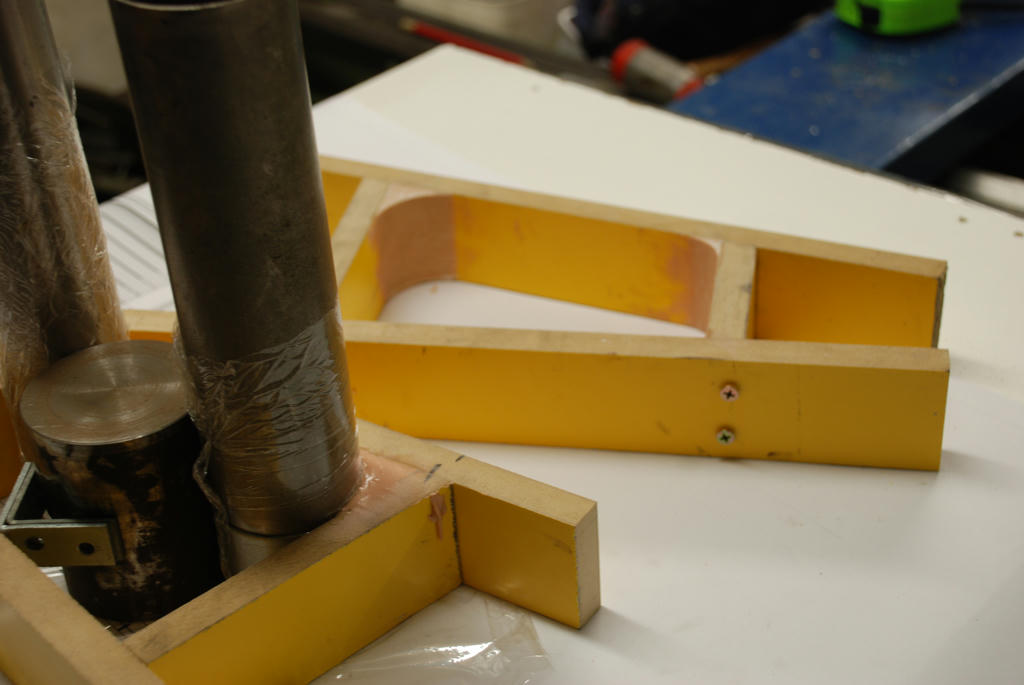
Using this layout, a simple tray mould to contain the mix was cut and aligned carefully with the plan, using 50mm strips of melamine coated MDF.
This left the radiused corners. To form these, odd lengths of pipe I had to hand of the correct radius were used as formers. One was a little small so I wrapped a few layers of tape over it to bring it up to size. I also wrapped cling film around the pipes to stop them sticking to the epoxy body filler.
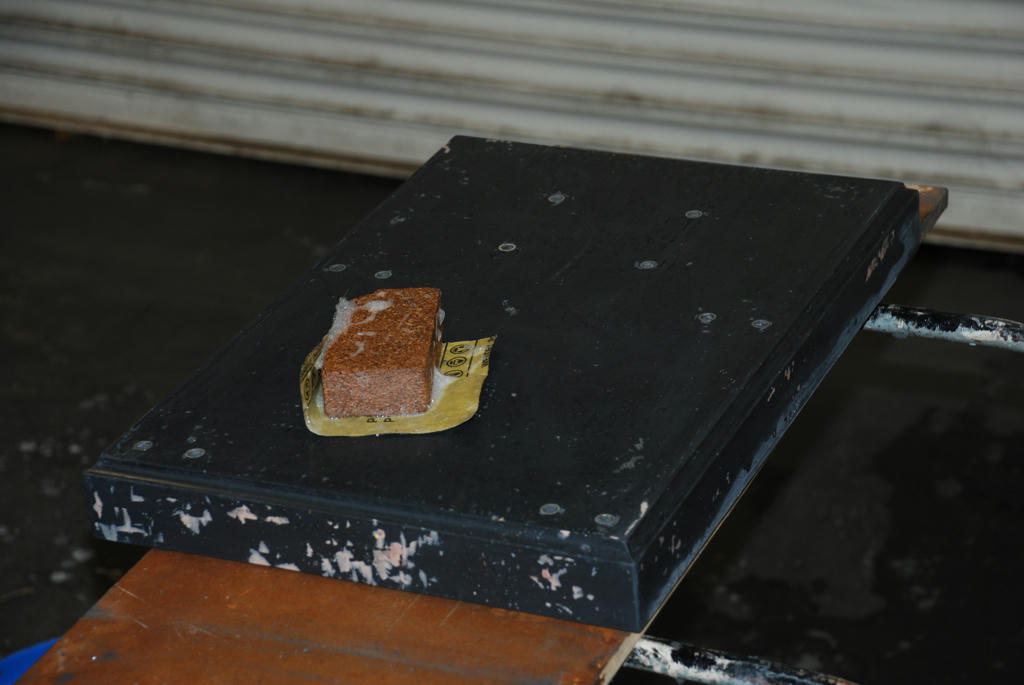
It was a simple matter to fill the corner with quick setting body filler then press the former (pipe) into the corner and wedge it. Some material squeezed out. The top was trowled off. The material squeezed out along the sides was not touched. After about 15 minutes the mix was “gel” set (still soft). The formers were removed and it was a simple matter to remove the still soft excess material. The small corners were simply trowled with a piece of rod to form the 6mm radius. After an hour the inside of the mould frame was sanded ready for casting.
I used PVA glue as a mould release applied neat, rubbing it in thoroughly with my finger, and when that was set I greased the sides as well. The base of the mould had already been protected as noted above.
It was decided to cast the Y axis bearings in situ using the Epoxy bearing material I developed previously.
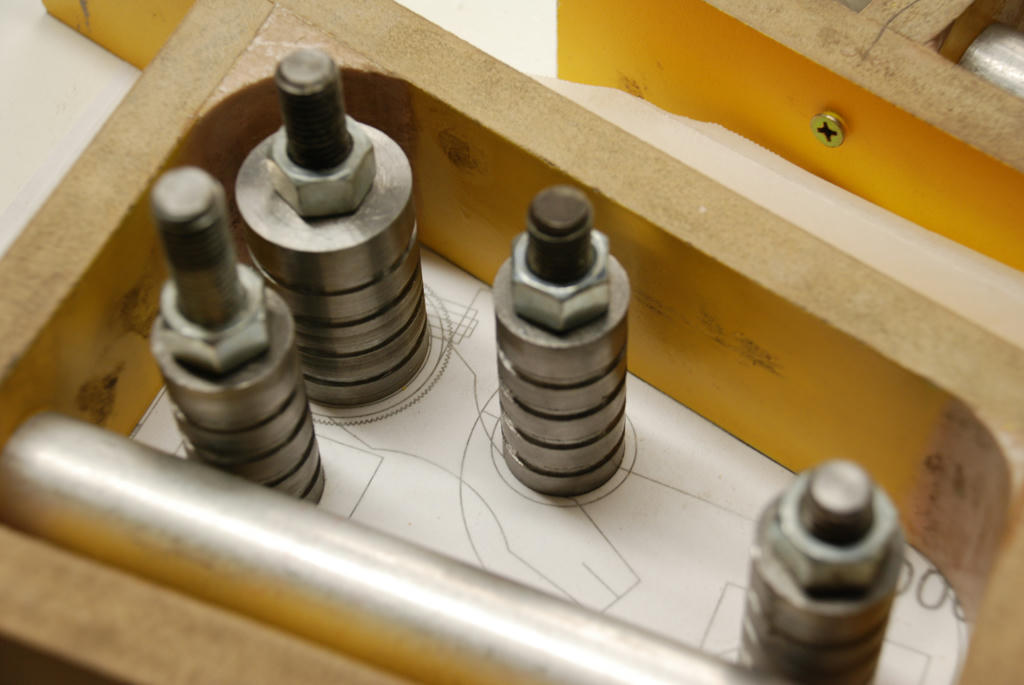
Two pieces of rod cut to 170mm were tapped both ends to enable them to be carefully centered in the mould and clamped. Before the main cast these rods were greased and coated with bearing material. There is a difficulty here….The material tries to run off. I had to turn the casting for an hour before it started to gel. A heat gun would be handy here. It would reduce that time to 15 minutes or less.
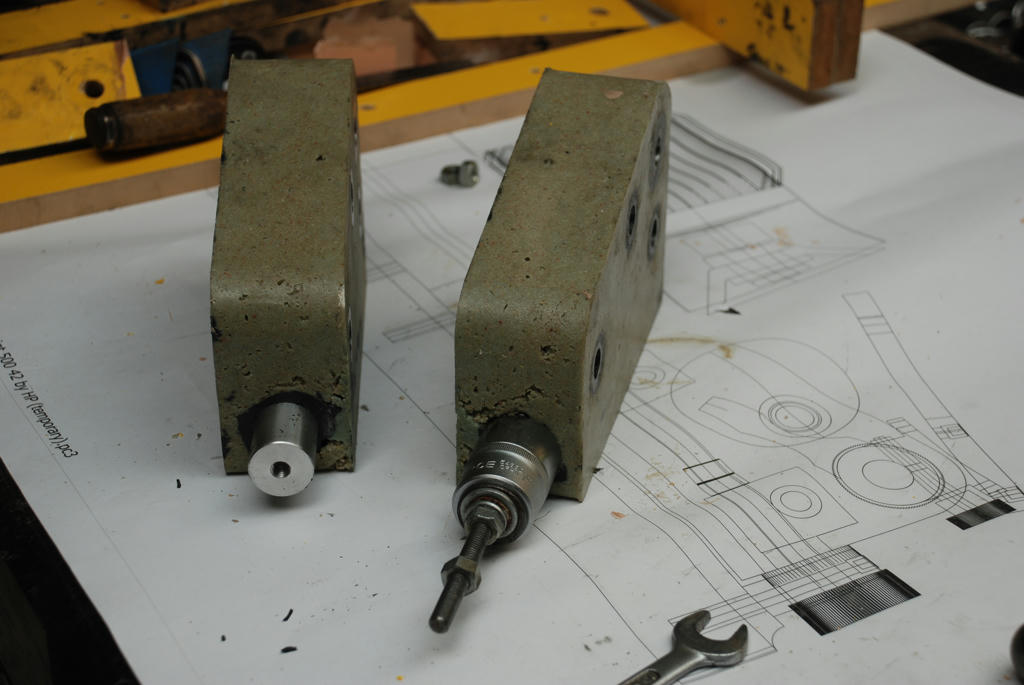
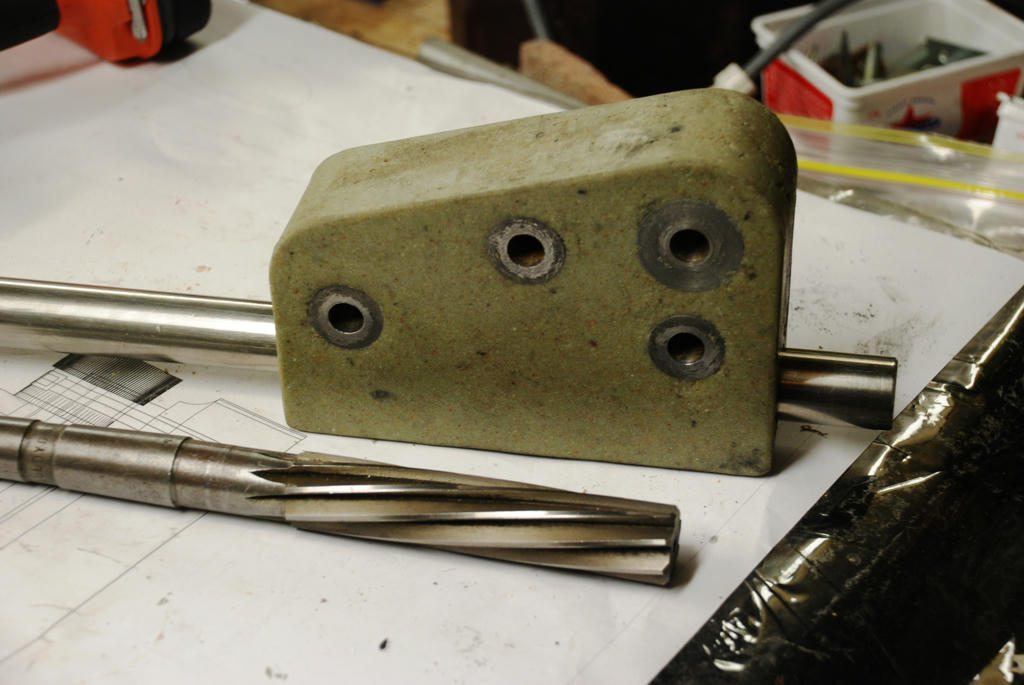
A fair amount of force was required to remove the rods when the cast was set. I used a handy socket and a piece of M8 threaded rod to break the initial grip, once started using a punch (being careful not to touch the bore), the rods were driven out. Upon inspection the bores are shiny. Currently we have a heavy push fit. I will ease the bores slightly for a light push fit. I am guessing about .0001 inches will do it. After the casting has fully hardened over the next week it can be done.
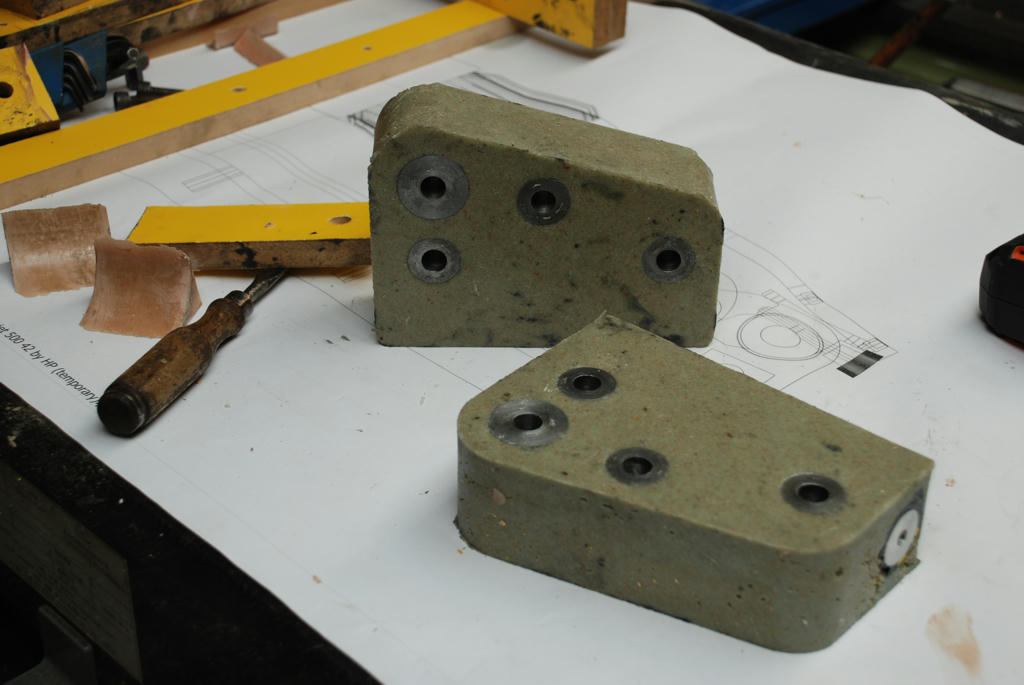
Mild steel inserts were made from bar oddments I had to hand,
Leaving a 60mm length sticking out of the chuck I skimmed the OD, center drilled, drilled 12.5mm, faced, grooved with the parting tool and parted off in one setting.
There are 3 x 25mm and 1 by 35mm diameter inserts for each end casting.
The 12mm holes were made to enable the inserts to be securely bolted in position.
The next step will be to bore the inserts to the correct diameter on the mill.
Cast mix
1620 ML of oven dried fine washed sand
600ml Megapoxy HICB, normally used in rotary rock crushers (it contains about 60% fine silica powder), therefore our mix contained approximately 16.21% epoxy by volume.
A similar result could be obtained with plain epoxy and graded sand. The mix was a friable mass rather stiff. As shown in the photos we got a good casting with few blemishes. Not quite enough tamping to fill the voids that will need be attended to next time.
Finishing
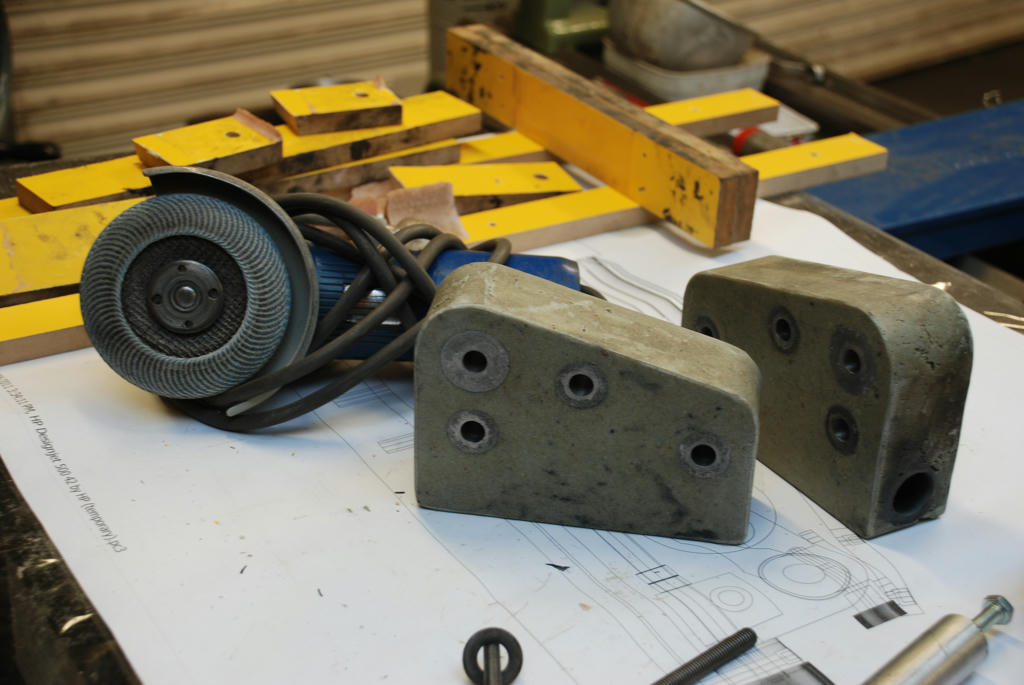
As removed from the mould there were sharp corners and a few blemishes. A small hand grinder was used to remove the sharp corners and form the small radius edge abounding each side. It also made short work of tidying up any raised blemishes. The wheel used was a rather old flap wheel that had seen better days. Maybe this was an advantage as it was not as aggressive as a new wheel would be. There are a few blemishes that will be repaired prior to painting.
Continued next post…
Edited By John McNamara on 06/06/2011 08:45:13
Perhap this country has lost its innovators, hence we are going down hill!
Edited By Steve Garnett on 06/06/2011 10:08:33
Edited By ady on 06/06/2011 12:37:18
Not if you did it properly, you wouldn’t. Just join the UKRA and follow the rules, which are pretty sensible.
Hopefully, within the next couple of weeks, we will be announcing the return of two much missed UKRA institutions.
and
………………………………..
Perhap this country has lost its innovators, hence we are going down hill!
Edited By Steve Garnett on 06/06/2011 10:08:33
Edited By Terryd on 06/06/2011 14:42:04
Hi All
Just an addendum to the earlier post today post re casting the end plates for the Epoxy Worden; being impatient I decided to accelerate the final cure and placed the parts in an oven at 80 degrees C for two hours. Curing in an oven also produces a slightly stronger casting.
I was impatient to see just what sort of fit will be obtained for the main Y axis guides, and did not want to wait for a week for full cure.
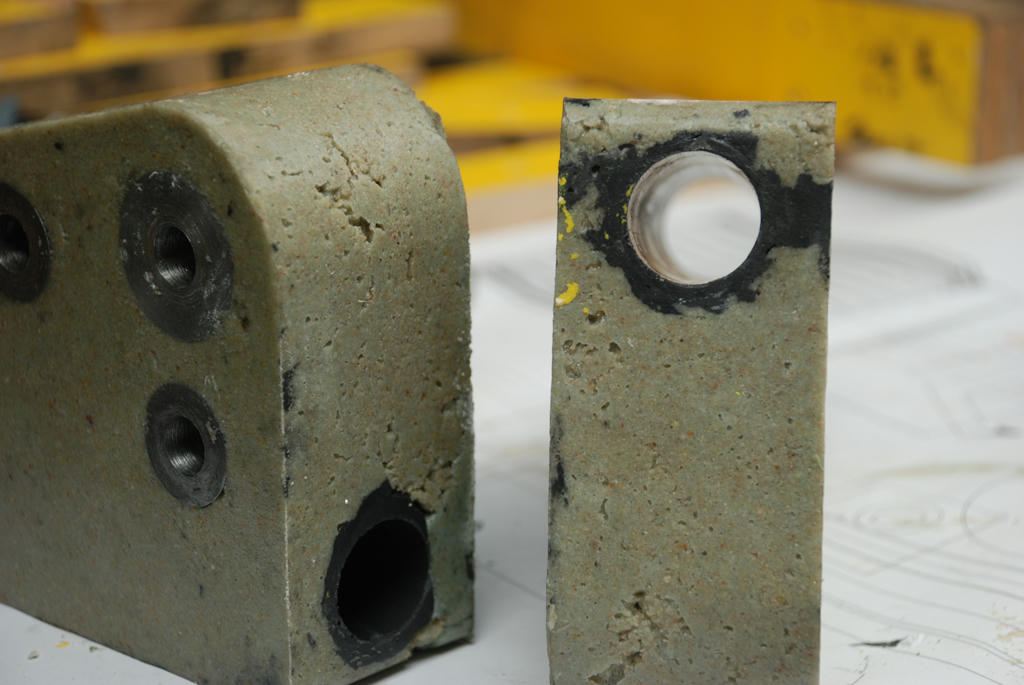
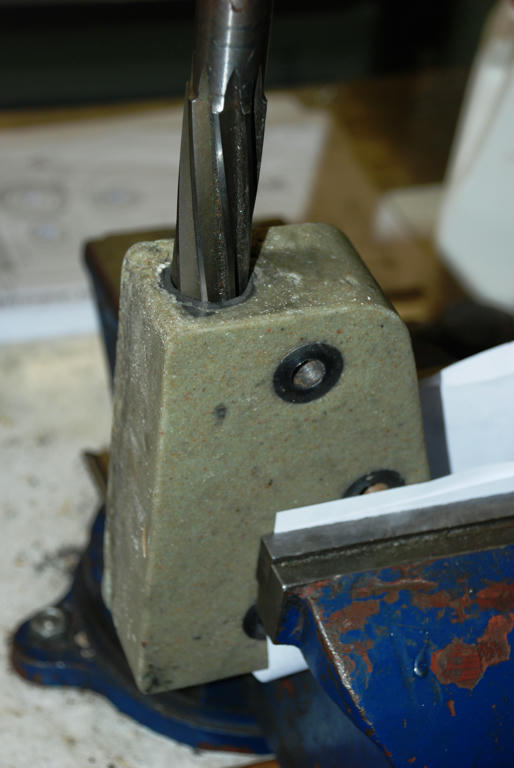
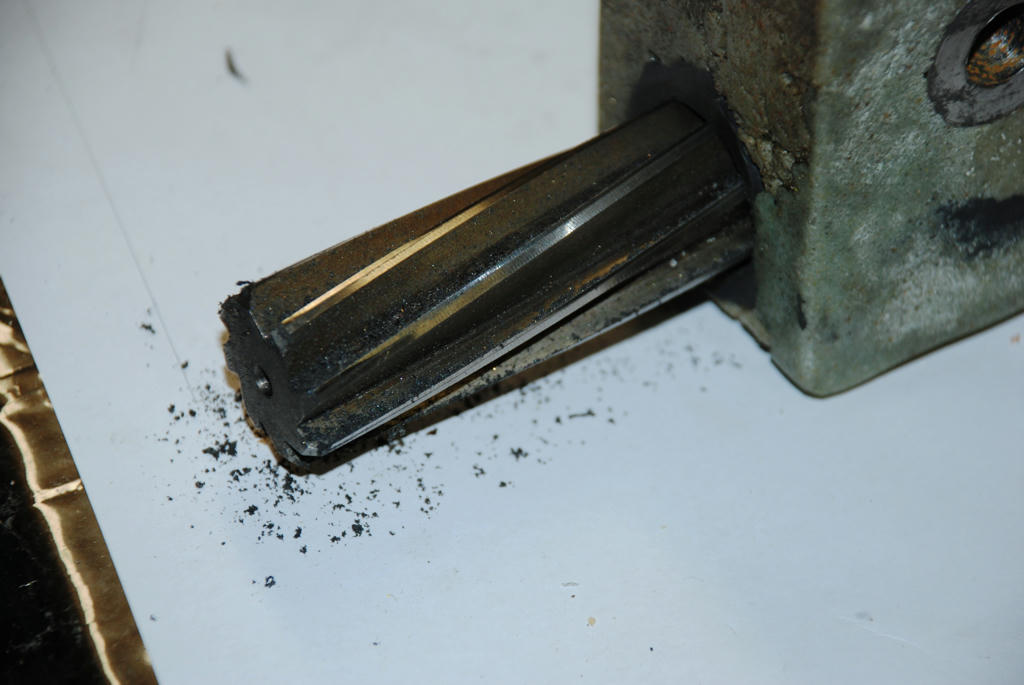
As the attached photo shows I used a reamer; a nice rather old and slightly blunt reamer, that has I have used before for a similar fit; as are many of my tools a find at a local market. I know if used carefully by hand it will not create an oversize hole, it cuts a couple of tenths under. And the spiral flutes give a good finish.
I would not care to try an adjustable reamer here the straight flutes sometimes dig in and you are never quite sure what final finish you are going to get. If I did not have a reamer of the correct size I would have made up a D bit or a lap.
Having reamed the hole, when dry the shaft slides in and out with a small push. With a smear of oil it is very close to perfect, a touch tight, I will let it wear itself in.
John
Edited By John McNamara on 06/06/2011 14:43:26
I agree with Steve, in the 60s when I was developing my industrial and scientific skills, we were taught to think about it, question why and why not. Now they just do not know and as Steve says they do not even know they do not know!
Only China exports more than the European nation.
All our crafts teachers came from industry via a training scheme, as soon as they came from teacher training colleges it all went downhill.
Home › Forums › Model Engineer & Workshop › Topics
Started by: Grizzly bear
in: The Tea Room
renardiere7
Started by: Peter Simpson 3
in: Beginners questions
Chris Kaminski
Started by: rikt
in: Manual machine tools
Graham Meek
Started by:
dee
in: Related Hobbies including Vehicle Restoration
Nicholas Farr
Started by: Paul Scholey
in: Manual machine tools
Paul Scholey
Started by: Dr_GMJN
in: Workshop Techniques
alecs
Started by: Glyn Davies
in: The Tea Room
mark costello 1
Started by: Lee Kennedy
in: Manual machine tools
alecs
Started by: tomcnc
in: CNC machines, Home builds, Conversions, ELS, automation, software, etc tools
tomcnc
Started by:
Neil Wyatt
in: 3D Printers and 3D Printing
Bazyle
Started by:
Neil Wyatt
in: Locomotives
Bazyle
Started by:
duncan webster 1
in: Electronics in the Workshop
Robert Atkinson 2
Started by: Andrew Tinsley
in: Workshop Tools and Tooling
Rod Clemett
Started by: Beardy Mike
in: Beginners questions
Baz
Started by: Speedy Builder5
in: Workshop Techniques
Speedy Builder5
Started by:
dee
in: Introduce Yourself – New members start here!
Howard Lewis
Started by: Steve Withnell
in: Workshop Techniques
ega
Started by: Kevan Shaw
in: General Questions
John Purdy
Started by: jaCK Hobson
in: Workshop Tools and Tooling
jaCK Hobson
Started by: bernard towers
in: Website Questions, Comments, and Suggestions
JasonB
Started by:
JasonB
in: Stationary engines
JasonB
Started by: Andrew Tinsley
in: Workshop Tools and Tooling
Oily Rag
Started by: Speedy Builder5
in: Electronics in the Workshop
Bob Worsley
Started by: old mart
in: The Tea Room
Thor 🇳🇴
Started by: jimalm
in: Electronics in the Workshop
Versaboss