How Good Are 3D Printers?

How Good Are 3D Printers?

Home Forums 3D Printers and 3D Printing How Good Are 3D Printers?

Viewing 25 posts - 1 through 25 (of 28 total)
  • Author
    Posts
  • #851818
    Neil Wyatt
    Moderator
      @neilwyatt

      I recently found myself needing some 1:35 scale horse figures for a model.

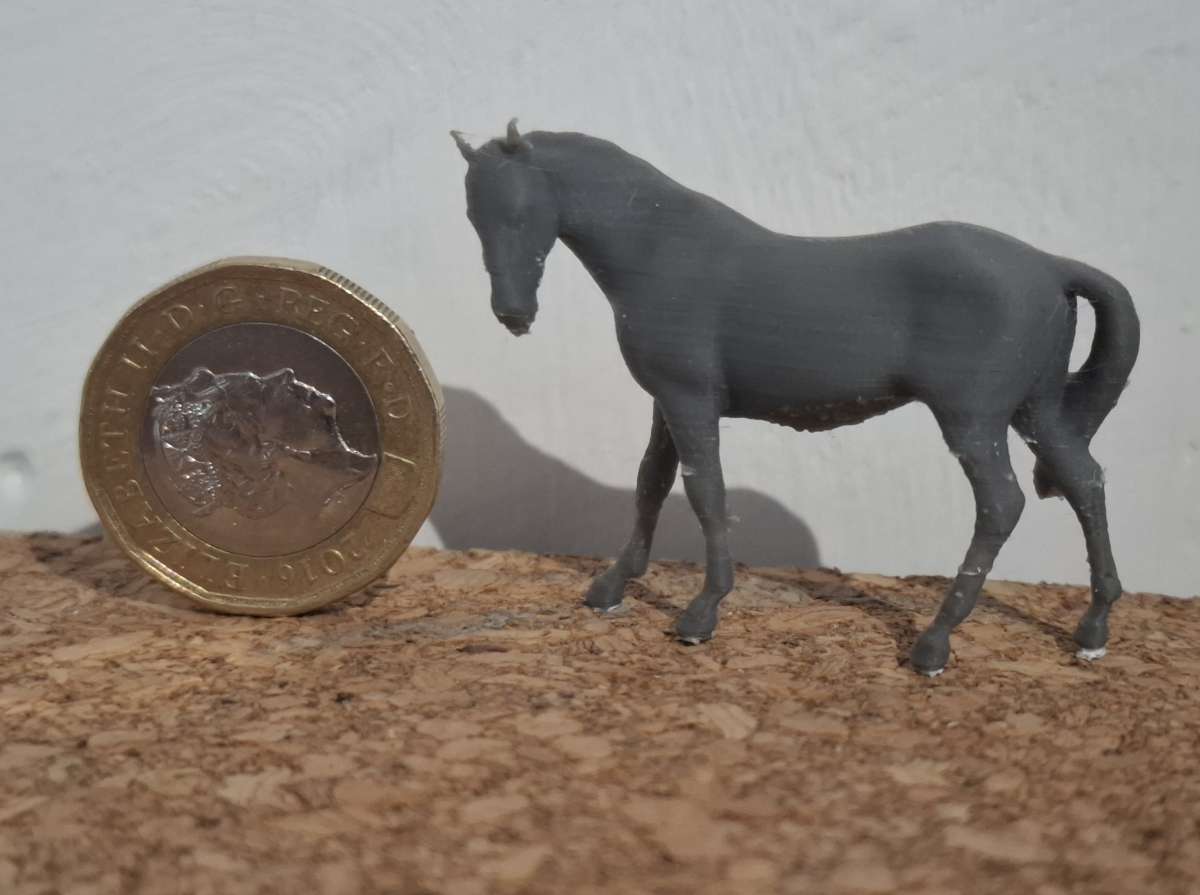
      I scanned a roughly 7″ tall china ornament with my Creality scanner, and printed it on my K1 max. I made a miscalculation and scaled it to be far too small.

      I was astounded by the print quality. I used adaptive layer heights and smoothing (not even at the highest settings) and I was using a near new nozzle (my first in over 2½ years -a steel one lasts much, much longer than brass). This was an economy brand of PLA+, about £11 a kg.

      20260612_164937

      I put down nearly all of the recent improvements in quality to three things:

      1. Continual improvements in slicing software, such as arachne walls and better support.
      2. Better filament including knowing which budget brands work reliably.
      3. Good filament care, including drying.

      Even five years ago, I would not have thought this quality was possible.

      What are your views / experiences?

      Neil

      #852060
      Gerard O’Toole
      Participant
        @gerardotoole60348

        I have just upgraded to the Creality K2 ( the standard one not the pro or plus) from a six year old Ender 3. And I can only agree that there has been amazing progress in that time.

        I only have the K2 a few days and have done about 5 prints. I am impressed, in comparison to the Ender 3, wit the ease of use and with the speed. SO far I have only used the PLA supplied wit the printer.  I do have some other PLA brands here which I will try but I have also order my first spool of PETG.

        I was worried about keeping my usual workflow with a new printer as i did not wat to be dependent on any online processes. Up to now my workflow has been FreeCAD ( or very occasionally Solid Edge) then Cura 5.1 and then copy to the printer via a microSD card. And I am please to report that I can continue with my usual workflow , only substituting Creality Print as the slicer instead of Cura. Everything else works just fine and I can send the final file to the printer via wifi thus doing away with the need for a micro sd or usb disk.

        I have no dryer. I did not go for the 4 real filament system as I have no need to multicolour prints and couldn’t really justify the cost. But i am tempted to get a single reel dryer at some stage. Maybe before I try the PETG.


        #852066
        jaCK Hobson
        Participant
          @jackhobson50760

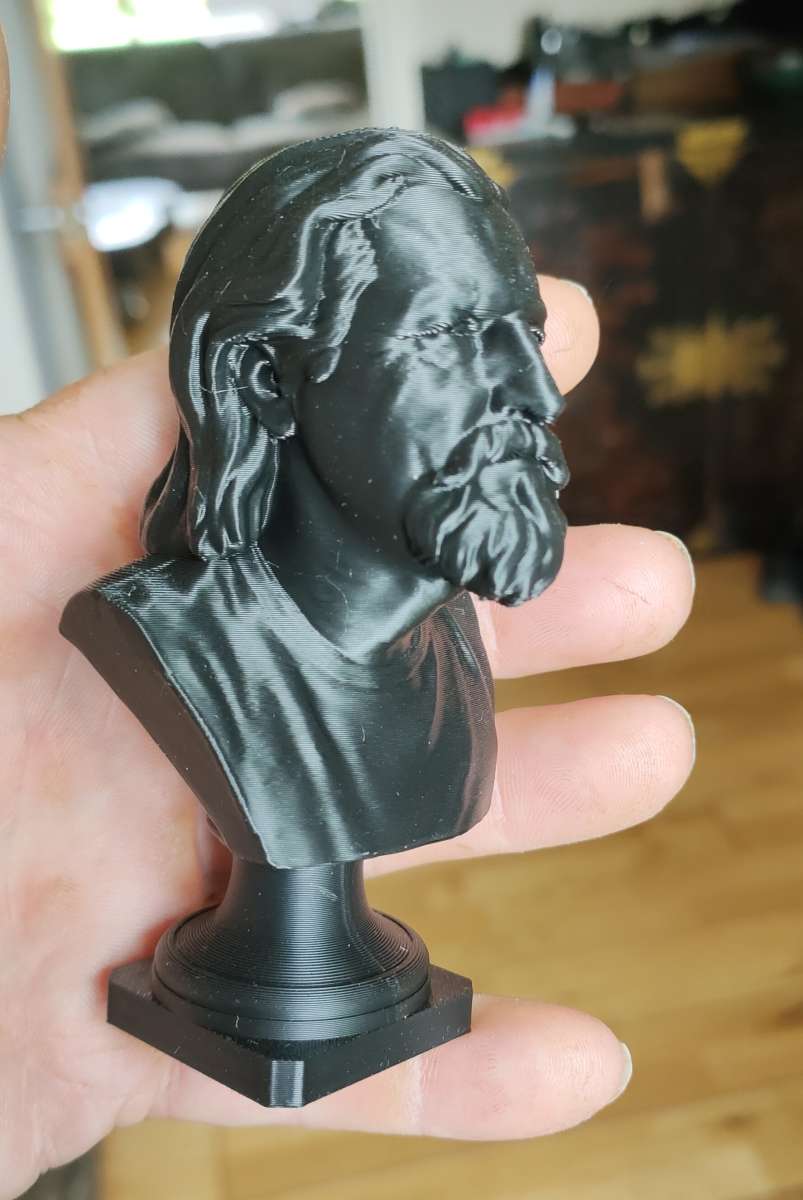
          I uploaded a really bad ‘selfi’ to Bambu Makerworld and it created a mini statue. Printed on my A1 mini. 6 month old filament left on the printer. No fiddling with parameters, no obsessive cleaning of print plate – just click click click. Absolutely amazed at the quality of the model and the quality of the print. It even got my big nose from a front-on selfie.

          I upgraded my old Ender 3 to the max including linear rail, twin leadscrew, stiffened frame, direct drive extruder, dynamic feedback control, auto bed levelling. The A1 mini does it all better – it goes through bed levelling when asked, and dynaminc compensation and flow calibration before every print. Ah, and all for £150. So I would add the printer control software to your list.

          IMG_20260614_173558

          #852087
          Mark Rand
          Participant
            @markrand96270

            What layer height was that jack?

            #852099
            Russell Eberhardt
            Participant
              @russelleberhardt48058

              I have recently upgraded from my 10 year old Prusa i3 to a Bambu P2S and am amazed at the improvement.  I used to struggle to print anything other than PLA.  ABS was next to impossible.  The Bambu printer handles PLA, PETG, ABS, ASA, etc., all with no problems and no fiddling with settings.  The Bambu slicer is far better than Cura which I was using before having a wide range of functions such as adjusting the dimensions and adding text in a different colour.

              I can now design a part in Freecad, export it as an STL file and open it in Bambu studio which after slicing etc sends it directly to the printer.

              Russell

              #852116
              jaCK Hobson
              Participant
                @jackhobson50760
                On Mark Rand Said:

                What layer height was that jack?

                .2mm – I didn’t pay any attention at the time – just trusted the defaults.

                By ‘dynaminc compensation’ I meant active damping.

                #852119
                John Haine
                Participant
                  @johnhaine32865

                  I was kind of making a 3D printer some years back but (a) couldn’t see an obvious application and (b) at the time couldn’t cope with 3D design.  I bought a Bambu A1 at the end of last year and have now got to grips (sort of) with OnShape (chosen as my son uses it so I can get some support).  I am amazed at the performance of the printer and how easy it is to go from a pencil sketch to a 3D model to the actual item.

                  #852122
                  renardiere7
                  Participant
                    @renardiere7

                    I’ve mentioned before on this forum that I’m actively involved with the charity REMAP.  When I first joined this organisation it was very apparent that many of the solutions being produced by my colleagues to aid our disabled clients involved 3D printing. This prompted me to purchase my own printer and as I was already an experienced CAD user (OnShape as with John above ) I took to it very rapidly.

                    My initial thoughts that prints would be used in a supportive role as prototypes etc. but with the use of carbon and glass fibre filled engineering plastics most of the time now I’m producing strong durable products with an attractive finish.

                    There is no doubt that the process is a game changer and is still developing rapidly.

                    #852125
                    Russell Eberhardt
                    Participant
                      @russelleberhardt48058

                      Ukraine is 3D printing interceptor drones to counter Russian Shahead drones.  The so called “Bullet Drones” are being made in Printer farms with masses of Bambu Labs printers:

                      https://www.youtube.com/watch?v=0FVsQE_oE-o

                      Russell

                      #852128
                      Gerard O’Toole
                      Participant
                        @gerardotoole60348
                        On Russell Eberhardt Said:

                        Ukraine is 3D printing interceptor drones to counter Russian Shahead drones.  The so called “Bullet Drones” are being made in Printer farms with masses of Bambu Labs printers:

                        https://www.youtube.com/watch?v=0FVsQE_oE-o

                        Russell

                        On renardiere7 Said:

                        I’ve mentioned before on this forum that I’m actively involved with the charity REMAP.  When I first joined this organisation it was very apparent that many of the solutions being produced by my colleagues to aid our disabled clients involved 3D printing. This prompted me to purchase my own printer and as I was already an experienced CAD user (OnShape as with John above ) I took to it very rapidly.

                        My initial thoughts that prints would be used in a supportive role as prototypes etc. but with the use of carbon and glass fibre filled engineering plastics most of the time now I’m producing strong durable products with an attractive finish.

                        There is no doubt that the process is a game changer and is still developing rapidly.

                        “” but with the use of carbon and glass fibre filled engineering plastics most of the time now I’m producing strong durable products with an attractive finish”

                        I produced spur gears, using just standard PLA, for my small Chinese lathe a number of years ago , as an experiment. I have since produced similar gears for my Boxford lathe and a worm and wheel for my Pittler lathe. All have been fitted a good few years now and are still working well. I have no idea of the hours of use, but PLA spurs gears are certainly adequate for any special tooth spur gears for thread cutting etc.


                        #852133
                        Neil Wyatt
                        Moderator
                          @neilwyatt

                          I’m glad I’m not alone in this.

                          Jack – a fair point, I tend not to distinguish between the control software and the slicer as I manage both through Creality print.

                          #852163
                          Bazyle
                          Participant
                            @bazyle

                            Grrrrr… don’t tell me these fancy new ones never clog their nozzle either.

                            #852173
                            Andy Stopford
                            Participant
                              @andystopford50521
                              On Bazyle Said:

                              Grrrrr… don’t tell me these fancy new ones never clog their nozzle either.

                              I hate to break it to you, but…

                              …in nearly 18 months use, my Bambu A1 Mini hasn’t had a single nozzle clog.

                              #852178
                              Peter Cook 6
                              Participant
                                @petercook6

                                Please stop now. My wallet and my six year old Ender 3 Pro are already at war!

                                #852192
                                Grindstone Cowboy
                                Participant
                                  @grindstonecowboy

                                  I’m with you Peter – according to ChatGPT, us owners of well-tuned Ender 3 Pros would not notice much increase in the quality of prints with newer printers, only the speed of them. And the ability to print more difficult materials. And heated enclosures. And quieter machines. And…. 🙂

                                  Rob

                                  #852229
                                  jaCK Hobson
                                  Participant
                                    @jackhobson50760

                                    Bed adehsion! The textured, flexible, magnetic print plate on the A1 mini is amazing.

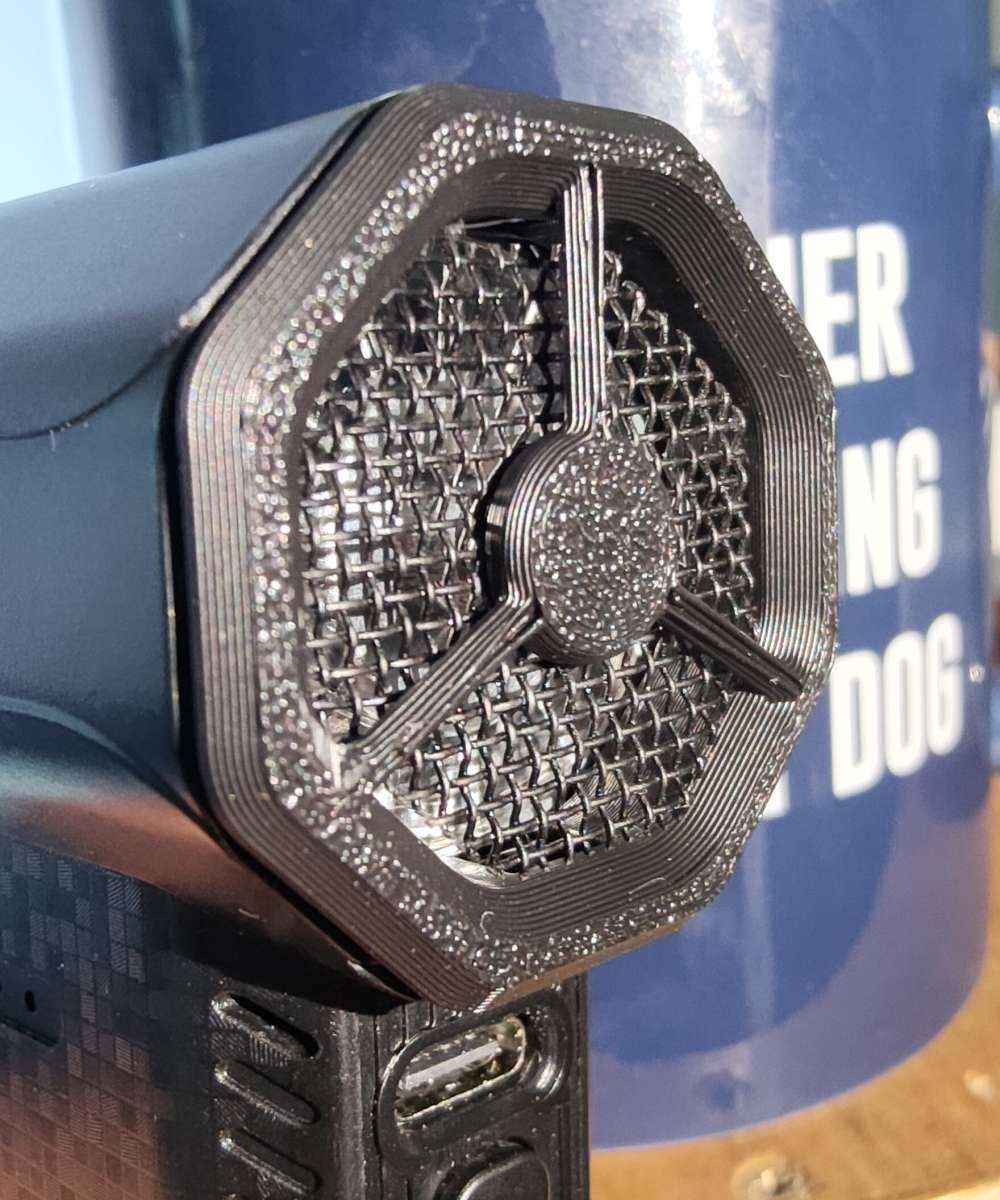
                                    Latest example, while trying to fit a mesh to the intake of my new pocket fan duster, I lost the back. Quick F360 model, send to print, no support, no brim – just direct onto plate with .2 wide first layer for spokes, and 1.5mm wide layer for outer rim – no problems!

                                    IMG_20260616_100608

                                    #852232
                                    Julie Ann
                                    Participant
                                      @julieann
                                      On Neil Wyatt Said:

                                      I’m glad I’m not alone in this.

                                      Definitely not alone!

                                      I bought my first 3D filament printer (Ultimaker2) in 2013. The printer was extensively used for work and home; making thousands of parts for prototyping, modelling, client requests and production runs for electronics equipment. I used Cura for slicing. I’ve been using Alibre for 3D CAD for over 20 years. Eighteen months ago I bought a resin printer (Prusa SL1S) primarily for making patterns for investment casting. The resin printer is a bit fiddly to use but the detail level is amazing. More recently the Ultimaker2 failed and was replaced with a Prusa Core One. I am very impressed with the quality of prints from the Core One. Basically it just works and the prints look and feel very good. I have had very few failures, almost always due to inadequate support structures. For both Prusa printers I use PrusaSlicer.

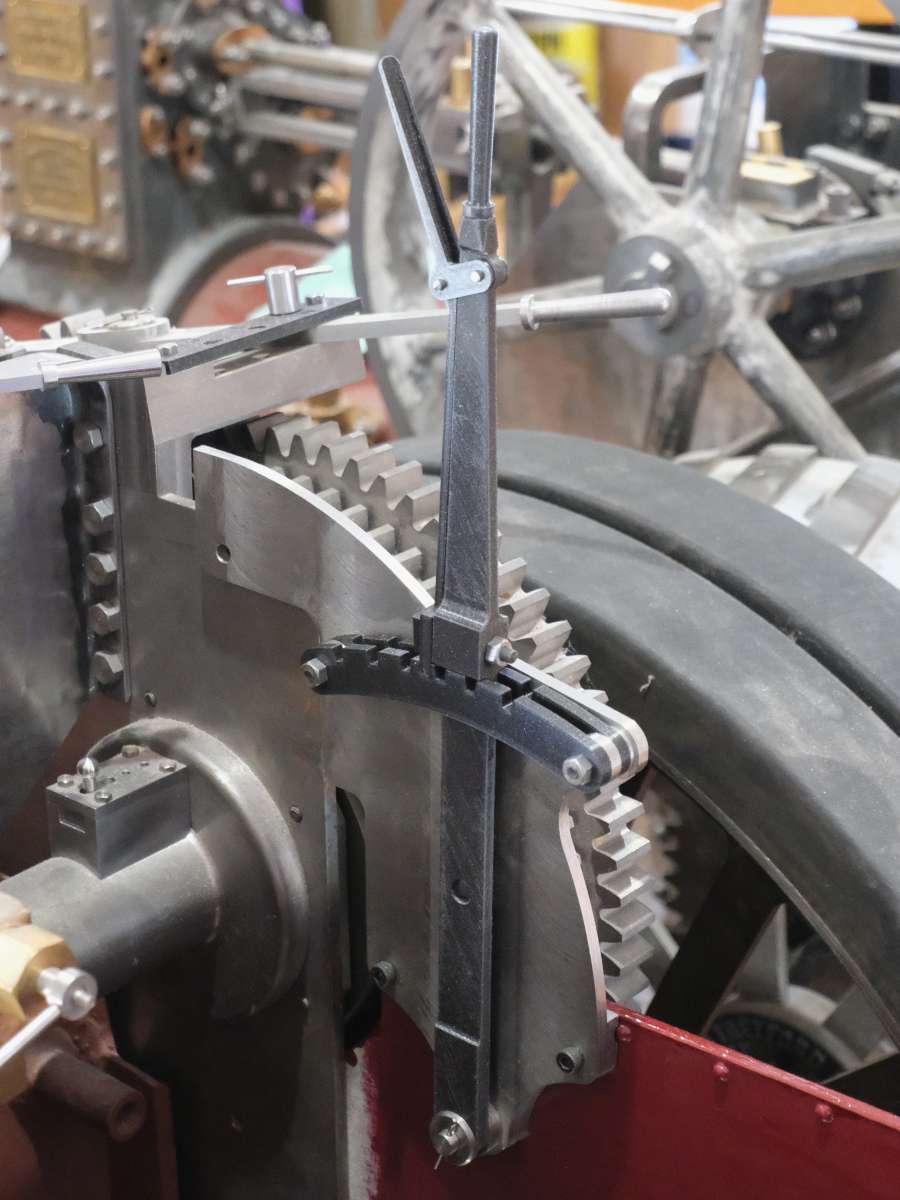
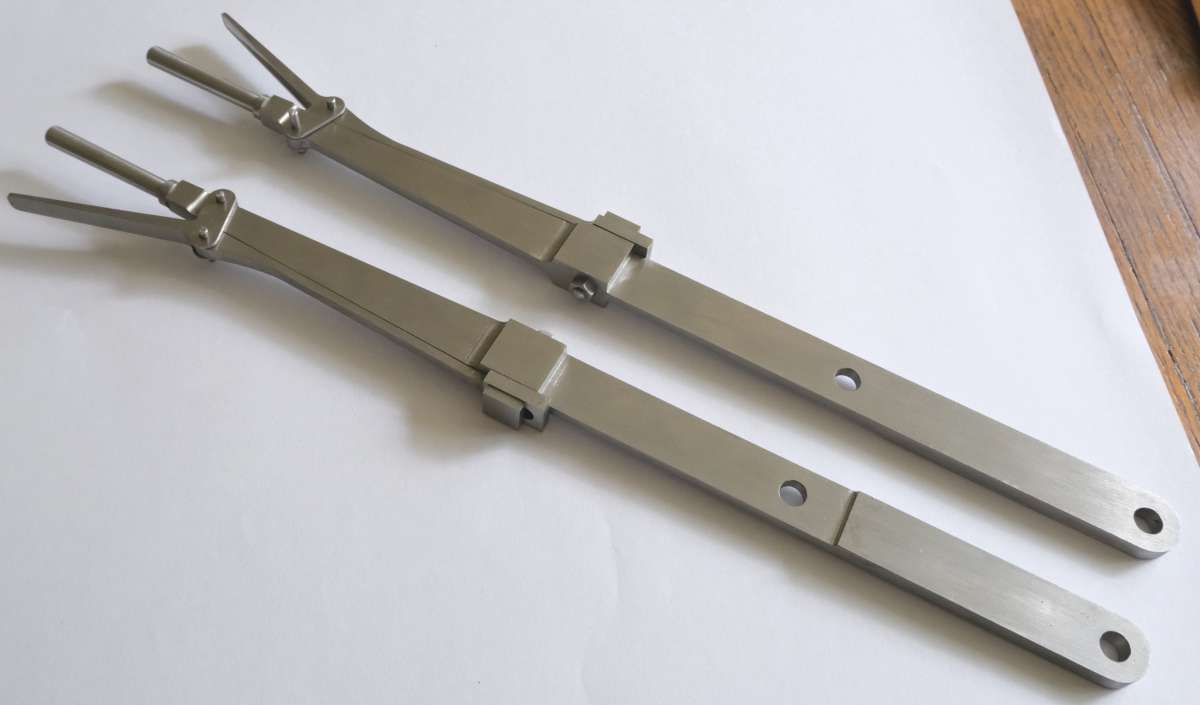
                                      The filament printer is now used for making equipment like my paint tin roller, fixtures for holding parts for painting and prototyping to check fit and feel before committing to metal. An example of the latter is the reversing lever for my traction engine:

                                      Reversing Gear

                                      And in metal:

                                      Reversing Levers

                                      The printers are just another tool in the arsenal to be used as needed. I am planning to buy the new multi-filament adaptor for the Prusa Core One once the initial pre-ordered batch has been supplied.

                                      Julie

                                      #852236
                                      JasonB
                                      Moderator
                                        @jasonb

                                        I am tempted but still need convincing.

                                        One of the possible uses I would have is to make patterns for casting. However is still see layer lines that I don’t get if I use the CNC to make the patterns. Looking at Jack’s bust although near vertical surfaces like his chest seem very good when I look at the lower part of the base or his shoulders I see a lot of layer lines which would require extra work to remove. I’ve seen plenty of castings that replicate these layer lines and they look pants to me.

                                        Jigs etc may be another use but then again the CNC can make nesting jaws, for example last week I had 68 wooden balls of 45mm diameter to machine some features on. The CNC cut a dish shape in a piece of MDF in 1min 15 seconds, how long would it take to print an 18 x 35 x 80 nesting jaw on a printer? More than 75seconds I think and I  made two.

                                        I could print out my engine designs before making them but I’ve not done that so far so don’t really see the need now, I’ll just trust my CAD.

                                        So for the moment I think my pocket money will be spent on metal and cutters.

                                        #852240
                                        jaCK Hobson
                                        Participant
                                          @jackhobson50760
                                          On JasonB Said:

                                          Looking at Jack’s bust

                                          The layer lines in the pillar are dissapointing. Maybe tweaking slicer could help. The prints look better in real life than in photos… maybe if I don’t have my glasses on.

                                          3D Printing is still very slow for large objects but you can now just ‘leave it alone’ and it is usually successful. The 1 minute Benchy benchmark has sort of been met – but you wouldn’t like the quality. The first printer to do it seems to have massive vibrations – the active damping must be flipping amazing on that and the whole approach seems practical for mass market so speeds may increase. (Another achiever of 1min Benchy uses massive granite slab, air bearings, and all sorts of other special tricks which seem less practical but it does show the rate of development and how significant developments in the technology can still be made by individuals).

                                          A1 Mini has limited print area but is not speed limited so for small jobs it is fantastic and so cheap.

                                          #852244
                                          Julie Ann
                                          Participant
                                            @julieann
                                            On JasonB Said:

                                            …..I’ve seen plenty of castings that replicate these layer lines and they look pants to me.

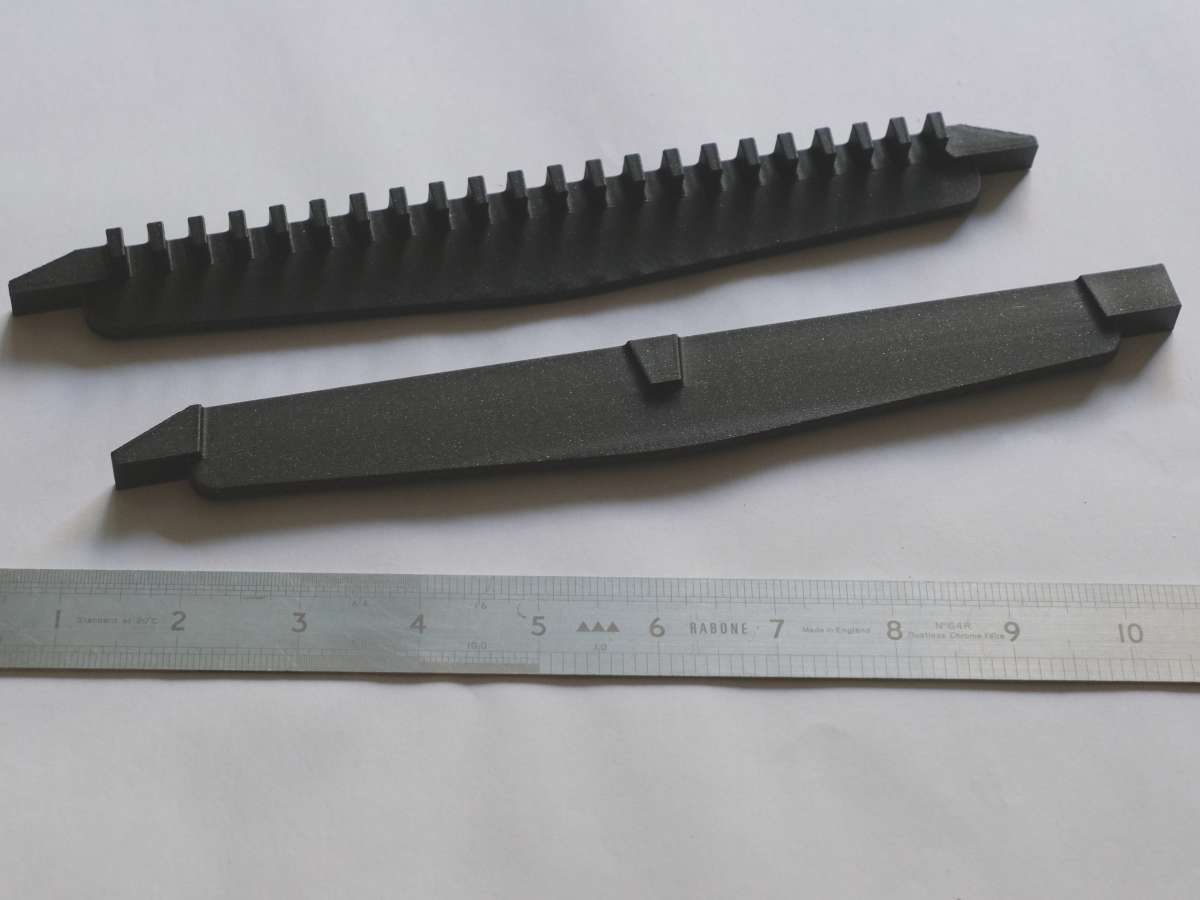
                                            It will be interesting to see how iron castings from my 3D printed patterns for traction engine firebars turn out:

                                            3D Printed Firebars

                                            Doing a quick finger nail test comparing to a Rubert scale indicates that the side walls are around 2 microns Ra. I doubt an iron casting would be able to replicate that level of detail.

                                            The top surfaces of the chamfered ends are a bit rough, but I won’t be including those on the final patterns. I want the top surface to be flat so the firebars can be open cast. The tapered ends can be machined afterwards.

                                            I considered CNC machining the patterns but it would be time consuming with multiple setups as all features have draft and fillets.

                                            Julie

                                            #852247
                                            Neil Wyatt
                                            Moderator
                                              @neilwyatt

                                              Nozzle clogs usually mean too many short retractions chew the filament so it doesn’t feed and then the section stuck in the nozzle bakes.

                                              Modern slicers usually use defaults that minimise this risk. Keep your software bang up to date!

                                              If you keep aware of the stresses involved PLA+ can produce reliable working parts.

                                              Neil

                                              #852248
                                              Neil Wyatt
                                              Moderator
                                                @neilwyatt
                                                On JasonB Said:


                                                One of the possible uses I would have is to make patterns for casting. However is still see layer lines that I don’t get if I use the CNC to make the patterns. Looking at Jack’s bust although near vertical surfaces like his chest seem very good when I look at the lower part of the base or his shoulders I see a lot of layer lines which would require extra work to remove. I’ve seen plenty of castings that replicate these layer lines and they look pants to me.


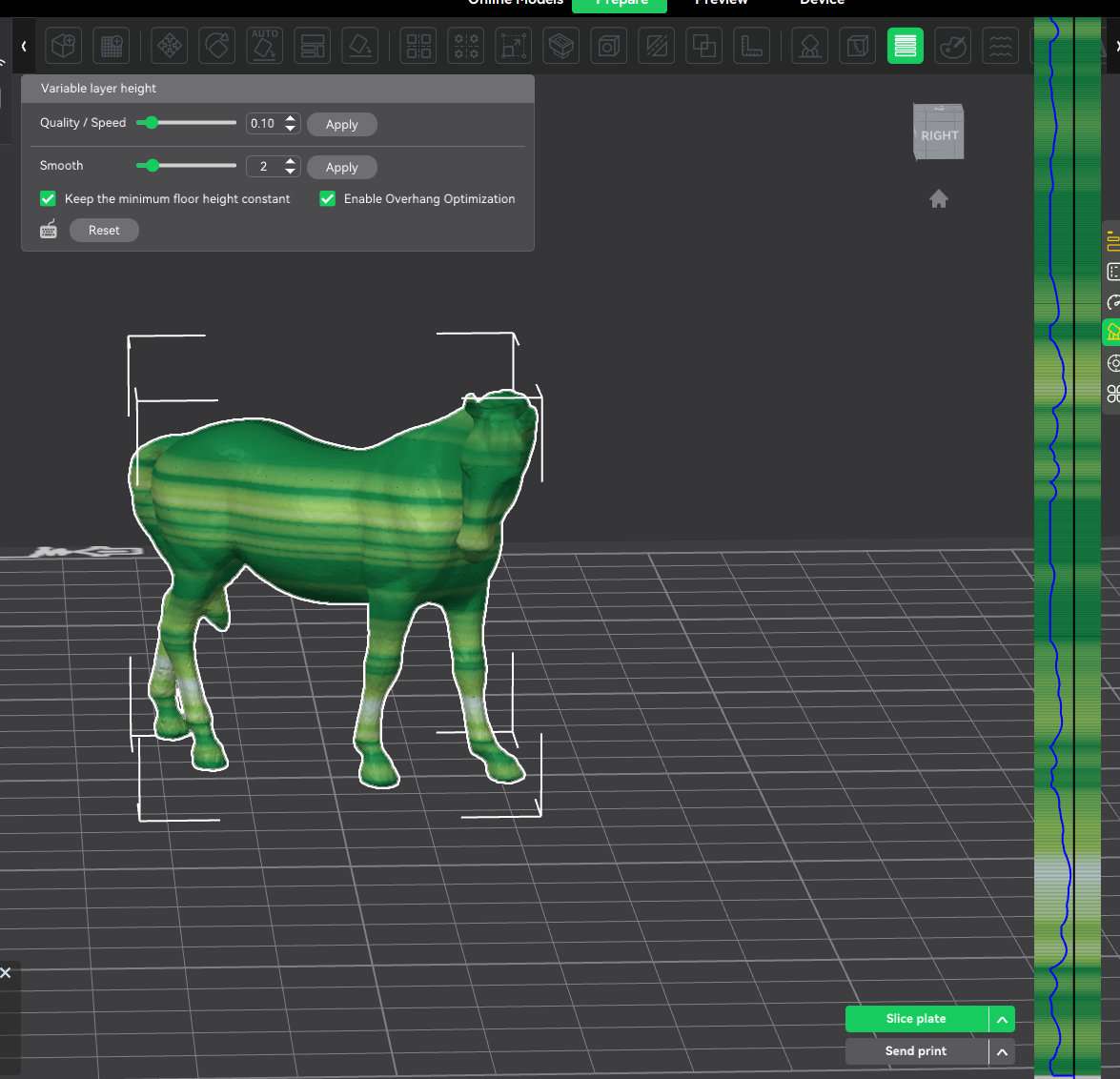
                                                There’s a setting in Creality Print/Cura that uses adaptive layer heights to massively reduce the impact of layer lines without the time overhead of using very low layer heights.

                                                Here’s an example of using it with my scanned horse:

                                                temp

                                                #852254
                                                Charles Lamont
                                                Participant
                                                  @charleslamont71117
                                                  On JasonB Said:

                                                  I’ve seen plenty of castings that replicate these layer lines and they look pants to me.

                                                  Providing a good key for the filler?

                                                  #852257
                                                  JasonB
                                                  Moderator
                                                    @jasonb

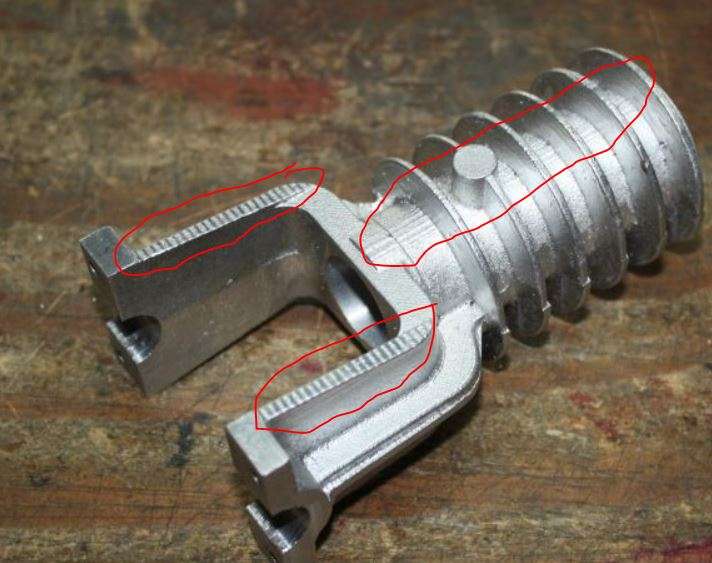
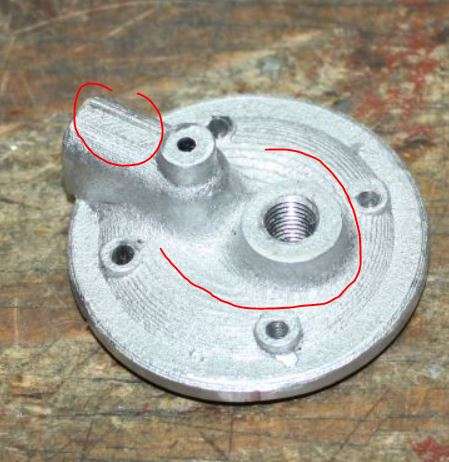
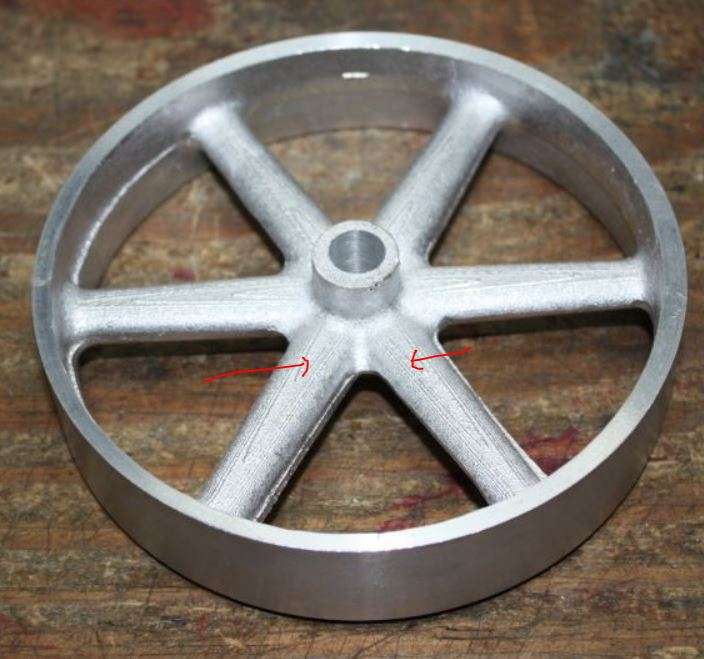
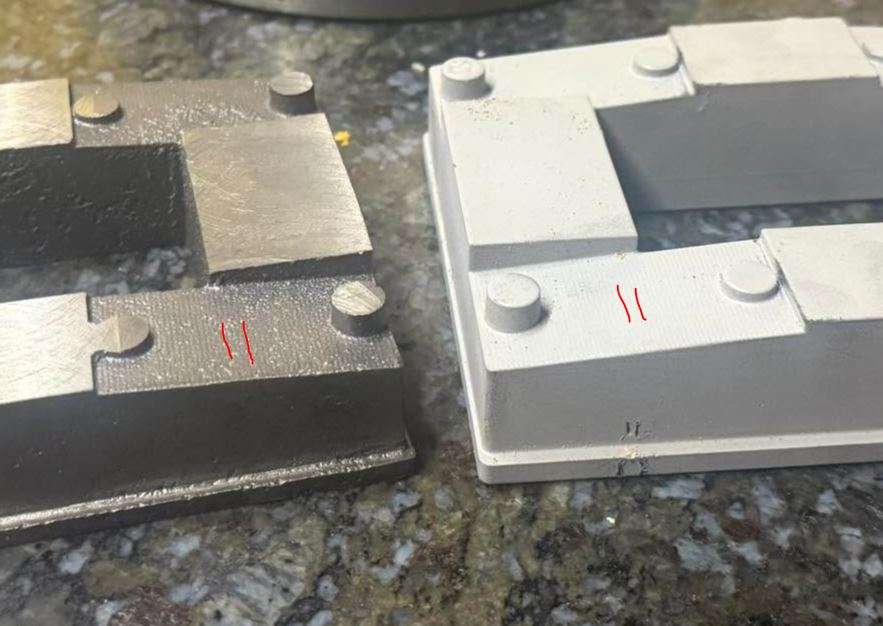
                                                    Julie, your fire bars are relatively flat or vertical, I assume they were printed top side against the bed so draft will only be a few degrees off vertical. The shadow prevents a good view of the shallower slope of the underside. Were I see the problem the most is on the crests of rounded parts,or where the top surfaces are just a little off horizontal. these for example. Draft being near vertical does not give the problem unless you are printing the part on it’s side. All done on new printers, would have to check the aluminium castings but the last iron one was a Bambu p1Sand I did say to use their variable layer height, not sure if they did. Light grey pattern on right had had a few coats of highbuild primer yet layesr still on the casting left. All airset type sand not even petrobond.

                                                    layers 1

                                                    layers 2

                                                    layers 3

                                                    layers 4

                                                    It is no different to finishing similar surfaces with a CNC, a contour cut which steps (layers) vertically will give a poor finish on near flat surfaces. A parallel if used in the wrong direction will leave poor near vertical surfaces as it steps ( layers) sideways. Same if you have ever machined a curve using co-ordinates at the extreams, one direction hardly moves the other is far greater.

                                                    The CNC can do what the 3D printers dont and that is step (layer) across the surface so where you might get 0.1mm steps from a printer a scallop or similar path on a CNC will give consistant cusp spacing and the heights may only be 0.0015mm with a 4mm cutter and 0.2mm stepover which was used on that Orbital flywheel.

                                                    #852322
                                                    Neil Wyatt
                                                    Moderator
                                                      @neilwyatt

                                                      There are a few new things coming:

                                                      1 Slicers that gradually lift the head on top layers so gradual slopes can have no layer lines at all.

                                                      2 Four-axis printers where the head or bed can tilt removing the need for support and reducing layer lines.

                                                      3 New approaches to building out overhangs that create better undersurfaces with no support.

                                                      I haven’t seen/tried any of these first hand yet.

                                                    Viewing 25 posts - 1 through 25 (of 28 total)
                                                    • Please log in to reply to this topic. Registering is free and easy using the links on the menu at the top of this page.

                                                    Latest Replies

                                                    Viewing 25 topics - 1 through 25 (of 25 total)
                                                    Viewing 25 topics - 1 through 25 (of 25 total)

                                                    View full reply list.