Posted by Martin Kyte on 16/03/2020 10:32:59:
Posted by Neil Wyatt on 15/03/2020 17:30:54:
Posted by Kiwi Bloke on 15/03/2020 09:33:59:
Just a point of emidemiological pedantry…
Intuitively, one might predict that the disease would spread through the population such that the number infected rose exponentially with time. But it should not, because, as the number of infected increases, there is an increasing probability that an infectious person 'tries' to infect someone who is already exposed. I don't know how significant this reduction may be, but any prediction based on exponentials should be challenged – it only 'works' if every contact is susceptible.
A little crumb of comfort?
Edited By Kiwi Bloke on 15/03/2020 09:34:49
Ecologists and epidemiologists have known this for a long, long time. It's only economists who talk about 'sustainable growth' as if there's no upper limit (or 'carrying capacity' as we ecologists call it).
It's part of the theory behind herd immunity.
Neil
As far as my maths go, it's still exponential. If the exponant is greater than one there is an increase, less than one a decrease. The exponant changes with the virus' ability to infect and the availability of new targets. As the targets reduce the exponant reduces to a value less than 1 and the new infections plateau and then decline. Reducing contact also reduces the exponant and flattens the curve.
Yes, but the curve is both exponential up and down as it passes the peak, ie a Bell Curve.

A sharp peak risks overwhelming the Health Service; not enough beds, oxygen, doctors, nurses etc, because too many sick people all arrive at the same time.
Triage normally works in favour of older people. Being more at risk of complications they often jump the queue at A&E whilst fit young men have to wait in agony.
However, whenever a health system overloads it has to prioritise. This usually done on the basis of survivability. Given the choice of treating a 95 year old flu victim with smoking related emphysema or his healthy twin brother, the fit twin gets the bed. Doing otherwise is likely to kill both patients.
The objective of the government's strategy is to avoid difficult triage choices by flattening the curve so that the health system doesn't overload. If two beds are available, both twins will be treated, no problem.
As epidemics are about the herd rather than individuals it's important that everyone cooperates. When 70+ or anyone else is asked to self-isolate, they should. It's to make sure no-one ends up competing unsuccessfully for treatment. This isn't the time for selfish or stubborn behaviour because – in this case – self-interest is more dangerous than cooperating.
Dave


 pgk pgk.
 Bazyle
 Steviegtr
 Hopper
 Ed Duffner
 Danny M2Z
 J Hancock
 Colin Whittaker
 RMA
RMA JA
JA Anthony Knights
 Former Member
 Martin Kyte
 Ady1
Ady1
 Howard Lewis
 SillyOldDuffer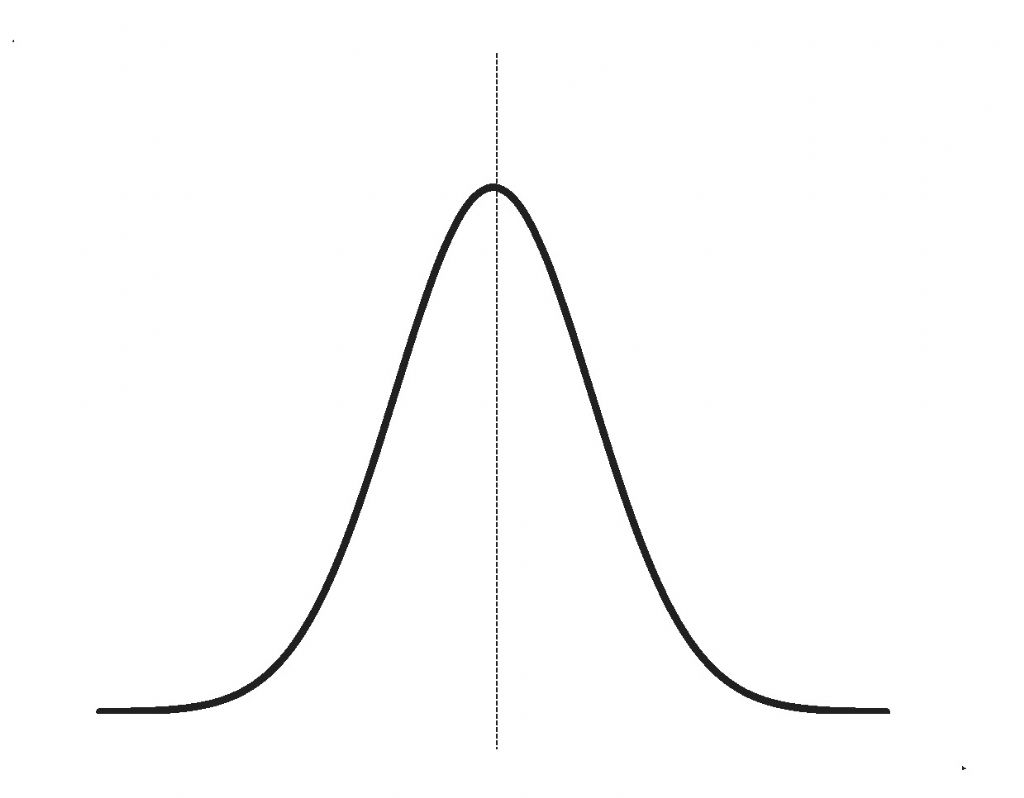
 Frances IoM
 Limpet
 Michael Gilligan
 Dave Wootton
 Wink Hackman
 Mike Crossfield
 Graeme Seed
 JasonB
 Paul McDonough
 Bazyle
 John Purdy
 Steve Huckins
 Chris Gunn
 ega
ega Nigel Graham 2
 JohnF
JohnF Bill Phinn
 carlw
carlw sean logie
 BOB BLACKSHAW 1
 Ches Green UK
 JC54
JC54 odubhain82
 Baldric
 Tony Watson 3
 duncan webster 1
 Grindstone Cowboy
 Peter Simpson 3
 Mick B1
 Phil Whitley
 petro1head
 Martin Johnson 1
 Joseph Noci 1
 bernard towers