Help identifying home made(?) lathe

Help identifying home made(?) lathe

Home Forums Manual machine tools Help identifying home made(?) lathe

Viewing 9 posts - 1 through 9 (of 9 total)
  • Author
    Posts
  • #837198
    Mike Hindley
    Participant
      @mikehindley70024

      Hi everyone. This is my first post here.

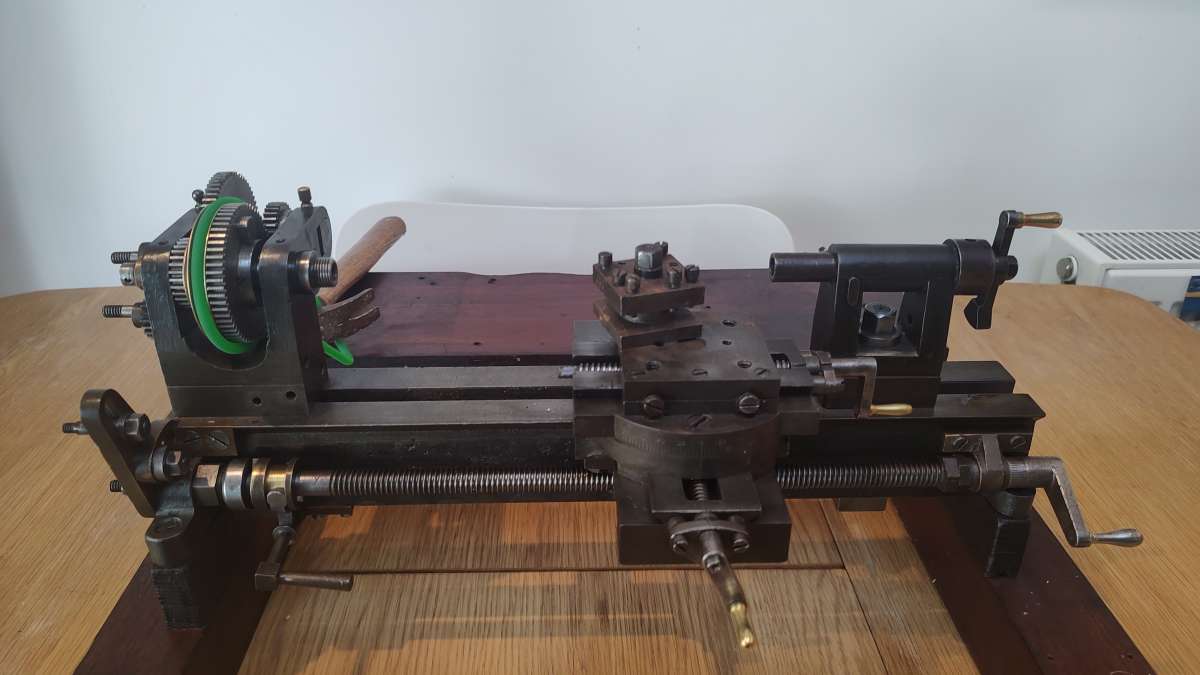
      I acquired this small lathe from a friend. By all accounts it belonged to someone who worked in engineering at UMIST (now part of Manchester University). When I got it, it was covered in brass swarf and hardened oil, and I have done my best to clean it up. It was supplied with a large AC motor driving the spindle via a belt – no countershaft. The relatively high speed of this setup and brass swarf led me to believe the maker mainly worked on small parts for (e.g.) clocks. I have bought a small 150W variable speed DC motor to power it in the meantime.

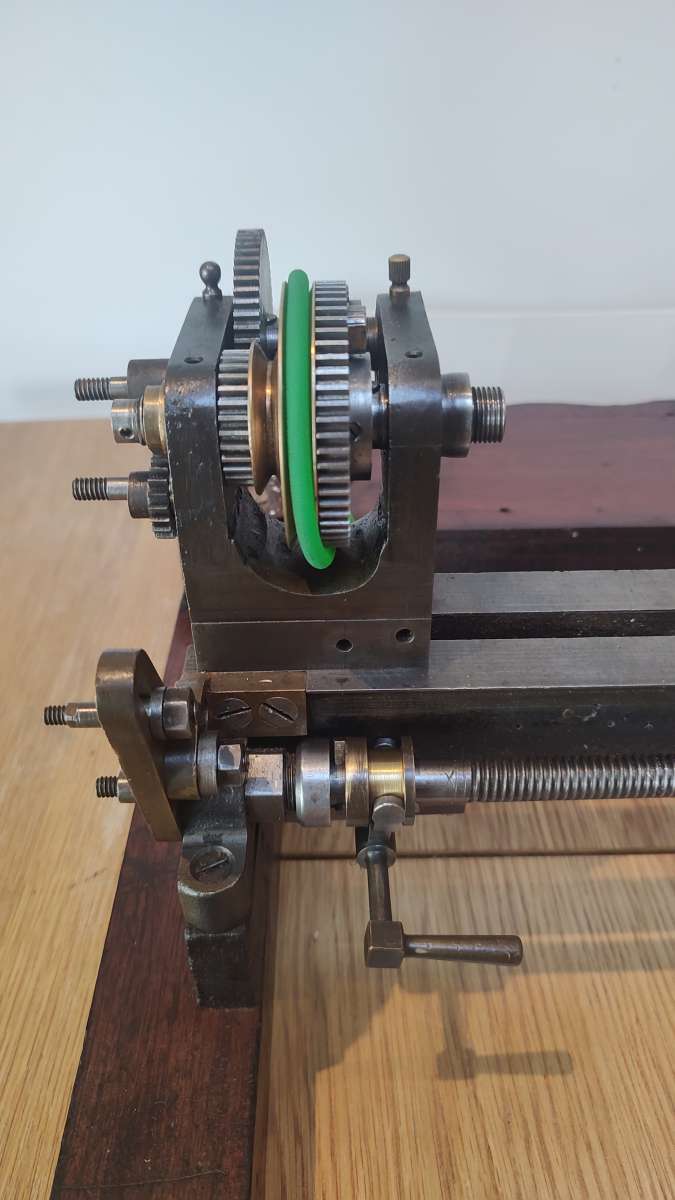
      Although some aspects of the lathe are well finished, it looks home made to me – at least in parts. The main bed is a single casting, and the head and tailstocks are also cast. They each sit on a riser block which is tenoned into the main bed. The spindle runs in cone-shaped plain bearings – the rear one has a brass bushing, but the front runs directly in the headstock. The backgear is a very simple but, in my view, clever design, whereby the backgear spindle simply slides forwards and backwards to engage and is held in place with two pins in either position. The nose is threaded 9/16x20tpi – which is the exact same threading as bicycle pedals. Perhaps the maker just had that tap on hand?

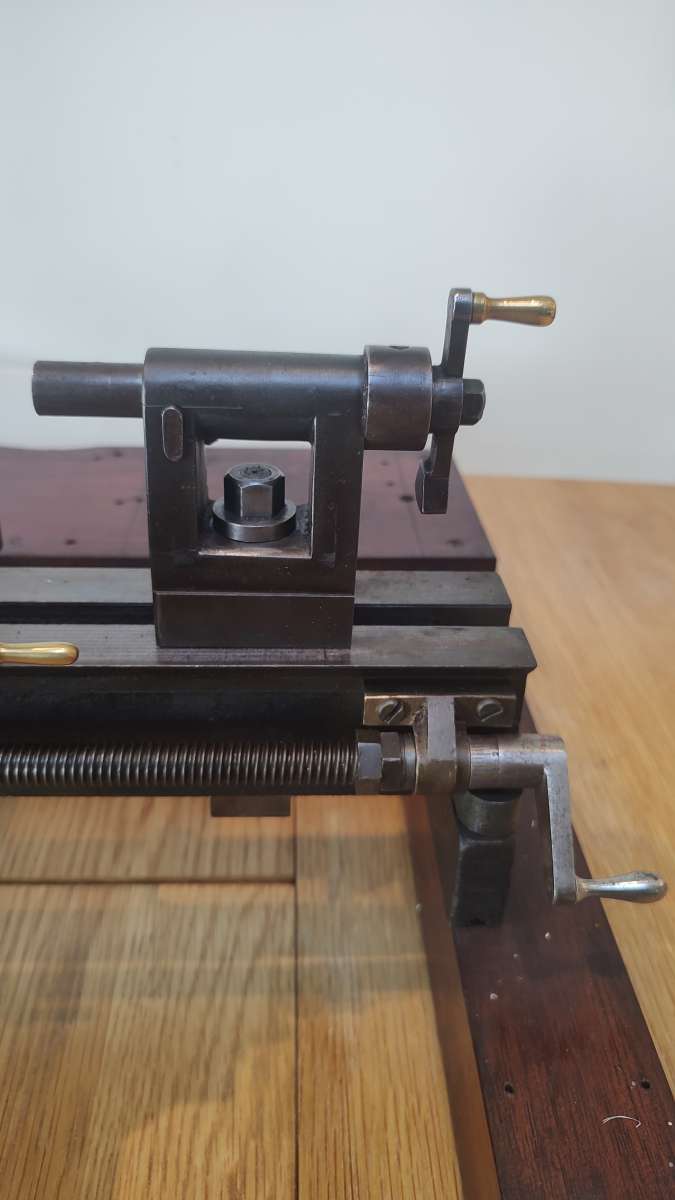
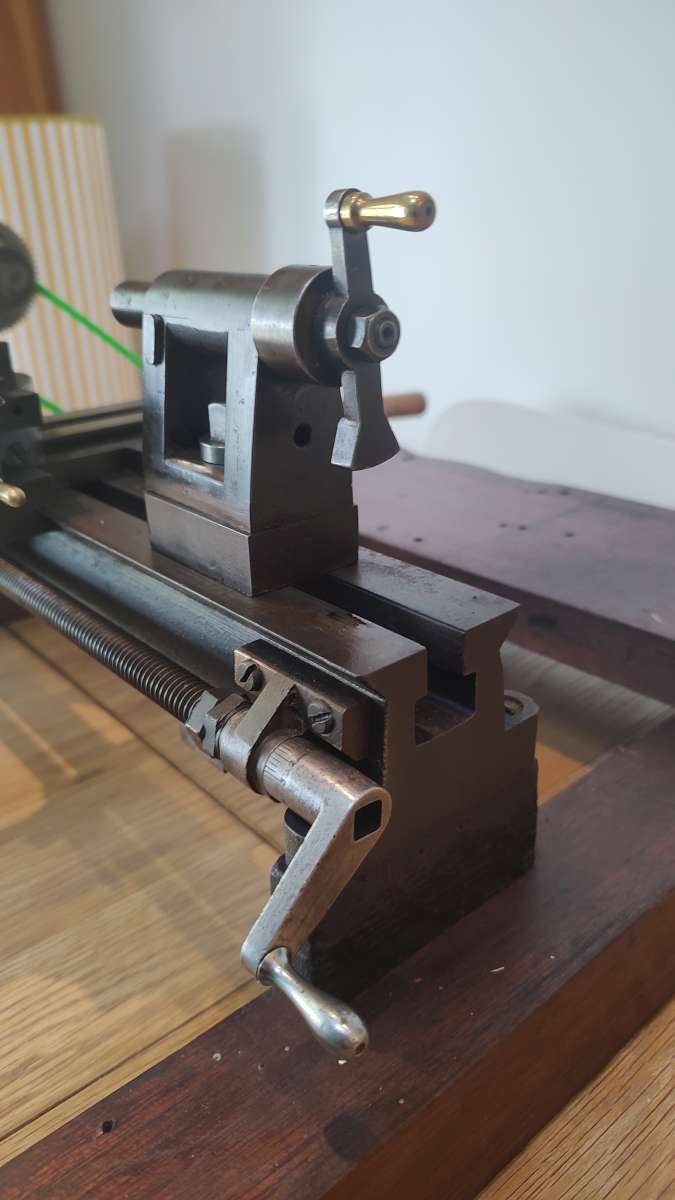
      The tailstock puzzles me. I cannot see that it has any scope for adjustment or setting over. The tailstock appears firmly bolted to the riser block with no play, and each of the four screws has been witness marked to its hole, presumably to assure an accurate fit when disassembling/reassembling. On the tenon itself are two screws that could function as a very crude tightening mechanism. The pictures show the holes where these screws sit. Adjustment is somewhat important as the tailstock and headstock are not well aligned currently.

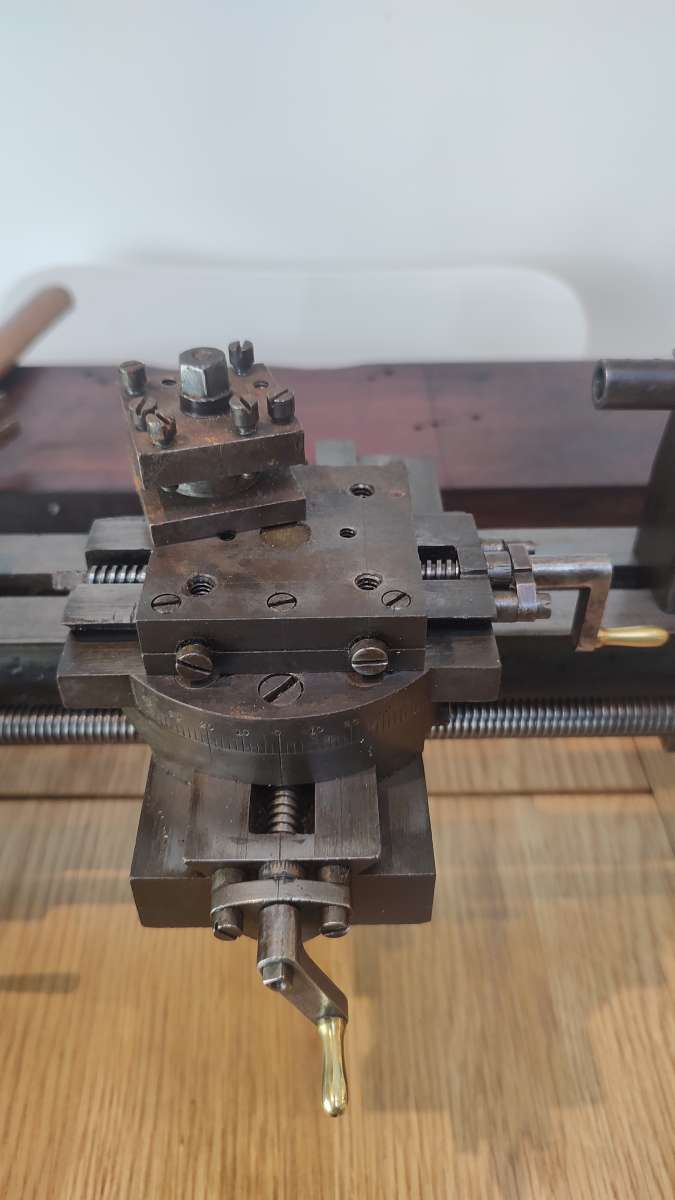
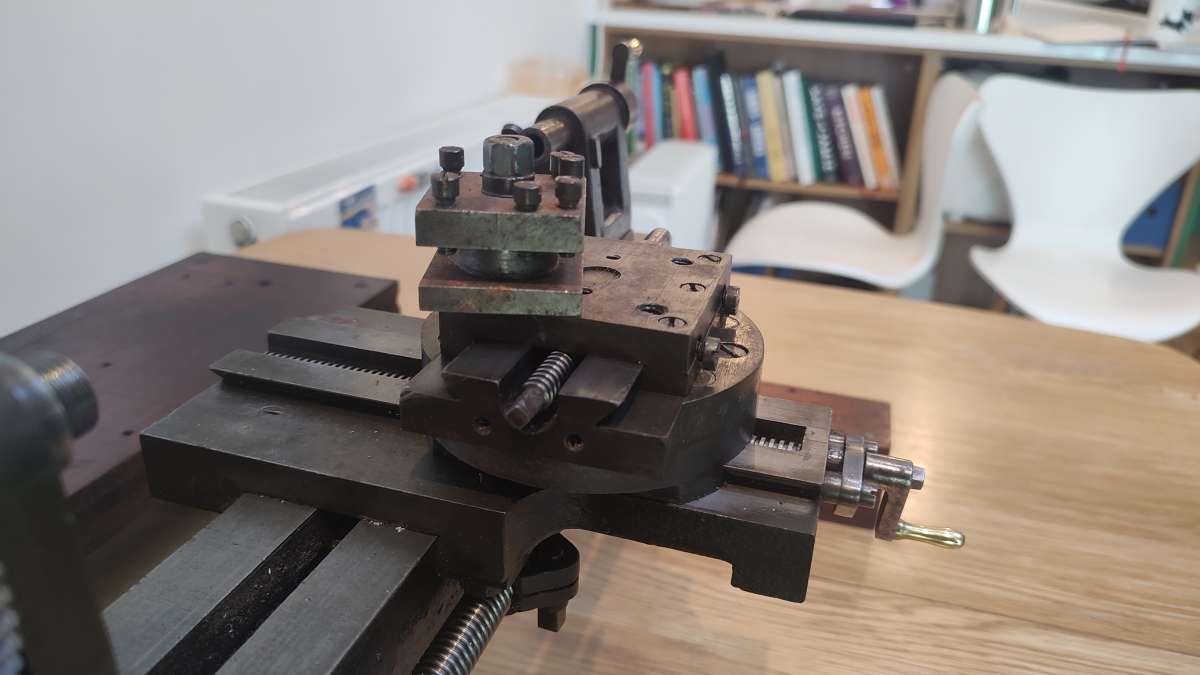
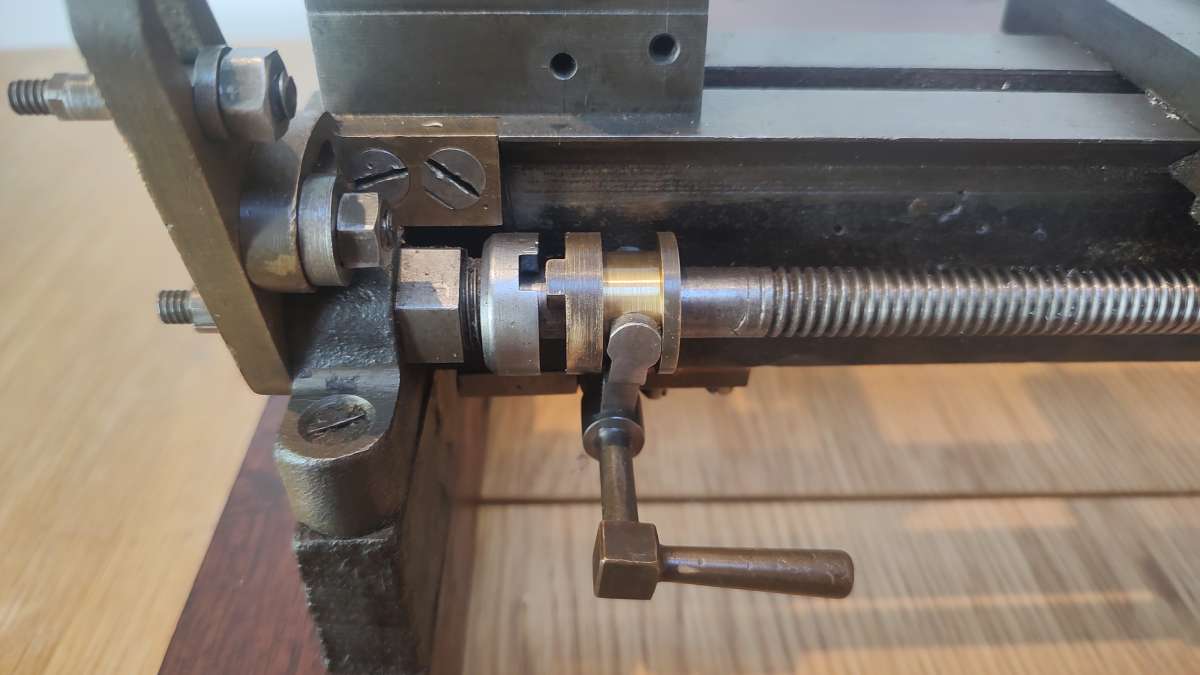
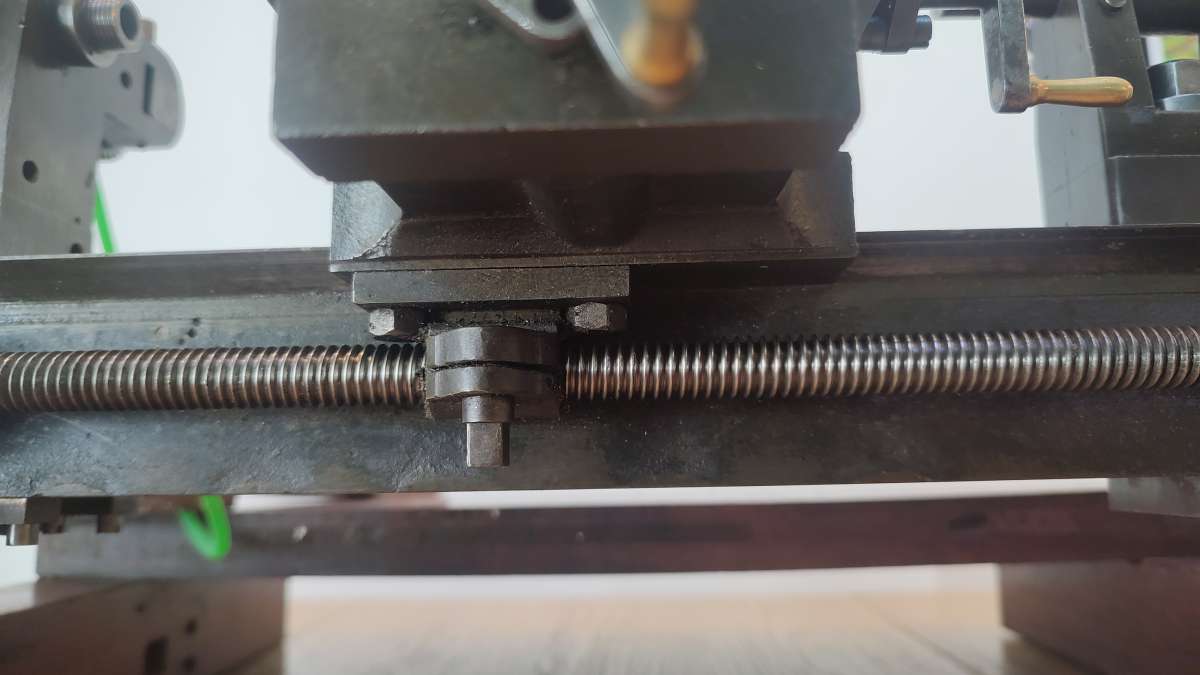
      The leadscrew is 10tpi and appears to be a regular triangular thread, whereas the cross and top slides (also 10tpi) have an acme form. I cannot work out why this would be. The dials on each slide are so small as to be of little use. The markings only go to a resolution of 2.5 thou.

      All three of the moving slides (saddle, cross and top slides) have dovetailed slides but no gibs as I traditionally understand them. Instead, one dovetail is removable and bolted in place. A threaded hole has then been made along the join which interfaces half in the slide, half in the dovetail. And screws are placed in this hole. The pictures show this better than I can explain it. I cannot understand why this setup was chosen, nor how one is supposed to adjust the fit of the slides. The screws cannot adjust the dovetail’s position laterally since a) one half of the threaded hole won’t move as the screws are advanced/retracted and b) the removable dovetails are bolted in place with essentially zero play. Perhaps the grub screws again function as a crude tightening mechanism, but I wonder why the maker chose such an approach, making well toleranced removable dovetails, when a gib is probably easier to do and provides better long-term adjustment capabilities.

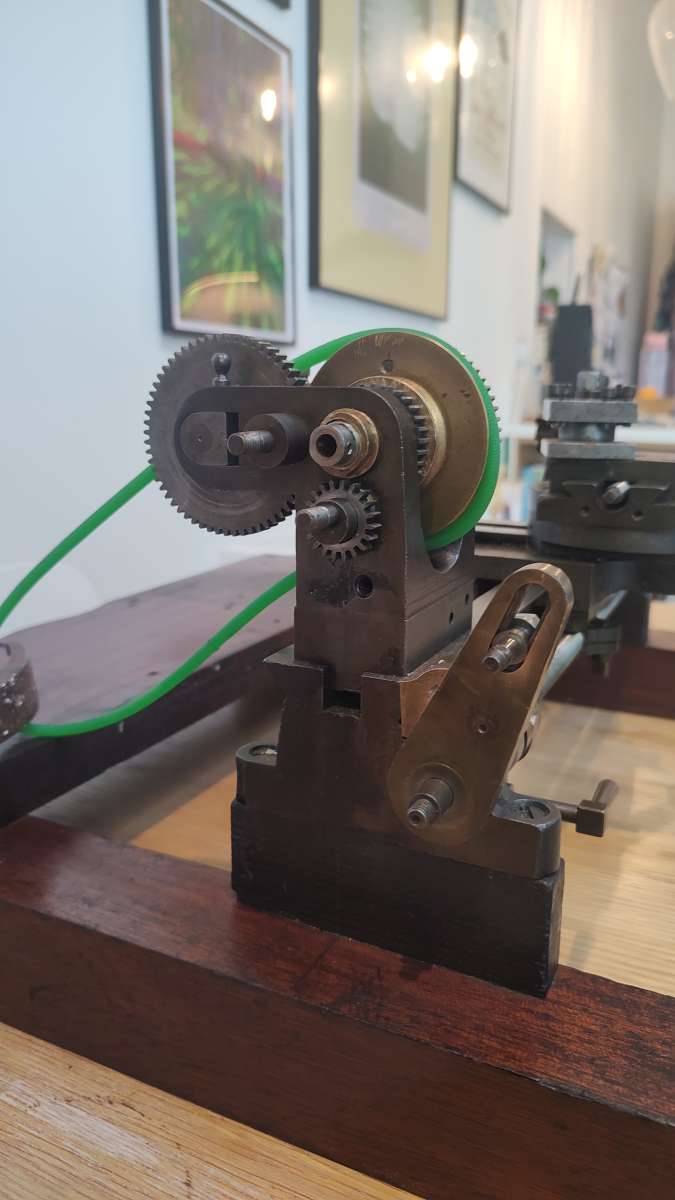
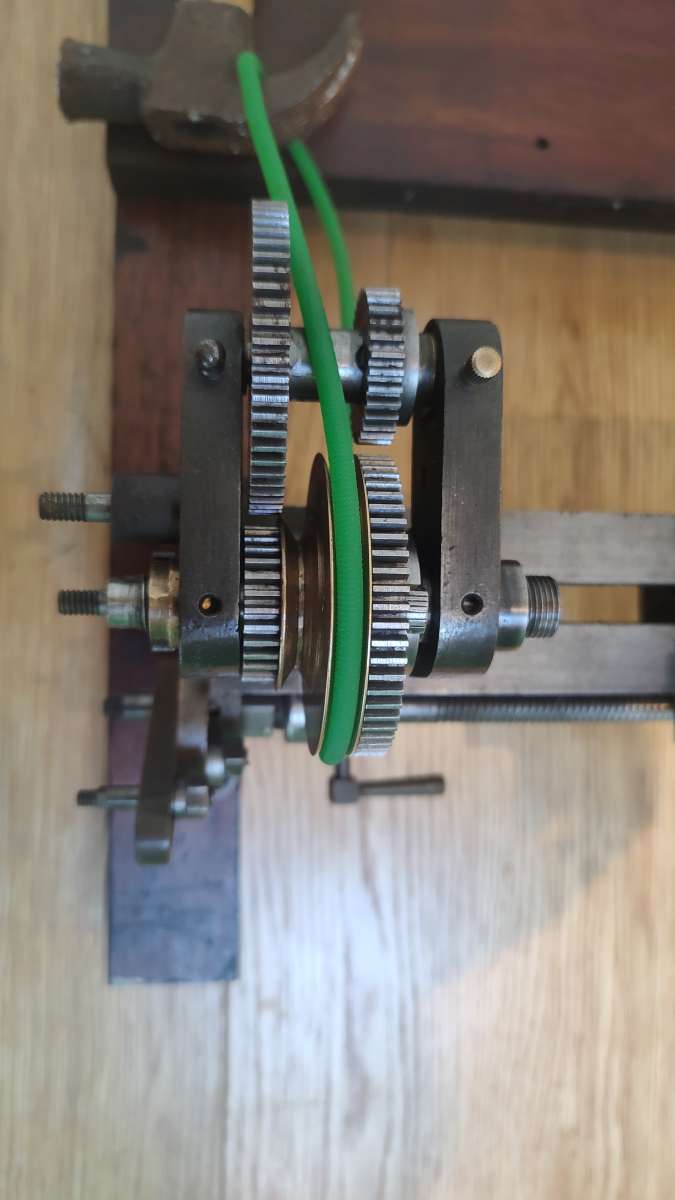
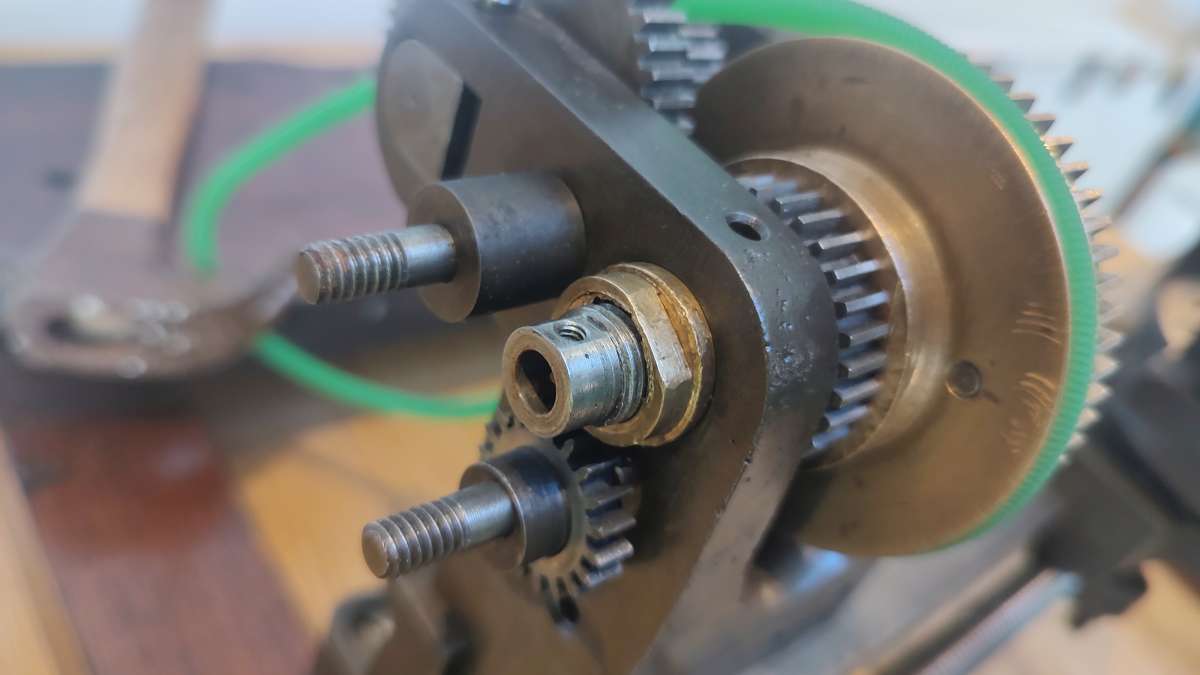
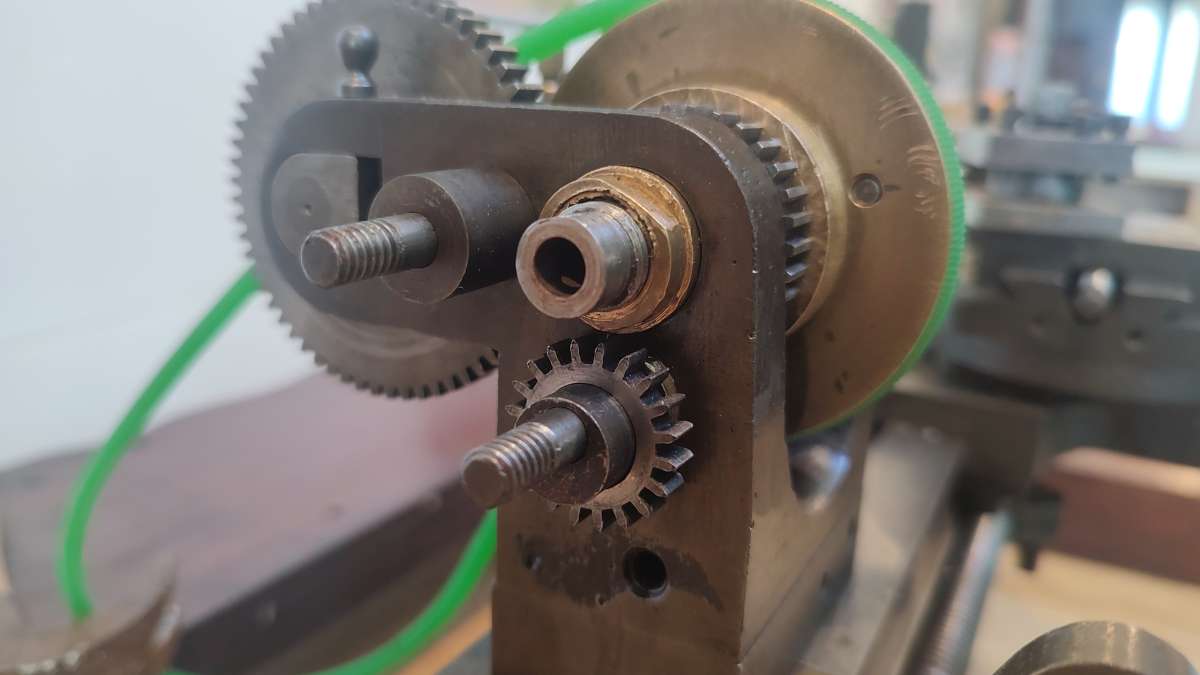
      The screwcutting arrangement throws up more questions. There is very little room there, and I suspect the maker intended only for a few specific pitches to be cut. It’s not clear how the maker intended you to key a gear onto it. Perhaps there was an insert that has gone missing over the years. On the other hand, the lead screw has a space for a key to be fixed in. It also has a very nicely made dog clutch. There are studs below the spindle that are fixed into the headstock, and also a couple of bushings (pictured), one with an eccentric hole. Perhaps this could have functioned as a simple means of engaging/disengaging a gear train. The only gear I found was a 20t dp24 wheel with a 1/2″ bore. This fits the bushings but not much else. All studs are 1/4″, the bushings are 1/2″ OD, but the keyed part of the leadscrew shaft is 3/8″(?)

      The lathe came with some accessories, although some have clearly gone missing. Two 4-jaw independent chucks, a drill chuck, a modest selection of tooling such as horizontal milling cutters and slitting saws…

      At risk of waffling on, I will submit my most obvious questions:

      1. Does anyone recognise the design, pattern, or maker in any way? I submitted it to Tony at lathes.co.uk and he suggested it might be from 1880-1900, perhaps an early Holmes, but I don’t see a great resemblance.
      2. Does anyone have any idea how the dovetail adjustment mechanism is supposed to work?
      3. Does anyone have any sense of whether the tailstock can be adjusted/offset, given the pictures below?
      4. Does anyone know of any reason why the main leadscrew would have been cut using a different thread form from the smaller leadscrews?

      5. Does anyone have any idea why the maker put so many fixed studs on the headstock rear, and why the bushings and shaft diameters are all over the place for the screwcutting drivetrain?

      IMG_20251108_113851736IMG_20251108_113858332IMG_20251108_113912056IMG_20251108_113919898IMG_20251108_113926137IMG_20251108_113933026IMG_20251108_113939326IMG_20251108_113946851IMG_20251108_114004523IMG_20251108_114028071IMG_20251108_114035196IMG_20251108_114047942

      #837212
      cedric 1
      Participant
        @cedric

        What a little beauty! Certainly worth tidying up and using. Yes it has that look of turn of the century before things had become more standardised modern looking.

        The moveable dovetail like that was used on the Drummond M Type lathe in the early 20th Century, on the carriage, but had more conventional pusher screws and locking screws. Yours must have something more to it that perhaps only dismantling will reveal. The screw holes on the join line seems very odd. Is the thread intact in both pieces?

        #837235
        Bazyle
        Participant
          @bazyle

          Possibly the gib screws push the extra piece downwards pushing the slide up against the fixed part – odd but would tighten its reference position.

          The bed has a bit of similarity with the George Adams 2 1/2 |” of the same era.

          #837236
          Nigel Graham 2
          Participant
            @nigelgraham2

            It is a lovely old thing, deserving a new lease of life!

            There are some neat functional aspects to it, as well. I like the back-gear arrangement, lead-screw clutch and dial, and additional mounting-holes in that vast expanse of flat top-slide. (The scriber marks are still visible!)

            I am impressed too by the apparent ability to set the top-slide through much more than the 45º the scale implies. This would provide cutting very shallow cones such as Vee-pulley groove flanks or pendulum-bob faces. A supplementary fiduciary mark would allow reading the scale at beyond that angle: is there one below the left-hand 20º point?


            The screws on the joint-plane…

            I wonder if the adjusting-screws on the top-slide work like the clamping-screws in modern ‘Taper-lok’ bushes? If so:

            – the half-hole in the main (upper) casting will carry its half of the female thread, likely tapped through into fresh air;

            – the half-hole in the gib block (with the dovetail) will be of close clearance radius, not tapped, and drilled blind.

            So when screwing the adjusters inwards, their threads will operate in the upper section, but their tips will push on the ends of the blind half-holes in the dovetail block.


            The swarf in the ointment of course, is that the three counter-sunk or (more likely) counter-bored screws don’t seem to have enough room for lateral movement, although they should not need much. So….

            Do they pass clear through short slots in the dovetail, to engage nuts, nut-strip or similar sunk into the block’s underside? Or is there in fact just enough clearance in the counter-bores?


            (I think this from having had to learn how to fit ‘Taper-loks’ properly. It took me some thinking to twig their principle!)

            ….

            There does not seem any formal set-over for the tailstock but it appears a two-piece body and the large central nut might be hiding a slot.

            …..

            The primary pinion for the change-wheels was likely driven by a grub-screw or set-screw bearing on the flat on the end of the spindle, as on the EW lathe, but I would not expect that tapped hole there.

            The builder might well have expected to cut only a limited range of pitches, perhaps Brass (26tpi) mainly, and the smaller BSW ones; though it’s surprising what range is possible even with only a two-stage train of wheels with a single tooth-count increment of 5. (As on my EW lathe.)

            ….

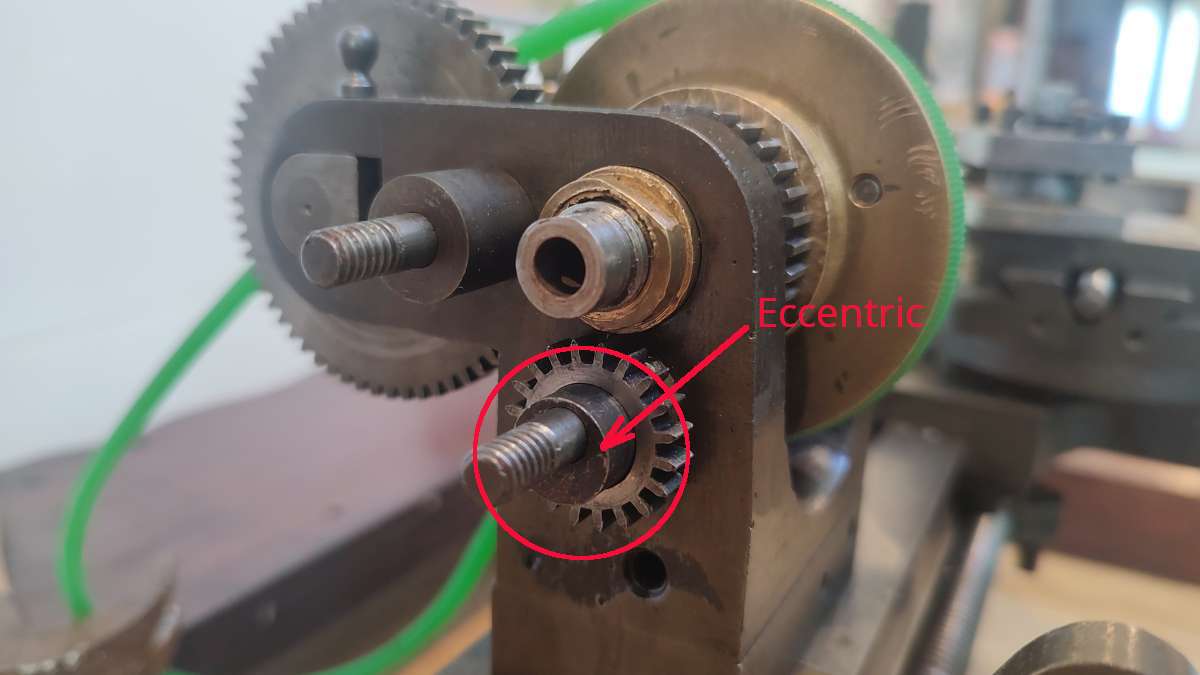
            The other bit that puzzles me is that eccentric stub-axle on the back of the headstock. Part of some form of tumbler-reverse gear?

            ….

            The triangular lead-screw thread is odd indeed. I can’t think why that. Looking at the rather battered screw slots the lathe has been dismantled and re-assembled a few times over the years. I wonder if it was an old, perhaps plain-turning machine that has been up-graded, perhaps with a mix of specially-made and salvaged parts. That might explain the inconsistent thread types and the rather miniscule dials.

            I even wonder if there isn’t some ornamental-turning gene in this dear old gal’s ancestry!

            #837237
            cedric 1
            Participant
              @cedric

              Yes , ornamental turning was all the rage in that late Victorian/ early 20c era so it’s a good possibility some of the oddball fittings and screw holes are related to that.

              There is a good book by TD Walshaw (Tubal Cain) Ornamental Turning that may offer a clue. Unfortunately, I lent my copy to a friend so can’t look it up for you.

              I would think the leadscrew was original as back gear usually indicates it was a screwcutting lathe originally and not a clockmakers’ machine. But who knows for sure what they did so long ago?

              One question: Are the threads on the cross and topslide screws a true Acme? Or are they square threads? Square threads were commonly used in that era. So perhaps the Acme screws were added later in the machine’s life to replace the original V threads matching the main leadscrew?

              #837259
              SillyOldDuffer
              Moderator
                @sillyoldduffer

                [email protected] suggested 1880 to 1900 and it certainly has the look of a Victorian / early 20th century lathe.  One giveaway is machines of this period tend to be lightly built because carbon-steel tools couldn’t take the heavy cuts made possible by HSS.   20th Century machine tools are often noticeably more chunky.

                Victorian might also explain the slightly home-made look.  Built by fitting methods before the “American System of Manufacture” had caught on,  so well-made the old-fashioned way, not the product of tool-room jigs and fixtures.   Nicely done if it is DIY.

                Pity so much is missing.  There are clues:   fixed tail-stock, so not intended to turn tapers.   Moveable dovetail.  The giant top-slide with many mounting points suggests some sort of multiple tool-holder for repeat work.  The mandrel and tailstock are both high (large diameter work), and the change gear assembly is odd.

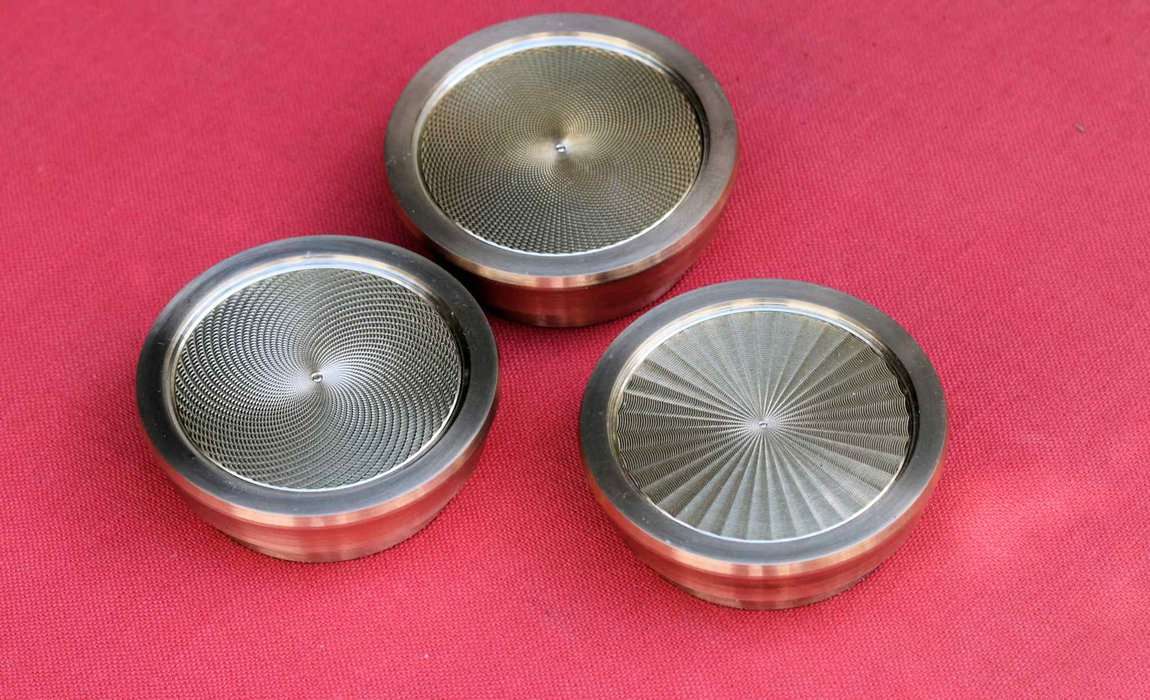
                Cedric suggests Ornamental turning, but I don’t think it’s elaborate enough for that.  I reckon he’s on the right track though!   My guess is it’s a basic engine turning lathe, used to beautify watch backs and other jewellery:

                engineturning

                Evidence!  In what’s left of the change-gear assembly, one of the gears turns an eccentric, and these are needed to generate wave patterns:

                oldlatheeccentric

                Basic engine turning might also explain why the lathe appears to be unworn.  Engine turning was often an optional extra, so maybe the lathe was rarely used.  Possibly sat in a jeweller’s workshop for decades, only fired up when the occasional customer wanted the full Monty.   Could also explain the simplicity of the banjo:  not many gear ratios needed because the lathe wasn’t used to cut threads, only needing the few ratios required to make patterns.   Engine turning varies in complexity, so the lathes can be simple or elaborate, depending on how fancy a pattern is wanted.

                Just guessing.  No idea who made it.  Almost any competent metal-bashing firm could have a go, and many did, in the UK and abroad.  Unbranded lathes were often foreign made: Belgium, France, Spain, Italy, USA, Germany and others.

                Dave


                #837270
                cedric 1
                Participant
                  @cedric

                  Or the eccentric, if it revolves, could drive a fine feed mechanism by means of pawl moving a gear or ratchet wheel one tooth per revolution.  I’ve seen pictures of such a set up on vintage lathes.

                  But does the eccentric rotate? Or is it stationary and used to adjust the position of the threaded stud sticking out of it?


                  #837789
                  Nigel Graham 2
                  Participant
                    @nigelgraham2

                    Dave:

                    I thought rather as Cedric does, that ornamental-turning might have been somewhere in this lathes’ geneology. Hence…

                    .The giant top-slide with many mounting points suggests…..

                    … also mounting a Potts milling-spindle, or other such accessory, for engine-turning. Note there is also a small cylindrical register and two accompanying screw-holes in the centre of the top surface.

                    I believe thread-cutting was sometimes done by hand-chaser, in that era, though how they managed any sort of repeatability I can’t imagine.

                    It might once have borne a maker’s plate that has long evaporated, but carefully examining the photographs does not reveal any shadows or small screw-holes left by such labels.

                    ….

                    Cedric-

                    The pinion, eccentric and stud look a single piece; but Mike would be able to verify or correct that point.

                    ….

                    Three other details…

                    The tailstock has a small, rounded-end, raised boss on its forward strut: what for? A part or serial-number? Or is it not a cast protrusion but part of a barrel lock?

                    The headstock’s front face has two holes surrounded by faint “shadows”, and a slightly larger hole on the rear face below the eccentric. What do these all hold? Was the rearward one for another gear stud?

                    The holes on the front still have their scriber-lines, too – and see below them, the bed’s planing-machine marks.

                    The upper part of the cross-slide has two (tapped?) holes below the top-slide screw. For a travelling steady? Odd to put that on the rotatable part, so I think something else. Perhaps part of a milling-spindle’s drive, which would have been via an auxiliary overhead line-shaft and pulleys from the lathe’s primary drive. Are there hints of any such on the rear of the bed – e.g. planed seatings and more tapped holes? (Sometimes such auxiliary drives were bolted to the bench instead, or even the workshop wall.)

                    Faint planing marks still on the bed at the headstock end: very little wear so either very little use or reconditioning! The slightly battered screw-slots do hint at the latter possibility.

                    #838392
                    Pete
                    Participant
                      @pete41194

                      I don’t know of how much use this might be to you Mike since it’s more guessing than anything else. But I can probably add a few thoughts as well. However I have real doubts your lathe was something home made unless the one who did so had the training, experience and access to a very well equipped shop. Many parts and details are well thought out, designed and machined, I’m guessing it’s most likely from a fairly small and low volume manufacturer. That added counter weight balance on the tail stock hand crank as just one example. And what you said about that single tooth dog clutch on the lead screw. I also think I’d agree with Tony’s approximate date of manufacturer. Depending on the exact date and country of origin, there could be many logical reasons behind using V shaped lead screw threads and using the more proper ACME in other areas. While it looks old enough, that may not even be the original lead screw. Incorrect machine tool part substitutions and replacements are made all the time by mostly non professionals.

                      True Ornamental or Rose Engine lathes were generally in the 10″ – 14″ range for maximum part diameter. That certainly doesn’t mean something meant and sized for maybe watch making didn’t adopt some of the same ideas as well for your lathe. But unlike the Rose Engine lathes, if it was capable or possible of that type of work, there’s no easy way or enough room to mount the Rosettes between the bearings in the usual position. Single rosettes could of course have been used and just attached to the rear of the spindle. How it’s been assembled today or if other accessories were even available to allow head stock rocking / pumping are impossible to say now.

                      I think it might also be a bit too small to do the usual Guilloche patterned watch dials using what are called straight line bars as well as having additional accessories since that’s normally done on a lathe using the head stock for dividing and work holding. Sometimes an additional single slide is bolted to a lathe faceplate to do straight line or even Ornamental Turning. But maybe it could have those accessories available? Most Guilloche work was done on more dedicated, larger and much heavier straight line machines, but lathes were also used as well. Those extra tapped holes in the top of the cross slide were put in for a reason. But they don’t seem to have been done to a high standard either, so ?????

                      And it’s only one of other possible reasons. The extra stud positions on the head stock might have been to produce what are known as long lead (pronounced leed) grooves or threads and even long lead multi start grooves or threads along a shaft. Some of that can be strictly for ornamental purposes, but its also done for some mechanical reasons as well. Any modern level wind fishing reel as one example where it might be used today. Again this all depends on what the lathe was intended for. But in case you don’t know, long leads like that would have never been possible under the usual spindle power even with a proper back gear. Geared that way, back driving the lathe spindle rotation with a very slow rotation of the lead screw hand crank would be done instead. Given the gear ratios involved, lathes other than a very few specialty designed one’s aren’t designed to handle the loads for thread pitches coarser than the lathes lead screw pitch.That drive could be done using only hand cranking, or some lathes had the ability to use power from a separate belt. Long before electric motors were invented, powered and belt driven longitudinal and cross feeds while a bit rare weren’t exactly unknown. Yours doesn’t have those pulleys mounted of course, but there’s no way to say they also weren’t another option. It’s also not impossible your lathe when new was intended to be powered using a foot treadle drive like old sewing machines were. I think that might be much more likely than not.

                      In original condition, or with optional accessories if the manufacturer even offered them. It may well have also had or could use what’s called an overhead drive with another and much longer belt. The lathes head stock drive belt in that case would have been disconnected and instead that longer belt used and powering the overhead drive. A second belt running back down would then be used to power what we would call a milling head or with today’s CNC, Live Tooling on the lathes cross slide. Even small grinding heads were available. If it was ever offered with anything like that? Then it would have looked a bit like some of the pictures in this link for the much larger Ornamental lathes. https://www.lathes.co.uk/evans/ But the exact same idea was also used on lots of Jeweler and watch making sized lathes as well. I think some watch and jewelers sized lathe users still use it today.

                      If the screws aren’t too tight that it risks breaking them, removing some to double check there threads per inch or metric equivalent, and if those thread counts and diameters do match up with known imperial or metric standards might provide a bit more information. The imperial divisions on the feed screws aren’t necessarily a 100% indicator of where it might have been manufactured. Even more so if that particular model was ever destined for export elsewhere? You’d still need accurate thread gauges to properly identify the fastening screw threads or thread flank angles though. Who knows, those might even be 55 degree BSW, BSF or BA. And even that wouldn’t mean it’s from any British manufacturer. After those standardized threads were invented, those sizes, pitches and even 55 degree thread angles were also used by many on the continent for quite a while as well. Afaik and as just another example, companies such as Holtzaffel while producing there earlier Ornamental Lathes didn’t use standardized thread pitches or diameters until much later. Yours probably does given its guessed at approximate date of manufacture, but it’s something I’d still want to verify to be sure of. And not impossible it was originally manufactured somewhere in Eastern Europe.

                      Those slotted and deep headed screws I’ve always read were fairly specialized and certainly not used very often on more ordinary items even back then. Doubtful a home lathe builder would use them, but again not quite impossible I suppose. Some of yours do show the use of the incorrect screwdriver tip type of damage. The modern tapered tip junk screwdrivers available today are exactly why those screw slots got damaged. If you want to prevent any more of that? The proper driver tip shape needs to be parallel ground or machined, fill the full slot length, depth and with minimal clearance for each screw slot width. Very close to what could be called a slip fit clearance in fact. I’ve had to machine a few of those screwdriver tips myself. Unhardened tips will work almost as well as the hardened which aren’t available anymore that I could find that fit the screw head sizes I was working on. There is a second type with much larger diameters and shorter head depths, usually called Cheese Head Screws. The older South Bend lathes used those in some areas.

                      Are there any of what might look like a trade mark stamping usually located somewhere on the lathe bed? Most seem to do so on the front, rear, or top of the lathe bed around the tail stock area where it would see the least wear. It might look like a single stamped logo design of what the manufacturer used to identify there products with their own trade mark stamp. If so, some companies even added there initials inside the logo. It certainly doesn’t cover them all, but if there is anything like a trademark stamp, Google images can be searched and sometimes find what your trying to identify.

                      And with what seems to be only sleeve type bearings by your description, and little to no reserve that oil cups would provide. I’d be very particular about almost constant oiling of them. And be real careful about the rpm your driving the spindle at. In general and with only gravity oil feed, 600 – about a maximum of 900 rpm might be pushing it. There’s a few and extremely high cost lathes made today that still use the same type of bearings for proper engineering and ultimate accuracy reasons that are fully capable of very high rpms. But they also use temperature controlled oil recycling and a continuous flow of high pressure lubrication. I think someone else already mentioned that older lathes had this design of spindle bearings because the high carbon cutting tools in use at that time couldn’t tolerate or use higher rpms anyway.

                      Your 9/16ths X 20 TPI spindle thread is small. Yes it’s a much larger lathe, but the 6″ swing Atlas lathes I believe used a 1″ X 8 TPI spindle thread, and were well known to quite easily bend the spindle if any excessively heavy cuts were attempted, or worse a lathe crash happened.They easily bent because of the small cross section left after the spindles Morse Taper and through hole were bored.

                      With that head stock design there’s no shimming or what would be thought of as a more conventional type of adjustment design for the spindle to bearing clearance. That is a bit strange. If it isn’t home made? Then I’d bet the spindle cone is extremely hard and the same for what might be separate hardened cast iron sleeve bearings. The only real adjustment is that end play nut that also pulls the spindle cone into the bearing cone to take up any wear. And with what appears to be open oiling ports in the head stock, If it were me, I’d think about removing the spindle for what I’d bet is a long overdue cleaning and check for any scoring on the spindle cone and bearings. Kept clean and adequately oiled, it’s a good proven design, if there not, they can be a tough and expensive to repair design. Some lathes like a few of the least expensive and earlier South Bend lathes used a very hard spindle cone, but running in just the soft cast iron the head stock was cast from. Those are really involved and without the right equipment, expensive to repair.

                      I also suspect the knob on that lead screw hand crank is original and the others made of brass were one or more previous owners additions since they don’t seem to match each other in length or proper shape. Almost for sure the 4 way tool post was something home made as well. Those parts and added tapped holes do give it an air of something home made, but what’s there and what seem to be the original parts indicate to me it was more probable something commercially made.

                      With a lathe of that age and no known manufacturer yet, it’s literally impossible to say what amount of poorly thought out modifications it may have gone through. Damaged and lost parts have also added to the issues and with multiple previous owner modifications done as well. No gibs or side to side tail stock adjustment doesn’t seem quite logical against what the more probable original design might have been. But one thought, if some previous owner added head and tail stock raising blocks? That could be one reason the tail stock can’t now be adjusted? That also may have needed modifications to the slides or gibs being removed that might have once been there? Right now you have what seems to be a combination of OEM, armature part additions, modifications, and now it seems quite a few lost parts. Still worth having and I would have bought it as well. Depending on what you want, it could turn out to be a large project though.

                      If it was a lathe built in Europe? This forum https://www.usinages.com/forums/ is I believe French language only, but Google translate can usually work well enough. You’d have to join to post anything, but afaik it’s probably the largest European based forum I know of. If your lathe can even be identified today, your best chance might be there?


                    Viewing 9 posts - 1 through 9 (of 9 total)
                    • Please log in to reply to this topic. Registering is free and easy using the links on the menu at the top of this page.

                    Latest Replies

                    Home Forums Manual machine tools Topics

                    Viewing 25 topics - 1 through 25 (of 25 total)
                    Viewing 25 topics - 1 through 25 (of 25 total)

                    View full reply list.