How do I learn machining ?

How do I learn machining ?

Home Forums Beginners questions How do I learn machining ?

Viewing 25 posts - 1 through 25 (of 90 total)
  • Author
    Posts
  • #833625
    paul1956
    Participant
      @paul1956

      After a very, very long chase I’ve finally bought myself a Unimat 3 lathe and milling attachment to use for narrow gauge model railway work at 16mm scale and also some other photographic projects. Although I’ve very little experience with metal working lathes and milling, I’ve used woodworking machinery, including lathes, for decades at home, so some aspects and nomenclature is familiar.
      Whilst once I could have have joined a local evening class to learn about machining, these courses seem to have ceased, at least there’s none near me in SW Herts. Even the SMEE have stopped their basic courses. The local model engineering society doesn’t seem to offer any help for beginners either.
      I’m working my way through the standard texts on model engineering and small lathework,but nearly all of the books are old and the quality of illustrations and photos is pretty dire.

      So it looks like it’s trawling YouTube for instruction. So far the best introduction to machining I’ve found is the playlists on Blondihacks channel https://www.youtube.com/@Blondihacks, anyone suggest any others suitable for novices ?

      As a second starter question for the Unimat; What lubrication do people suggest for this little lathe ? The manual suggest sewing machine oil, is that a good choice ?


      #833633
      Peter Cook 6
      Participant
        @petercook6

        In my view, and it is how I started (with almost no background), the best way to learn is to make chips. The books will be useful to give you the basics and as sources of reference material as you gain experience.

        Get some free cutting brass, or aluminium bar with good machinability (buy it from a decent supplier – not the scrap bin or the local DIY superstore) or possibly EN1A steel and make some chips. Make something simple to start with.

        I will pass on the advice I got early on, from Jason B of this parish, that on lathes of this size use the very sharp CCGT 060202 carbide inserts. They are specified for turning aluminium, but work brilliantly for me on my little Taig for turning almost anything.

        A set of LH, RH and boring bar holders for these inserts almost eliminates the need to learn to grind HSS tools initially, and cut a big piece of my early learning curve where it was not clear if the issue was my lathe technique or my ability to grind tools well enough. With a new insert on centre, if it doesn’t work its your technique!

        Once you are confident with your lathe technique, then start to try grinding HSS when you need it for a specific purpose. At that point if your technique lets you down it’s most likely to be your grinding of the tool.

        PS a can of WD40 for cutting aluminium, some cutting oil helps on steel and nothing for brass.

        #833637
        bernard towers
        Participant
          @bernardtowers37738

          Personally I would forget about tc tips on a small lathe and use hss and grind your own it’s a skill easily learned. Read about the basics and (as the piano teacher said) practice practice practice. And by the way the info in the old books does not go out of date.

          #833643
          JasonB
          Moderator
            @jasonb

            As Peter says CCGT inserts will work well on a unimat3, certainly do on mine and if you get a 6mm square holder will be exactly on ctr height. That eliminates two big problems a beginner faces which are grinding tools and setting then to the correct height.

            Just a 32 hydraulic oil will do, sewing machine oil is a bit light to me, something like this

            Although some info in old books is still relevant they are in need of updating. You hardly see mention of things like ER Collets, Carbide and all the advice is base on lathes with belt or geared drive. No sign of modern benchtop machines in most of thre old publications though you wil find at least one of the often suggested make smention of Whale oil but I doubt many will be wanting to put that on their slideways.

            I also suggest getting on and making some chips, pick a simple part for your loco and have a go, any problems or how to go about it ask here

            #833651
            Bazyle
            Participant
              @bazyle

              Do not be afraid of working with metal any more than you are of wood. It is actually LESS skilled as everything is guided – along the lathe bed or across it unlike wood turning. Hand sawing and chiselling wood require a bit of manual dexterity improved with practice but a wonky saw cut in metal is always just a first stage before using a machine to make it square.
              I bet you sharpen your own wood tools – why would a metal lathe tool be any different? It is not a mystery ‘skill’ but you do need a better tool-rest because there isn’t a foot long handle on it.
              Sadly at StAlbans MES our club member who ran evening classes passed away and the economics of running classes doesn’t really work now that schools and colleges are after every penny. However our cub members are always ready to help and the secretary has been writing instructional articles for our gazette. Checkout our website and come along to a meeting to see how we can help you.
              https://stalbansmes.com/


              #833662
              paul1956
              Participant
                @paul1956

                I’m certainly not afraid of working with metal, just respectful of any powered machinery. Metal should be a far more predictable material than wood without hidden voids, partial cracks and inconsistent density. Big bits of wood often have some dramatic secrets revealed when being worked.

                I’m also not worried about shaping and sharpening HSS tooling. I’ve built lots of specialist tools for woodturning out of 10mm HSS bar intended for lathe tools, so I have the kit to deal with that. Just not the knowledge yet.
                I’m interested in the differences of opinion on the suitability of TCT tooling on a lathe this small though. Certainly a polarising subject.

                Yes, a visit to StAlbans MES is planned at some time. I’m only about half an hour away.

                #833663
                JasonB
                Moderator
                  @jasonb
                  On paul1956 Said:

                  Metal should be a far more predictable material than wood without hidden voids, partial cracks and inconsistent density. Big bits of wood often have some dramatic secrets revealed when being worked.

                  What until you try some poor quality iron castings, all that and more. 😂 Though you shouldn’t get water flying out of it like you do when turning green wood.

                  #833669
                  SillyOldDuffer
                  Moderator
                    @sillyoldduffer
                    On bernard towers Said:

                    Personally I would forget about tc tips on a small lathe and use hss and grind your own it’s a skill easily learned.

                    Sorry Bernard, not true.   Took me ages, and I’m still not good at it.

                    Beginners should know:

                    • Grinding is a skill that not everyone picks up quickly.
                    • Grinding requires a £grinder.
                    • The grinder benefits significantly from a solid tool rest, but those on inexpensive grinders are likely to be flimsy, making it necessary to beef it up.  More work!
                    • Carbide inserts have several advantages over HSS:
                      • No need for a grinder or to learn how to use one.
                      • I suggest beginner time is better spent learning to cut metal on the lathe than sharpening tools.
                      • Not necessary to reset tool height when inserts are changed.
                      • Good for harder materials, including cutting HSS
                      • Inserts reduce the need for a Quick Change Toolpost. I don’t need one.
                    • At least 80% of my cutting is done with Carbide inserts.  HSS is valuable for specially shaped form tools or to get a better finish on  difficult alloys.  I have HSS, but prefer inserts because they are less fuss.
                    • Easier to decide if HSS is worth having after learning the basics.   No need to go straight into HSS – it might not be needed at all…

                    Old books are great up to a point, I recommend Sparey’s “The Amateur’s Lathe”.   Just be aware it was written in 1950 so no modern stuff.  Modern books include Jason Ballamy’s Milling for Beginners and Neil Wyatt’s The Mini-Lathe.   Though some of the Workshop Practice Series are badly dated, most are still good.

                    Be aware that many internet videos are made by people who know more about making videos than cutting metal!     I’ll leave it to others to list the good publishers!  Watch critically, do not assume they’re safe or authoritative.

                    I learned by reading Sparey and the Model Engineering magazines, cover to cover.  Articles on things I have no intention of making often describe techniques that apply more generally.  I also own an extensive technical library, but it’s not necessary for starting off.   And by making man different things, starting small and working up.  I learned a lot from building Stewart Hart’s PottyMill Engine and Jan Ridder’s CoffeeCup Stirling from stock.   Others build kits, especially tools.   This forum is brilliant at answering questions and ideas.

                    Have fun.

                    Dave

                    #833671
                    bernard towers
                    Participant
                      @bernardtowers37738

                      Dave if you can’t grind a rh lathe tool by now you are in the wrong hobby

                      #833684
                      JA
                      Participant
                        @ja

                        If I was new to machining, given some of the above advice, I would give up.

                        This has always been a frequent and difficult question. The old evening classes were used by those, like me, who wanted access to lathes etc with supervisors there to give advice and fill in the day’s crossword. Clubs would give you help but they are busy places.

                        Our Club has given this a lot of thought and been running weekend day sessions for the young (and not so young) with each making a 16mm steam loco. It has been a great success. Outside such intitatives I think the only real solution is local mentoring. At least you will only pick up one person’s bad habits. I am not a fan of YouTube.

                        JA

                        #833689
                        Nick Wheeler
                        Participant
                          @nickwheeler

                          Well Bernard, I’ve wasted more time mangling HSS than I have using it. It’s over twenty years since I bought my first lathe, and having just one HSS tool that’s acceptable hasn’t proved to be a problem.

                          Machining isn’t my hobby; it’s to support them.

                          #833694
                          Paul Lousick
                          Participant
                            @paullousick59116

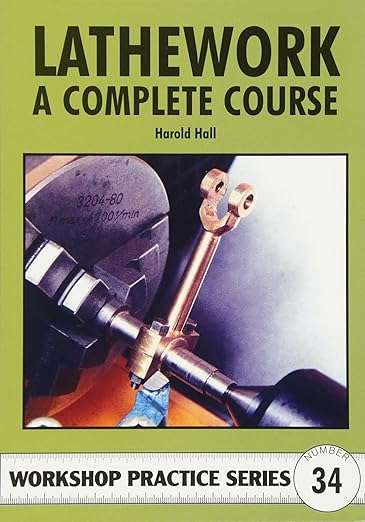
                            Check Harold Hall’s web site for ideas and techniques for machining. Lots of tools and accessories that you can make for the lathe.  http://homews.co.uk/page617a.html

                            He also has published a few reference books for learning how to use a lathe and mill.  Making accessories for your lathe is a good way to start and explained in the book.  (search for a supplier)

                            Harod Hall Lathework


                            #833698
                            Dave S
                            Participant
                              @daves59043

                              I’m in the insert camp, although I learned with HSS (and a Unimat as it happens)

                              I have at least 3 grinders (it’s likely there’s a 4th lurking) and I use carbide inserts almost exclusively on my Lathe and big mill.


                              #833714
                              Andrew Crow
                              Participant
                                @andrewcrow91475

                                Firstly let me say that I am a confirmed user of HSS tools, however having been recommended to use CCGT inserts for certain materials by Jason and others, they are very good for most materials and even at speeds and feeds normally associated with HHS.

                                I don’t see any reason for a beginner not to use them while they are learning how to use their lathe. As their skills improve and they require more specialised tools they can learn how  to make their own tools.

                                The main downside to carbide inserts is that they are rather expensive compared to HSS.

                                Andy

                                #833715
                                Howard Lewis
                                Participant
                                  @howardlewis46836

                                  However you go about it, learning the basics is important.

                                  My preference would be to start with HSS tooling (You have knowledge of this from your woodworking)

                                  You can regrind HSS at 8 pm on a Saturday night after chipping the last Carbide insert!

                                  Always set on centre height, so that there is no “pip” when you face the end of a bar. Then make a Centre Height Gauge, so that any subsequent tool can be set to that gauge.

                                  After, as said, just make some chips. In this way, you will become familiar with the machine and what it can do.

                                  Books; worth reading even if they don’t feature your particular machine. All lathes work on the same basic principle of holding a sharp tool on centre height against a rotating workpiece.

                                  “The Amateur’s Lathe” by L H Sparey was the “bible” being aimed at Myford ML7 users, although the basics are the same.

                                  Later came Stan Bray  “The Compact Lathe” and “Basic Lathework”

                                  and then Harold Hall’s “Lathework – A Complete Course”

                                  Any of these will teach the basics, and beyond. Ultimately, experience and confidence come from using the machine and becoming familiar with its individual quirks.

                                  By experimenting, you will learn how speed, depth of cut, and feed rate affect the result. quickly.

                                  As long as the tool traverses a rotating workpiece, the machine will produce a helix. Depending on the depth of cut and feed rate, the result might be a screw thread or a fine finish. This is what you learn by just cutting metal, for the sake of it, to gain experience.

                                  Having done wood turning, you are already some way along the road, you just need to refine your experience.

                                  Whether you finally settle for HSS or carbide tips will be your choice (I use HSS for a lot of work and parting off, but rough, or bore using carbide. There is no ABSOLUTE right or wrong; just what works best for you, your machine, and what you want to make.

                                  (You’ll need carbide to machine anything hardened!)

                                  As you progress, you will gain experience and confidence in what you and the machine can do. (An O Gauge scratch builder uses his first lathe to make jigs and fixtures as well as parts for his models)

                                  Go for it!

                                  Howard.

                                  #833768
                                  paul1956
                                  Participant
                                    @paul1956

                                    Can any Unimat 3 owners confirm what size tooling they’re using please ?

                                    If I put a 10mm square bar in my newly bought lathe’s toolpost the top surface is exactly at the lathe’s centre. Which I think should be correct.
                                    However I’ve also read that the lathe uses 6mm tooling. The actual manual doesn’t specify a size, so I’m confused.

                                    When I order some ready made tooling, HSS or TCT holders, what do I buy 10mm ? 8mm ? 6mm ?

                                    #833772
                                    JasonB
                                    Moderator
                                      @jasonb

                                      The standard toolpost that originally came with the U3 which I still use would accept upto approx 10mm tooling but the bottom of the pocket is 6mm below ctr height so that is the max height of the cutting edge above the bottom of the tool.


                                      If you have a different toolpost then all bets are off. If the 10mm shank (carbide?) tool works that’s fine. If in future you decide to try HSS then there is not much to be gained in going larger than 6mm square as it just means there is more grinding needed, tools can be shimmed to height. For your 16mm work even 4mm sq would do. Emco did a set of six HSS tools to go with the lathe and they were 6mm.

                                      #833799
                                      SillyOldDuffer
                                      Moderator
                                        @sillyoldduffer
                                        On bernard towers Said:

                                        Dave if you can’t grind a rh lathe tool by now you are in the wrong hobby

                                        Bernard demeans himself with a tart unjustified assumption. I do very well thanks. 🙂

                                        More importantly, when we’re trying to help a newcomer, Bernard fails to explain why a beginner should start by learning to grind HSS What’s the advantage to a beginner of starting by learning to grind HSS?  Reasoned answer please, not another famously terse fact-free conclusion.

                                        Unless Bernard provides a good reason I conclude his advice is bad because it wastes the beginners time and money.  Plus it’s based on the incorrect assumption that grinding is “a skill easily learned”.   And going on to say anyone who can’t grind is in the wrong hobby is also wrong.

                                        Dave


                                        #833803
                                        JasonB
                                        Moderator
                                          @jasonb

                                          Here is my U3 with a 6mm shank holder and used CCGT carbide insert. No packing under the holder as it is not needed. Also a bit at the end using one of the original Emco HSS tools (not their pre-ground profile) which did need packing to bring it to height.

                                          I set the height by eye as I have never felt the need to make a height setting tool. but faces off without a pip.

                                          #833806
                                          jaCK Hobson
                                          Participant
                                            @jackhobson50760

                                            “why a beginner should start by learning to grind HSS”

                                            It depends on what the personal objectives are. There is no _need_ to grind HSS at the start anymore but I have enjoyed learning about tool geometry, how different metals deform and create chips, difference between dull and sharp, and even developing manual dexterity while struggling with a poor grinder. I think these skills all still add value. I don’t think there is one right way to develop knowledge and skill.

                                            If developing knowledge and skill is not a high priority compared to just rough turning to size and ‘making things’ then certainly use replaceable tips. And for milling… learning how to sharpen milling cutters is probably a long way down most priorities.

                                            In priority order, I learnt what I know from: 1) books 2) doing it (successes and mistakes) 3) internets 4) direct from other people. It is a shame that ‘direct from other people’ isn’t as easy to get.


                                            #833818
                                            cedric 1
                                            Participant
                                              @cedric
                                              On SillyOldDuffer Said:
                                              On bernard towers Said:

                                              Dave if you can’t grind a rh lathe tool by now you are in the wrong hobby

                                              Bernard demeans himself with a tart unjustified assumption. I do very well thanks. 🙂

                                              More importantly, when we’re trying to help a newcomer, Bernard fails to explain why a beginner should start by learning to grind HSS What’s the advantage to a beginner of starting by learning to grind HSS?  Reasoned answer please, not another famously terse fact-free conclusion.

                                              Unless Bernard provides a good reason I conclude his advice is bad because it wastes the beginners time and money.  Plus it’s based on the incorrect assumption that grinding is “a skill easily learned”.   And going on to say anyone who can’t grind is in the wrong hobby is also wrong.

                                              Dave


                                              But it is a skill very easily learnt. There is nothing difficult about it. HSS blanks come with the ends already ground to an angle on the end face. All you have to do is grind a similar angle on the top face and the leading side face to create a cutting edge.

                                              Every high school boy used to do this in metalwork class once upon a time. If you can’t do it, you may well be in the wrong hobby.

                                              However, I agree it need not be the first thing a beginner learns, in this age of cheap insert tooling. But at intermediate level it becomes an essential skill for making odd or special tools, tools for different materials, or to get the job done today without waiting for an insert to be delivered.

                                              #833820
                                              Dave S
                                              Participant
                                                @daves59043

                                                I use 1/4” tool bits on my Unimat, cos I happened to get a box of them at a car boot sale. Really tiny boring bars are made from 2mm graver blanks.

                                                I don’t use a parting tool on the Unimat, A junior hacksaw is faster and less traumatic.

                                                Biggest upgrade was to make some brass gibs, but the lathe functioned adequately for many years with the plastic ones.

                                                Dave

                                                #833834
                                                Les Riley
                                                Participant
                                                  @lesriley75593

                                                  Nearly 50 years ago I borrowed a copy of The Amateurs Lathe from the library.

                                                  It showed how to use angled grinding rests to sharpen HSS blanks.

                                                  Once I made and fitted the rests to my new chinese grinder, everything was plain sailing.

                                                  I have a fancy J & S 310 tool grinder but I still use my rests and china grinder for most lathe tools, including carbide ones and to pep up some tipped ones .

                                                  #833839
                                                  Dalboy
                                                  Participant
                                                    @dalboy

                                                    @paul1956 I also came from woodworking and woodturning to metal bashing. I spent many a day playing on the lathe and mill along with some book reading.

                                                    Yes I agree learning to grind HSS is a bonus when you need a tool to do a certain job where buying a carbide tool will never get used again. Some people pick it up quite quickly and others don’t, in my eyes as a very new to metal work there is no right or wrong as long as it is safe. You will know this from woodturning when a lump of wood 12″ diameter flies off the lathe (yes it happened to me due to an unforeseen crack gave way the only thankful thing was, I was wearing a full face mask.)

                                                    I have just completed my first model with much learning and asking questions where needed.


                                                    #833842
                                                    Trevor Drabble 1
                                                    Participant
                                                      @trevordrabble1

                                                      Paul , If the location is convenient , SMEE offer a number of related courses . Also , there are quite a few reasonably priced books dedicated to the Unimat and useful accessories for sale both at RDG and also on eBay .

                                                    Viewing 25 posts - 1 through 25 (of 90 total)
                                                    • Please log in to reply to this topic. Registering is free and easy using the links on the menu at the top of this page.

                                                    Latest Replies

                                                    Home Forums Beginners questions Topics

                                                    Viewing 25 topics - 1 through 25 (of 25 total)
                                                    Viewing 25 topics - 1 through 25 (of 25 total)

                                                    View full reply list.