Taping small holes

Taping small holes

Home Forums Workshop Techniques Taping small holes

Viewing 25 posts - 1 through 25 (of 37 total)
  • Author
    Posts
  • #818093
    Vic
    Participant
      @vic

      I may need to drill and tap some small holes in some rod on the lathe, possibly down to M1.6. It’s notoriously easy, at least for me, to snap drills etc this small. Do any of you have any experience/suggestions for tooling to make this easier? Material will likely be brass or stainless. TIA.

      #818095
      Bill Phinn
      Participant
        @billphinn90025

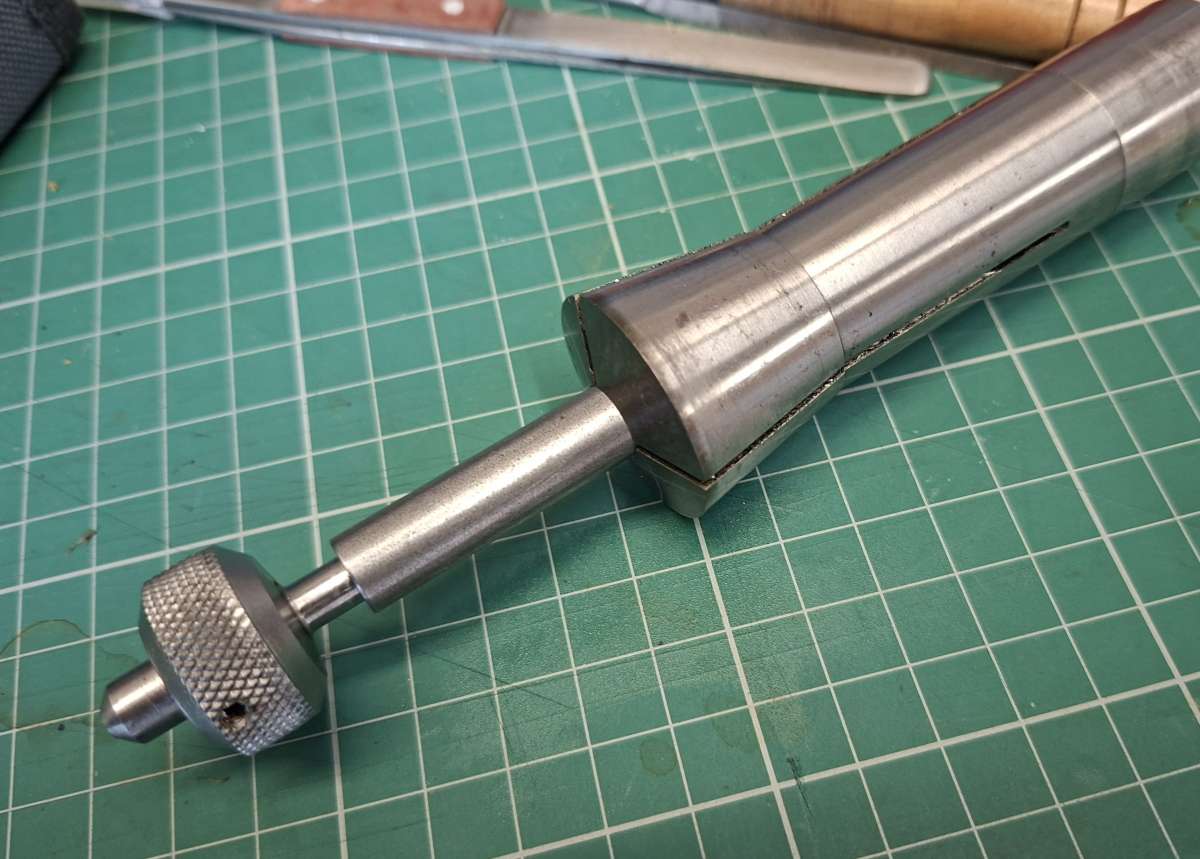
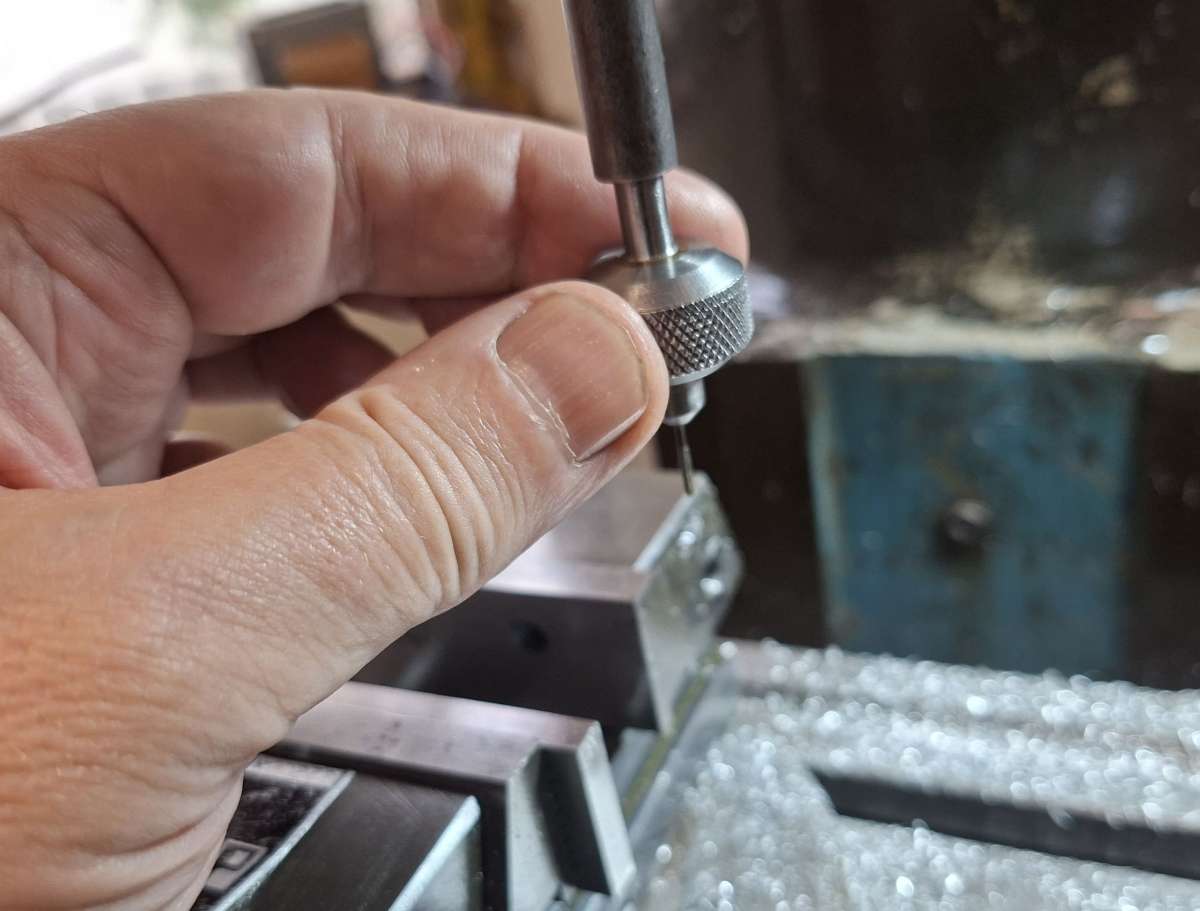
        Spot drill first. Then use stub length drills held in either a “sensitive drill chuck” or a Mason Master D-Speeder.

        Chamfer entrance of hole with a countersink.

        Blow out all swarf.

        Then tap with ideally spiral flute taps (again held in one of chucks mentioned) using plenty of lube. If the tap gets tight to turn at any point wind it out a bit (just like you would with a standard hand tap). Turn the tap gently with a slow smooth action throughout so you can stop in time at tight spots and avoid breakages. If tapping into a blind hole mark the tap shank so you know exactly how far you can afford to wind it in before it risks bottoming out and snapping.

        Make sure the tap is good and sharp, especially in the case of stainless.

        #818099
        Vic
        Participant
          @vic

          Have you a link for a sensitive drill chuck?

          #818103
          Michael Gilligan
          Participant
            @michaelgilligan61133

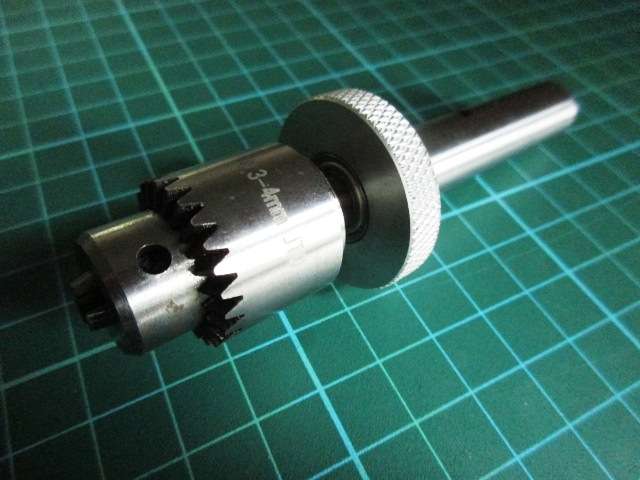
            Not sure if there are any left, Vic … but ARC listed exactly what I think you need.

            MichaelG.

            #818113
            peter1972
            Participant
              @peter1972

              If the rod is not too long, transfer it to a milling machine and use a sprung-loaded tapping guide, taking care to adjust the spring force as the tap decends. That way you will get really good feel.

              Especially for stainless and with regard to the application, consider drilling the hole a little larger than the theoretical tapping drill size.

              #818114
              JasonB
              Moderator
                @jasonb

                I regularly use M1.6 on my models. Don’t do anything special whether it’s tapping in the lathe or on the mill. I spot drill, use a jobber length 1.3mm tapping drill as it’s a spot drill length I don’t have. maybe as the usual sizes I tap are M2.5 and M3 is why I don’t treat M1.6 as a special case needing different methods. The engine I’m doing at the moment has mostly M4 which seems large to me.

                Hold the shank of the taper tap (have not found it easy to get or afford spiral flute that small) with my small tap wrench and just use a simple bit of rod with a ctr drilled hole in it held in the chuck as a guide, light quill pressure if using the mill ot just pushing the loose tailstock on the lathe. CT-90 tapping fluid unless its brass,bronze or cast iron which I do dry.

                I’m happy using my usual 10mm keyles schuck for drills down to 0.8mm, below that I may get the sensative chuck out but not always. Again a lot of my engines have shafts cross drilled with a 0.8mm for 1/32″ split pins.

                #818126
                Nigel Graham 2
                Participant
                  @nigelgraham2

                  As Peter does, I would recommend using a tapping-guide, and these can be used in the lathe (held in the tailstock chuck) in the same way as on a mill or bench drill.

                  I do find rotating a tap-wrench by hand on a lathe, physically slightly more awkward than on a milling- or drilling- machine, so raising the risk of breaking the tap. That is partly by more restricted access, but for me also due to being short, so the working position at my Myford lathe is not very comfortable unless I stand on a suitable platform. (Oddly, the much beefier Harrison is lower and more comfortable!)

                  When using the lathe tailstock as pusher for a tap or die, as Jason describes, I lock the tailstock’s position and gently wind the barrel forwards and backwards with its handwheel. For small diameters, by one finger on the handle. It’s more sensitive than trying to push the entire lump.


                  For tapping blocks and plates I’ve sometimes used the bench-drill as a tapper by slackening the belt and using the chuck as combined tap-holder / tap-wrench, manually. (Make sure the machine is switched off at the wall!). One hand rotates the chuck, the other gently eases the quill down and up – being careful to ease up when backing off the tap. The quill spring is quite powerful so I restrain the quill in this way, in both directions.

                  #818151
                  Peter Cook 6
                  Participant
                    @petercook6

                    When drilling small holes <2mm I break far fewer drills if I run at high speed. My little Taig lathe will go up to 10,000rpm while the mill will run at 5000. I occasionally drill down to 0.3mm in brass (for clock bushings), and have found the quicker the better.

                    #818196
                    Vic
                    Participant
                      @vic
                      On Michael Gilligan Said:

                      Not sure if there are any left, Vic … but ARC listed exactly what I think you need.

                      MichaelG.

                      I can’t see anything. All the others I’ve seen are hundreds of Dollars. I can get a small JT0 chuck cheap enough, I just can’t find a JT0 parallel arbor smaller than 1/2” diameter.

                      I’m now thinking of an ER11 collet Chuck on a 10mm or 8mm shaft. I can get one of these for  under £8. The collets are about £6.50 each though.

                      #818198
                      Vic
                      Participant
                        @vic
                        On Nigel Graham 2 Said:

                        As Peter does, I would recommend using a tapping-guide, and these can be used in the lathe (held in the tailstock chuck) in the same way as on a mill or bench drill.

                        I do find rotating a tap-wrench by hand on a lathe, physically slightly more awkward than on a milling- or drilling- machine, so raising the risk of breaking the tap. That is partly by more restricted access, but for me also due to being short, so the working position at my Myford lathe is not very comfortable unless I stand on a suitable platform. (Oddly, the much beefier Harrison is lower and more comfortable!)

                        When using the lathe tailstock as pusher for a tap or die, as Jason describes, I lock the tailstock’s position and gently wind the barrel forwards and backwards with its handwheel. For small diameters, by one finger on the handle. It’s more sensitive than trying to push the entire lump.


                        For tapping blocks and plates I’ve sometimes used the bench-drill as a tapper by slackening the belt and using the chuck as combined tap-holder / tap-wrench, manually. (Make sure the machine is switched off at the wall!). One hand rotates the chuck, the other gently eases the quill down and up – being careful to ease up when backing off the tap. The quill spring is quite powerful so I restrain the quill in this way, in both directions.

                        I’ve got several tapping guides. It’s drilling the holes that’s an issue with bits this small.

                        #818201
                        John Purdy
                        Participant
                          @johnpurdy78347

                          Vic

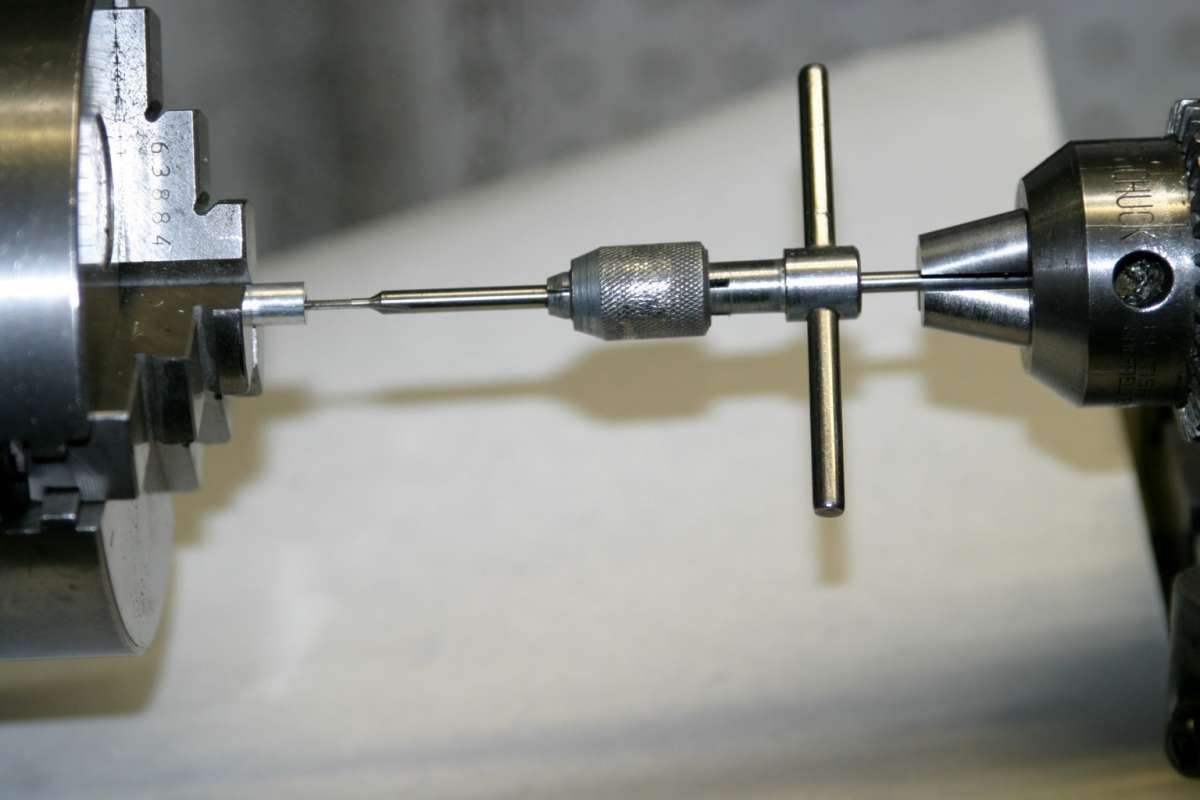
                          This is what I use when using small taps in the lathe (or the mill or drill press). I have two “T” handle tap wrenches that I have modified by drilling an 1/8″ inch hole down the centre so they can be held in alignment on an 1/8″ rod held in the chuck on the lathe, mill or drill. The picture is with a 1-72 UNC tap (1.85 mm) in the lathe. By supporting the tap wrench like this, all side thrust is eliminated and it allows a very fine feel of the rotation to sense any tightness telling you to stop and back the tap out to clear the flutes. I find backing out and clearing the flutes is beneficial even with spiral point or flute taps

                          JohnTap Wrenches

                          Tapping

                          #818217
                          Vic
                          Participant
                            @vic

                            Interesting John, thanks. I have several Eclipse tap wrenches like that, I may modify one.

                            #818224
                            SillyOldDuffer
                            Moderator
                              @sillyoldduffer

                              My method is like John’s except the tap-holder is supported by a home-made spring loaded pusher in the tailstock.  The spring provides the pressure rather than me, which helps because I’m clumsy.

                              Dave

                              #818231
                              John Purdy
                              Participant
                                @johnpurdy78347

                                The small one in my previous picture holds taps up to #10 (2BA, 4mm) the larger 1/4″ (6mm). Anything larger than that I tap free hand as it takes considerably more torque. The tap in the picture is 1-72 UNF not UNC, mental lapse.

                                John

                                #818239
                                Martin Kyte
                                Participant
                                  @martinkyte99762

                                  I for one would not countersink. For any tapped hole going in with a clearance drill to just sub surface is the way to do it. Tapping operations on a tapping sized hole will raise the surface slightly which is not what you want in most cases.
                                  Alignment aid are a help but you need to drive the tap with a system that gives you a good feel for how it’s cutting. As taps get smaller then the way you turn them needs to adjusted to suit. For very small taps all you need is a knurled rod not much bigger than the tap. That way you can feel what’s going on. George Thomas’s pillar tool has an arbor for small taps down to 16BA which has a finger grip no more than 1/4” You only need enough torque to drive the tap whilst it’s cutting but not enough to break it.

                                  Personally and this is tempting fate I cannot remember the last time I broke a tap. Feel is everything.


                                  #818243
                                  Bill Phinn
                                  Participant
                                    @billphinn90025
                                    On Martin Kyte Said:

                                    I for one would not countersink.

                                    I’m unclear what your objection to countersinking is, Martin. Could you explain further?


                                    I countersink to avoid the first teeth on the tap snagging on burrs that may have been raised by drilling and consequently breaking the tap. This has happened to me, and not with a small tap, though possibly the tap had an unseen crack in it before it started work.

                                    #818248
                                    John Purdy
                                    Participant
                                      @johnpurdy78347

                                      I agree with Martin, for small taps in the lathe I usually turn it by gripping the knurled chuck surface rather than the tommy bar, much more sensitive feel. For tapping free hand with small taps I use an Ecllipse #123 pin vice and support the tap body by holding it between my thumb and first finger, supporting that hand on the item being tapped while turning the pin vice with the other hand. This helps prevent any sideways force on the tap which usually means a broken tap.

                                      John

                                      #818272
                                      Martin Kyte
                                      Participant
                                        @martinkyte99762
                                        On Bill Phinn Said:
                                        On Martin Kyte Said:

                                        I for one would not countersink.

                                        I’m unclear what your objection to countersinking is, Martin. Could you explain further?


                                        I countersink to avoid the first teeth on the tap snagging on burrs that may have been raised by drilling and consequently breaking the tap. This has happened to me, and not with a small tap, though possibly the tap had an unseen crack in it before it started work.

                                        Only that counter drilling to clearance size is tidier and less likely to be off centre.

                                        #818288
                                        JasonB
                                        Moderator
                                          @jasonb

                                          That is why Bernard suggested CSk before tapping as it is less likely to be thrown off by the thread as you are countersinking a plain hole.

                                          As I tend to use 90deg spotting drills they can be taken deep enough to do the job in one go and as it’s the same tool no problem with loss of concentricity.

                                          #818303
                                          Michael Gilligan
                                          Participant
                                            @michaelgilligan61133
                                            On Vic Said:
                                            On Michael Gilligan Said:

                                            Not sure if there are any left, Vic … but ARC listed exactly what I think you need.

                                            MichaelG.

                                            I can’t see anything. […]

                                            It is/was

                                            Micro Drill Adaptor – JT0 – 1/2″ Shank 040-015-00400

                                            MichaelG.

                                            #818309
                                            parovoz
                                            Participant
                                              @parovoz

                                              Lots of good points. Lubricate accordingly. Only use good quality SHARP tooling. Minimise torque, sharp tools cut easier anyway, the knurled part of the tap wrench is sufficient between fingers. AND, clean out the hole regularly, every 3 or 4 threads worth of depth, back the tap fully out, clear out the hole and brush off the tap. Re-lubricate and carry on. The cleaning is the best de-risk strategy. I tap hundreds of 8Ba holes, not super small, but certainly small enough that one should tap with careful processes.


                                              All the best…

                                              #818317
                                              Nicholas Farr
                                              Participant
                                                @nicholasfarr14254

                                                Hi, when using small taps in the lathe, I use my micro drill adapter with a J0 chuck, ( the one MichaelG has referred too) to drill the tapping hole, and then just lightly deburr the edge with a larger drill, then I hold the tap in the chuck to get it established for a few threads, and then swap over to my No. 0 tap wrench.

                                                001

                                                002

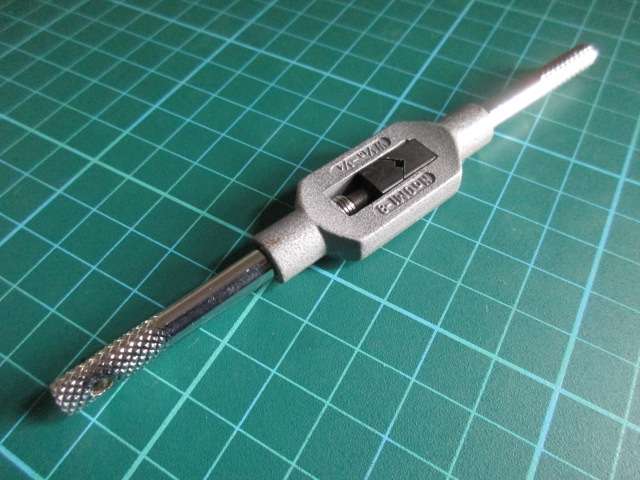
                                                The No.0 tap wrench clears the bed of my mini lathe.

                                                Regards Nick.

                                                #818322
                                                Dell
                                                Participant
                                                  @dell

                                                  I regularly drill & tap down to 1mm & I never use the lathe or the mill yes I start it in the lathe Pultra usually to get it straight but then do it by hand , I always use my spiral flute taps as they don’t bind although saying that I always turn a few theads then remove tap clean oil & go again

                                                  #818332
                                                  Chris Kaminski
                                                  Participant
                                                    @chriskaminski64716

                                                    some photos from my workshop

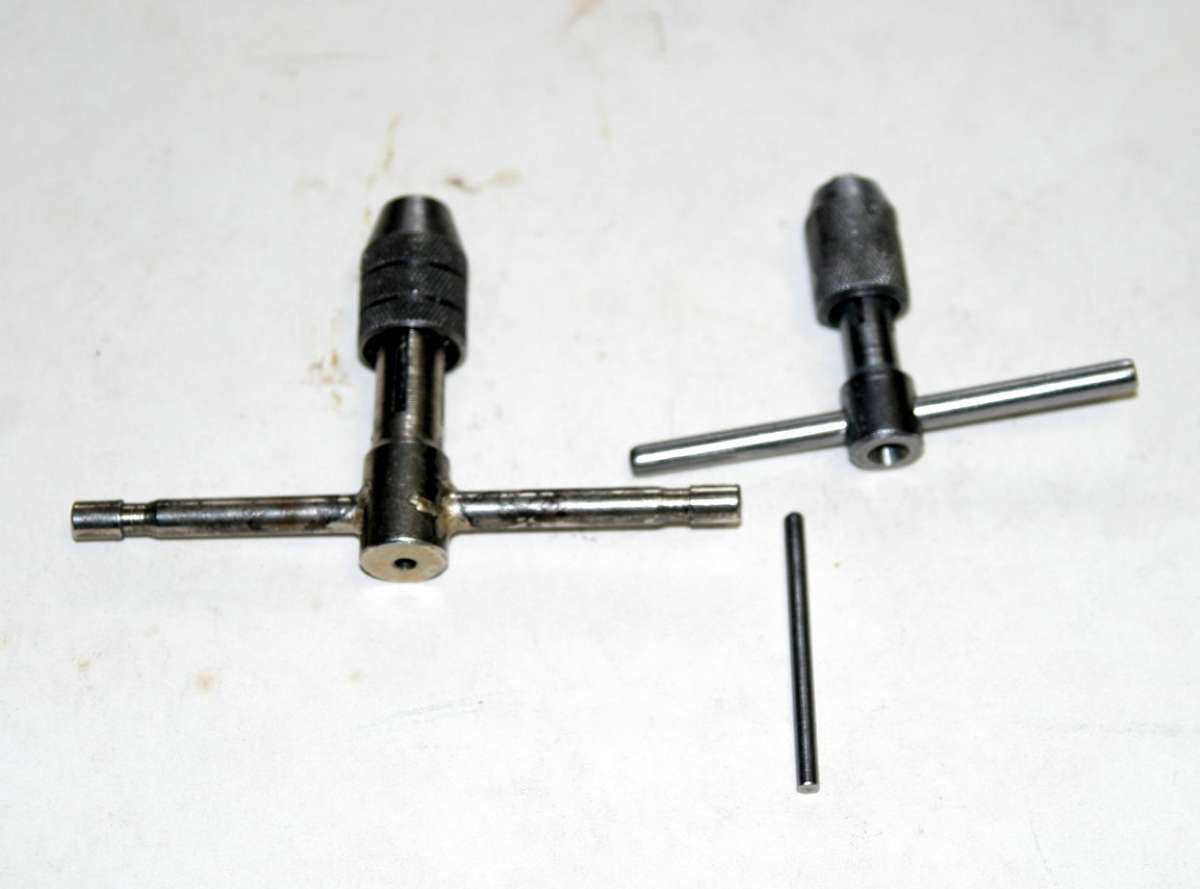
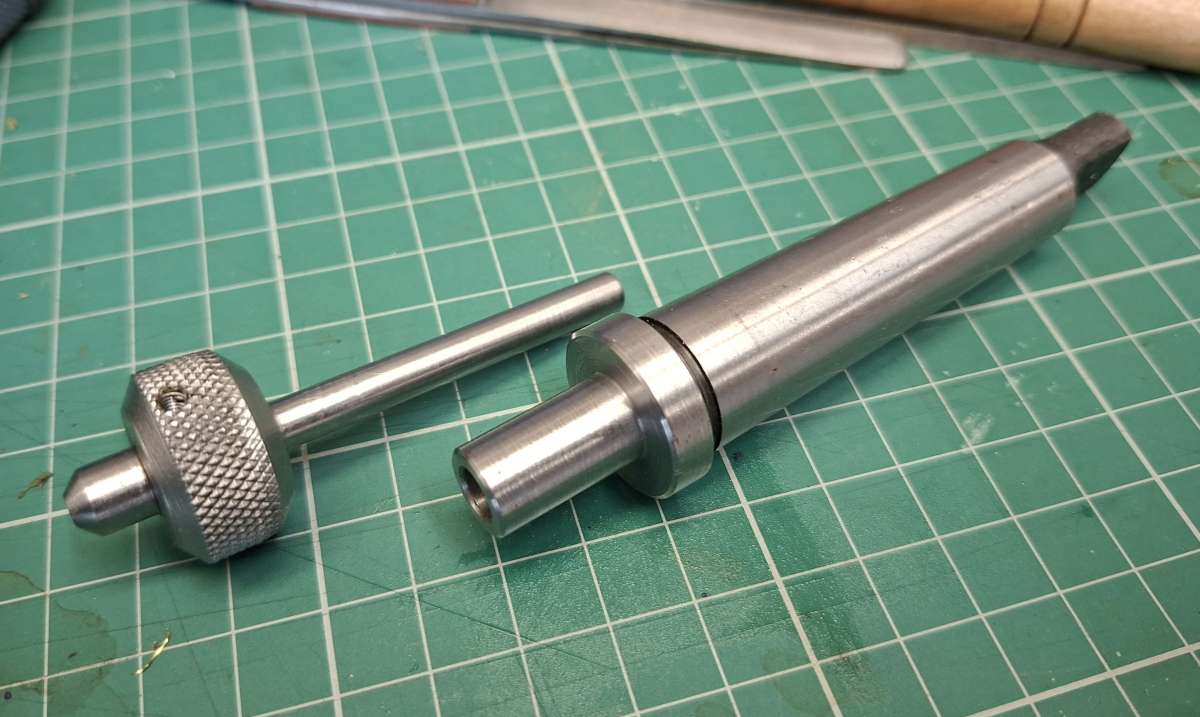
                                                    tap holder, sliding fit in M2 tailstock holder:

                                                    01

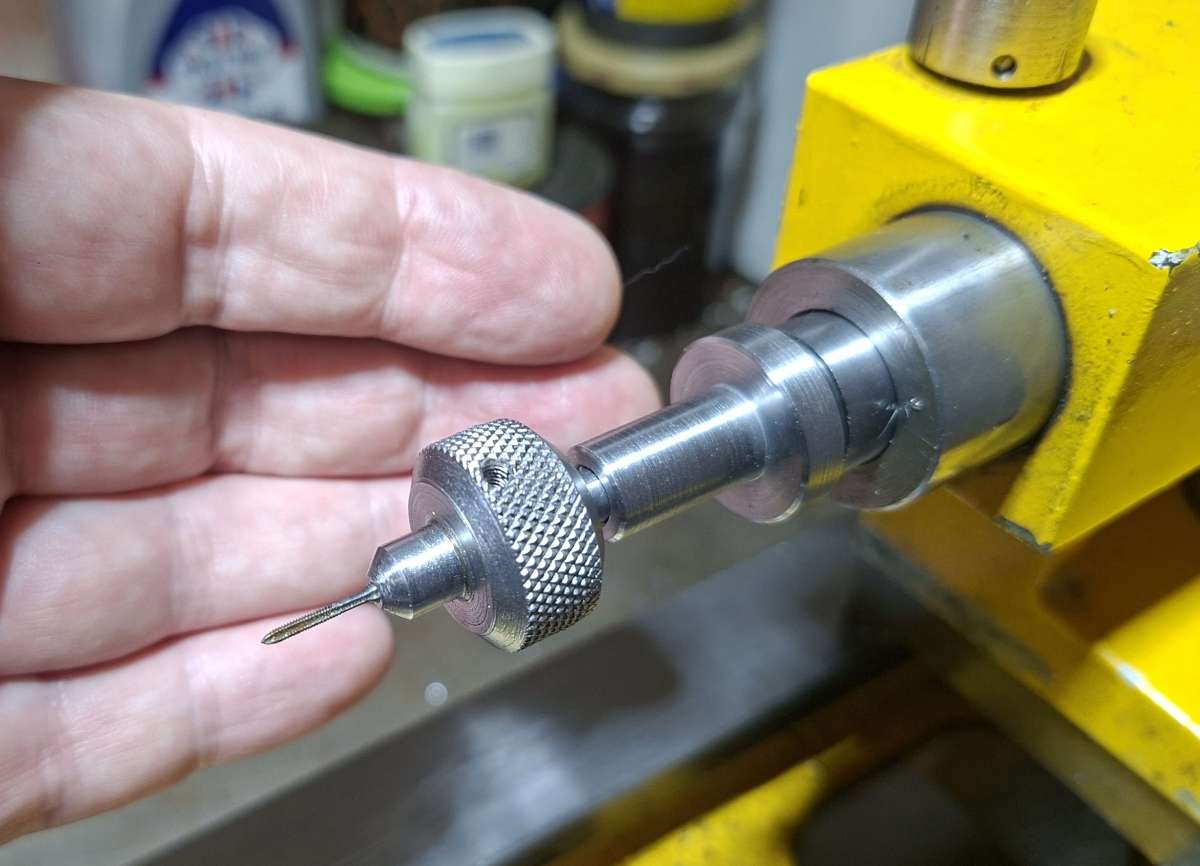
                                                    using in my lathe:

                                                    02

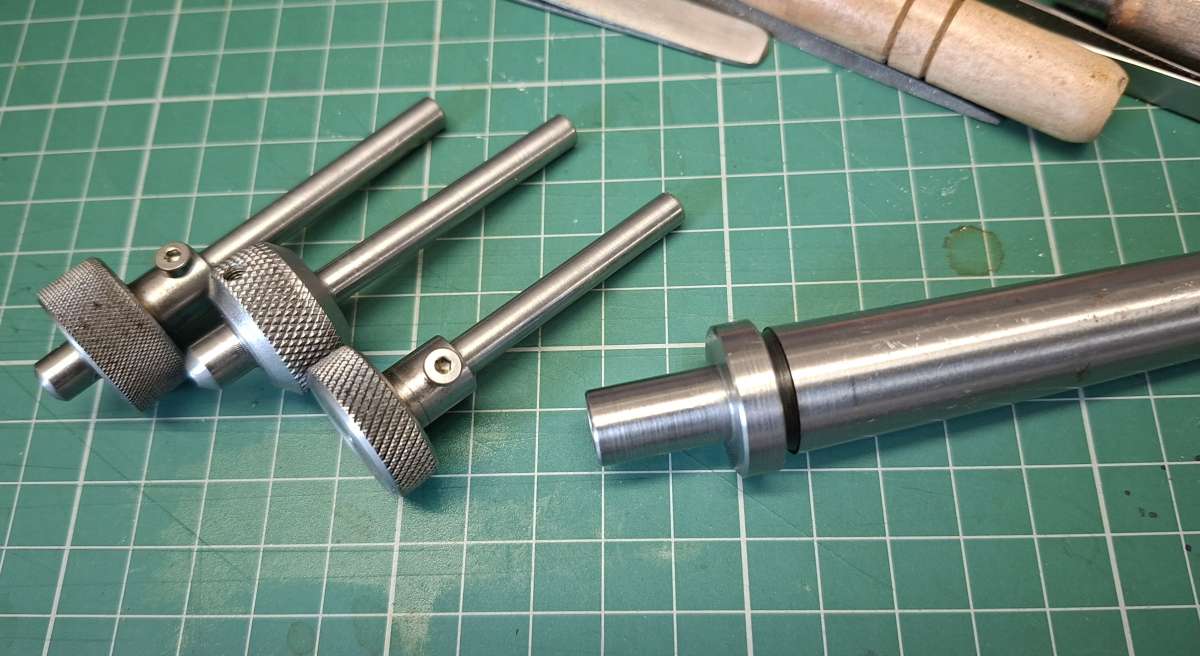
                                                    selection of tap holders:

                                                    03

                                                    using in my mill with R8 adapter:

                                                    05

                                                    04

                                                    I have tried “micro drill adapter” and found it to be disappointing (maybe because it was cheap Chinese knock off copy).


                                                    #818344
                                                    Martin Kyte
                                                    Participant
                                                      @martinkyte99762

                                                      My main objection to countersinks is it’s difficult to control the diameter. If I am fitting countersunk screws I will always grind a drill to the correct angle and use that. It just looks neater.

                                                    Viewing 25 posts - 1 through 25 (of 37 total)
                                                    • Please log in to reply to this topic. Registering is free and easy using the links on the menu at the top of this page.

                                                    Latest Replies

                                                    Home Forums Workshop Techniques Topics

                                                    Viewing 25 topics - 1 through 25 (of 25 total)
                                                    Viewing 25 topics - 1 through 25 (of 25 total)

                                                    View full reply list.