Raduis turning on the milling machine?

Raduis turning on the milling machine?

Home Forums Beginners questions Raduis turning on the milling machine?

Viewing 15 posts - 1 through 15 (of 15 total)
  • Author
    Posts
  • #7482
    Ed Duffner
    Participant
      @edduffner79357
      #180138
      Ed Duffner
      Participant
        @edduffner79357

        Hi Everyone,

        I don't yet have a radius turning attachment for the lathe but I have a rotary table and ER25 collets for the milling m/c. If the work-piece has a parallel shaft do you think it would be a bit precarious to hold this in an ER collet to turn a radius on the end of it with a basic tool post mounted on the RT?

        Below is a very basic drawing of how I see the setup.

        Ed.

        #180141
        Another JohnS
        Participant
          @anotherjohns

          Ed; you should be fine. Setting the radius would be a bit of a chore, but it should work just fine.

          On a CNC mill, one can "turn" a piece in the spindle much like you are trying to do here, except of course with CNC you can program the tool movement, if the tool is firmly bolted to the table. (i.e., no rotary needed)

          Tell us how you get on.

          John.

          #180144
          Ed Duffner
          Participant
            @edduffner79357

            Thank you John, will do.

            Regards,
            Ed.

            #180145
            Clive Foster
            Participant
              @clivefoster55965

              Agree with John that it will work just fine but setting up will be more than a chore if you need a decently accurate ball curve rather than a simple blending radius. Even with a simple radius setting needs to be pretty good if the results aren't to appear a bit wonky. The Mk1 human eyeball is good at spotting such errors. If going for a full good ball it can be very hard to keep straight where remaining errors are and what adjustment corrects them once you've got to the "fairly good but not good enough" stage.

              I'd look into mounting up the lathe topslide on the rotary table to provide cut adjustment.

              If you have a boring head with sufficient travel the "cut with the work and spindle axes at 45° to each other" works well and probably has a lower frustration index.

              That said if you have a boring head it can be used as a basis for an effective up'n over type ball turning tool without a vast amount of work. Assuming you have a reasonable starter lump in the useful bits box I'd estimate that a very useable up'n over tool could be made in less than twice the average time taken to set-up what you propose and produce a nice workpiece. One made you have the up'n over tool ready to go at any time but the rotary table on the mill has to be set from scratch for each use.

              Clive

              Edited By Clive Foster on 17/02/2015 23:17:43

              Edited By Clive Foster on 17/02/2015 23:18:20

              #180149
              Muzzer
              Participant
                @muzzer

                Setup as you drew it should be a doddle, particularly if you have a DRO and an edge finder. Once you have set the RT axis in line with the spindle (at 90 degrees) and zeroed the DRO, you can then use the DRO (or micrometer dial) to set the offset of the end (tip) of the tool at the required radius. You would feed the table into the spindle until you reach the DRO zero again, at which point you'd have a more spherical ball than said eyeball could ever hope to judge.

                This will involve a lot of handle turning, so some means of electrically driving the handle in both directions might be helpful. A cordless drill might be a starting point or possibly even a stepper drive?

                #180152
                Phil P
                Participant
                  @philp

                  Have you thought about generating a sphere using this method.

                  http://www.ctemag.com/aa_pages/2013/130310-ShopOps.html

                  http://www.ctemag.com/aa_pages/2013/130310-ShopOps.html

                  Phil


                  clickable link added.

                  Edited By John Stevenson on 18/02/2015 00:40:01

                  #180160
                  nigel jones 5
                  Participant
                    @nigeljones5

                    my experience has unfortunately been far from this. Unless you have a very good rotary table with zero backlash you will get all kinds of problems with the tool biting – just be aware!

                    #180162
                    Paul Lousick
                    Participant
                      @paullousick59116

                      Hi Ed,

                      I have done a lot of radius turning on my mill, and as Fizzy has said you have to be aware of backlash in the rotary table. I learnt the hard way and smashed some of the teeth in my rotary table. Use sharp tooling, take small cuts and use conventional milling, not climb milling.

                      Paul.

                      #180169
                      JasonB
                      Moderator
                        @jasonb

                        How did I miss this one earlier, have a look at this website part way down the page shows just what you propose. Both concave & convex.

                        Don't really see backlash being too much of a problem, afterall its just like using a ball turner on the lathe and that only has your hand to move the cutter, at least you have some control with the rotary table. Just keep the overhang of the part as short as possible


                        Edited By JasonB on 18/02/2015 08:41:20

                        #180184
                        Neil Wyatt
                        Moderator
                          @neilwyatt

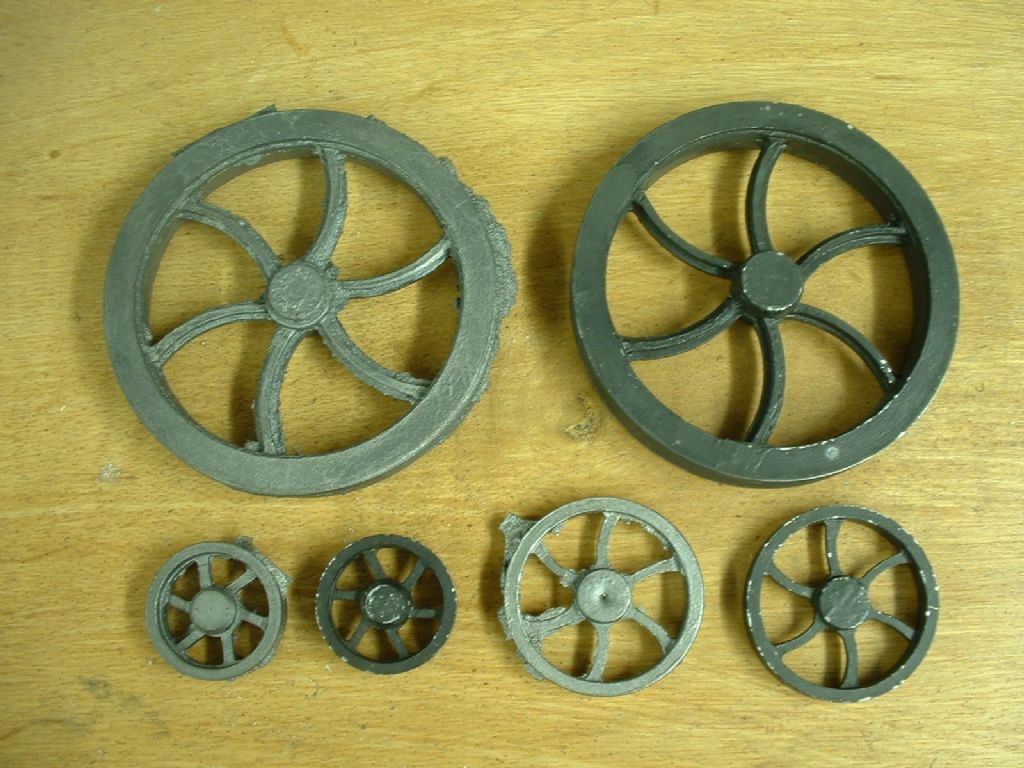
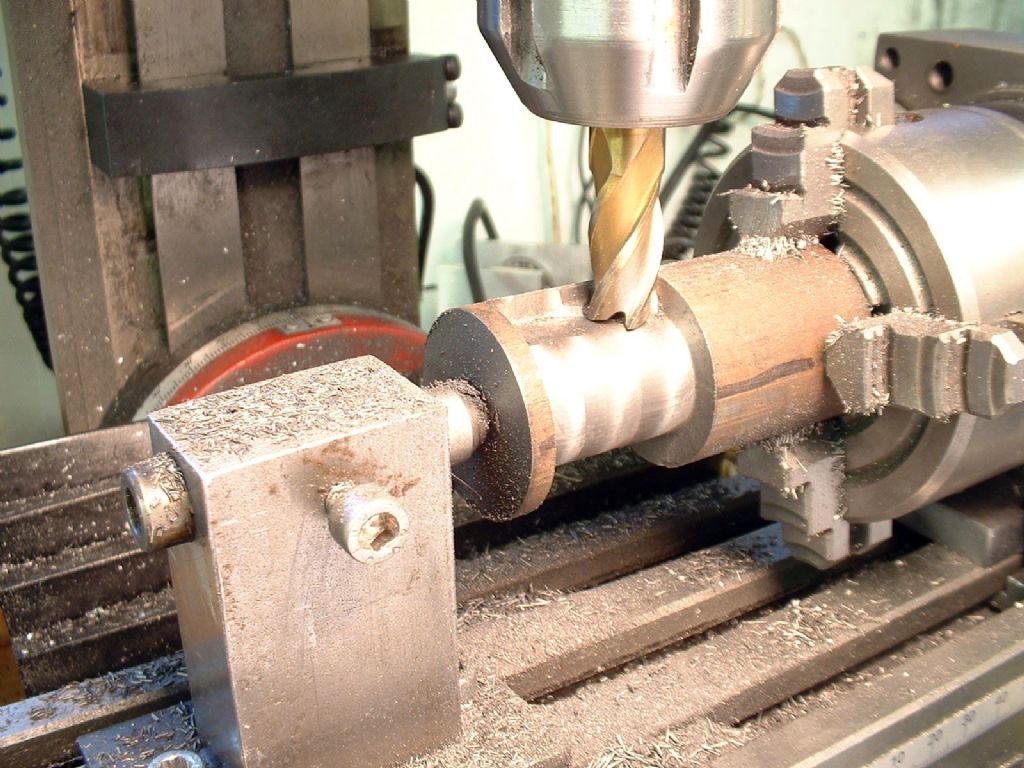
                          I've had no problems in aluminium alloy or cast iron. I turned the patterns in the photo below on my home-made rotary table, and the other photo shows profiling a steam engine cylinder.

                          I also turned v-pulleys for my lathe (when the motor went pop) using the mill so both the rotary and cutting elements of what you propose are quite practical.

                          Neil

                          photo 8 castings and patterns.jpg

                          profile milling cylinder 2.jpg

                          Edited By Neil Wyatt on 18/02/2015 09:43:30

                          #180191
                          Ed Duffner
                          Participant
                            @edduffner79357

                            Thank you guys,

                            I suppose it would be as easy to make a radius turning attachment as it would be making any other type of tool, up and over and so on. It would still be nice to have a backup method.

                            I did actually have a small crash when trying to do turning (circular groove) on the RT before I had the lathe, the vertex HV4 doesn't offer very good clamping and it broke loose. But this is related to radius turning or ball turning. I think the cutting forces will be across the backlash not against or with it for the method in my drawing, but I will be careful.

                            If I use the 45° tilt head method I think the cut will use both climb and conventional milling during each revolution of the cutter. Trying to get my head `round that one

                            Muzzer, I think I see what you mean. The most time consuming bit would be as Clive suggested in getting the centre of the table perfectly centred to the axes, for my WM-16 and HV4 that would be Z and Y. I was initially thinking that I'd have to centre the RT, leave it in position and gradually move the cutter inward.

                            Jason's link shows the idea in practice albeit in the horizontal plane.

                            Thanks again,
                            Ed.

                            #180192
                            Nobby
                            Participant
                              @nobby

                              Hi
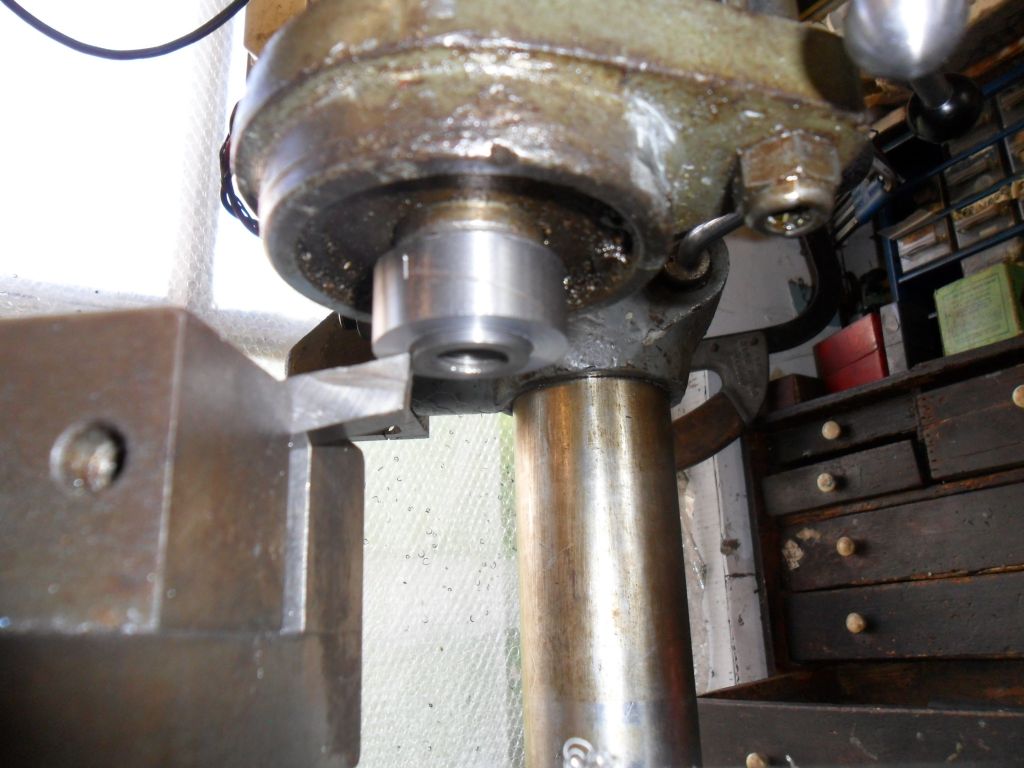
                              Turning on a mill drill
                              Nobby
                              truing 3/4 location

                              #180194
                              JasonB
                              Moderator
                                @jasonb

                                Call that turning on a milling machine. This IS turning on a milling machinesmile p

                                #180198
                                Ian S C
                                Participant
                                  @iansc

                                  To quickly centre the rotary table, I have a large steel ball(it won't go up the 3MT spindle nose of the mill), I place the ball on the 2MT hole in the RT, then bring the spindle down, rotate the spindle by hand, then clamp the RT to the mill, It might not be the propper way, but it's my way, and it seems to work.

                                  Ian S C

                                Viewing 15 posts - 1 through 15 (of 15 total)
                                • Please log in to reply to this topic. Registering is free and easy using the links on the menu at the top of this page.

                                Latest Replies

                                Home Forums Beginners questions Topics

                                Viewing 25 topics - 1 through 25 (of 25 total)
                                Viewing 25 topics - 1 through 25 (of 25 total)

                                View full reply list.