Super Simplex – Motion Plates from Model Engineers Laser

Super Simplex – Motion Plates from Model Engineers Laser

Home Forums Locomotives Super Simplex – Motion Plates from Model Engineers Laser

Viewing 15 posts - 51 through 65 (of 65 total)
  • Author
    Posts
  • #230947
    John Kinnane
    Participant
      @johnkinnane64270

      Thanks David regards John

      #317925
      John Kinnane
      Participant
        @johnkinnane64270

        Hi David I would really like your advise on machining the axel hornes for the Super Simplex. I am trying to figure out the best way of machining these. I see that 1/8 " sits flush with the out side of the frame, would it be better to mill the webbing side of the horn down to 3/32" after marking out the 1/8" . Or do you machine the hornes almost near to the correct measurement, I know that this is probably not making much sence, but how did you go about maching them. Your help in the past has been very valuable. Kind regards John Kinnane

        #317929
        David Wasson
        Participant
          @davidwasson11489

          Hi John,

          The be sure, the web side of the horn block is machined to 5/32", not 3/32". The web side of the horn block is un-machined, so, it is your reference. It has been a while, but, I think I machined the back side (out side) of the horn block until the 5/32" dimension was achieved, Then, the part that fits into the frame, is machined to the 1/8".

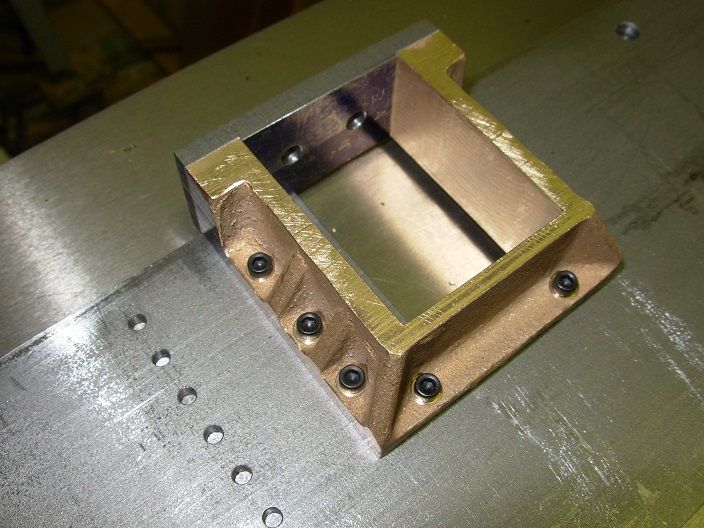
          In addition, I simplified the machine work on the horn stays. Hopefully the photo will explain (a little!).

          dscn0701 - reduced.jpg

          David

          #317930
          David Wasson
          Participant
            @davidwasson11489

            Hi John,

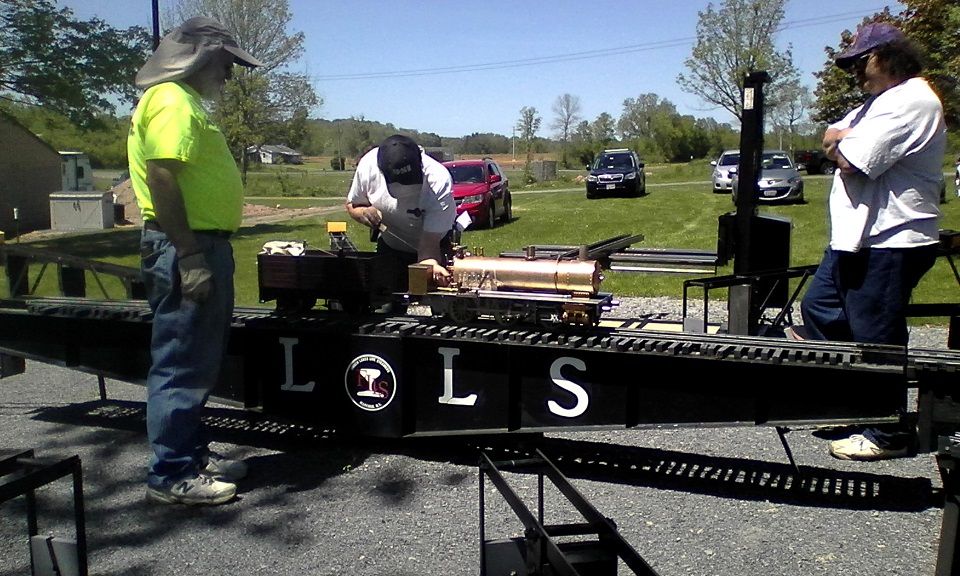
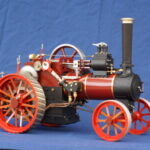
            One other thing, I got my boiler certified in May of this year!! The locomotive is far from finished, but, it can run under it's own steam and easily takes me for a ride. Not bad for 23 months work. Here's a photo taken on certification day!

            img_20170520_135701 - reduced 4.jpg

            David

            Edited By David Wasson on 21/09/2017 01:23:19

            #317931
            John Kinnane
            Participant
              @johnkinnane64270

              Hi David thank you for getting back to me the photo does help. I have contacted the club and I am going down Saturday with the drawings. It was suggested that I machine the inside diameter first to the drawing specs and leave the hornes joined together as they were cast, and then machine down on the back to 5/32" to the 1/8" mark or the mark I have done.

              I will see how I go it's slowly coming together now, and your idea of using the webbing side as a datum is a good idea your Simplex looks terrific David and thanks for the photo of the bioler and first steaming. I will be in touch once again thank you, kind regards John

              #317933
              David Wasson
              Participant
                @davidwasson11489

                Hi John,

                It sounds like you get the idea! I think I did some amount of machining before sawing the pairs of horn blocks part. You will probably do the same. Bringing the drawings to your club will no doubt be helpful for you.

                David

                #334570
                John Kinnane
                Participant
                  @johnkinnane64270

                  G'day David I am having problems riveting the horns onto the frames. I have the 3/32" steel and one snap to fit. But I am finding that the snap is difficult to place over the rivet head and the rivets bend when hit they seem to long. The measurements I have are 3/32" X 3/4" I have brass ones and they are 3/32" X 1/2" any help would be much appreciated the help in past has been invaluable thank you John

                  #334571
                  David Wasson
                  Participant
                    @davidwasson11489

                    Hi John,

                    Well, I must confess, I did not rivet my horn blocks. I used machine screws to attach my horn blocks. I had a feeling, there might be further occasion to have the frames completely flat to do additional machine work on them, As, it turns out, I was correct, several times! The locations for the screws need to be spot faced so the screw sits on a flat surface.

                    Wish I could be of more assistance for rivets! I favored screws because I knew I would have to take the frames apart and flat for further work. I do know that sometimes rivets need to be cut to a specific length to fit properly into a specific thickness of parts.

                    David

                    dscn0689 - reduced.jpg

                    #334572
                    David Wasson
                    Participant
                      @davidwasson11489

                      Hi John,

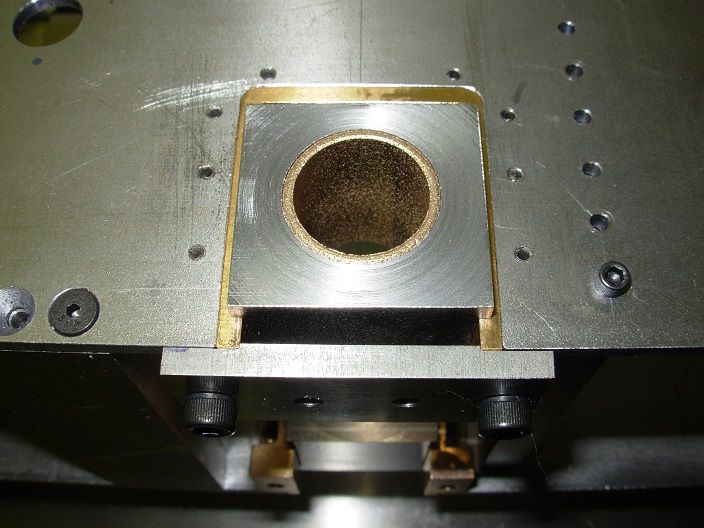
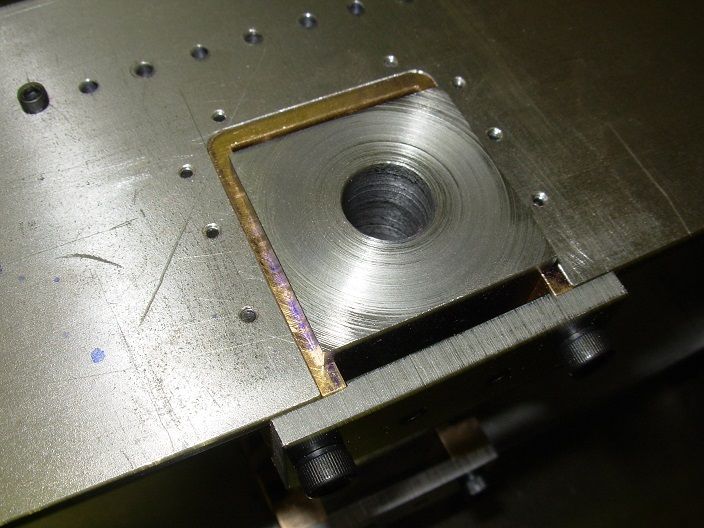
                      A few other things, the screws I used are hexagon socket head screws. They can be installed quite tight. Also, the fit of the hornblock to the frame must be very close so none of these parts can move.

                      Here's a photo of the other side. The axle blocks have not yet been opened up to the axle size.

                      dscn0691 - resized.jpg

                      #334573
                      John Kinnane
                      Participant
                        @johnkinnane64270

                        Thank you for getting back to me David that's a great idea I have a lot of these screws so I will do the same. I take it you tapped the holes first. Thanks mate regards John

                        #334589
                        JasonB
                        Moderator
                          @jasonb

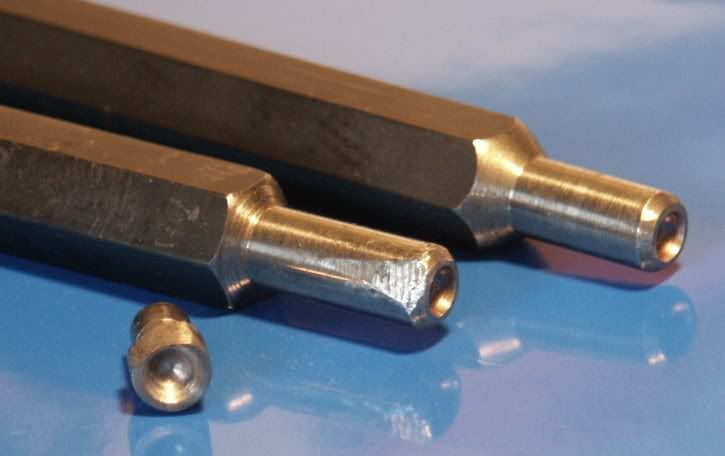
                          It is usual to trim rivits to the correct length not just use the nearest bought size. You want approx 1.5 x dia protruding. Also for tight to get to places you may need to modify the snap, originally on these the hex tapered down to the end but I turned then parallel and you can also see where one has had the side cut away to get right up close.

                          If you have not done much riviting then go and put 10 or 20 into some scrap rather than learn on the job and risk damaging the horn brackets

                          #334616
                          David Wasson
                          Participant
                            @davidwasson11489

                            Hi John,

                            If you decide to use screws, the hornblocks and the frames are match drilled together with the tap drill. The parts are then separated. The frames are tapped, and the blocks opened up to a close fit for the body of the screw. Don't forget to "spot face" the horn block where the head of the screw will be positioned. It needs to be flat, not against the rough casting.

                            David

                            #334617
                            John Kinnane
                            Participant
                              @johnkinnane64270

                              Hi Jason thank you for that advise it will come in handy regards John

                              #334627
                              Clive Brown 1
                              Participant
                                @clivebrown1

                                I'd echo Jason's advice that the OP should reduce the rivets in length, I use wire clippers and a file whilst the rivet is in position

                                Re rivetting. It's easy to make special r/h rivet snaps for awkward locations. I purchased several packets of loose ball bearings of suitable sizes from the local cycle shop or bearing supplier. A length of steel rod is put in the lathe and a dimple made in the end with a suitable drill. This end is then heated red-hot, the dimple is placed over a ball bearing which rests on a bit of scrap steel and the upper end of the rod is struck smartly with a hammer until a hemi-spherical recess is formed.

                                The rod is then returned to the lathe for tapering and trimming, plus a bit of filing as necessary.

                                Mild steel is generally adequate for most jobs, but silver steel can be hardened if a long-lasting snap is required.

                                This method can be adapted for snaps of any odd shape and size depending what's needed.

                                For my Simplex, I countersunk the frame holes and hammered the rivet shank into the countersink whilst the head was supported in a snap. A flat file finishes the rivet off flush with the frame. Very easy and quick.

                                #334688
                                John Kinnane
                                Participant
                                  @johnkinnane64270

                                  G'day Clive thank you for replying to my post I will try what you and Jason have recommended. I now know that the rivets are to long from the drawing they are correct Dia. being 3/32". My snap is too thick to get into the casting so I will turn it down on the lathe to allow for the tight clearance. I will make another snap as you have suggested, all in all I will get there I really appreciate the feed back I get to this build because it is my first and is something I have never done before, so this sight and Martin Evans books are very good in explaining problems that occur. I would like to take this opportunity in wishing you all a Happy and prosperous New Year kind regards John

                                Viewing 15 posts - 51 through 65 (of 65 total)
                                • Please log in to reply to this topic. Registering is free and easy using the links on the menu at the top of this page.

                                Latest Replies

                                Home Forums Locomotives Topics

                                Viewing 25 topics - 1 through 25 (of 25 total)
                                Viewing 25 topics - 1 through 25 (of 25 total)

                                View full reply list.