New Mill – Starter Tooling

New Mill – Starter Tooling

Home Forums Workshop Tools and Tooling New Mill – Starter Tooling

Viewing 25 posts - 101 through 125 (of 325 total)
  • Author
    Posts
  • #376354
    Ron Laden
    Participant
      @ronladen17547

      Thanks ndiy, I should have said leadscrew backlash, I realise the gibs wont cure it. Thanks for the tips.

      Ron

      #376357
      Anonymous
        Posted by Ron Laden on 17/10/2018 15:36:22:

        After a long time waiting I am now the proud owner of a mill, its installed in the shop and ready to go…….

        Woohoo!

        Never mind aligning it; get the swarf flying. You can always take the time to set it up properly at a later stage once it's settled down.

        Andrew

        #376376
        Ron Laden
        Participant
          @ronladen17547

          Now how did I know Andrew, that it would be you to tell me to "get the swarf flying" and worry about the rest later..lol

          Your quite right of course.

          Ron

          #376380
          JasonB
          Moderator
            @jasonb

            I thought he would have been saying "get the sparks flying" smile p

            #376439
            Ron Laden
            Participant
              @ronladen17547

              Well Andrew will be pleased as the swarf was flying this morning at 6am.smiley

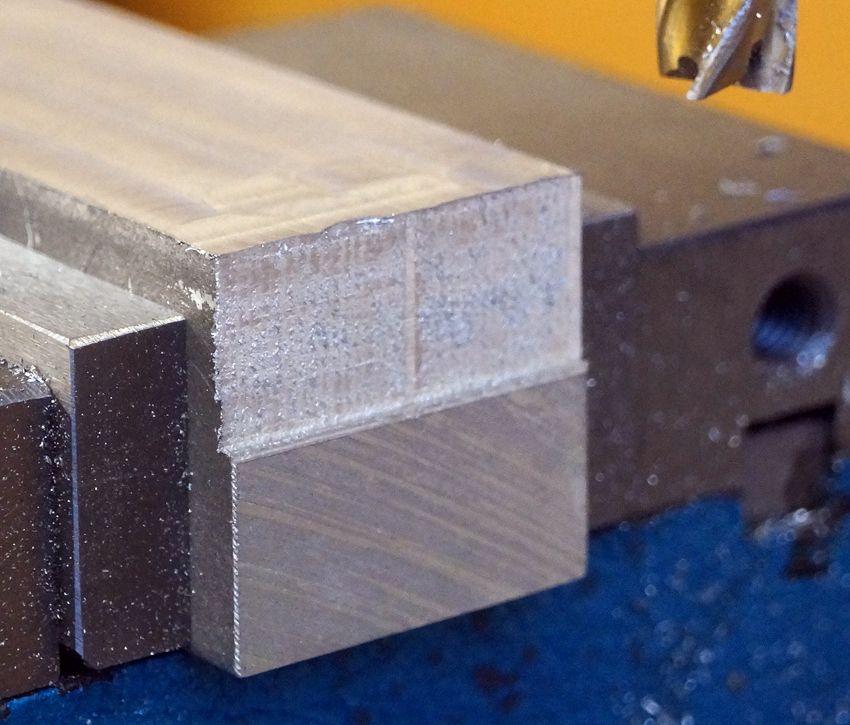
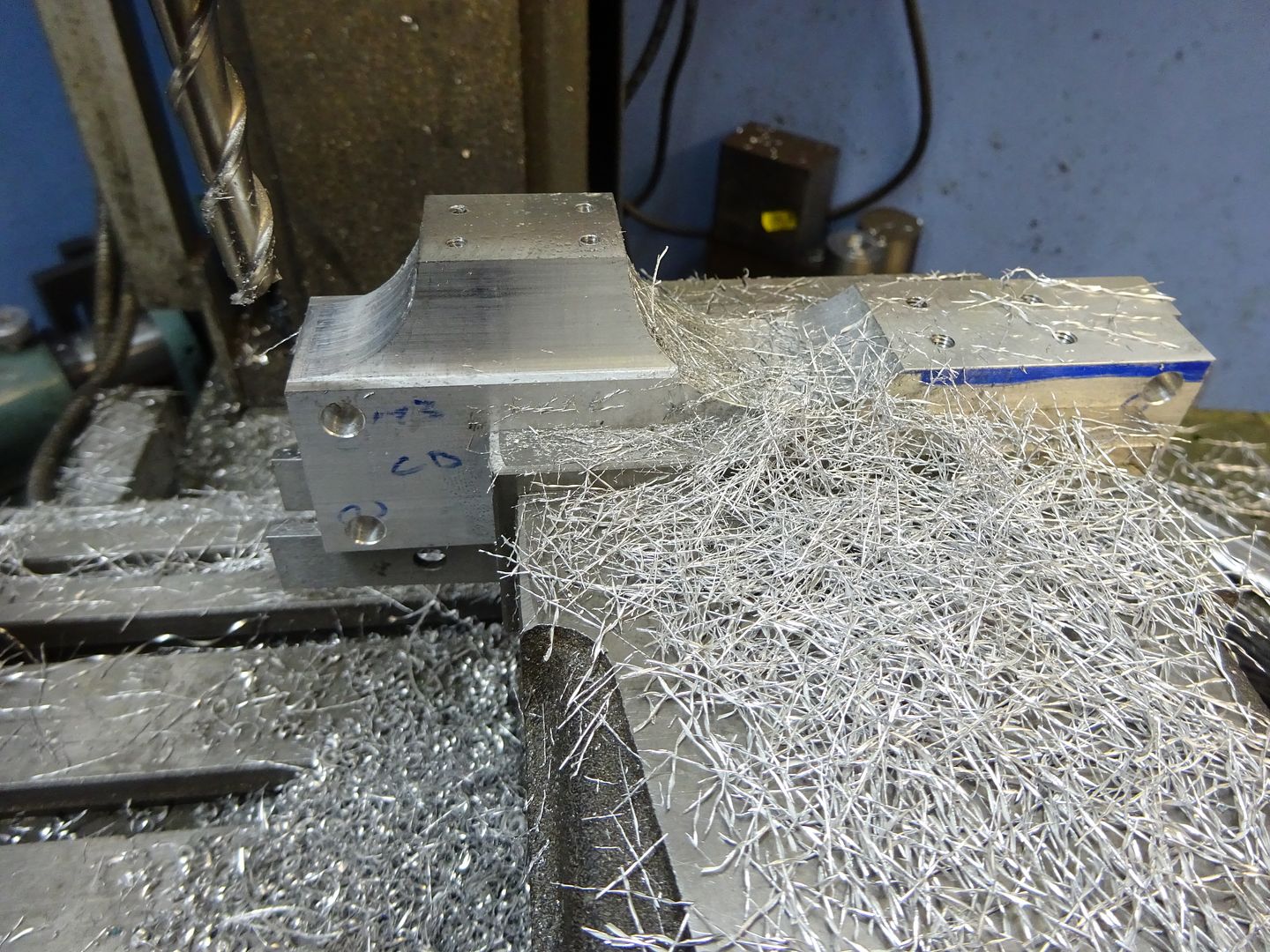
              BUT, some good and some not so good. I set up a length of 32mm square ali bar in the vice and made a start getting in some practice. I was using a 10mm 4 flute TiN coated HSS end mill, I meant to order a 3 flute cutter but forgot and ordered the 4 flute. I reduced the top of the bar with two 1.0 mm cuts and then finished with a 0.1 mm finishing cut. I got a really good finish but I noticed that there is a tiny step between the cuts, not much but I can feel it with a finger. Question: is it ok to run the cuts back and forth or should they all be made from the same direction.

              I then started to face the end of the bar but struggled here as you can see from the photo. I was up milling not down and I tried numerous spindle speeds/light cuts/heavier cuts but I couldnt improve it. Checked everything was tight which it was, the surface finish shows that the cutter is just not cutting correctly. Is the cutter the wrong type for using on aluminium..?

              Ron

              dsc06132.jpg

              #376445
              David Standing 1
              Participant
                @davidstanding1

                Ron

                Uncoated cutters are better for aluminium. Look at yours in the picture, the aluminium is stuck to the cutter, so it is not cutting properly.

                You can get the residue off the cutter by careful use of a Stanley knife blade, don't take the edges off the cutter though.

                Cutting fluid will help, paraffin or WD40.

                #376448
                Russell Eberhardt
                Participant
                  @russelleberhardt48058
                  Posted by Ron Laden on 17/10/2018 15:36:22:However in Y there is an 11 thou difference from the table front to the rear over 5 inches. The column is leaning forward or I wonder is it..? I havnt checked the head gib, could it be possible that the error is there, what do you guys think..? If it is the column to base I will set too and adjust it

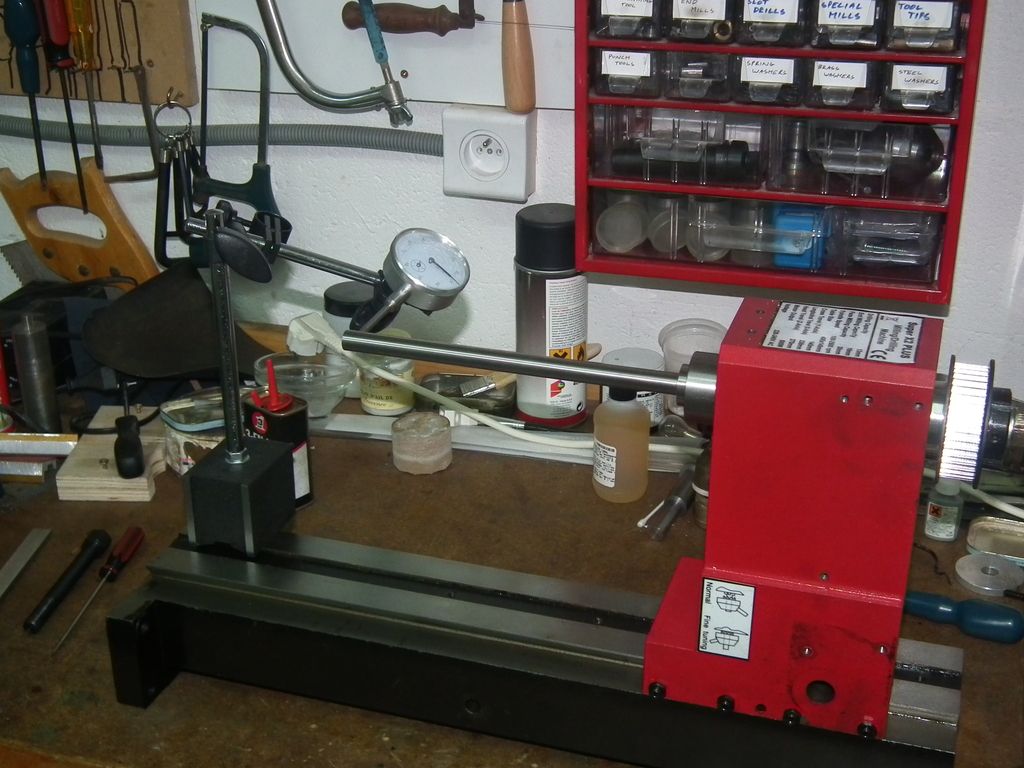
                  I would play with the mill as it is for a while. When you decide to correct the alignment it will be best to remove the column and check the alignment of the head against the column first. This is what I did:

                  dscf1953.jpg

                  With a test bar (or some silver steel held in a collet) in the spindle, push the head along the column checking against the dial gauge. I found that the vertical alignment was good but that the head needed to be rotated slightly for correct alignment.

                  Once that is done you can mount the column and check that it is vertical correcting it either by scraping or using shims.

                  Russell

                  #376450
                  Vic
                  Participant
                    @vic

                    Ron, yes, you can run the cutter back and forth. Sometimes you get a better finish up milling sometimes down. That’s what I’ve found at least. Cutting both ways also gets the job done quicker provided the machine/cutter/material will allow it.

                    #376451
                    Ron Laden
                    Participant
                      @ronladen17547

                      Thanks David

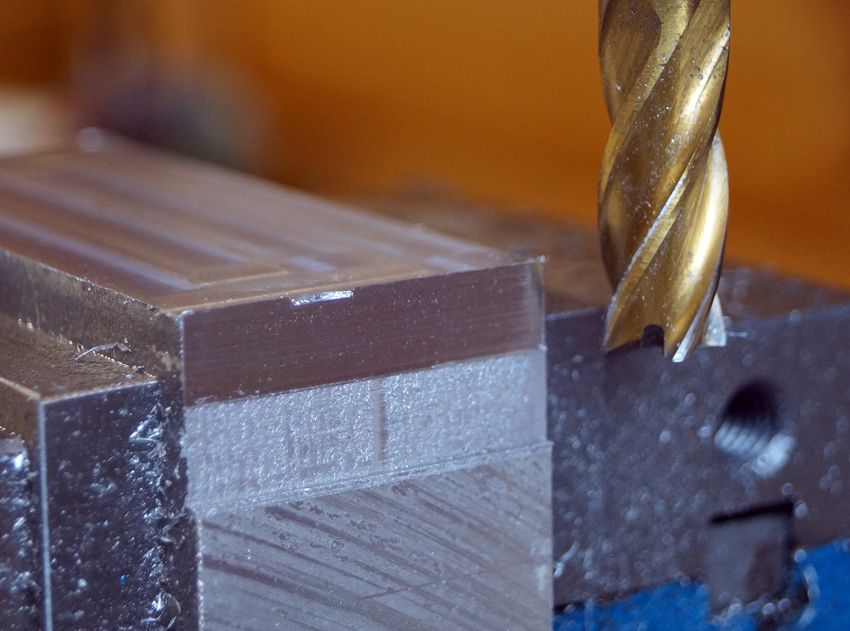
                      Just tried again with some WD40 and it transformed it, I was assuming with ali it was ok dry.

                      dsc06135.jpg

                      #376455
                      Ron Laden
                      Participant
                        @ronladen17547

                        Thanks Russell, I will give that a go when I come to adjust the alignment.

                        Thanks Vic, would I be correct in thinking the slight steps between the cuts come from cutting up and down.

                        Ron

                        Edited By Ron Laden on 18/10/2018 10:23:48

                        #376457
                        SillyOldDuffer
                        Moderator
                          @sillyoldduffer

                          Posted by Ron Laden on 18/10/2018 09:21:31:

                          I then started to face the end of the bar but struggled here as you can see from the photo. I was up milling not down and I tried numerous spindle speeds/light cuts/heavier cuts but I couldnt improve it. Checked everything was tight which it was, the surface finish shows that the cutter is just not cutting correctly. Is the cutter the wrong type for using on aluminium..?

                          Ron

                          dsc06132.jpg

                          Welcome to the world of Learner Driver milling!

                          Your cutter isn't ideal for Aluminium – though they're what I use, you have to keep an eye on them. As David said, Aluminium has stuck to the cutter, which blunts it. Aluminium is a soft metal with a lowish melting point – a blunt cutter, or new one applied at the wrong rpm, depth of cut or feed-rate, or one where the swarf can't escape, will tend to collect Aluminium on the cutting edges and once that starts it rapidly gets worse. Good news – the cutter isn't ruined, but you have to get the aluminium off somehow.

                          As a beginner I thought Aluminium would be a good metal to learn on. Some Aluminium alloys don't machine well whatever you do, and it's generally a little difficult, especially if you use the 'wrong' cutter. With hindsight, I think free-cutting mild steel is more forgiving. My favourite machining metal is brass – even though the splinters are a pain.

                          Don't be disheartened, getting the best out of the mill needs practice.

                          Dave

                          #376458
                          David Standing 1
                          Participant
                            @davidstanding1
                            Posted by Ron Laden on 18/10/2018 10:00:40:

                            Thanks David

                            Just tried again with some WD40 and it transformed it, I was assuming with ali it was ok dry.

                            dsc06135.jpg

                            Ron

                            Good result, well done!

                            Much of my machining is by guesswork, and as has been said there is no substitute for getting in the workshop and making swarf, and no shame in asking for advice if it doesn't go to plan! yes

                            #376480
                            Mark Elen 1
                            Participant
                              @markelen1

                              Hi Ron,

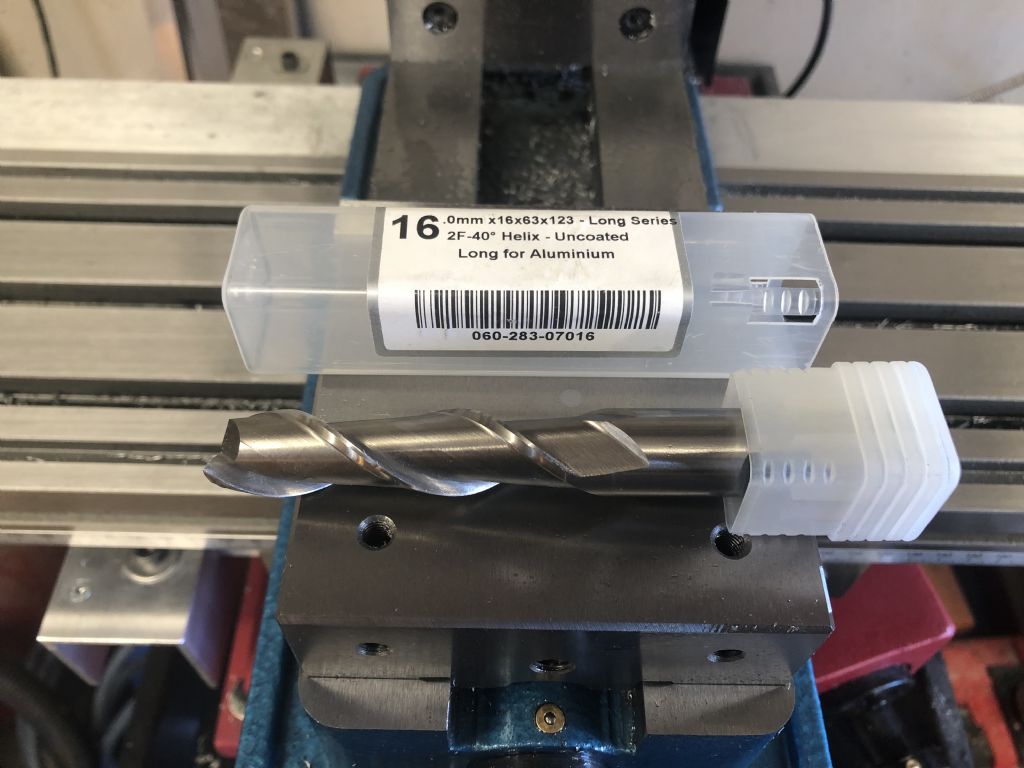
                              I did exactly the same (tried cutting Ali with a TiN cutter) when I got my mill. Things improved a lot when I got some uncoated HSS cutters for Ali. They cut it like it’s butter.

                              I tend to take the roughing cuts conventional milling and then take the last .1mm climb.

                              772597f1-388e-4f65-908e-e95262c340e2.jpeg

                              2a434f61-00ac-4097-a7d7-62e581670d8b.jpeg

                              I’ve found the easiest material to mill so far has been Cast Iron, just it’s not the nicest thing to clean up after.

                              Cheers

                              Mark

                              #376487
                              Ron Laden
                              Participant
                                @ronladen17547

                                Hi Mark, thanks for that.

                                I was looking at that very cutter this morning, I think I will get myself one.

                                Ron

                                #376490
                                Ron Laden
                                Participant
                                  @ronladen17547

                                  Well I didnt expect that..? When I set up the mill yesterday I adjusted the X and Y gibs and I did adjust the X a tad tight but it was ok and quite usable. I went out this morning and came back to the workshop a few hours later, the door and window had been closed and the shed had been sitting in full sun. The temperature in the shed was 85 degrees and I guess when I set the gibs it was around 60 degrees. To my surprise the X handwheel was seriously tight, uncomfortably so. At first I thought that something had got caught in the leadscrew but no, it was fine. So I could only put it down to the high temp, I backed off the gib screws a tad and it eased up. I realise that the table and base are largish lumps of cast iron but it surprised me that it tightened that way. I guess if you have the gib screws up close it would only take a couple of thou across 4 screws for this to happen. Unless of course its something else but I cant see what.

                                  #376491
                                  Mike Poole
                                  Participant
                                    @mikepoole82104

                                    Regarding cutting both directions, if you have any backlash in your feed screw then when you are climb milling you risk the job being pulled in by the cutter and taking a big bite, this can break the cutter. Climb milling with a light cut and perhaps a bit of extra drag by lightly applying the axis locks can give a good finish. Backlash can be near eliminated on machines with ball screws or controlled with a backlash eliminator which can be mechanical or hydraulic. Heavy cuts on a normal machine are probably best avoided in the climb milling mode.

                                    Mike

                                    #376553
                                    Mark Elen 1
                                    Participant
                                      @markelen1

                                      Hi Ron,

                                      I hope you get as much enjoyment using your mill as I do. I have found I’m much happier using the bigger cutters but only taking little bites with them. I’ve got some 1/4” slots to do in some steel soon that I’m not overly looking forward to. These little mills aren’t the most rigid, so you have to take it easy. Having said that, I broke a 4mm carbide cutter on Ali early on, worked out I wasn’t running it fast enough and too slow with the table.

                                      It’s all a learning curve.

                                      Cheers

                                      Mark

                                      #376577
                                      Kettrinboy
                                      Participant
                                        @kettrinboy

                                        Hi Ron

                                        For milling aluminium alloys consider getting some roughing cutters or ripper cutters ,they make a big difference as they put less load on the machine when you have larger amounts to remove , then just use your normal cutters for finishing , the steps between passes you are getting is proof of the misalignment you found while tramming the head , I would think around 2 thou or better total indicator reading over a 5 inch sweep should be achievable with some fiddling , that should be good enough for most model engineering work.

                                        regards Geoff

                                        #376579
                                        Ron Laden
                                        Participant
                                          @ronladen17547

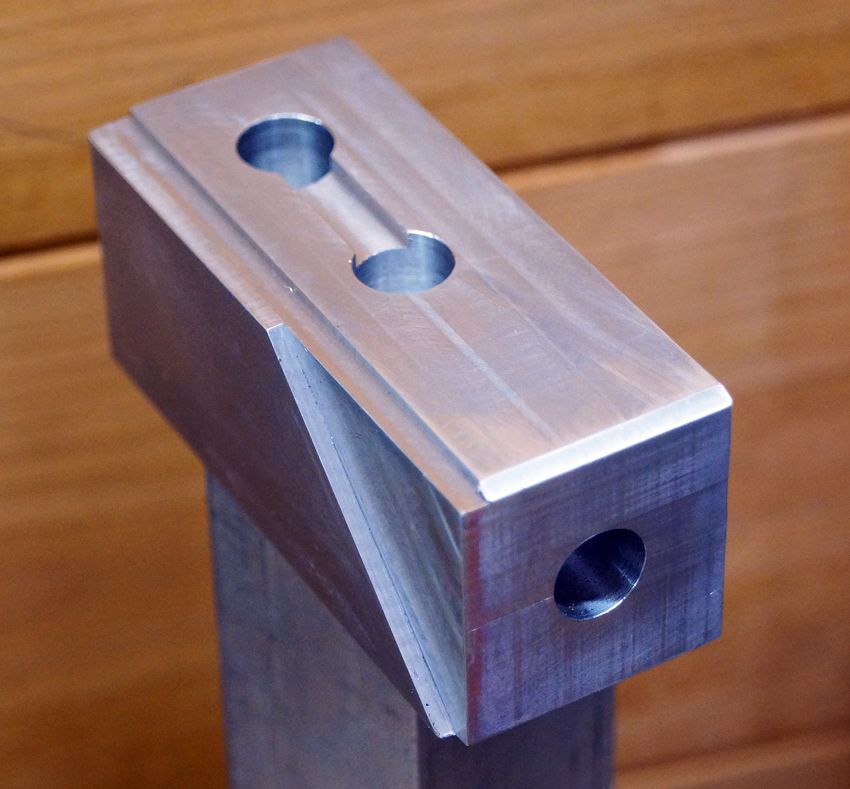
                                          I was up early this morning and managed to get in some practice on the mill, did a bit of a test piece as per the photo.

                                          All done with 6mm and 10mm 4 flute TiN coated endmills which I now understand are not ideal for ali but with WD40 they seemed just about ok.

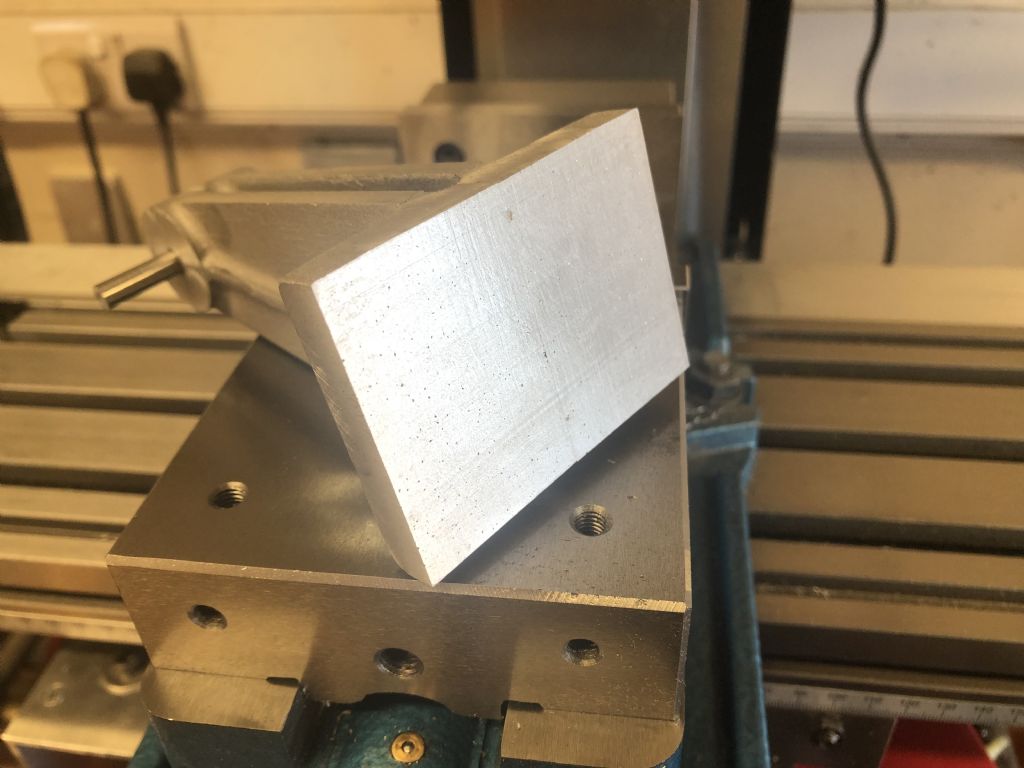
                                          I tried different cuts/different speeds, up and down cutting, though most of it was done with up cuts as I read that up cutting is probably best for beginners. Holes I did with the 10mm cutter and I used the vice swivel to produce the angle cut. For a first attempt I am really pleased with the surface finish, its not perfect but pretty good.

                                          I really enjoyed making it and although its a simple part, I learned quite a lot in the 2 hours.

                                          Ron

                                          dsc06143.jpg

                                          #376587
                                          David Standing 1
                                          Participant
                                            @davidstanding1

                                            yes

                                            #376589
                                            Michael Gilligan
                                            Participant
                                              @michaelgilligan61133
                                              Posted by Ron Laden on 19/10/2018 09:09:57:

                                              I was up early this morning and managed to get in some practice on the mill, did a bit of a test piece as per the photo.

                                              [… ]

                                              I learned quite a lot in the 2 hours.

                                              .

                                              Talk about a 'steep learning curve'

                                              … That's like climbing el Capitan !!

                                              MichaelG.

                                              #376592
                                              Anonymous
                                                Posted by Ron Laden on 19/10/2018 09:09:57:

                                                I was up early this morning and managed to get in some practice on the mill, did a bit of a test piece as per the photo.

                                                Looks pretty darn good to me. thumbs up

                                                A few comments:

                                                A 4-flute TiN cutter will work fine on aluminium alloy. The use of 3-flute cutters is usually recommended to give extra space for swarf. So as you increase chip loads it might be a good idea to go for 3 flutes. The TiN coating will be ok for aluminium, but isn't needed, so no need to pay for it. More esoteric coatings like TiAlN need to run hot (above the melting point of aluminium) to work so are rather less useful.

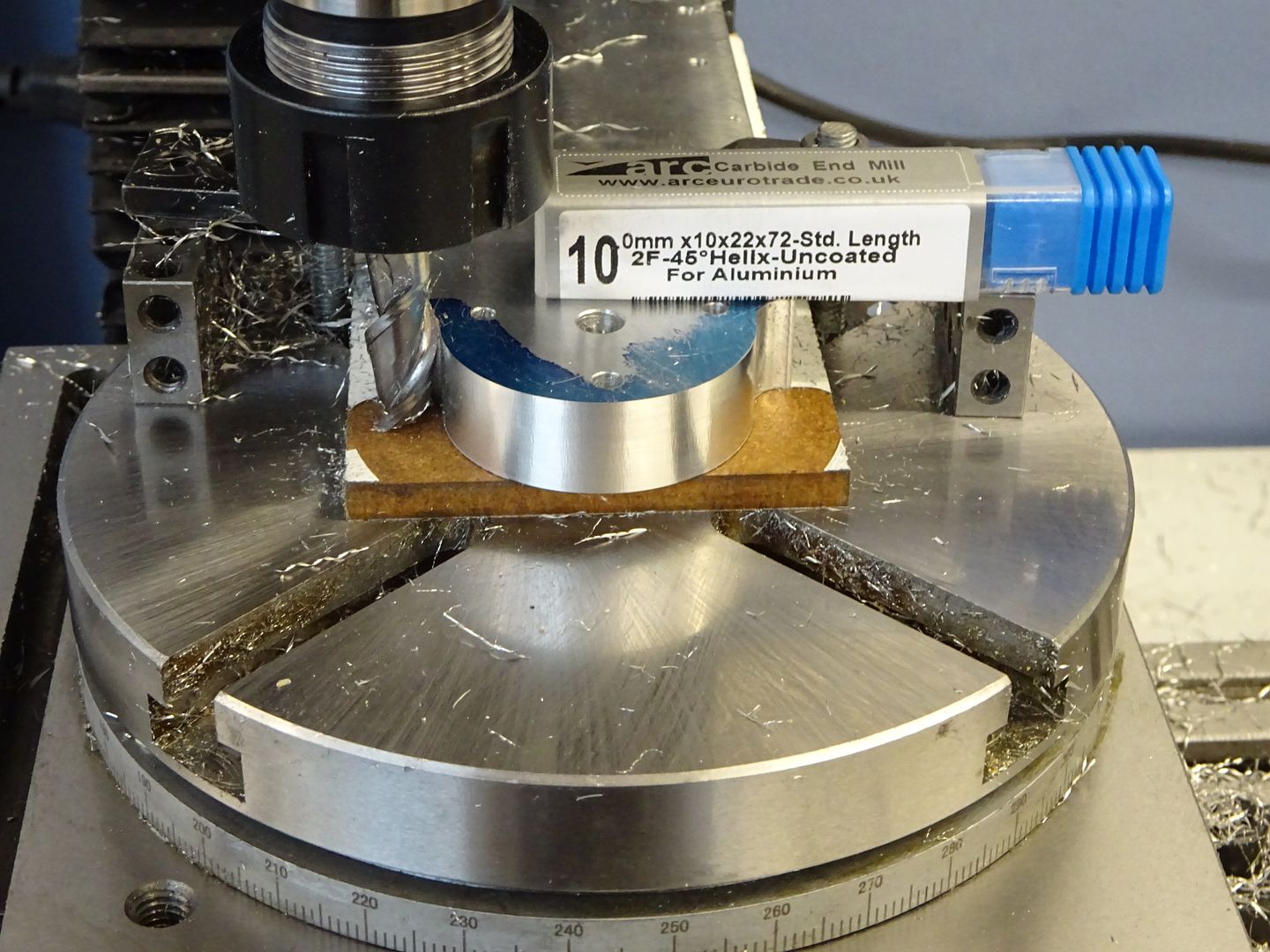
                                                The cutters discussed above seem to be long series? Unless you're taking really deep cuts there's no need to use them. They'll deflect more, and you pay for the side flutes so if you're not going to use them it's a waste. From memory the standard 3-flute 10mm cutter I use has a flute depth of around 22mm.

                                                Although not definitive climb milling tends to give a better finish on metals, but not on plastics. It's surprising how big a chip load you can take without breaking a cutter. My mill has around 15 thou backlash and it can grab if I'm over-ambitious, but fingers crossed I haven't broken a cutter yet. I generally leave about 0.5mm for a finish cut with climb milling. It's worth noting that with shallow widths of cut the chip load is much smaller than you might think from the feedrate – search for chip thinning.

                                                Generally I cut every which way, I'm too idle to keep winding the handle back to cut in the same direction each time.

                                                Andrew

                                                #376630
                                                JasonB
                                                Moderator
                                                  @jasonb

                                                  As Andrew says the long series ones from ARC are not ideal for all jobs particularly as the diameter gets smaller where you may get some chatter when using just the end of the cutter, hopefully Ketan will add some standard length ones to the range. Even on a long 18mm cut like this there is still a lot of unused flute so shorter will be stiffer and allow greater depth of cut without deflection

                                                  In the mean time there are standard length Aluminium specific ones in his carbide range that cut even better than the HSS ones and if looked after will last longer so the slight increase in cost is cancelled out.

                                                  #376649
                                                  Ron Laden
                                                  Participant
                                                    @ronladen17547

                                                    Hi guys, I havnt replied individually but I have taken on board all your advice, many thanks.

                                                    Jason, a question, how did you cut the radiused sides to the left hand block in your first picture. I imagine you laid it on its side, but what tool did you use.

                                                    Edited By Ron Laden on 19/10/2018 15:17:49

                                                    #376650
                                                    JasonB
                                                    Moderator
                                                      @jasonb

                                                      Ron, have a look part way down this page for making those parts.

                                                    Viewing 25 posts - 101 through 125 (of 325 total)
                                                    • Please log in to reply to this topic. Registering is free and easy using the links on the menu at the top of this page.

                                                    Latest Replies

                                                    Viewing 25 topics - 1 through 25 (of 25 total)
                                                    Viewing 25 topics - 1 through 25 (of 25 total)

                                                    View full reply list.