I’m thinking of getting a medium-sized shaper. Convince me out of it.

I’m thinking of getting a medium-sized shaper. Convince me out of it.

Home Forums Manual machine tools I’m thinking of getting a medium-sized shaper. Convince me out of it.

Viewing 25 posts - 1 through 25 (of 58 total)
  • Author
    Posts
  • #827228
    Duff Machinist
    Participant
      @duffmachinist36701

      Hello all,

      TLDR version at the bottom of the post.

      Well, I’ve been doing okay with a small Perfecto 7″ shaper for small parts. Between that, a drill press and a Myford lathe, I’ve been able to do most jobs. However, I’m now needing something a little larger and more versatile, in other words a milling machine (as well as a longer bed lathe, but that’s not the topic here and I already have my very wishful list). The type of job varies from model making to a variety of miscellaneous work, but stuff no larger than a small car engine block (it can all be moved easily by one person). My apologies for not being specific, but the jobs really do vary a lot, and all for my own “pleasure” or jobs for friends.

      However, I’ve been thinking that a larger shaper (something in the 200-400kg bracket, no larger) would suffice. My reasoning is based on the following…

      Advantages of a shaper
      1. Cheap second-hand. (£100-300 for a good 400kg shaper with a 10″ stroke). I’m not rich at all, so this is a major consideration.
      2. Can do few things that a mill can’t do, or at least not easily do. The versatility of the shaper is limited by how much one is able to think outside the box (which I like), though I’m not sure its ability to do spiral thingies is possible ;-).
      3. Not noisy (at least the ones I’ve heard), and almost zen.
      4. Tooling is easier and cheaper to obtain, make, maintain, design, etc.
      5. The machine itself is easy to maintain.

      Disadvantages of a shaper compared to a mill
      1. A mill can do more non-shaper jobs that a shaper can do non-milling jobs.

      Advantages of a miller
      1. More versatile – can do some jobs a shaper can’t do. However, its versatility depends on the variety of accessories available for the machine (additional expense). Nonetheless, this would make my drill press redundant and reduce the (mis)use of my lathe.
      2. Faster at most jobs than a shaper, but slowness is not an issue.

      Disadvantages of a miller compared to a shaper
      1. More expensive £3,000 and upwards for something like an Aciera F3, Scaublin 13, Deckel, Mikron WF2, Sixis, etc. (no larger). These are easier to find over here on the Continent than in the UK, and can be bought if I sell a few things, but I would need to justify its cost by using it a lot. However, the second-hand value should hold if I ever pass it on.
      2. Much noisier, which is a serious issue for where I live, and not to be dismissed. If someone can suggest what is the quietest mill, I may be swayed otherwise.
      3. More parts to go wrong and thus more difficult to maintain, particularly those that are no longer made (see about list in point 1).
      4. Tooling is much more expensive and less easy to maintain.

      No doubt I’ve missed a few considerations. If so, please mention them, and convince me why I should get a miller.


      TLDR: Low purchase cost and noise level favour the shaper. Low versatility can be compensated for with the drill press and lathe, but not entirely. Convince me why I should get a miller.


      Cheers,
      Duff.

      #827242
      Les Riley
      Participant
        @lesriley75593

        The obvious answer is to get both!

        I have an Elliot 10M shaper but it doesn’t get used very much because I have vertical and horizontal mills.

        I do agree that the shaper is a very satisfying thing to use.

        #827244
        bernard towers
        Participant
          @bernardtowers37738

          I have both but wouldn’t be without either. Shaper does fabulous flat surfaces with no marks and splines and keyways. I do a job which is like long straight knurling on 316 and the shaper does it with ease and superb finish. The mill for everything else.

          #827247
          Andrew Crow
          Participant
            @andrewcrow91475

            I only have a light vertical milling machine so my shaper gets used mainly for roughing out bigger lumps of steel or castings prior to finishing on the mill.

            Big advantage is they are cheap to buy including the tools which are also easily sharpened.

            Andy

            #827252
            Nigel Graham 2
            Participant
              @nigelgraham2

              I would not regard the mill as a replacement for a drilling-machine. For tasks needing little more than a few holes the bench-drill is often more convenient than setting up the milling-machine.

              The shaper is excellent for some tasks.

              I have not heard of helical work on a shaper but I suppose short but very long-pitch helices may be possible with the work held in some form of dividing-head driven by diverting the table-feed to that.

              It is also possible to shape large concave radii by either a worm-and-quadrant rotary feed on the clapper-box, or an attachment that moves the work on a sub-table moving on fixed vertical and horizontal slides, the cutting being axial.  I have used the former method, to cut a saddle with perhaps a 100mm radius.

              #827255
              Clive Foster
              Participant
                @clivefoster55965

                The shapers ability to run unattended makes it almost a time machine. Whilst it is (slowly) doing the prep work of cleaning up raw stock almost to size you can be getting on with other things. Usually in my case setting up the mill for the finishing jobs or adding the detail stuff to drawings. The latter being most likely when I have batch to do.

                A not inconsiderable advantage for folk with smaller machines and smaller budgets is being able to produce material blanks largely “one cut oversize” reduces the amount of work that has to be done with milling cutters so they last much longer. As most folk aren’t able to sharpen milling cutters, so new replacements have to be bought when blunt, but can do shaper cutters just fine the economic advantages can be significant. Not so much these days when decent milling cutters are, in real terms, much cheaper than they used to be but still worth while. In general the CNC folk can give their cutters a much easier ride for considerably better life but that is £££.

                What I’d really like for mine is a sort of intelligent DRO and independent down feed drive system so I can easily set it up to cut to a specific depth and handle steps or similar features all on its ownsome.

                Maybe next year I will finally get round to adding auto-stop switches on magnetic carriers to my Elliott 10M so it stops at the end of the cut. Much better than listening out for end of cut so I can go and set the next one or letting it run off the screw when I can’t get there right now. 15 years procrastination since rough sketches ought to be enough.

                Clive

                #827280
                SillyOldDuffer
                Moderator
                  @sillyoldduffer

                  Though shapers do what they do very well, they are very limited compared to a vertical milling machine.  The arrival of general-purpose vertical milling machines pretty much made shapers redundant in the past, and, once common, they quickly disappeared.   One reason is space: a commercial workshop makes more money from a mill of the same footprint, and a home-workshop may not have room for both a mill and a shaper.  Most workshops, most of the time, are better served by a mill.

                  I don’t claim my workshop is typical, but so far, I have never had a job that absolutely demanded a shaper.    Several where a shaper would have been easier, but never ever essential. My lathe and mill do all that’s needed.   As I’m short of space, no shaper, not even the small one I was offered as gift!

                  Duff Machinist’s post covers the pros and cons of shapers versus mills very well. I suggest scoring them.  For example, I rate versatility much higher than ” Cheap second-hand.”

                  I suggest the statement “The versatility of the shaper is limited by how much one is able to think outside the box (which I like)” is over optimistic.  There’s a long list of list of important things a shaper cannot do that are straightforward on a mill:  drilling;  countersinking, boring, moving the cutter in X,Y and Z;  rotary table jobs; setting work, or the head, at an angle;  fly-cutting; gears; etc. etc.  Most of them can’t be done on a shaper by ‘thinking outside the box’.   And the sentiment ignores an important aspect of a mill’s versatility, which is it can do many operations without taking the job off the table. Mills save lots of time. Shapers may be excellent at what they’re good at but jobs have to be moved to another tool for almost all other operations.

                  I’d also shine a bright light on the notion that shaper tooling is cheaper than milling cutters. Not when time is costed!  I’d rather buy twist drills than grind spade-drills from HSS, even if the HSS was free.

                  In my workshop substituting a shaper for a mill would be foolish.  Owning both makes much more sense, but I rarely need a shaper and space is more valuable than the tool.  A 400kg shaper in my workshop is unacceptable.

                  Dave


                  #827282
                  John MC
                  Participant
                    @johnmc39344

                    A reason not to get a shaper, as told to me by a long gone friend, was that it spends half its time, while running, doing nothing!

                    That’s not quite true, but there is something in that.

                    Out of curiosity, I looked for shapers on Ebay, seemed to be very few for sale, once I had actually managed to find them.

                    Some fifty years ago the workshop I did my apprenticeship in, had one shaper, don’t ever recall it being used.  The planer (shaper on steroids) would sit idle for months at a time.  Obsolete machines then let alone now.

                    I know of two deceased ME workshops recently cleared, lathes and mills sold, a shaper went to the scrap man.  With this in mind I would go for a mill.


                    #827284
                    Dave Halford
                    Participant
                      @davehalford22513

                      Duff,

                      Stick with what you know, for milling car engine blocks and heads you don’t need a toy-town miller anyway.

                      #827296
                      JasonB
                      Moderator
                        @jasonb

                        I suppose the shaper is OK if all you want to do is skim the heads & blocks but I’d not want to use one if you needed to rebore it or drill out and tap stripped threads or get a broken stud out.

                        #827302
                        Dave S
                        Participant
                          @daves59043

                          I had a shaper, I no longer have a shaper. That should be enough argument I think.

                          I had a shaper before I had a mill, when the mill arrived there wasn’t enough room for both, and I do not miss the shaper.

                          Dave

                          #827305
                          Andy Stopford
                          Participant
                            @andystopford50521

                            I used to have an Eliott 10M – unfortunately I don’t have room for such a thing now, but if I did, I would get one.

                            A mill is more versatile, but the shaper isn’t to be underestimated in this regard – though some of the more wacky operations need special, difficult to obtain, accessories so you’d have to make your own, e.g. gear generating (straightforward gear cutting with a form tool, is easy and cheap if you make the cutter yourself).

                            It depends what you’re using it for, but if you do go down the shaper route, I’d get a bigger one than the 10M – 14″ at least – it’s difficult to fit anything other than a vice on the smaller tables.

                            I wouldn’t say they’re that quiet, if you run them fast the clapper box can make quite a racket. They’re also rather messy, spraying chips all over the floor. Of course you’d rig up a box to catch them…one day.

                            As has been said, milling is faster, and in an industrial environment that’s obviously true, but compared with the average bench top hobbyist mill, I reckon even a small shaper like the Eliott would be considerably faster.

                            I’m afraid I’ve ignored Duff’s request to convince him of the virtues of a mill – sorry about that, best to just get both (I wouldn’t mind a hand operated shaper, but they often cost more than a big one).

                            #827309
                            Joseph Noci 1
                            Participant
                              @josephnoci1
                              On Clive Foster Said:

                              The shapers ability to run unattended makes it almost a time machine. Whilst it is (slowly) doing the prep work of cleaning up raw stock almost to size you can be getting on with other things. Usually in my case setting up the mill for the finishing jobs or adding the detail stuff to drawings. The latter being most likely when I have batch to do.

                              A not inconsiderable advantage for folk with smaller machines and smaller budgets is being able to produce material blanks largely “one cut oversize” reduces the amount of work that has to be done with milling cutters so they last much longer. As most folk aren’t able to sharpen milling cutters, so new replacements have to be bought when blunt, but can do shaper cutters just fine the economic advantages can be significant. Not so much these days when decent milling cutters are, in real terms, much cheaper than they used to be but still worth while. In general the CNC folk can give their cutters a much easier ride for considerably better life but that is £££.

                              What I’d really like for mine is a sort of intelligent DRO and independent down feed drive system so I can easily set it up to cut to a specific depth and handle steps or similar features all on its ownsome.

                              Maybe next year I will finally get round to adding auto-stop switches on magnetic carriers to my Elliott 10M so it stops at the end of the cut. Much better than listening out for end of cut so I can go and set the next one or letting it run off the screw when I can’t get there right now. 15 years procrastination since rough sketches ought to be enough.

                              Clive

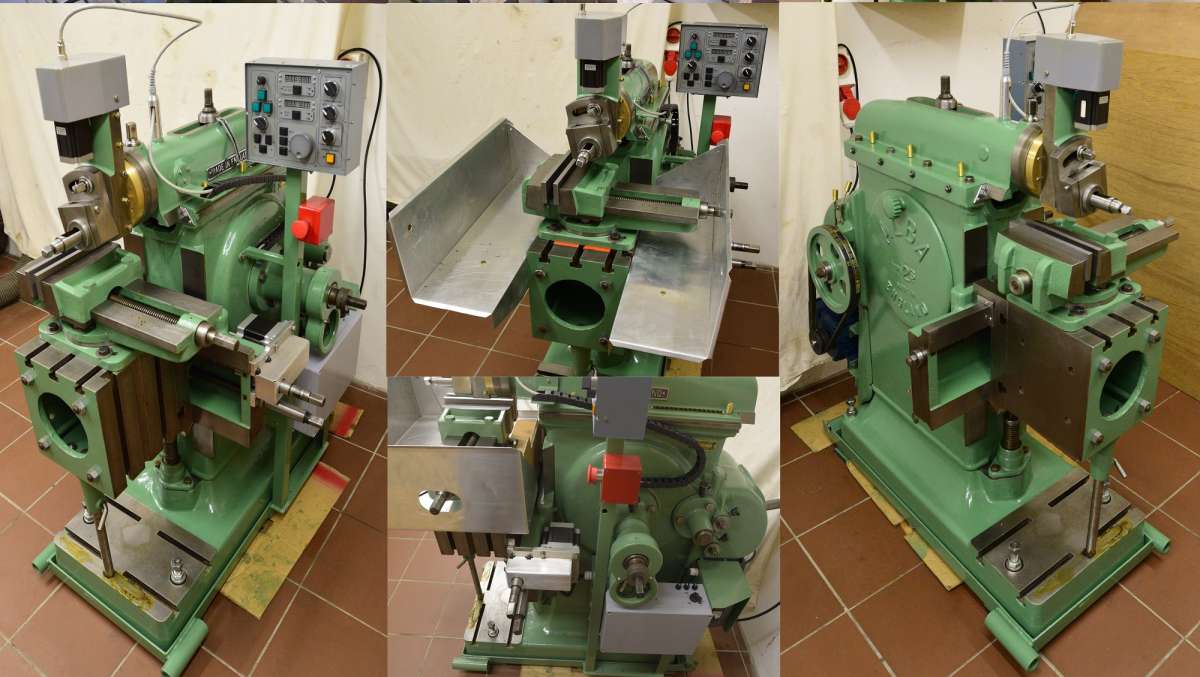
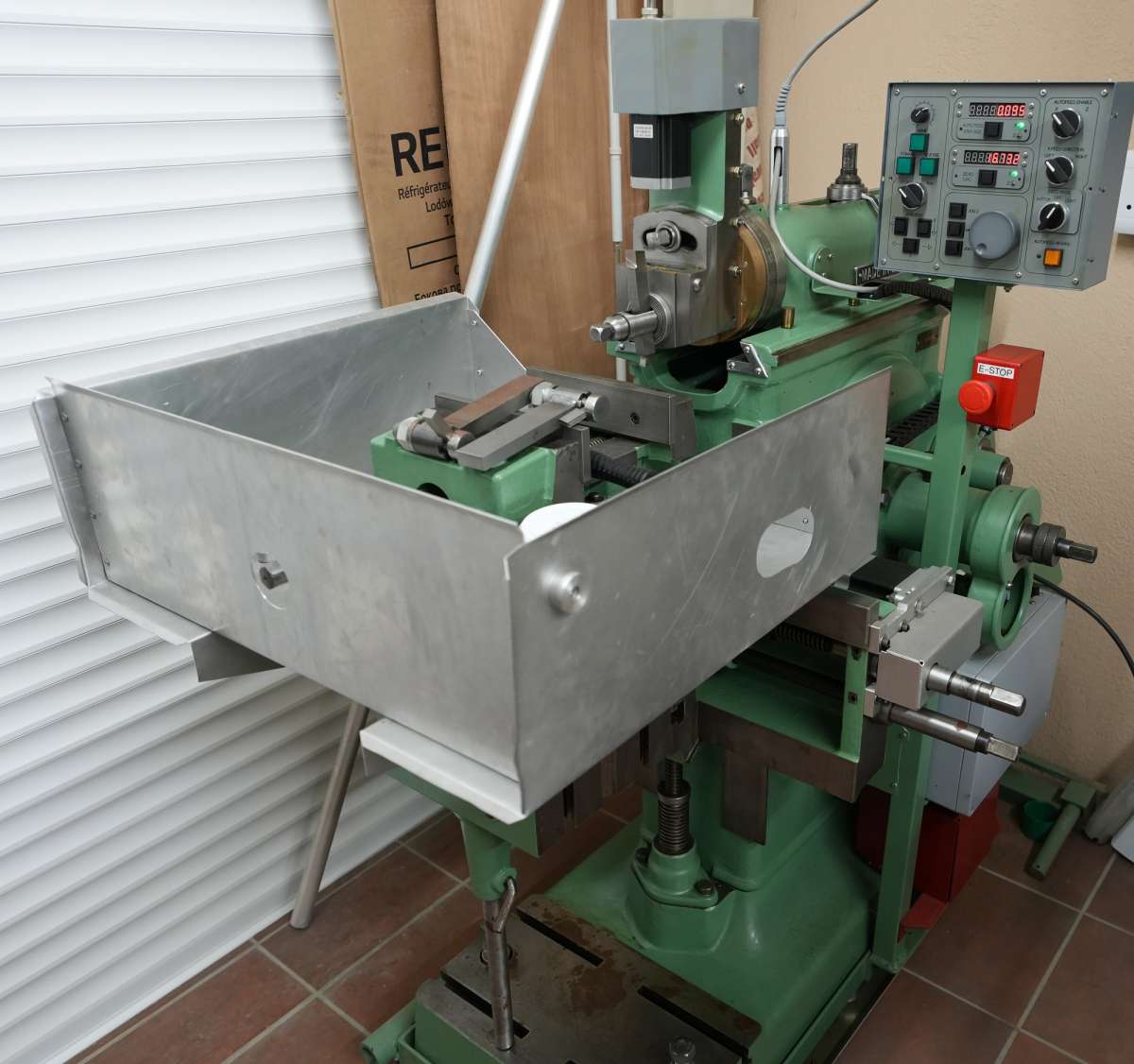
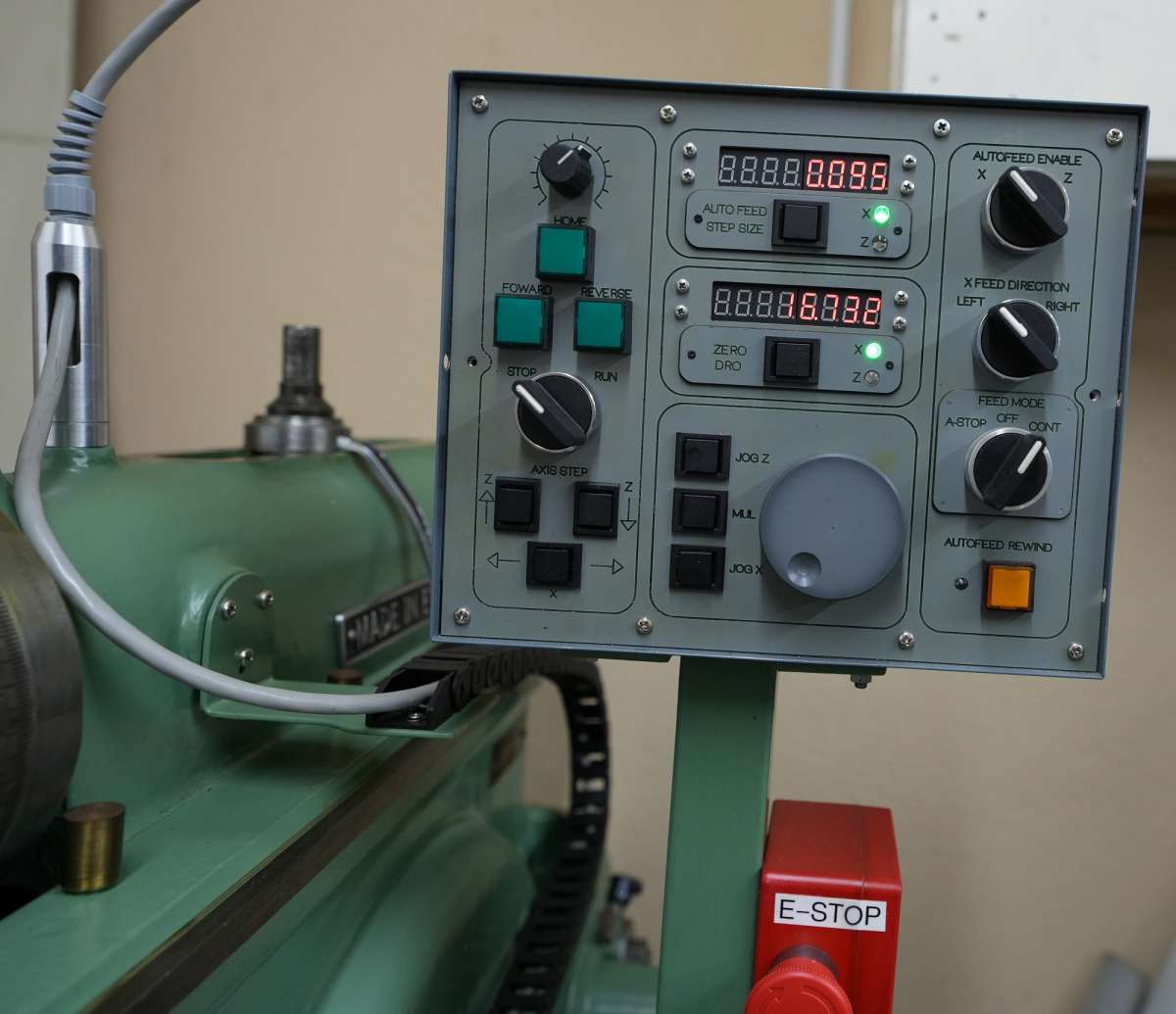
                              I have three small bench top mills (Emco FP-2’s) and I still use this shaper a lot!

                              ShaperCrop


                              Shaper1


                              ShaperControl


                              #827317
                              IanT
                              Participant
                                @iant

                                By a strange coincidence, when I was thinking about the pros and cons of this debate – I did think of your “CNC’d” Shaper Joseph before I saw your post at the end of this thread.

                                The shaper is relativly slow but doesn’t need continual supervision (as a mill does) and I remember (when reading about your shaper set-up in MEW) thinking how your automated ‘feeds’ would make its use even more convenient. I’d love to be able to set-up my shaper to surface across ‘X’ times, whilst down feeding to a set depth. I could (within reason) just let it get on with it. I guess some would say that a CNC mill could do the same but it would require CAD/CAM etc. and then things get a good deal more complicated (as I’ve already discovered).

                                Having just acquired a new Seig milling machine, I’ve been busy getting used to it and acquiring a whole new set of tooling for it too…and it’s not been “inexpensive” to do so…

                                Anyway, I think it’s fairly simple to generalise about shaper vs mill. If you only have limited room, then the vertical mill wins over the shaper (and horizontal too for that matter) but I have the room, so that’s not a consideration. I normally use my (7″) shaper to size and prepare raw materials and often that will be all that is required. I don’t think having the new mill will change that (it hasn’t so far) but we will see. I enjoy using my shaper, so it’s not going anywhere soon but things do change (for everyone eventually) and then there may be a different set of factors to consider. Not (quite) there yet though..   🙂

                                Regards,


                                IanT

                                #827320
                                JasonB
                                Moderator
                                  @jasonb

                                  I’m interested about this working unattended being an advantage.

                                  To me the only reason why you can do that is a shaper is fairly slow.

                                  lets take a 50mm x 100mm  (2″ x 4″) block of steel that needs 3mm (1/8) taking off the top. Not sure if a medium shaper could do it in one pass or two and would a 0.05mm (0.002″)stepover be about right for a good finish? ( only used one at school) say 1 second per stroke and that is 30mins per pass. EDIT you would probably do a 100mm long cut so 15mins

                                  I could do that on a lightweight hobby mill in 3 mins with a insert face mill and probably less setup time than the shaper. Also no need to then transfer it to the mill for final finish cut as someone mentioned earlier. And it’s all set up if I want to start putting holes etc in it.

                                  Maybe that is why people ask how I get so many models made. Though that other 27mins would give you time to dust off the quorn castings😉

                                  #827323
                                  Clive Foster
                                  Participant
                                    @clivefoster55965

                                    Joseph

                                    I’m totally envious of your shaper control system. It really exploits the shapers ability to run unattended to the nth degree.

                                    SoD gives a very valid list of objections to using a shaper due to its perceived lack of versatility. However nearly everything on his can’t do on a shaper list can be managed almost as well on a pillar drill with decent co-ordinate table. Even more so if given good DRO and power down feed.

                                    Oversimplifying things a mill is essentially a drill with built in workpiece X and Y movement capability. So driving a mill to produce flat surfaces, slots et al is a fairly simple mind-set expansion from using an ordinary drill. With much less verbal encouragement when trying to set holes at precise spacing.

                                    With a shaper you have to mentally and procedurally separate producing the flat and linear features from the round ones. Which is different way of working.

                                    I’d say that these days in the home shop its DRO systems that really exploit the mills advantage as making quite complex jobs procedurally simple for folk who haven’t been professionally trained.

                                    A shaper equipped in the manner shown by Joe is, in principle, capable of unattended working to specified sizes in a manner similar to a conversationally programmed CNC lathe. Hard to object to having to transfer to another machine for adding teh round holes when the shaper is doing the flat stuff unattended effectively doubling your workshop productivity by running two machines at time. Given the inevitably limited hobby hours that a normal lifestyle permits  some attention to productivity is needed, even though its “just a hobby”, if you are ever to get anything done.

                                    It may be germane to note that no one ever complains that a lathe can, in factory trim, only do “round stuff”.

                                    Clive

                                    #827331
                                    Julie Ann
                                    Participant
                                      @julieann

                                      Over 20 years ago I acquired an 18″ shaper. Turned out to be one of my daftest decisions. I’ve never used it in anger. It has been broken for some years and in all that time I have never missed not be able to use it. It is now going for scrap as I need the space in order to set up an investment casting bench.

                                      There are very few things I could do on the shaper that I can’t do quicker and better on industrial vertical and universal horizontal mills. The one that springs to mind is a long (more than 4″) internal keyway or spline. But I’ve never needed to do that in 25 years in the current workshop. The horizontal mill has a 5hp motor and with a decent size face mill will remove metal far faster than a shaper.

                                      I am acutely aware that as I get older time is limited so speed of working is important to me.

                                      Julie

                                      #827334
                                      Clive Foster
                                      Participant
                                        @clivefoster55965

                                        As ever Jason makes an excellent point although very few folk will match his speed.

                                        However as ever its a scale thing. 5 minutes saved on a small job is of little consequence. 15 to 20 minutes on bigger ones soon starts adding up.

                                        My Bridgeport has far greater machining capability than a lightweight bench mill and, being 12″ to the foot scale guy rather than model maker, I have the need and cutters to exploit it. The limitation usually being how big a chip blizzard I care to cope with and sweep up. Can’t be doing with the hassle of an enclosure to really ramp up chips.

                                        Naturally bigger jobs means more time spent standing at the mill doing prep work so the unattended win is proportionately greater.

                                        I find it still well worth while to prepare stock in advance using the shaper, and Rapidor donkey saw, running essentially unattended to minimise the time spent standing at the Bridgeport. Running unattended means I can do anything whilst the shaper is busy. Whether turning some round bits, setting up for the next cut whilst waiting for a welding job to cool down, sharpening tools, explaining to the piano man why I won’t make an part for an 1880’s instrument or even, quelle horror, sweeping out and really organising the shop.

                                        Pre prepped stock, which may have been waiting days or even weeks, makes it much easier to squeeze useful work out of odd half hours here and there. Using Huffam wigglers it takes about a minute per axis to locate the centre point of the pre-prep so things like quite complex co-ordinate drilling (and tapping) jobs or moderately sexy features can easily squeeze into that odd half hour. Doing the whole thing on the mill may well burn up two or even three half hour slots. Or, more likely, wait the job till I have a clear afternoon to do it and something else.

                                        Ultimately it’s a mindset thing.

                                        Clive

                                        #827339
                                        JasonB
                                        Moderator
                                          @jasonb
                                          On Clive Foster Said:


                                          Pre prepped stock, which may have been waiting days or even weeks, makes it much easier to squeeze useful work out of odd half hours here and there. Using Huffam wigglers it takes about a minute per axis to locate the centre point of the pre-prep so things like quite complex co-ordinate drilling (and tapping) jobs or moderately sexy features can easily squeeze into that odd half hour. Doing the whole thing on the mill may well burn up two or even three half hour slots. Or, more likely, wait the job till I have a clear afternoon to do it and something else.

                                          Ultimately it’s a mindset thing.

                                          Clive

                                          But how long would these complex co-ordinates and other sexy things take if you did not have a mill?

                                          I too will rough out stock but that is to put on the CNC. I don’t stand and watch the CNC all the time but the big difference is that is doing work much faster than I could do on the manual machines and in one setup where I hay need multiple ones with jigs and fixtures if doing sexy 3D work.

                                          At the end of the day only the OP can really decide what he needs as we don’t know what he wants to machine or the type of work being done but if it were me having to choose either a mill or a shaper then the mill would win hands down. Yes you can drill and bore big holes on the lathe but setup and travel limit what you can do as well as how far the hole is from the edge of the work. For example how would you form an accurate 2″ hole with 2.5″ counterbore in the middle of a 12″ square with just a myford and a shaper?


                                          #827355
                                          Andrew Tinsley
                                          Participant
                                            @andrewtinsley63637

                                            The answer to your question is simple. If you have room for a shaper and a mill then get a shaper. Despite the naysayers, a shaper is a very useful machine and much underrated. I even cut gears on mine. If you don’t have the room or funds for both then get a mill first.

                                            Andrew.

                                            #827362
                                            JasonB
                                            Moderator
                                              @jasonb
                                              On Duff Machinist Said:

                                              I’m now needing something a little larger and more versatile,

                                              To me getting a bigger shaper only satisfies one of those two needs, its only going to be able todo the same work as the existing shaper just larger.

                                              The milling machines mentioned by the OP are all very versatile particularly if you can get them with some of the many attachments. Most had a slotting head, that would take care of gear cutting and splines for starters. I’ve even cut them on my mill and that does not have a slotting head but the quill still goes up and down.

                                              #827371
                                              IanT
                                              Participant
                                                @iant

                                                Here we go  – a video summary of what many here have already concluded…

                                                Mill vs Lathe vs Shaper

                                                Regards,


                                                IanT

                                                #827504
                                                Duff Machinist
                                                Participant
                                                  @duffmachinist36701

                                                  Thanks everyone for your kind and pragmatic observations and opinions. You’ve each made good points and it’s greatly appreciated.

                                                  …and I’m possibly closer to an answer. I think it is clear that while the mill is the king in the workshop, it does not rule them all. Meaning there are jobs that are best done, or can only be done, on other machines.

                                                  My little Perfecto does small jobs where I feel a mill would have difficulty, e.g., slotting very narrow grooves 2mm wide 15mm deep. Of course, there are always ways to work around a potentially difficult or complex job, but that’s an aside. I can’t see the Perfecto disappearing or not being used, but I’m wondering now if I really do need a bigger brother to the Perfecto, but stories of shapers going to the scrappy make me sad.

                                                  In a much considered hindsight, much of the work I do is making one-off jigs, as well as miscellaneous odds-and-sods (large format camera parts, [woodworking] plane parts, replacing broken plastic parts with appropriate metal parts, etc.) and the size of the work no greater than a large biscuit tin (rather than a small car engine block, think more closer to a 2-stroke lawnmower engine), and varying in complexity.

                                                  The mill is undeniably useful and will certainly be helpful for the work I do, whatever that might be in the future.

                                                  So…

                                                  I will get a small sized shaper, not least to save it from the scrapyard (yes, I know, it’s only a hunk of metal, but…). I will get a small/medium miller; which one will be another story. I have room for both, as well as…

                                                  …perhaps a pantograph…

                                                  …and perhaps a small jig borer…

                                                  …etc.

                                                  The video Ian links does indeed sum it up.

                                                  Oh, and Joseph has inspired me to “CNC” my Perfecto ;-).


                                                  Thanks again.

                                                  Duff.

                                                  #827573
                                                  Andy Stopford
                                                  Participant
                                                    @andystopford50521

                                                    There’s a jig borer in the classifieds.

                                                    #827583
                                                    old mart
                                                    Participant
                                                      @oldmart

                                                      Having a shaper is an addition to first having a lathe and a mill, assuming you have room for one.

                                                    Viewing 25 posts - 1 through 25 (of 58 total)
                                                    • Please log in to reply to this topic. Registering is free and easy using the links on the menu at the top of this page.

                                                    Latest Replies

                                                    Home Forums Manual machine tools Topics

                                                    Viewing 25 topics - 1 through 25 (of 25 total)
                                                    Viewing 25 topics - 1 through 25 (of 25 total)

                                                    View full reply list.