Colchester Triumph 2000 – Bridge Rectifier

Colchester Triumph 2000 – Bridge Rectifier

Home Forums Manual machine tools Colchester Triumph 2000 – Bridge Rectifier

Viewing 25 posts - 26 through 50 (of 53 total)
  • Author
    Posts
  • #832042
    danielcv
    Participant
      @danielcv

      you have to click into the white space to oopen the wiring diagram

      #832043
      peak4
      Participant
        @peak4

        I don’t have one of these lathes, so am not in a position to check anything.
        For what it’s worth Tony’s site does provide some explanation of how the brake works, but it seemed to vary with both time, and the manufacturer of the clutch pack.
        A couple of paragraphs each side of the photo of the green lathe
        https://www.lathes.co.uk/colchester/page9.html

        The manual which seems easily available from Internet Archive doesn’t seem to cover models with an electronic/electrical brake.
        https://ia600904.us.archive.org/34/items/lathe-manuals/Colchester%20Triumph%202000%20tour.pdf

        Bill

        #832047
        Pete Rimmer
        Participant
          @peterimmer30576

          https://www.lathes.co.uk/

          Make sure you ask him if he has a manual with that EP495 wiring diagram. I found one with 12 diagrams from EP410 to EP472 but none show any braking components or indeed any DC circuits.

          #832051
          danielcv
          Participant
            @danielcv

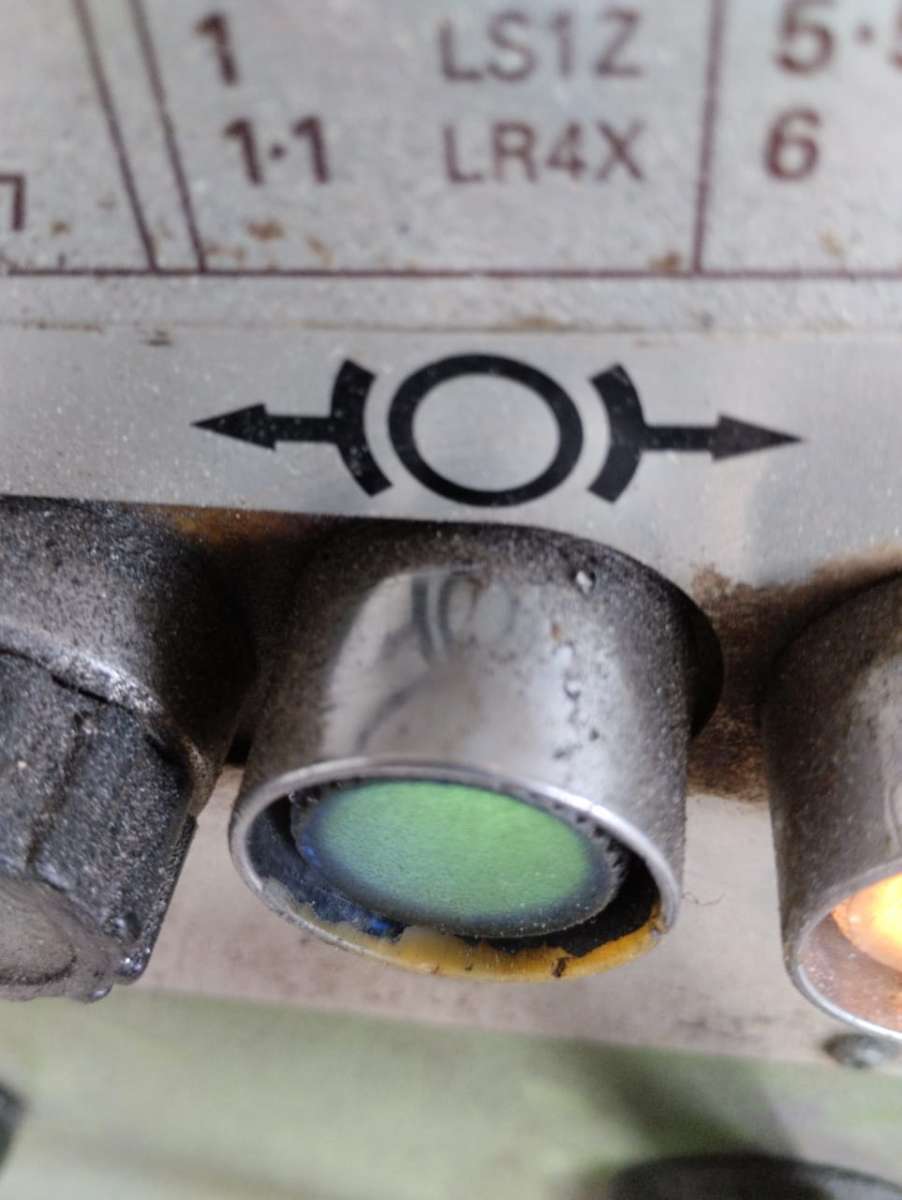
            I think the question of the brake could be clarified here – this button on this lathe, does activate or deactivate the brake:WhatsApp Image 2026-01-10 at 16.08.59

            #832053
            danielcv
            Participant
              @danielcv

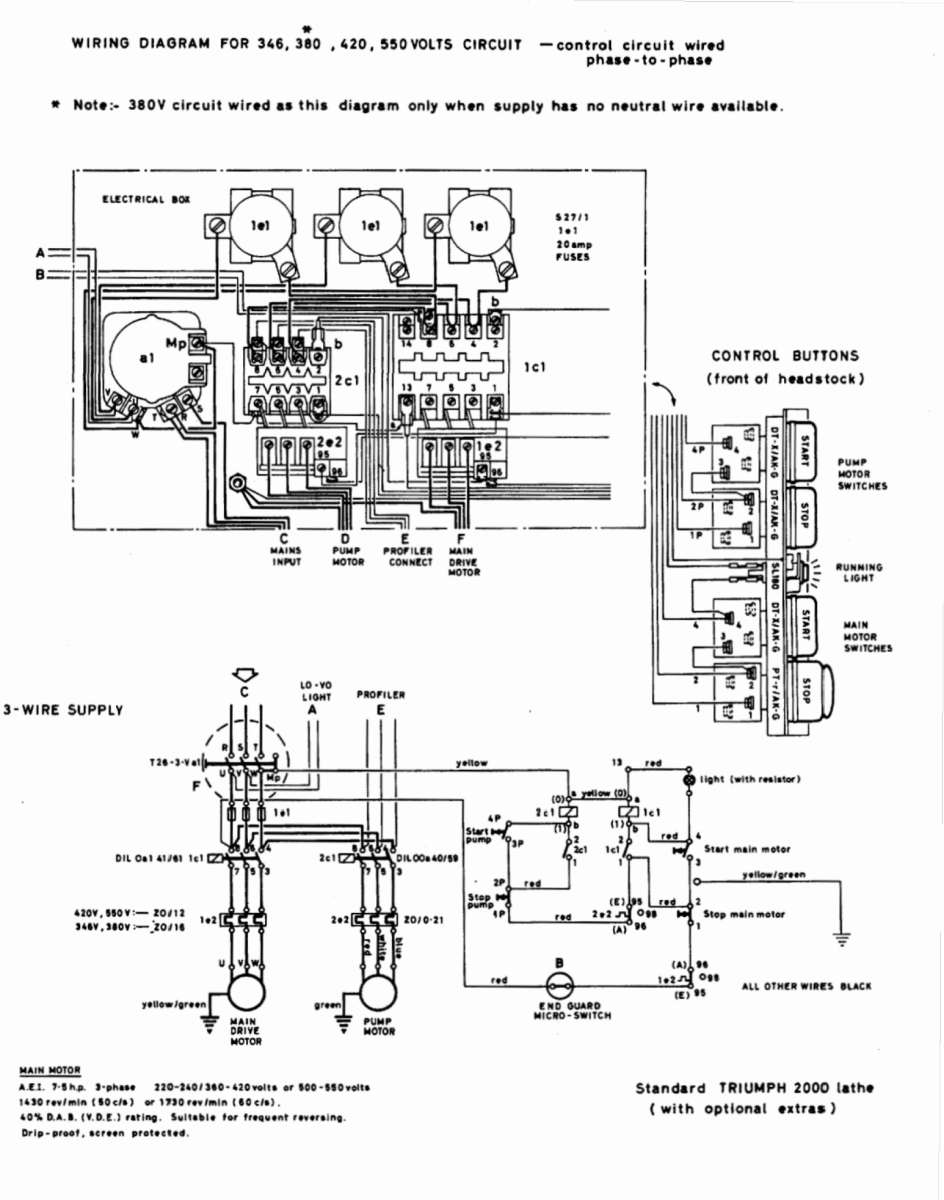
              And here is the diagram where you can see that button as the STOP switchScreenshot 2026-01-11 at 12.03.26

              #832055
              Pete Rimmer
              Participant
                @peterimmer30576

                That seems to indicate that when activated it holds the brake off and though it might simply be a handy pictograph the image implies a physical brake.

                #832058
                Julie Ann
                Participant
                  @julieann

                  The schematics posted by the OP come in two flavours. Both 3-phase power in, but one with a neutral line and one without. For the lathe in question it would be useful to know which variant. How many wires enter the control box from the incoming mains? Mostly likely four wires for no neutral and five wires if the neutral is present.

                  Given that the DC brake circuit has an input of 220VAC I’d hazard a guess that the lathe has a neutral connection.

                  Julie

                  #832064
                  peter1972
                  Participant
                    @peter1972

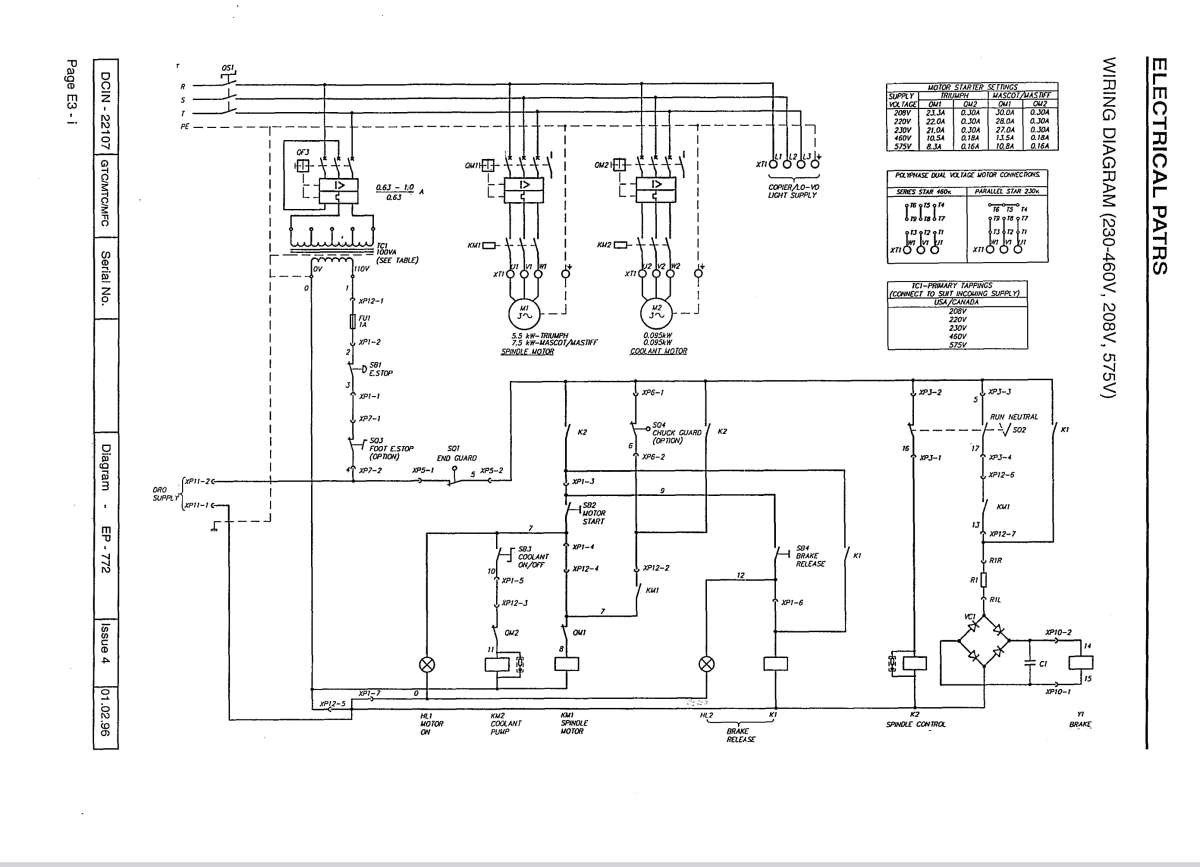
                    There is a wiring diagram here on PDF page 154 (document page E3-i):

                    http://vintagemachinery.org/pubs/182/6092.pdf

                    There is a diode bridge rectifier at bottom right. I looks like there may be a resistor and capacitor also within that item.

                    Has it been tested with a multimeter?

                    #832074
                    Mark Easingwood
                    Participant
                      @markeasingwood33578

                      Firstly I know next to nothing about electronics/machine controls.

                      The following is what I understand to be the case, through my own experience!

                      I own/use woodworking machinery, some of which are equiped with brakes, some work by injecting DC into the motor windings, they make a buzzing noise when operating.

                      Some work using an electro magnetic operated friction brake, these are DC powered and are “always on”, unless the start button is activated, or the brake release switch is used. The brake unit is on the fan end of the motor, the solid state rectifier is pushed into the back of the motor terminal box. There is no neutral supply to the machine, the 220v is provided by an “auto transformer”.

                      The brake unit can fail, the rectifier can fail, or the gap between the friction material may require adjustment, or the friction material may have worn out.

                      An example of a brake unit can be seen here on EBAY.

                      #832078
                      SillyOldDuffer
                      Moderator
                        @sillyoldduffer

                        The Tony Pete refers to is at lathes.co.uk.    Wonderful source of information and he sells manuals and stuff.

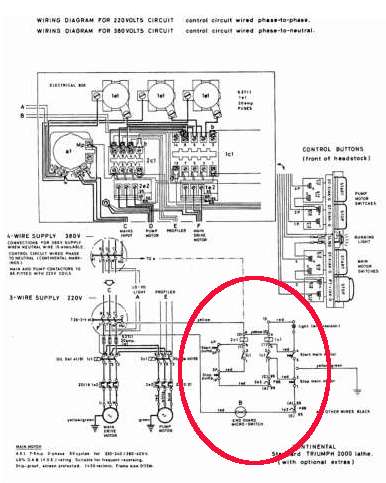
                        Unfortunately the circuit diagrams have been compressed by the internet and most of the text is unreadable.  Can you post the bottom page only, which might solve the problem. or zoom in on the area ringed in red?

                        colchester


                        No sign of a rectifier, but the circuit inside the ring appears to show two single pole relays, purpose unknown because I can’t read the text.  Relays might well be marked 1,2 for the 220vac coil and 3,4 for the switch contact.    If necessary draw the ringed area by hand?

                        I’d wait to see what others make of the circuit diagram and other information.   But, leaping ahead, if the broken part is a relay, it explains why no heat-sink, and why the part doesn’t look like a typical rectifier. (Though it might be.)

                        If we become confident it is a relay then a resistance test with a multimeter should show a highish resistance, say 15000 ohms, across the coil (1&2) and an open circuit between 3 and 4.  Also open circuit between 1 and 3 & 4 and 2 and 3 and 4. These tests are safe.

                        If the safe tests are all good, relay operation can be tested.   DANGEROUS so don’t risk it unless the tester is competent.   I’d wire everything up securely on a bench and apply fused power via a switch to make sure I don’t get electrocuted or burn the house down.    Anyway, applying 220vac to the coil (1&2) should cause a slight audible click and a multimeter between 3 and 4 should go from open circuit to zero ohms.

                        Good news:  relays and rectifiers of the size pictured are both common as muck and inexpensive.  Relay more expensive, about £10.  The problem is identifying what the thing is.

                        Bad news: might be difficult to find an exact swap making it necessary to adapt one.  How to do that is the next issue.

                        Be warned, I’m armchair engineering here.  Never been inside a Colchester, and might be joining the dots wrongly, especially as this one is mysterious.   Wait for those who know the actual lathe to comment.

                        Dave

                        #832083
                        Pete Rimmer
                        Participant
                          @peterimmer30576

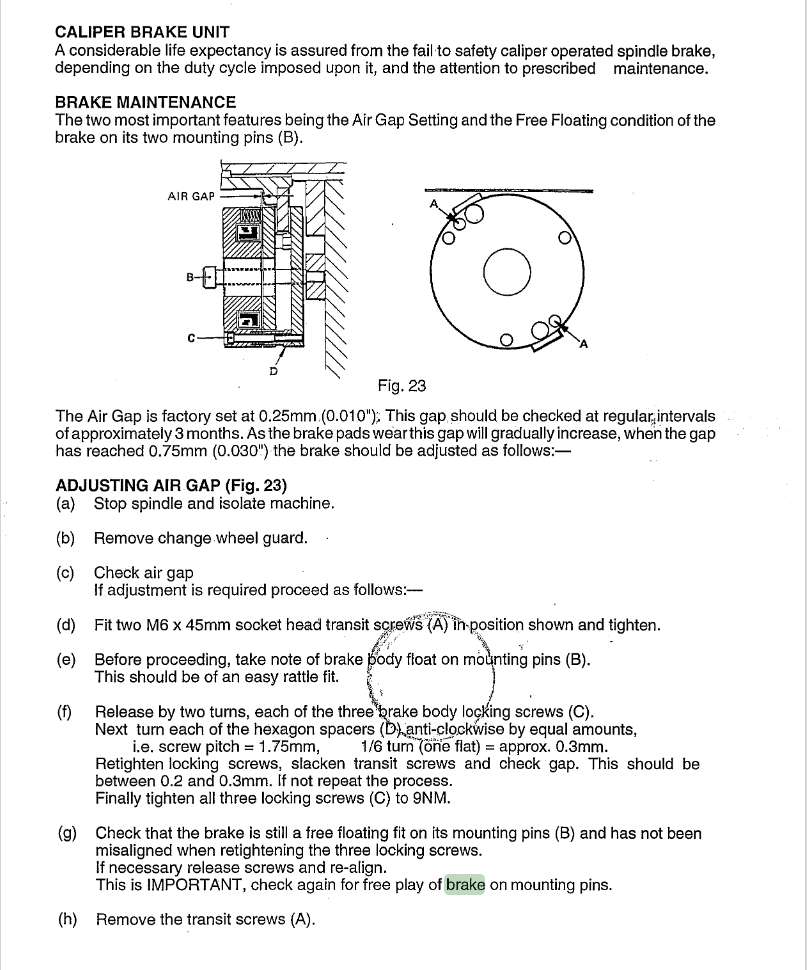
                          Ok so thanks to the manual found by peter1972 above (which thankfully has searchable text) the brake appears to be an electromagnet operating against a spring-loaded brake caliper on a mechanical disk brake.

                          What’s concerning is that it’s said that the brake should be automatically applied when the machine is powered off yet Daniel says that the spindle turns freely. I would suggest following the service procedure on the braking system on page 42 of the PDF and verify that the mechanicals are in good order. It may be that there’s nothing wrong with that diode and it’s simply a matter of the braking system required an overhaul.

                          triumph brake servicing

                          At least we now know that the recifier simply supplies DC current to the brake electromagnet.

                          #832095
                          danielcv
                          Participant
                            @danielcv

                            well, taking the Diagram Mark brought, it shows the rectifier, see picture below, at the bottom right.
                            The other thing is, that the friend told me that: When the part is not connected, the lathe works and turns freely, no brake. When he connects the part, the circuit braker pops.Screenshot 2026-01-11 at 12.41.33

                            #832102
                            Julie Ann
                            Participant
                              @julieann

                              The above diagram does not seem to reflect the lathe in question. First, there is no incoming neutral line and second, the control voltage, including the brake circuit, is shown as 110VAC with one side connected to the protective earth. This is a common arrangement, at least on the 3-phase machines I have in the UK. None of them have an incoming neutral line.

                              Until we have a definitive answer as to what configuration the incoming supply is, and what the control voltage is, everything else is speculation.

                              Julie

                              #832110
                              Macolm
                              Participant
                                @macolm

                                It is possible that while the rectifier (if that it be) is rated at 220V, it is actually used on 110V. I failed to work out conclusively after a quick scan whether the brake needs to be energised to hold it ON, or to hold it OFF.

                                For faultfinding when short circuits may be present, connecting a filament lamp (say 100W) in series with the supply can make it easier to see where the currents are going, though of course do not expect it to work correctly like that.

                                #832120
                                Robert Atkinson 2
                                Participant
                                  @robertatkinson2

                                  OK So it looks like we have a lathe with a DC electromagnetic brake, a circuit that may not be exact (The resistor R1 and bridge rectifier VC1 do not seem to appear anywhere else in the manual) An item that is assumed to be a bridge rectifier and finally confirmation that removing the rectifier removes a trip fault.

                                  So will the lathe run with the one of the “rectifier” AC leads disconnected (insulate the lead)? Obviously there will be no brake.

                                  If it runs with it diconnected we then have some tests to do. Where in Africa is the lathe? I’ve spent some time in West Africa and their enginerring approach is “different”. Do they have a multimeter?
                                  We need to find out if the bridge is shorted or / and the brake coil is damaned or there is another lault like a short to ground.

                                  Robert.

                                  #832126
                                  danielcv
                                  Participant
                                    @danielcv

                                    The machine is in Cape Verde. The friend said he tested the rectifier with a multimeter and it is damaged.
                                    At this point I have no further doubt if it is a rectifier or not. I think I will buy a compatible one and send it so they can test it

                                    #832135
                                    Grizzly bear
                                    Participant
                                      @grizzlybear
                                      #832148
                                      Robert Atkinson 2
                                      Participant
                                        @robertatkinson2

                                        OK,
                                        THe current rating is nothng like 35A. More like 2.5A  I’d go for one of these:
                                        https://www.ebay.co.uk/itm/192234475778?

                                        https://www.ebay.co.uk/itm/284302424450?

                                        4A 600V SIL

                                        With a choc-block terminal strip attached. Screw hole makes for easy mounting.

                                        Robert.

                                        #832151
                                        peter1972
                                        Participant
                                          @peter1972
                                          On danielcv Said:

                                          At this point I have no further doubt if it is a rectifier or not.

                                          It seems certain there is a rectifier under that black cover but if there is also a resistor, it would probably be important.

                                          #832154
                                          Bob Worsley
                                          Participant
                                            @bobworsley31976

                                            If the spindle rotates then it is a DC injection brake. Somewhere they is a transformer to provide the low voltage fed tp the rectifier, something about 30V or so. If the spindle motor is 4kW then need a transformer about 6″ cube or so, but if an electronic brake then just a small DIN rail unit.

                                            Just re-read the thread, what is the problem? What isn’t working? Seem to have assumed it is a brake?


                                            #832160
                                            danielcv
                                            Participant
                                              @danielcv

                                              The brake is not working anymore and if the assumed rectifier is connected, the circuit braker pops when switching power on. When not connected the machine works, but doesn´t brake.

                                              I have now ordered the 35A rectifier and will send it to Africa. After some time I will post here how it went !

                                              Thank you all for the great help !

                                              #832162
                                              Mark Easingwood
                                              Participant
                                                @markeasingwood33578

                                                As Wingo and I said earlier, these DC brake units, if that is what it is, are “locked on” without any power to release them. So the spindle shouldn’t turn freely by hand, nor should the lathe motor start without the brake being energized either by activating the brake release button, or activating the the spindle motor contactor.

                                                Therefore if the lathe is still able to run, or the spindle to be rotated freely by hand, then that might indicate a broken/worn out/badly adjusted brake unit, rather than just the rectifier, (or it could be both items). Or some other unrelated problem may be the cause of the tripping out.

                                                #832166
                                                danielcv
                                                Participant
                                                  @danielcv

                                                  It seems to me after all these analysis that, on this Colchester Triumph 200 (EP495) there is no fail-safe motor brake.
                                                  With power off, the spindle turns freely by hand, which rules out a spring-applied brake.

                                                  The rectifier in question supplies DC for the control / plugging (counter-current) braking circuit, not a brake-release coil.
                                                  When the rectifier is installed, it causes an immediate circuit braker pop; when removed, the lathe runs normally but without electrical braking. This strongly indicates an internal short in the rectifier, not a seized or misadjusted brake.

                                                  So the behaviour matches a faulty rectifier in the DC control/braking circuit, rather than a locked-on mechanical brake.

                                                  #832183
                                                  Robert Atkinson 2
                                                  Participant
                                                    @robertatkinson2
                                                    On Bob Worsley Said:

                                                    If the spindle rotates then it is a DC injection brake. Somewhere they is a transformer to provide the low voltage fed tp the rectifier, something about 30V or so. If the spindle motor is 4kW then need a transformer about 6″ cube or so, but if an electronic brake then just a small DIN rail unit.

                                                    Just re-read the thread, what is the problem? What isn’t working? Seem to have assumed it is a brake?


                                                    I’t not a DC injection brake, it is an electromagnetic device operating a friction brake. No transformer just a rectifier and series resistor. The series resistor is a separate component.

                                                    The KBPC3510 (35A 1000V) rectifier is overkill but will work.

                                                    Robert.

                                                    #832187
                                                    duncan webster 1
                                                    Participant
                                                      @duncanwebster1
                                                        <li class=”bsp-quote-title”>On danielcv Said:

                                                      It seems to me after all these analysis that, on this Colchester Triumph 200 (EP495) there is no fail-safe motor brake.
                                                      With power off, the spindle turns freely by hand, which rules out a spring-applied brake.

                                                      The rectifier in question supplies DC for the control / plugging (counter-current) braking circuit, not a brake-release coil.
                                                      When the rectifier is installed, it causes an immediate circuit braker pop; when removed, the lathe runs normally but without electrical braking. This strongly indicates an internal short in the rectifier, not a seized or misadjusted brake.

                                                      So the behaviour matches a faulty rectifier in the DC control/braking circuit, rather than a locked-on mechanical brake.

                                                      It might indicate a fault in anything downstream of the regulator.  With power off and before the fault developed could thd spindle be turned by hand. It would be unusual for 2 faults to develop at exactly the same time. If thd motor has a friction brake it will be pretty obvious just looking at it. Can you get a picture of the motor

                                                    Viewing 25 posts - 26 through 50 (of 53 total)
                                                    • Please log in to reply to this topic. Registering is free and easy using the links on the menu at the top of this page.

                                                    Latest Replies

                                                    Home Forums Manual machine tools Topics

                                                    Viewing 25 topics - 1 through 25 (of 25 total)
                                                    Viewing 25 topics - 1 through 25 (of 25 total)

                                                    View full reply list.