Home › Forums › Manual machine tools › What toolposts are these?
Good Morning engineers.
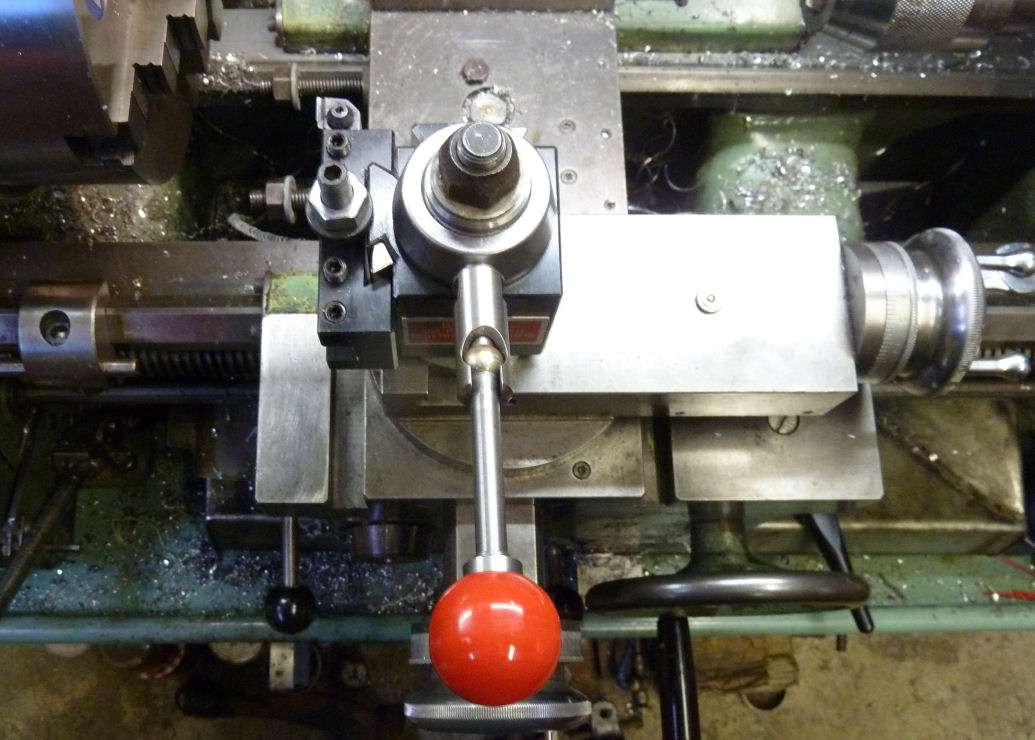
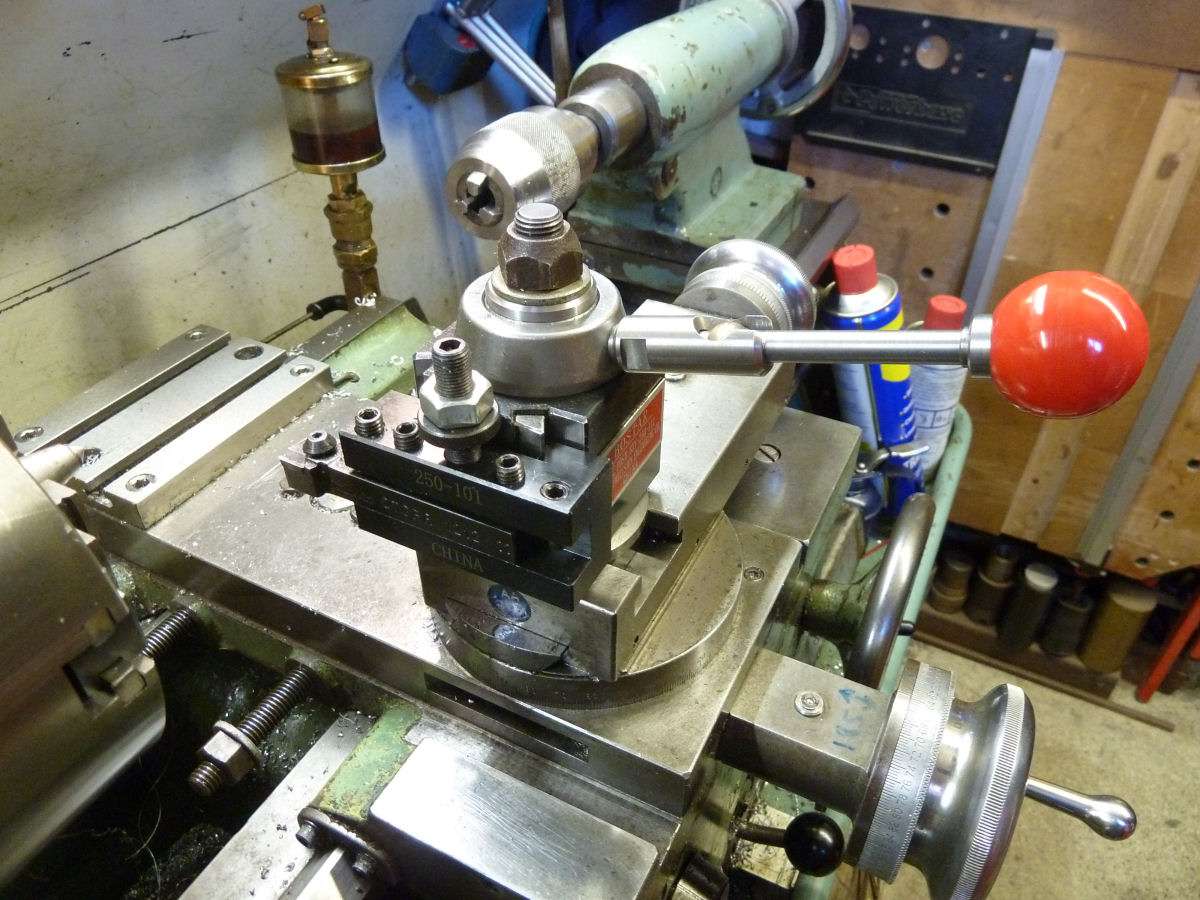
I’ve got a 250×750 Amadeal lathe, and a few years back I bought a QCTP for it and have been happily using it since.
I’ve decided to purchase some more tool holders for it, but am struggling to find the correct size.
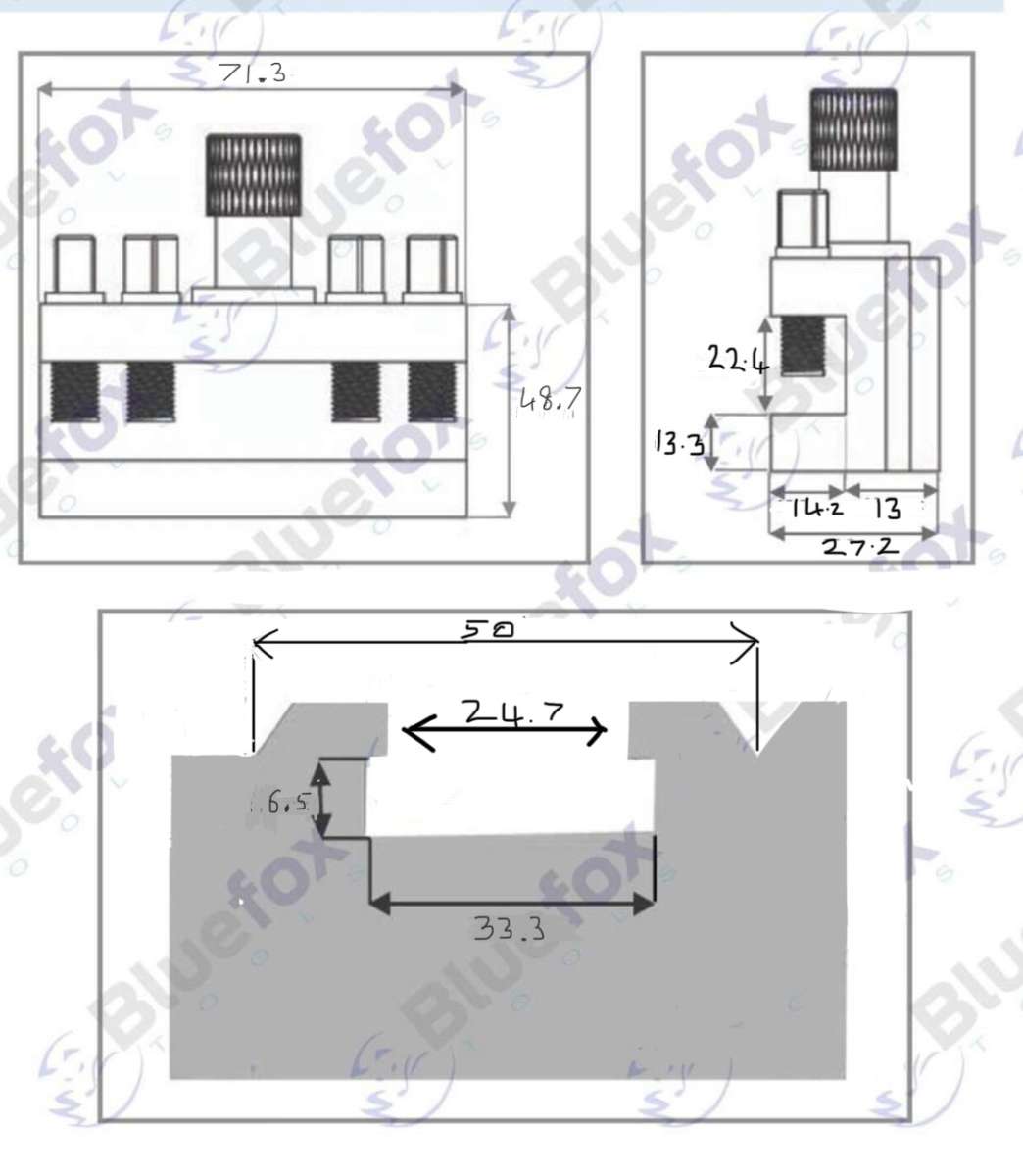
The box that the QCTP came is states; “NEW SWISS TYPE T-63 QUICK CHANGE TOOL POST WITH 3 HOLDER AND 1 PARTING HOLDER”
I’ve ordered a T63 parting holder from RDG and it doesn’t fit on my tool post.
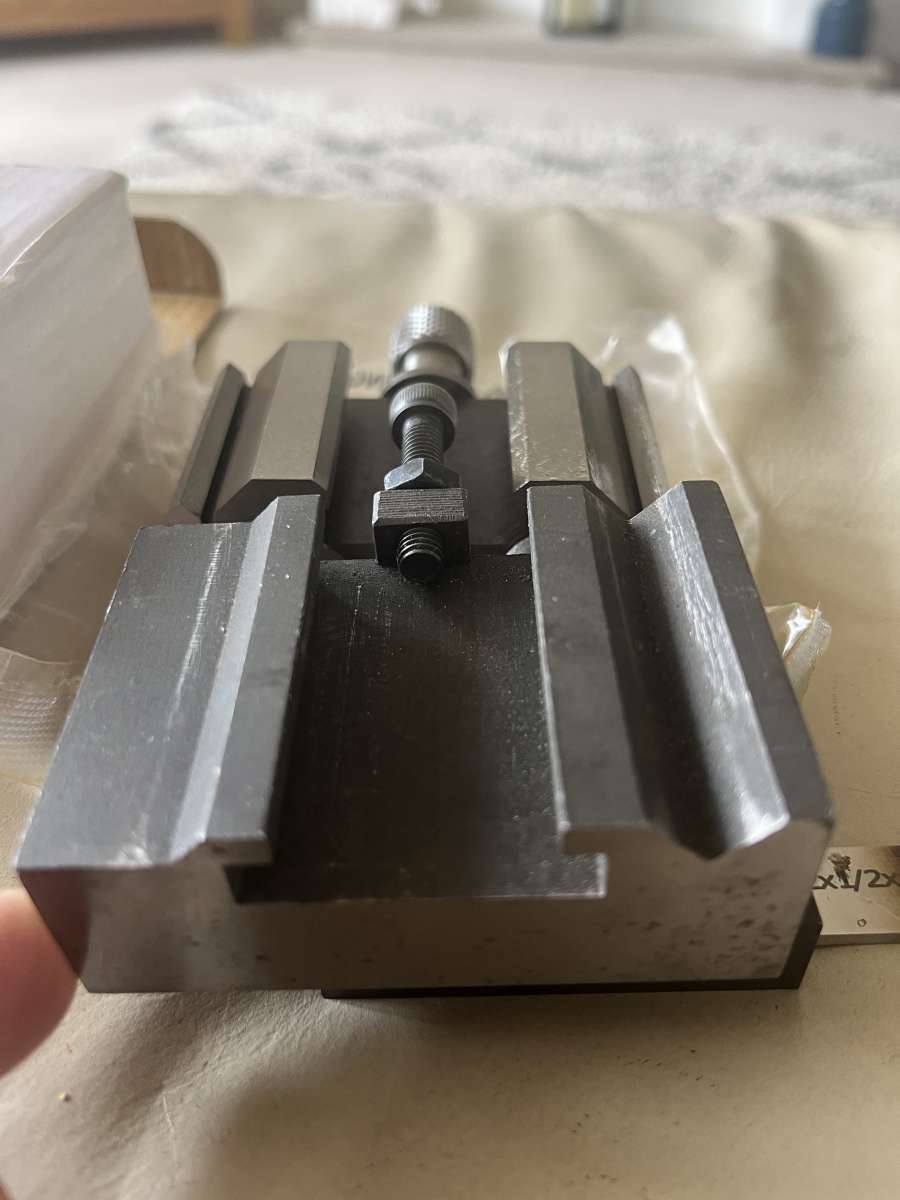
Comparing mine and the new RDG tool holders, the biggest difference seems to be the distance between the V’s. RDG is 60mm, mine is 50mm (although I only have a single V on my tool holders). All of the T63 references online also appear to have a 60mm spacing between centers.
I’ve spent quite a few hours researching, and am still none the wiser.


Does anyone have any ideas please.
</p>
Hmmm. Does the adjective “type” refer to the nationality or the pattern?
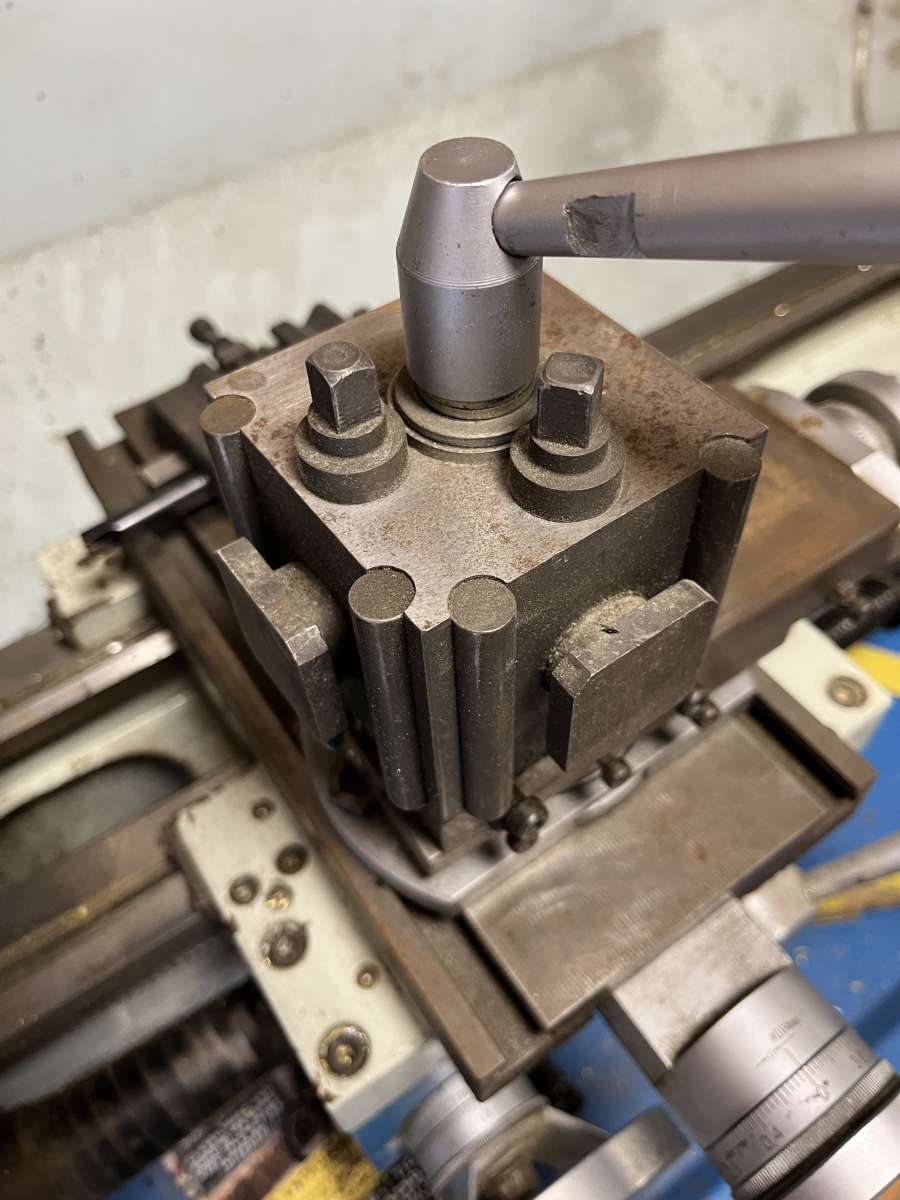
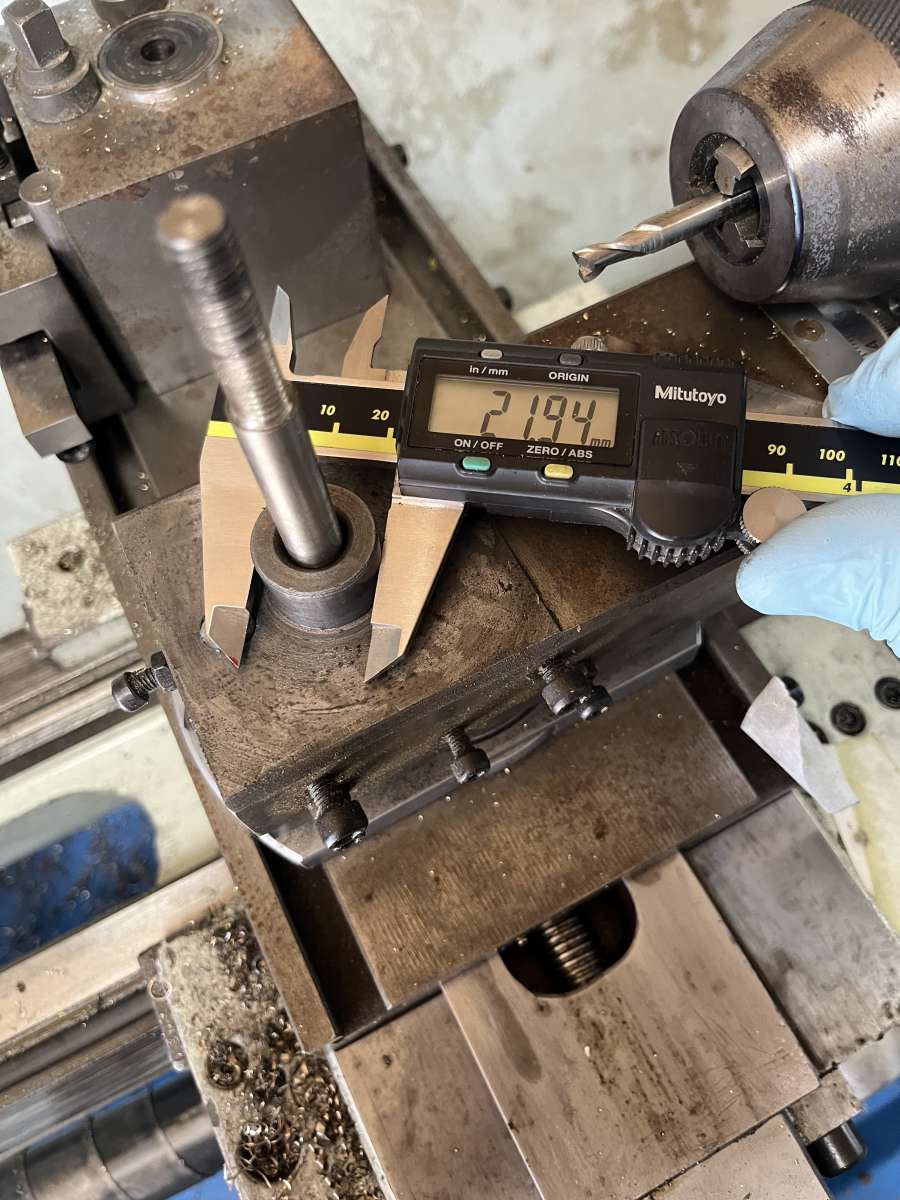
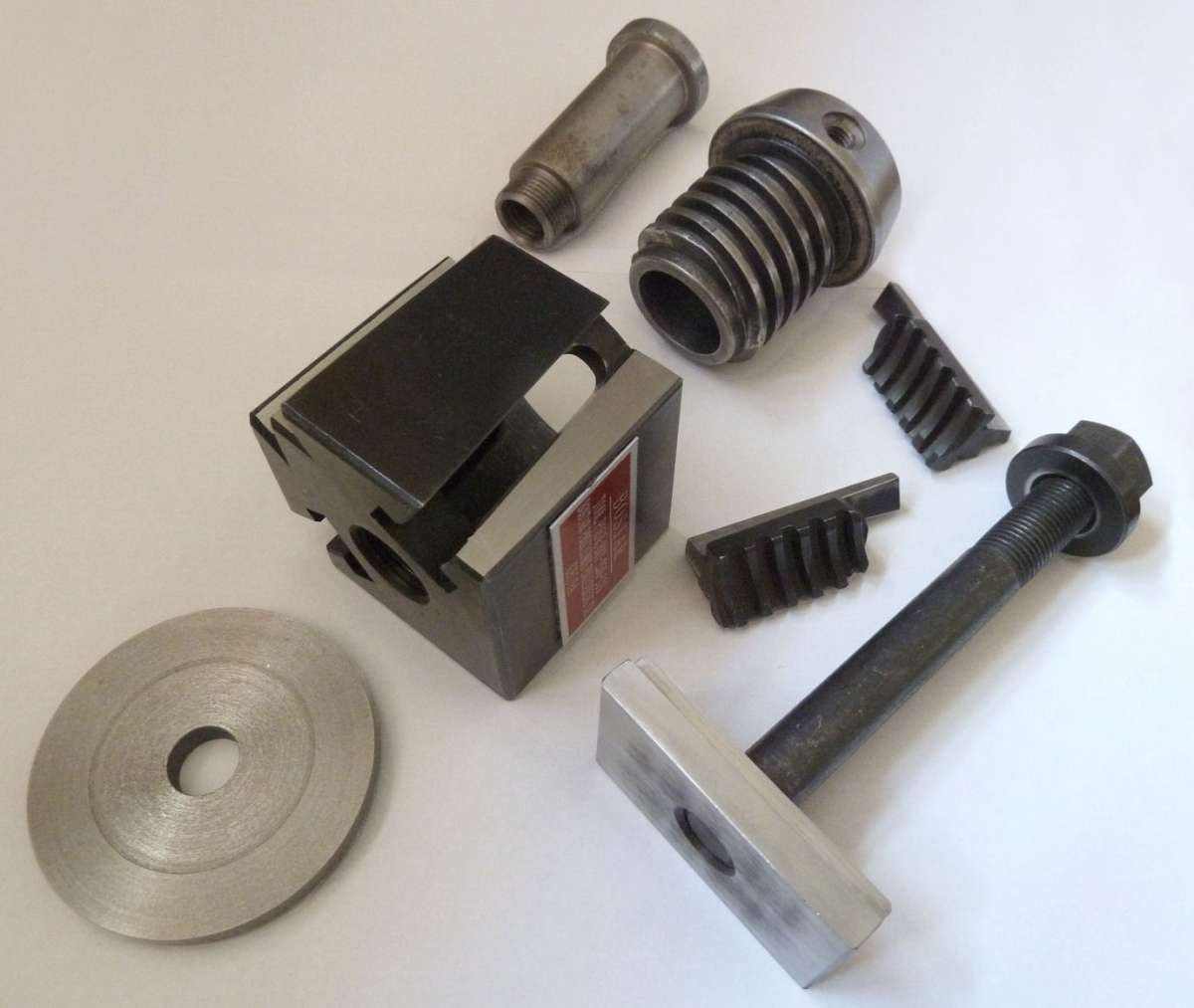
I have probably lived a very sheltered life, but I don’t recall ever seeing rods used like that on a tool-post.
It’s reasonably common on focus rails and such … but it may be a ‘distinguishing feature’ amongst T63s
MichaelG.
I agree with MichaelG, the only thing resembling Paul’s are a tool-post made by Harold Hall, see here: http://www.homews.co.uk/page518.html
Thor
“I have probably lived a very sheltered life, but I don’t recall ever seeing rods used like that on a tool-post.”
The Radford quick-change tool-post uses rods in a similar way but is a home-made system and not a design that is available commercially. (BTW, it is far superior and convenient to use IMO than any off-the-shelf product for a ‘Myford’ size lathe.)
They seem to have been commercially available, and I can vaguely remember them.
Google reverse image search comes up with this on an M300 lathe sold by GM tools, but the advert is now deleted

Maybe check the Dickson measurements on Tony’s site
http://www.lathes.co.uk/latheparts/page13.html
Other folk list T63 sizes to compare.
Bill
Thank you all for your replies.
Thor, I looked at Harold Halls website which is very interesting. I had hoped he had referenced somewhere he had his ideas from, but no such luck.
Bill, that’s amazing that you can search for images, something I was unaware of.
The T63 appears to refer to the height of the tool post on some websites, however I have also found reference to it being the distance between the V’s! 🤦🏻♂️
I’ve dropped Tony an email to see if he has any thoughts.
I spent another few hours this evening researching – and failing! I’m tempted to make do, or commit and get a replacement tool post!
I keep you posted on any progress
……………..
Bill, that’s amazing that you can search for images, something I was unaware of.
……………….
It’s actually very easy; head for the Google web search directly, rather than using a search box in your browser; clock on the right hand icon, and all should become obvious.
You can upload an image, specify a URL of an image, or just up[load a snip screenshot. (I use snipping Tool in W10)

For something slightly more powerful try this website, which works in a similar way, but launches three searches, the above Google one, Bing & Yandex.
Just be careful you don’t install various bits of trial software by accident
https://smallseotools.com/reverse-image-search/
Bill
Thanks Bill. An amazing search tool.
Unfortunately I’m having no luck finding extra tool holders.
Im looking at the T63 possibly from RDG, or a piston type from AMAdeal
Is one type better than the other?
thanks
Thanks Bill. An amazing search tool.
Unfortunately I’m having no luck finding extra tool holders.
Im looking at the T63 possibly from RDG, or a piston type from AMAdealIs one type better than the other?
thanks
I can’t answer your question, as I don’t have either.
Re the (T63) Dickson style, I’d try and make sure you get a block and holders all from the same supplier.
They are supposed to conform to standard dimensions, but not all makes are compatible with each other.
I have a couple of SE Asian toolposts that came with my second hand Warco 720, (S7 clone) which work fine, albeit a smaller size than your T63s.
A genuine original Dickson older fits it fine, but some of the others don’t quite lock with the lever. Either the bolt goes over centre and it comes loose that way, or it doesn’t go far enough and fails to lock sufficiently.
Since the genuine holder works fine, I have to assume the two toolposts are OK and the fault(s) lie with the holders.
On my larger GH1330, I have the Warco piston style, which works well enough with all my holders, sufficiently well that I bought a second one in a sale to use on the Myford S7 in lieu of the top slide. I’ve not yet made the adaptor, but the idea is that it will be more rigid, along the lines of a Gibraltar toolpost, but with the advantage of having a quick change as well. The plan is to set the centre heights to work out correctly for both lathes, so I can chop and change tools between lathes without re-setting anything.
There is a second variant of that style, which uses the same toolholders, but rather than a piston for locking, one side of the dovetail acts as a moveable wedge. There’s a few Youtube reviews, though I don’t recall where.
I think they are more affordable variants of The Aloris Style
I think now I would probably go for one of those.
This style of toolholder with just a large dovetail groove is also easier to replicate of you want some spares, as I did here.
Bill
I have a ‘wedge-type’ toolpost on my GH600, think it’s a brilliant thing; the ‘block’ has a big footprint, the wedging action pulls the holders firmly onto the post so that they are properly supported on their ‘back’ flats, the repeatability of tool-position is excellent, and the overall design is inherently accommodating of minor variations in holder dims. without compromising function.
Also spare standard holders currently cost £15.20 inc.vat.
Check it will fit before ordering.
I think Sirola’s original design is not far shy of genius.
Thanks for all the assistance. In the end I went to Arc Euro Trade and bought a new tool post, and numerous tool holders. I wanted the wedge version, but speaking to the sales team, due to having a ‘boss’ on my cross slide, the wedge version wasn’t suitable. I went with a piston version, and ended up machining off the boss anyway!
Thanks again.
Thanks for all the assistance. In the end I went to Arc Euro Trade and bought a new tool post, and numerous tool holders…
Smart move I think to buy ‘numerous tool-holders’ with a new tool-post.
I wouldn’t say buying holders later is bound to cause trouble, but Paul’s experience isn’t unique. Every so often someone finds a newly purchased tool-holder won’t fit, either because dimensions are different, or the shape is wrong.
Seems QCTPs and their tool-holders aren’t fully standardised, and there a few different systems and odd sizes kicking around. Buying a full set of holders with the tool-post ensures compatibility.
I avoided the problem by not bothering with a QCTP, a device I’m not convinced has much value and at least one disadvantage. But if one is fitted, how many tool-holders are needed? I’d guess at least 6, and would probably buy 8.
Dave
For anyone that stumbles across this post, also looking for the same tool holders; I’ll probably chuck my old ones at the back of a cupboard. If you could make use of them, they are yours if you cover shipping.
my lathe is an AmaDeal 250V x 750. (I’d already replaced the tool post with an unknown brand qctp) Alternative models are: Precision Matthews PM1022 PM1030, Grizzly G0602, Seig, Husky pc36, and a Craftex cx700
The boss on my cross slide limited which tool post I could fit. My solution was to machine off the boss and drill the hole out to 12.5mm I then tapped it with 14×1.5 which is the thread that the model 100 QCTP from ArcEurope comes with. The model 100 simply fit onto the newly machined cross slide. Now that the boss has been removed, I suspect the wedge tool post would fit as well.

That compound slide boss was the reason I went with an Indian Dickson clone for my GH600 over Arc’s offerings – there is enough “meat” in the toolpost body to bore it to fit over the boss, which there isn’t on the wedge style units.
My GH600 doesn’t have the boss as part of the casting, though – it is part of the stud, with the compound having a flat top. There isn’t much thickness to the compound for the stud thread & I was happier leaving the stud alone & modding the toolpost. More than one means to similar ends.
Interchangeability between different makers of Indian Dickson style toolposts & holders has not been an issue (yet ! ). The kit I bought included 4 standard holders as well as a parting blade & boring bar holders. What turned up was a kit with 1 standard holder + 3 “others”, and those were of two different designs and obviously from different makers to the kit. But all did fit the toopost & clamped up fine. The Ebay seller did (eventually, with rather bad grace) exchange the 3 “oddball” holders with 3 from the maker of the toolpost kit (I had particularly wanted a matched set for my new lathe), but those supplied were useable.
How many holders is the optimum to have , Dave ? Usually one more than you have to hand ! I would be interested to know your “disadvantage” to QCTPs – can’t say I have come up against one, but do enjoy the advantages – I truly dislike faffing with shims on 4 way toolposts.
Nigel B.
…
How many holders is the optimum to have , Dave ? Usually one more than you have to hand ! I would be interested to know your “disadvantage” to QCTPs – can’t say I have come up against one, but do enjoy the advantages…
Here’s the case for the prosecution!
In contrast, inserts don’t have a height and reset problem. All that’s necessary is to shim the holder to height, and – if speed is of the essence – shims can be glued in place.
I have a dark suspicious mind that wonders how many beginners buy a lathe and start by looking for ways to accessorize it, much as a new driver might fit a furry dice? A QCTP might seem ideal for the man who imagines himself taking a week to knock out a 7¼” Pacific, but it’s not tool changing that slows me down! So to my mind, a QCTP is the worst sin of all – a waste of money!
I am a jaded, grey, cynic with no sense of humour.
🙂
Dave
Dave,
As an equally jaded cynic with no sense of humour, I use both HSS and Carbide tips (BUT keep a few in stock. Otherwise the last one chips at 8 pm on a Saturday! At least ny cheap bench grinder can deal with a blunt HSS toolbit at that time)
The carbide tips rough or bore, the HSS Tangential) finishes for turning or facing (With competetition from the 100 degree tip carbide rougher)
Take your pick of which horse for a particular course, or what works best for you!
Howard
…
How many holders is the optimum to have , Dave ? Usually one more than you have to hand ! I would be interested to know your “disadvantage” to QCTPs – can’t say I have come up against one, but do enjoy the advantages…Here’s the case for the prosecution!
- A QCTP is only useful if the machinist insists on HSS. The biggest disadvantage of HSS is it needs resharpening, on an extra cost grinder, skills required, and re-grinding likely alters the height of the cutting point enough to need tweaking. A QCTP reduces tool-reset time with a cartridge holder supplemented with a fine height adjuster.
- A QCTP and several holders are expensive. A hobbyist may have better things to spend his precious spondulicks on.
- Once a QCTP is on the machine, a holder is needed for each and every cutter.
- There’s no such thing as free lunch! A QCTP is a flimsy bendy affair compared with a 4-way tool-post, and further reducing the limited rigidity of a small lathe may be undesirable.
In contrast, inserts don’t have a height and reset problem. All that’s necessary is to shim the holder to height, and – if speed is of the essence – shims can be glued in place.
I have a dark suspicious mind that wonders how many beginners buy a lathe and start by looking for ways to accessorize it, much as a new driver might fit a furry dice? A QCTP might seem ideal for the man who imagines himself taking a week to knock out a 7¼” Pacific, but it’s not tool changing that slows me down! So to my mind, a QCTP is the worst sin of all – a waste of money!
I am a jaded, grey, cynic with no sense of humour.
🙂
Dave
Alternatively, I consider the QCTP and the thirteen(I think) holders that I acquired over a number of years to be the best value I’ve spent on tooling across both the lathe and the mill. It’s used every time the machine is turned on. My holders have a mix of carbide and HSS tools mounted, with a number of specials like the ER spindle and a spare just in case something weird is needed.
Consider a simple, common part like a stepped bush: it needs two diameters and two faces that will need two tools(unless you’ve expended time and/or money on a tool that can do both), then a hole through the middle(tailstock job, but at least a spotting and through drill), all the edges chamfered(you did make a tool that can do all of them without a change didn’t you), parted off, remounted and the new edges chamfered. That’s at least four carriage tool changes and another 2 tailstock ones which is marginally acceptable for one part. I’m looking at a job that will need about fifty. That alone would be a good reason to buy a QCTP and the first holders. I tend to buy a couple more each time I buy something from a supplier that stocks them.
Reducing a piece of stock to the required part ought to be the easy bit of building something, and making it more efficient/less like boring work is a priority even in a hobby workshop. No, especially in a hobby workshop where most of us have better things to do than spend hours twiddling handles making swarf.
I do have workshop furry dice that were apparently essential, but so far the only use I’ve found for a 123 block is to square the QCTP against a part, which means I could have left the other one in the original wrapping….
…
How many holders is the optimum to have , Dave ? Usually one more than you have to hand ! I would be interested to know your “disadvantage” to QCTPs – can’t say I have come up against one, but do enjoy the advantages…Here’s the case for the prosecution!
…
Dave
…
Consider a simple, common part like a stepped bush: it needs two diameters and two faces that will need two tools(unless you’ve expended time and/or money on a tool that can do both), then a hole through the middle(tailstock job, but at least a spotting and through drill), all the edges chamfered(you did make a tool that can do all of them without a change didn’t you), parted off, remounted and the new edges chamfered. That’s at least four carriage tool changes and another 2 tailstock ones which is marginally acceptable for one part. …
Or maybe not! Mounting a drill in the tailstock doesn’t count because that doesn’t need a QCTP/
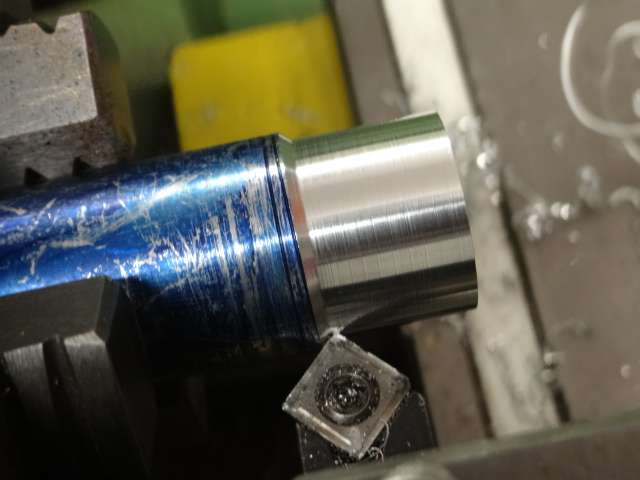
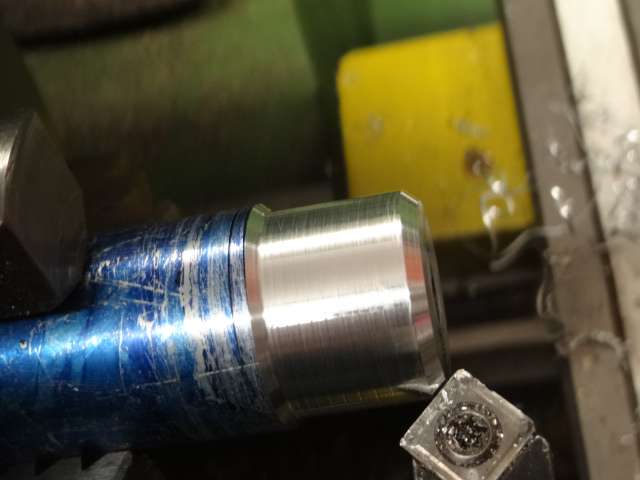
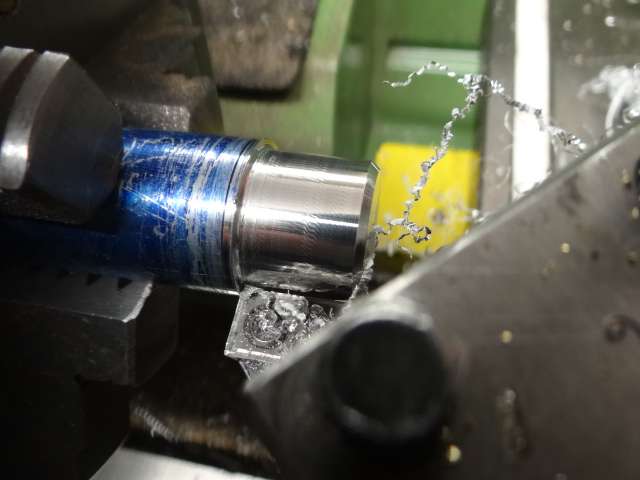
Here’s how I might do it with a single insert tool. (Not shown but I could have a parting-off tool in the 4-way at the same time.)
Step 1, a 4 cornered insert that can face, cut and chamfer.

Step 2, face off.

Step 3: turn the diameter.

Step 4: chamfer the end.

Step 5, rotate the tool-post to square off the turned end

A features of inserts that may be missed is that they can cut on all the edges. Without changing anything I used two different points and an edge to do the chamfer, then finished off simply by rotating the tool post. The cutting edge of the insert was at the correct height throughout. Unlike HSS shaped by hand, it’s often possible to save time by exploiting triangular, square and round inserts. And once the shim heights are known for each holder, they can be quickly changed in an ordinary tool-post.
Admittedly the last step isn’t ideal because cutting with a square insert edge on tends to spoil the finish by smearing swarf into it – there isn’t enough relief. I could fix that by deploying a different insert holder, and there would probably be room for it in a 4-way with a parting tool as well.
All in all I’m not seeing much advantage in a QCTP. As I said earlier, the main benefit of a QCTP is in an HSS only shop. Of course, it’s inserts that speed up the 4-way. Holding conventional HSS in a 4-way tool-post is much slower than a QCTP: I’m not recommending that!
Dave
To inflame the holy war, mine is a mostly an HSS shop. I sold the 4-tool turret as less use to me that a chocolate teapot, after it had forced me to design and make my own IQC toolpost: http://www.charleslamont.me.uk/iqc_toolpost.htm.
“A QCTP is a flimsy bendy affair compared with a 4-way tool-post, and further reducing the limited rigidity of a small lathe may be undesirable”.
I would take issue with that contention, though do not have a mini lathe. Indeed, in my experience an AXA wedge QCTP has proved much more rigid than the four way tool post it replaced, and indeed is as good as the “Gibraltar” which is now only required if a 20mm height “just in case” tool is needed. Surprisingly perhaps, parting off causes no drama with the AXA, both with the seemingly inadequate special holder supplied (but it is a Chinese copy of the original Aloris), and also with a 12 mm slotted blade holder clamped via the tool holder screws.

The one snag I had was that the clamp handle blocked the view of the cross dial, so a foldable handle was devised. You can also see that I merely used a round spacer to reach optimum mounting height. Finally, the original USA origin of the design shows though, concentration on what is necessary to work well, and elimination of unnecessary features.


Here’s the case for the prosecution!
A QCTP is only useful if the machinist insists on HSS.
A QCTP reduces tool-reset time with a cartridge holder supplemented with a fine height adjuster.
A QCTP and several holders are expensive. A hobbyist may have better things to spend his precious spondulicks on.
Once a QCTP is on the machine, a holder is needed for each and every cutter.There’s no such thing as free lunch! A QCTP is a flimsy bendy affair compared with a 4-way tool-post, and further reducing the limited rigidity of a small lathe may be undesirable.
I don’t agree with that Dave.
From my perspective a QCTP is just a tooling cost to be factored in to the purchase of a machine, just as a vice is a prerequisite for a milling machine. You can use a milling machine without a vice – but would you want to ?
The ability to quickly set a tool on centre height, then interchange pre-set tooling quickly, easily & repeatably makes the purchase of a QCTP well worthwhile for me – regardless of the type of tools you choose to use. Plus you don’t have to contend with the sharp ends of the other tools on a 4 way TP to get caught up on. My S7 came with the standard Myford “boat” tooling & clamp – quite useable & relatively easy to set on centre, but you had to set every tool on centre every time a tool was mounted. The Myford Dickson QCTP set made the machine far more convenient & nicer to use.
If you have a DRO, most have a tool offset facility & it is possible to set an offset for each of your pre-set tools to get the DRO to show the tool tip position after a tool change by calling up the offset. QCTP repeatability is good – out of the 8 CNC lathes were I worked prior to retirement, 4 had QCTPs rather than turrets (1 Dickson, 2 Multifix & 1 Sandvik Coromant Capto). All ran multiple tool programs & all held size during tool changes.
In my experience a Dickson QCTP is far, far more rigid than a 4 way TP, not the other way round. My Boxford CUD came with the factory 4 way TP & I really struggled with grooving & parting off – the TP could be seen to “lean in” towards the work before the inevitable dig-in. When I found a Boxford branded Dickson QCTP, these problems just went away as the Dickson just didn’t move under load like the 4 way TP did.
Large numbers of toolholders are not essential – a standard kit with a couple of standard holders, a vee-grooved boring holder & a parting blade holder will work fine. The manual Harrison & my last workplace had just that setup & was quite functional. More holders mean you can have more tools preset, but you are no worse off with a basic kit than with a 4 way TP & without the hassle.
The 4 way TP that came on my GH600 was used once – to hold a boring bar (after I faffed around finding suitable shims) to bore out the base of the Indian Dickson clone toolpost to fit over the comound slide spigot. Then it was removed, greased up and put in a plastic bag in the back corner of the least accessible drawer in the cabinet. I doubt it will be seen again until the lathe eventually finds a new home after my demise & I won’t miss it !
Nigel B.
With a good QCTP and without having a DRO with storage of offsets, on the first item of a repetitive job it is just as easy to record the exact cross slide setting at final dimension for each of the tools used. Changing over holders takes only a second or two and sub thou accuracy is simple to achieve across a batch.
Neither of my previous four way tool posts was sufficiently consistent to do that.
I see I’ve failed to convert anyone to the Dark Side yet. But I ask the jury to look at the arguments offered in defence of the QCTP, and decide if they hold water:
I suggest to the jury that the witnesses are explaining why they’re pleased with their particularly good QCTP set-ups, and I submit their satisfaction is inconsistent and doesn’t address the more common case. In general, a standard 4-way is likely to be more rigid than a hobby QCTP.
Has anyone put a DTI on a 4-way mounted tool and measured the deflection when the tool is loaded, then done the same test the tool mounted in a QCTP? The extra overhang added by the tool holder must increase the leverage applied to the QCTP, so unless the QCTP has been beefed up to compensate, it’s likely to move further.
No skin off my nose if folk want to run with HSS and a QCTP, but I suggest the combination of pre-shimmed carbide inserts in a 4-way is hot stuff too, and cheaper. Is anyone else suspicious of the benefit newcomers get by starting out in the hobby by fitting a QCTP? I say there’s a lot to learn before a QCTP is really needed, and many will never be fully utilised, a poor return on the investment.
Of course my whole workshop is a poor return on money spent, until I take into the account the value of it being a most enjoyable hobby.
🙂
Dave
How many holders are needed varies from Nigel B’s initial honest ‘one more than you happen to have’, via Nick’s 13, to back to Nigel B’s second assessment
My first “asssement” was the standard quip for any query of what constitutes the optimum quantity of anything to have – equally applies to books, motorcycles, cameras, air rifles etc. in my case. Perhaps I should have added a “smiley” !
The second was a real life case – the machine in question was bought at auction from it’s original purchaser, who specified the machine from new with a Dickson QCTP, 2 standard, 1 vee groove & 1 parting blade holder. They had not seen the need to buy additional holders & neither did my employer. For what we used the machine for (small batch production, various mods & one-offs) I never felt the need to buy more either. I could have done (I had a budget I could call upon to buy such things at my discretion) and would have had I noticed that the production jobs could have been made more efficient with more holders, but the need never arose.
I didn’t “specify” a genuine Boxford QCTP – that was what was offered to me in response to to a “wanted” ad in a Free-ads newspaper (remember them ? ), along with one standard holder. I managed to acquire another standard and a parting holder along the way & managed with those until I sold the machine. The purchaser opted to forego the QCTP & use the 4 way TP to reduce the cost of the machine & I had no difficulty shifting the QCTP parts on Ebay.
I would suggest that the easier setting on centre with a QCTP is a big advantage to a newcomer. I am pretty certain the training school lathes with 4 way TPs that we endured as apprentices were specified that way to make us have to suffer as we leaned ! And is the cost that you repeatedly mention reallly that high ? The kit I got for my GH600 (probably over specified with 7 standard holders) was 7% of the cost of the lathe package from Warco.
As you suggest, both are solutions to the same problem of holding tools on a lathe. As I seemingly cannot convince you of the benefits of a QCTP, you won’t be able to convince me that a 4 way toolpost is the better option. As we are both apparently happy with our respective choices it would seem we are both right !
Nigel B.
Home › Forums › Manual machine tools › Topics
Started by: James A
in: Workshop Tools and Tooling
JasonB
Started by: ian Holdsworth
in: Beginners questions
Nigel Bennett
Started by: Martin Freestone
in: Introduce Yourself – New members start here!
Speedy Builder5
Started by: tomcnc
in: CNC machines, Home builds, Conversions, ELS, automation, software, etc tools
seemack
Started by: Bo’sun
in: Workshop Techniques
Nigel Graham 2
Started by:
JasonB
in: The Tea Room
Michael Gilligan
Started by: ksw
in: General Questions
ksw
Started by: Nigel Graham 2
in: Locomotives
Nigel Graham 2
Started by:
Vic
in: The Tea Room
An Other
Started by: Peter Simpson 3
in: Beginners questions
ega
Started by:
Vic
in: The Tea Room
Robert Atkinson 2
Started by: Nigel Graham 2
in: Manual machine tools
Graham Meek
Started by:
Sonic Escape
in: General Questions
Andy Stopford
Started by: Graeme Seed
in: Workshop Tools and Tooling
Graeme Seed
Started by:
Neil Wyatt
in: Hints And Tips for model engineers
Neil A
Started by: old mart
in: Workshop Tools and Tooling
old mart
Started by: mikemunson
in: Beginners questions
Michael Gilligan
Started by: lucerne
in: Manual machine tools
Julie Ann
Started by: Clive Foster
in: Manual machine tools
John Hinkley
Started by: old mart
in: The Tea Room
Mark Rand
Started by: martin haysom
in: General Questions
Dave Halford
Started by: Roger Harvey
in: Workshop Tools and Tooling
ega
Started by: Zan
in: Help and Assistance! (Offered or Wanted)
Zan
Started by: vintagengineer
in: 3D Printers and 3D Printing
John Haine
Started by: Dunc
in: General Questions
Dell