Vacuum Chamber – Design and Build Advice

Vacuum Chamber – Design and Build Advice

Home Forums Clocks and Scientific Instruments Vacuum Chamber – Design and Build Advice

Viewing 25 posts - 101 through 125 (of 128 total)
  • Author
    Posts
  • #826391
    Robert Atkinson 2
    Participant
      @robertatkinson2

      If you think keeping air out of a vacuum is hard, keeping helium in is even harder! It is also a good conductor of heat so won’t isolate your pendulum from temperature changes.

      3.4 liters of hydrogen exploding in a small workshop will cause damage and would lift the roof of a closed shed.
      I’m a registered Hydrogen Safe engineer – dont’t ask…

      Robert.

      #826395
      Ian P
      Participant
        @ianp
        On Robert Atkinson 2 Said:

        If you think keeping air out of a vacuum is hard, keeping helium in is even harder! It is also a good conductor of heat so won’t isolate your pendulum from temperature changes.

        3.4 liters of hydrogen exploding in a small workshop will cause damage and would lift the roof of a closed shed.
        I’m a registered Hydrogen Safe engineer – dont’t ask…

        Robert.

        I’d forgotten about Helium’s thermal conductivity although not its propensity to escape!

        I (had) thought that maybe a Helium filled chamber maintained a few millibar above atmospheric would provide a stable environment for the pendulum. A small Helium cylinder and a sensor/solenoid valve seemed appealing compared with a heavy mains powered pump.

        Ian P

        #826400
        John Haine
        Participant
          @johnhaine32865
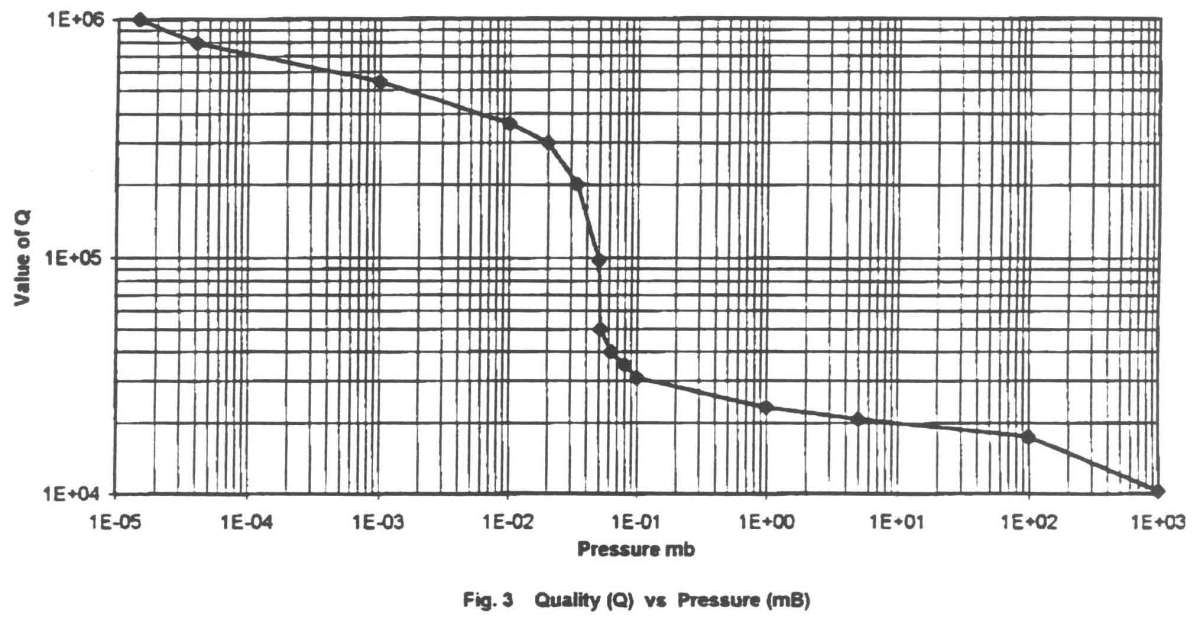
          Fig-3-webOn John Haine Said:

          Dave, I posted a link to Hall’s description of the Littlemore clock on the other thread.  I suggest you look at figure 3 in that article regarding the dependence of Q on pressure.

          I repeat…here’s a copy

          #826406
          SillyOldDuffer
          Moderator
            @sillyoldduffer
            On John Haine Said:
            Fig-3-webOn John Haine Said:

            Dave, I posted a link to Hall’s description of the Littlemore clock on the other thread.  I suggest you look at figure 3 in that article regarding the dependence of Q on pressure.

            I repeat…here’s a copy

            Is the graph inconsistent with my summary?  I thought not in big handful terms.

            My feeling:

            • Useful to reduce pressure to below the lowest natural air-pressure mainly because doing insulates the pendulum from barometric change.  Also reduces friction, so I expect a slight improvement in Q.  800mb is worth having.
            • Thereafter I expect Q to improve gently as removing air reduces drag, so getting down to 300mb is worthwhile too.
            • The big Q gains are made in a hard vacuum, which I’m unlikely to achieve.

            Am I missing something?  (I often do!)

            🙁

            Dave

            #826422
            Grindstone Cowboy
            Participant
              @grindstonecowboy

              Would nitrogen be any good? They fill tyres with it…

              Rob

              #826428
              SillyOldDuffer
              Moderator
                @sillyoldduffer
                On Grindstone Cowboy Said:

                Would nitrogen be any good? They fill tyres with it…

                Rob

                Good in tyres because it keeps Oxygen away from the rubber and expands less with temperature #than water in air, so tyre pressures are more stable as the wheels heat and cool.  No water in it either.

                Not much advantage in a clock though because Nitrogen is only about 3% less dense than air.   Helium is much better, but as Robert reminds me, it’s hard to contain.  The atoms are so small they fit between the gaps!  Vacuums are good too, apart from all the problems…

                Dave

                # Correction, many thanks to my Chief mistake spotter! (I keep him busy!) Nitrogen doesn’t “expand less with temperature”  than Oxygen – in a tyre dry Nitrogen it displaces water vapour in damp air, which can turn to steam.

                #826439
                John Haine
                Participant
                  @johnhaine32865

                  Well, it looks like getting down to 300 mbar would roughly double the Q, but at a considerable cost in complexity – pump, enclosure, sealing, pump vibration affecting the penddulum etc.  But you could double the Q more easily by doubling the bob mass.  Only a slight vacuum should in principle eliminate barometric effects, though I do wonder about just how much a thin envelope would attenuate external pressure variations.  An interesting experiment would be to put a BMP280 inside your thinnish walled tube, slightly evacuate it and compare internal and external pressure.  Or even just seal without evacuating.

                  #826445
                  SillyOldDuffer
                  Moderator
                    @sillyoldduffer
                    On John Haine Said:

                    Well, it looks like getting down to 300 mbar would roughly double the Q, but at a considerable cost in complexity – pump, enclosure, sealing, pump vibration affecting the penddulum etc.

                    Agreed


                    But you could double the Q more easily by doubling the bob mass.

                    Not easy for other reasons, like the small size of the Mk2 clock.   More evidence suggesting the Mark 3 should be bigger!


                    Only a slight vacuum should in principle eliminate barometric effects, though I do wonder about just how much a thin envelope would attenuate external pressure variations.  An interesting experiment would be to put a BMP280 inside your thinnish walled tube, slightly evacuate it and compare internal and external pressure.  Or even just seal without evacuating.

                    Added to the list!

                    Another example of me discovering compromises I’d missed or optimistically skipped over.  Which is best:  a deep vacuum or a big clock with a massive bob?

                    So in addition to high Q doesn’t matter (Clock B) we have, what improves Q, and are the various options worth the effort.  Any advance on my list:

                    • reduce air resistance.  Run in a vacuum or put clock in a tower on a mountain top.  Change atmosphere a low density gas – Helium or Hydrogen
                    • heavy bob – Tungsten!!!
                    • reduce bending of the rod
                    • a low friction pivot.  Bearing vs Knife-edge vs Spring
                    • pendulum suspended from a rigid tower
                    • clock in a rigid location and solidly fixed to it
                    • low impact escapement

                    Looking up Big Ben, the pendulum is 4.4m long and it weighs 310kg, of which the bob is 203kg.   I’ve a notion it swings in a room with reduced pressure, can’t find a reference though.  Anyone know what the Q is?

                    I believe my entire clock weighs slightly less that the bob in a Shortt-Synchronome…

                    Dave


                    #826450
                    Joseph Noci 1
                    Participant
                      @josephnoci1

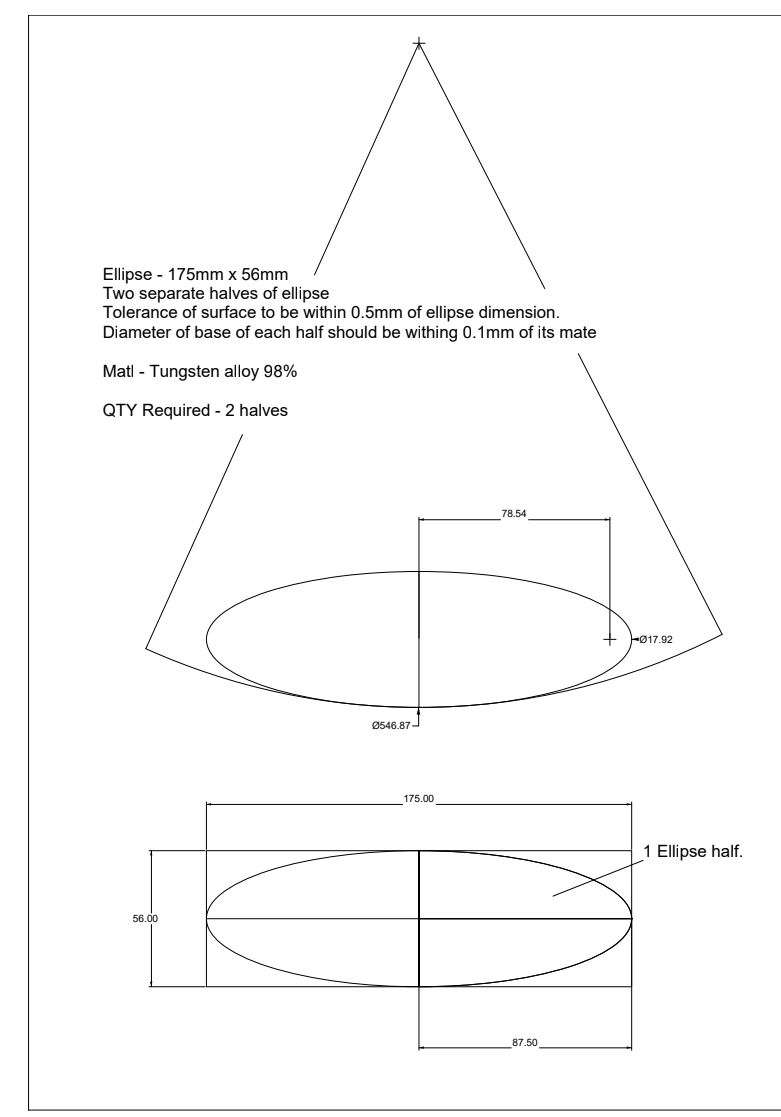
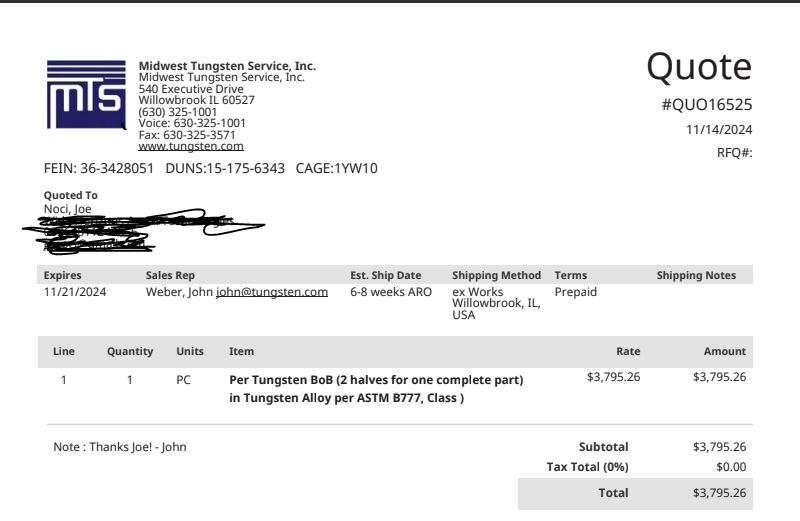
                      This was the description of a tungsten bob I wanted made in the US.


                      BoB


                      This was the quote:


                      Capture2


                      If it was the Magic Bullet, I would buy it, but it ain’t and will never be.

                      #826454
                      Dave S
                      Participant
                        @daves59043

                        Tungsten spheres are a standard metrology item, and thus whilst “not cheap” they are available off the shelf and not stupid money last time I looked

                        Dave

                        #826464
                        Macolm
                        Participant
                          @macolm

                          The best bet seems to be reducing air resistance. Perhaps build a wind tunnel rather than a vacuum system?

                          #826474
                          duncan webster 1
                          Participant
                            @duncanwebster1

                            Tungsten is not magnetic, so won’t work in SODs clock. You can get machineable tungsten iron nickle alloys which are 90% tungsten but might be magnetic enough. Expensive experiment!

                            #826478
                            SillyOldDuffer
                            Moderator
                              @sillyoldduffer
                              On Dave S Said:

                              Tungsten spheres are a standard metrology item, and thus whilst “not cheap” they are available off the shelf and not stupid money last time I looked

                              Dave

                              Ah, but Joe needs a large aerodynamic football shaped lump of Tungsten, not a sphere.  His pendulum swings in air.

                              John suggested it would be more economic for me to improve Q with a large heavy bob in air instead of the vacuum system I’m struggling with.   Joe’s quote shows a large heavy bob ain’t cheap either.  Not when chasing high-precision time.

                              My clock is small and replacing it’s 100g mild-steel bob with Tungsten is intimidating – the stuff is extremely difficult to machine.  So my design was nudged towards vacuum containment.  Joe went the other way, and encountered a host of other challenges.  Seems there’s no easy answer – one compromise after another, with a high risk of failure.

                              Dave

                              #826484
                              Dave S
                              Participant
                                @daves59043

                                I’m not certain, but I am fairly sure that cemented tungsten carbide is generally magnetic – due to the cobalt binder.

                                Tungsten Carbide tooling balls are off the shelf available with attachment points, often a threaded stud or a plain hole. People who use them for CMM calibration do not like to have to machine them either 🙂

                                Cant remember who we used to use, but this page: https://tn-uk.com/metrology-products/reference-tooling-balls-spheres/

                                shows the types of attachment.

                                I think you need about a 25mm diameter one for just over 100g – these things are usually used for very precise sphericalness, so the weight wasn’t a thing I cared about.

                                Then you could vacuum and tungsten all at once.

                                Dave

                                #826491
                                Robert Atkinson 2
                                Participant
                                  @robertatkinson2

                                  How about a bundle of TIG electrodes with lengths cut to form the basic “football” shape and then overmoulded with metal filled epoxy, lead or similar?

                                  Robert.

                                  #826501
                                  Michael Gilligan
                                  Participant
                                    @michaelgilligan61133

                                    These, or similar, might be worth a look:

                                    https://www.reddragondarts.com/products/bunker-buster-darts

                                    Obviously made from a ‘machinable’ grade of heavy metal … and a cluster of three could make a novel pendulum bob.

                                    MichaelG.

                                    #826507
                                    duncan webster 1
                                    Participant
                                      @duncanwebster1

                                      How about a cylinder of mild steel with a hemisherical depression in each end, into which you glue a tungsten ball. Make the inner ends of thd balls far enough sprt so the hole for the rod can go through. I know it’s not quite Joe’s shape but might be better than just a sphere

                                      #826517
                                      Michael Gilligan
                                      Participant
                                        @michaelgilligan61133
                                        On John Haine Said:
                                        Fig-3-webOn John Haine Said:

                                        Dave, I posted a link to Hall’s description of the Littlemore clock on the other thread.  I suggest you look at figure 3 in that article regarding the dependence of Q on pressure.

                                        I repeat…here’s a copy

                                        It’s probably down to my naivety , John … but I find that plot astonishing [as in barely credible], and the explanatory caption does little to help !

                                        I suppose it’s because the vacuum levels extend to incomprehensibly low values … nothing that most of us could ever hope to achieve …

                                        Grateful for any enlightenment you can offer !

                                        MichaelG.

                                        .

                                        IMG_1246

                                        #826526
                                        John Haine
                                        Participant
                                          @johnhaine32865

                                          What is not credible about it Michael?


                                          #826532
                                          Michael Gilligan
                                          Participant
                                            @michaelgilligan61133

                                            Did Prof. Hall actually physically do this … or is it hypothetical extrapolation ?

                                            MichaelG.

                                            #826553
                                            Robert Atkinson 2
                                            Participant
                                              @robertatkinson2

                                              It appers to be related to the Reynolds number of the bob shape. See https://www1.grc.nasa.gov/beginners-guide-to-aeronautics/drag-of-a-sphere/
                                              The dynamic viscosity of air varies a lot with pressure.

                                              Robert.

                                              #826557
                                              Michael Gilligan
                                              Participant
                                                @michaelgilligan61133

                                                Thanks, Robert

                                                Can’t get your link working at the moment, but will try again later.

                                                MichaelG.

                                                #826563
                                                John Haine
                                                Participant
                                                  @johnhaine32865

                                                  The graph I showed comes from an article on the clock in HSN 1996-4 by Prof. Hall.  The implication of the article is that the Q was measured as he had all the necessary means at his disposal in the clock.

                                                  #826567
                                                  Michael Gilligan
                                                  Participant
                                                    @michaelgilligan61133

                                                    I am aware of the article, John, and have read it several times.

                                                    My remark was prompted by the fact that I still don’t understand that graph.

                                                    MichaelG.

                                                    .

                                                    Refhttps://www.model-engineer.co.uk/forums/topic/vacuum-chamber-design-and-build-advice/page/5/#post-826517


                                                    #826572
                                                    Michael Gilligan
                                                    Participant
                                                      @michaelgilligan61133

                                                      I suppose one needs to

                                                      1. be very clever, and
                                                      2. have the right toys !

                                                      .

                                                      IMG_1248

                                                      .

                                                      IMG_1247

                                                      .

                                                      MichaelG.

                                                    Viewing 25 posts - 101 through 125 (of 128 total)
                                                    • Please log in to reply to this topic. Registering is free and easy using the links on the menu at the top of this page.

                                                    Latest Replies

                                                    Viewing 25 topics - 1 through 25 (of 25 total)
                                                    Viewing 25 topics - 1 through 25 (of 25 total)

                                                    View full reply list.