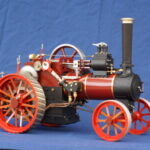
Richard B’s Minnie.

Richard B’s Minnie.

Home Forums Traction engines Richard B’s Minnie.

Viewing 20 posts - 1 through 20 (of 20 total)
  • Author
    Posts
  • #820543
    Richard B
    Participant
      @richardb44403

      Thought I should start another thread rather than hijack Brian’s – which I have read numerous times and gained valuable info from all.

      Can I confirm the position of the third shaft retaining collar – is it tight to the inside of the offside bearing- seems very little clearance to the boiler or on the outside of the near side bearing ?

      I’m finding a lack of general assembly drawings and pretty poor pics (by today’s standards) a problem.

      I’ve found a couple of Jason’s hi def picture excellent in this regard- many thanks.

      The next area is the fitting of the gear change bracket – is it a case of using the drawing dims to assemble and fit to the rear plate and then drill the gear location pins to suit assembly of gear movement?

      A pic would be super.

      Locating the rear tender seems to be just squaring up to the horn plates and drilling to suit the bearing bolts already installed?

      I started the engine build over 35 years ago and only recently dug it out and trying to remember all I’ve forgotten and what bits I’ve made are for ! Slowly coming back !
      I built the boiler back then when Loughborough Uni ran summer schools and model engineering was one of them and they had a boilersmith there to help and advise with large acid tank !

      I’ll post some pics of where I’m at – last wheel awaiting soldering and spoke riveting and then the beast can rest on 4 wheels finally !


      #820545
      JasonB
      Moderator
        @jasonb

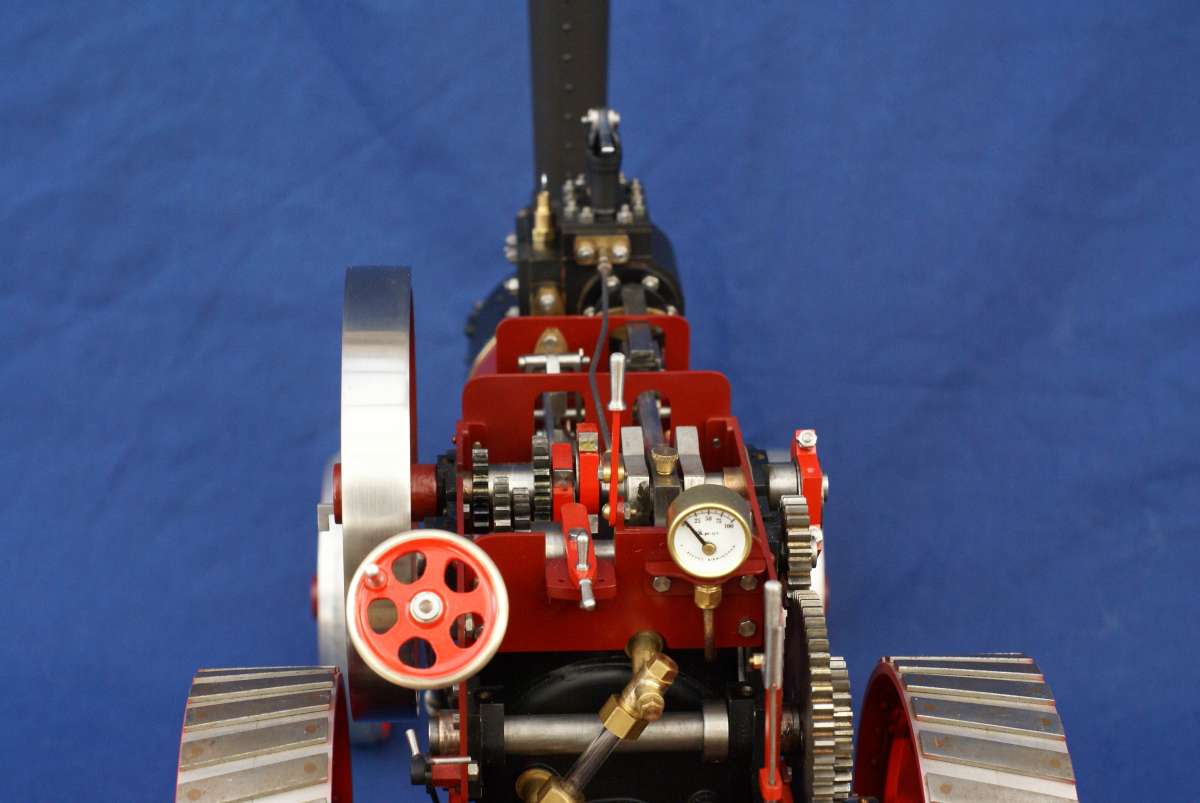
        My collar is against the offside bearing, that way it keeps the gears in place but allows for any expansion of the boiler moving the hornplates apart.

        DSC00160

        Assemble the gear lever and it’s bracket and check the gear cluster moves OK. Then spot through the lever into the bracket for the pin positions when each gear pair mesh and one in the middle for neutral.

        When it comes to mounting the tender set the boiler with it’s hornplates but without 3rd & final bearings up on a flat surface so it is true and level. Then pack up the tender so the top edge is level front to back, use a square to get the sides vertical and a long straight edge to make sure the sides are parallel to the boiler and hornplates. Spot a hole or two through and drill those. Slip in a couple of bolts to check things are OK and then spot and drill a couple more. One final check and do the remaining holes. You can then do the larger holes for the bearings.


        #821226
        Richard B
        Participant
          @richardb44403

          Thanks Jason

          Very helpful I will just cut the square hole out for the gear selector in the back plate first and see how it lines up before drilling anything.

          The pic was very useful as I had forgotten the throttle lever – need to research that as well !

          #822453
          Richard B
          Participant
            @richardb44403

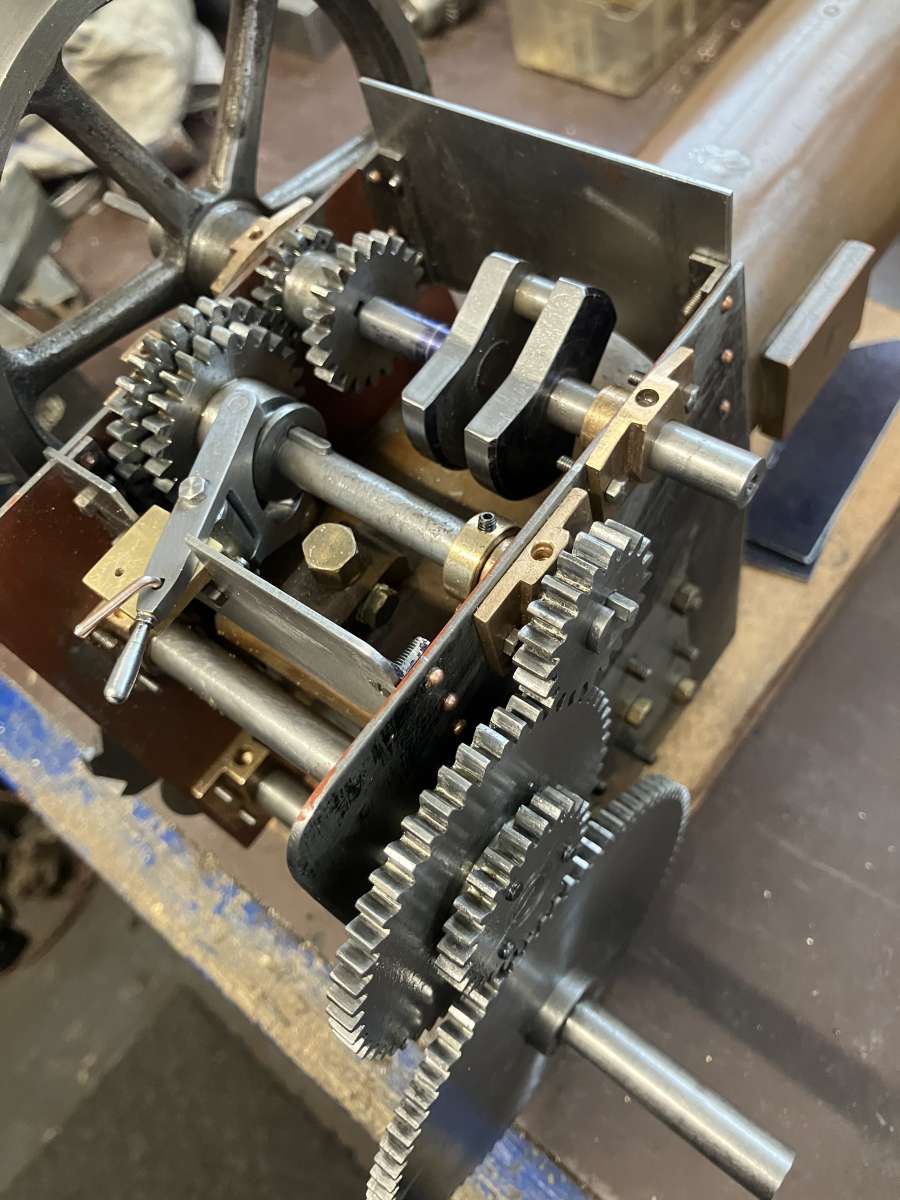
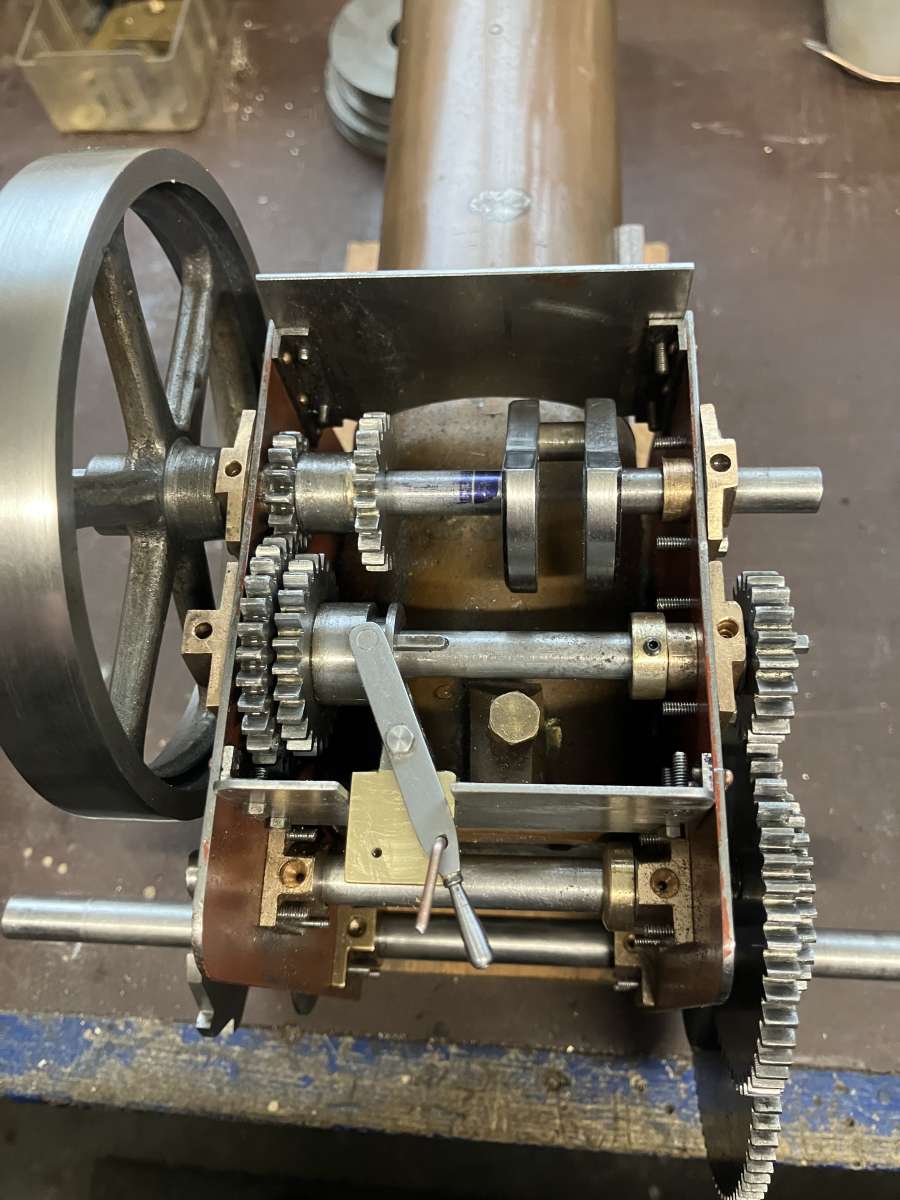
            Finally got all the bearings bolted up with spectacle and blackhead plates in place. Previously I had clamps etc.

            The shafts turn freely after a bit of fettling but some of the gears are now a bit tight and others some seem to have high spots.

            Some of it may be down to the centres and silver soldering etc but I did take what I thought was extreme care in setting out the gear trains as per book.

            I’ve relieved  the gears a bit with a file as they have cutting marks etc from manufacturing.

            Is it considered bad practice to run them with a bit of valve grinding paste and electric drill to bed them in, as this would make any high spots visible rather than struggle with blue etc – being so many teeth and gear sets.

            Also the first/second change gear pick up – do the gears need a little ‘lead’ angle or just that the crank needs to be turning to facilitate engagement ?


            Thanks again for assistance !

            #822454
            JasonB
            Moderator
              @jasonb

              Did you use a depthing tool like the book shows as that usually takes care of any possible run out rather than building to numbers? I can’t remember now if it says to put a strip of paper between the gears to give a bit of backlash, if not that may be why you a have the odd tight spot.

              Some people do tend to “motor” an engine to bed things in, if you do so then mesh and unmesh the crank & second shaft pairs so they get run in various positions, the others can be marked so they go back in the same positions.

              With no syncromesh on a traction engine a quick push n pull of the flywheel will feel the gears into mesh while stationary, best not to do it while running.


              #822457
              Richard B
              Participant
                @richardb44403

                Yes I used the meshing tool and made all the centres etc – can’t remember putting paper between the gears but it was over 30 years ago !

                I’ll give it a go as it’s not too bad – famous last words !

                #822621
                Dave Halford
                Participant
                  @davehalford22513

                  Just see if loosening the spectacle and blackhead plate bolts makes any difference.

                  #823219
                  Richard B
                  Participant
                    @richardb44403

                    After a bit more fettling it’s working fineIMG_0273IMG_0272 – still a bit tight in places on the big gear wheel, so a little more to look at.

                    The gear lever works ok with the rocking Jason mentioned- the gear lever position is a tad off centre but works fine – pin is only temporary!

                    #833523
                    Richard B
                    Participant
                      @richardb44403

                      Currently working on the tender, trying to sort the sequence of drilling the strengthening plates / tender sides.

                      is it a case of marking out the strengthening plates from the horn plates and drilling each to suit – noting drilling of bearings for each side – locating top edge from 3rd shaft bearing bolt.

                      Then drilling the brass tender sides using the strengthening plates as a jig ?

                      I would like to drill the tender sides before riveting up the tender if possible as after will be much more difficult for the large holes etc – the book seems to suggest after ?

                      #833525
                      JasonB
                      Moderator
                        @jasonb

                        It is a long time since I did mine and I don’t tend to spot through much now but I did then. I would probably have:-

                        Put the large rear axle bearing hole into the strengthening plate, then us ethe bearing through that and the hornplate so locate the strengthening plate and spot the screw holes.

                        Rivit up the tender. Pack up the boiler with ornrplate sso it is level and not leaning sideways. Slip the tender into position and again pack it up level. Then start spotting through one screw hole at a time, drilling and adding a bolt before doing the next. Bearing hole last. That way if you get any twist in the tender when riviting you can avearge it out so it sits reasonably true when bolted to the engine.

                        #833531
                        Andy Stopford
                        Participant
                          @andystopford50521

                          I drilled the tender sides first (boring the bearing holes to fit the bearings  snugly), then made a spacer to fit in place of the axle and its bearings, and used that to maintain (hopefully) the sides in alignment whilst doing the riveting.

                          Some of the rivets are a real pain to get at – I did as many as possible with a rivet squeezer I’d made, but some were a bit dubious in terms of the inside heads being formed properly, but it doesn’t matter too much since you’ll be sealing them and the seams with soft solder.

                          Take care with riveting the base plate, especially at the start – it’s very easy to let it gradually drift out of square. I had to scrap my first attempt and start again using a spacer as above.

                          n.b. if you use a spacer, make sure you can get it out from between the tender sides when you’re finished – I can’t remember exactly, but I think I made mine in two parts, with an outer sleeve which was the actual spacing element, and an inner dummy axle with a head on one end and a screw thread on the other to take a clamping nut.

                          #834687
                          Richard B
                          Participant
                            @richardb44403

                            Thanks for responses.
                            I like the idea of a spacer in the bearing locations – will work something out like that.


                            #837110
                            Richard B
                            Participant
                              @richardb44403

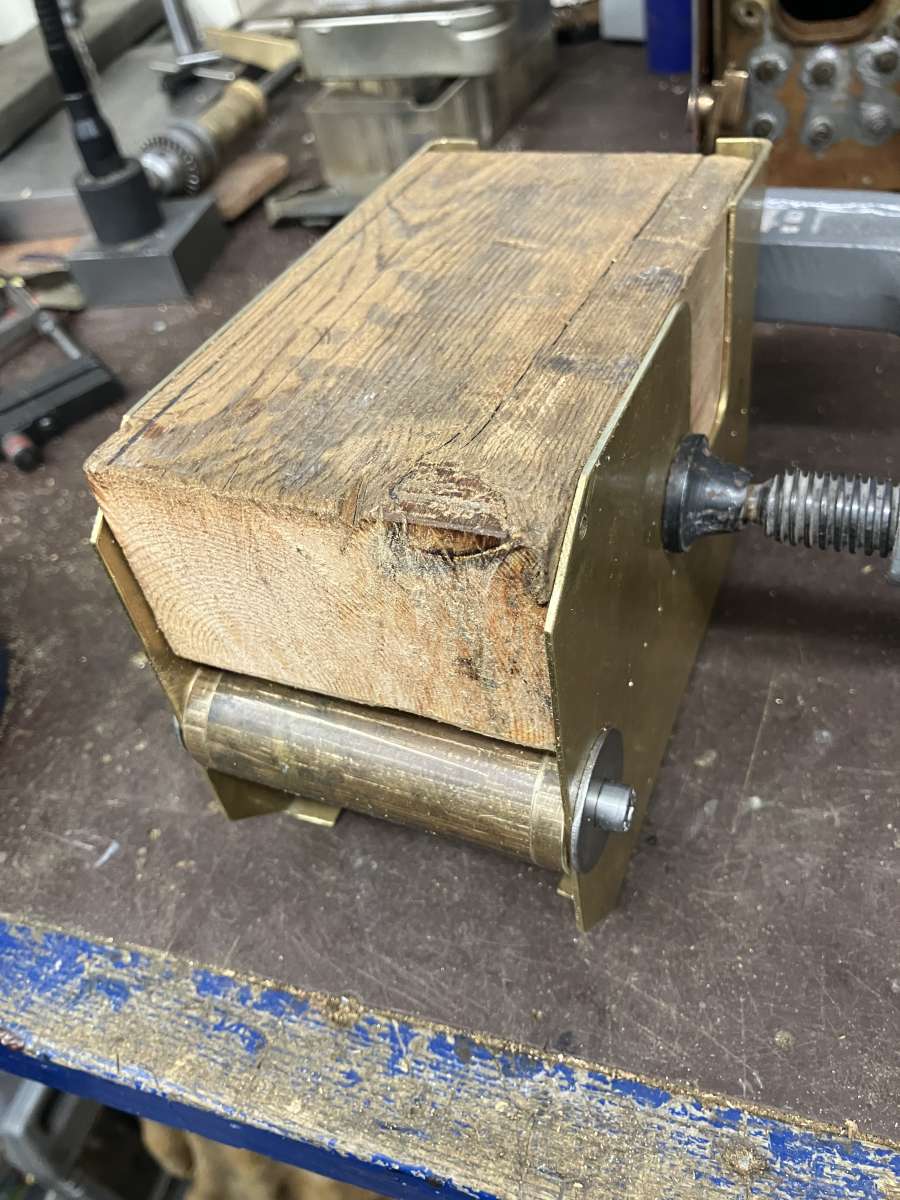
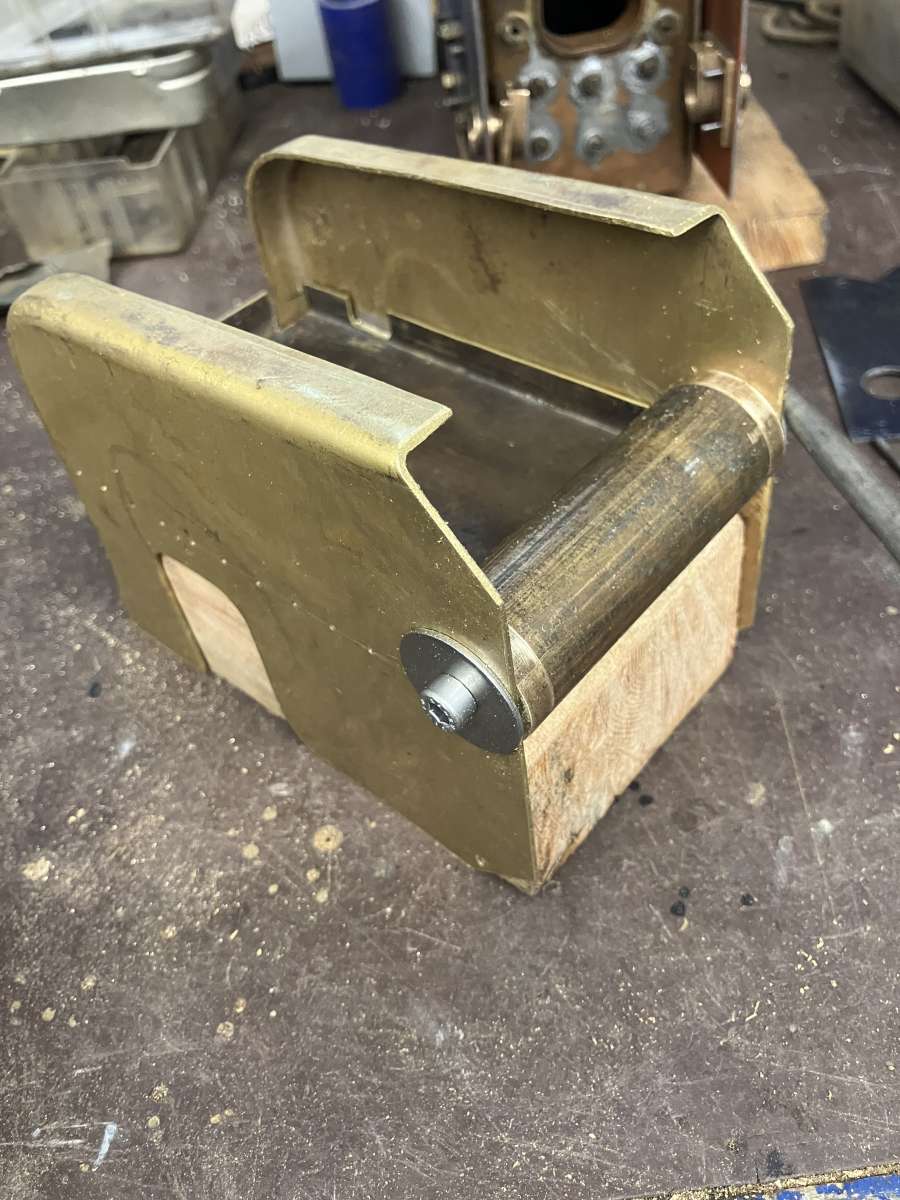
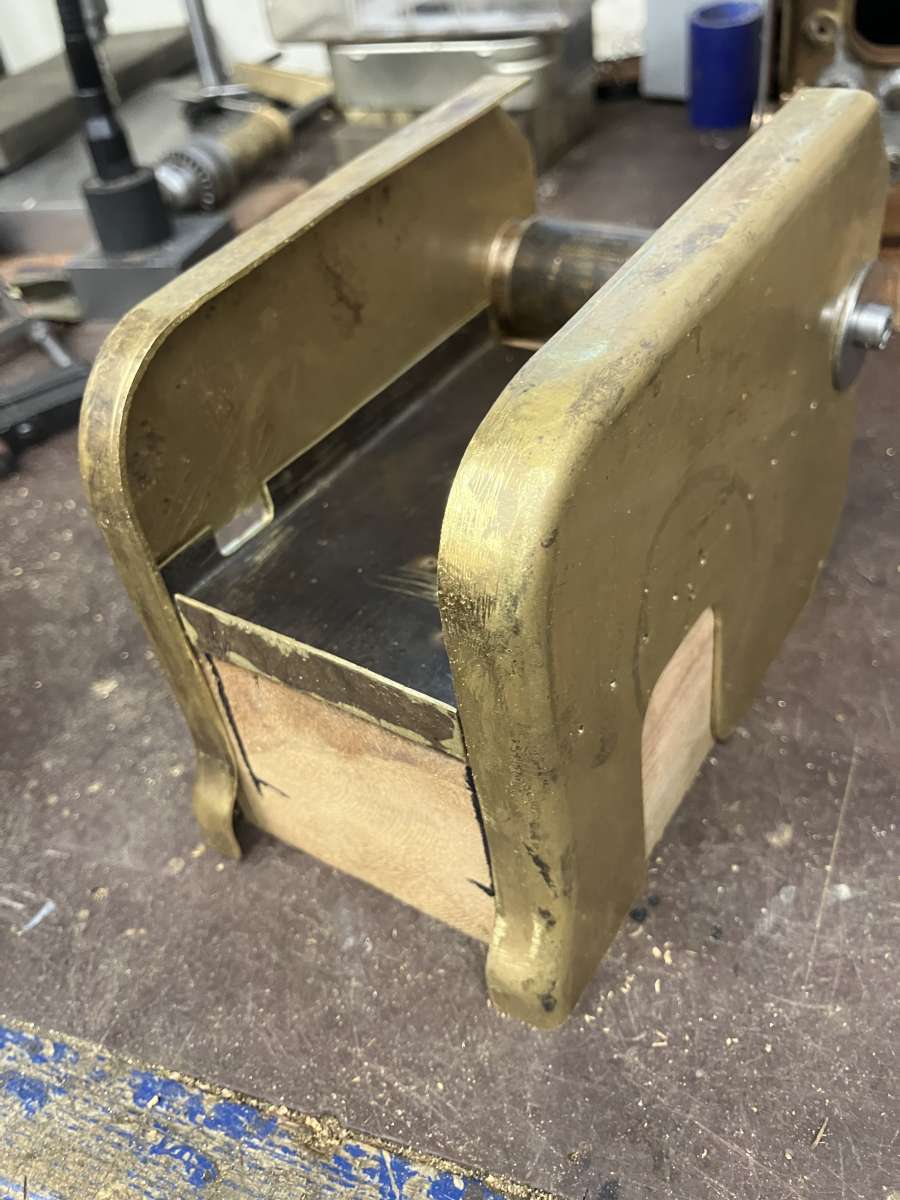
                              I’ve developed the spacer idea and now have a 3 part spacer internally, the outer 2 parts are machine to accurately fit through the side plate bearing holes that I previously reamed to size.

                              I also have planed up a timber spacer to help keep it square and depth the tender floor while drilling the rivets.

                              Riveting looks a nightmare !


                              Thanks for the spacer idea – I had an old brass 1” propshaft IMG_0351laying about so used that.


                              1. IMG_0350IMG_0349
                              #837111
                              Richard B
                              Participant
                                @richardb44403

                                Not sure what is going on with the site took ages to load then said it couldn’t load images and then they appeared ?

                                #837127
                                Andy Stopford
                                Participant
                                  @andystopford50521

                                  Looks good. the wooden block’s a good idea.

                                  For the rivets, at least some can be done with a suitable squeezer – I made one based on a design originally published in ME or MEW. Unfortunately I can’t find the details of the article, but here’s a link to my Onshape document which is a metric redesign of the original:

                                  https://cad.onshape.com/documents/c36ba7a0a91f9938d8574cfe/w/8845c84fd883335509439762/e/cf81b99723b05e929f34d3d1?renderMode=0&uiState=698b9057d9c976ddab413253

                                  If you’re not familiar with Onshape, the link goes to a read-only view of the document; you can take a look at the model, and clicking the little magnifying glass in the bottom left hand corner will list the drawings and an assembly which you can also look at.

                                  if you have an Onshape account you can copy the document into your account and edit it, etc.

                                  n.b. If you decide to make this, check everything is correct – I might have changed some detail and forgot to update the model! I also omitted the upper rivet snap which screws down from the top – you need to make this the right length for the job. I ended up with a selection.

                                  A thing I didn’t do which would make it much easier to use is to add a spring to between the two handles – I reckon one of the volute type you can get as a spare for secateurs would be good.

                                  #839704
                                  Richard B
                                  Participant
                                    @richardb44403

                                    Well the riveting is mainly done !

                                    The spacer worked well and the wooden block enabled the use of a large G cramp to hold the tender square and also hold it in the vice for drilling etc.

                                    The draw strap calls up soft iron rivets but are they really needed ?

                                    As I don’t have any and it’s only 4no I was thinking of either using copper or 7ba steel bolts with the heads turned to resemble a rivet and sweat over the nuts with lots of solder to avoid corrosion.

                                    Tried to register with Traction Talk website but have been waiting for moderator approval since Monday ?

                                    #839716
                                    JasonB
                                    Moderator
                                      @jasonb

                                      I can’t remember what I did on mine but unless you ar eintending to try and pull yourself along then copper rivits would do or just turn up 4 steel ones.

                                      #850534
                                      Richard B
                                      Participant
                                        @richardb44403

                                        Working on the reverse quadrant and lever.

                                        The quadrant has 1/4” long spacers to keep it off the tender sides. The lever has a s/s bush and the drawing shows 1/4” bare for the section between the lever and the tender side with 1/16” into the lever. If I understand it correctly the lever goes inside and will not function – should it be 3/16 bare ?

                                        I note the book also mentions possible difficulties getting the reverse lever between the boiler and horn plate !

                                        Mine is quite tight – seems like an afterthought where he mentions thinning it a bit ! If I encounter an issue I think a piece of hacksaw blade suitably modified would be ok between the boiler area.

                                        #850538
                                        JasonB
                                        Moderator
                                          @jasonb

                                          Mine look to be 3/16″ and a 1/16″ rod worked OK.

                                          #850796
                                          Richard B
                                          Participant
                                            @richardb44403

                                            Thanks Jason, just silver soldered the lever now, the spring and plunger arrangements all look a bit fiddly !

                                          Viewing 20 posts - 1 through 20 (of 20 total)
                                          • Please log in to reply to this topic. Registering is free and easy using the links on the menu at the top of this page.

                                          Latest Replies

                                          Home Forums Traction engines Topics

                                          Viewing 25 topics - 1 through 25 (of 25 total)
                                          Viewing 25 topics - 1 through 25 (of 25 total)

                                          View full reply list.