Removing hard to reach ball bearings

Removing hard to reach ball bearings

Home Forums Manual machine tools Removing hard to reach ball bearings

Viewing 16 posts - 1 through 16 (of 16 total)
  • Author
    Posts
  • #396714
    Karl Mansson
    Participant
      @karlmansson91253

      Hello! I tried searching the forum on this subject but came up short.

      I'm continuing the taking apart of my Habegger DLZTE screw cutting lathe and I've gotten as far as the apron. All the mechanics in the lathe so far seem to be in a fair conditions but cosmetically it's terrible with a lot of painted over screws and joints between parts.

      The latest problem with the apron is getting the gear stacks out. I'm stuck with the gears directly behind the hand wheel. And without getting that gear off of there, I can't get the driving rod for the feeds out.

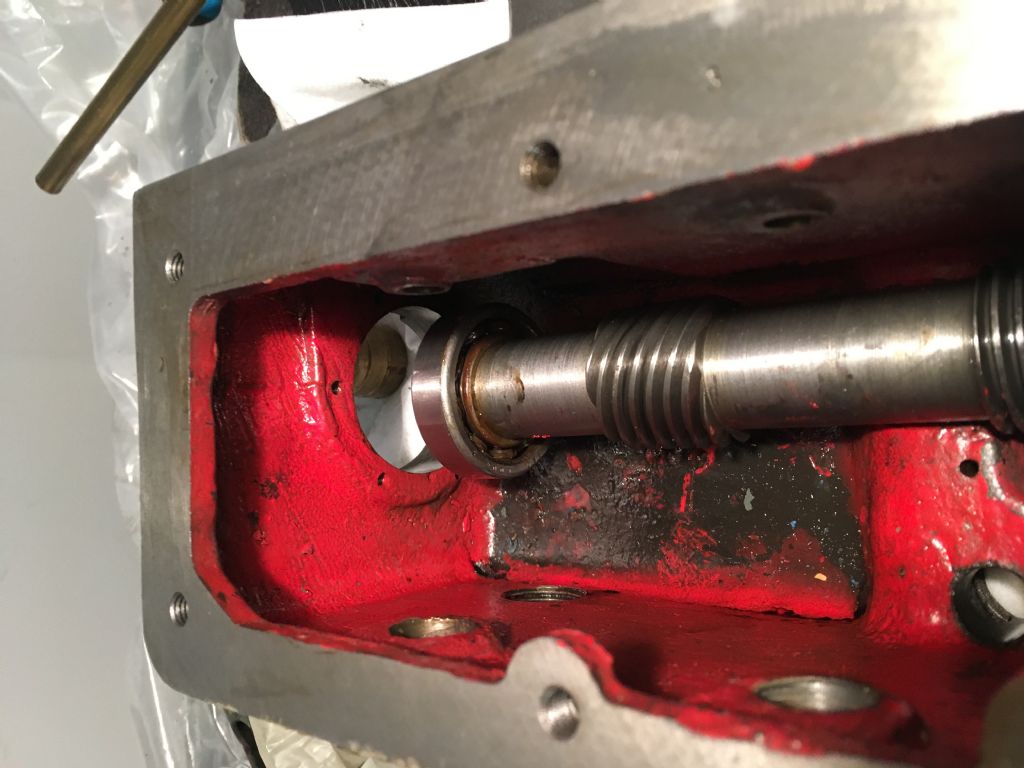
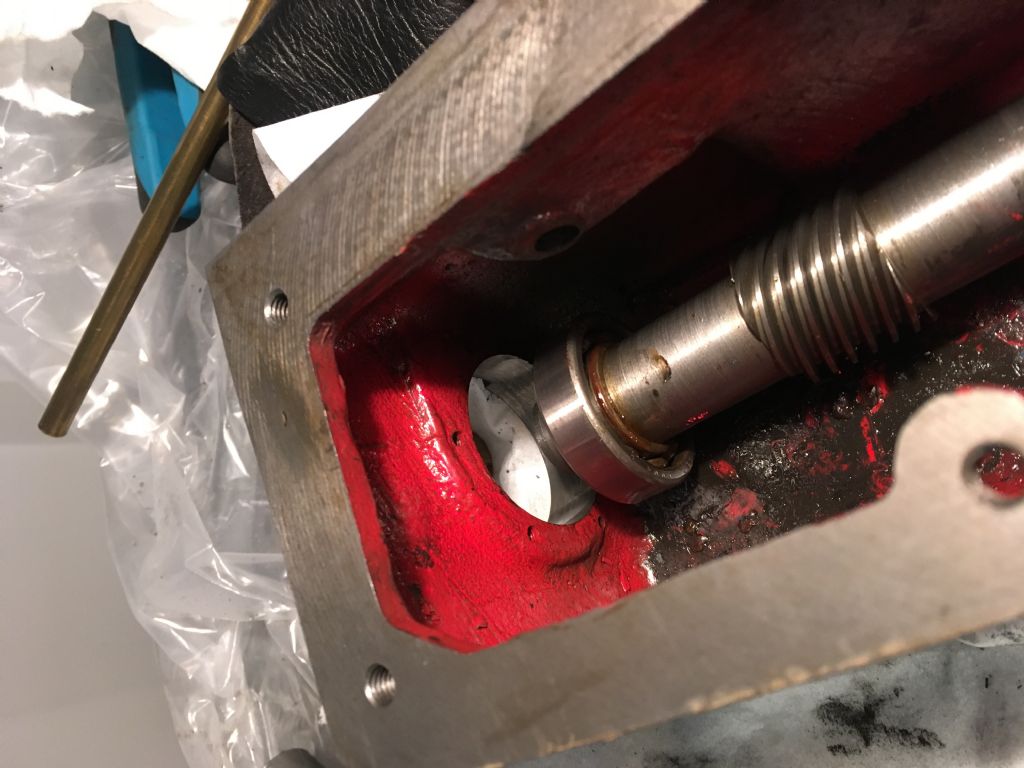
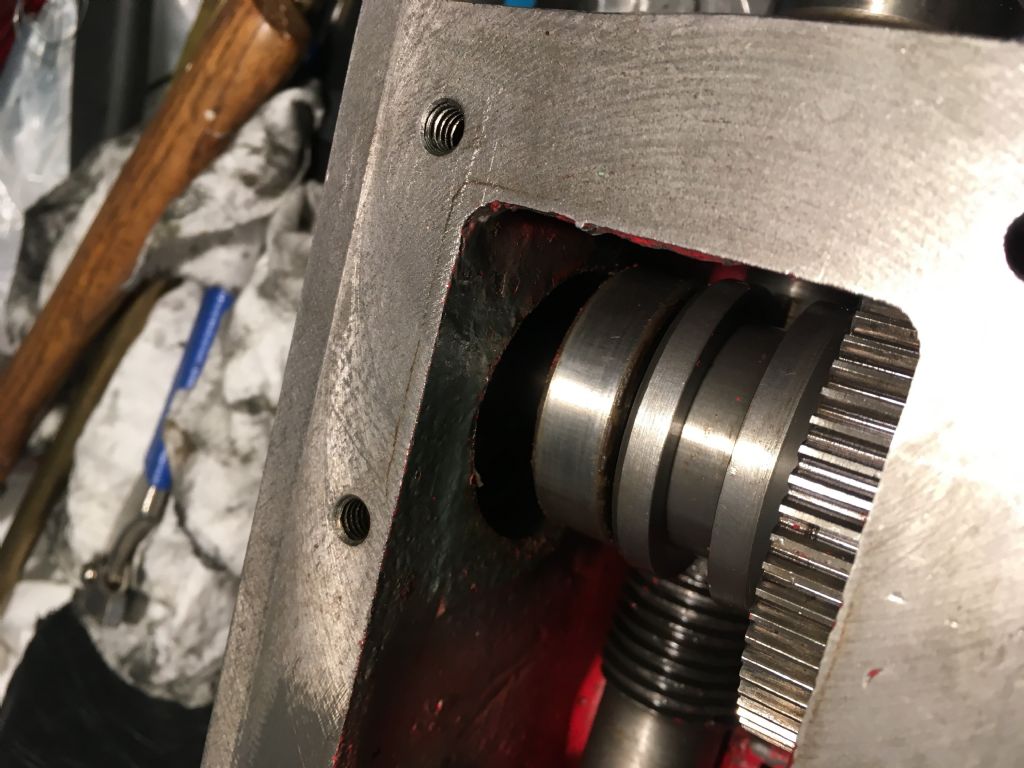
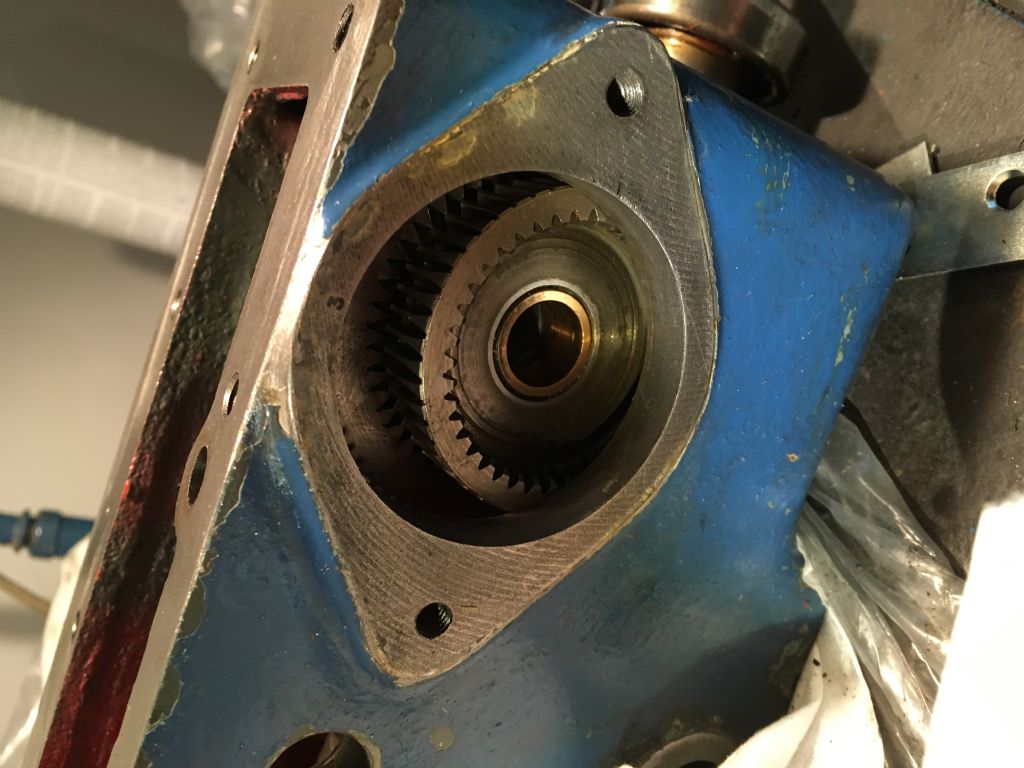
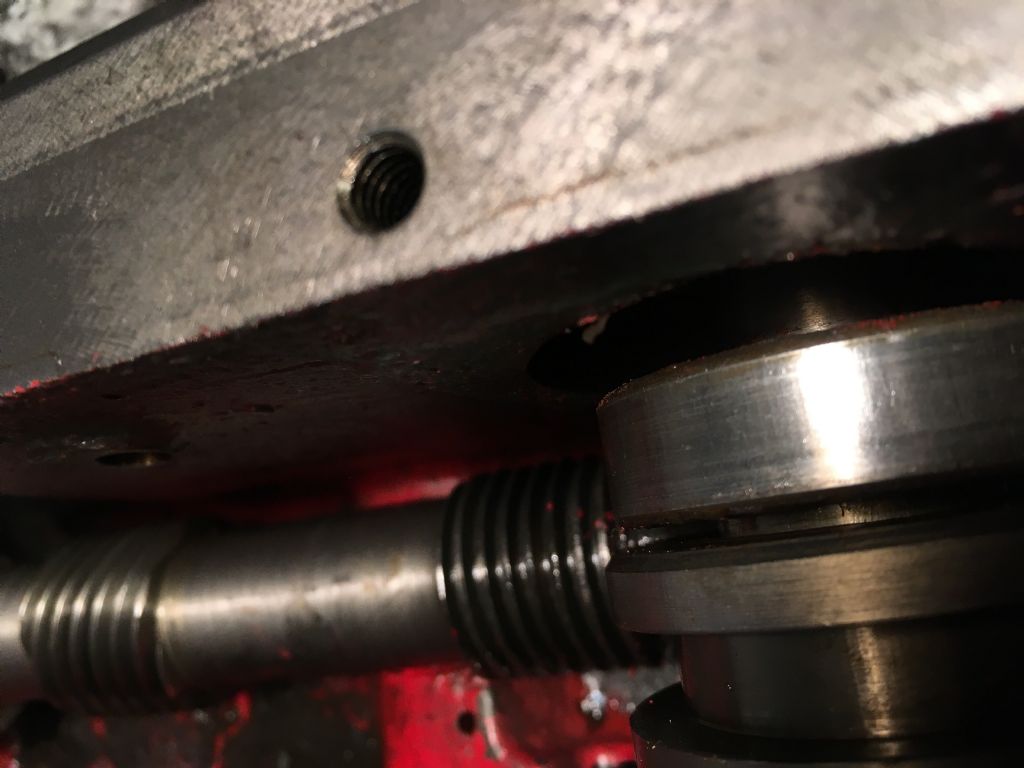
      Almost all rotary, manual functions on this lathe have ball bearings and they are rather snugly fitted into the castings. I can either push them out by hand or the come loose with just a little amount of tapping with a plastic shaft. They are however rock solid on their respective arbors. Probably a press fit. Several of the components feature captive gears or captive designs where it appears to me that I need to get the bearing off of the arbor in order to disassemble correctly. I can't see how I could get a tool into any of these situations though, without running the risk of damaging things.

      As is the case in my attached photos, the middle wheel is captive between the first and the bearing. The first, smaller wheel will pass through the hole in the casting in the front of the apron but not with the captive gear trailing it.

      I've tried placing a plastic spacer between the captive gear and the casting and tapping the spindle out with a brass rod but it won't budge. Is this supposed to be set up in a press in order to be disassembled or am I missing something. It seems impractical from a service point of view. I think the feed rod will come out with the bearings still attached as the holes in the castings are through holes, but the bearings won't clear the gear stack that is causing the problem. I've tried shimmying it out of there but no luck.

      All help is appreciated!

      Best regards

      Karl

      img_7915.jpgimg_7916.jpgimg_7917.jpgimg_7918.jpgimg_7919.jpg

      Edited By Karl Mansson on 17/02/2019 14:16:37

      #13431
      Karl Mansson
      Participant
        @karlmansson91253
        #396718
        Anonymous

          Why do you need to take it apart? Generally it looks pretty clean internally. I doubt that these parts were considered wear parts over the life of the lathe by the OEM and hence service considerations weren't important. Personally I'd leave well alone if the area is clean and functional with no missing or damaged parts. Otherwise there's a good chance you'll just make things worse.

          Andrew

          #396720
          Karl Mansson
          Participant
            @karlmansson91253

            I'm repainting the lathe and all cast parts. I want to be able to clean the parts as thoroughly as possible and strip them of old paint. Also, from catalogues I can guesstimate that this lathe was made in the 1950s. There is plenty of semi dried up grease in the bearings and on various parts of the lathe. I'm not even sure if these bearings are supposed to be greased or if they should be lubricated by the oil bath that these gears run in. There is a planetary gear system in the handwheel assembly that simply oozes black grease and that is really crunchy to the turn.

            I've managed to spray some bearings out with brake cleaner and will re-inject those with fresh grease (the rear headstock bearings for instance) but for these that were more poorly shielded I'd like to clean them in an ultrasonic. Or at least get their associated arbors out so that I can strip and paint the housings.

            Karl

            #396728
            Bob n About
            Participant
              @bobnabout

              If it's a blind hole I was taught to pack as much grease in behind the bearing. Use a close fitting stub through the bearing and tap gently, the hydraulic pressure pushes the bearing out. You might need to repack a couple of times if the bearing is tight or some space behind it.

              Sorry, not relevant in this case.

              Edited By Joules Beech on 17/02/2019 16:12:14

              #396735
              Robert Butler
              Participant
                @robertbutler92161

                The images are unclear, but if there is a bearing at each end can the bearings be removed? If so you may have waggle room to shift the shaft through the bearing housing. Maybe on reassembly the bearings are then inserted on to the shaft when the shaft is back in place? The original bearings may be sacrificial but the skew gears look as though the are an integral part of the shaft. Robert Butler

                #396738
                Karl Mansson
                Participant
                  @karlmansson91253
                  Posted by Joules Beech on 17/02/2019 16:07:51:

                  If it's a blind hole I was taught to pack as much grease in behind the bearing. Use a close fitting stub through the bearing and tap gently, the hydraulic pressure pushes the bearing out. You might need to repack a couple of times if the bearing is tight or some space behind it.

                  Sorry, not relevant in this case.

                  Edited By Joules Beech on 17/02/2019 16:12:14

                  Thank you for the suggestion! I came across that technique while looking for a solution to this problem. Pretty clever but as you say, not applicable in this case.

                  #396739
                  Karl Mansson
                  Participant
                    @karlmansson91253
                    Posted by Robert Butler on 17/02/2019 16:45:59:

                    The images are unclear, but if there is a bearing at each end can the bearings be removed? If so you may have waggle room to shift the shaft through the bearing housing. Maybe on reassembly the bearings are then inserted on to the shaft when the shaft is back in place? The original bearings may be sacrificial but the skew gears look as though the are an integral part of the shaft. Robert Butler

                    Unclear how? That they don't show the whole shaft?

                    There is a bearing on either end of the drive shaft. I've managed to wriggle that past the gear stack that is left now, and as I suspected the bearing on the other end cleared the housing. Yes, the teeth on the shaft are machined directly into it.

                    The part that remains now is the hand wheel assembly. Still not enough room to persuade that one out of there.

                    #396741
                    Ed Duffner
                    Participant
                      @edduffner79357

                      Hi Karl,

                      It looks like you have moved the shaft to one side already and one of the bearings is outisde the casting. Can you place a couple of soft bars between the bearing and the casting and gently tap the shaft inward?

                      Ed.

                      #396742
                      Karl Mansson
                      Participant
                        @karlmansson91253
                        Posted by Ed Duffner on 17/02/2019 17:13:38:

                        Hi Karl,

                        It looks like you have moved the shaft to one side already and one of the bearings is outisde the casting. Can you place a couple of soft bars between the bearing and the casting and gently tap the shaft inward?

                        Ed.

                        Thank you for the suggestion, Ed! I tried that and they wouldn't budge. The drive shaft is out now though. I think I can clean and re-pack the bearings adequately now. The only remaining part is the handwheel assembly and the bearing there.

                        #396796
                        Hopper
                        Participant
                          @hopper

                          They are handwheel bearings. Totally non-critical. It is not worth risking cracking the apron casting by putting strips behind them and pounding on things with an 'ammer and drift, thus transferring the shock loading to the casting.

                          You'd be better off to soak and wash out the whole apron in solvent in a proper parts cleaner or even just a large bucket etc, without disassembly. Surely the oil level in the apron will be high enough to lubricate these very low speed, very low load bearings when reassembled? Or if not, you could squirt a bit of grease into them using a grease gun with syringe fitting on the end etc. Or even heat some grease up and pour it into the bearings, if you find that grease packing is essential. Grease can be heated in an old tin can on the stove or with a torch etc.

                          If you feel you absolutely must remove the bearings, you might try heating them with a propane torch to expand the inner race until you can slide it off the shaft. That way you won't destroy the bearings as using a hammer and drift often does.

                          Personally, I'd leave well alone and go with the solvent clean up and possible regrease if the apron oil level sits below the bearings.

                          #396797
                          John McNamara
                          Participant
                            @johnmcnamara74883

                            Hi

                            That is a very interesting lathe, Unusual would be another appropriate word, In particular the way the bed is set up. I am guessing it is pretty accurate too.

                            I would just wash out the saddle and leave well alone.

                            Note that standard deep groove ball bearings have clearance They will visibly wiggle, a nice scientific description! don't mistake this for wear. They may still be within spec.

                            Regards
                            John

                            **LINK**

                            PS "If it aint broke dont fix it"

                            #396804
                            Nicholas Farr
                            Participant
                              @nicholasfarr14254

                              Hi Karl, like has been said, wash them out in as best you can, the best way is in a paraffin bath and a good quality paint brush (one that doesn't loose all its hairs) and then blow dry them with clean compressed air. The bearings will be a press fit on their journals and a close fit in the housings, this is standard design.

                              Contrary to belief, you should not use a brass drift near ball bearings, (or any bearings with rolling elements) as brass has a tendency to splinter off very fine particles, which you won't notice and will damage the bearings when in use. If you need to use a drift, use a mild steel one or a mild steel one with a short pure aluminium plug in the end, both will mushroom long before bits splinter off them.

                              Regards Nick.

                              P.S. I should add, use relevant PPI when using paraffin and compressed air.

                              Edited By Nicholas Farr on 18/02/2019 07:42:19

                              #396817
                              Karl Mansson
                              Participant
                                @karlmansson91253
                                Posted by Hopper on 18/02/2019 01:47:46:

                                They are handwheel bearings. Totally non-critical. It is not worth risking cracking the apron casting by putting strips behind them and pounding on things with an 'ammer and drift, thus transferring the shock loading to the casting.

                                You'd be better off to soak and wash out the whole apron in solvent in a proper parts cleaner or even just a large bucket etc, without disassembly. Surely the oil level in the apron will be high enough to lubricate these very low speed, very low load bearings when reassembled? Or if not, you could squirt a bit of grease into them using a grease gun with syringe fitting on the end etc. Or even heat some grease up and pour it into the bearings, if you find that grease packing is essential. Grease can be heated in an old tin can on the stove or with a torch etc.

                                If you feel you absolutely must remove the bearings, you might try heating them with a propane torch to expand the inner race until you can slide it off the shaft. That way you won't destroy the bearings as using a hammer and drift often does.

                                Personally, I'd leave well alone and go with the solvent clean up and possible regrease if the apron oil level sits below the bearings.

                                Thank you Hopper, yes I'm starting to feel that would be the best approach. At the moment I'd just like to keep the hand wheel assembly from rattling around in the apron casting when I'm handling it for painting. Guess I'll just have to wedge it in there with some soft material.

                                #396818
                                Karl Mansson
                                Participant
                                  @karlmansson91253
                                  Posted by John McNamara on 18/02/2019 05:34:44:

                                  Hi

                                  That is a very interesting lathe, Unusual would be another appropriate word, In particular the way the bed is set up. I am guessing it is pretty accurate too.

                                  I would just wash out the saddle and leave well alone.

                                  Note that standard deep groove ball bearings have clearance They will visibly wiggle, a nice scientific description! don't mistake this for wear. They may still be within spec.

                                  Regards
                                  John

                                  **LINK**

                                  PS "If it aint broke dont fix it"

                                  Thank you! I'd like to think i got lucky on this one. There is a lot of work to do in terms of cleaning up, checkingand possibly even scraping. Most parts don't seem too worn out, many just dinged or damaged cosmetically. There are some areas with pitting in the bed and I haven't measured anything yet. They apron hangs off a second slide way on the front of the machine, making me think that this lathe will be a beast to regrind. So much geometry to take into consideration.

                                  Originally these were made well on par with the Schaublin lathes of the time. This particular design seems to be made with wear resistance in mind, it has a separate drive shaft for the feeds, and the lead screw is reserved for screw cutting only. The lead screw nuts were incredibly dirty but look like they are practically unworn.

                                  https://drive.google.com/file/d/0Bxr59DtuJda_Z0xsYmxaaEZtLWM/view

                                  The DLZTE is towards the end of the catalogue I linked above.

                                  #396839
                                  Howard Lewis
                                  Participant
                                    @howardlewis46836

                                    Bear in mind that removing the bearings may well damage/destroy them.

                                    Are replacements easily (and economically ) available?

                                    Remember! If it ain't broke, don't fix it.

                                    Worst case scenario: you could end up with a machine which WAS O K but now for which no replacement parts are available.

                                    Howard

                                  Viewing 16 posts - 1 through 16 (of 16 total)
                                  • Please log in to reply to this topic. Registering is free and easy using the links on the menu at the top of this page.

                                  Latest Replies

                                  Home Forums Manual machine tools Topics

                                  Viewing 25 topics - 1 through 25 (of 25 total)
                                  Viewing 25 topics - 1 through 25 (of 25 total)

                                  View full reply list.