PIC AXE Store : Sale Items

PIC AXE Store : Sale Items

Home Forums The Tea Room PIC AXE Store : Sale Items

Viewing 17 posts - 1 through 17 (of 17 total)
  • Author
    Posts
  • #831198
    Michael Gilligan
    Participant
      @michaelgilligan61133

      Might be of interest:

      Sale Items

      MichaelG.


      And even if there’s nothing you fancy … this free download of interfacing circuits is worth having.

      https://picaxe.com/docs/picaxe_manual3.pdf


      #831538
      Bazyle
      Participant
        @bazyle

        Thanks for the link. Of course I had to spend some money but got a little computer pcb scope. It is only a pcb so now have another project to make a box etc.

        Interestingly it has a spectrum analyser feature so I might be able to analyse machine vibrations and see what minor stand changes improve things.

        #831559
        John Haine
        Participant
          @johnhaine32865

          I bought a scope too. You can never have too many.

          #831573
          IanT
          Participant
            @iant

            Yes, just purchased one myself John. I’m hoping it’s fully populated and not just the PCB – if so, then that’s very good value.

            I already have a Chinese 8-Channel LA clone that uses the open source PC software, as well as my ancient TecTronix scope of course but this seems to be a simple (but useful)  device at an affordable price – so why not indeed?

            I hadn’t looked at the PicAxe “interfacing” manual on first ‘view’ but it looks like a useful primer for experimenting with simple micro controlled circuits. I gather it was written for schools. Have to have a longer look and see if my two young new computer ‘users’ might be interested. Bit too early to tell.

            I tend to use ‘modules’ for most things these days (rather than discrete components) as they are cheap and convenient but something simpler (e.g discrete) makes good sense when learning the basics of interfacing to the real world…

            I haven’t looked in detail but PicAXE Basic seems like it should translate to MicroMite Basic (MMB) very easily on your new Picomites Michael.

            Regards,


            IanT

            #831605
            Bazyle
            Participant
              @bazyle

              The picaxe was the go-to education microcontroller before the arduinos became cheaper and smaller and currently the BBCMicrobit is the favourite but there are several other very small simple equivalents. These cover the under 14s doing a cheap intro project in maker clubs or classes where half the pupils aren’t really interested. The tech equivalent of making some rock cakes in a domestic science class. Some 15 years ago my nephew used a picaxe to make a timer at school but did not develop any interest in electronics.

              #831618
              SillyOldDuffer
              Moderator
                @sillyoldduffer
                On IanT Said:

                Yes, just purchased one myself John. I’m hoping it’s fully populated and not just the PCB – if so, then that’s very good value.

                I already have a Chinese 8-Channel LA clone that uses the open source PC software, as well as my ancient TecTronix scope of course but this seems to be a simple (but useful)  device at an affordable price – so why not indeed?

                Sorry to rain on the parade, but this scope isn’t “very good value”.    The  User Manual is open and honest about it’s shortcomings, which are considerable.   Briefly, a sample rate of only 20000Sa/s severely limits the scope’s utility.  In comparison my £40 multimeter has a 1000000 Sa/s scope. Although that’s 50×, faster than the PCB module, the meter is too slow for about half my ordinary hobby needs.   Used carefully a £70 48MSa/s PC USB oscilloscope does pretty well, but I rarely bother with mine because it too has limitations, despite being 2500× faster than the PCB module. Though the USB scope best matches the “good value” requirement I prefer my 1GSa/s scope.  Takes much less setting up, and is easy to use because it’s comfortably faster than most of the signals I work with.   Still a bit basic as scopes go, and, of course, it cost about £500!

                Before anyone buys a £4.99 oscilloscope, have a think about how fast the instrument needs to be, and read the manual.

                I hadn’t looked at the PicAxe “interfacing” manual on first ‘view’ but it looks like a useful primer for experimenting with simple micro controlled circuits. …

                It’s fine, if a little on the old-fashioned side.

                I tend to use ‘modules’ for most things these days (rather than discrete components) as they are cheap and convenient

                very sensible!


                but something simpler (e.g discrete) makes good sense when learning the basics of interfacing to the real world…

                um maybe.   Problem is discrete is not simpler!  Usually harder.   Discrete components make the builder responsible for lots of details, which may not be mentioned at all in a primer.   Seems simple but isn’t.  So, modules are generally quicker and more reliable.  Better to take a lego-block approach, avoiding discrete circuitry as much as possible.    For example, I have a magnetic remanance problem to solve, done by flipping which way round current is pulsed through the electromagnet.  Could use 4 discrete transistors in a bo standard H configuration, but I’d have to sort out the board layout and add various extras like decoupling capacitors, protective diodes, and some resistors.   Lots of chips do H motor control, and, a plug and play module costing less than I can buy the components for is available.

                No need for youth to learn basic electronics as I did in the sixties, better to find modules (or chips), and work back from them to how it works in detail, should that be necessary.

                I haven’t looked in detail but PicAXE Basic seems like it should translate to MicroMite Basic (MMB) very easily on your new Picomites Michael.

                One of the problems with the BASIC family is it’s members aren’t standardised!  MMB is much more advanced than PICAXE BASIC, and often replaces several lines of PICAXE with a single command.   Good news, except learners still have to read the manual…

                I’ve explained before why I don’t recommend BASIC, but not all BASICs are equally horrible.  MMB is much cleaner and fully featured than PICAXE BASIC and the licensing is more sensible too.    I’d avoid PICAXE BASIC unless the code has to run on a tiny microcontroller.

                Dave

                #831619
                John Haine
                Participant
                  @johnhaine32865

                  At its list price probably not but for a fiver…

                  #831623
                  Michael Gilligan
                  Participant
                    @michaelgilligan61133

                    Ref.Dave’s assorted put-downs

                    I’m glad I chose the words of my opening post carefully.

                    MichaelG.

                    #831633
                    IanT
                    Participant
                      @iant

                      Actually I thought Dave was being quite gentle Michael.  🙂

                      I don’t view the ‘multiple’ Basics as a problem. I regard the PicoMite as a complete solutions package, one that gives me easy access to the Pico (these days the RP2350 -Pico2) that happens to use Basic. Although I have used other Basics, that was many years ago.  The only Basic I use these days is MMB, so it’s not a problem in practice. As I think you may be discovering, MMB is very closely bound to the hardware platform being used and that is very helpful as it’s been tested for that specific platform.

                      Apart from the postage, the PCB scope has cost less than a pint in my local and so I will have a play and see what use it might be to me. I knew it wasn’t fast but then not everything I do needs ‘fast’.

                      Regards,


                      IanT

                      #831790
                      IanT
                      Participant
                        @iant

                        The Postman hasn’t delivered my PCB ‘scope’ yet but I found this little YT review earlier.

                        It’s in French but as my French is some what rusty these days, I simply set sub-titles to English and watched it that way…

                        PCB Scope (in French)

                        Regards,


                        IanT

                        #831798
                        Michael Gilligan
                        Participant
                          @michaelgilligan61133

                          As an aid to learning about ‘squirrelscopes’ … I don’t think one could reasonably ask for much better.

                          MichaelG.

                          .

                          https://picaxe.com/docs/osc001_design.pdf

                          #831800
                          Robert Atkinson 2
                          Participant
                            @robertatkinson2

                            While we are on flavors of BASIC, a quick plug for my favorite, Pic Basic Pro (PBP). Compiled, Good enough for professional applications and a free version (only limited to the PIC chips you can use) for student or hobby use.

                            https://pbp3.com/

                            Robert.

                            #831810
                            IanT
                            Participant
                              @iant

                              Everyone has their favorite tools Robert and it makes good sense to use what you know and like. I certainly have my personal preferences for the CAD, CAM, O/S and embedded systems I use.

                              However, just to comment on “Compiled”.

                              There does seem to be a general perception that “Compilers” will always out perform “Interpreters” and this is true (in “speed” terms) when using ‘like-for-like’ hardware platforms (or a very similarly spec’ed one).

                              But it is certainly not true when comparing (benchmarking) a compiled programme versus an interpreted one on very different underlying H/W platforms. It might suprise some that an RP2350 Picomite (running MM Basic – an interpreted language) will normally easily outperform many popular (but older) embedded systems, such as the Arduino Uno, Nano or Due (or the ME Labs PIC18F47K40 based ‘D’ stick) even if they are running compiled code. Many of these other systems are based on modern 8 (or 16) bit architectures and are simply outgunned by the Pico 2’s (32 bit) ARM Cortex 33 twin CPUs in raw performance – compiled or not.

                              Of course running a compiled language on the Pico2 would be faster (than MMB) but perhaps not as simple to use & debug. There are considerations other than just raw ‘speed’ such as ease of learning, programming and (most especially) debugging.

                              If you haven’t looked at MMB, I’d be interested to hear how it compares with PBP from your (developers) point of view. Both are now about the same ‘maturity’ after some 15 years of software development.

                              Regards,


                              IanT


                              #831812
                              Robert Atkinson 2
                              Participant
                                @robertatkinson2

                                Hi Ian, I made no comment on speed or advantages of complied languages. You are however not comparing apples with apples. As you note the RP2040 has two 32 bit ARM cores running at 200MHz and 256k of ram and the PIC18F47K40 has a single 8 bit processor running at 64MHz and 37 k of RAM.

                                Of course the RP2040 is faster. That has nothing to do with the language used. A car with a 4 litre V8 engine will be faster than onw with a 1 liter 4 cyinder.

                                Robert.

                                #831819
                                IanT
                                Participant
                                  @iant

                                  I agree Robert – but a comparison between Apples and Pears does often happen.

                                  My point was (is) that many people assume that “Basic” (normally an Interpreted language) is always going to be ‘slower’ (e.g. provide less performance) than other systems that run a compiled language. They miss the fact that this is not neccessarily so. It depends on the underlying hardware and how well the ‘Interpreter’ has been designed vs the ‘Compiler’. Nor does it factor in considerations such as ease of use.

                                  I was a amused by your comparison with engine sizes. Last year I had the dubious pleasure of driving a V8 4.8 litre ‘Hemi’ and my own (4-cylnder) 2.0 litre car is not only faster but also manages to go around corners without scaring the hell out of me. But then the V8 does weigh half a ton more, most of that being at the front end it seemed!

                                  A good example of why ‘power’ is not the only metric, as it also has to be usable.

                                  Regards,


                                  IanT

                                  #831978
                                  John Haine
                                  Participant
                                    @johnhaine32865

                                    Hi Bazyle, would you by any chance be 3D-printing the box when you get round to it? If so any chance you could share the files please?

                                    #831986
                                    IanT
                                    Participant
                                      @iant

                                      I’ve just received mine this afternoon John.

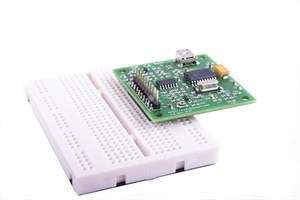
                                      Haven’t done anything to it yet but will be using it with a protoboard as shown below most likely. So I’ll be designing something that will protect it in this configuation. You would be welcome to the STL(s) should you wish them..

                                      Regards,

                                      IanT

                                      PCB_Scope

                                    Viewing 17 posts - 1 through 17 (of 17 total)
                                    • Please log in to reply to this topic. Registering is free and easy using the links on the menu at the top of this page.

                                    Latest Replies

                                    Home Forums The Tea Room Topics

                                    Viewing 25 topics - 1 through 25 (of 25 total)
                                    Viewing 25 topics - 1 through 25 (of 25 total)

                                    View full reply list.