Jaxon Steam Car

Jaxon Steam Car

Home Forums Traction engines Jaxon Steam Car

Viewing 11 posts - 1 through 11 (of 11 total)
  • Author
    Posts
  • #840783
    Werner Schleidt
    Participant
      @wernerschleidt45161

      Hi all,

      I hope this section covers not only traction engines but also road steam vehicles. I want to show my build of a Jaxon Steam Car, made after three pictures I found in the internet. The original who survived is on display in a private museum in Michigan in the town Jaxon.

      This picture lead me to the construction of a steam car. It is in a scale that I can transport it in my station wagon by detaching the seat. And in this size I can drive on bicyle ways and field roads without any problem. The car is able to climb hill tracks with 8% gradient. Slowly up with 2 Kph and on flat surface the car run with 6 Kph as it is allowed in Germany.

      On a beautiful sunday in March, I set off on my adventure trip to the neighbouring village. I filled the steam car with 15 litres of water and loaded two 1 kg gas bottles. Steam oil and lubricating oil were other essential supplies. I drove mainly along fields and cycle paths. In the neighbour town Ginsheim, I treated myself to an ice cream and the ice cream seller willingly complied with my request for 5 litres of steam water. Thanks again for that. It was a lovely trip, although driving with steam using such complex mechanical technology has the potential to be an adventure. You never know whether the technology will hold up. But apart from refilling the steam oil every 3 kilometres, changing the gas cylinder after 6 kilometres and refilling the feed water, there were no incidents. The only slight downside was that, within sight of home, the gas ran out and I had to switch to my return aid, a concealed electric drive. The detour to another ice cream vendor farer away, where it wasn’t so busy, limited my range. All in all, a great experience!

      I drove 12 kilometers in total, a really wonderful trip. The steam engine is convertable from normal two cylinder operation , for driving uphill and start, to compound action for flat or smaller gradients of max 2%. With the two cylinder setting the boiler is only able to deliver the steam amount for lower speeds. In compound action I can drive in flat area stable 6 Kph. One of the keys for the compound action is the reheating of the steam in the receiver placed in the upper part of the boiler. Last september I added in total 1.2 m copper tube to reheat the condensed water in the receiver. After I made this the driving was much better and smoother. The cylinder ratio is one to one and the maximum driving pressure is about 70 psi or 5 bar. Under warmer temperatures I can drive 7 km far with one kg propane gas. This time the ambient temperature was about 15 degrees, but the car was stored in the garage with night temperatures of 5 degrees Celsius. So it have to heat up the water with some loss of gas. For the 12 Kilometers I need 25 litres of water and 2 Kg propane. In the car installed is a arduino system who measures the water level in the boiler by probes and control two servos for the bypass valves. The burners are automatic ignited by a arduino control and a barbecue igniter electronic. With magnetic valves are the burner switched on and off in groups to 2, 4 and 4. Normally 6 burners are enough, but for driving uphill I can start additional 4 burners in a limited time frame. Is the presure reached earlier they switch then off and on automatic depending on the boiler pressure. If I have a standing phase they switch automatic off before reaching the boiler safety valves. After some time by reaching a lower limit the burner are automatic ignited again. At the beginning in the development I had many spark disturbance in the arduino action. By measuring with oscilloscope and other instruments I did not find the path were the disturbance came in. I shifted then the igniter electronic as far away as possible and the problem was gone.

      In the dashboard there are 4 instruments gauges made by myself. At the cover it looks like a mechanical unit but behind there is a small tiny servo controlled by the arduino. It is all calibrated and it is very accurate only the pointer tip makes some difference in return. All measurements are able to send by bluetooth to an self written app to show and analyse them. This helped me a lot to find keys for optimizing the system. Espacially for the automatic burner control.

      Please look the video to have an idea what I discribed https://youtu.be/csLXpdFgRpw


      I hope you can enjoy the video

      Werner


      #840798
      renardiere7
      Participant
        @renardiere7

        Wonderful!

        #840799
        duncan webster 1
        Participant
          @duncanwebster1

          Excellent, even tho’ I couldn’t get any sound. Probably wouldn’t have helped as It’s nearly 60 years since I did German O level, and not used since

          #840824
          Andy Stopford
          Participant
            @andystopford50521

            Love it!

            #840840
            Werner Schleidt
            Participant
              @wernerschleidt45161

              I apologise that my commends are in german in the video. In the future I add subtitles in english.

              Here are some explanations

              0:22 the boiler was automaticly filled by an electric pump, because the boiler was empty.

              0:28 view from above the cover of the steam engine and two valves for normal and compound action

              0:39 instruments in the dashboard from left speed, battery voltage, boiler water level and boiler pressure,

              self made with radio servos on the backside, astonishing accurate

              1:11 under the cover arduino who controls all ,the batteries for the hidden electric drive for an additional

              distance of 10 Kilometers range

              1:22 left the water tank inlet, in the middle the top of the boiler, on the right a fan for exhaust during standing

              the gas burner need constant draught.

              1:43  two 1 Kg  propane gas cylinder pressure reducer and gas filter and oil

              1:49  the burners are roaring it last 4 minutes for 4 bar

              1:57  with back and forward action the the water condesate is pushed out

              2:17  the engine is running

              2:30  the water level is reached and 5 bar pressure at the manual gauge and at the electrical in the front

              over 5 bar the burner stop automaticly

              6:32  8 km distance are over and I hope all went well

              7:30  after 12 km the gas is empty. but there is enough water available the last 500 meter I have to drive

              by electric drive

              Werner

              #840842
              Weary
              Participant
                @weary

                Hello Werner,

                Great to see your car running so well ……. but no pictures of the ice-cream(s)??!!

                As regards the burner needing continual draught you might like to look at this thread on Model Engineering Clearing House, especially recent posts and links prior to & including 4th March where the (loco) boiler builder has fitted a burner of the Bekaert Aconit type which apparently needs no forced draught as it generates its’ own pressure in the firebox.  In addition from the builder’s comments you will see that this type of burner appears to be very efficient generating significantly more heat output in a small area than the more  usual ‘jet’ burners.

                Apologies if you are already aware of this option.

                Phil

                #840843
                Alan Jackson
                Participant
                  @alanjackson47790

                  A pioneering journey Superb

                  Alan

                  #840846
                  Werner Schleidt
                  Participant
                    @wernerschleidt45161

                    Hi Phil,

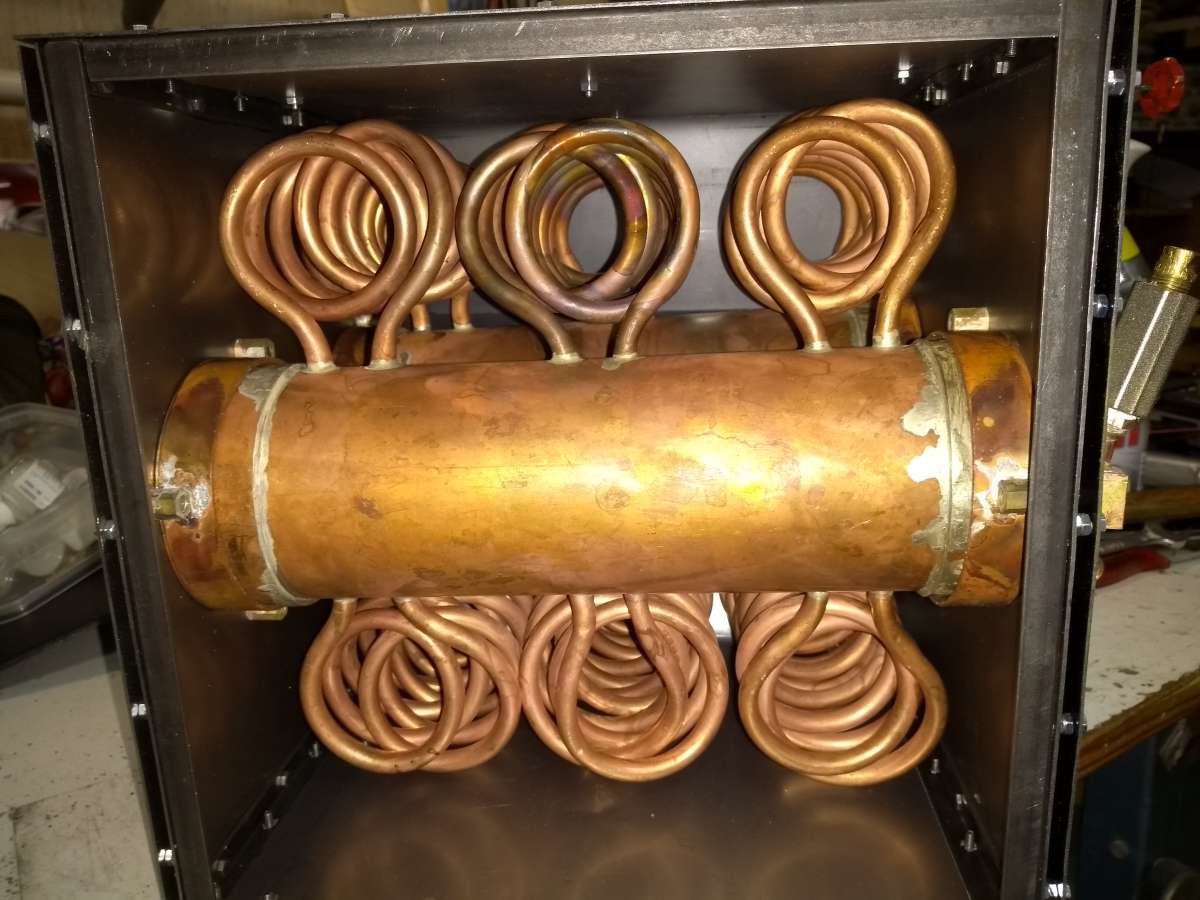
                    my boiler is a dual drum boiler

                    IMG_20230809_170108077

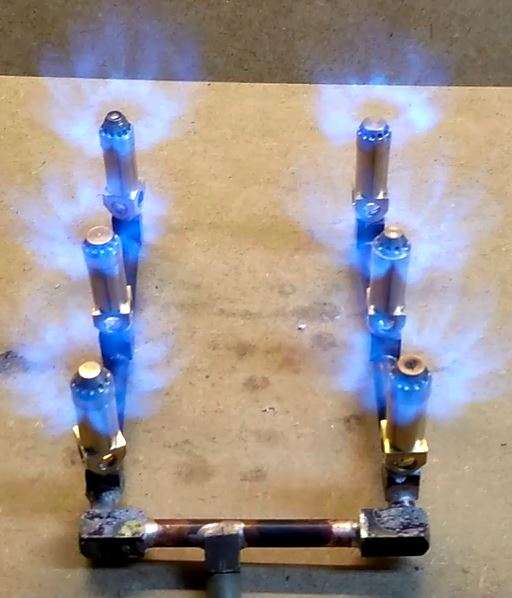
                    This view is from the downside of the boiler housing and under each coil is a homemade low gas pressure burner located. They look like this

                    6 Brenner_cr

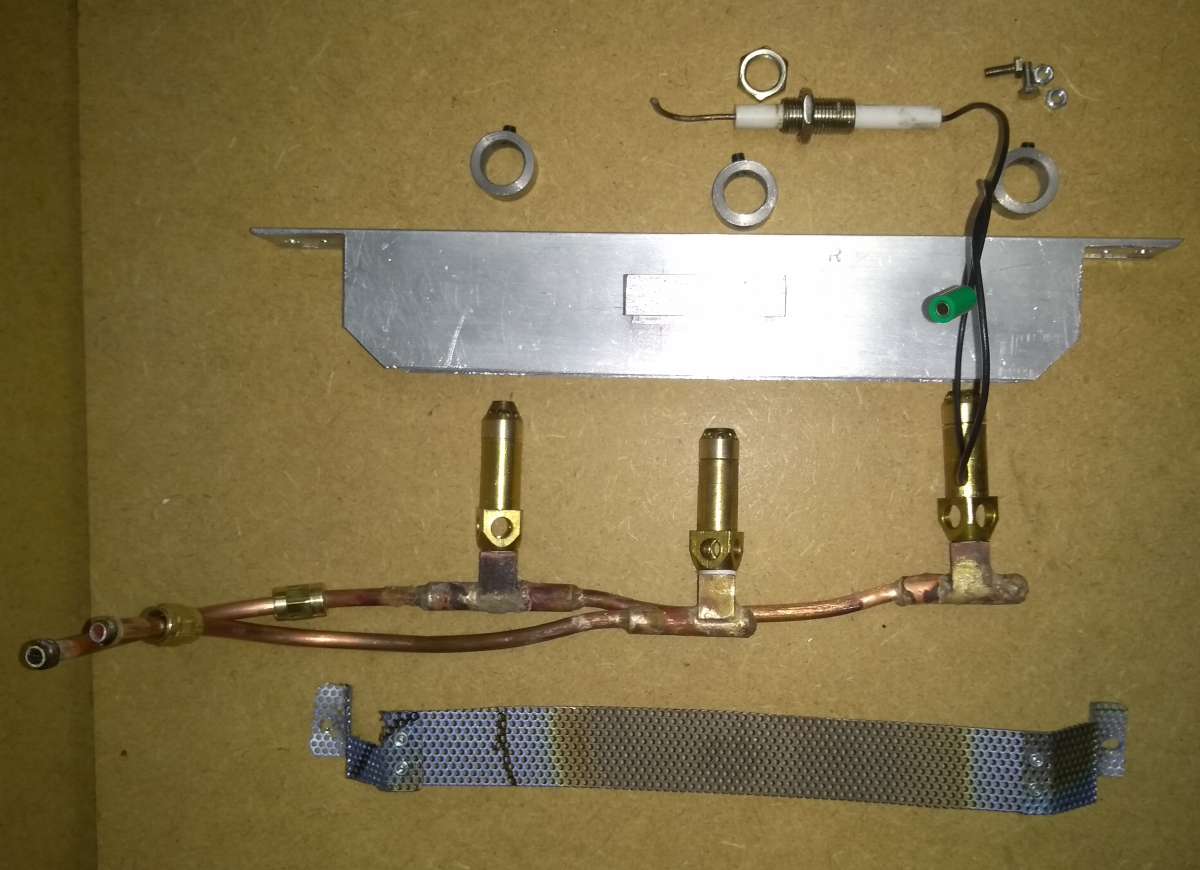
                    This is a picture of the first try, but they were sensitive to wind and not comfortable to install. So they  were changed to this easier to install and changed to an exact distance from the ignition electrode to the burner so all it can be checked before installing in the car. The layout in total is now 2 burner with ignition electrode to start and 4 additional burner for to drive. They are located direct to the coils. There are in total 12 coils with each one meter of lenght by 8 mm outside diameter.

                    IMG_20240311_154505101_cr

                    The  U type aluminum holder, for the burner, shields them from wind and the stripe with the holes, from an old loudspeaker, shields them perfect from wind effects. The burner are for 50 to 100 mbar gas pressure constructed.

                    The last setup is for driving faster uphill an addition of 4 burners. They are more located to the mid drum and are only burning if I push a button. So I have a power modulation of 2 , 6 and 10 burner and this is controlled by an arduino with automatic ignition and gas valves for burner and power control and an electronic pressure transducer to sense the boiler pressure. The fan is controlled in addition. With latest software never the saftey valves are in action the burner control cuts the power before they came.

                    I made tests with my vertical boiler 5 inch loco at my garden railway with a setup of 4 burners, only for testing the injector and water pump. I was astonished that I could drive for an hour with no problem.

                    With my Merryweather Fire King with a similar engine like the Jaxon I was able to drive with four burner around my home streets at 4 bar and 4 Kph. At both coal fired boiler I have to learn about adjusting the amount of the helping blower. After that it performed good.

                    Thank you for the link to the forum, I followed by construction the work of Doubletop in Newzealand and the replies to his work, in addition I looked to the Marty burners from the LA livesteamers. My burners are based on adapted and own experience and working very well in the range of 50 to 120 mbar gas pressure. The total power of them are 25 KW. KI told me with one Kg propane gas I can steam 12 to 15 liter of water at 4 bar pressure by an burner efficiency of 85 %, depending on the initial water temperature. And this fit very good. At higher ambient and water temperature I have up to 7 Km range and at my start with 7 degree water temperature in the tank I got 6 Km range. That is exactly the same as calculation.

                    Werner

                    #840855
                    GordonH
                    Participant
                      @gordonh

                      Hello Werner,

                      A very interesting video.

                      There is no need for you to do anything to add English subtitles.  I have watched it with English  subtitles already.

                      YouTube will add autotranslated subtitles if the viewer cooses to see them, in whichever language the viewer selects.

                      To see English subtitles, click the displayed video and an options screen appears.

                      Click the gear icon and select the Captions option then another options screen appears.

                      The top option turns captions on or off
                      The Language option is used to select the viewers chosen language.
                      Below that is the option to enable autotranslation.

                      Gordon

                      #840863
                      Werner Schleidt
                      Participant
                        @wernerschleidt45161

                        Thank you Gordon for the explanation. In my german youtube I saw only the German subtitles.

                        It is good to read that this is in function as you discribed it, so I only have to speak clear and loud.

                        Werner

                        #842582
                        Werner Schleidt
                        Participant
                          @wernerschleidt45161

                          Here’s an update.

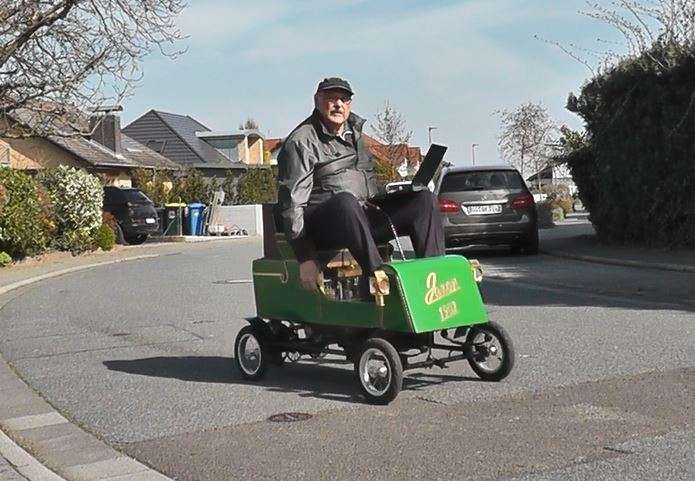
                          steam carJPG

                          While driving up the flood barriers, I got the impression that the steam engine was running a bit smoother under full load a some time ago. By then, it had 493 km on the odometer. I suspected that the valve timing wasn’t optimal. This effect is most noticeable under full load and less so at high speeds.
                          So I decided to install my pressure and displacement measurement system on the steam engine. Piston stroke is measured using a potentiometer with a cable pull. The sensor is homemade. An identification card JoJo provided the return spring, and the potentiometer drum was wound with steel wire from a tethered glider. The sensor measures with surprising accuracy, though that isn’t strictly necessary for this application. Cylinder and compound vessel pressures were measured using pressure sensors from the Chinamann. the data is collected by an arduino with bluetooth transmitting to a laptop. On both computers are running my self written software. It turned out, as I had subjectively observed, that the valve timing had shifted. Here are a few impressions of the measurement process. It’s quite an adventure to drive the vehicle like this, hold the laptop, and still get something on camera—all while doing it solo. And important looking to the traffic on the road!

                          https://youtu.be/WSl6-BMeWLY

                          Please switch on the subtitles while watching

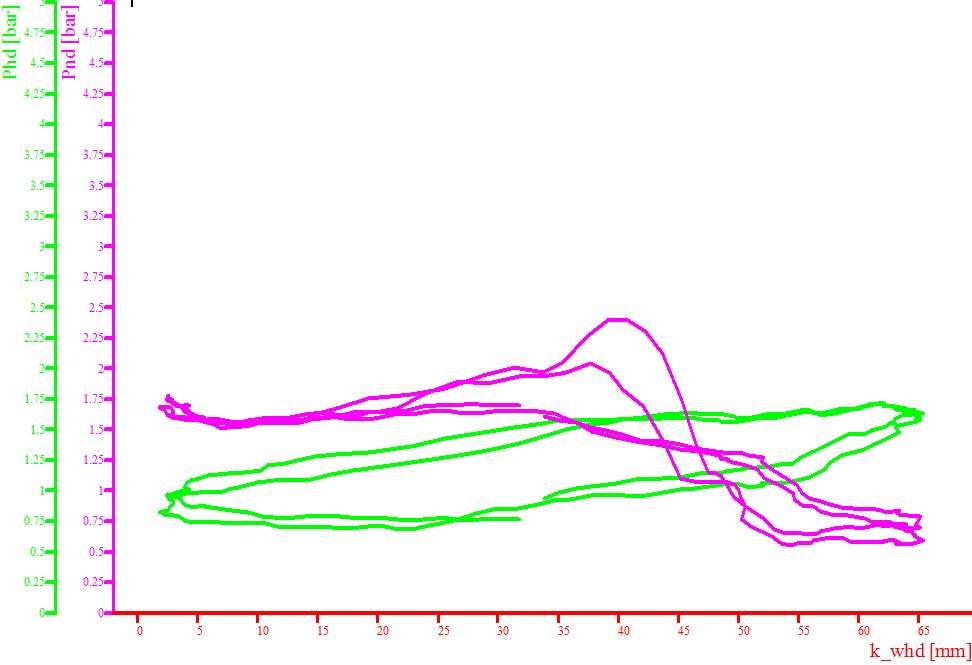
                          The diagrams are, the first one is both cylinders in full power mode with high pressure on both cylinder. In y direction is the pressure and in x the piston displacement to see. Green is the high pressure cylinder and pink is the low pressure cylinder switched to high pressure mode.

                          xy normal

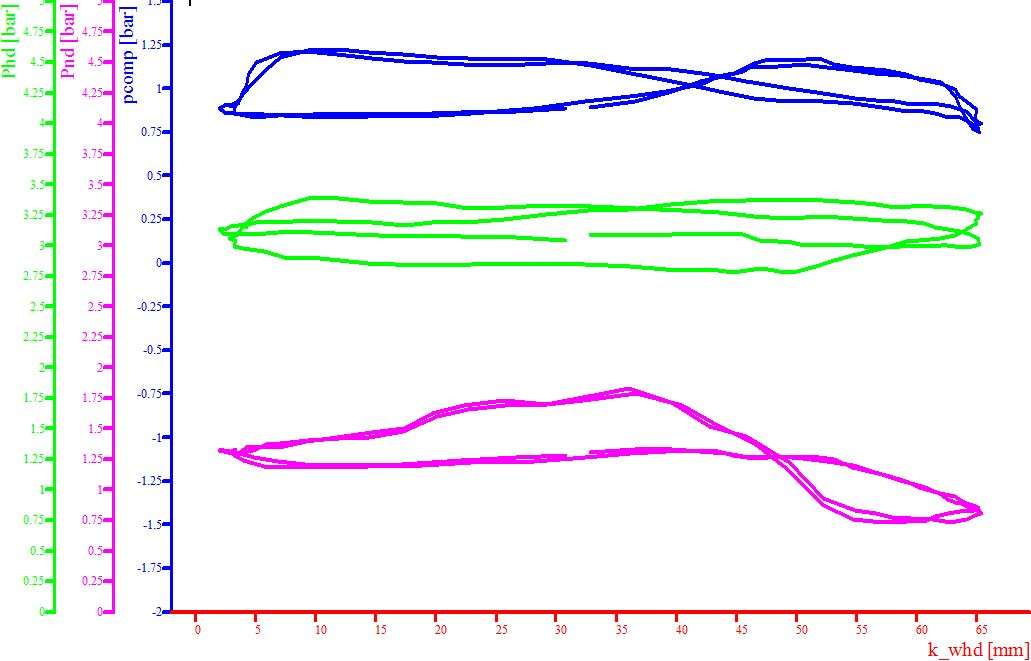
                          The second diagram is the compound mode. The blue curve is the receiver pressure, the green one is the high pressure cylinder and the pink one is the low pressure cylinder. It is noticeable that the pink curve is not optimal , because the valve close to early and open too late.

                          xy verbund

                          After the drive, the cylinder heads were opened, and the valve clearances showed a correlation with the measurements.

                          I made then a test ride and I was astonished how long it last that the engine runs good again. I cleaned the oil in the valve box to see the valve timming clear and after setting the valves new I looked that there is enough movement of the D valve for condens water to let it out. It seems to be that there is after that there have to be some new run in. After 3 kilometers driving with spending the oil reservoir of the pump it runs then better as before.

                          Werner

                        Viewing 11 posts - 1 through 11 (of 11 total)
                        • Please log in to reply to this topic. Registering is free and easy using the links on the menu at the top of this page.

                        Latest Replies

                        Home Forums Traction engines Topics

                        Viewing 25 topics - 1 through 25 (of 25 total)
                        Viewing 25 topics - 1 through 25 (of 25 total)

                        View full reply list.