Recommendation for cast iron casting repairers…

Recommendation for cast iron casting repairers…

Home Forums Help and Assistance! (Offered or Wanted) Recommendation for cast iron casting repairers…

Viewing 25 posts - 1 through 25 (of 68 total)
  • Author
    Posts
  • #829635
    jps1982
    Participant
      @jps1982

      Good morning all. Due to my own ineptitude, I am looking to find somewhere I can get a cast iron casting repaired. It is the bracket for the leadscrew/handwheel which hangs down from the side of the table of the milling machine at my model engineering club – which is now in two pieces rather than one…

      I’ve already found Slinden Services (https://www.castironweldingrepairs.co.uk/) via some initial Googling, but am in Colchester, Essex – so anywhere more local would be a benefit.

      A couple of photos showing the extent of the problem…

      IMG_4494[1]

      IMG_4495[1]

      #829638
      Nicholas Farr
      Participant
        @nicholasfarr14254

        Hi jps1982, these people might be able to help you, but I’ve no idea how much it would cost, METALOCK COLD CASTING REPAIRS IN SITU. Welding/ Brazing is a possibility, but not for a home DIY’er unless you’ve got the all the gear and some welding skills, and I think one would have to make a jig to hold the two pieces in the correct place, before you prepped the joint. It’s not something I would like to do, although I have welded castings in my day jobs.

        Regards Nick.

        #829644
        jps1982
        Participant
          @jps1982

          Thanks Nick, i’ve sent them an initial enquiry. I had expected a jig (or substantial work table with suitable support) would be needed. I had assumed that some sort of pinning might be required too.

          #829650
          Robert Atkinson 2
          Participant
            @robertatkinson2

            Given the geometry and relatively low loading of this casting compared to the accuracy requirement I’d suggest a cold repair. Any kind of hot repair may distort the casting.

            I’d make a jig to clamp it together, drill (and possibly ream) through the webs into the boss for dowel pins. Dis-assemble, clean / degrease then assemble back in the jig with slow setting unfilled epoxy resin (Araldite classic), insert the dowels and allow to set in a warm place.

            Robert.

            #829657
            JasonB
            Moderator
              @jasonb

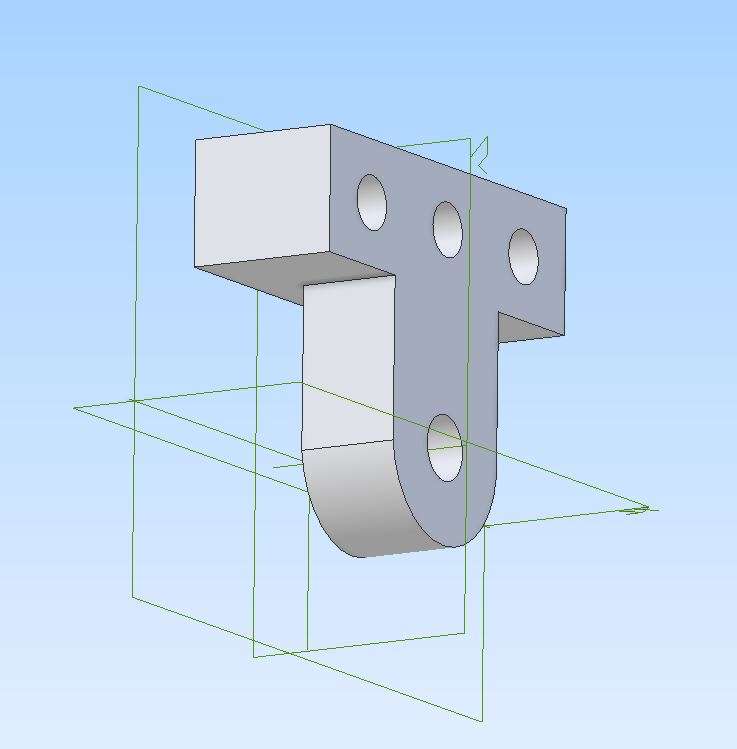
              It does not really do a lot just needs to be able to be bolted to the end of the table and have a hole for the leadscrew. I’d look at cutting from solid as an alternative. Shape it as much as you feel the need or just leave as a basic T shape.

              mill casting

              #829659
              Nicholas Farr
              Participant
                @nicholasfarr14254

                Hi jps1982, no extra pinning is needed for that Metalock system, and they only use those shown in the photos. I saw an example or two by that company at an Industrial Welding exhibition in Harrogate, back in the late 60’s / early 70’s, during my City & Guilds, and I have seen the odd one or two repairs that had been done since then. Regards Nick.

                #829661
                Pete Rimmer
                Participant
                  @peterimmer30576

                  I would clamp it up, drill and counterbore down those two side webs and into the broken off section at tapping size, then re-drill the webs for clearance holes, tap the threads and simply bolt it up.

                  #829662
                  Clive Foster
                  Participant
                    @clivefoster55965

                    Think Roberts suggestion of a cold repair is optimistic.

                    That is a pretty substantial casting clearly designed to be capable of handling significant loads. Whether by design needs when in operation or for what we in the MoD research community called “squaddy proofing” ie resistance against damage by careless use or, hopefully inadvertent, abuse. If it needs the dynamic strength no adhesive style repair will predictably hold. I have, in the past, done an adhesive assisted sort of equivalent to the Metalock type repairs by gluing up after though cleaning and carefully drilling and tapping across the break for threaded studs inserted with loctite. Pretty effective but monumentally tedious. Finding positions for enough studs could be hard. Usually used 1/8″ of 3/16″ Whitworth because I had significant quantities of long, fully threaded, steel screws in those sizes that were never going to get used otherwise. In practice a pretty good size choice. Getting in to cut the heads and excess screw of could be tricky in pre-Dremel days.

                    The issue with adhesive repairs is peel strength. The geometry of levering away from one end concentrates the forces at the tip of any crack that can be opened so the joint fails. I’ve done decent adhesive repairs to the sort of thing that”just sits there” but they have always been vulnerable to knock or drop generating peel forces. irritating when the  thing you fixed cos it broke when dropped comes back two years later “But I only knocked it over”.

                    One for the pros or Jasons build your own replacement.

                    “Do it once, do it right” time.

                    Clive

                    #829663
                    Paul Kemp
                    Participant
                      @paulkemp46892

                      Ouch!  While the bracket “doesn’t do much” it does do something, ie it transfers the effort of the lead screw into moving the table.  Depending on the size of the cutter / depth of cut although the forces are relatively low there is load on it and potentially a cyclic load.  That is why the original has the webs.

                      I have had metalock cold repairs done on a number of castings over the years from gear box casings to large diesel engine crankcases but I think this particular repair would be challenging for that method, you will only get reasonable strength on the sides of the fracture.

                      I have also had repairs done to large diesel cylinder heads by welding, with mixed results.  Another company you can try are Cast Iron Welding Services (also up north!). They have carried out repairs on old castings from full size steam engines.  As mentioned by others I think it is extremely unlikely this could be welded with zero distortion or impact on the alignment.  It looks like the original casting is doweled to the end of the table to ensure proper alignment of the lead screw?

                      Both the repair options are likely to be costly.  Jason’s suggestion is probably going to be the most long lived and cost effective.  You could either fabricate through welding lumps of steel plate and bar a bare “casting” and the machine it or if you could find a suitable lump of plate, hog it out of solid.  If you put pilot holes for the dowel(s) in the new piece you can align to the machine, drill oversize and fit oversize dowels.

                      Assume this may have been a result of the power feed driving the table past its limit or driving the table against an obstruction?

                      Paul.

                      #829666
                      jps1982
                      Participant
                        @jps1982

                        Yes, exactly as you say Paul. Entirely my own carelessness (I was focussed on watching the cut it was taking and didn’t realise the end of the table was about to hit). It jammed up the machine but only fully broke after we’d got it apart – when driving out a bushing (with the expectation it needed stripping to be welded anyway).

                        The only slight consolation I have is there was evidence that I was not the first to have this sort of accident, the casting was about 90% cracked through already. The ‘fresh’ break was only about 10% of the thickness!

                        Thanks all for the suggestions. Metalock have promptly replied to an enquiry and provided an estimate – but it’s north of £1k – so I am hoping I can find a less expensive option!

                        #829667
                        JasonB
                        Moderator
                          @jasonb

                          By “not doing much” I meant it only positions the leadscrew relative to the end of the taple so a fairly simple part but still needs to be substantial enough you heavy cuts.


                          What is the overall size? A piece of Iron 200x200x 75 might cost £150, Piece of steel plate similar or a simple “boxy” pattern and have it cast would get you close to shape and just need minimal machining.

                          #829668
                          jps1982
                          Participant
                            @jps1982

                            I don’t know the exact dimensions – but it’s around 250x150x100 so somewhat larger; but good to have an idea of that kind of raw material cost. I think the immediate concern in the club was that – with the mill out of action – we didn’t have the facility to do the necessary machining…

                            #829673
                            JasonB
                            Moderator
                              @jasonb

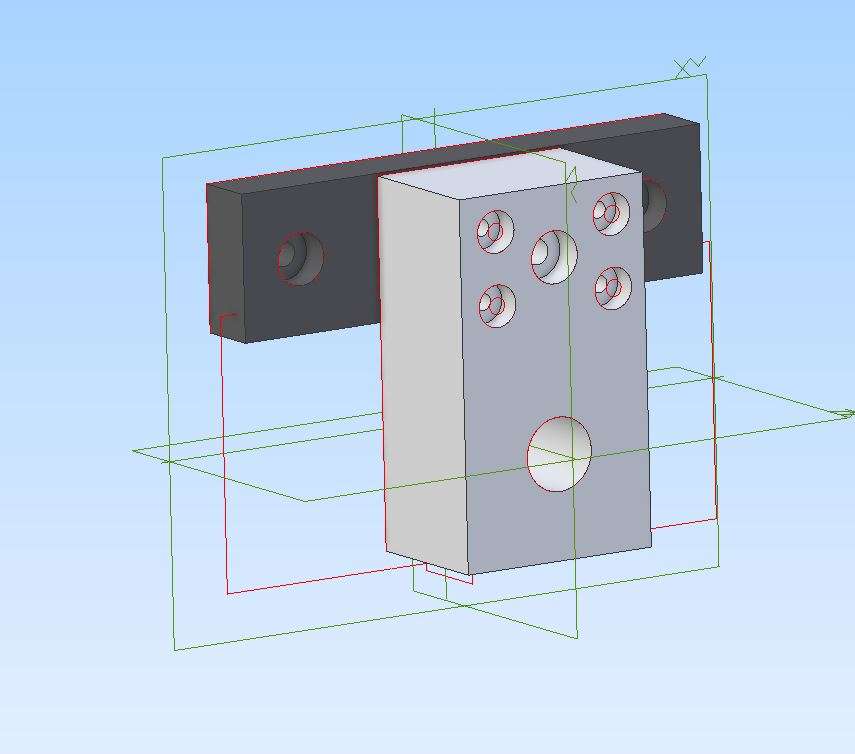
                              It could be made from two pieces of bright mild steel flat screwed together with some decent size cap head screws which would minimise the milling. Even with one axis out of action the holes could be done on the damaged mill by manually moving the X axis to the required position using a plunger type dti or digital calliper to set the position and then lock the axis. Though most could be done using just the Y axis. About £25  for the darker bar @ 250 x 30 x 50 and Around £50 for the vertical piece at 76 x 100 x 150 plus 4No M12 cap heads

                              mill 2

                              #829674
                              Charles Lamont
                              Participant
                                @charleslamont71117

                                Abot 50 years ago I had to get a crack repaired in the internal wall of the integral cylinder head of an extremely rare 1902 car.  After preparation the job was done successfully by 24hrs in a furnace to bring it gradually up to red heat, gas welding with iron rods, and further 24 hours in the furnace to slowly reduce the temperature. The company who did the job, Angell & Williams, in Peckham, has long since gone.

                                #829675
                                Robert Atkinson 2
                                Participant
                                  @robertatkinson2

                                  I must admit I wasn’t considering forces imparted by running into stops.

                                  #829677
                                  Paul Kemp
                                  Participant
                                    @paulkemp46892

                                    Not surprised by that price from metalock, in the great scheme of things it’s probably cheap (by industrial standards).  I would be surprised if any of your welding quotes are less, in fact I would bet they may well be more!

                                    So if you want a cheaper possibly quicker fix I think you are down to fabricating a new one.  As Jason points out if you can lock the table it is only one axis that is out of use so still possible to use the machine to help in the process using the other two.  If anyone in your club has a compound table you could recover some movement using that, albeit with reduced rigidity.  You are just going to have to think out of the box in how you do any machine ops.  You can even set up a clock against a block on the table and unlock the table, slide to the new position and re lock!

                                    For the future which is of no help at all now, you have learned a lesson the hard way!  Always when setting up a job on the table, consider the available travel.  Not only from the perspective of damaging the machine but also spending time setting something up and then finding you can’t complete the operation due to lack of travel.  My omnimill has moveable stops on the table which trip the feed.  Unless I am using them for a particular reason to trip the feed at a particular point I leave them locked at the extremities just before the table reaches the limit of travel so it’s impossible even if not paying attention to drive the table to the limit on the power feed.  As you said you will not have been the first to make the mistake, you were just the unlucky one that didn’t get away with it!  It’s recoverable, no one got hurt and you will be a better machinist because of it.  None of that helps and you will feel worse because it’s not your own machine but it’s not the end of the world.

                                    Paul.

                                    #829678
                                    DC31k
                                    Participant
                                      @dc31k
                                      On Paul Kemp Said:

                                      …it transfers the effort of the lead screw into moving the table.

                                      You have a 50% chance of being correct with that statement.

                                      One bracket normally takes the thrust load; the other only supports the leadscrew.

                                      We should establish which one the broken one is.

                                      Both brackets taking thrust load would be an over-constrained system. This is not used on conventional machines, but is sometimes used with ballscrews where they set up to be in tension to help mitigate whipping.

                                      #829679
                                      Bazyle
                                      Participant
                                        @bazyle

                                        It is a low precision part of the machine so look at its function. Just superglue the bits back together long enough to make sure your measurements are accurate. Then one plate from mild steel can be made thinner than original, one circular boss turned up if you have a big bit around or from a smaller plate and tube, two webs welded in place to hold it together. Allow for machining after to compensate for the distortion of welding.
                                        Later the original can be used as a pattern for a cast aluminium one.

                                        #829685
                                        Nicholas Farr
                                        Participant
                                          @nicholasfarr14254

                                          Hi, I’m not surprised at the price of metalock, but welding can also run up a big bill. I remember having to take a large section off a machine, get into the workshop, and strip it down to the casting, this casting weighed about a tonne or so, and the bottom part of it was about 1.5 meters in diameter, it had a crack, which was beyond the facilities we had to deal with it, a new part was out of the question, as that would have taken several months to obtain, and the machine had to be back in production within two weeks, so the cracked casting went to a specialist, which had a cost of around £4k, and it was back in time for me to reassemble it and put it back onto the machine. The decision to have the work done was made and arranged two or three months in advance, and the company that did it, made a really first class job of it.

                                          Regards Nick.

                                          #829690
                                          Chris Gunn
                                          Participant
                                            @chrisgunn36534

                                            I can recommend Metalok.

                                            It would not be too difficult to fabricate a replacement that even looks like the original.

                                            Any chance of a used spare, what machine is it? If it is common machine you might find something.

                                            Chris Gunn

                                            #829693
                                            Pete Rimmer
                                            Participant
                                              @peterimmer30576
                                              On Charles Lamont Said:

                                              Abot 50 years ago I had to get a crack repaired in the internal wall of the integral cylinder head of an extremely rare 1902 car.  After preparation the job was done successfully by 24hrs in a furnace to bring it gradually up to red heat, gas welding with iron rods, and further 24 hours in the furnace to slowly reduce the temperature. The company who did the job, Angell & Williams, in Peckham, has long since gone.

                                              I have some of those puddle welding rods. Don’t have the equipment to use them so I’ve been donating the rods a few at a time to various people and now I have a handful left.

                                              #829694
                                              Clive Foster
                                              Participant
                                                @clivefoster55965

                                                Looking at it again I think a more correct to original look replica could quite easily be made from four parts glued and screwed together.

                                                A cylinder with cut away sides for the bearing, a flat plate to provide the fixing points and two suitably shaped plates replicating the webs to join the bearing barrel to the mounting. Shallow slots in the mounting plate for basic alignment of the webs and stability when glueing. Three or four countersunk head screws tapped right through into the webs will make it solid against shock blows. Make the bearing barrel and shave down the sides ton be nice fit between the webs. Glue together and add a suitable number of screws fixing into holes tapped into the bearing barrel after glueing together.

                                                Tapping for support screws after glue ensures alignment is maintained and the smaller sizes of material may be less costly. Cutting a basic barrel from suitable sized round stock is probably the easiest way of creating a good bearing hole for folk not particuarily experienced with boring heads.

                                                More parts and bit more work overall than the T shaped fabrications proposed by Jason but I think each step may be easier and all in all a bit easier to tweak things so it comes together right if a measurement error has been made. I’ve seen things similar to the bolt up T in Jasons second post come out just enough wrong not to work due to small measurement errors building up.

                                                If following Jasons second suggestion it would seem advisable to cut an alignment groove in the cross bar. Essential i’d think if doing things as a co-ordinate drilling exercise for two mating parts on typical Home Shop machines

                                                For a similar sort of structure, designed not repaired, I screwed the other way with countersunk head socket screws running from the inside face of the equivalent part to the cross bar.

                                                Fitting the bearing hole after the basic T has been made minimises the chances of error. Bolt the mounting face to the machine table to avoid tilt.

                                                Moi. I’d be following Jasons first, carve from solid, suggestion. Rush it all out on the Bridgeport if needed this afternoon. If not in a vast hurry have bit of fun with the shaper to make the basic shape first.

                                                As ever best method depends on available material, machinery used, experience and general confidence it what you want to do. DRO systems have made this sort of thing hugely easier.

                                                Clive

                                                #829695
                                                Trevor Drabble 1
                                                Participant
                                                  @trevordrabble1
                                                  1. Since its only £11.20 for up to 20kg via Parcel Force ( obviously less for lighter weights ) why not simply post it to Slinden ?
                                                  #829696
                                                  JasonB
                                                  Moderator
                                                    @jasonb
                                                    On Clive Foster Said:


                                                    If following Jasons second suggestion it would seem advisable to cut an alignment groove in the cross bar. Essential i’d think if doing things as a co-ordinate drilling exercise for two mating parts on typical Home Shop machines

                                                    For a similar sort of structure, designed not repaired, I screwed the other way with countersunk head socket screws running from the inside face of the equivalent part to the cross bar.


                                                    Clive

                                                    Given the OPs lack of machining experience and the fact he only has access to a disabled mill I was thinking the least number of setups would make it easier so all screw holes and threads done from the one side = one setup.

                                                    Also having the screw heads accessible when it is all mounted on the mill would allow a little adjustment should hole positions be a bit off. Once happy that the leadscrew is lined up correctly whip the “casting” off and drill for a couple of dowel pins. Can’t do that is your slot was machined a bit off.

                                                    This is how most of the far eastern machines are made, angular end blocks, cap head screws and then drilled for dowels when positioned correctly.

                                                    #829705
                                                    Robert Atkinson 2
                                                    Participant
                                                      @robertatkinson2

                                                      Going back to a cold repair I’ve looked at the photos of the part more closely. Epoxy the two parts together (unfilled, the rough surface of broken CI gives a large surface area and close fit).  When set machine (or file if no other mill available.) the sides of the boss and webs to give a flat surface and possibly a small flat at 90 degrees. Then fit a flat steel plate either side fastened with multiple screws.

                                                      Robert.

                                                    Viewing 25 posts - 1 through 25 (of 68 total)
                                                    • Please log in to reply to this topic. Registering is free and easy using the links on the menu at the top of this page.

                                                    Latest Replies

                                                    Viewing 25 topics - 1 through 25 (of 25 total)
                                                    Viewing 25 topics - 1 through 25 (of 25 total)

                                                    View full reply list.