Parting off problems

Parting off problems

Home Forums Beginners questions Parting off problems

Viewing 25 posts - 1 through 25 (of 31 total)
  • Author
    Posts
  • #119775
    petro1head
    Participant
      @petro1head

      HiI have a parting off tool very similar to this – **LINK** I seem to struggle to get the tool to cut properly, what happens is it starts fine but then starts to make a hell of a lot of noice and quite often jams and eventually the tip breaks off . So either to tool is rubbish or I am doing somit wrong?

      #6706
      petro1head
      Participant
        @petro1head
        #119778
        Ady1
        Participant
          @ady1

          Do a search in here for parting off, there a lot of issues with hobby lathes

          Personally speaking I always use the backgear on my hobby lathe

          #119784
          Chris Heapy
          Participant
            @chrisheapy71135
            Posted by petro1head on 14/05/2013 12:01:17:

            HiI have a parting off tool very similar to this – **LINK** I seem to struggle to get the tool to cut properly, what happens is it starts fine but then starts to make a hell of a lot of noice and quite often jams and eventually the tip breaks off . So either to tool is rubbish or I am doing somit wrong?

            I use a couple of those in a rear toolpost, I find I have to grind the top of the blade flat to obtain better chip clearance (which is poor with this type of tool) and plenty of cutting fluid. The 3/32" blade is fairly sturdy and will part up to 2" dia or so, I have the 1/16" blade tool also which is good for small diameter work and saves on waste because of the narrow cut. Both need the cutting edge re-shaping to be optimal (a bit more top rake, and I make mine hollow ground). I wouldn't like to operate either in the normal position on the topslide because of the poor chip clearance, I used to get frequent jams also like this, in my experience back toolpost only for these.

            #119785
            petro1head
            Participant
              @petro1head
              Posted by Chris Heapy on 14/05/2013 13:35:08:

              Posted by petro1head on 14/05/2013 12:01:17:

              HiI have a parting off tool very similar to this – **LINK** I seem to struggle to get the tool to cut properly, what happens is it starts fine but then starts to make a hell of a lot of noice and quite often jams and eventually the tip breaks off . So either to tool is rubbish or I am doing somit wrong?

              I use a couple of those in a rear toolpost, I find I have to grind the top of the blade flat to obtain better chip clearance (which is poor with this type of tool) and plenty of cutting fluid. The 3/32" blade is fairly sturdy and will part up to 2" dia or so, I have the 1/16" blade tool also which is good for small diameter work and saves on waste because of the narrow cut. Both need the cutting edge re-shaping to be optimal (a bit more top rake, and I make mine hollow ground). I wouldn't like to operate either in the normal position on the topslide because of the poor chip clearance, I used to get frequent jams also like this, in my experience back toolpost only for these.

              What do you mean by back tool post? and what is hollow ground.Is there a better parting off tool I can buy

              #119788
              1
              Participant
                @1

                There seems to be a whole branch of our hobby devoted to parting off in hobby lathes and if you have the time to read it all there is more written on the subject than any other topic I know. Many experienced and learned model engineers recommend a rear mounted tool post as the answer to parting problems but I've never been convinced enough to go to the trouble of making one. I use a similar parting tool to the one you have and after a little practice have few difficulties with it.

                I make my parting cuts as close to the chuck as I can, I have the apron and top slide locked, I have the parting blade, tool clamping bolts and toolpost firmly tightened and the workpiece tight in the chuck; in short, making everything as rigid as I can. I have the blade oilstone sharp and keep the speed down to around 200 RPM whatever the diameter of the job. I use plenty of flood coolant on steel and have an old 2" paintbrush handy to clear swarf if it starts to build up. Once I start the cut I keep the tool cutting but without forcing it into the workpiece.

                Regardless of what others may say, I find the above practices work for me on my Warco lathe although I haven't tried parting anything more difficult than mild steels, brass and cast iron. Hope this helps.

                Jim

                #119793
                Chris Trice
                Participant
                  @christrice43267

                  No offence to Warco but the quality of these varies a lot. Most beginners try far heavier cuts than these type can reasonably cope with. Even with everything tight, the blades can flex sideways. You can overcome most of the problems and use them successfully with practice but a replaceable tip type is a far superior tool IMHO. A back toolpost benefits all types of parting tool. For 2″ bar, I’d be reaching for a blade type with at least a 3/32nd wide blade. Rigidity is everything with parting off.

                  #119794
                  petro1head
                  Participant
                    @petro1head

                    So what tool would you advise?

                    #119796
                    Chris Heapy
                    Participant
                      @chrisheapy71135

                      My rear toolpost has many, many uses other than for mounting a parting tool – which I do for convenience as much as for performance. As stated above, a complete answer covering all issues you may encounter while parting in the lathe would cover many pages and the beginner should search out the articles already posted. However, the Eclipse tool shown (like mine) is not the best tool for the job. It is cheap – albeit the replacement blades are costly – but an inserted-tip type tool with a good profiled carbide tip is far superior in both performance and rigidity. The shaped tip is able to curl and clear swarf more efficiently than the large blade. If the Eclipse blade is not set dead square to the work (in addition to the tip being at exactly the right height) then shortly after starting to cut one side or the other will gaul on the inside of the cut, it will then jam up pretty quickly.

                      #119801
                      Boiler Bri
                      Participant
                        @boilerbri

                        I have a few of those types of cutter/holder which are all ground to different widths.

                        I put a lot of top rake on the cutters, even to the point of a sharp radius right up to the cutting edge.

                        Try running slowly, say 120rpm on a 2" (50mm) dia bar. If you have coolant use it. once the cutter starts to cut try to keep the feed even and at a steady rate.

                        Sometimes it depends on what the material is as well.

                        Hope that helps,

                        Brian

                        #119802
                        Chris Heapy
                        Participant
                          @chrisheapy71135

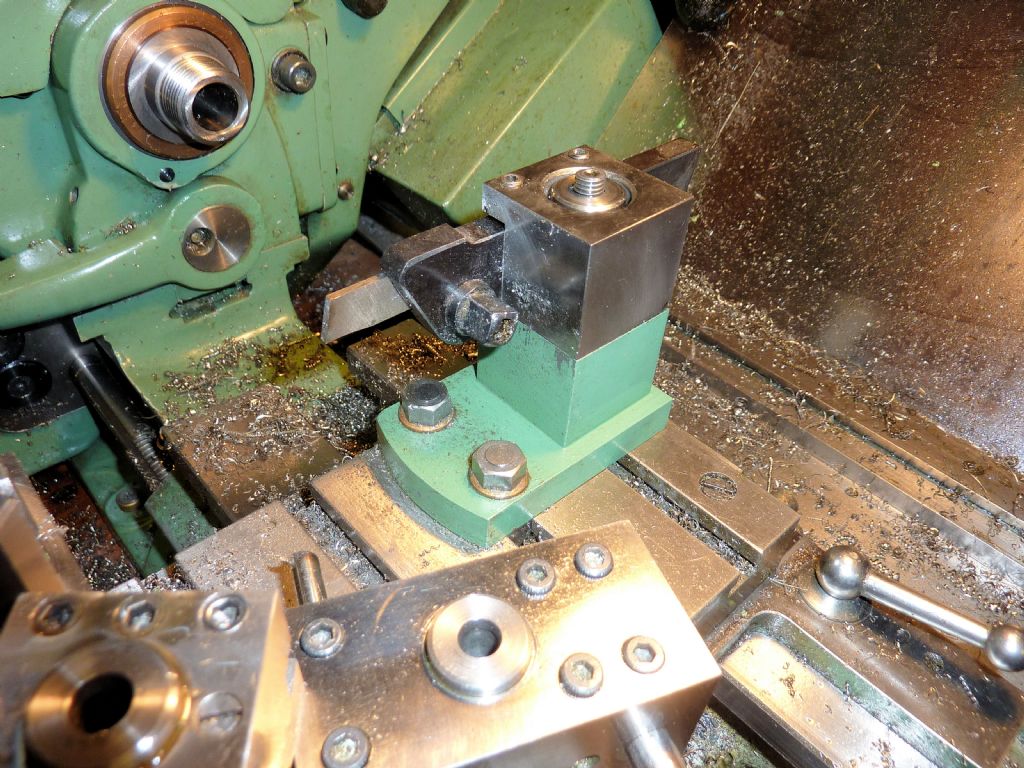
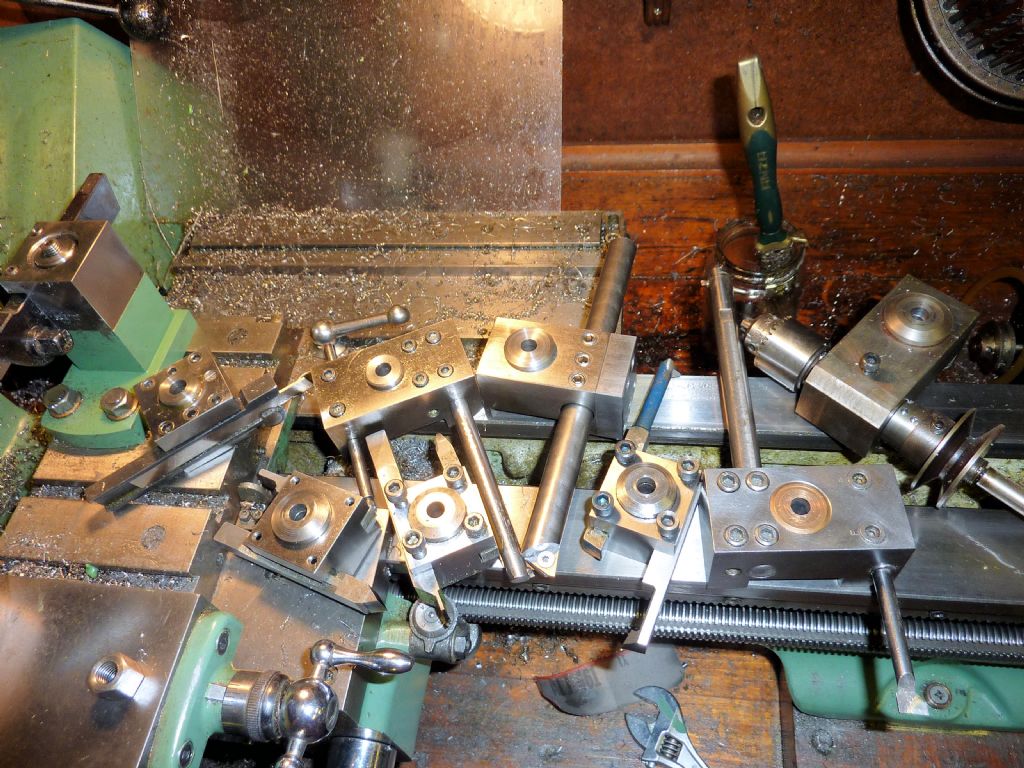
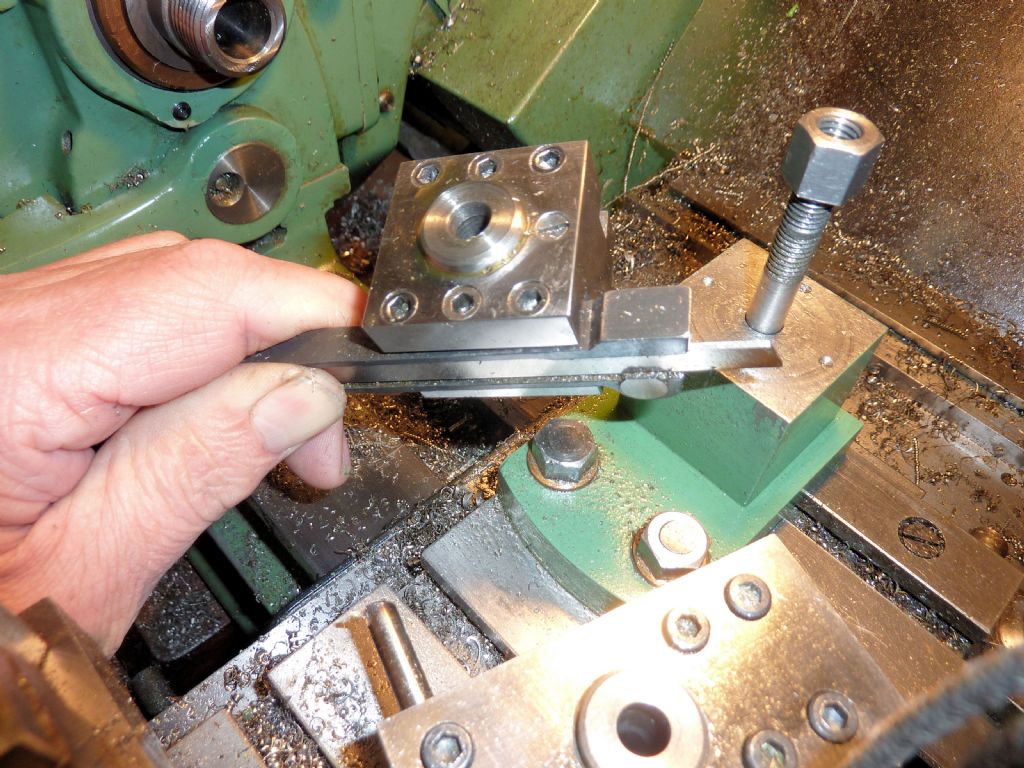
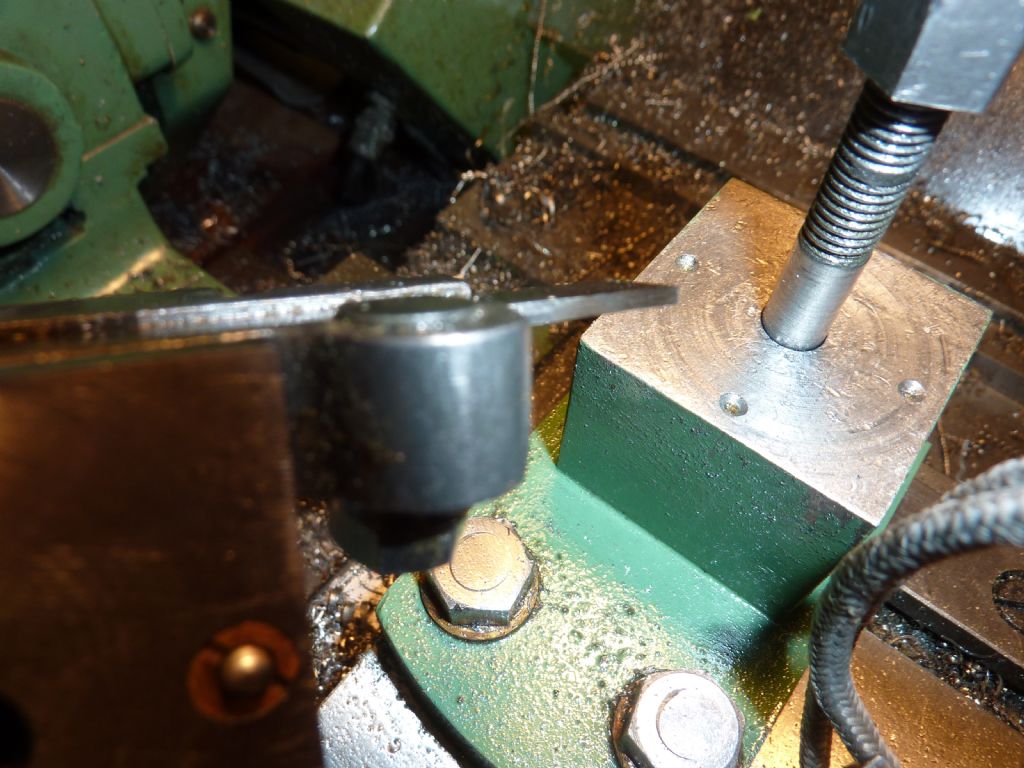
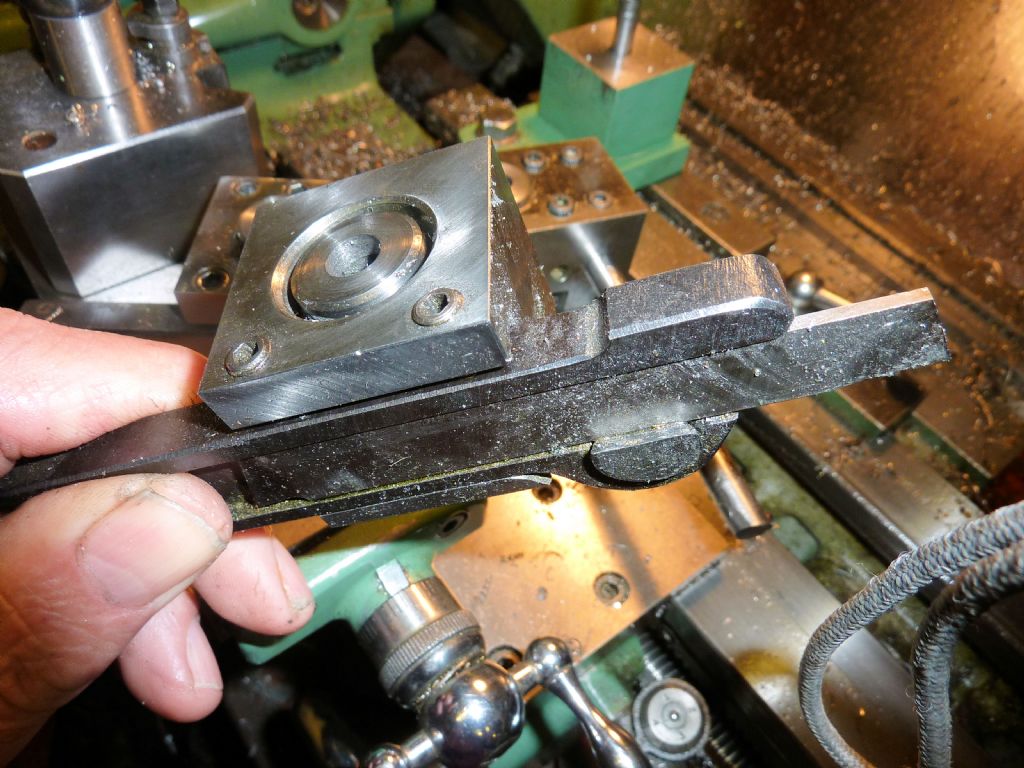
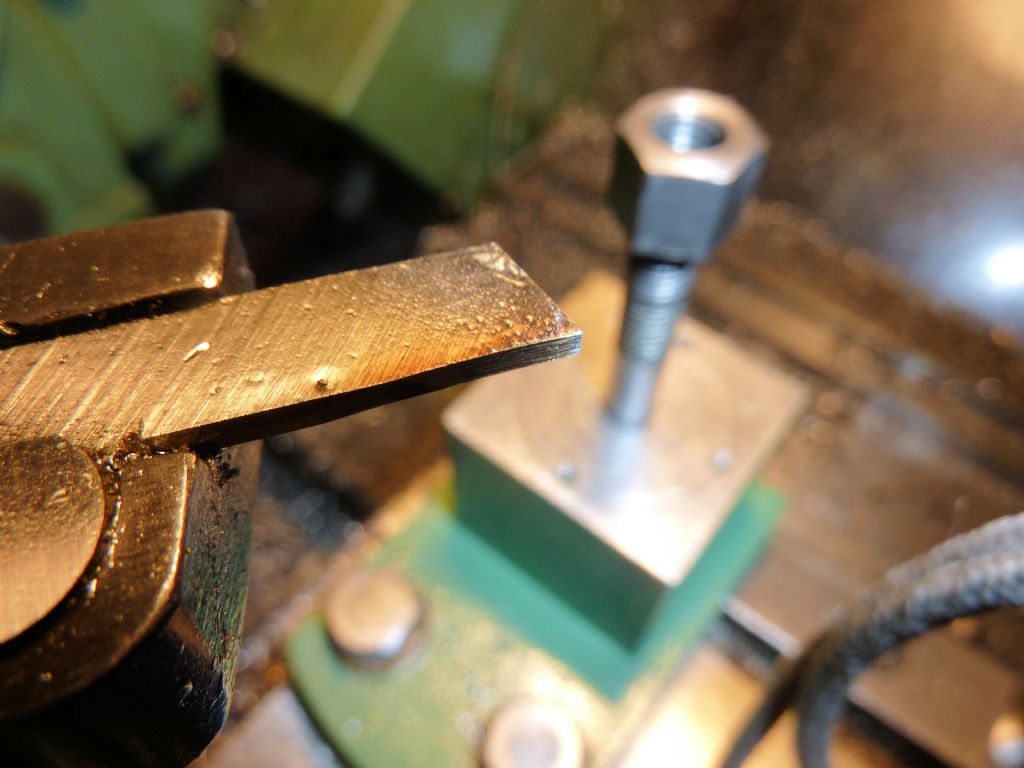
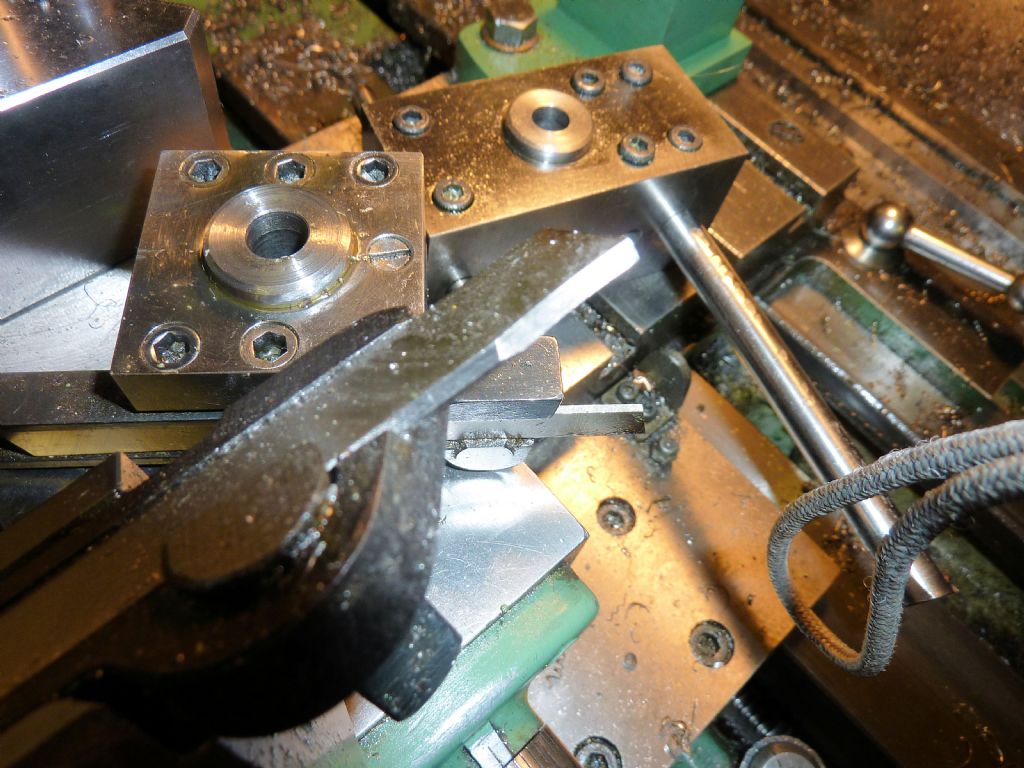
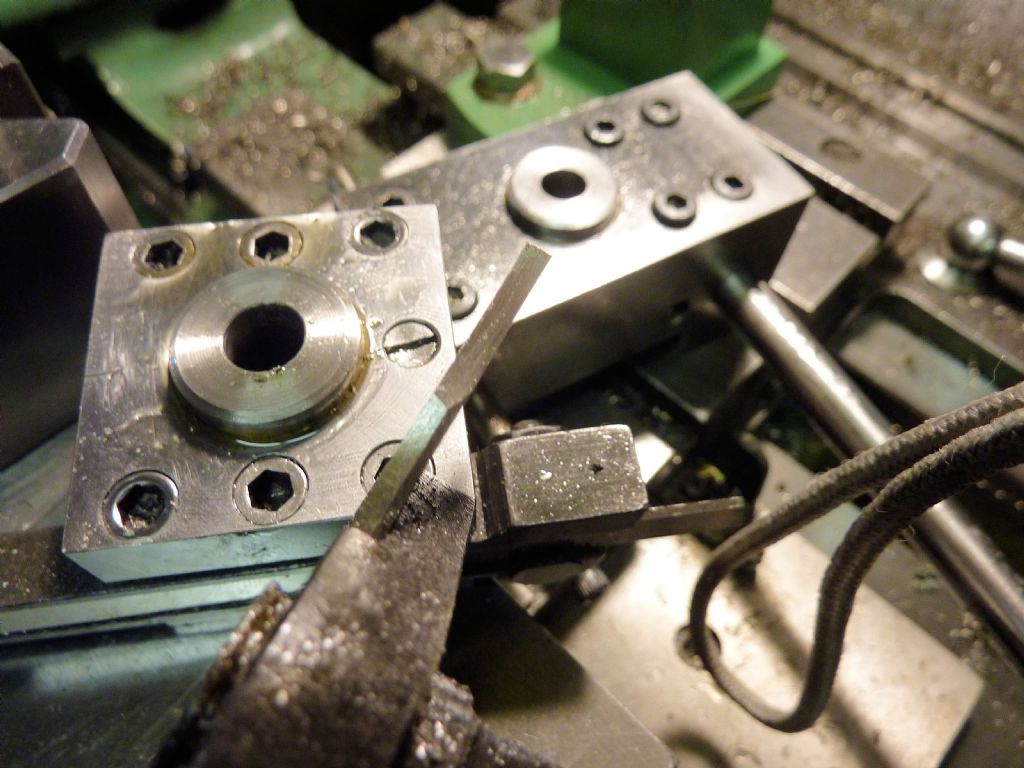
                          To the OP, I took some photos by way of a better reply.

                          This is my rear tool post, which I made many years ago:

                          p1020700.jpg

                          …and some of the tooling made to fit it:

                          p1020701.jpg

                          This is the Eclipse 1/16" bade parting tool:

                          p1020692.jpg

                          Difficult to photograph, but this is the cutting edge of the 1/16" blade:

                          p1020693.jpg

                          This is my 3/32" blade parting tool – like yours I think:

                          p1020695.jpg

                          …and more attempts to image the cutting edge of the 3/32" blade

                          p1020694.jpg

                          p1020696.jpg

                          p1020699.jpg

                          I am not saying the cutting edge shape is either 'correct' or recommended – only that this is what I find works for me with these particular tools on my S7B.

                          #119803
                          chris stephens
                          Participant
                            @chrisstephens63393

                            Hi PH,

                            If you can start to part off OK then have problems, it might be that your tool is not 100% square to the work, or you have not ground the front of the tool perfectly square to the rest of the blade. I know some folks advocate grinding the front at a slight angle to aid a cleaner pip-less finish but on a thin blade it will tend to flex and cause a jam which in turn might cause the blade to break., certainly it will cause noise as it rubs the cut.

                            Are you using any lubrication when you part off? Even a few drops of neat cutting oil will improve the cutting action, flood cooling is not necessary unless the work starts to get unacceptably warm.

                            Another thought, have you set the cutting edge too high? Dead on centre or very slightly low( the merest of smidgeons) is important. Being too high is fine to start with, but the smaller the work gets the front will start to rub until it can no longer "dig" in, thinking of which the front clearance is important, too much will allow the edge to dig in too much which is not good. Too little clearance will stop the tool cutting, you need a fine balance between the two (and any back rake) to suit your lathe, material and your "touch". If you get the balance wrong, the tool will tend to self feed and pull the blade into the work, which will take up the feed screw backlash, and certainly cause a dig in and may break the blade.

                            Personally I have a similar tool to yours, but Eclipse brand. I have it mounted in a holder that is set to give 6 degrees of rake, this in turn is held in a QC holder. Naturally I can only use it for parting smaller stuff, recommended max depth for 1/16 blade is 5/16-3/8 but i often go a little deeper, it's all about "feel". By max I mean that that is the limit to how much blade is protruding from the holder.

                            In years to come you will wonder why you ever had problems with parting, keep practising and you will eventually get the "knack"

                            chriStephens

                            #119834
                            nigel jones 5
                            Participant
                              @nigeljones5

                              Youre not alone on this one, ive tried everything listed on here and still havnt cracked it. In contrast to some opinion I find better results when being rather brutal with the feed rate. I put it down to slight movements in all parts which cause chatter.

                              #119841
                              Anonymous
                                Posted by fizzy on 14/05/2013 19:26:08:
                                In contrast to some opinion I find better results when being rather brutal with the feed rate.

                                Fizzy has got it in one.

                                I use both insert tooling and HSS tooling for parting off. Here are my rules:

                                1. If it doesn't need to move lock it, ie, lock the top slide and saddle

                                2. Run at a sensible speed, eg, for 2" diameter steel I'd run at 300-400rpm

                                3. Flood coolant for everything except cast iron, brass and plastics

                                4. Don't bother with tapered tips, you'll get a pip on the work anyway

                                5. I use a minimum feedrate ot 4 thou/rev, or higher, even on materials like stainless steel; my personal preference is to part off under power feed, but that is more controversial wink

                                I've just made 650 5/16" diameter aluminium spacers, each one of which was parted off from bar stock by hand, no power cross feed on the repetition lathe, using a parting tool ground from 5/16" square HSS. Out of interest I've dug one of the curls of swarf out of the bin to measure it's thickness – 0.3mm, or 12 thou. Parting off the spacers was done at 1100rpm.

                                Regards,

                                Andrew

                                #119844
                                Sub Mandrel
                                Participant
                                  @submandrel

                                  I third that.

                                  As Tubal Cain used to say "keep up the feedrate!"

                                  I have a relatively lightly built mini-lathe (although with the Arc Euro roller bearing mod). I part off 1" silver steel to make gear cutters and lots of other stuff in similar or larger sizes. I have successfully grooved 2" diameter mild steel with a parting tool.

                                  I use hand-ground HSS tools in the normal toolpost or my home-made QCTP. I now have a 1/16" blade in a QC toolholder which works really well.

                                  All the other tips apply (lubricant, sharp, centre height, no undue play) but just being confident makes a huge difference.

                                  Neil

                                  #119855
                                  Grizzly bear
                                  Participant
                                    @grizzlybear

                                    Chris H, Nice work that rear tool-post & fittings. Good photos too. Regards, Bear.. P.S. How do some correspondents get the return key to work?

                                    #119883
                                    OuBallie
                                    Participant
                                      @ouballie

                                      Confession time.

                                      When I had my V10P, I gave up on parting off due to the problems as described by Petro1head, and resorted to using a hacksaw. I'm wearing flame retardant cotton .

                                      Now to the present with my BH600G.

                                      Greenwood Q-Tip is the answer, for me anyway. (Disclaimer)

                                      Expensive, but it makes parting off a pleasure, used dry but even better with a little cutting oil.

                                      I have the cross feed set to the slowest possible and adjust the speed, via VFD, until the parting off sounds like frying bacon, with the chips curling inwards and falling clear. Just makes the cost of the VFD justified for this alone.

                                      60mm is the maximum so far, but have no hesitation in going for maximum now.

                                      What a revelation to be able to part off without the fear of seeing and hearing the crash bang of a dig-in.

                                      Lathe work now a pleasure as it should be.

                                      Will try and do a video of using the tool, but don't hold collective breaths.

                                      Oh, the facility of the Diamond Tool Holder bit to be pushed downward was clearly illustrated yesterday, when I had a brain f*rt and moved the saddle towards the chuck instead of the other way, and the tool dug into the work.

                                      Luckely I have set the drive belt loose, so nothing catastrophic happened. Old age is a bu**er.

                                      Something I couldn't do with the Emco, it having a geared head. Uh, never thought, until now, of the drive belt from motor the headstock. Brain working a little late on that problem.

                                      Geoff – Still busy with the QC T-nut and stud.

                                      Chris,

                                      I do like all those tools you've made for the rear Toolpost.

                                      It's given me ideas for mine.

                                      Edited By OuBallie on 15/05/2013 10:34:48

                                      #119884
                                      petro1head
                                      Participant
                                        @petro1head

                                        Greenwood Q-Tip, what is this then?

                                        #119886
                                        Anonymous
                                          Posted by petro1head on 15/05/2013 10:40:38:

                                          Greenwood Q-Tip, what is this then?

                                          It's an insert style parting blade and holder, specifically for the smaller lathe, available from Greenwood Tools.

                                          Regards,

                                          Andrew

                                          #119890
                                          petro1head
                                          Participant
                                            @petro1head

                                            This one here – **LINK** The photo is poor so its hard to see how it fits into a tool post?

                                            #119901
                                            OuBallie
                                            Participant
                                              @ouballie

                                              That's the one.

                                              Next to a QC Toolpost, this is the best investment you could make.

                                              There is a square bar screwed onto the tip holder that will fit the Toolpost.

                                              A VFD comes ahead of these, having now had experience using such.

                                              Geoff – Cheese on toast then coffee.

                                              Edited By OuBallie on 15/05/2013 13:18:47

                                              #119907
                                              frank brown
                                              Participant
                                                @frankbrown22225

                                                Just a little point has the tool got side clearance? Else the top edges of the tool will rub more and more as it cuts deeper. I would think that just stoning off the top corners, back to the cutting depth may help.

                                                Frank

                                                #119911
                                                petro1head
                                                Participant
                                                  @petro1head
                                                  Posted by OuBallie on 15/05/2013 13:15:45:

                                                  That's the one.

                                                  Next to a QC Toolpost, this is the best investment you could make.

                                                  There is a square bar screwed onto the tip holder that will fit the Toolpost.

                                                  A VFD comes ahead of these, having now had experience using such.

                                                  Geoff – Cheese on toast then coffee.

                                                  Edited By OuBallie on 15/05/2013 13:18:47

                                                  Whats a VFD?

                                                  Edited By petro1head on 15/05/2013 14:30:14

                                                  #119923
                                                  David Littlewood
                                                  Participant
                                                    @davidlittlewood51847

                                                    Petro,

                                                    VFD stands for variable frequency drive. It is a box of tricks which is used to drive a 3-phase motor (much smoother and more efficient than a single phase one) and to allow the speed to be varied on the fly (i.e. by twiddling a knob, not stopping to change belts or gears).

                                                    I can confirm the the Q-cut sold by Greenwood Tools will fit quite comfortably in a size S00 Dickson toolholder (Myford 7-series size). I can also confirm, as a previous gent said (can't see previous page while typing this) that it's the best parting tool I have used, and I've tried quite a few. It's not just a bit better, it's in a different league; you can easily part off under power, and without resorting to backgear.

                                                    It is however vital, whatever tool you use, to get it absolutely perpendicular the the bar being parted, or it will rub on the side as it goes in.

                                                    David

                                                    Edited By David Littlewood on 15/05/2013 16:06:31

                                                    #119924
                                                    Sub Mandrel
                                                    Participant
                                                      @submandrel

                                                      I have found that with the 1/16" parallel sided blades you don't need to do anything other than bring the end to a good finish with suitable clearance, and mount the tool at a suitable angle. It is, however, essential that the tool is properly aligned at right angles to the lathe axis or it will bend and start to bind.

                                                      VFD – variable frequency drive – a combined speed control and inverter for 3-phase motors.

                                                      Neil – <lunch menu redacted>

                                                    Viewing 25 posts - 1 through 25 (of 31 total)
                                                    • Please log in to reply to this topic. Registering is free and easy using the links on the menu at the top of this page.

                                                    Latest Replies

                                                    Home Forums Beginners questions Topics

                                                    Viewing 25 topics - 1 through 25 (of 25 total)
                                                    Viewing 25 topics - 1 through 25 (of 25 total)

                                                    View full reply list.