Making a Dickson style QCTP

Making a Dickson style QCTP

Home Forums General Questions Making a Dickson style QCTP

Viewing 9 posts - 26 through 34 (of 34 total)
  • Author
    Posts
  • #311275
    Rainbows
    Participant
      @rainbows

      By block tool posts do you mean the sort of Norman Patent Toolpost? Or something like seen on capstans or rear toolposts as seen on small lathes like myfords?

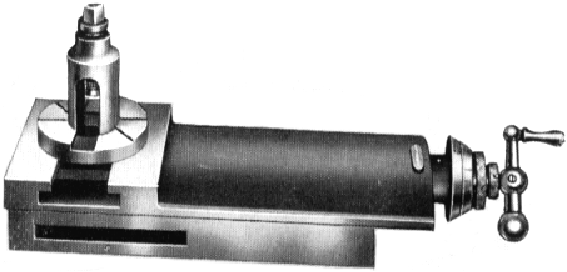
      Re the holbrook toolpost is this what you mean by stirrup toolpost?

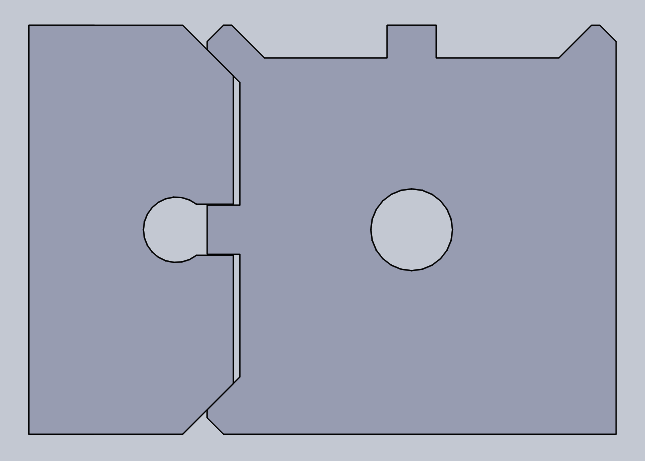
      Also here is how I am leaning in terms of geometry

      The tool holders, of which way more are made compared to tool posts are just 1 drilling and 3 milling ops. 1 milling op if I used gang tooling. I'm stealing Harold Halls tool post design for the clamp.

      Any recommendations on tool steel for the retaining piston, cam and maybe the toolpost?

      Probably the tool post will end up as mild steel, HH used EN1A for all parts I think, but I am curious as to what a more industrial grade post would use. I could for see a hardened cam and piston might be worthwhile even in a hobby environment though.

      #311282
      Clive Foster
      Participant
        @clivefoster55965

        Rainbows

        Thats an excellent picture of the Holbrook lever locking 4 way tool post I was referring to. Where-ever did you find it? The one I have is tiny. Its a clever system. Lifting the lever releases a cam locking system so the post can rotate. There is a nice pair of face spline plates underneath so the post angle through which the post is turned repeats very accurately. Obviously limited to the number of splines. OK thats a common system on British lathes but usually held down with a fixed handled nut that has to be unwound a few turns before the tool post can be lifted over the splines and turned. The Holbrook lever is clearly faster.

        I'm surprised they never went a step further by fitting some sort of key or bayonet ring to the base of the central "bolt" so it could be withdrawn from the topside and 4 way tool block by releasing the locking cam and turning it through a suitable angle. Seems quite practical if things were arranged so that putting the lever into the straight up position released the tool block for rotation and flipping right over allowed the central "bolt" to be unlatched. Certainly neater than my rotating centre pillar concept.

        Yes, by tool blocks I do mean simple lump of metal with one, or more, slots for tools bolted straight down to the slide. I've always felt that if such blocks can be made so as to interchange easily with arrangements made to set the tool height off the machine by direct measurement you end up with a system pretty much as effective as a proper QC system but much easier to make. Given a decent collection of sorted shims its no great trouble to set tool heights. Having roughly laid out a system I never got round to trying it as a couple of too good to miss lathe deals netted me a pair of Dickson systems with a good start on enough tool holders. Shimmed the post up on one lathe so tool holders fit both without adjustment.

        Your geometry will be good being effectively that of a Webster Whitcombe lathe bed. Need to work hard to keep everything parallel and the angles right for decently wide contact areas. Best to make all the holders you will ever need at one setting as the geometry is a lot less tolerant than a Dickson. Nice job for horizontal milling machine if you can get cutters with matched angles.

        EN1A is a leaded free machining steel. Lovely finish but a bit weak and a bit soft for tooling. Our American friends would probably go for SAE 4140 pre hard which, I understand is pretty decent stuff and still machines well. Gawd knows what you'd get over here if you wanted some. EN19 / 709M40 / 708M40 are supposed to be close equivalents to plain 4140 and EN16 / 605M36 is similar. Have around 150 mm ruling section in R range hardness which should be adequate. Trouble is finding good material in small quantities. I've had some right dross which was very difficult to machine. Rather than harden I'd try and find EN19, EN16 or equivalent in T range. Rulling section about 65 mm which should be more than adequate. I don't trust EN24, 817M40, SAE 4340 even though it can be found in V range at useful sizes.

        Clive


        Edited By Clive Foster on 10/08/2017 01:41:46

        Edited By Clive Foster on 10/08/2017 01:43:16

        #311333
        Rainbows
        Participant
          @rainbows

          Pic taken from

          http://www.lathes.co.uk/holbrook/page4.html

          The cam is kinda interesting, I might make something like it for the minilathe, the current screw has a tendency to bind shut and need hitting to loosen. Once loose it only takes a quarter turn or something to rotate the tool. I imagine you could coordinate drill some small divets to receive a sprung loaded ball bearing as a easier to make face spline.

          I think DROs killed the potential for the block system. Now you have to pick up your offset for each tool change where a quick change you could set all at once at keep em until you move the toolpost. If you had some way of locating the post very accurately it would regain its use but then you have made a weird looking QCTP again.

          I do have a small capstan which I am going to restore… at some point… at least thats what I tell myself. But your block idea could well suit it if I build a wide cross slide. See how well I can make an interrupted thread work at the same time.

          Got a double 45 / 90 degree horizontal cutter lined up. Plan is to blast out 2 500mm long blanks, give me 40 holders for the mini lathe. I am considering making an aluminium tool post in the same set up to use as a lap on the tool post. If I were using a vertical mill with a tilted head I would have a lot more worries about accuracy. As is I think I can get it done pretty simply though. A pre-hardened steel would be ideal but not really sure what counts. I think the T in EN24T makes it prehard?

          #311335
          Clive Foster
          Participant
            @clivefoster55965

            Rianbows

            Apologies for further thread drift but, on further reflection, it appears quite easy to fit a detachable Holbrook style lever lock system to the top of a tool post stud. This would make the interchangeable block system a serious, far simpler to make, alternative to Dickson or other QC systems.

            Consider a suitably thick and coarsely splined, four should do, ring attached to the top of the tool post stud an appropriate distance above the tool block top face. The cam locking assembly is carried on a sleeve internally splined to match the top ring. In use the locking assembly would be dropped over the top ring with the lever in the unlocked position and turned so that the male spline projections on the ring are in line with the corresponding projections on the female sleeve. Moving the lever to the locking position brings the projections into contact forcing the cam down to securely hold the block in place. Reverse to remove.

            In practice some form of rotational indexing device on the tool block would be desirable. For larger machinery, like mine, there is room for a baseplate with a simple ring of holes into which a manual push rod, as commonly found on proper Dickson systems, could be engaged. On smaller machines vertical space is limited so a horizontal rod engaging holes in a ring on the stud would be more appropriate as still permitting decent baseplate thickness and reasonable slot depth whilst maintaining direct contact to the top slide surface. Horizontal pin indexing is only practical for single or two slot blocks tho'. Manual pin in hole allows any intermediate position to be used, which is not possible with fixed spline plates.

            If a top hat shaped thrust collar is interposed between block and locking cam there is essentially no requirement for any abnormal precision of manufacture. Any variation in block heights being easily measured and accommodated by adjusting the thickness of its thrust collar. Adequate single and twin slot tool post blocks can be made by gluing and screwing stock plate and bar sections together avoiding heavy machining. If the female splined sleeve is tricky then the linear motion folk use six spline sleeves on matching rods. Sleeves around an inch long should be suitable and can readily be got in appropriate sizes. Albeit a bit costly. An adequately matching male ring can be produced by hand.

            Still have to sort your shims and set up a tool height measuring device on the bench. But dial gauges or display on a stick depth gauges are pretty cheap now.

            Clive.

            #311339
            thaiguzzi
            Participant
              @thaiguzzi

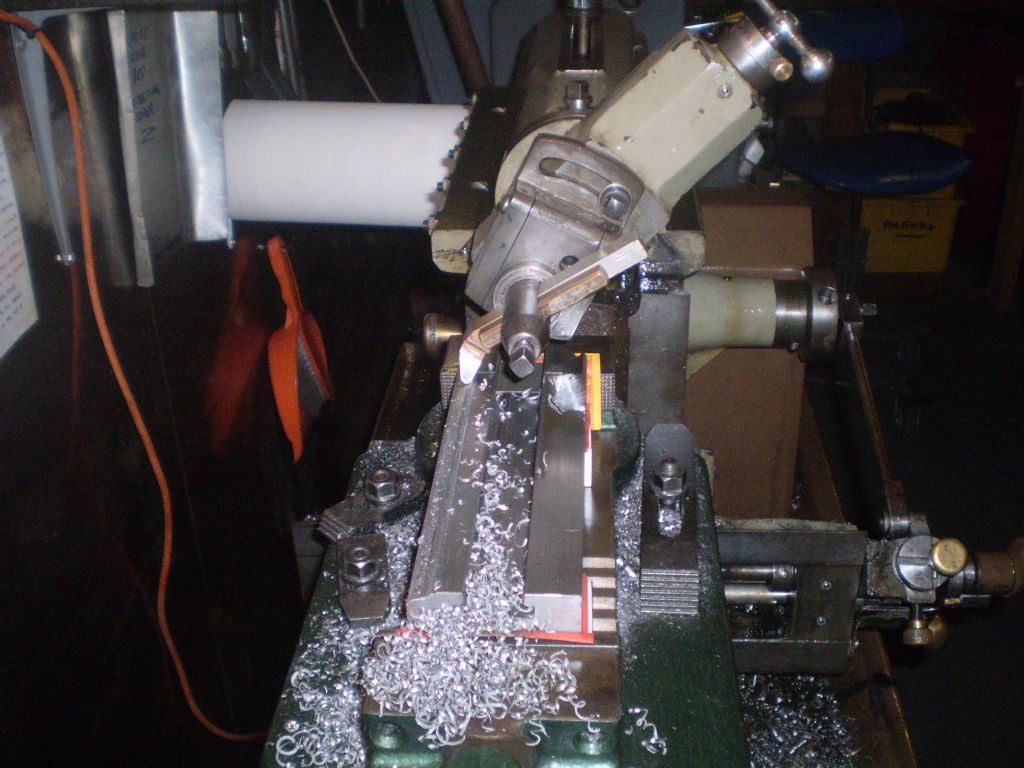
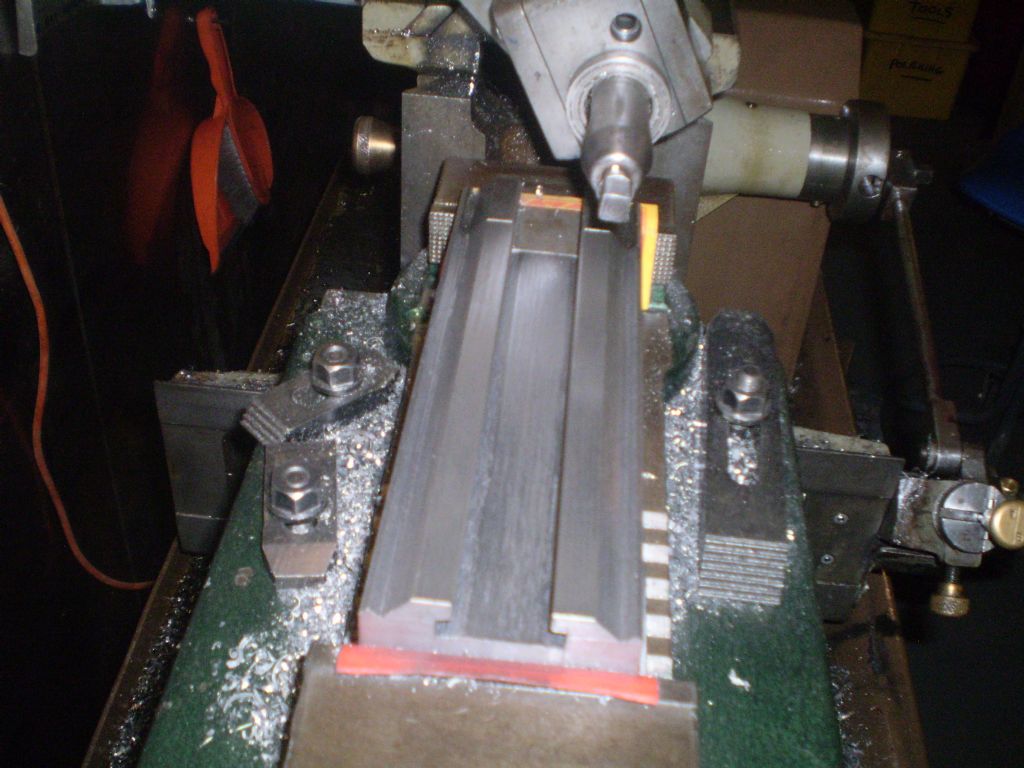
              june - nov 2014 133.jpgjune - nov 2014 138.jpg

              #311340
              thaiguzzi
              Participant
                @thaiguzzi

                5 holders there. Nasty flame cut steel. All angles AND t slot work done on the shaper.

                june - nov 2014 143.jpg

                #311342
                Clive Foster
                Participant
                  @clivefoster55965

                  Yup Q, R, S, T, U, V are actually tensile ranges but they correlate well with hardness for the stronger common steels like EN16, EN 19, EN 24 and equivalents.

                  Expect Brinell hardnesses of around 200 for Q, 225 for R, 250 for S, 280 for T, 300 for U and 320 for V all ± 20% or so. But its very variable with considerable overlap and what you actually get depends a lot on material size too. All these materials have a ruling section or maximum diameter for any given tensile range. Higher ranges mean smaller diameter. Its something of a minefield especially if ordering off EN numbers as what you get is almost invariably based on properties, usually just tensile range, not composition. Can be a nasty shock sometimes when you put a tool to it. Use the M series numbers and you should get the right composition so it should behave as expected.

                  EN24 / 817M40 is well known for occasional inexplicable brittle fractures in T and above tensile ranges. Great stuff if properly heat treated on appropriately designed components but I'd be chary about small quantities as it comes form the mill. Still about the cheapest way to get to V range and above in reasonable sections, say 30 mm or so, but your heat treater needs to know exactly what he is doing.

                  Clive.

                  #311344
                  IanT
                  Participant
                    @iant

                    I don't want to take this too far off-topic either but Clive mentioned "Tool Blocks"

                    I had an 'economy' QCTH mounted on my small 2.5" EW but found there was often excessive tool overhang and that it also restricted the effective cross-slide movement. The tool-holders did not suit my preferred 3/16" tooling at all well and are quite expensive if you need more than a few. I spent some time looking at the alternatives for a small lathe – and came across a set of articles by Dr RM Rose (Simple Toolholders – ME 3rd Nov 1972).

                    I've made six tool blocks for brass (about 2-3 hours work – and I'm not that quick) to Dr Roses design. They were made to take 3/16" tools and to be (to some extent) inter-changeable between the EW and the S7. They work very well, with no unnecessary tool overhang and are very simple to make. I'm currently looking at 'block-registration" – which will be some form of 3-point locator on the main body to make tool re-location easy. Once I've sorted that out, I intend to make more holders for both general and more specialist tooling – as well as the set of 'work' holders he suggests (mine will be in metric steps though).

                    I mention this because it seems to be the norm these days to go for a QCTH system but there are other simpler and less expensive alternatives that may be a better choice for some…

                    Regards,

                    IanT

                    #311402
                    Rainbows
                    Participant
                      @rainbows

                      An economy QCTP being once of those all aluminium ones that are £25 on ebay? Impulse bought one for the mini lathe, yet to put it on though.

                      Through the privilege of having a milling machine to make it a QCTP seems a no brainer to me. Buying 50mm sq stock for each tool holder would probably rack up a modest expense compared to 50x25mm flat. If it were a choice between the square stock and a £80 something tool post though I would probably avoid the QCTP.

                      I do have an idea of making a gibraltar tool post for the keighley using a 50lb cast iron weight for those heavy cuts. Will probably make that then the QCTP since all measurements are low tolerance.

                      And I envy the ability for shaper tooling to be made with a bench grinder. Replaced the T slot design with the circular hole on account of the expense of small T slot cutters.

                    Viewing 9 posts - 26 through 34 (of 34 total)
                    • Please log in to reply to this topic. Registering is free and easy using the links on the menu at the top of this page.

                    Latest Replies

                    Home Forums General Questions Topics

                    Viewing 25 topics - 1 through 25 (of 25 total)
                    Viewing 25 topics - 1 through 25 (of 25 total)

                    View full reply list.