How Do You Measure Your Holes?

How Do You Measure Your Holes?

Home Forums Workshop Tools and Tooling How Do You Measure Your Holes?

Viewing 25 posts - 1 through 25 (of 44 total)
  • Author
    Posts
  • #271559
    Nick Hulme
    Participant
      @nickhulme30114

      I started out with curved calipers, set to the bore then measured with micrometers.

      I subsequently flirted with telescopic and expanding "bell" gauges, again set then measure with micrometers

      Later I did get an old style internal micrometer, great for bigger stuff but the minimum size is a bit of a limitation.

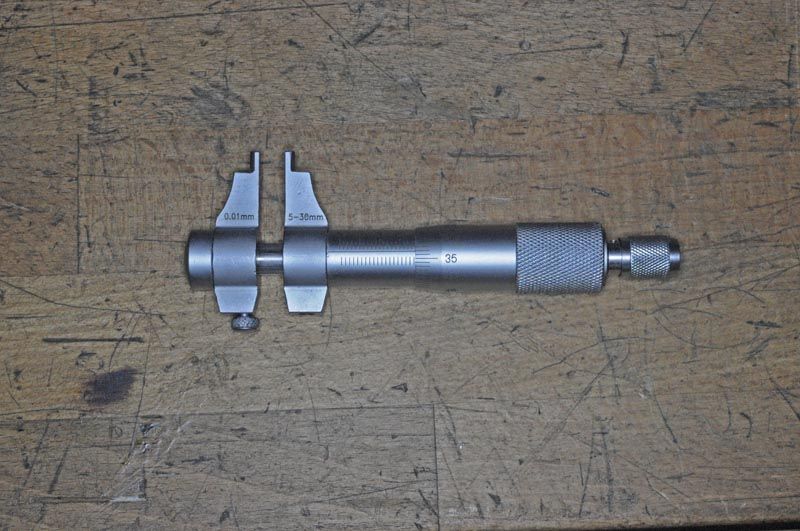
      Recently I bought a 5-30mm internal micrometer that has pins instead of anvils and that's great for accurately measuring bores but only at the first few mm from the surface and only above 5mm.

      Last week I picked up a few very reasonably priced Diatest split ball bore gauge sets and added a digital indicator, with a bit of fiddling I've worked out how to set the indicator for a direct reading of the bore up to 25mm, with sizes starting under .040"/1mm

      I've found myself wondering what others use and if there are any other good options out there?

      – Nick

      #18313
      Nick Hulme
      Participant
        @nickhulme30114
        #271563
        pgk pgk
        Participant
          @pgkpgk17461

          I suppose it depends on the size range and accuracy you need. At my level I use drill bits as slip gauges and mike them for the smaller holes. A pin gauge set would be an extravagance. I have telescope gauges for the larger holes and accept they can be a fiddle – or make a test gauge if I need to bore a fit.

          #271565
          Hans
          Participant
            @hans86050

            I use a Starrett 269a taper gauge for holes from 0.100" – 0.500", and drill bits for holes smaller than 0.100"

            ~Hans

            #271566
            Neil Wyatt
            Moderator
              @neilwyatt

              I have calipers, internal telescope gauges and an internal mic, but with only one anvil so its range is a bit limited 3/4" to 1"! (I must make some anvils for it).

              For smaller holes i use drill bits or turn a test diameter to fit. Where extreme accuracy isn't essential (i.e. I just want to get close before finishing to fit) I use a digital caliper internal jaws and add a fudge factor depending how small the hole is.

              But as far as possible I try to avoid the need for accurately measuring holes.

              Neil

              #271569
              pgk pgk
              Participant
                @pgkpgk17461
                Posted by Neil Wyatt on 13/12/2016 14:13:25:….

                But as far as possible I try to avoid the need for accurately measuring holes.

                Neil

                Farmers around here use the same method: If it won't go in with a gentle tap – get a bigger hammer.

                #271575
                Emgee
                Participant
                  @emgee

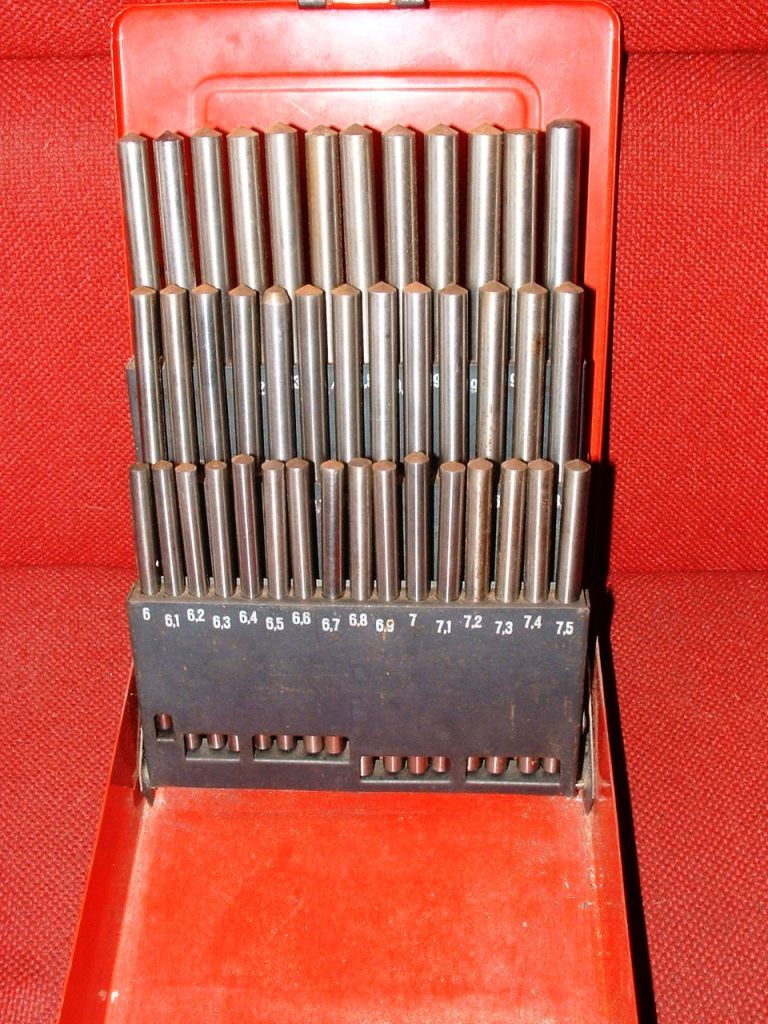
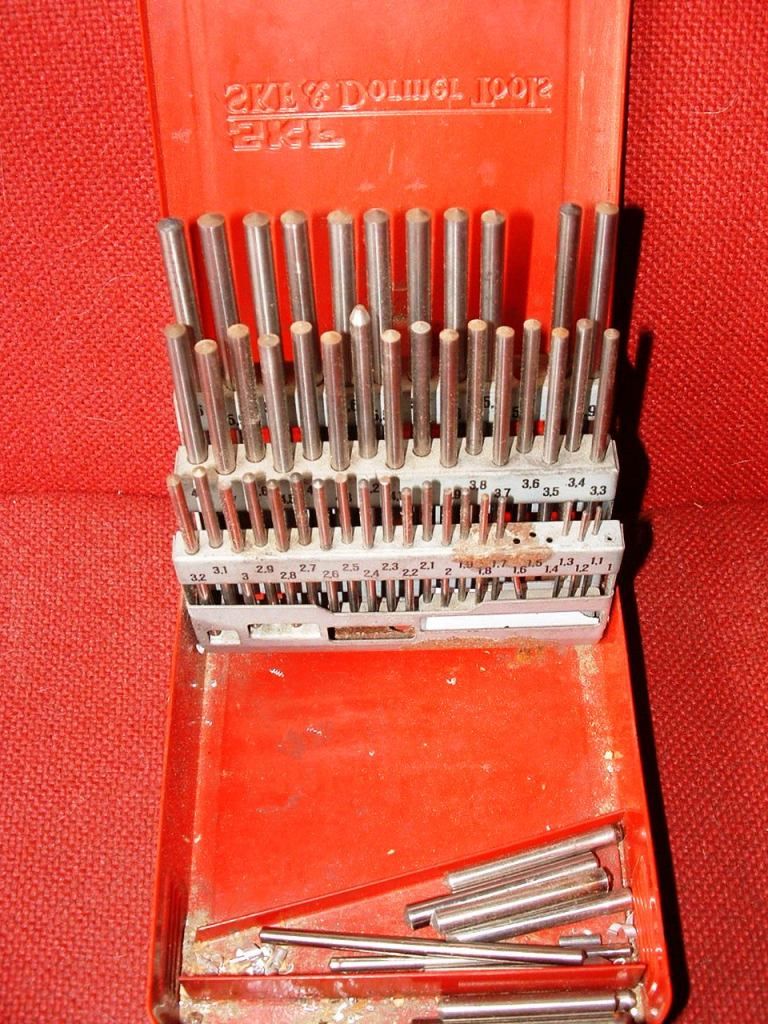
                  A few months ago I had the opportunity to buy sets of HSS Drill blanks, 1-6mm and 6-10mm by 0.10mm increments for a very low price. Since having them have found they are very useful not only for hole diameters but also for measuring slots cut on the milling machine.

                  Emgee

                  dormer drill blanks 6.0 to 10.0 x .10mm.jpg

                  dormer drill blanks 1.0 to 6.0 x 0.10mm.jpg

                  #271591
                  Chris Evans 6
                  Participant
                    @chrisevans6

                    Plus one for the drill blanks. After that it is small bore gauges and telescopic gauges plus luck but usually close enough for things I make.

                    #271593
                    john carruthers
                    Participant
                      @johncarruthers46255

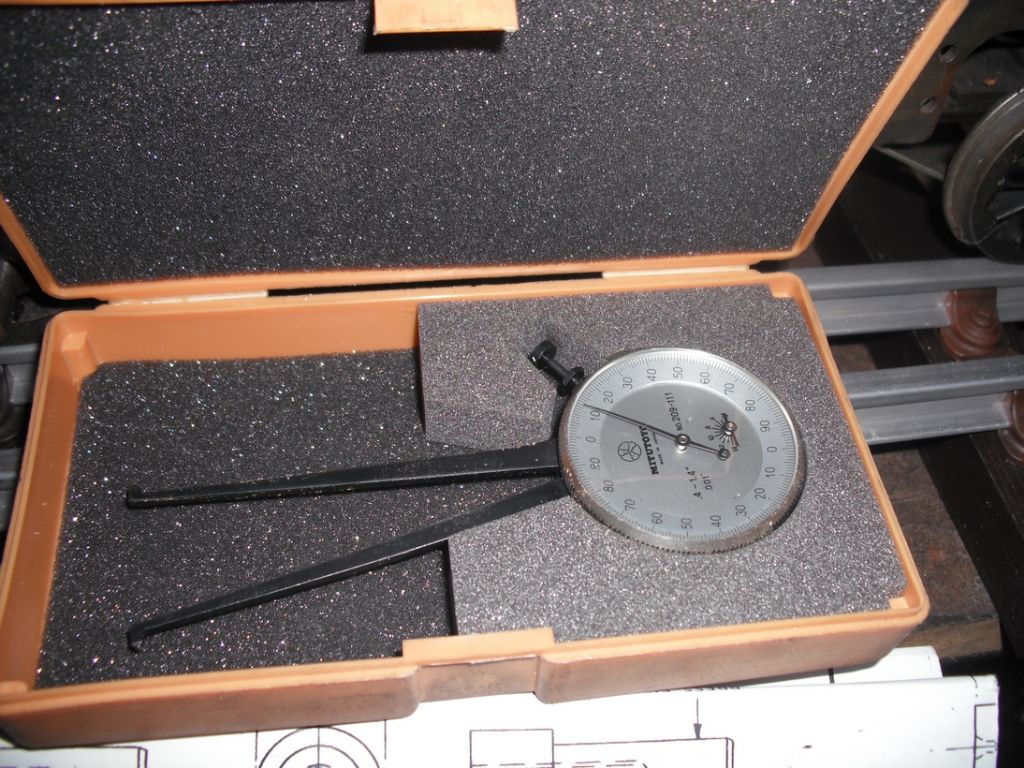
                      I have an internal caliper dial type bore gauge, old but good, £3 at a boot fair.

                      #271614
                      Anonymous

                        I try and avoid measuring small holes. If absolutely necessary I'll use drill shanks (taking into account that they're undersize) or use expanding "bell" gauges. For larger sizes I've got a range of internal micrometers from 1" to ~36".

                        If I'm machining a bore to size I usually make a gauge beforehand on the cylindrical grinder. With a few spark out passes and some tweaking of the table it's not difficult to make a gauge to size, and parallel, to within a tenth or two.

                        Andrew

                        #271615
                        JA
                        Participant
                          @ja

                          Generally I use a pin or plug as already mentioned. I have bought a couple of dial bore gauges (not cheap) and used them when necessary. They take some time to set up but are particularly useful for measuring the taper, ovality etc of long holes such as cylinder bores.

                          [edit] If you making mating items, such as a bush and its housing or piston and cylinder, machine the bore first.

                          JA

                          Edited By JA on 13/12/2016 17:31:17

                          #271637
                          Tim Stevens
                          Participant
                            @timstevens64731

                            I have found the following handy and cheap for holes below about 3mm:

                            Get a box, an assortment, of clockmakers brass taper pins. These are (were) used to connect the columns to the plates of clocks before screw threads were common, and they are straight, about an inch long (25mm) and very lightly tapered. Find one that will just go into your hole (eg in a carburettor jet) and check the diameter with a micrometer or calliper.

                            Try these for, er, size:

                            **LINK**

                            Other sizes and assortments are available.

                            Cheers, Tim

                            #271643
                            colin vercoe
                            Participant
                              @colinvercoe57719

                              Small drill blanks used as plug gauges, as mentioned before tapered bore gauges.

                              Colin

                              #271644
                              Bob Brown 1
                              Participant
                                @bobbrown1

                                I use one of these image00003.jpg

                                #271658
                                David Colwill
                                Participant
                                  @davidcolwill19261

                                  For anything over 13mm I use Bowers 3 point bore micrometers. They are hellishly expensive new but I managed to pick up 3 for a reasonable price £80-£100 I think. I then collected odd ones off ebay and now can go from 13mm to 37mm in metric and from 1 1/2 inches to 4 inches in imperial. Well worth keeping your eyes open for them. Smaller holes I use various dowel pins, drill shanks and caliper guesswork.

                                  David

                                  #271675
                                  Dinosaur Engineer
                                  Participant
                                    @dinosaurengineer

                                    It all depends on how accurate you want to measure. The 3 point bore mikes are quite accurate but expensive. Telescopic and small ( split ball type) are perfectly accurate for most users not wanting to go to the last "tenth" of a thou. Vernier and electronic calipers suffer from the flats on the the inside jaws not being sharp points and the general accuracy not being as good as a "mike". Slip gauges with the accessory ( rounded ends) are quite accurate but time consuming to use and expensive. For any precision hole requirement it's quite easy to make your own plug gauge ( With steps if you want some warning of approaching the size). The taper pins are quite good for very small holes.

                                    #271680
                                    Hopper
                                    Participant
                                      @hopper

                                      Ball gauges below half inch, telescopic gauges above.

                                      #271708
                                      Roderick Jenkins
                                      Participant
                                        @roderickjenkins93242

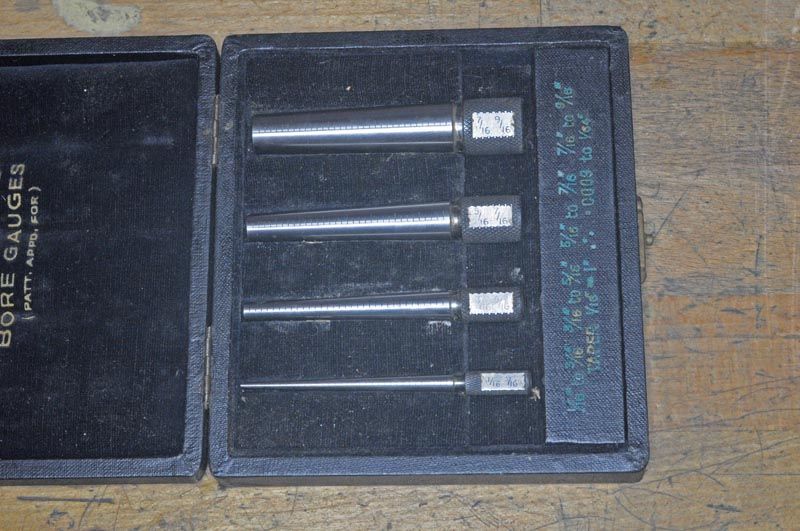
                                        Many years ago I was given these:

                                        bg1.jpg

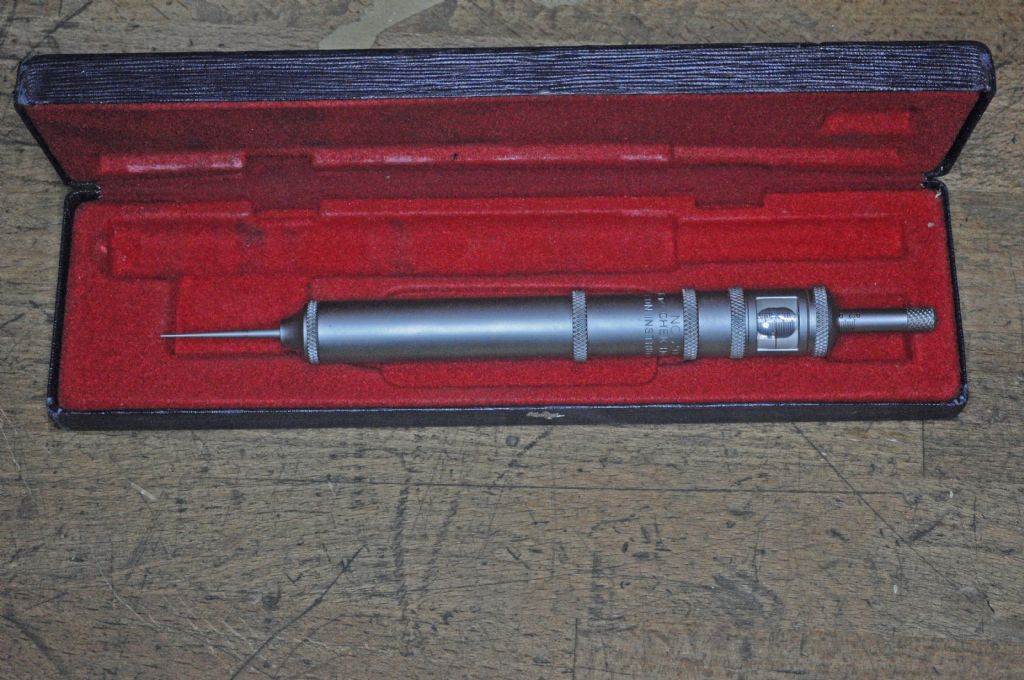
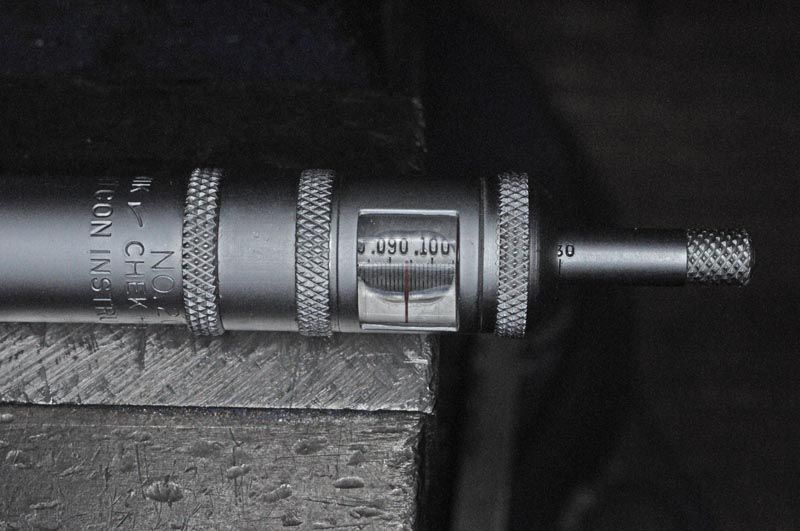
                                        and this:

                                        bg2.jpg

                                        bg3.jpg

                                        I've never used them, it seems dodgy to me to measure a hole at the "corner" – too much chance of burrs or bellmouthing (nice bits of kit though).

                                        One of these (from ARC) gets me as close as I need to be. I generally work in imperial but I've got a calculator smiley

                                        bg4.jpg

                                        Cheers,

                                        Rod

                                        #271736
                                        Michael Gilligan
                                        Participant
                                          @michaelgilligan61133

                                          Just for idle amusement, here's a thought:

                                          [assuming that it's a hole of known depth; either blind or through a plate]

                                          Fill the hole with Wood's Metal and pare-it-off flush with the surface[s]

                                          … some initiative may be required!

                                          Then melt out the filler; weigh it; and do your sums.

                                          MichaelG.

                                          .

                                          Yes, I know it's daft on several levels, but it might be useful.

                                          #271969
                                          Ian S C
                                          Participant
                                            @iansc

                                            Block one end if the bore is a through one, blow across the end and note the pitch of the note, should come out similar to filling with Wood's metal and weighing.

                                            Ian S C

                                            #271973
                                            pgk pgk
                                            Participant
                                              @pgkpgk17461

                                              Adding to off-the-wall ideas:

                                              I think it'd be easier to tape one side of the hole and measure how much liquid fills it… allowing for the meniscus of course. For really tiny holes one could try and calculate the rate of capillary filling with different viscosity fluids and angle of fill. For really small holes how about finding the maximum amplitude of a signal that will pass through?

                                              #272290
                                              vintagengineer
                                              Participant
                                                @vintagengineer

                                                The only way to measure a bore accurately is with a Bowers Bore gauge.

                                                #272292
                                                Tony Pratt 1
                                                Participant
                                                  @tonypratt1
                                                  Posted by vintagengineer on 16/12/2016 21:52:32:

                                                  The only way to measure a bore accurately is with a Bowers Bore gauge.

                                                  Really, and what do you base that pearl of wisdom on?crook

                                                  Tony

                                                  #272298
                                                  JA
                                                  Participant
                                                    @ja

                                                    I know in the British motorcycle industry pneumatic gauges were used to measure the bore of a cylinder. I can guess how they worked but would not like to put my guess into print without a lot of thought.

                                                    JA

                                                    #272300
                                                    vintagengineer
                                                    Participant
                                                      @vintagengineer
                                                      Posted by Tony Pratt 1 on 16/12/2016 22:10:51:

                                                      Posted by vintagengineer on 16/12/2016 21:52:32:

                                                      The only way to measure a bore accurately is with a Bowers Bore gauge.

                                                      Really, and what do you base that pearl of wisdom on?crook

                                                      Tony

                                                      35 years as engineer and seen more inspection departments than I care to remember!

                                                    Viewing 25 posts - 1 through 25 (of 44 total)
                                                    • Please log in to reply to this topic. Registering is free and easy using the links on the menu at the top of this page.

                                                    Latest Replies

                                                    Viewing 25 topics - 1 through 25 (of 25 total)
                                                    Viewing 25 topics - 1 through 25 (of 25 total)

                                                    View full reply list.