Chuck out of true

Chuck out of true

Home Forums Beginners questions Chuck out of true

Viewing 25 posts - 1 through 25 (of 62 total)
  • Author
    Posts
  • #421070
    Grotto
    Participant
      @grotto

      After several items I turned on my ML7 turned out bad I’ve discovered my 3 jaw chuck is not running true.

      when I removed it I noticed that it was very tight on the head stock thread. I’ve pulled the jaws out and inspected them, they look fine.

      I've put a dial gauge against the flange on the head stock and that's perfect. I've been using ER collets since I realised the 3 jaw was dodgy and they seem fine.

      I suspect that some swarf has got into the tread of the 3 jaw and is causing it to run off centre. I've cleaned the internal thread on the 3 jaw backing plate as best I can but it's still tight when I try to fit it (4 jaw goes on fine).

      Any ideas on how best to cure the problem?

      The positive from this is that I've got really quick setting up the 4 jaw. I'd be fine continuing with the 4 jaw but it’s no good for turning hex stock.

      thanks

      #9771
      Grotto
      Participant
        @grotto
        #421076
        David George 1
        Participant
          @davidgeorge1

          Hi Grotto! It sounds like there is some damage of swarf in the system somewhere. You have to strip the chuck give it a clean and check for damage. If you remove the chuck from the back plate you will find some screws three will hold the key bevel gears in and three will hold the back plate on to hold the scroll gear in place remove all but label the plates and gears with a dot from a centre punch to make sure that they are replaced in the same orientation. Clean the back plate and screw on to the spindle and clock it to make sure it runs true. If it dosnt unscrew and check for damage. You can shim the face to true if nessesary. Rebuild chuck and assemble on to back plate. Put a dowel about 20mm dia in to chuck and check for run out. If it dosnt run true you have to clock the chuck and maybe adjust the location diamiter.

          David

          #421080
          Bob Stevenson
          Participant
            @bobstevenson13909

            ………..Chuck been dropped lately?

            #421084
            Grotto
            Participant
              @grotto

              Thanks,

              I was a bit nervous about pulling the back plate off in case I couldn’t get it back on true, but guess as it’s unusable as is there’s nothing to lose.

              I haven’t dropped the chuck, suspect it got fitted with swarf in the threads by either myself or my son.

              when screwing the chuck on, it gets tight before it’s fully on, so think the tread is a bit damaged. I don’t have a tap big enough to fit the thread, maybe put the back plate on the face plate and have a go at threading on the lathe?

              #421085
              Michael Gilligan
              Participant
                @michaelgilligan61133
                Posted by Grotto on 27/07/2019 02:25:49:

                Thanks,

                I was a bit nervous about pulling the back plate off in case I couldn’t get it back on true, but guess as it’s unusable as is there’s nothing to lose.

                I haven’t dropped the chuck, suspect it got fitted with swarf in the threads by either myself or my son.

                when screwing the chuck on, it gets tight before it’s fully on, so think the tread is a bit damaged. I don’t have a tap big enough to fit the thread, maybe put the back plate on the face plate and have a go at threading on the lathe?

                .

                It is obviously difficult/impossible to diagnose at a distance, but: It seems likely that there is a small burr raised on the backplate thread, or perhaps a bit of impacted swarf

                I suggest that you remove the backplate from the chuck and try gently screwing it reversed onto the spindle nose.

                This should be sufficient for you to identify the location of the blemish; [and with luck on your side might even level it down] … If the backplate fitted nicely before, you should find it only needs localised attention.

                MichaelG.

                #421090
                Mick B1
                Participant
                  @mickb1

                  David and Michael are probably on the right track, but I'd add that I think you can expect the 3-jaw fit on the screwed spindle nose to be more exacting than it is for the 4-jaw even if everything's in good nick. That's the way it was on my Speed 10 – I had to align the 3-jaw more accurately when starting the thread to screw it on, or it would bind on the parallel bore in the backplate before the threads even met. The 4-jaw was a good deal easier.

                  The accuracy of that location is obviously less significant on the 4-jaw where the user and not the chuck is setting the workpiece centre of rotation.

                  I guess I'd start by looking at the bore in the backplate for bruising.

                  #421091
                  JohnF
                  Participant
                    @johnf59703

                    Grotto, There should be no problem removing and re-fitting the back plate providing it is correctly made – there should be a register to locate the chuck body on but do mark the back plate and the chuck body with a dot as has already been suggested. In reality it should not matter but as good practice its best to do so.

                    From what you said in the first post your chuck ran true before it became tight on the spindle ? This would indicate that there is probably some swarf or damage to the internal thread. Rather than screwcut as a first try I would hand clean the thread "scraper style" with a screw cut tool, if it is just a small piece of swarf you will probably feel this and be able scrape it off, if not then revert to your plan and screwcut it taking great care to align the tool with the existing thread.

                    Probably prudent to turn by hand and not under power for a start until you are sure all is well then use power.

                    For interest how much error was there on the parts you made — what was the TIR error on the chuck/parts ?

                    John

                    #421092
                    not done it yet
                    Participant
                      @notdoneityet

                      The above have it sussed, one way or another.

                      The back plate threads are likely not anywhere near a precision fit – they are there simply to hold the chuuck on the spindle threads and so do not need to be a really high precision job.

                      The chuck will be aligned by the registers between the spindle nose and back plate. One axial contact surface and at least one radial contact area.

                      If there are two radial contact areas, the chuck will be thrown off-line by the affected surface. It does not need any more than a slight dink or tiny piece of trapped swarf to seriously affect the alignment.

                      #421156
                      old mart
                      Participant
                        @oldmart

                        Use a dental mirror to look for something stuck in the threads, there must be something there. I have chuck backplates with registers varying from 0.0005" to 0.015" clearance. They all repeat perfectly, the tight one can be difficult to get on and off though.

                        Once you manage to get your chuck screwing on and off more easily, then remove the chuck from the backplate after fitting on to the spindle and check the face and register for the chuck with a DTI. A light skim may be required in one or both planes.

                        #421233
                        Neil Wyatt
                        Moderator
                          @neilwyatt

                          Once you are sure the mounting thread is OK, have you ever dismantled the chuck and cleaned it?

                          Neil

                          #421337
                          Grotto
                          Participant
                            @grotto

                            I've pulled the back plate off the chuck. It doesn’t want to thread on to the head stock either front or rear first.

                            I was sure it was dirty threads in back plate as the 4 jaw goes on fine, but have tried screwing my face plate on and that is also tight.

                            Weekend was busy so didn’t get much time in the workshop, but have set up the change wheels to 12 tpi and will run an internal thread tool through (turning by hand) this evening. I've tried cleaning thread using a thread gauge, but that didn’t seem to make much difference. I can’t see any obvious swarf in the tread, but there is one point where thread may be a little damaged.

                            the thread on the head stock looks perfect, but as the face plate & 3 jaw are both tight maybe I being deceived.

                            #421343
                            Pete Rimmer
                            Participant
                              @peterimmer30576

                              Put a dial gauge on the OD of the chuck, and then against the face. You'll have to pull the jaws out and turn it carefully so you don't catch the slots. If neither run out then you have a worn scroll or bell-mouthed chuck slots. If the OD is true but the face runs out it could be bell-mouthing of the face. If the OD is running out but the face is true then it could be it's not registered to the back plate properly, in which case slacken the bolts and tap it into truth with a soft faced hammer.

                              If the OD AND the face run out then mark them to ascertain where the high points are. If they are opposite each other on diameter remove the backplate and clock the register face. If that runs out check the rear face for dings and if it has none run a skim over the register face and bolt the chuck back up, true it radially as above.

                              To check for bell-mouthed slots remove the chuck jaws and turn the chuck so a slot is horizontal. Now mount a DTI on the cross slide and set the probe against the slot and wind the cross slide in. The DTI should not move.

                              #421390
                              Grotto
                              Participant
                                @grotto

                                I found some time today so had a go at sorting the issues.

                                I was thinking it was the thread on the face plate since the 4 jaw goes on fine, but based on what Mick B1 has said that may not be the case.

                                i gave the head stock & backing plate threads a good clean, and the 3 jaw & face plate both fit better, although tighter than I recall.

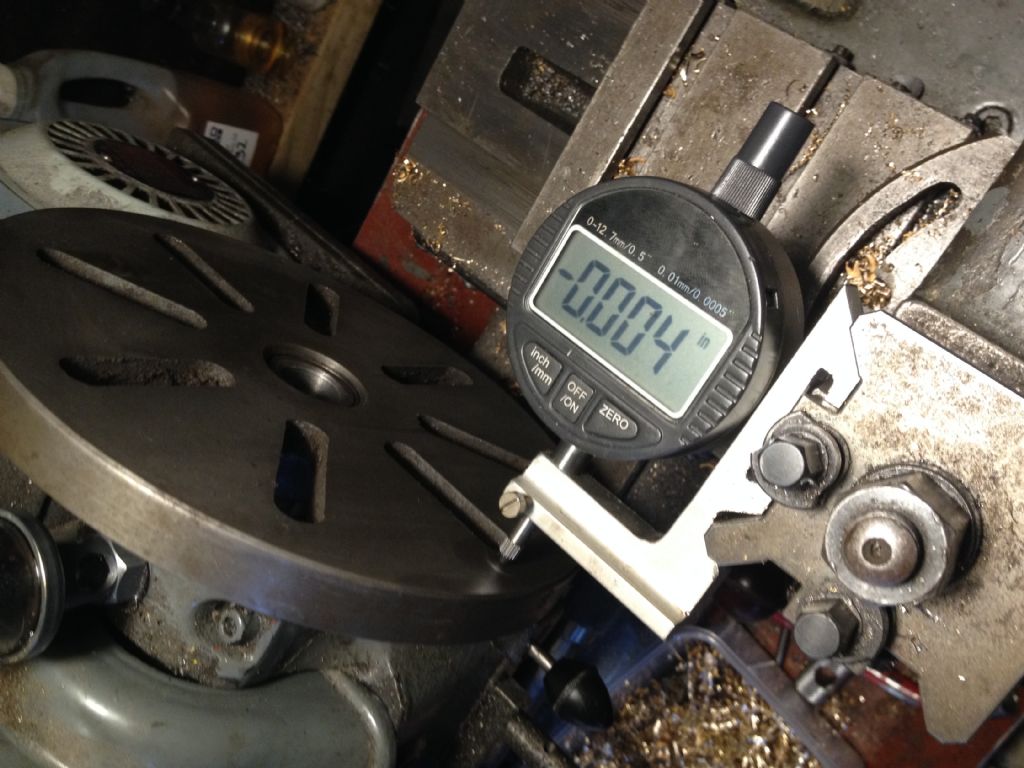
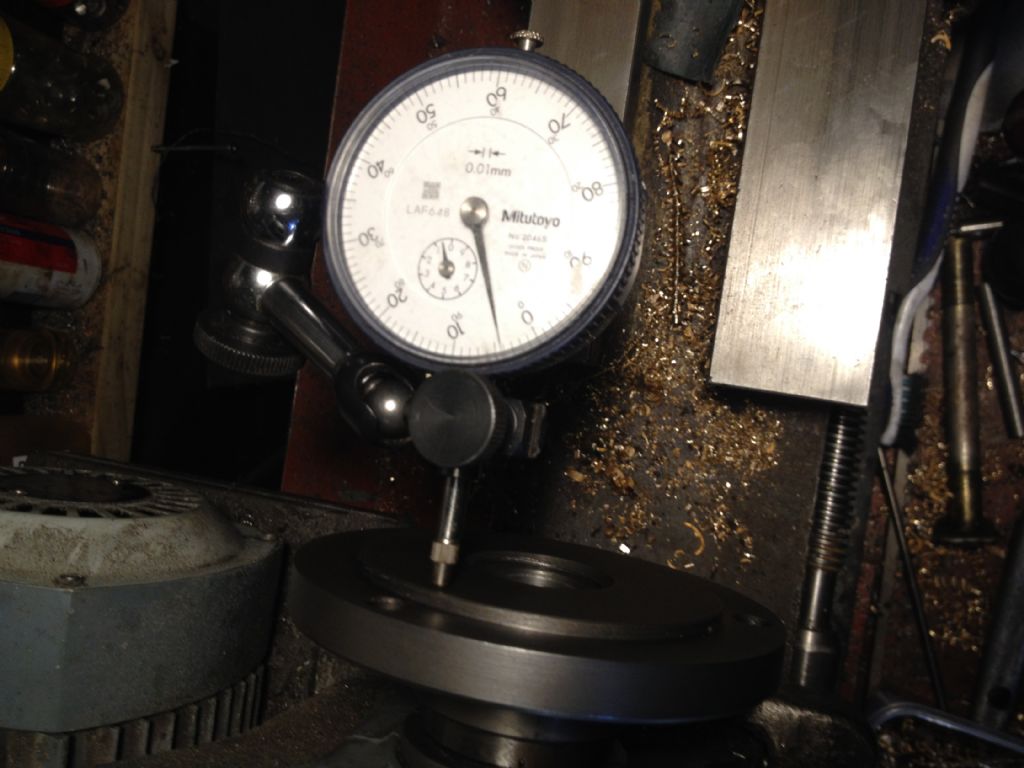
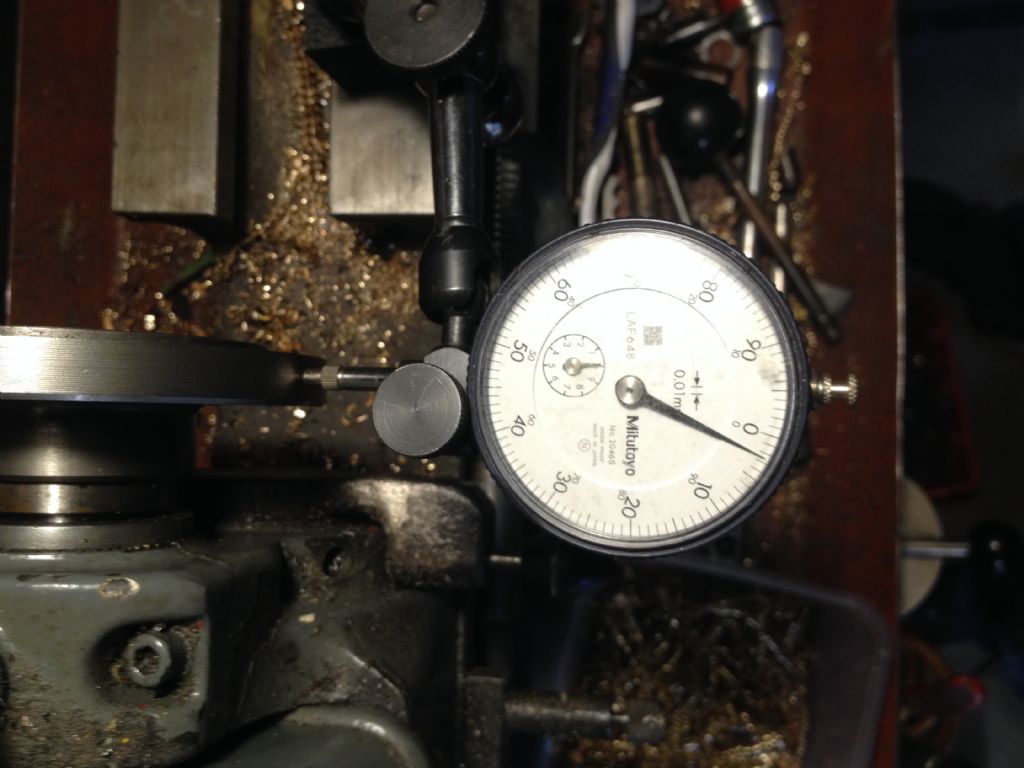
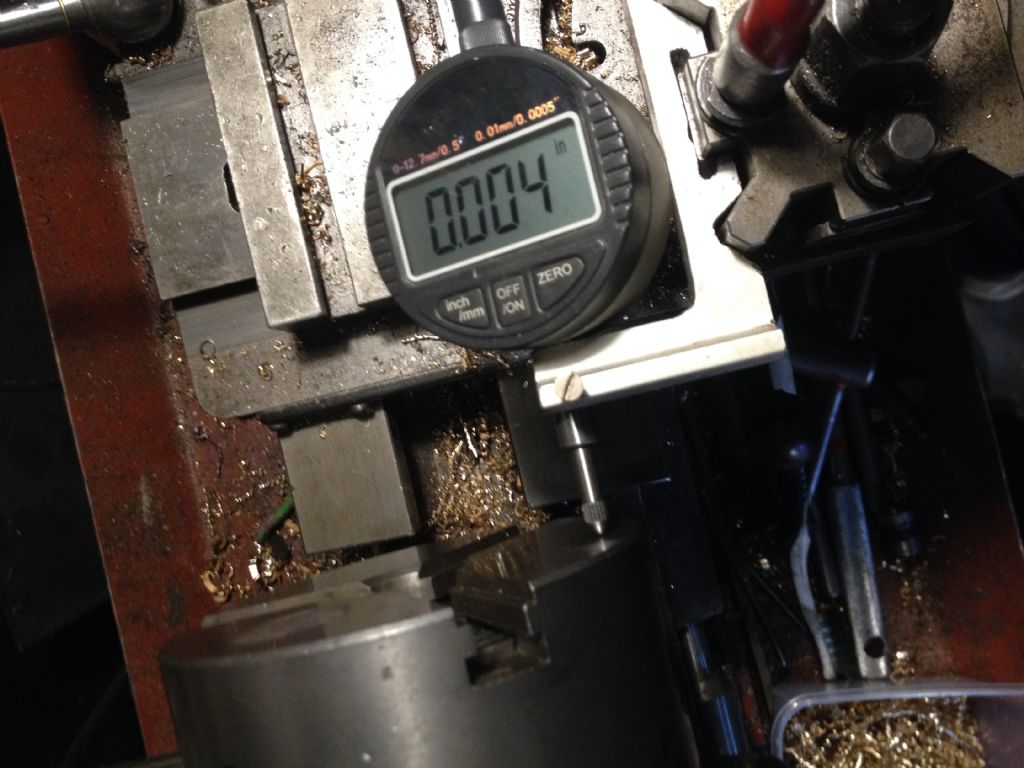
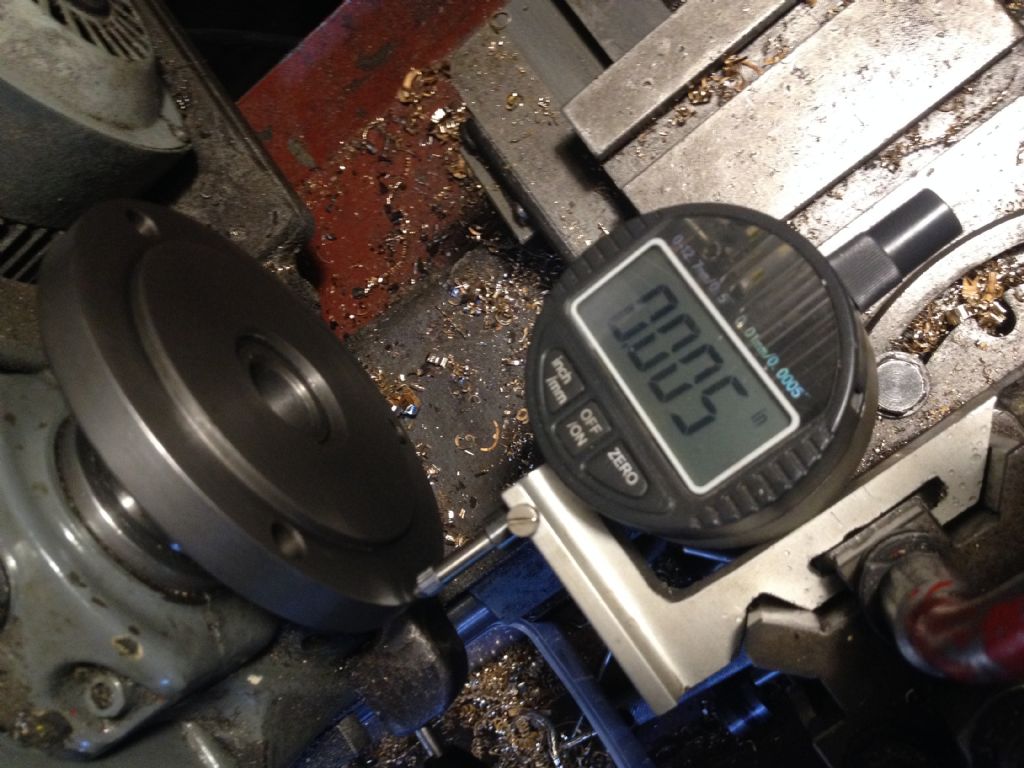
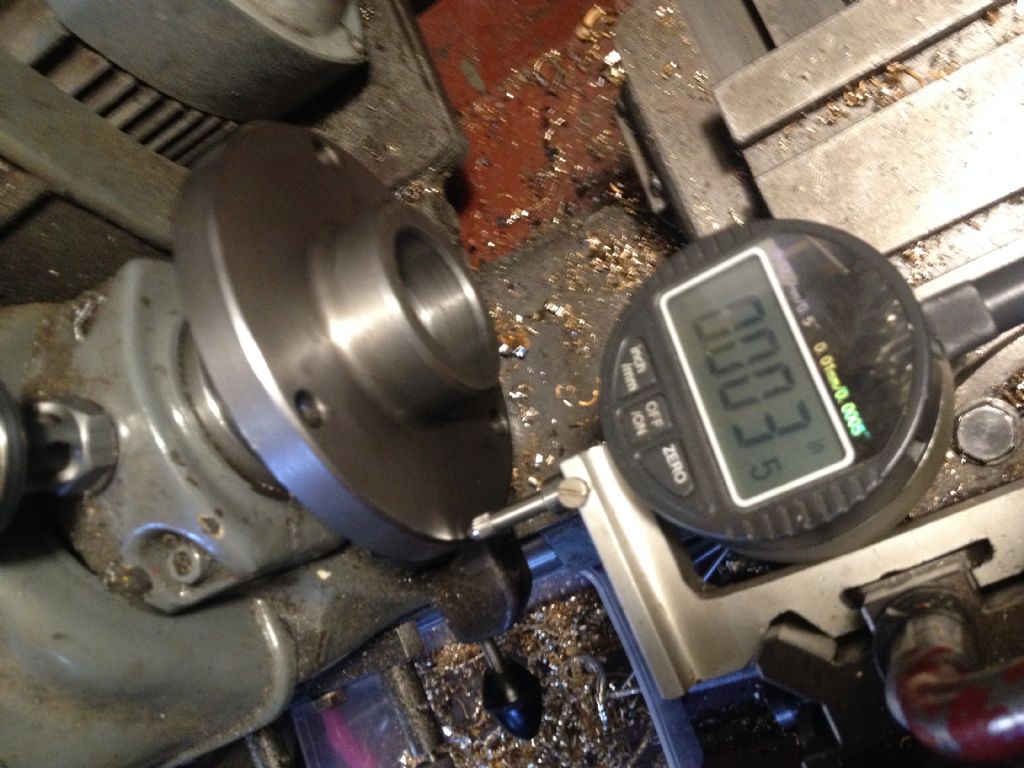
                                I used an indicator on the edge & face of the face plate….

                                photos show maximum variation. Edge is true, face is a bit out

                                image.jpeg

                                image.jpeg

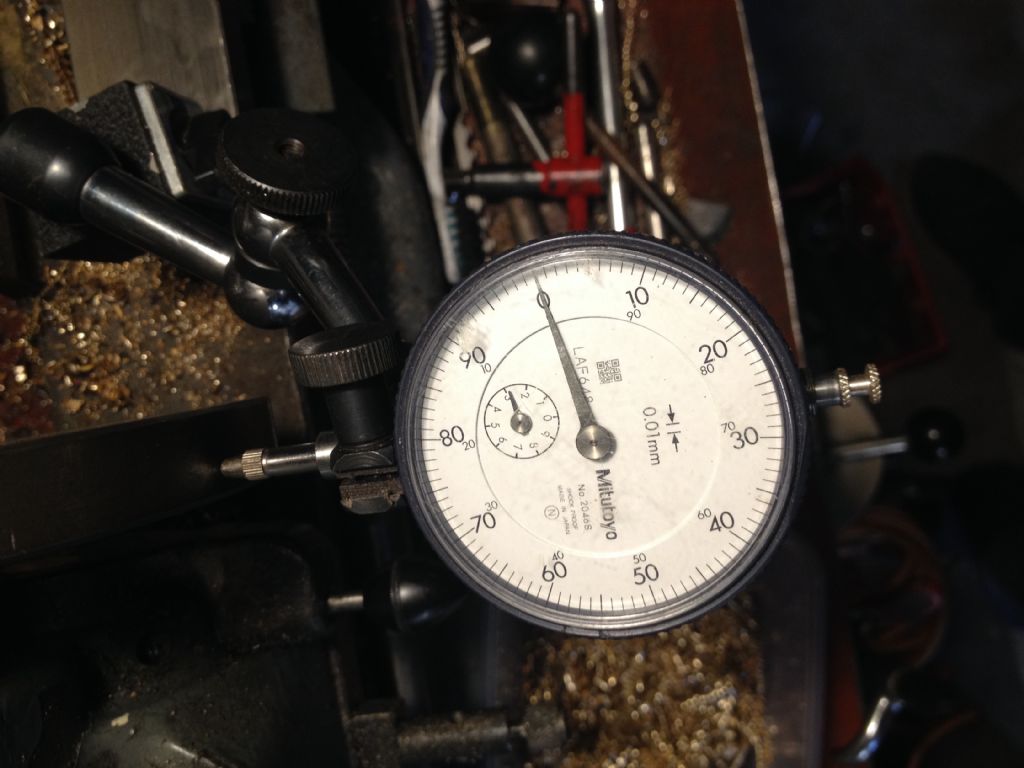
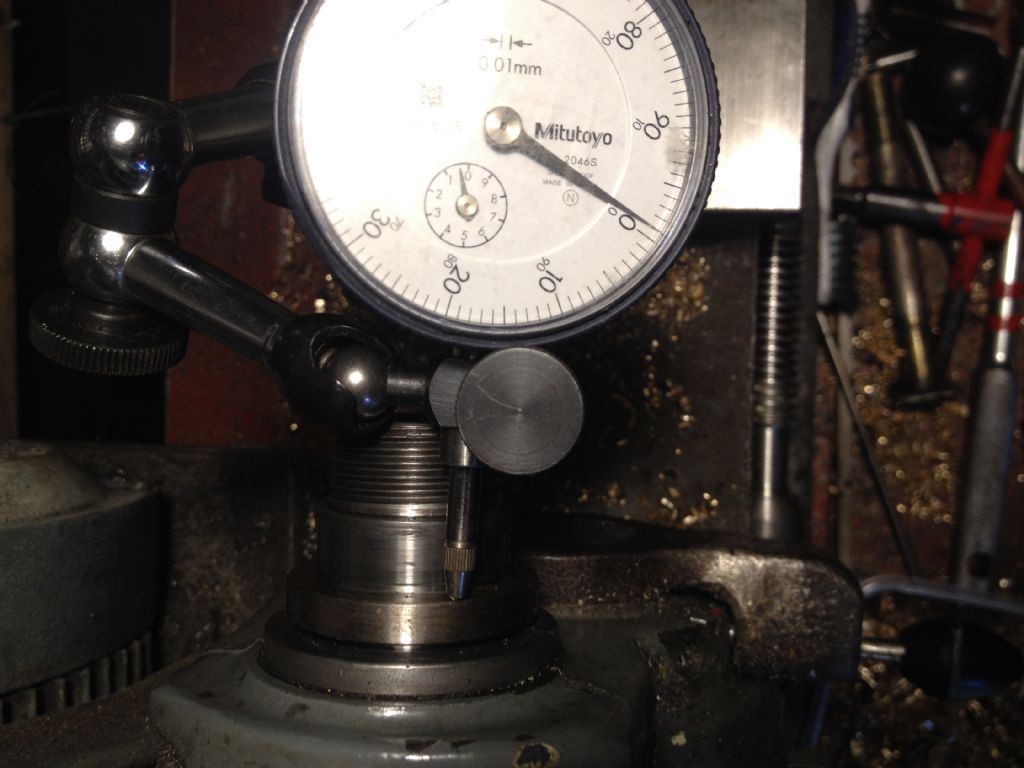
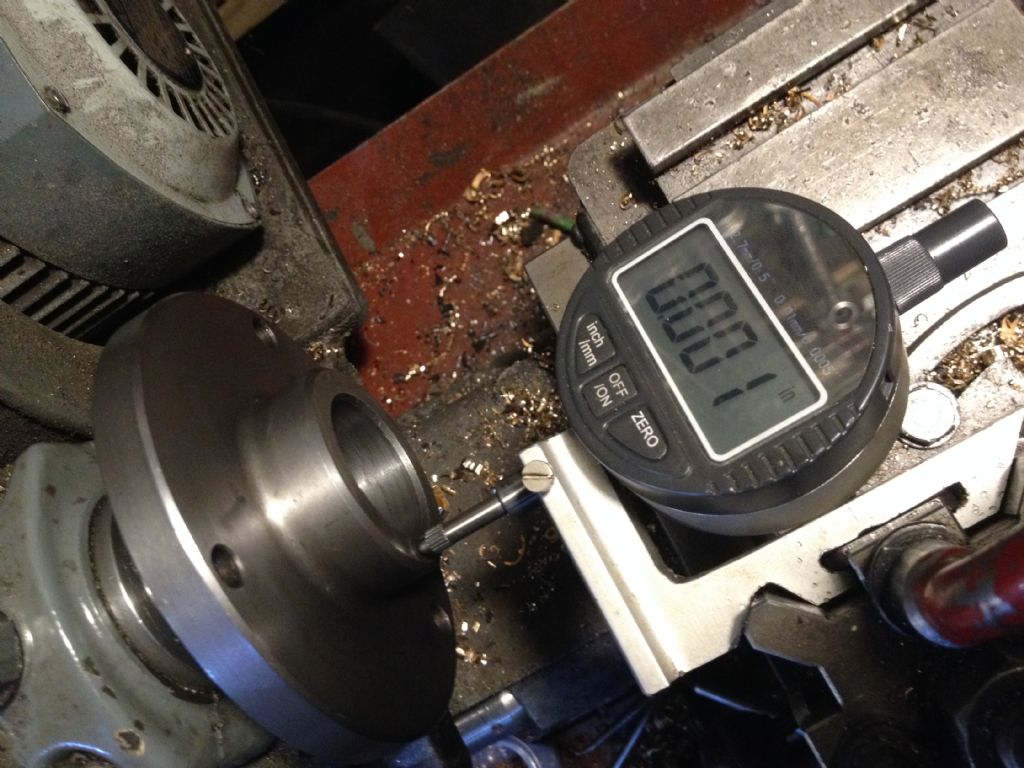
                                Indicator on head stock is OK

                                image.jpegimage.jpeg

                                Indicator on backing plate is not so good

                                image.jpeg

                                image.jpeg

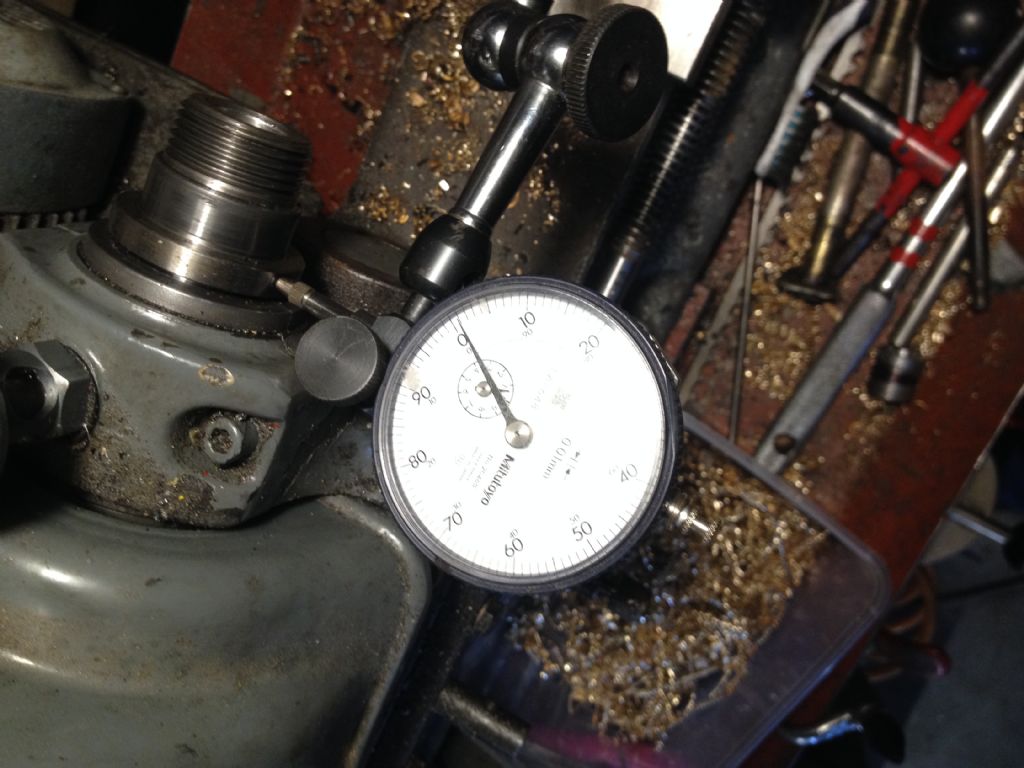
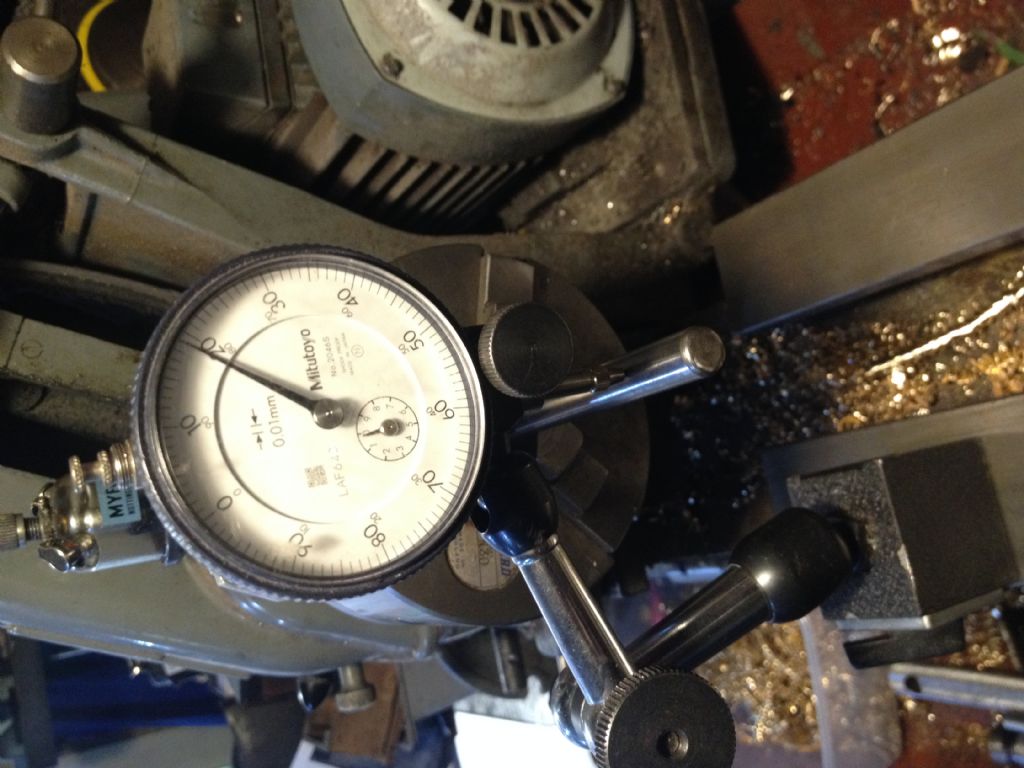
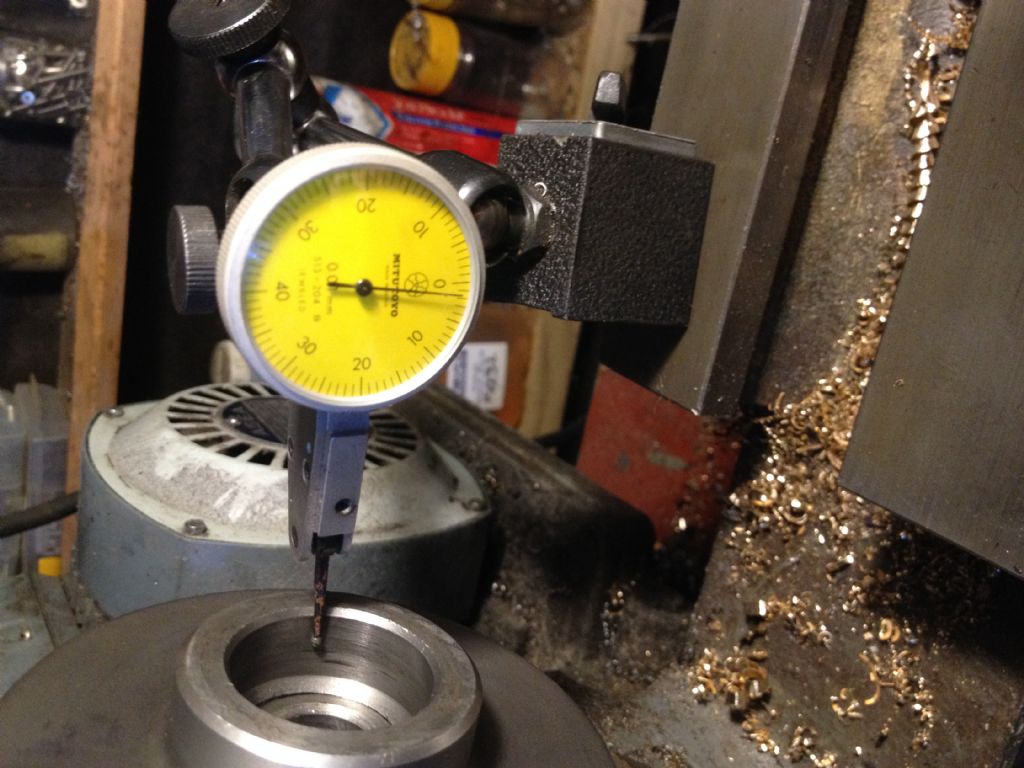
                                Indicator on 3 jaw with a 10mm dowel is way out

                                image.jpeg

                                image.jpeg

                                #421395
                                Vasantha Abey
                                Participant
                                  @vasanthaabey64724

                                  Dear,e.

                                  It seems that your chuck back registering area has a tiny protrusion may be by an object while keeping aside. Its like a single knurl which makes the chuck slightly off set on face. The register or the nicely polished neck of the spindle has to be spot on mating with the female area of the chuck. If all that is not the trouble, swarf inside the chuck scroll, or the jaws assembled in different numbering to the embossed numerals on the chuck body.

                                  If all fail, what you can do is hold a circular ring on the chuck but locking by opening outward. Then use pencil like die grinder mounted on the tool post and slowly do an internal grinding of the chuck jaws.

                                  usually after long use, the jaws develop end plays with reference to the face as there will be wear on the T slot on the chuck body. If its so, and you cannot do anything else then pls go for a new chuck. Any way any brand new chuck is out by a few thou, may be .01, /.02 mm

                                  There is a lathe called Cazenuve made in France which has a separate chuck holding plate that has a protruding ring, and this protrusion has 4 threaded holes and 4 threaded bolts with square holes to adjust , that which shift the chuck by a few thous to correct out of roundness. The three jaw chuck is held to this back plate by alan bolts sunk in behind the plate, and holding the 3 jaw chuck from behind at a 90% torque so it is free to shift to allow correction.

                                  #421403
                                  JohnF
                                  Participant
                                    @johnf59703

                                    Grotto, two points in the photo Indicator on the headstock – pic 1 you are checking the OD of the spindle nose and not the register — register is the plain part immediately behind the thread. It probably will give the same reading but the part you have the indicator on will make no difference to the chuck mounting.

                                    Indicator on the back plate – again where you have the clock bearing will not affect the chuck mount, you need to check the outer edge where the mount holes are, again if turned together as one would expect both areas should give the same reading- but ?? The same goes for checking the OD of the back plate the actual register is the narrower part that goes into the chuck body that really matters.

                                    As a matter of interest was the back plate machined on your lathe ? Normal practice would be to machine the backplate on the machine it will be used on thus ensuring true centralisation.

                                    You have not said if prior to this whether your chuck did run true? Or has it always had significant runout? Makes a difference to the solution.

                                    In any event you need to get the tightness of the fit resolved first then if the backplate and or chuck still has significant run out it may be worth considering re-machining the backplate register providing there is enough material to allow this.

                                    John

                                    #421417
                                    Mick B1
                                    Participant
                                      @mickb1

                                      I'd guess there's a bruise that's stopping the backplate locating properly against its datum face, and tilting it. My Myford was a Speed 10, and in any case I can't remember whether the bottom of the backplate register bore or the back face of the backplate contacted first, but it could well be that engagement that's being compromised.

                                      The runout of a straight parallel bar should vary with distance from chuck face if that's what's going on.

                                      #421473
                                      Pete Rimmer
                                      Participant
                                        @peterimmer30576

                                        I've had plenty of chucks that didn't use the OD register but ran perfectly true just seated on the face register and centred by the threads. If you think about it the threads will do a pretty good job of centring even though they are a helix. The face register is by far the most important. That front face of the spindle step and the back face of the chuck backplate must be flat with no dings in the edges. Screw on chucks pick up dings so easily you should check them every time before mounting the chuck.

                                        #421530
                                        old mart
                                        Participant
                                          @oldmart

                                          As already mentioned, your faceplate requires truing up, a difficult job on a lathe without power cross feed. The difficulty is in keeping a constant smooth feed while facing.

                                          I have already mentioned that the register has little or no affect on the repeatability of a screw on chuck.

                                          If the faceplate is trued up, then the backplate could be attached to it, adjusted for concentricity of the female register, and the threads very lightly skimmed. Then before taking anything down, the rear face of the backplate skimmed true. After that is done, the backplate needs to be screwed up tight and backed off several times to settle it down, before checking the runout of the chuck mounting face and the concentricity of the chuck register. Both may require truing up.

                                          #421547
                                          Howard Lewis
                                          Participant
                                            @howardlewis46836

                                            Coming in lare, as usual, if the 3 jaw, 4 jaw and faceplate are hard to screw on to the Mandrel, it sounds as if that is where the problem lies.

                                            It may well be that the register has been damaged. A burr here wouldmake the fittings hard to screw on, and hold them out of position, and possibly out of square.

                                            From what you say, it sounds as if your ER chuck goes on OK, and runs trues, which is puzzling when the others do not.

                                            REALLY daft question, the male and female threads are all the same pitch and size? Ie you haven't been sold a Myford, with accessories for another machine? You should be looking at 1.125 x 12 tpi threads. From memory, i think that the register should be 1.250

                                            Myford cognoscenti please verify.

                                            Howard

                                            #421570
                                            Grotto
                                            Participant
                                              @grotto

                                              Thanks for all the help

                                              John F – Good point about where the indicator stalk is on the head stock. I did it again against the register and there’s no movement in the gauge.

                                              also checked the back plate on the outer edge. Photo shows maximum…

                                              image.jpeg

                                              The back plate came with the lathe & chuck. It came from a retired engineer who’d had it in his home workshop. He was real precious about it, wouldn’t let his middle aged sons touch it (they’d both done fitter/turner apprenticeship) in case they damaged it. It looks very well made (better than I could do). It previously ran true, I’m not sure when it went out as I had several months away from the workshop. I was initially think all the round stock I had was oval (I’m a real beginner).

                                              Howard – the 4 jaw screws on fine, it’s only the 3 jaw & face plate which are tight.

                                              I put the backing plate on back wards, and tried the indicator on that…

                                              image.jpeg

                                              image.jpeg

                                              image.jpeg

                                              #421571
                                              Grotto
                                              Participant
                                                @grotto

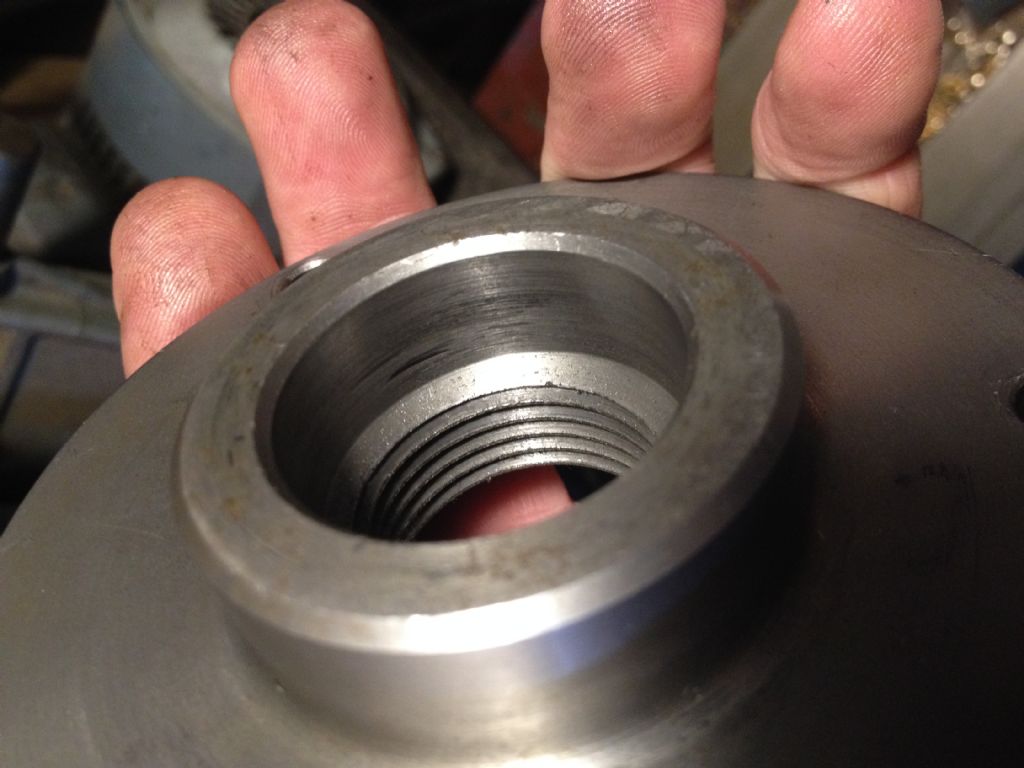
                                                Here’s a photo of back plate thread…

                                                image.jpeg

                                                #421574
                                                Michael Gilligan
                                                Participant
                                                  @michaelgilligan61133
                                                  Posted by Grotto on 30/07/2019 04:59:09:

                                                  [ … ]

                                                  I put the backing plate on back wards, and tried the indicator on that…

                                                  .

                                                  yes

                                                  The fact that you wre able to do that, apparently without effort [otherwise you would presumably have mentioned it] seems to confirm that the thread is as it should be … That is one of the reasons why I suggested doing that first.

                                                  You have now eliminated the thread from the list of suspects; without modifying it.

                                                  I think it's most likely that there is some barely measureable blemish on [or in] the parallel register area of the spindle nose [or the backplate]. Your indicator tests are looking good; but they cannot tell you everything, because the probe is only making point-contact [ish]

                                                  It's probably time to start applying some blue, and checking that register very thoroughly.

                                                  I hope it goes well

                                                  MichaelG.

                                                  #421575
                                                  Michael Gilligan
                                                  Participant
                                                    @michaelgilligan61133
                                                    Posted by Grotto on 30/07/2019 05:00:48:

                                                    Here’s a photo of back plate thread…

                                                    image.jpeg

                                                    .

                                                    The thread looks good from here, and [as per my previous post] is best left untouched.

                                                    It may be a trick of the light, but … I think there is some scuffing on that parallel register, and that's where you need to focus your attention.

                                                    MichaelG.

                                                    #421592
                                                    Paul Lousick
                                                    Participant
                                                      @paullousick59116

                                                      From reading thru the posts, The backplate thread and register appear to be OK but have you checked if the backplate is running true when attached to the spindle ?

                                                      If the backplate checks out OK, the problem must be in the chuck and if cleaned and no swarf in the scroll, etc, then the jaws or scroll is worn and the jaws need a re-ground.

                                                      Paul.

                                                    Viewing 25 posts - 1 through 25 (of 62 total)
                                                    • Please log in to reply to this topic. Registering is free and easy using the links on the menu at the top of this page.

                                                    Latest Replies

                                                    Home Forums Beginners questions Topics

                                                    Viewing 25 topics - 1 through 25 (of 25 total)
                                                    Viewing 25 topics - 1 through 25 (of 25 total)

                                                    View full reply list.