Beginner milling chuck key question

Beginner milling chuck key question

Home Forums General Questions Beginner milling chuck key question

Viewing 25 posts - 1 through 25 (of 35 total)
  • Author
    Posts
  • #505106
    Chris V
    Participant
      @chrisv

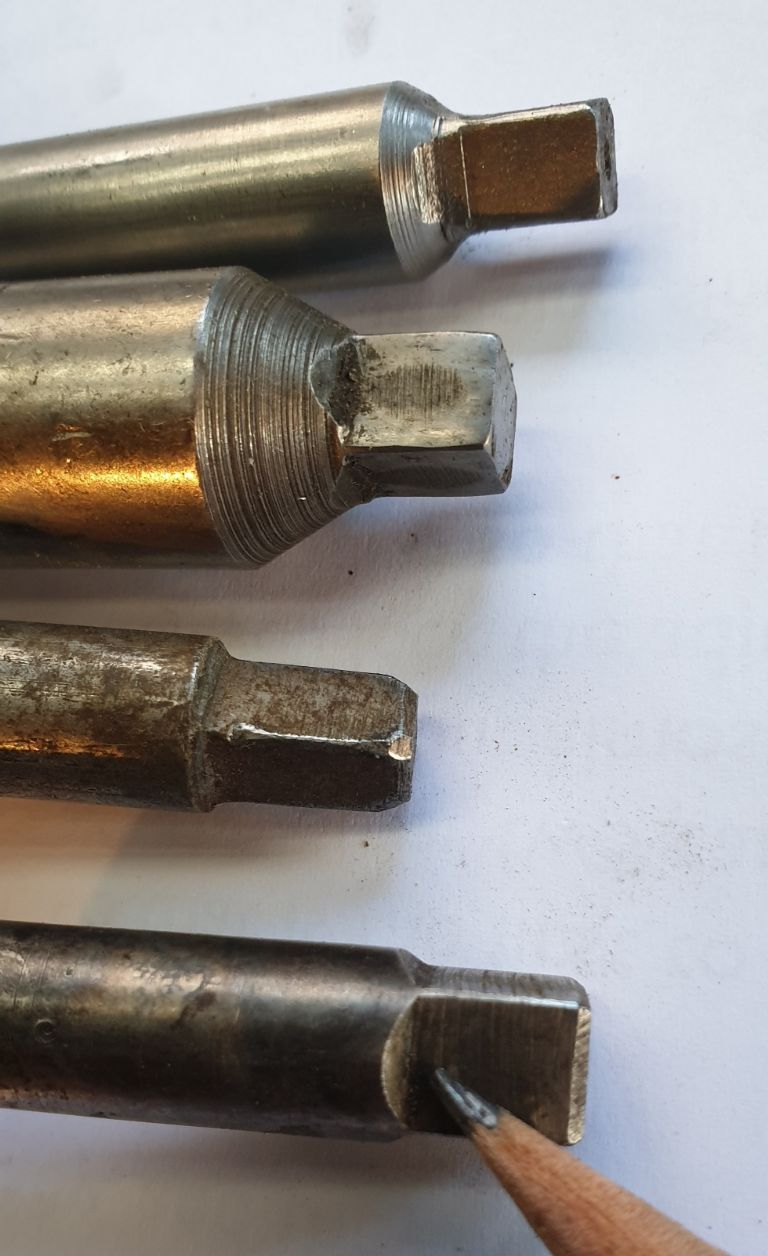
      chuck key milling.jpg

      To help me set my 4 jaw chuck I need to make a couple of chuck keys. Ive barely used my Amolco mill as yet but would like to make them as aesthetically pleasing as the one pictured above indicated by the pencil. I have a square ER32 collet block so if i can find a suitable length of bar to fit it milling the 4 flats should be ok. I was thinking of milling it with the round bar horizontal.

      But its how to add the bevel detail? I could probably make a good mess of it with a file, but was wondering how those with experience would mill the details?

      Mill the flats horizontally then set the collet block at 45 degrees in a vice?

      Mill it all with the bar vertical & then the details at 45 degrees?

      Thanks in advance!

      Chris.

      #27748
      Chris V
      Participant
        @chrisv
        #505108
        JasonB
        Moderator
          @jasonb

          If you use a flycutter rather than a milling cutter you can get the chamfer cut at the same time with a suitably shaped cutter. I'm a one key man myself.

          #505109
          Chris V
          Participant
            @chrisv

            Ah thanks for that Jason, I like it. I think I might have a flycutter, though that's a whole new level of scary!

            So you mean its akin to grinding a custom cutter for the lathe?

            I shall go and find it, think about it, then probably make a simple one for now I think as I'd like to get my lathe set up before I go too deep down that rabbit hole!

            Cheers

            Chris.

            #505112
            Emgee
            Participant
              @emgee

              Using a file would be my choice but if you want to mill the chamfers you have stated the method I would use in your post, just do the 4 flats with the flutes and then mount the block at 45 deg and do the chamfers using the end of the cutter. If using a machine with any backlash get the tool positioned so you are not climb milling.

              Emgee

              #505113
              Bazyle
              Participant
                @bazyle

                Or just use the side of an half inch end mill to give 1/4 in radius. Beware of the cutter rotating or pushing back the stock so do it up tight. Also think of how to jury rig an end stop that lets you position the collet block at teh same location as you rotate it to keep all 4 bevels aligned.

                I'm going to be careful not to look at the end of my chuck key until I have forgotten about this thread. blush

                #505114
                Martin Connelly
                Participant
                  @martinconnelly55370

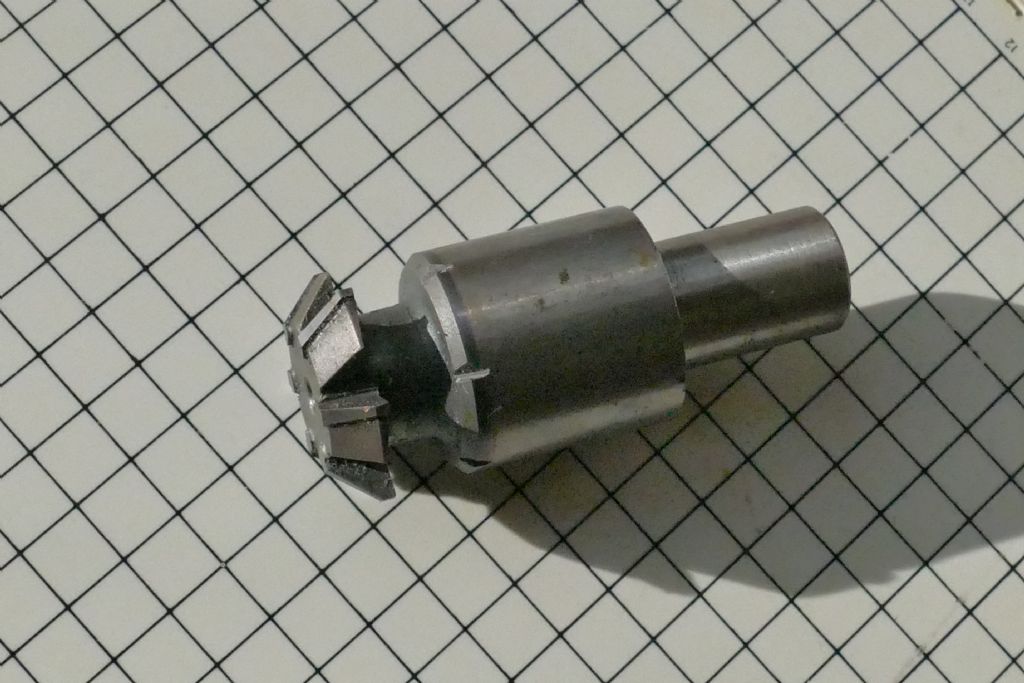
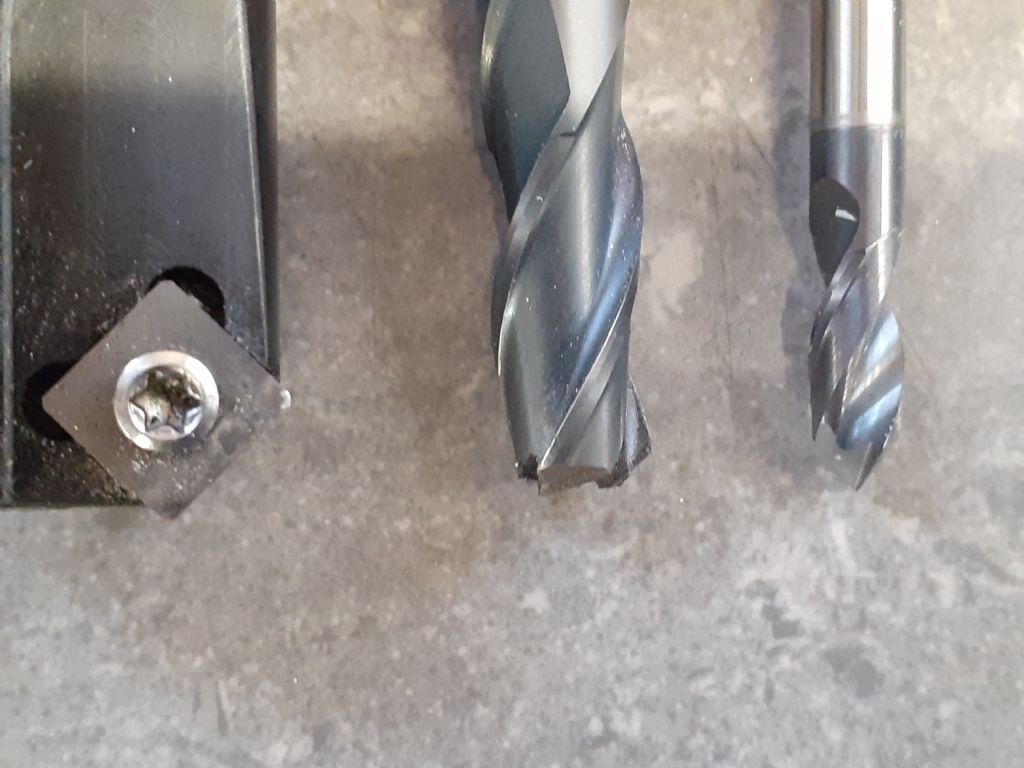
                  The original was probably made with a tool like this. I turned down the shank to Ø20mm to suit smaller collets.

                  p1150528.jpg

                  Martin C

                  #505115
                  JasonB
                  Moderator
                    @jasonb

                    Yes you would need to do a small amount of grinding.

                    I used to work for a building contractors who had Monument Tools (plumbing tools) as a regular client and remember seeing the machine that they had for making keys with various numbers of flats. The work was held like in a lathe and there was a rotating cutter geared to the spindle so it took X number of cuts for each rotation of the blank

                    #505121
                    Ian P
                    Participant
                      @ianp

                      Since you mention holding the work in a square collet block withe the barstock horizontal, why not re-think the relative position of the job to the cutter. I would use the side of an endmill to cut the flats on the 'side' of the work rather than using the endface of the cutter.

                      The cylindrical shape of the cutter will produce a radius rather than a chamfer, its arguably better from a strength POV but I prefer the appearance anyway.

                      Ian P

                      #505122
                      Chris V
                      Participant
                        @chrisv

                        Emgee, thanks yes I might try filing it, then later if it looks rough i can try machining it. Ah yes I was thinking about using the collet nut as the stop but now you mention it i can see that would not work at 45 degrees!

                        Bazyle, Looking at 1/2" end mills online they all seem to have sharp corners? Maybe you can get them with the rounded corners you suggest, or do you mean I should try to grind the radius myself?

                        Martin Connelly, would that cut the flats by feeding it into the end of the bar, or just cut the detailing? Whats one of those cutters called?

                        Right I better get out to the shed!

                        Many thanks!

                        Chris.

                        #505123
                        Ian P
                        Participant
                          @ianp

                          Too late to edit my last post, but confess I replied without properly reading Bazyle's reply which had already covered what I suggested.

                          Ian P

                          #505125
                          Chris V
                          Participant
                            @chrisv

                            Ian P, thank you! My thoughts on this were no I don't understand, repeat, repeat, repeat…ah! b

                            Brilliant, yes got it! (-:

                            Thank you.yes

                            #505126
                            Chris V
                            Participant
                              @chrisv

                              Yes I see now, didn't understand that bit, I think the nut will now act as a stop for when I turn the part round.

                              Thank you all

                              Chris.

                              #505127
                              JasonB
                              Moderator
                                @jasonb

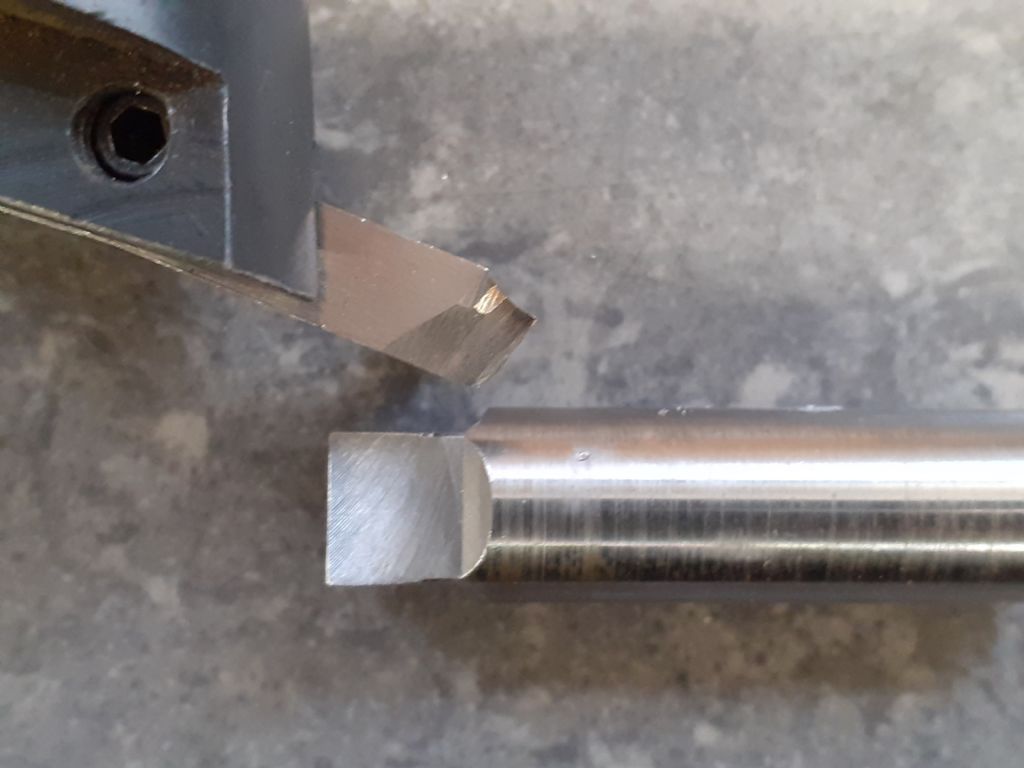
                                This is a Flycut one I just did, found a likely looking toolbit so did not bother to grind anything special.

                                20201103_133837.jpg

                                A few other options would be indexable tool, blunt endmill with corners freehand ground to 45deg or a chamfer mill to do the angle after first machining the flats. Last two could also do it with the work vertical and use it to do the flats and chamfer all at one setting as the sides cut as well as the angled end..

                                20201103_133846.jpg

                                Edited By JasonB on 03/11/2020 13:50:35

                                #505142
                                Vic
                                Participant
                                  @vic

                                  Not sure I’d bother myself but you could cut the flats to size first then go round again putting in a radius with a bull nose end mill if you have one. Quite quick and easy and should look ok?

                                  Edit: Reprofiling the corner of an end mill is not a bad idea if you have some spares. They can come in handy from time to time and I usually do this to old (but still sharp) imperial cutters I’m less likely to use. Grinding a tool from scratch specifically for only four cuts makes somewhat less sense.

                                  Edited By Vic on 03/11/2020 15:32:23

                                  #505231
                                  Steve R
                                  Participant
                                    @steverichardson2

                                    keep it simple and do it as Bazyle suggested. That basically how I did my last one – with the side of an end mill but in a dividing head.

                                    #505247
                                    Martin Kyte
                                    Participant
                                      @martinkyte99762

                                      Definitely bevelled end mill or slot drill. They produce exceptionally smoothe surfaces and take far longer to blunt.

                                      Also you can mill chuck key ends.

                                      regards Martin

                                      #505248
                                      larry phelan 1
                                      Participant
                                        @larryphelan1

                                        For a simple chuck key, is it worth the bother ?

                                        I made a second key for my 4 jaw chuck, just four flats and a tommybar, simple/effective.cheeky

                                        #505252
                                        Clive Foster
                                        Participant
                                          @clivefoster55965

                                          I imagine you could get a sufficiently similar effect shaping the step by passing a suitably angled cutter across the edge in a reciprocating motion.

                                          Hack it out roughly with saw'n file then do the, slow, reciprocating bit on the machine to get them all exactly the same.

                                          Hafta get it right.

                                          If you are the sort of person who likes such things anything more than a thou or two or degree or two error will scream at you every time you pick it up.

                                          Clive

                                          #505259
                                          Chris V
                                          Participant
                                            @chrisv

                                            chuck key 1.jpg

                                            chuck key 2.jpg

                                            chuck key 3.jpg

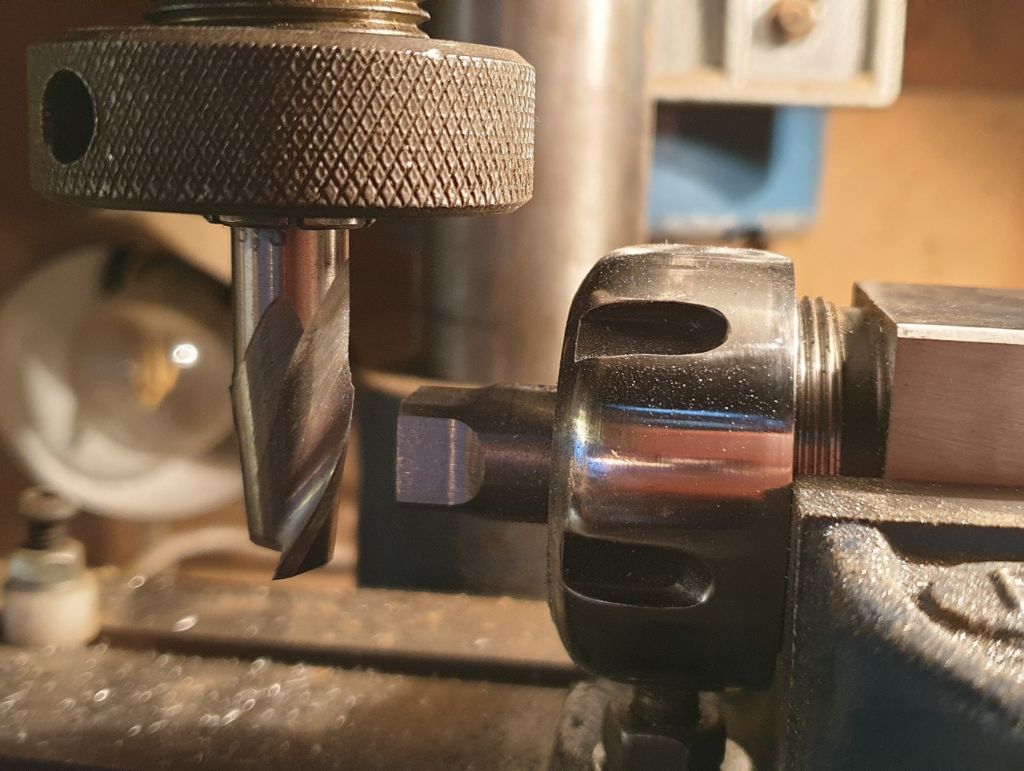
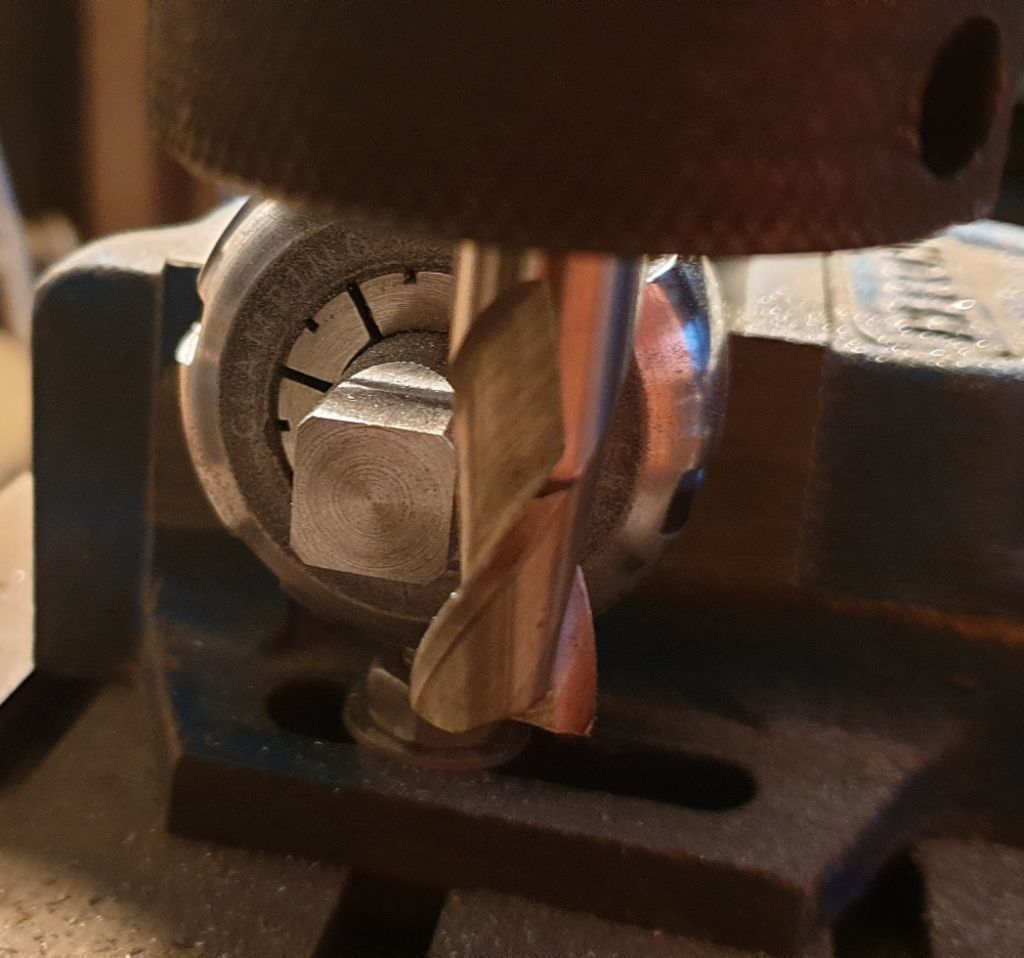
                                            Right then thanks everybody. The photos above show how far I got last night, about 1 hrs worth of milling.

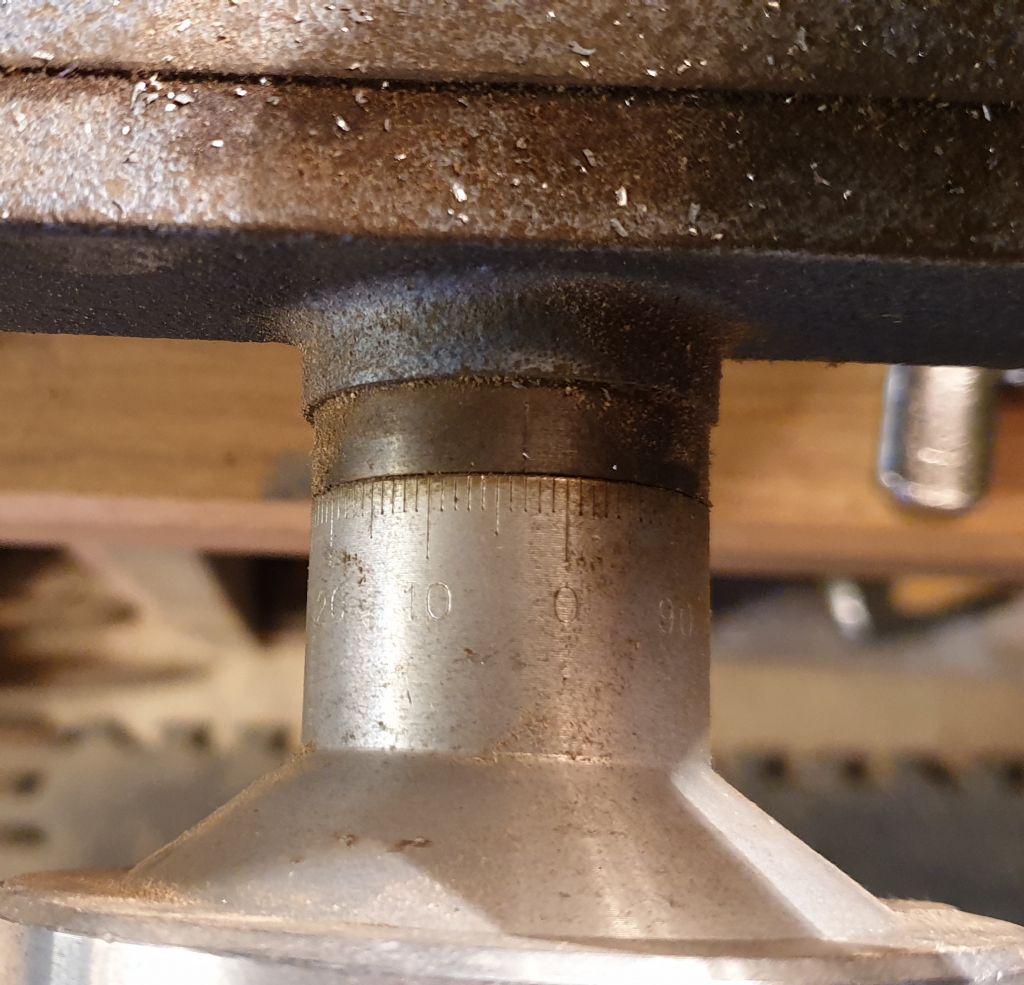
                                            Its a HSS cutter, one I was given, feels sharp but might not be unused. 1600 RPM, as that's what the mill was set at. The material is 16mm dia silver steel, chips are like coarse filings. I was taking off about 8 divisions (8 thou?) at a time. All was going well enough but the further I cut into the bar I'm finding I am having to take finer cuts as the mill seems to protest as I reach the end of my cuts (the radius). On reflection I should have turned the end of the bar down on the lathe to reduce the amount of milling required.

                                            Does the above all look & sound fine?

                                            Chris.

                                            #505265
                                            Hopper
                                            Participant
                                              @hopper

                                              1600 rpm is way too fast for a 16mm (5/8&quot diameter cutter. It will be losing its cutting edge as you go at that speed, which is why its getting harder going.

                                              BAsic formula for HSS cutter with mild steel material is RPM = 400/diameter in inches. So try more like 600rpm or even a bit slower for silver steel.

                                              You should be able to do it nearly in one cut. Or one roughing cut then a final finishing cut.

                                              #505268
                                              Chris V
                                              Participant
                                                @chrisv

                                                Thank you Hopper. Its the material that is 5/8" dia, the cutter is 12mm but get that its still too fast.

                                                The square end will be 1/4".

                                                I have options of 325, 650, 1100 and 1600, so looks like 650 or would 325 be better?

                                                Apologies for being thick but I don't understand the formula, but thank you!?!

                                                Chris.

                                                #505277
                                                JasonB
                                                Moderator
                                                  @jasonb

                                                  For a start the 2-flure cutter is not ideal for edge profiling work, 4-flute would be much better or even 3-flute as a half way measure.

                                                  Say a moderate 20m/min cutting speed for silver steel with a 12mm cutter 526rpm but you could go up or down from that. Probably opt for your 325rpm as there will be a lot of cutter engagement at the end of the cut which can cause chatter.

                                                  Metric formula is cutting speed divided by diameter ( in meters) x Pi so 20 / ( 0.012 x 3.142)

                                                  I'd go with two passes 1mm each and then as the cut gets longer height wise go for 0.5mm for the last two passes.

                                                  Edited By JasonB on 04/11/2020 13:05:04

                                                  #505286
                                                  Ian P
                                                  Participant
                                                    @ianp

                                                    I wrote the following early this morning but got diverted before posting so see that Chris has used what I think is the most straightforward way of cutting the square end. Its still relevant though since his key is only 1/4" square and he is staring with quite large stock

                                                    Ian P

                                                    ———————————————————————————————————————–

                                                    The part in question is only a chuck key but I am totally with Chris's philosophy of making a tool that looks and feels right. Some of the lathe chuck keys I have acquired or seen over the years are abominations and look to have been supplied by the manufacturer just so the chuck can be supplied 'complete'. I would post pictures of some that came with chucks I bought but every one I still have no longer look anything like they when I got them! As an example, a four jaw chuck key 9mm AF had been made out of 18mm diameter stock and only about 60mm long overall. Most but not all, supplied keys were made from parallel bar and only some had the bar waisted down between the handle and the square drive end. I have reshaped the keys to bulk reduce weight,

                                                    The optimum method for making this sort of chuck key would be by forging (followed by grinding if one were a perfectionist). For all practical purposes a key made by milling, filing, chiselling, grinding or any other method to achieve the required shape and size will do the job and work as a chuck key.

                                                    #505301
                                                    Chris V
                                                    Participant
                                                      @chrisv

                                                      Thank you Jason,

                                                      Right I think I should stock up on a few different cutters. I just had another go and boy at 325rpm the mill and I are much happier!

                                                      Another advantage of this simple set up I found is when on the last cut the cutter comes loose in the 2MT collet it didn't ruin the work! Thing is I'm so used to woodwork cutting speeds I'm having to re learn, I shall also periodically check for collet tightness in future!.

                                                      I did look at Arceuro for bevel endmills that might be suitable for my little mill but so far haven't found any?

                                                      Thank you Ian P.

                                                      Yes I agree with all that, in the first photo of this thread I showed 4 chuck keys, the top one is new and the worst to look at, thin, not waisted and look at the mess they made of the end! This was the second key I bought for a chuck I have, neither of them fitted either! Hence my determination to at least try and make a better job, inspired by the bottom key shown of the 4.

                                                      My keys will be waisted, what I should have done was turn the end down on the lathe to reduce the amount of milling, that will be more efficient. I will try that on the second one.

                                                      Cheers

                                                      Chris.

                                                    Viewing 25 posts - 1 through 25 (of 35 total)
                                                    • Please log in to reply to this topic. Registering is free and easy using the links on the menu at the top of this page.

                                                    Latest Replies

                                                    Home Forums General Questions Topics

                                                    Viewing 25 topics - 1 through 25 (of 25 total)
                                                    Viewing 25 topics - 1 through 25 (of 25 total)

                                                    View full reply list.