Have I got 12-28 UNF wrong or has Völkel?

Have I got 12-28 UNF wrong or has Völkel?

Home › Forums › Workshop Tools and Tooling › Have I got 12-28 UNF wrong or has Völkel?

Viewing 25 posts - 1 through 25 (of 30 total)
  • Author
    Posts
  • #864535
    Bill Phinn
    Participant
      @billphinn90025

      I’ve got about a dozen Völkel threading dies, mostly bought new. I’ve never had a problem with any of them – until now.

      I’m attempting to make some knurled thumb-screws in 12-28 UNF using a recently acquired new Völkel 20mm round solid die.

      No matter how gradual and long a chamfer/taper I placed on the end of the turned-down-to 5.48mm silver steel rod (not in its heat-treated state, obviously) I couldn’t get the die to start even with a spring tap follower held in the tailstock pressing on the back of the die stock (I’d have to show you to explain how I do this). All I ended up with was a piece of rod with a dog point on the end, even after attempting to thread under power.

      For a sanity check, I tried the die on an existing steel 12-28 thumb screw made commercially many years ago; I couldn’t get the die to start on that either.

      For a further sanity check, I tried threading a piece of 5mm brass rod with the die. Even though 5mm is nearly 0.5mm below the major diameter of 12 UNF and the rod was given a long taper at the tip, the die was difficult to start. I cut the thread successfully but cutting felt noticeably more difficult than cutting, say, an M6 thread with the appropriate M6 die.

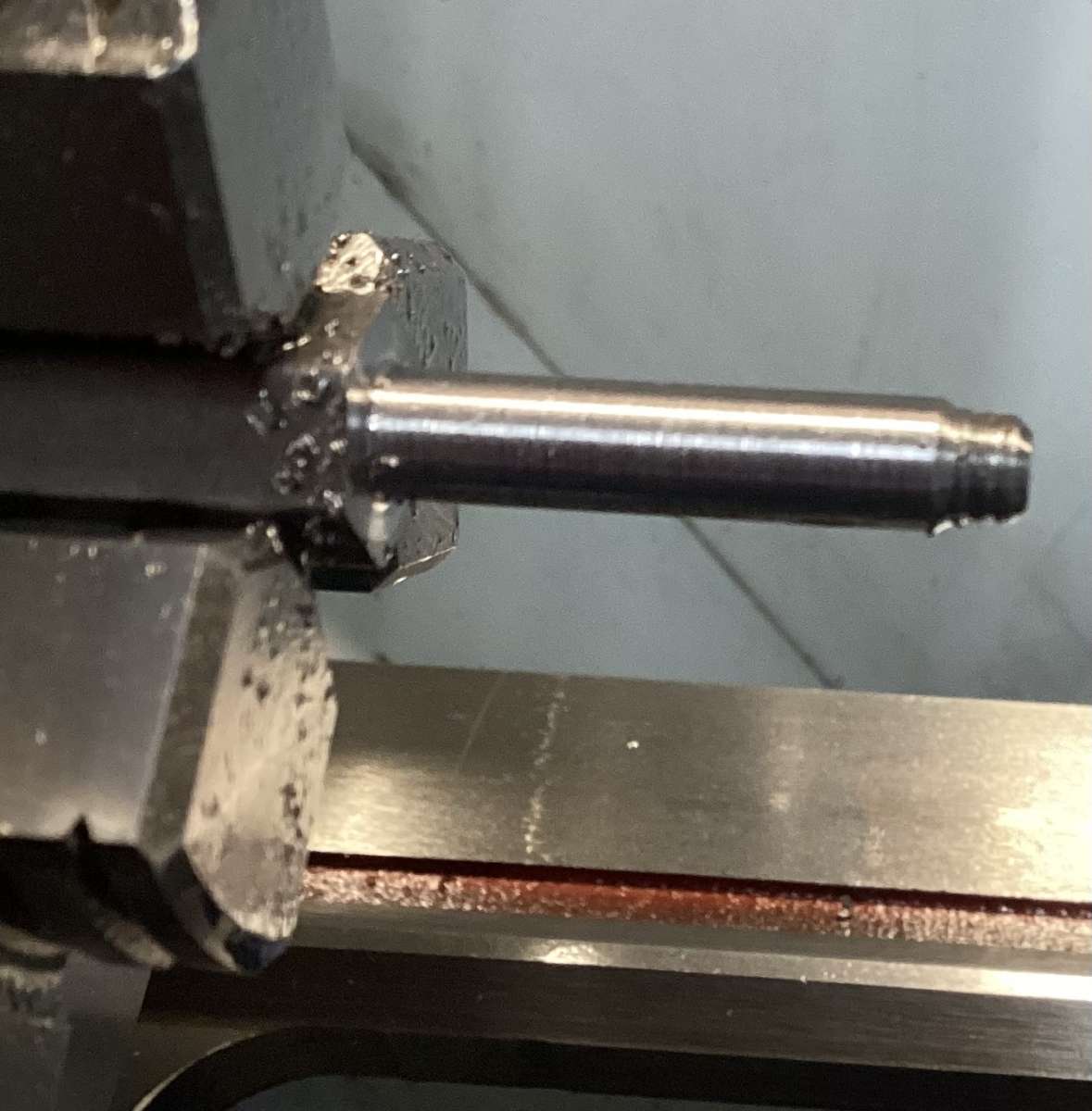
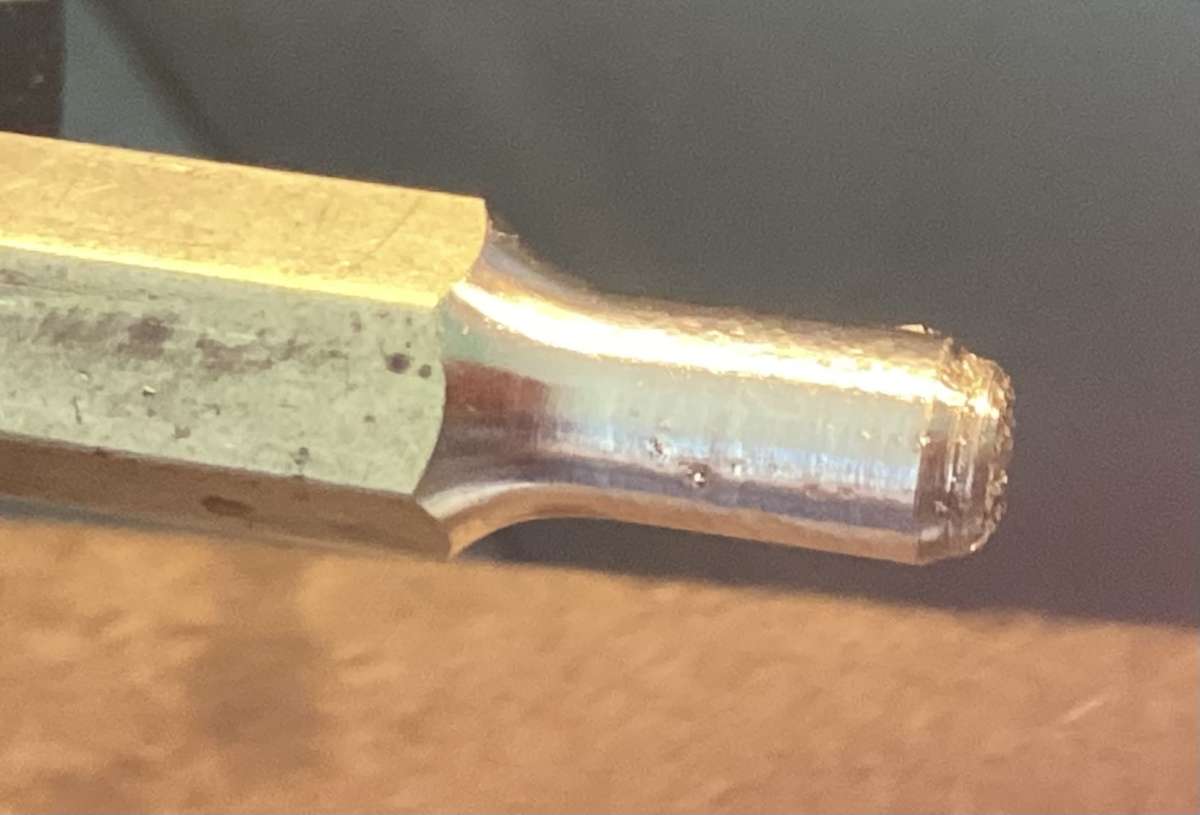
      The only way I managed to cut any kind of thread on the silver steel was by making the solid die into a split die using a diamond cutting wheel and opening up the die as far as possible in the die stock. It cut the thread but it was hard going, and I was disturbed to see how chipped and torn the threads were, especially from about 15mm in (see image).

      I know this is silver steel, which is pretty tough even in its off-the-peg state, but the die teeth clearance just did not seem to be wide enough to cut a standard 12 UNF thread. When I shrank the die down again by loosening off the screw in the split I simply couldn’t turn the die on the existing threads in order to “cut to final size”; threading with the split fully opened had already cut the thread to final size effectively, as confirmed by its easy fit into the female thread the commercial thumb screw mentioned above belonged in. Another disturbing detail was that my now threaded silver steel had a major diameter of 5.35mm whereas before threading it had been 5.48mm.

      Is this just an out of spec example from Völkel , or is there something I’ve overlooked?

      P.S. In the picture, the tapered/chamfered end of the rod has now been sawn off.

      IMG_2348

      #864557
      Andrew Crow
      Participant
        @andrewcrow91475

        Hi Bill, it sounds as if you have got the one started on Friday and slipped through unfinished on Monday morning. Are the dies supposed to be a ground finish, it maybe hasn’t had the final grinding done after heat treatment.

        Andy


        #864594
        Bill Phinn
        Participant
          @billphinn90025

          Thanks for your reply, Andrew.

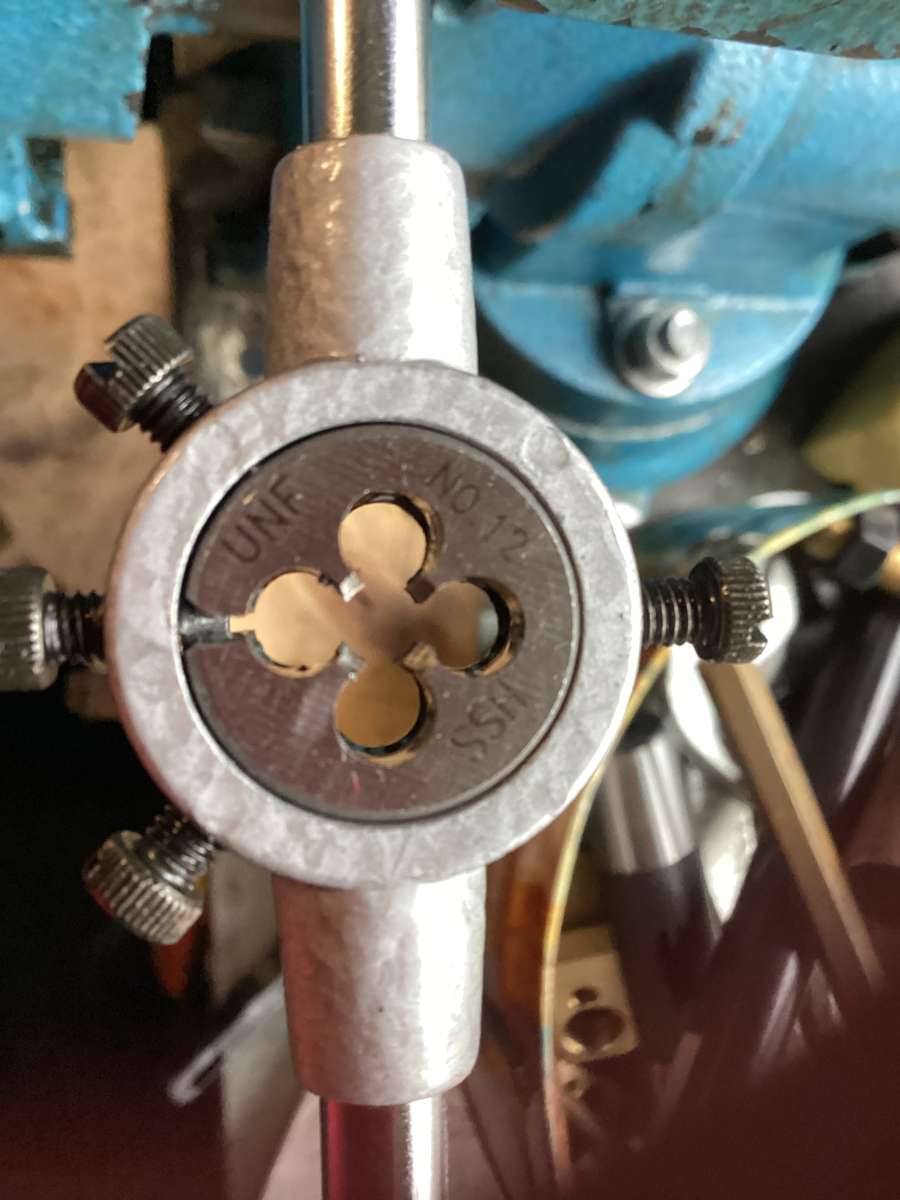
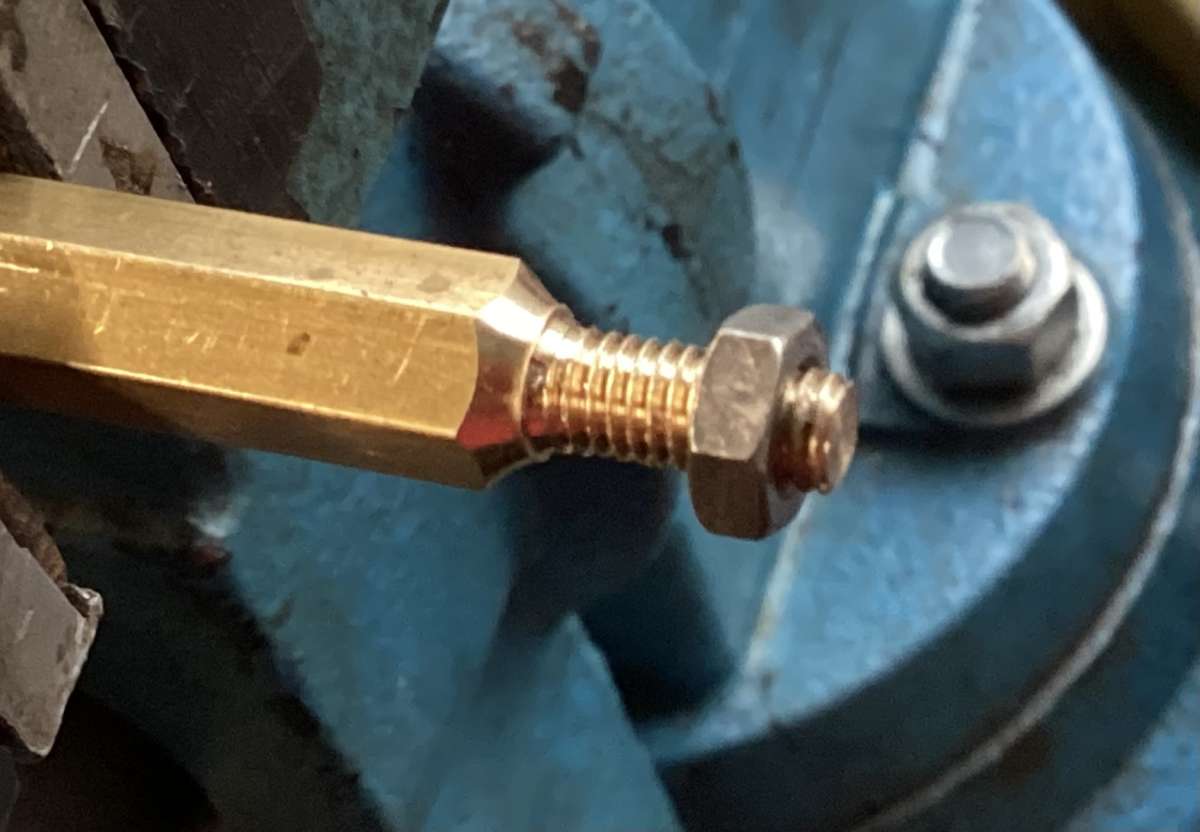
          I’ve posted a couple more pictures, one showing the dog point achieved on a piece of mild steel turned down to 5.48mm. There was no way I could get that die to start even when the split was opened as far as possible.

          The gap between opposite sets of teeth in the die’s resting state is in the range 4.2-4.25mm. This is significantly less than a 12-28 thread’s minor diameter.

          If anyone is willing to try the die for himself to confirm who’s failed here (me or the manufacturer) I’ll happily post it out.

          IMG_2349IMG_2350

          #864599
          peak4
          Participant
            @peak4

            Have you measured the tpi of the thread you did manage to cut?

            Might it be a mis-labelled No.10 32 tpi?

            Bill

            #864602
            Bill Phinn
            Participant
              @billphinn90025

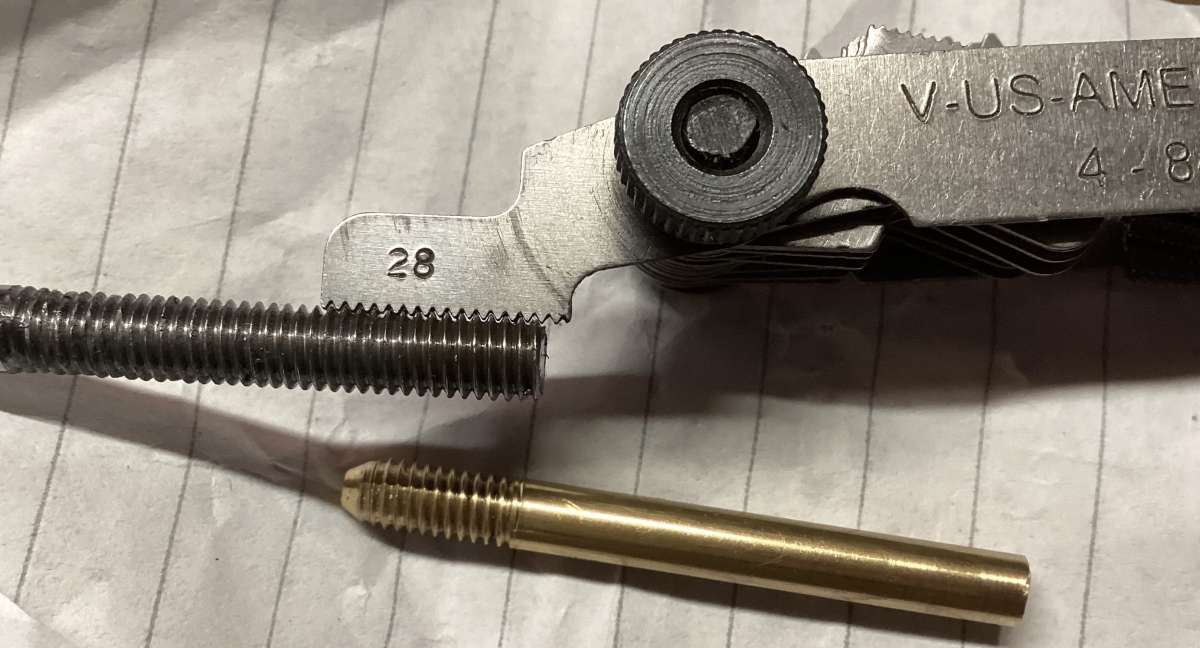
              Bill, thanks for the suggestion. I did momentarily wonder something similar myself, but it’s not the answer.

              IMG_2352

              #864604
              Bazyle
              Participant
                @bazyle

                Did you try it from both sides? Some badly made dies still have burrs from the hole drilling on one side of the teeth.

                #864685
                Howard Lewis
                Participant
                  @howardlewis46836

                  I did have a die which had been marked on one side, but the lead in chamfer was on the other. So it needed to be used “Wrong way round”

                  Worked O K once the problem was spotted, but confusing to begine with

                  Howard

                  #864687
                  Bill Phinn
                  Participant
                    @billphinn90025

                    Thanks for your replies, Bazyle and Howard.

                    The die is chamfered both sides and there is no difference in performance either way round.

                    I’ve largely circumvented the problem for the time being by single-point threading 90% of the job with a partial form insert and using the die opened to its maximum aperture just to finish the thread. More work than I’d hoped for, but I got there in the end.

                    I’d hoped initially that I might be mistaken and it was a 1BA thread I was dealing with (I already had a 1BA die that was known to work straightforwardly) but no such luck unfortunately.

                    #864772
                    Hollowpoint
                    Participant
                      @hollowpoint

                      Since the die wasn’t split, maybe it is a die nut intended to chase threads rather than cut them.

                      #864782
                      JasonB
                      Moderator
                        @jasonb

                        Most manufacturers these days produce far more solid dies than the old traditional split dies. Also just like Volkel they also make dienuts for thread repair.  See the note at the bottom of page 170

                        https://voelkel.com/media/4e/69/b8/1788161995/VD%2023%20DE-EN.pdf?ts=1788161995


                        Same with Dormer, just about all solid dies. Th eOP may want to look at page 258 where it says stock dia should be less than the major dia of  a thread which may be worth a try.

                        https://5wyuco84ao39w9tsgkkmnmx.blob.core.windows.net/cms/THREADING-2024-EN.pdf

                        #864930
                        Bill Phinn
                        Participant
                          @billphinn90025

                          Thanks for the links, Jason.

                          Today I reduced the diameter on a piece of brass to 5.4mm. As my earlier experiment with a piece of 5mm brass referred to above suggested would happen, a reduction to 5.4 didn’t allow me to start the thread even with the split opened as wide as possible.

                          Also today I die-threaded two brass lengths in 10-UNF and 1BA, both dies being practically new. The turned diameters were the full major diameter for each of these two threads, the starting taper was minimal, and yet the dies breezed their way along the rods with very little effort.

                          The first photo shows the dog nose effect produced by the 12-UNF die at 5.4mm.

                          The second photo shows the minimal taper I needed on the end of the 10-UNF rod in order to start and complete the thread at full major diameter.

                          This 12-UNF die is undoubtedly out of spec., and I have lost some confidence in Völkel products.

                          IMG_2358

                          IMG_2360

                          #864934
                          JasonB
                          Moderator
                            @jasonb

                            Not that then, I seldom reduce the dia or use much in the way of a chamfer.

                            Have you contacted Volkel to see what they have to say?

                            #864935
                            Hollowpoint
                            Participant
                              @hollowpoint

                              It’s not a left hand thread is it?

                              #864943
                              voelkel
                              Participant
                                @voelkel

                                Hi Phil,

                                VÖLKEL here from Germany.

                                We came across your post and had our technical team take a closer look at what you described. Thanks for providing so much detail, as that makes it much easier to assess what may be happening.

                                A few things stand out to us.

                                First, the die you are using is primarily intended for manual thread cutting. Regardless of the material being machined, this type of die is not designed for machine use. As you are cutting the thread on a lathe, a gun-nosed die made specifically for machine use would normally be the better choice, especially on a longer thread, as it directs the chips forwards rather than allowing them to collect in the chip holes.

                                The starting diameter of the plain bolt is also worth looking at. You mentioned turning the blank to 5.48 mm, which is the nominal diameter of the thread. For actually cutting the external thread, however, we would recommend starting slightly below this. For #12-28 UNF, around 5.38 mm maximum would be our recommendation.

                                That may also explain the slightly torn appearance at the thread crests in your photo. Starting at the full nominal diameter means the die has to cut right into the very tips of the thread profile, which can make the result less clean, particularly in tougher materials.

                                The 5.35 mm diameter you measured after cutting the thread is not necessarily a problem either. It is within the normal tolerance range for a #12-28 UNF external thread, so that measurement alone would not suggest that the die is cutting undersize.

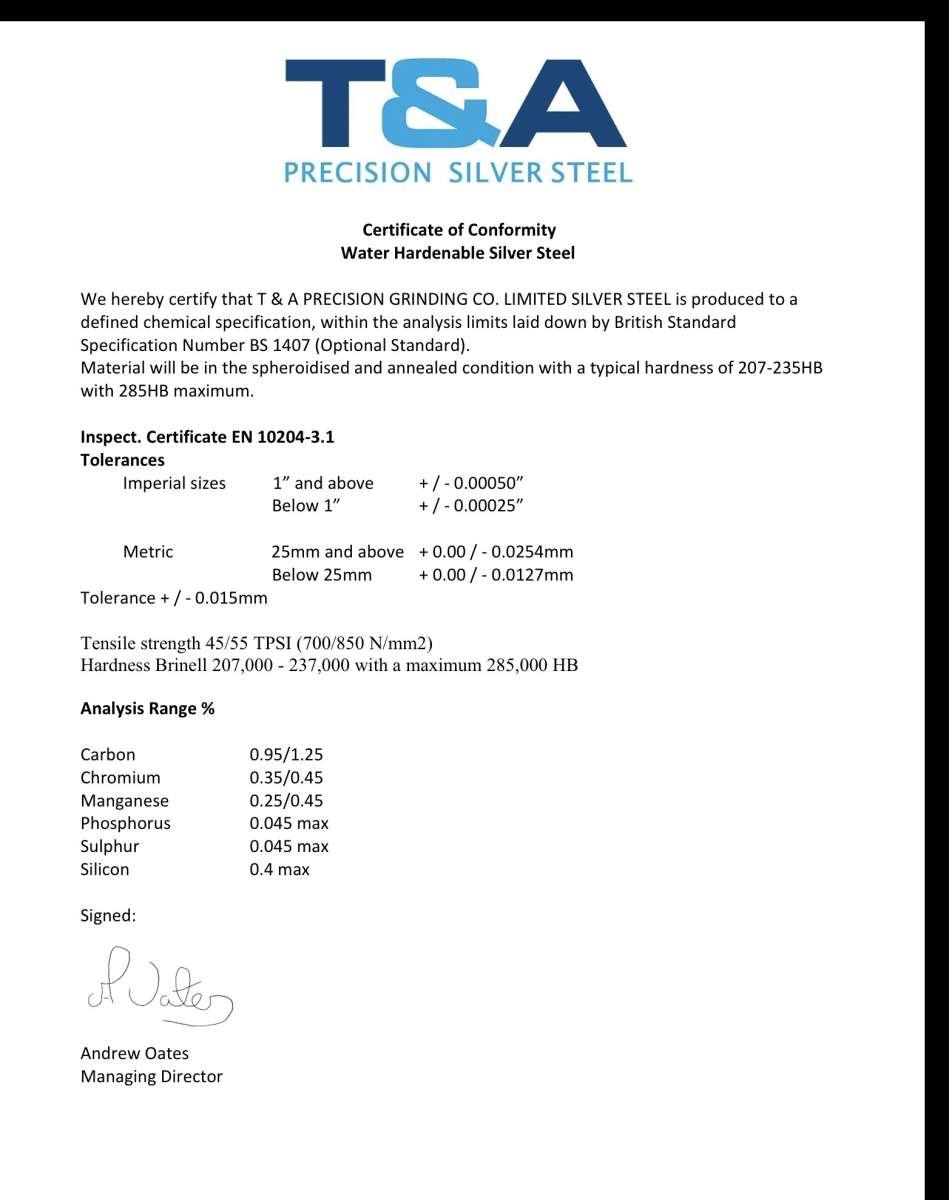
                                One thing we would be interested to know is the exact material you used. You mentioned “silver steel”. Do you know the exact grade or specification? The term can refer to alloyed tool steels, depending on the grade containing elements such as chromium and sometimes vanadium. While there are certainly materials that are more difficult to machine, this die is optimised for manual use in unalloyed to low-alloy steels and can reach its limits with more demanding materials. Using it outside its recommended material range also increases the risk of tool damage.

                                Also, trying the die on an existing commercial thread is not always a reliable way of checking it. Both the thread and the die have their own manufacturing tolerances, so one die may remove a little material from an existing thread while another may hardly touch it.

                                We made a short video about exactly this point if it is of interest:
                                https://youtu.be/0IO_roY3aAI

                                If you can let us know the exact grade of the silver steel and, ideally, the article number or marking on the die, we’ll be happy to look into it a little further.

                                Best regards from Germany,
                                VÖLKEL Threading Solutions

                                #864973
                                Michael Gilligan
                                Participant
                                  @michaelgilligan61133

                                  Great to see such detailed comments from a supplier

                                  Welcome aboard, VÖLKEL

                                  MichaelG.

                                  #864998
                                  JasonB
                                  Moderator
                                    @jasonb

                                    Herr Volkel, welcome to the forum


                                    I’m sure Phil will give you the details but I was interested about your comments of use on a lathe.

                                    For the 40yrs that I have been a model engineer and even at school before that it has been common practice to use “hand” dies on the lathe, I am not sure if Gun dies existed back then. Either the spindle is rotated by hand or in more recent times with the advent of variable speed lathes the spindle is run slowly at say 50-70rpm and acceptable threads can be cut.

                                    I certainly use this method with your own dies along with those by other brand name makers and have not had problems with both split and solid dies. Yes as you say  on materials that can produce long swarf you do have to be careful not to clog the die as it is not being rotated backwards to break the swarf.

                                    Have we all been doing it wrong for years?


                                    This would be a fairly typical composition of what in the UK is known as Silver Steel

                                    Metric Silver Steel 333mm Long

                                    #865019
                                    bernard towers
                                    Participant
                                      @bernardtowers37738

                                      yes quite agree I have been using std dies in the lathe for close on 60 years and do not have this trouble at all. i use a mandrel handle or powered with speed control. I would say that silver steel is the most likely candidate for threading issues.

                                      #865034
                                      old mart
                                      Participant
                                        @oldmart

                                        Top marks for VOLKEL, this will attract many buyers simply because they are not too busy to help small customers, rather like ARC was.

                                        I favour split dies and make sure the bore of the diestock is big enough to allow at least 0.1mm, 0.004″ increase in die diameter for the first cut. Then a second cut at slightly smaller setting until the nut fits with minimum slop. A quality tapping oil is always a great help. Silver steel does need sharp cutting edges on dies and taps.

                                        #865055
                                        voelkel
                                        Participant
                                          @voelkel

                                          @JasonB

                                          No, certainly not. We would not say that you, or anyone else here, have been doing it wrong for 40 or 60 years. In fact, if you have been using standard round dies successfully on a lathe and achieving satisfactory results, there is absolutely nothing wrong with that.

                                          Perhaps we phrased that point a little too categorically in our previous reply.

                                          What we wanted to make clear from the manufacturer’s perspective is that this particular round die is optimised for manual use and is only suitable for machine use to a limited extent. That does not mean it cannot be used successfully on a lathe. However, compared with a proper machine die, the geometry is not specifically designed for this application, particularly with regard to chip evacuation, cutting performance and tool life.

                                          And thank you for the link regarding Silver Steel. That is very helpful and gives us a much clearer picture of the material being used.

                                          Looking at the typical composition, we agree that the Silver Steel is very likely an important factor here. This particular die is our standard version and is primarily intended for manual threading in unalloyed to low-alloy steels. Silver Steel places considerably higher demands on the cutting edges, so cutting performance, surface quality and tool life can all be affected.

                                          We would therefore agree that the combination of this particular die and Silver Steel is not ideal and could explain much of the difficult cutting behaviour and the torn thread surface Phil experienced.

                                          That said, Phil also mentioned difficulties starting the die in brass and mild steel, so we would not want to attribute every observation to the Silver Steel alone without actually examining the die.

                                          @old mart

                                          And thank you for the top marks – we really appreciate that.

                                          The method you describe is interesting too. Removing the material progressively in several cuts can certainly help with chip control and thread quality, although it is of course a rather time-consuming approach.

                                          The only thing we would add is not to make the individual cuts too small. Some steel grades can develop local work hardening when only very thin layers are removed. Silver Steel can show this tendency to some extent as well, although there are other steels where the effect is considerably stronger.

                                          We would not regard this method as a general prerequisite for producing a good thread. However, if the tool is not ideally suited to the particular application and you have the time to work in several stages, this kind of approach can certainly help in individual cases.

                                          #865103
                                          mark costello 1
                                          Participant
                                            @markcostello1

                                            WOW, Customer Service with a capital “S”! Wish They had a branch across the pond.

                                            #865129
                                            Bill Phinn
                                            Participant
                                              @billphinn90025

                                              Thanks to everyone for the further replies, and a special thanks to Völkel for being sporting enough to contribute to this public discussion. Thanks to them also for the email they sent me.

                                              I feel there are two separate issues that contributed to the problems I encountered in this case.

                                              The first one is my decision to thread silver steel (please see the image below showing its provenance) with a standard HSS die rather than, say, an HSS-E die. In my defence, I chose silver steel only because I had some 5.5mm in stock and I had become accustomed, from following instructions in Hemingway kits, to think nothing of using a standard HSS die to thread annealed-state silver steel.

                                              It’s fairly apparent from the first image I posted that the tearing to the thread flanks and crests is more severe the further along the stock the die has travelled. Given the relative smoothness of the finish in around the first third of the thread I cut, it’s unlikely that the unusual tightness of the die on the work I experienced can alone be responsible for the worsening tearing of the thread flanks and crests as the die progressed, especially when the turning to diameter had been done without tailstock support, which with thin material like this would tend to produce a marginally larger diameter at the tailstock end than at the headstock. I confess chip evacuation wasn’t something I was very focused on whilst my mind was preoccupied with how unusually difficult it was feeling to get the die to begin cutting and move along the part.

                                              The other issue I feel must be at work here though is the critical aperture, as manufactured, between opposing sets of teeth on the die. I own around a dozen Völkel HSS dies up to 1/2” BSP size, and getting on for a hundred other dies by different manufacturers, most having been purchased new or nearly new over the last ten years. Although there are people on this forum with far more experience of die threading than I’ve got, I have to say I’ve rarely experienced such difficulty threading brass and mild steel with a quality branded HSS die as I did with this one. I have no doubts about the die’s cutting power and toughness (the teeth have no detectable wear on them after their encounter with silver steel), but the consistent difficulty I encountered starting the die, even after opening the shop-made split all the way, and the difficulty of completing the threading operation mean I do have remaining doubts about the cutting diameter of the teeth on this 12-UNF die; there simply does not seem to be enough clearance to cut material turned to anything close to the basic major diameter, regardless of whether the material is something probably too demanding for the die like silver steel, or something undemanding like brass or mild steel.

                                              Being curious by nature, and relatively unconstrained in my workshop activities by cold hard economics, I’ve ordered two other 12-UNF dies by other brands, one a solid die and one a split die. I will report back when I’ve received these and had a chance to try them out.

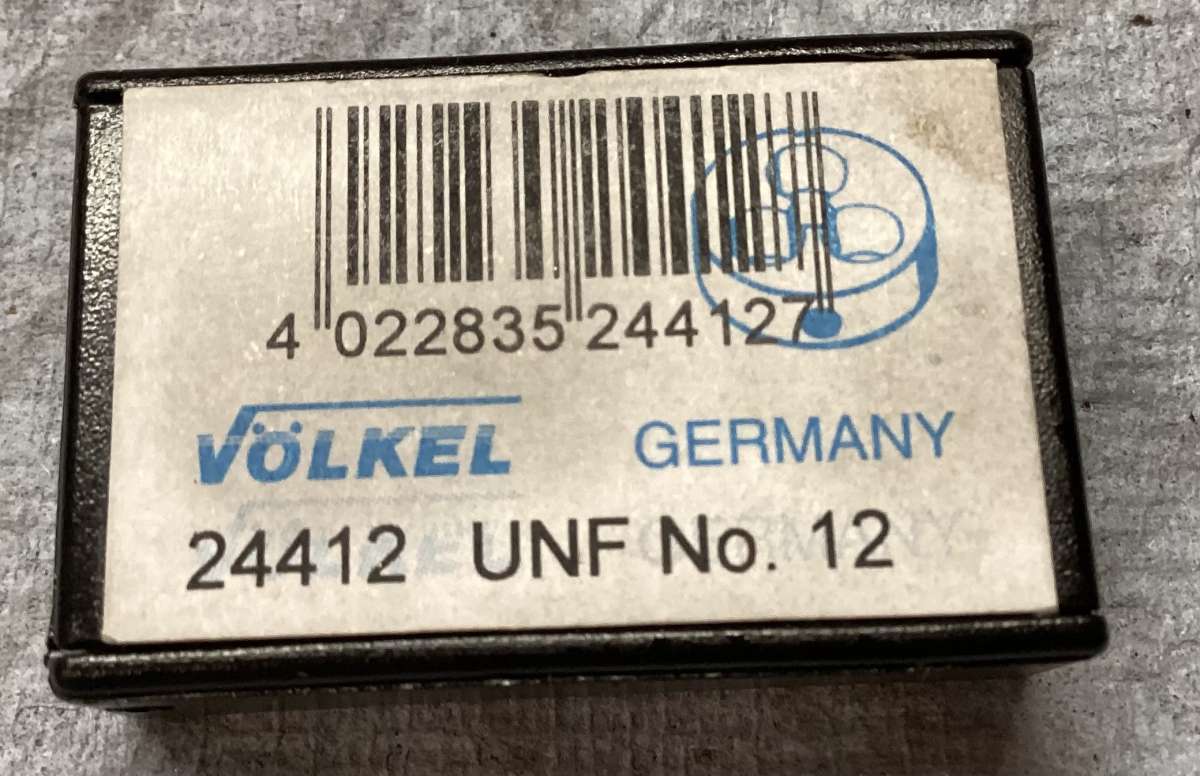
                                              For Völkel‘s information, I have posted a photo of the box my die came in.IMG_2366


                                              IMG_2367

                                              #865141
                                              JasonB
                                              Moderator
                                                @jasonb

                                                It would be interesting if anyone else with a #12-28 die could see what size drill shank would fit down the middle and measure that and post here. Don’t think I have one.


                                                Phil, any chance that 5.5mm stock was actually 7/32″ and you just took a 0.01mm cut off it which would have left an oversize piece of Silver steel? With flex you may not have taken anything off the diameter at the end.


                                                As for HSS-E that is a recent thing and model engineers have been using generic HSS dies for years to thread things including Silver Steel so maybe not ideal now or in an industrial enviroment but I can’t see it being a major factor in the problem.

                                                Clogging again not going to be the reason the die won’t start but could contribute to the torn final part of the thread as could a reduction in cutting fluid as you got near the end.

                                                #865173
                                                Andrew Crow
                                                Participant
                                                  @andrewcrow91475

                                                  Hi Jason, just to answer your question about the core of a 12 x 28 die, I have one, it’s a split die made by LAL and is probably about 50 years old I haven’t cut silver steel with it but it’s OK on other steel. The largest drill I could get through when fully open was 4.3mm, when not in the die holder it was 4.1mm.
                                                  Andy.

                                                  #865180
                                                  JasonB
                                                  Moderator
                                                    @jasonb

                                                    Interesting, that is even smaller than Bill’s die.

                                                    I could only find a 1/4-28 which should be proportionally the same a spiches match and I would say it wil pass 5.25mm which is again less than the 5.36mm that tables give. It is from an old cheap Draper set so not likely to be as good as LAL

                                                    #865184
                                                    bernard towers
                                                    Participant
                                                      @bernardtowers37738

                                                      Volkel, when you mention machine die what exactly do you mean? die head etc?

                                                    Viewing 25 posts - 1 through 25 (of 30 total)
                                                    • Please log in to reply to this topic. Registering is free and easy using the links on the menu at the top of this page.

                                                    Latest Replies

                                                    Viewing 25 topics - 1 through 25 (of 25 total)
                                                    Viewing 25 topics - 1 through 25 (of 25 total)

                                                    View full reply list.