An efficient slot method

An efficient slot method

Home Forums Beginners questions An efficient slot method

Viewing 25 posts - 1 through 25 (of 34 total)
  • Author
    Posts
  • #7492
    pgk pgk
    Participant
      @pgkpgk17461
      #181097
      pgk pgk
      Participant
        @pgkpgk17461

        OK I can see lots of ways of doing this – for this example a slot full width 50mm across and 30mm wide.

        The question is about speed of getting it done and tool sparing.

        So first option might be to plunge cut nibbles of say 3mm with a 12mm endmill and then tidy up sides and depth compared to slow side cutting with an endmill – would take lots of coolant and a v slow feed or say turning the part on it's side and chain drilling where one can and hand cutting the rest before endmill tidying. We'll ignore having some massive punch handy but I assume one could chisel it?

        or how about modifying the grind on a fly cutter to be a bit more like a boring bar and progressively cut with that?

        Doubtless there's other ways too.. but the question is best for tool economy (a fly cutter re grind easy enough or even ordinary twist dril sharpenings.. but endmills not so easy without jigs) and speed…..

        #181098
        pgk pgk
        Participant
          @pgkpgk17461

          Sorry- forgot to give an example depth – say 15mm

          #181099
          roy entwistle
          Participant
            @royentwistle24699

            Can someone translate this into English Also what material etc

            #181102
            Brian Wood
            Participant
              @brianwood45127

              I am equally confused as what this task refers to, but faced with a job like that much of the hard work could be done with a shaper using a limited tool path and then cleaned up at the end under a suitable end mill

              Brian

              #181103
              Ady1
              Participant
                @ady1

                Get a shaper?

                #181107
                Neil Wyatt
                Moderator
                  @neilwyatt

                  What will take you further before your shoes wear out – running or walking on tip-toe?

                  I'm increasingly appreciating that 'tool sparing' is false economy. Industry don't 'spare tools' yet they get more use out of them than we do!

                  Equally, drills seem to last remove vast amounts of metal very quickly and last ages before needing attention.

                  Is this because we all work drills nice and hard, but treat milling tools with kid gloves?

                  If you only use the very end of a mill, is it any wonder it wears rapidly as all the work is done by one little bit of it.

                  Slow feed rates promote rubbing over cutting and reduce tool life.

                  OK, our machines are less rigid than industrial ones, but I have noticed that stiffening up my X2 mill didn't just mean better results, it means faster working and less tool wear.

                  Make the tool work and use a decent length of the flute, and you will be surprised.

                  Neil

                  #181111
                  pgk pgk
                  Participant
                    @pgkpgk17461
                    Posted by roy entwistle on 25/02/2015 09:25:20:

                    Can someone translate this into English Also what material etc

                    Cheers… make me feel good asking a question.

                    It's a slot across a piece of mild steel.. and a question as to possible methods to be tool sparing. Yeah if I had a hundred to do then doubtless something like a nice horizontal mill and wide cutter, flood coolant etc But this is reality for a hobbyist – Jeez!

                    Driving tools hard sounds good..I managed to burn one up – which wa fine as a learning experience of how hard i can push them – and I have no doubt that the more rigid, less vibration machinery will do a beter job..presumably also better grade of endmill. Or just send all ones parts away to be made and just bolt them together. or buy a finished product and don't bother…

                    Somewhere there has to be compromise and I was trying to learn

                    #181119
                    magpie
                    Participant
                      @magpie

                      Hi pgk. Now you know why a lot of folk have left this site and gone to MadModders. I still like to visit here to see how lots of folk on here work to an accuracy of one atom. At least that is what they want us all to believe.

                      Cheers Derek.

                      #181121
                      JasonB
                      Moderator
                        @jasonb

                        Is it full depth eg 15mm thick material or a 50x 30 pocket that is open on one side or two?

                        How big is the overall part?

                        Square or rounded internal; corners.

                        Best put a drawing on teh forum as unless we know better what you are trying to do then we could all be suggesting things that won't work. Also an idea of your equipment would help. Just a simple pencil sketch and take a photo will do.

                        Edited By JasonB on 25/02/2015 11:18:45

                        #181126
                        pgk pgk
                        Participant
                          @pgkpgk17461

                          Jason,

                          It is a theoretical question.. just a slot fully across a piece of mild steel bar stock, say 30 to40 mm thick, then 50mm wide and obviously longer than the 30mm slot width.

                          I happen to have a chester lux mill.. no power feed. From my own experience I know that tryign to mill such a slot with anything much wider than a 12-14mm endmill makes my machine shake. Equally a slow enough lateral feed full depth with a cheapo endmill generates more friction heat and is slower than plung cutting nibbles away. I have no experience of say a roughing end mill compared to a cheap chinese HSS one.

                          The whole thing about a hobby is that generally we have time to play as opposed to production speed and wages. So if there is an economic way of going about such slots.. that my question.

                          I did notice in one of your other threads you used a wide indexed endmill.. can you feed and surface away the depth quicker with something like that for instance?

                          pgk

                          I don't have flood coolant on it at the moment (a chester cockup on parts) so taking my time, brushing swarf away and spraying coolant and plung cutting is doing the jobs I wanted to do but that doesnlt stop me wanting to learn a better and more economic way.

                          #181127
                          roy entwistle
                          Participant
                            @royentwistle24699

                            pgk pgk

                            Sorry if I was too abrupt but honestly have you read the posting as it stands ? As written it does not make any sense or at 81 am I losing it ?

                            Roy

                            #181134
                            pgk pgk
                            Participant
                              @pgkpgk17461
                              Posted by roy entwistle on 25/02/2015 11:50:38:

                              pgk pgk

                              Sorry if I was too abrupt but honestly have you read the posting as it stands ? As written it does not make any sense or at 81 am I losing it ?

                              Roy

                              fair enough.. it makes sense to me.. but then i know what i mean

                              Have my subsequent posts made it clearer?

                              #181135
                              Chris Richards 3
                              Participant
                                @chrisrichards3

                                It makes sense, what he is asking is how do I remove lots of metal without scrapping a £10 end mill on one job that he doesn't have all day to do.

                                My guess is experiment with spindle speeds, most economic way I have found is rather than buy 1x 12mm cutter 1x 10mm and 1x 8mm cutter etc.. is to buy a stack of say 10mm cutters that way once you have found correct speed for the cutter and feed rate you don't waste first half hour of the job faffing about burning them up also milling on small machines can be fairly slow paced.

                                #181141
                                JasonB
                                Moderator
                                  @jasonb

                                  Well if it were me I'd pop in a 12mm 4 flute cutter (though a 16mm should be OK on your bigger Lux.)

                                  Set the cutter so it is just inside one edge of tehe 30mm width and cut right across 3mm deep, repeat 4 more times until you get to just short of the 15mm depth. Move over 9mm and take another five 3mm deep cuts, move over just under 9mm and take another five 3mm cuts which will have left you just short of your finished width and depth.

                                  Now set the cutter to 15mm depth and bring one sid eof teh slot to your finished position taking 0.25mm cuts so should only need a couple to get to the line, move over 9mm to skim the bottom level and then start full depth on the other side with 0.25mm cuts until you reach your 30mm width.

                                  If size is not critical you can start on the line as a small amount of tool deflection won't be worth compensating for.

                                  If it was a bit of 15mm bar you wanted to take a notch 30×50 out of the side then I would stitch drill and then go back with a mill to tidy up


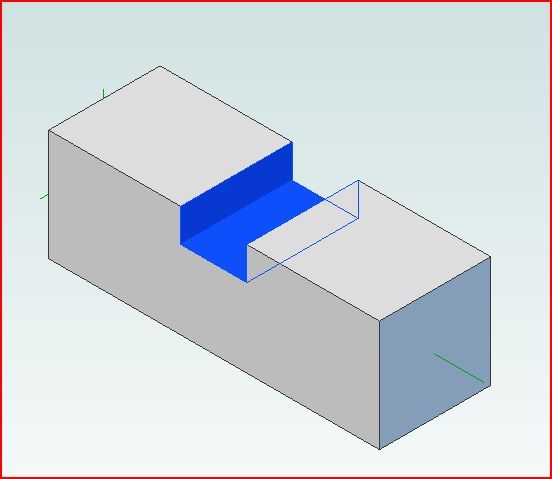
                                  Job as I understand it say 50×50 steel bar, cut 30mm wide x 15mm deep right across the 50mm width

                                  slot.jpg


                                  J

                                  Edited By JasonB on 25/02/2015 13:19:16

                                  #181145
                                  Brian Wood
                                  Participant
                                    @brianwood45127

                                    Dare I say it, well yes why not?

                                    A really cheap alternative is to rough saw it out with a hacksaw and then use an end mill to square the sides and depth to specification.

                                    The sort of approach that was used in school workshops when I were a lad; the only real difference then was to finish the job with a file.

                                    Brian

                                    #181147
                                    Nicholas Farr
                                    Participant
                                      @nicholasfarr14254

                                      Hi, if it is as jason has suggested in his drawing, I was thinking much the same way as Brian has said. However I would think about chain drilling a few holes along the bottom of the slot and cross ways to the bar very close together and then just saw down the sides into the two holes furtherest apart and then the lump should be able to be knocked out with a hammer a chiesle and then tidy to size on the mill.

                                      Regards Nick.

                                      #181151
                                      Ady1
                                      Participant
                                        @ady1

                                        I happen to have a chester lux mill.. no power feed. From my own experience I know that tryign to mill such a slot with anything much wider than a 12-14mm endmill makes my machine shake.

                                        On a lathe you can switch to the backgear to do most of the metal munching work with a bigger tool… then go hi-speed for the final passes

                                        The great thing about backgear is the lack of heat generated and no vibration issues

                                        Edited By Ady1 on 25/02/2015 14:24:56

                                        #181156
                                        pgk pgk
                                        Participant
                                          @pgkpgk17461

                                          Jason's drawing is correct.

                                          Using mild steel cutting speed 100sfpm for a 12mm endmill would be 800 rpm .. nearest speed bands were either 560 or 980.. so 560rpm selected. I found that more than 0.25mm cutting depth even on a new 12mm cutter (ither 2 or 4 flute) gave rumbles and judder i didn't like although, yes, if I had to i can force it at anything to full depth. Plunge milling to 1mm short of full depth with 1mm increments to 0.2mm of the edges and then milling to final size in small increments gave me a good finish but the last cut each row again I get a lot of bounce/chatter between the stock remnants and have to peck them away. That put me off the idea of using ordinary drills to remove the majority because the remnants are going to cause lots of chatter cleaning up.

                                          To spare edmills I;ve been squaring up this sort of stock with a flycutter and taught myself to grind them so the finish is as good as an endmill – and cheap. But again more than about 0.25mm depth of cut on a 30mm approx sweep flycutter and the chips start coming off blue and quickly leads to a regrind.

                                          I did think about using my bandsaw but at 50mm thickness and the need to cut again to get the angle for the 'turn' at the bottom was going to be a really slow process for me.

                                          Cross drilling the width I did think about but didn't try.

                                          How about hogging out with an angle grinder or would that cause heat distortion?

                                          #181159
                                          JasonB
                                          Moderator
                                            @jasonb

                                            I'd be looking into why you can't cut more than 0.25mm deep with a 12mm cutter, even my X3 can do a lot better than that. What make is the "new" cutter.

                                            If you don't want to mill it then stitch drilling from teh side would be my next best option. This is 25×50 material. one 1/4" drill bit that had been used before did the lot and went onto other things without the need to sharpen.


                                            J

                                            Edited By JasonB on 25/02/2015 15:30:51

                                            #181167
                                            pgk pgk
                                            Participant
                                              @pgkpgk17461

                                              Cheapo chinese cutters from one of those box sets. The problem is vibration I haven't attended to (yet) from the mill stand cabinet. It's not that the mill can't physically do it… sort of harmonic build-up?

                                              I've only tried chain drilling once and obviously didn't get the spacing right.. drill kept deflecting into adjacent hole or leaving too much material between holes. How much allowance do you make for drill wander/depth of chain drilling? (as in how far from the finished edge do you drill)

                                              #181169
                                              JasonB
                                              Moderator
                                                @jasonb

                                                I probably left about 1/32 from the line but at 2" depth would leave say 1/16" unless comming from both sides.

                                                On that crank I used a 1/4" Dormer A022 drill which is a stub length (short) drill so less likely to wander with a split point so it does not need a punch mark or centre drill to start which saves a lot of time on a job like this. Did not use the DRO but just moved the table by two and a half turns which on my imperial machine is 0.25" eg same dia as the drill. No wandering into adjacent holes, only needed to saw where the vice jaws stopped me going right to the edge and the rest dropped out.

                                                As a bonus you get a lump of metal that can be used for something else not just a pile of swarf.

                                                #181171
                                                Anonymous
                                                  Posted by pgk pgk on 25/02/2015 16:00:56:

                                                  Cheapo chinese cutters from one of those box sets. The problem is vibration I haven't attended to (yet) from the mill stand cabinet. It's not that the mill can't physically do it… sort of harmonic build-up?

                                                  I suspect that machine vibration is not the problem. The problem is almost certainly the cutter. If the cutter isn't cutting properly then vibration will result; but 'curing' the vibration will not improve the cutting process.

                                                  The best thing to do with the box of cheapo cutters is bin them, and buy a brand name cutter. I think that will cure the issue.

                                                  Your spindle speed seems fine, assuming a HSS cutter, and for a 4 flute cutter I'd use a feedrate of around 100-150mm/min. You ought to be able to do far better than 0.25mm depth of cut, at least a few millimetres.

                                                  Andrew

                                                  PS: With no constraints I'd hog the slot out on a horizontal mill; two passes with a 3/4" side and face cutter and job done.

                                                  #181185
                                                  pgk pgk
                                                  Participant
                                                    @pgkpgk17461

                                                    I just had a quick go at chain drilling a small length of 45mm thick cold rolled using a 6mm split point cobalt jobber drill in an er32 collet.. so I could get right to the screw threads holding it and just have about 50+ mm out. Three holes exactly 6mm apart on the DRO with plenty cutting oil.. First hole dead straight, second wandered away from the line by 1mm or so over it's depth and third hole broke into the second about halfway.

                                                    I want to get on with the project in hand but I'll try this again sometime with a little more spacing between holes (say 0.1-0.2mm) and/or drilling from both sides to reduce wander amount.

                                                    I certainy concede thata better quality endmill would give less vibe issue. It was a decent one that iburnt up.. mostly because it was cuttign so much better and I overdid it.. got mesemerised plunge cutting with it until i realised quite how hot my part had become at those speeds of cut with hand sprayed coolant. Next better endmill will get more respect.

                                                    #181192
                                                    Versaboss
                                                    Participant
                                                      @versaboss

                                                      Mr pgk, I would strongly advise you to invest in a good roughing (ripper or however you call it) endmill of say 10 or 12 mm. With this you should be able to plow at least 4-5 mm deep through your steel bar. Leave say half a mm stock and take this out with a (also good quality !) endmill.

                                                      I have one of these Chinese sets also, looks as they are even TiN coated…Best used as paper weight!

                                                      Regards, HansR.

                                                    Viewing 25 posts - 1 through 25 (of 34 total)
                                                    • Please log in to reply to this topic. Registering is free and easy using the links on the menu at the top of this page.

                                                    Latest Replies

                                                    Home Forums Beginners questions Topics

                                                    Viewing 25 topics - 1 through 25 (of 25 total)
                                                    Viewing 25 topics - 1 through 25 (of 25 total)

                                                    View full reply list.