Reaming drill sizs

Reaming drill sizs

Home Forums Beginners questions Reaming drill sizs

Viewing 14 posts - 26 through 39 (of 39 total)
  • Author
    Posts
  • #830465
    not done it yet
    Participant
      @notdoneityet

      Firstly, there is no indication re the depth of the hole.  Second point might be that of the likes of Howard, above, who would use a floating reamer holder.

      If the hole is any appreciable depth, a jobber drill is quite likely to wander off line.  That would likely lead to a variable diameter of the hole.

      i prefer to drill a pilot hole and then use a slotting drill or a milling cutter with more flutes, to make the hole, before reaming.  The pilot hole avoids the cutter non-cutting centre causing a problem and milling cutters are far better precision – and rigidity – than a jobber drill.


      #830473
      JasonB
      Moderator
        @jasonb

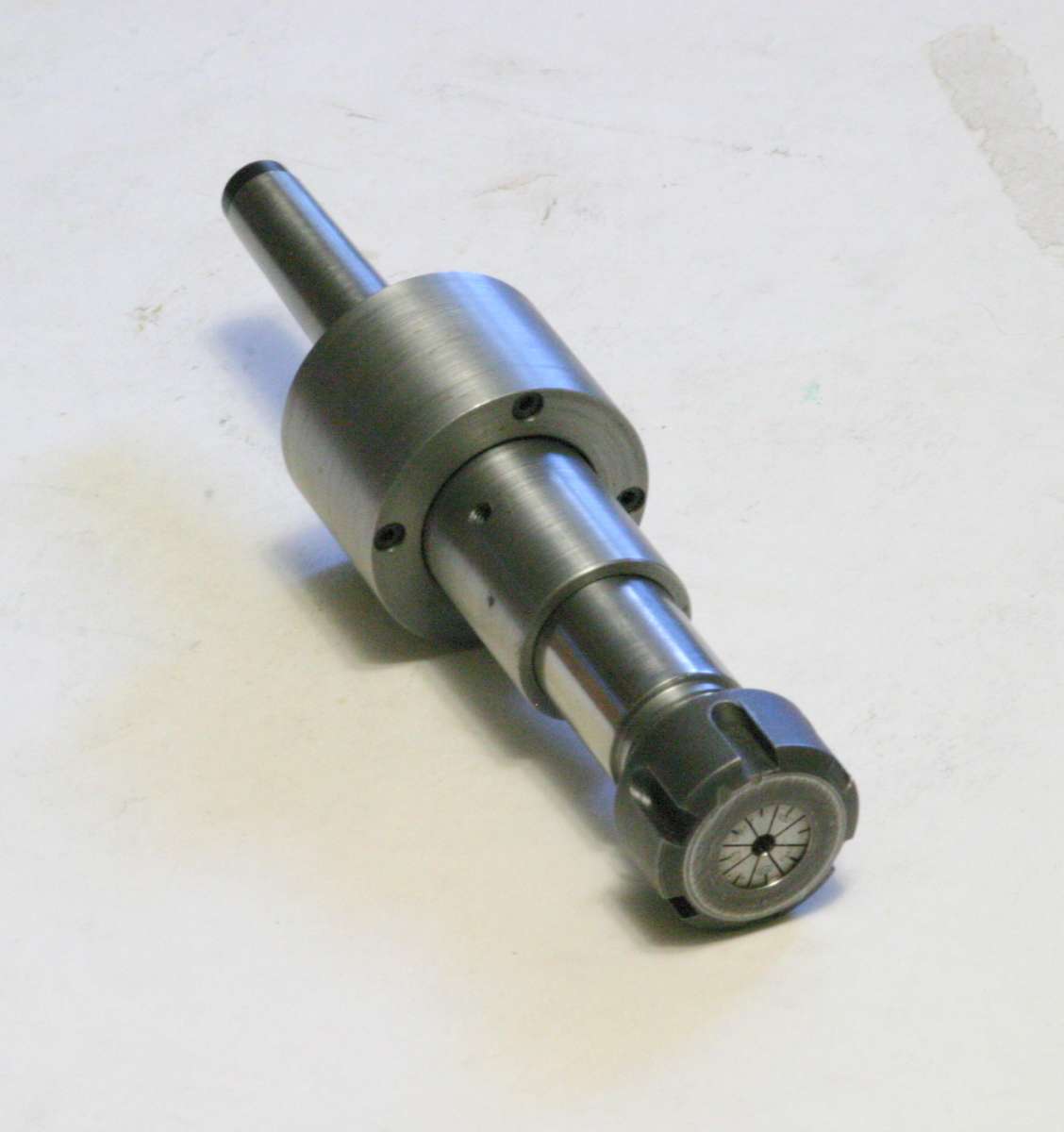
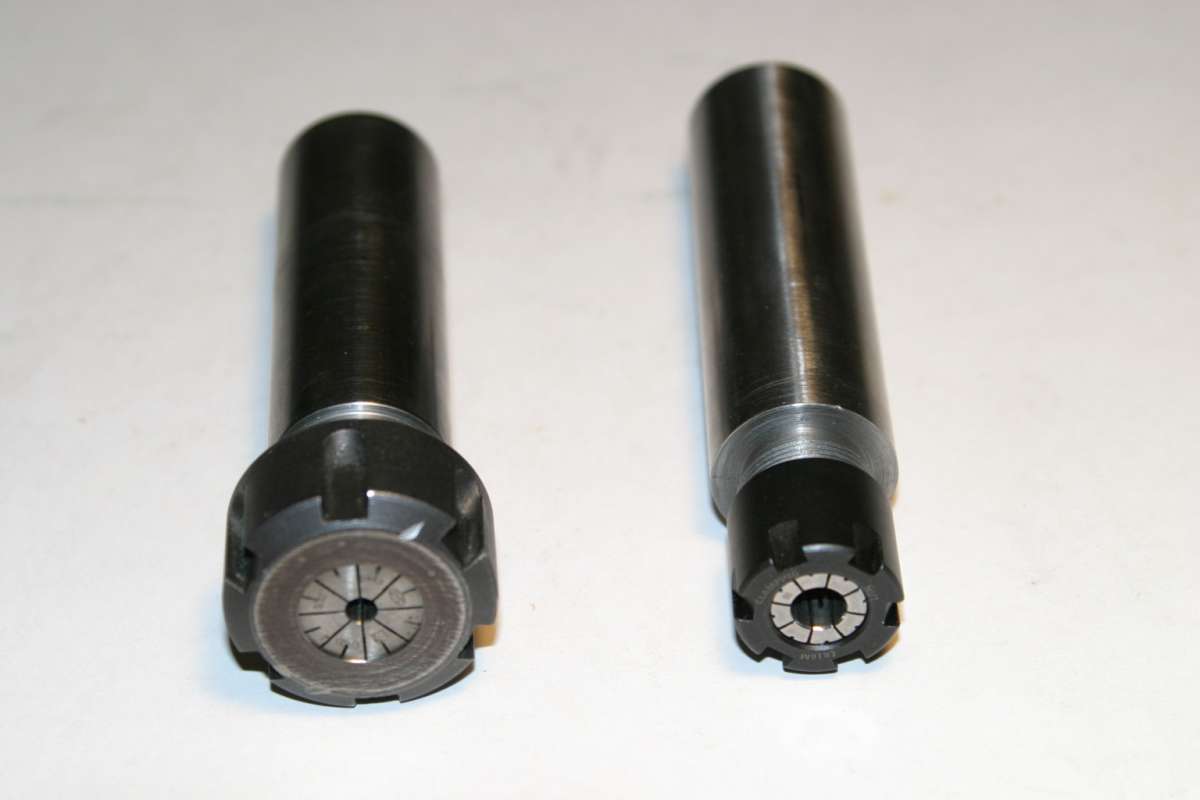
        The part being drilled has been given, two holes 1/4″ to 5/16″ deep but about 1.5″ apart. It’s the holes for the crankshaft bearings. Just like my two images showing similar setups.

        #830509
        Graham Meek
        Participant
          @grahammeek88282

          A word of caution with regards to purchasing Reamers, and oversize holes.

          I recently purchased two 7.00 mm Reamers to make the Interchangeable tooling for my Emco Compact 5. They were from separate sources. Both were Laser etched as being H7 Fit. Before committing the machined parts to the reamers I checked them out on a scrap of steel. Both of them cut oversize, one by a considerable amount. This was despite using my tried and tested Reaming method, (mentioned earlier).

          Using a micrometer I found one reamer was ground to a dimension which was Top limit for a H8 Fit and the other was on Top limit for a H11 Fit. (Reamers are usually ground to the largest size, or “Top Limit”, so that as they wear they will still be within the “Limits” for that particular Fit).

          The H11 Fit Reamer I reground to H7 tolerances and used this to finish the parts.

          As a Tip, I always keep my pre-reaming drill with the Reamer. It does not get used for anything else. When these drills need resharpening I use the Four Facet method.

          Regards

          Gray,


          #830517
          JA
          Participant
            @ja

            Not really a direct question about reamers but how do YOU measure the bore diameter?

            I have used many measuring instruments/tools in my time to measure bores but in the end I would sooner trust an “H7” reamed hole. I can then machine the shaft to fit using ISO standard dimensions. This alone is an argument for good unmodified reamers. Also buy the best, not cheapest.

            JA

            #830520
            Graham Meek
            Participant
              @grahammeek88282

              Hi JA,

              I do not know if the  “YOU” above refers to me, or not, but here goes.

              The holes were initially gauged with a piece of 7.000 mm Silver Steel. Selected because it was dead on size. The Silver Steel instead of being a nice sliding fit could be waggled about from side to side by a considerable degree. This Silver Steel formed the location surfaces of the tooling system. Similar to Harold Hall’s system.

              The bores were then checked using a bore micrometer, with a further check using a Lushington adjustable bore gauge and a micrometer. (The bore Micrometer only checks the beginning 5 mm length of the hole). The Lushington verifies the hole is parallel and that it is the same diameter throughout.

              Like you I do not normally check a H7 reamed hole. All the mating parts I make are turned or ground to suit the appropriate  ISO “Fit” dimensions.

              After modifying the above reamer the Silver Steel showed no signs of sideways play and the tooling system has lived up to my expectations.

              Regards

              Gray,

              #830525
              Steve Huckins
              Participant
                @stevehuckins53362

                Jason, that first picture is very like my set up but the bearings are not split, just solid. I see the need to machine the surface of the bottom one now and will factor it in going forward. I feel somewhat lacking in the knowledge of technical details that many on the forum are quoting. Obviously I am really happy to learn whatever I can to get the best results. But in effect I am a 70 year old apprentice. Much of what is discussed goes over my head. But undaunted I will continue to pick everyone’s brains. So far I’ve completed several stationery engines and am moving up to a larger Suzanne once the PM3 is in its cabinet. Quite a step up but no point avoiding the challenge.

                regards

                Steve

                #830537
                JA
                Participant
                  @ja

                  Gray

                  Sorry I shouted. My “YOU” was a universal you as was the question.

                  I have taken to using good steel bar, usually EN16T because I have quite a bit of the stuff, and turning diameters on it in about 0.00025″ steps. Then using it as a plug gauge with a really good micrometer.

                  Even then I can doubt the result. There is a tendency for everything to become a statistical exercise when the object is to get a required fit

                  #832302
                  Phil Cox
                  Participant
                    @philcox53699

                    Ensure the drill chuck and the jaws are in very good condition and run true.

                    Centre Drill

                    Drill to depth/through approx. 1mm diameter below finish reamed size

                    Slot drill/End mill approx 0.5mm below finish reamed size x 3mm deep

                    Drill max 0.25mm below finish reamed size

                    Ream to size.

                    If you have any issues when trying this method, please let me know.

                    #832392
                    Graham Meek
                    Participant
                      @grahammeek88282

                      I regret to say when it comes to reaming there is no hard and fast rules as regards what material is left in the hole prior to reaming.

                      This is taken from the Dormer web site.

                      “Key Operational Advice

                      Pre-Drill Hole Size: The most common fault is leaving too little stock. The general rule is to leave a small amount of material for the reamer to cut, typically 2-3% of the reamer’s diameter.

                      Up to 6 mm: Leave approximately 0.1–0.2 mm of material.

                      Over 6 mm: Leave approximately 0.2–0.4 mm of material.

                      It is often recommended to use a single-point boring tool after drilling to correct any hole wander before reaming, ensuring the reamer follows a straight path.

                      Speed and Feed: Run machine reamers at approximately half the speed and double the feed of a similarly sized drill. Reamers should cut, not rub; insufficient stock or excessive speed will cause rubbing, rapid wear, and an undersized hole.”

                      Regards

                      Gray

                      #832416
                      JA
                      Participant
                        @ja

                        I don’t think anyone has commented on floating reamer holders.

                        Thirteen years ago I was seduced into buying the Hemingway kit at the Midland Show. It was going to cure all my many problems. I made it in a few weeks and it looked very nice. I used it twice and it still sits on the shelf. If the tail stock is correctly aligned I think its only use is to ream holes that have been stored.

                        JA

                        #832455
                        bernard towers
                        Participant
                          @bernardtowers37738

                          Sorry JA but made mine many years ago and think its the Dogs B and taking into account Grays advice ref amount of material left to ream may be some users problems.

                          #832533
                          Graham Meek
                          Participant
                            @grahammeek88282

                            I once visited George Thomas just after I was married, that is 53 years ago. I said to George I was having difficulty with reaming some of the larger holes around 1/2″.

                            He chucked a short piece of 1″ Bar in his trusty Super 7, predrilled the hole, then bored the hole to his preferred reaming size and mounted the taper shank reamer in the tailstock. A dab of his favourite cutting oil, Shell Garria H and he was reaming. As he wound the handle I said isn’t that a bit fast as regards the feed. His reply was “he could not wind the handle any faster.” This he said “was the mistake a lot of people make. The feed is as important as the amount left in the hole”.

                            This is reiterated in the Dormer advice above.

                            Also it pays to bear in mind that the space available in the reamer flutes is miniscule compared to the size of the reamer. Too much material left in the hole will soon clog the reamer and this is one of the things that not only breaks them but also produces oversize holes.

                            By the way the above process took George no more than 5 minutes.

                            Regards

                            Gray,

                            #832550
                            HOWARDT
                            Participant
                              @howardt

                              When either tapping or reaming small sizes I find it better to drill at least another size less than required.  This allows for the drill cutting oversize, if it does then it may still be within requirements if not just open it up.  I have drilled a few small tapped holes, M2, etc then found the tap falls through the hole. Ideally any subsequent drills should be three or four flute to centre properly in the pre drilled hole, not really feasible in small sizes. Dormer etc drills should cut size but non branded tend to be a bit hit and miss on the tip form probably not even ground.

                              #832581
                              Graham Meek
                              Participant
                                @grahammeek88282

                                Some while back in this post I mentioned about keeping the reaming drill with the reamer and not using it for anything else. While this may be considered a luxury by some it does cut out any doubt about the accuracy of the pre-reamed hole.

                                This also applies to the tapping drills for my taps. Each relevant size, ( I only work in Metric), of Taps, Reamer and appropriate drills all live in a sliding top tin purchased on-line. This has been the system of working which I used in my career as a Toolmaker.

                                It does in the end save time and money, although at first glance it appears to be an un-necessary expense. There is no searching though tins or drawers for the relevant tap, drill or reamer. They are immediately to hand and makes for more efficient working.

                                Regards

                                Gray,

                              Viewing 14 posts - 26 through 39 (of 39 total)
                              • Please log in to reply to this topic. Registering is free and easy using the links on the menu at the top of this page.

                              Latest Replies

                              Home Forums Beginners questions Topics

                              Viewing 25 topics - 1 through 25 (of 25 total)
                              Viewing 25 topics - 1 through 25 (of 25 total)

                              View full reply list.