Making a Pendulum Suspension Spring – Advice Please

Making a Pendulum Suspension Spring – Advice Please

Home Forums Clocks and Scientific Instruments Making a Pendulum Suspension Spring – Advice Please

Viewing 16 posts - 1 through 16 (of 16 total)
  • Author
    Posts
  • #825698
    SillyOldDuffer
    Moderator
      @sillyoldduffer

      As I got such good answers to my vacuum feedthrough and vacuum chamber questions I thought I’d ask about this one too!

      The existing pendulum is unstable and low-Q, almost certainly due to a slapdash design and sloppy build by “He Who Cannot Be Named” – the unsackable bodger in my workshop.

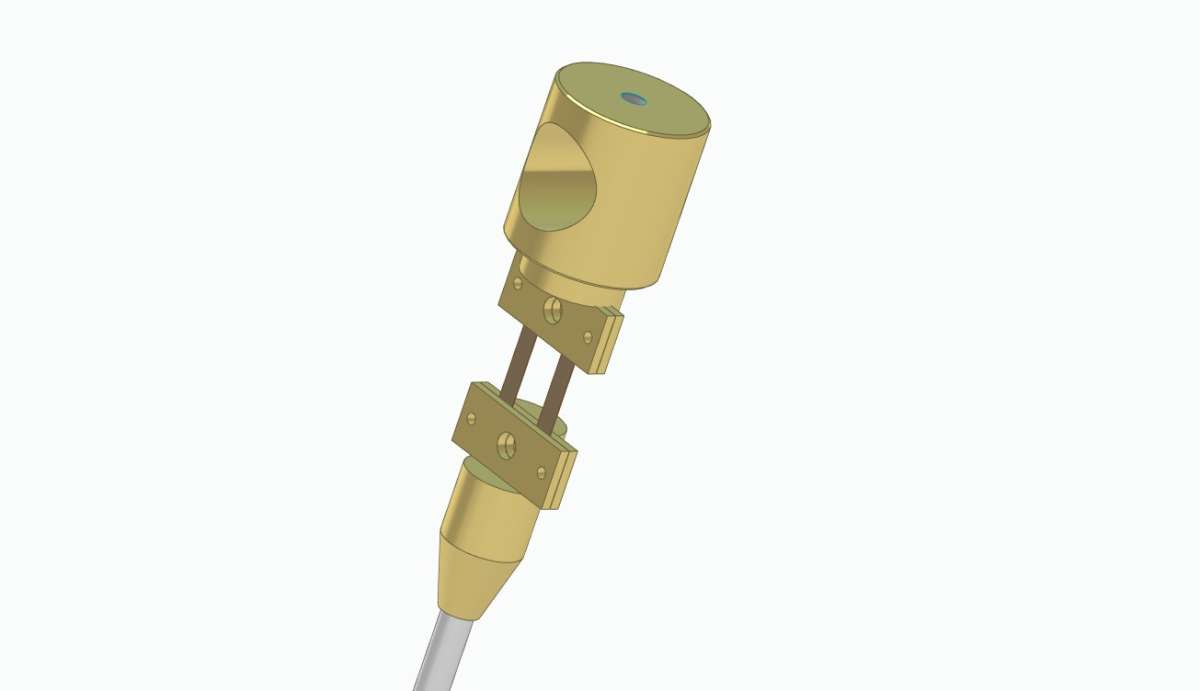
      The pendulum is conventional, but I under estimated it.  More to them than meets the eye, in particular construction of the suspension spring:

      pendulumAssy


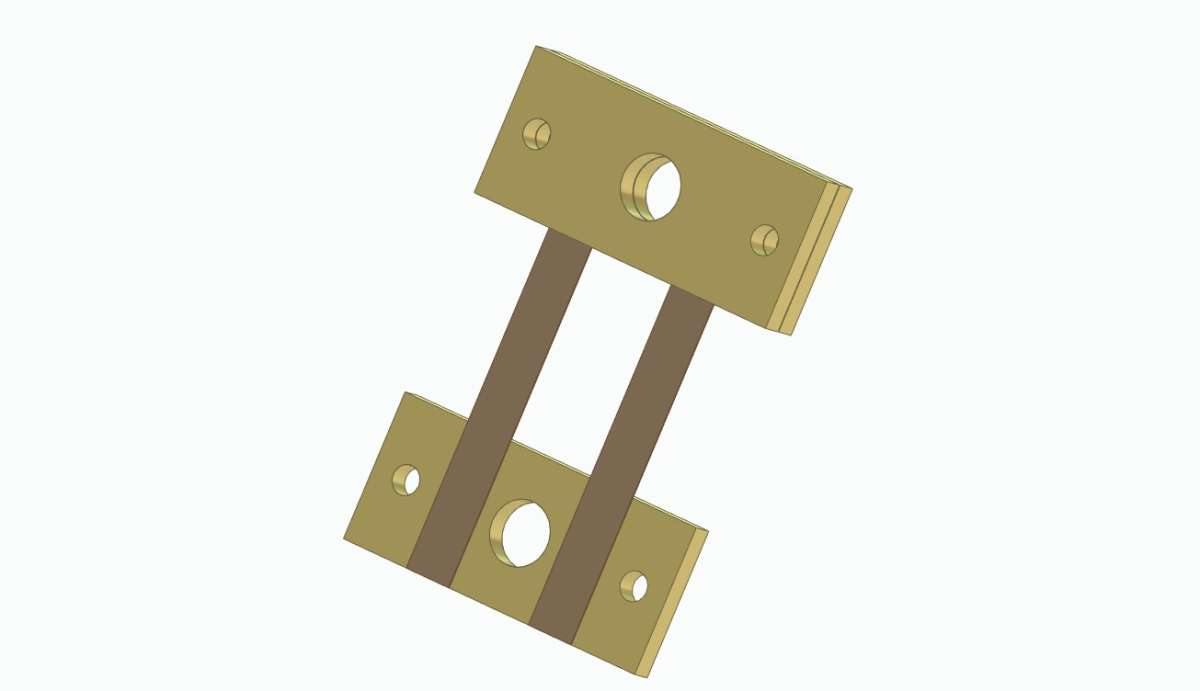
      I propose a suspension spring consisting of two Beryllium-Copper Strips sandwiched between Brass plates, which I found this morning are called ‘chops’:

      springAssy

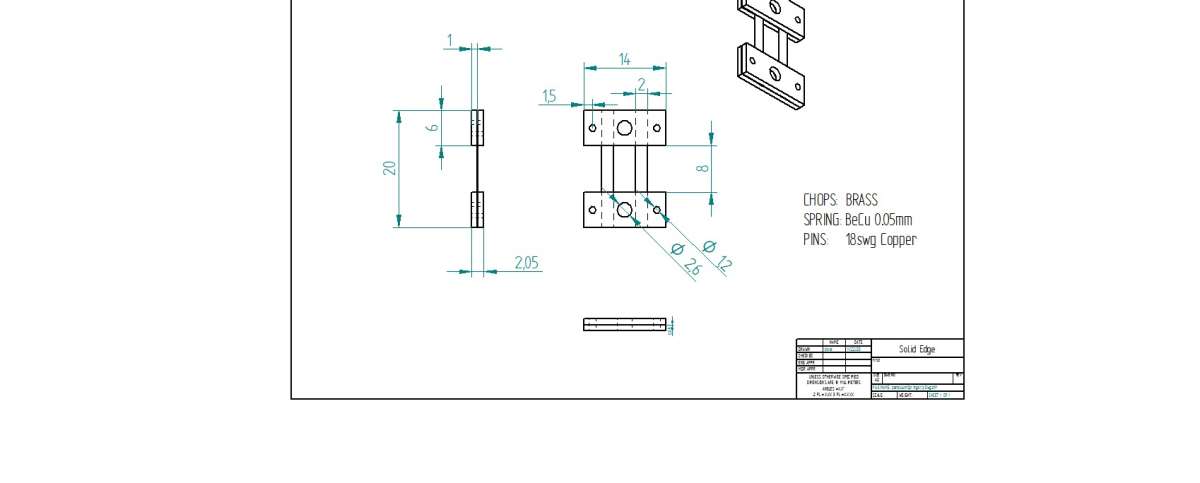
      Drawing:

      pendulumSpringAssyDwg

      The pendulum is for a precision clock and intended to swing in a vacuum, which constrains the materials that can be used.  For example, superglue fumes in a vacuum and should be removed after construction.  Soft solder is iffy too.

      Questions:

      1. I propose to position the two BeCu leaf springs on the base chops with super glue and then rivet the assembly together with Copper pins made from soft electric wire.    Is this sensible, or is there a better way?  (I can’t spot-weld, glue or friction weld. )
      2. Is Brass the best material for the chops and other parts of the assembly.  (In a precision clock the metal parts should have a low coefficient of expansion.)
      3. I hope to remove the super-glue by soaking the finished part in Acetone.   Will this work, or, is it wiser to leave the glue alone?
      4. I’ve drawn the springs with an exposed 8mm span.  Is there a rule that decides how long a pendulum spring should be, and how springy it needs to be?

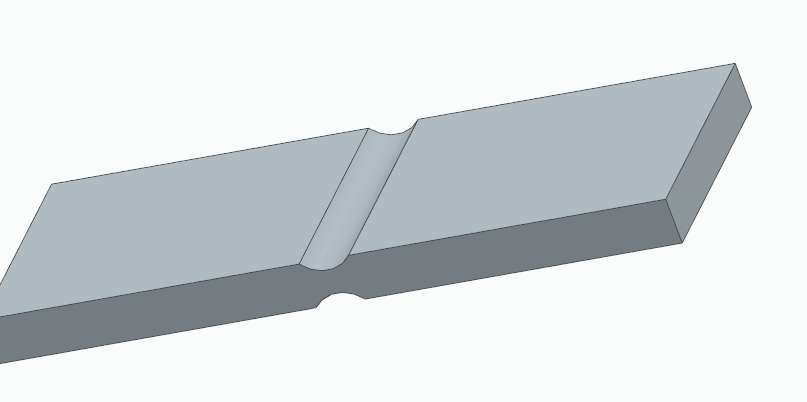
      I propose to chemically mill the centre section of the spring by painting the springs with Tippex apart from the centre section and then immersing in Ferric Chloride solution.  Purpose is to ensure the springs flex consistently in the same place.

      Screenshot 2025-11-22 153635

      5. Is this grooving sensible, how much metal should I remove and, is Ferric Chloride the most suitable chemical.  (Reminder: the spring is only 0.05mm thick, so I guess mechanically milling or turning the groove is too clumsy.)

      All comments welcome!

      Thanks,

      Dave


      #825733
      John Haine
      Participant
        @johnhaine32865

        Screenshot 2025-11-22 170108

        Dave, after having some bifurcated springs fail I have evolved a different way to make single leaf springs.  I soft solder the spring between the chops, and make the latter from a pair of profiled out 1.6mm brass plates as shown above – sorry this is a snip of the CAM profile, the grid has 0.5mm squares.  The plates are rectangular and have an aperture milled in the centre of each (which of course ends up with radiused corners) and the circles are spiral drilled holes.  The spring shim strip, as long as the plates are wide and slightly narrower than the aperture, is carefully laid across the lower plate so it is symmetrical and the upper plate clamped on with nuts+bolts at each corner.  Then I solder the assembly having masked the spring on each side in the aperture.  You might rivet rather than solder through the holes on the centre line or extra holes. You would want to put rivets through the actual spring to maximise the clamping force. Finally once the spring is securely fixed mill away the sides of the plates including the corner screw holes.  This process gets the spring fully aligned and everything square.

        I don’t find much benefit of double leaf springs, they are harder to make and difficult to align.  The loss in the spring is likely to be minimal compared to other losses.  Double springs are useful to help suppress pendulum twist but yours are so close together they probably wouldn’t help much.

        The length of brass is minimal, it’s easy to machine and solder, probably better than steel.  If you don’t solder you might make sure the chop clamping surfaces are really flat so the clamping points are right at the corners of the chops.  Make sure there’s no burr on the corner though.

        The spring will bend where the physics tells it to, which is not far below the edge of the chop (if that is sharp and square).  But it will be tangential to the chops (the physics says), so no benefit from rounding the chops’ corners.

        In this design the spring length between the chops is 6mm – no point in making it any longer, just gets harder to make and more thermal expansion.  With a heavier pendulum the effective “hinge line” moves upwards.  This went in a clock where the bob is ~250gsm on a 1/2 sec pendulum.

        The last thing you want to do is etch a groove!  It will just cause stress concentration and premature fracture.

        On the other hand, Matthys describes a way to make combined springs and chops by starting with thick phosphor bronze bar and milling away on each side to leave a longer section in the middle for the actual spring.  You mount the bar horizontal, and use the side of the cutter to make a long “flat”.  Then the bar is turned over and the space between the flat and a supporting angle plate filled with a hard setting filler to support the spring section as the other side is milled away.  He claims good results but I can imagine a lot of scrap on the way.  And in my experience PB is a PIG to machine!

        By the way, Cousins have a wide range of suspension springs of all sorts – I did buy some double leaf springs from them once but they weren’t square.  I believe that Chris Raynerd may use ready-made Kundo springs on his Tekippe regulator – certainly some of the makers in the US are.

        #825789
        SillyOldDuffer
        Moderator
          @sillyoldduffer

          Thanks John.  I’ll do it your way, and it’s simpler!!!  You’ve just saved me lots of time.

          Cheers,
          Dave

          #826119
          SillyOldDuffer
          Moderator
            @sillyoldduffer

            Reporting back:  followed John’s method and made one:

            IMG_5393

            Came close to messing up several times, and didn’t help my Small Gas Torch failed mid job.  Tiny flame that goes out.

            Do a better job if I practised, and I ought to make another.

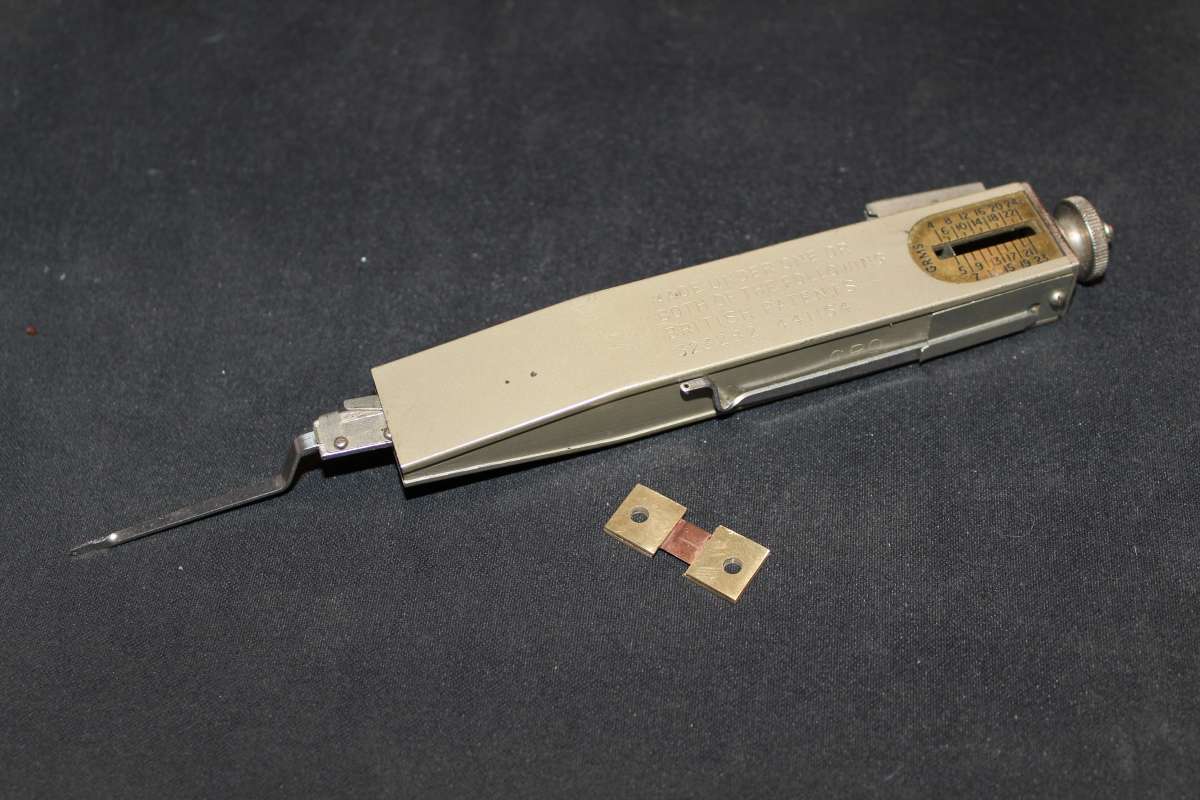
            Tested with the Spring Gauge shown in the photo.  Made by GEC, to BP323,282.  The patent was taken out Oct. 9, 1928 Coventry Automatic Telephones, Ltd., and Eriksen, J. “Dynamometers. – A device for measuring mechanical forces such as the pressure exerted by the contact-making springs of relays, switches, &c. comprises a member adapted to move about either of two fulcra and normally kept in engagement with both fulcra by a spring.”

            The Spring Gauge is from my WW2 Creed 7B Teleprinter Toolkit.  Any ex-GPO technicians able to explain how to use the gauge properly?  I just adjusted tension until the test spring just bent by eye.  The patent says the gauge can measure between limits.

            If I applied the gauge correctly my suspension spring deflects with a force between 4 and 5g – seems high to me.

            Dave


            #826128
            Ian P
            Participant
              @ianp

              John H’s mention of pendulum twist in relation to the width of the suspension spring made me wonder what  causes twisting. (Vanilla Google was no help)

              Is it the Foucault effect and if so is there an optimum plane (NS vs EW) that the pendulum (for a this precision clock) should be oriented?

              Ian P

              #826138
              SillyOldDuffer
              Moderator
                @sillyoldduffer
                On Ian P Said:

                John H’s mention of pendulum twist in relation to the width of the suspension spring made me wonder what  causes twisting. (Vanilla Google was no help)

                Is it the Foucault effect and if so is there an optimum plane (NS vs EW) that the pendulum (for a this precision clock) should be oriented?

                Ian P

                Foucault is on my to-do list!   All I’ve done so far is, almost by accident, is use a short pendulum rod.  (Other reasons are more important – like size and portability.)  Assuming I ever solve all the other problems, Foucault can be minimised by aligning the pendulum North-South.  Or by operating it at one of the poles.  South for preference because there’s solid ground underneath, whereas it’s floating ice under the North Pole. Causes a few tens of milliseconds error per day I think, so I have a lot bigger errors to solve first!.

                In my case the pendulum twists due to poor build and adjustment; it isn’t perfectly straight from top to bottom.  In particular the spring is askew due to poor design, making it hard to adjust.  Both ends of the spring are free to rotate on the clamping nuts.  The new spring should be much better – soldered and it butts against a shoulder.  The thread on the rod is slightly wonky so the bob is twisted too.

                I experimented in the prototype with what I called a ‘sprod’, a thin Carbon Fibre rod doubling as rod and suspension spring.  Didn’t work out: one problem was nothing keeps the bob’s flying straight.  Almost any off-centre force causes the bob to fly in a random ellipse.  Off-centre impulsing, turbulence, vibration, and the clock being tilted all upset it.  A flat spring encourages straight flying.

                Dave


                #826140
                John Haine
                Participant
                  @johnhaine32865

                  Main cause of twist is impulse that doesn’t act through the pendulum axis perfectly.

                  #826144
                  duncan webster 1
                  Participant
                    @duncanwebster1

                    If the shim is clamped between 2 brass plates how does the solder get in to the non existent gap? It obviously does, so I’m missing something.

                    What do you use to keep it off where it’s not wanted?

                    #826150
                    Wade Beatty
                    Participant
                      @wadebeatty78296

                      The volume of superglue compared to the total volume is very small, same with any sealants you use in your bulkhead fittings. I know if it was me, the assembly would be togeather and apart several time before perfection was achieved. Any off gassing products would be long gone prior to the ink drying on the as-built final drawings.

                      #826154
                      SillyOldDuffer
                      Moderator
                        @sillyoldduffer
                        On duncan webster 1 Said:

                        If the shim is clamped between 2 brass plates how does the solder get in to the non existent gap? It obviously does, so I’m missing something.

                        What do you use to keep it off where it’s not wanted?

                        Good question, and I may not have done it right.

                        I lightly tinned the lower plate and positioned the spring on it.  Then laid two short lengths of squished electrical solder on top of the spring with the top plate loosely clamped in place.  Heated the assembly, the solder melted, and the top plate dropped into place.  After tightening the bolts, I got a little more solder to wick into the slight gap at the edges.  May not have gone far.

                        With the whole lot soldered, maybe badly, the bolts held the plates secure whilst I drilled the spring.

                        Seems OK – I milled the unwanted Brass off without the part delaminating.   Not perfect – the spring moved slightly.

                        I was going to protect the spring with Tippex if the first attempt failed, but no solder leaked on to it.

                        Dave


                        #826157
                        SillyOldDuffer
                        Moderator
                          @sillyoldduffer
                          On Wade Beatty Said:

                          The volume of superglue compared to the total volume is very small, same with any sealants you use in your bulkhead fittings. I know if it was me, the assembly would be togeather and apart several time before perfection was achieved. Any off gassing products would be long gone prior to the ink drying on the as-built final drawings.

                          That’s what I thought before swotting the subject up.  With a deep vacuum, what’s “very small’ at 500mb becomes a flood below 100mb.  Super-glue vapourises, Zinc sublimates out of Brass, Tin grows whiskers and Lead migrates.  Soft solder should be avoided.  And Free-cutting mild-steel!  Plastics come apart.

                          Thermionic valves demand a high vacuum.  They achieve it with a getter.   The glass tube is evacuated with a really good pump and sealed.  A small lump of Barium is left inside.  Then the valve is blasted with Radio Frequency, which evaporates the Barium by inductive heating so it deposits on the glass creating a pretty silver top.

                          072-650_HR_0.default


                          The shiny Barium reacts with gases emitted when the valve warms up and removes them from the vacuum.  If the  getter is omitted the vacuum softens and valve doesn’t work properly electronically.  And soon fails entirely due to stray atoms smacking into the metalwork and especially poisoning the Cathode.

                          Getters can’t cope with a large vacuum chamber, so the inside has to be kept clean.

                          Hairy stuff.  In practice, I’m not expecting to get below 300mb, so gassing may not matter due to the amount of air present.  But if I can get below 300mb, there will be trouble.   A chap in the USA describes having  to pump his vacuum chamber for a month before it was OK – the glass in his newly manufactured Pyrex chamber contained enough air to spoil the vacuum.

                          Dave

                          #826170
                          John Haine
                          Participant
                            @johnhaine32865
                            On duncan webster 1 Said:

                            If the shim is clamped between 2 brass plates how does the solder get in to the non existent gap? It obviously does, so I’m missing something.

                            What do you use to keep it off where it’s not wanted?

                            Flux the surfaces before clamping. Capillary action pulls solder in.

                            #826246
                            Robert Atkinson 2
                            Participant
                              @robertatkinson2

                              Hi Dave,
                              The Post Office gauge is a preset type. The force set on the scale is reached as soon as the lever a.k.a pointer starts to move off it’s neutral position. difference from first move to stop is insignificant.

                              See:
                              https://www.britishtelephones.com/gec/journal/currentcomments/1936_vol6_88.pdf

                              To measure an unknown force you really need a Correx style gram gauge.
                              https://www.ebay.co.uk/itm/326875608515?

                              Robert.

                              #826251
                              Michael Gilligan
                              Participant
                                @michaelgilligan61133
                                On Robert Atkinson 2 Said:

                                Hi Dave,
                                The Post Office gauge is a preset type. The force set on the scale is reached as soon as the lever a.k.a pointer starts to move off it’s neutral position. difference from first move to stop is insignificant.

                                See:
                                https://www.britishtelephones.com/gec/journal/currentcomments/1936_vol6_88.pdf


                                Interesting document, Robert … Thanks

                                The patent is available on Espacenet

                                MichaelG.

                                #826260
                                SillyOldDuffer
                                Moderator
                                  @sillyoldduffer
                                  On Robert Atkinson 2 Said:

                                  Hi Dave,
                                  The Post Office gauge is a preset type. The force set on the scale is reached as soon as the lever a.k.a pointer starts to move off it’s neutral position. difference from first move to stop is insignificant.

                                  See:
                                  https://www.britishtelephones.com/gec/journal/currentcomments/1936_vol6_88.pdf

                                  To measure an unknown force you really need a Correx style gram gauge.
                                  https://www.ebay.co.uk/itm/326875608515?

                                  Robert.

                                  Thanks again – the article explains and I was doing it wrong!

                                  Used properly the gauge isn’t quite sensitive enough to measure my spring – it’s something below 4g.

                                  I hoped to find the formula relating bob mass to impulse power.  Out of interest because it wasn’t difficult to find by experiment. I guessed a miniature 5v relay coil would have the necessary oomph and got away with it!

                                  🙂

                                  Dave

                                  #826307
                                  John Haine
                                  Participant
                                    @johnhaine32865

                                    If the losses are primarily air drag, for a given bob shape and size the losses are independent of the mass so the required impulse power doesn’t change.  A higher mass gives a higher Q of course.

                                  Viewing 16 posts - 1 through 16 (of 16 total)
                                  • Please log in to reply to this topic. Registering is free and easy using the links on the menu at the top of this page.

                                  Latest Replies

                                  Viewing 25 topics - 1 through 25 (of 25 total)
                                  Viewing 25 topics - 1 through 25 (of 25 total)

                                  View full reply list.